Doing Business As Though We Belong to the Living World — Living Between Worlds 5.3
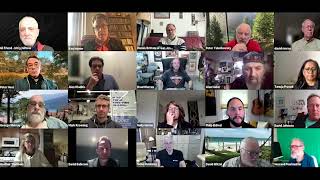
Gil Friend hosts a discussion on what it means to do business as part of the living world rather than separate from it. Participants explore how companies like Interface Carpets operate differently, what temporal stewardship across seven generations looks like, and whether nature should have a voice in corporate governance.
Chapters
Foreign.
Welcome. This is Living between Worlds for March 20, 2024, on the Edge of the equinox. And we've been talking for, well, four and a half years now about the challenge of living between worlds, as, as Gramsci said, between an old world that is dying and a new world that is waiting to be born. And between them, he said, it's a time of monsters. And I think we recognize that prediction right now in our age today, we'd like to dive back into the pragmatics of sustainable business and regenerative economies and things of that sort. And I'm going to ask for your help on something that I've been. That I've been asked for your help for something I've been working on for years now. Well, for decades, the organizing principle of my work has been this question. How can business prosper by embedding the laws of nature at the heart of enterprise? The laws of nature what? 3.8 billion years of open source R and D of the living world powered by renewable energy that drives cyclical material flows with no persistent accumulated toxins, guided by relatively flat, non abstracted functional hierarchies. You know, we don't need to invent stuff. The R and D has already been done for us. So how could business prosper by embedding the laws of nature at the heart of enterprise prosperity in the etymological sense of Prospera, toward one's hope, toward thriving, as well as in the modern sense of toward the money. And as you know, if you've been following me regularly lately, I'm increasingly living in a different question, related question, but a different one. What might it be like if we did business and everything else as though we actually belonged to the living world? Not if we were less damaging, not if we were more careful, not if we were better stewards. All good things, not even we are nature, which a lot of people are saying these days, which to my ears, risks an all too familiar anthropocentric arrogance. But belonging to as one belongs to a family, perhaps. The question's been resonating. It's been resonating with colleagues, not so surprisingly, and with corporates as well, very surprisingly. It's a step back, perhaps, into indigenous wisdom, something that we've really known forever and forgotten only recently. Even the ancient keepers knew this, before empire, before subjugation, before the Greeks led us too, onto a path to modernity. So what might it be like? And this is a question that begets more questions and questions that we'd like to explore. With you today. Penn, can you bring up that slide? What might it be like for our psyches, for our sense of identity, if we lived as though we belonged to the living world? What might it be like for our actions, for the actions of our companies? How might that show up? How might it be nurtured in a business? How about in your business? How might we mobilize people, manage this, measure it, manifest that sense of belonging? Very specifically, how would you, as a director of a company, an executive, a manager, an employee, a customer, a supplier, an investor or regulator, how would you know that this was happening and that it was happening? Well, where do we start? And my usual question, what does this provoke for you? And bring the slide down. And let's see, folks. Faces some big questions, I realized. Take your time, Brad, please.
Yeah, good morning, everybody. Brad Warren, Castro Valley, CA I'm just going to pick one little piece, Gil.
Because it's too big a question on.
The invest on the investing side. I would, I would do much more due diligence on the companies that I invest in to see if they're being socially responsible, etc. Etc.
Etc. All the criteria that goes with socially responsible investing.
So, you know, do they do nuclear, do they pollute, etc. Etc.
How do they treat their employees?
Because I, I've just been investing based.
On does this company look like it's going to make me a lot of money?
And I've done okay with that.
But it may not be the answer.
To the question that you're asking.
I might invest differently if I were.
Doing it the way that you're proposing.
Okay, thank you.
Yeah.
Philip.
You know, just a few things that come to mind are the sense that, you know, as far as I'm aware, natural processes don't involve incentives. We don't need to incentivize plants to move towards the sun. There's not really compensation that nature does.
Are you, are you, are you sure, Philip? I mean, a bee doesn't pollinate the flower unless it's going to be able to get some pollen there. A butterfly is not doing what it does unless there's nectar.
I think that the subtleties of how.
We use this language.
Sorry, the subtleties of how we use this language are important. When we think about things in terms of incentives, in terms of compensation, then we are not. I think that those are synonyms to similar words that maybe are more to the point. I think the natural processes we're talking about require fuel and they require motivation. But where does the motivation come from? It's going to be intrinsic motivators and it's going to be driven by the fuel available in the ecosystem. And there's not going to be a need to incentivize it and to compensate for it in the way that we think about how we do business very normally.
Yeah.
So I think.
I'm not. Philip, I'm not. Sorry, go ahead. I didn't mean to cut you off. Keep going.
Just that maybe something about what this is going to end up looking like will end up looking like the business we would do where we in a. Were we free to simply act on our intrinsic motivators and not require any incentives other than, or rather any resources directed to us other than the fuel required to get the job done.
So I'm not just screen with you. I want to invite us to be really careful about our language here because incentive carries all sorts of connotations. And in living systems there are, we could call it feedback loops. There is what Umberto Matarana would call structural coupling. There are dynamics that are interacting between organisms. We could call them incentives or not. I don't know what we should call them, but just a word of caution about how we get trapped in our own words and what we think they mean. Thank you for raising that, Philip. George Mulcrey.
Yeah, I have a few comments in the.
In the chat and the most recent.
Is Botany by Lou Welch, which is.
A nice little poem which might make you think about incentives differently. The. The one company that I know of which has actually made the transition is Interface Carpets. And they're now producing stuff which is.
Carbon negative, which brings it draws down carbon right by.
They've 25, 30 years getting to the point where by their own measurements they're carbon neutral. And now they're going in the other direction and becoming, depending upon where you.
At, a carbon positive or carbon negative.
Carbon negative.
Taking things out.
Carbon positive by being positive about carbon, watching what they're doing. And it is interesting to me that that doesn't come up a lot in.
The discussions that I hear.
And I think it would be extremely useful to look at what they did and seeing if that can be replicated, because for all intents and purposes, they've done it. They're operating as a responsible ecological business.
At least from what I understand.
They've been doing a remarkable job and they've been at it for what, 30 years, probably one of the best in the world in that measure. I don't think they've embraced the question that I'm asking. But you're you're raising a mystery. You know, they. They've done this. They've been public about everything they're doing. Ray Anderson, the founder and former CEO, before he died, spent the last 10 or 15 years of his life pretty much full time flying around the country, talking to other CEOs, sharing what he's doing and inviting them in. And very few took them up on that. Despite the enormous impact on interfaces, profitability from doing this. This was not Duga stuff. This was serious, strategic business, committed to what you're saying, and it worked. And one of the mysteries is, why don't more companies step into that story? Thank you, George. Peter.
I'm going to take a completely different cut at it and try and go along the line that I thought I heard you articulating at the beginning, which is, who is we? And recognizing we. We at this time in history normally have a we that is really us versus them. So it's a we with a margin that is fundamentally adversarial.
And.
And I think the important question then.
Is.
Who is we? And if we. Look, another question that arose just as I was thinking about this now is where does we live?
Like, where.
What's the source of we? And I, I would posit at least this first cut that we lives in me as how I regard others. And. And I can regard others like other people, as part of relationship space or. Or not. I can kind of look at the checker at the grocery store as a. Basically an object, you know, could be a replaced by a robot who simply does things. Or I can see that person as a person and be in a more inclusive mood toward that person. Now, interestingly, I can also see my cat as a simple animal.
It's just a cat.
Or I can see that cat is, oh, that's ochi. There's actually a being there. Not the same kind of being as you go, but also a be, also a space of relationship, also potentially includable, as if that's a word in a we. So now I'm going, whoa, wait a minute. We could be big and need not have an adversarial margin, could have an inclusive margin where we look to see how to include others. So it's more of an invitational than an adversarial margin on our we. And I believe that lives in the human heart, if you want to be poetic about it. And I think that's up to each one of us as an opportunity and in. In the way that you're phrasing it, as the obligation at this historical moment. How are we going to resolve that? That's as far as I want to take it right now.
No, you've stepped. You've stepped out pretty far. And I appreciate it. I mean, your invitation is. Is not just how can we be kinder to others, people in life forms. Not how we can be more altruistic, more generous, but how we can perceive a different boundary. What's the boundary between your cat and you?
It's easy for me to say a family is we. Oh, wait a second. We Americans. Oh, how about we include and by including others, recognize that they're not the same as us, you know, those Russians, those Israelites, those Ukrainians. But how can we have enough we in it that we can produce resolution there rather than have to only settle by, you know, pretty nasty interaction spaces? And then like you said in include way beyond that, because it. If you ask about to what do we belong? Because we has a sense of belonging with it. And I would posit that we all belong to life. And that puts. Now that starts to go back to your first question. If we say we belong to life, how do we build that we and then how do we do business that belonging?
There you go. There you go. So welcome. Welcome to the story. You got it. Exactly. As my teacher, Ken Homer has been reminding me all this year, maybe back into last year, to listen whenever we is spoken. And I noticed that we have spoken in all kinds of different ways in every conversation. The boundaries are moving around in the middle of the conversation. We, me and Jane, we are family, we are relatives. We the people on this call. We have people of a certain attitude and belief. We Americans, we Westerners, we humans, we life on Earth. We speak about we for all of those, but we're not always oriented to which one we're using when we're using it. And just observing that itself is a, for me, a pretty radical act. And then questioning where do I choose to situate myself in all of those? Yep. Ken, do you want to say any more on this before we go to Jane and Alex?
Sure. But rather than take a lot of time here, I put a link to an article I wrote on LinkedIn called the problem with We. And it came from reading Santok How Indigenous Thinking Can Save the World. And Tyson Caporta says, has this. This phrase of us too, which can mean us here. And so I try to use us here on this call us white people, us educated university people, you know, as a way of creating a set. Because I'm often find myself referred to in a we where I don't feel part of that we at all. And so it's, it's. And I'm the first to admit it's extremely challenging. People are constantly saying, okay, you mean by we? Because I slide into saying we all the time. So it really is a mindfulness practice of when I say we, who am I talking about? So you can read that if you like. And, and that's all I'll say about it for right now. Thanks.
Thank you, Ken. Jane. And then Alex. Needed to go off mute chain.
Okay, I'm on low power mode, so there may be an abrupt change before I plug in. I love the conversation we're having. I would like to refocus us, refocus us on what might it look like, what does it look like? Empower our imaginations to start imagining what does it look like when life matters more than profits. Not that profits aren't important. Abundance is the cost of doing business here on Earth. If you look into nature, abundance is the rule a creature has to metabolize. This is a metabolizing place. It involves interactions with resources and other beings. And there's a sacrificial exchange for the sake of the ongoing possibilities of the biosphere as a place where metabolizing life takes place and death takes place. So there are life cycles and the in infiniteness of existence is made possible by this sacrificial metabolism. And my life's not about me, it's what nature's doing. There's a lot more I could say, but I'll stop there to replug in my iPad and love to hear from other people.
Thanks, Janice. I particularly like the invitation to our imagination. Thank you for that, Alex. And then Jean.
Do you have anything to continue that bit? Because I was going to veer some slightly differently. So people want to carry on with that theme. I'll come in later if that's okay.
I'll go ahead. Right, go ahead. We move around.
So I. It's interesting. So, so we spoke about. Peter spoke eloquently about various things and I agree with that. And then we, we said what is an incentive, what's not an incentive, etc. And when it comes to all things, the good of the world.
Right.
We define the good of the world as a viable world primarily for humans at the end of the day. And we, we like to think that we'll balance everything nicely in order to achieve that. But that does not mean it's a kind world. Lots of bees are going to die, lots of animals are going to Die. Lots of humans are going to die, even if we carry on in ideal circumstances. So I, I, the way I think about it is we have to find a way by which we can benefit people. And so this is a humanistic point of view now, that's not the rest of it. In order for people to do good, you have to incentivize them to do the good. A lot of the times what we do with our policies maybe is not incentivize them, is we penalize them to do the good that we think will be the good that we want to do. So I'll give you an example just specifically for that. In order, as part of climate change legislation and everything else, the government has given incentives to buy electric cars.
Right.
The difference in tax between an electric car and I'm quoting from memory analysis, probably wrong in England is like $10,000 if you get a company car. You benefit between 10 and $20,000 if you buy a Tesla versus if you buy a certain Mercedes class SCAR equivalent. You haven't changed anything. You still used up resources. Nobody's driven you to go take a training. Nobody's asked you to cycle. So the, the point I'm trying to make is what are we. I. The general point is we have to measure goodness in some way. Now, I have some ideas. I could bore you with those, but.
But.
Okay, so have I confused you?
Totally.
I don't know what I'm trying to say.
No, no, no, no, you're, you're, you're. No, you're very on point for a certain piece of it. But I want to, I want to focus that, focus us at a different level of the conversation, not at the level of what kind of incentives for electric vehicles, but what kind of, what kind of mindset, mental frame, sense of identity of where we are in the world do we operate in within which we do things like figure out how to move electric vehicles forward and other specific things we do. But I want to kind of zoom us back out from that. The mechanisms will still be there to talk about. So let's put a pin in that one, Alex, and come back to it another time. Gene and then Howard, what comes to mind for me is first, we would need to live locally, to eliminate the whole transportation of stuff in ourselves. Secondly, we would need to eliminate investing for return and eliminate debt financing, both of which require production beyond principle, beyond.
What'S the principle that's invested in it.
We would need to reduce material wealth as living things in nature. And I'm echoing others who've Said this do not produce or store beyond their short term needs. We would also need to be okay with dying from illness. I love the term sacrificial exchange. We would need to be part of that sacrificial exchange where we let go.
Of our own lives.
Because very, very expensive to keep me in particular alive, given the.
I've had a liver transplant, it's very expensive.
And those are the things that would would be required.
We'd be back in a predator prey relationship with things.
Gene, how would it feel to be you living in the world you describe? It would be relatively close to what I'm living now in a very small community. I own land with a group of people, we grow a lot of our own food, we built our own houses, one of them tearing down other houses in order to build them and moving to solar energy, etc. And it's actually very simple and feels very grounded. Much more grounded to the earth. Thank you. And we play music a lot. We play music a lot and sing together for entertainment with acoustic instruments. Thank you, Howard. And then Heather.
Thank you, Gil. I love the question, I love the provocation today. It's a space I love living in. And one of the questions when we look at what kind of nature to be inspired by is, well, we could be looking at fruit flies, we could be looking at redwood trees. Some species are rather stupid unless you start looking at their participation in a larger ecosystem that regulates them. And some species have, over these millions and billion years of evolutionary R and D, learned wisdom. So for example, a climax redwood forest knows how to self regulate its reproduction and its growth. And so the logistics curve, the logistic curve, comes into balance with its ecosystem naturally. But not every species does that. And you know, you and I are very much on the same wavelength in terms of the billions of years of R and D that evolution provides. And the if we look inside that R and D, we discover it comes down to workability. What works tends to persist. What works tends to survive, tends to reproduce. And what does not work, tends not to persist, tends not to survive, tends not to reproduce. Sounds simple, but that's always relative to the environment, to the situation, to the niche which is always changing. And the question is, how much change, how much stability, how much change. And of course, when there is relatively faster change, the genetic diversity and the more things that have been tried turns out to be a very wise thing in nature because there's been over reproduction in that which is less suited to the new situation. And out on the long tail you find combinations that turn out to work with the new situation. That's very relevant to the situation humanity is in today. We've over reproduced, is not tuned to the situation that we have co created and dominantly created in this world now. So our own cultural DNA, our organizational organisms is not well suited anymore. So if we pull back a little bit, some of the conversation today has been about incentives. And I'd like to generalize the question of incentives to positive feedback. Incentives are one way of languaging positive feedback. Depending on how generally you use the terminology, all positive feedback can be thought of as incentive. Or if you start getting positive feedback.
Not meaning good versus negative being bad, but positive meaning no, no, no, no.
Okay, stepping back one more step then. So the subject we're talking about here can be seen through the lens of cybernetics, general systems theory, whole systems, dynamical systems. There are a number of highly interdisciplinary lenses that turn out to be different ways of language in the same same thing. And in cybernetics, positive feedback and negative feedback explain everything. Everything from atoms to the whole, the galaxies, all can be explained through positive and negative feedback. But positive is not any moral or a value judgment. Negative is not either.
That's what I was saying. We're agreeing with each other there. And like you said, we agree on a bunch here, but not on everything.
Yeah, I do not expect you would agree on everything.
The notion of some species being stupid or species having a teleological purpose, we're going to disagree there. I'm looking more at the level of ecosystem dynamics and it's back to Ken's question of who's we and where's our frame of reference, not just in faith and physical boundary, but in time. What's the unit, what's the temporal space in which we're paying attention? Howard, I'm going to hold you off there. I know you got a lot more to say about this, but I want to go to Heather and then Ken, who I think is going to make a move toward breakouts, so we'll have more time. Heather, welcome.
Thank you. So I'm thinking about being provoked in moods because that's kind of what I think about when I'm in these conversations, since I don't understand either one of those terms all that well. But the mood I'm in is great. Gratitude for these questions because I have been trying to ask these types of questions in the comprehensive plan update conversations. I'm in here, where I live, where I'm trying to invite a question, invite a deeper feeling into who the we Is who are we planning for, for our future? And so the we that. Now that I'm thinking about this question, the we that I'm showing up as is the ancestor, that's the we. When I. I'm in a meeting about planning for our future just 20 years ahead, which is just one generation, let alone seven. But I'm trying to show up as the presence of an ancestor in real time. Are. Are we, all of us in this room, whoever we are, are we. Are we thinking as of ourselves, as ancestors, and that we have. We have those who came before us and those who. Those those yet to come who are coming towards us? And how are we being stewards of whatever this is where we live? So for me, the we is as an ancestor or as a witness to what is happening in the present moment. So that's how. When I think about we and how I'm showing up, that's what I'm trying to lean into, is as me as an ancestor and a witness to the.
Present.
So that our descendants have a nourishing world in which.
Yeah, so you're lovely, Heather, thank you. You're shifting the boundary of we in time, not just in space or across membranes, but in time, where the identification is. And you've raved, I think, a lovely seed here to, you know, to Ken's question in a general plan conversation, just the gentle question to someone else of, when you say we, what are you referring to? Not confrontational, not challenging, but just each time it comes up, inviting people to clarify. And I predict that magic will unfold there as people start to self reflect and see that every one of us is speaking many ways when we speak. So that reflects of attention, I think, can be a very, very generative and gentle thing. But Ken, over to you.
I'd have to bite my tongue. There's so many things that I would like to comment.
But you know the game.
I do know the game, and I am going to comment on something Heather said. And Heather, thank you. You know, I always, always appreciate you. You always speak from such a deep place. It's just a pleasure to have you on these calls. You mentioned seven generations. And you know, I had the benefit of an indigenous teacher for a while who's since left this world, and I said, where did seven generations come from? How did they think seven years ahead, that's 140 years in the future. How do you do that? She said, no, no, no, no white people. You get this all wrong. It was noticed by those who noticed such things that a person who lived a good life, would know seven generations. They would know their great grandparents, their grandparents, their parents, their siblings, their children, their grandchildren, their great grandchildren. That's seven generations. And they recognize there's always seven generations walking through time. And so when we make decisions that affect all seven generations, we make sure we have people who can speak for the very young who don't have a voice, and people can speak for the very old who may have lost their voice, as well as people who've come before the ancestors, as well as people who will come after the descendants, as well as the natural world, the greater than human and other than human world. And that's how we do counsel. That's how we participate in life and make our decisions. And that's why when the Europeans arrived on Turtle island, they found a paradise they didn't recognize because they couldn't figure out there's no straight roads, they don't have any agriculture. Instead of recognizing that the whole place had been an amazing garden, there was everything you could possibly need. And they were starving to death in the midst of plenty. So I just had to get that out. I would like us to. This is such a rich conversation. It would keep going in plenty. But let's, let's go to breakout rooms.
Let me, let me, let me just say one brief thing and then I would like to hear from Jane before we go to breakout Rooms. I suspect there's something relevant there just on the seven generation thing. Bill McDonough's lovely formulation in the same territory is as kind of a design brief is how can we love all of the children of all species for all time? An echo of the same story. Jane. And then we'll go to breakouts. Ken.
Building on Heather's guardianship of time.
The design brief is how can we love all of the children of all species for all time? An echo of the same story. Jane. And then we'll go to breakouts. Ken.
Building on Heather's guardianship of time and consequence and your statement of how do we embed the laws of nature in the heart of enterprise? I want to say, how do we embrace the laws of nature with the heart of enterprise? Because in my imagination, the world that becomes a lovable future for me is the world of pluralistic collaborative co creation with nature, where we are loving nature to the extent that we want to see life be the positive drive of our cultures. Life is the highest good. Its continuation and elaboration is the highest good that is sought by all. And in that, in that frame of reference, we inhabitants of this world and the in betweeners that we are. We shed our reductionist worldview scale by scale by scale and we start adapting an organic worldview of process and communion, not just the technicalities of communication, but we combine ourselves into a state of knowing that we are living beings sharing this world with other living beings in a myriad of mosaic of forms. And this reductionist worldview that we're shedding casts aside a dead world made of things and pieces. And we start to move toward a world that is consensual, that is truly democratic from its roots. It's not competitive, it's collaborative and inclusive and combining.
Thank you, Jane.
Hold on one second. Let's work on the breakout rooms here. A couple of them have several women and I'm trying to distribute the women so we have a little more even gender here. Let's see. So we do have a question here, which I'll put in the chat. And the chat now should be persistent when you go to the breakout rooms, so you should be able to see this.
What would you different, what would you.
Do or not do or do differently in your company, in your life, if you did business and everything else as though you actually belong to the living world? And I'm going to open the rooms now a little. We ran a little over on the puntery, so I'm going to keep them to 12 minutes. We'll have two 12 minute breakouts and I'll let you know when you're halfway through and you get a one minute warning at the end. So enjoy. Here's the second question for this breakout room. And by the way, George just put something in the chat. I was listening to him, he was talking about the work that he does. So if you're interested in following George, here's links to what what he posts online.
Okay.
How would you know or determine.
If.
A company was doing business as though it actually belonged to Living World? How would you know or determine if a company was doing business as though it actually belonged to Living World? That's the one. We'll have another 12 minutes, we'll come back and we'll finish in plenary. So enjoy. Love to hear what you have discovered in your breakout rooms. Or if you're in the middle of conversation, you feel you really need to just say something to close it up. Feel free to do that as well. Please raise your hand and we'll get started.
I would love to hear, if you're willing, from people who haven't spoken much before. Not to put you on the spot, but to Give you an invitation here. Well, I guess some of us raised our hands quickly and some of us raised our hands more slowly, typically. Was that you?
Yeah. Yeah. So I was just gonna. I was in the middle of talking about the benefit of living on an island. I've lived on Whidbey island for 12 years. But Gil, we met in other parts of the country. But I wanted to say in some ways the island gives you a different. There's different, like island time that's slower. And when you're cut off from the mainland, you can really feel the culture of the mainland culture. And you, the. You have natural boundaries that, that you can feel that are different than when you're on the mainland. You think you have plenty, plenty plenty on the island. Yes, we do because we can, you know, get to the mainland through boat and we can get there through the car, that kind of thing. But I do think that perhaps the cultures, the island cultures may have something to teach the, The. The mainland cultures about. Enough about slowing down, about listening, about. I live in a walkable village and I can get almost everywhere I want here and I only occasionally get in my car. It's. It is just a really different world and different culture here. We don't have signs advertising all the time, those types of things. So it's a. It's just want to share the possibility of government has more of an impact, the local government, because they have real influence. So just adding what we can learn from islands, perhaps on this question.
Thank you.
Having spent three years of my life on two different islands, I can definitely vouch for island time as the way to go.
I spent all of my coming up on Manhattan island and I suspect that doesn't count.
No, that's too many bridges.
Yeah. And I grew up in Long island.
In New York, and that's definitely not the same.
Then hang on a second. Let's see if we've got anybody else hasn't spoken yet. I, I have a quick question for Ken. You. You refer to the movie Ken?
Yes, Microcosmos.
And I'll admit I was multitasking and.
I tried to find it on Netflix and other places and I, I can buy it from Amazon, but I think.
You can actually watch it on YouTube.
YouTube.
Let me see. People. People ask those kind of questions in chat. Please. So we can keep them for discussion between folks. Thanks, Brad. Jane, let's go to you.
I just see a parallel between some of the island mainland lessons exists in the study of bioregions. Bioregions have permeable boundaries. The Bay Area bioregion is one of the richest estuaries in the world. Ecologically speaking, we have an identity that's possible in a place based self regulating metabolism. And that's a possible topic for other between world conversations, I think could be very rich.
Yeah. The question I hear in your question is what place do I choose to identify with?
Yes.
How do I construct the boundaries of my place identity?
We have a larger metabolism and a local metabolism. They're very important together.
Yeah. Thank you, Alistair. Yeah, so I live on an island nation, Malta, which is smaller than New York City and it's got well about 600000 people now. And yeah, we are certainly not focused on sustainability or anything like that.
And we have about more than 300000 cars, you know, on this and the.
Very poor public transport. Yes, there's lots of bad things, you know, that I would say. But yeah, we don't seem to be any better than other countries, you know, but as far as living in harmony with nature. So an island is not an automatic solution. Yeah, yes, yes, sorry, yes. Which island? Where with which people, with which awareness? It relates to something that Philip raised in one of our breakout. He asked why are we asking these questions? You know, why did I ask these questions? Why are we having discussion? Why do these questions matter to us? Any thoughts on that? I have thoughts of my own, but I'd love to hear from you all. Why do these questions matter to you? Philip? I'm not going to call on you, but you have to question Alan. Well, it matters because we are trying to get from that world that was to the world that is becoming. And how do we orient ourselves to those principles that are dynamic in the becoming world? In the groups I found myself in both of them, you might not be surprised, Gil, oriented to the residual effects of the world we are seeking to leave or. And I reflected first from Odile, who had just come back from the United Nations Commission on the Status of women or 10,000 women from around the world were gathering and poverty was the question they dealt. And the one thing to say from that is what to do is listen to the women for a change in this world that we have inherited and are trying to grow out of. Yeah, patriarchy and the source of consciousness is filtered through the male mind, it seems, and male power. And so we should be listening to the women most affirmatively to redress some balance that is probably deep in the unbalances that we experience. Further that the war system itself and divesting from that and anything connected with it is Essential. And the traditional model of a imbalanced society is the old commons. And several people spoke of that in the work of Eleanor Ostrich from Nobel Prize in Economics for demonstrating that commonly pooled resources are best managed by the people who are using them rather than either the government or some corporation that wants an external profit from the deal. Alan, thank you. I'm going to go to Brad and George and let me ask you both to stay brief because we're getting close on time here. Asking questions helps me think, thinking helps me grow. Growth is. I think it was buck. Mr. Fuller said growth is always inconvenient. But even, even though it's inconvenient, I.
Would rather be growing than dying.
Thank you. I want to stop having to pray and weep at the news. So that's why these questions are important to me and also because I see that we are surrounded by insurmountable opportunities and very few see those opportunities as opportunities. Thank you. Insurmountable opportunities. Beautiful. Thank you. Pogo Bogo for those of you who aren't old enough. It's a just absolutely brilliant comic strip in the newspaper from the 1950s and early 60s. Look it up. Anybody else? Heather.
So Brad just provoked me because what I heard him say was some equating. If he's living, he's growing and I'm it. I just thought so is that true?
If.
Does that mean if we're living, we're growing? Are those, are those equals? Because there's the dying thing. So living is also. There's being born, there's. There's dying and there's the in between the being born and the dying. And is that the living? So it just occurred to me that at least in my mind I have been equating living with growing and that. That there's something there I need to investigate. Because in this moment Brad's provoked me to think maybe that's not true.
Great.
Living doesn't mean actually always growing.
Maybe dying is part of living too.
Yeah. Thank you, Brad.
Thank you, Brad and Heather. Nikki, welcome.
Hi. So I've never been on this call before. I don't know if this is a first time thing or an ongoing thing, but I got an invite from Dennis at the last minute.
So we're, we're every month, every third Wednesday.
Okay. Well, I wanted to respond to what Alan said about listening to the women. I just want to know then what are you going to do about that? Like Gil knows I'm a little bit of a challenger in calls like this. What are you going to do to make sure that you're listening to more women and making a space that's safe for women and not dominated by the men. Because holy hell, a lot of us have a lot to say.
And in the interest of time, I want to redirect that question from Alan personally to all of us on this call.
Yeah, yeah, that's, that was my point.
Yeah, there's, there's, there's a bunch of questions for us to take away with us from this call rather than attempt to answer on this call. So Nikki, thank you for raising that. Having said that, I'm going to answer something because when Philip said why are, are we asking these questions? My supposition is that we, because we care, because we care about something. And, and like George hinted, there's a, there's a, there's a, a gap between what we care about and what we are witnessing in the world that we live in. And for me, there's huge opportunity there because when we engage with others of our species, engaging around what we care about is a powerful door opener. It's a very different kind of conversation than what we think about, what we fight about, what we believe in, what we're going to do. But what is the animating care and care and curiosity I'm finding to be a kind of universal solvent both in relationship and in terms of my own internal blockages and barriers to creativity and to open and new thinking. Then I see your hand.
Growth is a word that's problematic in this context because it's not, it's fully defined. So I think what we're talking about is economic growth and economies that are based on growth. And for those of you who don't know, I'm going to put something in the chat. It's quite remarkable. Manford. Max Neef was a Chilean economist who got his PhD at UC Berkeley and then was asked to leave because he was ragging on the World bank, the IMF and so saying how terrible they were. So he went back to his, his, his native country and he found himself high in the mountains in Peru facing a dirt poor peasant farmer. And he said, I realized in that moment there was absolutely Nothing in my PhD in economics that I got from UC Berkeley that was of use to this man. And he began to look at what, how do we structure our economies? And we structure our economies around desires, not needs. And around the satisfiers of desires. And desires are infinite rather than needs. Needs are very finite. If we would build economy based on finite needs, we would have a Very different economy than one that's based on infinite desires. And this kind of goes to the. Into the spiritual realm because, you know, the Buddhists talk about hungry ghosts where you might be plagued by hungry ghosts who have these enormous bellies and little tiny mouths. No matter how much you give them, they always want more. And it also goes to. You can't figure this way, your way out of this. It's like the guy looking for his keys under the street lamp when he lost him in the dark. We have to move our focus of. Of exploration out of how do we get out of growth into what is driving growth.
What are the.
The desires that keep driving growth? Why do we keep having greed and. And avarice running things instead of compassion and altruism? That's a completely different conversation that, that I think this conversation starts to hint at. So I just want to throw that in there.
Who's that? Al? And muted himself and was keeping on talking. Happens.
I ended with, I just want to throw that in. That was all I had to say. Please, please take a look at Max Neef's fundamental human needs matrix. It'll blow your mind. It put. It blows maslow out of the water.
So to take that back to the question I asked at the top of the call. What would an organization look like that was oriented around meeting human needs, not human desire? But then the flip side of that is, does the world without desire get very, very boring? Nikki? Actually, Nikki, before you go, Bonnie, anything you'd like to say? Not to put you on the spot at all, but just want to give you a chance to speak if you'd like to.
Sure. Well, I think desire is a great motivator.
So I think if you limit it to focusing on needs, you may be missing out on expanding. Expanding the conversation about what we can do. We desire to have a more fruitful relationship with nature.
And.
I think that's something we're saving.
I enjoyed the conversation in the breakout rooms today.
I would like to encourage Heather to please keep talking to your county government and asking the hard questions. I think that's where change can start in a good way. So thanks for doing that.
Thank you, Brian. The stages of my lineage. Talk about the Yetzer Hatov and Yetzer Harov. The good inclination and the evil inclination. And he thinks the evil inclination something to be suppressed. But they found out that when it was suppressed, you know, nobody had any eggs because chickens weren't laying eggs. Nobody had babies because people weren't having sex. And, you know, both were necessary for the world to arise thing, Nikki. And then I think we're going to have to wrap.
I just wanted to respond to your other question about what would an organization that actually wants to take care of.
People look like might have to come back next time Quickly.
Yeah, I was, I was just going to say it would have to directly involve the people. They would need to be more decentralized.
Yeah.
And listening from the bottom up and actually taking that serious.
That might be part of it. And of course, depends on what the people are talking about, thinking about and caring about. Let me say as we, as we close that this is not at all an abstract question for me. It's a conversation I'm having with clients, with companies. Spoke with a very large organization last week who said, we're wondering what, how, how would we have the voice of nature on our board of directors? This is not a bunch of folks on Whidbey island plan. That's folks, you know, center of a very large international corporation in New York City asking that kind of question. So I'm stepping into that conversation with you here with Jane, at home in the world of our friends, but also in the world of the big economic forces that we feel very challenged by. So I really appreciate your participating in this. This is like, you know, we're having a mini workshop together. We may have more over the course of the year of diving deep into these questions philosophically, personally, strategically, pragmatically of what might it be like if we did business and did everything else as though we actually belonged to the living world? And you got some going out music chorus here.
You can dance in a hurricane.
But.
Only if you're standing in the eye?
You can dance in a hurricane okay.
But only if you're standing in the eyes.










