Living Between Worlds 3.9: Humans or Earthlings?
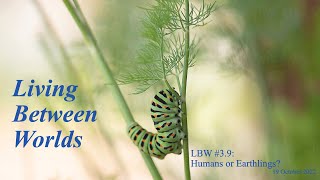
Gil Friend leads a conversation on Bruno Latour's idea of thinking of ourselves as earthlings rather than humans apart from nature. Participants share gratitude rituals, embodied practices, and Indigenous perspectives on seven-generation thinking to explore what it means to belong to the living world rather than stand apart from it.
Chapters
We are here at The, I think, 24th in a series of monthly conversations about living between worlds. Thank you. For those of you who've been with us before and those here for the first time, just by way of quick introduction, I've called this living between worlds because it seems to me that that's where we are, in an interregnum, in a space between an old world that is dying, as Gramsci said, and a new world is not yet born. The time of monsters, which I like to think of as not nasty, bad, lizardy things, but primal forces, unleashed enormous power looking for a place to land, wondering what comes next. The. The chrysalis between the caterpillar and the butterfly when form is utterly undefined. Jelly that looks like neither caterpillar nor butterfly. Here we are, you know, and we. We often think of history as a series of events, and we have plenty. Look, you know, look around you at the world. I don't know how much you watch the news. We've been trying to reduce the news budget and increase the music budget in our home, but just this morning, you know, Bloomberg says that we are now past the clean energy tipping point in 87 countries in the world. Pretty cool. And the Fed is using the only tool they have of interest rates to solve problems that have nothing to do with interest rates. I mean, oil prices aren't high because of interest rates, right? Food prices aren't high because of interest rates. And rising interest rates will slow the clean energy transition. So there's that mess we have, you know, the United. The United Kingdom tearing itself apart from the inside. Russia, in addition to waging war, tearing itself apart. If any of you follow Peter Zion, who I've spoken about before, very interesting YouTube this morning about that, he will argue that China is also in the process of tearing itself apart. And we don't know yet if the United States is on the same track. So here we are. And yet again, I'll go to Zion here. The United States has really unprecedented in the world intrinsic wealth and strength in its geography and in its demographics and sometimes in its culture. And yet we're in. In an extractive game, you know, building everything that we have as a house of cards on top of extraction, one way extraction from the living world in a way that we know is not sustainable. But we, you know, we all play along in our various ways. So one way to look at history instead of as a series of events is as a set of shifting interpretations of the world. Shifting interpretations about what it is to be human, how we encounter the events that we find facing us, the feelings that arise in us, the conversations that we have with each other, these have shifted over time. Not just in the last 500 years of capitalism or the supposed 8,000 years of what we call urban civilization, but maybe in the 50,000 years of homo sapiens sapiens. And is that the right date, folks? And a few hundred thousand years of advanced hominids? The stories have changed. I want to start with a story from Bruno Latour. The French philosopher, artist, political scientist passed away a week ago at the age of 75. A phenomenal contributor to two new stories in the world. You've heard me talk about them before. I've spoken about the book down to Earth that he wrote some years ago, which was an unusual take on the climate crisis. His penultimate book, I believe, or his ultimate book, I believe, is called Critical Zones. It's a whole earth catalog size thud on the coffee table, tome of many authors offering the invitation to us to land on Earth, to be here, to be Terrans among other terrestrial beings. Latour would say, we're not humans, we're earthlings. So what does that open up to even make that statement? You know, his invitation to land on Earth echoes for me, for the mantra that I've been living in for the past six months or so of what might it be like if we lived, if we behaved, if we did business, if we did everything we do, as though we actually belonged to the living world, as though we actually belonged to each other. Not the usual sustainability, environmental management thing of be nicer to nature, do a better job of taking care of nature, be less bad to nature. But what if we were part of the living world and lived as if that were so? The COVID of, of Critical Zones has a kind of face plate on the COVID It's a little dialogue, little conversation, imaginary conversation. I'll just recite that to you. You want me to land on Earth? Why? Because you're hanging in midair, headed for a crash. How is it down there? Pretty tense. A war zone. Close. A critical zone a few kilometers thick, where everything happens. Is it habitable? Depends on your chosen science. Will I survive down there? Depends on your politics. So let's have a conversation about that, about what that provokes, what that challenge provokes for each of us. How that lands in you, what's happening in you as you reflect on these matters. So what we'll do as a format, as we've done before, is have an open conversation, ken, for what, 10, 10 minutes? Is that the plan?
10 or 15 we're gonna go two rounds of 20.
Okay. Are we gonna do an open conversation first or gonna.
You can. Yeah. Well, we can. We can go into breakout rooms, or we can. If can start something here and then we can pause it and go. Breakout rooms. You tell me what you wanna do.
Yeah, let's start here for a little bit. So. And then we'll. And then we'll go to breakout rooms. You can either raise your hand on screen or even better, use the zoom button under reactions to raise your hand. That'll cue you up in sequence. I see. Marilyn, you're going to be first up in just a second. And feel free to use the chat. Introduce yourselves to each other in the chat. We will share the recording. We will not share the chat. So if you want the chat, save it with the three buttons at the three dots, ellipsis at the bottom. And with that, what is this question? What does this challenge provoke for you? How does it land for you? Marilyn, welcome.
If I heard you correctly, Gil, I'm hearing you say, let's go way beyond being nicer to nature and more aware of nature and get out into nature more often and think of ourselves in a different way, which is we are nature. We are earthlings. We are part of Earth. We're in it. We're not just on it. So first of all, let me check. Did I hear you correctly?
Pretty close. Okay.
So what that brings up for me is huge grief. And it also brings up for me this feeling of what if we didn't nibble around the edges in how we live? Like, we didn't sort of, like, build in nature time into our days, but we actually. I live in a house. What if I actually go outside immediately and maybe I even lie lying on the ground and that I even listen to the promptings of my heart? And so what this evokes in me is I think you're painting. I think you're offering an invitation to radical transformation and how to do that in a life. I live where I can show up here and be with you and others and have this conversation.
But it's feel your body, see what arises. I've got David Morse. We've got a bunch of hands and Anthony, and then we'll go from there. David.
Well, I just think what.
And I'm sorry, lost the name already.
Carolyn. Carolyn just said, it just is so good.
Rules and responsibilities.
Responsibility is just not something we hear much these days.
But I just really, really liked what.
She said, and she said it way better than I could.
Thank you. David Anthony Upward. Welcome. Good to see you.
It's very nice to be here. It was complete serendipity that I found out about this. So I'm enjoying the serendipitousness of this. I guess my reaction to. I've been following this piece of Latour's work for some time now, and I get excited by it. I think the possibilities of reimagining where we are after one could say, 500 years of modernism is a profoundly exciting possibility and possibilities. So for all the tenseness and anguish that we're going through on that journey, the possibilities in here are extraordinary, I think. And, you know, not just generational, but multi. Generational, even, you know, multi. Multi century, sort of once in multi century is the opportunity that we have in front of us if we, if we choose to grab it. And we're better equipped to grab it than we've ever been before, grabbing it in a conscious way, as opposed to it just sort of happening to us. We can actually. We actually know enough to have some sense of where could we go. As Latour said, he's labeled it Earth. And so we've got some sense of where. Where we could go. And I think that's probably the first time in history that humanity has been able to label a destination that is not a fiction, like progress is a fiction. So that. That'll do for me.
Thank you. Anthony Faye Sinat. Welcome. You'll need to unmute. Are you there? There you go.
Needed to help. Just remember, we are of nature and we don't seem to realize it. I put in the chat the name of the book, the Natural History of the Future. And one of the points that the author makes, whose name escapes me at the moment, is that there are so many parts of us that we do not know about. He's talking about bacteria and other organisms, microbes, and that we do not understand the role they play in our house and we do not understand the role that they play in the world. And basically we do all sorts of things to annihilate bacteria and microbes and we have no clue as to what the implications are. So there's just another dimension in terms of. There's so much that we don't know, and yet we proceed headlong into doing it. And of course, the. At the end of the book, he basically says we may screw it up, and if we do, the Earth will still roll along. It may be only microbes, bacteria that are there for a couple of hundred thousand years, but life will continue.
Thank you. Or a couple of million or a couple of hundred million. I've got this back. I got this background up here as a daily reminder of perspective. You know, this is, this is 13.8 billion light years away from where we're sitting right now.
Yep. Could be hundreds.
And these and these star like things here you see with the four points coming out of them, those aren't stars. Those aren't even galaxies. Those are galaxy clusters. Yeah. Oh, wow. Shell. Yeah. So it's helpful for me as I, you know, as I get caught up in the drama of right now, which is real. Also real effects on real people's lives right now. So I also find it helpful to step back and see where we are in the grand scheme of things. Shel and then Felix and then we'll go to breakouts.
Yeah. First to Andrew or Anthony. Sorry, just want to say stick around, come back. There's lots of serendipity in this circle of extremely smart people. I always feel blessed when I'm able to come. So I am approaching this from a very different perspective than usual. And that's the perspective that two weeks ago I became a grandparent.
So.
Thank you, George. All of a sudden I'm seeing this as a lot more personal because now it's not about what kind of world have I raised my children to be in and what kind of world is waiting for them, but the next generation.
Is here and then we'll go from there. David.
Well, I just think what.
And I'm sorry, lost the name already. Carolyn. Carolyn just said it just is so good.
Rules and responsibilities.
Responsibility is just not something we hear much these days.
But I just really, really liked what.
She said and she said it way better than I could.
Thank you, David. Anthony Epword, welcome. Good to see you.
It's very nice to be here. It was complete serendipity that I found out about this. So I'm enjoying the serendipitousness of this. I guess my reaction to this, I've been following this piece of Latour's work for some time now and I get excited by it. I think the possibilities of reimagining where we are after one could say 500 years of modernism is a profoundly exciting possibility and possibilities. So for all the tenseness and anguish that we're going through on that journey, the possibilities in here are extraordinary, I think. And you know, not just generational, but multi. Generational, even, you know, multi. Multi century, sort of. Once in multi century is the opportunity that we have in front of us if we, if we choose to Grab it. And we're better equipped to grab it than we've ever been before. Grabbing it in a conscious way as opposed to it just sort of happening to us. We can actually. We actually know enough to have some sense of where could we go. As Latour said, he's labeled it Earth. And so we've got some sense of where we could go. And I think that's probably the first time in history that humanity has been able to label a destination that is not a fiction, like progress is a fiction. So that'll do for me.
Thank you. Anthony Faye Sanat. Welcome. You'll need to unmute.
They.
Are you there? There you go.
I needed to help. I just remember we are of nature and we don't seem to realize it. I put in the chat the. The name of the book, the Natural History of the Future. And one of the points that the author makes, whose name escapes me at the moment, is that there are so many parts of us that we do not know about. He's talking about bacteria and other organisms, microbes, and that we do not understand the role they play in our health and we do not understand the role that they play in the world. And basically we do all sorts of things to annihilate bacteria and microbes and we have no clue as to what the implications are. So there's just another dimension in terms of there's so much that we don't know and yet we proceed headlong into doing it. And of course, at the end of the book, he basically says we may screw it up and if we do, the Earth will still roll along. It may be only microbes and bacteria that are there for a couple of hundred thousand years, but life will continue.
Thank you. Or a couple of million. Or a couple of hundred million. I've got this background up here as a daily reminder of perspective. This is 13.8 billion light years away from where we're sitting right now.
Yep. Could be hundreds.
And these star like things here, you see with the four points coming out of them, those aren't stars. Those aren't even galaxies. Those are galaxy clusters. Yeah. Oh, wow. Shel. Yeah. So it's helpful for me as I, you know, as I get caught up in the drama of right now, which is real also, you know, real effects on real people's lives right now. So I also find it helpful to step back and see where we are in the grand scheme of things. Shell and then Felix and then we' go to breakouts.
Yeah. First to Andrew or Anthony. Sorry, just want to say Stick around, come back. There's lots of serendipity in this circle of extremely smart people. I always feel blessed when I'm able to come. So I am approaching this from a very different perspective than usual. And that's the perspective that two weeks ago I became a grandparent. So thank you, George. All of a sudden I'm seeing this as a lot more personal because now it's not about what kind of world have I raised my children to be in and what kind of world is waiting for them, but the next generation is here. So I don't have any great insights on what we're talking about, but I found that my perspective has made a radical shift since September 30th.
Shel, let's not worry about insights. But what's your perspective or maybe what's your mood in this shift?
My mood is mostly optimistic. If we can manage to avoid nuclear war escalating out of the Ukraine conflict, I think if we can dodge that particular plutonium flavored bullet, that in general things are on a good path in a lot of ways. There's a lot more awareness.
No, no, I'm not asking. I'm not asking you for your prediction. My mood, I've given up on predicting.
My mood is based on what I think is going to happen. So I can't separate.
Okay, that's one way to do it.
Yeah. I mean, it's a more optimistic time than it was a few years ago. And I'm hoping that Robert Hubble is right, that the Democrats will gain many seats and actually be able to accomplish some things that they've talked about. And meanwhile, here in Massachusetts, I've been out canvassing for a ballot question that would allow driver licensed if people don't have documentation to be in this country. And that feels important and motivating.
A good reminder to all of us that there's work to be done over the next few weeks, wherever we are. Even if you're in a safe district, there's a lot of districts that aren't safe and need work. So your time, your money, your phone calls, whatever, are all invited, whatever you can do. Thank you, Shell. Felix. Then we'll go to Breakouts.
Oh, thank you. So it was, it started with Shell a minute ago. And I want to continue changing the subject a little to the drama of right now, as Gil said, because this people in this group have been together for over two years, many of us, and we've been hearing how we've been thinking about many, many things. It seems to me that despite Shell's hopefulness about gaining 10 seats in Congress. I think we should. I would like us to begin thinking now about where we might be a month from now after the election, because I think it's very likely that we're going to be in a situation where we have no prospects for any additional federal action on climate for two years and maybe a lot longer.
I'd like to ask Felix that we hold that conversation till next month after the election.
I was going to suggest exactly that, that we begin thinking about it now and have that conversation next month about how we're going to go oil in a new world.
But what I want to ask, what I, what I want to hear from you now is how does Latour's provocation of landing on Earth, of belonging to the living world, how does that land for you?
It. It lands for me.
How does that affect all the other things that you were involved in?
It. It lands to me as a beautiful vision to inspire people because that's what we have to do most broadly. We in the climate world. We need to inspire people and, and find some way for people to have hope. It does, though, seem like so far.
Away.
As an organizing idea or anything like that that I worry about that.
Got it. Thank you. I get that it seems very far away and I also get that it's how humans have lived for most of our time on this planet. Both true. Interesting, huh? Ken, let me hand it over to you. Take us into the next piece of the story.
Did someone just raise their hand? I thought I saw a hand jump in there. Kirk, you want to say something quick here?
The, this landing on Earth, one of the things that I've been struggling with.
And thinking about is instead of landing.
On Earth from somewhere else, that we.
Grew out of the Earth. We are the Earth. We are of the Earth.
We're the same stardust and everything. And it makes a difference for me to think I'm not put on this.
Earth from somewhere else.
I am part and parcel of it and that makes me a brother, sister with everything else.
That's, that's all.
Thank you. Really good. I really got to get your hand in there for you.
Yeah.
Jump to the next stage. So, hello everybody. Nice to see you all. Hope you're all doing well as we've done for the last couple calls. We're going to go to breakout rooms now. The first question for round one is how do you interpret the phrases land on Earth or be long delaying world? What does that stir up for you? You want to keep this very Focused on the personal.
Second one. It was hard.
I'm going to put it in the chat here. How do you interpret the phrases land on earth or to belong to the living world? Okay, what does that stir up for you? Is that clear? It's now in the chat. Whoops. Wait second. Now it's in the chat. And we'll be in breakout rooms of. I've got five rooms, there's 20 of us or 19 of us. There'll be three, four people per room. It's a self facilitated conversation. Please make sure that everybody has a chance to speak. Don't you know, if someone's not participating, please encourage them to speak up. And I want to encourage you not to jump to problem solving. Stay in the imaginal realm. We're trying to literally reimagine what it means for a lot of us. I'm sure there's some people on this call who already do feel that they belong to the living world. But most of us in most of our culture doesn't have that slant. So rather than move into what we need to do to fix that, just start to say, well, here's what it means to me. Any questions about that? All right, we'll have 20 minutes, we'll come back, we'll do a second round, and then. Actually, you know what, since we're at 12:30, we're gonna do this for 15 minutes so we can do two rounds and then we'll have come back to plenary and hear what people are discovering. So I'm gonna open the rooms. We'll see you all in a few minutes. Welcome back.
Thank you.
How was that for people? Yes. No need more time. Good. Okay, so give me just a second to recreate the breakout rooms. And I have another question for you here. So the question for round two is, what do you imagine would be different in your life if you were to live from a stance of belonging to the world? What do you imagine would be different in your life if you were to live from a stance of belonging to the world? Now, some of you may already be doing that, so feel free to say, I already am. And here, here's how it's affected me. Because there's probably a time when you didn't have that. But again, we're trying to stay in the imaginal realm. Give me just a minute to recreate the breakout rooms so you don't all end up with the same people.
Ken, let's add the word living world.
To that question, what Gil said.
And then if you could repeat that or is it in the chat?
I put it in the chat. Gil, while I'm doing the breakout rooms, would you just.
I'm going to amend the chat.
Thank you.
So what imagine would be different in your life if you were to live from a state or perspective of belonging to the living world? I'm insisting on the world living being in there to remind us that the world is alive.
Good.
Yeah, this is Mohan. I believe the world is alive and.
We'Re going to continue living in spite.
Of all the pessimistic views people have.
I know that we have already reached.
The limits of reversing the global climate impacts and stuff like that, but I think so. There's a lot to be done and we need to continue to live and we will survive this whole life of living world.
Good, Mohan, thank you for that. Let me ask you. Hold the thoughts. Let's get you all into breakout rooms where you can talk more richly in smaller groups. Then we'll come back again together.
And I'll just say one more thing. I'm reading a book called the Nutmeg's Curse by Amitav Ghosh and it's a really fantastic book. He's an amazing writer. It's a bit of a depressing book, but one of the things he points out is that in the late 1500s, early 1600s, in Europe, a new idea was taking hold which, coupled with capitalism, prove quite disastrous for us all. But the idea was that the planet, the Earth, is not alive. The Earth is inert and it's only productive when humans are working it. And that insidious idea has affected every single one of us. So it goes back several hundred years. So we're gonna, in a future call, look at how to undo that. But that's one of the roots of that, is, you know, the Earth was considered alive for millennia until this idea took hold in the. In the intellectual circles, particularly among the Dutch East India Company. So just a little root of our issue. All right, going to open the breakout rooms. It's 12:48. We'll see you back here about 1:05 and then we'll be in plenary for the rest of the time.
Here we go. What do you imagine would be different in your life if you lived from this question?
See you in a bit. Welcome back. I hope you had some interesting conversations you'd like to share with us what they learned during their breakouts or what they heard.
I was in two really good breakouts and I wish the transcript had included them because I didn't Take notes. And they were really good. But the one that we were just in, Ken was one of the people and we were just beginning to talk about how the right living choices are not the same for every person. We have different biologies, we live in different ecosystems. Ted included them because I didn't take notes and they were really good. But the one that we were just in, Ken was one of the people and we were just beginning to talk about how the right living choices are not the same for every person. We have different biologies. We live in different ecosystems. For Ken's particular body meat is something important for me. I gave it up 49 years ago and it hasn't been a problem. But I know other people who tried and their body said this is not what you need. Absolutely not. So I'll share that. There's a lot more. The fourth breakout also was good and it's already too far back for me to pull it out.
All right, thank you, David.
Yeah, I think the last thing that came up in our group, Ethan said that he's both pessimistic and optimistic.
And I like that.
And I think that's really where I am because I know what can be done and I'm really optimistic about all the possibilities. And yet.
There'S.
So I think about the time between now and when we can really have some more things to be optimistic about. It's going to get pretty warm we now and then. But that's, that's, that's where I am. I'm, I'm, I just, I know how much can be done, all the possibilities, and I'm looking forward to more of it.
Thank you, David. Also, like to share. Don, you got your hand up.
Yeah.
I was a little surprised to realize that my response to this question was really about the self care that I've been prioritizing a lot lately as a way of staying healthy and vibrant and functional till later in life than many people are able to do. And I was realizing that the regenerative experiences that I'm having inside my body by focusing on both parasympathetic and sympathetic kind of approaches to balancing both the parasympathetic and sympathetic nervous system approaches is.
Really.
Something that I don't see. I see a lot of people doing self care in active ways, but the more still quiet deep rest ways of the parasympathetic seem to be less deep rest ways of the parasympathetic seem to be less so I'm just very grateful that I lie in a chair called the cloud that equalizes all the pressure in my joints. So my sacral pump starts pulsing the pads of my toes and my fingers in about five minutes. And I can lie there and feel my body regenerating itself. I can feel the interstitial fluid pumping throughout my body. My whole body just pulses and it regenerates itself right there.
And.
That'S when I relate to the living world. It's like there's a living world inside of me. So I'm just very grateful that I lie in a chair called my physical instrument is so astonishingly mysterious. But this feeling of the pulsing of life through my body, that's not my heartbeat, that's my sacral pump pumping the pads of my fingers and my toes is just a deep, direct connection to how alive life is. And feeling very grateful to have discovered that.
Thanks, John.
David, I wanted to add to what the speaker before Jan said about. I'm paraphrasing, but it was about having hope, and yet not hope. And I feel like I live in a paradox in which I see no possibility of movement in the political universe. And yet in my inner world, I see tremendous possibilities for growth and change both within me and within others. And that's what keeps me going.
And.
I personally don't focus on seeking results. To me, it's the effort that is what's important. And this seems to fit right into Gil's introductory comments about living between two worlds. The material world that I live in is really shitty. And there are people that want to have a nuclear war, and I don't mean the Russians, I mean right here in the US in the State Department. And at the same time, there's so much possibility that I see in writers like Caitlin Johnstone. And so I'll leave it there. Thank you.
Thanks, David. George, good to see you. You're muted.
Good to see you, too, Ken. To pick up on a point that John raised, most every morning I do a gratitude meditation. I get up, go to the bathroom, come back into bed, pull the covers over me, lie in corpse posture, and I breathe. And I started out by just being in my body, feeling my body, being grateful to my body. And then around February 2011, when Fukushima happened, I started thinking about, okay, going from my body to the earth, to the center of the earth and being grateful for the earth. And there was a resonance for me for that. And then a few years later, what happened was I said, okay, I'm in my body. I'm grateful for my body. I go down to the center of the earth, and I'm Grateful for the Earth, now let me align with the universe, right. And so that's been the progression over years and then sometimes it spreads out in other dimensions. I don't know which ones they are, but it feels like other dimensions. Gratitude is very, is very powerful, as I think all of us know. And then to be in your body and recognize your body, be grateful for your body, be grateful for the earth and to connect to that, to connect them, all of that to the universe for me has been very centering and very useful. So I just send it out there to those who can use what they want.
Great reminder, George. Thank you, Alistair. Yeah, I just wanted to basically say that it's important to look for solutions that are sustainable, not just one off solutions, you know, and that's part of the case of being in the living world. You know, the living world is mostly sustainable, you know, it has its own.
Home phases and so on.
But yeah, I see many people.
With.
Some people, you know, discussing whatever political issue there is or environmental issue and proposing solutions that just seem to be one of solutions which might.
Bring us.
To a good state for a year.
Or two, maybe a few years, but.
Then.
Without constant effort and input, we just go back to where. So I don't, I don't know how to make things sustainable.
It's just, I'm just pointing out that's.
Something that we need to think about, you know.
Thank you. We don't, we don't expect anybody here to have all the answers, so. But if we're in the questions together, we might have a better chance of getting there. All right, I don't see any hands up at the moment. Gil, you want to step in here for anything. You're muted this first. Gil's first time on Zoom, so we have to go come a little slack.
My first time noticing that my system is, is muting me when I come out of breakout group, which I hadn't, hadn't noticed before. It's a default setting, I believe, no doubt. Yeah, Well, you know, Ken, you said at the start that we, you know, we were encouraging people to be in the question, not look for the solution in this call, but in a very practical way. Alistair, to what you were saying, the question is fundamentally important. You know, we may not know how to do everything we need to do, but if we ask that question, how do we do it in a way that is sustainable, whatever that means, how do we do it in a way that respects all life? Dwight Collins in our last breakout was talking about his work in optimization for Companies and business processes. And typically that's in a particular frame of how, you know, within the law and within financial needs, how do we optimize this process to make the most money? But that optimization frame could be bigger and it could include, you know, the Haudenanci seventh generation ethic of how do I optimize in full sense of my responsibility to seven generations of ancestors and seven generations of descendants to come? And then what does my optimization now look like? Because I still need to, you know, produce profit and pay my shareholders and pay my employees and pay my rent. And to the. And to the folks who say, oh, that's not practical. We got to make money, I say, well, you're already optimizing within the constraints of the law and perhaps other factors. So this is saying, let's bring some other parts into the story, right? It reminded me of Bill McDonough's strengths of the law and perhaps other factors. So this is saying, let's bring some other parts into the story, right? It reminded me of Bill McDonough's beautiful sort of re articulation of that. What he would say is that he would ask, how do we beautiful sort of rearticulation of that. What he would say is that he would ask, how do we do what we do, make the decisions we make, design the things that we design in a way that loves all the children of all species, do what we do, make the decisions we make, design the things that we design for all time, which is, you know, another way of saying the same in a way that loves all the children of all species for all time, which is, you know, another way of saying the same thing. I think it's consistent with the. With the braiding sweetgrass perspective thing. I think it's consistent with the braiding sweetgrass perspective and the teachings of the long lineage of indigenous peoples and my speculation in that active and the teachings of the long lineage of Alistair was talking in our first group about the challenge of the indigenous peoples and my speculation in that Alistair was talking in our in our first group about the challenge of the tree huggers and the concrete poorers who never talk to each other or if they try tree huggers and the concrete pores who never talk to each other or if they try, fail. And I imagine that that love all the children of all species for all time will land in any of those groups of any political persuasion of any intellectual inclination that's going to hit people fail. And I imagine that love all the children of all species for all time will land in Any of those groups of any political persuasion, of any intellectual inclination that's going to hit people in a way that maybe starts to open something up. What if we took that into account? Ken, is that your hand up there?
That is my hand up there. Well, you, you, you said a phrase that just. I always have to comment on this. I once asked a, an indigenous teacher, how did your ancestors predict 140 years in the future? Because if you figure a generation is 20 years, seven generations is 140 years. He said, we don't. That's a stupid white person's interpretation. Said what we not is that someone who lived a good long life would be privileged to know seven generations. They would know their great grandparents, their grandparents, their parents, their siblings, their children, their grandchildren or great grandchildren. And so we recognize there are always seven generations walking through time. And we, when we're making decisions, we make sure every single one of those generations has a voice in our councils, including those who can't speak for themselves, like wolf and bear and eagle and turtle. Right. So that's a very different way of understanding the seven generations and thinking we have to think 140 years in the future. Because if you've been alive for as long as we have, you know, there's no way anyone could have predicted what the world will look like right now from the day that we were born. It's just evolving too rapidly. So it's a reframe that I just wanted to offer because it always, it always is a little irritating to hear someone say seven generations, the past, seven generations, future. No, it's seven generations all the time. At least that's the story I got.
I love it and it's a beautiful reframe. And I'll just say that when I say it. I don't think about predicting seven generations into the future. I think about having some sense of care, which for me means not to leave a permanent toxic legacy.
Yes.
Not to po. You know, I can't predict it, but I don't want to poison those folks. No PFAs, no, lots of stuff.
John.
Yeah, I, I also, in the, in the sense of the living world, I, I was happy to go inside and I also just wanted to say that I, I, I really support the attitude of gratitude. I, I use it every moment. Whenever what I call K thoughts come in, I just go to gratitude. And I've been following the earth's direction every day for, since the mid-70s, hosting commons.org waiting, waiting for the team to show up that knows what to do about that and just the magic of what life does for those of us so that are in flow with what life is up to. It just, it's an experience of grace and that, that the earth just provides us with everything we need if we're willing to be open to it and allow the gifts of spirit to come, even if they might be inconvenient or uncomfortable or surprisingly hard or all those things. But Galileo said, be grateful for all your hard stuff and be infinitely grateful for the most difficult things, because life could just as easily do nothing whatsoever.
Yeah.
And so I feel that gratitude and, and the gift of, of, you know, I've not never entertained any sales of commons.org I'm a steward of it and looking forward to when the group assembles that can actually leverage that URL for its highest potential. I feel very supported by life too.
Thank you. Thank you, Jan, for the resonance of gratitude. For me, that's a key part of the living as though we belong, you know, grateful for all life in every moment. You know, some of us probably have a practice of grace before or after meals. It's not a bad thing. At Timothy's memorial service last Saturday night, his five children recited together the grace before meals that their family has been doing for decades. And it's long, it struck me as long it's not a couple of phrases. It took them, you know, a couple of minutes to recite it and you could tell that these, these folks learned this as kids and it's now part of their families with their kids. And it's an orientation to the, to the, to the, the sustenance that's there for us in every moment. I think I shared with you, maybe on a previous call, my, my singing teacher, Felicia Sloin, a human with a ruby throat at the end of every choir practice, would share with us her daily gratitude ritual. She'd bring out a beautiful polished wood bowl in which were a hundred polished glass marbles or stones of various kinds. And her practice was the end of every day to take one stone and remember something she's grateful for and move it from one bowl to another. She invited us 10 people in a choir to each do that in a go round. So we went 10 times around the circle. And it was really an interesting process for me and for the others that the first round was easy and the second round was easy. At third or fourth round, we had to start digging or more accurately, had to stop start quieting ourselves and listening and reflecting on our day and opening ourselves to think about a human with a Ruby throat at the end of every choir practice. What were we grateful for that we just took for granted? We didn't notice as it flew by. Practice would share with us her daily gratitude ritual. She'd bring out a beautiful polished wood bowl in which were a hundred polished glass, marbles or stones of various kinds. And her practice. And so we were building the muscle of being of doing that 10 times at the end of each day. Her practice was to do that a hundred times every day. What does that shift in someone to do that? How does it shift your orientation to David? The paradox? David Schomburn, you were talking about living in. I loved how you expressed that kind of very personal living between world of having, you know, one of you and an experience and they seem to be in conflict but they're both there alive with you. And you was at the end of every day to take one stone and remember something she's grateful for and move it from one bowl to another. She invited us 10 people in a choir to each do that in a go round. So we went 10 times around the circle and it was really an interesting process for me and for the other live in that.
Carolyn. Carolyn, you want to take the mic?
You got to turn on the mic though. I wonder what it would be like.
If we knew what the earth was grateful to us for. And I wonder if at some point it wouldn't be helpful if we spoke on behalf of the earth to those around us that are doing this hard work, that if I as.
As a piece of the ears that the first round was easy and the second round was easy and third or fourth round we had to start digging or more accurately had to stop start quieting ourselves and listening and reflecting on our day and opening ourselves to think about what were we grateful for that we just took for granted or we didn't notice as it flew by Earth.
I'm grateful for this. This contribution you have made to the well being of the earth.
Lovely. It's a funny thing, this gratitude thing. Once you start being grateful, it gets hard to stop. There's a lot to be grateful for, you discover.
George, before you speak, I'll just say I was on Bali back in 06 for quest for Global Healing Conference and spoke to a lot of the Balinese women who every morning they get up and they make these offerings and they.
And so we were building the muscle of being of doing that 10 times at the end of each day. Her practice was to do that a hundred times every day. What does that shift in someone to do that how does it shift your orientation to David? The paradox? David Schoenbrunn, you were talking about living in. I loved how you expressed that kind.
Of, you know, there's statuary all over the island, different Hindu gods and goddesses and every day there's an offering and they will tell you this is their way of giving thanks, you know, and if you've never been to Bali, the entire place is a. Is an art gallery, basically. It's. It's just. It's so incredible. There's natural beauty and there's all the beauty of the manufactured, you know, the human created art there. And it's done with a sense of gratitude. And they actually have no word for art. So. George. Sorry, go ahead.
John Todd once told me, water invented us so it could very personal.
Living between world of having, you know.
One so we can carry it around.
View and an experience and they seem to be in conflict, but they're both there alive with you. And you live in that.
Carolyn, Carolyn, you want to take the mic?
Fits in with what Carolyn was saying.
Yeah.
On Bali and art, they destroy it a large proportion. That's what I've read. Not only is there no word for art, everybody is an artist, but they don't know it. And the art is ephemeral. I try and play.
Got to turn on the mic though. I wonder what it would be like.
In music every night because if I don't, I get sick. And after I play, if there's a resonance for me, if we knew what.
The earth was grateful to us for. And I wonder if at some point it wouldn't be helpful if we spoke on behalf of the earth, to those around us.
Music that I played, I thank my instruments. You know, I say thank you to the guitar, thank you to the violin, thank you to the piano. Whatever I'm playing, you know, I said thank you because it showed me something coming from somewhere, I don't know where.
That are doing this hard work that if I as.
As a piece of the earth.
Somebody once said, if you only had one prayer, thank you would be enough.
I'm grateful for this, this contribution.
Well, there's Anne Lamont. This is a three basic prayer you.
Have made to the well being of the earth.
Lovely. It's a funny thing, this gratitude thing. Once you start being please thank you.
And wow.
Love it.
There you go.
Well, we're just about at the end. Any closing thoughts from anybody before go or I steal the closing thoughts.
I'll just. I'll say that I've had the amazing Experience in the last couple of months of learning about Walter Russell and Walter Russell's impact on this country and the Commons in the first half of the last.
Grateful. It gets hard to stop. There's a lot to be grateful for. You discover.
George before you speak, I'll.
Just say a century and then his complete disappearance. But many of you probably never heard his name, kind of.
I was on Bali back in 06 for a quest for Global Healing conference.
And the Leonardo of America. And I just, I've, I've gotten spoke.
To a lot of the Balinese women who every morning they get up and they make these offerings and they A.
Lot of inspiration and hope from learning about this man's life and the impact that he had on the world from the 1890s up until the middle of the last century. And I don't know, I, I, I, the, the man who Discovered the Secrets of the Universe is the book by Glenn Clark about him. But if you don't know of his story, it's, it's pretty inspiring.
Thanks, John. Gil, I'll give you the last word. I just want to say one thing. I, you know, there's statuary all over the island, different Hindu gods and goddesses and every day there's an offering and they will tell you this is their way of giving thanks. I watched a very interesting talk a couple weeks ago with Stuart Brand, Kevin Kelly and Jonathan Haidt, who wrote the Divided Mind or the Righteous Mice. You know, and if you've never been to Bali, the entire place is. And he was really clear that he's concerned about democracy. An art gallery, basically, it's, it's just, it's so incredible. There's natural beauty and there's all the beauty here. And it was a wonderful talk. And at the end he closed with a quote from Joseph Campbell that really struck home for me. And the quote is participate joyfully in the sorrows of the world. Because I really feel like there's so much sorrow going on around me and yet I am able to participate joyfully of the manufactured, you know, the human created art there. And it's done with a sense of gratitude and they actually have because I do give thanks because I do feel connected to a living world and even if it's being extincted before my eyes, I am going to like the, the Zen store. No word for art.
Yeah.
So George, sorry, go ahead. Worry of the monk who, you know, chased by the tiger over the cliff is holding on to a little branch.
And he sees a. John Todd once told me water Invented us so it could. So we could carry it around.
Robbery. And he's like, it's the most delicious strawberry ever had. Right. And then he falls off the cliff. So I'm. I'm here to suck up all the sweetness and give thanks and say wow. And wow.
Oh, wow.
Yeah, I think, I think George.
Yay.
Wow. George had a good summary there. This has been very rich call for me. I thank you all. I'm grateful to you all for where you've, where you've traveled with the offering that Ken and I started us with.
Fits in with what Carolyn was saying.
Yeah, yeah.
On Bali and art, I'm struck. They destroy it.
A large proportion.
That's how to say this, by some of the surprises in what some of you said, but also what I've read.
Not only is there no word for art, everybody is an artist, but they don't know it. And the art is ephemeral.
I try and put the surprise of how unsurprising it all is, how well we know all this, how familiar this is to us if we stop and think about it for a moment. David Grossoff talked about the, you know, the relative ease of recognition of mammals and, you know, mammal like creatures who have a form somewhat similar to ours. But Carolyn talked about the wild rice as kin, which for me, as an.
American city boys, the music every night. Because if I don't, I get sick. And after I play, if there's a resonance, for me, it's more of a.
Stretch than to have a relationship with a cat or a. Or an ape.
Music that I played, I thank my instruments. You know, I say thank you to the guitar, thank you to the violin, thank you to the piano, whatever I'm playing.
You know, someone I think was Dwight wondered about if we orient in this way that we're proposing here, how do we think about innovation if we're, you know, Dwight, I'm putting words in your mouth. If we're constraining ourselves by a sense of responsibility to a living world. But, you know, we, but we talk, you know, the living world is rife with innovation.
You know, I said thank you because it showed me something.
We call it adaptation. We call it mutation. We call it natural selection. David observed that, you know, viruses are masters of innovation. SARS COV2 master of innovation. It. The whole darn thing is alive. And so what it. What it brought back to mind for me is probably my favorite passage in Torah in, in. In the book of Deuteronomy, where Moses, near the end of his life, says, to the Israelites. This teaching that I'm offering you is not in heaven. That you should need to ask who's going to go to heaven and get this teaching for it and bring it back to us so that we can have it to follow it and it's not over the sea that you should need to ask who's going to cross the sea and find this teaching for us and bring it back to us so that we can have it and follow it. Said no, this teaching is very near you. It's in your mouth.
Coming from somewhere I don't know where.
Somebody once said if you only had one prayer, thank you would be enough.
Well, there's Anne Lamont. This is the three basic prayers. Please thank you and wow.
Love it.
There you go.
Well, we're just about at the end. Any closing thoughts from anybody before and.
It'S in your heart that you may do it in how you speak. In other words and what you do is where the teaching lives or go awry.
Steal the closing thoughts.
I'll just I'll say that I've had.
So thank you for this opportunity to listen and learn together had the amazing.
Experience in the last couple of months.
Of learning about I invite you to ask this question as you go Walter Russell and Walter Russell's through your days and weeks in the coming months. Join us again here.
Impact on this country and the Commons in the first half of the last.
Third Wednesday in November. Register in advance if you haven't already.
Invite other century and then his complete disappearance but many of you probably never.
Heard his name Kind of people to join us. Thank you for those of us who brought some new faces today. Ken, one quick question.
This is to the whole group you gave a thumbs up or a thumbs down or a thumbs sideway the Leonardo.
Of America and I just I've gotten a lot of inspiration and hope from learning about this man's life and the.
A couple months ago we shifted the format from Gil talking back and forth people to moving to breakout rooms. Should we continue that? Is that working for people? Do you like it? Yes. Not sure. No. Okay. Looks like mostly thumbs up. That was my quick polling. Thank you very much.
I appreciate that impact that he had on the world from the 1890s up.
Until the good thanks for that Ken. See you next month. And places between be well middle of.
The last century and I don't know I, I I the the. Man who Discovered the Secrets of the Universe is the book by Glenn Clark about him but if you don't know of his story. It's, it's pretty inspiring.
Thanks, John. Gil, I'll give you the last word. I just want to say one thing. I. I watched a very interesting talk, a couple Stuart Brand, Kevin Kelly, and Jonathan Haidt, who wrote the Divided Mind or the Righteous Mind. And Haidt was really clear that he's concerned about democracy here. And it was a wonderful talk. And at the end, he closed with a quote from Joseph Campbell that really struck home for me. And the quote is, participate joyfully in the sorrows of the world. Because I really feel like there's so much sorrow going on around me and yet I am able to participate joyful because I do give thanks because I do feel connected to a living world. And even if it's being extincted before my eyes, I am, I am going to like that. The Zen story of the monk who, you know, chased by the tiger over the cliff, is holding on to a little branch and he sees a strawberry and he's like, it's the most delicious strawberry ever had, right? And then he falls off the cliff. So I'm, I'm here to suck up all the sweetness and give thanks and say wow. And wow.
Oh, wow.
Yay.
Wow.
George had a good summary there. This has been very rich call for me. I thank you all. I'm grateful to you all for where you've, where you've traveled with the offering that Ken and I started us with. I'm struck, How to say this, by some of the surprises in what some of you said, but also the surprise of how unsurprising it all is, how well we know all this, how familiar this is to us if we stop and think about it for a moment. David Grossoff talked about the relative ease of recognition of mammals and mammal like creatures who have a form somewhat similar to ours. But Carolyn talked about the wild rice as kin, which for me as an American city boy is more of a stretch than to have a relationship with a cat or a, or an ape. You know, someone I think was Dwight wondered about if we orient in this way that we're proposing here, how do we think about innovation if we're, you know, Dwight, I'm putting words in your mouth. If we're constraining ourselves by a sense of responsibility to a living world. But, you know, we, but we talk, you know, the living world is rife with innovation. We call it adaptation. We call it mutation, we call it natural selection. David observed that, you know, viruses are masters of innovation. SARS COV2 master of innovation. It the whole darn thing is alive. And so what it, what it brought back to mind for me is probably my favorite passage in Torah in, in the book of Deuteronomy, where Moses, near the end of his life, says to the Israelites, this teaching that I'm offering you is not in heaven. That you should need to ask who's going to go to heaven and get this teaching for it and bring it back to us so that we can have it to follow it and it's not over the sea. That you should need to ask who's going to cross the sea and find this teaching for us and bring it back to us so that we can have it and follow it said no, this teaching is very near you. It's in your mouth and it's in your heart that you may do it in how you speak, in other words. And what you do is where the teaching lives. So thank you for this opportunity to listen and learn together. I invite you to ask this question as you go through your days and weeks in the coming months. Join us again here, third Wednesday in November. Register in advance if you haven't already. Invite other people to join us. Thank you. For those of us who brought some new faces today, Ken, one quick question.
This is to the whole group. You can give a thumbs up or a thumbs down or a thumbs sideway. A couple months ago, we shifted the format from Gil talking back and forth people to moving to breakout rooms. Should we continue that? Is that working for people? Do you like it? Yes. Not sure. No. Okay. Looks like mostly thumbs up. That was my quick polling. Thank you very much. I appreciate that.
Thanks for that, Ken. See you next month. And places between, be well.










