The Mysteriously Elusive Business Case for Sustainability — Living Between Worlds 6.1
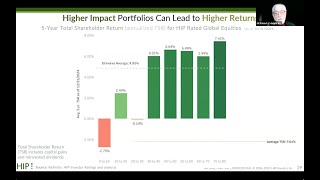
This is a January 22, 2025 Living Between Worlds call hosted by Gil Friend exploring whether a business case exists for sustainability. Gil frames the problem (widely held belief that sustainability costs more; hidden or "submerged" value and risks; fragmentation of projects; distorted market signals), offers stories from his consultancy experience, and invites practitioners to discuss. Paul Herman (HIP Investor) presents cross‑sectional investment data showing higher financial returns and lower risk for more sustainable companies across multiple years (2017–2024). The remainder of the chunk contains diverse participant reflections on practical barriers and solutions: peer collaboration, regenerative business models, on‑site waste‑to‑value pilots, trust‑building, deliberative dialogue across political divides, system change (monetary, governance), and local/regional experiments.
Chapters
Foreign. So welcome everybody, to the first living between Worlds call of 2025. This is the beginning of our sixth season of these calls, which I started in the early days of the COVID pandemic with the sense that we were living between worlds in, in the. In, in the way spoken of by the Italian revolutionary Antonio Gramsci, who said that this is a time between worlds. It's a time when the old world is dying and the new world is struggling to be born, and between is the time of monsters. And that felt like an apt description of the world we were living in 2020. And all the more so now. And so over the years, we've had conversations about sustainability and politics and culture and language and philosophy and mood and how we live in this time and how we live in this time as committed, productive people. I don't know all of you on this call, but I those of you who I do know, I know, care deeply about the world we live in, our relationship with the living world and with each other. Many of you are working professionally around these concerns. Others, not. Some of you have retired. Others of you don't know what retirement means. And I'm just honored to have you all in this community and in this conversation. So thank you. So how this will work is. I'll. I'm. I should introduce myself because some of you don't know me. I'm Gil Friend. I'm CEO of Natural Logic, a sustainability strategy consultancy. And I'm an ontological coach working with world changers to help them change worlds. I've been hosting these conversations with Ken Homer, my co pilot, who's unfortunately not able to be with us today. So I'll frame the conversation, offer some hypotheses from my perspective, and then I'll ask for comments from a few people who are deep in the questions that we're looking at today, the questions of the sustainability business case. And then we'll open it to broader discussion from all of you. We're going to go till 1:30. I invite you to participate, both live in the conversation and in the chat. And with that, let's go. So many of you saw my posts on LinkedIn recently, there's been a lot of debate on LinkedIn about the sustainability business case. Is there one, you know, is there a business case for sustainability? How do you frame it? How do you communicate it? How are companies moving on it? Do people buy it? A number of folks have challenged that question. Ken Pucker, I don't know if he's here today, has former CSO at Timberland, one of the more progressive sustainability focused companies, says it's just not really there. Paul Herman, who's here with us today, will say no, it actually really is. Here's some data. Bill Bowie and Ralph Thurm Al, again unable to be with us today, have said now the question's backwards. It's not is there a business case for sustainability? But is there a sustainability case for business? You know, can we even justify what we do in the world today? Joran Karstadt said, you know, instead of the usual question of is this good for my business, might want to ask the question of what is my business good for. But let me, let me, let me actually start with a couple of stories. Just in my personal experience. Long time ago, 20 plus years ago, when, when the, the legendary Bill Reid was leading the green building practice at Natural Logic, we would get calls from people and companies who would say, can you help us build a green building? Then we would say yes, of course. And they would say, can you help us build a LEED silver building? For those of you don't know, the lead green building rating system has a certified silver, gold and platinum tiers of quality. People would say let's build silver. And we would ask them why. And the common answer was, well, you know, certified doesn't sound cool enough, but green and platinum are too expensive. And we would typically not say anything and leave the silence on the phone call. And after some uncomfortable amount of silence, the person would say isn't it, isn't it too expensive? And then we would offer the conversation and the data that says, well actually, not actually, if you approach it correctly with an integrative systemic approach, you can build a LEED platinum building for no incremental capital cost over certified and you'll have lower operating costs. So your ROI is you know how to get, how do you, how do you calculate an roi? Where the, where the, where the, where the denominator is zero. So that was 20 plus years ago and people still don't get it. Not just about green buildings, but about sustainable practices. We had a client years ago, a very large multi billion dollar international manufacturing company. We work with their leadership team to identify the value leakages in their supply chain and proposed a circular business strategy that would create new lines of business and we thought significant business as well as environmental benefit. We offered to calculate or estimate the value of that strategy and they said no, no, no, we'll do it ourselves. I think they didn't trust their consultants to be neutral in that matter, which is fine. I Just asked, you know, please, please let us know what you come up with. Two weeks later I got a call from the global head of strategy for this multi billion dollar company who said, oh. And I said, as we left the room, I said, I predict this will be a very large number that you'll come up with. Global head of strategy called, said, now you'll be interested to know that it wasn't a large number. And I thought, you know, the wheels, the wheels spun in my head of like, how could this possibly be? And he said, no, it's a massive number. His words. How massive? I asked. He said, about twice as big as our total global revenue. And yet this was invisible. This was a good company, very well run, highly regarded and didn't see this opportunity. So you know, how is there the, is there the opportunity to do better with regard to the world and the things that we care about without incurring increased costs? So that's part of how I come into this conversation. Looking at how do you frame the question, how do you think with teams about it, how do you start to find the value? How do you overcome the blindness that pervades just about every organization that I've ever come in contact with. I'm, you know, 30 plus years into sustainable business consulting. I tear my hair out, my remaining hair talking to really capable executives who assume that doing better costs more money. And we've all grown up in that. You know, we sort of, you know, looking at the age of people here, you know, the days when, you know, when a Mercedes was a better car than a Chevy and a Mercedes cost more than a Chevy and everybody understood that that was completely logical. But you know, there's a book that came out in the early 70s called Quality is Free. People were debating about the business case for quality and the business case for safety as if these were optional things to consider. And it turned out that well played, massive improvements in safety and quality are better without cost or with actually negative cost benefits to the bottom line. So, you know, what's a business case? Business case is what is the structured, logical, hopefully evidence based argument that outlines the benefits and the costs and risks of a particular decision or strategy or project or investment. What it isn't is a tool for deciding. And it's not just a tool for deciding whether or not to do the thing, it's a guide to how to do it effectively and profitably to illuminate the case for going forward or not going forward. What it's not is a tool for deciding what you should be doing in the world what the purpose is. The projects are subsidiary to the purpose. The business case is not the moral case. It's the how do you. It's not what should we be doing as a business, it's how should we be doing it and crafting strategies to do that. Business case doesn't determine purpose, it hopefully guides purpose. So, so why is everybody so blind to all this? Not everybody. I mean, we've got, we've got folks on the call who are not and who've been in the trenches proving out, if you will, the business case for sustainability. To my mind, there's a few factors that, that, that characterize the blindness. One is this notion that like, you know, everybody knows that this stuff costs more. Everybody knows that doing good has to be less profitable than being selfish and disregarding the common wheel. Everybody knows that. Not true, but that's what quote, everybody knows. And everybody knows that everybody knows. That second aspect of the blindness is what Daniel Aronson, I hope you're on the call today, calls submerged value. The hidden risks and benefits of these strategies. The, the factors that aren't monetized or aren't taken into the calculations. You know, one of the very earliest notable pieces of research on this is this goes all the way back to the 90s when Lockheed Aerospace discovered that when they improve the lighting in their buildings with more energy efficient lighting, not only did they save money with a handsome roi, but the productivity of their employees increased and absenteeism went down. And that wasn't included in the ROI calculation of the business case for the lighting strategy. Daniel has expanded this in a book called the Value of Values that identifies the enormous submerged value that can come along with well constructed sustainability strategies. And the flip side of that of course, is the risks that you don't notice that you don't take into account that you don't monetize. That's why I've been working with the company that's built in AI based platform for deeply identifying benefits and risks across global enterprises in relation to climate and water and biodiversity, representing that in the language of the cfo so that they can actually see these factors on their dashboards in a way they couldn't before. Another problem is that we're fragmentary. We look at projects in isolation, we look at activities in isolation. We worked with a large national retailer some years ago, had a very sophisticated, experienced person brought in as their CSO. He identified 50 strategies that they could do to improve their sustainability performance. Hang on, we got folks in the waiting room. And we asked them how are they going to decide what to do out of all these 50 strategies? And he said, well, we've rank ordered them by ROI and we're going to move down the list from top to bottom until we hit, you know, until we exceed our capital hurdle rate and we'll stop there. Which is an entirely sensible strategy. Nothing wrong with that at all. Except, and we asked, have you calculated the ROI of doing number seven first and then number two and then number 11 in combination? He said, no, actually there's, you know, it's very hard to do that, but if you did that, the ROI would be higher than number one. And so the challenge of doing systemic integrated strategies rather than fragmented doesn't show up on the radar, and the radar isn't even very good at handling that. And then last and certainly not least is the question of the background. Individual enterprises are operating in the world of what Randy Hayes calls cheater economics, an economic system, a market system that doesn't adequately value costs and benefits and risks, doesn't show up in prices, doesn't show up in cost of capital, although it starts to, and I think Paul may speak to that. And so we're flying blind. And there lies a big challenge of what can you do as an individual enterprise within a game that is rigged? How far can you go within a game that is rigged? So that's the framework for me. How do we do business as though we actually belong to the living world and figure out how to do that in a way that's profitable and meets short term financial requirements as well as long term human and biological requirements? And with that, let me, Paul, I know your time is limited. Let me turn it over to you first because you have some, some on the ground market data to add to and illustrate this story. So thanks, Gail. Great to see everybody. Some of you, we know each other and some of us as first time. I'm Paul Herman from Hip Investor. Also here is Nick Gower of HIP Investor. HIP stands for human impact and Profit. We're about to enter our 19th year and it's our second year of getting six nominations for the ESG Awards to happen in London in March. So we're super excited about that. Recognize what Gil has introduced, that sustainability can be profitable, sustainability can lead to lower risk, higher returns and a better world for us all and to bring those worlds together that Gil described. So there's always a question about the data. Where is the data? Is there proof that sustainability can make more money, can reduce current and future risk? And the answer Is. Yes, that's something we've been doing for 19. Prove it, Paul. I am happy to prove it. I don't understand. With some charts. Right. And there we go. Okay, so hopefully everybody sees a full screen. And we usually kick off the conversation with this visual. We don't. I don't think we have enough visuals of people and sustainability. So imagine the people to be very tiny here. But on the right hand side is a more sustainable world with green grass and blue skies. And on the left is a world that's increasingly prevalent with scorched earth and unbreathable air and undrinkable water. So the way that what we do at HIP is we do three main things. One, we rate all investments on whether they're closer to the right, more sustainable, or closer to the left, more extractive. We manage money and portfolios for investors and advisors and fund managers. And then three, and Nick is Gower of HIP is leading a lot of this, working with issuers like cities and counties to find ways to fund and finance their climate action plans, which we started work with Gill seven years ago on that. So that spread to now dozens of cities. So there's an actual tool, tool guide for that. So you can find that@the hipinvestor.com website. So just a quick introduction, meaning everything we're gonna talk about is for your education. We're not making any investment recommendations, though you may derive some, and the past is not indicative of the future. But we're going to show you how, and some of you may be familiar that this will be the 15th year since launching the HIP Investor Book, which Wiley has put. Which Wiley published, and four years ago, the Global Handbook of Impact Investing. Paul, I'm sorry to interrupt, but in the interest of time, I want to ask you to jump ahead. Yep, I just wanted to ground everybody on the same thing. So financially, there's something known as tangible value and intangible value. And there are four PhD teams in the 1960s that identified this. And basically, if you take the stock market value, less the accounting value, the book market value, that's the intangible value. And what's on the financial statements today, what's on the balance sheet is physical buildings, inventory, cash. But what's not on the balance sheet are people. Environmental trust. So that 90% of value today is measurable. And when you measure that for 14,000 companies across the world, across 90 countries, you find that most corporations that are listed as public equities are extractive enterprises. And this is something that is very tangible. It's related to how much you pay people. It's related to how you extract from the earth and don't regenerate. It's related to being sued, being involved in lawsuits, transparency. So people, planet and trust, you know, commonly known as environmental, social and governance are there. So the majority of public stocks and equities are extractive. So what does that mean? It means that when you invest in higher rated companies, public equities, and this is the year ending 2017, so this is the five year financial return. So a long term for many investors, five years, and you take those capital gains or losses and you reinvest those dividends. What at the end of 2017, our coverage of the global universe showed was that higher sustainability companies, companies earn more financial returns and lower sustainability or extractive companies earn less or even destroy shareholder value. So I'm just going to go through a series of these. This is jump ahead to mid-2020 in Covid, you can see that a lot of stocks were underwater, but there were some that were ahead and those were the ones who valued people and valued the planet and valued trust. By the end of 2020, when there was a beginning of a recovery from COVID you can see that many have moved to a positive five year return, but still the highest returns were for the most sustainable companies. In addition, at the end of 2021, then two years into Covid, same thing, this sort of higher sustainability to higher investor returns and lower sustainability or extractive to lower returns, at the end of 2022, interest rates jumped. So there's a lot of volatility in the market. So you could see that the highest sustainability companies had positive returns and some of them had value destruction. At the end of 2023, remember, the overall market in the US was up 20%. Again, this distinction between companies doing nothing, essentially destroying shareholder value by ignoring and extracting from people and planet and trust factors and ones who are prioritizing that. And then this is the latest for, sorry, that's 2023. And then the latest, which we just added is 2024. So this is fresh data. So again, companies that are more sustainable and the bars that are net positive are the three to the right. So those are ones where the net combination of material factors ranging from employee turnover to employee satisfaction to employee pay to CEO pay, to injuries on the job to dying on the job, along with environmental factors related to energy, waste water and greenhouse gas emissions, and then trust factors like who's suing you? What's the diversity of your board? What's the diversity of your management, what's the diversity of your workforce? So all these factors that are under fire today as being woke is, yeah, we're awake. We're awake. And we know what the drivers of value creation and risk reduction are. We know how to reduce future risk. I saw in the chat Ray Anderson, you know, having led this conversation along with Gil for now five decades, Ray Anderson, for three decades. These factors are immutable forces of physics, nature and humanity. And it's things that we choose to ignore and choose to resist, even though financially they pay better. So that is some of the data that Gil invited me to share. So. Well, thank you for that. And let me, let me ask you a question before I go to Jeff Kahn. I'm not going to ask you why there are people trying to ban the work that you do. We understand why that is. That's not part of this conversation. Like the state of Texas, like the state of Texas says, like it's illegal to, to, to use material risk as a factor in your investment strategies. Like Texas, the law actually says, which might be illegal, it is illegal to interfere with the commercial interests of oil and gas. That is the law on the books, which is probably illegal. A lot of things are probably legal. But let's not go there on this call. But the question is, given how compelling your data looks, why don't people get it? How is it that people are looking at this data? I mean, you know, ranging from asset managers to individual to CFOs of companies who one might say are in violation of fiduciary duty to shareholders, if they're not managing to this. Why, from your perspective, why are folks so blind to the data that you've been showing? It's a whole variety of reasons. We've been asking this continuously for 19 years that we've been in business since 2006. And it ranges from that's not how they were trained. So they were trained on things like earnings per share, which is accounting earnings, not cash flow earnings and share count. Things like tax law, where tax share buybacks pay lower taxes than dividend yield or profits. They're things like advisors not really being willing to change and look at new data because when they bring new ideas to clients, they're at a risk of being fired. There are things like macro factors like when Russia invades Ukraine, that oil and gas prices spike, which they have. And so that puts some pressure on upward attention on oil and gas returns, even though the greenhouse gas emissions of those returns are causing dramatic climate events. And so it's just, it's a willingness to open your eyes and to unlearn what you think you know and then to look at the actual data. And so the return on this way to summarize it, is return on investment. CFOs, financial people usually ask about cost. They. But the right conversation is return on investment. If I pay people more, can I get even more out of them? And the answer is usually yes. So well summarized. I think the other important factors are short term versus long term. You know, if I'm being judged on quarterly returns, but it takes three or four quarters to see the results, that's going to be a problem for my job. And the other, I think this is a really deeply challenging one is that corporate management systems, corporate financial management systems don't show the, don't show the data that you're looking at. It's just not, it's not on the dashboard. And that's why we worked, you know, 25 years ago to build a dashboard that started to get at this. That's why Athena is doing that now. Not, not a dashboard to report for regulatory requirements or to the, or to market analysts, but a dashboard to actually guide the company to operate in tune with reality and emergent risk and so forth. So we've, we can go on obviously for a long time. Let me go to the folks in the room. Jeff Kahn, are you still here? I saw your hand up. Screen. Jeff, you here? I may have lost him. There you go. Jeff, unmute your mic. You're here or. Okay. While we're waiting for anybody else, please raise your hand. I'll call on you, intern. Either nobody has anything to say, which I don't believe, or you're stunned into silence. Possible. Andy. Andy Weinstein from Window. Yeah, I was, I'd be curious to see like, how do you value like institutional knowledge? Because as companies that keep on doing layoffs despite their highest kind of their highest performance. So if you look at like the big seven, they're, you know, with the exception of Nvidia, everybody else is kind of laying people off despite having record profits. Do you see kind of a return difference based off of companies that clearly show it's not a meritocracy and kind of remove the veil? Or are we, or are we entering kind of a new era where, you know, it doesn't matter of kind of valuing some of these intangibles like institutional knowledge? Well, I think Paul, showing that it does matter, you know, logic tells us that it does matter if you're governed by short Term returns by the quarterly return and what, you know, what are my margins this quarter? You're going to make one kind of decision. If you are playing a longer game, you make a different kind of decision. Our friends at JLL the, the giant real estate asset management company years ago told the Wall street analysts to take a walk. They said they're not going in quarterly analyst meetings because their entire executive team was on long term compensation. They weren't managing to the quarter. Most companies are. I think one of the most provocative pieces of work that Paul has done was you know, asking folks, you know, where what's your most important asset? Right? And people say well my employees are. Because everybody knows that's the right answer to give. And then Paul asks well what like where are your, where are your employees on your balance sheet? And the room goes silent. And he waits and the room is silent. And then somebody realizes oh crap, they're booked as a liability. My most important asset is booked as a liability. How in the world can I run my company when I get something so fundamental wrong? Shell. Whoops. Klutcha. I was just putting something back on the fridge. Yeah, one one of the things that I have done in an event in a attempt to kind of stave off this anti woke crap for the last 20 years is I talk about examples people really don't expect such as big bad retailer out of Bentonville, Arkansas, not at all a tree hugger company. But Walmart has in many ways done more for the environment than you and I as consultants will ever do in our entire care because they have demanded that their supply chain reduce its packaging, reduce their energy footprint, all of that stuff. And they do it for purely bottom line reasons. I still won't shop there. I have a lot of issues with their politics but I'm really glad that they're doing this work. And the last time I checked they actually sold more organic food than Whole Foods. And the interesting thing is their customers are truck drivers and nurses and people who aren't gonna go to all Whole Foods. So they're doubling Mark, doubling the market. And I think that's great. In spite of my issues them on labor and store sighting and a bunch of other stuff. And if you look at the labor piece, Costco, which has much better labor practices than Walmart is actually more profitable on just about every business measure. I'm not surprised they were paying 17 when Sam's club, which is Walmart's contribution to that space, was paying eight per hour. There you go. Thanks Shell. Welcome. Anybody else? What does this provoke for you, David Mitchell and then Rich? Yeah, I mean, my experience is a few years old. I left EDF 10, 12 years ago now. I guess where we were trying to do, you know, kind of corporate sustainability issues and, you know, a lot of the work at that point was trying to get companies to save electricity. We were doing electricity treasure hunts and things like that which have, you know, you know, pretty easy return to them, but it was really like pulling teeth to get anything to happen and. And in the end, you're still trapped in the lose more slowly kind of model. Has anybody been playing with kind of regeneration as the framing instead of sustainability with business and the argument that you're actually increasing your asset values in addition to reducing your expenses as part of the argument to get businesses to play. Rich. Hold on a second. I think Andy wants to speak directly to that. Yes. So my business Andy and everybody, please use your zoom hand because it's easier for me to see. Okay. Than your live hand, but go ahead. Yeah, so I'm actually directly addressing that regeneration piece. So what we do is we focus on large waste producers of about 50 tons or more a day, and we're trying to convert those waste streams into value by doing it on site. So we're essentially exchanging our cost of transportation with rent so that we incentivize these big and large companies to have us on board. So instead of them paying us to get rid of the waste, they're giving us the waste because we're giving them a rent check. And then from there we can take that waste stream and convert it into something of value in Wenatchee in Central Washington. What we're doing is we're going to take Apple waste and convert it into a product called hybrid char, which is basically like coal, but without any of the dirty stuff. So no sulfur, no heavy metals, et cetera. And in this process, we're water positive, we're going to be carbon neutral, and we'll be able to generate green hydrogen, food grade CO2 carbon credits, and then carbon ash, which is the remaining product that we can build EV batteries with. So it's really about regenerating all the value from a molecular level of all of those waste streams. Because right now you just have to capture these undervalued assets, which is waste, and convert it into as many pieces of value as possible. About what Andy's doing is it's not just the technologies, it's not just the assembly of the technologies into a system that has multiple value stacks, but it's a different business model for how the thing has gone about like in terms of who pays whom for what. And that's a zone of innovation that really encourage people to look hard at because there's a lot of hidden value there. Andy, thank you Rich Lirof and then Mushen. So I'm one of the retirees on the call, but when I was working, I worked in the area of safer chemicals and we've done a good job on this call thus far identifying various obstacles to adopting all these sustainability approaches. In my experience, one way to work around the obstacles within individual companies is through peer to peer networking within industries. So you get like minded people in say apparels you get Patagonia sitting down with Timberland. In office furniture you get, you get the office furniture manufacturers working together, electronics, same story, housing. And what happens is you get similarly minded people investing time bringing their collective knowledge to solving a problem, showing that things are doable. And so that when the individual champions go back into their individual companies they can say, look, I've checked with other people in the industry and together we have reached a conclusion that all our companies can be doing better by adopting approach A, B, C, D or E. That happens over and over and over again. So just, just be thinking about that. Very cool pre competitive collaboration and innovation. One of the other cool things that happens with that is that when company, a representative is talking with their colleagues in their company who say the idea you have is impossible, it will never work, they can say, yeah, but company B and C and D are already doing it and it's profitable for them. Why are we not? So that kind of internal competition as well as collaboration can be great. Thanks. Rich Moshin, welcome. Good to see you. Good to see you too, Gil. You know, I share Gil's background in being in cognitive science, biological, cognitive and cybernetic science for 40 years. I retired in 2000 and for 24 years I really did R D between the Lakota indigenous people on Pine Ridge and what I really call the leading edge of cognitive cybernetics. And today I'm actually working on communications with the World Economic Forum. I believe that we're just asking totally the wrong questions. We're trying to solve problems and actually increasing the Megapoli crisis in AI, climate change and World War 3. And that my suggestion, and this goes back to Fernando Flores project in Chile with Stafford Beer. And I think Stafford Beer was one of the most greatest consultants in modern time. And the project that I'm launching in the business is Centigrade and Centigration and that is 30 people. If you bring them together and they don't yet, you know, one person's a consultant, another's a doctor, another's a lawyer. That's not what's going to happen in that circle. You're going to get underneath that and find out what they're really committed to, what they really want. And what's interesting about this proven process is that after the end of 40 hours, the statistics are that you have over 90% commitment to do something. And right now, I believe that the small is beautiful, people matter. And I'm talking about worldwide and in terms of America, I mean, we're about to experience a chimpanzee autocratic capitalism, and it's going to hurt. I think Elon Musk is running the country and I think Donald Trump is a puppet. And to get out of this, the Democratic Party is not going to do it. So that's kind of my perspective. And I believe that the fundamental problem for the human race is trust. I don't think we have trust. And yeah, you can go in your little. You can find collaboration with people that think like you. But what Beer was pointing to to create a perfect democracy is that you have to have conversations with those that oppose you, those that have antithesis to what you propose. And that's what happens. And the big challenge with that moose. And thank you, I'm glad you went there because that's where a lot of my work is focusing these days. The challenge is not just having conversations with people who oppose you and, you know, bringing them our wisdom, but having conversations with them where we listen to them also. Exactly like, oh, how could you be so stupid? How could you be so wrong? But, but why is it that you've come to this conclusion? I'm curious. Tell me what your world looks like and how do we find common ground within that? Craig Patterson next. And then Elena Leonard, who is a longtime partner of Stafford Beer and perspectives on what's been said. Craig, you're up next. Yes, thank you very much. I believe the fundamental problem is our worldview in the illusions of domination and control rather than reverence and respect for nature and her brilliance in her billions of years of evolution. And that from that perspective of domination and control, we do all the things that we're currently doing that are totally unsustainable and that are killing the planet. And I couldn't agree more with what Mushin said about the dangers ahead. And I think that there, in my experience, and I'm, I've been deeply, I, I was raised in the Bay Area Unitarian and was involved in civil rights and anti War in 63 on. And I moved to Oregon after college as a river guide and I never. And I moved to McKenzie Bridge. I've been here for 50 years. The heart of the most productive softwood forest in the world. More timber was cut from here and Douglas county, the county to the south than 48 states in the Union for 40 years between 1950 and 1990. And yet today there are no jobs. It's totally a boom bust economy. And that's true it seems to me everywhere with capitalism. We don't know how to do something that's truly long term and sustainable. Our forestry practices Depends on who you mean by who, Craig. Pardon? Depends on who you mean by who, by we. Because humans have done that in human history. We're not doing it now. We are. What I'm saying is that we're so far from even having open dialogue. In my experience in both forestry and energy and conservation, the people in power and the universities, not one university. I gave a paper for the National Roundtable on sustainable forests in D.C. in 2005. I have been deeply engaged in forestry issues since 1967 when I worked in a lumber mill with my grandfather who worked in the industry all his life. I've been around this hands on. I've worked with portable sawmills, I've done labor intensive forestry cooperatives and I've tried to engage in the forest industry, the Department of Forestry and the Forest Service for virtually decades. I wrote a piece called Wildfires and Wild Excuses that totally counters the current thinking that it's climate change and fire suppression. It's climate change, but climate change is far different in a clear cut or a plantation than a multi story forest. So Craig, proving that more information and better information and better analysis is not what changes people's minds. So let me, let me ask you and then I want to go to Elena. You talked about the shift in kind of mindset worldview if you will, from a domination separate extractive mentality to reverence for nature. Where and when have you seen that happen? Where can you one story of when you've seen that shift in someone. What were the circumstances for that shift or for yourself? Because here's the thing, what I want to focus on in these calls is not a litany of what's broken and not proof cases and all the experience that we all have of the things that didn't work. I don't mean to diminish those, but that's not the focus of these Calls, folks, these calls is what have we done that's worked? Where are we seeing things working? What. What could we try? When I started as CSO of city of Palo Alto, Pam Anton, the outgoing assistant city manager, had this remarkable move that she would make in meetings that were stuck. People at loggerheads battle, not open to ideas. She would say in the most unassuming way, she would ask what might be possible here. And it was like a solvent in the room and the mood would shift and creativity would start to emerge. These calls are about what might be possible here. So what, what, what's one example you've seen someone shift their perspective from the domination world to the reverence world? I, I think the whole history of the CCC camps are precisely that in conservation course. Exactly. And how that got us out of the Great Depression and how that brought hope and opportunity and jobs and housing. It might just be a tent, but it was both, not one or the other. And people need both together as a solution. And if we were to bring back the CCC camps and the other thing about the CCC camps is that there's a great quote by Tom Bender when he said appropriate technology reminds us that before we choose our tools and our techniques, we must first choose our dreams and our values. For some technologies serve them, while others make them unobtainable. Lovely. And is. Thank you for that. That is a filter of real solutions for me that is fundamental and very useful. Thank you, Craig. Thanks for bringing that forward. Elena, thanks for your patience. Happy New Year and Mike is yours. Happy New Year. And actually there are a whole bunch of things that have come up, but I've been working with the viable system model and the team's integrity process for quite a while. And I think one of the big issues for both the country and the individual enterprises in it is that the system 5 function, which is about identity and coherence and values, is not cohesive. I think it certainly is true when you have actions, divisions and what have you is people have not figured out how to come together. Even in the. The organizations that they share that are supposedly having the same goals is they have a very difficult time doing more than just burying the divisions. And I think the team's integrity process is a good way around that. It creates some bonding. But the real barrier there has been that it interferes with private agenda. And sometimes private agenda is just, you know, getting as much out of this as I can before I bail. And so I think, you know, if we could figure out ways to essentially make a container like the viable system model that would look in a clear sighted way about, you know, what are our values, what kind of future do we envision, what do we need to do to, you know, kind of coordinate our operations to get there? I think that would be really helpful. But it's, it's kind of an uphill battle because people are not accustomed to thinking that way. Well, but your work has been helping people to find ways to think that way. I mean, as you said, the private agendas are there. They don't disappear. We can't bury them like burying the divisions. They have to be in the conversation and heard and be part of the clay that we work with. So how does that happen in your experience? Well, I think the private agendas, you know, obviously you're not going to eliminate them, that they can't be antithetical to the common agenda. What about when that's the starting point, people walk into the room with their postures and official positions. How does that move? Well, I think in my experience is the people who want me to come in and workshop a viable system model for them or help them organize this integrity process are already at the point where they're ready to move ahead. They're already at the point where they figured out that they need to make a next step. And I think maybe getting people to see that is really a big challenge. And on the other hand, I'm sitting up here in Canada with Trump wanting to do, I think, a 25% tariff on everything, which would add up to a 55% tariff on lumber from Canada. And I'm just wondering why would he want to tank the Canadian economy? Oh, Elena. You guys should just join the United States. All you have to do is give up health care and gun control. It's like a piece of cake. Yeah, thank you. I think that's going to happen. Yeah. Are you saying is that you're more likely to want to work with some of the companies on the right side of Paul's graphs than with, say, the Texas legislature. Yeah, yeah. And they, they are the ones who would be interested in working with me. Gotcha. At the Texas legislature. Right, Elena, thank you for that. I encourage people to track down viable system model and teamgrity to learn more about what Elena and staff are Stafford have been up to in the world. Alan, one second. I want to jump to BE before I come to you because I know Bea has done a lot of work and thinking in the realms we've been talking about. Bea, over to you. Oh, thanks, Gil. This is actually Going to be pretty cool. And then, John. Yeah, I'm kind of bringing together, I just realized I'm bringing together your. And I just love how you're emphasizing this, of listening to the other side or the disbelievers. And also what, what has worked? Both of those questions. A few years ago, I found a very old resource which I just looked it up. The Ford foundation funded it called Conversations with Disbelievers. And I read it. The two authors are John Weiser and Simon Zelick. And anyway, I read it and I'm going off of memory here, but I left after reading it with the idea of starting with skepticism. And I think to your answer, like, what has worked? I mean, my clients are like mainstream Fortune 500. I mean, we're talking like Toyota, HP, IBM, you know, just this is not. Very few of them are on the right side of the graph, Paul, on your, on your analysis. So skepticism is, is, is very popular. So anyway, I have tried this. I mean, I can't say I have, you know, 20 data points, but I feel like I have a dozen. And I feel that it generally works better than almost anything else. And that is simply when I present the case of moving forward with a sustainability initiative based on the business case and someone in the C suite or whatever is skeptical, I just accept the skepticism. And I'm like, you know what? It may not work. It may not work, but let's test it. If you give me eight months to test it on one property, or ideally three properties, I'm actually thinking of a real case here, ideally three, but even one, and it doesn't work, I will not mention this again. And that has helped some initiatives move forward that I think otherwise may not have. If I had tried to counter. But you're doing something you haven't told us be because somehow you're getting them to invest, you know, eight months and some amount of money in the speculation that they're skeptical about. So what's that? Well, okay, so they. I have the graphs with the upside. Right. You know, thanks to data from people, a lot of people that are on this call and otherwise. And I'm like, let's do this, because there is a positive business case. Now, the trust came up here as an issue. They don't trust my data. They don't trust me. Well, they trust something about you that they're willing to put some money on the table on the speculative possibility that you're offering them. Yeah, yeah, for sure. Just trust the skepticism. Right, right, right. Well, let's. I'M not sure they're willing to put a lot of money on the table, frankly. But you can, you, you know, it might not take a lot of money to test it, to pilot it. I'm not, I'm not, I'm actually can't think of a, of a case that took a ton of money. It took time and it took, it took time from some of their key FTEs. So in that same sense it was an investment. It is time is money. Both, both the FTA time and the calendar time of lost opportunity. So that's real. So there was something that happened in terms of trust. Thanks. Thanks for raising that. Let me go to Alan and then John. Hello. Thank you again for the conversation. I, I continue with my continuing theme that we are in a system of domination that was at least established with the assassination of John Kennedy and the taking over of the Pentagon, definitely by the war machine that has controlled our national politics. And there are a trillion dollars of wealth ever since. That is the nature of our system, as the Pentagon calls it, full spectrum domination. And what we've all been talking about here in different ways is the other system of full spectrum cooperation and system change is the human need, is a system that introduce, that affects our consciousness is how we see every element of personal decision, whether we go with the power or whether we go with some opportunity within that for a personal more humane agenda. So Alan, let me ask you a question I've asked of several other people here. Craig talked about the domination versus reverence agenda before. What's one example in your experience where you've seen either in yourself or in someone else, you've seen someone's frame shift from domination to cooperation? Well, I in Ann Arbor we work on the Community Commons and we had a campaign that began in 2018, but actually 2009 the center of the city should be a commons that self managed resources self managed by the users. And this was established or recognized by the Nobel Prize committee in Economics, giving the prize to Eleanor Ostrom, demonstrating that the self management of commonly used resources is the most efficient, productive way of people working together. And that's been the way of the world ever since. The telly barons in lords and governments try and take over and privatize or governmentalize the commonwealth of the people. And that got a lot of public interest. We were able to beat in an election all the powers of the government. The government consolidated its authority and has not recognized the election or the people's will at all. That is the domination has prevailed. And even though the people from below are promoting a cooperative agenda. We are still in struggle about it. So I'm presenting this simply as there is a struggle going on between the war system of the dominating system or the extraction expropriation. Well, I think that's something that everybody here knows. Alan, thank you so much. John. I need to move on, Alan. I've got a bunch. It's my echo. I keep repeating this and I don't really know how to go further, but I appreciate these conversations. And there is another way. Well, that's what, that's what our exploration together is here, is how to find different pathways that are going to be more effective from the learning that we share together. So thank you very much for your perspective. John, welcome. Hi. Thank you. Thank you, Gil. Yeah, this is a very interesting conversation. I, I hear a lot of common themes. The theme of domination. Domination requires disconnection, that, that we be disconnected. And you ask about work, that's shifting, shifting this perspective. And that's one of the things that we're trying to do at Break Bread. And we use the phrase shift the conversation with the belief that if we shift how we show up for conversation, how we see ourselves, how we see each other, and literally change the conversations that we're having, not just in the boardroom or in the meeting room, but in our everyday lives, that's what makes change from the bottom up. The domination, the system is all top down. And we've got various processes that we've developed, one of which is basically bringing people together in small groups for conversations over. Somebody mentioned dreams and values. Conversations over dreams and values, over dinner. Dinner is the great equalizer. And we've found that when we bring this to neighborhoods, communities, organizations, people are hungry to connect even with disparate views and opposing views and to be basically remembering the commonality of our humanity. And that's for us, a very, very powerful means of staving off some of the, the wave of disconnection, of domination, of moving towards that left side of that diagram that Paul showed earlier and more towards the right side. It's really about reconnecting us. And so that's, that's one of the things we're doing in terms of shifting this conversation. And that's something I hear, you know, building trust, as be mentioned. You know, these are very powerful things that are overlooked. Great, John, thank you so much for those important thoughts. You talk about shifting the conversation. I'm going to jump the queue here and invite Chauncey Bell to the mic. Chauncey, if you're There, Chauncey, whom some of you know has probably done more deeper thinking about conversation in itself as a fundamental human experience than most anybody I know. Chauncey, are you able to come on the call? I hadn't warned him that I was going to do this, so it may not be available. Okay, I'll ask you again in a little while. Since you've spoken already. I want to go to a couple of other people before we come back to you, if that's okay. Jim Hartsfield, you and I. Yep. Hello. You and I had a little bit of exchange about some of this stuff this morning. I'm wondering what this conversation has been provoking for you and what, you know, what from your experience you'd like to bring into the room. Okay, I was typing another note to somebody else there, so let me reset my, my brain here a little bit. Thanks, Gail. First of all, Jim Hartsfeld here. I popped a little something into the thread. I had the immense pleasure of spending nearly 20 years working with Ray Anderson at Interface. And I've left a role with a major corporation and having the chance to kind of step back and think about these issues. And one of my kind of big themes is what, what would our conversations have been like if Ray were here? And a few things come to mind. Of course, we're all frustrated with the rate of change with the other and the, the political winds of, of who we describe as the other. But a couple other ideas come to mind and we're doing a great job of beating each other up about all the bad ideas we have and the successes we, we haven't had. But the first thing I have to say is the, the phrases coming over and over in my mind. There's a few of them. One is this idea that, that we are actually at the end of the beginning phase of this transformation and some of the things that have helped and created value that seem to be losing steam now, it's not because they're wrong or they're bad ideas. It's because we're, we're entering a new phase and that we've, we've had some success with the wake up call. We've had some great achievements, esg, the kind of data that, that Paul has brought together. We're seeing some of that. But we have to left lift our thinking to another level. And where are those ideas going to come from? The second phrase from Ray, and I'll just end this with this, this other idea that we used dozens and dozens of times. It was a little cheat code that we would send each other to help us try to find new thinking. And it didn't have a G on the end of that, by the way, if you're from the south, new thinking was the wonks would call it the, the Hegelian dialectic. But a super simple version of that was to step out of a conflict and try to understand in an objective way, you know, the two asides. So the old thesis, antithesis, what is the opposite? Not to come up with a better argument or choose who's right or, or to create a compromise in between, but try to find a higher level of thinking where a unique and different third way would emerge. And that was a code that we sent each other in global forums at President Clinton's President's Council for Sustainable Development. How do we think differently? And what is really important for me these days is particularly stepping back, having grace and I love that term of yours, yours you're using Gill. And learn from people of opposite views of ours to try to understand that. Not to create a better argument to show why they're corrupt, dumb, ignorant, bad, whatever, but to truly understand that, to improve our thinking and come at this a different way. So those are some of the key themes that are in my mind right now. I appreciate that, Jim. It's not just not to create a better argument, it's also not to find. It's not to find compromise, it's not to find the least miserable accommodation where we can get along to each other but to find something new that can emerge out of the difference. Powerful, powerful. That is the key. That is the key. Notice there's a lot of heads nodding in the room on that one. People have had and we have to give up some of our ownership of some of the things that some of us have gotten great awards for and publicity and what we got to give up some of that if we're going to step up. Well, we have to pay attention to who we really are and what we're really committed to, you know, and am I committed to being right in this argument or am I committed to the things that I deeply care about in the world and seeing how they can move forward even with the strangest of alliances. Moshan and then Glenn and then Stuart. Thanks for your patience, folks. Yeah, I just want to comment that myself personally, I haven't been dealing with corporations for 24 years and I want to just tag on. So I understand how centegrity teams are very difficult inside of corporations when in fact you, you basically have my way or the highway and there's a culture where you feed on each other. It's, it's a ecosystem. What I'm talking about is totally different. I'm talking about having a diverse group of people, let's say 15 Republicans, 15 Democrats. What the, what the science is proven is that at the end of that period of, of going through listening to one another and getting beyond your professional designation, if you come into the circle, if you're a lawyer or CEO or president, it doesn't matter there is there if you're, if you're a Gen Z, which is who I'm really interested in right now, they're part of that soup that you create and, and in the process you come out with 90 plus percent agreement in doing something that the group has agreed to take on. So I just want to add that. No, thank you for that. What I'm curious about, we can talk about this another time is what is it that brings those people together, has them willing to be together in a room. So longer conversation, maybe for future call. If I can just say, I can tell you that the reason is that we're in a live or die situation. It doesn't matter if you're Republican, Democrat, white, black. I'm, I'm saying that there's an impulse right now, the urgency I get and maybe it's hard for me because I live in a bubble. In a bubble, in a bubble. And so let me go, let me go to Glenn and then to Stuart. Yeah, thanks Gil. Let me come with two examples and a suggestion. In 2008 I was, I was living in Hong Kong working for the Chinese and the Hong Kong government's the chief chief sustainability officer for the Hong Kong Railways. 2008, we had the Great Sichuan Earthquake. 87,000 people were killed. 12 and a half billion animals were killed. A lifestyle in Sichuan destroyed. I, together with Amy Lovins and a few other people, about 10 of us were invited up by the Chinese government to redesign the cities in such one. They essentially gave us food, they gave us paper, they gave us pencils, co design and the ideas we worked on were let's, let's do it in a way that we could avoid future earthquakes. Let's do it in a way that we could minimize water use, electricity use. Everybody wanted an aircon because if you could do things that were electrically efficient, you could avoid one, two, maybe three power plants. Three and a half years later, four and a half million flats were constructed. Four and a half million flats. You can go on the web and you can look at the pictures in 2000, I had a long discussion with the mayor of Shanghai, again with public transport. We were talking about cars, we were talking about trains essentially. In the year 2000, there were 0 kilometers of high speed rail link in China. 0. This year there will be 50,000 kilometers of high speed rail link across China. 50,000 25 years. How many are there in the United States? Excuse me? How many are there in the United States? I don't know. I don't like looking at the third world, so I don't know. My suggestion is for those of you that are a bit frustrated with America, American politics, go to Africa, go to South America, go to India. There's more than half the world's population that needs our expertise, that needs our views. Go there. We're all welcome. And it's not comfortable being the only one or two white guys in a room of Chinese people. But you know what? You get over it. Thank you. Thank you, Glenn, appreciate that very much. Stuart, welcome. Good to see you. Yeah, very good. Thank you. Gil. I always appreciate the fact that you approach life and living through a more whole systems comprehensive assessment, because that is the world we're growing into and I find it incredibly complex, but absolutely necessary for the species to survive. One of the most wicked, hairy, complex systemic problems that I think underlies all of this and I'd be welcome. Anybody's feedback to help me out of this deep hole that I'm in is simply that you remember when Clinton said it's the economy stupid. To me, I would venture to say it's the monetary system stupid. All of us are attempting to optimize conditions when the ladder is leaning up against the wrong wall because money as debt is fundamentally driving the human species into scarcity, consciousness, conflict. And there is a by design problem that puts us all against each other and against the planet. So my attempt here is to put forward the proposal, what does an alternative monetary system look like that can be implemented at small and modular scale through say, a bioregional type of geographic setting that helps humanity get back onto a foundation of trust and integration with natural systems? I don't have the answer, but I do think that we're all wondering why 50, 60 years into this conversation the progress is not more evident. I'd love somebody's feedback if they have some insights here. If I'm off base on this, I would like to understand how. I'll just comment before going to Muriel and Joni that I love where you went with that. I was starting to reel back and think, oh God, impossibility global monetary system certainly in these next four years. But what can be done at state and local and provincial level is a very different story. And I'll point people first of all to the biofi network. It's being spearheaded by Samantha Power and work that folks are doing in Swannanoa in western North Carolina in the aftermath of the hurricane. Some of the most remarkable community collaboration and development efforts we've seen anywhere. Kevin Doyle Jones of formerly of the SOCAP conference is one of the people in that game. So follow him on substack or wherever you can to see what's going on there. These are just a couple of examples, Stewart, of the sort of local initiative you're talking about that are, you know, maybe that's all we can do in the next federal season, but maybe that's really important place to be working. One, one resilient step we've taken here in Fairfield, Iowa is we've run a beta test on Joel Hodroff's dual currency system, which basically monetizes volunteer activity and incentivizes more community volunteerism. And by the way, we also try to build that into purposeful potlucks. And the idea is building community coherence through opportunities to connect in creating a more sort of together a bigger we context surrounding our community experience. Great. Thanks so much, Stuart. Muriel, thank you for waiting. Glad to have you here. Yeah. So zooming up to the 30,000 foot level. When I look at the politics, I see this sort of ping pong happening. Neither the GOP on the right nor the Democrats on the left really have a solution to our situation. So what I see happening is, oh, we had this Democratic administration, it didn't work. So we're going to vote for Republicans. I go back and forth. So as I pointed out in the chat, my opinion, the conservatives are stuck with fear and the liberals feel guilt and both of those tend to stop you. Now the GOP has a fault line between the rich conservatives elites and the MAGA types who are generally not so rich. And I foresee that that fault line will start to show up as Trump proceeds with whatever the heck he's going to proceed with. Now the right is stuck on their fossil fuel addiction and the left kind of is too. But they think that we can electrify everything. I think that that is not going to happen. Just my engineering opinion. So my approach is to focus on our basic physical needs because fossil fuel energy is physical energy energy. Our basic needs are cleaner and water, healthy food, cooking, comfy shelter and plenty of sleep and exercise. That's it. The other things of the car, the job, the this, the that, those are means to an end. So we need to go back to the drawing board and focus on those basic needs. Thank you. Thank you, Muriel. Hang on, I've lost the view of my screen here for a second. Ah, yes, Joni. Ah, yes. I just want to share that I have an interesting story. I run an Airbnb in Jacksonville, Florida. And during the election, leading up to the election and the election itself, I was hosting a self described rural redneck MAGA Republican. And I just thought to myself that there must be a reason that I'm hosting this person right now at this point in time. And in our conversations, what I discovered is that his values aligned with environmentalism. His values aligned with a lot of the things that, you know, a Democratic ticket would, would be promoting and reporting. Yet his friends and his social networks were all MAGA Republicans and that's what they bonded on and talked about. And he was a road worker, so worked very long days, really hard work putting in infrastructure for roads. And DeSantis policies actually hurt him because DeSantis took away, made some sort of law where, where farm workers and, and workers aren't allowed water and breaks during these long boiling hot days in Florida, which is stunning. He actually has benefits taken away from him. But I did notice there were, there was a lot of anger in his Persona. And when that would come forth, the, the kind of railing around all of these other MAGA themes would, would become bigger. And he also really cared a lot about his grandchildren. And when we had conversations where I showed him, he had what I would call agency to make change. And when I talked to him about imagine what electric vehicles could do for our air and how, you know, noise pollution and air pollution and imagine if we, you know, stopped using all of this plastic, you know, single, single use plastic and all the pollution that comes with that. Because he lives in the countryside and really values his land and the forests and the way, the way it is, he could really relate to that. So I found it very interesting and, and a lot going on there. But I do, I do come to this idea that values really can unite us. They can unite us and they can hide us. I mean, you, you refer to this person as a MAGA person and then discovered that you have actually have a bunch of things in common. And he talks to other MAGA people who think that what they have in common is maga, but maybe other things. So it's really interesting territory. This is, you know, again, listening for what's really there under the surface. You may have seen the story the week, the, the meet, the days after the election. Alexandria Ocasio Cortez was bumfuzzled that a lot of the people who voted for her voted for Trump. And to her credit, she went out and had conversations and listened to people not to try to convince them that they were wrong, but to understand why that was, and found that there were an enormous number of shared values and shared concerns. People had different interpretations about what to do about, about it, but it wasn't. They disagreed about the values. And so there was an opening there that was, frankly, if you looked at the newspaper headlines, completely invisible. But she took the step of actually going out into the community and listening to people to see what they really cared about and where the common ground is and what might emerge from that. We're coming close to time. So Rick, I'm going to ask you to be very brief and to the point and then Craig will get back to you for a brief one if we have have time and then we'll wrap at the bottom of the hour. Rick, go ahead. Very short. I just want to follow up on what Stuart spoke about with Clinton's quote. It's not about economic stupid, it's about ethics. And I'll put a link in if people are interested in that shift from economics to ethics. Thank you. Appreciate that, Rick. Craig, one more reflection. Yes, I just wanted to share a poem. I wrote a short poem. Economics, the Language of extinction. What happens when we quantify the sacred giving authority to corporations and chemicals without accountability, responsibility or liability? When we value the shadow but not the being? When we refuse to acknowledge consequences in cause and effects, but merely count the profits divorced from liabilities? Should we be surprised when corporations destroy the environment? When fracking pollutes the groundwater? When cities in education are bankruptcy, when jobs are short lived? When violence becomes commonplace and wars dominate the landscape? Economics and social order? Should we show concern as we retire on the backs of future generational liabilities or simply live the good life that we so deserve? How do we disconnect ourselves from the children and grandchildren we profess to love? How do we not see the mass wasting that follows most everything we touch, manifesting through our collective unconsciousness based in the domination based in domination and the illusion of control? How technology has overrun this finite planet without understanding that nature is the master, not us or our management? From killing the buffalo for its tongue to destroying our forests in the name of increasing productivity, we denude ourselves into thinking this is progress. We stand on the precipice just like the lemmings waiting to follow into our collective demise. Denial prevents us from seeing greed drives us over the edge. Epitaph for Homo sapiens so smart, yet terminally so dumb. Thank you Craig. Not the note that I want to close on, but thank you for that. Jane Byrd, are you here? Yes. Have a word for us, Jane. I think what we are likely to most have in common with others, including MAGA fascists and non fascists, will be a growing disillusionment. I think disillusionment is what we most have in common apart from air and water and you know, our basic biological commonality. And I think that disillusionment will soften the mind of its grip through the tool of economics and open people, open people's minds a little bit, especially younger people. I think that death is one of the great solutions for problems. We outgrow them and people die off and new people come along and are open to different ideas and, and grew up in a different milieu. And while it's true that capitalism seems to transcend generations, capitalism is really up against the planetary operating systems, living systems, and we're in the wave of ego feedback on human beings and our ability to manage under these drastic feedbacks called climate change. So the corporatocracies that fund both political parties in the United States succeed in helping the wealthy around the planet screen out the candidates that would run counter to big finance interests. So we never seem to get someone in the White House who really carries the will of the American people to its truest conclusions. So expanding beyond our two party stuckness and seeing if we can become disillusioned enough to start embracing a parliamentary coalitionary kind of culture, I think we'll be more in tune with planetary evolution and what we most want to live and die into. Jane, I like your phrase that disillusionment may be one of the keys to dissolving the blocks and the stuckness. You and a couple people have talked about generational change. Michael Phillips did some research a couple of decades ago looking at the correlations of major, major societal change. And his conclusion was that the most significant correlation was the aging out of populations and the rise of new population. The people just knew leadership shifted as the demographic transitions happened. It wasn't so much changing minds, but replacing people. I don't know if that's true. We're not, as George Mochrie posted earlier on, we don't have the time to wait for that. We have to play at both timescales We've talked about in this call focusing not just at the national level, or maybe taking a break from that and focusing where we are with what we have in local, community and individual companies. I had an exchange this morning on LinkedIn with, with Pamela Alabaster, who's the head of ESG and sustainability at Kenview. And Pam asked or wrote, imagine if companies properly valued ecosystem services in nature future, how would they do more to protect these resources that intrinsically link to future growth? You know, good question. My response was, you know, and this is where I, I thought we were going to kind of go more here in this call, but I'm glad we went where we did. My thought was the challenge is how do, how can individual companies do that within markets that mostly don't properly value ecosystems and nature? And fortunately, there are some advanced scouts who are trying to figure that out. I'm glad for those advanced scouts who are here in the room with us together today. I really value your work and your perspectives and your beings. And in the absence of Ken, we don't have our traditional closing music, but I'll quote for you the reminder that we always end with. From Brandy Carlisle. For all of us who are living in a time of tumult and hurricanes and stories, storms and Brandi Carlisle sings that you can dance in a hurricane, but only if you're standing in the eye. You can dance in a hurricane, but only if you're standing in the eye. He also really cared a lot about his grandchildren. And when we had conversations where I showed him he had what I would call agency to make change. And when I talked to him about, imagine what electric vehicles could do for our air and how, you know, noise pollution and air pollution, and imagine if we, you know, stopped using all of this plastic, you know, single, single use plastic and all the pollution that comes with that. Because he lives in the countryside and really values his land and the forests and the way, the way it is, he could really relate to that. So I found it very interesting and, and a lot going on there. But I do, I do come to this idea that values really can unite us. They can unite us and they can hide us. I mean, you, you refer to this person as a mega person and then discovered that you have actually have a bunch of things in common. And he talks to other MAGA people who think that what they have in common is maga, but maybe other things. So it's really interesting territory. This is, you know, again, listening for what's really there under the surface. You may have seen the story, the week, the, the meet, the days after the election, Alexandria Ocasio Cortez was bumfuzzled that a lot of the people who voted for her voted for Trump. And to her credit, she went out and had conversations and listened to people not to try to convince them that they were wrong, but to understand why that was, and found that there were an enormous number of shared values and shared concerns. People had different interpretations about what to do about it, but it wasn't. They disagreed about the values. And so there was an opening there that was, frankly, if you looked at the newspaper headlines, completely invisible. But she took the step of actually going out into the community and listening to people to see what they really cared about and where the common ground is and what might emerge from that. We're coming close to time. So, Rick, I'm going to ask you to be very brief and to the point and then Craig, get back to you for a brief one if we have time, and then we'll wrap at the bottom of the hour. Rick, go ahead. Very short. I just want to follow up on what Stuart spoke about with Clinton's quote, it's not about economic stupid, it's about ethics. And I'll put a link in if people are interested in that shift from economics to ethics. Thank you. Appreciate that, Rick. Craig, one more reflection. Yes? I just wanted to share a poem. I wrote a short poem. Economics, the Language of extinction. What happens when we quantify the sacred giving authority to corporations and chemicals without accountability, responsibility or liability? When we value the shadow but not the being? When we refuse to acknowledge consequences and cause and effects, but merely count the profits divorced from liabilities? Should we be surprised when corporations destroy the environment? When fracking pollutes the groundwater? When cities and education are bankrupt, when jobs are short lived, when violence becomes commonplace and wars dominate the landscape? Economics and social order? Should we show concern as we retire on the backs of future generational liabilities, or simply live the good life that we so deserve? How do we disconnect ourselves from the children and grandchildren we profess to love? How do we not see the mass wasting that follows most everything we touch, manifesting through our collective unconsciousness, based in the domination, based in domination and the illusion of control. How technology has overrun this finite planet without understanding that nature is the master, not us or our management? From killing the buffalo for its tongue to destroying our forests in the name of increasing productivity, we denude ourselves into thinking this is progress. We stand on the precipice just like the lemmings waiting to follow into our collective demise. Denial prevents us from seeing greed drives us over the edge. Epitaph for Homo sapiens. So smart, yet terminally so dumb. Thank you, Craig. Not the note that I want to close on, but thank you for that. Jane. Bert, are you here? Yes. Have a word for us, Jane. I think what we are likely to most have in common with others, including maga, fascists and non fascists, will be a growing disillusionment. I think disillusionment is what we most have in common apart from air and water and, you know, our basic biological commonality. And I think that disillusionment will soften the mind of its grip.










