Anjou Martinez: Mom Pivots to Entrepreneurship and Prospers!
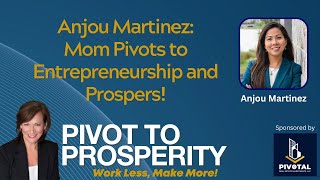
A recorded interview on Pivot to Prosperity (YouTube) where host Ginny Bolling interviews Anjou Martinez. Martinez discusses her path from the Philippines to the U.S. (arrived April 2001, Rutgers freshman August 2001), her corporate finance background (accountant, NYU MBA, former CFO/controller), and her real estate investing evolution: residential investing since 2008 and commercial/multifamily investing since 2022. She is a general partner in 1,190 multifamily units and limited partner in 2,400 units across Texas (Houston, Dallas, San Antonio). She describes underwriting priorities (operator/sponsor vetting, location/crime/household income, true interior value-add), target returns (about 2x equity multiple over five years), and the pivotal role of a mentor that helped accelerate her launch of Beam Investment Group. Closing includes contact: beaminvestmentgroup.com and LinkedIn/Facebook.
Questions this video answers
Arrived April 2001 and was a Rutgers freshman by August 2001.
2008.
2022.
General partner in 1,190 units; limited partner in 2,400 units (all in Texas: Houston, Dallas, San Antonio).
About a 2x equity multiple over five years (≈20% average annual return).
Chapters
Foreign.
Hello. Jenny Bowling here with Pivot to Prosperity, brought to you by Pivotal Real Estate Investments, where we help our investors build wealth and income through commercial real estate that improves communities. And today we have with us Andrew Martinez and welcome. Andrew, thank you for coming.
Thank you for having me. I'm excited.
I'm glad to. I'm going to read your bio and then I would like you to be able to fill in anything that occurs to you as you listen to it. Sometimes I imagine that happens. So Andrew has been investing in residential real estate since 2008 and in commercial real estate since 2022. She is a general partner in 1190 multi family units and a limited partner in 2400 units in Houston, Dallas and San Antonio. She was a former CFO and financial controller for transportation and logistics, events and media and health care companies. She is an accountant and MBA from nyu. Yay. She grew up in the Philippines, moved to New Jersey when she was 16, and moved to Houston in 2021 with her husband and three kids.
Yes.
Yes. How old are your kids?
Their age. So my daughter, the oldest one, is 15 and then two boys age 11 and 5.
Good ages. Yeah, yeah. And are they in sports or do any arts or.
Yeah, My daughter before used to do volleyball. Now she's just playing piano. And then my two younger boys are in soccer.
I ended up being a soccer mom.
That's my life right now.
Oh, gosh, I totally get that. But it's fun. It's great to watch the kids with the sports for sure. Yes.
I'm loving every moment of it.
Yeah. Now, did you play any sports or instruments?
Instruments, yes. So I played the piano, guitar, but I was really a singer. That was my instrument before I learned all these other instruments. I just wanted to play and accompany my voice and sports. Not while I was at school, but after graduating, after I had my daughter. That's when I started running. So I've done a few full marathons, half marathons. Currently I'm training for a triathlon. I'm learning how to swim. I have a swimming coach at this age. And yes, I'm, I'm at the pool twice a week at least, just getting those laps in so I could finish a sprint triathlon in July.
Good for you. Where is that going to be?
Oh, right here in Cyprus, where I live.
Cyprus, which is Houston outskirts.
Yeah, just walk or bike to the starting line, which is what I prefer. The route is easier because I bike and run here.
Power to you. Oh, my. Yes. I, I think that the ocean part of it Would get to me the most. They.
Oh, I don't know. Yeah. So this will be a lake swim. But still, I don't do open water swim. Right. 550 yards. It's 24 laps. So I'm learning how to be a better swimmer.
Those flip turns, right?
Yes.
I was only on a swim team until I got to be, like, 7 because I couldn't stop doing the dog paddle. Well, great. Well, thank you. Well, so you came to the US at age 16. Then what was that like?
Oh, it was traumatic because, well, at that time, I already finished high school in the Philippines, and I was already accepted to the top three schools with scholarships in the country. Right. And all of a sudden, my parents said, we're moving to United States. And I was dating a guy back then. And we broke up. Well, no, we didn't break up yet, but it was just hard, harder. Because now you're leaving all your family, friends, you moved to us. Good thing. I moved with my parents and my siblings. And once we settled here, and I was already speaking the language, because in the Philippines, we had two national languages, English and Filipino or Tagalog. So the language wasn't that difficult, but it was the culture. So when we moved here, I don't want to stop school. Right. We arrived April 2001. By May 2001, I was taking this SAT exam. I was like, what is an SAT? But I didn't realize I needed to take this before I could apply for schools. And that same year, I ended up at Rutgers University in New Jersey. I was a freshman by August of that same year. Wow. It was just hard because everything happened within such a short period of time, right?
Yeah. Now, what year was that? That you get to 2001?
Yes. So this is in 2001. And so I started school August. By September then, you had 9 11. And I remember seeing the smoke of 911 from my dorm room from the top floor.
Oh, my gosh.
And I said, what would you move into? Like, it was. It was such a crazy year. You know, my grandmother died, so. Talking about pivotal.
Right?
Because I know that's the name of your company that. Well, that's definitely one of the pivotal moments when I was uprooted from one place, thrown into the fire, into another place. And I had to evolve myself and just really grow, be more independent. Because now I'm living in a dorm. I've never lived anywhere outside of where I was, where I grew up. I've lived there forever, 16 years. And then all of a sudden, here we Are. I'm living in a New Jersey dorm. So it was. It was very different. But that's why we keep pivoting. We have to keep turning and just really reinvent ourselves.
Right.
And just be flexible. Adapt. Adapt to the new situation. I mean, what. What I could.
That must have been super extra scary for you too. I mean, it was scary for all of us for 9 11, but it. When you could see the smoke from your dorm.
Yeah, that.
Wow. And that changed America. I don't know you. You wouldn't have known, but, you know, up until then, I was able to go like by my nickname. And then suddenly everybody has to have a driver's license or some. Some printed federal ID and everything got shut down at airports and everything. So. Yeah, it changed life in America.
Yeah. Especially if you live that close to New York.
Right.
And I had family friends. Right. Just were impacted by that event. So, yes, that was started in this great country.
So I think my cousin's son might have been at Rutgers when you were there. I'm not sure. We'll have. I'll check and check with you later.
But 2001 to 2005.
Okay. He would have been in football.
Okay.
But anyway, so how did you get into real estate?
Yeah, so I've been investing in real estate since 2008. So while I had a corporate career as an accountant and as I was growing up the corporate ladder, my husband and I were investing in single family real estate. So we would always just buy and hold it. We were landlords for a few properties and we didn't really have time to do something else. Right. Like really grow a big portfolio because the kids were also growing when we finally moved to Houston. Right. One, to avoid state income tax to better weather. And we had some family here when we moved here, that's when I said, all right, well, we left our jobs. Right. And. And now we were looking at other opportunities. I gave myself one full year to figure out what type of opportunity that will be. We looked at different businesses from franchises, existing businesses. But the more I looked at it, it felt like we were just buying another job. And then because of what my sister's doing, the multifamily side, but then she's building new communities. Right. She's an architect and she develops class A apartment communities. When I saw that model, I said, maybe I should look at the value add, multifamily value add, which is really apartment communities that are already existing. And the more I studied the macro and microeconomics of the asset class, the more I Fell in love with it. So that's how I was able to become a passive investor in 2400 units, all of them in Texas in about two years. And so I've co invested in all my deals. And so now when I look into multifamily, I remember I was at a conference and they said that the darling of the industry, of the commercial industry, is multifamily and industrial. So that's how I discovered real estate and that's how I discovered multifamily.
Good for you. Good for you. And you didn't waste any time then. That's a lot of units to accumulate. But you've got that financial background. You're very comfortable looking at the numbers, I'm sure. So we were just talking before we started recording about the most important thing. Why don't you talk about how you approach looking at a deal?
Sure. So even when I was a passive investor, right. I don't jump into the financials of the deal. My first criteria for looking at a deal is the operator or who is the lead sponsor, who is the lead general partner in this deal, who is signing their name on this loan, who is going to run the deal. Because at the end of the day, right. The BOP stops with them. They're the main decision makers. And I just want to make sure that we align not just on values but also on the way we approach investments. Right. Because now I'm looking at co investing. So after I vet the operators and that includes asking other references that have already been a passive investor with them or maybe other co general partners or co sponsors that are partnered with them and just see how it went through. Right. How do they, what do they do after the deal is closed? Because deals, when we close on a deal, that's probably 20% of the work. The other 80% is for the next five years that you're holding the property. So how has that partnership been working? It's good to ask those co gps. And because I live in Houston and most of my deals are here locally, it's easier for me to get that due diligence in because it's a small world to people talk. And now you have a better idea of who's a good operator, who's not. And so I try to align myself with people that are great operators with track record. Right. With deals that's gone full cycle. So that's the first part. Second thing that I look at is really the location of the property.
Right.
What type of, what class of apartment is this? Is this a class B? Apartment community and maybe a class A neighborhood. Well that's great, right? Because then now you can always create more value. I don't want to be a class A property in a class C neighborhood. So you have to look at both. A lot of my investments, they're in very good locations with a rated schools, average household income. I've had different type of types of investments and some of them are $80,000 average household income within a mile, 3 miles, 5 miles. Some of them are on the higher range, hundred thousand dollars plus, which is always great. And I also look for the true value add potential for the property because sometimes we'll see some deals and it's all going to impact the other income line, which is maybe they'll say, oh, we'll add pet rent, we'll add EV charging stations, we're going to do smart locks, right? We're going to do package lockers, all the other income. But really when market is not as good, meaning the, if the economy is not as good, people probably won't be paying for all these extra. It's always good to create the true value add which is the interiors, right? If let's say 50 plus percent of the units are still not renovated, well, we would like to buy those apartments because the tenants really would pay more for the interior renovation. When they see that their appliances were changed for from white appliances to maybe stainless steel or maybe their countertops are changed from Formica to granite or quartz, that's when they're going to pay an extra 100 to $200 a month. So I like the True Value Act. And then the last thing I really look at is the financials because if the operators are good then now I can trust those numbers better, right? Because then if the operators are not experienced, how can I even trust the numbers that they're putting in there right Then now I have to do more due diligence. I got a mystery shop, these other properties in the area. So when I look at the financials, currently all my investments I still look for around 2x equity multiple, right? In five years. So that means that if I had invested a hundred thousand dollars, my expectations that it doubles in about five years. So sometimes, yes, the deal could sell sooner. Maybe three years, four years, five years depending on the loan. Maybe, maybe you could refinance out earlier. But in a nutshell, those are the return expectations that I prefer. Because if it's 100% return in five years, that means it's 20% average annual return every year, right? If you divide it and that 20% AAR is much better than what my stock portfolio was doing before or even my husband's portfolio at this point. So it's good to beat the stock market if you can and then have more control with it. So those are my key metrics of what I look for when I, when I underwrite these deals.
Great. That's great. And if you don't mind, expand upon what you expect and why you look at that median household income and how big of a radius you're looking at.
Okay. So I've asked a lot of the larger operators that are playing here in Texas because then sometimes I'll see a deal and it looked like, oh well, I want to do this deal. We're getting a good cost basis is because usually price is the first thing you're going to look at. And then right after that, once I start talking to other people, operators to see, hey, do you want to partner on this deal? They're going to tell me that they already have an underwriting criteria for the minimum household income that they would like to, that they would like to purchase. And some of the groups I've spoken to last year were at $50,000, some are $55,000. And I think that say there's a correlation between the average household income for an area and crime rate. So just really check because really good areas with high household income would have lower crime rate. So there's, there are resources that people could check out, you know, to see what's in the vicinity. But I believe, and I have one group that I've partnered with twice that's they don't even look at anything until they see the crime. Right. That's the first thing first. Underwriting out of a checklist of 100 is crime. What's the crime in this area? Because you buy a headache property even though it's cheap, because then now you know why it's cheap, it'll be more headaches down the line.
Right. And so the types of properties you're investing in, would you say they're a little bit of A, B and C? Are they primarily A's or above?
So I've invested in all three. Right. And even the C plus property, which means it's a 1979 property in an okay neighborhood, I probably won't invest there again now that I know better.
Right.
So there are places before where. And these are passive investments. So I was, I started as a passive investor, but then the better I got right. When I became a co general partner, that's when I Understood more. So that's why I always encourage people to be a passive investor first before being a general partner. So you get a little bit more insights in the markets and just how deals are put together, what are the important aspects of it. So that's, that's why I, I, that's great.
Yeah, I do that too. I suggest that. Well, good. Well, so I know that we've got a hard stop here coming up. All right, so like I ask everybody at the end of a recording, is there a pivotal person or event that has happened to you to bring you to where you are today?
Yes, absolutely. That would be my mentor, slash, accountability partner. Two years ago, I was very fortunate to find a mentor, and I think that was really the most pivotal moment of my entire career, because finding a true mentor will have really helped me check my blind spots. You know, he's kept me really accountable to my goals. And what it is, is if you find someone that's already been there, done it, and someone that's already more advanced than where you are, then all of a sudden, just having that energy and that sharing of information or wisdom had really allowed me to excel. So it's almost like now I feel like I'm a better version of myself just because I have, you know, a true mentor. And so that's what I would suggest is really find someone that you can align with that. Then this is not only for work, by the way, or for your business or career. Find someone that you can align on all facets of life that could be, including spiritual health, family. Right. Your emotional growth, intelligence, and specifically financial, because I was not setting goals in all of those aspects. But if you find someone that's already living that life, you know, of abundance, of gratitude, of joy and love, then it's easy to model. Now you're just a student. That's how I feel. I'm just copying at this point. Oh, that's what worked. And it's easier for me to execute. So that really changed the trajectory of my, my life. And I had that mentorship, I would say, two months before I started Beam Investment Group. And I think that's one of the reasons why I was able to. To achieve this success in a short period of time is because I was. I had someone that I know has my back. So thank you.
That's great. That's wonderful. And I appreciate you coming on the show, and I will, I would like you to tell people how they can get in touch with you if they'd like to get in touch.
Yes. So you can reach me at my website, beam b e a m investmentgroup.com. i'm also very active in Facebook and LinkedIn. Feel free to connect. And if there's anything I can help you out with your investing journey, feel free to reach out.
Great. Okay, we'll put that on the show. Notes too.
Yes.
Very good. Well, thank you, Andrew.
I really enjoyed this.
Yeah, good, good. Well, we're going to talk again in a little bit, so hang on just a minute.
More from Ginny

Dr. Calvin Lowe Saves Lives 2 Ways: Pediatric ER & Teaching Overworked Med Pros How to Get $ Balance

Turning Construction Expertise Into a Thriving Real Estate Empire With Eric Schultz

Build-to-Rent, Community & Cash Flow with Pivotal Person Award Recipient Andy McMullen



Investing Beyond Boring Real Estate: Oil, Gas, and Industrial Properties with Keshav Kolur


Unheard of home prices: $225,000+/- in Portland! John Laine - Breaking Barriers- Home Affordability!


