Dedicated Local Insurer- Colleen Pacheco, Secured Insurance Talks How to Insure Investment Property
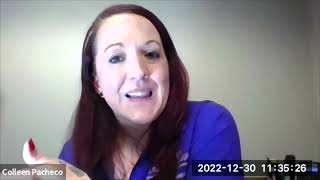
A ~22-minute interview (Pivot to Prosperity) between Ginny Bolling and insurance broker Colleen Pacheco covering how to insure investment properties in Florida. Topics include types of commercial properties insured (multi-unit apartments, mobile home parks, warehouses, medical offices), underwriting options (admitted carriers vs. excess lines/Lloyd's), factors affecting premiums (roof age/condition, construction type, location/hydrants, claims/litigation), risk-mitigation (updates, sprinkler systems, handrails, sidewalk repairs), niche property types (prefab, container, tiny homes), and pricing guidance (rough liability and property cost examples). Contact info provided at end.
Questions this video answers
407-559-2200
colleen@securedinsurancegrp.com
Approaching 23 years (in April 2023)
Approximately $20,000–$25,000 per year (property + liability), inland example
About $200 per unit (for liability)
Chapters
Hey, how's it sound to work less and make more? I am talking about money and there are ways to do that through commercial real estate investing and a lot of people don't know just how easy it is to do nowadays. So this channel, Pivot to Prosperity will show you how you can do that. It's brought to you by Pivotal Real Estate Investments where we go find the deals and do the heavy lifting and then bring you the opportunities. So if you want to know when opportunities come available, you need to register at pivotalrealestateinvestments.com every Tuesday at 2 for about 22 minutes. We plan to bring you another video and so like share. Subscribe. Thank you. Hi, this is Ginny Bowling with Pivotal Real Estate Investments and I have with me Colleen Peteyko. Did I pronounce that right?
Colleen, thank you.
Good, good. Okay. I have been working with you for a few years since I met you. Now I met you through the local R Central Florida Real Estate Investment Group or investments not group and you've done several presentations there. You do an awesome job. We love to see you up on stage. I can speak for a lot of people for, for that and you've been a big help for me and wealth of knowledge when we get talking about different properties because I've been doing the single family and I've gotten quotes on the mobile home parks from you and apartments. I think we did one or two apartments. But in any case, why don't you go ahead and tell us about your training and background.
Thank you. Thanks for having me. So I've been in the industry for approaching my 23rd year in April of 2023. I have experience with all types of properties in the state and I also write in other states as well. I mainly focus on investment properties. So whether it be single family condo, a regular home or an apartment complex or mobile home parks, those are my big niches. Harder to place risk is what I specialize in. I also have contacts with other carriers that other agents may not know about how to place harder to place risk such as large commercial structures or older construction, maybe modular or mobile homes built in the early 60s or even older. So I can help with all types of things.
So your underwriters going into that a little bit for the older higher risk things, are they typical insurance carriers or do are there hedge funds and other people that can underwrite some of the risk or is it all, does it have to be state rated and formed entities?
It's not really a hedge fund, but it could be an Excess lines carrier that's in another state or possibly in another country such as Lloyd's of London. They're actually in London. So they are a larger capacity carrier who has many branches who can write all over the world. All over the country here and can write harder to place homes, properties that may have issues or may be in a harder to place area on the coast, inland. And certain admitted carriers, they call them that only right in our state won't look at that. You know, they don't have it in their underwriting guidelines. If it doesn't fit black and white, they're not going to want to do it.
That's fantastic to know you do that. You have access to them. I. I know Lloyd's of London because they used to insure our horses.
Yeah, they do, yeah. But too apparently.
What's that?
They'll insure body parts too. Lloyd's.
Right. Oh, I know that. Yeah. Legs for dancers and models.
Yes.
Cool. Okay, so did I interrupt your.
Your no background.
Your bio. Okay, so you are located in Longwood actually, correct?
Altamont. Longwood area, yes.
Okay. I was looking you up on the map. You are 15 minutes due west of me.
Yep, I'm right near you.
We have to get together. But so tell me for the commercial property most particularly, as you know I'm always looking for apartments and I also am into the mobile home parks and small medical office and industrial is another darling that is in short supply. What do you see people bringing to you for quotes more of all those?
Multi units are big right now because I know the more doors they call it, the more money income that can come in. Warehouses, I know you know, smaller warehouses, those are popular now. Medical offices, I've done a couple. I haven't seen too many of those because I think the commercial real estate still harder and a little bit maybe more pricey now. It'll. I'll probably see more stuff like that coming in, you know, this year coming up. But I'd say multi units, everybody wants four or more units and those are hard to find too. Those are the big ones right now.
Right. So what is your process when someone calls you for a quote? What's the minimum you want them sending to you and what is your process in short?
Okay, so to get a quote, the minimum information that I would like would at least be the name of the client, the property address and then what type of property it is, whether it's an apartment, a warehouse, a home, mobile home park, and as much information as I can get at that time without being Too much. Such as if they know their updates on the roof or the plumbing, type of electrical panel that it has, or, you know, plumbing. That's always helpful. Most of the stuff I'm going to have to look up online to get the square footage, year bill and all of that. Also I would like to know the. What they're going to be doing with it. If it's an apartment building, I have some people that like to rent those out, like, you know, rooming houses. So they rent the rooms out, you know, weekly. If it's something like that, that's not the same as a typical apartment building. So if it could be, you know, an exact detail of what you're doing so we can get you the correct quote, you know, right away.
So I imagine those are more expensive when you're running a rooming house. Right.
Liabilities there, liability, because it's rent, it's rated like a hotel, motel. And so I know they're pretty. It's pretty lucrative for some people if you do it correctly because it's a little bit. You can rent them weekly. And so it gives the tenants a little bit more means, you know, with our money and how they can manage it. But it is more expensive because you have more turnover. So there's more people coming in and out.
Yeah. Okay. So, and then when you're going to search for pricing, what do you normally do? Is there like a pool or a place that you enter the data and they bid on it to you or what do you.
What's.
What happens?
Similar to that. So I wish it was that easy. It would make my life so much easier. But no, we have to prepare a whole application. So you have to do a liability application, property insurance, put all the information on there and then you market it out. So whoever you deal with, like insurance carriers, brokers send it out there. And so I always try and send it to at least like 4 if I have it, so I can get a good number. And if I can do more or I have more than I think may do it, I'll put it out there, you know. But normally I try to get three or four quotes for everybody because I feel like that's how you get the best, you know, rates, etc. And then if you have one and they're coming in higher, someone's coming in lower, but you want to go with the other one because you like some of their coverages or the carrier name, you can try and have them, you know, match it. Because the insurance brokers, they have certain leeway that they can give with the rates and certain credits depending on like the year built the area and what it is. Sometimes they can lower their inspection fees or their policy fees. So we can sometimes work on it that way to help them get an appropriate coverage at an appropriate rate for what we have now put it that way, because the rates are a lot higher these days, Right?
Yeah, that's exactly what I was going to hit on. You've been in the business 23 years, I think you said. Yep. And so what has changed here in Florida? You've been in Florida the whole time, right?
Right, correct.
What, what have you seen as the biggest changes over that, that period? You've been in the business.
So the biggest changes is the rates. They fluctuate but you know they're going to go up a little bit and they're going to come down. But you know, over the past going into three years they've just gone up and up and up and they haven't receded at all. So the rates obviously go up and they come down. But the good news is what goes up must come down. So eventually they're going to lower. What I've also seen in the years is the carriers come and go. Like this year, I think in 2022 we lost seven or eight companies. That's a lot that went bankrupt and that's not counting the companies that don't want to write here. So are just leaving their policies, you know, they're non renewing them. So it's, that's a big change. Like the shortage of the carriers. We saw it a little bit in 04 and 05 after those hurricanes we had and we only had maybe a couple residential carriers. But now it's affecting the commercial side too. So a lot of them just don't want to write. So there's like no incentive because they know pretty much every risk or every policy that you take on has a problem. Vulnerability of having a claim, especially with the roofs. So that's why they're big on the roof ages. So I've seen the insurance industry and the commissioners and everything trying to make changes that will help the claims process to run smoother, quicker, less litigations. If they can make it go quicker and smoother and have everybody a little bit more happy, we can avoid all those lawsuits that are making our rates go up. But, but this is going to be a little bit of a process that will take a couple of years. So when they do that, we'll get more companies to come in and then it'll be More competitive for the consumers.
Yeah, that's. That's a real sensitive spot for the apartment owners, obviously. And I just made it onto the advocacy Lyceum group that is sponsored by the Florida Apartment Association. So I'll be going to Tallahassee in. Is it February, I think, to talk with legislators. And it's very interesting. They do a whole educational process on how they want to approach the legislators.
On the hot topics.
And roofing is certainly one.
Roofing and the insurance. And I know even with the apartments, I mean I've seen rates like go up and then like double, you know, double or triple. And some of the property owners have to make a decision like if I can get a policy without wind for half of what I paid last year, or I can keep everything I have with the wind and hurricane and pay triple. They're having to take the lower because not only is the property insurance higher, the taxes, all the maintenance expenses, all the supplies, and then, you know, for your tenants, you can only raise the rent so much. I mean comparable to make it all work. So they have to really do something. But more insurance companies to want to come here.
Exactly. Yeah. And it's hard. And of course the tenants are fighting.
The rent increases they don't want. But you know, unfortunately you. There's no way to avoid it at this time. I don't think it's ever going to come back down.
Not as low, not a lot of those taxes. Utilities. As we get into more and more of the alternative power sources and this and that. It'll be interesting. But yeah, would in fact, if somebody in a house or otherwise a commercial property has the EV charging stations, does that make a difference on insurance costs? Is that a risk?
Well, see that's. No one's ever asked about that. They've asked about the solar panels, but putting the electric vehicle, where you permanently like mount that thing into your house, I know you have to have a certain electrical probably outlet made for that. See all that's so new. It's like nobody's mentioned that. Like, what if that thing blows up your house? You know, I mean, of course the insurance is. Is going to cover the house issue. They wouldn't cover the car because your car is on the car insurance. Would they cover the EV charging? You know, they're going to have to because it was a test. It's part of your contents, it's part of your house, whether it's a permanently plugged in or it's like a lamp. You consider it like a lamp or a hot tub. Or any other device that you, you know, plug in.
Right, right. It'll be interesting. And I'm, I'm kind of interested in those charging stations that, that are going to be popping up everywhere as an investment.
Yeah, I know. Because it looks like when you drive by the Wawa and you see the 20 Tesla's lined up, I'm like, who makes money off this? I know Tesla does, but I know Wawa does because it's in their parking lot. So that would be a good thing to put like apartment compl at the warehouses, you know, because everybody's going to start to have this stuff. It's going to be more and more common.
I'm researching it. I'm. There's a few groups I'm affiliated with that do really unique things like ATM machines too.
ATM machines? Yeah, those are profitable. Atm, you know, the snack machines, those used to be pretty good, you know, laundry mats. People talk about that. Yeah, there's a lot of little things that can be added in, you know, to apartment complexes that can be income streams. And then when there's an income stream, there's always risk for exposure. So there's going to be different types of insurance needed. So. Yes.
So another thing I used to do is telecom. So a lot of rooftops right now, especially with the, the, what you call it, the fifth generation telecom. Is that something that you get into underwriting that has noticeable additional risk?
Yeah, it would be because depending on where the telecom screen provided to, how you're having to access it, who has access to it, what damages it may be able to cause to somebody else or somebody else's property. So. Yeah, there's always going to be some who's going to be liable for what in that case.
Yep, there's always that.
Yeah, maybe you, maybe me, let's meet together. But no one must ever meet together. So. Yes. Yeah.
Well, that's kind of what my background is, is finding that middle ground because of, you know, always being in litigation as a condemnor. You know, we always were sharing risk as much as we could. So that's really interesting to hear that you. Yeah, you can get into all that. So I'm not going at all by my questions, am I.
Ever goes that way.
What kinds of things can we do to help hold costs down? Typically that you come across.
Well, the main thing is going to make sure that the properties are updated. So meaning the roofs are in good condition. They don't have to be brand new, but they would have to be in acceptable condition. Making sure the plumbing there's no plumbing leaks. If there's any damages, it's been repaired as well as if the piping is older, you may want to look about having that re updated in some form of fashion. Also electrical panels, make sure they're not an outdated one. That's on that bad list. Because all of these things not being maintained could eventually cause a loss to happen. And so the more losses, the more the insurance goes up. So when we start mediating and remediating some of these items, we can keep the cost down on the insurance. I would also say if you're looking at structures, the newer the construction, the less expensive it is to insure because all those codes have been updated. Also if it's a wood frame structure, that's going to be more expensive to insure than a block, a steel construction which is considered non combustible, that's going to be less expensive. So things to look at that also some of the things would be the area if it's coastal, you know, coastal insurance with wind is going to be a lot more expensive than something inland. Also look for. I know this sounds odd, but hydrants, like if there's a hydrant near the house or the property, rather house, property, anything. Because if there's not a hydrant, it's going to be more expensive to insure because that means it's going to be harder for the property to get access. So if there's no hydrant and there's a fire, the fire department may have to bring in tanker trucks. And tanker trucks only hold so much water. So look for those little things to make sure if it's kind of way far out there in the country in a rural area, it's going to be a little bit more expensive as well. So the age, the location, the construction type, the updates, those are all helpful. And then also the number of units. So the more exposure you have, the more costly it is to insure. So if you're trying to get in a range, you know, just be all noticeable of that 100 unit apartment complex is going to be a lot more expensive than a 10 unit, obviously. So those are all things, but the updates, the age, the location, those are all probably the best things to look at.
So is there a typical price per unit though that you can generalize for insurance? Because in our rules of thumb, if I look this up, I think, I'm thinking it's $200 a unit per year.
That would be good, a good range for liability coverage. So liability I would say should be like for apartment buildings or whatnot should be no more than $200 per unit. And that's probably on the high side. So that would be for the liability. The property coverage is going to be a lot more than $200 per unit. It also depends on how big each unit is, how much you're needing to insure the whole structure for and how many units. So for example, if it was like $1 million to insure, let's say I would say the whole property was just going to give a range for me. I would say a good range for the fire, wind, liability and everything would be about 20 to $25,000 a year in insurance and that's probably a little bit higher. You could maybe find it for 18, but with now nowadays market it's going to be a lot more so around a 20 to $25,000 range for that type of insurance for about a million dollar property.
So I'm just trying to double check and see if that meets one of my other little benchmarks. So yeah, two and a half percent of the property and that covers liability and everything.
Correct. And that would be more for like an inland type, you know, property. Lake Seminole, Osceola, Orange, you know, somewhere not on the coastline.
Yep. Okay. Yeah, that's good to hear that I'm using the right numbers. Going back, we need to drill down, especially Florida because of everything that's been going on the roofs. Is it true that it's very hard for you to get insurance for somebody whether it's single family residential or let's talk apartments or industrial commercial that's older than 10 years old?
Yeah, that's not really true. I had someone tell me that yesterday so I can insure any age property. You may not like the coverage and you may not like the price because depending on the updates it may be limited and it may be expensive. They most of the companies want like especially with houses, they want the roofs to be 10 years or newer. However, in May of this year they passed a law that they were stating that they would the roof. The insurance companies would have to accept age, any age of the roof as long as it had five years life left. So as long as the inspection report said five years life left, it had no, you know, missing shingles, no loose deteriorating nails. Whatever the case may be, as long as they had five years. I wonder what happens next year when it only has four years. Are they going to want a new inspection? But nobody has answered that question. So is they just. It doesn't have to be 10 years or newer, it just Makes it a lot easier if it's 10 years or newer. There's like no questions going back and forth on that. But no, there's insurance for all age homes, all age properties. It's just, it's more expensive, you know, without. Makes sense. Yeah.
And obviously we've had a lot of, a lot of disasters too, and we share the cost statewide on that. Right, right.
And so the issue is with the disasters like this past year, or this year rather, because we're still in 2022. The two hurricanes we had happened like five months almost after they met at that, you know, Tallahassee to change that roof year. So the issues we had were not because of these storms like that. We just had. These storms are going to make it worse. The issues we had were for storms that we had like in 2017, 2018, with all the pending litigations that happened. And then we had hail storms in between. Then we had Covid. So, you know, there was more, you know, money grabbing, I like to say, going on. And so it's not the claims that are the issue. The insurance companies expect to pay like half of what they take in to pay half out in claims. So then they're, you know, half and half. The issue is we had 117,000 lawsuits in 2021, and they're expecting more in 2022 against home insurance companies. So that means the homeowner sued the insurance company because they didn't like their claim payment, they didn't like the answer or anything, and they got an attorney. And so the insurance companies have to pay the attorney fees and they can triple the fees. They're trying to change something to maybe make it just double the fees or lower. And then not only do they have the high fees, they also inflate the claim because everybody has to get paid. The homeowner needs to get the repairs done, the attorney needs to get part of the settlement and their fees. And if there was a public adjuster, him or her needs to get paid. And the roofing or the contracting company, depending on what actually happened at the property that's in Florida. So the rest of the country had 10,000 or less litigations in all the states combined. So Florida had a lot of litigations. That's what's driving the prices up. So they really need to find a way to carve that down and then the premiums will lower. Right now we're paying for all of those, you know, legal fees, litigation costs, and all those not necessarily claims. And then the more claims we have with Hurricane Ian And Nicole, that came after, which wasn't as many as, you know, Ian and I talked to Universal Property, who's a large home insurance company here, and they told, I was told by their marketing rep they had 30,000 Ian claims and less than 1,000 Nicole claims. And they expected the total hurricane losses to be $1 billion with them. She also told me that they had 3 billion in their, you know, reinsurance cat fund. So they were still well within their range. They weren't over, so they were hoping could keep costs down and keep their premiums, you know, the same. However, they just had a large rate increase just like every company. But it's just good to show you that they were predicting in their claims was not over what they had put aside for it. And that's, you know, normally done every year. So it was still seemed okay. But I think what's going to happen with Ian claims and is going to be. There's a lot of companies won't even write in that area that got hit really hard, not writing wind or they won't write right at all because I think they're expecting a lot of fraud to happen, like after people that maybe didn't have policies that have roof damage get a policy, maybe a hailstorm come in, and then they can't really determine when the damage happened. And so that's why I think a lot of them just don't want to write there. It's just not worth that hassle. You know, those properties need to be repaired. But I have seen a lot of people getting good deals down there, like houses that were flooded, that are gutted, and they're going to read, you know, revamp and redo. So it could work for an advantage both ways. You know, people could get good deals, you know, renovate those homes, make them whole again, and the insurance company could profit off of insuring them. But it's. Where do they find that right fit? That's going to make sense.
Right? Right. Yeah. And so. And part of all this that we're talking about, I think is from all the fraud. You know, there was a lot of people selling new roofs when it really didn't need it or it was damaged from years before and things like that. It's my understanding that the level of fraud was unbelievable and a lot of attorneys participating in that. Did anybody ever go to jail or is that just a myth?
There was. There was a public adjusting firm. I know that they got arrested for withholding money and then not handling it correctly. I don't know about attorneys because you know, they're pretty slick. It's ones like this. So I know they're the ones that create their whole profile, their whole firm on insurance claims, you know, disputes, you know, is your claim not paid correctly? Call us, we'll fix it. And yeah, they probably will get you the money. But you know, what people don't understand is it takes like almost two years in some cases and then it shows up that you've sued an insurance company. And it's a newer question that's on insurance applications. Have you ever been in a lawsuit with an insurance company and they want details and that excludes you from being able to have that policy with them. Now that's more or less on like home, homeowners type insurance. You know, with the admitted markets here, like Universal American Integrity, Olympus, all of those companies are going to start asking those questions. And so, and it's like, where does it leave the people? Well, it leaves those people with excess lines market that I specialize in, but it leaves them with, you know, having to get more expensive insurance. That may be limited, it may not be because of that. So. And I feel like the adjusters and the lawyers need to just educate them because a lot of homeowners call me that are in those situations and they don't realize how long it takes and they don't get answers. It's not something that person's going to be communicating with you like every day or every week or every month. You may not hear for four months at a time and then you get a hearing and then you don't hear again. It's a long process. And then their home may not be repaired, so they may have a tarp on their roof and then more damages happening that's not going to be covered. So that's, I think if they educated them, more people would not want to do that. But I've also had homeowners call me that. Oh, a public adjuster knocked on my door and they wanted to look under my sinks and in my shower and I let them. Well, why did you call them? No, if they came. But they want to do that because they want to get, put all the claims in. And I also had one. She had three claims in like three different weeks after the public adjuster came. I just found it a little ironic. She got the money and I was able to reinsure her. It was a more expensive policy. But I'm like, well, you had four claims and so you don't have too many recourse and options after that point. But she got her bathrooms and her kitchen done and a new roof. So she was able to upgrade her home, but at the cost of what. And then we don't really know if that really had damage, but because they told her that it was damaged, she did it.
So I was wondering if a claim really does increase your, your policies, and it sounds like it does, then typically it does.
Depending on what it is. If it's a fire claim or water leak, those are the big ones that do. If it's a roof claim, a catastrophic, like a hurricane, a hail, those typically don't. But anything else that happens, a theft, a fire, a water leak, you know, those will. And they may exclude you from getting insurance with, with other carriers for a time period.
Okay. It depends on the type of claim. Okay.
Correct. Yes.
Yeah. Would be crazy if we didn't touch on that in an interview. Okay. When. Well, how many of the underwriters actually come out and inspect the property?
Oh, they all do.
Okay. Do they get out of the car?
In most cases, yes. In most cases, yes. Unless they're told to get off the property immediately. The only policies that I don't really see them going to inspect are like interior condo units. If it's a condo unit or like an office condo, they may just do an exterior inspection. They're obviously not going to go in because a condo unit, they're ensuring the walls in, not the outside outside. So the roof, the maintenance of the building really isn't their concern where it should be, but it's not. But yeah, a residential property, a rental, you know, apartment building, a multi unit, office, a warehouse, they're going to go and inspect and they're look, and in some cases they may want to do an interior and an exterior inspection. And so they're looking for any hazards, like slip and fall hazards, any roof damage, any property damage, you know, making sure that you've got an extinguisher, smoke detectors, they want to make sure that there's safety precautions in place. And then if there's something that they have an issue with, they'll send a memo and you just have an X amount of time to repair it. If it's something that the client doesn't agree with, you know, we can argue back. There's a lot of issues like with handrails, you know, with a couple with those handrails, they want them so people don't fall down and get hurt and then sue you, which is going to cost the insurance, you know, company money and, and that's going to cost the homeowner because you're going to get a more expensive policy or something like that. I had one client who's like, well, I'm up to code. And he had two steps. Well, the insurance company, regardless of what the code is, they want it to have, if you've got more than two steps, a handrail. It doesn't have to be handrails on both sides, just one side. So somebody had some means to prevent themselves from, you know, having an accident. It doesn't mean they're not going to fall, and it doesn't mean if they do fall, that they can't sue you, because they probably will, but it's still a precaution. And also, another thing is driveway and sidewalk cracks. I've been seeing that a lot lately, and I got a lot of pushback on that. It's an issue. It's the tripping hazard again. Because right now, people, everything. The economy's bad, inflation's high, people are looking for ways to get money. So, I mean, if you fell and broke your ankle walking into the store, you better believe somebody's going to sue because there was no sign or there was a loose crack. It's the same thing at residential property at an office building, you know, they want to protect it. They're not saying you have to redo the whole driveway or the walkway, but just fill in those cracks so it's level.
Right, right. I was going to ask you about those. That's huge. And going back to the stairs, it's only if it's over two steps or. Okay.
Right.
I wanted to be sure. And then the. The. I was there, I was looking at some apartments that had a lot of tree roots. And holy moly, taking out all those trees would be so expensive. How do you guys deal with those when they're getting. I. I get it with. When they're just disturbing the sidewalk. You gotta fix that so that it's not the trip hazard.
Right.
I assume, since I go straight from point A to B a lot of times and I don't always stay on the sidewalk, say.
Me too.
Insurance companies figure, okay, elevate the risk or the premium because of all those tree roots. I mean, is.
Well, yeah, like, tree roots near the sidewalks that, like, raise the concrete and move it like that. You know, they may have an issue with that if it's not even. They know those ground's gonna move up and down. There may be, like, hills or, you know, but if. If it's cracking it where we can visibly, like, trip on it. So they're not gonna take into account, like, you and I, we'd be like, I'm gonna walk over here. You know, you walk around somebody or you don't want to walk on it, so no. So they're just thinking that somebody should be walking, like on the sidewalk, you know, straightly. But if the roots, if it looks questionable, like, it could damage the integrity of the house in some ways or the property, the apartment building structure, they may have an issue with that. Especially I've seen people with trees. Like, the way they planted the tree, they planted it, like, really close to the house. But there was nothing wrong with the tree. But the insurance company just didn't like how close it was to the property line. And he's like, well, I can't move it. But he could move it. He could remove the tree, but there was, like, nothing wrong with it. So as long as they can show that it's safe, it's not going to fall. And they also don't like tree limbs overhanging the roots either. That's another thing. Cut them back, keep it trimmed because it prevents roof damage. It does keep the property shaded. But then eventually that shading leads to, you know, the shingles or the roof getting rotted with the wood not being able to dry correctly. And then it also, like the hurricanes that we just had, everybody that had trees, limbs, they were all falling down. So that's why they want that taken care of. The tree roots is a problem because I know how they grow. And then they start pulling up and it can move the sidewalk. And that if, depending on the tree, like you said, it could cost upwards of like $10,000 to remove a big tree and then have to re. Repair all the cement and everything underneath it. So that's a big.
Yeah, this project would have just been cost prohibitive. And I've fallen before, so I know how hard you can hit the pavement.
Yeah, that would be something to check, too. You know, going to the property, add, like, the trees, how it looks, how the sidewalk and the parking areas look too, you know, going down, how are you on time?
I've got a couple last questions. Are you okay?
Fine, yes.
Okay. Sprinkler systems on commercial property.
Sprinkler systems, they're okay. They do add.
If you don't have them, is it okay?
It's okay if you don't have them. I know there are some commercial. Commercial businesses that require them. Daycares, als, those require them, so those have to be checked. If you have it in just a regular building, I don't think they have it in here as long as it's kept up. Like, you have the people, you know, maintenance companies, check it to make sure that it's working properly. Because I know that those can be an issue too, when they just go off out of nowhere and your property gets water damaged. So it can help you as long as they're maintained and used correctly.
Does it help on your premium? Very much.
It would, yeah. You just have to get another certificate. They have a couple different ones. So it's like A, B or C. So depending on what it does, how it's installed, what areas it's in, and et cetera. Good.
Yeah. Yeah. They're pretty expensive to put in. I know that they are.
Yeah.
Okay. And then talking briefly about mobile home parks, you've been, like I said, involved with coding for me. What can you tell us about mobile home parks in general? For whether it's small or large.
Right. So whether they're small or large, it's basically the same information. So if it's a mobile home park, where the park owns the land, not the homes, and the clients or the homeowners rent the spots, that's different than the mobile home park, park owning the homes there. So there's two different ways that it would be, you know, quoted. If you rent the spaces, it's rated on, like, the sales. How much do you make per year, let's say, on renting those lot rentals? And then if you own all the mobiles and the park, it's rated on how many homes are in there. So they can all work the same, they can insure the same things. If there's any amenities, like if you have a pool, a clubhouse, laundry facilities, shower areas, sewage plants, you know, some of them have all that stuff in there. Just have to make sure everything that you want to be covered is added on there. And then sometimes with them in any, like, you know, residential or even a commercial exposure with assault coverage. So you want to make sure that with, especially with living, you know, mobile home parks or any of them, that the coverage that you're getting, you know, liability wise, covers assault. Like if there's a beating, a homicide, something like that, but it occurs on the property, because I have seen that happen and the person didn't have that coverage. So that's something that you can get at the same limits or a little bit lower. I would suggest paying for it. It's worth it because that it does happen. And then even though you, the property owner at a convenience store, even an office park or Wherever didn't have any intent and wasn't there. It's just because he owned it. You know, I've even seen it as a residential property and they sued the landlord and he's like, well what did I have to do with it? I told him well, nothing. But he put lights on the street and you know, but he still got sued for it and there was really nothing that he could do to prevent that when it was like a drive by. So it's little precautions that you can do. Put extra street lights and make sure that you have that extra coverage included.
Good advice, good advice. Okay. And what else? There was, I think one other thing in particular. Well actually let me double check. You said it's based on the income, the insurance rates based on the income.
For the true mobile home part. So when you just lot rentals, it's based on the income that you make.
So what kind of percent is it still in that two and a half percent?
Yeah, it should be in that same range.
Okay, interesting. I didn't realize it was based on that.
Right, did.
I'm not sure. Maybe I must have sent you the income information on the ones.
Sometimes you just kind of estimate. If you're just wanting like a quote, you know, you can look up information and kind of pull what they're making.
Okay.
Some sites, but it's best to have the act, you know the accurate numbers, how much you're projecting to make.
So that's interesting. I wonder if you sometimes have better comps than we find in the market. You might have better data.
Probably not because I'm probably using the same sources that you are. Okay.
Okay. Just wondering prefab, like you know, the construction that's built in a manufacturing facility. Not so much mobile homes, I'm talking more the tilt up construction type thing. Not concrete though. What, what like Cardinal Homes or some of those that, that back in, in the day, I guess, I guess boxable is the new one on the block and I stock in them. That's a, that's a prefab product. What's, what can you tell us?
So the prefab, most of the insurance companies, residential wise, they're still going to consider that to be like a mobile, you know, manufactured home. Even though it's not just the way it's built and the construction material on a commercial side, it's a little bit flexible, it's a little bit easier and still I sometimes have a hard time getting wind on those. But it would depend the way it's built and the size of it obviously where it's located, the construction, how it was actually built and the roof. And if you. It's built on a permanent slab or not.
Yeah, big deal there. Right, right, right. Because of how it's affixed.
Right. Because if it's more like a slab, it's considered more, you know, permanent. And it's. And obviously those are built to code. You know, they pass permits and everything like that. But if it's on a slab, it's more like permanent, more like a warehouse type thing. In that case, because I did have a client who built a home and it was that. It was. He built a big house kind of in the middle of nowhere. It was really. But it was made out of that, you know, material. And there was. He got a quote through Lloyd's. It was more expensive, but none of the, you know, regular markets would take it. But I think they have to do more research. Especially if it's built up to these higher wind codes and all of that, it's probably built better than a regular block home like they built now.
Right.
That's.
That's my understandings. I have some dear friends that are up in Virginia that, that are big believers in this. So that, that leads us to the last question. I could keep talking for a while, but I will end it for you. The tiny homes, and you mentioned container homes. Are you doing any of that business?
And I've had a couple. I've had a couple people that have built them, like on their properties. And so it's just like another store structure. I have seen somebody that's going to start doing them and they looked pretty neat. With the container homes, they probably be the same as the prefab. They're probably going to consider it modular, mobile, manufactured type, just of the construction type, especially with the container type. Even though, you know, like we said, they're probably built better than a block home. Now, it would be hard to damage it and rip off the roof, but it's still. Because it's new and because of. Of, you know what it is. That's the reason why. But they can definitely do them. It's a little bit more expensive insuring it that way, but I assure you, offset maybe the cost of the home product, you know, with the insurance.
Okay, okay. Well, wonderful. Well, thank you so much for coming on and talking with us, sharing your knowledge, tell people how they can get in touch with you. And I'll include that in the show notes, but go ahead if you would.
Okay. So my phone number for My office is 407-559-2200. And then my email is Colleen, which is C O L L e e n@secured insurance GRP, abbreviated for group.com. and I'm available by email or phone most every day of the week. I'm available to come into my office, have an appointment, whatever you need. I'll be more than happy to answer any questions. And there's no obligation, there's no charge for any quote or conversation ever.
Wonderful. Well, thank you. And I know you work on weekends because you've done that for me. Not that I'll encourage it, but you're dedicated. You're very. You're. You're great to work with. I can't say enough. So, anyway, thank you so much. I appreciate it. And you take care.
You too. Have me again. Thank you. Happy New Year. Bye.
Well, I hope you enjoyed that. If you did, please, like, share. And most importantly, if you want to know, when an opportunity comes available, do register on pivotalrealestateinvestments.com so we can get in touch with you. It's important to have a conversation. Likewise, follow us on Facebook and Instagram. We'll have brief things we pass out time to time.
Thank you.
More from Ginny

Dr. Calvin Lowe Saves Lives 2 Ways: Pediatric ER & Teaching Overworked Med Pros How to Get $ Balance

Turning Construction Expertise Into a Thriving Real Estate Empire With Eric Schultz

Build-to-Rent, Community & Cash Flow with Pivotal Person Award Recipient Andy McMullen



Investing Beyond Boring Real Estate: Oil, Gas, and Industrial Properties with Keshav Kolur


Unheard of home prices: $225,000+/- in Portland! John Laine - Breaking Barriers- Home Affordability!


