From Hustle to Harmony: How Fatherhood and Real Estate Changed Kenny Johnson's Life
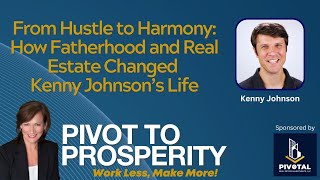
This content was created by Ginny Bolling. This content was uploaded by Ginny Bolling. This is a YouTube video titled "From Hustle to Harmony: How Fatherhood and Real Estate Changed Kenny Johnson's Life" created on December 10, 2024. It features a conversation between Ginny Bolling and Kenny Johnson discussing the impact of fatherhood and real estate on personal and professional life. They explore themes of financial freedom, personal growth, and the importance of being an intentional father.
Chapters
Are you one of the many busy professionals working in offices day in and day out? Do you wonder how some people grow their wealth fast, retire early and play on work days? Well, you're in luck because Ginny Bolling hosts this show Pivots of Prosperity where she interviews people that can do just that play on work days. Many guests have become financially free. She also interviews people that are on their journey and people that are in support roles like attorneys, contractors, brokers and others. Commercial real estate is the common element. She is on a mission to be sure. Busy professionals know they can own substantial commercial properties too, like apartments, self storage facilities and others and not have to do the work managing them. Passive investing is the key. Syndications are the typical method. Tax write offs are some of the biggest rewards. Ginny and partners find the deals, build a strong team and business plan, then offer the investment opportunities to passive investors. New episodes are released every Tuesday at 12, so watch for new releases. If you want to get involved, let us know. You need to get pre qualified to hear about most deals. See the show notes for contact information.
Hello, Hello. Jenny Bowling here with Pivot to Prosperity brought to you by Pivotal Real Estate Investments. And today we have Kenny Johnson with us. And Kenny, thank you for coming on.
Jenny, I'm honored to be here. Thanks for having me.
Well, good, I appreciate that and I am going to let you introduce yourself for the most part. But I first will say that you are part of one of the masterminds I belong to and the Race Masters group has been an integral part of many people's journeys. I think Hunter's done a great job with showing people how they can try to make things faster, smarter, more complete, shall we say. And so you have been working on building your portfolio and your tribe, so to speak. That's kind of how I look at it is we have our tribes that we're basically we're trying to find the people that want to invest with us and, and so we're peers and so tell us about your background.
Thanks Jenny. I, I'm from Greenville, South Carolina. I've been here my whole life. So a good old southern boy and I worked for 10 years in the sales and customer service world. I was, I'm 36 today and today. Well no, sorry, just today. No, not today. My bad, not today. Today I am, but not as of today. I'm 36 years old and I was the classic directionless college grad. I did study graphic design. I enjoyed art, met my wife in college, so loved college for that, for that reason But I realized as soon as I graduated I really didn't want to do graphic design. I was more of a people person. And I was afraid of being that guy stuck in the cubicle or behind the computer screen that was just not with people. So. And as I was engaged, I was looking for a job and my friend was starting a landscaping company and I said, hey, I'll give you a year because I don't know what else I'm going to do. Well, that was a 10 year job. The company kept growing and I kept going along with what, you know, he was doing. And I settled into that customer service position and really enjoyed people. So that was my sort of career start. And as we were talking earlier, my lightning bolt moment was when I turned 30, I realized I wasn't going where I wanted to go. And the next 10 years scared me. If I would have just repeated that same script. And my son, who was 3, was a major player in me pivoting toward real estate and toward freedom and that in that world of a little more ownership of my time. So I bought my first rental property about six months after I went to this conference, when I turned 30, real estate conference. And since then, probably last five, five and a half years, been buying single family homes, have done some commercial purchases as well, mainly rentals and fix and flips. And then about a year and a half ago, I bought 10 properties in a 12 month span. And that put me in a position of hurt because I wasn't set up with my crews and my, my contractors as well as I thought I was and ended up selling almost all those. I think I held on to one of those houses. I was originally planning on renting out all of them, but market shifts and just money needed to sell them all. Made money on all of them, but not at the margins I wanted. And that's where we have met in Raise Masters. As I've learned about syndications.
Yes, it's, it's a powerful thing, these syndications. And going back though for a second to talk about how we tend to just do the job right, we think we're where we're supposed to be. Maybe, maybe not. But in my world, I was hired by the Department of Transportation and my folks were happy. Oh good, you got a government job, nice and stable and stay there forever. That stay there forever. And the pension and all that was still a thing, right? You know, that was in my eight. It was in the 1980s and the darn salary didn't even pay my student loan. And so I ended up having to leave and, but, but I always had that stay there and it keep that stability and today people don't feel that way. But it took me a long time to wake up even though I was self employed most of my life because I was an appraiser as a self employed, I, I was self employed very early, but I didn't, didn't really grasp the. Even though I was always trying to be cutting edge, I was not in taking the reins like I could have.
Yeah, I've learned, I'm still learning. But there has to be, usually there has to be some pain in your life to make a change. And I think like the danger of anyone listening is I'm just comfortable. I'm just comfortable and I'm just going to coast through my 20s, 30s, 40s, 50s. Oh wow. It's. I'm 60 years old and I've just coasted the last few years. I never really did anything that I really wanted to do. I'm not saying it was you were suffering every year, but you just were comfortable. And, and that turning point for me was when again I turned 30 and my son was growing and I just hated leaving him and I hated my wife was struggling in different ways and our marriage wasn't really going 100%. And I just felt like, man, if I don't do something now, like I'm just going to be 40 and look back and be like, man, I guess I just will stay here for another 10 years. So that was really makes you understand.
Yeah. Where divorces became such a common thing and all the rest of it.
Yeah.
And so you have a podcast. Tell, tell us a little bit about that and, and how you've evolved from that.
Yeah, I, I realized as I was getting to syndications and trying to buy bigger things on teams, I needed to stand out from the crowd and I thought, man, I want to market to a certain audience. You know, I'm in South Carolina, so you got the local meetups you can do and obviously you kind of max out your friends and family once you start asking too much as you buy bigger things. So the Invested Fathers is my podcast and I've settled on the importance of dads and how I'm a dad. 36, like I said, I have two kids at home. But it's such a connecting ground with so many males and females actually in regards to the importance of dads that I'd love to help this type of person as they career, as they, you know, are husbands, as they obviously father the young, young children or Older children, you know, teens, or even college. And that was. That was what started it. And if anyone starts a podcast out there, you. You always start, and it's really messy, and you don't know what you're. The interviews can sometimes be really boring and slow, but you get better. We're on episode 60 now, so really have enjoyed these connections around the topic of dadhood.
So it's actually, you're kind of helping dads see how they can get not only financial freedom, but freedom to be fathers.
Yes. Well, it's that concept of what are you investing into? You know, the first thing you think of is usually money, you know, like stocks and assets and real estate. But you're investing your time into things as well and your energy. And, you know, that. That concept for me was. I thought as a provider of my household, I just needed to be working all the time. That was what dads do. You just work all the time and you put money, put food on the table. But I wasn't providing my presence and my energy and my sort of instilling who's. How do you become a man? You know, that kind of stuff into my kids. And there was a big disconnect. And that was when I sort of realized, how can I buy some time to be with my family? Let's invest into real estate and let's, you know, do this flip or do this rental. So that was. That was the key indicator for me, and I've. I've just loved the returns. Again, investing returns, those are sometimes financial conversation things, but they don't have the. The returns I've received in being with my family. More has been a healthy marriage, a healthy body, healthy relationship with my kids. I'm a churchgoer. My faith is strong, and I can now do these things that we're really not focused on at all in my 20s, because I was just working.
Yeah, you have freedom to be yourself now.
Yeah. And invest in yourself. You know, we need help. We need help in our minds. We need help in our bodies and our relationships and how we communicate with people. But if you're just always strapped for time, you know, if you're always busy, you know, it's what everyone says, hey, how are you? Oh, I'm so busy. You know, what are you. What are you busy in? Is. Are you busy? I always like to say when someone says, hey, you know, oh, I'm just so busy. Is it the good busy or the bad busy?
Yeah, yeah, yeah, you're right. And it makes a difference. So when you are Talking. You and I were talking before we started recording. Your conversation often goes to the fatherhood. It's not entirely about the financial thing because. Well, I'm asking, actually, is it because everybody knows that they need to do enough of the right thing for the financial that the concentration really should be on the fatherhood?
You know, I like to think of it like, what does success mean for you? So typically, there's a financial number that you want in the bank account or in passive cash flow or something that defines success for you. But one of the harder KPIs or numbers to look at is, you know, what's your relationship like with your son? How do you put a number on that? How do you. Or your kids, you know, just your son, or how's your marriage? You know, like, what are the steps? What's the success there? Have you, you know, gone on a date? Are you guys touching, you know, you know, is communication strong? Like, there's just. There's metrics that are hard to talk about with people because they're, you know, maybe awkward or it's more personal and, you know, sensitivity or feelings are talked about. And I. I feel like we all, as humans are engaging in these types of things. But it's just sometimes the first topic is, what are the. What are the metrics on this deal? Or, let's talk about money. So I think what I've learned is as I talk about, as I talk with other dads or other investors, it's that motivation of that. Why is why they're doing what they're doing. So let's, you know, put some talk around that. Let's figure out what that actually looks like. Hey, why would you invest in this deal with me? Well, it's a 27 return. Oh, okay. Well, would that give you some more time to, like, you know, scale back a little bit from the pressures of work, you know, and then once they start thinking about it, it's like, man, I would. So they start connecting the dots on this deal, giving you some success with your kids and with your wife and with your family as a dad. So that's been so rewarding for me. And as I analyze deals and as I analyze my business career, my future, am I looking for a certain number that they can count? Yeah, I'm trying to grow my wealth, but I can't miss along the way my involvement and my time with my kids and my family.
Right. So true. So true. And it's funny, just talking about it always makes you think about really your own situation and whatnot and you just hit on three things. Sensitivity. One of them was touch, though. And it's interesting because so many dads aren't touchy. Right. I think it's worth sharing maybe that, for instance, I felt very close to my parents, but we didn't kiss every time we saw each other. We didn't hug all the time. We. We didn't even say I love you all the time. But it was known. It was very well communicated otherwise in other ways. And so. But when I married a guy that was less like that and that in fact, had a dynamic where people became estranged fairly readily. I made touching a really important part of our family.
Yeah. And like hand holding and, you know, just closeness.
Well, you know, it's funny, I didn't do it as much with him because he wasn't that way, but with the kids I did okay.
Interesting.
As much as I could.
Yeah.
So they thought they had to hug it out and things.
We do that too. Give Mug.
Strange dynamic. But yeah. Yeah. So it. But. But it just goes to show you there's different ways to convey all of it. And the biggest thing is to be present. Right.
Yeah. You know, a message I've heard over and over. I've interviewed, you know, 60 dads, and there's been some females too. But one of the, like, common themes that gets put out almost every time is leading by example. So, you know, you mentioned your dad and how you guys loved each other and showed that love, you and your husband and then you and your kids. And I feel like, again, what I've heard through these. These interviews, you can tell something over and over to somebody, hey, I love you, or, hey, I care about you. You're the most important person in the world to me, you know, whatever it is. But if you're not showing it and not do it, like acting it and exemplifying it so that someone watching actually sees it. It doesn't always get passed down in that way. And there is that weird disconnect. Hey, dad says, you know, this, but he's never around or he's never. We. We wouldn't know unless he just told us, you know, and it. That's, I think, one of the saddest truths and one of the most convicting things as a dad is like, what am I showing by example? I would ask you a question. You know, you said that you and your dad had that connection that, you know, and everyone has their own love language. It's not like you have to look this way to. To, you know, do it Right. What was it that, you know, you knew that your dad loved you? Was there like a story or situation that you can just remember?
Well, part of it was funny. We grew up with. He was traveling all the time. He was never hardly home during the week, and there was four of us kids, so my mom had her hands full. No support group. But when he came home on the weekends, it was all about the kids. And she had the weekend to herself for the most part. But he had us bring all the neighborhood kids. Kids over, and we'd play football and all the sports, you know, Pretty much.
Yeah.
And we had horses and motorcycles and all the toys. Pretty much. We were water skiers and.
Wow.
So he made all that happen.
Yeah.
So. Yeah. And so that was. That was something that we all just knew it was because they cared. And not that anybody can. We weren't really weren't well to do, but they found a way. They used to flip houses before it was a thing, and that was to get money to go get more toys. And, you know, it was.
Yeah, no, I love that idea of, like, the neighborhood kids and, you know, playing football and dad sort of being quarterback or whatever it is round the troops.
Truly, he was the quarterback, but then what he did is he taught each of us to be the quarterback.
Yeah. There you go.
Yeah. This is how you call a play and.
Yeah, and it stands out to you like that. Like, you have that. That memory of him being there, doing that. And there was times he was away and, you know, you missed him. Sure. But when he was there, it was like he wasn't just, like, clocked out, you know, doing whatever on the chair or on the phone or whatever. Yeah, I love that. And he gave your. Your sweet, dear mom a break. Four is a good number.
Yeah. Yeah. She still had. She still ended up cooking dinner most of the time we were in the country, though, too. But, you know, she. She enjoyed having him home. Of course, OB. It's different for everybody. You know, it. But. But you give what you can is the thing, I think.
Yeah.
Different dads have different ways. I mean, like, you know, my. My husband. Then one of his endearing things was his. His humor. People felt so endeared just because of the way he could talk, you know, to people. He passed away recently, but.
Oh, I'm sorry.
That's why I'm saying past tense. But you do what you can, you know?
Yeah. Yeah. And I think, you know, we're not all wired like Kenny Johnson or, you know, this. Your. Your late husband, but you. You Lean into the who you are. I feel like that self awareness and you being able to, to figure out this is how I'm wired. And you also have to analyze, you know, what do my kids need. And, and it's a beautiful thing when, when that connection happens.
You know, one of the things we talked about before that I think ought to be brought up at this point too anyway is like I volunteer at a place where kids that are abandoned, abused and neglected are in a group home. And so many of them don't have, well they don't have a parent, anybody that's claiming them basically or taking them.
Right.
And they might have family but they can't take them for whatever reason. But they're in these group homes. And what I found and I've been affiliated with the group over 20 years I guess now off and on often I was gone most of that. But when I worked in the county offices, it's a county run home. We used to raise money for them back 10, 20 years ago what it is. But so anyway, missing figure of either parent, both parents, any parent is huge.
Yeah.
And you just, you just, unless you can put yourself in someone else's shoes, especially like that, you know, that's kind of how some of these kids are raised with the absent fathers. You know, they, the father thinks they're there just because the kid knows them or knows their name, maybe doesn't see them, but at least knows their name.
You know, I'm reading a book right now called the Intentional Father and great book. I am a Christian and it is a faith based book. Talks a lot about, you know, raising your kids, sons, you know, sort of to manhood and faith is a, is a big part of that. And they earlier in the book they talk about the five kinds of dads and there's the irresponsible dad who is just completely clocked out, absent, has no you know, involvement at all. The ignorant dad. So he's there but he really has no idea of like what he's doing. He's just sort of present in some way. Inconsistent dad who he tries like he's, he's there sometimes but sometimes his career or his hobbies get in the way and he's just kind of half there, half not there. And then the next one that I resonated with was the involved dad. He's making breakfast, he's at the sports games. Involved enough in his kids lives but there's not an intentional plan. There's not like a strategy on how he's doing it. He's just sort of trying his best without. Without sort of a mindset of, like, this is what you could or should be doing. And then the last one is the intentional father who basically has things that.
More from Ginny

Dr. Calvin Lowe Saves Lives 2 Ways: Pediatric ER & Teaching Overworked Med Pros How to Get $ Balance

Turning Construction Expertise Into a Thriving Real Estate Empire With Eric Schultz

Build-to-Rent, Community & Cash Flow with Pivotal Person Award Recipient Andy McMullen



Investing Beyond Boring Real Estate: Oil, Gas, and Industrial Properties with Keshav Kolur


Unheard of home prices: $225,000+/- in Portland! John Laine - Breaking Barriers- Home Affordability!


