IT Network Engineer Learned Syndications are the Solution for Many-Nir Wittenberg
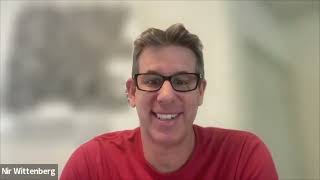
Nir Wittenberg left tech when he hit a pay ceiling and moved into real estate. He tried fix-and-flip and wholesaling, then shifted to passive investing through commercial real estate syndications. He explains how syndications work: typical 5-year holds, cash flow, tax advantages, and the 50% expense rule for underwriting.
Chapters
Hey, how's it sound to work less and make more? I am talking about money and there are ways to do that through commercial real estate investing and a lot of people don't know just how easy it is to do nowadays. So this channel, Pivot to Prosperity will show you how you can do that. It's brought to you by Pivotal Real Estate Investments where we go find the deals and do the heavy lifting and then bring you the opportunities. So if you want to know when opportunities come available, you need to register at pivotal real estate investments.com every Tuesday at 2 for about 22 minutes. We plan to bring you another video and so like share. Subscribe. Thank you. Hello there, this is Ginny Bolling with Pivotal Real Estate Investments and I have with me today Near Wittenberg and Nir. Welcome to Pivotal Real Estate Investments. This is the Pivot to Prosperity channel that we have launched. How are you today?
I'm doing good, thanks for having me.
Well, good, good. I'm going to do your intro or at least most of it. Okay. I hope you don't mind.
No, go for it.
All right. So near started his IT career as a network engineer in 2000, attaining some of the industry's highest certifications. Fifteen years into his career, he hit a pay ceiling at a modest multiple six figure salary. However, with a single income family, inflation taxes and hard to stash enough money away to get his 401k to where it needed to be for the lifestyle he wanted to live, he has turned to real estate investing. In 2016, a fellow engineer told him about real estate investing and how he can earn more in at the local ria. That fateful day sent him on a journey he couldn't have ever imagined. He has now been on the entrepreneur roller coaster for seven years building both flipping and wholesale businesses. He ditched that approach after Covid for a less risky one as a limited partner in cash flowing commercial real estate syndications. Welcome Near. We have a similar story as you know.
Yes, thanks.
Yeah, somewhat. Well, so tell, tell, tell them first what your name means.
Well, my name near, it's a little bit unusual here in the States, but I was born in Israel and it's pretty chic in Israel. So yeah, my parents moved us to California, Southern California when I was five. So I am more American than anything. But the name near is the only name I have. So that's the name I use.
It always makes me think near and dear.
Okay. I like to be there.
Maybe you can play on that.
Yeah, I've heard introduce myself near. Not Far. I'll use maybe near. Near and dear. So thanks for the tip.
Right. Yeah. Well, so Covid was the other. It was, it was the time just before that. I, I March 8, I was getting off of a cruise boat and we didn't know or hoping to get off. We weren't sure if we'd get off because of COVID And I was all riled up from this cruise with all these investors to launch into my multifamily investing career. So I, I get, you know, kind of, that transition period was kind of crazy, wasn't it? Tell us how, how it went for you.
Yeah, that, that's actually funny. I was on the plane to Ireland, seriously, the day that Trump said, hey, we're going to be closing the country this fall, this next Sunday. So I was in Ireland for the St Patty's Day parade, but never happened because, though, even Ireland all shut down on, on that, on that Sunday and St. Patty's was supposed to be that Tuesday.
So that would be awesome to be there for that, I bet. Oh, my God.
Oh, it was, that was the, the big plan. So we ended up just doing the countryside and it was, it was great.
But that's beautiful.
I, I did. Maybe I shouldn't say this on air, admit it, but I think I brought Covid back to the US because when I landed, I thought it was jet lag or, you know, something like that. But I did have Covid the day after I landed. I was in bed for three, four days and then lost my taste and smell for, for two weeks. You know, it wasn't all bad because when you lose your taste and smell, all those cravings you have for all those fatty foods you like, they just don't suffice. So you just eat salad all the time. So I did lose a good amount of weight. Maybe that's the positive out of it. But, yeah, that's, that's where I was.
Oh, wow.
But before. So Covid really hit my business hard at that point, I was wholesaling houses. I'm not sure if you're familiar what that is, but around residential houses, we, we market for what's called ugly houses or investor grade houses. So we basically what I do is I market for those houses and instead of buying that house myself, I would go ahead and assign that contract, that purch contract I have, and I sign it to a fix and flipper who's actually really good at doing the fixing, which I never was when I was fixing, fixing, and flipping. So the end of the summer of I Think it was what, 2020, when. 2019. When covet hit.
Right. 2020.
March of 20.
It was March 2020 that everything happened. All the fire. Yeah, I'm gonna change my light, but keep talking.
Yeah. So everything somewhat came to a halt. And I have a high transaction business. When you're talking about wholesaling, it's a high transaction business, at least for someone who is a high earner. And at that time, I had already left my job to, to pursue, you know, fixing and flipping and wholesaling full time. And it was going well, but at that point the transactions just went away. Right. No one was moving, no one was selling or anything like that. And so I did have to go back to my W2 job. So I'm quite thankful for myself for 20 years ago that I got into the technology space and it's, you know, it's relatively easy to get back into, into that, that field. So I went ahead and did that and I realized that I need to pivot to something more stable and not look for the get rich quick type of scheme. So in that same year, I pivoted to taking all those skills that I learned from finding properties from residential, and I did that with multifamily. So I live in Denver, but I was also flipping in the Midwest in especially Omaha, Nebraska, and it was definitely a lot less competitive and more affordable than it was in Denver.
Right.
So that's kind of where I ended up staking my flag as my, as my primary market. So. And that, that following year, 2021, I went ahead and put together a deal on a 14 unit and then a couple months later a nine unit. So now have 23 units in Omaha, Nebraska. Yeah. Really excited about that. So I took all the knowledge I had putting together deals and doing creative financing, and I have a partner on the ground who's the asset manager. He also owns a property management company. And then we have the money guy, and me myself is. I don't. I was the one who found the deal and put the structure together for us to all go in on a JV and allow our investor to, to be passive in the deal.
That's terrific. That really is. As far as your, your holding period, what are you expecting on that?
Yeah, everything I underwrite is for five years. So if you're familiar with underwriting, maybe you're, I'm sure, maybe your audience knows or maybe doesn't know, but basically the underwriting means that, you know, we're looking at all the income from the property that might include rent. We Also collect laundry income. There's also other ways to. Not on my properties, but there's other ways to generate income, adding value to the property. But maybe there's a garage that you can charge for and whatnot. Then you have expenses. Usually the rule of thumb on expenses is about 50% of your income and expenses typically that's on a multifamily and expenses usually include taxes, insurance. And then you have the property management, you have utilities and all that kind of stuff. And so then you come up what's called the noi, the net operating income. And that's how everything is valued in, in commercial real estate, which was a lot more, it was much more settling to me than residential because residential really is not looked like as a business with income and expenses like commercial real estate in terms of the bank's perspective, it's all about what the house next to you sold for. And that can change overnight. Right. As we saw, as we can see, there's just not much control. It's more about consumer perception of what's happening out there in the market. And so there's not much control there where with commercial you control, you can add income, you can reduce expenses and then you end up with that, with that noi. That really is how the. The property's value. So we, I underwrote that deal and then structured putting the, the JV together and now I'm pretty much passive into, into that deal.
That's great.
That is.
And you're looking for other deals.
Yeah. So right now, you know, take all those skills I learned in wholesaling, meaning around finding the owners doing what's called skip tracing, finding their phone numbers, finding their, finding their address. So right now I'm cold calling, trying to find more sellers. Right. And in Omaha, Nebraska. But it's a small market so it's not always easy to find a deal. So the nice thing is I joined this network of other operators in other parts of the country. So in the meantime, if I don't have a deal in Omaha, I'm able to get into other vetted operators deals in other parts of the country. So I like that diversification of being able to go in other parts of the country but at the same time also be able to go across asset classes. So right now we are very close on doing a self storage deal in Carmel, New York with, with some operators out there in vetted operators from our network, as you may know and.
Right.
That's kind of, that's kind of the direction. That's the direction that I'M going in for sure.
Right? Yeah. Commercial real estate has so much to offer that our peers in the other workplace just have no idea. And so let's talk a little about that because we know we're joining these networks so that we have these opportunities. But the big story is really what, bringing it to other people so, so that you can pull your money, which is what the whole syndication is about. Right. So you can do more with more people, spread the risk. Right. All those benefits, but people don't know about it unless what, somehow we gotta tell them. Right?
Yes. So I've been in the stock market, I've been stashing away Money and Roth IRAs. And then like, like you said, I've been in, in the W2 world since 2000. So I've been stashing money away for, for 20 years in those IRA type deals, but I, or those type of vehicles. But at the same time I really didn't have much choices in terms of anything outside the stock market. So I never, I never heard of being able to be in real estate or at least adding real estate into your investment portfolio without actually going and doing it all yourself. So I'm looking at my, all the money I've stashed away for 20 years and it's just not growing fast enough. Only grew, you know, 8% over that amount of time. Right. And you're getting dividends, you know, around 1 and 1 to 3%. But at the same time, when the stock market goes down 10, 15% now you're just making dividends on less money. So it's not steady, it's not a straight line to growing your money. It's more of a roller coaster. So I, I thought, okay, I reached my pay ceiling, so maybe I just need to go make more money. And that's how I got into, into the fix and flip business. But I didn't realize it was actually running a business and to hold a W2 job and try to run a fix and flip business, a wholesaling business or a buy and hold where you're the, where you're the landlord and actually taking the time away from your family and the things you enjoy to do, where really we're getting into real estate investing to actually free up our time. So I, I got into this world of real estate syndication. I heard about it a couple, three years ago. And now when I talk to other tech professionals about it and they say real estate syndication, what? So it's, there's not much knowledge about alternative investments out there. And so I try to spread, I try to spread the word about that because the dogma in since I've been, you know, Since I was 20, 21 was put money in index funds and just, you know, let it grow, but it just was not growing fast enough.
So it's that part of the story I wanted to talk about. When you talk to other tech oriented people, do they follow the math? Do they care about the math? Or is it the story or is it the you prove first or what do they, what do they, where's their hurdle?
Well, there's a couple. I think the biggest hurdle is education. So you know, some it's, it's, it's getting the conversation going and then you do have to educate them before they're going to write that check, you know, to invest into something they've never possibly invested in. Right. And so there's so many, there's a lot of education that goes around that and there's really talk, I talk mostly about the, the four ways that real estate creates wealth. So the number one, you have cash flow, then you have the tax benefits that come along with owning real estate. You have, typically the longer you hold property, real estate always goes up in value, at least that's what history has told us. And then we can use leverage, the bank's money to really grow your money quicker.
Yeah. Right. And so as far as, do you do webinars to help show them the way or how things are done or what are you doing for your medium?
Oh, basically I try to network. Basically I do in, in person networking because for someone to invest with you, you really have to, they really have to know trust and like you and I do have a lot of contacts, professional contacts across the industry. So I will, I do put some stuff out there on LinkedIn and then they reach out, say hey Nir, what are you doing? And so then I tell them what I'm doing and they get really interested. And of course, if they see what you're doing and you're able to show the benefits of helping them get to where they really need to be financially and talk about reducing the risk of only having one stream of income.
Really makes really.
They perk up and really start listening.
Yeah, yeah, I would imagine. Well and then just to add to it, what I was kind of prompting you to go ahead and say was you have a newsletter and you're doing the interview circuit. Right. So that's got to be helping them to, to understand that, that you're, you're really working hard to, to bring Opportunities that they can really benefit participating in. And, and I think that's a huge part of what, you know, people don't necessarily know when you and I are, we're not really beginners, but at the newer end of the, the cycle, I look at syndications and, and the current commercial real estate environment, like a new product. I'm a marketing person from, in the old days, not when it meant social media, but new product marketing. You had the learning curve. And so as you know, in 2012 and again in 17 when they did the Jobs act, that basically gave rise to crowdfunding and to syndications. The reborn, the rebirth of, of syndicating and more, more friendly to real estate. You know, we're still teaching people. There's a lot of people they don't know about it. It's more the doctors and the lawyers and the people that really had those, those connections with the wealthy that are doing it the most. And, and I think that our mission, in many ways, the way you and I relate and talk about it, is to help the middle class, the rest of the people get a chance to benefit in it too. So it takes, you know, a lot of getting out there and broadcasting. It really does. I see that because my friends are, you know, decades in real estate and they don't even know about it. It's like, what? I'm shocked. But, you know, you're busy, you got your blinders on, you're working, you know, you need some more income. You shouldn't rely on just this one job because nothing told us that loyalty doesn't pay. But the last couple decades, you can't put all your eggs in one basket. So, yeah, it's, it's interesting. It's definitely a hard thing to teach people because it's near and dear money. I mean, people don't part with their money so easy unless they get that investor mentality enough to realize inflation's just eating it away. If you do nothing, then it's going to just disappear. So you've got to be out there and taking some risk. They do it in the stock market with their retirement without thinking about it. Right. But it's really a better bet when you're talking something solid like real estate, a real asset. I, that's. I get on my soapbox, I guess. But yeah, so it's hard to tell people that, you know, a newsletter, I think. I don't know. I. That's why I'm doing YouTube.
There's so many mediums nowadays. But like I said, it's education and if we are earlier in our, you know, our career in terms of real estate syndication, we're ahead of 99 of the, of the population. Right. So as long as you're six months ahead of somebody else, I think you can help them. And then in our business, there's more experienced people than us, so we, we tap into them. So it's kind of like a chain of, you know, reaching out to someone who knows more than you. Right. Because it's just difficult to know everything.
It is, you know, and that saying really took me about the six months and there's, there's a lot of truth to it. I know you and I both, just by being members of Raise Masters, we, we want more than six months, obviously. But, but that, that saying has a lot of, of interesting. It makes you think, right?
Yep.
But anyway, well, so anything else you would like to share perhaps about what you're doing with your audience and before we get your contact information?
Yeah, definitely. I think the main point here that I'm trying to make is I thought I needed to go out there and make more money, but really I needed to just learn how to be a better investor. So the idea when you're an employee is you're trading your time for money. You're really working for that money. And when you're an investor, knowledgeable investor who can also reduce their risk, it's more about your money working for you. So you need to place that money in a good place. And real estate is typically what creates millionaires in this, in this, in this country, four out of five millionaires are millionaires due to, due to real estate. And so it's, it's a foundational piece of investment that should be in, in someone's portfolio. But at the same time, you don't have to be out there being the landlord. You don't have to take on the risk of signing on the loan. You can put it, and in being that active investor and go finding the deals and, and whatnot and you can enjoy what you do. A lot of people enjoy what they do myself and it, I'm a solutions architect. I like to solve problems. And if I could just back and talk to myself six, seven years ago, hey, near, just do what you like to do, but at the same time maybe divert and diversify into real estate as a passive investor. And if at one day, you know, every, you can look at every building that you like, you, you invest in as another stream of income at some point when you have enough invested and you have multiple streams of income. You have the choice to retire early, you know, or do other passions in your life or spend more time with family or travel. And it's. I got to this passive investing scenario the hard way. Right. I went out and tried to build a business which is very risky and very tough to do. It's all too full circle back to, oh, the way to do this is take your capital and passively invest in something that gives you, gives you a vehicle where you, you do have ways of really living life on your own terms. Right. So I really, once again, just try to educate investors on that piece. Hey, there's alternatives to the stock market. And, and when I tell people that their eyes do light up like, wow, this, this is really possible. But you do have to work with like. And trust.
Yeah.
You have to educate them. So I guess my, my main point is you don't have to actually own the real estate and be active in it versus just being a part of the real estate industry.
Yeah, yeah. Couldn't say it better. Excellent. All right, well, so why don't you tell people how to get in touch with you?
Yeah, sure. Probably LinkedIn is probably the best way to get a hold of me. You can search for near Wittenberg. So that's nir, his first name. And Wittenberg is W I T T E N B E R G And the name of my company is Mountain Capital. And so they can go to my website as well. Mountain Capital CRE for commercial real estate and dot com.
Okay. And I'll put that in the show notes as well. And great. Well, thank you so much. Appreciate you taking the time and joining us and enlightening us on your journey.
Well, thanks for having me and all the best to you.
Thank you. Well, I hope you enjoyed that. If you did, please like share. And most importantly, if you want to know when an opportunity comes available, do register on pivotalrealestateinvestments.com so we can get in touch with you. You, it's important to have a conversation. Likewise, follow us on Facebook and Instagram. We'll have briefings we pass out time to time. Thank you.
More from Ginny

Dr. Calvin Lowe Saves Lives 2 Ways: Pediatric ER & Teaching Overworked Med Pros How to Get $ Balance

Turning Construction Expertise Into a Thriving Real Estate Empire With Eric Schultz

Build-to-Rent, Community & Cash Flow with Pivotal Person Award Recipient Andy McMullen



Investing Beyond Boring Real Estate: Oil, Gas, and Industrial Properties with Keshav Kolur


Unheard of home prices: $225,000+/- in Portland! John Laine - Breaking Barriers- Home Affordability!


