Mastering Real Estate Investment: Strategies, Trends, and Success with Darcy Marler
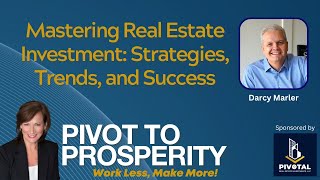
A recorded interview (Pivot to Prosperity podcast) with Darcy Marler discussing his 23+ years in real estate investing and evolution from flips and rentals to land and new-construction development. Marler describes micro-strategies (entitlement/up-zoning, lot severance/assembly, serviced lots, build-to-rent), construction trends (ICF/concrete, tilt-up, modular/manufactured units), considerations for infill vs. greenfield development (zoning, utilities capacity, incentives), and notable projects including Century Downs racetrack & casino (Calgary). He also mentions authored books and a development course and provides a contact website.
Questions this video answers
Over 23 years.
Over a thousand tenants and about 240 doors.
Century Downs, Calgary, Canada.
darcymarler.com
Wooden structures ~70 years; brick structures ~90 years.
Chapters
Foreign.
Bowling here with Pivot to Prosperity brought to you by Pivotal Real Estate Investments where we help investors build wealth and income through commercial real estate that improves communities. And today our guest is Darcy Miller or Marler. I shouldn't have said Miller. Marler. Sorry about that. Thank you for coming.
Thank you for having me. This is awesome. I love it.
Yes. Well, you have a very interesting background and so I am going to let you launch into that to introduce people to what you've been doing. And we've got some exciting things to share so why don't you go right ahead.
That sounds great. Yeah, no, I've been in real estate investing for over 23 years now. Before that I was kind of a computer guy. I lived and worked in South America. I actually met my wife down there, came back, had some money to invest and I didn't, I just was burnt out, didn't want to see a computer again. So I said, you know what, I'm going to give this real estate stuff a try. Had had a book given to me by my dad when I was 15 on investing. So yeah, now's the time. So I got into some flips and rentals. Over the years I've done basically everything. Long short term rentals, flips, burrs, condo conversions and lots of development and new construction. I've had over a thousand tenants, 240 doors, lots of flips and renovations and, and yeah, I just got tired of renovating. I just got tired of dealing with older buildings. So I want to deal with new. I want to be creative, I want to build new. So, so basically now I focus on kind of real estate development, land development, new construction, build to rent, some paperwork strategies like entitlement only lot severance, lot assembly. And I've written a few books and I've also got a development course that I teach people how to get into this world too. Instead of the normal flips and rentals, let's, let's get into new and, and develop new. Some new stuff here.
Great, great. So tell us the names of your books.
So I, a couple, there's one, land development as a profitable investment. The next one is new construction as a profitable investment. Then I did another one. What's the, the best strategy for you? Like everybody I it, I've been watching, like I said, real estate education for 40 years now and, and everybody work. There's kind of a pressure on newcomers to, to pick a strategy. Are you going to do flips? You're going to do rentals? Come on. I got books to sell And I like to coach people that why don't you look at all the strategies and see which ones kind of match your personality so you can actually enjoy yourself. And so yeah, with strategy, it's a book about strategies and I go through the pros and cons of all the strategies, what's good and bad. So you get kind of an objective look on that. And then I did one about cash management, cash flow, how to improve cash flow from rentals and that sort of thing. So they say when you write a book, you're supposed to write a book that doesn't exist. And I think all four of mine don't exist. Didn't exist before, so very good.
And your qualifications to be writing that book about the bottom line was, comes with a degree. You have a degree in accounting, I think you said.
Yeah, actually computers. But I majored in accounting. And so when I was an IT guy, I would help midsize companies with their accounting software. I was at one of my, my client while I was down in South America was I had a US based oil and gas company based out of Houston, Texas, that was my main client. And, and I was installing the software there, there are places I was in Venezuela, Colombia, Mexico and Brazil. So I traveled around a lot. So I loved it.
Very interesting. Well, and, well, we won't go into that. I mean how many, how quick those, those digits add up on, on oil and gas is probably pretty interesting.
Actually. One of my clients, one of my main clients was they deal with mud. So the mud that you use. So basically they would, they would rent mud. So it was basically mixing water and dirt and then they'd rent it. They didn't sell it, they rented it to the client and then they got it back and they rented again. So an unbelievably profitable business model, just renting mud.
I, I, and what was the mud good for?
Well, you need mud to put down the hole when you're drilling, to lubricate the bits and that. So it's, and then they suck it out after and reuse it. So it's an incredible business.
Anyway, that's interesting. Mud with viscosity, I bet. Interesting. Well, so tell us about your first project then.
So my first project in development was way back almost 20 years ago now. And so I had an old 1950s house that I was just going to rent to flip. I was a flipper back then and the person next to me passed away. So I actually bought the, that house as well off the estate. And again, we're going to flip Them both. But I said, you know what, I've always kind of wanted to try new construction. So I ended up moving the old houses off. Didn't even have to demolish them. I actually sold them to a house mover, moved them off. I split those two lots into four, made sure all four lots had the utilities and then I built four homes. So that was my first project. I'd never done anything like that before.
So I thought that was terrific. Now how did you handle the construction? Did you strictly hire it out or bring in a partner that does construction? What did you decide to do there?
I did it all myself. I've never done anything, you know, so they say God protects the innocent and the stupid. I'm not sure which one I was. Yeah, I was my own site supervisor, my own project manager. So yeah, I would say go down every day and you know, make sure the trades were working. I was the guy that, you know, coordinated the, you know, the drop off garbage bin and let's go down and, and negotiate a whole truckload of drywall. That was, yeah, I, like I said, totally didn't. And, and I, I don't recommend that to my, my students now. I say no, just hire a builder. But yes, but anyway, that's how you learn. That's how you learn.
Yeah, live and learn for sure. And so you also say you have micro strategies within the land development world, that land. So can you tell us a little about that?
Yeah, so what I found is that most people, when you just say land development, they instant, they kind of automatically just think big companies on the outskirts of town, you know, urban sprawl, they're going to buy 300 acres and put up a few thousand tract homes. And I can never do that. Well, I say, well let's, there's a lot more to development than that. Let's bring it down to our size, regular investor kind of size. Just a normal city lot, a vacant lot or an old house, like let's say a 1920 tear down. Instead of fixing them up, let's, let's tear those down and then we can deal with that. That's our size. Right. So different strategies. There's kind of what I call paperwork only strategies. So we can change zoning, density, usage. We can, you know, get a relaxation on height or something so we can build taller anyway. We can, we can change the, the way the lot is defined by the, by the town or the county or the state, whatever. And we can increase the value just by doing that so we don't actually have to do any work on site. We can just increase the value by doing that and selling it to a builder or somebody else. So let's say it's currently zoned single family home. Maybe we upgrade it to allow fourplex and then we can sell that. The next step would be let's say our build or our architect designs that actual fourplex. We get the building permit approved. Well now I've got a shovel ready package to give to, to sell to a builder. And if it's a vacant lot, they can, they can start building through. You know, we can go further from that as well. We can sit there and do lot assembly. What if we've got this one tied up but we knock on the neighbor's door. Now we've two 50 foot lots. We've got a hundred lots like or 100 foot lot. I can now put the paperwork and the planning together for a small apartment building or side by side townhouses. Again I don't have to do any work on site. I can just kind of planet and sell lot severance. I've got a lot that's larger than normal. I can cut that up, you know that 250 is into 100. I can now cut that up into 520s or 425s or 333s and I can then go the next step if I wanted to. I can put the pipe in the ground like I did with my 4. I can then make sure all the lots are serviced. Now I can sell service lots. I don't have to build the house. I think what we're used to a lot of times in kind of the renovating the old building world, whether it's flips or rentals, is we have to finish. You can't have finish a flip and expect to make any money out. You can't have finish a rental and expect a tenant to live there. So we're kind of used to, we always have to take it the full thing in this world. If you imagine every house starts with grass and ends with a building. There's all these things that have to be done. We don't have to do the whole thing. We can just pick the paperwork part or we can put the pipe in the ground, the utility pipes and cell service lots or we can actually go ahead and build that fourplex. You know, you can do whatever you want. So that' again going back to what makes you happy, you can, I call it moving the needle. You just buy it in a certain status, this lot and then do some value add and then Sell it to the next person down the line. So it opens up all kinds of possibilities and tools in the toolbox as I also say. So yeah, these are my micro strategies. If you think of land development and new construction being macro, we can drill down to these smaller micro strategies and that's how smaller investors like us can get into development as well. It's not just for the big guys on the outskirts of town.
That is so true. And you and I both know though too, there is a lot of planning and zoning details that go into figuring out you really have to do your diligence on this stuff. But so are you all self taught on that or have you had if you hired attorneys, zoning attorneys here and there or what do you do knowing.
You know, back when, like I said 20, 20 years ago when I started, there was no, there was no books on this, there was no courses, There was no YouTube even and certainly there is no Darcy talking about this stuff. So it's all kind of self taught, self learned. So yeah, I delegate where I can now and. But any other thing to your point about different zoning geography is a big deal in, in this world compared to the rental or flip world because we're adding new units right before, if I'm just doing a flip, for example, there's one house before, I fix it up, there's one house after. It's kind of a one for one even mostly if you see new construction, they tore down the old house and just built one new one. Again, one for one here we're taking a 20 acre vacant lot and we're going to create 80 new lots. Or we take an old house, we tear it down, we build a fourplex, right? So there's a one to many. So you have to be in a place where that's the business model for that is good, where they're actually people moving in, where there's the demographics, there's the jobs. So you don't want to be in a place where they're boarding up main streets. You know, you need to be where these people are moving in. And then also there's a big difference around the country when it comes to how, how anti development or pro development a city or town, a county might be. So there's places that'll approve your zoning application in two months. There's other places that'll take two years and everything in between. So as investors we want to be in and out quick. So let's say we, we don't invest in the two year place. We, we stick to the the six month place or less. And so yeah, maybe in this development world we've got to spend a little bit more time up front. I know our natural tendency as investors is we just want to go to MLS and start searching for the next, the next deal. Here we've got a, you know, we got to learn a little bit of upfront. What is zoning density? What is highest and best use? What. How do we increase the value of land? You know, traditionally we're taught the values in the building. We got to fix up the building. We, we get rich by value adding the building. Well, more and more with our aging inventory, the values in the land. So how do you increase the value land and then geographically, where are we going to invest? And so there's a little bit more upfront planning and then you can start looking for your next project and go hard. But it's a little bit of thought has to go into it first.
Well, and there's so much to that that really even applies to the value add people. You know, I have the background in land use and zoning from doing eminent domain most of my life and so I've argued that stuff with attorneys most of my career. And people don't think about the road capacities and access and construction and all of that too, which I'm sure you have to get into when you're looking at what you're wanting to develop. And yeah, and some entities want road dedications and extract a lot of, a lot of concessions.
And so other places are just not that there's no rules like that, but significantly less rules because they, they want, they want you there. Right? They, there's massive influx of people in that, in this specific, you know, like, let's say we've got foreign immigration coming in in kind of record numbers. But there also is movement around the states like domestic migration that we've never seen before too. Like people moving from a California or New York or Chicago down to Texas or Florida, the Tennessee, you know, Tennessee or the, the Carolinas, you know, these kind of places. Those are the last places I, I talked about. You know, they've typically got no state tax. They're, you know, you can spend 3,000amonth on a little, you know, a closet in Manhattan or you can get a little mini mansion in, in Houston for the same amount. So we're seeing these massive movement. Right. And so the, the various counties and cities are saying, yeah, we gotta, you know, so they're, they're rel. They're relaxing a lot of the rules and making it easier Increasing approval times. There's also something that doesn't exist in the flipping rental world. There's a lot of incentives like governments of all, all three levels of government are sitting there with incentives to, to have, to incentivize builders to build multi family or you know, grants or rebates or you know, they'll make it easier to get a loan. So there's a lot of that that's available in this development world that isn't available in, in the traditional investing strategies too. So lot of this is coming together a really good time. I think land development, new construction is the next big thing in real estate investing over the next five or ten years because like I said immigration and government's wanting this to happen, trying to densify, create inventory and that's what we can do. So there's a supply and demand, big mismatch in large parts of the country. So as, again as small investors we can do so. True.
Housing shortage is felt greatly here in Florida and many places and lots of incentives. In fact. Have you done any projects in Florida at this point?
No, but I was just there a little bit ago doing some, doing some research I was in. You know, I like the, I gotta be honest, I like the, the Gulf side better than the Atlantic side. I just find the Atlantic side too hectic. You're just driving forever. I like kind of the laid back part of, you know, the Tampa, St. Petersburg, Coral Springs or.
Down by Fort Myers. Right, right, yeah. And clean the slate down there.
Yeah, yeah. There's some new development, new building strategies, you know, building with concrete, you know, icf, these kind of strategies that I.
Think that's exactly where I'm going to take this conversation. The trends. Yeah, talk about the trends and what, what you see happening there.
So I think because you know, like this icf which is basically you're building with concrete, so the walls are much able, much more able to withstand you know, the hurricanes and that kind of stuff that come in through that part of the country and through Houston too. In Texas you've got tilt up panels where things are. These concrete panels are maybe manufactured off site and then they're just trucked in and like just tilt them up and I like modular which is basically if you can just imagine, it's almost like Lego. So we'll imagine an old age or you know, a senior citizens residence or a hotel, something where it's just cookie cutter. Each of the rooms is exactly the same. You can make each of those rooms in, in a, in a warehouse truck, them into place and then just stack them like Legos. Once they're on site, you can make the, the outside fascia, the however you want to finish it and then you hook up the electrical and all the utilities inside and the on site work is significantly less. So you can significantly reduce the build time or at least the on site build time by that. And I think it's going to be, I think that's going to be huge too and a, and a major thing in the future because you know, the younger demographics are not, the kids aren't going into the trades as much as they were. So we're seeing the labor shortages and that. And so if you can just have a massive warehouse where they're just kind of cookie cuttering these building blocks, the electrician can just go from one house to the next house to the next one all in the same building. There's no issues with rain or snow or wind or whatever. They don't have to drive across country to get to their next job site. So I think there's a lot of benefits from that. So I think that's the future as well.
Are you seeing those being built through robotics? Primarily it's part of that, but also.
I think it's just a lot of it is still manual, a lot of man made stuff. Again, the benefit is that if I'm an electrician, like we're talking about Atlantic side of Florida, I might have a job in Fort Lauderdale and then my next job is up in Boca Raton or whatever. So I got to travel all the way up there. So realistically, how productive are you? Right where this way, we're in the same warehouse and I'm going to hook up this part of this house today and I'm going to go right next door and walk five feet and hook up the next in the next building and I can just boom, boom, boom. So very, you know, much more efficient use of time and energy and cut costs. You know, they can always, they, you know, they're also, you know, I was, I got a friend that actually is an architect for one of these firms and he showed me the, the software. Typically when you do a blueprint like you'll just show the, you know, the bathroom and there's the tub and whatever. And then it's up to the electrical, you know, the plumber on site to know how many copper 90s or PECs we need to hook up that shower, whatever, they'll do it all in great detail. You know, the heating and air conditioning, duct work, all that stuff they Know exactly, you know, how many nails are in this. Basically once they do that, they hit a button and they'll come up with a bill of material, like a job list of exactly what, how much of each type of material they'll need. They make sure everything's on site. So there's no, the worst thing they get is, is if they run out of material or something. And now there's this half finished house or room that, that's taking up space in the warehouse. Right. So no, they gotta, they gotta go. So everything's already, before they start, they've got every single nail and copper 90 that they'll need to do whatever they need. So it's, it's actually pretty interesting. But yeah, I think it's.
Yeah, the computer age changed things a lot. I was married to an old architect. Right. I shouldn't say old, but yeah, the quantities and all that. It just, you know, over the last 20, 30 years has been really 30, 40 years has been phenomenal, but. Right. Yeah. And I think really one of the sleeper assets of this decade will be the modular housing. And there's like a lot more big builders already here in America than I realized until recently. So I think that there's going to be awakening here.
I was talking to this architect and he said that in the United States about 30 to 40% of the build is already kind of modular. In Canada it's 6 or 7%. Like they don't do very much of it, but it's coming. And in Europe, he said the first thought is always, how do we do this modular? So it's, it's, that's the default over and over in Europe. So.
Right, right.
Because they've been fighting the, the space problem for, you know, decades. How do we get more out of the limited space where we've kind of been lazy in North America, where we just keep doing the urban sprawl and big houses and, you know, larger lots. So that's part of, kind of what I talk about too is let's kind of stop the urban sprawl. It's getting way too expensive for us as taxpayers to put in the new roads and the infrastructure to go out there, the schools, all that. Let's come back in, you know, the 1940s and 1930s and earlier houses, they don't have any useful, useful life left and let's tear them down and then let's build a four plex or a six plex in its place. Kind of revitalize the inner city and come up with, you know, because not everybody that wants new wants to live in the suburbs. Lots of people want to live closer to the action. And so I think again, supply and demand, I think we can.
Right, and you read my mind. Again, I wanted to get you to infill because not only does that help better utilize the capacities that are already existing, but do you find that. That it's easier and faster to get? I'm assuming some places you go you have an issue with capacity and you have to reserve capacity. And there's a bit of a timing element to that. Do you run into that much or is that just where I've been actually.
What happens in general? And again, I say something and then someone will say, well, that doesn't happen where I work. But in general, what happens is. Actually, let me back up a bit. So just a quick fact. So the average lifespan of a wooden structure in North America is 70 years and brick is 90. So that puts us in 1954 and 1934. Again, all we've been taught is how to fix up old stuff. But what if, you know, anything 1915 and earlier, you know, I'm not talking about historically or architecturally valuable buildings, but that's a very small percent. Most. I say most old crap is just old crap. So what if we tear that down instead? Right. Instead of trying to fix it up. Right. And so we're looking for communities that are basically where some developer. In the 1940s, that was the outskirts of town. Right. And so but now it's. Now it's old. Right. So in a lot of cases, the capacity of the water and the sanitary system and all that was higher then because. Or much it was. We were closer to capacity then because that's when the. All the kids were there and, and the families were young. Now these older, older communities typically don't have the population than they had back when they were new. So that specific house I'm going to tear down and build a fourplex, maybe I have to upgrade the line. But in general, the community itself, the neighborhood itself is. Still has lots of capacity left because it was designed for. For more people than. Than what living there now. So in general, that's kind of what I find.
All right. And so you're not having a lot of conversation with the cities on that kind of thing here. It's, it's more of a. It's there, it exists. So you're just really replacing the user for the lot and no, no real discussion.
Well, you know, again, it depends where. But you know, also a lot of Times the discussion is, you know, for example, in a lot of places in the 30s, they use clay for the pipe, you know, the, the main drain pipe for the, the sewer, the water pipe coming in. You know, I had one building, I was a rental. It was an old building, kind of a motel that I modified into a lower economic apartment, long stay apartment. And I got a leak. You know, this water started bubbling up in the parking lot. So I big in the back hoe and dig it up. And of course there's the, the, this terracotta or, or soft clay pipe had broken. Well, normally, you know, to fix a broken pipe, you, you cut off both sides, you put a new sleeve in, you know, lock her down and life is good. The plumber would reach for the new piece and it would just break off in his hand. He'd go. And, and, and we just couldn't. We had to, you know, directional drill a whole new line. Right. So those are some of the problems you might end up with here in, you know, really old neighborhoods.
Right, yeah.
Again, that's going to happen whether you. Like I said, I was, I was just burning that property. So I mean, whether you're doing it as a brewer, as a new, you're going to run into that problem. But again, most of the time the capacity is there. We just need to.
Right, right. Do you actually recommend if it's the development from the 40s or have likely to have those situations just budget in to put new drain lines and whatnot in.
You know, typically what I do is, is maybe video or you know, put a snake, put the camera down to see, you know, is there. You know, again, you're kind of should do that anyway with your flip just to see if, you know, the tree roots are cutting in, whatever, but just see what the quality is in that. But yeah, I used to be, I used to be fix it up guy. Now I'm tear it down guy. So I basically. That's.
Well, so let me see here. Multiple entry and exit points available in development. You want to touch on that more specifically than what we already have.
So going back to the micro strategies, like I said, you don't have to do the whole thing. So let's just say, you know, maybe if you want to build a fourplex, that's the part that, that turns your crank. Doris. I don't want to worry about the permits. I don't want to put pipe in the ground. I just want to find service lots of. And I want to build the fourplex that. I like that. So now you're looking at this point, you're not looking for raw land, you're looking for something where somebody else has already created the service law. Right. So now that's a different entry point and a different exit point where somebody else could. No, I just want to do the, what they call the entitlement or the up zoning strategy where I'm just going to take something that's zoned single family home and I'm going to make it able to do a fourplex. I'm going to do that. That's my value add there. So lots of different entry points, lots of different exit points. And again, in and out quick. You know, I wasn't a big fan. Like, you know, I've had over a thousand tenants and never enjoyed that journey at all. I've sold all my rentals now. But I never kind of liked, I never liked the tenant part, but I also didn't like, you know, we're always taught you have to get a JV partner and now you're going to be in bed with this person for 10 years owning this apartment building. And I barely know the guy. And so I like in and out quick. So can you, with these paperwork only strategies, maybe you're in and out in, you know, six months or around that, you know, I'm doing a service lot. I'm taking five acres and I'm gonna put utility pipes in the ground and split up the, the larger lot into smaller lots. I'm going to create an internal road that's probably a year and a half to two years. You know, if you're just going to buy land already there and build the fourplex, you know, it's. If the paperwork's already in place, physically building a fourplex is, you know, eight months, you know, 10 months kind of thing. So this is, allows for those of you that don't necessarily like the long aspect of long term rentals or whatever. You want something quicker. This is a, a great, a great avenue to, to get into that world as well.
Agreed.
Yes.
We need more housing for sure. So again, that's. Yeah, but whether it's infill or even on the outskirts, but. So then let me ask you to tell us about your horse track and casino.
So where I live there was a group, this is way back in the early 2000s, that the existing racetrack was built in the 30s or 40s, and a bunch of the rich horse owners are saying we need a new track. And of course we get into. I wasn't involved in this point, but they started to go down the road of. They bought the land and of course they got hubris kind of set in and we're going to go big. And they, they hooked up with the largest or the best horse track designer in the world, which is a guy out of Philadelphia, it turns out, who knew there was a thing, but that's a thing. And so we're going to have this massive thing. We're going to have residential development. They were in talks with Caesar's palace to, to have like a Caesar's palace type theater for there, you know, so the Barbara Streisands of the world could show up. And, and the, the, the, the barns themselves were like $2 million each, you know, you know the, these million dollar thoroughbred horses are going to come in from Arabia. So it got big too quick. And then we hit the 08 recession and it kind of kicked everything. And the group actually went into creditor protection or chapter chapter 13. And so I was brought in to kind of help out and I'm kind of a turnaround guy. And so I got them out of chapter 13. We partnered with another group out of Austria actually that a gaming company that's listed on the Nasdaq. So they provided the funding. I sold the land and then leased it back to raise money. And so I kind of did all this stuff. We went from $100 million in debt down to about a reasonable 25 or so. And we got this racetrack and casino built. And so I'm part owner of a racetrack. I'm still on the board of directors. So it's, that was actually pretty cool.
And where is it at?
It's in Canada actually. Yeah, so just in Calgary. So it's called Century Downs.
I was just gonna ask Century Downs. Okay. I have to look it up. That sounds fun. So when you said you sold the land, was that like a syndication almost where you brought in investors and, and put it into an entity basic?
No, what happened was. So there's three parts. We, we, we had to get out of the, the chapter 13. We had to figure out who's gonna run the casino from the gaming standpoint. So there was no problem there. Lots of, lots of people were there. Lots of gaming companies wanted that. But there was a, thus there was a fear that well up to our side, I don't want to make $10 million a year profit and the gaming side but lose 4 million in on the racing. So we had to kind of show them that the, the government had some incentives to, to, to because you know you want to save the, the rule jobs of farming and, and the people that actually train the horses and grow the, the wheat and the, you know, the, the straw and the, and the hay. You need all those kind of jobs. So basically we got a percentage of the, the take from the casino because we were this racetrack as well. So I, I could show that there's. The model works like you. You'll make money here. And turns out it was actually. Everybody thought I was too gung ho and that I was just spouting rainbows and daffodils of how great it was going to be. But actually reality is actually greater than even I thought, so it's actually been quite successful.
That's a very cool story. Yeah. Nice. Nice. Well, so, okay, and I know we're coming up on the hour here. I would like to ask you, and I ask all the guests and that is, is there a pivotal person or event that has affected you or does today that, that you would like to recognize as something that's been good or bad, but, but as your pivotal event or person?
Yeah, actually my father, because he's the, the guy that gave me my. That book when I was 15 on how to. How to do investing in real estate. And I didn't do anything really with it until, you know, I was in South America from 96 to 2001 as an IT guy. Got fed up, didn't want to see a computer again. I got burnt out. So I came back home and said, you know what? I'm actually gonna do something with this. So I started doing flips and, you know, rentals and burrs and all this stuff. And my dad, back when I was a teenager, he was a farmer and he wanted to get into real estate, but he never did. But we would go and we'd look at potential properties and then I'd go home and I, you know, this is the mid-80s, early-80s. So I'd key it into the, the computer that I had, and I've kind of got my computer interested in computers. So we kind of bonded like that. And then as I, you know, became a real estate guy full time and started to kind of play at a higher level, he loved my stories. You know, some of, some of the, the renovations that I did were just kind of just the before picture was just disgusting. Right. So I had, you know, apartment buildings that had fire damage and hoarders and cat lady and I had one that, you know, there was mushrooms and grass growing on the carpet. So. But he just loved my story. So he lived. He never did end up investing in real estate. But he lived vicariously through me. So actually it was my dad. It was quite, quite your dad what? My dad was actually quite the pivotal one that got me into this. Great.
That's so cool. And is he still living?
No, he's passed now.
Oh, that's a shame. But yeah, at least he got to see that. Yeah, right.
Those stories, you know, with like I said, the hoarders and the mushrooms and grass and I'd take him to see it and he'd tell him, how are you going to do this? So it was, that's pretty cool.
That's super. All right, well, very good. Well so. And you have a course. Why don't you touch on the course and tell people how they can reach you? And we'll put all this in the show notes as well.
Good. So yeah, the, to get in touch with me, just the best way to do it is just my, my website is Darcy Marler.com so you can see my spelling. All one word. No, all lowercase. So Darcy Marlowe dot com. Yeah, so I saw that there was kind of a void in the education world. As I said, I've been watching education on real estate for 40 years and it's all just flips and rentals and burrs and wholesaling and there's nobody really not a lot of people talking about this development world. So how do we come back? What do we do with a vacant lot? Most people, you know, I need a house. I add value by the house. I don't get. I don't know what to do with land or I don't know what to do with that. Really, really, really nasty 1910. Most of your fellow investors will just drive to the next one. Right. So what know, how can we, how can we deal with that again? Knock it down and come back. So I teach all the different strategies that I talked about. The, the up zoning, the how to create a, a shovel ready package lot assembly, land assembly, build to rent. So let's say you, you, you want to continue in rentals but you're tired of fixing up those 1930s pieces of crap. Let's have a, let's have a newer portfolio. How do we do that? Lots of benefits from having newer tenants in, in the rental all the way up from, you know, a single lot. How do we service that? What do we do with that? All the way up to, you know, 20, 50 acres. I've done large developments as well. So anywhere in that cycle I can, I can get you going.
Exciting. It is very exciting and you started out very brave from the get go to jump into the construction yourself from the very first one.
Yeah I didn't know anything about yeah I'm not like you know in one of my books I say yeah you don't actually want me swinging a hammer so I'm more of a project manager guy but like I said now just hire the builder to physically do that. Hey hey think of yourself more than.
Investor and so part of why I interview people like yourself too and whatnot is there's always potential for us to be partnering on different things and in fact I do want to talk to you about a particular property after we go off the air but so thank you so much for coming on and we will be airing this within a few weeks and so I appreciate it very much.
Oh I've had a lot of fun. This was awesome.
Good good well thank you again we appreciate it.
You take take.
More from Ginny

Dr. Calvin Lowe Saves Lives 2 Ways: Pediatric ER & Teaching Overworked Med Pros How to Get $ Balance

Turning Construction Expertise Into a Thriving Real Estate Empire With Eric Schultz

Build-to-Rent, Community & Cash Flow with Pivotal Person Award Recipient Andy McMullen



Investing Beyond Boring Real Estate: Oil, Gas, and Industrial Properties with Keshav Kolur


Unheard of home prices: $225,000+/- in Portland! John Laine - Breaking Barriers- Home Affordability!


