Philippine Engineer Turned Stock Trader Leaves All to Be a Real Estate Investor- Jon De Los Reyes
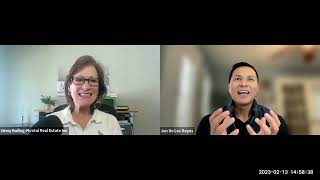
Jon De Los Reyes left engineering and stock trading to build a real estate empire. He closed his first passive syndication in January 2022 and grew to roughly 1,400 multifamily units within a year. He also runs an e-commerce pet business that helped 12,000 families last year.
Questions this video answers
Late 2020.
Closed in January 2022.
Approximately 1,400 units (800 passive, 600 active).
www.DLRX.us.
First sale in 2020; started the Amazon business in 2020.
Chapters
Hey, how's it sound to work less and make more? I am talking about money. And there are ways to do that through commercial real estate investing, and a lot of people don't know just how easy it is to do nowadays. So this channel, Pivot to Prosperity, will show you how you can do that. It's brought to you by Pivotal Real Estate Investments, where we go find the deals and do the heavy lifting and then bring you the opportunities. So if you want to know when opportunities come available, you need to register at pivotalrealestateinvestments.com every Tuesday at 2 for about 22 minutes. We plan to bring you another video and so, like, share.
Subscribe.
Thank you. Hi there. Jenny Bolling here with Pivot to Prosperity. And today we are most happy to present John De Las Reyes. And John, I would love for you to go ahead and tell us about your past and what brings you to this point today.
Oh, my gosh, Jenny, thank you so much for having me. You know, before I start, I wanted to share a quick story with the audience in that. So we met at Race Fest, so we're part of the same mastermind, which is Race Masters. We met at Race Fest, and we actually got to talk a lot more. I wasn't supposed to be in that conference. Not at all. I was finding many excuses not to join. I was supposed to go with my wife to Arizona for another conference. And then one night, I asked myself, why don't I want to be at Race Fest? And when I peel the layers, I realized that every time I'm with Race Masters people, I'm standing next to people who have raised 25, 50, 70, $100 million, and I was true to myself. And I feel small. I felt small standing next to these titans. But, you know, sometimes the thing that we don't want to do the most is actually the thing that we need to do the most. So that was the same. That was the same very reason why I bought the ticket right then and there when I had that epiphany saying, this is the same reason why I got to keep on punching up and surround myself with. With them and try to add as much value to them as well. Because I can. Right? Because I can add value to them as well. So I. I myself am unique. So because of that, I'm there. I was there. I met you. We got absolutely. Yeah, yeah. So I'm happy that I went. It was a. It was. It has a lot of potential. Back conference.
That's great. Great. And then you might as well Say where we went.
That special place we went to, Churchill down, which was amazing. Where they have the Kentucky Derby, for those of you who don't know. We had some good bourbon. It was. It was an amazing time. We had some fantastic steaks as well. So one of the best steaks I've had. And I'm from Texas, so coming from someone who lives in Texas, saying that is. Is quite a statement. Right?
Well, same here. And I'm kind of a. A steak snob myself, and I thought it was excellent. Okay, well, so tell us about where you come from, your roots and. And upbringing.
My roots. So growing up, the norm. Where I grew up, I grew up in the Philippines. The norm was either you become a lawyer, a doctor, or an engineer. I don't like reading contracts. I don't like going to hospitals, but I'm good in math, so I was an engineer. So I started engineering. You know, we didn't grow up in a wealthy family, so. So I was telling you earlier, I remember when I was, I think, in fourth grade, every time it rains, it floods in our street. Sometimes the bus couldn't even drop me off in front of our house. I have to walk through flood. Just to give you, like, a background of my upbringing. But eventually my father did well, I took up engineering. And then my. My first ever job was I was an apprentice for one of the biggest manufacturer car manufacturers in the world. And my salary was five bucks a day, not an hour. It's $5 a day. And $3 of those was already gas money because gas is a global price. Right. So I didn't have much left. So that was, that was. And then when I moved here many years ago, and then when that shift from five bucks to what I was earning back then, which was not even that big. I have so much appreciation of money, so much more. Right. But that also gave me some disadvantages because now I have this earning capacity, but I'm like this. I. I don't want to let go of money. All right? So I got stuck in a W2 job. I said, I'm going to work my way up. I'm going to be the five star engineer. And I was, you know, I was in oil and gas. I was the ideal employee. Five star, worked really hard. And then I got burned out, Ginny. I got burned out. Just like, okay, so am I going to do this till I'm 65 years old? It does not make sense at all. There were two events that triggered. There were two events that triggered a change in my life. So I worked so hard. I got burned out. I was too busy to realize that I was slipping into depression. Right. I had very dark thoughts, but I was too busy to realize that. And the first event was. And I'm being completely vulnerable here, but I had my little cousin on my lap, and she was playing with a computer, and she accidentally turned on the webcam and it recorded my face for a few seconds. And then I snapped out of it. I was staring blankly. I snapped out of it. I stopped the recording. I watched it, and I saw a person I didn't recognize. I saw a person who was just defeated, who's like, we just given up. Just completely burned out.
Wow.
And then, you know. And the second event was, again, frustration at work. We had. So after, like, there was an event that happened at work. And then after that, right after that, I had the biggest fight with my wife. And I told myself, no job is worth losing my wife for. So I was no fun to be with. So I had to change. So I looked for other avenues. Look at real estate, look at investment management, look at starting our own businesses. I didn't want to be stuck working for someone. I wanted to expand and actually, you know, not have time directly proportional to the money that I make. So I had to make that change.
So, yeah, wow, that's something. And so fast forward it a little bit. Even though I'm going to take you back to oil and gas after a while. So when did you actually make the decision to get into real estate?
That was 2020. Late 2020.
Not that long ago.
Not that long ago. So. But we moved quick. Single family was the natural investment for us because we live in a home. We understand the concept. It's simple. It's, you know, it's graspable, it's manageable. So I was like, okay, so let's buy our neighbor's home because it was for sale, it was under market. It was the exact same layout as a house. I can be the property manager as well. By a serendipitous event. We met someone at Mount Zion who was a family friend. They just happened to be there when we were there in their rv. We invited them for dinner because it was Christmas Eve. I told them, hey, you know what? I know you have your. You have food already, you have your rv, you have plans, but you're not going to eat box dinners on Christmas Eve. So come join us at the hotel. We got to talk. And they said, we bought the RV from our passive investments. It's like, excuse me. Yeah, we invest in Apartment buildings. And because of this apartment sold, we got our returns back. We bought this RV from that. I was like, this is not a cheap vehicle. I said, tell me more. So that got me so intrigued. But I was skeptical. I was skeptical for a bit, for a long time. Coming from a very technical background, I analyzed everything. But I fell in love with the syndication model. The syndication model is basically a team of investors. You have the team that's managing the property, you have the passive team. You work together to acquire this asset and then split the profits at the end. And I thought that I needed half a million or a million dollars to be a part owner of an apartment building. I thought it was outside of my grasp. But when I looked into it more, I fell in love with it. And the first three questions that I asked like, okay, so can I use my 401k to invest?
Yeah, you're smart.
Absolutely. Because I don't have a lot of cash sitting in the background. Can I use my 401? I was like, yes, absolutely. Second is like, are you sure that I don't need half a million dollars to be a part owner? Absolutely. And are you also saying that I can stay in one of the units there and live for free? Like, no, no, no. That's not part of. That's not part of the. So we invested our first property in 20. Yeah. Actually early last year. 2022, when it closed was early 2022. January, and then another one in Feb, and then another one in March and then two in May and then another one later that that year. So it was.
Wow.
Yeah, we did three passive investments and then two properties under one deal as active partners. Right. So we did three passives first because we want to know how it actually works and we enjoyed it. So we found teams that we want to work with. Of course you're faced with a lot of deals, but who do you invest with? Right. So we look for operators who under promise over deliver, that's their reputation and that's who we partner with. That's, you know, that's been very beneficial for us. And once we pick a direction, we're just going to go full out.
That's great. That's really, that's impressive that you've been able to make that much ground in a short period too. It is. I've got to ask, who, who is it that you met in the rv? What's their last name?
So we invested them with them in their first ever GP deal. So this was a family friend of ours. She's not A race Masters, but she's in another real estate investment group. She's a family friend of ours.
Okay, we'll talk later. Yeah, but it's funny, I know so many people doing that because especially with COVID it was so easy to travel and you didn't have to be tied down even to a remote W2 job. You know, the investors can go anywhere, really. And. And so that's one of the things that also appealed to me as well was, you know.
Yeah, we have investors from. From Florida. Right. And they don't have to be here, of course, they'd rather see the property, but they don't really have to be here to invest here. Right. You can be in Alaska sometimes, you can even. Even be in other countries and still invest. Right. So.
Well, so now there was another tidbit on your past that you ought to touch on, and that was your experience as a stock trader, right?
Yeah.
Yes. Let's not miss that.
Let's not miss that, because that's a very critical portion of why I diverted in my trajectory. So, remember, I said I was an engineer and then I went to production management. I managed, you know, production lines, then project management, and then I got burned out. So it's like, I need to make a change. I'm going to do my mba. And, you know, when you do your MBA sometimes. So when you do your mba, most of the time you have an idea of what you want to do and focus and specialize on that. I went there to figure out, what the heck am I For the rest of my life? I tried everything. The one that I liked the most was investment management because it has a potential to provide wealth. And with wealth, I can do so much more. And we can talk about the long term goal later on. So I was part of a fund. It was a small fund, it was in the eight digits, but not high eight digits that traded stocks. We had a fiduciary responsibilities. We managed the portfolio. We traded stocks for accredited investors. Okay. So we would trade on. On their behalf. As part of the fund. We would analyze stocks and one stock just to give you an idea of the amount of work that we have to do. Companies, publicly traded companies, release K1 reports, which is an annual release to investors. Sometimes it's 100 pages. Walmart has 500. Right. It has a ton of pages that you have to go through, extract numbers from there, put it in the model, project the cash flow for 10 years, and then do all these market analysis projections, comps and all that. It would take me 15 hours to analyze one stock and say, hey, Walmart cost this much. It took me, sorry, Walmart cost this much. And it took me 15 hours to come up with that value. Right? And then the next day you would have a tweet from government official or from the Fed or from whoever billionaire, and it would send the stock either down or up very, very drastically. And what we would do is every time we have a stock that would go up or down by 5%, we have to do extensive research and send the results to investors. It was like, I'm here again looking at reports, so on and so forth. And there were several times when there was no particular event that happened to the company. And I had to say to the investors, nothing happened fundamentally to the company. It was just driven by social media. I was like, I cannot pitch this to my investors. There has to be something, right? Also, if you look at stocks, let's take the s and P500. It started in the late 1920s. If you take the average return of the s and P500 since the late 1920s, it's around 11.8%. Now if you chop off the last 20 years, you're down to 9.8%.
You mean chop off the first 20 years or the last 20?
Just, just only do the last 202003 to 2023.
Okay.
It's actually lower 9.8%. So actually the stock market returns is getting lower by the year. Right. If you factor in inflation, then you wipe out pretty much a lot of that. So, like, this is not going to work. So running the numbers, it would take me up to my mid-60s to be able to be financially free. Right. When my, you know, my passive investments cover my, my expense, that wasn't going to work for me. So I pivoted again. And in my last semester, I became a console. I said, okay, not maybe I'm not going to do stocks. My last semester in school, I took entrepreneurship classes and I was a consultant for. This is a course consultant for entrepreneurs who are under resourced, meaning they don't have the money, they don't have the education, but we were there to help them build the business plan. And I had entrepreneurs who didn't even finish high school who were going after their dreams and starting their own business. So this is so inspiring. So I want to be an entrepreneur because I have the freedom to do what I want to do and create what I really wanted to do. So the very week that I graduated my mba, I took an Amazon course. Now this plays very well into real Estate. Because our idea was to start with a cash flowing business first to cover the expenses so we can focus full time on real estate. And this was driven by the book for our Workweek by Tim Ferriss. We started the Amazon business in 2020. Our first, very first sale was in 2020. And I celebrated like crazy when it got the first sale. But I knew who it was because it was my friend who bought our product. But we built the Amazon business. It was a struggle, Ginny, in that after a few months we were losing a lot of money. I didn't have enough money left in the bank, but I believed in this model. I had a goal to replace my W2 with cash flow and then invest in real estate later on. So I looked around. Okay, this fight is not over yet. I may have lost a lot of money, but I can still sell some belongings to keep this business going. So I sell the bunch of my personal stuff. I sold my race car, which was. I used to race a lot. Yeah, that was my hobby. So that was a car that I was going to keep forever. But I had to give that up so I can fund the business and then turn it around. And sure enough, it worked. I was able to replace the cash flow from my W2 with our Amazon income. Now I'm focusing fully on real estate. So if you look at the trajectory, we built the Amazon business and the Amazon. In Amazon, you sell products in boxes and then now invest in buildings and apartment buildings.
That's why the saying boxes to buildings.
Exactly. That's why our strategy was from boxes to buildings. That, that, that's how it came out to be. Yeah.
So what kind of race car? Tell me.
Oh, it was, it was probably the, the most reliable race car you can, you can ever buy at that time. It was Honda's 50th anniversary car. You don't see it very often. It's a special, special car that they produced. Yeah. Around 2000s.
Okay.
Yeah. So that was, that was my favorite car. Cleanest.
That was hard, I bet, though.
Yeah, I know it was hard. But you got to make sacrifices and it paid out. I'll get another one back.
And the E Commerce business is going well.
Yeah, we had our biggest month in January. Last January was our biggest month. We started selling on Amazon, Canada and Etsy. This. Yeah, this month actually. And it's picking up traction, which is really good. Really good.
Well, I was kind of wondering why you didn't just do a little hyperlink on the bottom of your page or something, even though you're Talking about apartments and another commercial gave me an idea.
Maybe I'll do that.
Yeah, I think you should. But so what are you mainly selling in? The pet supply business found a niche.
So we looked at 100 different products. We designed our own small dog car seat to keep them safe and buckled in so that they can look outside the window to all the way to memorials. So these are gifts for someone who lost a pet. So it's a very small niche. And a portion of our profits go to animal rescue groups.
That was the other thing I wanted to bring out. Yeah, you donate.
You donate to them. Yeah, yeah, exactly. And the reason for that is that's the only. Their only fault is they live such short lives. So we want to be constantly reminded that, you know, they don't live forever, but when they do, remember, you're going to see them again. So last year we provided comfort. Is that, that, that's how we want to see it. We provided comfort to families, 12,000 families last year. Yeah.
That's a lot, right?
Yeah. So, of course it's not going to bring the pets back here to earth, but, you know, you provide even a little bit of comfort during that day. And if that happens, we did our job, so. Right.
Well, that's, that's great. And, and that's, that's helped you to be able to take the time to put the pieces in place to build the business you want. Right?
Absolutely. Because right now, Amazon takes four hours a week.
Oh, that's great.
Very nice. Now, that opened up all this time and opportunity to focus on real estate in multifamily. So I was at a conference this past weekend, Multifamily Investor network conference. And very interesting tone in that. Okay, we're expecting good buying times ahead. We're not there yet. Prices haven't gone down enough to justify the higher interest rates, although that time will come. And when it comes, everyone's going to jump in because these assets are going to be on sale and this is the perfect time to buy. I think it was Warren Buffett who said that stocks are the only asset that when they go on discount, people flee. Because when you go to the mall and you see something at a discount, you're going to rush into it, or discount on food. You buy that food as well. But when stocks go on discount, people flee. Because of that, Americans now have $5 trillion sitting in their bank account in cash. Never has this happened ever before. Coming from the pandemic, all that relief. Now Americans plus, we're very conservative in the asset classes. That we're investing in. Right. So that's why we have such an accumulation of cash and demand. But we have some good buying times ahead. We're expecting some really good buying times ahead. So right now we're telling our investors, get ready, be prepared, be liquid. So when that time comes, we're going to buy assets at a discount. But it's coming.
Yeah, that's pretty much the message I've had as well.
Yeah.
But the one thing that, that we, we can't overlook is there are still good deals anyway because some people still need to sell. And if, if we can find those before this big. I'm gonna say avalanche, but I don't mean avalanche. It's probably not going to be that big. It's nothing like the 08 crisis because, again, there's too much equity people have right now. But, yeah, I think that, you know, I have to be careful because I've had so many people say, I'm, oh, I'm going to wait. And it's like, well, there are still some good ones now, but you just have to look at each one individually. Right.
I was talking to someone this weekend and they're assuming a loan from the seller. A 2.9% interest.
Bingo. Right.
Yeah, exactly. So there are those, you know, gems that pop up here and there that are still a great buy even at this time, you know, and you're absolutely right. So that, that still happens. So.
Right, right. I think that, yeah, each deal is separate. And that's, that's the thing I love about real estate, because each, each property has its own challenges.
And, yeah, there's always those opportunities in whatever cycle.
Yeah. So I want you to say how many units you now have an interest in.
So we have invested in 800 units as passive and 600 units as active. So about 1400.
And that's in a year, pretty much. Really?
Yeah. Much less than a year. Yeah.
Yeah. I think you're the fastest mover I've talked to. I have a little. I. I might be able to catch up if I really get going.
There you go. Yeah, I'm sure you will.
My anniversary date is probably September, August.
I'm blessed in the space and I'm blessed to have, you know, again, I met this, this family friend, Leah and Carmina. Yeah. At Mount Zion. I just saw their post on Facebook and messaged him and we met. So.
And you know, that really speaks to the saying about you're just one. One connection away from. From changing your life.
Absolutely.
And. And that's exactly what happened for you. And. And it's so true. I am astounded constantly about how I can meet somebody or have so much commonality with somebody I never met. You know, it's.
Yeah, yeah, same thing, right? Jenny, we met at race Fest and I wasn't supposed to be there.
Right, Right. Yeah, yeah. We have a permanent memory of that, to say the least.
Memory dividends. Right? Memory dividends. When you recall those memories, it pays you dividends because it makes you feel good. So.
Are you investing in anything besides multifamily at this point?
Oh, I'm glad you asked. Actually, after this podcast, we're visiting a property. It's. It's a brand new asset class for us. So. And we're teaming up with other multifamily operators who are also in healthcare, and we're looking for a residential assisted living facility.
Okay, Okay.
A bunch of several common things between us. More than half of our team work in healthcare. Works in healthcare or worked in healthcare. Both. And they've also worked for assisted living facilities before. Right. For decades. Also, we are also heavy in real estate. And when you buy an assisted living facility, it's both real estate and the business side of the healthcare. Business side. And last, but it's probably the most important thing. We have a special attachment to our grandparents. Either we were raised by our grandparents or, you know, our grandparents have given us something special that we carry on to this day. Right. So we have a special bond with our grandparents. Like me, my mom left when I was three. My biological mother left when I was three. So I was raised by my grandmother, my aunt, and then eventually my stepmom. So my grandmother actually was the one who was sitting next to me at the nursery in nursery school, you know, when I was, when I was little. So. Yeah. So we want to build an assisted living facility where we'd be happy to, you know, place her grandparents in or parents in, you know.
Yeah, that's special. That is. And, and Michelle, your wife also had a similar type experience or.
Yeah, yeah, she was very close with a very close with her grandmother.
Wow, that's nice.
That is a lot of the money habits. Our money habits came from. From our grandmother. Grandmother.
Well, I, I like assisted living as well. So we'll have to talk offline a little more on that.
So.
So I, I also wanted to be sure to bring up one other thing. Oh, there was. What was the Cougar investment fund.
That was the fund that I was.
Part of that you were talking about. Okay. Okay. Yeah. Well, so, yeah, you've Done. Well, I, I, I guess we're coming up on. I usually try to aim for 20 minutes, so we've, we've gone over a little bit, but. So why don't you tell people how to reach you?
Yeah. So we'd love to talk to you. You can find us on our website. You can book a call from there. It's www.DLRX.us. dLR is our last name. It's also short for the word dollar and X is multiply. So we multiply.
Oh, that's how you got that.
Us. And you can book a call there as well.
Oh, good, good.
Monthly webinars. Last January. January we had tax tips and strategies. This month we're going to have a very experienced operator who went through a lot of challenges in their last exit. They even had a fire in the apartment, but still had a 3.6 times return or equity multiple to their investors.
Wow. Nice, Nice. And I should have forewarned you my question, my last question is what that I've recently started. What is your one special skill that you feel you excel at most?
My one special skill, Ginny, is I have the ability to talk to a wide range of people. I can talk to someone who is very technical, talk about thermodynamics because of my background as an engineer. And I can also talk to someone in finance, talk about debt structures or real estate, talk about investments. For the longest time I thought that being a generalist was a big disadvantage in this space, but actually it was a gift. Right. Because I can talk to so many other people and relate to so many of them.
I would have to agree. And I did say I was going to come back to oil and gas. Briefly, let me ask you, is there something there that investment wise that you're looking to do at some point? Maybe.
One thing that I, this is very recent investing in a well site. It's not just not investing in one well, but actually a podcast of wells. Right. So you diversify your assets because a lot of the investment opportunities in oil and gas is just one well. I want like a pot of well. So it's like investing a stock or an index fund.
Oh, right, yeah, gotcha. I like that idea.
Correct.
Yeah, we have to stay in touch on that. Very good. Well, thank you so much. I appreciate you coming on. And we definitely have to stay in touch on.
Yeah.
Yes. Well, I hope you enjoyed that. If you did, please like, share. And most importantly, if you want to know, when an opportunity comes available, do register on pivotalrealestateinvestments.com so we can get in touch with you. It's important to have a conversation. Likewise, follow us on Facebook and Instagram. We'll have free things we pass out time to time.
Thank you.
More from Ginny

Dr. Calvin Lowe Saves Lives 2 Ways: Pediatric ER & Teaching Overworked Med Pros How to Get $ Balance

Turning Construction Expertise Into a Thriving Real Estate Empire With Eric Schultz

Build-to-Rent, Community & Cash Flow with Pivotal Person Award Recipient Andy McMullen



Investing Beyond Boring Real Estate: Oil, Gas, and Industrial Properties with Keshav Kolur


Unheard of home prices: $225,000+/- in Portland! John Laine - Breaking Barriers- Home Affordability!


