The Resilience of Self-Storage in an Unpredictable Economy With Yukiko Nakayama
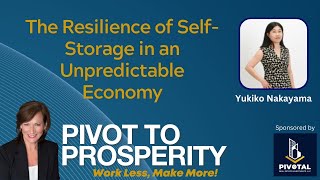
A podcast interview (Pivot to Prosperity) in which Ginny Bolling interviews real estate developer Yukiko Nakayama about her career transition from residential development and consulting to investing in self-storage. They discuss her commuting background and relocation to the U.S., her operating experience (small multifamily value-add in the Washington, D.C. area), rationale for self-storage (recession-resilient, flexible leases, easy to expand), target markets (NC, SC, TN, GA), and contact info for her firm Puma Investment.
Chapters
Foreign. Hello. Jenny Bowling here with Pivot to Prosperity, the podcast brought to you by Pivotal Real Estate Investments. And today we are interviewing Ms. Yukiko Nakayama and I hope I did say that correctly.
That's correct.
Okay, thank you for coming. Appreciate you being on the show.
Oh, thank you for inviting me.
I am going to read your bio and then let you talk about what isn't in the bio that is of import to you.
Sure.
Ms. Yukiko Nakayama is a real estate developer focusing on real estate residential development. For 14 years she manages acquisitions, financial analyses, project management, marketing and financing. Prior to her real estate career, she worked as a marketing consultant to multinational companies including Samsung and Fujitsu. She also worked at KPMG Consulting, working on various IT projects with both domestic and international work. In her spare time, she enjoys scuba diving, water rafting and swimming. She is originally from Japan and lives with her husband and her daughter. All right, so we talked a little before coming on the recording and you had some challenging positions way long ago before telecommuting was a thing, right?
Yes, it was very hard commuting. I live in a very north part of San Francisco Bay Area, living in a town called Pleasant Hill, close to wanna click. And I have to commute long hours to San Jose where my companies are located. So it was hell to commute back and forth. And then sometimes I got, you know, accident. He, you know, you know, like some cars, you know, like a, you know, crash into me from the back because it's so many traffic and I was kind of like stressed out all the time.
So you were commuting by driving?
Yes. And then do you know what, it's kind of funny like.
And you were in Washington D.C. oh.
No, I was actually at the times commuting in San Francisco Bay Area. But at the, towards the end of the my career when I start working for Sony Group companies, I commute from Washington D.C. to San Francisco Bay Area.
Yeah. Okay, right. Yeah, that's. That was the days when it wasn't that common. Were you flying though? When you were going cross country, were you flying?
Yes, I was flying every. Everywhere.
Yeah, yeah, yeah, yeah. Good, right. I was what? I used to work for Florida Power and Light and I would go to a hotel for the week and only come home on weekends. Is that what you did?
So I did like a two weeks and two weeks and two weeks living in the San Francisco Bay area and then two weeks in D.C. area. But the kind of time difference, three hours difference kind of get to me every two years to two, two weeks. I have to kind of, you know, adjust.
Yeah, yeah. So you have the three hour time change too to deal with, right? Yeah. So you got into multiple car accidents?
Well, you know, it's not that bad, but it's just like, just kind of stressful, you know what I mean? Whenever some people re end, you know, some, you know, other traffic accident, when you're driving almost daily, it's kind of just stress me out, you know?
Yes. Yeah.
You never know the next time, you know, someone's crush me and then, you know, that might be the end, you know.
So I used to commute also when I worked for the Department of Transportation. I was driving over an hour each way and I would see the cars that flipped. I would, I was like, my number will be up someday if I keep this up. I've got to stop. Yeah, yeah. It's kind of, especially in California, it gets crazy.
Right.
Anyways, so you are transitioning, you told me. So you are starting to go towards self storage, is that right?
Yes. So I think the self storage is very recession resistant asset class. So when economy is good, you know, people buy more stuff so they need some storage. So I think it's good for when, you know, economy is good. And then when the economy is, you know, getting worse, then they still need to move somewhere to get another job or downsizing. So you need a storage. So I think it's very good for. Recession resistant.
Yes, exactly. Inflation resistant. It's very. And not only because people need it in good times and bad, but the terms are one year or less. So you can up or decrease the rent quick enough to keep it full enough too. It's, it's very flexible. It's kind of like mobile home parks.
Right. And that's exactly right. You can change the late more dynamically than you know, say residential one year lease, you know what I mean?
Yes, yes. I like self storage for the same reason. Yes. And, and as we know there's been a lot of them popping up here and there because there's a lot of people doing syndications like we do and so, but they can be joint ventures and other types of, of, of formations. But you want to specialize in a certain kind, I believe you said. Right.
So I think the smaller facility you can, you know, essentially can do by yourself if you have a, some, you know, funding source or you can do joint ventures and if it's bigger deals then you can do syndications and then many of the deals, right now you are seeing self storage, actually they are more willing to do the also seller financing. I think you see more seller financing in self storage than say marriage, family, I believe.
Yeah, I wouldn't be surprised if that's true. But also you have a development degree, right? From college and so you'd mentioned to me before we started recording that you like the concept if possible to get the ones that have expansion potential. Right?
Right. So the self storage, like I was shocked to learn like you can build extra 10,000 new additions by couple weeks, you know, A couple weeks. I, I don't think you can do it with managed family even you have a parking lot you have to start from like maybe lisoning or anything like that even you know if it's a potential. But the self storage, if you have a extra land, it's you know, easier to get probably permit if you know they allowed. And then to build it's kind of like much, much faster and easier and cheaper to build.
Very good. Well, so and you, you live in D.C. washington D.C. well, in Ashburn, yeah.
I live in Virginia, close to Washington D.C. and we do have a managed families portfolio in Washington D.C. currently we are doing value add.
Okay. And I didn't think to ask you this, how many units do you have now?
So those are about a total 19 unit in Washington D.C. area. Those are smaller apartment building but it's mostly in value add, you know stage so that we are significantly, you know, rehabbing or changing the layout, something like that. Drastically changing kind of, you know, revenue land cloth and then it's mix of the land.
And are these in downtown D.C. proper? Are they like the, the older places, the row type apartments or what are they?
So some of them are just apartment building, like just built as apartment building. And of course as you know like in D.C. there's some low house style apartment building. We have those as well. So it's kind of like a sweet spot. So even you know the apartment building, the maintenance cost is like a house. Do you know what I mean? When you do the loo you don't pay the commercial contract applies for the roof. You know what I mean? It's like you can kind of get the residential roof contractor to camps and then they, they just charge you like a regular, you know roof roof in a construction fee and then you don't have a big, you know, parking like other bigger unit. So I think it's a sweet spot to have those low house style apartment building and then be able to collect, you know, apartment size rent for those unit.
Yeah, I would think. I never got into buying those as As I shared with you, I used to live up that way too. And I commend you for getting those. They're not easy to get, I bet.
Yeah, it's. It's really not easy to get. So I think you kind of have to have some pulse in the market and the connection to get the very best deal.
Right, right. Well that's great. But so now the pivot to the self storage. Are you looking in any particular markets?
So I'm looking right now in the North Carolina, South Carolina and then maybe Tennessee and Georgia. We try to avoid like some area that the insurance might be very high, like Florida or Texas. We kind of, you know, if it's really good deals, of course we're going to take a look at it. In general, we kind of avoid the area where the insurance might be high. And then of course I think the property tax increase. We are also watching those area. The property tax went up very high. Then we tried to avoid those area too. So we kind of come down to close to Washington D.C. area. But you know, trying to avoid those pits. Pits, hole. You know what I mean?
Right, right. Well, so. And you've had your company Puma investments for like 16 years now, right?
Right. Yes.
Yeah. That's a long time. You've.
That's a really long time. It kind of people so many times like you know, initially we just going to do that small rentals and then collect $200 a month or something like that. That was my plan. And then you know, we got the mentors and then my mentor was kind of go, go, go. You know, you need to do the more active rehab and everything. And then I didn't even know how to change the toilet to anything. So they kind of like guide me to do, you know, complete A to Z for the rehab project. So we start doing the single family flip and everything. You know, like kind of, you know anytime you get the rehab project we kind of jump on and start doing. But after we are doing like so many rehab kind of get tired and okay, maybe we should do more high profit, you know, small number of the project. So that's why I got in people to the condo conversion because it's higher profit with less number of project. But we realized there's some other set of problem issue with, you know, condo conversions.
Yes.
And then we pivot to the small apartment building with value add which less, you know, intensive, you know D have wise. But it's take a little bit longer to complete those projects. So.
And it depends on how much you decide you want to do. You told me you were change changing layouts on those. So that's a big change. That's, that's, that's not going to be a cosmetic thing.
That's a big change. It takes really long times and then I think it's just like you really have to know the market, you know what I mean? How much land can be, how much you know, you know the renovation gonna be and then the construction can be challenged. So it's really up to like you really know the market very well and then you really know the construction project management aspect.
Do you have special contractors that you use or they, they related to the business?
So we do have a contractor connections. So I have a, you know, rely on those contractor to complete those project.
Yeah, yeah. That's vital to keeping because you have to keep going quickly because time is money.
Right, right, right. Yeah. I think it's very hard to find those contractor who can you know, do on times on budget. But I was able to manage those type of the project so far.
That's great. Yeah, that's, that's a challenge. And so for self storage, you know, some of those contractors are able to do that switch but some aren't. Um, you'll be probably. Well you probably already have some new connections on that now. You've been, you've been planning to do the pivot for a couple years I believe you said. Right?
Yes, yes. We start. People think like a 2020 and then start attending so many conference. I lost count of the self storage conference I attend and then I usually kind of go all the vendors tables and then get to know them and get all the business card and then you know, check prices and their capabilities and then which geographic region they cover and stuff like that.
That's really good. Yeah. Those conferences are invaluable to be able to get everybody in one room that, that cares enough to be there. Then they probably have the, the fortitude to do their job and see it through because so many little contractors couldn't participate in those because they're living paycheck to paycheck and you don't want one of those as a contractor on a commercial job.
No. And also like a reputation among the peers. Very important to me. Sometimes you see some people like oh you get award from XYZ or some industry award, but I really don't care. I want to get see how the peer review of the companies. If someone said oh that's property management is good and then I hear like maybe three or five people other People in the peer in the industry say, oh, that company is very good, then I will really listen to them. Instead of, you know, like some companies very, you know, much advertising and, you know, getting award or whatever. I don't really care. I really need to hear peer review for the company that I want to.
Work with that's, that's worth its weight in gold, as we know. We, we both pay extra money to belong to these, these masterminds that really help us to find the best of the best. And it costs a lot of money, but it sure is worth it, isn't it? A lot of money. Just like all these conferences we go to.
I know it's just too many conferences, but I think it's worth, you know, the gold when you.
Yeah. Oh, yeah, I think, I think I figured my average conference is 2500 to 3000, you know, if it's not in Orlando. Yeah, I just got to figure 2500 to 3000 that fits if it's multi day, right?
Yes, yes. And then you have to pay for traveling and air fares and hotels and then.
Yeah, well, that's all of it, hopefully. It depends. Now, I haven't been to a couple of the bigger, big expensive ones. I guess there's some really big. I haven't been to Tony Robbins. Have you ever been to a Tony Robbins?
No, I have my eye on them, but I was planning to maybe attend with my daughter.
Are those $10,000 a piece?
I don't know. I think there might be one like a kind of more reasonable cost one that, you know.
Yeah, there's. They're much more expensive. But most of the conferences that I go to though cost from 900 to 2000, 2500 just to sign up. And then you got all the travel on top, so. But I've averaged 3000. Actually, I'm trying to cut it to 20. I've gotten some at 2500, but yeah, it's like.
Yeah.
And then when you do 10 of those a year.
Oh my goodness.
I know. It's a lot.
I know.
So. So tell us what else you would like your investors to know because you're, are you, are your people that have done the residential also looking to go into the storage or are you looking for all new investors at this point?
I think I'm looking for someone who really kind of want to pursue the commercial side. I think there's some people from residential side to shift to the commercial side, but I'm kind of looking for the investor who committed to the commercial project and then you know, when you do the commercial project, I think you have some other asset class like retails, office, you know, self storage and multifamily. At this time I'm focusing really on the self storage. But you know, as a lp I actually invest in office building which performing, you know, beautifully. So, so I'm, I had other, you know, the asset class that I like, you know, as a passive investor but as an active, I'm specifically looking for self storage and then people interested in asset class.
Okay. And also what we were talking about was I asked you what your mission is, what you want to do for your bringing other people in. How do you look at that?
So for the other people to bring in. I think when we get to the some mid to large scale self storage we will probably can provide opportunity to invest with us as a passive investor. What those type of project we look at many deals and then we are very conservative. So maybe not so many opportunity. But when we had the opportunity to come, we like to provide opportunity for people who want to invest in a commercial project to, you know, give the opportunity to invest with us.
So you know, as you say that that's kind of my situation too. I'm not, I don't have a, a lot of deal flow because I'm very conservative and picky. So I wonder if we should call ourselves boutique.
Boutique.
Maybe we are boutique.
I don't know. It's, it's. We are not like you know, clunky machines and then you know, trying to go, go, go like a leska and then go to that point and we just want to provide very, you know, conservative, you know, maybe too boring. You know, like a self storage is not really sexy, you know, reliable and then you know, cash flows, you know, provide some returns. Those are the kind of investment I'm looking at.
Yeah, yeah, same here. Although I do try to jazz it up somehow, you know, things to market it or something to make it so that the people want to live there and so that of course community. Yeah, right.
Yeah, of course, of course. Every time I see the commercial new marriage, families, openings like you know, nice office, nice missing like a, you know, pit cleaning stations or whatever, I'm like, oh, it's so beautiful. I want to live here, you know.
Yes, there's some really nice ones.
Very, very nice one.
I do like other things too. I'm, I'm multi family but I also like I told you, self storage and, and several others since I, I've been involved in many types of commercial over my years. But so I also want to respect your time. I've got a question I ask everybody at the end of these interviews. And so tell us, is there a pivotal person or event that brought you to where you are today or to where you want to be?
So the pivotal event is I got the invitation to attend like a workshop for the real estate when I was still working for the IT company, like high tech companies. And then one day I was completely brainwashed and then interested in the real estate. And then I start, you know, checking the book and everything. So it's just like a one postcard, you know, like you just have to be very curious and the open minded for the opportunity that, you know, maybe not real estate investment for you, but something else. You just have to be open minded and then curious for that. Your potential. I think.
So I'm curious why you say brainwashed. What you mean it just changed your brain totally? It changed your thinking?
Yeah, changed my thinking. I think before that I was kind of skeptical, you know what I mean? Like every, every time like some real estate guru pitching something, I was like, what does, you know, this is probably fraud, you know, they just gonna steal your money. And then I wasn't kind of like didn't want to listen to something. But I think the postcard kind of came. Okay, I, I do have some times on the weekend and then why not? It was free, so I just went there and then it's just kind of change perspective. And then, you know, thought, oh, this is kind of legit. And then, you know, I can do this maybe, you know, that's kind of like a.
So you know, it sounds to me like you're describing a light bulb moment where it's like, oh, this does work.
Or right, that, that, that's work. Yeah, yeah, yeah.
Okay.
Yeah, yeah.
Interesting. Yeah, well, I, I can appreciate that. And we actually missed something else that probably was pivotal too. And it was before we started recording. Why don't you tell your story about coming to America?
Yes. So when I was working at the Motorola Japan, which was a subsidiary company of the Motorola, I had the opportunity to go to US a lot. Like, you know, attending some, you know, a business meeting, some, you know, so I came to the US for many times to, to attend a conference or some business trips. So I kind of interested in coming to US and then kind of like my idea came up to come to, you know, us to study mba. So I came to get my mba. But that was like super challenging for me because you know, of course I'm not native English Speaker. So I have so many challenge, you know, it's just a lot. But I'm glad I went through with it.
So what year was that?
I think it was like a 1994, something like that. Yeah, that long time ago. Like, you know, when the. There's not so many information that you can look up at the times, you know. So I was actually calling MBA in. In US from Japan, like 1, 800, something. And then of course, you cannot call 1, 800, from Japan. Like, so I have to figure out how to get that. Regular telephone numbers and stuff like that. It was.
You probably spent a lot of money in phone calls, didn't you?
I did. And then send every application by mail. Everything was mail.
Yes. Those were the days.
Those are the days.
I remember those. Actually. In 94, I worked for the Department of Transportation as a consultant, but in our whole office of 10 people, I think we only had four computers and there was 10 people, I think. So I got one because I was the project manager, but I felt bad for the people that didn't. Right, right.
Yeah. So those are the days. I'm pretty sure maybe like a test, like a TOEFL and everything I have to do in. In person. But I think probably, you know, TOEFL and then those English tests, they probably can do on online right now. So time change and it's so much easier, you know.
Right, right. Well, that's. That's nice to hear the background on that. And so I really appreciate you coming on the show.
Okay. Thank you so much. Denny.
Yeah. Tell people how they can get in touch with you.
So I have the. My company website, www.puma investment.com and then the. Also the. My email address. Maybe I can put in a short note or something.
Yes, we'll put that in the show notes and we'll do the other two. But since there are some people that may be listening on. Only. Only the auditory. I'm going to spell the website. It's PUMA P U M A Investments. I N V E S T M E N T S dot com.
There's no S attended. Just a singular.
Singular.
Okay.
Investment dot com. Okay. Very good. Well, thank you. Thank you. It's been fun to have you on the show.
Thank you so much.
You take care.
Thank you.
More from Ginny

Dr. Calvin Lowe Saves Lives 2 Ways: Pediatric ER & Teaching Overworked Med Pros How to Get $ Balance

Turning Construction Expertise Into a Thriving Real Estate Empire With Eric Schultz

Build-to-Rent, Community & Cash Flow with Pivotal Person Award Recipient Andy McMullen



Investing Beyond Boring Real Estate: Oil, Gas, and Industrial Properties with Keshav Kolur


Unheard of home prices: $225,000+/- in Portland! John Laine - Breaking Barriers- Home Affordability!


