Transforming Obstacles into Investment Opportunities With Corey Peterson
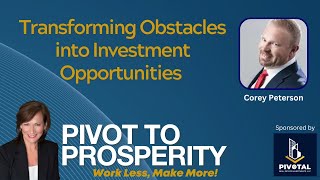
Podcast episode (YouTube) hosted by Ginny Bolling interviewing Corey Peterson (August 6, 2024). Peterson recounts his journey from reading Rich Dad, Poor Dad and founding Kahuna Investments to building a commercial real estate platform (Kahuna Management) focused on student housing and multifamily. He describes early failures, learning through the 2008 crash and COVID, operational levers during downturns, capital-raising practices (syndications, GP/minimums), recent scale (~10 projects, ~$250M assets, ~3,500 doors, managing ~$90M of investor capital), the decision to stop a coaching/mastermind business to focus on operations, plans to launch a $50M fund, and practical advice for passive investors on vetting sponsors (financial transparency, track record, investor references).
Chapters
Are you one of the many busy professionals working in offices day in and day out? Do you wonder how some people grow their wealth fast, retire early and play on work days? Well, you're in luck because Ginny Bolling hosts this show Pivots of Prosperity where she interviews people that can do just that play on work days. Many guests have become financially free. She also interviews people that are on their journey and people that are in support roles like attorneys, contractors, brain brokers and others. Commercial real estate is the common element. She is on a mission to be sure. Busy professionals know they can own substantial commercial properties too, like apartments, self storage facilities and others, and not have to do the work managing them. Passive investing is the key. Syndications are the typical method. Tax write offs are some of the biggest rewards. Ginny and partners find the deals, build a strong team and business plan, then offer the investment opportunities to passive investors. New episodes are released every Tuesday at 12, so watch for new releases. If you want to get involved, let us know. You need to get pre qualified to hear about most deals. See the show notes for contact information.
Hello, Hello. Jenny Bolling here with Pivot to Prosperity, the podcast brought to you by Pivotal Real Estate Investments, where we help investors build wealth and income through commercial real estate that also improves communities. And today we have Corey Peterson with us. Welcome, Corey.
Oh, I'm so excited. Thank you for having me on.
Yes, well, I am very grateful that you've reached out and we connected and I would say that you have a lot of experience in the real estate industry. You started just before the market got super duper hot. Right. In 2005, I think you said. And yep, that's right when it's funny, I, I had just moved to, back to central Florida and thank God we bought that house on a lake before the prices went so high. But yeah, that's, that's terrific. So you got to see that major reset.
I've seen a cycle or two now. Yes, I've seen some, I saw some blood in the streets and yes, talk about lessons, right?
Yeah. Well, tell us, tell us, tell us your journey. Tell us about your journey.
I'll start like my short little story is like 2005, like 2003. The pivotal moment for me. I read Rich Dad, Poor dad and now a lot of people say they read that book and it did change a lot of people's lives and it did mine as well. For me it was a little bit different though. My mom was married to this man named Bruce and I call him Bruce Wayne. He wasn't Batman. But he did have a lot of money and he actually had a house in Hawaii on the beach. And my mom invited me to, you know, she was recently married to this guy and so said, son, do you want to come? And I'm like, mom, I was a used car salesman at the time. So I said, mom, are you paying? Because I had no money. So I get there and I saw wealth like I'd never seen it before. Bruce had time and money. I think those are the things that we're most, most of us are searching for. And so when I saw that, I asked him, I was like, dude, Bruce, what do you do? And then he said the magic words. He said he was in real estate and that he owned apartments. And so I left the island thinking he was the big kahuna. Like he really had it going on. And it was then I read, you know, a little bit later that book Rich Dad, Poor dad. And for me I was like, oh my God, Bruce was self made. He had really achieved that what Robert was talking about. And for me it just seems so real. And I was like, if Bruce can do it, I can do it. And so I went on a journey. I started reading all the books I could in 2005, I was like, I can't read another book, I gotta do something. And then I had to come up with a name of a company and all I could think about is Bruce was the big kahuna. And that's what I wanted to be. So I named my company Kahuna Investments and the real work started to happen. I took a home equity line out of my first home for like 30 grand and started calling bank owned properties. I actually were calling credit unions. They're asking for their REO department and bought some properties and was off to the races. I did all the work myself in the beginning because I was, you know, putting that value add myself. And then I ran to my first problem. I ran out of money. I ran out of money. All my money was in three properties. Pay me 200 bucks a month and you know, I'd quit my job because I was so good and I had $600 cash flow. And so that didn't work out very well. So I had to go back and get a job. But I got one as a financial advisor. And that job taught me a lot about money and raising capital. And then when that market crashed, that we talked about 2008, 2009, I've been a financial advisor for about six years now. Every investment that I ever made went to poop okay. Because that was the market. But when I come out of the other side of that, I still own some long term rentals that I had, you know, when I bought early on. But I saw myself at a pivotal moment of opportunity when that market crashed. I wasn't in a bloodbath. And I was coming into it thinking every book that I'd ever read is the times you go into a market, the best time is in a down market. And this was one that we'd probably never see again. And so I went full fledged, actually got fired from my job as a financial advisor because I hated it. Every investment that I made went to like half and these people were coming in crying and there was nothing. I had no control. Yeah, I knew there was a better way and I knew that real estate was probably the answer. And so I took what I learned from that business of raising stocks, bonds and mutual funds and just said, I'm going to be in control now. And so I used a vehicle called real estate and apartments to put those people's money into the right projects. And lo and behold, now 2024, we have about 10 projects, about $250 million of commercial real estate, I think three, 500 beds and doors. And we actually now have our own self management company. And so those humble beginnings turn into really fruitful opportunities where we, we, we manage almost $90 million of other people's money. What a great responsibility.
Now that's easy to say and to not really sink in, but 3,500 doors. Students, a lot of them. Students, no less. So man, you got a handful there. Right, so, so give us the couple examples, couple stories.
So the famous student housing. So there's good and bads to student housing and we've learned our lessons by trial and error. Like most things. What is the biggest teacher in life is the times that you failed or that you do things wrong. You learn a lot from doing things right too. But I think when you do it wrong is the bigger teacher, right? And so early on we started buying these student housing projects and we bought them in, in smaller markets and that was fine until this thing called Covid showed up. And Covid was like a gut punch. And I'm telling you, we, at that time we had, we had three pretty decent sized projects, about $20 million apiece. And we went from like being 100% occupied to being 45% occupied, which is almost a five finger death punch right to the throat. And the, we still own those assets. And I the only, and this is what I love about real estate is that you have levers. When I was a financial advisor I, my only thing was it's the market, I don't control it. There's nothing that I can do to influence it with actually owning and being a good owner operator, I had levers. When we saw occupancy go there, we immediately, immediately stripped out all the fat. We went down to a skeleton crew, like what are the essential people that we have to have? Anything else we eliminated. We, we watch all our costs. I mean we started watching money so hard. I had to work with the banks, I had to get some loan mods with some of them. Right. And I mean I, you know, these are the, these are the life lessons that you're like, God, I didn't really want to learn this one, but I'm glad I did because I had to do some things that most people are never done before and I had to negotiate, I had to solve. I had to really work and put on my hat and ask lots of questions and be resourceful. And you know, Jenny, these are the things that, you know, owner operators have to do. They have to do well and they have to be really resourceful in times of turmoil. And so, you know, but we got through it. And the best part of that is we also picked up three new deals during COVID Why they say to buy when there's blood in the streets. And so there was also some other people that were hurting. So we bought three bigger deals in bigger markets, meaning D1 schools. Right, the bigger solid colleges. And we improved our portfolio tremendously by buying. And we realized that, you know, in the beginning we were buying in markets we probably shouldn't buy. So the one thing with students is most people think that, you know, college is nine months, but most tenants pay one year leases. They also have parents that personally guarantee their lease. And that's the beauty of it is because mom and dad normally pay, they don't want to ruin their 750 credit score for their kid because their kid didn't pay their two, you know, their rent for their bed. Now it's rent by the bed. And so that's beautiful because your cost is still like most multi family deals is by the door, right? You run multifamily by the door and then you have a cost kind of per door. And so that's the same. But when we rent it by the bed fed, we can raise rents and have almost a, a higher essential rent raise, you know, exponential growth in that income side. But we have nice flat, straight line Growth for expenses. I say that, but knock on wood, we all know that the cost of insurance has went up 100% in most markets. It feels like, right? Yeah, but that's kind of my short story of like some of some of that stuff. But the craziness with is kids, right? Kids are crazy. Like we all remember when we were college, hopefully if we went. No, I didn't go to college. I don't have this experience. But I can only assume my daughter has and my son's about to. And what do they do? They still put holes in walls. So we usually have to be really good at drywall repair. Not. Not so bad. Right, but. And they like to party. So, you know, we've got to really control. And we do that with security and cameras and we always gotta let them know big boy brother's watching. But the, you know, good outweigh the bad in the right markets place, it's consistent. So what I love about student housing is almost. Besides Covid, it is almost recession proof because if your kids are. No matter what the economy is doing, when your kids turn 18 and they're going to go to college, they're going to college. It does not matter what the economy is doing. Right. And so now with that said, now smaller colleges are getting smaller. So enrollment keeps going down. Right. And that's in the smaller colleges. But the bigger colleges keep on getting a little bit bigger. So yeah, so it's really weird. The smaller colleges are getting smaller, bigger colleges are getting bigger. And so buy in big markets if you're looking for student housing. Right. And on some properties I would be hard pressed to screw it up, meaning we're always going to lease up no matter what we do. We're getting 5 to 6% increases year over year, not 3%. And so it's a beautiful business when run right. But we've also made some mistakes of buying in the smaller markets. Those ones are a lot tougher. We have to do a lot of marketing. We still fill them up, but it takes a lot more like truly work. But on the big schools, we almost can set it and forget it.
That's great to hear.
Yeah, there's a little bit of an easy button. And they're in the bigger schools.
And this is the perfect place to segue, I think because you're talking about lessons learned and whatnot. And you wrote a book about how to vet the operator.
Yeah, I wrote a book, Yep. I wrote a book called Trust but the Passive Investors Guide to Evaluating Real Estate Syndicators. People like Us. Right. And the reason for it is because I realize in the marketplace like if I was a new investor and I knew that I didn't want to do stock sponsor, I wanted an alternative to the stock market and I knew this. But then the question is what do I ask a guy like me or you? You know, and sometimes you don't even know the right question. So we wrote a book to really help that person. And by the way, if you want to get this book, if you guys will text the word trust to 480-500-1127 so the word trust 480-500-1127 we'll actually my trust will send you the book.
For free and we'll put that in the show notes if you want.
Yeah, yeah. My gift to you for letting me come on your podcast. So thank you so much.
Thank you. Do I get a signed one?
I will send you a sign one, absolutely.
Ah, nice, Nice. Okay, well, so tell us a bit about what you consider the most critical piece of doing the trust but verify process. I think I'm not asking you to give everything away.
No, no, no. So I think there's a couple things. One, you have to inspect the, the business, the syndicator. In other words. Like what you really want is someone that has track record, right. Or is partnered with someone that who's as track record. They should be able to open up some of their financials very easily. You should be able to get and when you're looking at financials, you don't want just a T12, you want a balance statement, you want, you know, AP AR. You want a full fledged financial accounting balance sheet, cash flow analysis. You want to be able to look at the books. Now you may not understand it, right? But the first step is to just get some information, right? And they should be able to easily and happily provide you with these types of financial audits. Now if they can't, I'd be like, what are they hiding? Right? You should have full transparency, right? The other thing was is do they have investors that they can share so you can call and ask them about the good, bad and the ugly? And so we do this all the time. We like, we'll say hey listen, when we give have a new investor on boarded, we'll say listen, let me give you someone new that just came in, someone in the middle and a long time seasoned guy, right? Those are three different stories. And I'm going to purposely give them people that have been in the crap with me. Like I've Been through some hard deals because I think those authentic stories are more powerful than just, you know, I've not met anybody yet that's like, I see these all the time. Like the people on that are. Get on Facebook and they market, oh, we're so perfect. Listen, you have not been doing it long enough then, right, my friend? Because I'm just telling you, real estate is not perfect now. It's a lot better than the stock market, in my opinion. But we still have peaks and valleys and markets and cycles. And you're looking for someone that's been through some cycles and have some battle scars and you want to see what did they do in those rough times. And that would be what I would be trying to search for is understanding in those economic difficulties, how did this syndicator operate, perform? What do the investors say about him? Right. Because, you know, there's times that we've all had where we've passed some payments from deals that we bought, you know, a couple of years ago. Right. Just because the. When interest rates went up, double cash flow is no longer there. If we had, some of us had bridge loans, I had three, I, I've got one more bridge loan to get out of this in the. By the end of this year and thank God, then I get them all off my plate. But they were tough to manage. Right. And so anybody that doesn't have these stories probably hasn't been doing real estate long enough. And so that's what I'd be looking for is show me some history, show me some things tough times. Because that's what you're buying when you're investing with a syndicator is their track record and who they are and how they operate under times of duress and stress, so.
Very true. Excellent. And do you look for the. Well, since you're an owner, operator, it's a little different. Do you recommend somebody that's learning the business that, that would be a passive investor and looking at, across. At various operators. Is there a minimum. You want that, that general partnership team to have invested personally?
Our minimum investment is 100 grand. Right. So if that's what you're meaning. Right.
So 100 grand each for each general partner.
To, for general partner. Oh, for if, for GP people, we would look that they bring in a million dollars. Right. So if they're going to be a part of my gp, like if we have partners that are like. And most of those partners are either students that have already been through our curriculum or people that we have really great relationships. So these are like Fund of funds that they say, hey, Corey, we can bring a million dollars to your, your, your party. Right.
So, okay, so you're talking about the extended general partnership primary. I'm, I'm trying to refer to the initial boots on the ground team, the core, the folks that put together the business plan.
Yeah, Mike, So we are very fortunate that we are the core most of the time, right?
Yeah.
I don't really have very many GPs. We'll have one or two. And usually the one or two are people that were, are really going to be. No, I'm not going to say this like I'm going to say it wrong. I'm going to say money partners. Right. But basically they'll come in. We already have most of the operations down in that piece, but they'll come in, they'll do a due diligence with us and be part of the whole project and be on our weekly meetings. Right. But their main goal is to bring in, you know, capital for our project. Right. So those we're looking for million dollar increments. And honestly, we'll have maybe two or three of those types of people that have done it in the past or they're happy to do it. And then for our normal investor, that just comes in, usually the minimum is 100 grand. Right. And we find that's a nice medium for like, for the type of deals that we do. It makes no sense to bring in 25,000 or 50,000. We're trying to buy 25 to $40 million projects, and that's usually about a 15 to, you know, $18 million raise. And we're actually going to go into a fund model this year. Right. This is something, we've been doing this now since 2011, raising money, and we've got a great track record. But we finally have just said it's probably time to create a fund where we can go raise $50 million and then really diversify that portfolio of, hey, I'm going to go into real estate, into three projects. Right. So it's not just one project now, it's three. So you get some, some diversification in that as well. And we think that makes a lot of sense.
It does. The fund model, I think, is really a smart move. And like we were talking before recording, seems like the industry is really moving that way quickly now. And I think there's a lot of benefits for everybody that way. But going back just a tad, for what I was actually asking, do you usually put money in your own deals?
It depends. The question, it really depends on where I'm at. So if I did it on every deal, I'd be broke. So normally I'm buying and selling. So like this year we're selling three projects, right? So I will definitely be putting a lot of money in my next deals because I'm a sell three and I have lots of capital and so. But there's also been times where if I already place that and a new deal shows up, then we'll initially fund it for all the third party expenses and the earnest money and all that stuff. But then we'll syndicate and get most of the money out. But it all depends on the timing because when we do have, when we sell a project, we're going to put most of our money back into a deal, right? Like yeah, why wouldn't we? It makes the most sense and it's the best way for me to leverage my money as well.
But you have to have working capital and that's so true. You know, it's really an important piece of it.
It is a huge piece. Especially ask me how I know, right? We just went through Covid and double the interest rates and then insurance going up 100%. Like you know, and so if you didn't budget for that, where do you get the money?
Right.
It comes out. A lot of times you could ask your GP groups for it. Sometimes we do. And something like that's a capital call. No one likes capital calls. And so sometimes it's easier just to put in your own money. And so it's making sure you have that liquidity. That's another good thing we talk about in the book is asking for liquidity. Yeah, right. What happens? How much money do you got just in case stuff goes weird.
Now? Have you had to do a capital call on any of your.
Yeah, we've done one. We've done one. This was for a project, it was about, you know, half a million dollars which was pretty cheap. So we were pretty thankful we were able to get a better loan than we thought. But this was for a bridge note that we had to re do and they wanted more money down and so I, I think that used to be the death wish. Yeah, right. It used to be an absolute death. It is now pretty much par for the course. I think all of us that have been in the business that were buying deals in the last five years had as had. You have a capital call of some short of term. Not everybody, but I think there's a lot of guys that I've talked to that are my friends that they don't want to admit it out loud, I don't care. Right? I'm like, I've just learned that honesty is the best policy. I show my battle scars and say, guys like that's a. Who puts a Covid black swan event in their Performa? Nobody, right? Who puts double interest rates in their performance? You know, nobody, right? Like you can say, yes. You could look at an exit and say, hey, we're at a 6 cap. I'm, I'm gonna sell it at a 7 and a cap or 7 and a half cap in your format. Like we've been doing that. But you don't normally say interest rates are here and they're going to go to here. Now luckily we bought cap rates on most of those projects and those cap rates are paying pretty good. It's just when you have to renew that loan. So like we've been going from bridge notes to normal notes and the only way you can do that is you have to be able to cash flow and make your financially, you've got to. You had to do your business plan in that two years that you had were in that bridge. So if you successfully hit your business plan, there usually is an exit for you.
Are you getting agency debt refinancing?
A little bit of some of it, yes. We've done some agency with student agency is hard to get unless you're in a big school. So we've also done some credit unions, we've done some banks. We try to stay away from cmbs if we possibly can because those are just very restrictive loans that you can't get out of until a specific time they lock you in pretty hard. And we want, really right now we want maximum flexibility because we believe rates will go down eventually sometime. And so the deals that I'm buying now, I'm actually buying at pretty high rates. But I think that's the play is if you can cash flow in today's economic situation and you're going to make okay money. But let's say we're not. We're not hitting it out of the park. Right. Five years from now I'm going to look really smart because I am going to refi. And I'm going to. I, I would believe that I would get much better than 8.6, which is the last one I did. And I bought it as a bank owned property, so it was reo. Right. So I got a pretty good deal on it and I'm just if anything better than 8.6. If I could get five or five and a half I'm telling you, I am going to be laughing all the way to the bank. And so, and also the difference between me and most investors is we look for a long term investment strategy. We want to keep our money in for five to seven years. But I want, I probably want to keep the deal for 10, 10 to 15. Right?
So, so what's in your PPM? What do you allow for, what do you allow for in the PPM for a five period?
Well, it's a five year, five year deal but then we, we have the ability to, within a year or two to extend. Right? So it really is up to our, it really is up to the sponsors prerogative. Now this is money. And so you have to listen to your capital. Sometimes your capital like listen, we really need to get out, right? And so, but sometimes they're patient, right? They're like, if you can make the value statement of guys, I know we're here, but we think that a year from now is going to make a lot more better sense. Most people are pretty, pretty smart when it comes to that decision. They'll be like, yep, as long as we can. You know, maybe there's some benchmarks we gotta hit to show that we're going the right way. But just like, you know, right now is a horrible time to sell unless you have to. Right? So it's like trying to be smart about exits and, and really honestly it's communicating with your investor pool.
Right?
Let them know what's going on.
Well that's, that is good advice and I think that we ought to just touch on also you, I think you said that you had a mastermind, right? And so you have worked with a lot of students over the years and so those, they're typically the ones that you're, you're partnering with. Is that what you said?
Yeah, we actually just shut our mastermind down. So this is something I've been doing for almost, gosh, maybe six years now, seven years. And I think we've, we've finally, it's not that we don't, that we don't like it, it's just, it's another business, right? To be a guru, to teach, coach and mentor is another complete business. And so as we've been defining our company and going through what we call traction and, and our, you know, kind of our three year, five year and ten year plan, we want to become a family office. And truly to do that, being an info business doesn't really align with our goal of owning an operating property. So this year we finally stopped that piece of our business. And it was hard because honestly, I love talking about real estate. Right, right. And, and everything that's happened in between. But I know as a company I have to make the decision to say, listen, we have a property. You know, one company that own, owns, goes out and buys properties. We have another one that manages it. And the one that manages it is a lot of work as well. And we're talking tenants and toilets. Right. So we have, you know, 54 employees. We have, you know, full integrated staff, accounting staff. Like we do it all nuts, the bolts. And so doing that and buying new properties. There are two full time gigs and we just said that one, the mastermind and all the gurus and selling courses and things like that just takes too much work and too much effort and it doesn't have the best roi. So we're just moved into ourselves into now. We still have. Our podcast has been out there for six years. We got a lot of stories and things that we've taught over the years, but we are now saying that we've moved on and now we're, we're, we're selling a new course of just being focused on the two companies that we have.
All right, and so your property management company, is that also Kahuna.
It's Kahuna Management.
I had a feeling.
Virgin. Right. So Virgin has all their. Virgin Galactic and Virgin whatever. So management. Anything we do is something Kahuna. Right. Which is, you know, it really became. It's funny is I actually when I go to events, no one calls me by my name. They just call me Kahuna. Hey, what's up, Kahuna?
I think I've heard that I've become.
The, the big Kuna. So I known as the Big Kahuna.
So. And now your stepfather. I'm sure he's very proud that it was named after him. Right?
It is funny now. Funny story. I would like to say that's the case. Bruce was a rich, but he was a grumpy old man. And my mom was really pretty. Okay, don't judge my mom. They are not together no more. And I have tried, I really tried to seek him out. I could not find him. I don't probably think he's alive anymore. I really tried because I wanted to show him he's never seen my success and I've tried. I wanted to, I wanted to reconnect and be like. Because he. I don't think he even knows. That little spark that he gave me changed me so much. And it's not that he taught me, Bruce never taught me, but he showed me that it was possible. And that's why the power of your mind is everything.
Well, we're backing into my big question of is there a pivotal person or event? You just explained it, Tim. Right. He's the pivotal person, really is.
And I wish he was still here. But, you know, Bruce made the reality of what is possible of the two things I think that we most desire, which is time and money. And there's a lot of people that have one and. But there's very few that truly have both. And so when I saw that in Bruce, I saw a different path that most of us have never experienced or lived. And so my focus was to get to that place, get out of. Robert would say, get out of the rat race. Right. And it has been a journey. And I'm going to tell you, the first step is to take your little dream, right? This little dream that we have, it's like this little thing you've gotta. You've got to look at and you've got to breathe life into it each and every day. And then you have to build a brick wall around it. Because I'm telling you, as soon as you show your dream to anybody, they want to just pounce on it and they want to step on it and they say, you can't do it. You're not worthy. And Jenny, I'm telling you, you've got to feed that thing with positive affirmations each and every day and say to yourself, I am worthy. I deserve this. And I'm telling you, when you start putting those positive manifestations out into the universe and you truly believe it, success will come find you.
Well, that is an excellent way to wrap this up, man. I like that. And so true, I would say, you know, that makes such sense. So why don't you tell the audience how they can reach you? And remember, it's not all visual. Some people are audio on Spotify and whatnot, itunes.
So, so, so Corey Peterson on Facebook or LinkedIn, I will tell you the best way. Honestly, if you get this book, trust but verify. So text word trust to 480-500-1127. That will start the relationship. We will email you guys, we'll send you a book, and we'll show you how to contact us and get more information from our company.
All right, great. And now do you want to nominate Bruce as a local legend or pivotal person?
Oh, yeah, absolutely. Yeah. I don't know if you'll be able to find him But I'm telling you, changed my life and you know, I would. You know, if you believe it, you can achieve it, right? And I think your paradise is absolutely possible.
So what is Wayne's last name?
You know, that's funny. I can't even think of it right now. I have to tell you, I have to put some work into it.
Okay. Yeah. All right. And you can think about it, too, if you want to call him out, because we would try to reach him, you know, and. And yes.
Anyway, in California somewhere, I think. I just. I've went to his house, I've knocked on his door. So if you find him, you let me know and. Because I want to be on that one as well.
Where in California?
In Orange County.
Orange County, Okay. I have family in. In California, too. I'm in Florida, but for a second I thought you were saying San Clemente, and that's pretty small town, but yeah.
Orange county is pretty big.
Yeah. Yeah. All right, well, very good. Well, thank you so much. We will put this information in the show notes and you'll be receiving them as well when we start airing this. So thank you again for coming on.
Appreciate it for having me. Thank you so much.
More from Ginny

Dr. Calvin Lowe Saves Lives 2 Ways: Pediatric ER & Teaching Overworked Med Pros How to Get $ Balance

Turning Construction Expertise Into a Thriving Real Estate Empire With Eric Schultz

Build-to-Rent, Community & Cash Flow with Pivotal Person Award Recipient Andy McMullen



Investing Beyond Boring Real Estate: Oil, Gas, and Industrial Properties with Keshav Kolur


Unheard of home prices: $225,000+/- in Portland! John Laine - Breaking Barriers- Home Affordability!


