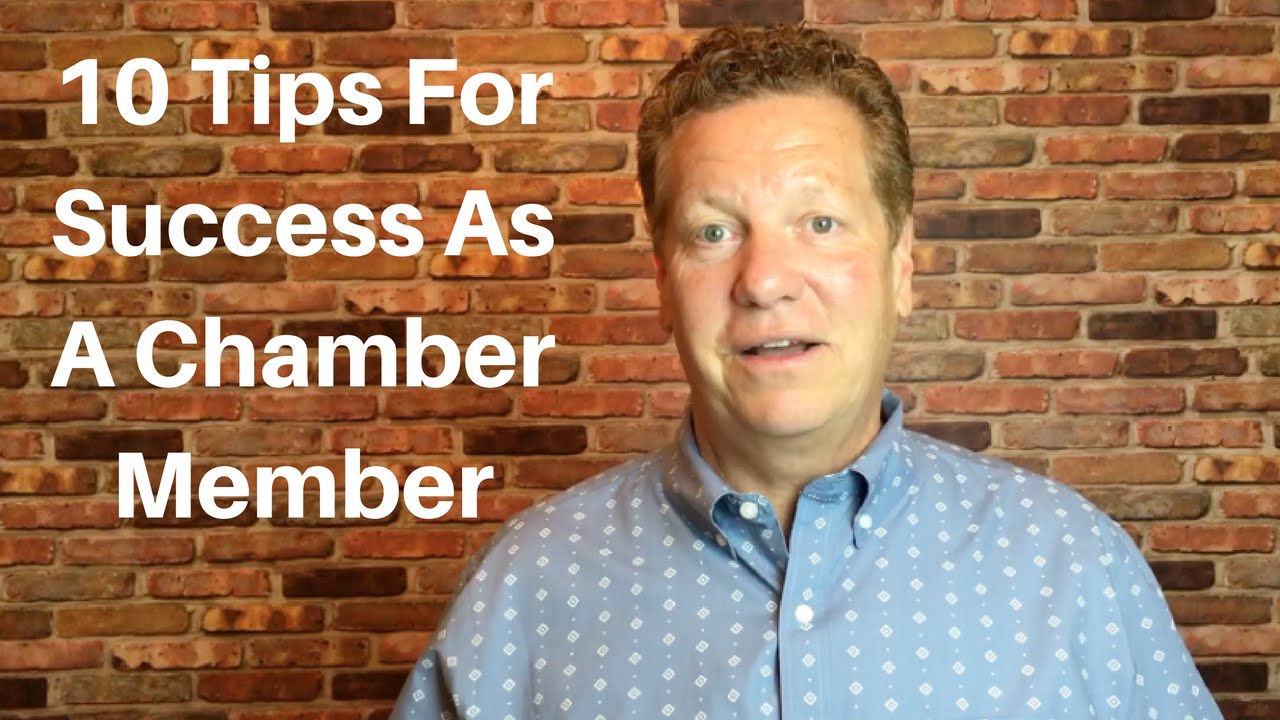
Glen Gould, a chamber veteran, lays out ten steps to get real value from your local chamber membership. Start by meeting staff and attending events consistently, then move into one-on-one meetings and giving referrals first. Volunteer and eventually take on leadership roles to build the relationships that actually drive business.
Chapters
Hello everyone, Glen Gould here. It is Wednesday and we like to do a video on Wednesday that focuses on building your business or your work life because we believe that the greatest path to greater freedom in life is through work. And so today we're going to focus on Chambers of Commerce and how you can get great value out of being a member of your local Chamber of Commerce. I spent 10 years in the Chamber of Commerce industry as a president of a chamber, a vice I was the vice president of a chamber, the director of small business at a major chamber, and so I've got a little bit of experience in this world, and I can tell you that this, this opportunity in chambers of commerce is there for you if you just follow the right path. And today I hope what we'll do is give you a great start. Now, there's lots more information that you need to know, but a good foundation can be found in these 10 tips that I'll give you today. This week, chamber executives and chamber staff people from across the country and even around the world are meeting in Savannah, Georgia and they're meeting to learn how to better serve you in the months and years ahead. Now, they are interested in helping you grow your business. That's what they're all about. And if you follow these 10 tips, you'll be able to help them help you to greater success. So let's get started. First of all, number one, the number one tip I can tell anybody— and by the way, if you want to have this in a PDF form, I'll put a link down below in the description. You can download this little form, you can make it into a little booklet like I did, or you can just look at it on your computer. But the number one first tip that you're gonna wanna make sure you do is to meet the staff at the Chamber of Commerce. Now, this is really, really important because they can't help you if they don't know you. And so you not only wanna meet them and let them know what you do, but you wanna make sure that you meet them and know what they do as well. There's gonna come a time in some of the other tips where this will be incredibly valuable. But you need to make sure that the staff knows you. Leads and referrals are available to you if they know what you do, and when those people that are looking for your product or service happen to walk through the door or come through their website or come in through social media. If they don't know what you do, it'll be hard to refer you. But once they know you, they'll be able to refer your business to those people looking for what you do. The second thing you want to do is you want to make sure you check the Chamber calendar. Now you've joined the Chamber and now you want to check the calendar and find out what's going on. And you want to do this on a regular basis. In the beginning, you want to do it every, every week. Just check the calendar and find out what types of events are going on. I recommend in the beginning that you attend one of everything and get a lay of the land. You don't have to do that all in the first month. You can do it over the period of 6 months if you want to. But kind of get a lay of the land as to who comes to what types of events. This will help you in meeting the people you want to meet. We'll talk about that again in a little bit further. You'll learn a lot about what the chamber has to offer just by looking at the calendar alone. Now, you'll probably also get on their email list, and sometimes it'll seem overwhelming. You'll get a lot more email than you need, but the fact is, in the beginning for sure, make sure that you look at all of it and get a good feel for what's going on. The third thing you're going to want to do is you're going to want to choose some events and you're going to want to attend those regularly. Once you've gone to certain events and you found the ones where the people that you want to meet are attending, you want to put those on your calendar and you don't want to miss them. I remember when I was a chamber person, a lot of times people would come to me and say, "I'm just not going to go to this anymore. The same people come over and over." And I said, "That's great. That's what you want to have happen." Because see, The idea is to get to know, like, and trust people at the chamber and get them to know, like, and trust you. One of the first avenues to getting to be known, liked, and trusted is to be consistent. And being consistent means attending the same events that are happening with the same types of people. There'll be new people that come in and there'll be people that will leave, but there'll always be that core group of people. That is a great source for networking partners and referral partners if you just have the persistence to become known, liked, and trusted by attending regularly. So make sure you do that. Number 4, you want to ask questions. And when I say ask questions, you want to ask questions about what's going on in the chamber, you want to ask questions about how to get involved in the chamber, and you want to ask questions of the people you meet. And there's a lot of great questions you're gonna want to ask. As a matter of fact, some of those great questions are in a book that we wrote called 101 Networking Nuggets. I'll put a link to that down in the description where you can download it for free. It's at 101networkingnuggets.com. If you're interested, just go on there, sign up, you can download the book for free. Great networking tips and a lot of great ideas on asking the right questions to get the people that you're looking for. Number 5, you need to have a networking plan. Now this kind of goes back to asking the right questions, it kind of goes back to attending regularly, everything that we've talked about so far. Your networking plan needs to start with a question that I was asked almost 20 years ago when I attended my first chamber meeting. I was completely unprepared for it, and I'm going to share it with you now. And I always like to plug the person who asked the question because she's just such a great contact. So Kathy Lehner, you're a realtor in Venice, Florida, and I want to make sure that people seek you out if they are looking for real estate in Venice. She's a great contact. Kathy Lehner, L-E-H-N-E-R. But Kathy, when I attended my first chamber meeting, walked up to me and she said, "Who do you need to meet?" And I had no idea. I hadn't thought about it. And the fact is that before you start attending these meetings, you want to know who are you hoping to meet? What type of person? If you can't identify the actual people, the CEO of this company or the marketing director of that company or this person that's in this type of small business. You need to identify the types of people that you're looking to meet. So if you don't identify the exact CEO, maybe you're looking to meet CEOs. Or if you don't identify the exact marketing manager, you're looking to meet marketing managers. Or if you don't find the exact small business owner, maybe you're looking for business owners in this type of industry. You wanna make sure you have a narrow focus on who you're trying to meet because People will ask you in a number of different ways, who do you need to meet? They may not come out and ask that question, but they will ask that question, and you're gonna be much more successful networking when you know who you're looking to meet. So make sure you spend some time thinking about, if everything worked out perfectly, who would I wanna meet at these events? Who would I wanna connect with? Who are the ideal networking partners for me? Who are ideal referral partners for me? One of the things you might think about is, Are there people who are calling on people that I need to call on that are in a different industry and perhaps they have access to those people? Great questions to ask. Make sure that you have a networking plan and you'll be very successful. You need to have one-on-one meetings with the people you meet. And this is just essential. You know, attending regularly will give you the ability to meet people and be known, liked, and trusted, but when you really start to do business together, that's when you really know somebody. And so you're gonna want to spend some time meeting with people one-on-one. Perhaps ask somebody that you meet if they have a few minutes before or after the meeting. If you see the list of people that are coming before, if you don't, when you meet them there afterwards. Or what we recommend is, is that you say, "Hey, would you like to have a cup of coffee at Starbucks or another facility and just sit down and get to know each other and find out if there is a match here?" You can Save yourself and the other person a lot of time if you get to know them first and then talk about how you can do business together. But it's a great way to do that, having one-on-one meetings. Make sure you do that. The next one is, is to make sure that you give the first referral. So you've now met some people at the Chamber of Commerce, you're having one-on-one meetings, and in that one-on-one meeting you discover that the person you just met with is you know, looking to meet marketing manager, a marketing manager for a mid-sized company. You need to go through your list of contacts, go through your LinkedIn, go through the list on your phone, find somebody that you can introduce them to that's valuable to them, and make sure that you give that first referral. This gets the ball rolling and gets it to where they understand that you're not just a taker, that you're also a giver. So giving that first referral will help set the stage for a very successful relationship going forward. Number 8 is follow up. This is really important. This is really where people find out what you're really made of. And following up happens so infrequently that now it looks like you're really above and beyond the rest. When you get a referral, make sure that you follow up with that referral, but also make sure that you go back to the person that gave it and let them know where the, the conversation has gone, what the stage of the conversation is. Sometimes they give you a referral, you follow up, you don't get any response, but if you follow back up with the person who gave you the referral, they can push it forward and get you that first meeting that turns into a great relationship for business. So make sure you follow up and then also make sure that you keep the person who gave you that referral in the loop. And then finally, as far as follow-up goes, it's always appropriate to send a thank you or a thank you email, a thank you card to those people you meet with. One thing you don't want to do is you don't want to send a blanket thank you to everybody that attended the meeting whether you met them or not. We see a lot of that, it really is disingenuous and it's, it's obvious. So make sure you don't do that, but those people that you do have meaningful meetings with, make sure that you follow up with them and follow up with them with a thank you of a card or an email at least. Number 9, You want to volunteer, and in the beginning, the easiest way to do that is— you'll be asked to volunteer for all sorts of things. Don't jump in immediately. Don't jump in and volunteer on this committee or that committee. You're not prepared. You don't understand what's going on in the chamber. You don't understand how to make the right connections for yourself and for other people by volunteering. So in the beginning, volunteer in a very subtle way. You can offer to help set up chairs or get there a little bit early and help greet people, or maybe stay late and help clean up. Do little things where you're volun— help pass out brochures or information, or maybe turn the lights on and off when the PowerPoint presentations are being done. Do the little things that show that you're willing to volunteer, and then as you start to get to know the chamber and the people in the chamber very well, you can find that place where volunteering on a little more broad scale will bring you great value. One of the things that you might want to think about is joining a group that actually is in the process of recruiting new members for the chamber. Now, the— if you're in sales, this is ideal for you because you get the opportunity to go and talk to people that are being recruited or actually have just been recruited. These are called ambassador programs, diplomat programs. They usually have a requirement of membership for a while before you can join them, but it does give you first access and it gives you the opportunity to learn what's important about joining the chamber, which is generally what's important about their business, and that gives you the opportunity to then go back and already know what would be important about your business and how you can help them. So good opportunity there. Volunteering is a great way to do that. And then number 10, the final phase of the top 10 things you should do is take a leadership role. When the opportunity comes and you volunteered now you have the opportunity to serve in a greater capacity, perhaps as the head of a committee or even serving on the board. Now, this is not something that you do for totally self-serving reasons. If you do, it won't last very long, and you're gonna find out that it isn't very rewarding. But once you've kind of built your way into the chamber and you're known and liked and trusted, and you start to like the people and you like what the chamber's about, volunteering to lead a group gives you the opportunity to show your expertise and experience. It also gives you the opportunity to meet far more people in a non-threatening way, and that's a great opportunity for you. When you're a leader in the Chamber of Commerce and one of the organization's committees or boards, people look up to you and they naturally assume that you're good at what you do as well. So leadership is a great way to do that. So there they are, the top 10 things you're gonna wanna do if you want to be successful in your chamber membership. Now, there are so many more ideas that we can share with you. If you'll just subscribe to our channel, we publish videos all the time, but every Wednesday we put something out that can help you in your business. But there's lots of opportunity, and once again, that 101 Networking Nuggets book will help you. 101networkingnuggets.com. It's free, it's, it's a free download. All you have to do is put in your email address and what chamber you are a member of. If you're not a member of chamber, put no chamber. Finally, what I'd like you to do is put in a comment down below about either what you thought of this video, if you think these are important, or more importantly, some ideas that you have that you can share with the community about how you have been impacted through a Chamber of Commerce or an association, or about how maybe you have used a technique that got you further along, made the membership more profitable or more beneficial to you. Put those comments in, in the comments section down below. Make sure that you subscribe so that you get the newest content every week, and share and like this video.