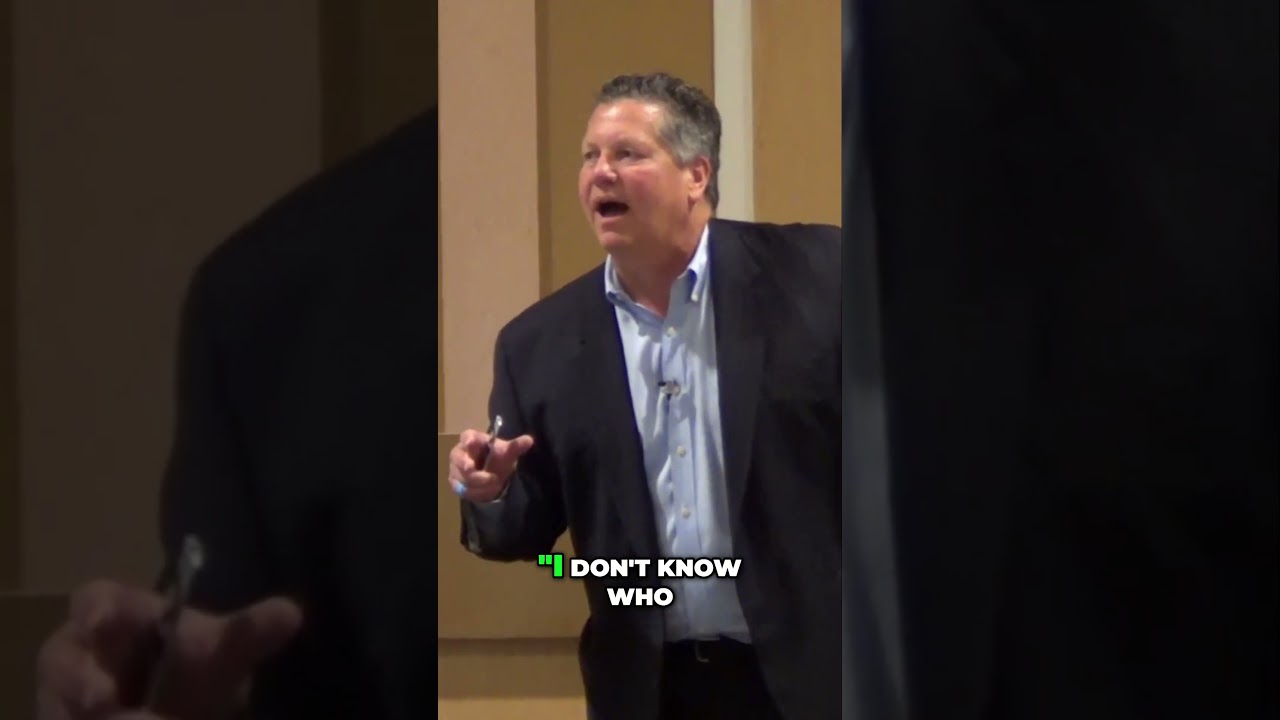
Glen Gould, a former chamber president, argues that customer service is the biggest lever for chamber retention. One in five members leave yearly, equating to 100% turnover over five years. He shows how single bad experiences cascade to lost customers and urges chambers to empower staff, modernize websites, and pick one strategic focus.
Chapters
Good morning. Good morning. We're going to talk about customer service for about the next 45 minutes. I need somebody in the back of the room who likes to give the high sign at like 5 minutes still. Will you let me know that I'm getting close? Because I don't have my timer and my clock and all of that like I normally do because I had to switch out computers this morning. I don't need an introduction, but I want to tell you a little bit about myself because I like to talk about myself more than anything. We all do. I've been where you are. I was the president of a small chamber in Florida. I was the director of small business at the Metro Atlanta Chamber. And then I spent the last 4 years as the vice president of a 5-star chamber in South Atlanta called Lunakamini Chamber. And so I've lived your life. So when I tell you some of the things I tell you today, it's not some crazy guy who doesn't understand. As a matter of fact, I met some of you back in 2009 at ACCE. My friend Ben Perpin and I were presenting. And then you got on our email list. And I, back a couple of years ago, spent a lot of time communicating with chamber folks. And I would do things that were designed to get you to think. Because really what, in 45 minutes or so that I've got today, I'm not going to be able to— if you came here expecting me to give you the 10 steps of customer service, number 1, number— you're not going to get that. But what you will get is, I'll cover a lot of that and then I'll show you how to get the information. But in 2009 I wrote this article and it was about the 10 steps of remarkable customer service. It was about using customer service as a tool for your chambers and we'll talk about that today as well. Well, this article that I wrote, it, it, and I have a tendency to write headlines that will get people to open emails. I did one right around the time of the stimulus and I forgot exactly what the headline said, It said, you know, that— it was a press release that said that in the stimulus package in 2008 or 2009 that the White House had announced that there would be help for small business through Chambers of Commerce and that they had enlisted my company as the company that would be rendering such help for free. And it must have been pretty effective because Senator Isaacson called me and wanted to know if it was true. So I have a tendency to try to get you excited, okay? This other one that I wrote, for this one I wrote the obituary for chambers of commerce. And it was dated 1599 to 2009. 1599, the first real chamber was in Versailles, I think it is France. And this was my argument. If one of your clients, one of your members came in and said to you, hey listen, I really need some help. You're the house of business here, you know, give me some help here. This is my problem. Now, I don't have trouble recruiting new customers. Well, you know, that's not really true. Everybody has trouble, but I get enough new customers. I'd love to have more, but I get enough new ones. But what I don't do real well is, like, 1 in 5 of my customers leave and they never come back. And what's more, I'm pretty sure they're saying bad stuff about me too. What do I do? Well, you're pretty good at math. You start going, 1 in 5 leaves. Let's see, every year— every 5 years you're going to lose 100% of your possible customers. You're in big trouble, cowboy. Close the doors, right? That's what you'd say. You've got to do something pretty quick. And yet we as chamber people walk around and say, I've got an 80% retention rate, and that's pretty darn good. No, it's not. It's not. You're losing 1 in 5 of your customers every year. And so the argument was that. Now, it wasn't to say that if you're at 80%, you're no good. That wasn't the point. The point was to get you to think. I got hate mail. One of your well-respected members in this organization sent me the nastiest email I've ever received from a chamber person, and I've worked for some nasty people. He has to be taken off the list. Well, I followed it up a couple years later because I wanted people to look at this customer service stuff. And so right after the election, or right at the election, I wrote a headline that said, "You cannot vote this job killer out of office." Now, what do most people think when they see that? It's election time, I'm talking about President Obama, right? Because they were talking about Obama being a job killer. If you're against Obama, if you're for him, then you said, He was the greatest thing that ever happened. But anybody who was for President Obama would immediately think that I'm talking about President Obama. I wasn't. I never mentioned any political person. I said this job killer is poor customer service in your community. Because here's what happens. People come to your community and they decide how to not come back. That's what we're all about. We're not looking for the perfect place to go. We have so many options, we're just trying to figure out how to not come back. And site selectors, when they're trying to figure out if they want to go to your community to open a new business or to start a new business, they have hundreds of options. They show up in your community. They don't even tell you. If you haven't been through an economic development class, here's your first introduction to it if you're new to the industry. They show up in your community and they don't even tell you. They don't even tell the development authority if you're not the development authority. They show up. They check out the infrastructure. They check out the possible sites. They check out the schools, they check out where people would live, they check out the way people interact with each other. They go to your website, the development website, the city website, the county website, they do all of those things, and their whole purpose is to eliminate your community from contention. It's not to get you to be the one, it's to get you out of the contention because they can't afford to spend any time and find out later on there's something wrong. And so just one meal in one of your restaurants with the wrong waitperson can mean hundreds of jobs in your community. So the argument was, this is important enough for me to offend you so you'll read my article. Okay, that's why I did the video that said you can't vote this guy out of office. Once again, I don't know what it is about North Carolina, but it was a North Carolina executive. He called me and told me to take him off the list because they don't get political in their chamber. Well, did you read the article? No. Did you watch the video? No. Then what do you think I'm talking about? It doesn't matter. You're clearly being political and we don't get— let me help you with this one right now. If you're not political in your chamber, you're dead. You're going to have to be. You're going to have to take sides. The rules have changed and we'll talk about some of that today. So anyway, I've been where you are. A lot of what I'm going to discuss today is information that I've learned through the years working with some of the elite in the world. I've worked at world-class resorts as a golf professional. I've taught people. I'll tell you a couple of stories about those folks. But hopefully we'll have some good information. Now if you're the person that wanted the 10 steps of remarkable customer service, the article's on my website at successfulchamber.com. You can text me, I'll send you all the stuff. There's a white paper There's a graphic, there's a discussion sheet or a guide for you to have a discussion with the committee that you might put together, and there's some other steps you may take. I will tell you, if I was smart, I'd redo this video because one of them is a shameless plug for me to come and speak in your chamber. I watched it over and over, it's pretty ham-handed. So don't be offended, I'm offended when I watch it, okay? So I'm going to redo the video, but nonetheless— The information is more valuable than my screw-up being ham-handed at it. So. I said that I taught some interesting people. One of the guys that I taught was a guy named Michael Levin. And Levin was the head of Holiday Inn Worldwide, Days Inns. I believe he was the founder of Microtel. He right now is the chairman of the board of the Georgia Aquarium. He understands serving people. And one of the things he said was that you can give customers price, quality, and service, but the problem is, the kind of rub is, you can only give 2 out of 3 at the very best level. Somebody's always going to be better than you at some of it. Now, you get in real problem when somebody's better than you at all 3, right? Now you're in real trouble. But if you can be better than somebody at one, you'll be able to attract some customers. You're better at that too, you're almost world class. And occasionally you'll be perceived as better at all three. And why I say occasionally you'll be perceived that way is because one of the things that I've kind of figured out is that when people determine value, there's a thing missing and it's expectation. So a good example of this is if I walk into Nordstrom's and I'm going to buy my wife a suit and I walk over to the St. John department. Any ladies wear St. John? I'd be shocked if any of you do because I sure can't afford it. I would never be buying my— well, I would, I'd love to buy my wife St. John, but nonetheless. And I walk over and there's an $1,149 jacket. Okay? I have an expectation that's going to be expensive when I walked into Nordstrom's, right? But at the same moment that I look at that jacket, I have an expectation that somebody's going to be there to walk me through why this is a great value at $1,149. They're going to be able to describe to me everything and why this would be a good idea for my purchase. I'm going to get outstanding service, I'm going to get outstanding quality, and I am going to pay for it. By the same token, if I'm in TJ Maxx and I find the same St. John's, somehow or another it got into the bulk buyout that TJ Maxx does and I'm lucky enough to find it, and I look at it, I don't expect to pay $1,149 even though I already know it's a good value. Right? Because I'm not going to get the service and I'm not going to get the— and the quality is going to be a little less. I'm going to have to take it to the cleaners because it's been boxed up and all that. It's not ready to go. All of those things. And I'm actually going to be suspect of how good it might be because I know that the value of the garment is $11.49, but here it is at TJ Maxx for $1.99. What's the problem? There's something wrong. And expectation has something to do with every one of your customer service issues. Now, For you chamber folks, I don't care who you are, so anybody in here who's talked to me in the past couple of days and I've said, "What's your basic rate?" Almost always I've gone, "Hey, you need raise that." Because the truth is everyone knows that you aren't getting enough dollars for the work that you do. Right? Can we all agree on that? We can all agree the fact is that they're getting great value for what we provide. But here's the rub. When you tell me that your membership is $300 and you try to convince me all these great things you do for me and the community, I'm smart, I'm a business person, I know better. Come on, how? How can you do all of that for me for $300? There's something wrong, there's something missing. The TJ Maxx moment has come out. There's something wrong here. Maybe this is mislabeled, mis-sized, maybe it really isn't a St. John. Whatever the case may be, It's important to remember. So when I say you need to raise your price, it's not only because you need more revenue, it's because the client is smart. They're over— they're paying $1,200 a year to be a member of a BNI, and they tell you they can't afford $300 at your place. What are they really telling you? They're telling you you haven't convinced them the value is there. And part of convincing people value is there is charging enough for your product or service. So I had an experience. One of the things that in my introduction, if you read it in the book, I started work when I was 11 years old. My dad died when I was 9, and my mother hadn't worked in a long time. And so we needed money, and I was fortunate enough to have a gentleman who was a substitute teacher at our school, a guy named Larry Lynch, who owned a catering company. And he hired me to bus tables at $100 a night. Now, there's no way I was giving him $100 worth of value. The man was giving me a gift. And he was giving me a gift because he knew the bind we were in, and he could afford to do it, and he thought that he could teach me a few things. And he did. But after I did that for a while, I went to work at a place called Taco Tico. I was at Dairy Queen first. By the way, I figured out a long time ago that if you're where people— if you have what people want, they'll pay you for it. Right? So, you know, I was able to bus tables and Larry was willing to pay me for it, and then, you know, it made him feel better too, right? And so then I figured, well, you know, what girl doesn't like banana splits? And so I'll go work at Dairy Queen and, you know, the girls are there, right? And so that worked for a while. And at 15 I became a manager of a Taco Tico. Anybody ever been to a Taco Tico? There's a few of them still around in Kansas. But I'll never forget Phil Mathis. He sat me down, and I'm 15 years old, and I really have nobody teach me anything about business. And he says, "Son, you're going to be the assistant manager here, and to do that, you're going to have to understand this equation: 1 4 20." I said, "No, no, it doesn't. I know I went to Cobb County schools, but no, it doesn't. Really." He goes, "No, no, yeah, it does. Let me explain to you why." He says, "One unhappy customer—" will tell 4 people, and those 4 people will tell a total of 20 people. So the truth is, when you make a customer unhappy, you're making 20 people unhappy. 20 people won't buy from you for that one unhappy customer. We cannot afford unhappy customers around here. You are empowered to do whatever you think you need to do to make the customer happy, even if it's wrong. I will never, ever scold you. The only time I'll scold you is in private, and I'll explain to you why it was a bad idea, and then I'll commend you for being brave enough to do what you thought was right. Are we empowering our people to do what they think is right even if it means the chamber loses money? You got to be brave enough to do that. So that was a powerful story that I learned, or lesson that I learned. One of the things that I want to encourage you to realize is that What do newspapers and chambers of commerce and libraries have in common? Does anybody know? I'll save you the trouble. It's where you used to go to find out stuff. I'm sorry. Nobody's coming to you to find out anything except for the people that have no money or have nowhere else to go or don't have a smartphone. Because Google is your competition now. It's just a fact. If you're marketing the idea that you're the information source, you're living in a mighty small place, and pretty soon somebody's going to come in with mobile phones. Really. I know it sounds crazy, but you've seen it. And the other thing is with your website, if your website isn't mobile-friendly today, forget about it. 60% of web traffic is mobile. And so your website has to be mobile-friendly. And the best place to sell ads on your website, believe it or not, is the About Us page. Because when people look up your website, they're looking up your website for only one reason, and that's to call you to ask you a dumb question like, "What time does the farmer's market open?" As if you are the farmer's market. I had somebody call me, no kidding, called me at 6:30 in the morning wanting to know where they could get fresh butter. Fresh butter. I had a lady call me at 9:30 at night wanting to know if Dillard's still sold support hose. I am not kidding. You can't make this stuff up. Right? You've been there. You've got to pick this stuff, right? But this is where you used to go for real information. Now they still come to you for the crazy information, right? And of course they're not our target customer, right? So we might as well quit telling them that we are the information source. Because we're not. We're the information source for business. Business. You're doing great things in your community and it's important, but the world is shifting on you. How many of you have ever heard of Sons of Maxwell? Glen Gould, or Dave Carroll. Anybody ever heard of this guy? In 2009, he was on an airplane, on a United Airlines flight, and he overheard somebody in the back say, "Oh my God, they're throwing guitars!" And he looked out and he sees his guitar being launched by a baggage handler. And sure enough, when he picked up the guitar, it was broken. And so, He went to customer service and they said, "Well, you know, we have a limit of $150. Basically, when you get your ticket, you agree to that." You know, all those things that, you know, the print's like negative 3 font and no one could read it, even my sons, right? And so he debated with them a little bit and they explained to him that it was their policy. By the way, that's one of the deadly words. Don't ever say, "It's our policy." And so What he did was he wrote a song. It's called United Breaks Guitars. In less than a week, United's stock price dropped 10%. Let me tell you folks, people don't get mad anymore, they get even. And they get even in a very, very nasty way if you're not— if you don't have a good plan for customer service. We have a— All of you have like downtowns in your little towns and stuff like that? We're very blessed where I live in Georgia. We have a beautiful little downtown square. We have lots of restaurants and things like that. Whenever a new restaurant comes, you gotta try it out, right? So we have this restaurant that came about 2 years ago called Meat and Greet, M-E-A-T and Greet. It's kind of urban barbecue meets bar meets warehouse type of thing. You've been in these places, right? And so we went, and it was on a Saturday, and the food was great. I mean, oh my gosh, it was wonderful. And the service, well, they were brand new, and they were a little off. It actually took us an hour to eat lunch, but eh, OK. And so we would go back every once in a while, because it was pricey. And each time we went back, the service never really got much better. And finally, one day we were in there, and my wife ordered a hamburger, and she asked for it medium well. And I know my wife really, really well. We've been married for 23 years, and we dated all through high school, all 12 years of high school. Not that you took me anyway. But so she wouldn't marry me until I got out. But the thing is I know her really well. I said, listen, to the waitress, I said, now here's the thing. She says medium well, but really she don't want to see any pink. I mean, it's kind of like well, but it's not well. Really close to— well, I'm sorry to be so picky, but she knows what she likes and she doesn't like to see any pink. I got it. Okay, good. So after about 20 minutes, I'm sitting there and I hear the lady behind me sending her hamburger back because there's too much pink in it. Okay, I'm aware, right? I start looking around. I go to the bathroom. I see a sign over the corner. It says, "Our chef says well done is pink." Okay, I'm beginning to believe we're gonna have a problem here. So now I'm already expecting a problem, right? My expectation level is now problem. So you know what happens when we expect something? We sure find it. And so I stopped her again. I said, Melissa, I saw the sign over there, but really, it's really, really important. She can't. She just won't eat a thing of hamburger. So we change the eat. No, no, no. We gotta, gotta, gotta, gotta. The hamburger comes out. Of course, you know what happens. She cuts it in half because it's so big. Beautiful hamburger. And it's pink. It's not pink, it's bloody. I mean, it's— ooh. Right? I mean, ugh. And so after I chase the waitperson down, I say it's pink. And she goes, OK, no problem. And by the time the thing comes back again, my sons and I have already finished eating. And she doesn't really care anymore. And sure enough, it's still pink. And I ask to see a manager. And 15 minutes later, I get up and the whole family goes up front. And the manager's just standing up there. There. And I said, are you the manager? And she said, yes. I said, well, I'd like to talk to you. She goes, I know. Really? Yeah, we've all discussed it, and we've decided you're wrong. Really? I'm wrong that I wanted the hamburger a certain way and even asked twice? I'm wrong? Well, that's the way our chef cooks, and you know that's the way our chef cooks. You're just wrong. I said, so you're willing to let me walk out of here and tell anybody that I see that Meet and Greet Noon in Georgia is not a place to eat. She said, "Yeah, I am, because we don't need customers like you." I said, "Okay, I promise you that any chance I get, I will tell people not to eat at Meet and Greet Noon in Georgia." And I've just done that to 85 people. How many times do you think I've told that story? Like every chance I get. Because I'm angry. And I haven't— it's been 2 years now. I'm not over it. I'm never going to get over it. I'll be telling this story when I'm 80 years old. Old people and cheating. And that's who we are today as a society. This is why it's so important for your clients. This is why this is a big opportunity for you. So whether it's a 10% drop in stock value or whether it's— I mean, here's the thing. If you even find another restaurant anywhere on the planet, Del Colby, you might not go. Because in the back of your mind you've heard the story. Uh-oh. There's more people in this industry in the Carolinas that aren't here than are. And they're out there creating expectations of the chamber business for you. Uh-oh. Right? We're going to have to be so good that we override those folks that don't want to play the game. Professionally and come to things like this and learn from their peers and things like that. That's a story for another day. So I talked to you about that, I talked to you about that, I talked to you about that, I talked to you about that. So let's talk a little bit about what's going on in the marketplace and why customer service has gotten so poor. Okay? Sorry, it's not really censored that well. All right, so anyway, it's not really— BOA doesn't stand for what you think it does. They're my friends. Not really. But people are angry, and part of the reason is— here's the thing: 82% of all clients will leave a business due to poor service. Now, 67% of those people will leave due to just a feeling of indifference. Okay? But poor service or indifference, they're the same thing. They'll leave. You can't afford to have your businesses having people leave because they were treated poorly or there's an indifference. Not only is it bad for your community, but it's bad for your business. You're in the business of making sure business grows and prospers. If they don't, guess what the first thing they cut out is? Well, they cut training first, and then they cut you guys, Chambers of Commerce and memberships. The very things that can help them. Survive and thrive. There's another thing that's going on right now. And for those of you who didn't go to Danny Hearn's thing a couple of years ago, and here's Sarah Slaydek with the Race for Relevance, great book. This is her material. Between 2012 and— or 2014, 2016, right in there, '13 and '16, there you go, 82% of the workforce will change positions, which means that everybody's being retrained. Everybody's learning a new way to do things. And the bad news is they're bringing their short-timer mentality to the new job. And so there's no— they don't have any vested interest in what's going on. They're just trying to figure out how they're going to get their next check. I mean, for a long time in my household, we had a saying. The saying was, "I don't care, cash the next check." Because things were so tough, and they have been so tough. We're just now starting to be able to breathe. These folks right here, we're in the greatest shift in human capital in history. More people in the workforce will be in their 20s than any other age group. These are your community leaders. These are your volunteers. These are the people that you're going to have to count on. And here's the bad news. They believe that technology is as important as freedom and air. Air. Technology is as important as air. So when you tell them that they can't tweet about the chamber, or when you manage their tweets, or manage your Facebook page and eliminate comments and things like that, you're killing them. And what's worse is when you try to do anything technical like I did, right? You're killing them. It's just like, can you really be that stupid? You can't run a PowerPoint. I got to tell you, the folks here, I hope you've had the same experience I've had. They've been amazing. Jonathan and Andrew this morning for a solid hour trying to solve my problem, and it was my problem. It wasn't their problem. Everything they did was amazing. And then last night, the two young ladies who tend the bar for us, Kimberly and I think it was Carly. Y'all meet them, right? Here's something you don't know. Carly worked breakfast yesterday and ended up working bar last night because they roomed together. But Carly served me breakfast yesterday morning And then the night before she was working bar apparently, and the reason I know this is because I overheard somebody saying, "Oh, you got Yuengling tonight." And she goes, "Well, yeah." So the story was they didn't have Yuengling the night before. Nobody asked her to get Yuengling, but she was smart enough to go, "This is a customer service issue I need to solve." And so she made sure there was Yuengling the following night because she knew she was going to see that person again. These are the kind of things that the staff here has been taught. And it's a great opportunity for you to teach things like this to your people too. It can be extremely frustrating to be a community leader right now. With all the opportunities you have, that's the euphemism for challenges. Y'all have heard of Tom Hopkins. He's an old sales trainer. He would start every program and say, I'm going to teach y'all a new word today. How you doing? And then everybody should say— Incredible. Because either way, it's true. If you're doing bad, it's incredible. My boss is incredible. Those people are incredible. Right? Or you could be incredible and doing well. So it's a great way to get— but you're dealing with some incredible situations in your chambers right now. How many of you know James Carville? This gentleman right here. And you can argue this point. We'll never know if it's true or not, but my position is he is the single-handed person responsible for getting Bill Clinton elected. And the reason I say that is because Bill Clinton was one of those people who liked to talk about everything. I don't know if you know this or not, but in the early days, Bill was a policy wonk. He loved everything. And he was the expert on everything. Kind of like our chambers. That's a story for another day. But no one heard. So anyway, so Bill would talk about everything, and finally Cargill in the meeting wrote on the board, if you say 3 things, you say nothing. It's the economy, stupid. And after that, all Bill Clinton talked about was the economy. And whenever somebody would say something about healthcare, he would refer it to the economy. Whenever somebody would say about social justice or whatever, he would refer it to the economy. Whenever they'd say something about foreign policy, he would refer it back to the economy. The economy. And the point behind this story is your chambers have to have that one point of interest. And if you don't, that's the most important thing you're going to hear this year. I'm not kidding. If you don't have one point of interest, go back today and, you know, rest up this weekend, think about it all weekend long, and then put together a task force of people that you trust, that you know have the right mindset to in the community and say, okay, we're going to figure out what our one point is. And we're going to talk about that like no tomorrow. And every single issue, we're going to figure out a way to tie it to that point. And if, for example, at the Metro Atlanta Chamber, our issue was jobs. We are about high-paying, high-skilled jobs. So when we talked about water, why is water important? You know, they— somebody would bait somebody with the water issue between Florida and Georgia and Alabama. Well, the reason it's important is because Water, without the right amount of water, our businesses can't grow. And our businesses growing are essential to the ability for us to have new jobs that are high-paying, high-skilled jobs. Without water, our universities aren't going to be able to retain students that will end up staying here instead of moving up to the Research Triangle. Because we want those high-paying, high-skilled jobs, and it requires those intelligent, high-skilled, trained people to stay here. Transportation, education, didn't matter what it was, it all goes back to that one point. Point. And this is something that I kind of shared yesterday in my presentation program. I've got a series of stories that I'll tell and they can apply to customer service or sales or presentation skills or whatever the case may be. It doesn't matter. I'm going to tell the same story but I'm going to tell it based on what the topic is. And so that's what you really need to do. If you don't have that one point of interest, and I know that everybody's doing great work in a lot of different committees and things like that. But your people are smart. They want to know why they're doing this, and they want to do more than just, you know, run a tourism committee so that you get more tourists there because they run a hotel or they're in the tourism industry or run a restaurant or lodge or whatever, right? They want to know they're doing more than just self-serving. This is one of the things that's most important about the millennials. They are self-serving. Don't believe they're not. But they want to serve themselves by being relevant to their communities, to their friends, and to their families. And so if you are doing things that violate that trust, if you're making people stay late and they're not able to go and do the things that are important to them because of your poor planning or whatever, well then you're not going to have them for long. Millennials are extremely show me. I mean, I think they're all from Missouri. Just show me what you're going to do. Show me. Don't tell me about it, show me. So we as leaders, while we have to teach and groom and educate, we also have to lead by example and do the things that maybe we didn't do in the past. I remember when I first got in this business, one of the things that I would tell my bosses is, no, no, no, you can't move that trash can. I'll move it for you. You can't be seen doing menial work. Well, these folks want to know that you're in the game with them. Absolutely positively. So very important stuff. In some of my work, I work with a lot of big companies. One of the companies I work with is Subway. This is a phrase— this is one of the rare times I'll put text on the screen. This is a phrase that I created for them after being in a room with about 200 of them in a presentation. And I said, what do you do? And nobody would answer. Just like here, what do you do? I don't know, maybe it's a trick question, I don't want to answer wrong. Finally, a young lady in the back, I heard, I could barely hear, she goes, "I manage a Subway." So I said, "Really? What does that mean?" "Well, what do you think it means?" I said, "Ah, you let me decide what you do." And that's what we do every single day. We let people decide what they think we do. And when you do that, They expect everything. I got a news flash for you. Many of you will disagree with me. It'll prove true when it's all said and done. Maybe not today, maybe not tomorrow. But if you're not solving problems for the businesses you serve, you are not going to be able to stay in business. I'm a firm believer that we're going to start to see more and more chambers of commerce go out of business, merge, whatever the case may be, and it won't be because they aren't doing important good work. It's because they're not solving problems specific to a business. And if you're not doing that, businesses aren't going to play along for much longer. They're sitting on $2— what is it— $2 trillion, and they're not spending it? And we're doing this great work? We've got to figure out a way that it ties to their problems and start solving their problems. And customer service is a problem that they all have. So this statement right here, I manage a unit for the largest franchise in the world or something relatively close to that, an international company. I'm managing for an international company that's the largest franchise in the world. What does that say beyond I'm a Subway manager? Right? I mean, when you say you're volunteers, you know, when you'd be on the ambassador committee and you say, well, I'm an ambassador. Well, what does that really say? You know, what does it tie back to? What is their effort going to pay off for the greater good? Because that's the other thing about the millennials. They are old school in that respect. They want the greater good. They really do. And so, but they want you in the game as well. So with this statement right here, what it says is that, you know, there are people who have a budget. And every week they go to Subway for the $5 footlong. Now it's a $6 footlong, I think. But because that fits into their budget. If Subway wasn't there, they'd have to find something else that'd probably be less nutritious, and it would be bad for them. Subway, it's helping people. You know, there are people that come in there. There's a lady that comes in there dragging her 2 kids, and she comes in there not to get lunch. She comes in for the 5 minutes of silence she buys. When the kids first sit down with their meal. And she can't get that in a car. So the drive-through thing is, some people think, well, Subway's at a disadvantage because they don't have drive-throughs for the most part. Oh no, no, no, no, it's an advantage. Because the fact is, only at Subway will people come in and sit down and not be hassled. And 5 minutes apiece for that mother with the 2 kids so she can gather her thoughts so that when she walks out the door, she holds on to little Sally's hand instead of Sally running out in front of the car. In a car and getting killed. And you think I'm talking, you know, crazy. It's happened. Some yahoo behind the counter didn't take care of somebody and they got sidetracked and the next thing you know Sally's dead. And we are in a life and death battle as well in our communities. We really, really are. So, I believe that it's time for a lot of self-reflection in our communities and in our chambers. I think that it's important for us to take a look at how we do things. And the reason that I think customer service is such a big opportunity is because every business has the customer service problem, whether it's internal or external. And the ones that you think are the best are the ones that work at it the hardest. They're the ones that work at it the hardest. And they'll spend money. And here's the great news. Everybody has budgeted dollars. For improvement of their business, even the smallest of the small. Now they may not know, they may not have it earmarked as, "I'm going to spend $189 on customer service this year." But they do know they're going to spend some money on getting better, right? So a big opportunity there. Remember that your businesses will always pay money to have problems solved. Now they know they have the problem, but they probably don't even know that they can solve it. Problem. Right? They know they have internal and external customer service problems. And this is just one of a number of things you can focus your business on in the chamber. But I mean, we were talking the other night, or last night, and I mean, how few people even discuss the idea of, well, who's your target customer? And so in the chamber world, if you're going to challenge people to say, well, who is your target customer? So that I may have a better understanding of your business. You better have a target customer. And it's not everybody in your county. I used to own a dry cleaning plant down in Florida. And I don't recommend this, but I kind of worked on it a little bit and finally got it to a honed craft. And so every once in a while, somebody would come in— and I'm just looking at you. It's not you. OK? So somebody would come in and I would say, ma'am, I'm sorry, I have a policy. I only deal with nice people, and unfortunately, you're not so nice. But here is the good news. The cleaners down the street over there, they take clothes from not nice people like you. And if you were to pick up your clothes and take them over there, 3 great things would happen. Number 1 is they would be happy to have a new customer. Number 2 is you'd be happy because you get your clothes cleaned. And most importantly, number 3, I'd be happy. Bye-bye now. Have you ever fired a client? It's fun. It's a lot of fun. Until you do it 6 times and you realize, maybe I'm not cut out for this business, right? I mean, literally, I would practice that conversation. It's kind of like in the mirror, go, you know, get the right facial expression. I wanted that. I'm just waiting for somebody to come in that I can bam! Now I wouldn't go to the back and go, man, I'm losing it. I'd go to the back and say, yes! Another one of the guys who's around here. I'm not telling you you can build higher numbers. You can't. But what you can do is you can design your chamber to where those people that don't fit your business model no longer are attracted to your chamber. And one of those ways you do that is raising dues. I'm telling you, there's not a chamber in here I don't think that could afford to raise dues. Not a single one of you. Every one of you could go back and raise dues 10%, and here's exactly what will happen. Cross the board, it happens everywhere you go. You raise dues 10%, you raise prices 10%, you lose 20% of your customers and you make it up in the volume. Every single time, you're doing less work, more revenue, and fewer clients. So you can do that. There's a great book out that you might want to read, it's called The Pumpkin Plan by Mike Michalowicz. The Pumpkin Plan. If you want to download it on Audible, it's on Audible, I think it's $10 or something. It's awesome. It talks about how great giant pumpkins are grown and how you can make your business a great giant pumpkin as well. So there are 3 things that your customers are looking for. It doesn't matter if they're members or if they're customers of a dry cleaning store or anything else. They're looking for respect, recognition, and return on investment. How many of you are old enough to remember the TV show Cheers? When he walked in, everybody would yell, Norm! Right? Norm wanted recognition. He just wanted to be known. Are you guys brave given that? Of course you are. That's— it's a home run. Respect, my goodness. Somebody mentioned the Shapiro study in one of their presentations yesterday and the fact that even people who don't frequent chambers of commerce would rather buy from chamber members than from non-chamber members. You go out with great respect. And then when you look at the reasons people leave, almost universally, somewhere along the line they say, "I didn't get anything from my membership." Right? Okay. But then you ask them, "Well, what did you expect to get?" Well, now it's too late to ask that, to be honest. You should have discovered that before they joined. The truth is, your business should have been designed in a way that they didn't even think about joining unless it fit your model. Because, you know, if you go to Chick-fil-A looking for a hamburger unless it's a Dwarf House, you're not going to find it, right? No, they'd be serving at the workhouses, but that's it. I think they still do. So your business needs to be attracting those people that fit your business model so that you don't have to spend most of your time defending your position. But going back to the people who leave because they don't think they got anything, what did you think you would get? Well, if you don't know what they thought they were going to get, it goes right back to what does it mean to be a Subway manager. They expected most anything. I had a member down in Florida who quit me because I didn't go to the city council and ask for them to give him a variance for a sign. Okay, I can understand that, except for the fact that he didn't ask me to go to the city council and get him a variance for the sign. I didn't even know he was getting a sign. Now whose fault is that? Mine. Because he's a customer of mine, I need to know what's going on in his business. And I know that our staff's way too small. Well, guess what? Solve the customer service problem, you solve the revenue problem. Solve the revenue problem, you solve the lack of staff problem. And the best way to do that is to have this laser focus on what people can expect when they join you. So I'm going to show you what I show in part of my presentation when I'm doing it with business people. This is a great example. You can raise profits from 17% to 22%. Will you do it if I show you this? And everybody goes, oh yeah. And then when I get to the end, they go, yeah, but that's that. So it is real. It's very, very real. Let's play along, OK? Anybody here eat at McDonald's recently? Nobody? Come on, confess. We like McDonald's, right? Did you know they have a great chicken sandwich? Actually, they have a couple of them. But they have a really good southern-style chicken sandwich. Their french fries, I'll debate with anybody, the best in the world. And they have the same Coca-Cola that everybody else does. The chicken sandwich meal, when I last checked, was $4.99. I am lovin' it. Y'all have Zaxby's up here? Yeah. Who doesn't like some Zaxby's, right? Some people don't, but Zaxby's also has a chicken sandwich meal. It's a little different, comes on toast, they've got some special Zax sauce, everything's saying there's Zax. You know, there's a Z, you gotta get some Z fries, there's a Z Coke, whatever, but Fries, Coke, chicken sandwich is $5.29. What do you pay at Chick-fil-A? $7 bucks. $6.09 when I checked. It's probably $7 bucks now, you're right. $6.09. From $4.99 to $5.29 to $6.09 is 22% increase in price. Now, is Chick-fil-A different than McDonald's? Yes, the food is different. Okay? Is it 22% better? I don't know, if you look at the lines, if you look at the lines at Chick-fil-A, you know, they got them wrapped around the building all day long. People will sit in line 35 minutes to get a chicken sandwich. You go to McDonald's, you wait 4 minutes and you're furious. Right? What happened? I wanna see a manager. There's a difference. You know what the difference is? Two words. What are they? My pleasure. My pleasure. My pleasure. You're right. Why is my pleasure so powerful? Consistent customer service. It's what? Consistent customer service. Consistent customer service makes you feel special. All those other things, just like everything else in life, there's something behind the story. My pleasure is so powerful because all day long, every day, everything they do, those people are saying, my pleasure, my pleasure, my pleasure, my pleasure, my pleasure, my pleasure, my pleasure. Pretty soon they believe it's their pleasure. It's called convincing yourself that you enjoy doing what you're doing. Now here's the thing, when you go into Chick-fil-A and you have to go through the queue line and you're in there 25 minutes, Do you ever get angry? No! Because they're all so darn nice! And you know you can yell at them, they're all Christians. And so they're so nice, and you're sitting there and you don't even look at your watch. You kind of listen there for the funny names. I always say, "I'm Spanish." Thank you. It's just weird stuff. But you go into a McDonald's, like I said, you wait 4 minutes and you're about thermonuclear. And you wanted the great fries. I don't really care about the chicken sandwich and the Coke's the same. I wanted the fries, man. You go to Burger King. Anybody go to Burger King? Get the hamburger at Burger King. Go to McDonald's and get the fries. Because their fries are terrible. It's all about expectations. It's all about what you expect to get when you're there. So when you're standing there and you hear them saying, "My pleasure, my pleasure, my pleasure," it gets more pleasurable for you too. And that's why it's so powerful. So the impact that you have is far greater than you might expect. And the reason I tell you that is because— It sometimes gets lost. And sometimes we forget. But believe it or not, people in your community believe you are the example of business. If you're good, business in your community is good. If you're, as I was reminded last night, if you're always doing the Chamber handshake, Yeah? Looking like a pauper? You'll do your members a service if you raise your dues and you raise your sponsorships. You really will. Because they'll expect things to be better and they will be because you'll be able to financially afford it. I will tell you right now that every single person in this room has so much impact in their community. You can change everything. That story I tell that I went really quickly over, about the little girl getting hit by a car and dying because somebody didn't give good customer service. Your community is getting hit by a car every single day because somebody in your community isn't giving good customer service. And somebody has to stand up and say it's time to do something about it. By the way, one of the ways you can give people great customer service is give them something they don't expect. I have a website called 101networkingnuggets.com. 101networkingnuggets.com. If you go there and sign up, or if you email me or whatever the case may be, and drop your card in the basket, I'll send you the link. You can get a free ebook that we, that we did a number of years ago that targeted for chambers, um, called 101 Networking Nuggets. You can give it out to your members. We're not going to put them in a sales funnel and all of that. I will contact them, don't get me wrong, but I'm not going to be trying to sell them a whole bunch of stuff, just give them great ideas. And it says it's from your Chamber of Commerce. This is the page for SuccessfulChamber.com with a video that I'm not real proud of, but I haven't changed it yet. This is where you can get all the talking points and things. Whatever you do, do something with this. Don't just, you know, take customer service and say, okay, well, yeah, that was interesting. I really, really encourage you, if nothing else, just on your own staff, say, okay, what does customer service mean to our members? And are we really doing that? Because I promise you, in the hustle and bustle, we're not. We get sloppy every single day. My wife pulled into the car dealership yesterday, and I'm going to tell you a couple of the quick, you know, deadly words and things like that, and then we'll wrap up. My wife pulled into the car dealership the other day because she couldn't get the seatbelt to come out. And so she walked up to the service advisor and she says, "Hey, I can't get the seatbelt to come out." He goes, "What do you mean?" Well, I don't really know how to get more technical than that. It won't come out. What were you doing when this started? If I was thinking all of those things, I wouldn't need you, would I? Right? So you've got to be careful when you ask people because one of the things that you'll ask people is, is how can we serve you better? You know, and you are setting them up to tell you things that maybe aren't going to fit. If you haven't decided what you do first, then don't ask them those questions. Deadly things you can't say. I said don't say policy. Don't ever, ever, ever, ever, ever say maybe or I'll try. What does maybe or I'll try mean to the person who heard it? It's a done deal. I was at the Coronado Springs Resort a couple of weeks ago doing a program for the American Oil Change Association, and I asked for a late checkout because my My speech was from 10 to 11, 11 o'clock was checkout, all I want to do is go in and change my clothes and get out of there, right? Sure, that shouldn't be a problem, I'll look into it, I'll see. It was done for me, right? 8 o'clock, maid's knocking on my door to get me out of there because that's their policy, right? So don't say that. Don't say I've got to check with my boss. I know that a lot of you have bosses and everyone has a board, which I'm against, but we'll talk about that another day. Say I'm going to check with my team. Because if you say I've got to check with my boss or I've got to check with the board, what you've essentially said is you're wasting your time talking to me. I've got no authority. Right? So you don't want to say those things. There was one other note that I had and unfortunately— this is a part of a program I do. Love to check with you on— or connect with you on Facebook and LinkedIn. There is one thing I wanted to bring up. Any questions? Now all of you, I just hit you with a fire hose. There's no way that you assimilated any of that stuff. I am videoing this. And hopefully the ambient microphone will pick up, and my son will edit it and put it into a form that makes me look better than I was today. I'll send it to Tiffany, and Tiffany and you won't watch it. Okay? I already know that. You won't watch it. Well, maybe you'll skim through it and see a few things. If you want my notes or stuff like that, I do have notes with my slides, and so I could send you those so you would have an idea, but unfortunately some of the notes are going to say, you know, Subway store, make a story, whatever the case may be. Those won't make sense to you, but maybe you'll remember it from the thing. Any questions? Boy, I'll tell you what. Shh, shh, shh. No? Well, thank you so much for listening to me this morning. I hope that you got some good stuff out of it. I hope that you will do something with it. Go back, work with your committees, and get them thinking about serving the customer. I promise you if you do, you'll be able to recruit more millennials. You'll be more relevant to your community and you'll be able to raise those prices. We are going for— thanks so much.