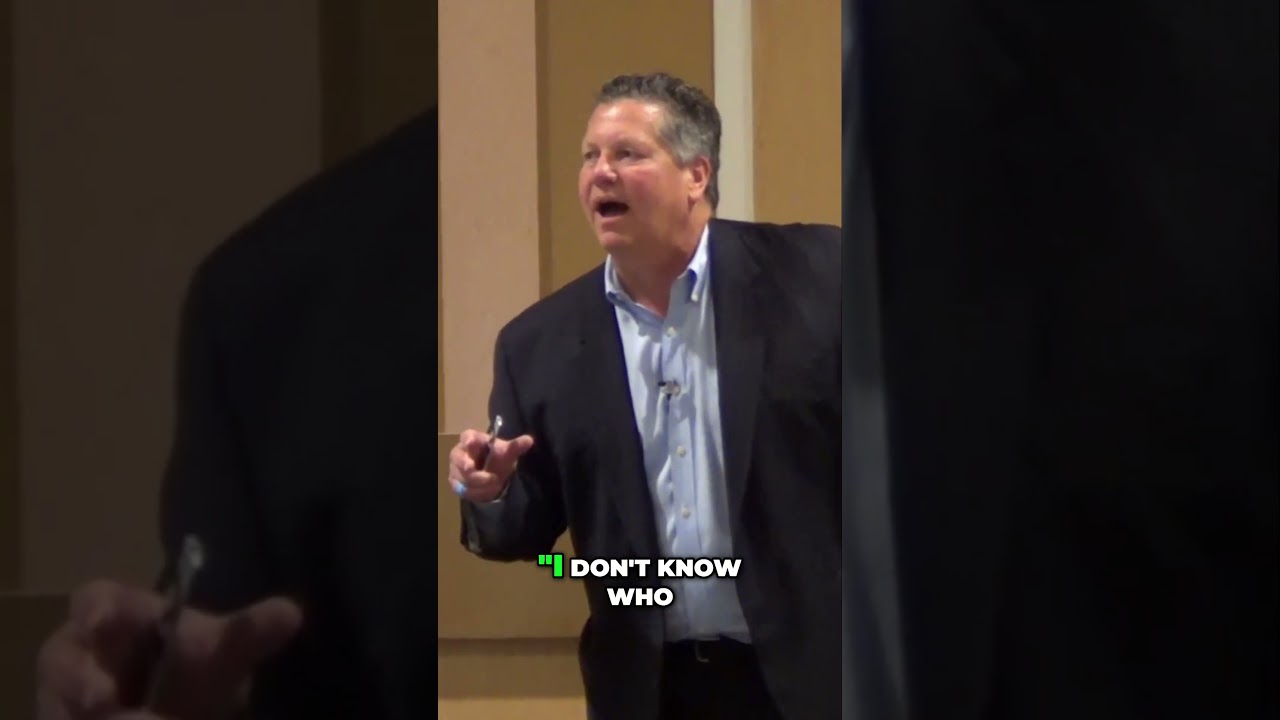
How To Know If You've Done Enough - Jobseekers Peachtree City

The speaker shares how he co-authored a book called Meet Me at Starbucks to pitch Starbucks, sent copies to district managers and Howard Schultz, but it never sold because he never actually asked for the order. Real success means setting clear goals, positioning yourself, and explicitly asking for what you want, like "When can I start?"
Chapters
Have you guys decided how you feel today? Yes. Seriously, did you decide? Because most of us, you know, we wake up, we kind of go through the motions, and then all of a sudden the world decides for us how we feel. But I hope you decided to feel great today. I feel great today. I got to tell you, when I drove over here this morning, I left a little early and the sunrise, oh my gosh, did you see that? Took a picture of it. I'm going to filter it into this video and this video will be available on my website should you care to re-examine what we talked about this morning. And what I wanted to talk to you about this morning is how to know if you have done enough. You ever wondered, how do I know if I've done enough? And so if you haven't heard me speak here before, I like to find a Bible verse to kind of center my thoughts. I chose this one, Proverbs 13:4. The soul of the sluggard craves and gets nothing, while the soul of the diligent is richly supplied. What's a sluggard? That's the reason why I chose the verse. I love the word sluggard. I mean, that's a country word right there. You're a sluggard. It's a brother of a slug. It's a brother of a slug. And you know what do slugs do? Nothing. Slugs do nothing. So anyway, sluggard is a noun. It's a lazy person, a do-nothing. And about, I guess, 11 years ago now, a friend of mine, Ben Turpin, and I were going around the country and we were training chambers of commerce and networking groups on networking. That's a good idea if that's what you're going to train, right? And when we did, Ben always had this line in our presentation, and the line was, "So you pick up the phone, you call them, you say, 'Hey, I met you at the thing last night. Let's go have a cup of coffee at Starbucks.'" Ben said this probably 70, 80 times at different presentations before somebody finally came up to us and said, "Hey, Have you got a deal with Starbucks? Because you're promoting them all the time. Maybe you ought to have a deal with Starbucks. Yeah, maybe we should. And so Ben and I got very creative. We decided we would write a book called Meet Me at Starbucks. Is that a great title or what? Especially if you go back 7, 8 years ago, 10 years ago. Pretty hot, pretty hot title. So we wrote this book called Meet Me at Starbucks. 70 sips, not tips, get it? Isn't that clever? To growing your business in America's office. Now if you're gonna write a book about Starbucks, maybe it'd be a good idea to have a plan to sell it to Starbucks, right? So we did. We had a plan. Ben knew about 30 or 40, when it's all said and done, we distributed about 50 copies of our book that we pre-printed to district managers and area managers of Starbucks. Now, before we did that, I decided that what I was going to do was I was going to rip off Starbucks' logo. So if you look at that logo up there, it's very similar to the logo they had. Only difference is I took the woman out, I put a handshake in the center, I used the exact same color green, I used their font, right, as close as I could get to it. I wanted it to look like something Starbucks would expect to see about themselves. Right? Pretty good idea? Tell the lawyer, talk to you. Ah, you're getting— we're getting there. You're very perceptive. So we designed it to get attention from the target customer, either positive or negative. We didn't care. We contacted those managers and area managers. We Federal Express the book to Howard Schultz on his birthday, gift-wrapped. We did a lot. And our plan was very simple. If they buy it, at that time there were 16,000 Starbucks stores, whoo, I don't know if we're rich, but by golly, we're well-known, maybe famous. Woo-hoo, right? It's a win. But you see, we had a previous little experience that gave me a heads up on the lawyer thing. I contacted Malcolm Gladwell because I wanted to write a book called The Tipping Point of Networking. And so I just said, you know, would we be able to do that? And I got a letter from their lawyer or his lawyer like you wouldn't believe. I was no longer allowed to say the words tipping point. I mean, it was the craziest thing I'd ever seen. I'm promoting a book for you and you don't even want me to mention it now. But so at least I knew you were right. The lawyers might come. So we had a plan for that. I wrote this press release in case they decided to kill us. And the press release was entitled, "Mega Coffee House Wants to Grind the Little Guy." Was that great or what? Right? Okay. So now, I have a perfect plan. I have a perfect plan. If they buy it, well, we're rich— not rich, but probably well known. If they don't buy it, well, we'll probably get famous. Either way, we win. What went wrong? Nothing. Because as of today— had you ever heard of this book before this morning? Title— everyone, when they hear the title, they go, "Oh yeah, I've heard of that." No, you haven't. Only 500 copies were ever printed. There's one left. It's available on Amazon. It's been there for 6 years. And nobody's bought it. So you never heard of the book, and yet I had the perfect plan. What went wrong? Never realized they do nothing. They ignore it and go away. They ignored us. They did nothing. They didn't care. They didn't care if we wrote it. They didn't care if we ripped them off. They didn't care if we used their name. They didn't care if we sent it to Howard Schultz gift-wrapped on his birthday. They didn't care. They ignored us. They did nothing. And in the end, we did nothing too. We were sluggards. Now I tell you this story for a very specific reason. How will you know when you've done enough? Did we do enough? If I, if I told you that we got the sale, would we have done enough? Seriously, would we? What was your goal? Did you achieve your goal? Yeah, what our goal was— first of all, we never even told them what we wanted. We never asked for the order. We thought we had done everything we needed to do to get in position, but we never asked for the order once we were there. My question to you: when you get in front of someone who has the opportunity to put you in position to see somebody else that may have that position for you that you're looking for? Are you asking for the order? Hey, would you please introduce me to that friend? Once you're in front of that friend, let me show you why I'm the right person. Let me help you out. And once you've done that, once you've shown them beyond anything, do you know most people never say, when can I start? Helping you with all these things that we've talked about today? They don't. They wait for the other person to say to them, we didn't ask for the order, we didn't have a goal like you said, we didn't do enough. How will you know when you did enough? When you stop taking no for an answer. It's pretty simple. So the question for you today is, the thing that I hope that my story, my cautionary tale about me and Starbucks will bring you is A, are you asking to be put in position to ask the right question every time you can? B, once you're in that position, are you asking for the order? When can I start? Do you know most interviewers, when they're asked that question, it's kind of like, oh, I guess I have to answer that question, don't I? And one of two things will happen. Either A, they'll say, "Well, I'm sorry, you're just not right for this position," and you can leave there not wondering if they're gonna call back, not going, "Well, that went really, really well. I don't have to do anything more this week 'cause I'm gonna get that job." You leave there knowing it's time to keep working. Or B, they're gonna be put in a position of, "Wow, yeah, why not?" Because you are the right person. You've gotta stop accepting no for the answer And most of the time, as it was just pointed out, we accept no for the answer by not asking for a yes. So if that was helpful for you today, remember the story of Meet Me at Starbucks. And if you rush out there now to Amazon, you can have that last copy. I'll tell you, I don't know if they really have a copy in their warehouse, but they say they do. Thanks so much for listening. I hope you have a great day.