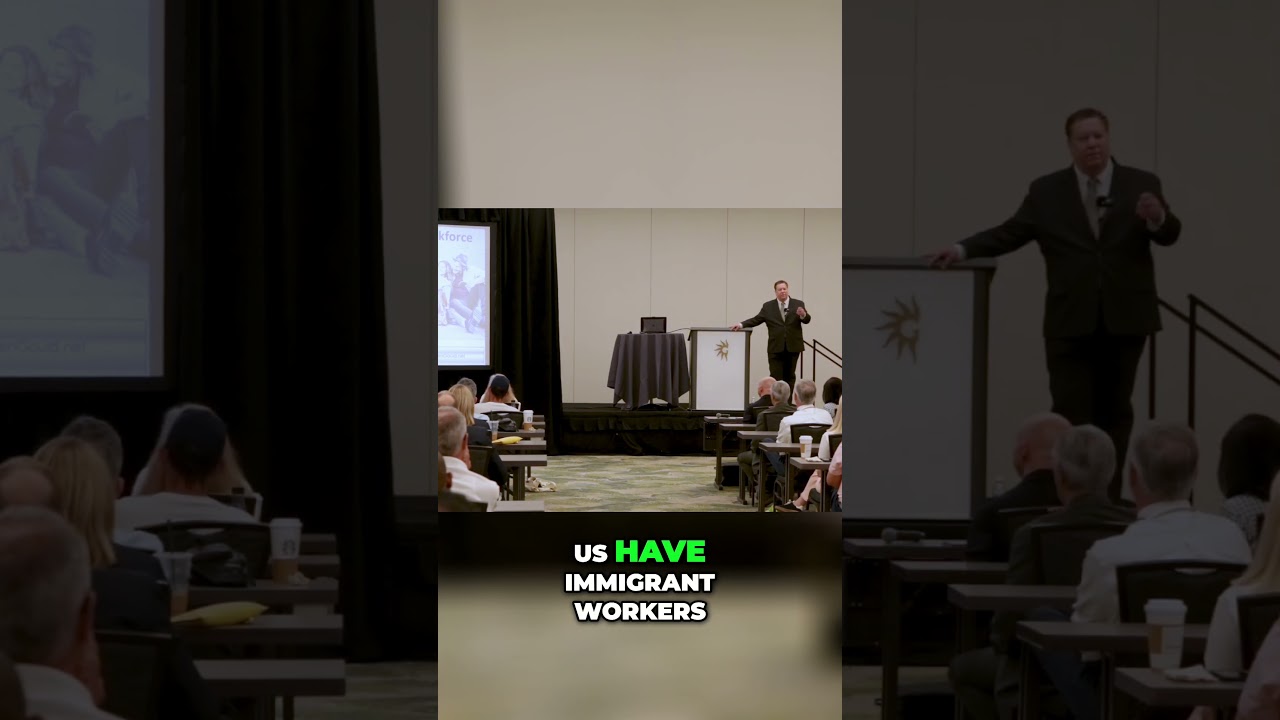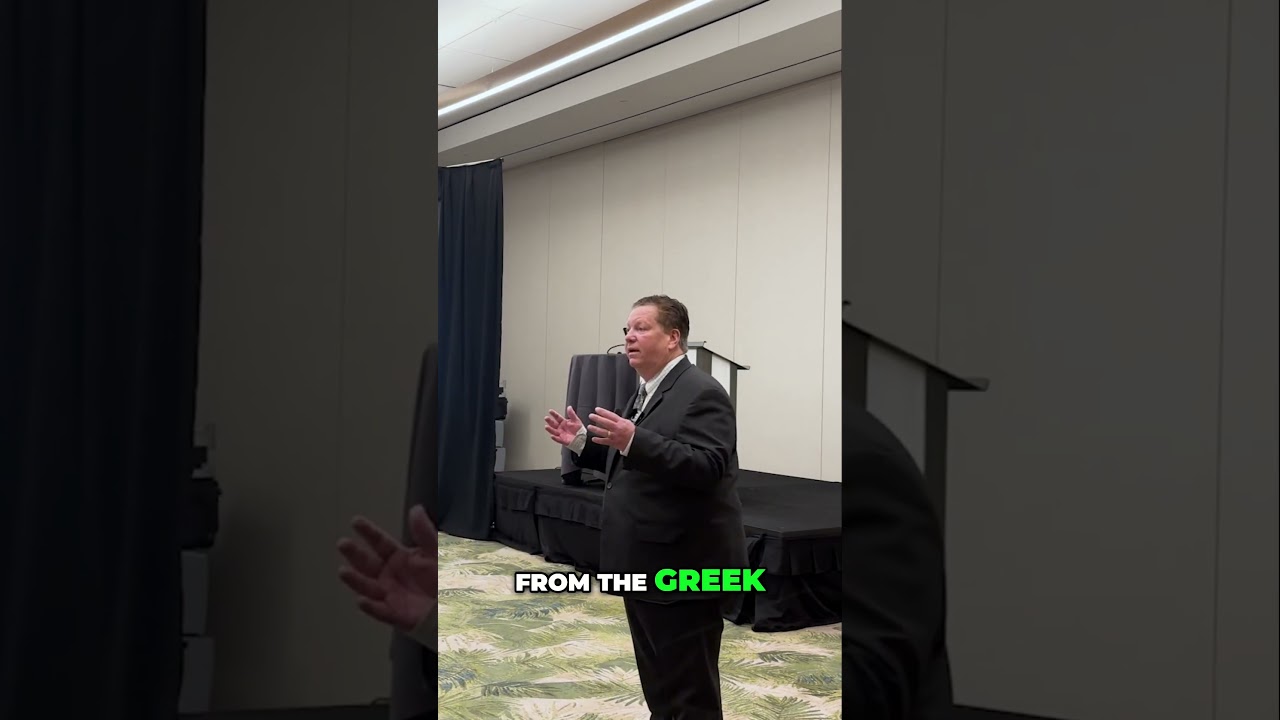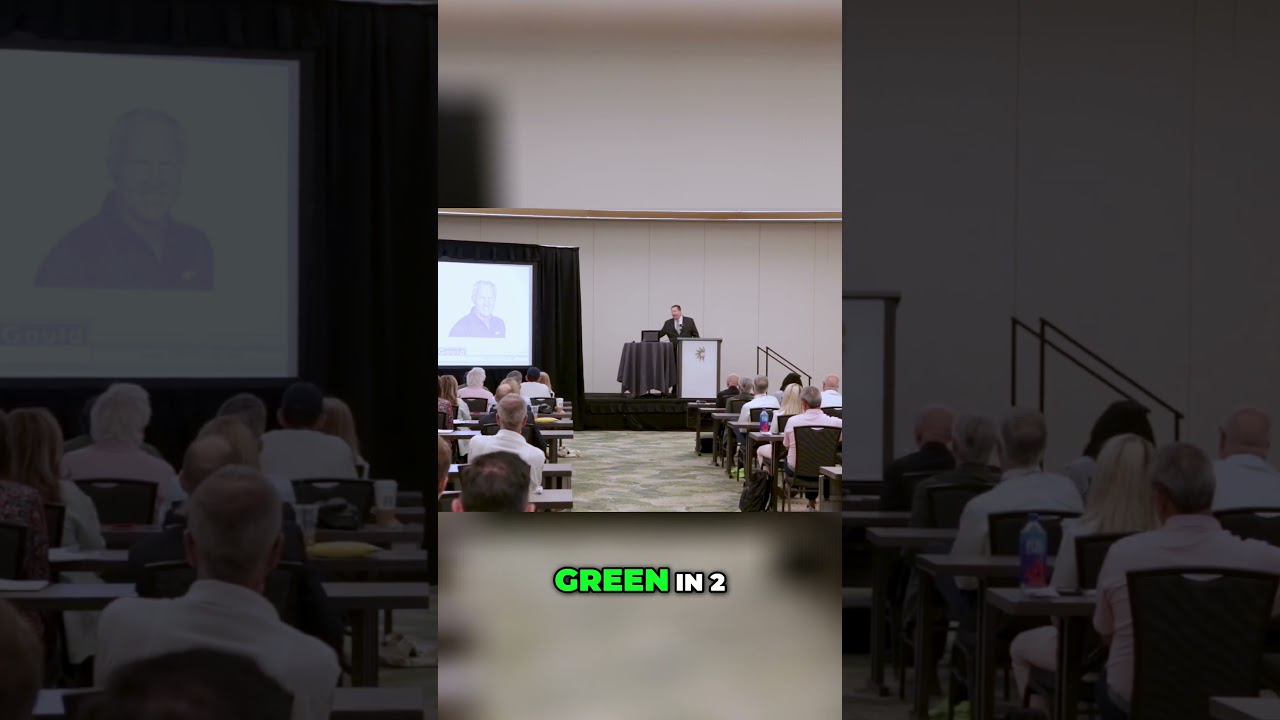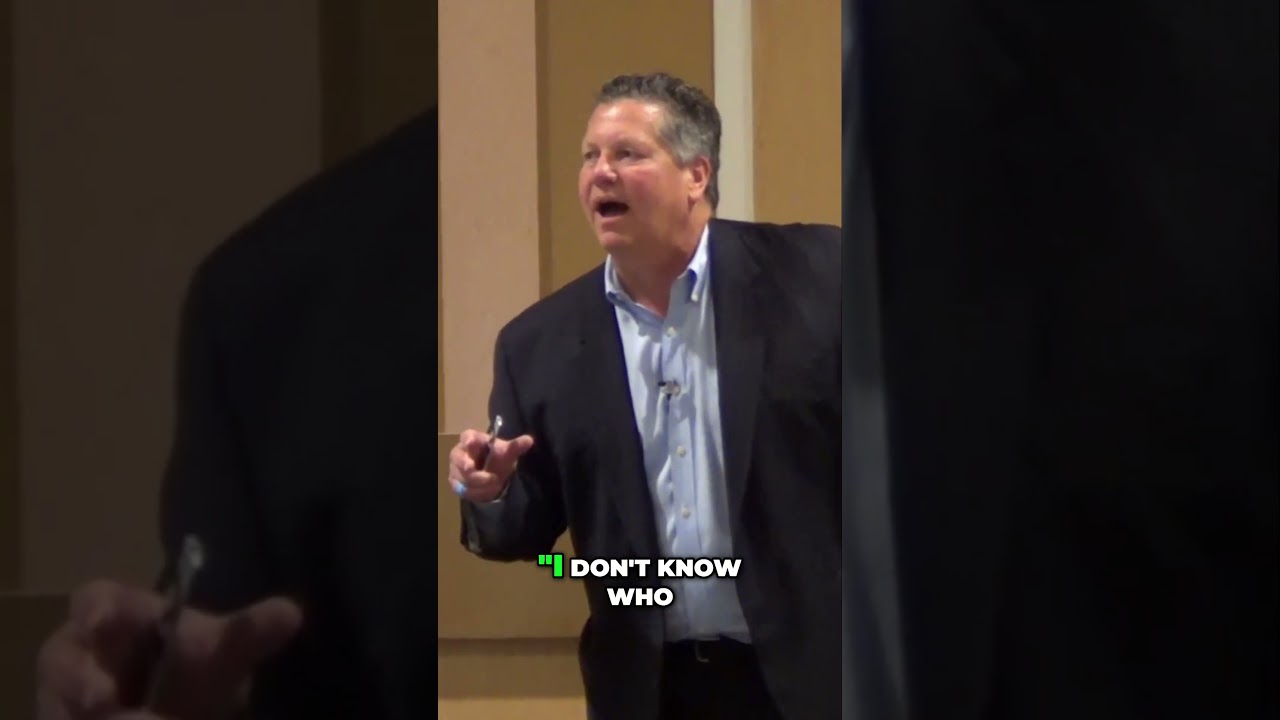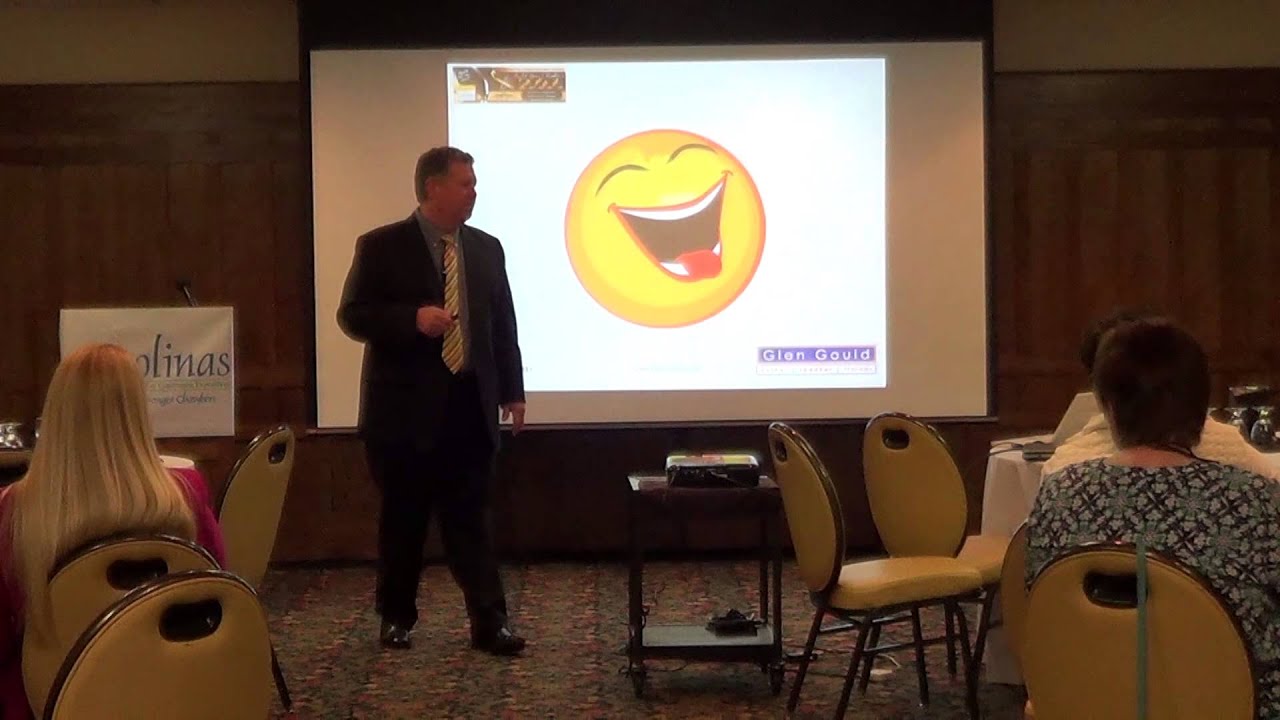
Glen Gould, a 52-year veteran speaker, teaches Chamber of Commerce professionals how to run more effective programs. He covers microphone selection, why visual-only slides beat bullet points, and how countdown clocks signal preparedness. Non-verbal cues like posture and pauses matter as much as what you say.
Chapters
Good afternoon everyone. Well, I am Glen Gould. I'm a professional speaker. I've been speaking for about 52 years now. Only about 15 of it professionally, but for about 52 I've been able to speak. And this program is about how to make your presentations more effective. And it's a little misleading because a lot of what we'll talk about today, we'll be talking about doing a program for your Chamber of Commerce. Now, it'll apply to any type of presentation, but it's geared towards making your chamber programs more effective. And the reason that we're doing that is because nowhere else in your business can you generate more revenue than with effective programs that you're doing, presentations. I guarantee you when it's all said and done, I'm gonna show you that you can turn all sorts of things around in your finances. An example, we had a program at the chamber I just most recently worked at, we had a program 4 times a year, a 1-hour program with a $15,000 sponsor. 1-hour program, and it was a breakfast. So if you think your breakfasts are dead, think again. There's a way to make it work if you've got an exciting program and if you've got the right sponsor. We'll talk a lot about who the sponsors are and things like that. That'll be covered in customer service tomorrow afternoon. Fair enough? Fair enough. So it was about 30 or so years ago, I was on a stage in high school.. And I was in a performance of South Pacific. You ever been in a high school performance? Yes? And so, anyway, I'm standing on stage, and next to me is my friend Pete, and Mark, and Tim. And the scene has us discussing how I'm going to go into enemy territory, and I'm going to see what's going on up there. I don't know about you, but I'm just always terrified of forgetting my lines or something like that. So I memorized every line in the play. And so, as it happens, it wasn't me, but somebody else forgot their line. And it was Pete. And so we're standing up there, and it's obvious Pete's forgotten his line. And so I know his line, so I kind of lean over and I go— this is his line— I lean over and I go, I said, how long do you think you could last up there? Because that's his line, right? So that's what he's supposed to say. So I lean over, how long do you think you could last up there? He stops for a second and leans over to me and goes, I don't know. So I'm trying to save this thing, right? So I lean back and go, it's your line. And the guy leans over to me and goes, I don't think so. I'm thinking to myself, is it really my— of course it's mine. Just say a line. Not my line. Yes, it is. Just say it. What do you want me to say? How long do you think you can last up there? You already asked me. So I look at him just like I'm talking to you. I say, Pete, your line is, how long do you think you could last up there? And he looks at me and he goes, I know that. He's Pete, not me. It's not my line. No, the reason I tell that story is because when it's your line and you know it, you're ready. And what I'm going to encourage you to do today is to remember that you've got to know your line every single time. Because the fact is that the way you present is going to make people feel a certain way. And if you make them feel good, they'll remember that. Maya Angelou has a quote, she says something to the effect, I'm paraphrasing, she says, or she said before she passed, "People will forget what you said, people forget what you did, but people will rarely forget how you made them feel. And so what we're going to talk about today is a whole lot of how you feel and how you make people feel in your presentations. Okay, so it's showtime. Now showtime doesn't mean that you have to be way over the top and all excited and all of that all the time. I've done those presentations before and they're fun for the presenter, but oftentimes it's just too much for the audience. By the same token, you can't come up here and just be timid. But you want to be conversational and have a good time with the audience and help them have a good time with you. Now, I will tell you that before the day is over today, you all will give your own speech. Excited? No. I knew you wouldn't be. Now don't panic. Don't panic. I promise you, I'm a professional. I will help you do this. And you'll enjoy every bit of the process. So, that's my picture that I like to put my picture up myself quite often. And I do that because, you know, I was a lot better looking then. Actually, the reason that I do that is because when there is something that I want to do that has not got a screenshot, there has to be something there. I can't leave the previous slide. So there has to be something because in today's age people expect PowerPoint. Now I will tell you, if you go to corporate America and you go do keynotes in corporate America, they don't want it. They don't want a PowerPoint. They want you. That's all they want. But your audiences, you know, they're expecting a little bit more. They go to churches that have huge productions and things like that. So remember that if you're putting together a program, that if you're gonna have something that you wanna talk about, but you're not prepared to show the slide yet, you have to have something to transition. I'll either have my picture there, if I'm the presenter, or whoever is, is doing the presenting, or I'll have the screenshot of the logo. Make sense? So, the most important thing you can do when you're working with an audience is to build some trust. People will do what you ask them to do if you just build some trust. So we're going to build some trust right now. I'm going to ask if you would please all stand up. Very, very interesting. Isn't that funny? I ask you to do it and you just do it. It's amazing, except for, you know, some folks, but now you're all up. Great. By the way, don't do that to people. What I just did? Don't make fun of somebody in the audience. It doesn't work. It never works. It makes them feel bad, makes everyone else feel awkward. So just another tip. And that's the way I'm going to present today. I'm going to give you things as we go along. So, I've asked you to stand up, you've done that. Now, I'm going to ask you to, second step to build some trust, I'm going to ask you to close your eyes. Now here's the thing, I can see your eyes, so I know if you're playing along or not. Please close your eyes. I want you to take a deep breath. I mean, we just had lunch and take a deep breath and kind of relax. Maybe a couple of them in through the nose, out through the mouth, kind of. Relaxing, and maybe even rolling your neck a little bit. As you're relaxing there, you know, there's all sorts of things flying across that black screen in your eyes, that mind's eye, if you will. That's why you kind of, just kind of clean that off, like just kind of clear it, just try to get to black, to where you're thinking about nothing, which of course we all know is impossible to do, but try to forget. And as you start to breathe in and out and relax, and the reason I have you standing is because I used to do this seated and people would fall asleep by now. Especially right after lunch. So, relax and I want you to think about when you were a child. Because everyone in here was a child at one point. And as you're thinking about childhood, I want you to think about maybe Saturday morning, um, or early in the morning before school. I want you to think about either comic books or cartoon characters on TV. And as you're thinking about that, pretty much all of us have a favorite. The moment I said that, something popped into your mind. Think about your favorite cartoon character. Now, we've all chosen our favorite cartoon character. Everyone's eyes are closed, so you don't need to worry about somebody knowing this about you. But if you don't have a cartoon character in your mind's eye, please raise your hand right now. Okay, and if you've just joined us, if you would just close your eyes for a second. Relax and think about your favorite cartoon character. Everybody have a cartoon character? Those folks that joined us last? Anybody not have a cartoon character, raise your hand now. Wonderful. Everyone has a cartoon character. So now I want you to quietly, don't say anything, open your eyes. And I want you to look at your friend next to you or near you. And I want you to speak to them in your cartoon character's voice. Please do it now. I'm not kidding, do it now. Speak to them in your cartoon character's voice. If you don't have a voice, say something in your head. Say something your cartoon character would say. Oh no, please sit down. It's a new cartoon character that comes out. Now, here's another lesson for you, okay? When you release control of the room to the audience, You better be strong enough to get control back. Okay, I've just done that. If you would please sit down. Now, I used to do this where I would ask somebody to tell me who they were, and everybody's really timid. So what I'm going to ask you to do is tell me who you met. Tell me some of the characters you met just now in this process. Inspector Gadget. Inspector Gadget. I haven't had Inspector Gadget in forever. That's a great one. Tweety Bird. Tweety Bird. You know, there's always a Tweety Bird in the audience. Bugs Bunny. Bugs Bunny. There's always Bugs Bunnies. On both sides. Who? Bugs Bunny.
Road Runner.
Road Runner. You like to do things really, really, really fast, don't you? You know, was anybody Wile E. Coyote? You know, I've never found an audience where somebody likes anvils dropped on their head. It's just funny like that. Anybody else?
Go on.
Come on, don't be shy. Tasmanian devil. The Tasmanian devil. Of course, there's always a Tasmanian devil. You're like a firefighting arsonist. You're one of those people that takes your list of things to do, you do it, then you write it down on the list and mark it off, right? Because you want to go ahead and get it done first. Anybody else that was interesting? Why do we do this? Why do we do this? Why did I have you do this? Icebreaker. It's an icebreaker. But I told you to build trust in the beginning, right? I got you to do all sorts of things I wanted you to do. I asked for little things and you complied. So you now think I'm more trustworthy because I didn't come and mess with your hair or steal your wallet. But we also do it to have a little bit of fun. But the most important reason we do this, the most important is, in an instant, You chose to be whoever you wanted to be. In a moment, you chose to be who you wanted to be. It says we get to choose. Sorry, the layout isn't exactly perfect. I would stand over here, but then you wouldn't see me. So, here's the story that I'm going to share with you that sets up the rest of this presentation. And it's a two-part story. The first thing is, do we have golfers in the room? I know we have some golfers in the room, right? Or you've been around a golf course or you know what a golfer is. Right? So, so anyway, in golf, I used to be a golf pro, I used to teach golf. In golf there's a thing called par. How many of you ever heard par, the word par? Anybody? I'm not going to ask you to do this because no one ever gets it right. You know, I don't want to ask you a question that you don't know the answer to. But the definition of the word par is this. The score that an expert golfer would be expected to make. Most people think par is what you're supposed to do. It's not. It's the expert standard. Now, when I used to teach people to play golf, the first thing I would do was explain to them what the word par meant, and then I would explain to them that they aren't experts. So, some of the things I'm gonna tell you today, I'm gonna tell you some things don't do and you do them. It's okay. Nothing here, nothing here is set in stone. These are things that I've seen work. These are things that will work for you if you use them. But you don't have to do any or all of it. The most important thing you can do is be yourself in front of an audience, okay? But PAR is what experts do. So some of these things are expert things. And you may not be familiar with them, but you will be after you leave today. You'll know more about presenting after today than most people will ever know in a lifetime. When I was a golf pro back in the early '80s, I was a teacher. So, there's a difference between a golf pro and a professional golfer, and I'll share that with you in a second. And I would teach people how to play golf, and the cool thing about teaching golf, especially in Southwest Florida, is you're around very rich, very eccentric, very interesting people. You're kind of like the chamber business. But these are the folks that don't come to chamber events, so I got both. And I was teaching golf and I was a pretty good player. But I wasn't great, but I was pretty good. And I decided that I would take a lesson with the number one teacher in the world, a guy named Peter Costas. And he was down in Miami and I think Costas still teaches. And so I made the appointment with Costas on a Monday because that's when golfers have, golf pros have their day off. And the day before that in the golf tournament I shot 67. Now for those of you who don't play golf that means nothing to you, but it's 5 under par. It's pretty good. No, it's real good. I mean, I didn't win the tournament, I came in second, but 67 is a good round of golf. You're pretty good. And so I went down and I met with Costas and he had me hit 5 balls. 5. And then he said to me something I'll never forget. He said, "Kid, you're pretty good." But the question is, do you want to be a golf pro? Or do you want to play this game professionally? Because I gotta tell you, if you want to play professionally, we got a lot of work to do, and you may never accomplish it. Because the guys out there that you see that are pretty good, even the worst of them are great. And son, you're not great. You're pretty good. Now the reason I tell that story is because This audience gets it. You're here. There's more people in your industry in these two states that aren't here than are here. You want to play professionally. So I'm going to help you do that. But I want you to remember that you're choo— you get a choice. And you've chosen to play professionally, so we're going to raise that standard even more because that's why you're here. So I hope that you enjoy what we're going to talk about. Interesting thing that happens when you press the wrong button. If you noticed when you first came in, there was music playing. Maybe some of you came in during the 5-second countdown. You have to set the mood for the people that are going to be there. I walked around and talked to some of you. I was busy doing setup as well. One of the things that we didn't do, and I'll talk about introductions in a second, is I didn't have somebody introduce me. Was that a good idea or not?
Depends what your objective is.
My objective was to set up that I wasn't introduced, so it was a good idea. Because it's always a bad— thank you, Haja. It's always a bad idea to not let somebody else build you up. If somebody else tells you how great, tells the audience how great you are, you have a much better chance of impressing them because they've already set the stage for you. Right? So you always want to write that introduction to prop up folks. Now here's the thing, the people that you'll be introducing, maybe the board members, or like this morning, um, Dan, help me, what was the guy? Meyer. Dan Meyer, thank you. Is Dan in the room? No, but he's upstairs. Okay, well anyway, Dan did an outstanding job introducing the gentleman from the hospital. He gave some personal perspective. He transferred Dan's authority and relationship with all of you to that gentleman, and then he pushed him a little higher on the pedestal by pointing out all the things that make him worthy. Now, what you missed out on my introduction is that I have been you. I've been the president of a chamber in Florida, I was the director of small business at the Metro Atlanta Chamber, and I was the vice president of a 5-star chamber in Southwest Atlanta just most recently. So I've done what you do. I understand the business. But you want that introduction, so when you're writing those introductions for your board members or for anybody else who's gonna speak, You want to know what they want to have said, and you certainly came and said it and I asked you if I could skip it, but you want to help them because they don't know that you can help them. They don't know that you can already position them for success. So the introduction and setting the mood is extremely important. Guess what? Wrong button again. I had music going for a reason. Our brains operate at a different wavelength when they hear music. Now, part of the reason was, is because I knew I was down here, I know most of the action's upstairs, and I knew that everybody had to pass that area before they went upstairs. And I'm trying to get people to go, "Hey, what's going on in there?" Right? So that I'll be drawn in. I had a wide variety of music, I had something for everyone. So after about 3 minutes, it changed. And if you didn't like what you were listening to, you'd probably like the next song. Sitting, the brain operates at a different wavelength on music and it puts us more in the mood for receptiveness. This is a book, the guy's name is Dan Levitan and it's called Your Brain, This Is Your Brain on Music. It's kind of like This Is Your Brain on Drugs, right? But it is the definitive text on what happens to our brains when you listen to music. If you're interested in such things, I highly encourage you to read it. If you're not, just take my word for it because it is a snooze fest. Okay. So, you have to demonstrate to people that you have a plan. I had a countdown clock. Have you ever been to one of those things where somebody starts out and they go, "Good morning," and you know, everybody's still kind of getting settled. And they go, "Well, good morning." You know, it's like, "Hey dummy, I'm talking to you." Don't do that. I know we've all done it. I've done it. I've done it a lot of times. Until I finally realized that basically what I'm saying to the audience is, is, "Hey, I'm more important than you," which nothing could be further from the truth. A countdown clock gives them the indication that you have a plan and that they can trust you. The other way you build trust with the audience is, is when it's supposed to start, it starts. I mean, we were talking and I had to step away because I knew that I had a 5-minute countdown. And I knew that I was going to have a little trouble with the technology, and so I had to be able to start on time. And I can't move my countdown forward, so I've got to be able to hit that countdown in the 5-minute window. Fair enough? So when the countdown ended, I began. I built in a little bit of something so that you could get settled without feeling uncomfortable that you weren't paying attention. I talked about the cell phone, I talked about the restrooms. You guys know where the restrooms are, you guys know to turn your cell phones off. That wasn't there really to educate you, although what it does do is this. I now know that if a phone rings in here, it's not because I didn't help you. I helped you, you know, to put your phone on vibrate, right? And we've all been there. I've done it 100 times. I hate it. You're sitting there and the phone rings and now what do you do with it? And why, you try to turn it off and you end up turning the volume up and all of those other things, right? When I was at the Metro Atlanta Chamber, And how many of you ever been to Atlanta? Yeah, big town, right? Lots of traffic. And when I was there, I had come from Florida and we just had this policy, we just started on time, that's what you do. And so after about 3 months, we hadn't started a single program on time, it was driving me crazy. And so I had built this small business group and I basically said, okay, look, starting in September, We're starting on time, that's it. So just be prepared, on time. Every program for a month and a half, we're starting on time, we're starting on time, we're starting on time. Remember September, we're starting on time. First program in September, 7:30 was the start time, one person in the room. Atlanta wins, right? Sometimes it really is unavoidable, but if you teach people it's okay, it'll be okay. And your 7:30 program will start at 7:40, and pretty soon it'll be 5 till 8. And the most important thing is, while you better start on time, you gotta end on time. If you don't end on time, you are done. So we'll probably end a little bit early, I hope. I don't have a watch on, so somebody give me the high sign if you think I'm getting close. Fair enough? We talked about the introduction. Introductions are a great way for you to transfer your authority to the person who's speaking. One of the things you want to make sure that you know how to do, and I'll cover this with the lecture in a little bit, but when you do an introduction for somebody, you step back from the presenting area, let them come forward. If they're coming from the left or the right, you need to indicate to them what you expect them to do with you. Are you going to hug them? Are you going to shake hands? What are you going to do? You're in charge of indicating that. So if you are a hugger, or if it's somebody you would generally hug, You even have to give them the direction. So you tilt, they know they go that way. Otherwise you're kissing. Right? Right? If you're just going to shake hands, the hand comes out so they know it's a handshake. But here's the other thing. When you introduce someone, the first thing, the thing you'll do, and I'm jumping a little bit ahead so we'll skip this part at the end, but you say their name last and then you indicate to the audience it's time to applaud. It's time to applaud. You lead the entire audience. Reminds me of something that I— no, I've already covered that. Dan doing a great presentation. I just wanted to make sure that I did cover that. I opened up with a little bit of a story. The story about Pete. It's a true story. That makes it even better. Is it embellished? Yeah. Makes it a little better. There's a saying in the speaking business, don't let the truth get in the way of a great story. Okay, it doesn't mean you lie, but if you can make it a little bit bigger than life, nothing wrong with that. Nobody's going to be hurt by the fact that the guy wasn't really stand— that was standing next to me wasn't really Pete. Everybody had fun with it. The reason I opened with that story is because we're talking about presenting. I wanted you to feel like you could be on stage with a professional standing in front of you saying, "Hey, I screwed up too," because we all do. So don't expect that, I mean, today I might even screw up my presentation today, tomorrow, we all do it. The great news about that is the only person in the room that knows what the presentation is right now is me. And so if I, as long as I don't tell you I screwed up, you'll never know, right? Because I opened with that story more than anything because laughter is your best friend. I mean, getting the audience to laugh is just the best way to get people engaged. Now, there's a rule about laughter. Laughter should be general in nature. Whatever you do, don't do a laughter bit unscripted unless you're really good. Because 9 times out of 10, you're going to say something that's just not what you wanted to say. We, I've recently been at a program where one of the presenters was, he has 5 children. And the person introducing him, you know, made a comment about, "Wow, you got 5 kids," you know, and he's a very strong Christian. I think the last thing he wants is for somebody to be talking about his 5 children in that respect, right? Now, it sounded funny at the time, but it really wasn't. So, Unless your laugh is scripted or unless you know for a fact you can get away with it, just stay away from it. Don't try to manufacture laughs for laughs' sake. You need to know that your presentation is for the most part nonverbal. As a matter of fact, only about 7% of the words we say are what you hear. You hear about 55% of my appearance. So there's all sorts of decisions I make. Do I button my jacket? Do I not button my jacket? You know, how do I wear my hair? Well, you know, when you forget your toilet kit, you wear your hair messed up. Because that's what I did on the way up here. Got everything together and forgot my toilet kit. So I'm going with the cool funky look today. But about 55% of what I'll say, you'll never hear it traditionally. You'll see it and you'll interpret it. So, it's important to know that what people— and I'll send these slides out to you— what people hear has very little to do with what you say. It has to do with what they see and how you say it. How you say it is extremely important. And I don't know if I mentioned in the beginning, but if I had had trouble getting the group to come to order, if you will, there's a very powerful tool that I have in my arsenal. The way you do that is— pause. Because in the void, several of you looked up. What happened? Did he forget his line? What's going on? Something happened, because we get into this rhythm. Our voice is very rhythmic, and people will hear it and they'll get very comfortable. And let me tell you, who you're competing with for attention these days is this little BlackBerry prayer thing going on, right? You're, you're, we all do it, right? And now we tell audiences, if you're tweeting about us, right, you're not tweeting about us, you're checking your email. And you're seeing what your kids are doing and you're ordering dinner for tonight, right? But we feel better because we said if you, right? It's just a fact. It's something you're going to have to deal with. It's something that has now become accepted. And audiences are just going to do it. You have to be better than the electronic leash. So, using pauses is a great way to bring back people to the audience. Another good way of doing that is to change your tone or change your pace or sometimes you can even have a character. Doesn't matter. My, um, when we moved to Georgia, we were from Massachusetts. Any other darn Yankees in here? Remember, I'm in the Bible Belt, I won't use the other word. Um, yeah, you and me both. What part?
Western.
Yeah, okay. Springfielders? Yeah. Yeah, I was Eastern, but anyway. We moved to, and I was 6 years old, I came in from playing one day and You know, back then, for those young people here, children were to be, you know, seen at most. Never heard, but maybe not even seen. And I came in, and there's this man that I don't know sitting on the sofa next to my mother. And he was about as Southern as I'd ever heard, sitting on the sofa talking to my mama. And he looked at my mama, and he said, "Now, Mrs. Gould," If you're going to live in the South, you're going to have to learn how to be nice. As if people from the North don't know how to be nice, you have to actually learn it, right? So, if there's a place where you can use a character, it totally makes sense, then you can use that character. There's nothing wrong with using voice inflection or anything else in your arsenal to get people's attention because let me tell you, you're fighting for attention, just like your chamber is fighting for attention. And the reason that people don't come to chamber programs— how many of you have more people than you know what to do with at your events? Oh look, nobody. I didn't expect you. The reason they don't is because they are already forced to go to all sorts of stuff they don't want to go to. And now you're asking them to pay to go to stuff they don't want to go to. Help me understand how that works, right? So your programs have got to be more interesting than the church program on Sunday. They've got to be more interesting than the Boys and Girls Club gala or whatever else there is. You've got to put on a show, but it isn't a show. Because if it's a show, then people won't believe you. It's a tricky thing. But you've got to learn how to do it. When you're using tone and inflection, one of the things you don't want to do is, and today, a plane crashed. 298 people died. And in other news, God bit me. And I mean, you can't be all over the place, right? You don't want to be a car salesman, you don't want to be NPR, but you do want to change what you're saying. Everybody with me on that so far? So let's talk about some tools that you have in your arsenal. First of all, this right here is called a lectern. It is not a podium. I know that most of us call it a podium, and if you look up podium in the dictionary or on Google or anything else, It'll say podium. It is not. It is a lectern. Now, when you tell people it's a lectern, they won't know what it is. But if you don't tell the people who do know what it is, that it's a lectern, then they'll think you don't know what you're doing. It's a tricky thing. So you're gonna have to understand that if you say, "Go over and stand by the lectern," and they go, "What? The thing with the microphone on it?" Don't call it a podium because then you've totally defeated what you've done. If you wanna remember how you can remember this, lecterns, you lecture from. Podiums, you stand on. Podiatrist fixes your feet, right? Podium, you stand on. Lectern, you stand behind. And it's either a stage, a riser, right? Yeah, one of those things. A stage is a big riser. A riser brings you up a little bit, and a platform is actually this. I'm on the platform. Now, typically a platform is raised slightly, a riser is slightly higher, and a stage is the full area. But you can call it any of those things, people will get it. But if you call this a stage, they won't get it. Fair enough? Microphones. Everybody hear me okay back there? I'm doing my best to just talk in a conversational tone, but occasionally I get preachy. So I'm working on that. But you, if you have the option to use a microphone, use a microphone. Every time. Every time. Don't skip the microphone. There are two types of microphones you need to be aware of. And actually two variations of the two types. This is a lavalier microphone, the one I'm just touching and making it go crazy. If you wear a coat or something like that, you may have heard it moving around some. It's a little tricky to work with, so you have to stand more still. A lavalier, generally speaking, comes in only one type, and it's an ambient microphone. In other words, it'll pick up most anything going on around it. It has to do that because I don't speak into it all the time. The way you'll know it's ambient as opposed to a cardioid or condenser mic is when I do this, it gets louder. Okay? Now, when you're doing a handheld— I won't turn it on because we saw what happened this morning, right? But when you're doing a handheld— it is on. Look at that. We got lucky. When you're doing a handheld, one of the things you need to know is, is it ambient or is it direct or condenser? Because if it's ambient and I do this, you'll be able to hear me. But you can't, can you? Which means that you have to speak right into the microphone, which means when you give the microphone to somebody, they need to know that too. So don't put your board chair on stage to speak and hand him a microphone and he's got a case of flappy hands, because it will be like this. And then we went over there and then we did this over here, and the person in the back is going, what in the world is going on? I don't know why this guy talks like he does. What is going on? Right? So you have to understand what kind of microphone you have. How do you know that? You test it. You test it before anybody gets there, and then you share it with the folks you're working with.
Okay? Hey, Glen Gould.
Yes, ma'am.
In the last 3 presentations we did at my chamber, we brought up the speaker, and they were loud, and they said, "Oh, I don't need this," and they put it down.
Right.
And the people in the back never can hear, and so I found myself saying, "You know, you really need to use the mic," and you just interrupt and have to because if not, then you get the evaluations and they're like, "We couldn't hear in the back." Right. And they all think they can talk loud enough, but I think it really frustrates the audience.
Okay, and you're absolutely right. And the reason they do that is twofold. Number one is they don't know how to use a microphone. And you are the professional who is going to teach them. So you're going to get them there early and you're going to sound check them. And you're going to help them understand why they have to use the microphone. And you're going to help them understand that it's going to make them look better. But here's the thing, and this is going on all over the place in the chamber industry, and this is not a part of the program, this is a freebie. You may not like it, but it's the way I feel. I believe that we have subjugated our authority in the chamber industry to the point where we really carry very little clout with some of our members, particularly our boards. And the fact is that I'm a believer this will blow your mind, that it's time to end volunteer boards. I don't think we should have volunteer boards in our chamber anymore. They're completely useless. That it's something that worked 25, 35, 45 years ago, but today it doesn't because there's nothing professional about those volunteer board members. They don't understand what you're trying to accomplish. All they want to do is get in, not do any damage, and get out and have that on their you know, checklist of things I served. And I don't know exactly what the model is, but the volunteer board is a big problem. It's a part of why when you hand the microphone to somebody and you say, I'm the authority on this, here's the microphone, and they immediately put it down. It's why when you go out in public and you say something on behalf of the chamber, two-thirds of your board's talking behind your back against whatever you've said. Even though they voted on it in the darn room, right? It's just— I can go on forever about that. I'm not going to, but you've got to take back that position of, look, this is what we do here. We do programs. You know, we do a lot of them. We know what works and what doesn't. Please, I'm doing this for your benefit, not for mine. You're going to look better. You're going to sound better. You're not going to feel like you have to strain if you just talk into the microphone like you're talking to your friends. Fair enough? But great point. Some of you were here this morning when I, or, you know, after lunch when I was struggling with PowerPoints. I hate PowerPoint. I am a big fan of a program called ProPresenter. If you— it's about $385 for 5 licenses. It's basically sold to churches. So if you've been to one of these big programs in churches and things like that and you wonder why is it that they don't have to back out of this to go to that, it's because they use ProPresenter. It's very fluid. It's very easy to use. You've got video, audio, you can change slides, you can do whatever you want to do, edit it on the fly— everything just really, really seamless. $385 bucks; great program to have if you wanna have a great tool. Okay this one of those that's really kind of touchy but never ever ever ever ever ever ever use bullets! And I'm not talking about these kinda bullets. I'm talking about stars or checkmarks or buttons or whatever. Never use bullets. Ever, ever, ever, ever, ever, ever, ever. There's no reason. Ever. Have I said ever enough? Don't use bullets. Also, if you've got some text you want people to read, don't insult them by reading it. Tell them you'll give them a moment to review the slide, and then you step aside And then you come back in and let them know that they're done reading. Don't insult their intelligence. Now, the most important thing you can do is just don't have a slide with text on it. Have you noticed I had one slide with text on it so far? And that's because I forgot to eliminate that part of the text. There's text. But these are some things that are not in the presentation that I thought of since I did this presentation first. So I want to cover them. Before I do, any questions? Anything in particular that you're curious about with your presentations? Okay, I'm going to go ahead and cover these things real quick. Don't write a script for your volunteers. Don't. You know why? Because they will dutifully come up and go, "The Chamber of Commerce is excited to introduce the..." And all you get is the top of the head.
Or better yet, they say, "Angelle wrote these remarks for me." Exactly.
Don't write the script for them. You need a full script. You write the full script. You write everything you want to have said. And then you go back through it 2 days later Oh my gosh, I know, you're actually going to write a script not the night before or the morning of, right? You write the script at least 2 days in advance. 2 days later you come back and you pull out the most important things you want to have said by each volunteer and you put them on a 3x5 card and you let them have that card. Oh, I must have left it in my backpack, excuse me. So, how do you know that— got away from me. How do you know that the 3x5 card isn't going to get lost? I have a notebook, punch a hole in it, 3x5 card goes in there. When he's done, he doesn't get to take it away and all the rest of your notes are on it. Ever had that happen?
Right?
That's also why you don't write a script. You can just give him his own 3x5 card or her her own 3x5 card and let them figure it out from there. They're intelligent people, they can handle this. Never ever ever, unless you're asking to read a thing, leave the stage or the lectern unattended. I think I covered this earlier, but let's just say that you're introducing somebody. And today we have speaking on how to have an effective chamber my good friend Angel Laborde. Angel, that is your last name, right? Since you're my good friend. I'm just kidding. I knew it was because I looked at her name badge. So, and then you prompt clapping, you step back, allow them to come. If they're only going to speak for a second, like present a, you know, something and you don't want to leave the stage, you stand to the side and you look at them, not at the audience, you look at them, and you smile the whole time. Even if they say that they think you're an idiot. You just smile the whole time. The reason you do that is because you want to look like you want the audience to look at them. You want the person who's speaking to feel like the audience likes them. So you want them to feel comfortable. And the best way to do that is to mirror what you're hoping to have them do. These things right here are deadly. They're deadly because you set them down like I just did. What's more is, is that you hold them in your hand and you play with them and all of those things. Very difficult to work with. If you're going to have slides switch when somebody else is speaking that's not a part of your thing, like the board member or whatever, you need to have an AV table. And you need to have somebody who knows what they're doing switch those slides for them. And you need to have them able to switch back and forth and know exactly how to recover when they put the wrong slide up and all of those things. And that's a whole other program that we could teach just on that alone. But you've got to look better than they could possibly look by themselves. I did mention that in the beginning you want to have all the phones turned off and things like that. What other tools or things do you want to know about before we do your speech? Your speech. Yes, sir? She wants to go first whenever I speak. Please. Do you find it, I guess it depends on what obviously what the subject is, but getting your audience involved, buy-in, like asking questions or whatever, that tends to be a good technique? It does. The most important thing is a room this size. It's hard. Absolutely, but no bigger than this. It's kind of hard even in a room this size because, and you've all been there. I mean, I've got to tell you, I was at one about a year ago where, oh, the poor mayor, he said, I promised I would recognize so-and-so, and that woman stood up and spoke for 20 minutes. She filibustered. I mean, there was just, and there was no stopping her. I mean, and so when you allow somebody else to speak, you've got to figure out a way to stop them. And believe it or not, I've been places where the best way to stop them was, "Let's give so-and-so a hand," right in mid-sentence. Right? Because that's what you have to do. But to interact with folks is good so long as, and this is, it's just like the lawyer thing. Don't ever ask a question that you don't know they already know the answer to. I was watching local access television the other night in a town that I won't mention, and a very skilled interviewer asked the Parks and Recs guy, to name the 10 parks in town. Oh no. And the first thing he says is, "Wow, that's hard. It's your job." All credibility was gone, right? I mean, all credibility. But you know, if you catch them off guard. So if you do an interview-style format like that, just for what it's worth, always have their name in front of them, your name in front of you, because people go blank on the strangest things. And make sure that you've gone over the questions you're going to ask. But You can ask general questions and look for an answer. I took a class one time where the guy said, if you want to get the audience involved, first thing you say is, how many of you would like to make more money? How about a lot more money? Cheesy stuff like that doesn't work. It's got to be real. Yes, ma'am. You had something? No, I didn't. Oh, you wanted to be the first one to speak in the speech.
Yes.
So are you all equally terrified? Now here's the thing. Every one of you in your job has to speak to some extent. Right? And here's the other thing. Once you start doing programs, which you do at your chamber, you're going to be asked to introduce everybody. Somebody's going to bring somebody to speak. Would you, hey, would you introduce me to a lot of speaking? You know, would you do it? You got to be ready for that kind of thing. And so there's a couple of ways you do this. Number one is, is if you were to look at my script today, you would have seen things like the Pete story. Learn to be nice. The Costas story. You know, I've got— and so when I go and build a speech that I'm going to give, I think about what am I trying to accomplish with the speech. I pull out stories that I already have written. I don't have to relearn those stories. I don't have to relearn what I'm going to say. And then all I have to do is figure out how I'm going to tie them together. So tomorrow, if you come to my program tomorrow, you may hear the Costa story again. I haven't decided yet. But it's part of the presentation right now. And the Costa story is the learning, the challenge to be a professional. So that's one way. But the other way is to do something, tie something to something else that's familiar. Now I promised you're going to do a speech, so here's what I want you to do. I want you to take these notepads, and if you haven't already taken one out, thank you. If you haven't already taken one out, go ahead and take one out. And here's what I want you to do. I want you to write at the top your name, first and last name. And then on the second line, I want you to write your title. And then on the third line, I want you to write the chamber that you're with, or the company you're with if you're not with a chamber right now. So it should look like something like this. Now, this is going to be very, very elementary. I promised you that this would be easy and that you would be able to do this. Now, first of all, you all three, you already know all three of these things, right? It's just like I talked about with the stories. I already know all of these. I don't have to figure it out. But I may not know how I want to present it. And I may be worried about how I'm going to present it, if I'm going to remember anything, because you know, sometimes we stand up and our brain sits down. Right? You ever been there? I mean, heck, are you kidding? We can be over here having coffee or a drink or something and sit there and go, you know, that movie with Paul what's-his-name, the The cars and stuff. What's that called? The guy died recently and just released the— Paul Walker. Paul Walker, thank you very much. Fast and Furious. Fast and Furious, thank you very much. What's your name, sir, in the blue shirt? Oh, yeah. Greg? Greg. Greg, that was for you, by the way. What that is, is that's a grasp. Gotcha. Okay? And that's a way to get the audience engaged. I did it on purpose. I knew that it was Paul Walker. I knew it was Fast and Furious 7. My son went to the premiere. Doggone it, I know all that stuff. But I act like I don't because I want to pull you in. Everybody's sitting there trying to help me now, right? Oh yeah, it's a grasp. I'm getting the audience to come back. So let's go back to our speech. Now, first thing you need to know about speaking is speaking is always done, if you're presenting, it's always done standing. You never sit and speak. I mean, like, right down to committee meetings, you get a little awkward then, but anything bigger than a committee meeting, you're going to stand up if you're presenting. I mean, I know chamber execs who, when they're in the finance committee with 5 people and it's time to present the finance report, they'll stand up. It gives you more authority. I will tell you another thing, just for what it's worth, you men, well, and ladies for that matter, I had a running joke. Whenever I went to the finance committee, I always wore a tie. People ask less questions of people who wear ties. They do. They assume you know what you're talking about. You dress nicely, they will ask less questions. Dress in your best suit for those big meetings. Okay, so you're all going to stand up, and the way you're going to remember this presentation is a very simple thing. The Happy Birthday song. The Happy Birthday. Does everyone know the Happy Birthday song? Yes. So it'll go, my name is, I am a, I work at the, I, my name is, and then your name again. Can everybody do that? Okay. Come on now, don't be shy. Ready? Who's gonna lead us?
He's a singer.
I'll lead us, okay? Are you ready?
My name is—
I am a— I work at the— My name is— Give yourselves a round of applause, everybody! Questions. You may be seated. Now I did that for a very simple reason. It's silly, right? But it's something you can remember it. You don't have to think about it. The truth is, when you're meeting people now that you don't know from the chamber world— I'm going to be singing this song again. Her name is— Sorry, but it won't last long. The effects don't last long. Class too, I hope. Anyway, I haven't tested it, but we'll see. So, questions? Yes, ma'am? So if you're not going to use bullet points on your PowerPoint, why are you presenting? Help me understand why you're presenting that you would need a bullet point presentation. Well, Angel and I are presenting for our CCEs next week in Dallas, and our presentations are full of bullet points. Okay, so here's the thing, okay?
They really were.
Here's the thing, okay, here, really, this is important. Don't change anything before then. Don't change anything. Anything you've gotten today, don't do anything with it until you've tested it, okay? Don't, nothing is that important. They've already seen your presentation, right? Don't they? Oh, you're not— they've read the essay and then you have to present on your essay. Let me tell you something. They've seen lots of presentations with bullet points. It won't be a surprise to them. But what I use is a series of things. Oh, there's one I forgot to tell you. Have water for folks. Room temperature. Never with ice. Why never with ice? Slap my mom. But also not cold because cold water gives you gas. No, no, sorry. By the way, the other thing is that no matter what you do, eat before you're in a room with people. Eat because Whatever you had last night, it's in the bloodstream and in the lungs, and if you were in the hospitality room, we know what you had. So, now going back to your question though. What I do is I use pictures. Okay, now the truth is this. 99% of people who use PowerPoint do it because they use it as a crutch. They don't know what they're going to say, they haven't practiced, and so they use PowerPoint, and so they'll put something on, oh yeah, let's talk about attitude, you know, or whatever the case may be, right? It's a reminder for the speaker more than anything. And there's nothing wrong with that, okay? There's nothing wrong with that. But that's being a chamber pro. If you want to play this game professionally, you're going to raise your level a little bit and you're going to learn to not have the, the PowerPoint. I will tell you the other thing is that every one of us has the tendency to try to put too much in our presentations. Way too much. I hit you with a fire hose, you're going to walk out of here soaking wet and you're still going to be thirsty.
Right?
That's just the way it works. So, but yeah, don't change anything until after that. Yes, ma'am.
Kind of on the other spectrum, what about more one-on-one conversation? Like maybe in sales or something, and you're trying to do everything you can to engage this person, and you feel like you're the only one talking, and you're not getting any kind of feedback from them. Is there anything you can do or say to— I mean, as a— being in sales or in retention and talking to businesses all day, I mean, sometimes you just see people, you know, kind of gloss over, and you're trying to give them information, but yet you don't want to So, so no, no, no.
So here's the thing. You're not boring me at all, believe me. So here is the thing. Let me answer the question. If you're getting that, then you're talking too much. That's your indication. Most buyers will tell you that if there's one thing you could do better, It would be listen. No matter who you are in sales, most buyers will tell you, you could listen better. Now, listening better, generally speaking, means asking better questions. And so, I'm a real follower of the idea that when I go to present to somebody to sell product or service, first of all, I know more about them than they know about themselves. And I find something that I can talk to them about about them. And I find out what they want really quickly. And this is something that all chamber folks do. It's just our— it's in our DNA. And where am I now? Thank you. It's in our DNA. We have a tendency to have the 10 reasons to join the Chamber of Commerce. Let me show you each one. Number 1 is you've got an opportunity to network with other people. And you're going to be on our website. You know, and what we haven't said is, is if there was a reason that you would join us, what would it be? Wouldn't that be a better question? If you— you obviously are thinking about it, you let me in your space, what are you looking for? And hammer on that and don't get into the things that don't matter to them. Now, if you're going to really do that well, you're going to have to learn how to segment your list. So that you're not emailing people everything. I mean, I'm on a chamber list right now and I get the women's business stuff and there's like 20 things a month. I don't want the women's business stuff, I can't go. All you're doing is telling me I'm not getting any value for my investment because I can't go to these things, right? So, you got to find out what they want. But here's the thing, so you get in— the bad news is we get in those spots all the time. And you got the glazed look. Sometimes the best thing to do is go, well, thanks for your time. Have a great day. If there's any way I can help you, let me know. Because that's the last thing they expect. The last thing they expect. And as you're leaving, you might turn around and say, by the way, what was it that you were interested in? I just don't feel like we covered that. Now they're off guard, they're probably going to tell you, "Oh, I am so sorry I failed to tell you that. Let me just explain that to you real quick." And then you're back in. But sometimes it's best just to leave. Just leave. Because let me tell you something, I'm done with begging people to join chambers of commerce. I've got a radical— I've got radical ideas everywhere. I've got a radical idea for you. I think we ought to give chamber memberships to every business in our community. Every single one of them. Give it. It's free. As a matter of fact, it's mandatory. You have to be a member of our chamber. It's free. Don't worry about it. Serious. There was a way to monetize that. By the way, it's not fair that I dropped the bomb on you about the $15,000 thing in the beginning, so I'm going to cover that real quick. Did I cover your answer though?
Yes, you did.
Thank you. So here's the thing. We knew we wanted our breakfast to get a bigger profile. So we started saying, okay, who is a big community player that benefits from being the presenter of this? And we decided it was our local television station, the local cable access company. They're filming stuff all over the community already. There's no reason they wouldn't film us. But we don't want to give them that. And we don't want to make them realize that that's what we really want. So now we start saying, okay, well, why would they do this? And the first thing we did was we went through and we looked at what they spent money on the previous year. And they spent, you know, probably $7,500 with us the previous year. So then you say, okay, well, what do I want this sponsorship to be worth? I want it to be a $15,000— because that was our top level at the time. I want it to be a $15,000 sponsorship. Well, I don't want to sacrifice everything I've already gotten from them. But there are some things that cost me nothing to give them. And I'm certainly going to include those in this $15,000 sponsorship. And then I'm going to present why it makes sense for them to use that platform to promote their business. Now as it turns out for us, they have a local access, you know, cable access television program that talks about things going on in the community. We're a perfect fit. And so we're presenting, we present with them, we talk to them about what speakers they want to see in that thing so that they make sure they feel like they got the value they wanted. And then what we do is, is then together as a partner we go out and we market the program. So that we get more people to come because that was important to them too. But you have to line up whatever you're trying to promote with whatever their interests are. So that's why I thought about it when I— does that make sense? Which makes the golf tournament difficult. If you had a golf— does anybody here not have a golf tournament? Yeah. In Augusta of all places. North Augusta. Wow. The golf tournament's challenging because how does that tie into business? It doesn't. But the first thing you have to do if you want to make sure that you can sell these sponsorships is, really the first thing is, be laser clear on what you do and what you don't do. Because customers will pay you if what you do lines up with what they want. They'll pay over and over and over again. So I hope that was helpful. Any other questions? I know my time is up. Any other questions? I'll be here. I'd love to talk to you. I do have a table upstairs, so I'll probably run up there, but if you want to trap me before I go up, and if there's any way I can help you, your chamber, I'm Glen at Glen Gould dot net, pretty easy to remember, or just come by and get one of my cards. Thanks everybody, have a great afternoon.