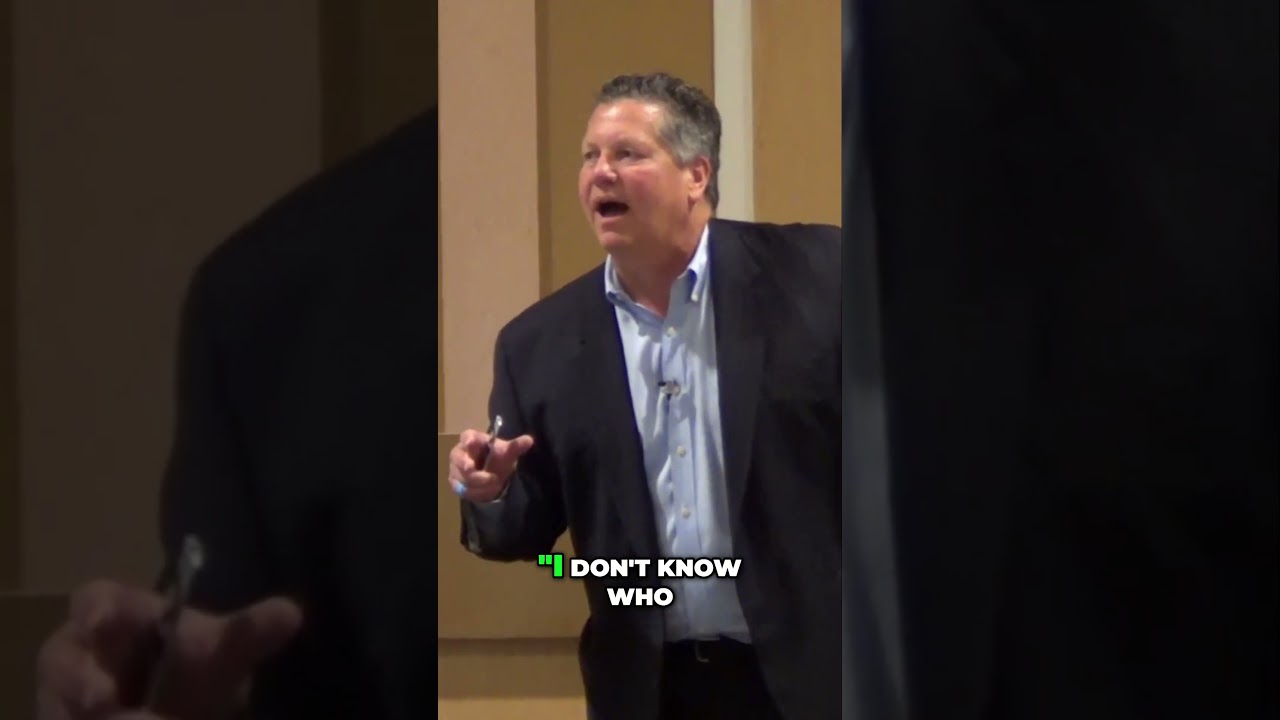
Glen Gould teaches St. Johns Chamber members how to craft 7-, 30-, and 60-second self-introductions for networking. He covers frameworks like PAR (Problem/Action/Result) and TAN (Title/Association/Name), plus delivery tips: stand up, pause, breathe, make eye contact, project your voice. Live examples from attendees show the techniques in action.
Chapters
Thank you. Good morning, good morning. So today we're going to talk about how to have an effective self-introduction. What I want to share with you today is some of the most important stuff that we've learned, that I've learned in my years in the chamber industry. If you do this and if you take this seriously, I promise you it will fundamentally change your life. It will fundamentally change the way that you feel about your business, the way you communicate about your business, the way you feel in a group, And as I watched you all today, all of you are pretty confident people. I'm telling you, you're going to be much more confident, okay? You'll understand some of the things that you need to do and want to do, and I think it'll be very helpful. One of the things that I did do was I wrote— and by the way, I have a Mac and I didn't plan out— I didn't bring a clicker, so we're going to have to use their clicker. There we go. Oh, oh, see what they do there? It's slow. Here we go. I have written this book here. There will be some copies available for chamber members at some point. You can buy it on Amazon. It's called Million Dollar Meetings, and the reason I call it Million Dollar Meetings is this: my wife, who is not a networker, went to a networking event, and I taught her a few things, and she met somebody who we've done more than $2 million worth of business with since she met him. And I have several examples of that where it's happened for me, it's happened for other people. And then in the back of the book, there's a lot of stories about the people you meet at the Chamber of Commerce. One of the things that people don't understand of the real value of your membership is not the sales you make, but the relationships you build and the ideas you get that aren't in your industry, but are used in somebody else's industry. You meet somebody and then you take it to your industry and you're an industry leader. So, very, very powerful stuff. Today we're gonna have 3 things we're gonna try to accomplish. We're going to try to help you build a 7-second self-intro. That's what we did in the very beginning. You all did it very, very effectively. Some of you noticed that some of them had a little tagline that worked, right? Might make you mem— remember them, but at least you giggled and had fun with them. Some of you might have noticed that some of us dress a little differently than others, and so he'll be memorable because of the jacket he wears. There are things you can do that will make you stand out from the crowd. And will help you be somebody that people want to know. You're also gonna want to have a 30-second self-intro. That's the kind of thing that you might say to somebody. You might use it casually when you're meeting at like a networking event, or it might be something you'll do if there's 50 people in the room and it's a luncheon and they say, "Okay, you got 30 seconds," right? And then your 1-minute self-intro, you'll rarely use a full minute, but it'll help you pick pieces that you could use in your 7 and in your 30. Okay? So these are kind of the things we're gonna try to develop today and how you're going to get there. As I promised you, we're probably going to skip some things, so we're gonna move really fast. If you have any questions, if something I say doesn't make sense, if I speak too fast, please raise your hand, stop me. I'm here to help you. This isn't for my program, this is for your program. This is the purpose of a self-introduction. The purpose of a self-introduction is to compel the listener to act on your behalf. Now that is probably something you never thought of before with a self-intro. You want them to do something once you've introduced yourself, whether that be buy from you, introduce you to somebody they know, connect the dots for something, a resource that you might need. You want to compel the person who is listening to go, gosh, I need to do something for this person. And so as you go through your development of this, remember that point. It's to help them help you. Okay? So these are going to be the screens we're going to go through very quickly, and I'm just going to go ahead and stand right here so I can advance the slide. But the first thing is you need to know who. And what I mean by who, who is it that you're trying to attract? Who is it that you want? And if you haven't thought about this, this is very, very important. Sometimes you'll go to a networking event and you're going to want to meet a particular person. Sometimes you'll go to a networking event and you're going to want to meet a connector. Sometimes you're going to want to go to a networking event and meet a person of influence. And sometimes you're gonna want to go and meet somebody who can buy your stuff, right? But also there will be times when you want to go and be a resource to others, and I will tell you that's when it's the most powerful. When people look at you as an answer to problems, they're gonna come to you over and over and over, and here's the interesting thing: once they find that you help them, they are more compelled to help you. So one of the things here on the list is a firing spree. If you weren't here in the first session, I think we discussed this. One of the ways to find your ideal customer is this. So you might want to jot down a note to this because I'm gonna say it really quickly. But imagine you're gonna go on a firing spree of all your clients and you're gonna fire every one of them except for one. But if you do that, I promise you every customer you ever get after that will be that one, just like them. Who do you want to keep? And at different stages of your business, there'll be a different demand. When you're first starting out, you probably need cash flow, the person who pays the fastest, right? But as you get a little more— because here's the interesting thing, the more people pay, the longer they want to pay, right? See, the longer— so the thing is that as you are able to take on some of those bigger clients that are able to pay better, I mean, I have a friend named Don Shotland in Dallas, Texas, and back in the '80s he designed some clothing. He designed it out of sailcloth. I don't know if y'all— how many of you were around in the '80s, but it was very popular, and he was the one who came up with the idea. And he took it, he took it out, and a friend of his said, oh man, I know somebody at Foot Locker who can get you in. He goes to Foot Locker and they bought, and he was out of business in 30 days. 'Cause he couldn't supply, 'cause he didn't have the money to support the order, right? Sometimes the worst thing looks like the best thing. Any questions on the imaginary firing spree? You're gonna need to know who your ideal customer is. That's gonna really be important for you. So we won't solve all of that today. There's gonna be homework for you. You're also gonna wanna know what. You know, what happens to me or to my friends when you do what you do for us? What's the result of you acting? Now, if that doesn't make any sense, let me try to phrase it a different way. My friend here with the filters, um, your name again?
Roderick.
Roderick, and what kind of filters are these? Reverse osmosis. Reverse osmosis, so I can have great tasting water in my house, right? And bathe in it and all of those things, right? Okay. So who— what happens to me because you put reverse osmosis in my house? Okay, and then what happens because of that? Okay, you're happy, but am I healthier? Alright, please, this is not in the program, but this is important to remember. I'm serious. Never let the truth get in the way of a good story. Am I healthier? Aren't we all healthier when we're happier? Okay, so it's not a lie, right? Just may not be the way you think of it. Okay, you've got to find the product of the product. To tell me I'll have great tasting water, duh, I presume that. Why do I want to shell out however much money it's going to be to get great tasting water. I'll just keep buying the stuff in the plastic bottles and throwing those away and ruining the environment. There's another one for you, right? You gotta think about the product of the product of what happens. What happens to me? What happens to the people I refer to you when you do what you do for us? When you are the only one who does what you do for us? Gotta really think about that. We're gonna go quickly through this. Hopefully there'll be some ways that you can use that shortly. Where? You know, where will I find people who want to have this problem solved? This is one of the things in your self-introduction when you get to this kind of level of self-introduction where you might say, you know, and I would like to meet people in your golf group. I would like to meet people that are in your Rotary Club. I would like to meet people who you go to church with, whatever Frame of reference. I need to narrow down because if you say, a lot of people say, well, anybody, anybody could benefit from reverse osmosis, right? Unless they rent a house and they're not allowed to put it in. Is it, is it? Okay, so, so you got to narrow it down. You got to get those people that you want to be, have, to have introduced to you, right? You don't want to just have anybody. Where will I find them? What frame of reference am I looking for? When will I see them? Will I see them in the morning or the afternoon? Tomorrow morning when you go to your networking group, your BNI group, heaven forbid, you know, your event at the chamber, I'd like to meet so-and-so if they're there. Could you introduce me? All right, where? Will I meet them after work at happy hour? Okay, and then why will I refer you? Why would I do this? Is— are you going to give me a spiff? Believe it or not, there's a lot of people who say I'll give you $100 for a referral. I know that sounds odd, but a lot of people in the real estate industry do that. I don't know about in Florida, but I know in a lot of other states they do. A lot of folks say, you know, if I close a house, I'll give you $100. It's not allowed here in Florida? Okay, I'll bet some still do it though. Yeah, because never let the truth get in the way of a good story. Maybe by me introducing you to somebody I know, it solves a problem for me, even though they're going to be the person who, you know, so like, and the example I use a lot of times, and I know it's not allowed in Florida, but I'll introduce you, huh? You can give love and affection. I can give love and affection. And here's the thing, you're gonna love my closing agent. You're gonna love him, and he's gonna love on you. And by the way, I get you closed and I get my commission, right? So maybe it solves a problem that you need solved for the client. Okay, and then how. How will you introduce yourself? How will you go about this process? Are there any secrets that I can share with you? Well, after working with literally thousands of chamber executives and tens of thousands of chamber people, members. In one year alone, I heard over 10,000 self-introductions. I mean, I've heard them all. I've heard everything from the, you know, rock the world, everybody literally standing ovation, to my name is Mary and I'm with— literally, because they're so nervous, they don't know what to do and they look down at their badge. So I've seen them all. You can't do anything worse You might be able to do something better, but you definitely can't do anything worse than what I've seen. Okay, but here are some secrets. Number 1, how to be best remembered. Tell a story. You gotta tell stories. Whatever you do, we're gonna craft it in the way of a story. We're gonna have some sort of association with something somebody said in the room today, a segue. I am the king of the segue. I'll tell you, I get in a networking group and somebody says something, and for whatever reason I can just do that. Maybe you can't. Maybe that's just not your thing. For me it is, okay? So sometimes I use that way too much and people actually go, "Gosh, don't you have anything about you?" Because I always try to tie it to something someone said in the room, okay? But you don't wanna lean on anything for too long. Tagline. Who had my great tagline? You had one. Somebody else had a good tagline. Okay, I don't, I'm not exact, oh wait, somebody did. I hope somebody would be honest and say it was me, but nobody likes to brag. It was Erica! It was Erica. What was the tagline? Okay. So here's a good one. When you do something particularly good, jot that down. Oh, that was worth sticking with a pen. I like that. I'm going to remember that one. This is a study, folks. This is not something that you're just going to craft and then never do again. It's not like high school. This is more like real world where you get out there and have to do it over and over and get better and better. Okay? So, and you might use a powerful tip, an unexpected powerful tip. There are times when you know something that's going on. I mean, I know— did the hurricane hit here? Okay, so, right. So I'll give you an example. In my industry, in one of my industries, we own, we own a dry cleaning business, and I'm on the board of directors of a regional association. And there's information that we learn that our fellow cleaners don't know, right? And if I get in a room with fellow cleaners, I might say, by the way, did you know the EIDL is available to you because you suffered an economic injury. So if you had an economic injury after the hurricane, even if it was a month or two, you need to file for an EIDL. It's a very low-cost loan that is very long-term that you can get extra money for. So there's just an idea. Okay, so I'm going to introduce you to 3 simple techniques that you can build your, your introduction with. The first one is PAR because, hey, we're in the golf capital of the world, aren't we? Kinda close. Florida certainly is.
PAR.
PAR does not stand for the score an expert would be expected to make, as it does in the name— in the book of golf. It means for problem, action or answer, and result. You can build your story very, very easily. Okay, let's pick somebody. How about my friend with Heartland? Okay, do you mind playing along? Okay, so do you have a client that had a problem that you had an answer for and they got a result.
Yes.
Could you share with us?
Sure. So, uh, we were working with a local, uh, HVAC company. Um, about 40% of their business was for commercial. Uh, at the time they were still sending out paper invoices to their commercial clients, which was creating a backlog in AR. There was an individual in the office who was probably spending all of her time every day following up with commercial clients Hey, we need to pay the bill, etc., etc. So Heartland is a payment solutions company. We were able to provide her with an electronic invoicing system, which cut down on their AR about 50% and basically gave her more time back in her day to do other things throughout the office. So they get more money in the bank, easier way for their commercial clients to pay their bills, and more time back for this individual Okay, how was that, huh?
Give him a round of applause, that was very well done. So now, how many of you were familiar with Heartland before he gave that pitch? Okay. How many of you thought they just provided a swiper? Right? Yeah. Even he did before he started with them, right? Right? That's the— people start to pigeonhole people into, oh, he's a credit card processor, right? And since I know what I do when I process my credit card, That must be what he does. That's a very powerful way to break out of that. I never knew, and I've been doing this now for a lot of years and seen somebody from Heartland in a lot of programs. I never knew that you guys provided some sort of electronic invoicing for businesses. Powerful, right? Now, he brought up a good problem, showed how they didn't just have an answer. It wasn't cookie cutter. He kind of showed us the way he worked with them. And then he talked about the result they got. Can you do that with your business? Can you do that with your charity? Of course you can. Whether you're trying to attract people to donate or whether you're trying to get into serve the clientele and the people that you're trying to serve, right? Everyone can do this. This is very, very simple. A problem, an action, and a result. Very simple. Don't make it as simple as it sounds. Do what he did with it. And your name again, sir?
Jimmy Smith.
Do what Jimmy did. Jimmy did an excellent job of telling a story for us. Questions on par? Wow, y'all are that good. The next one is TAN. Okay, you might use this one in a little different setting. You won't use this one the first time you meet somebody, but you might use this one in a stand-up luncheon where you're introducing yourself to everybody, or you might use a part of it when you're face-to-face networking. TAN stands for title, association, and name. So I'm Glen Gould. I'm a membership success expert, and I am seeking to meet presidents and CEOs of Chambers of Commerce. Okay, hi, I'm Glen Gould. I am a membership success expert, and I would like to meet people in your executive team in the association of your industry. Hi, I'm Glen Gould. I am a membership success expert, and I would like to meet Isabel Rodriguez, or Renaud. Yeah, she was Rodriguez when I met her, so it kind of sticks. Okay. I will tell you, you'll be amazed what will happen if you ask directly. I was in a networking event that I was running in Atlanta, Georgia. This was in 2007 or '08, I guess. And I was trying to emphasize this point to a young lady and she goes, "Fine! I need to meet Tyler Perry." Boy, am I sorry I got really insistent on that. And I look over and there's a lady over here going, "I know him." Seriously. I know him. Okay, it's amazing what you'll get if you ask for it. Is that not true? I mean, even in the good book it says ask, right? For all ask. Okay, and then finally the ever— have you ever technique. This is my favorite. This works everywhere. It's very, very simple. Have you ever seen somebody stand up at a Chamber of Commerce event and their brain sat down? I help people with that. Have you ever heard somebody introduce themselves and you couldn't tell what in the world they did for a living? I help people with that. Have you ever known somebody for 15 years and they're one of your best friends and you still don't know what they do for a living because they say they're a rainmaker and chief storyteller?
I do.
And I love Michael, but I have no idea what he does. But we're best friends. I mean, I really do know what he does, but it took a long time to find out. People have a tendency to think what clever thing they came up with will explain what they do, okay? And it doesn't. But have you ever always does. Have you ever needed your taxes done, or whatever you guys do, because you may not just do taxes. Right? Have you ever come home and the floor was flooded because the hot water heater exploded? I help people prevent that. Have you ever wanted to donate $1 million to a charity that is worthy? Right? I help people do that. Have you ever is the simplest way to make it make sense. I own a dry cleaning business. Have you ever seen your neighbor pull in the driveway with a whole bunch of dry cleaning hanging in the back of their car? I can help prevent that because we pick up at homes and offices. It's simple. Make it simple. It's a way for people to understand what you do without you getting so creative. Have you ever known a business owner? Doesn't even need to say what, what their problem is. I help them. Okay, have you ever known somebody in the community who runs a business who needs to meet people and they can't seem to find out where to meet people? It's here. Right? Whatever it is, you can use "Have you ever?" Now, I saved that one for last because it is the one that everybody then will go, "Well, that one's simple. I'm using that one." Right? But it kind of violates the story part. And so it's hard to remember unless you share a story with it as well. Okay? But "Have you ever?" is the easiest one to use as well. Okay. 5 simple steps to making a powerful self-introduction. Do you guys do luncheons and stuff like that? Or an event like this where you have to introduce yourself, the answer is yes, because I did it to you, right? Okay. And this is where I start to get into that ground where it was like, oh gosh, I didn't do that, I didn't do this. Please don't feel bad. Nobody's judging anybody. But I always recommend whenever you're in a situation like this that you stand when you do your self-intro. I don't care if it's 1 second, you stand to do your self-intro because As I was told, and from what I understand, if you don't know who the quote was from, you always use Churchill. So Churchill said, "Stand to be seen, speak to be heard, sit down to be appreciated." So, those three things, right? Stand to be seen, speak to be heard, sit down to be appreciated. But you're— and there's lots of things. I mean, I can share with you lots of ideas on this when you go to someplace, like where you want to sit and how to get a lay of the room and all that. I think we had folks sitting up front that I asked to move back one row. Because I could see that there was no chance I was going to be up front over there. I'm trapped in with the wall and the lectern. But always be prepared to be called on. And so the first thing you do is when you hear that somebody is about to do self-intros is you push yourself away from your table. These chairs are great. They have wheels. Wonderful. Okay? But let's say you're in a restaurant and let's say it's a VCT tile floor and let's say they haven't changed the little plastic things on the bottom of that in a long, long time. Okay? Here's how you do it. So I go to Brandy and I say, "Brandy, would you start?" Well, poor Brandy. She just got the bad deal. But when she pushes her chair back, and your name is John, right? I'm sorry, Dustin. I saw the O, it looked like an HN. I was guessing. Dustin, I apologize. When she pushes her chair back, Dustin, you push your chair back too. That way the noise is on her.
Okay?
Now, what does that do to Roderick here? I did get that name right, didn't I? What does that do to Roderick here? Well, we can't have everybody pushing their chair back all at the same time, right? So when Dustin sits down while they're appreciating Dustin, he pushes his chair back. Because sometimes they'll actually applaud when Dustin does a great job, right? But you need to be aware, you want to push your chair back. Now, even if you make noise, push your chair back, and here's why. Have you ever been at one of those things where somebody pushed your chair back and away goes the drink and they're still eating their food? Oh, I'm sorry, Erica. When they're out in self-intro or whatever, right? You've ever been that person, right? This is the way to avoid it. This is the way to look seamless. This is the way to look prepared and professional. So make sure that you push your chair back. The next thing you're going to do is you're going to stand, as I said. Okay, please stand when this Now, let's say that Brandy does hers seated, Dustin does his seated, and Roderick does his seated, and we come to you. Should she stand? Absolutely. Absolutely. The other thing is, and this isn't in the program, and that is that most people will start out with their first name. And so it sounds like, "Hi, I'm Brandy." "Hi, I'm Dustin." "Hi, I'm Roderick." Don't start with your first name, because we're already expecting that. We're just tuning you out. Put the name somewhere where they don't expect it. That way they remember it or have a chance to. Okay? Because here's the thing. While they're doing theirs, you're sitting here going, "Okay, what am I gonna say? What am I gonna say? What am I gonna say?" Right? So you're not thinking about what they're saying. You're not even hearing what they're saying, but— 'cause you're hearing the rhythm. "Hi, I am. Hi, I am. Hi, I am." It's all good. Then all of a sudden somebody does something really strange, they pause. Oh, it worked. Y'all looked up. Yeah, pause, because we are very uncomfortable with a quiet room full of people. Something went wrong. I don't know what's going on. What am I missing? I better look up. Oh, it's you. You tricked me. Okay, I guess you're gonna give me your self-intro now, and now that I'm paying attention. Okay, so you're gonna push your chair back, you're gonna stand, you're gonna pause, and while you're pausing, you're gonna take a deep breath. And I know this sounds very mechanical. Don't worry, it'll go very easy, and you're gonna get to do it. You just take a deep breath. A deep breath puts air in your lungs, which puts oxygen in your brain, which not only relaxes you but makes you alert. It's kind of a weird thing. You're relaxed but also alert, and so you're ready to go. Okay, next thing you do, you're gonna lean. And what I mean by lean is this, you know, the big term. When we started doing this, you know, 20 years ago, lead in wasn't one of those terms. You know, we were still doing reach out. We're gonna reach out to somebody, right? Then AT&T stole it and nobody uses it anymore, but But now we're leaning in, right? Well, what I mean by that is just to lean on the front part of your feet. And there's a couple of reasons why. The first reason is, is that's where you're most stable. People, when they're nervous, will stand on their heels and they'll lock their knees, and it's very easy to lose your balance, okay, when they're nervous. So you're going to be on the front part of your feet. The second reason is because when I do this, you mentally lean towards me. It's a natural thing in our society that we want to say something important, we kind of move in towards the person to say it. So you're going to stand and lean in a little bit to say what you want to say. Okay? Then you're going to speak slightly louder than you think you have to. I'm probably a little too loud for you, but not by much. But you guys can still hear me. Okay? Here's a tip for you. Get to the networking event early, walk in the room, and walk around and hear what your voice sounds like bouncing off the walls. Because in this room right here, y'all can probably hear me just like this too, can't you? Because it's a hard wall that bounces back from it. Now if I talk this way, you probably can't hear me because it's a long way from there to there. But here to here— so there's a tip for you. Just get a feel for the room. You get into a restaurant with a lot of cushy chairs and a lot of cushy, you know, a lot of, uh, booths and stuff like that, all that moves all over the place and gets deflected. And then finally, make eye contact. Now, I'm gonna get in trouble here. I got in big trouble here at Coca-Cola when I did this because people take offense to things nowadays that they shouldn't take offense to. So I'm gonna tell you right now, there's no offense in this comment. It's just data, okay? Men, we like about 3 seconds of eye contact. Any more than that and we're pretty— we're not too sure you're not up to something. Okay? Right? We're good, you know?
Hey!
Yeah, you see men walking around, "Hey!" Right? That's all they get. They just grunt at each other, right? "Hey!" You know? Sometimes not even grunts, just— right?
Okay.
Ladies, need a little bit longer. They like about 7 seconds of eye contact. Anything short of that and you're shifty, okay, especially the man, okay. He's— or we're ignoring you, right? We're so busy looking for somebody else more interesting than me, right? But that happens for both men and women, okay. So when you make that eye contact, hold it for a little bit, especially with the ladies, because they need that. If they don't get that They're nervous. Now, there will be some people who will, when you give them eye contact, they'll immediately look away. Why is that? Somewhere back in the past, eye contact was a negative thing for them. Okay, and you just need to accept that. It's not about you. A lot of people get this whole thing that, "Oh, she looked away, she's not interested in what I've got to say," or, "He's looking over my shoulder, he's looking for somebody else to talk to." Sometimes It's not about you. Okay? Sometimes it's about the person who's experiencing it. Now, just as another tip, when you meet somebody in a networking event like an after-hours or something like that, okay, when you meet that person, the last thing you want to do is do the, "Hi, I'm Glen Gould. How are you? Good to meet you. Oh wait, I need to go because there's somebody over there I wanted to talk to." Right? Okay. How do you get out of an introduction that you wish you weren't in? You ever been in one of those? Somebody that drones on and on. Hey, I'm Glen. I do Glen better than anybody ever else did Glen. Let me tell you about the Glen process. It's really special. Glen developed it over 45 years of Glen-ness. And Glen's pretty cool. So if you ever need Glen, he's right here. And by the way, he'll be in your mailbox tomorrow morning email because Glen follows up. Okay, so anyway, here's how you break away from a conversation. So we've met. Hi, Pamela, I'm Glen Gould Gould. Nice to meet you. What do you do?
I'm the owner of a small business.
Oh, really? What is it?
It's called Memory Lane.
Yeah, and what does Memory Lane do?
They digitize memories.
Really?
So basically taking all of your old VHSs and slideshows and things like that.
Cool, cool. So I have— In my— and so in this example, let's just play along because we know it's not true, but once again, never let the truth get in the way of a good story. Um, I don't have any VHSs I want saved. I already met somebody else who did all this for me. So that's really neat. Um, and how long you been in that business?
The business has been around for 30 years. We're the owners.
Cool, cool, cool. Hey, listen, it was great talking to you. Cheers. And that's it. So many times it's like, well, I need to tell her something that explains why I'm leaving. No, you don't. You owe nobody an explanation for anything, but you do owe them courtesy, right? So when you want to break away and you can't figure out how to break away, the handshake is the initial, hey, I want to meet you, and it's also, hey, goodbye, right? Don't hesitate to use it. Don't feel like, oh gosh, I need to go to the restroom. That's the worst one. I mean, it's like, and everyone's done it, everyone's done it. It's like, I can't think of anything else to say. And everybody's done the, "Oh look, hors d'oeuvres. I'm gonna go get a drink." Really? You're gonna get another one? Whoa, dude. Let me have your keys, 'cause you're over it, right? Any questions on this? Okay, so we've covered that. And now, just remember that on your one-on-one or your, you know, small groups, you may not use some of these formal introductions. You may use snippets of it. Okay? Just be careful not to, you know, you're— so Pamela and I meet, and then Pamela's nice enough to ask me what I do. Hi, I'm Glen Gould. I own a company that does— no, don't do the whole pitch, right? Just, you know, maybe have you ever works right here. But what always works is let's have coffee because I want to tell you all about me and want to hear all about you. So when you know somebody, Have a one-on-one meeting. Your questions. Now that was fast. That was really fast. And I can tell you that I left out a lot of stuff. So here's my promise to you. Just like at the last one, I will follow up. I will send you any information you want. I will send you lots of extra information that will kind of help you with this process. But if I were— if I were in this room and I was hearing all of this, I would do one of two things. I would either A, I would forget all about it because That guy from Georgia. Yeah, people from Georgia aren't very smart. We all know it, right? Just want to remind you the big joke is a Florida man, but anyway, at least in our area. Y'all probably got a Georgia man, right? But, or the other thing I would do is I'd go, oh my gosh, that's just too overwhelming, and pick one thing. Okay, so my encouragement to you today is to pick one thing. And if it were me, I would use, very simply, try to build the full 60-second commercial. Try to build the whole thing. Try to start out with something interesting that gets my attention rather than your name. End with your name. If your last name is complicated, don't use it. Just be Nicole. Your name isn't complicated, but Just be, you know, your first name. It's fine. It's friendlier, okay? But build a full 60-second commercial, 'cause from there, you can treat it like a vignette. You can say, "Okay, I don't need to have any of this in the middle to do my 30-second commercial, and I don't need to have anything but the beginning and the end to do my 7-second commercial." And the reason I wanna encourage you to do that first is because if you just do "Have you ever," you're gonna be doing "Have you ever" everywhere, because it's easy. Okay? Thank you so much for listening today. Have a great day, everyone.