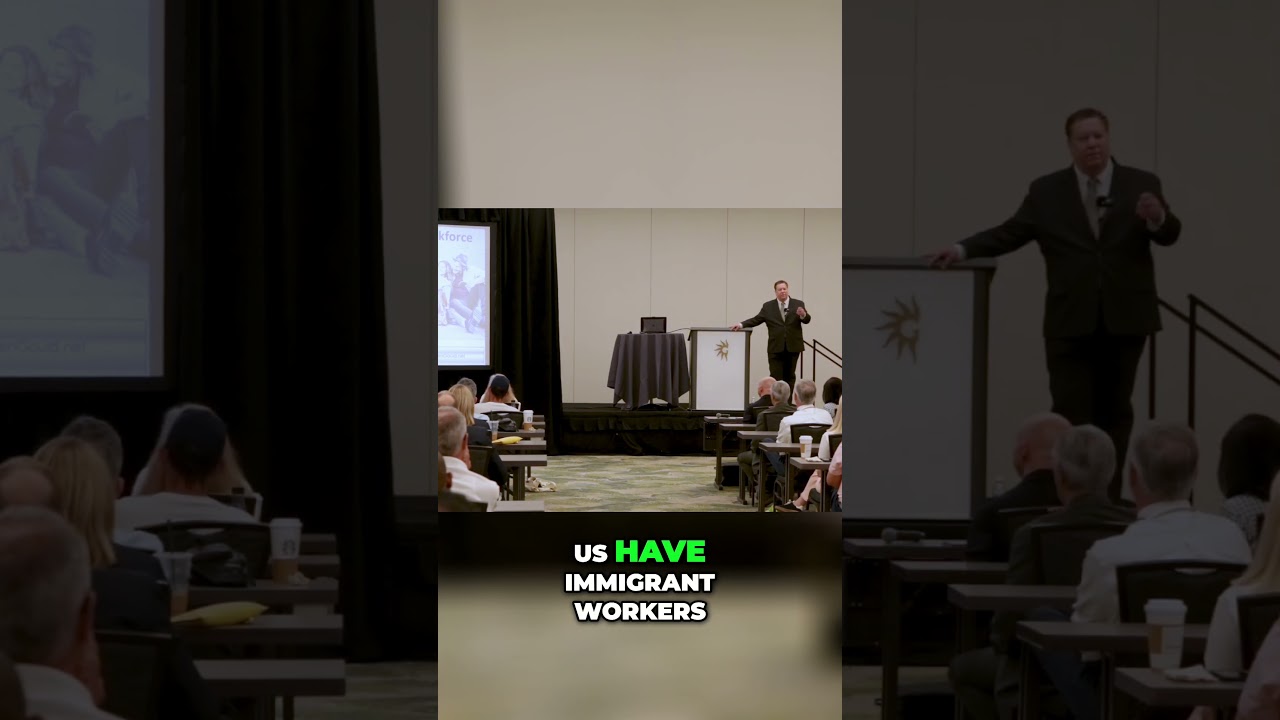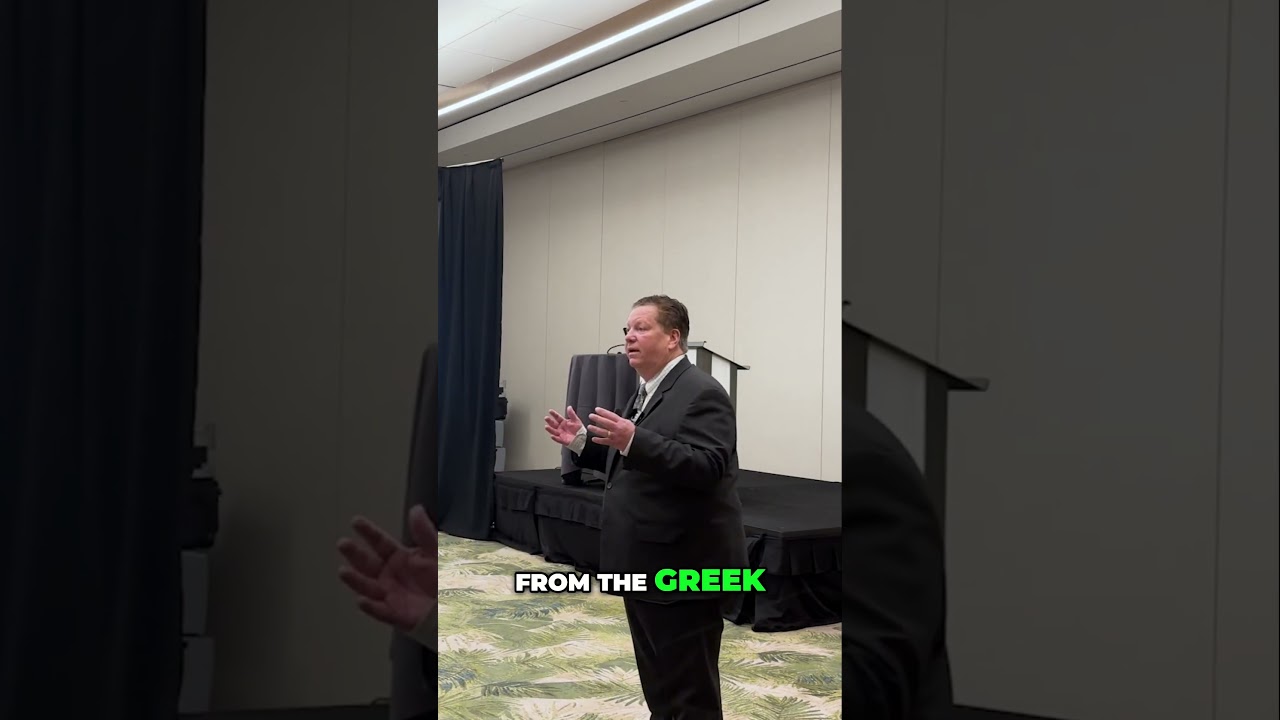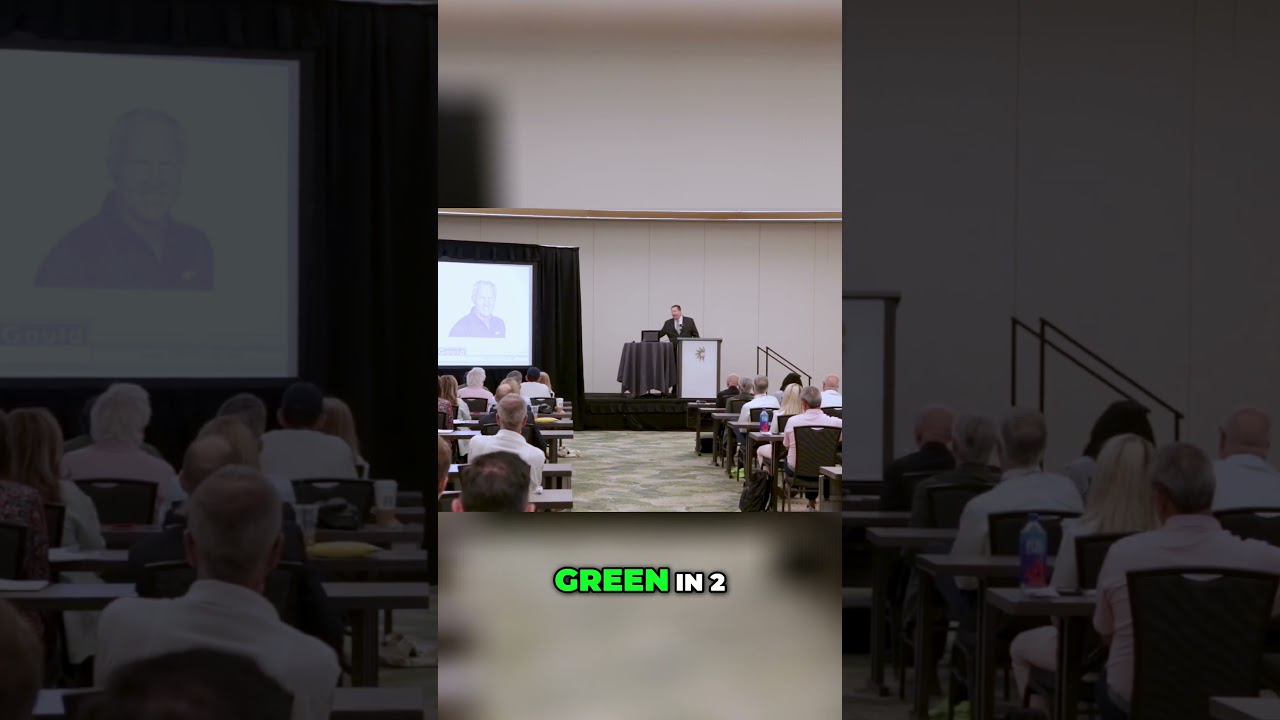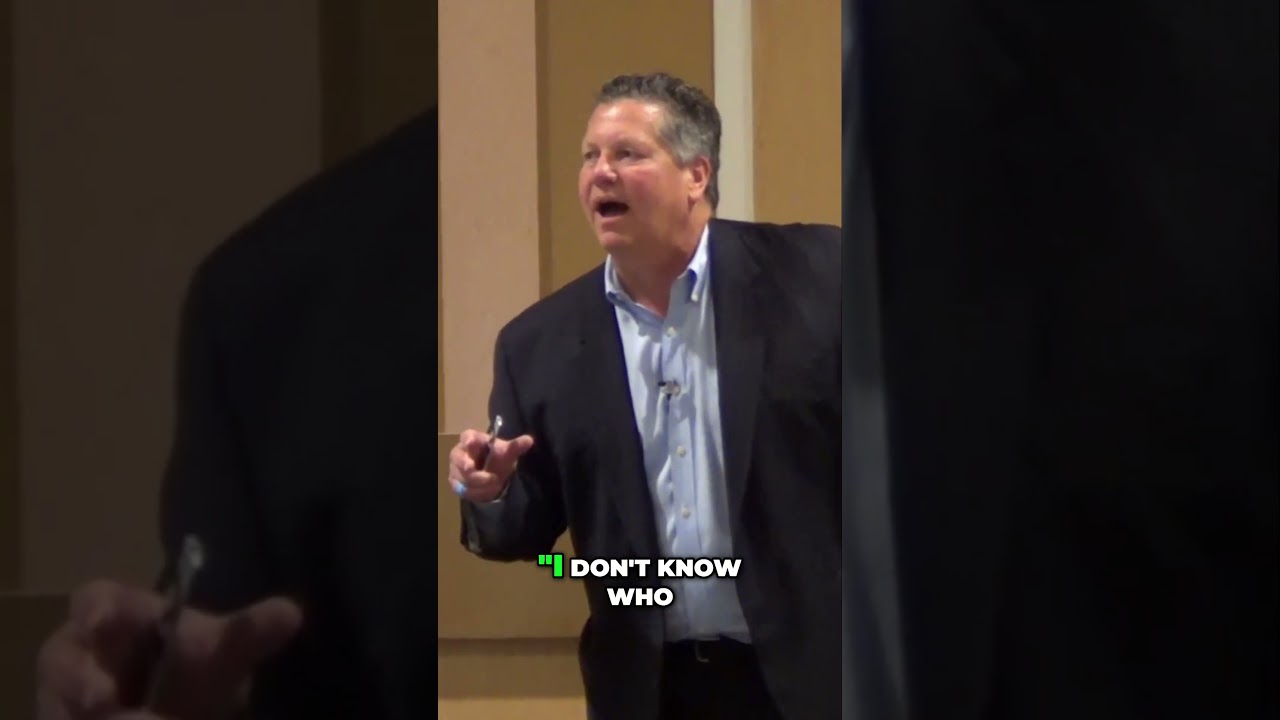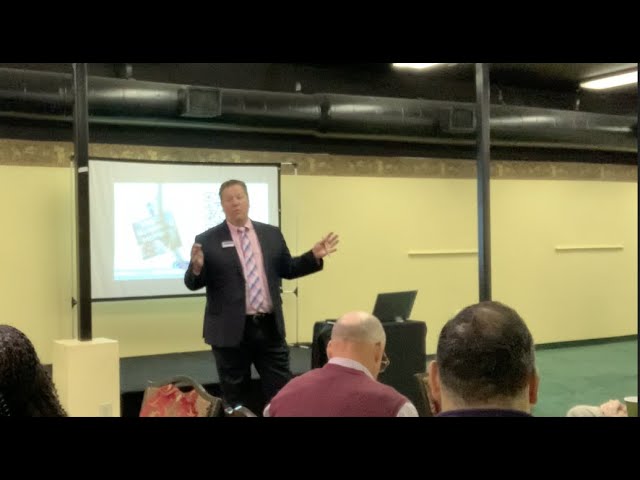
Glen Gould leads a workshop on networking and leadership with audience members including Amy, Floyd Phillips, and John Sweeney. The session covers eye contact, follow-up strategies, avoiding mass emails, making specific referrals, and a "firing spree" exercise to define your ideal client. Participants learn 7/30/60-second self-introductions and the key referral question.
Chapters
Good morning, everyone. I want to first of all just, you know, say how exciting it is to be in a room of leaders. And you may not think of yourself as a leader, you may think of yourself as an employee or whatever, but the truth is you're all leaders. You're all, by leading by example, showing people how to do things. And today we're going to show some things that maybe you haven't thought of, maybe some things you already knew, that will help you be a better leader, a better connector, and ultimately happier in life. Now, wouldn't that be great? Wouldn't that be great?
Yeah.
But before we do, I want to just do one quick thing. That is, first of all, I left a keychain on everybody's seat there, if you will. If you take it with you, because I don't want to have to take it home. And but the fact is, I gave— I give away a keychain for two reasons. Number one is because we're going to teach you some keys today to help you be more successful. And at the end of the day, you can have a beverage and enjoy yourself. So I have several things I want to talk about today, but I'd like to find out what you guys would like to talk about. Now, this session is networking dos and don'ts, and so what I'd like to hear is just a few of your opinion of dos and don'ts. Here's an interesting thing. Everyone in my Facebook feed— and I have thousands of people in my Facebook list— knows that I am a networking guy, a connecting guy. I posted yesterday, I'm headed to St. Augustine to do a session for the St. Johns Chamber networking dos and don'ts. What are yours? I got one reply. Now the reason is because people are afraid to say what they believe if they don't believe they're an expert. But we already established that you may not think of yourself as leaders, but you are, and you're also experts because you do this networking thing. Experts just happen to have experience, okay? Now, your level of expertise may be a little different than others, but don't be afraid to say what you think is a networking do or don't. Anybody, or I'll call on you. Yes, ma'am. And what's your name?
Amy.
Amy, what do you do?
I'm the regional director of philanthropy for Children's Home Society, which is which is a statewide organization for children. So I think it's really important to make direct eye contact.
Ah, very good, very good. How many agree with that? Eye contact? I'll put that down on our list that I'll send out to everybody after we're done. Another one, please. Thank you very much. Another one. Learn is important to great people. Great people, which is exactly what you did when I came out of the elevator. What's your name, sir? I'm Floyd Phillips. Floyd Phillips. And what do you do, Floyd? I walk around this museum. There you go, thank you. Greet people. What else? Yes, sir, what do you do? What is your name? I'm a public adjuster for Five Star Claims Adjusting. And your name is? John Sweeney. John, thank you. I try to repeat the person's name. How many people think that's a good idea? Thank you, John, that's a very good idea. How about some others? Yes, ma'am. Your name and what do you do? Vanessa Cole of Coffee News, local publication in town.
Follow-up, follow-up, follow-up.
Follow-up, follow-up, follow-up. How many of us could help with that? Vanessa, thank you. Anybody else?
One more.
Yes, ma'am.
Hi, I'm Phyllis with Sisters of St. Joseph and St. Joseph Neighborhood Center.
Yes, ma'am.
Um, I think not being distracted by your cell phone and looking down when somebody's having a conversation with you.
How many of you struggle with that?
I do.
I do. Thank you very much. Yeah, it's tough. It really is. When we first— and I say we because I had a partner in this business a number of years ago— when we first met the St. John's Chamber folks, and Ben and I, when we first started teaching this, we called it an electronic leash. It's now God. I mean, it's out of control. Thank you very much. You know what I heard there though? Here's something interesting. Did anybody say don't do something before the cell phone? No, no one did, right?
I'm a negative Nelly.
No, no, the reason is, is because people are generally resistant to correct other people when they don't know them. And there's people in this room you don't know, so you're gonna be a little bit hesitant to give some negatives. Well, we're gonna do 5 dos and 5 don'ts that I have on my list. None of those were on it, okay? These will be things that maybe you won't expect. And in doing them, one of the first things I'd like to do is you notice these people who volunteered got to say things— quick little commercial, who they are, what they do. We're going to be teaching that on February 10th. And if you'll notice on your note taker, my skills know no bounds. I got very, very detailed on my note taker. It says, mark your calendar now. So what I want you to do, believe it or not, is pull out your cell phone right now and put down on February 10th that you're going to attend the Chamber event. I believe it's at Ascension. Ascension Center, 7:00 to 10:00. It's on here even. Look at there. Okay, mark your calendar now. Now here's the thing, that doesn't mean you're going, but we're going to discuss later on what it does mean. Okay, but it's on your calendar now. You have a better chance of being there. Okay, now what you will notice is that if you flip it over, there's a note taker. When I created my note taker, it was in a different format than when I got to the hotel and printed it last night, and so it didn't imprints, the last part at the bottom, so it went on the back. Okay, so here's your note taker, you're ready to go. And I'm going to tell you real quickly how I ended up in this networking thing because it's kind of an interesting story. When I was, um, 14 years old, my best friend Mike got a job at Taco Tico and I was working at Dairy Queen. And he said, dude, you gotta come to Taco Tico. We make taco burgers, right? And I liked Mike and I wanted to be around Mike, and so I took a job at Taco Tico. About a year and a half later, my brother networked with me and said, hey, I work at this cool country club called the Standard Club in Atlanta, and all sorts of really cool people there. We're looking— you pick up driving range balls. So I moved to the Standard Club. I got through high school, went to college. I was number 6 on a team of 5 that won the national championship in golf. Did you hear that? Number 6 on a team of 5, but I was there. And then I transferred to the University of South Florida because my brother said, "Hey, they've got a golf course on campus." And so I networked my way to the University of South Florida. A year and a half later, my brother said, "Hey, call my friend Randall Couch. He's at Druid Hills Golf Club, and he'll hire you as an assistant golf pro." So I moved back to Atlanta. And a year later, my acquaintance that I had made through several golf pros, Rex Baxter, called me from Florida and said, "Hey." He had a deeper voice than everyone else. "Hey." I've got this assistant golf pro job down in West Palm Beach. It's a cool place to live. You ought to come work for me. And I did. A year and a half later, when I'm starting to be more popular to the members than Rex is, Rex says, hey, you need to move on. I've got a friend named Roger Ginsburg in New York, and he'll hire you to teach golf during the summer. And so I moved out to work with Roger. So I worked for Roger for a summer, and then he said, hey, I've got a friend named Pete Davidson. And he's the director of golf at the Tournament Players Club at Sawgrass. And I came to work in St. Johns County. Right? And I was here in the early '80s for about 6 months, and then they transferred me down to Fort Pierce. And then Rex called me back and said, "I'm out in Texas now. You ought to come out here and work." And I did. And then my brother called me and said, "Hey, there's this new guy." I can keep going, okay? But the point is, is that everywhere I have been, I've been networked into it one way or the other. And chances are you have too. And if you haven't been networked into it, you have probably networked people into things. You are networking all the time. And so this is not something that's foreign to you. This is something that is very natural. And I want you to know that it can be used for happiness in your life and generating a lot of money. Now let me ask you a question. It's a very simple question. Who's here to make more money? How about a lot more money? Okay, some of you are not. Interesting. Some of you are not interested in money. Maybe you're interested in making money for your organization. Okay. Yeah. Okay. Right now I have a secret for you that you know, but you've never heard it told like this, probably. Right now, every penny you will ever have is in the hands of somebody else. All you gotta do is find them. Yeah, all you gotta do is find them, right? So it's important to remember that money is a valuable tool. Now, as I told you, I did a lot of networking, but I never told you when I got into this serious networking side. My first event was at this restaurant. I'm kidding you not, that is the Olympia Restaurant in Port Charlotte, Florida. I don't think it's standing anymore. I think the last hurricane took it out. I was invited to a networking event here. I owned a dry cleaning plant in Port Charlotte, Florida with my brother, and one of our customers came in and said, man, you can build so much business. Dry cleaners don't network, man. You're gonna— you're gonna kill them. Everybody in my group wears suits and dresses. Come on. So I show up, and the guy that invited me wasn't there. It was, what do I do? I don't know, I've never done this before. What am I supposed to do? Is that in the way? Thank you. What am I supposed to do? So I went on in and I wandered around, and I was the first networking type. It's not really a type, it's just a wallflower. I kind of stood against the wall I watched everybody else and saw what they did, and everybody else having a great old time shaking hands. Hey, how did you know? Well, 3 days, you know, just all crazy, right? And finally I ventured out into the socialite area. All the socialites are together, and I didn't know what to say, so I looked at a lady wearing a very nice dress and I walked up and I said, hi, you look like you could use a dry cleaner. Is there something on my dress? No, it's a very nice dress. You probably have other nice dresses, and I'm a dry cleaner. It has to be dry cleaned, probably. You could use a dry cleaner. Oh, sure, here's my card. Here's my card. Call me. And I thought that's the way the networking thing worked. Thank goodness I had a friend of a friend who walked over and said, hey, listen, that's, that's really not the way this works. That's not the way this works at all. And worst of all, now, for those of you who are— any Rotarians in the room? No? One Rotarian. Worst of all, it was a Rotary group where you're not supposed to promote your business anyway, right? So I knew nothing. And I tell you that because even if you know nothing, you shouldn't be nervous about it. Now we're going to do the adults first. Because I want to end on happy stuff, okay? So as we go along, as we start telling the don'ts, if you do these things, do not feel bad. I have done every mistake you could possibly do, I promise you. I have worked with literally tens of thousands of people on networking. I've seen it all. I've had a lady who said, hi, my name is Donna Smith, and I'm with— I'm not kidding, she read her own name back. I'm not exactly— I've seen it all. So don't feel bad if you do some of these. Don't feel like this is an indictment on you. It's just a refresher course because we all get sloppy. Number 1, anyone? That'll be a car dealer. Well, you couldn't— you couldn't do enough. That's not a car dealer, that's Desperate Dealers Day Off.
Anyone?
If you know anyone who needs a plumber, if you know anyone who wants to donate money to my charity, if you know anyone who has had a roof damaged from a tornado, if you know anyone who wants to buy, sell, or invest in real estate, if you know anyone— nobody knows anyone. It's important to know this. You must be specific. So that my mind can concentrate specifically. If you need money for your organization, who are the likely candidates to donate that money? Where might I know those people? Do you know that I don't know a single person who wants to buy, sell, or invest in real estate, including myself? I might know people who are ready to move I might know people who have been talking about moving, but nobody wants to— nobody wants to buy. A lot of people want to sell, and, you know, nope. And people who want to invest, they don't talk about it with people like us. So it's important to remember, when you're trying to tell people who you're looking for, don't say anybody, don't say anyone. Be specific. Do you know somebody in your Rotary Club? Who? Do you know somebody you play golf with? Who? Do you know somebody who goes to your church? That— who? Okay, questions on that one? How many of us do it? Admit it. Rest over your liars like me. Sorry, I'm just kidding. Of course, a lot of you probably don't do it, but we have to be careful when we're talking to people. Okay, number 2. This one is a really deadly one, but we are in a lot of groups networking with a lot of people. Whatever you do, don't ever give a referral to two different people. Don't say, hey, you know, I just— and when I say two different people, I'm not talking about like I, like I give— and it's Amanda, correct?
Yes, sir.
And I'm just guessing you work for Orkin. Yeah, it's just a guess. Okay, so I, I know somebody who has a home, right? And they, their home's been, been damaged by, by, um, by a natural disaster or whatever. And they've got an insurance claim, but they also got a pest problem, I can give that referral to Amanda and I can give that referral to John. That's not a problem. But if I have 2 real estate agents in my networking group and I give both of them the name of my friend who's selling their house, ooh, you won't be networking for long. You'll be dead. They— people don't like that. So whatever you do, don't share, don't double dip. Okay? Oddly enough, I don't know what number it is, but that's definitely in the 101 Networking nuggets, but I think anyone is too. Number 3, this is another one of the networking styles, and this is one of those guys that you meet at every single one of the networking groups, okay? It goes something like this: Hey, hey, hey, hey, how you doing? How you doing? How you doing? Got a card for me? Got a card for you? Nice to see you. Nice to see me. Everybody likes me. Everybody likes you. Here's my card. You got a card? I want your card. Here's my card. Here's your card. Got a card? I got a card. Hey, I know you. I'm gonna give you a card. Here's a card.
Here's a card. Here's a card.
We call him Johnny Shotgun, and he goes to the networking events, and his whole goal— somewhere along the line, his boss told him, you better come back here with 50 business cards if I'm paying for that event. And he gives 50 business cards away, and he comes back with 50 business cards, and he's heard he has to follow up. Who told us follow up? He's heard he has to follow up, so Next morning he wakes up and he goes, don't remember this person. Steve McQueen. Oh wait, I remember this person. I remember them because they actually stopped me and asked me my name. And they'll go, I'm gonna give Amanda a call. Hey Amanda, how you doing? Hey, did I bring you the other night? Who? Johnny Shotgun meets no one. Johnny Shotgun closes no one. Johnny Shotgun connects no one. And Johnny Shotgun is a very unhappy networker, and it doesn't last very long for Johnny Shotgun. Don't be Johnny Shotgun. Okay, so we got 3 down. Yes, ma'am?
I call that the car dealer.
Don't be a car dealer. Oh, is that what you guys— yeah, that's what I mean. Don't be a car dealer. I, I know, I know it doesn't look like on this old old as I am. But I thought you said car as in C-A-R. He was not asking. No, no, no. As a matter of fact, you remind me of a story. When my mama and I moved to Georgia from Massachusetts— yes, with these damn Yankees— anyway, we moved to Georgia, and the first day I was a little boy about 5 or 6, and I was in the kitchen, and my mom was on the sofa with this man who's a very strange looking man. A very strange talking man. He said, "Mr. Gould, if you're going to live in the South, you're going to have to learn how to be 'noss.'" I didn't know what 'noss' was, but I soon found out it meant nice. And they thought the people from the North didn't know how to be nice. Is that true?
That's true.
Yeah. Thank you very much for helping. Bless your heart. What part of Georgia?
Dalton, Georgia.
Unless your heart flies. That's right, dude. Alright, so anyway, off track, but that was a lot of fun. Number 4. How many of you have been to the networking event and then the next morning you open up your email and you have this email? Hey, it was so great to meet you at the networking event last night. My name is Glen and I do Glen better than anybody ever did Glen. Glen Gould did the whole Glen process. I'll be here for your Glen process. 'Believe in Glen! Glen Gould is the best!' Blah blah meh meh meh meh meh meh meh meh weeh wee all the way home— Don't do it! Don't send out blanket emails to everybody you got a business card from at the networking event. We just delete them and then we block you and you never get through our email again. It's really easy to block people on email now right? The interesting thing is, is email is kind of becoming the new fax machine. About 8 years ago, if you wanted to reach anybody, you would fax them because everybody had abandoned the fax. So you could send a fax to them and nobody— it's like, hey, wait, we got— what's that? Oh, it's a fax machine. What's there? They look at what came in, you know, and you got their attention. Snail mail still works a little bit if you do handwritten covers. But not as much anymore. People literally, literally, you do it too, you sort through your mail over the trash can, right? Now where we live, we do recycling again, but it's the same thing. It's going, it's going away, right? But email, people are actually surprised if they open an email and the line says something about something they are familiar with. We met at the St. John's Chamber event last night. I gotta at least see what they want to say to me, right? I found it really interesting what you do. A reference to something they did. The way you did that— this is a bonus, what's not on your notetaker— is you wrote down who they were and what they did on the back of their business card when you asked for it. I was really intrigued by how you help people donate to the Lincolnville Museum or fix the Lincolnville Museum. I'd like to know more because I think there's some people who who I might know who could help you. Could we get together for a cup of coffee? What's the answer to that question? Absolutely. You want to help me? Absolutely. Please come help me. I like people who help me. All right, don't send a blanket email. Number 5, you're at a networking event and you've decided that Totally Keith had it right all along. How many of you know the big song he had? Wanna talk about me, wanna talk about— I wanna talk about number one, right? Don't talk about yourself. Don't do it in your marketing, don't do it in your emails, and certainly don't do it unless you're asked in a networking event. Try you instead. We 'Are the best at...' Somebody give me a business I haven't heard from yet. Uh, fiber optic internet. 'We are the best at fiber optic internet.' 'You get the best in fiber optic internet.' Which one's better? It's about you. You know, I don't care if you're the best. I want to know that I'm going to get the best. So make sure that you use your terminology all about them. Okay, how many of you think those are good 5 don'ts? How many of you thought any of them would be in the 5 that I would tell you today? Which ones?
I would say number 2, and I guess personally for my own business with real estate, a lot of times they say don't just refer one person because then it could be a liability if something were to happen. As far as like, you know, you really force them into choosing this person.
Really?
Yeah. Wow. So it's like refer 3 people.
Isn't that interesting? Yes, ma'am.
In medical, you legally have to give them more than one option. Okay, now, now you're doctors in medical, so I understand, like, what—
okay, I understand where both of you are coming from. Okay, this is, this is a— I am, I am giving you a prescribed answer. Okay, this is the per— these are the people who do what you need to have done. These are the people who we are referring you to for this specialty. Okay, I get that. Okay, what I'm talking about is you, you, um, and let's say the fiber optic. Do you guys do home business and residential? Just residential. Just residential. Okay, so you sell a house to somebody and you refer him to do their fiber optic whatever. And then you give that referral also to somebody else. That to me is bad. That's, that to me, bad form. That's just— and, and I'm, and I'm intrigued if there are laws in the state of Florida that I don't understand, because that right there is interesting. I appreciate you bringing it to my attention. I really do, both of you, because I'll research this now. But in general, when you're referring to friends Don't share it with somebody else in general. Okay, what else? Because I saw some other hands. Yes, ma'am.
I, I thought the try to you instead of I would have been in here because I've had people who spin, you know, they get in your face and they tell you why you should be a part of their organization or a part of this without really taking time to get to know you and what you're interested in. Exactly.
It turns people Exactly.
Nice, thank you.
Does someone more— yes, ma'am.
I was just going to add, so I've been a fundraiser for almost 30 years, and the you is such a key component of fundraising. And so many organizations, nonprofits, don't get that. They want to talk about how wonderful they are, and if you're talking to somebody who might contribute to your cause, you need to invest in them as part of the conversation.
Right.
So it's like, you can make an impact on children.
Right.
Not, this is what we do, aren't we awesome? It's, wow, you can help this child become a productive adult.
Right. Absolutely. I will tell you, just as powerful in the not-for-profit as it is in business. Take a look at your websites, take a look at your Facebook pages that you're using as websites, see if you're talking about yourself instead of what they get, and make that, make that shift. Thank you. So, um, I want to share with you a story about this lady here. Her name is Kathy Lehner, and Kathy Lehner, when I met her, was a realtor in Venice, Florida. She was a realtor for RE/MAX, I think, and the reason I don't recall anymore is because she has now for 5 years been the president of the Venice Area Chamber of Commerce. And the reason they hired her is because Kathy was Venice I mean, it was just like she was everywhere. She volunteered everywhere. She knew everyone. She was Venice. She was the logical choice. I met her right after I had my Olympia Restaurant debacle. And she said, "You need to come to a chamber event." I said, "Grrr, really? Chamber? Oh my God, isn't that for old dead people?" I mean, I lived in the oldest county in the United States already anyway, Charlotte County. Like, oh dear, all right, where am I going? So she invited me to an after-hours, and when I got there, she was at the door and greeted me and said, who do you need to meet? Do you have any idea who you need to meet? This is a bonus piece, okay? The fact is that most people expect that they need to meet somebody who will buy their stuff, donate to their charity, do whatever they do, give them the opportunity to do what they do for somebody. The biggest win is understanding who knows those people. Who has influence over those people? Who can connect me with those people? There's a study that Stephen Covey did a while back before he passed, and he claimed that the average number was about 250 to 275 people that people can know at any given time. You get past that, you don't know them. You just can't remember names. I've done the test many times. I've never gotten past 230. And the truth is that that's true and you have influence over only them. But if you connect to these people through somebody who has influence with them, you have a much wider net. And that's why they call it networking. It's not selling, it's networking, connecting with other people. So she gave me that, that line right there. By the way, if you, uh, are so inclined, there's a free ebook you can download by scanning that code with your iPhone later. And, uh, it would see what we call Magical Networking Moments. It's 10 tips to build a better self-introduction, which once again we'll be teaching February 10th. Okay, so this changed my life quite a bit. So I was on a journey at that point, and I needed to identify who my ideal customer was so that I could share to other people who I needed to meet. And I'm going to give you a real quick little exercise. We're not going to go all of those But I want to do one very simple thing. You can write this down on your note-taker, and you can do it later, or you can kind of do it in your head right now, because we are going to move quickly. And that is, I want you to go on an imaginary firing spree. You're going to fire every customer, every member, every donor, every volunteer, whatever your constituency is, you're going to fire them all. Except one. But in doing so, the promise is this: if you fire them all but one, every customer you ever get, every donor you ever get, every volunteer you ever get from that point forward will be just like that one. Does that make sense? Who do you keep?
Is about—
who do you keep at that point? Because that is an indication of your ideal customer. Some of you will keep the biggest donor. Some of you will keep the donor that is connected to other donors. Some of you will keep the customer that refers you best. Some of you will keep customers that paid on time. Some of you— it just depends on what's important to you at this development of your business. I can tell you, when I first started my business, I kept people who paid on time. That was the most important thing. I had to have cash flow. As my business grew, I could tolerate a little bit of slow pay. And now I might like the bigger customer who paid in 15 days rather than in 5 because the volume was bigger and I could tolerate it. Changes. You have to do this often, but you want to make sure you understand— and this is number 1— who is your ideal customer. If you would like to have a good example of a way to build this, and you've probably all heard the term these days, avatar— I don't know if he, if he created it, but Rick Warren at Saddleback Church They used to have an avatar family, and it was Saddleback Sam, Saddleback Sally, their two kids. You know, they live in a, uh, you know, a house with a picket fence. I mean, they had it down exactly who they were. The reason this is important is because as you go through your networking, you're going to want to be able to explain to people, this is who I'm looking for. How many have gotten a crappy lead before, right? You spent— they actually did the follow-up. It's like, oh man, this person. And then they're in your Oh my gosh, you know why you got a crappy lead? Because you asked for a crappy lead. Because you didn't identify— and people want to help you, they want to help you. So you didn't identify clearly for those people, and they went out there searching for anybody, and you got anybody. Okay, so there you go. Number 1 is make sure you have an ideal, uh, an ideal customer. Number 2, you need to have a concise 7-second self-intro. A self-intro of 7 seconds is going to be no more than your name, probably only first name, your company if it's important— my company is not important— and what you do to bring value to people that somebody else might not know. Hi, I'm Glen Gould Gould. I'm a membership relationship connector expert. I'm a membership success expert. I'm a member expert. See how I drilled it down? Now mine is a membership success expert. I help people be successful, successful in any membership organization, whether it's a volunteer organization, whether it's a business organization or whether it's Chamber of Commerce. You need to have a 30-second self-intro that often will include a little bit more, because here's what's going to happen: people are going to listen to the beginning, and they're going to listen to the end. The stuff in the middle they may not catch unless they're super interested. And then you need to have a 60-second self-intro that goes into great detail. The best use of a 60-second self-intro for you will be a story. A story. I've tried to share with you a couple of stories today that demonstrate to you that I've had a number of different networking influencers. So stories that either build your credibility or example of what you're looking for or whatever the case may be. Okay, number 3, we are back to the very beginning of the program. Mark your calendar. I encourage everyone once a week, if you're a member of the Chamber of Commerce, to go to the Chamber website, look at the Chamber calendar, and make sure that you have every event that you possibly might want to attend on your calendar. You can set up your calendar to where you have different levels of importance, okay? And so you can do that to where if you decide that you're You know, let's just say today you're all here, so I can say you didn't come. Let's say that today you were, uh, yesterday you're looking at the calendar and somebody wants to meet with you to sell you, have you sell a million dollar home. Yeah, the chamber event just got bumped. Whoops. But if they didn't ask you that, or if they said, yeah, can we meet at 10:30, I can still make the chamber event. The reason this is important will be shared in the next one, but make sure every week And I mean every week. Now, why do I say every week? Because the chamber is very fluid. Things happen. Opportunities come up. I will tell you, in my county, in Fayette County, Georgia, last year, one week lunch with the governor wasn't there. The next week lunch with the governor was there. Same week. Governor became available. Pardon me. The, uh, Chamber President booked it. And if you didn't check the Chamber calendar— because we all ignore the Chamber emails, don't we? No. Okay, I hope you don't, but you do. It's—
it—
we, we become immune to certain emails. We go back to the Chamber. We don't read the Chamber email when the Chamber email comes. Very rare do we do that. It comes in, oh, it's chamber email, I'll get back to that, go through the other things. Oh look, you gotta book this, we gotta book that. Oh, my dog needs to be washed, and the chamber email's gone. Okay, so I'm not saying the chamber email is not important. I'm saying this is a habit we have, and if you want to be successful in membership, I promise you this one thing will make all the difference. Because if you don't have it marked You can't show up on a regular basis. That's number 4. And the best thing to do to show up on a regular basis is to have a type of event that you like to attend and kind of make that sacred. Some of you will prefer after hours. Mark every after hour. Does the after hours happen every month, same day? Um, yeah, every month, same day. Same time, you know the after hours end at 2:30 in the afternoon, right? Just put it on your calendar and commit to going. Some people love ribbon cuttings and they go to all of them. Why would you like a ribbon cutting? Why on earth would you go to a ribbon cutting? Opportunity to meet the owners, network with other people who show up. Network with other people like you who like to go to network. I had 2 ribbon cuttings Show support in the community. Show support in the community.
It's short.
It's short. You get your picture on the website. Everybody's happy. Everybody's happy. Tell me a reason you wouldn't go to a ribbon-cutting. My goodness, there's so many benefits. 30 minutes, most of them. Yes, 30 minutes, you're in and out. You're on to the next thing. And you know, this was one of the things I learned way, way back when, in the, uh, in the early '80s. If you leave some place with a smile on your face, you're probably going to walk in with a smile on your face to the next place. And how are you more like— when are you more likely to make a sale, to benefit somebody, than when you walk in looking encouraged and happy? Ribbon cuttings are great. I know that. I know that's how ribbon cutting— come on, go to a couple ribbon cuttings, you'll change your mind. Really, you will. You meet interesting people. And here's the other thing: a lot of the ribbon cuttings— not all of them, I don't think, unless you guys do it differently— a lot of the ribbon cuttings are for new members. You get the first shot to meet them, right? So it's really, really good way to connect. And then finally, number 5 is you need to be able to ask the billion-dollar question. This one question changed more than anything else for me other than the "Who do you need to meet?" question. That one really changed everything for me. But this one question just kind of crystallized everything for me when I finally understood the power of the question. And so I'm going to demonstrate how it works, and I'm going to demonstrate it with Dave. Hey Dave, let's just imagine we've just talked, you know, we're in a networking event, whatever, and I say, "Hey, by the way, do you have a card?" I do. May I have it, please? Yes, absolutely. Ah, thank you, thank you very much, Dave. Gosh, Dave, and, um, you do seminars. What kind of seminars do you do? Leadership. Leadership. Cool, cool. Who type of companies you work with? I'm mostly down in Texas. Oh, electric cooperatives, power providers. Oh, okay. So let me ask you a question, Dave. You know, I go to a lot of events and I meet a lot of people. When I do, how will I know I've met a person you need to meet? Decision maker. A decision maker. For the company, whatever company it is. Any company? Any company. Somebody can make that decision. Somebody make it. So is there like a level, or— I mean, you know, some companies that, you know, district managers—
Level 1. Level 1.
Okay. You know, and no different types of business, just any business whatsoever, right? Okay. Now, interestingly enough, Dave's got a coded card, so I can't write my note on the back of it. But I take that and I go home, and when I'm going through my cards tomorrow, I go through my Rolodex on my phone and I go, hmm, gosh, I wish I'd been a little more specific with Dave because I know lots of people who run companies. I mean, heck, I'm one of those people. I mean, I'm a one-person company. Am I a good contact? Possibly, possibly, because you'll know other people. Okay, but I don't think I can work with your business by yourself. I need at least 50 employees. Ah, now we're getting somewhere. 50 employees. Okay. And is there— but no particular river of interest?
No.
But you did say in Texas. That's why I go up right now. Okay, okay. So Texas, you know, I used to live in Texas. Free states. Free states. Oh yeah, let's not get political here. He's not going to California, folks, but anyway, or New York. But anyway, um, so the million-dollar question is, as I go through my day, how will I know I've met somebody that you need to meet? How do I know that I've met a perfect referral for you? Most people will be just like me when it was, who do you need to meet? They won't have gone through the firing spree. They won't have said, gosh, I really wonder who my best customers— almost everyone does this, okay? Everyone does this. And typically what happens is, like with Dave, it's who my most recent interactions have been. That's that kind of— but if you were to sit down and I were to say, hey, listen, I happen to know the CEO of Johnson Johnson, and he can put you in touch with every one of their districts. Would you like to meet him? And I'd go, But, you know, yes, okay, right? That, that's a yes, right? Now here's the story. I was teaching this at the Metro Atlanta Chamber event, and I was trying to get through to somebody, and I was trying to explain to them. I said, look, just throw disbelief away for a second and ask for whoever you really believe would change your business forever. And the lady goes, okay, I need to meet Tyler Perry. Great, like I'm gonna pull that one off. And I'm looking at her and go, okay, so, uh, yeah, because you do, you're in his space. Um, and I look out of the corner of my eye and right over here is a little lady going, I know him. I'm not kidding you, I know him. You'd be amazed who knows who if you ask the right question. You have to be specific what you ask for. Because nobody gets everything. Nobody gets everything. So that's very, very important for you. So there's the 5 dos that I gave you. How we doing?
Questions?
Comments? Yes, ma'am. This table is extremely active. I love it.
I don't know, but I think we had 4.
Oh, do you?
On this one?
Thank you, Mr. Ford. Okay, let's see. Hold on, I have the 10 regularly, mark your calendar, 1:30 and 1 minute, ideal client firing spree, and the $1 million question. You put the calendar and the 10 regularly together, am I right? Mark your calendar, then attend regularly. All right, questions? What do you think about that? What do you think about that? —business cards, and there's this digital business card that you can have them take a picture of this thing on the back. You mean that? Yeah. Yeah, I do both. You do? I do both. And the reason I do both is because just as many of them, all these millennials who say, no, I don't do business cards— yeah, they do business cards, they just forgot theirs. Yeah, that's the other— I mean, that's the other I was surprised that nobody said, well, where are your name tags? Absolutely. I couldn't find my name tag for, for this event. Thank goodness I got a very good friend in the publishing industry who printed one for me in a day because I couldn't find them because I packed everything up from Fort Lauderdale last time I spoke and shipped it, and I think one of the boxes didn't come back. So Because then it really looks— but anyway, so definitely wear a name tag. So, hey, what did she just say? What's your name and what do you do? That's a winner! Winner winner chicken dinner! What's that? Now, what did you say and what do you do?
I am Roxanne Wood. I am a 26-year-old real estate agent in Florida, and I said keep extra name tags, one in the vehicle, one in the house, one in my purse.
How many of you do that? A lousy 30 extra bucks, maybe. That's only around with you, my other one.
Give her a round of applause.
Okay, now, okay, I watched every one of you when you came in today. Not one of you did this. Works! No, you've seen the chair before. You know it works, right? You don't have to look at it and wonder, and you don't have to wander around it. It works because it's designed to work that way. You were designed to network. Human beings were designed to connect with each other. You have the skill you need. All you need to do is do it. So I want to encourage you to continue on your journey of being leaders, networkers, and continue on your journey of being more involved in the chamber. And I hope I'll see you on February 10th, and I'll turn it back over to Isabelle.