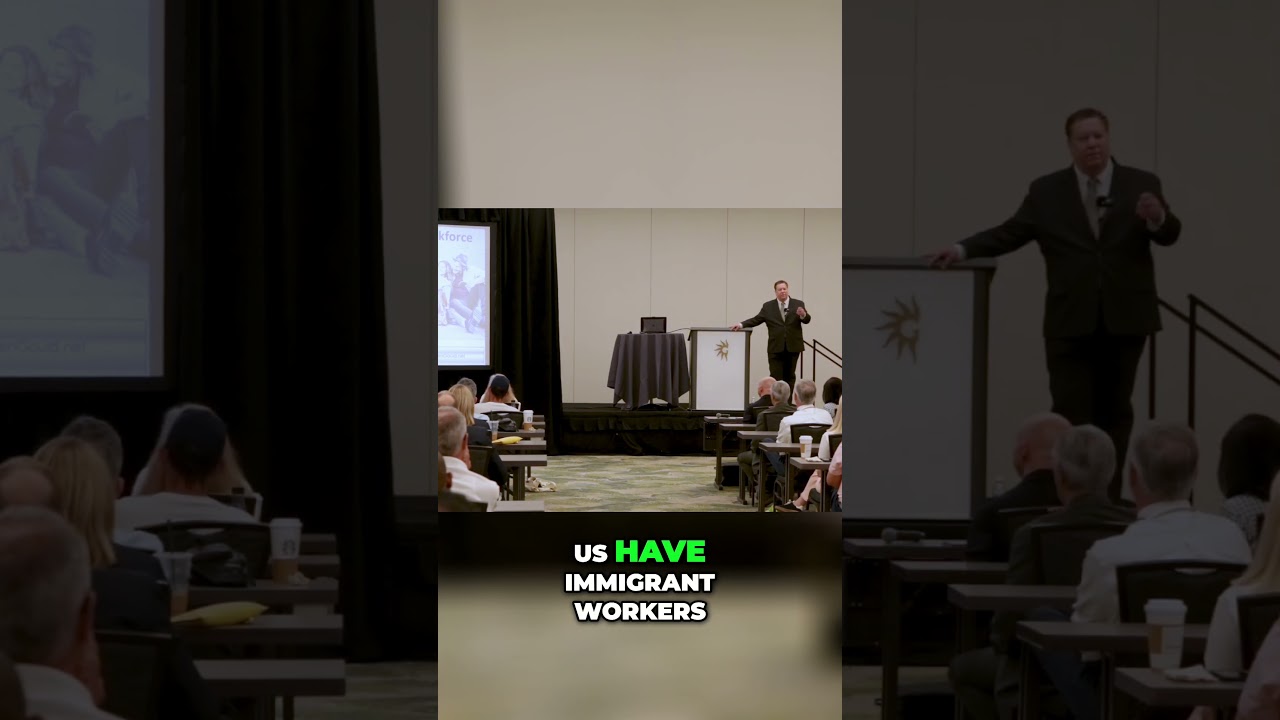
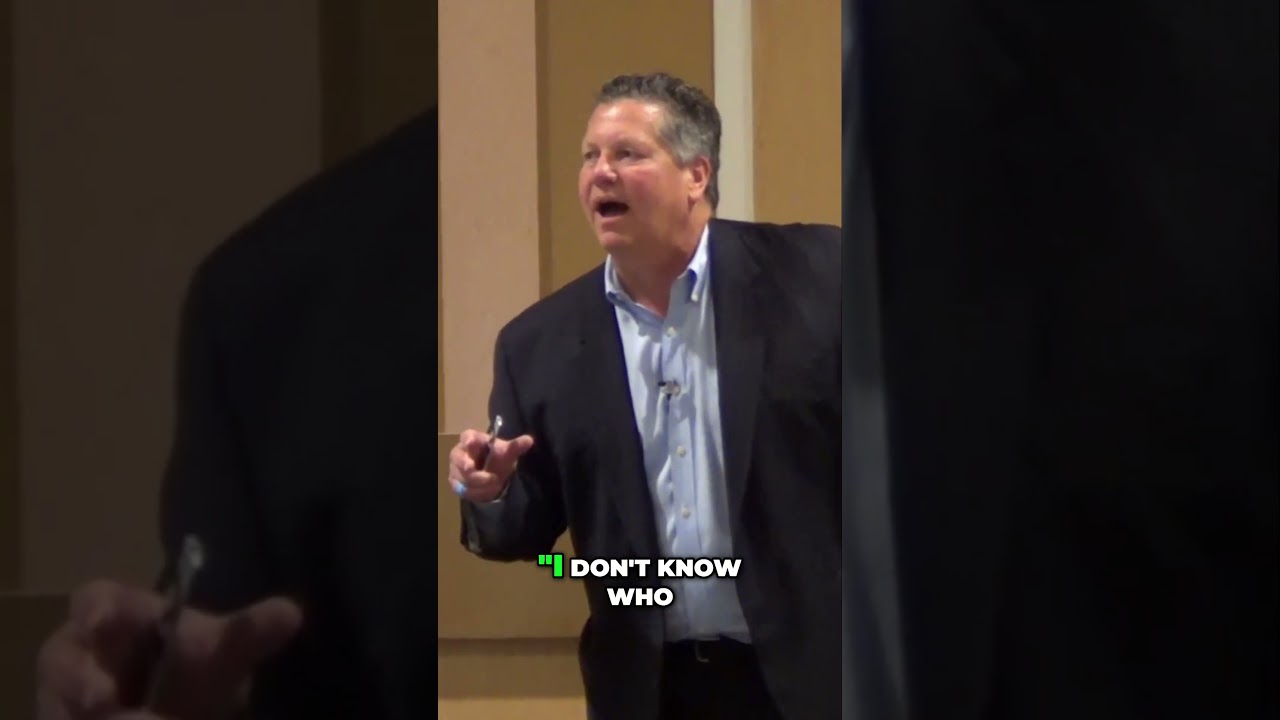
Glen Gould delivers a motivational training to Subway managers and employees on the 5 Ps: purpose, pride, partnership, predictability, and passion. He covers the Broken Windows theory, social media risks like United Breaks Guitars, and practical strategies for upselling and crisis handling, using audience volunteers and group exercises to drive home lessons on service and leadership.
Chapters
How y'all doing? Are we hot?
We're hot.
How's everybody? Feeling pretty good? How many of you been here before when I have spoken? Oh, the rest of you, you just don't know what you're in for. So everybody up, please. Everybody stand up. Everybody stand up. You might want to spread out a little bit. You're gonna need a little bit of room for this, okay? Alright, so the first thing I need you to do, I need you to put your hands up like this and I need you just to turn around. Okay? Just turn around. There you go. Very, very good. Excellent. That wasn't too hard, was it? Super. Now, the next thing I want you to do is I want you to put your right hand out. Okay? And do that again. No, this isn't a subliminal for— Florida State thing. I know better. We're all Georgia fans, right? Okay. Now, let's just imagine though you're at a Florida State game, right? Okay. And somebody comes up and they say, where's the bathroom? You say, over there. So can you do that for me? Over there. All right. Very good. And then they score and everybody for some reason at Florida State they clap like this. Clap, clap, clap, clap, clap. Can you do that for me? You guys are awesome. Now, let's see what it all looks like, okay? So, everybody ready to follow? Put your right hand in, put your right hand out, put your right hand in, shake it all about. You do the Hokey Pokey and you turn yourself around. That's what it's all about. Excellent. You may be seated. How many of you did not play? One, two. How many did not play? Go ahead, be brave. Admit it. Why didn't you play? Wow. So hands up, how many of you did not play? How many of you didn't do the beginning but kind of worked your way in? Come on, how many of you wouldn't raise your hand no matter what I asked you? See, now you're afraid of me, right? I tricked you. OK, so seriously. Come on now, this is the audience participation part. How many of you just jumped right in and did everything? Raise your hand.
Okay.
And then how many of you didn't do it right away, but you saw everybody else doing it, so you started in? Right? Okay. And then some of you started, but you didn't finish. I know that with somebody right down here, you started, but you didn't finish. No, no way you're doing the whole thing. And then some of you just didn't do it at all, right? Do you realize that what you're asking your staff to do is a lot like the hokey pokey? They're familiar with it. They've seen it done before. It's no big secret. They know all the parts. And yet, they're just stubborn. They just won't do what you ask them to do, will they? Well, what we're going to talk about today is how we can more successfully get folks energized and happily doing what we know is good for them and good for us. Is that fair? Everybody good with that? Okay, so let's just start out with a little bit of a— I have a little thing. One thing I do need from you though is I need for you all to be in. Can you say, "We're all in"? We're all in. Very nice. "We're all in" means I'm with you. We're gonna try this. And what I'm gonna ask you to do today is, is to do something you're probably a little uncomfortable with, except for the first group, and that is go ahead and just imagine nobody else is watching. Imagine nobody else is gonna criticize you or think you look silly. It's kinda like that thing, what is it, I hope you'll dance, right? You know, choose dancing. So, in 2011 I had my first opportunity to speak at this great place, and by the way, I mean, what about, Seriously, Tom and Tom and John and Bruce, do they bring you some good stuff or what? Let's hear it. Come on, y'all didn't applaud as you should, 'cause they're helping you. They're helping you make more money, have a more enriched life. And folks, if you don't realize that you work for Subway to enrich your life, think about that for a second. How many of you work for Subway just for a paycheck. Nobody in here does. Even if you think you do, you don't, because you don't want the money, you want what the money does. You work to get more life. So in 2011, I had a great opportunity to speak here, and we talked about purpose, and we talked about a thing called the Productivity Circle, and I talked to you about how 20 of you could teach 200, and 200 could teach 20,000. And I showed you a video, I'm not gonna show it to you again today, but it was of Oprah Winfrey's 24th season opener where the Black Eyed Peas had a flash mob of 20,000 folks, and they got them to do that by training 200 of them an hour before the program. 200 knew the dance, 20,000 ended up doing it. So this productivity circle that I talk about is the way that we naturally do things. And I discovered this when I was a golf teacher. I used to teach golf. How many of you are golfers? Only? Whoa, now seriously, how many of you are golfers?
Seriously?
4?
5? I know you work, but my goodness, you gotta have some life too. We're gonna talk about— 8, 9, thank you very much. Well, what I learned when I was teaching people how to play golf was just like what I was talking about to you about the paycheck. And that is most people aren't playing golf to play golf. You know, the whole reason isn't to get a little ball in a hole and do that 18 times and then have a pop in the bar. People play golf for a number of different reasons. What I found is if I could tap into the reason they did it, I could find their motive I could get them to start taking some action, maybe take some lessons with me, start to learn how to play the game a little more, improve their ability. And once I started to get some action going on, they started to have some experiences. Now it doesn't show on this slide, but on the other slide I showed you that this is where all procrastination comes from, because once you start to have an experience, you start to believe that that experience may be good or bad. And if you start to have a bad experience, you procrastinate, 'cause you imagine into reality that things are going to be bad. And once you've had some experience and you get past that procrastination, you start to build some competence. You start to understand things. And the interesting thing about life is once we understand how to do something, we generally speaking enthusiastically do it. And not only that, we enthusiastically share it with others. You ever been there? Didn't know how to do something, all of a sudden somebody introduced you to basket weaving or whatever, and you think, this is the stupidest thing I've ever seen. 3 weeks later you got a basket and you're going, hey, let me show you how to do this. This is really cool. Well, this is the natural way to teach people too. And so that's what we talked about in 2011. 2012, we discussed in the, you know, really kind of just coming out of the Great Recession, how QSR Insights, Quick Service Restaurant Insights, had Subway as the most popular restaurant. Now, it's no secret, when you got twice as many stores as everybody else, you're probably gonna be pretty popular. But we also talked about the impact of social media. How many of you remember that? Remember talking about social media? How many of you? Once again, nobody. Okay, so I'll re— I'll re— remind you. We talked about how social media can in one fellswoop change everything about your business. And we talked about, and I didn't bring it this time, but we showed you a video called United Breaks Guitars. Does anybody know about this video? United Breaks Guitars, very, very simple. I've learned a lesson. I'm never gonna do the hokey pokey thing again. Nobody will raise their hand now. They're afraid I'm gonna make them dance around. Anyway, United Breaks Guitars, a gentleman was on a United flight and he saw down on the tarmac that they were throwing the luggage and sure enough, one of those things they threw was his $3,000 guitar. And so he got back wherever he was landing, I think it was Chicago, and he went in and he complained and said, "You broke my guitar." And they said, "Well, we've got to investigate it." And they, you know, dragged him all over the place. And finally he got pretty sick of it and he wrote a song, 'cause he's a guitarist, right? Called "United Breaks Guitars." And 12 million views later, United had lost 10% of their stock value. One man, one experience, 10% of the stock value of one of the major corporations in the United States. Now the good news is, folks, Subway's privately held, right? But the bad news is, is that they can ruin your restaurant in your town with just the same impact that quickly. The rules have completely changed. You have got to be on top of things. And we also talked about the 5 Ps for enthusiastic followers. Those 5 Ps are purpose. People need to have a reason for what they're doing. We talked about that in 2011. If you can tap into that reason, you can motivate them. We talked about pride. People have a natural need to accomplish things. It's in our DNA to do things. Unlike cats and dogs and lions and all the other animals who spend most of their time resting, for some reason this weird-looking two-legged being feels the need to do stuff. So much so that quite often we find ourselves being firefighting arsonists. Any of you a firefighting arsonist? Create a problem to solve? How many of you have to-do lists? Come on now, that's something to be proud of, you have a to-do list, right? How many of you that have to-do lists write down what you're gonna do just before you do it so you can mark it off? Better yet, how many of you write down what you just did so you can mark it off, right? We wanna accomplish things. We talked about partnership. We need each other. Human beings cannot function on their own. They have to be together. No man is an island. These kind of things don't get said over and over and become part of our lexicon because they're not true. We talked about predictability. Your staff needs to know what's gonna happen. This is probably the number one most challenging thing for you managers. And the reason I say that is because this is a dynamic organization that is often moving and changing and things, you know, we just heard about all the different windows and I guess that's the terminology. Of the specials you're gonna have, and you're gonna have to have these folks on top of that, and they need to be able to predict what'll happen. The secret shopper comes in, they need to be able to predict what will happen. You need to go back and tell them, hey, listen, I'm gonna train you to the test. Here's the test. When people walk in, within 3 seconds, what do we have to do? And what else do we have to do? Have to eye contact and smile. It's not just, "Welcome to Subway." I hate to tell you, we had Subway yesterday. "Welcome to Subway." Could barely hear it over the bane. So there's some work to do. They need to know what to expect. And then finally, passion. I was talking with some young ladies over here from White County and Stephens County, and the passion that they feel for their customers. The passion they feel for making a sandwich. I've got to tell you, you don't really realize it, but you all love Subway. Sometimes you might think, yeah, right, I love Subway, all right. We all do that. Come on, it's— there's, there's a job factor. But every one of you in here is the CEO of your own personal services corporation. You sell your services to one company right now. If you have two jobs, you sell it to two. Your services are for sale and you choose to sell them to Subway because you care about Subway and about what it accomplishes for you in a number of different levels. So that's what we talked about in 2012. In 2013, we talked about environment and how environment is a reflection of the people in it. So if you have a dirty store, what does that tell you about your people? What's it tell you about your people? Their houses are dirty, their cars are dirty. How many of you have ever looked in a car of somebody who's came to you for an interview? You can tell a lot. You can tell a lot about what's going on in their lives by the car they showed up in. And not that it's beat up or anything like that, but is it clean? Is it tidy? Do they have, you know, wrappers from McDonald's in the back seat, fry containers? Environment's very, very important. We talked about Broken Windows Theory, and how many of you know what the Broken Windows Theory is?? Don't worry, you don't have to raise your hand. I know you won't anyway because I'm going to tell you. So the theory of broken windows is that they did a study and they found that abandoned buildings with broken windows, if the windows weren't attended to, what happened? More windows got broken. Exactly. And the interesting thing is those same abandoned buildings, if they fixed a broken window, nobody would throw a rock through the windows. For the longest time. And the fact is, if you have something broken in your store, if you don't attend to it, you'll have more things broken in your store. And then we talked about the 10 steps to remarkable customer service. And by the way, what I'd like you to do right now is— how many of you have an iPhone or a Samsung or electronic leash of any kind? Now y'all are liars if you're not raising your hand now, right? So pull that thing out because I know you're already texting. It's okay, it's alright, I've grown accustomed to it. Go ahead and pull it out. Please pull your iPhone or your, any electronic leash you have out. Now, of all of you that have your iPhones out or your, and I don't get a commission from Apple, but I should, your iPhone or other device, how many of you have Facebook on it? Raise your hand. Okay, so let's go ahead and go to Facebook please. Go ahead and go to Facebook. Seriously, I want you to go to Facebook right now. And in the browser bar where Facebook is, you familiar with that? I want you to type— it says facebook.com/GlenGould, G-L-E-N G-O-U-L-D. G-L-E-N G-O-U-L-D. Just like that up there. No spaces. And what should pop up is my page. And on my page is this graphic. And if you'll just like that, I would really appreciate it, first of all. Second of all, you'll have access to it. So that you can go back later on because this is something we discussed last year, but what this acronym actually is is I Am Service or I'm Service, and it's basically the 10 steps that your people can do in order to successfully serve a customer to have the heart of service. And some of those things are initiate conversation and the things that Subway tells you to do already, but in a little bit different way. Now, The reason this is important, okay? Here's the reason it's important. Because if you were to take this to your staff and say, "Hey, I learned this when I spent 4 hours down in Atlanta at Subway." It comes from somebody other than you. They might just listen this time. Okay? How we doing so far? Everybody good? You can't find me? Facebook.com/GlenGould.
G-O-U-L-D.
If you can't find me, see me at the break, we'll get it fixed. Okay? And basically what it says is that I'm looking forward to speaking at Coca-Cola with Subway. And by the way, does Coca-Cola treat you guys right or what? I mean, is this a great place? Awesome place. All right, so, what are we gonna talk about this year? We're gonna talk about more than a sandwich. Now I know, I know that Tom and, and Tom and John and Barry are all going, "Yes! We're gonna talk about upselling and we're gonna talk about— 'cause we're gonna get more than that sandwich." Well, kind of. But I'll tell you an interesting thing we are gonna talk about. I did discover when Barry said that they've, they've asked to speak about millennials next, next month. Well, you're gonna get a good precursor to that this month. 'Cause we're gonna talk a lot about millennials 'cause they are kind of the target folks that you're hiring. There's a lot of you in the room right now. We're going to talk about you guys. So when I say more than a sandwich, what do you think? Anybody? Experience. More than a sandwich. Customer service. Man right there with a hat on that was looking at me, not the one looking away from me, so you're off the hook. No, it's you. Yeah, don't look away, it's you. Yeah, with your arms folded like, "He's not talking to me, is he?" When I say more than a sandwich, what do you think? What I already said. Okay, but if there was something more than a sandwich at Subway, what would it be? Anything. Is there a chair in Subway? It can be anything, can't it? Of course it can. It can be anything you want it to be. But what we're gonna talk about today is your mission. How many of you have ever read this mission? You know, most companies ask you to memorize it, to have it down by heart, to delight every customer so that they wanna tell their friends with great value through fresh, delicious, made-to-order sandwiches and an exceptional experience. It's a lot, isn't it? But what does it say about Subway? Kind of says the sandwich is key, doesn't it? They went to the trouble of saying that they wanted— you wanted to have delicious made-to-order sandwiches. Do you know that that really kind of changes things completely for Subway? Subway can— cannot be Like McDonald's where they have a lot of the stuff pre-made. Now, I mean, now they've kind of gone to made-to-order as well, but used to be you'd walk in, there'd be a heat lamp and all that. So when this was written, this was revolutionary. I like to shorten it a little bit. I just like to say delight every customer through an exceptional experience. 'Cause I gotta tell you, in this day and age, a delicious made-to-order sandwich, is exceptional. Let that sink in for a second. When you make a delicious made-to-order sandwich, it's exceptional. It's not normal. How many of you ever seen the movie, um, Falling Down with Michael Douglas? Funny, funny, funny sad movie, right? Well, Michael Douglas is somebody who kinda goes crazy and He kind of goes on a tangent. He goes around doing some crazy things. He wanders into Whammy Burger and he gets all upset when they make him his burger and it doesn't look like the one in the picture. How many of you have lived through that? Oh my gosh. I wish Subway wouldn't put those beautiful sandwiches on the sign because it's very hard to make them look like that, right? It's not. It's not. And guess what? The customer is willing to wait for a beautiful sandwich that's tasty. They're willing to wait. I know I am. Most of the customers I talk to are. So how do we do this? Well, first of all, we need some leaders. How many of you agree that we have a lack of leadership in our country, in our world? You turn on the television anywhere you go and you see leaders who have fallen from grace. So how about in this room, do we have some leaders? Here's what I'm gonna ask you to do. I'm gonna challenge you. I need a leader from this section right here. Yes, ma'am, come right up. Thank you so much. What is your name? Lauren Miranda. Miranda, where are you from? I can't hear you through the pole. Where you from?
Elberton.
Miranda's coming up. Let's give Miranda a hand for being a leader. Miranda, I'm gonna allow you to choose your color. Green, of course. And I want you to take one of your— one of these. It doesn't matter, you can take either one, they're both the same. If you'll go back to your section, I'll share with you what we're gonna do in a second. Now this group is in two sections. There's a section on this side and there's a section on that side of the red pole and the lectern. So from this section, may I have a leader please? Come right on up, ma'am. What's your name? Margie. Margie, and where are you from?
I'm from Delaware, but I've been living in Atlanta for a long time.
Oh, she's from Delaware, but she's been living in Atlanta a long time. What does that tell y'all about her?
I moved here with $50 and a dream, and I have my Subway.
Outstanding! Let's hear it! $50 and a dream, she has her Subway. You may choose your color.
Thank you.
Thank you. If you'll return. Now on this side, right, come right on up, ma'am. And what is your name, please? What's your name, please?
Kelly.
Kelly, and where are you from? Commerce. Commerce, Georgia. Would you take a— thank you. And would you choose one of these? Thank you very much. Let's give a hand to Kelly. And then finally, in this section here, a leader. Yes, sir, please come on up. What is your name, sir? John Adams. John Adams. And where are you from, sir?
Boston. Boston.
Really? You don't work in Atlanta?
I'm from Atlanta.
Okay. Good to see you. You get down to black or blue. If you'll take that back. Okay, so great. So we have our 4 leaders. Let's see, we have John, Mary, Steve, and— see, I got a great memory for names, it's just really short. Don't y'all too? Miranda.
Right?
Miranda's here. Uh-uh. No, Miranda's over here. I'm sorry. I should have stayed with you. Margie's here. Kelly is here. John's over here. Right? So here's what we're gonna do. I'm gonna tell you a quick story, and then we're gonna gather around our 4 leaders in the sections you're in. So you might have to turn your chairs around. You might have to move around a little bit. It'll be— might even have to get up and move. It'll be okay. I promise. But we're going to go through a little exercise and we're going to get some value out of this. So, this weekend, what'd you guys do? DragonCon. Who else did DragonCon? We got to talk at the break. That's cool. What'd you guys do? Worked, worked, worked, work, work, work, work, work, work, work.
Right?
Well, my family and I went to the balloon festival in Callaway Gardens. Anybody ever been? This is a picture that I took with my iPhone. So I can tell you right now, iPhones are awesome. I'm working on that deal with Apple, but they'll never come through. But they do a thing at night where they light up the balloons. It's very, very cool. The middle one, unfortunately, I was down on the beach, but the middle one's a clown. And I got to tell you, he's kind of spooky. I'm glad I don't have it because if any of you are afraid of clowns, it would freak you out. So we got down there about 4 o'clock in the afternoon. OK? And we found a place to sit. And we watched them do the tethered balloon rides for about 10 minutes. And it was kind of like, well, now what are we going to do? We didn't bring our bathing suits. We didn't really plan this very well. What are we going to do? Well, around 5 o'clock, I said, hey, why don't we go get something to eat? Now, this is not a Subway story, OK? Just going to tell you that right now. This is not a Subway story. So we decided to go get something to eat. And in deference to the facility, I'm not going to say the name of the country kitchen we ate at, the little restaurant that looks over the beautiful trees and all of that. It's owned by Callaway. I would never, I would never say that in public, that we ate at the Country Kitchen, but we did. And so we got in there. It was great because we were able to sit right down. It was just perfect timing, right? And we even got a window seat. And it's beautiful. It's a little hot, so we lowered the shades a little bit. They let us do that. I mean, the only bad thing is I've got two little babies sitting next to me. So, you know, it might be a long dinner, right? Because if they start screaming— but hey, I had kids and still do and grateful for them and it's okay. So we sit down at 5 o'clock. And actually, the waitperson comes right over and she takes our order right away for drinks. I'm not there because I'm checking the car one more time and so When I come back, she takes my drink order right away. I asked for unsweet tea. She wanted to know if I wanted lemon, and I said yes. And back came tea with lemon. And what happened? Took a sip and it's sweet tea. What did I say? Excuse me, I asked for unsweet tea. She said no problem. I gave the sweet tea to my son who drinks sweet tea. And away we go. At 5:15, I turn around in my chair because I haven't seen my waitperson since 5 o'clock. Our drinks are empty. Our bread basket's empty. She comes out and says, Did you need something? Yes, we'd like refill on our drinks and since it has been 15 minutes, we'd like some more bread, please. Is that OK? Sure, absolutely. And so, you know, we're kind of back on track again and enjoying the view. And it starts to rain and we think, my goodness, what a fortunate thing for us. We're not out in the rain. Instead, we're here at this great restaurant. 5:35. I'm starting to get out of my chair because I haven't seen my waitperson again. The busboy comes by and says, "Did you need something?" "Yeah, it'd be great to have some food. You know, maybe our drink." Now, I'm sorry, I left something out. I didn't tell you what we all ordered, but I'll tell you that one because we did order at the 5:15 mark. 5:35, no food, no drinks, no refills. I love my family, so I'm spending some time with them. 6 o'clock. Yes, honey, it has been an extraordinary long time. It's been an hour since we sat down. No, no, no, honey. Don't, don't. The food will be here in a second. Please don't. Please don't get upset. Out comes the food. One of my sons has ordered chicken and waffles. We've had chicken and waffles here before. It's great. It really is good. French fries. It's good. My wife and my other son have ordered a bowl of vegetable soup to go with the bread that they've had now an hour ago, and I ordered a Caesar salad with chicken. Food comes out, it's all put in front of us, and I look down and I know that my girth doesn't show that I eat a lot of salads, but I do. And my Caesar salad is made with iceberg lettuce, which if you're a Caesar salad fan, you know that's just not right. Not only that, there's tomatoes on it. And the rest of the stuff kind of looks right, but it's kind of weird. And I reach over and grab a French fry from my son's plate and it's— well, it's warm. It's not— it's cold. It's cold. Of course it's cold. I'm trying to give them the benefit of the doubt, right? And I look over and I take a bite of my salad and it's just terrible. It's terrible. My wife and my son's soups are cold. My son's French fries are cold, and the chicken on his chicken and waffles is cold. He's starved. He's gonna eat it anyway. I've got a couple of rolls in me. I'm, I'm feeling pretty good, and so does everybody else at the table. So I call my waitperson over, and I say, I'm sorry, this isn't very good. I just can't eat it. Should have bought a squirrel, if you know that joke. Should have had the sweet tea. You're not kidding. She looks at me and she goes, I'm sorry. And she leaves. She doesn't remove the food I'm not going to eat. Every dish we've ever gotten is in front of us. Okay? And that ain't that many because she's only been there 3 times. But the busboy didn't even take away the dirty dishes. I promise we're getting somewhere, okay? So she comes back and she hands me the ticket. No, she says, would you like dessert? I said, no, I just want my ticket. She hands me the ticket and she smiles and goes, I took the salad off. Yeah, you're right, you did. Because you were going to anyway. Okay. So, I get up and I'm just not satisfied. So I go up to the front desk and I ask to see a manager. We don't have a manager in today, we have a leader. Do I know the difference? I want somebody in charge. I don't care who it is. I don't care what his title is. I want somebody— or her title is. I want them in charge. He comes over. I explain to him my plight. He says, wow, that's terrible. I want to make sure that I let the kitchen know that iceberg lettuce isn't on a Caesar salad and your soup's cold and all of that. I promise. And would you fill out a response card? Because that's really important. Didn't you get one with your bill? Would you give me a response card?
No.
So then I say to them, I say, listen, here's the thing. I hate to punish the young lady if it was the kitchen's fault for my slow service, but I can't tip the young lady, and I'm a great tipper, if it was her fault because I don't want to reinforce that behavior. 'Which one was it?' 'I have no idea, sir.' 'Then I'd like to punish both of them. The soup was no good either. I'd like it taken off.' 'Very good, sir.' Our $50 meal has been whittled down to $20, of which $12 is tea. So they made some profit at least on us, right? So there's my story. Now, what caused this? These are the questions I want you to answer in your groups. I'm gonna give you about 5, 6 minutes together. I want to know what caused the situation in your opinion. I want to know what you think the effect of the situation was. And then I want to know what you think the result of the cause and effect is, was, and will be. And I'm leaving you with that much information because you really don't need any more to do this exercise. Now, if you remember when we first started, I had you do the hokey pokey and turn yourself around. If you're in front of those people, you're gonna need to turn yourself around to get to the leader, but let's discuss it amongst yourselves. Please participate. Your voice is valuable. And when we come back, what we'll do is is we'll find out what you guys thought and then we'll figure out what we want to do. Okay? About 5, 6 minutes. Let's go ahead and get started.
OK.
Now, this is the risk you run when you allow people to get up and move around. You lose a lot of them, right? But that's OK because they're going to come and go and we're going to get done what we want to get done today. So we have 4 sheets out there with the cause and effect. So what we're going to do— can I have both of them? Okay, great. Would you come up with your sheet? So for those of you that are still in the room, if you will please, let's pay attention to what we discovered. We're going to go over these sheets together. All 4 of you, if you would, go ahead and bring your sheets up. Come on over. You can just stand it right there. So share with the group what you discovered. You're a leader now. Don't be afraid. Leaders communicate. Tell them who you are again. Where? Who? Miranda. From? You got to speak right into that microphone. You got to speak loud. That mic is hot, right? He says it's hot. Let's try it again. Miranda from Elberton. Let's listen up to Miranda for her group. What did we discover?
Bad communication, possibly poor attitude from the customer.
Okay. You all hear that? Bad communication, possibly a bad attitude from the customer. What else?
Loss of sales.
Okay, is that the effect?
Yeah.
A tiny loss of sales. Oh no, they lost sales. Okay, so she's right there and what was the result of the cause and effect? Losing customers. Losing customers and a loss of a tip. Who agrees with her? Yeah, absolutely. Let's give her a hand. Remind them who you are, where you're from. Oh, you can hang on to it. We're going to do some more.
My name is Margie Lynn. I'm from Delaware, but I've been living in Atlanta for 19 years.
Margie, we got to get you to claim Atlanta first.
I'm from Atlanta.
I use—
no.
Okay. Our group, what caused this? We said that employees don't care.
Employee— those employees or all employees?
The employees at that restaurant.
At that restaurant don't care?
Yes.
Okay.
And what was the effect? We said dissatisfied customers, that's what our group said.
Okay.
And the next, what was the result of the cause and effect? We said the reputation of the restaurant, word of mouth, which if you complain, look how many people know now.
Ah, now how many of you agree with that? Over 150 or so people or maybe even 200 have now got, who may not have ever been there now have a bad experience.
Exactly, which resulted in no tip, like the young lady said, and bad customer service, something you really don't want to have ever at your business.
Thank you very much. Let's give her a hand. Remind them who you are, where you're from.
My name is Haley. I'm from Commerce. What causes is the RRR group come up with lack of leadership, lack of communication, lack of training. And lack of passion for their job. What was the effect? Our group came up with that the guests suffered poor service and we wasted food.
They're not going to eat, obviously. Very good, very good.
Number 3, what was the result of the cause and effect? Multitudes have heard of this bad experience, just like he told loss of business and loss of revenue.
Excellent. Thank you very much. John, remind me who you are and where you're from.
John Adams, Marietta, Georgia.
There you go.
What caused this was the lack of training, knowledge, and communication. No systems were in place at the time, I'm sure. The lack of definite leadership and carelessness. The, uh, what was the effect? Of course, loss of customers, I'm sure. Uh, probably loss of 10 teller 10, wind up with 10 teller 1,000. And then the, uh, social media, I'm sure, got a hold of this, which is loss of sales and food costs. And what are the results? Of the cause and effect. It's really all they live by. The turnover and, you know, no passion in the workplace and probably bad branding.
Excellent. Let's give him a hand. Okay, so now let's just by applause or let's just by applause, how many of you think that our side over here got it right more than our side over here? So this side won. Applause. This side won. Applause. Do you notice I stacked the deck? Now why, why is it stacked? First of all, there's more people over here than there are over here. Second of all, You were going to cheer for your own team no matter what, weren't you? Right? I didn't see a single person from over here clap for over there. Didn't matter what was said. And then on top of that, here's the worst part of all. They already knew the level they had to perform at because you guys had given it to them. Now what can we learn from that? Well, here's the thing. First of all, if y'all would go ahead and take your seat, let's give them another round of applause. Thank you very much. You can leave your boards. You can leave your boards. Keep your markers, leave your boards. Oh, you don't want to keep your marker. That's fine.
Keep my marker?
Yeah, keep your marker, leave your board. Okay, very good. So now, everything they said is true. Everything they said is true. What could change it? It's already happened. I was asked over here a moment ago, I'll bet you blew your stack. What did you call it?
Head gasket.
I blew a head gasket. Did I lose my mind on these folks? Did I go crazy on them? What do you think? No. No, why not? Pardon?
You just informed everybody else of your experience.
Yeah, I've informed you of my experience, but did I go crazy on them?
No.
So is it true that possibly the customer transferred some bad attitude? Even though I didn't go crazy on him? Yeah. The moment that I became displeased, what is the natural response? Defense. Some people defend themselves with displeasure by being apologetic. Some people defend displeasure by being evasive. And some people defend displeasure by being aggressive. So I was displeased, her natural state was avoidance. If I just hide in the back, I won't have to deal with him. But then when I got to the leader, his natural response was apology. But neither one of them were taught what to do when this happens. And the reason it's important is because it is going to happen. We're in the people business. People make mistakes. It's gonna happen. What do you do when something goes wrong? We spend a lot— I'm sorry, what'd you say? Fix it. Fix it. Exactly, but how do you fix it? These people needed to be trained on what to do exactly when somebody gets the wrong food. What to do when the 15-minute mark hits and you've forgotten to check on them. What to do when they raise their voice, what to do when they ask for a refund, what to do, what to do, what to do, because they need to know what to expect. They need predictability. We spend a lot of time teaching people what to do on the positive side. We spend very little time teaching people what to do when things go wrong. And yet crisis management tells us that that's when we can shine the most. I had a slide last year that showed that the likelihood of loyalty is tenfold when a problem is resolved. So it's a powerful experience for you to know. So one of the things that I think you guys probably see from time to time, if you're kinda looking around, if you're paying attention at yours— well, look, I'm just gonna go ahead and say it. My— one of my pastor friends told me that A lot of times when you're trying to get people to confess things that are going on in their life, maybe it's not them, maybe it's their uncle. So at one of your uncle's stores, 'cause they all work at Subway, right? One of your uncle's stores, you've probably seen when somebody walks in, what can I get you? What can I get you? Uh, like an Italian— what kind of bread? Oh, you want a footlong? Cheese? You want a toasted? You have any idea how loud these things are back here? You know, if you hadn't interrupted my day, I'd be listening to my iPod, because I sure as heck ain't cleaning this place. They don't pay me enough for that. The bathroom— I got to share y'all a story about a bathroom. This isn't a part of the program, but I used to own a company that cleaned retail store floors, in particular Kmart. It's a big job, and one of the things we were responsible for is the bathrooms. And we had a lot of folks who were from Senegal and Ivory Coast working for us. And we had this store down in Stockbridge with a female manager, and she called me one day and she said, look, we gotta talk about my store. I said, well, I was just in there. It's beautiful. She said, yeah, but the ladies' bathroom hadn't been touched since you put that guy Shek Lowe in here. I said, well, gosh, he's been in there like 3 months? Yeah, and the bathroom looks like it. Come down and take a look. So we walk down to the— I drive down to Stockbridge, take a look at the bathroom. Sure enough, it's nasty. And so I talked to my employee, Shek, and I said, Shek, everything looks great. Why aren't you cleaning the ladies' bathroom? Sir, you do not understand where I come from. I am the son of a king. I cannot touch things from a lady. Now that was a first. I got a prince working for me. I said, "Do what?" "Yes, it is true. I'm the son of a king. I cannot touch things from a lady." Unfortunately, the store manager was listening. She goes, "Well, here you're a janitor and you're gonna touch things from a lady or you're gone." So now I'm not asking you to handle that, your employees like that, right? But some of them won't do certain things, right? They'll do other things great and they won't do certain things. I got a tip for you. This one's free, okay? Get somebody else to do the stuff they don't do good. Let them do the stuff they do good. Let somebody else do the stuff they don't do so good. That's a freebie. You don't have to pay anything for it. So we have a quick video I'd like to show you. Living on the road, I remember when I did stand-up, it's tough.
It's just kind of—
Yeah, it's tough.
What is it? What do you eat? What's your diet? Well, lately I've been eating a lot of Subway, which is a bit of a disappointment. I don't know if you've been to Subway. You're always like, "Hey, Subway, eat fresh," and then you bite in and you're like, Not fresh. But I think I go to Subway, uh, you know, I go there and not just because, you know, it's fun watching a clinically depressed person throw together your sandwich. They make it right in front of us. You think they'd do it with a little bit of flair.
I'm so bummed out.
You want mayonnaise? And you're like, ah, sure. And they're like, I feel like I'm at Benihana.
You know, it's not quite that special, you know.
But I love all the steps you have to follow at Subway. The first step is you have to pick out your bread, and by that they mean pick out the color of your bread, cuz it all tastes the same, you know. All the toppings are free at Subway.
Free lettuce? No way! How do you guys pay the What's that? Free napkins?
I think the toppings are free to distract us from the fact we shouldn't be paying for the meat.
Yeah, yeah, that's understood.
They are so stingy with that nasty-ass meat at Subway. They always peel it off like it's from a wad of ones or something. There's 3 slices of ham, get yourself some. Something nice.
Oh my gosh. You know, it was really fun sitting here watching you guys because like I could tell who the managers are and who the owners are because it's kind of like, can I laugh? You're afraid to laugh in front of the boss, right? Sounds like we got a little work to do, don't we? So here's what we're going to do. We're gonna start to address some of this. Now, like in the previous where we did a little bit of exercise, you have to understand the backstory before you can start to address some of the problems that we're having. Now, first of all, I want you to understand that that video clip right there from the Jimmy Fallon Show, um, I know they were at your uncle's store. They weren't at yours. I'm sure of it. But, um, In case by some chance something like that ever happens to you, or maybe if you're talking to your uncle, you could share some of this stuff with them that we're going to work on here. So who's in control of the customer experience at your facility?
Hmm?
How many? Everybody.
Everybody.
Who's everybody? The whole team is responsible for the customer experience. So when I go in at 9 o'clock at night and Marissa's the only one behind the counter, she's the only one here, the whole team's still responsible. If I have a lousy experience with Marissa in Stockbridge, Georgia, or Oshkosh, Wisconsin, or New Delhi, India, or wherever, The whole team's responsible. Thank you. Ah, the person is too, but you're right, the entire experience. Because let's go back to my experience with the restaurant. The fact is that didn't just impact the restaurant, it impacted Callaway Gardens. You know that cool That really cool balloon festival that I went to wasn't so cool anymore. It was okay. I might tell some friends, "I'm a little bummed I had to pay $50 to get in." But if I had had an incredible experience at the restaurant and then I'm there to see these incredibly cool balloons, it would have been an awesome experience I'd be sharing with you today. You gotta go next year. I mean, as a matter of fact, pull out those smartphones, mark your calendar now. You gotta go. You're gonna love it. So everyone's responsible because what happens in one store impacts, impacts everyone, right? So what we're gonna talk about, we're gonna take a quick break. I know a lot of you already did take your break, but what we're gonna do is we're gonna talk about in the second half who is in front of the customer, what they're like, and what you can do to make sure that they convey to the customer the type of experience that you're wanting. Because let me share this last bit with you. The real problem with the young lady that I had served me, that ruined everything about Callaway Gardens that day, the real problem with her wasn't that she wasn't trained. Callaway Gardens is a world-class resort. I am sure she was trained. It wasn't that she didn't have good help in the back. They have great food every time I go there. I don't know what happened this time. It wasn't the fact that my attitude was lousy, 'cause I was in a great mood until I waited an hour for the salad that wasn't mine. The problem was she had no capacity for empathy. And a lot of people today are that way. They don't understand that empathy isn't a sign of weakness, it's a sign of strength. And nobody had taught her that people matter. And if they had, she had had such a negative experience in her life that she'd begun to believe that people don't matter. And do people matter in your business? Absolutely they do. And what we're gonna do is we're gonna learn how to teach our people to care, and in doing so, we're gonna demonstrate we do. So let's take a 10-minute break. I have right now exactly 4 o'clock. Is that what you guys have? Be back at 4:10, please. We will start promptly at 4:10. Thank you. OK, OK, OK, OK. We're going to go ahead and get back started. So as you're starting to filter in, I want to thank you for being here. Now one of the things that I'd like to do is just kind of recap a little bit so that we give some folks time to filter in and so we kind of catch you back up because I know you've all had side conversations since. As a matter of fact, the most powerful thing about a meeting like this is not a speaker like me. It's about the relationships you'll build in this room and about sharing ideas where you can cross-pollinate and learn from each other. So I certainly encourage the networking piece of it. What we talked about today so far is the fact that customer service is an essential key to Subway's culture. As a matter of fact, exceptional experience is pretty much what you could boil— if you wanted to boil down Subway's mission statement to 2 words, you could boil it down to exceptional experience. And we talked about the power that you have with folks and the fact that it's more than a sandwich we're talking about. We discussed a little bit about the past talks that I've done here, and I'm certainly happy to share those with you if you would like. And when we have a few more folks in the room, if I don't come back and ask you to text me, somebody remind me, okay? Fair enough? So, where we left off was who is in control of the customer experience? And we pretty much all agreed that we're all responsible for it to some level or another. If I have a bad experience in Zebulon, Georgia, it reflects on Subway. It doesn't just reflect on Zebulon, Georgia's Subway even though it's an individually owned location. It reflects on everybody that wears the green. Or the red and black at this time of year. And so it also unfortunately has an ancillary effect on Frito-Lay, on Coca-Cola, and on any of the other vendors, Asher, all of the support that you have. If something goes wrong in a Subway, everyone's affected. This is a huge, huge thing to understand and for your staff to understand The impact that they have, they have the ability to impact the world when they make a sandwich. And as a matter of fact, I shared a story a couple of years ago here about a lady who comes into a Subway store and she's got 2 little kids in tow. And it's 11 o'clock and she comes across that parking lot at the grocery store where your store is, and she's dragging these two kids in, and she gets in the store, she frantically gets the order, attends to the little children, and yes, they're gonna get a cookie and all of those things, attends to them as she's trying to place the order, and your person behind the counter is sitting there going— But not this time. This is somebody who's actively engaged. They're on the team, and they are attentive to the customer as they walked in. This lady who has these two kids in tow heard a very nice and sincere. Welcome to Subway, I'll be right with you. As she was wrapping up the previous customer. And she got eye contact, and here's something, this is a bonus piece for you. Men, this is really, really important for you. Because men expect about 3 seconds of eye contact, that's all we really need. If you'll just look at me for 3 seconds, I've been acknowledged, I'm good to go because I'm happy. But the bad news is women expect 17 seconds of eye contact. And if you're not giving that to them, you're relaying things that aren't true. You're telling them that you can't be trusted. You're telling them that you don't care. You're telling them all sorts of things. So ladies, be aware when you're training the men because you can relate this the best. Ladies need more eye contact. Don't just look at me for a second. I won't believe you were there. Men, look at me too long and I'm gonna wonder what's up, right? I didn't do anything, I promise. 'Cause what do our wives do, or our mothers did? Man, they can stare, can't they? Right? So remember this, but it's important. So this lady, she comes in and she gets a sincere, you know, welcome to Subway and eye contact. And then when it's time to order her sandwiches, the person behind the Bane is patient. Because he or she understands that it's hard to handle 2 kids and place an intelligent order because things are coming at you a million miles. And so you get the sandwiches made and you get— you, you make sure that you offer the chips and the drink and the cookie because the last thing she needs to do is have her 2 little children sitting at a table and she has to get up and go get the rest of the meal. But not this particular one. She makes sure that she recommends And in doing so upsells, but recommends all the things that make it a meal, and even recommends the cookies because she knows the kids will love the cookies. And not only that, she says, "I'll tell you what, it's a little slow right now, it's only 11 o'clock. Go ahead and sit down with your children, I'll bring it to you." And she does. And then the magic happens. You know what the magic is for this woman? 5 minutes of silence. She didn't buy a sandwich. She bought some peace. She chose Subway because it's a place where she can feel good about the food she got. She can be treated like a human being. She can have variety under the sun. And 5 minutes of quiet. And so she gets that 5 minutes of quiet and she leaves refreshed. She leaves full. Her kids are full. You know what? A lot of times they put them in the car seats and they drive for about 5 miles and— full belly, warm car, I'm out. Right? And she's bought 30 minutes of silence. So she can think and she can be a good mom again. Now this is the way the other one can go. She's dragging those kids in, she's desperate just for that 5 minutes of silence. She walks in and the person behind the counter, the Bane, says nothing. As a matter of fact, they don't say anything because they're not there. They're in the back doing something. And when they finally come out, they don't say, "Welcome to Subway," and give some eye contact. They go, "What can I getcha?" bread, cheese, whatever. And the woman doesn't get her 5 minutes of silence because she's trying to deal with the kids. And finally she frustratedly says, you know what, I'm just gonna leave. I'll go through the drive-through at Brand X. And she walks out of the store with the 2 kids in tow, walks across the curb, and all of a sudden doesn't look to see the car that comes, and the family's ruined. The little baby girl's killed. The boy makes it, but he's messed up for life. Mom and Dad get divorced because some joker behind a Bain couldn't be nice enough to say, "Welcome to Subway." How may I help you? How can I serve you? Can it happen? I'll bet it has. I'll bet somewhere, somebody, for some fast food company frustrated a parent enough to where they walked out and didn't look and see the car and the little girl is dead. It's more than a sandwich. So this is why it's so important for you to understand that you've got to get through to these folks. This is our society you're talking about, not a Subway sandwich. Subway sandwich is a part of it. It's a very important part of it. It's an important part of so many people's lives. Do you know how many people you've been— we were talking over here, my, my group's moved. We were talking about how we know our customer, we know their names, we know what they're going to order before they order because they're there that often and they mean that much to us. Do you know how much people depend on that predictability in a chaotic world like we live? So now what are we going to tell these folks that we realize— I mean, and I got to tell you, the young lady that served me at Callaway Gardens, she was a millennial. That's who you're hiring right now, isn't it? Generation Y, millennial, whatever you want to call them. A lot of them. And we know some things about these folks. So let's talk about some of the things we know about them, OK? Let's first of all realize that this is a study that was done by Princeton University. It's a paper called Princeton One White Paper. They were born in the late '70s to the early '90s. Millennials have an incredibly strong self-esteem. Unbelievable. Probably the strongest of any, any group that we've ever seen in the Americas. And the reason they do is because so many of their parents fawned all over them and told them that they were incredible and they won trophies. When they didn't win and they— everything that we've done, right? They've gotten praise after praise after praise. They are sure they're great. They believe that anything is possible. When you come in dead last and don't win a single game and you win a trophy this tall, you believe anything's possible. I got a little story about my sons. We used to take them down to this golf tournament in Naples, Florida. They're 5 years old. They play 4 holes. The 4 holes they play are from the middle of the fairway, so they're not out there all day, right? Nobody keeps score, and everybody gets a trophy this tall, taller than the kid, and they beam with pride. Can I throw that trophy away? Absolutely not. Got pictures of it, right? What did they do to win a trophy? They showed up. And this is what you're dealing with. You're dealing with people who think they can show up and get a trophy. They're extremely technically savvy. There was a study done and we found that millennials believe that technology is as important as air. I kid you not. They believe it's just as important to have technology as it is to have air. Now what does that tell you about these folks? If you take away their iPod, if you tell them they can't use their phone, if you tell them they can't log on to Facebook, if you tell them they can't say that they work at Subway on Facebook, you're killing them. And as a matter of fact, if you're not on technology, you're killing them. How can you be credible to them if you're not on Facebook? As a matter of fact, not on Facebook anymore. Now it's Instagram or who knows what else. If you're not engaged in what they're engaged in, you're killing them. And then finally, this is very, very important because a lot of us miss this. They are very global-minded and they expect diversity in everything. If you don't have a diverse store, you're in trouble. And I don't care who you are, black, white, Hispanic, any other, doesn't matter. You better have a diverse store or you're not going to relate to the people you're trying to hire. So let's talk about some myths about the millennials. Generation Y is lazy. How many of you believe that? These people are lazy. Let me help you with something, okay? A number of years ago, somebody taught me that if I wanted to be a good salesperson and I didn't like to sell, I needed to change the word sell to the word help. I'm not gonna sell you something, I'm gonna help you get something. And oddly enough, it works because the impression is I'm not selling you anything, I'm just helping you get what you wanted in the first place. It turns things around. So if you think Generation Y is lazy, You need to know that Generation Y is efficient, and anything that isn't an efficient, an efficient thing will bore them, and they will appear to be lazy. But here's the worst news of all. All of you that raised your hand because you think Generation Y is lazy, listen to this story. Man's walking down the beach. Couple walks up to him and says, hey, this is a really great place. I'm thinking about moving here. What are the people like? And the man says, well, what are the people like where you're from? Oh gosh, you know, they're so rude. I mean, they're just, you know, everybody's out for themselves and rude and just rough. And the guy says, well, you know, people here are a lot like that too. A couple days later, he's walking down the beach. Another couple walks up and says, hey, this is a great place you got here. We're thinking about moving here. What, you know, what, what are the people like? And he says, well, what are the people like where you're from? And they said, well, you know, they're really nice. I mean, they're so loving and caring and everybody looks out for each other. He goes, you know, I think you'll find them that way here too. If you expect your people to be lazy, they will be. By 6 o'clock, I was expecting my food to be wrong, and it sure was. If it wasn't wrong, it would have been. I'd have found something wrong to complain about, right? So remember, when you want to think they're lazy, you've probably bored them. You're probably not giving them enough to engage them. They're very, very efficient. Very efficient. How many of you believe that they require instant gratification? Gratification got lost there. Generation Y wants it now. Watch them play those video games, right? Beat that one. My son, I've got a son who plays video games. He's amazing. Unbelievable. Buy him a new game, well, he didn't buy him a new game, he buys his own games now. He goes and buys a game, you know, 2 hours later he's wandering around looking for something to do. What's wrong with the new game, son? Oh, I beat it. What are you, savant? Game savant. These people are so intense. They don't want instant gratification. They just want speed. Move fast and break something. Get it on. So if you're walking in and it's, hey, how's it going? I had a long night last night. You guys fix the sandwiches, okay? I'm going to sit in the back. You know, they're expecting speed. They're expecting action. They want things to happen. So, don't think that they want instant gratification. That's not the fact. They just want fast. And fast isn't fast enough. They want faster. Generation Y is disloyal. All right, come on, now be honest. How many of you really do believe that? Come on, come on. I know you've already seen the pattern that I'm going to disprove it, right? You can't keep them. They jump from job to job to job. People come and apply for a job with you and they got like, wait a second, you worked at Dairy Queen for 4 days? After your 9-week stint at Taco Bell? Well, what are you doing, a paper on fast food restaurants? Right? I mean, it's unbelievable, right? They really jump around. Well, they're not disloyal in the fact that they really are just seeking something that's relevant and meaningful to them. This generation expects the things to matter. So my story about how it's more than a sandwich and how it can impact the world and how it could be the difference between literally life and death if you make a sandwich and treat somebody right or not, this will matter to them. It'll resonate to them. They want to be a part of something important. What else is important about Subway? How many jobs does a typical Subway store bring to a community? 8 to 10 is what I read. Is that right? 8 to 10, 8 to 10 jobs. Every time a store opens, 8 to 10 new jobs. Are they good jobs? Of course they are. They're good jobs for good people. Who are looking for that experience. You open up 5 Subway stores in a region, you've just put 40 people to work, 50 people to work. Do you know that in economic development— I, 'cause I work a lot in economic development— do you know that we have expensive receptions with champagne and caviar when a company that's gonna bring 3 employees from overseas moves to our town? 3 employees, caviar and champagne. You guys open up with 8 to 10 and nobody says a word. It's 'cause you haven't told us. I had no idea when I read that number. I intuitively knew, but you guys are doing great stuff. You're making a difference in the community. Do you know all of that money is local money for the most part? I know there's some franchise fees and things like that, but that local money that gets compounded 3, 5, 10, 15 times in your community. You're helping kids, send kids to school through taxes for the money that you've earned or that's paid in your stores. It's a lot more than just a sandwich. These folks want to know that. They want to know the impact of what they're doing and how it impacts the greater good. Are they selfish? I don't believe that the phrase, "It's all about me," was around until this generation. As a matter of fact, I know that Toby Keith's song, "I Want to Talk About Me," was not around until this generation. And there's a lot of other evidence that this generation has kind of borne the selfishness. And if you watched the movie Wall Street 100 years ago when it was Out. There's a line where Michael Douglas comes into a shareholders' room and he goes, "Greed is good." And he explains why greed is good. And the fact is, he makes a very compelling case. Well, I'm going to tell you that in some ways selfishness can be good if you look at selfishness as they just want you to do what you'll say you'll do. They just want you to walk the walk and talk the talk. And prove it to them. And they'll give everything they got to be around people like that. Because I will tell you this, this generation isn't so interested in the corporate ladder as previous ones were. They are far more interested in how does this affect me, what does it look like for the rest of the people I know, And is this real and good? Are you going to embarrass me? Y'all know who that is? Anybody know who that is? Huh? Somebody said it. Willy Wonka, Veruca Salt. Generation Y is spoiled. If you saw the movie Willy Wonka, she goes, I want it now. And she wants everything, right? So how many of you think they're spoiled? There you go. Nothing wrong with being honest in this room. A lot of people do believe they're spoiled, and I can tell you that a lot of their actions indicate they are spoiled. But what they really are interested in are their friends, their family, and leisure. Which makes them look like they don't give a rip about your store and they don't care about your income and they don't really even care about their own income if they get more leisure, more family, more friends, and that's why they're living at home till they're 30, not only because they got student debt up to here, but a lot of them don't have student debt and they're still living at home because home matters to them. It's not because they're lazy. It's not because— it's because it's what matters to them. So, these are 5 myths that we've disproved about them. So here's what we need to do. I need 5 or 4 more leaders, because I'm going to let you, the previous leaders, off the hook. Can I have a leader from this group please? Anybody? Don't be shy. I'll call on somebody if you don't. Thank you for volunteering, Carlisle. Very good. Thank you. I knew you would. You're just going to lead the discussion. You're a good man. Thank you. You're going to lead the discussion. That's all. We're going to have a discussion here in a second. Okay, I'll catch up. You can sit there.
I disagree with one of your statements.
You do? Which one? It's okay. Which one? Seriously?
No, I think it's the parents that aren't willing to kick their kids out.
Parents aren't willing to kick the kids out.
That's right, dude.
Parents, parents, the reason why they stay at home, because the parents aren't willing to do what we did and what our parents did to us years ago.
Get out, get yourself a job.
So let's, let's have a quick discussion before we go and find our other 3 leaders. Let y'all stew a little bit. Carlisle says that the real problem is parents won't kick the kids out and make them go get a job. How many of you agree with that? You know what's funny? How many of you that had your hands up have children? Yeah? Well, I got news for them. They're getting kicked out when they get a little older, aren't they, right? All right, so, you know, true confessions. I have a 20-year-old and a 19-year-old living in my house. I don't want them going anywhere. I really don't. You're right. I don't want them going anywhere. 'Cause I'm not done. I'm not done with what I can do for them. But you're right, there is some of that. So I'm gonna agree with my dissent that sometimes it is that they just don't want to be— I mean, the parents don't want them to go away. A lot of us are lonely, OK? So, group here, can I have a leader please? Somebody, anybody, before I have to point somebody out? Thank you very much. Come on up and get your award. You can peel off the first page and put it behind. Who has my marker in this section? Do you still have the marker? Can you pass it on? Okay. Leader in this section? Kelly can't be the only leader. Come on up, Kelly. Make them wish that they had helped. And leader in this section, please. One leader, that's all we need is one. There we go. We're gonna have— there we go. Come on up. Come on. Don't be shy. Who's got my marker in this section? I don't recognize— John. Where's John? He's gone. Okay? So I gotta find a marker for you. Here we go. All right. So here's what we're gonna do. Once again, I want you to come around the leader and let's discuss this question. What proactive steps could you take to ensure an exceptional experience with your staff now that you know something about them? Come on, don't be shy. I'll make you do the hokey pokey again. Get up, move around the leader. Leaders, if you're in the front, let's move you to the middle and let's get started on this. We'll talk for about 7, 8 minutes and then I'll call you back into a group and we'll discuss what we found out. Alright, if you were a leader, if you would please come on up with your board. Come on up with your board. Let's give them a round of applause, some encouragement, huh?
Alright.
There we go. There we go. All right.
So let's just—
The smallest group but the loudest.
There you go. Let's start with Carlisle. Let's hear what you guys got. What— Huh?
My friends call me Killer.
Killer? All right, Killer, let's hear what you got. Hey, turn this thing off. There we go.
All right. Fantastic group of people over here gave me some of these great, great answers. So thank you very much. That's fortunate. All right, uh, storage centers.
They won't— they won't pop up there. I'd love for them to, but they won't. I'm not that good. I'm working on technology. They won't pop up there. Oh, all right.
So what do you think storage centers will be?
Carlisle Speaks. We know what it's like to work for him, don't we?
So, you know, if you have storage centers, people are going to work hard for you. Lead by example. You know, you always want to lead by example.
It always seems to work.
We said also that you reinforce positive action. And also you need to have updated technology, as we know about. Updated technology.
He's going, "Hey, that's a good one.
I'm going to add it to my list." So, again, the technology, very important part for those millennials. And reward for hard work. In other words, you know, when somebody does something, you know, good, make sure that they know it. That's very important. Create a family atmosphere. Something that you want to do. A working, you know, something that you enjoy being there, uh, other than just the money, you know, making a great atmosphere, great leadership, and then get rid of the losers. Always make sure to get rid of the losers. That's always the hardest thing to do, right? So anyway, that's where we're at.
Yeah, let's hear it for Carlisle Stadium! Y'all can clap too. This isn't the game. Yeah, there we go. No, no, sir, if you would please introduce yourself to the group too, because I knew Carlisle's name, but I don't know yours. My name is Brad. Brad, from where?
From Augusta.
Augusta, welcome Brad.
Yeah!
I think he was looking at our spotlight. I'm sure he was.
So how things should be done, positive attitudes, lead by example, like you were saying before, to get your hands dirty with everybody else. Encouragement, praise, excitement in the workplace. Just don't come in all hungover like apparently some people do. Challenge them, create games, goals, things to, like, "Hercubel," however you want to say that.
All that stuff's excellent; all of it sounds perfect to me right now but show—
tell people?
Show them!
And you have demonstrated this casey thank very much.
Thank You Brad so let's hear for Brad his team oh don't leave Brad Brad Brad Brad Brad Brad Brad Brad Brad Bradley... You don't get off that easily. Kelly, we go way back to what, almost an hour ago?
Right. Kelly from Mars.
Yes!
All right, we've come up with—
fabulous team here in the middle— we think we need to challenge our team more, ask for their input, lead by example. You never ask them to do something something that you wouldn't do yourself. Be consistent. Show responsibility. Recognition, praise, and reward them. And create a positive atmosphere. And then thank them for doing this all.
Thank you! And if you would introduce yourself to the group because they don't know you.
Hi, I'm Tam from Cleveland, Georgia. We said instant gratification, have contests and awards, make schedule ahead of time so that they can make plans with their family and their friends, text your staff to keep them informed, give recognition for a good job, delegate responsibilities for motivation, proper training, um, Subway University, and also turn a negative mistake into a positive.
So let's hear it for Tamara. All right, now we're going to do the test a little differently this time because I want to have a different result. We're going to start over here this time. Now, if you think your team did better than her team, Kelly, I got some bad news for you. Look how many people are in your crowd.
We louder though.
Oh yeah, okay. You better be ready. So if you think your team did better than her team, let's hear your applause. Okay, and if y'all think your team did better than her team, let's hear the—
Yeah!
All right, so I'm sorry over there, folks. Here, right now you got Kelly as the reigning champion. Now, Okay, so over here.
Huh? I want to go help cheer.
You want to go help cheer? You can do it from here. So now, if you believe your team with Brad did better than Carlisle's team, let's hear it. Woo! And if you believe your team did better than Brad's team, let's hear it.
Yay!
Which one won? Oh, no, no, no, hold on, between those two.
That one over there.
Which— there's two guys. Which guy?
Which Carlisle?
Carlisle. I'm sorry, Brad, you've been defeated. But that's okay, it was a valiant effort. So now, everybody together, Carlisle's team.
Woo!
That was a little delayed, too.
Kelly's team?
No!
Subway's team?
Yeah!
Thank y'all so much. Let's give them a hand for participating. Thank you. That was awesome. You guys are great. So now listen, did you get a lot of good stuff there? How many of you have one of those electronic leashes called a phone? If you would, please pull it out right now, 'cause I'm gonna give you a gift. Pull out your phone, please. Right up here on either screen, you'll see a phone number, 404-216-8881. How many of you do not know how to text? Lean over to somebody younger than you, they'll show you. If you will text to me, LIST, L-I-S-T, What I will do is, is I'll collate all of these lists. I'll also send you the presentation that we've done, and there's still more to come. I'll send you everything that we've done today if you'll just text me 404-216-8881, list in the subject line. I'll send you everything from this, okay? If you don't have a phone and you do have a pen, write down my email address, which is Glen Gould, Glen Gould, glengould.net, and if you email me, I'll send it to you. And then finally, if you think that I can have a positive impact on your team, if you just email me or text me and say, hey, I'd like to talk to you about possibly coming to my group, I'd be happy to do that as well. And I promise we'll make it economical for you so that you can win and so that your team can win as well. Fair enough? So the number won't go away. It's on every one of the slides. If you haven't already texted me, um, you can do it a little bit later on, but there's your opportunity to get all the information that we've talked about today. Good deal? Okay, so I'm gonna give you some things that you could do that may or may not have been discussed here, and I'm gonna give you some techniques, okay? These are gonna be some action steps that you can take away so that you can successfully work with the people in your store, whether they're millennials or not, although a lot of it does have to do with them. So let's get started. Effective communication, this has been something we've talked about a little bit today, a number of different times. In a communication, who's responsible for the communication?
I.
Pardon? You are? Okay. So if you say something, and let's just say you say to me, how are you doing? Would you play along? You say to me? Ha!
Ha!
Are you really responsible for the communication? Ha!
Right.
Not in this lifetime. And here's the thing, you're right, you are responsible for the communication. How many of you believe it's 50/50? Right? Somebody has to start it, so maybe it's 51/49? I'll tell you what it is, it's 100/100. You are responsible for what you say to people, the way you say it, and the way they interpret it. And they are responsible for what they hear, and what they interpret and what they're willing to accept from you. But there are some techniques that you can use to make sure that the message you get across is what you want to get across. Number 1, most important, there's no sense in talking to someone who isn't listening. The people behind the Bain, you know what their number 1 complaint's gonna be about the welcome to Subway thing? They aren't listening anyway. That's what they're gonna tell you. That people, those people walk in the door, they don't look at me when I say welcome to Subway. They got a million other things on their mind. So what? We can't be responsible for what they're thinking, but we can sure influence it. We can make them know they're welcome. But somebody has to be listening in order to speak, right? You have to be in tune with what's going on with them. If they're frustrated and you, "Welcome to Subway," you might just irritate them even more. But it does need to be, "Welcome to Subway," and it needs to be a sincere, I've looked you in the eye. If it's anything short of that, it's just gonna irritate me more.
Right?
And no, no, no, no, no. Welcome to Subway won't work. Will it? Welcome to Subway won't work. Welcome to Subway won't work. Welcome, welcome to Subway. Won't work. Will it? Welcome to Subway. You've got to be as excited about being there as they are being there too, because they're about to get something good. Okay, so let's talk a little bit more about communication. Only about 36% of our communication is verbal. The rest of it is nonverbal. Duh-huh. Aren't y'all glad you came for that today? That's a keeper. If it's not verbal, it's nonverbal. Thank you. But sometimes it's not physical. Sometimes it's written. But here's the thing. Think about your store. Where is most of the visibility for the customer? Up here, right? So if I'm standing like this, the customer may not know that I'm in a lax position. But if I look like this, they're gonna know. This says, "You've just interrupted my day." So let's talk about the face and the impact the face has on communication, and more importantly, the impact that you're gonna have on people when you talk to them with your face. How many of you have ever had a bad day? Everyone's had one, maybe two. How many of you have ever let somebody else have a piece of your bad day? My brother used to think— my brother used to call it passing the ball of frustration. I'm irritated, you've got it. I feel better. So how many of you have ever kind of let your staff get a little piece of your frustration? Numbers are down. Bobby didn't show up in the store down the street. They called me and they set off the fire alarm again. Ah! You must be a bunch of idiots. You ever done that? Let me help you with a little something. The moment you step in this presence of one of your employees, baby, it's showtime. I don't care what's going on, it's showtime. And if you decide to show your anger, you better have a purpose for it. If you ever vent your anger, it better be purposeful, with meaning, so that there's no misunderstanding. This particular thing that happened where you were is what's caused this response. And anger is a— is a useful tool when it's used correctly. But when it's used incorrectly, it is a very damaging weapon. So don't use anger unless you know exactly what you're doing with it. Going back to the face. Tell me what I'm thinking right now. Got the jail bars going, right? Might have a headache. I heard you're pissed. I don't know if I'm allowed to say that from stage, but I have. Whoops. I heard it. You know what I'm really doing though? Might be. Just thinking.
Hmm.
How are we going to get from 63% to 87% in add-on sales? How am I going to approach this employee who hasn't shown up on time? How am I going to pay the rent or whatever? I'm just thinking. But a thinking face is the same face our parents gave us when they were angry. You're about to get it. And let me tell you something, the moment an employee sees the thinking face, he or she feels trouble. I'm in trouble now. And they're gonna become defensive, and the conversation is gonna deteriorate very rapidly, when in fact you weren't even gonna talk to them about anything. How many of you have ever given your spouse that look? Yeah, you're a smart man. That's why she's still sitting next to you, right? The fact is you've got to be careful of the thinking face. And let me tell you something, over the past 3 or 4 years, the thinking face has become more and more prevalent because we've been through some tough times and we're thinking, what's going on here? How do I fix this? What do I need to do next? How am I gonna win? All of those thoughts are in our head. Should I buy my lottery ticket at the Circle K or the racetrack? Just see if you're listening. But just as bad as the poker face. You don't know if I got aces or eights. You don't know what's coming. 100 years ago, my wife and I were having a little argument as teenagers, and as teenagers do, you know, she got out of the car and she went walking away, and, you know, it took me a little while to find her, and she got back in the car, and I remember looking at her saying, "The worst thing is not knowing." The worst thing you can do is not let people know what you're thinking because what do we naturally expect when we see no expression? The worst. Whatever it is, it's bad. Can't be good because when it's good, we smile, right? But let me tell you something about the smiling face. The smiling face can be just as bad. You know, you really screwed that up the other day, you're fired. Right? You only smile when it's appropriate. And so if you've got a staff member and you walk in and you say, hey, how's it going? Oh, my dog died. Really? That's great. I'm so sorry to hear it. That customer wants some chips.
Right?
So you have to think about what you're using and the expressions you're using. And then the best face to use is what is called an open face. And it's not quite as pronounced as— I'll do it from here because I'm trying to let everybody see— but the open face is a raised eyebrow and a look of interest, kind of like you would do if you're looking at a newborn baby. Oh, isn't he cute? Look at that. It's interest. It's curiosity. It's a raised brow as if you're saying, I'm open to what you have to say. Let's hear it. And so when you're talking to your staff, you need to be aware of what face you've got. And let me tell you something, if you've just gotten a bad phone call from your boss, Walk in the back. Gather your composure. You're the leader. Leaders don't shove it back down everybody else's throat. Leaders compose themselves. Say, "Okay, now how am I gonna lead us through this problem? How am I gonna win with this problem?" So that's some of the things for your communication skill there.
Engagement.
One of the things I shared with you about Generation Y is that they are very, very interested in their family and leisure and their friends. So you walk in your store and Kelly's behind the counter. It's not you, it's somebody else 'cause you're a manager, right? But somebody named Kelly is behind the store, the, the bane, and what's your first thing you say to that person? You've just walked in. I don't care what time it is. You walk in, what's the first interaction you have with your staff member? Hi, how are you? Right? So I walk into Walmart and I'm walking through the men's clothing section and somebody walks up to me and what do they say? No, they don't, because there's nobody there to help at Walmart. It's a trick question. I'm just kidding, Carla. Of course they do. Somebody says, may I help you? And what do I say? No, just looking, right? How are you is the same thing. It's the obligatory interaction that we have with each other. You're walking down the street and you say hi and somebody says hi. You ask somebody how they're doing and they say fine, right? So what are you gonna do different? Because you know what, that's just what they expected to hear. How are you? What are you gonna say to them? Well, I'll give some tips. You're gonna need to know something about them before you can say something to them that matters. You're gonna have to show a genuine interest in these people. These people are important to you. How'd your high school team do last night in the football game? How's the baby? Is your mom better from that cold? Did you get your car fixed? I hope so, 'cause tired of you being late. Right? You gotta, you gotta have an interest in these folks. You have to— oh my gosh, you ready for this? Know them. You need to know their family. If you want them to buy in what you need, they gotta know that you care about them. You have to know about their friends. Here's something that you haven't thought of. How many of you are involved in something in your community? Um, a charity, a Chamber of Commerce, a church, anything like that, right? This is in the go zone of this generation. They want to know you care and that you're involved, and they won't be until you ask them to be, and they won't if you ask them to be and you're not. I will tell you, here's another freebie. Any of you right now, you ready for this? Your Chamber of Commerce is a great place to get some business. Don't ask them to buy stuff from you. Ask them what meetings they're having that you can cater so that you can expose your great catering to all the business leaders in the community. Because they intuitively know Subway, but they don't think Subway when it comes to a small meeting that I need sandwiches. Great opportunity. Nobody is there, including your competitors. How do I know? I work with chambers of commerce across the country every single day. I work in a chamber of commerce, and I can tell you that 9 times out of 10, it's Chick-fil-A because Chick-fil-A's right up the road, because the girl behind the counter likes Chick-fil-A, or it's, oh gosh, I forgot Joe Crane owns a couple Subways. Let's call Subway. But it's always a second thought because We just don't see enough of you. We see a lot of Joe, but that's just— I know I can make that example of him and he won't mind. But the fact is that it's a great opportunity for you. Small meetings, and the deal is not the meeting where you get a tray or two sold. It's the impact that you have and those business leaders that go, "Gosh, you know, I didn't even think about Subway for our meeting that we have when we have staff meeting." and the compound effect is great. The other thing that's nice about it is, is it gets you involved in the community. And then finally, you have to be interested in their leisure activities. On Monday, every Monday, you should ask, "What did you do this weekend?" I know they worked. "What else did you do this weekend?" It should be a question that is just as common as "How are you?" But you ask, "How are you?" They say, "Fine," and neither is true. You weren't interested and they're not fine. Here's a good one for you when we were talking about what you can do to proactively. How many of you have this question in your interview? What does exceptional customer service look like to you? If you don't, you should. Because when you interview somebody and they go, "I have no idea what exceptional customer service is," what does that tell you? You might just have an open palate. They're ready to learn. They'd love to know, and they're a sponge just waiting to know. You might just have somebody who isn't willing to interact, and therefore they're a horrible person to be at a Subway because they'll never even choke out "Welcome to Subway," much less look them in the eyes. But you also might discover something that you haven't thought of. They might share an idea with you that you haven't even used yet. Great question to ask. If you don't ask this one, you really should. So, I'm standing in between you guys and networking and drinks and dinner. I promise we're going to wrap up here pretty quickly, but I just want to review. Be mindful of your face. Make sure that people don't misinterpret you. If you're like me, I have a natural scowl on my face. It's just It's just 'cause I'm old and I'm grumpy about it. You might have to work a little harder than say Kelly does, who has a natural glow on her face, but work at it. Make sure that if you're thinking, you're not doing it in front of, in front of staff. Find common ground with these folks. Use technology. If you don't have every one of your staff members' cell phone numbers in your phone and you aren't texting them, you're crazy. Even if it's just, hey Bobby, great job today, thanks for the help. Once in a blue moon, it will go miles because not only is it a— is it an appreciation, but it shows that you appreciated them the way they want to be appreciated. In the technology that they can't live without. Make sure that you value their interests. If they've got a little kid, you need to know where they go to school. You might offer to— for a middle school or high school kid, you might offer to say, hey, listen, why don't you see if we could come and talk one day to the high school class about what it's like to work in fast food or food service in general, or own a business. Be involved in what they're doing, community-minded activities. So I'll share a story with you about a carpenter. And some of you may have heard this story. There's a— there was this wonderful carpenter, probably the finest carpenter ever. And for those of you expecting me to go and say his name was Jesus Christ, I believe that, but that's a story for another day. There's this wonderful carpenter, and he worked for one contractor all his life. And he built the finest homes, the best homes ever. He used the best materials. He was just meticulous with everything. Everything, the fit and finish was perfect. No finer home ever. When you went to do the punch list, there wasn't room on the page for the things that were done well. Because there were so many that were done well, there was no room on the page for things that weren't. And so as he got older in life, you know, as we all do, it got a little harder to work, and certainly a carpenter who is required a physical being, it got harder and harder. And one day he was talking with his wife, and they just agreed that he had worked his whole life, he had committed his life to this craft, and while he was proud of what he did and he enjoyed it, The time had come for him to move on to another part of his life. He was gonna retire, so he went to the owner of the construction company, he said, "Boss, you know, I'm so grateful for what you've given me over the years. I'm just, I've had such an incredible life. I've been able to exercise my craft and be good at something, and I wish I could go on, but I just can't." I'm so old and, you know, the arthritis has got my hands and I just can't perform at the level that I used to. I mean, I can, but I'm not going to for long and I don't want to take the day where, I mean, where it might not work out. The owner said, well, you know, that's fine. If you wouldn't mind, I mean, would you build this one last house? I really need it built. Would you mind? And, you know, of course he had already promised his wife that he was going to retire. He wasn't going to work. And, but because the boss had been so good to him, he said, you know what, sure. So he built the house. And as he built the house, he kind of got a little bit antsy. He wanted to finish up. So he chose materials that weren't quite as good as always. And he didn't really check the fit and finish the way he had. And when he was done, the house just wasn't like the homes that he built, but it was still fine. I mean, so he went to the boss. He said, "Boss, I finished the house." And the boss said, "Well, let's go look at it." And as they walked up to the house, the boss said, "Stop." He reached in his pocket and he handed him a key. He said, "I asked you to build the house for you. This is my gift to you." And all of a sudden it hit him. Oh my gosh. How I wish I had used the materials that I normally use. How I wish I had paid a little bit more attention to the fit and the finish. How I wish that I'd cared just this one last time. Of course, the moral of the story is, is that you are building your own house every day. The materials you're using, whether they're the finest or not right now, you can make them the finest. You can fix the materials you have. And what I mean by those materials are the people you work with. Let me tell you something. You have a world-class set of materials from marketing to product to distribution to To training, you've got world-class materials in Subway. That's why you're here. That's why the people in this room that own Subways own them, because they recognized value when they saw it, and they recognized the opportunity. And you've come along, if you're not, because you recognize the opportunity. And guess what? The people in your store that work for you, they're looking for that opportunity. They're hoping that you'll use them in the finest way. They're hoping that you'll build a house that you can be proud of. They're hoping that you will build as a master carpenter. So make sure when you hire, you hire for success. I know you got to fill the block. I mean, believe me, I've lived there. I've lived where you got to have somebody in there. Oh my gosh, if I don't fill this job, Bobby's leaving next Tuesday and it's over, and I'm going to be working on the line making sandwiches. Don't make a long-term mistake for a short-term problem. Hire for success. Continually train your folks. And do it by leading by example. Somebody said here a minute ago, get dirty. Get in there with them. Show them. Show them that you would do whatever you're asking them to do and show them why you would do it. Value their interests. Be interested in what they're interested in so that they know that they should be interested in what you're in. It's the Christmas present law. If I give you something nice, you're gonna feel like you owe me something nice. And then finally, walk the walk, talk the talk. Be who they expect you to believe— be, rather. Don't forget that you're their leader. I hope this has been helpful today. I would really appreciate it if you would either link to me on LinkedIn— it's linkedin.com/GlenGould— or like me on Facebook or be my friend on Facebook, Glen Gould at Facebook, or Facebook at Glen Gould dot com. I sure would love to work with you and your team if there's some way I can do that. I do have a moment or two if you, if anybody has any questions, but I won't hold the group. Thank you for your attention. Thank you for the opportunity. Let's go Subway, huh? Thank you.