A sermon on how repeated exposure makes false statements feel true, using a university study on word frequency and social media's effect on self-talk. The speaker warns that job seekers who constantly tell themselves they're unemployed or too old embed those beliefs as reality, then offers a fix: read your letters of recommendation to reinforce what's actually true about you.
Chapters
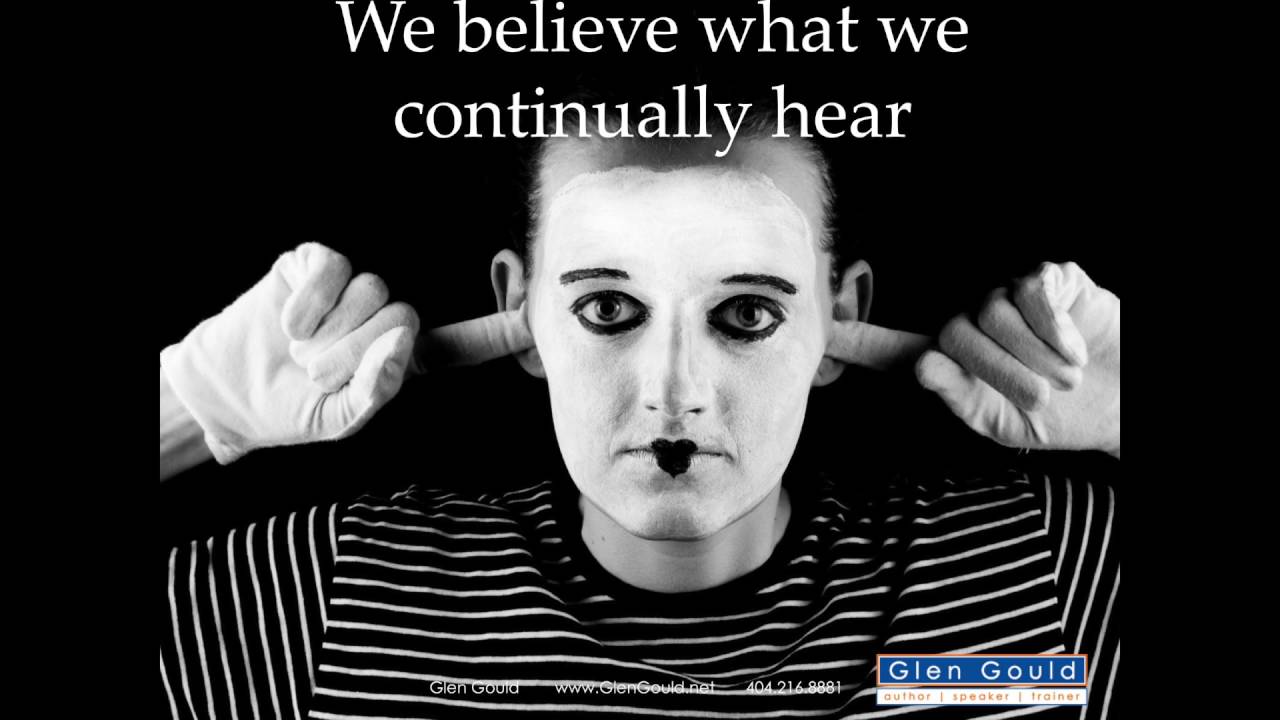
Thank you, thank you. I do look forward to coming here, and Dave mentioned that I'm in the process of losing weight. I've been doing this running and diet thing for about a year and a half. Well, two, am I kidding? About like all my life. I've lost 30 pounds a lot of times. I've lost 70 pounds twice. So hopefully I can get a little bit further down, but I really look forward to coming here because I treat myself to Chick-fil-A biscuits on the way over here. This is my benefit. And I was amazed at something I learned at Chick-fil-A this morning. Did you know that before 1946, nobody ate a chicken sandwich? Well, I mean, they invented the chicken sandwich. It says so right there on all their advertising. So I guess nobody ever ate a chicken sandwich before 1946. Is that the truth? I don't know, but we'll find out. We're going to talk about the truth today. Today. I always like to try to find a Bible verse that kind of leads me when I'm developing the talk, and this one kind of jumped out at me. It's Romans 12:21: Do not be overcome by evil, but overcome evil with good. Would y'all join me in a quick prayer? Father God, help us today to overcome all the evil that we experience Not only just the evil in this world and in this life, but the evil we bring upon ourselves, Lord, that we would see the good, focus on the good, have the good overcome the evil in our lives, and that we would then go out into the world today and help others overcome the evil in theirs as well. In your name we pray. Amen. The reason I wanted to talk about the truth, because there's a lot going on right now that has to do with the truth and And if you think about it, we've got the elections going on and there's a whole lot of not truth in that. And we've got the controversy going on with Colin Kaepernick and the national anthem and there's a whole lot of not truth in that. And all you got to do is just spend a moment anywhere in the world and you're going to find a whole lot of not truth. I think the Bible would call those lies. But I think that we've gotten to the point where we don't want to be so brash. We don't really want to call things lies because a lie is a pretty strong word, isn't it? And so we're going to try to dig around today in the truth and find out where the lies lie. So I'm going to start out with one thing real quick. You see these 5 words that are on the screen right there? If you would please, somebody tell me which word there is not a real word. Pick one, anybody. Nansoma is not a word. Okay, anybody else? Anybody disagree with him? There won't be a test later on. Nobody will know if you were right or wrong except for the people watching this video. I have thousands on my page. None of them are words. And Dave is absolutely correct. None of them are words. Did you notice what I did to you though? I said, which one of these is not a word? And you immediately keyed in that there must only be one. I led you to the wrong answer. This is very, very important. The reason this is important is because with the exception, exception of Persoma, which on my screen showed up with a little red line underneath it. So I thought for sure you guys would pick it. But it doesn't work out that way when you put it in PowerPoint. Persoma is actually a— it's not a word, but it is a name of a product that is sold on the internet, healthcare or something like that. I didn't really look into it too much. I checked them all, but persoma is, is, we'll actually find it if you're looking for it. The other 5 were, or other 4 rather, were interestingly put into a study by a couple of universities in Michigan. They put these words in the newspapers of these schools. And what they did was, is with different frequencies, they put on, in one school they put one of them one time, one of them 5 times, one of them 10 times, one of them 50 times. And then they reversed the order on the— at the other school. And what they found is that every single person, when asked about these words later on, the word that was more frequently used was associated with good. Even though it has no meaning at all, it was associated with good. See, the more we're exposed to something, the more we believe it's good or true. And this is called cognitive ease. It's a feeling of overall goodness and truth to those things that we have been exposed to over and over and over again. And there's a lot of science behind this. As a matter of fact, if you want to watch a very interesting video, and part of the information that I got was from this video, there's a guy on YouTube called Veritasium. Good luck, but if you type anything close to it, he'll pull it up. And he does a lot of videos like this where he exposes things, and I think you'd find it very, very interesting, the science behind this. I mean, he even talks about if you're exposed to the to the phrase the body temperature of a chicken, the body temperature of a chicken. And if you're just exposed to that over and over and over, whatever comes after that, you'll believe. So if you say the body temperature of a chicken is 48 degrees Celsius, you'll probably believe it, even though that's not true. But the more you're exposed to something, the more you believe it. Now, this is going to be important for us because what we continually hear, we believe. And I'm going to challenge you today to kind of censor what you're continually hearing. We all spend a lot of time in social media now. If you aren't on Facebook and LinkedIn, and last time I was here I challenged you to be on Snapchat and other things. If you aren't on social media right now, I'll be very, very surprised. All of us have some sort of aspect, even if it's just LinkedIn, and we're listening all the time and we're continually bleeding that. So what are you continually telling yourself? And this is the real rub for you. For those of you in the room who are seeking a position, seeking a job, maybe you've been without a position for a while, every day you're continually telling yourself, "I'm unemployed," or, "I'm underemployed." Every day you're continuing to tell yourself, maybe the lie you're telling yourself is, "I'm trying really, really hard to get a job," when maybe you're not approaching the job of getting a job as a full-time job. Maybe you're continually telling yourself, "I'm too old, nobody's going to hire me." "I don't have the skills, nobody's going to hire me." "I don't have an opportunity, nobody's going to hire me." Now, those are bad messages in and of themselves, but they really get at the core of you, not the excuse, and that's the real danger here. See, when we say things like that, we aren't saying that it's because of them they won't hire me. We're really saying to ourselves it's because of us. And it's vital that we censor what we say to ourselves every single day so that we have the best possible opportunity to sit tall and straight when we are in that interview chair. You know, yesterday I had a friend call me and he asked me if I would write— He started out with explaining, you know, how long I've known him. I said, "Just cut to the chase. What do you need from me? You know you've got it." He said, "Well, would you write a letter of reference for me?" I said, "Of course, I'd be happy to." And I hung up and my son said, "Does anybody really read those things anymore?" I said, "Yeah, they really do. But what's most important is the guy who's gonna read it the most is the guy that I'm writing it for. And every time he reads it, he's gonna feel a little better about himself." And he's gonna go, "You know what? If this guy believes it, I should believe it." So here's my recommendation to you this morning. Perhaps there's somebody you could call today to say, "Bob, you've known me for—" And they'd say, "Just get to the point. What do you need? You know you've got it." "'Cause you're close. I need a letter of reference." It'd be long or short as you want it. And then read that thing over and over and over again to kind of mitigate all the negative stuff you're telling yourself every single day, because it would be vital for you. The important thing today is to get to the truth, and I'm talking about the truth about you. You have skills. You have abilities. You are the only one on the planet that can do you. Nobody else can. And if you're not doing you, we're all losing out. So I urge you once again to overcome the evil of thinking negatively by focusing on the good in you. I appreciate your time this morning.