How a 24-Year-Old Entrepreneur Turned a Government Dilemma into a Booming Business With Greg Berry
In this episode of the Online Business Launchpad podcast, host Trudy Rankin interviews Greg Berry, founder and CEO of Municibid, a marketplace that enables U.S. and Canadian state, local, and special‑purpose governments to auction surplus assets online. Berry recounts how, at age 24, his experience as an elected city councillor exposed a systemic problem: governments were consistently underselling surplus items, often receiving a fraction of market value. Leveraging his IT background, he built a custom auction platform in 2006, secured early pilots with neighboring municipalities, and demonstrated rapid price improvements (e.g., a mower selling for $500 versus the expected $100). The conversation covers the evolution of Municibid’s business model—from an annual subscription for governments to a free‑for‑government, buyer‑fee structure (5‑9% of the final price)—and the strategic shift to focus on buyer revenue. Berry details the grassroots go‑to‑market tactics (flyer distribution, legal ad placements), the pivotal role of trade shows and municipal conferences in scaling from Pennsylvania to New England, and the eventual reach of over 6,000 government clients and hundreds of thousands of buyers. He explains the technology stack (custom auction engine, Customer.io, Intercom, Holistics, Google BigQuery) and the importance of data‑driven decision‑making for marketing, sales, and operational insights. Team growth is discussed: bootstrapped beginnings, first full‑time hire after five years, a current core staff of six full‑time employees plus contractors, and a fully remote culture established from day one. Berry also introduces a new venture, Surplus.com, a B2B marketplace for business surplus, and shares his perspective on fundraising—raising a modest round from clients after multiple VC rejections—and maintaining majority ownership. The interview concludes with actionable advice for aspiring entrepreneurs: embrace hands‑on learning, seek mentors, iterate quickly, and prioritize building a capable team early.
Chapters
At just 24 years of age, Greg Berry was elected as a city councillor and he quickly noticed a major, major problem. Government organizations at all levels were really struggling to get fair value for their surplus items. And because he was determined to find a solution, Greg leveraged his IT expertise and his business building experience to create Munisibid, which is a platform that subsequently revolutionized government auctions. And unknown to Greg, in doing this, he also solved a problem that my dad used to have when I was young. Today, I'm thrilled to be joined by Greg on the show and get him to talk about his journey from young, inexperienced local councillor to founder and CEO of Municibid, and how his desire to help local government get fair value for their surplus items, plus his expertise in IT and entrepreneurship, helped him create an online platform that has truly, truly revolutionized how government auctions work in the United States. Now, after nearly two decades of existence, Unisubid still has nearly unlimited potential for growth. And in the episode, Greg shares his wealth of knowledge about identifying opportunities, solving problems, and how you go about building a successful and highly scalable business from scratch. Welcome to the Online Business Launchpad podcast. I'm Trudy Rankin and I bring you stories, tips, and advice from online entrepreneurs like Greg Berry who are finding success because if he's done it, so can you. And I've been running my own online business for 9 years now with more than a few twists and turns as I've learned what to do and what really truly not to do to achieve my goals. And because of what I've learned, I've become passionate about helping busy online business owners like yourself hit your goals without burning out or having to hire a big team. I've used my experience and the experience of others to help hundreds of people grow their online business. And one of my greatest joys is working with people who, because of life circumstances, need a flexible work from home or work from anywhere option that helps them pay the bills. Now, my mission is simple. I want to help you solve the challenges you face as a far, far too busy online business owner so you can have more time and money for yourself and your family and more choices in how you live your life. So if you're ready to once again jump into online business building and learn from Greg's incredible journey of turning a problem into a thriving business, stick around and we'll get stuck into the story.
Welcome to the Online Business Launchpad podcast. And today I am here with Greg Berry, who is the CEO and founder of Municibid. Now, something that Greg doesn't know is that when I was a kid growing up, my dad used to, on a very regular basis, sit down in front of this thick wad of paper and go through line by line looking at things that were actually available either on an auction basis or just a for sale basis if you wanted to front up with the cash. Stuff that was left over from either a state government or federal government. And it was amazing, the sorts of things that you could find in those lists. But it was a really time-consuming thing. And a lot of times the lists were out of date. By the time you found them, the stuff was already gone. And it was just an interesting thing when Greg reached out and his team reached out to tell me about what he does. And I'll let him introduce himself in a little minute. But MuniciBid basically is an online platform that helps connect people who are interested in stuff that's left over and that the federal government or the state government— and we'll clarify which of those two is the correct ones as we go through— makes them available to people and just makes that transaction and that finding a lot easier. So, Greg, thank you so much for being on the podcast and welcome.
Thank you. It's a pleasure to be here. Appreciate the opportunity to share my wild story of government auctions.
Yes. And maybe some people might not even know that government auctions are a thing. And it's not just the US that has government auctions. Pretty much every government has. And it's just a, it's just a really great idea. So would you just, as we get started, just explain to people kind of who you are, where you're from, and how you actually got to the place of starting a business.
Sure. So I was born and raised in a town just outside Philadelphia, Pennsylvania in the US. And after all those years, at the ripe young age of 24, I decided I was gonna run for our town council. And it was a highly contested race. Learned a lot about campaigning and politics, but I won. And so I won a seat on the city council and shortly thereafter, I saw how our town was really having a problem selling things that we no longer needed for a true market value. So we would sell an old police car that was being replaced, we'd sell it for $300 when the market value, the true market value was around $3,000. And then the next agenda item later, we'd be arguing over $1,000. And I'm like, wait a second, we just gave away $1,000. So I started doing a little research and I noticed that governments all across the country, state first and then country, they were having the same kind of problem. And so I, I have an IT background and I've always been an entrepreneur, so I dug in and tried to come up with a solution to the problem. But it's been a long and windy road. We're just about 18 years into it at this point. But yeah, to clarify, so we serve state and local governments. So that can be the state government, it can be counties, cities, towns, municipalities. I'm not sure how it is in Australia, but in the States, in certain states, there are many different types of municipalities. So there's a difference between a town and a city and a borough and a township and a village. And so they, they're all kind of a little different, but we serve all of those along with authorities. So like sewer, water and sewer authorities, transportation authorities, things of that nature, in addition to school districts and universities. So all of them can sell and it's open to the public to buy. So anyone in the US or Canada, is able to buy from Municipal, from the governments through Municipal.
That's really interesting. That's quite a wide range of entities or organizations that can use the platform to, as you said, move stuff along and get a decent price for it. Or I guess what I would say, a fair price, because you're still talking stuff that's been potentially not always used. Every once in a while my dad would come across stuff that was actually new, but still surplus. How has it worked with you with Municipal?
Yeah, probably 99% of it is used to a pretty decent degree. But every now and then there's something, a piece of equipment or a vehicle that might have been needed for a project that is no longer happening. So there are new items from time to time. There are sometimes leftover or excess, let's say technology products where they bought more computers than they actually needed and they're still kind of new. But yeah, it's a wide range of products that are sold. Across the site and across these governments, from vehicles and heavy equipment, which are basically our top categories, to kitchen equipment, gym equipment, water and sewer pipes, like airplanes, sailboats. Honestly, I think if you name something, it's probably been sold on Municibid at this point.
What would you reckon, just based off— because you're not going to know every single thing that goes through there, I guess, because it's going to be automated to a large degree— but what would be one of the most interesting audity things that have been sold on the platform?
There's been so many different things. We had a town that had kind of a recreation center, and this was only a year or two ago, and they sold all of these classic arcade games, like enough to build like an entire arcade. So I thought that was pretty cool. It was all the games that I played as a kid at the arcade. So that was cool. And then yeah, we've had interesting things like sailboats and airplanes and those sorts of interesting items that you wouldn't necessarily think a government owns. We saw a lot of fire trucks, ambulances, those type of things that you would think a government would have. But really kind of the interesting thing is what people do with these things. And kind of to your point earlier, it is pretty amazing to me to see how much some of the stuff sells for. It's hard to believe that people are out there that are willing to spend the money they spend on some of these items. A lot of the items are either reused in different applications or they're used for parts or they're upcycled and used for a completely different manner or converted. For example, we had a, a mini actually at this point, someone bought an ambulance and converted it into this whole tailgate operations center. So he takes it to football games and he has the, he pulls out the gurney or the stretcher and that's what the, that's where the grill sits. So it's kind of cool that it all pulls out in one thing. And so it's really cool renovation that he did with it. And then we have people buying school buses. And ambulances that convert them into RVs. So there's really tons of different use cases for the things that people buy.
There's so many fascinating things that are on those that are available via platforms like that. Like I said, I just keep coming back to when I was a kid looking over my dad's shoulder and just seeing all of the different types of things and thinking, wow, what could you do with all of that? Or why would you even want to buy that? Sometimes looking at it, we did end up with a boat hull in our backyard for a number of years.
He was keen.
He wanted to do it up. So yeah, so let's go back now to the start of your story. You've become a city councillor at the age of 24. This is a bit of a surprise, would've been a big learning curve, and you've come across this problem. Just talk us through those few that, you know, that, that startup period where you've come up with this idea and you basically decided you're gonna try and do something about it. Kind of what happened at that point? How did you go about getting started?
Yeah, it was not easy. It took quite a long time. So basically what I did was once I realized that this, there was a need and this was a, a legit problem that a lot of governments were facing and there was a demand for something like this. In addition, at the time, this was 2006, so this was like a year or so into my term. In Pennsylvania, at least, it was only the first time that you could, that a government could sell their stuff online. So prior to that, we kind of should cover this because it would kind of make sense with the whole thing that governments would basically use what's called a sealed bid process, or they would sell their stuff at live auctions. And in the sealed bid process, basically the way that worked was the government would run an ad in the local classified public notices section, and then we'd have a couple people, maybe if we're lucky, come down to the town hall, fill out a bunch of paperwork and place one bid, and that was it. And so not a whole lot of people even knew the items were for sale. Then the process was not very convenient. And if you're not used to working with government, it can be a little confusing or intimidating. And then, so we'd end up with a couple of what I call professional buyers that know what they're doing, kind of know how the sealed bid works, and we'd end up awarding the item to the highest of the two lowball bids we got. And then the other way with live auctions, at least with that, there's some competitive bidding because they're going back and forth, but Typically they're going to do that one time a year. So while they're waiting, their vehicles are rusting, they're getting older, their, the tires are going flat, the batteries are dying. And so they wait around this whole time for the live auction day and then it rains. And so then they have 10 people show up. Now some are more successful than that, but that's kind of the general thing is that we don't want to wait all year to sell our stuff. And we, but, and we also want to have competitive bidding. So that's where the online piece comes in. And then again, in 2006, Pennsylvania, at least where I was based, they allowed governments to start selling their items online via online auctions. And then many states were already there or following suit. So it was a good time to be starting this business. I think now would be significantly different because. Of the competitive nature of it. And then just also that pretty much every government at this point has an online service provider that they use or an online auction provider that they use. And so yeah, it would be a little tough these days. But yeah, to get back to your original question about starting it. So I basically, I found a, like a core auction software product that was available that you could customize. And basically I got that going. And I was able to convince a neighboring municipality to give it a shot. My, my town couldn't use it. It would be a conflict of interest. And so I got a neighboring township or yeah, to, to use it. And the first item ever sold was a rotting mower and they were hoping to just get $100 for it and it ended up selling for $500 and they were happy. They were like, wow, okay, this is great. The next item was another township, a different township, and they had a used police car with a blown engine. And again, they were just hoping to get a couple hundred dollars for it at most. And it was funny, I received a call from them at the end of the auction and they said, I think something's wrong with your system. There's no way that someone's going to show up here with a $2,800 check. And sure enough, the next day the guy shows up with a $2,800 check and takes the car away, and they couldn't believe it. So that was a great testimonial and result. And then really just spiraled out from there with bringing on surrounding municipalities from theirs. And then with like, just the radius continued to increase all the while. So it's a double-sided marketplace and we can get into that where I'm at one hand trying to get governments to use this, on the other, I'm trying to make sure that people know that these items are for sale. It was, it was a long journey to really get started. And I think it took almost 5 years before we really were entrenched and got going. But now we're 18 years into it.
So I, I've got a few questions around that, but my first question is, how long did it take you before you finished your stint as counselor and then you added your municipality into the platform?
It was shortly thereafter, maybe a year or two or something like that after that. But because everyone, all the other municipalities, surrounding municipalities were using us and they saw the results and that it was working. And so they just started using us as well.
Yeah. So just a curiosity question in terms of sort of the monetization side of things, I'm assuming that you're clipping the ticket on the sales and the person who buys pays the fee.
Yeah, that's exactly right. But the original business model was not that. The original business model was a subscription for governments to sell. They just pay an annual fee and they can sell as much as they want. Realized that was not going to be sustainable with funding a marketing effort for their items. So then we made it free for governments, so they keep 100% of the proceeds, and then we charge the winning buyer a percent of the final, of the final price, of the selling price. Yeah. And that was 5% to start, and now it's somewhere between 7 and 9%, and it kind of depends on the government that's selling.
That makes a lot of sense because, yeah, obviously the person who's bringing the money is the one who can pay the fee, which is really important. As you, you said you had a background in IT and you had this, you were able to find an engine, an auction engine that you were able to, I guess, essentially white label. Did you do all that work yourself on it or did you have somebody help you?
I did half of the work of the kind of development, but then I had another developer that I outsourced. So it was literally just me for the first 5 years. And then a part-time developer or a contracted developer. This is good. I spent my nights and weekends going around the areas of where the municipality was, basically in the municipality and surrounding areas to every Home Depot or Lowe's or store of any— there's like these different tractor stores. And I would post like literally one of those flyers with the rip-off tags at the bottom. And I would run like local ads and, and what they call pending pictures, probably something like your dad was reading. And yeah, so it was very much kind of on the ground hustling to get the word out about these items in any which way I could, in addition to them being available online and kind of Google search available. And then the one nice thing that was very helpful is that the government still were required to run that legal ad. And so in the legal ad, they basically say, go to munisabid.com for more information and to place your bid.. And so that was like a nice little advertisement as well.
But honestly, it really didn't drive a whole lot of traffic because people would've had to have known what it was to start with, even if they saw the ad. That's really interesting. So in terms of the hustle or the marketing side of things, making sure people knew that this stuff was available, you did all that work. You, you went to all the different places where probably the types of people would be who would be interested in buying stuff. Exactly. How did it, over time and as the word spread that Munisipal was available, how did you move past the local areas that you could reach yourself and to, to a much wider abroad or wider field?
Yeah, it took a long time to, to get to that. So basically the, the short answer to that is municipal conferences and trade shows. And so in Pennsylvania, we had done one of their main trade shows pretty early on, I think since 2007 or '08. And that really worked for us. And we were really the only provider there. And we had great testimonials and results from their neighboring municipalities across the state. And then we basically took those results and went to Massachusetts to their— and I think actually someone, there was a town that sort of organically found us and came on board. And so I think that was the reason why we went to Massachusetts next. And that was great for us, kind of followed the same sort of model up there. By this point though, it was 2009, '08, '09. But at the trade show there, I met someone who worked for the city of Boston and I was able to convince the city. I went up there, made a presentation to do a pilot program for online auctions using our services. And so they did the pilot and they signed a contract. So that was very helpful for us to get started because, okay, oh wow, the city of Boston. Using now. And so that, that really put us on the map in the Northeast or New England area. And then, yeah, and more of the same direct mail. We do a lot of direct mail and now we have a whole program of multifaceted marketing program that we have that's quite complicated. But yeah, so sometimes I wish we could just go back to the simple days, but it's not sustainable or scalable really at this point.
Yeah.
At this point we're working with over 6,000 hundreds of thousands of buyers. So it's a much different scenario than it was back then.
Yeah.
Yeah. It would be challenging. I'd be curious to know from your perspective, what kind of a challenge you face in trying to keep all of those agencies and people organized straight? Do you use a CRM system? How do you actually go about keeping that side of things clean and working like a well-oiled machine?
Yeah, we are very big on automation and basically using technology to the fullest. I'm a big fan of efficiency and keeping things organized. But yeah, with respect to engaging with our customers, whether they're bidders or sellers, we have multiple platforms that we utilize. Customer.io is probably our main sort of marketing automation slash somewhat CRM. And then we use Intercom for our support, which also has some CRM features. And then we have some other smaller type software and, and a couple homegrown applications that we utilize to be able to keep it all connected and to keep it smooth from a user perspective and for our purposes.
Yeah.
So this is a really techie question, detail-oriented, but with these software packages that you use, when you started using them, did they, did How hard was it to integrate them together and get them talking to each other?
Yeah, that, that's a, that's a really good question because I don't think a lot of companies or smaller companies that are just getting started invest the amount of time that's needed to make sure that the systems are utilized to the best of the ability of the system. The whole garbage in, garbage out kind of thing really applies to the, to these platforms. And that's. Having your data clean and organized to begin with is very helpful. And understanding sort of what outcomes or your expectations are with the software. What do you want it to do? What do you want it to help with? And making sure that those kind of business processes are, are already laid out ahead of time makes the implementation of these, these systems much easier. So we have a, our director of marketing. She's an amazing automation, marketing automation genius. And what she's done is just incredible. And, but that's what she does like that. She's a professional in that area. And it's really nice to be able to have that. We're very lucky to have her on board.
That's kind of interesting because one of the questions that I wanted to ask was how deep do you dive into the data and the analytics in terms of helping you understand, A, obviously what you should be doing and saying to market things, but also in terms of finding patterns and figuring out how to be more efficient with what you're doing?
Yeah, that's a great question. We track everything and we just are actually right now, so it's a very timely question. We are transferring from an old system that we've used for years, which was great, but they were bought by a bigger company and that company is in a whole different industry at this point or different direction. And while the, the software still really worked for us, it just wasn't giving us everything that we needed or, or wanted. And so we moved to Holistics. The company's called Holistics, and we basically created a data warehouse with Google BigQuery. So that platform's all in place, but kind of on the, the reporting and the metric side, yes, we utilize it quite a bit to be able to help our customers understand where they are with their auction sales and that sort of thing, but then also find opportunities. For example, showing one government that is a prospect still, and they're not using us yet, this is the average auction sales per year by municipality that is the same size as yours. And so that kind of data is super helpful. In addition to, as I mentioned, the governments saying, how many police cars did I sell last year? Or how many dump trucks did I sell in the last 3 months? Or something like that. That they can tell, and that's also helpful for us. And then it's also helpful for us to understand what things are selling for, if we're seeing trends on what's selling, and then also when items are being sold. So that's super helpful. Like, you don't want to really try to sell a snowplow in the summer, but September and October are our prime time for selling snowplows. Things— those kind of trends and that data is super helpful to be able to have access to. And we're constantly coming up with new ways that we can utilize this data. And then that's one another reason of moving to Holistics is allowing us to be able to do so much more with the data from a marketing standpoint, from a sales standpoint, a customer service standpoint, enabling our customers to see where they stand with their auction purchases and their data on the site as well.
Just the data side of things is just a whole industry in and of itself. It's, there's so much just attacking that. And I say, I use the word industry, but it's really, it's a, it's just a whole skill set. It's a growing area. I want to dig into this part of a little bit, not necessarily so much from terms of the data, but from the perspective of having a team. So when you were growing your business, you started out, you were doing some of the work, you had somebody else that you contracted in to do some of the work in terms of the development side of things. But how long did it take before you started adding other people to the team and what was that like in terms of the experience that you'd had to that stage?
So I should say, so when I graduated high school in '98, I started my first business, which was an IT company and basically helping businesses with their networks and computers and that sort of thing. And that was, it was good timing cuz it was right before Y2K and there was a lot of demand and I was fortunate in high school and at a very young age to be able to obtain some pretty sought-after industry certifications that allowed me to kind of do this. I still went to college, but I decided to go to a local college so I can build my business. So I did that and then I sold that business in 2010, which there were several employees at that point, maybe 5 or 6 or something, but it wasn't a big business. And so I did have some experience managing a team, at least a small team, But it took till 2011 to bring on my first full-time actual employee. I've had several part-time employees or contractors over the years to do various different tasks, but to bring on a full-time person was, yeah, about 5, 5 years into it. Now with that said, I kind of wish I would've done it a little sooner as we all do, but it ended up working really well. And then it was the two of us for a year or two, and then we brought on a full-time salesperson. Then we just kind of started growing from there. But honestly, to this day, we have 6 full-time employees still. Now we have a number of contractors and things like that, but when I say that we utilize technology and we're very efficient, I mean it.
Well, you'd have to be to run a business that size with 6 full-time employees. And yes, you have more other people helping you, but Does that mean that you still have to wear all the hats?
No, I don't. I'm not. So I'm still involved in the day-to-day, but on the Munisipid side, not a whole lot. We did just recently launch surplus.com, which is the basically the same thing, but for businesses, it's a business-to-business marketplace community. And so basically it's an option for businesses to sell their no longer needed items and used equipment and surplus goods. And so I'm working on, that's where a lot of my time these days is spent, but I would not be able to do that if I didn't have my team at Munisipal. And we have an awesome team. I'm extremely lucky to have the team that we have.
So out of curiosity, is it a remote team? Is it, or does everybody is based locally or?
We were, so when I started the company, I set out with the purpose of it being fully remote. And, but which basically it was for quite a while. And then we were in an office for a long, for several years, 5 years or so. And then the pandemic hit and we just really didn't need it. And in fact, a lot of us were starting to work from home anyway prior to the pandemic. And so then we just kind of got rid of that office and then we've been working remote ever since. But we were always remote. First since the very beginning.
Yeah. Yeah. I think pandemic changed things for a lot of people in a lot of businesses. And so just following on, I guess, with the remote concept, you mentioned at the beginning that you, the Municibid is available to people in the US and in Canada.
Is that correct?
Correct.
And so do you have sellers from the Canadian A few, but not many.
We haven't really spent a big effort into that just because of the opportunity that's available in the US. There was a time that we were looking at expanding into the UK as well, and because there was opportunity there, but then we realized we still have a large chunk of the US to go after and it's a much easier situation. So we just kind of refocused our efforts back into the US.
It's interesting. So it's a growth question. How much do you want to scale? How quickly do you want to scale? What model do you use to scale?
Yeah, so it's difficult even in the states because the states operate a little differently. And but if we're not already in a state or within a county in the state that a municipality is in that's looking at using us, one of the first questions is not who uses you in the state, it's who uses you in the county, because the governments don't really ever want to be the first guinea pig. And even though we have 6,000 governments all across the country, we go into a new area and it's, they might never have heard of us. And it's like the, it's the same sales pitch as I was giving 18 years ago, but now with a lot more credibility and stats behind it.
And who does the, who does all of that sort of pitching, getting out there and telling people and trying to get people on board? Is it you or is it a team member?
No, I don't. We have a director of sales that manages that. Aspect of things. So he attends trade shows. Every now and then I will attend some trade shows as well. Our director of customer success, she actually has been going out to trade shows as well because she's kind of the first person that people are dealing with. And it's nice for people to put a face to the name and, and she's great at it and she enjoys it. It's nice to get outta the office and meet our customers in person.
Yeah, just that, that whole face-to-face thing. It's really important. I'm just, this is just a curiosity-based question, but for you personally, you've been doing this for a number of years now. You've been through that whole process of starting up, doing the hard yards, building up the business, and now you're starting another similar thing, but just for a different market, surplus.com. Just for you personally, which part of it do you enjoy the most? The start and build or the turning it into a well-oiled machine and keeping it going?
I think I would, I guess I'd have to say both. And I know that's kind of a scapegoat answer, but, but I really do enjoy the process. I guess I would, I guess if I had to pick one, I think the, the starting of it and then putting people in place that will get it to the next level. As a lot of entrepreneurs do when we're starting out, we try to do it all. And especially when I look back at my IT company, of course I learned a lot about my IT company. Or a lot about business during my IT company days that I applied to Munisipal. But now looking back, there's so many lessons learned, of course, over the years. But one of the big lessons was to really try to build the team as quickly as possible. So when I— and one of the reasons why it took a little bit of time to bring on the first full-time employee was I basically did this bootstrapped. So I was investing my own money into this on And eventually, I think in 2010, I did raise a small amount of money from some of my clients. And, and that really was able— that was when I was really able to bring someone on and put some serious money behind marketing and sales efforts. And that's, that was kind of a big turning point for us. But yeah, so now, but now I'm back to owning 95% of the company, which is great.
So that's, it's actually kind of an interesting part of a journey is actually getting out there and doing fundraising for that particular period in that point of time. How much, how, what was it like in terms of that actual getting out there talking to people saying, hey, I've got this business, you want to be part of it? Would you like to invest in this business? What was that like for you?
So one of the best things that's ever happened to me is the amount venture capital firms that told me no. And at the time, like walking out of these offices, at a loss or not happy about it. But as I look back, it was the best thing ever because, and one, now I, now I totally understand it. It's not really a venture capital-based business. It could have been to a degree, but it's just not big enough. The opportunity is not big enough for what they were looking for, especially at the time. And it came to 2010 or so when I started to raise money. Or look at raising money from just people I knew, we had already had very good traction. And so it was just, it was very clear that this money was going to be used to fuel the existing fire. And so it wasn't a long shot. They, there was plenty of traction, plenty of governments using us and, and continuing momentum with new governments coming on board. And in fact, even today we still have 50 governments a month come over to Municipit. It's crazy. I would've never have guessed that. When I started the company, I thought it would probably be around for about 5 years. We'd have 500 customers and then I would sell it. And then here we are 18 years later.
And have you had people make offers for it?
Oh yeah.
Constantly.
Oh yes.
And it's a good working model. That's a really good working model. And I just find it, I'm just still interested in the whole scaling thing and you've got lots of growth opportunity in the States. Have you ever thought about in terms of scaling to other countries more than you already have, basically using it at like a, I don't know, a licensing model or a franchising model, or basically put somebody else in charge of building it out in another country, but they end up giving you a cut of everything. Yeah.
So we, I did have a conversation with someone in Germany about potentially doing that. But again, it just kind of took mental bandwidth. That I would rather invest here in the US. Perhaps if we were maybe much bigger at the time, it would've been a more serious conversation, but I just, it was just, it was poor timing after that because I think it was, that was just after we kind of turned down the idea of expanding to the UK and then expanding more into Canada and refocusing our efforts in the States. Now with Surplus, I envision Surplus to be a global brand across as many countries as possible, but we're starting in the US, not even Canada, just the US right now. And but we will, I can definitely foresee us and plan on expanding that to other countries and regionalize or localizing the site for those regions.
Yeah, no, that makes a lot of sense. And I'm just thinking, because that, that when you said surplus.com, there's a name rang a little bit of a bell.
I'm pretty sure your site's live, right?
Surplus.com is live.
I'm pretty sure it's live. We just launched it.
Just launched it. Okay. Yeah, no, because I was talking to somebody who's into the whole getting containers of stuff from Amazon returns and stuff like that and then reselling and stuff. And they were talking about this website where you could jump on and you basically pick up bits and then resell and stuff. Yeah. So that's going to be interesting to see how that grows. I'll have to go back and have another look at it now, but it's just been really interesting listening to your story of taking an idea, seeing a problem, building something to solve that problem, and then kind of where that's taken you as you've gone through the years and building it up. If you think about yourself as a young entrepreneur where you're just getting started, you've been through that growth phase of having to learn how to be a counselor. Learn how to serve the area that you live. You start this business and if somebody was in a similar situation to you, what would be the best piece of advice that you could give somebody who's just getting started and they still have a ton to learn about being an entrepreneur?
I would say they're in a great position because honestly, a lot of what I did was based off things I didn't even know. And if I know, it's kind of one of those things, if I knew now what I did then, or what I— if I knew what I knew now, then I wouldn't have done it. And that's the truth. And so it's a really big advantage to kind of go into something without knowing and figuring it out, because obviously you're gonna— you have that, that true hands-on learning. And then a major advantage, actually, but also with that, on the flip side, is to find really good mentors Find people that are very successful in your space and try to get time with them or try to bring them on as a mentor and just learn from them. I think one of the advantages, an easy life hack is just to listen to older people and the life experience that they have. Business experience is super helpful, especially then. And then you could take that advice and apply it to what you're, how you see the world. So it's not like you have to do exactly what they say to do, but synthesize it to your own, your own liking, I guess.
I think that's wise advice. That's really good advice. So Greg, it's been really great having you on the show and just listening to your story. If people are interested in getting in touch with you or finding out more about what you've been talking about, either with surplus.com or with Immiscibid, I'll say it again, getting, getting that out of, out of the mouth.
Where would they go?
So they can go to write to munisibid.com or surplus.com or @munisibid on all the socials and then @gregmberrey on all the socials.
Okay. All right. Thank you so much. I'll put those links in the show notes just so that people are able to go and have a look if they want and if they're interested. And once again, thank you so much.
Thank you, Trudy. This has been really fun. I really appreciate it.
If you are a longtime listener to the Online Business Launchpad podcast, you'll know that I often talk about Pat Flynn's SPI Pro community. Now, what you might not know is that I'm a founding member of that community. And every year I keep signing up because I get so much value out of it. For example, every month I meet with a mastermind group whose members are at the same spot on the entrepreneurial journey as I am. And we celebrate our wins and navigate challenges together. And if we want to chat in between meetings, we just easily jump into the space that's reserved just for our mastermind and and to say whatever's on our mind. It's a really supportive space where we all keep growing in confidence and capabilities, knowing that someone or several someones have got our back. And that's not all the value I get from being part of the SPI Tool community. I have access to really relevant trainings that Pat has put together. Plus I've connected with several amazing guests for my podcast, experts who shared invaluable insights with my audience. And the opportunities just keep coming. I've had the honor of being on Pat Flynn's own podcast and even teaching other SPI Pro members about some of the things that I'm expert in. And being a part of the SPI Pro community, it's like having my own special group of advisors that I can reach out to anytime I need them. Imagine having that network at your fingertips where every connection inspires and every interaction teaches something new. That's what SPI Pro is all about. For me, it's more than a community. It's a place where we as entrepreneurs come together to push the boundaries of what we can achieve. So are you ready to be part of something bigger? To learn, share, and grow alongside fellow business owners who are just as driven as you? Check it out for yourself and see for yourself the difference a truly collaborative community can make. And if you'd like to use my affiliate link to sign up, go to onlinebusinessliftoff.com/affiliatelink. Onlinebusinessliftoffs.com/spi-pro. If you do, I'll receive a small commission at no extra cost to you, for which I thank you. And once you're in the community, say hello and I'll be delighted to show you around. So join me in the SPI Pro community and let's reach new heights together. Once again, that's onlinebusinessliftoffs.com/spi-pro, and we'll see you there.
So thanks again for tuning into the Online Business Launchpad podcast. I hope you found Greg Berry's story as inspiring and interesting as I did. I really found it really, really fascinating, and I seriously wanted to jump straight off the call when we finished talking and go hunting for really amazing deals and bargains on the Municipio website. Now, if you enjoyed this episode, please take a moment to leave an honest review and subscribe to the podcast. Your feedback will help other people know if this podcast is right for them, and it also helps keep me motivated to bring you more valuable content. So thanks again for listening, and I can't wait to share more more stories, tips, and advice with you next time. And until then, keep looking for the big problems you can solve, just like Greg Berry did with Munisibid. And we'll see you next time.
More from Greg
Auctioning Off Government Surplus Online with Greg Berry of Municibid and Surplus.com
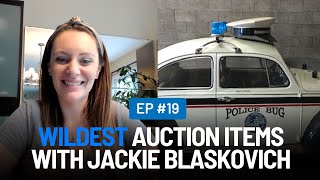
Celebrating 8 Years with Municibid: Wildest Auction Items, Competitive Bidding, and Future Dreams...