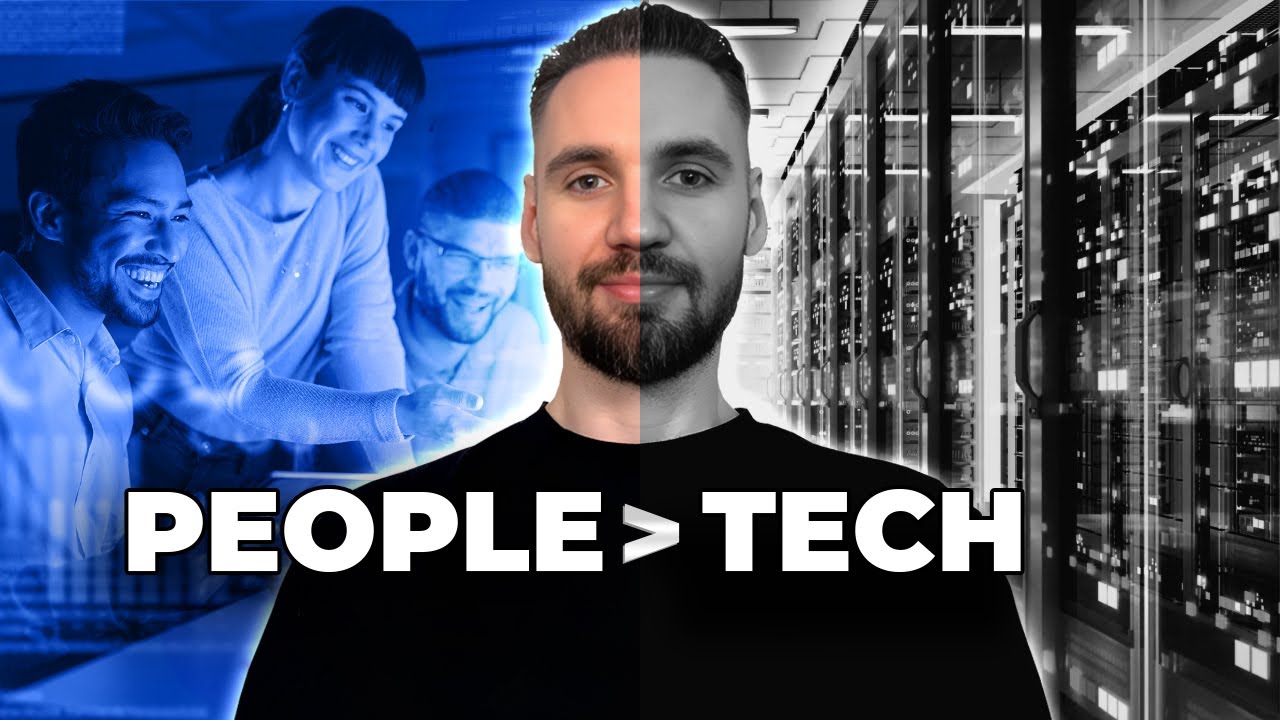
In this monologue, a software engineer who progressed to CTO challenges the common misconception that engineering is purely about writing code. He recounts his own early belief that engineers work in isolation, only coding, and describes how his first job revealed the reality: engineering is a highly collaborative discipline that requires constant communication, alignment, and teamwork. He argues that people skills—empathy, active listening, clear communication, and the ability to work well with others—are not optional but essential for delivering maintainable, scalable software and for career advancement. The speaker provides concrete examples of how strong people skills manifest in daily work, such as conducting helpful code reviews, facilitating rapid onboarding, approaching disagreements as joint problem‑solving, empathizing with product managers, designers, and customers, and proactively unblocking teammates. He then outlines three pillars for developing these skills: teamwork and collaboration (e.g., team sports, collaborative games, freelance projects), empathy and active listening (referencing a prior video), and communication (presentations, public speaking, writing, and translating technical concepts for non‑technical audiences). The talk concludes with a call to action for viewers to share their thoughts, subscribe to the speaker’s “Engineering Leadership” newsletter, and continue improving their people skills to become better engineers and leaders.
Chapters
A lot of engineers underestimate the importance of people skills. They start learning programming and the assumption is that they will just code all day and there is not going to be any need to talk with anyone. Well, the reality is a bit different. Engineering is one of the most collaborative fields out there. It's all about good collaboration, alignment, teamwork, and helping each other. I've certainly had this assumption and I'll tell you all about it in this video. I assumed I would just code all day and that would be it. Well, I was very wrong. Before I started learning programming, I thought that all that engineers do is code, and after they finish whatever they were doing, they call it a day. No need to talk to customers, project managers, clients, or others. My assumption couldn't be more wrong. When I first started learning programming, I have found real joy in building things, plus continuously learning and getting better. I would be pretty happy doing just that for the whole day without the need to talk to anyone. So when I got my first role as an engineer, I saw what actually engineers do, and it was a bit shock to me, but also in a positive way. I saw how important collaboration, alignment, and working together with others is. That finding provided me some sort of confidence that this is a field I see myself in long term, especially because I was always pretty good with communication, collaboration, and teamwork. So now I can combine my passion for building things and also use my decent people skills. Fast forward a few years, the people skills were actually the skills that made me stand out from other engineers and helped me to progress in my career all the way to CTO. And the reason why they helped me so much is because engineering really is one of the most collaborative fields out there. Let's get into why that is the case next. There is so much need for collaboration and alignment to effectively deliver solutions that can scale long term. Just one person working in isolation and making decisions will cause a lot more harm than actually help. And the reason is that every piece of code we create, someone needs to maintain it. If one person is just making isolated decisions, nobody else will know what those decisions actually were. All of the future changes will depend just on that person. The goal is to create software that is easy to maintain and adjust based on future needs. And you can only do that with great minds that are working together. That's why I like to say software development is a team sport and great teams build great software. You can have the best and the smartest engineers on the team, but if they don't work together, they will not be delivering the actual value. That's why good people skills are really important in our industry. Let's get to that next. You can have the best technical skills in the industry, but if you're not making sure that others learn from you, they will unfortunately not mean that much. Just changing a few words in your overall mindset makes a huge difference. Change your mindset from "How can I deliver this solution?" to "How can we deliver this solution together and learn from each other?" This will make an immense difference. This provides a lot more value to the team and the overall organization. So make sure to do that if you haven't already. And there are many more detailed examples where good people skills help a lot. The first one is you're doing great code reviews. You're treating code reviews as a way to help others. You review them swiftly because you wish to unblock your colleague and rather ask questions instead of providing very direct statements. The second one is you are making sure a new person gets onboarded fast to the team. You take pride in creating a great onboarding experience and you offer extra support to the new person coming in. You understand that it's not easy and straightforward to jump into the new codebase and the team, and that's why you wish to make it as easy as possible. The next one is you're looking at disagreements as a way to find the best solution together. You're not trying to compete or trying to do whatever is possible so that your solution is the actual solution. But you're trying to understand based on pros and cons which would be the right solution objectively. You feel amazing when the team finds the best solution, not if the solution is yours. The fourth one is you are putting yourself in the shoes of others and understanding their perspective. This is especially important when you're talking with a product manager, a designer, or a customer. You're not only trying to push your wants, but you wish to understand their challenges, their motivation, and their ones. That's how you can map the solution that would actually fit these perspectives. And the last one, you're helping others in need. When you get the feeling that someone is stuck on a particular problem, you offer them help to look through it together. You spending 10 minutes to unblock your colleague may save a lot of time and also a lot of frustration to your colleague. So how to get better in people skills as an engineer? We'll answer this question next. There are a lot of ways to get better in people skills, and there's not a one-size-fits-all one-size-fits-all approach. Let's break it down to 3 different areas. You need to focus on developing your teamwork and collaboration skills, develop empathy and active listening, and your communication skills. So let's go to the first one, how you can develop teamwork and collaboration skills. Playing any kind of team sports helps. I played a lot of team sports growing up, mostly basketball, and that helped me to get to know the importance of teamwork. And also any kind of team-oriented games helps a lot as well. I played video games growing up, mostly team-oriented games, and the mindset is the same. You can't win if you're not working together well. I also did freelance projects in collaboration with other people. It's hard to have success without great teamwork and collaboration between people. Now let's get to the next one, and that is how to develop empathy and active listening. I have already shared in detail how you can do that in one of my previous videos. I'll share the link in the description. Make sure to watch it later. And the last one, but not least, how to develop communication skills. Try sharing knowledge by doing presentations or talking at events. You help others grow, and at the same time you're improving your public speaking skills, overcommunication skills, and you're also meeting new great people. The next one is start writing online. Writing LinkedIn posts and writing the newsletter articles both have helped me a lot to explain things a lot better and explain things in as few words as possible. And the last one, explain technical solutions to non-tech people. I learned that if you can explain a complex tech solution to a non-technical person, you understand it well. And to do that, you need to find the right words and sentences that resonate with them. I'm curious to hear your thoughts on people skills being so important in the engineering industry. Make sure to share them in the comments. To learn more, you can subscribe to my newsletter. It's called Engineering Leadership, where I share similar tips and advice on how to be a great engineering leader. There are more than 100,000 people already reading it, and I publish 2 new articles every week. Thank you for watching, and I'll see you on the next one.