This Is Holding Most Engineers Back from Lead Roles
Gregor Ojstersek explains why strong engineers stall in their careers: they hoard knowledge and become bottlenecks instead of multiplying the team's output. The shift to leadership requires moving from sole ownership to delegation, documentation, and coaching others to succeed without you.
Chapters
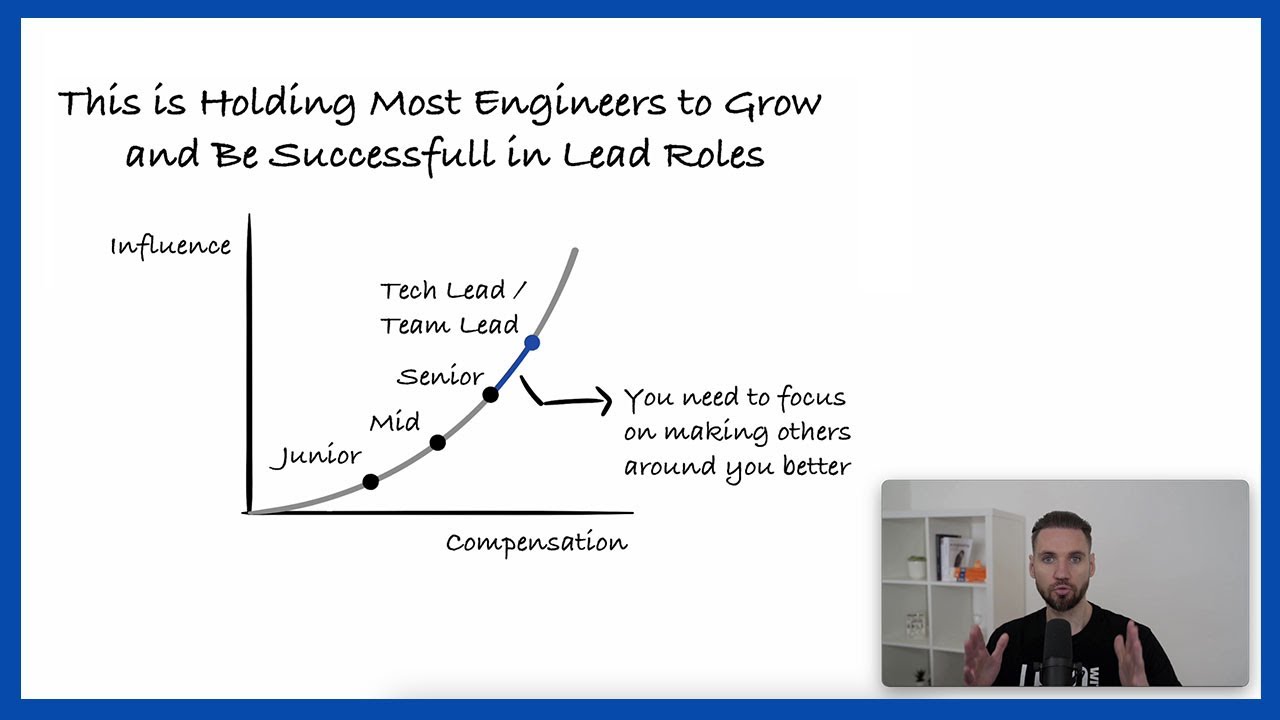
Through coaching and mentoring many engineers who wanted to grow to lead roles, I've seen this repeating pattern with many of them. A lot of these engineers were good technically, but when it was time to delegate, trust others, and also letting go of control, that was the hard part. If you don't know me yet, my name is Gregor Ojstersek. I am the founder of Engineering Leadership Newsletter, and in this video I'll be sharing what's holding most engineers back to grow and be successful in lead roles. Okay, let's first start with, um, let's define what is the root of this problem. Where actually does this problem come from? So we have started our careers as engineers, and as an engineer, you have normally a complete control of the, you know, outcomes of a task or a ticket. You, you write all the code, you You, you finish it and you also make sure that everything works correctly, right? But the problem comes when you need to completely change your mindset shift, when you need to completely change the way you think about, you know, solving problems when you grow to lead roles. So what happens is that as a lead, you need to let go, delegate, and trust others. And also you need to make others around you better. So let's look at this scenario here. If you have a certain task or a certain project, um, you should be thinking, how can we finish this best as a team? Who would be the right person to handle this? And also how to share knowledge across the team so, so that you are not a bottleneck. You should not be thinking about, hey, this is how I'm going to be solving this, this is how I'm going to be doing this. But how can you leverage your team and everyone around you to make sure that it's going to be, you know, the best thing for the team, for the project? And if, if you're going to be only the only person who is going to be able to finish this project or is able to do this, then you are failing as a lead. You're not doing enough coaching and mentoring and you're not leveraging your team enough. And what's going to happen if you don't do this and you still want to be either a manager or a tech lead, you're going to be close to burning out because you can't rely on people, you can't rely on people around you to take over and handle certain things. And also, you're gonna— you're not going to be able to take any vacations as well because you are, you know, everything is— will stop if you're not going to be there. So what you want to do is you want to ensure that if you're not there, things are still running smoothly. You know, that is where you want to be as a lead. And that is the big mindset shift that a lot of people, especially, you know, engineers, It's hard because, you know, we are used to having a complete control of the outcomes, but then you need to completely just let it go. And, you know, making others around you better is what becomes really, really important. And, you know, your individual contribution is not that something that is, you know, the most important what you should be doing. But it's hard because That is the identity change that a lot of people, you know, engineers need to go through. You know, you may, you may, you may identify as the go-to person of either a certain technology or a certain project or a certain domain. But then you should be, instead of you, you know, being, being always that person that everyone is going, going to, to ask, you know, any kind of questions. You are making others to be like that. You're making others, you're finding the spots for others to be successful. That is the key thing. I do, however, I do advise, you know, people who want to grow to become, you know, lead engineers, tech leads, team leads, engineering managers, architects, to become the go-to person either, you know, on a project, on a domain, or in a certain technology. And the reason is that you showcase that you have the right set of skills to be successful in the lead roles. But then the problem comes when people are taking this advice too literally. And what I mean by that is becoming the go-to person is not about, you know, trying to keep the knowledge and context only to yourself. Not creating any documentation, not being supporting, not being helpful to onboard others, you know, helping others to be— to start working on that particular thing. That is, that is what doesn't mean, you know, being a go-to person. And I've seen a lot of people, a lot of engineers in my career trying to hoard knowledge to themselves, thinking that, um, that's how they are going to show their value to the company, to, to the team, to the project, and so on. Because they believe that if they would not be having that knowledge, they, you know, would not be as valuable. But the problem is, if you are always going to be the person who everyone comes to when there's a certain issue, you're going to be, you know, the one who is fixing all the issues, then there is no room for you to grow to the next level because the company, the organization that you're in won't be able to take that risk to actually put you on the next level. Because, you know, if you are owning, if you are the one who is making all the decisions about that specific other domain project and so on, there's no room for you to, to move forward because it's going to be a huge liability for the company to, to move you to the next step. And that is, that is where the real problem comes. And that is where a lot of people are actually having issues with. It feels good to be, you know, to be wanted, to be, you know, asked for direction, to be, you know, to be— to people come up to you about it and you always have the solution. But at the end of the day, this is going to hurt your career and it's going to stop you from growing to the next level, to lead roles, and then also progressing in lead roles. It's not going to be possible. You need to become a person who is, you know, who is not going to be responsible for everything, but instead you want to be a force multiplier for others. You want to be known as a person who is making others around you better, who is finishing projects successfully, and who others look up to, who is, you know, coaching and mentoring others, who is who is focusing on making the whole organization better and so on. So we talked a bit, we talked about this as well. Like, yeah, if you're going to be hoarding knowledge only to yourself, you're also going to be close to burning out as well because you can't go on a vacation without completely turning off and switching off and relying on others to make sure that things are still going to be smooth. And so on. And a lot of people are struggling with, especially the people that are, you know, technically very good and they have a, you know, they are very passionate about a project, about the product and so on. But the problem is, as I mentioned, you know, you can't progress further if everyone is waiting for you to be, to be handling the situations regarding this, this particular thing. You're only going to be able to grow if you're actively making others around you better, finishing projects successfully, and you are not a bottleneck about a certain, certain thing. So this is what you should be doing. You should be spreading knowledge, you know, spreading the knowledge and also awareness about this particular other technology, specific domain, or specific project. You should be leveraging your people around you. You should be Ensuring that everyone has the correct context so you can go on a vacation, one week, two week vacation. And also, most importantly, you can grow to the next level because there are people who can handle these projects correctly. And also you create documentation, learning, the learning documents and so on. And you also provide support, be helpful, be there when others need help, but not to the extent where you are the only one who is, who is going to be able to provide that. That support, right? You don't want to be a person who is just going to be answering questions, you know, the whole day and that's it, because again, you're going to be a bottleneck. If you're going to go on vacation, then things are going to stop, you know, working smoothly if that's going to be the case. So always remember this: growing to lead roles is not about, you know, you knowing more and you being the most knowledgeable person in the room. It's about being a force multiplier. And think of it like that. If you can improve, you know, your coding by 10%, the team gets minimally better. But if you lean into being a force multiplier and helping 3 to 5, you know, others to level up, you know, inside your team, the whole team just got massively more productive and effective. This is very, very important thing to do. And remember, if you, if you help like 10 people, 20 people, 30 people, 40 people, 50 people to be better, that, that is where the real impact happens. And the more you grow in lead roles, the more that that's expected. And yeah, that's, that's where the real, real value for the company is. I hope this was, uh, helpful to you. And, uh, if you want to learn more, check out my newsletter. It's called Engineering Leadership. There are more than 150,000 people already reading it, and I publish 2 new articles every week. And, uh, yeah, thank you for watching, and I'll see you on the next one.
More from Gregor










How I Grew My Newsletter Engineering Leadership to 165k Subscribers in 3 Years
