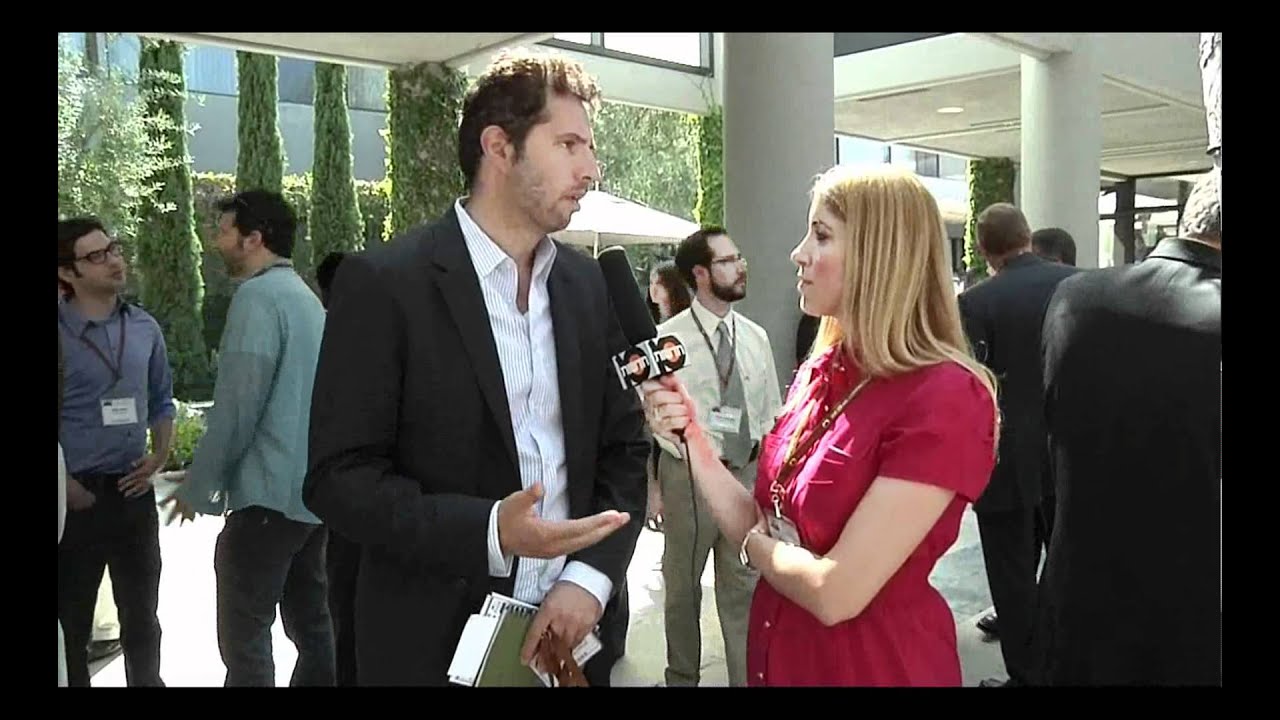
2023 Keynote Conversation with Guy Oseary

Music executive Guy Oseary discusses his three-decade career from A&R at Maverick Records to co-founding Sound Ventures with Ashton Kutcher. He details their new $250 million AI fund and argues that AI music startups haven't solved how to pay artists, citing the Beatles' AI-generated final song as a cautionary example.
Chapters
Please welcome Guy Oseary.
Lord, that's too crazy. Hey guys, thanks for having me.
Guy, you and I started a friendship about 4 years ago when you called me— we didn't know each other— to tell me that you were one of the early investors in Peloton, and that as a music person for, for more than 30 years, you were troubled by the fact that we were suing them for the lack of music licenses, and you asked if you could help. You said, give me one week. And this is a litigation that had been going on for more than a year, pretty scorched earth. And you didn't quite keep your word. 2 weeks later, you brokered a settlement on the night before deposition started that led to an acceptance of our settlement terms, a moving-forward license, and really the establishment of an in-home fitness revenue stream that's become a significant stream to the industry. Now, your career started in A&R. You then moved into talent manager, label executive, um, and then at some point you turned your focus to investing, um, most recently with, um, a 2015 Sound Ventures fund that you started with Ashton Kutcher. Uh, as people can, can see from your larger-than-life pictures up there, uh, in 2016 Forbes named you as the top tech investor, and just last year Variety named you as the Music Mogul of the Year. Um, so maybe to start, Tell us a little bit about how you went from A&R, just 17 years old, into management first.
Well, I actually started managing artists, and when I was 17, I was lucky. I had a lunch with Bernie Berlestein, who's an iconic figure in the entertainment business. And I said, you know, and he was the originator of management. He managed all these really great artists' talent. And I said, you know, Bernie, what's management like? And I'm 17 years old, and he's this, like, iconic figure. And he had lived in the biggest house I had seen until I was 25, right? And I'm thinking, oh, he's going to tell me all these great stories. He said, kid, while I'm having lunch with you here, somebody's having lunch with my client right now telling him all the shit I'm getting wrong. And I was like, oh, I better go into the record business. No, I'm going to go into a record company. I'm not going to manage. So I focused on trying to get into a record company and started working with Madonna and Freddie DeMann at what was Maverick Records. And I got very lucky, very, you know, early on. I signed Candlebox, and then I signed— that was the first really big artist that I signed. And then I signed Prodigy and the Deftones. Then Alanis Morissette was a really big moment for us, and so on and so on. It was a really great run, and one of the things that you build up if you're an A&R— I mean, are there A&R people here at all?
Yeah.
Yeah? Okay. So, yes. So, you know, our job is to try to find the next big thing before somebody else and to identify it. And years later, because I was working with Madonna on her records and we were partners in Maverick, When she had moved on from a manager, I ended up organically becoming a manager. It was nothing that I intended on doing, but then I ended up taking that on. And we did a few tours, some back-to-back-to-back tours, but I saw this moment in time, you know, when you're managing and you come home from a tour, you have a little bit of time off. And I thought, okay, what do I want to do with this time off? And I thought, I'm going to take all that I've learned through the music business, which is identifying talent and then helping that talent reach an audience, and do that instead of finding the next big band. I would find the next big brand. And all the things that I do now are very similar to that. I always think in terms of the music business. And when I find— when I'm meeting with a new founder, I think of them as an artist. I think of them as they're a visionary. They've got songs they want to share. Their company— their idea with people. Do I feel that this person has magic? The same way that people in here have signed artists. Do they walk in the door and have magic? Do they have a great idea? That's what I gravitate towards. Then I use the skills that we've all learned here in this room to help bring that to fruition, to help with the narrative, help get it out and build an audience, build a base.
Yeah. You've been investing with Ashton for a while. You've gotten a lot of things right. You've yet to give me a tip, but you've gotten a lot of things right. Talk about how that partnership formed, and then in particular, the most recent Sound Ventures, which is focused on AI.
So when I started— that time period when I came off tour and decided I was going to focus on finding brands, I didn't know what to do. When you're looking for the next big artist, maybe you go to a club, you're asking for demos. I just started to listen and pay attention to frequencies and what are people into, and I noticed that people were starting to drink coconut water, and so that was my first investment was Vita Coco, which is here in New York, and I identified this company through my friend Seth, and then I went from there. I found Groupon. I thought it was a really cool idea, and I just started making these investments, again, A and R, And the only other person from the entertainment community that was doing the same thing was really Ashton. And Ashton has an engineering background. So I'm more of an A&R guy that just listens, and he's more of the guy going in there and going, does this work? Does this tech work? And he's sitting with the engineers and trying to understand, and he's playing with the tech. I'm like, I hate the idea, I like the idea kind of guy. And so he was doing it, I was doing it, I called him, one day and said, why don't we just do it together? No one else is doing this. And we did. We partnered up almost 2 decades ago, and we started making investments. We got, you know, early Uber and early Airbnb and Spotify and a bunch of other really great companies. And we were really there at the right time. Timing is everything. And we started investing, it was the same time as the iPhone, same time as the App Store. So you could scale a company very quickly. And today with AI, it feels very similar to that time period where there's a whole new wave that's happening, and it's happening very quickly, where things can scale very quickly. So we, you know, again, came together and we raised about $250 million to, to make investments in. It's a growth AI strategy. Right.
So this new fund, quarter billion dollars so far, and you've announced that you're targeting what you call category-defining companies.
Correct.
Tell me what you mean by that and how do you go about finding that? Because I mean, I agree, the AI issue has exploded with an acceleration unlike any issue I've ever seen. A lot of people weren't even aware of its presence as an issue, and then now it's all anyone wants to talk about. So what is a category-defining technology in this space?
So let me back up a little bit. We have 2 funds. We have our regular fund, which we're raising now, which is for the AI application side of things. The fund we just raised, which is a Um, is really for the foundational AI models. And what that means is, uh, fast forward, uh, a, a few years from now, every company we work with is going to be using AI in some way, some form. It's not always gonna be the, the, the thing we're most worried about. It's just gonna be fa— you know, basics, things that we could, uh, save time or, or, you know, help us be better at what we're doing. So people are gonna be using AI and, and our thesis is, is they're going to plug into one of these foundational models. So a year or 2 years from now, whatever company you're working with, I'm gonna say, well, who do you use? And they'll say, well, we use Google or we use OpenAI or we use Anthropic. And it'll be one of 5 or 6 companies that you're gonna put all of your information on and use that model to help you with your business. So that, that, uh, uh, $250 million is gonna be used towards 6 or 7 of these investments for the things you plug into. Then there'll be all the applications that are built on top of them, which we're also going to, you know, work on. But these are the foundational plugins.
Yeah. So I mean, I think probably more than anyone else on earth, you straddle this question of AI in the music industry. You're, you're so well established in both. So thinking about AI in music creation, you know, what role do you think it will have versus human creators? How do you think that plays out in the creative process of music?
Well, it's a really big question there. I think I try to— first, I try to find my position in all of this. You know, if I weren't an investor in Peloton, I couldn't have called you and worked with you on trying to help. So I think my, my, the, the first thing I try to do is one, stay close to the information. So by working with OpenAI and working with these companies, I can at least have a seat at the table, which is really key. I, I don't want to just look in. I want to have a seat and I can at least ask questions or, or try to bring in some solutions. Everyone will have an opinion on this music and AI. AI issue. The artists that I've spoken to, many of them, I haven't met an artist that is ecstatic about it. The idea that someone could just type in your name and write a song based on you is a really hard thing to grasp. I've spent a lot of my time on trying to figure out this problem. You know, how do you— how do you— I always started talent. How do you protect the talent? That's just been my position in life. How do you pay attention to how they get paid? How are they protected? Out of the last 20 companies that I've met in music and AI, 20 out of 20 are showing me solutions that have nothing to do with talent. They're like, hell yeah, you can make music here and you just pay $20 a month and you can make all these songs and you can use 'em in your, in your shows, and you can use them in your podcasts, and you're good. And I go, well, how do you make this? How is talent getting paid? How do they get paid moving forward? And that's where you hit a wall. So no one has really solved that problem. And I'm spending a lot of time on either trying to solve it myself with what I know or looking for someone out there who is solving it. But I'm spending a lot of time on this.
Yeah. So separate from the creative process, I think it's a different question about the impact on the business, on the industry itself. I think probably you're seeing a reaction from people in the music business that's very fearful. Yesterday, a lot of investors in music were gathered together, and I was quite surprised to hear— I think I could summarize overall, they were more optimistic about its potential They have fears, but they were more optimistic overall. So aside from the creative process, from the business side, which you're also very involved in, what do you think about the impact on this on the business itself?
So digital music was scary.
Yep.
And if any, you know, it's easy to forget those moments, but it was— there was a time period where if you talked to a teenager about buying music, it would be impossible. I'm never going to pay for music. I can just burn what I want. I don't need to pay for music anymore. And years later, when it looked like we were in big trouble, Spotify appeared. And Spotify went, we figured out a way to take digital music and for people to want to pay for it, which again, at the time, no one wanted to pay for music. We're going to give it to you in a way that you will want to pay for it. And in a way that talent could get paid. And by the way, it took time. We invested in Spotify, and when we invested, they didn't even have a deal with labels in the US. So they were also on like, we're not sure about this company yet, we're going to test them out. And they started in Scandinavia and proved the model out, proof of concept that it's not going to kill the music business, that it'll actually help. So That took years. And AI moves a lot faster, but it may take some time for what we don't know. We don't know what is that solve where an artist can be paid. Now, there's definitely a business model for where artists don't get paid, but that's not my position. There's many models for investors to invest in where, hey, you can get all the songs you want, It's made by AI and you can, you never have to pay talent ever again. Yes, there's probably gonna be ways that happens. The issues, there'll be legal issues on the prompting of those songs. If you just say, I want a song which is atmospheric, or hey, I want a song for the beach, you're not prompting, hey, I want a song that's like Bob Dylan, and then it gives you a song that's like Bob Dylan. And it's like, that's, you just prompted Bob Dylan to write that song. So there'll be legal issues across the board here. I'm trying to find my position in— or either through investment or through being proactive in something that can bring value to the talent.
Yeah. I think you're exactly right about the attitudes in the music industry. And I think it's bigger than just music. I think if you looked at almost all of the intellectual property industries, their history has been not a good one at figuring out new technologies. I mean, go back to the invention of the VCR, which the motion picture industry thought would kill their industry.
Mm-hmm.
And there are lots of examples like that. My sense is that the leaders of many of the music companies today have a very different attitude toward this, that they've learned quite a bit from those experiences, and that there's a willingness to figure this out earlier, and without going through the same periods of either just ignoring the problem, or trying to sue it out of existence, but actually figuring out, how to make it work within the structures of the industry. Is that your sense?
Yeah, but it's just very confusing. No one has— you know, when you look at the strike right now with the actors, the writer strike, AI is a big subject matter, but no one has the answers yet. It's very confusing. There is no structure. There is no clear path to, okay, We're going to support that because that doesn't exist today. Currently, like I said, out of the 20 companies I just met with, none of them have this solved. So I don't know that we know what the answer is.
I mean, it's a much bigger issue, but is it analogous to when beat machines came on the scene and studio musicians that play drums thought that that would put them out of business and somehow ruin the industry, and now the creative process incorporates a lot of those technologies that clearly do impact some people's jobs, but doesn't change necessarily what it takes to be successful in the creative process. You know, there were news— there was news yesterday. Paul McCartney announced that AI has enabled him to put out the final Beatles song. He told the BBC that the technology has allowed them to extricate John Lennon's voice from an old demo, And the song will be released sometime this year. What are your thoughts on the moral and the legal implications of what Paul McCartney is talking about yesterday?
Well, if you saw the Peter Jackson film, that's how it was done. Peter Jackson was able to pull these— somehow pull a vocal out of a session or a guitar out of a session and to— identify what they are and separate them out, which is remarkable. I think there's— the difference there is it's done with the bands, you know, saying, we want to do this, right?
Right.
And that's much different than someone just taking John Lennon and mashing him into someone else and saying, this is a new song. You know, it's important to— to right now, the thing about being overly concerned, so far no one has made a dollar off of this idea of AI music. There's not like there's, oh my God, we're having to deal with this every day and this is taking away from what currently is. It's just an early seed of an idea. It's not like when digital music came out and people were burning songs, you're like, we're losing sales. We're not losing any sales right now and we're not making any sales right now because of it. It's early days. We haven't quite figured it out. figured out how this can be our, our friend.
Yeah. Another artist that I know you're close with, Sting, he recently came out and said that he thought with AI there's going to be a battle we all have to fight in the next couple of years defending our human capital against AI. Um, I know, I know you've, you've dealt with him on this issue, talked with him. You don't have to share any of those private conversations, but what's your reaction to how Sting has reacted to this threat?
I've spoken to hundreds of artists on this matter, and sometimes just as simple as sharing what AI can do. And I ran into Sting the other day, and we talked about it. And I also, you know, know Paul and talked to everyone I talked to. This is the conversation you had. You were here yesterday, and how many people brought up AI?
Yeah.
So it is topical. I'm on the side of— everyone's going to have their opinion on it. I am on the side of talent. which is you can't just take— you can't just type in my name and pop out a song. And how does that— I didn't give you that right to do that. So it's complicated. And so I'm with him on that we should be paying attention to this. I don't know to what extremes. But I'm not walking in going, oh, that's amazing. I mean, I've heard some of the— I've heard some of the stuff. I heard a new Nirvana song the other day that someone made, and it was pretty incredible. It is remarkable. So as a fan, it's an exciting concept. You know, innovation has always been exciting to me. It is A&R. I love finding things that are new and innovative. As a person whose life has, you know, my professional life has been protecting talent, it's, you have to be cautious. And so I agree with the front part of it, which is with Sting, which is we have to pay attention to this and we have to create some guardrails. But I'm also excited on the other end of once those are set, wow, what could we do with it in the same way that we have the last Beatles song ever thanks to a technology called AI? All right.
So, um, we'll, we'll close with this. I've suggested that it might be helpful to think about AI really in 3 different buckets. You've got the legal bucket. There are legal issues. Clearly, there's going to be litigation that will play out over, over a very long period of time. You have the legislative and policy bucket where governmental entities like Congress are going to be debating this, maybe acting. That's going to play out over a long time. The third bucket, though, is the one that I think is probably the most important, and the one that might be the one that makes the most good, which is the business bucket. I was with a bunch of senior executives yesterday from digital music companies, and I suggested that I thought they were more important than the members of Congress or the judges, because the business decisions that they make, and that music companies make, are probably going to drive more of where this ends up than those first 2 buckets. Your reaction to that and any final thoughts you have?
Look, I like to dream big, but I had dinner the other night with one of the greatest songwriters, and 2 of them, and they both were not— they weren't so excited about this concept. And, you know, that you could just type in their names and pop out a song. So I said, but what if a million people popped up your name and used you to write their song, and you owned half of a million songs, and you were part of birthing a million songs? And they both were like, I never thought of it that way. So we don't know. We really don't know. And I'm trying to find my place in these conversations to at least be able to help. I don't know that I can. There's lots of things that I don't call you on to say, hey, let's solve this problem, because I don't know that I can, you know? I call you when I actually believe that the other side wants to make things work. But I'm hopeful, and I'm investing my money and time into, um, this innovative technology.
Well, I, I for one am very thankful that you're doing that because I know that you, you have creators in mind and you put them first. And so it gives me a lot of confidence to know that you're part of that conversation in the AI community and that you have that influence. And I really wanna thank you for sharing your thoughts with us today.
Thank you.
Guy Oseary.
Thank you all. Thank you.
Awesome.
That was great.
More from Guy


The Legendary Hollywood Power Broker — Guy Oseary on 36 Years of Managing Madonna, 26 IPOs, and More