After casting metal in Delft clay, remove metal fragments and discard the burnt outer layer. Clean the remaining clay, seal it in its package with a few drops of olive oil to keep it moist, and reuse it for your next casting. Burnt clay can be torched to remove oil before composting or discarding.
Chapters
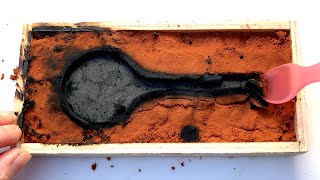
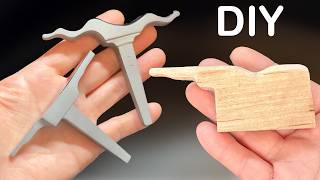
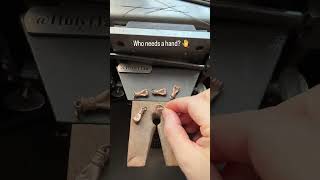
During the casting process, the clay that was directly in contact with the metal got burned. The smoke comes from burning the oil in the clay. This is what is left after the smoke is gone. To recycle the Delft clay, we need to remove any metal left from the casting process. Then we have to remove all the burnt clay. This is one of the traditional molds used for casting wire and ingots. It's made of cast iron. As you can see, it can be used to cast only two shapes. With the Delft clay, you can make your own pattern and cast any shape you like. The possibilities are unlimited. This specific Delft clay mould has been used to make a spoon. The video to show how a solid silver spoon was made with this mould is in the description below. The bottom of this wooden mold is open. With the burnt Delft clay removed, the rest of the clean clay can be put back into the package ready for the next cast. Seal the package if it turns a bit dry. In the next use. You can add some olive oil to make it moist again. With this clay, I normally use the casting torch to burn away the oil and then put it in my bin. If it's olive oil, I'll put it directly into the compost bin. Thanks for watching. If you enjoyed this video, please click the like button. And do subscribe to our channel. We will see you in the next video.