0 to 7,000+ Real Estate Deals | The ONE HABIT Jamil Damji Used to Make Millions
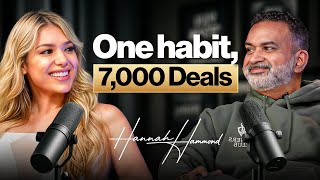
This is a spoken interview (Hannah Hammond host) with real-estate entrepreneur Jamil Damji describing his life from a traumatic childhood in Calgary through early hustles (selling fake report cards, web sales) into real estate wholesaling (a Canadian "skip transfer" technique) and larger development projects. Key moments: a first large payoff (~$47k) from a skip-transfer-style deal (buy at CA$350,000, sell/assign at CA$400,000), rapid success in wholesaling and apartment flips (typical fees cited ~US$100k per apartment flip), then a near-collapse during the 2008 credit crunch where construction loans were called and family assets were lost. He also recounts addiction (opiates, alcohol), recovery via meditation (Headspace) and ongoing personal-development practices. The interview interleaves transactional details, personal anecdotes, and lessons about trauma, habit/chemistry, and building businesses that help others.
Questions this video answers
~CA$47,000 (Jamil describes "$47,000 and change").
Seller asked CA$350,000; developer said they would pay CA$400,000 (Jamil captured CA$350k buy / CA$400k sell).
CA$5,000 deposit per unit to reserve a purchase.
Over 7,000 wholesale transactions; Astro Flipping community has over 4,500 students (per video metadata).
About 118 national locations (per video metadata).
Chapters
So I'm addicted to opiates and I'm addicted to alcohol, but I'm wanting to do something big with my life. And so I wake up one day with a hangover and I just do what the book said. I just downloaded Headspace and it changed my life. When I moved here, I was just about to get married to Natalie, and I'm like, ah, I'm not really doing much. You know, like, I was a failed comedian. I worked for four years, but I didn't become Kevin Hart. So it showed me that comedy was a part of my journey and I needed it. But I remember I'm reading a book called you'd are Badass by Jensen Serno. And she says in the book that everybody that she knows who's successful meditates. So I'm addicted to opiates and I'm addicted to alcohol, but I'm wanting to do something big with my life. And so I wake up one day with a hangover and I just do what the book said. I just downloaded Headspace and it changed my life. And then one day, the urge to drink was less and, like, everything was just clicking for me. When I first started meditating, it was for money. I wasn't, like, chasing God because, like, you know, at the time I was like, God's still the guy who had me growing up and getting my ass kicked every day. And every time I called out to him, nobody showed up. But then you realize, okay, there's more here. And then in that knowing and in that exploration of self came and comes a connection to the creator. And then everything starts to speed up.
Welcome to the Hannah Hammond Show. I'm super excited to be here with one of my best friends in the whole wide world, Jamil Damji.
Hi.
And I'm actually. I can honestly say, and I know a lot of people. Jamil is one of my favorite people in this entire universe and has absolutely changed my life. We crossed paths about a year ago randomly. Randomly. In a mall. In a mall. Which I. You don't usually find me in malls and.
Me either.
Yeah, yeah, right. He was asking everyone.
I was asking people how they would make ten grand in a week if they had to. And my. My camera guy, Bobby knows you. And so he was like, go talk to her. And I'm like, oh, yeah, pretty blonde girl. Go talk to her. And you had, like, perfect answers. And then you had. You had known me. You. I think you were following me already by that time. And, yeah, we just hit it off and became, like, incredible friends. Since then, so we've hung out a lot and it's a pleasure to be in your, your world.
Thank you. I'm so happy. And oh my, I mean, you've seen the transformation in me.
Oh, my goodness. Yeah.
Since I met you. And like, I was so insecure, couldn't be on camera. I was like, you better not post this. Don't record me. And you're like, well, it's already been filming the whole time and I am going to post it. So. And then, you know, you invited me to lunch and then of course, you bring your cameraman. I wasn't prepared for that either. And that got me over the fear of all of cameras and photos and things like that. And now here I am.
You killed it, by the way. I got so many messages from people saying that woman is like, incredibly inspiring. And you really spoke to a lot of, a lot of women and I'm sure a lot of men as well, just with how intelligent you are and how you would approach life and some of the things that you've gone through in your world. So it's, it's, it's really interesting and also super refreshing for somebody as successful as you to allow themselves to be vulnerable and to just share realities of what they've gone through and the things that are hard for them. So many people are just putting a facade up of, oh, everything is great, I'm perfect, everything's that nothing could be better. I don't, I don't crack and I've never had hard times. I'm just this perfect thing. And who's that? No one. And so nobody can really resonate with that messaging or even if, like, you're only presenting the good things and, and you're not hiding the bad things, but you just don't talk about them, then you're not giving people permission to be fully themselves and fully real. Right. Which, when even our first interview, like not that little one in the mall, but our first, like, sit down, lunch and we, we chatted. There were so, there was so much, there was so much that you shared and that really, I believe is important conversation pieces for people. So. Yeah, it's great.
Well, and, and you. I didn't even know, like, I didn't know anything about spirituality or real personal development or breath work or plant medicine modalities or any of these really, you know, meditation and these really, really critical things that have a lot of which have helped you get to where you are and for the audience. Jamil has, he's the co founder of Keighley which is a national real estate franchise. They have over 118 or around 118 locations nationally. He's the founder of Astro Flipping, which is the largest real estate wholesale training community in the country with over 4,500 students. He's done hundreds of millions of dollars of revenue throughout his companies. He's done over 7,000 wholesale transactions, one of the biggest, if not the number one wholesaler in the country. And he's just built an absolute empire from nothing and, and from a very challenging childhood as well, and different battles that you had to fight growing up and then to build these incredible empires. And what's so impressive is not just that you've built such incredible companies and such incredible communities and so many people look up to you and you help people make millions of dollars and achieve financial freedom, but you have done that through true, healthy and balanced and through the mission of self actualization and trying to reach your highest potential. It's not just. You haven't just been money hungry and you've had bad relationships and have had bad spirituality and bad health and all these things. Like you have really been on this pursuit of reaching your highest potential and helping others do the same. And, and that's where me and you connect so well on too. And I've just, yeah, you opened my eyes to all those things that I never knew about and now I have like, you practice every single day. You have massive companies to run and yet every single day you do a lot of time with breath, work and meditation and all of these things that, and I'll let you share your story, but I don't think you would be where you are today if you haven't done those things. And a lot of people say that, oh, I don't have time to do those. But in reality that helps you get to where you are. So like, share your story and kind of where you came from. I know you, you know, some of those struggles you had in childhood in particular, and then some of the things that you're working on today to continue to improve yourself and your businesses and your life.
Thank you. Yeah, it's, it's real. You know, I have, I have not had a perfect experience here on this planet. And you know, of course childhood was super difficult. I grew up in Calgary, Alberta, Canada. Beautiful town. And unfortunately in the time that I was growing up there in the, you know, early 80s, they were struggling with identity. I would say the East Indian population, which is, you know, my ethnic background was starting to come in droves into Calgary and the People who were living there at the, you know, in the area that I grew up in were just completely shell shocked. They didn't know where all these East Indian people were coming from, why they were coming. And it was a culture shock for everybody and they didn't want us there. And so, you know, parents would speak in their homes and then their children would overhear it and there wouldn't be, it would, it would be really terrible things that they would, they were feeling and thinking. And so the kids would then come to school and repeat the stuff that their parents were saying and, and take their aggression out on, on me and other kids from that community because of what they were hearing from their parents. So it's, you know, it's not really so much the kids fault and the parents are just ignorant, you know, but to put it into context, you know, my bully in elementary school is in prison right now for torture and murder.
Jeez.
So, like that's, that's the level of violence that I was surrounded by growing up. I was constantly being attacked. And then you become the attacker. Right. It's a cycle. So I, I, I got to a point where I snapped and I was not going to take it anymore. And then instead of people bullying me, I became the bully. And it was just this thing that was happening in my world. And, and you know, unfortunately, you kind of have to look at yourself and, and accept it all and, and find ways to heal the trauma, find ways to forgive yourself for your parts in it and move on. And so it was difficult for me to do that. I can't say that I did it with grace. You know, when I first got into meditation, this is about a decade ago, I had already, I had already been through a financial collapse. Personally. I had made a bunch of money in the real estate market from 2002 to 2006. Ish. 7.
Well, hold on. So can we back up just for a second?
Yeah.
So what, what happened to you, if you don't mind me asking? Like when you were bullied in school as a kid.
Yeah.
What were some of the things that they did to you?
And, well, what, you know, there's, there's a few, there's a few instances that are pretty scarring. You know, there was a, there was a, there was a one afternoon. You know, we all had, they had this bike stand in our school like most schools do, where kids will go lock their bikes up. Ours was kind of in this, like in between two buildings. So it was a hidden, but there were windows from the classrooms. I Could see in. And I ended up getting beat up and pulled into that bike area. And then they chained me up. They chained me up in there from the end of lunch until after school. I sat there chained up to a bike rack from, like, noon till 3:30. And then the kids came and threw rocks at me until, you know, the caretaker came out and kind of like, broke it up. And I literally crawled home. Like, I was in so much pain. I was bleeding from everywhere. Like, it was terrible. And my parents called the school and were like, what's happening there? Like, this is constant. He's always coming home beat up. What is happening? And they're like, well, you know, he's not that great of a kid. You know, it's probably something he's doing.
Wow.
And so even the administration in the school wasn't. They didn't get it, you know, like, just. They couldn't understand. And they probably felt it themselves, you know, Like, I can say these are human beings. And you think that everybody in authority has, like, a rational mind and might be really, truly there for the good of all, but I don't think they were. You know, I think the principal was probably just as terrible and racist as the people who were beating me up. And so when they saw me, they just saw another brown kid who wasn't supposed to be there, and good, he's getting his ass kicked, right? And so, you know, that there. There was another time I got, you know, this kid broke a record, and it was like the sharp edge. And they beat me up and then they cut me. They, like, they cut me with a record, you know, And I'm like, coming home with cuts and just. It's just. It was. It was insanity. It was really, really, really crazy. And it was like, every day. It wasn't like, I got away from it for a couple of days, and then it would be cool for a week, and then I'd get beat up. It was like every day, every single day, it was like something. Something going on. And, you know, then it was like, for me, because I grew up in a neighborhood where that you could then find things to help you, right? And so when I got my hands on the pistol, I was like, okay, try that again and see what happens, you know? And then I. I became the bad guy, you know, And I. And then I had my little reign of terror for a moment while I was stomping around town. And so it was. It was. It was shitty. Yeah, it was all hard. And, you know, I'm. I'm. I'm grateful for the experiences because I know they shape me into who I am. And I don't believe in accidents. And I know that that was really necessary for me to have gone through. And I'm still unpacking. Why, you know, But I know it was necessary. It toughened me up and it definitely. It made me really know that I didn't want to continue living in a. Like an economic situation like that. Right. Because the reality was is my parents would have loved to have moved. We just couldn't, you know, we, we. We couldn't do anything. It was. We were barely making it. My mom and dad both worked so hard. You know, my dad went to work six days a week, 12 hours a day, shoveling gravel at a truck stop. My mom was a data entry operator for the. For her day job. And then she went and she would take a bus to a meat packing factory where she'd work a second shift. And my sister and I were raising ourselves, so we were what they called latchkey kids. We just had a. We had a key to the house and we would come. We would leave when we left, and we'd come home when we come home. And it was her job to feed me and get me to bed, like, you know, get me up. And it's just. It was so hard. Right. And my mom and dad, they worked so hard and they, they tried so hard and they, they did instill a lot of incredible values in me and hard work ethic. And my mom still found a way to remain positive through everything that we were going through. And so I do credit my mother for having a positive outlook in life and to. And for my resilience and toughness that I. That I continue to have. It's. That's 100% my mother. And we have a beautiful relationship still. I'm so blessed that both my parents are still alive. My mom's 82, my dad's 80, and I just spent Thanksgiving with them. They're just incredible humans. And I'm grateful for all of it. Right. Even the tough stuff.
Right? Yeah. Because it, it has such a. A huge impact on who you become. And it does become a. The biggest blessing because, I mean, show. Show me someone that's in a lot of pain and it's someone that was handed it all and had this cherry kush, perfect little life, you know, because it's just. It's a different level of depth and empath empathy. And there's no. There's no why to really push them to, to get curious and ask the Questions and go deeper inside of them and try to push the human potential because they don't have that. That incessant desire, that survival need. And so, so were you. I know for me, because I. A lot of scarcity, mindset, a lot of, you know, kind of lack of parenting, couldn't control my environment. Those types of factors growing up really drove me to wealth. I was like, I need to be wealthy. I need to take care of myself. The prop. The reason we don't have anything and the reason I'm not happy is because we don't have money. So I was really young and wanted to build wealth from a young age. Were you kind of similar to that or. Okay.
Yeah. So I started getting really industrious early. Like I had. I remember it's terrible. But I was in detention in middle school and it was a bad detention, so I had to be there like into the evening and one. And I was in the office for it. Right. And the people had already left. Like, imagine that. Like they're the. The administration's gone, secretaries are gone, and I'm still there and in detention, like 6:30 in the evening. And I wasn't allowed to leave until, I think after the basketball practice when one of the teachers who was like signing me out was going to make sure that I was there, sign me out. And then I was done my detention. Well, I. I hear a printer going, right? And I'm like. So I'm. I'm looking and they're printing report cards. And I was like, oh, yes. Because there was a whole box of report card paper, like the paper they would print all of our report cards on. And so I picked up the box and I put it outside the school. And then I went back and I sat in my detention seat until school was. Until my detention was over. And then I was let out and I went and I took that box home and I sold report card fake report cards.
What?
Through all through middle school and high school? Yeah. I was the guy that if you screwed up in class, I. It was 100 bucks a page.
Wow.
For a report card. And the report card is usually like three pages long. And so every client was like 300 bucks. And we had four report cards a year. And everybody knew that I was the report card guy.
That's amazing.
It was terrible. I mean, but that was like. It was like my first little hustle.
And how old were you?
Well, I started in middle school, so I would have been like 13, 14.
Geez.
And it went right into. It went right into high School. Here's the worst part. So I made myself report cards too. And I, I end up getting expelled in the 10th grade for a fight. Like my first week of the 10th grade, I get into a really bad fight and so bad that they expel me. They're like, he can't come back. And I have him. I have a meeting with the superintendent of the Calgary Board of Education and my father. And where we go to the superintendent's office, it's in this like administrative building that's not on campus. It's like this other building kind of thing. It's this whole like scary. Where all the scary people are and we go. And my dad, my dad's got conviction in him, you know, he's like going to, he's going to tell them like, how could they expel such a good student? You know? And I'm not really thinking about what he's going to do when we get there, but you know, he like brings out all of my report cards and it's like, this guy is a straight A student. Like, how could you just expel him? Why don't you give him another chance? And she's the superintendent looking at, she's looking at it and your face just kind of crinkles. And I know at that moment I'm like, I'm screwed. And she goes and opens my file and she's like, sir, I. I'm really sorry, but none of these are real. Oh my God, these are, these are his records. And my dad just looked at me and I just put my head down and I'm like, I'm done. Like, I didn't know what else to say. I couldn't, I couldn't say anything. I just had to own it. And so, yeah, needless to say, they didn't let me back in. And I had to do summer school, grade 10, 11 and 12 so that I could graduate on time. And I did, I did graduate on time. But yeah, that ended kind of the. Yeah, I still made fake report cards after that, but I stopped using them.
Yeah, yeah, because you were busted.
Yeah. So.
Okay, that's so funny. I didn't know that story.
That's a fun one. I bet you there's somebody who will watch this right now and be like, I got one of his favorite poor. I know, because like if you wanted to have a good summer, you had to. And then the other thing too is if you got one, then you have to keep buying them because they would list all of your grades from the last semester on this next smart on this. And so, like, if you. If I got you first semester, I got you second, third. Even if you did better, you still had to come to me because, like, your first semester grades are there and you fake those, so you gotta. You gotta do the whole thing. So it was great. It was a racket.
So how'd you shift from selling fake report cards to getting into real estate?
Well, I got a job. So I was. I. I went to college and I did really well in my undergrad degree. I got a bachelor's of science in physiology. And I wanted to be a doctor. That's like the Indian thing to do, right? Like, you. You get out. I mean, we have a mutual friend now that you introduced me to that's an Indian doctor. And. And like, Dr. Gupta will tell you, that's just what Indians do. That's how, like, that's how we win in life, right? So that's why you see so many Indian doctors, because that's our parents. Our parents dream is for their kid to be a physician. And all of us want to make our parents happy. So I do really well in my undergrad. I write the exam to get into medical school, and. And I don't get in. And I do really well, but I just don't get in. And it's interesting. Like, I have a cousin, we both share the same last name, and he cheats off me on the medical school entrance exam. And he ended up getting in and I didn't get in. And I'm like, what the f is going on here? And I'm so upset by this. Like, I'm. I'm devastated because. Because I put all my eggs in this basket. And this was, like, my ticket out of poverty. This was my ticket out of this, you know, hellish neighborhood and this terrible life that. That we were. We had to live because of economics. And, you know, my parents wanted more for me, and I wanted to give them more. I wanted to do stuff for my parents and retire them and, And. And love on them back because they love me so much. And now I couldn't do it. And, you know, one of the things, though, that happened in that when I didn't get into medical school is I. I actually came to a realization that another person got to decide for me what was going to happen. I outsourced my agency to somebody else. And that was the problem is when somebody else, you know, who knows what it was about me that the guy who rejected my application didn't like, maybe I looked like somebody he didn't like. Growing up. Maybe he was in a bad mood that day. Maybe he's. Him and his wife got into. I don't know, who knows? But that's humanity. That's just like, that's what happens in real life. People have shit days and then they take it out on people and that, and those decisions can completely change a trajectory of someone's life. And that's what happened. But it was the best thing that ever happened to me because had I done that, I would have been a crappy ass doctor right now, you know, and probably would have lost my medical license because I didn't want to be a doctor. You know, I wasn't, I wanted the money, right? And so the, that situation leads me into entrepreneurship. My. The girl I was dating at the time says, I have a friend and her sister has this media company. They, they build websites and stuff. This is like early 2000s. And they need a sales guy bad. Like they're hurting and they need somebody to come in and, and you know, you're really good on the phone, you know, I'm sure you could help them out. You kind of need the work. You just got, you know, released from jail. Like, you could probably, you know, do, do something here. You're not really hirable, you know, your medical school dreams are gone. Like, you know, why don't you give it a shot? And so I do. And in the first week that I was there, I sold more websites than they sold all quarter. And so I was like, hey, I will, I'll stay here and I'm going to, I'll kill it. But I want half the company to do that because I'm not doing this for like a wage. And they kind of were in a spot where they were like, dude, whatever, like, we're gonna go bankrupt and out of business if we don't get this. So. Sure. And problem with that is that we were selling these six page websites for $600, like $100 a page. And I didn't know anything about like the building of them. And because we're outsourcing them to Pakistan to get built and they were actually costing us $700 to make.
Oh, so that doesn't work?
It didn't work. No. And, but you know, cash was coming in and for a while it was good because like so much cash comes in. But then you're like, at the end of the month, you're like, wait, why do we owe more than what we brought in? And that was just happening every month. And we're getting deeper and deeper and deeper into a hole. But it puts me into proximity with my business partner there who was also doing real estate. His dad was a national, was, sorry, was a regional home builder. And they would buy these old bungalows and tear them down and build luxury duplexes on them. And I overhear them talking about a deal they're doing where they make 160,000 bucks. And I'm like floored at that kind of money. I can't, I can't even fathom what that would be like. And so I asked if I could get involved some way. And they're like, dude, you don't have any credit, you're not a realtor, there's nothing you can do here. And then they just carried on talking. But what they were talking about was needing more building lots because they were like, we, we can't find enough of these houses. And so then I interject again and I'm like, well, what do you mean? And so they said, okay, well what we need are these houses that are on 50 foot lots by 110ft minimum. They got to be zoned R2 and they got to be in these areas of Calgary. And if you can find something like that, we'll buy it. And so I'm like, okay, cool, thanks. I walk my dog the next day and I actually live in one of these neighborhoods. I live in a basement suite rental in one of these neighborhoods. And I see the construction going on all around me. I hear it like it's there. It's really, it's in. It's almost impossible not to notice it. And I, I'm walking by a house that's for rent. Now I had tried to rent it like three months earlier, but it was like $200 a month too expensive for me to live in. And so that kind of tells you where I was economically at the time, like $200 decided where I lived, right? But I called the for rent sign and I said, look, you seem to be having a hard time renting this thing. It's been available for three months and nothing. Would you sell it? And her answer was, for the right price. What is that? 350,000. Okay, thank you, I'll call you back. And so I, you know, scurry to the office and I talked to my business partner and I think this was like the moment God winked at me. Because there was a way, there were two ways I could have asked the question. I could have gone to him and said, hey, I can get this house right here for $350,000. What do you think? But I didn't do that. I went to him and I said, here's the. An address of a lady who wants to sell her home. What would you pay? And he was like, 400,000 all day.
Nice.
Yeah. And I'm like, got it. So now I don't tell him I can get it for 350. I keep that to myself. But, like, I'm like, how do I find 350,000 bucks? Like, who's going to loan me money? And nobody I know has money, but I call all my relatives just in case somebody has a HELOC or something that they could help me out with. And now remember, I'm the guy who didn't get into medical school and got arrested a bunch of times. So, like, they're like, not really going to give me 350 grand, but I still try, right? And I was. It was a no everywhere. And. And then I went to the yellow pages, which is how I was selling websites. Anyways. I was just cold calling out of the yellow pages, and I looked up the, you know, the attorney section, and I get all the way down to the letter S. David Steed was the attorney who answered my call. And he didn't have a secretary. He was like, didn't have an ad. He just had his little number. He was like, really fresh out of law school at the time, like a new lawyer. And I told him the problem, and he's like, oh, that's easy. He's like, that's called a skip transfer. Like, enlighten me. It's like, well, you just need two contracts. You need one where you're a buyer, but you have to make sure that on the contract, you write your name and. Or nominee. And I said, okay. It's same thing as assignee in Canada. They use the word nominee. I'm like, okay, and then what? He's like, then on the second contract, you're the seller, and everything has to line up, except for the price is different because you're buying it for 350 and you're selling it for 400, and your name is going to change. On the second contract, you're going to be the seller. On that one, it's like. And everything else has to be the same. So the closing date, the closing attorney, who I imagine is me. So you write my name, my name there. And I said, okay. He's like, I'm going to email you the contracts. Just print them out and see what you can do. And if it's works, bring me the contracts here. I'll do my job and if it all pans out, then I'll have a check for you at the end of a couple of weeks. Wow. And it worked. I got like $47,000 and change on that deal. And I was just like, shocked. I'm like, whoa. Like, for a guy like me in that spot, $47,000 could have been $1 billion. Because it was. It shattered every limit in my mind in that regard. Like, I was like, I'm. I didn't cash that check for like four months.
Really?
I was scared. I folded it up and I put it in my wallet. Yeah. And I would show people and one guy was like, dude, that's gonna expire. Like, you have to cash that. He's like, and you've folded it so many times, it's gonna rip. Like, go to the bank and go put that money in the bank, dummy. And I'm like, okay. So I deposited it and I remember I bought a little. A GMC Jimmy, a little two door GMC Jimmy, a stick shift. Because I was driving a piece of crap. And then I would just drive around, was like 15 grand for the car and the rest of the money I kept in my bank and gave a little bit of money to my mom and I. And then I just drove around town looking for forensic signs. And I would get the newspaper and I would go to the classified section of the newspaper and I'd call all the for rents in the newspaper. And I just started wholesaling and it went. Went bananas. And so I. That's how I get into real estate. And I do really well until I make the decision that I don't want to be a wholesaler. And we didn't call it wholesaling up there. The term wholesaler didn't become known to me until I moved to the United States and I started doing it here in Phoenix in 2012. Prior to that, I just called it a skip transfer. Like, we didn't. I didn't know what it was. I didn't know it was a thing here. You know, that, like, people were teaching people and that it was like a whole business model. I thought I invented it. Yeah. Like, I'm like, oh, wow, I'm the smartest guy in the world. Like, I, you know, figured this out. I called this attorney and I. And I got this thing and what a, what a neat hustle. Well, you know, it wasn't really my invention, but it was great. And, you know, I know that, that God put it there for me because this is my path. Like it was. I'm supposed to do this, and I'm supposed to help people do this, and I'm. And I'm supposed. There's so many, so many people in the office right outside of the podcast studio that we're in that whose lives I mentored, from, like, Austin, the owner, to Thomas, his main guy, to almost his entire team. They were all my staff at Keighley once upon a time. Wow. It's like this. It's interesting just how many different people in. In the wholesaling space I've been able to work with and do things with. And it's great. It's like, it's such a blessing for me because so many lives are better because of it. So that's how I get into real estate.
That's amazing. That's such a. I always pay attention to when I get goosebumps. And I got goosebumps. And you said you made the 47,000 or $50,000 check. And so that was like, me, my first check was 36,000.
Nice.
From selling real estate. And I, that, that same feeling. I was like, I don't know what to do now. What do I do? What do I do with this money and how do I invest it and how do I go make it more? And then. But it's so exciting because it's like the world is your oyster and you did it with minimal effort in the beginning. So. Yeah, but. And so. And then you mentioned you continued wholesaling and then you. You had a financial crisis at some point in your career.
Yeah, well, the, the market turned in 08. Right. And you know, I'd gotten myself into some creative finance deals and they were over leveraged and I couldn't debt service. And so those were hanging over me. And then also I. So those were all. Those are all, like, about to, you know, bomb on me. But then also I. There was a point where I was like, I don't want to keep being just a wholesaler. I want to do the work. I want to do the development. And so I, I moved from single family homes to apartment buildings because what I figured out was that there was a market anywhere there was a development project happening. So then my eyes started piecing together those dots and I would see all of these apartment buildings that were having. They'd have these big, like, signs outside of them saying luxury condos in construction. So they were. They were converting all these old apartments into condominiums. And there was a handful of developers in town doing that. And so Then I was like, okay, well, all I got to do is call the number on the sign and talk to whoever it is that picks up and ask them if they're looking for more buildings. And I did. And they were like, yeah, of course. And I'm like, cool. So I just do what I know how to do, which is drive around town, look for handwritten Forens signs, and call them. And that's what I did. Started calling all these apartment buildings that had handwritten Forens signs and started getting apartment buildings under contract. And I would make 100 grand every time I'd flip those. So it was like standard. A hundred thousand was my fee on an apartment building, and developers were happy to pay. There was this one guy, his name was Dominic. He was this little dude, you know, maybe like five. Five chubby little guy, and he's the developer, and. And he wants to meet me. He's coming in from Monterey, California, and he's like, I want to meet this guy I bought all these buildings from. Like, who's this little hustler? And so I'm, like, excited, but also a little nervous. And he pulls up in a phantom. I. I'll, like, never forget it. And the girl that he was with was like, you, like, just.
Oh, thank you.
She's just, like, stunning, right? I'm like, oh, that's how you do it. Okay, got it, right? So I'm like, this little dude. And the. That's. You got to do that. You got to be this guy, right? So I. So then I. That's what I decided. I'm like, I'm not going to sell these. I'm going to. I'm going to do the project. So then I get my sister in, and I'm like, hey, you know, do you want to.
Do.
You want to do these with me? I can't do this by myself. I need help. And she's like, yeah, of course. And so my mom and dad get involved because I don't have, you know, credit, but my parents do. And so they helped me get construction loans. And we buy four buildings. And all the money that I made wholesaling, I put down as down payments. And the credit crunch happened. And then all those banks, they were able to just change the terms on the loans. They said because I sold, I would. In order for me to get the construction financing, they wanted me to pre sell half of the bill, half of each building, right? So I'd set up a little sales center, and I would sell half the building. And, you know, people would come in I'd show them the plan and you know, like these are the finishes we're going to do. And, and if you want to buy one, you have to put $5,000 deposit down and sign a purchase contract and then we give it to the, the bank, right? So it was like not, it was easy and the market was going up. So there were also speculators like putting down $5,000 deposits. It was like a, it was a whole range of people, right? Speculators to like end buyers, all the things. And the bank calls us and says, hey, you know, your construction loans are all based off of these pre qualified buyers that we qualified, you know. But because these loans haven't been originated yet, we actually have to re qualify them because our lending change, our lending standards have changed with everything that's going on in the market right now. And so, you know, don't worry. We just need you to come have everybody come re qualify so it'll be fine. And I'm like, okay. And then they call back a couple of weeks later, they're like, it's not fine. Like a quarter of the people requalified.
Jeez.
Because you need a higher score now. They need higher down payments and they don't have access to that. And so we're going to have to call these construction loans. And I'm like, you can do that. Like I'm in the middle of this, of these projects. Like, how am I going to pay you? They're like, try to sell them. I'm like, who's going to buy them? They're in like I, when I bought them, they, they were, they were rented out. Like these were like units, apartments. They're, it's a shell now. Like they're worth less than what I paid for because they're, it's all been hollowed out. We're rebuilding and bank didn't care. So they took all of it. They took, so I lost all the money from the down payments. But they also took our homes.
Wow.
So, and we had signed personal guarantees. So they took my mom and dad's home, our home, the one I was living in. It took our cars.
Oh my God.
And so there was this a point where we were all living in a two bedroom, one bath apartment. It was like my mom, my dad, my sister, my niece, our dog and our cat all in a two bed, one bath apartment. And it was hell. But it was still, like I say hell because it was sad because my sister and I had bought my mom a house on a lake for mother's Day. And we lost that home. And that sucked. And I had this home on like, the, like the hill that overlooked the city. It was beautiful. It was this glass modern, just beautiful home. Now, if I'm going to be really honest, I wasn't happy. I was an alcoholic at the same time. And like, if you were ever to come into that house and look like I didn't even have any real furniture in there, you know, I was like. It was like, kind of barren. I had my bedroom set up, and I had the living room set up. But, like, it was, it was like, it was kind of like. It was that. It was sad. It was sad. And I was sad because I, I, it was, I was, I'd made money, but I didn't have any real people in my world other than my, my family. I remember on my 20, on my 29th birthday, you know, I'm supposedly this like, rich guy in town and I have all these friends who are apparently love me. Right. And I invite all these people to my birthday party and. And they're like, yeah, yeah. So many people had, like, said they were going to come and no one came. Wow. Not one person. Not one person showed up. And I was like, this is like, shit. You know, and so, so they were friends I had because of my money. They weren't really my friends. Right. The girl I dated wasn't really my girlfriend. She was. I basically rented her.
Yeah.
You know, and when the money was gone, so was she. She happened to be a police officer of all things. Terrible. It was, it was terrible. It's toxic. Yeah. And. And let me tell you another thing, like, looking back behind the things. Because I was like a kind of a street kid. So like, dating a cop was kind of like a, Like, I was like, you know, but like, cops aren't what we think.
Yeah.
Either.
Very traumatized people.
They're. They go, they go through a lot of. And, and what goes on behind the scenes, they're just, They're a lot of times worse than the criminals that they're locking up. So just saying that, you know, for all those people like that are. Have these like, judgment attitudes, like they're better than other people or they may be judging me because they're like, oh, he was arrested. It's like, listen, those who arrested me, now that I know, seen behind the curtain of what goes on, they're no better.
Yeah.
But anyways, yeah.
I've, I, I dated a. Someone in the law enforcement as well and had a very similar experience. But, you know, it's like everybody. There's some really good people out there, and there's some really good.
Paint it like that. There's some great human. I'm sure there's some great law enforcement people. You know, actually I'm friends with the deputy chief of police of Scottsdale.
Oh, wow.
And he's amazing.
Yeah, yeah, yeah.
There's.
There's some good ones for sure, all around the board. But there's, you know, I think. And that's what we talk about and we'll say it'll be a good segue into the personal development and meditation and connection and all those things is so many people have so much trauma, whether they know it or not, and that carries on to their adulthoods and carries on to the. The decisions that they make every single day in their lives subconsciously from things that have been instilled in them or experiences that happen to them or not. Feeling seen or heard or protected or being abused, whether it's emotional abuse, physical abuse, sexual abuse, having lack of food or shelter or finances, or just loving touch and loving parents who are there to provide and protect and to truly love you. And like, all these things create traumatized children that just turn into traumatized adults that just have addiction problems, whether it's work addiction, money addiction, sex addiction, food addiction, alcoholism, drugs or any of those things. Severe relationship issues, you know, people who can't have healthy relationships, disease, internal health issues, whether it's mental. Mental health and depression, anxiety, which I've suffered from a lot off my antidepressants for almost two months now. Yes. Thanks. Thank you. And then. And physical disease, too. And so. But we're not taught these things. Like, I didn't know what drama was or what meditation was or what any of these things that have truly impacted my life were. And we don't know unless we really seek them out and, and question and not just keep doing the same things that we have always done, which is what most people do, because that's what's easy, that's what's familiar, and that's all.
We know where you get addicted to it. The status quo, right? You're. Your body produces. Like, know if you, you ever know those people that, like, they, they just tell you about all the miserable things going on, like, and how hard it is for them. Like, it's like, oh, my God. So there was a guy here in Phoenix. I'm not going to say his name, but his wife passed away of cancer. And, you know, the first time I ever meet him, he was like, hey, man, nice to meet you within 30 seconds. He was like, my wife died of cancer. And I was like, oh, my God, I'm so sorry. I'm really sorry. Like, oh, terrible. He's like, yeah, I got four kids. Oh, my goodness, dude. Like, let's be friends, you know? And like, I'm. I'm like, I've become. In the. Kind of Becoming this guy's world. And, you know, he. It's not that. Like, he. He was. He was really nice in some ways, and then other ways there. He was flawed like everybody. But he would. He would do shady stuff in business, right? Like, he'd sell a house he didn't have under contract so that he could take your emd, you know, like, and he would have you deposit the EMD directly to him, and then the deal wouldn't be real, and then the EMD would be cashed. And he's like, sorry, I'll get it to you later. I'm like, bro, that's not how this works.
Yeah.
You know, and. Or so. Or he would have something under contract, and there was like. You know, there was a thing. There was always a thing going on in the deals. And then when you would call him out on it and you'd be like, dude, like, I'm gonna smack you, you know? And then he'd say, my wife, she had cancer and I gotta take care of these kids. And it was always the same thing, right? And he was addicted to the. The pain of the cancer. He was addicted to the story. And then his kid gets cancer, and, you know, it's all over Facebook. My kid has got the cancer, and my wife died of the cancer, and now the kids got cancer, and it's just like, everybody, you know, I need you. I need. I need the sympathy. I need the. I need the, like, you know, I need that. I can't. Like, he's like. He needed the juice from. From everybody's sympathy. It was. Became his. His drug.
Yeah.
And. And then he died. Not the kid. He died.
Yeah.
And he just, like, brought it all on himself, you know? Like. And, like, he was such an example of, like, of how you can, like, totally F yourself in that frequency, you know, because your body produces chemistry that's in alignment to that frequency, and no matter what it is, your body becomes habituated to something. So if you are feeling great, working out, you know, being, saying positive things to yourself, doing meditation, breath, work, you know, all the things in your. You're. You're being healing, you're doing things that are raising your vibration. Your body will create chemicals that are in alignment to that process and your body becomes addicted to them. Right. Like, if you ever meet those people who work out all the time and like, I work out all the time. I don't look like I do, but I work out all the time. And if I don't work out, I feel terrible. Like, I feel like a drug addict who doesn't have his drug. I need the endorphins, I need the. I need the chemicals that my body produces from the workout, right? So we all get habituated. We all get addicted to a life and it's like, what are you going to get yourself habituated to? What are you going to make your body thrive on? You know? And that's where for me, the, the world of personal development got brought in. Because when I moved here, I was just about to get married to Natalie and she had Taylor with her, who was 8 at the time. I have a daughter from a previous relationship who I have to take care of and I'm about to get married and I'm like, ah, I'm not really doing much, you know, Like, I, I was, I was a failed comedian in la. I went to come. I didn't make it as a comedian. I did okay. I was, you know, I worked for four years, but I didn't become Kevin Hart. So you guys don't know me for comedy, right?
But you're pretty fucking funny.
Well, I do like laughing. I do love to laugh.
Your GD commercials always get me.
Those are great. There, there. And that got, you know, kind of was. It was.
More from Hannah



Never Waiver On Your Values—No Matter How Lonely, Uncomfortable, Or Difficult The Journey Gets

Watch the full video about Ray Dalio’s prediction on the upcoming debt crisis… 👀

Stop Asking “How?”—The One Question That Will Help You Scale Faster Than You Ever Thought Possible

4 Life Lessons That Took Me 30 Years To Learn—But You Can Learn Them All In Just 14 Minutes


This Is Unfortunately How You Can Tell Your Real Friends From Your Fake Friends


