$80M Founder: The Tiktok influencer strategy that builds SUCCESSFUL brands & most AREN'T doing it!
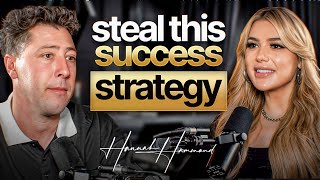
This is a YouTube interview (host Hannah Hammond) with Mikey Taylor about his transition from pro skateboarder to founder of Saint Archer Brewery (an $80M exit) and then real‑estate entrepreneur and local politician. They cover building brand-driven consumer products using social media and ambassadors, raising ~$2.5M to launch Saint Archer (2011) and selling it in late 2015, founding Commune Capital (end of 2017) and growing a $315M+ asset base via development/value‑add multifamily and storage, plus reflections on identity, work–life balance and political service (ran for city council in 2022; mayor pro tem of Thousand Oaks).
Questions this video answers
Approximately $80 million (exit closed around November 2015).
About $315 million of assets under management.
Around 2011.
Closed in late 2015 (November 2015 mentioned).
About $2.5 million (friends & family round).
Chapters
You guys are the largest financial influencers on TikTok, and the oldest one is 22. You guys haven't even been through anything yet. How are you the largest financial influencers? If you're going to build a brand, you have to give people a reason to connect with something beyond the product or the service. How you do that, You. You've got to take people through the journey that you're currently going through. I get invited in 2021 to go to Fincon, and there was this, like, TikTok influencer house that I got invited to. I go to this house and the oldest person is 22 years old. You guys haven't even been through anything yet. How are you the largest financial influencers? And this is why. Because they tapped into something that we have forgotten, which was they weren't telling people how to do it. They were taking people along the journey with them. Right. So you had this girl who was in college, she was learning about finance, and she would build content going, this is what I learned today, and I'm going to try it and let's download this app and I'm going to make an investment. So she was walking her peers through the journey for the first time, and that's what people were resonating with. I made a decision. I messed up. I lost money. Her audience is going, oh, my gosh, okay, I watched you do it. I saw the mistake you made. Now I'm going to try to do something different. That's what people connect with. It's difficult to bring people through the reality of your life. It's easy to just show them the wins. But the reality is people don't connect with wins. People connect with struggle.
All right, so thanks for being on the show, Mikey. I'm super excited to hear your story.
Thanks for having me.
Pro skateboarder to entrepreneur to politician.
Yeah, that one's the weird one.
Yeah, I know, right? I'm like, I don't know how to put my finger on the pulse of this one.
Yeah. But I'm still trying to figure it out, too.
When did you get into politics?
I ran for City Council two years ago. So the 22 cycle and leading up to that, I never had a desire. I had never done anything like it. But I did follow politics, you know, somewhat locally, but definitely statewide because of real estate. And so much of the political decisions impact how we build. So I was following it on that kind of. I was following it because of that. But, no, I never thought I would be involved. Yeah, that was. Yeah, I don't know, still trying to figure that one out.
So mayor pro tem. I had to actually look up what that meant.
Yeah, mayor pro tem basically means you're like, like right hand to the mayor. And how we are. We have a rotating mayor seat, so it's for a year, then somebody else moves over. So typically, mayor pro tem becomes mayor the following year.
Okay, cool. And is that your plan?
It might happen. Whether or not is my plan.
Oh, my gosh. Well, I think you'd be a good mayor.
Yeah, I think I'd be okay at it. Yeah.
You're like the least politician politician I've met.
Thank you. I appreciate that. I will take that as a big compliment.
Yeah, it was funny. I was at the Trump rally a while, a little while ago, and Trump was like, I, you know, I hate politicians and I wouldn't call myself a politician. And whoever was interviewing him, I think it was Tucker Carlson, was like, I'm pretty sure you're a politician. You're about to be the President of the United States.
Yeah, it's weird. It's weird when it happens.
Yeah.
You know, I think most of us have a distaste regarding politicians. And so once you get into it, you're like, does that mean I'm that now? And I don't know. That's at least what I'm wrestling with.
Yeah. Well, so for those of you who don't know, Mikey Taylor was a pro skateboarder, and I've read, like, one of the best in the world, which is cool as could be. And then you transitioned into. You ended your career in skateboarding, which I'd love to learn how that identity shift was for you, because, I mean, I can't imagine, like, me having entrepreneurship taken from me. I wouldn't even know who I was.
Right.
And then so you transitioned from skateboarding into entrepreneurship, and you actually built a massive Archer Brewing Brewery. Archer Brewery.
Saint Archer Brewery.
Saint Archer Brewery, Yeah. Brewing Company out of San Diego. And then that was acquired by Willer Coors, Miller Kors. Miller Coors. Yeah. Um, and you had an. Ended up having an $80 million exit on your brewing company, which is absolutely incredible. And now you have $315 million of assets under management, and you're in the real estate space. So you manage a fund and you guys do construction and value add, storage facilities and multifamily particularly.
Yeah.
And then to. On top of that, like we just started with, now you're in politics and you're mayor pro tem of Thousand Oaks, California.
Correct.
So and you have a family and a wife and kids, and you're awesome and fun and happy and all the things. So to hear how you do it all.
All right, let's do it.
So how. What was, like, what is your story leading up to becoming a pro skateboarder, first off? And then how was that experience? And what was the most challenging thing as you realized that that career was ending and you had to make a shift?
Yeah, so I. It happened very organically. Like, I wasn't the kid who was nine years old who dreamed to be a pro skateboarder, told myself I was going to do it, and dreamed it into reality. Not my story. I started skateboarding, fell in love with skateboarding. I have an obsessive personality, which can be very useful for trying to get good at something. And I was just doing that until about 16 years old. And at 16, I started getting pressure from my parents to get a job. And I didn't want to work because I felt like that meant I could skate, I would have to skate less. And so I tried to figure out an alternative path to avoid getting a job. And so I came up with this idea that I could get sponsors to give me free product, like shoes and skateboards and clothes. And then, one, I wouldn't have to buy any of that stuff, and two, I thought I'd have leftover product to sell to kind of skaters in my neighborhood, and that would be my income stream. And so I pitched this idea to my parents, and I think they thought it was so nuts that they were like, yeah, go for it, and, you know, figure it out. Realize that you can't do this, and then you go get a job. And I ended up getting sponsored, getting free product by DC in the beginning, no, in the beginning, it was a shoe company called Duffs. Most people are not going to know what that is. And this skateboard company called Maple, those are my two sponsors. And then that worked out until about 18. And from 16 to 18, some of these companies started putting me in the magazines. Like, I started having ads for them, and I started getting a little bit of name recognition. And then my senior year, I got the opportunity to travel throughout Europe. And so I looked at my parents, and I was like, hey, I have this, like, cool opportunity to, you know, go throughout France and Germany and Spain for, like, a month. Like, I think I could do something with this. And my parents were a little bit freaked out because what I was really talking about was not going to school. And so what I thought was going to be a three Year kind of experiment of having fun and then wrapping back around to college turned into like a 14 year career.
Geez.
Yeah.
That's wild.
Yeah.
And are you from California?
Born and raised.
Okay, cool.
Yeah.
And you're never leaving, huh?
I'm not. I have a couple non negotiables and we would leave because of that, but I'm trying not to leave. That was a big reason why I ran for city council. I, I wanted to take as much off the board as possible that would potentially bring up the conversation between my wife and I about looking for somewhere else to live.
Yeah.
Like, I love California. I love where I live. Like my city, I think is the best we have. But you know, I, I also recognize that California is pretty bad at doing a lot of other things.
Yeah. It's hard to balance because it's beautiful. It's the best state.
You cannot get, you cannot get this weather anywhere else. But you know, there's a lot of people leaving even with how beautiful and how good the weather is. And that's. That to me is a, that's a, like, I, I guess this is the best way to say it. When I was skating, I would travel the world, but I would travel the nation a lot. Right. And everywhere I would go, Nebraska, Ohio, Florida, every kid would be like mesmerized. Mesmerized with the idea that we were from California. And what you would hear from these young kids is it's my dream to go there. I can't wait to go there. Fast forward now, when I tell people one, I live in California and then I match that with, I invest in California, I would say 60 to 70% of people look at me like I'm crazy. Right. The fact that we are not like accepted by all as we're the best state in the nation, I think is a recogn recognition. What would be the best way to say it? It shows that we have significantly dropped the ball. Like that is. We need to get back to that.
Yeah. It used to be the American dream.
That's right. That's right.
Now that dream's on fire.
Literally. That's right.
Yeah. So. And I could go on a whole tangent about that and I'm actually curious. We. I was at my brokerage dinner last night and we were talking about if it'll, if you, if people think it'll affect property values in California or the surrounding states, or if it's not a big enough impact, I think prices are going to go up in California, not surrounding states.
Well, the hard part about real Estate, when we talk about prices, is real estate is very fragmented. And so what happens in a certain county does not mean it's going to happen in another county inside that state or a state beyond that. Right. My outlook is a little bit contrarian, but one of the biggest reasons why I invest in California is also why I think most people leave. Right. Our policy makers, I think, are poor at making good policy. And so when you look at what it takes to build in California, they basically do everything they can to de. Incentivize investors to build. Right. And so what that has created is 20 years of no significant added supply, which has brought California into the most extreme housing crisis we've ever seen. Right. So if California is 2 to 2.2 million units short and California continues to make it harder to build, do you think we make that gap up or do you think it just becomes worse or exacerbated? I think it becomes exacerbated. So, you know, does that mean there's going to be an outflow of people into other states? Yes, but you're starting to see that number decrease. Right. Like we had two years of significant net migration loss, which were 21 and 22. And then if you look at 23, we had net migration loss. But if you consider population growth just from birth, we actually increased this year. So I think now we're getting to the point where it's a financial decision, it's just too expensive to live in California. But then where do they go? And then what's the policy in the states they're going. Right. Like Arizona, you saw a big boom. You saw this in a lot of states. Right. Your Sun Belt states, Texas for sure, Florida. So you have an increase of demand because of people coming in. But is it difficult to build in these states? And if it's not difficult to build, you'll see the typical development cycle, which is we'll build too much and then we'll have to give rent concessions to get occupancy up, and then you'll see the market crash and then you'll see the correction. Right. So depends.
Yeah. Yeah, because we were talking about that last night and some. One of the guys was saying, you know, it'll just make prices in California go up because a lot of the people that lost their homes and whatnot are not. They're wealthy people. They're not necessarily financially challenged people. And a lot of the, I don't know, migration is probably just going to be to the outskirts cities and other cities throughout the state.
Yeah, we're Seeing right now, like, yeah, the. The amount of people that were displaced, I think it was like, between 7 and 10,000 families, and they're entering into a rental market where there are no rentals. And so you watched. I don't know if you saw this, but the governor was basically. Or the AG was coming after investors for raising prices beyond 10%. That's because you just exacerbated an already, you know, big challenge, which is too many people chasing too few of units or homes. So.
And that happened. My brother lost everything in Maui last year in the fires and same thing. There's even more of a housing shortage. There already was a housing shortage. You know, now there's all these issues with tourism houses and Airbnb houses, but yet there's shortages for the locals and everything like that. And so prices have just gone up.
Yeah, more so. That's right. I know. I don't think it's. I think it's. Look, you can make the argument that it can be good for investors, but for society, it's not healthy. You're not seeing a free market be free, you know. Right.
So I want to talk about the fund and investing in California because I'm terrified of putting, like most people say, I would never put my money in California. Right.
Thank you for that outlook.
But I want to hear. Because you're obviously successful at investing in California, but backing up just in the. Whatever. Yeah. Story of your life. So how did you go from pro skateboarder to starting a brewery company that ended up being worth $80 million? And. And all this was in a pretty fairly short period of time?
It was.
And. Yeah. What did that look like? And how did you start that company, get in. Into that company and grow that company to 80 million and then have an exit?
Okay. So how I got there when I was skating, the cool thing about it is when you get your own signature line, like, I had my own skateboards, I had my own clothing line, I had my own shoe line. I didn't have to start the company, but I got to work with the designers to come up with, you know, what the product's going to look like. I got to work with the marketing team to figure out how to market that shoe. I worked with the sales team, because if I sold more shoes, I made more money. And so I got an inside look on what it took to actually create product and how to introduce that product into the market without having to learn how to bring a company to life, which was a great stepping kind of stone into creating the brewery. That mixed with I. You know, I was very entrepreneurial. Without realizing it in the skate industry, I would negotiate all my deals. I was like the DIY kind of person, which creates a different type of challenge. But I kind of always had that in me. And so now fast forward to the brewery. I was with a friend who came from the surf industry, and we were basically talking about what companies we could create that were outside of our norm. Right. In the skate industry, it's always shoe companies, clothing companies, skateboard companies, or, like a hat brand. It's never beer or it's never, like, an outside industry that doesn't have such a small ceiling on it, because skateboarding is a pretty small niche. And so we just kind of got to the point where we were like, what about beer? And at that time, craft beer was really starting to grow in California. And so we were just like, let's do it. And so we, you know, went around the state meeting with other brewers to figure out what it meant to actually brew beer and sell it. And we figured out that it was really expensive to do. And so we got introduced to somebody who helped us create a business plan and helped educate us on raising money, because we didn't have enough. We had to get investors for it. And then we went out, we raised money. We raised enough to start the company. We hired a. I think we had eight people when we launched.
Wow.
And then we had an idea that was a potential disruptor that worked. And so when our brand kind of launched it, it was different than anything the craft beer industry had seen. And it just went nuts from the second we opened doors.
Wow. And you make that sound super simple. We just got a mentor.
It was brutal. Yeah, it's absolutely brutal.
Raised some money, had eight people, and voila, we sold for 80 million.
Yeah. No, that process was awful.
What was the hardest part about it and how did you overcome it? Like what?
Okay. There were a lot of hard parts to it. I would say the first part was raising money. As someone who had no business experience, no experience in the craft beer industry, and no experience raising money, that was. That was hard. We basically had to do it from friends and family. And the amount we are raising was much larger than what we, I think, thought we could do. Even though we did it, we raised about two and a half million dollars, which was nuts back then.
Yeah.
And then what year was this? This was 2011 is when we started working on it, and it was at.
The bottom of the market and then.
Yeah, exactly. So even as you say that one of one of our. Part of our pitch back then was how well alcohol performs during recessions. Right. Most people, if you didn't go through 2008 with money, you don't realize how painful it was for years afterward and how freaked out Everybody was. In 2011, 2012, people were freaked out still. And so we would say, look, during a recession, everyone buys beer. And like, you saw people get comfortable with that. So, yes, that was a tough time to do it. And then I would say the second hardest part was learning how to manage people. That was something I had no experience in. How expensive the craft beer industry is to grow. It's really capital, intense. And then the last one, I would say, was building something with an exit in mind, but. But not knowing if it's ever going to pan out. Right. Like starting a business at the end. And when you get to hear about the story of selling something, you're like, oh, yeah, that was just, like, too easy. Every single day, you think the company's going out of business. Like, it's such an uncomfortable feeling. And so I think we had to get used to that. That from the public, it looked like we were killing it because it was so new. And like, internally, we're like, are we going to do this? Are we going to do this? Where's our money? We need more money. It was hard.
Yeah. Managing cash flows and people and everything. And so did you work with a capital raiser where you paid a percentage or you guys just did it yourself.
Did it all ourself?
Okay. And you just gave a portion of the equity or were you just doing like a percent of interest, like a note?
No, we did. So we basically had a valuation and then we gave. Gosh, if I remember right, I think we gave 45% of the business away to raise the money. I want to say we valued it a little over 5 million when we launched. I might be off with that, but that's what I think it was. And then we raised the two and a half and they took their portion. Yeah, yeah.
And so when, at what moment in time did you realize that it was going to be really successful? Like, where you're like, okay, we got this.
Well, I knew that we had something special. So this is. This is kind of the hardest part. We opened doors and it was like shock to the system in the beer industry. It was. We were doing something so different. And really what that looked like in the beer industry. All the breweries at that time, they were selling beer because they would create these, like, specialty, like, limited edition brews and that the beer itself was driving the sale. And we came in and went, one, let's sell a brand and let's create a community so that when they're buying our product, they actually are buying it because they're feeling like they're one of us. And two, let's water down beer a little bit. Like, at that time, everybody was making beer so potent. Like, you know, you would drink one double ipa, you'd be smoked. And so we were like, let's make this more sessionable. Like, let's make it so that somebody could drink multiple and that, like, coming together and then using, really, Instagram to promote it through our investors. It was just like, right idea, right time. And so, like, we knew that everyone was talking about us. We had lines around the brewery for people buying it. Our growth was. I think we were the fastest growing brewery in California, but we were burning cash. Like, we couldn't keep up. So it was. I knew we had something special. I didn't know if we were going to make money or not, though. We had to sell to make money.
Okay, so was the company not profitable until you sold?
No.
Oh, really?
Yeah.
And then you removed yourself from the brand. You built a brand similar, right?
Yeah.
So basically, were you the face of it?
No, I was not the face. So basically what we did, we raised the money primarily through skaters, surfers, snowboarders, some musicians, artists, and then we made them our ambassadors. So our investors were our ambassadors. A lot of them had following. So did myself. And so I just made myself one of the 30 people and we promoted it collectively.
That's awesome. I know. You know, a lot of, like, Tik Tok Shop is a big thing right now. And a lot of, like, Fleischman and Josh Snow and like, a lot of these big names, they promote through live. They promote through influencers, basically. And so that's a really big thing. And I think that's a genius, brilliant idea. And so social media was a huge part of your strategy to building the brand.
I think it was everything. It was on accident. That's the thing. Like, this was 2011. There's no influencers at this point. And when we raised the money, we had, like, a very small marketing budget. And I can't remember who said this. Maybe it was my partner, Josh. But somebody said, what if we saved the money or used the money in a different category and promoted it on Instagram? And we're like, man, maybe that would work. And it has just worked. You know, it's different now. Like, you can't do that anymore. It's you.
It's harder.
You can't.
Way harder. It's harder.
Way harder.
Yeah. So. So. So you. You're a big believer then, in social media?
Oh, yeah.
And you have your own podcast?
My own podcast, yep. Yeah, I'm heavy on social. Like, I'm a big believer in the power of it.
Yeah. Well, you do have, like, a million followers.
Yeah, I'm. I'm active. I use it a lot.
Yeah. That's so cool. Oh, okay. I love it. And so you. When you got out of. You started the company after you exited, or you stopped being a professional skateboarder, Right. Or did you start it while you were a professional skateboarder?
I started it technically, while I was still a pro skateboarder, but it was kind of the tail end of my career.
Okay.
And the brand was so successful and so cool that it kind of gave me a little bit more relevancy where without that, I don't think I would have had it. And so it kind of was the beginning of me stepping away. And then by the time I exited the company, I was no longer a pro skateboarder either.
And so many athletes, we hear about this all the time. They, you know, sign these big contracts, and then they end up broke later in their life. And do you. Did you, like, were you prepared for that when you were a pro athlete? Were you. Were you like, hey, I need to build something else because this is going to end at some point? Or how did that process happen?
Okay, I was prepared for the financial leap, the emotional leap. I was not. So basically when I told my parents that I wasn't going to go to college, and I'm an 80s baby, so, like, we were. It was drilled in our heads that if you don't go to college, you're not making money. And so my parents, like, panicked about me being a pro skateboarder because skateboarding was small. You didn't make a ton of money. And I think they were concerned that I was jeopardizing my future. So my parents strongly recommended that I get a financial advisor. And at this point, I'm 19 years old, I'm making maybe 1000 bucks a month, and I meet this guy. I'm not even making close to the amount that he should even be helping me. And he took, like, a big brother approach. And so he started teaching me about credit, about a budget, about asset allocation, and he started helping me figure out a path on where I could place dollars that were going to help me in the situation I was in, which was I was in theory going to make the most amount of money from ages 19 to 26. And in that, that's typically your wealth build years. And you don't put cash flow on until you know, you're usually looking in your 60s. Right. Well, I needed wealth build because of my age, but I needed cash flow to supplement my income once my career ended up. And so he was a really big believer in real estate. And so I invested in my first storage property because of him. I started investing in debt funds because of him. He was the one who opened up commercial real estate to me.
Wow. And how old were you?
Oh, gosh. I started with him when I was 19. And so my biggest challenge was, and this is something that you hear a lot. So anyone who feels like, yeah, I would love to invest in real estate, but I don't make enough money to do it, I feel like that's what I felt also. But it can be done. I basically lived off nothing. Right. I would make, I think in the beginning I started making 60 grand a year, then 80 grand a year, and I started getting close to 100 grand a year. I was living off maybe 20 of it, so I was pretending like I was broke. And then all of that money that I was saving was going into investments. It was going into my savings account. And then after years of doing that, you look back and you're like, oh, my gosh, the dividends, I just keep reinvesting that when they're selling an asset that capital gains, I thought right back into a new asset. And you get to a point where you have a pretty sizable investment amount. And then that put me in a pretty good position when my career ended.
And so you were not investing in your own properties, you were investing in funds.
Oh, great, great question. My philosophy was this. My career is skateboarding. My greatest opportunity is skateboarding. So I want all of my focus towards that, right. If I'm making like, I got to a point where I started making pretty good money when I was selling shoes. And it just didn't make sense for me to take half of my time and go flip a property to make a 20% return when I can make a 200% return if I focus on my actual craft. And so all of my investments were done passively until I started the brewery.
Do what you do best and hire out the rest.
100%.
Yeah. I think so many people, they're such, I don't know, control freaks maybe, or fear driven or they're like, I can do it. I was talking about this with Sean lynch, our friend. You know, how he just did it all and he didn't delegate anything for so long. And he was managing, you know, building a logistics oil company. He was managing 66 rentals. He was doing all these things. And his biggest regret was not delegating sooner 100%.
We have a lot of investors that go through the path of Airbnb or storage or whatever the trend is at the moment, and then they'll wrap back around to us and go, I am so sick of doing this all myself. I thought it was passive. It is not. It's like a second job. There you go. And I think that's the smart way to do it. Unless you want to build a business in the asset class.
Right, right.
If you want to get started, yeah. If that's your end goal, then, yeah, go do it yourself.
Which is what you ended up doing.
Which is what I ended up doing.
So for people who may not know, and that's the thing, I think there's a big misconception that you need millions of dollars to invest in real estate, and you really don't. First off, you can invest in funds, and there's different funds. Some you have to be an accredited investor, which means you make a certain amount of money or have a certain net worth. Some you don't. You like pace more. B. He is a fund where you can invest, like, I don't know, thousand bucks or something like that. So there's different funds and you can invest that. The real professionals do it. It's completely passive. And then you get your return and you still get some, like, depreciation tax benefits that you get from real estate. And you can do what you do best, where you're going to maximize your returns there. So I wouldn't. Just like you said, I wouldn't be your own DIY real estate investor unless you really want to get in the business of real estate investing, like owning a fix and flip company or owning a construction company or owning a property management company or a development company or whatever. Right. Or being a real estate agent, having a brokerage, all these things. And so there's different kinds of funds. So you have an equity fund, I have a debt fund, and I also invest in other people's funds. You know, as someone who has my own fund, which I'm just getting it off the ground, so I can't even really say that.
I can't wait to talk to you about the debt fund. I had those. I wound up down.
Really?
Yeah.
Oh, well, we'll have to talk about it.
I know, I can't wait.
Yeah, yeah. But yeah, so I think that's really cool that you invested in funds and then you ended up starting your fund, but now. So you went, you had an exit on that company. How, how long from start. From the time you founded it to the time you exited.
We started working on it in 2011 and then we sold it end of 15. Basically. Like, I, I think we closed November of 15. I know.
Holy shit.
We weren't expecting that. We thought it'd take us longer.
Yeah. Well, that's nice.
It was nice. Yeah. That was cool.
That's crazy to build that much value in four years.
Yeah, I know.
My God.
I know.
That is awesome.
I know. We're stepping on the gas. We were going for it. Yeah. At that time you had, you had Coors, you had Anheuser, you had Constellation and all the giants buying brands and so you were watching multiples basically increase because, you know, it was a frenzy.
Yeah.
And so we knew we had a moment in time to get to the exit and I think that's why we're going for it so hard. So we felt like once they backed out, everything was going to soften.
What is like the best advice that you could give to someone who's looking to create a startup and have a multi million or a hundred million dollar exit?
Best piece of advice I can give you. If you're trying to start a business to sell, you have to start with the end in mind. Like if you don't do that, you're going to. It's going to be very difficult for you to build something the right way. The reason being when you know where you're going, then the question just becomes, is the decision I'm making today help me get to that goal? And if the answer is no, you don't do it. But if you don't have a North Star, especially in startup, it feels like you're just, you know, trying everything and it can feel like you're drowning. And so figure out where you're going, build the vehicle to get there, and what I would say most importantly, do a business plan. Every time I start a business, I don't want to do one and I force myself to do it. It is so valuable. Build a business plan as if you're going to raise money from investors, even if you don't need to, and go present it to people and let people poke holes in it and give yourself kind of the highest chance of success possible before you launch.
Yeah. If you don't know where you're going, any road will get you nowhere.
That's right.
Yeah. I think that's great. Just reverse engineering with the end in mind. And I'm actually listening to a book right now, BE 2.0, like Beyond Entrepreneurship 2.0. And it's talking all about the visionary and the leadership and everything from the biggest brands in the world and the greatest leaders in the world. And they say that nothing is more important than having a very clear vision because that's what creates, like extreme performance.
100%. I think it goes beyond business, too. I think it goes to us personally. Like, if you don't know where you're going, how are, how do you even gauge your metrics of success? Right. Like, why are you here? What's the purpose of all this? What do I want to be when I'm older, what I want my kids to remember? Like, that's something we all need to address.
Yeah, I agree. And how have you. So we didn't really get into the emotional side of your life yet. And I want to dive into that because I think it's super important. And, you know, we go on these podcasts or people see you on social media and they're like, well, this guy's cool. You know, he built this big company and he's a politician and all this stuff. And they don't really see, like, what it really takes and what the pain that we had to go through and like these rock bottom moments in our life. And, you know, I'm super open about many rock bottom moments in my life and my struggles with anxiety and depression and eating disorders and all these things. And, you know, being suicidal when I was 21 years old and having to. I used work as a coping mechanism and a fear driven thing for a long time. But yeah, so, like, what, what was a. What was the rock bottom moment in your life and how did you overcome that and get through that?
Okay. The biggest rock bottom moment of my life so far was 2017. And for me it was. And this is something athletes struggle with. And you also actually see people, when they retire, struggle with this as well. Because a lot of times our job becomes our identity feels like athletes even more so. But I didn't realize how much of my identity was wrapped into me being a pro skateboarder. And so when we sold the brewery, I'm no longer pro skateboarder, I found myself 2016, 17, trying to figure out who I was, what I was doing. And in that, like, moment of Despair. My wife basically, like, hit me with, this isn't working like our marriage. This isn't the marriage I want. And I had two little kids at this time. So basically this is how I had gotten there to become a pro skateboarder and tapped into kind of the obsessive personality type that I am. It was all my career, like 100%, basically went into my career. And then my wife and kids got like a distant, distant second. And then even to like, you know, compound that I was traveling six months of the year, so I wasn't home a lot. And then I decided to start a business on top of all of this. And then when you stripped it away, like, the two things that are more important than the business in the career were my wife and kids. And they are, you know, the three that are looking at me going, this isn't it. And so 2017, I had to make some pretty big decisions and figure out really what I wanted to do, what I wanted to be known for. And I kind of had to rebuild what I neglected for a long time. And so I started with my wife, started working on our marriage, started with my kids and bringing them into being a priority. And then once I had that right, I started working on the business and I tried to build the business this time with them in mind, as opposed to, I'm going to be successful first, stop at nothing and kind of justify that through being a provider. Right. And I was terrified, like, when I started this business, I was very scared that the model of success that I knew wasn't going to be applied because this time I had non negotiables with time spent with my family. And I wasn't sure if it was going to be successful. I was definitely concerned with it.
And that's commune capital.
That was commune when I launched Commune.
And so I. There's a man named Garnett Morris who's amazing and he's, I don't know, 70 years old and he's senti millionaire built, had a really rough background, lost family members to suicide, struggled with addiction, was like hundreds of pounds overweight at some point in his life. But I was in one of my masterminds last week, and he said that we all are walking around with bricks on our head and like, what do you need to let go of to really become the person that you want to be and live the life that you want to live? And so I, when you said that, it just reminded me of that is like you had a brick on your head of. In order for me to be this version of success that I believe in. I have to sacrifice time with my kids or my wife or my friends or my whatever. Right. Like I have to go all in on this. And so it's. You had to let go of that brick and realize you can still have the time with your kids and your wife and whatever else you're prioritizing and still probably you ended up be building something way more successful and things like that. And so I have, I'm struggling with that right now. Like this little bit of an identity crisis because my whole identity has always been in business, always been in my success, always been in what I can produce because I had no self worth as a child growing up. And so I have, you know, I always said I was going to be a billionaire and I was going to build a, a billion dollar brand and because the more money I have, the more impact I can make and that, that it. And you know, some people started to challenge me on that of like oh, that's just an ego thing or oh, that's just you being disconnected and you're not actually fulfilled and whatever. But then Garnett re challenged me on that because he said he's going to be a billionaire and he's almost there and, and I, and you know, I have a brick that in order to become a billionaire or build a billion dollar company organization, I have to sacrifice joy, peace, purpose, relationships, friendships and all those things. And so I've had this little bit of an identity crisis lately. Like is that something I really want or do I want to be peaceful and happy and whatever. And then he's like, well, you can have both.
Huh?
Yeah.
That's interesting.
Interesting.
I would have told you something different, I think. Yeah, I think if you, I think it actually you all, you're always making a decision on what you're willing to sacrifice and for what. And you know, for me personally, like if you look at our business, our business, we're going to be pretty soon managing a billion dollars. That doesn't mean the business is valued at a billion. But I've always looked at like, like let's say I have a goal of being worth a billion dollars. I feel like what it would take for me to get there would be a sacrifice that on some of them I'm not willing to give. So I don't know. That's interesting. That's an interesting idea.
It is, yeah. And I think I'm playing with it, right? I'm playing with this idea because it's like, is that really a Reality that, you know, is that really just a brick on my head. And we were talking briefly and how's this guy?
70?
Yeah. And he said, you know, it's not to say that you're not going to go through discomfort. Of course you're going to go through discomfort. Like it's like growing a muscle. You go to a point of failure and then your muscle heals and grows and then you grow stronger and then becomes easier and you keep doing it.
Right.
And so same thing with this. But it doesn't, you know, the. I guess the theory is it doesn't have to be one or the other. It doesn't have to be peace, joy, good relationship, good husband, good wife, good parent, all these things. Or I'm an absolute, you know, I build this beautiful big creation that is beyond what most people will ever even attempt.
Right.
And so I'm playing with that too. Is like, is that true? Is that not true? Because I feel the same way. Is like I will never again sacrifice my joy and my peace for just over accomplishment and more and more. And so like I just want to grow both of those. I want to maintain. Here's my time blocks for my family, for my partner, for my friends, for my gym, for my health, for myself. And then here's my time blocks for my business and see what we can create.
Right.
Given that, that sounds similar to me.
I think we're aligned in that. Yeah. It's not. Yeah. I don't. Yeah, it's a good question. That's a good question. I think for me there's like you, I think you're going to see similarities in overachievers. Right. Usually there's like a point we're trying to prove that came from, you know, some issue we had when we were young. And for me, like when I was skating, I always felt like everyone was better than me. And so I felt like the way that I would succeed beyond them was just by putting in more time. So if they were skating three hours a day, I was going to, I was going to skate six. And I even remember like my wife looking at me when we first got married and she was like, you are too much with this. Like the second you wake up, you leave the house at 8, you don't get back till 6, you're skating non stop, you won't miss a day. And I always tell her I have to do this to compete because I'm not capable of competing with them if I'm not, you know, over delivering. And I think that carried over with Me being fearful for starting the new company. But here's what I found, and you kind of nailed it. And I was very encouraged by this. When I started trying to build the business with my family in mind, it forced me to delegate more than I had prior. And it finally put me in a situation where I was building a business the correct way, which is that it's. It's being put in a position where it can run without me. And that is like when you first brought up. Most entrepreneurs struggle with control and fear. You're correct. And they're always the entrepreneurs that don't build anything of size because they'll never let people be put in a position of authority or control or decision making, which is limiting. And when I finally got comfortable with that, I mean, this company, this company is not even close in comparison to the brewery as far as size, scale, complexity. This is a completely different monster. And I could never have done that if I would have attempted to build it the way we built the other stuff.
Yeah. And that's where the brick comes down to. Right. Is because, you know, you were doing. I don't know, how much revenue were you doing at the brewery?
And not. Not a ton. Like, just under 10.
Okay. And then now you're doing.
It's different.
Different. Right. And you probably spend more time, you probably working less than you were the brewery.
I am working less with my company today than anything in the past. Skateboarding, the Everything.
Yep.
I have non negotiables now. Like, I, I, you know, when I was skating or the brewery, I wouldn't take one day off. Now, Saturdays and Sundays, I do not work. There's no phone, there's no work. That's family time. Monday through Friday is all you get from me.
Yeah. I love that. And that's. That's so. Because you. I actually, I was on Twitter and Mr. Beast was like, I make a million dollars a day. And Elon Musk goes, I make a million a minute.
You know, just savage.
So they're just like, there's different levels to the game.
Yeah.
And we all have the same 24 hours in a day.
Correct.
So it comes down to how good of a leader are you? How. How good are you at encouraging people to want to do what has to be done and at that, if you can do that, your capacity to build is infinite. Really. Right. So because, I mean, like, you have a really massive, incredible company, but to some people, like Elon Musk, you have a really tiny, easy operation.
Totally.
Right. And same with me is like pebble in the pond? Yeah. Like to, to my family I'm like the richest person in the world and to the people in my network I'm like pond scum, you know, and so there's always, there's, there's levels to the game and it all comes down to people. Because if you and I are just sheer competing on our 24 hours and what we could do with it to, to go operate a task, we're never going to get anywhere. It's seeing the vision, being the creator, being the visionary and, and inspiring people who are better than you to actually operate in like in their unique gift and their ability, which is so hard. Like that's the hardest thing is the people management, the leadership and trusting and being able to like track like have metrics that's right. On where things are at and know when things are, are clogged or broken or need to be improved or whatever. So yeah, yeah, you nailed it. Because I want to have a 315 million dollar fund too. I want to have a 500 million dollars, but I want to have a billion dollar fund. Right, I'm with you. But then it's like the whole thing sounds so overwhelming to. I mean, because when, for those who don't know you, when you're so you. Do you guys focus more on development or value add?
Pretty much all development, pretty much all development, adaptive reuse and development.
Okay, and, and are you pretty equal multifamily storage?
We were, our storage fund was larger than multifamily until this last year. We have feels like six multifamily deals for every one storage deal. There's just more demand right now for multifamily.
And how much, how many projects do you have going at a time right now?
Yeah, we have, let's see, three that are now we have four under construction and then we have three pre construction and then we have about starting April, we have a closing every month for about 15 months. That's a lot coming up.
Yeah, that's a ton of project management. And how many employees or crews or.
We have about 20. We have about 20 people inside of my firm. And then when you do a deal that kind of splinters off into a lot of people being involved. Yeah, you, you know, you have your, your GC and your superintendent and all the way down to, you know, once it's complete, your property manager. So we typically have asset managers overlooking a handful of projects and then, you know, in a perfect world we'll do a handful of development deals in the same area so that we can just move a crew from one over to the other once they finish their stage. Yeah, but it's a lot. We have about 100 and maybe we have 140 million under construction right now.
That's crazy.
I think we have another 200 slated for the next 15 months.
Wow.
We have a lot going on right now.
Yeah, that's. And so you have these massive projects, tons of people to manage tons of. And in construction and I used to own small construction companies and.
Yeah, a lot of people.
Horrible.
Totally.
Well, and then you have materials.
Yeah.
Like, and everything. Dominoes. And one thing. One domino goes down, the whole thing goes down. I was not happy, Hannah. During that time it was very difficult, but. And then you have the fund and then you. Are you raising from retail investors or you have institutional money?
No, basically everything's retail. We have about eight, almost 800 investors.
Yeah. So for those of you don't know, retail investor just means like you, you're a retail investor, I'm a retail investor. Institutional would be, you know, BlackRock or one of those bigger funds.
Correct.
So that's a lot of people to manage. And. And when. When you give someone your money, you want to know, where's my money? How's my money doing? What am I getting my money back? Or if there's any problem, it's this whole, you know, nightmare. And then there's. It's a lot. So the fund is its own. Its own company in itself. And you have investor relations and you have fund administration and you have all these things. And then you have your development and your management and your acquisitions and trying to source these deals and then your dispos and trying to sell these deals or rebuy these deals or fill these deals. So it's like so much. And the only way you can do that is by learning how to be a good leader and learning how to find those right people.
Yeah, that's right. It's a business. Yeah. 100%.
Yeah. So what, what have you learned? Like, how did you get into the fun space? I know you. You knew real estate, you believed in real estate. You'd be investing in funding. And so you go from. Exited the company, prioritize my family. Get your emotions and identity in check.
Figure out who I was. Yeah.
And then how. Yeah. How'd you go from. And what year did you start the company?
Yeah, So I think I started working on Commune the end of 17.
Okay.
And the. Okay. So this is basically how it happened. I was. So I was a really well known skater. Right. And Skateboarders, when they finish, they typically move back into the industry and they start working for a company or they become a team manager or something. I didn't do that. And in this time of figuring out what to do, I had other skaters calling me, going, where'd you go? Like, I don't see you. What are you doing? Are you okay? And every single one of them asked me the same question, question, how are you making money? And because that's the biggest fear for us as skaters, like, how do you make money after skateboarding? And so I basically would tell all of them, well, I've been planning for this for 15 years and, you know, I'm at the point where I don't have to work and so on, so forth. And one of my friends named Shawn Malta, very known pro skateboarder, says, dude, how do I do that? Like, I need that also. And when he said that, something clicked. And I went, oh, my gosh. I had somebody come into my life when I was 19 years old, helped me build the path to the position I'm in today. How do I do that for other skaters? And so I created this concept for Commune Capital and I built out the whole business plan, right? And at this time was probably a 10 page deck. And it was built around the idea of what I felt in skateboarding, which was always us against the world type of community. It felt like it was family, you know, no one could mess with us. It was awesome in that regard. So I wanted to create this company that had the community feel, hence the name Commune. And I wanted the mission to be kind of two parts. One, we were all going to put our money together to kind of strengthen numbers and buy assets that we can't buy alone. And two, I wanted it to be an education vehicle to do what my mentor did for me, right? Like, I didn't just give him money and he placed it. And here I am at, you know, 30 years old with an exit, you know, behind my back. It was, okay, this is what you're going to do and go do it. That's what that was his model. And so I started the company. I built it originally for skaters that then moved into just athletes in general. And then before I knew it, there were, you know, people in sales that had the same concern we had. Hey, man, my. My salary, you know, starts over every month or, sorry, every year. And I got to get back to the grind. If I let off, it's, you know, my lifestyle's done and I haven't been investing. I've Been spending and I don't know what to do either. And then the company just kind of became something greater than I even intended it to be in the beginning. But all that to say, when I was building out this business plan, I had, you know, our mission, our identity, what we were setting out to do, why we were different. And then I had a part that said fund with a question mark was the only part of this thing that I didn't know. Right. And if you go back to my last business, I knew how to build a business plan, I knew how to raise money, I knew how to build the organization. But that was not a fund. We raised money for just the expenses and, you know, operating capital for the brewery. And so I brought it to my mentor and I was like, hey, dude, I need you to like, run through this business plan. And I don't know this page. I need you to like, either teach me this page or like, show me who I need to hire to build it out. And so what I didn't mention to you is he connected me with his brother who operated the storage portfolio that I made my first storage investment in. And so I sat down with them and they presented the idea with me about actually starting this company together. And so we started commune together. And at this time, my partner owned the storage portfolio that I was passively investing in. And so we launched the brand. It's only focused on multifamily at this time. We have our marketing campaign, we're using social, we're building our brand identity and it is growing at such a faster rate than my partner storage portfolio. But the thing about a storage portfolio, this has been a grand slam of a portfolio, right? Like 21x return for the original investor. It's been a monster and we're outpacing him on growth and he's going, what is happening? And so basically what we realized was he built his traditionally the old school way. You're, you know, when you perform for an investor, that investor tells a friend, then you get a new investor. And over time it becomes something of significance. We're building a brand and now all of a sudden we have investors coming in online, we have brokers giving us off market deals as if we've had like 10 year relationships with them, didn't know who they were. We had everybody wanted to work with us. And so in 2020, they actually presented the idea about us merging our companies together. And then I think at the end of 20 or 21, we ended up merging the companies together. And then I inherited his storage Portfolio, one of his debt portfolios. And then since then, we've launched like, I don't know, seven other offerings.
Okay. And are these five year funds?
No, we typically go long. So no longer. I don't sell assets. Okay. So there are so many different ways to do this for me. What I found is every asset that I've sold, I look back and go, gosh, I shouldn't have sold that. I should have just refined again. Right. And so what we do is something called a tender offering. So we target to do this every five to seven years. And basically my firm will offer up or offer to buy shares from investors who want liquidity so that we can offer liquidity without having to sell assets that we want. And so that's what, what we've been doing. It doesn't mean we don't sell assets. Like we did sell four assets in the last four years. But what it takes for me to sell asset means I'm getting an offer that makes no sense. And you don't get those every day.
Yeah, yeah, that's, that was always my challenge with the real estate equity funds is you, you don't want to sell these assets. That's the whole, I mean the whole point is you buy lower, you develop and you add the value and then you cash flow and you have, you know, all depreciation, you don't have recapture the whole thing.
Bingo. So, okay, so that's been a good model for us. Yeah, that's been working.
So it all comes back to building a brand always and what? Huh?
Always.
Always. Yeah, I love that. And I think that's, that's in a world where we're so disconnected. I mean we're connected through technology and stuff, but we're disconnected as people. Right. Like we're, I think in a world where AI and technology is everything that like emotional touch and somebody doing business with a, a person, like an actual real thing, I think is just so important for moving forward and I don't know, building a brand and a personal brand and a brand of the company, like think of Coca Cola or I mean any of the big brands. Right. I actually am reading the book right now called the Birth of a Brand and I saw him speak, the founder of Ugg and sharing that story on how he built a brand and. Yeah, so I guess what is your. Because you're so good at building a brand, what is the most important thing to do that how do you build a successful brand that people are so loyal to? And it's like a cult, like following and that they. Everybody knows it when they see it. And that's a good question.
So you. If you're going to build a brand, you have to give people a reason to connect with something beyond the product or the service. Right? That's really what it comes down to. We spend so much time trying to create the best product and we think the product sells. But if you ask me why I wore Nikes, it was because of mj. That was the only reason. When I put on MJ shoe, I felt like I ran faster and I jumped higher. That was only because of him as his brand. Right. If you asked me about Tesla, I'm on my third Tesla. That's because of Elon. Yes, his product is great. But I actually bought the car for the first time because of him. I wanted to support what he was doing because I thought I bought into his mission. Right? And so how you do that, you've got to. You've got to be a real person and take people through the journey that you're currently going through. Right? And that's the tough part. And I think this has been something that we've known for a long time. Just social media has kind of muddied the water a little bit because it's difficult to bring people through the reality of your life. It's easy to just show them the wins, Right? We talked about this in the beginning, but the reality is people don't connect with wins. People connect with struggle. Right? So this is a perfect, perfect story to articulate this. I get invited in 2021 to go to Fincon, this big financial conference, and it's in Texas this year. And there was this like, TikTok influencer house that I got invited to, right? And it was like 10 or 12 of the largest financial influencers on TikTok. We're going to be staying at this house. And they're like, mikey, do you want to go? And at first I'm like, I'm 38 years old. I don't even think I'm an influencer. I'm just using the app to build brands. But I was curious to see what it was about.
I don't think I'm an influencer. I'm just using the app to build.
I'm just using the app. Yeah. So I go to this house and the oldest person is 22 years old, right? So the range was 17 to 22. And I'm out here almost 40 years old, right? And here was the irony. I was like, you guys are the largest financial influencers on TikTok and the oldest one is 22. You guys haven't even been through anything yet. How are you the largest financial influencers? Right? And this is why. Because they tapped into something that we have forgotten, which was they weren't telling people how to do it. They were taking people along the journey with them. Right? So you had this girl who was in college, she was learning about finance, and she would build content going, this is what I learned today, and I'm going to try it, and let's download this app and I'm going to make an investment. So she was walking her, you know, center of influence or her peers through the journey for the first time. And that's what people are resonating with. I made a decision. I messed up. I lost money. Right? I bought Nvidia Deep Seek, dropped the price. I got scared. I sold. And dang. And I shouldn't have sold because it rebounded the next week. I don't know if that's gonna happen. I'm just saying her audience is going, oh, my gosh, okay, I watched you do it. I saw the mistake you made. Now I'm gonna try to do something different. That's what people connect with. But it's scary to show. Show yourself going through something you don't know yet, Right? This is a big thing with real estate agents. You sell real estate, right? So real estate agents, if you look at the people that do the best, they're not showing, like, highly. How would you say it? They're not showing, you know, perfect picture photos of the houses they're, you know, selling or they're not doing walkthroughs in these huge luxury homes. That's not the people that resonate, right? It's like the.
More from Hannah



Never Waiver On Your Values—No Matter How Lonely, Uncomfortable, Or Difficult The Journey Gets

Watch the full video about Ray Dalio’s prediction on the upcoming debt crisis… 👀

Stop Asking “How?”—The One Question That Will Help You Scale Faster Than You Ever Thought Possible

4 Life Lessons That Took Me 30 Years To Learn—But You Can Learn Them All In Just 14 Minutes


This Is Unfortunately How You Can Tell Your Real Friends From Your Fake Friends


