Clayton Echard shares the TRUTH about being the Bachelor & Overcoming Depression
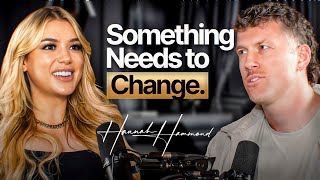
This is a recorded interview (YouTube) between host Hannah Hammond and Clayton Echard (former Division I football player and The Bachelor). The conversation centers on Clayton's lived experience with public scrutiny after appearing on reality TV, lifelong insecurities rooted in sibling rivalry, and a multi-year mental-health journey that included suicidal ideation, therapy, journaling, and daily mental-health learning. Clayton describes how external validation (sports, job titles, TV fame) masked a deeper lack of self-worth and details concrete recovery practices (therapy, journaling, listening to mental-health podcasts ~1 hour/day for a year, creating a podcast to share stories). The piece also explores masculinity, emotional expression, and stages of consciousness (unconscious, conscious, subconscious/intuition) as lenses for healing.
Questions this video answers
Season 20 (The Bachelor, 2022).
April 16, 2025.
Around seventh grade.
About one hour per day for an entire year.
Chapters
But I hated him, you know, at least I thought I did. I felt this hate and envy for his existence because it was like he was physically stronger than me. I had two years of life on him. I should be bigger, stronger, faster, smarter, better looking, better with women. Clayton's not smart. And the way he handled this is terrible and blah, blah, blah. And so all these people are talking about how poorly of a job I've done as the Bachelor. Everyone's talking about how stupid I am on tv, live television. They're telling me how dumb I am in my DMs. They're on Reddit telling me how stupid I am. They're on Twitter telling me, tell me how stupid I am. So I'm getting all this hitting me at once, thousands of messages. I get up, I walk over to this, the back door of the house, and I'm staring out the window, and I stare out that window for 30 minutes, and I'm just sitting there thinking, why me? How much easier would it be if I just wasn't here and didn't exist? One more thing that I failed at, you know, I got the opportunity of a lifetime and I squashed it. I just ruined it. You know, like, that just goes to show I'm never. I'll never be good enough. Everything that I touch turns to. So, you know, I'm thinking, like, it'd just be easier if I just gave up and get. And threw it all away. And so it started like, you know, everyone making fun of me. I was like, wait, people are okay with me being a man and crying? And it actually, like, ended up getting me the role of the Bachelor like this. So it actually benefited me to cry. I was like, so real men can cry? Like, that's not what I, you know, ever. Like, that's not what I hardwired in my rank prior.
Well, awesome. Well, thanks for being on the show today. So for those of you who don't know, I'm sitting here with my friend Clayton Eckerd, who is a formal football player. He was The Bachelor in 2022, season 20.
I told someone recently, I was like, I'm season 28. I was like, no, that. Nevermind. That's Joey. I don't know what season I am anymore. I forget numbers.
Yeah, and then I think season 18 on the Barrette.
Yes.
Okay, so 2021 and 2022. And so you're a national American TV personality, and you're just an awesome person. And for those of you listening, like, Clayton's been deemed to be one of the most handsome men in America. He's just fire B. That's what Wikipedia says.
Wikipedia says, oh, wow.
It's word for word.
You know that people can edit Wikipedia, right? For all you know, it was me. I'm in there. I'm like, he's the smartest, most intelligent, eligible bachelor, like every girl should want to.
People have called Clayton Eggard one of the most handsome men in America.
That must have been my mom when they say peebles. But it's people that you. My mom. They must have interviewed her. So, no, I mean, it's. It's funny what I find online. Sometimes. I even like, asked chatgpt recently. I was like, I. For sure I was doing it for. But I. I was like, is Clayton Eckard a unit? I was like. I was like, look, what could Jet ChatGPT will say about me to my brothers? I was messing with them. And they're like, well, by cleats. Physical stature, like, he's absolutely defined as a unit. And I just like laughing and I'm like, it's just funny how you can have the Internet, what it pulls from all these places, and it's just ridiculous. So, yeah, I'm handsome to somebody.
I mean, it's pretty effort. You're really handsome.
Well, thank you. I'm fishing for compliments right now, I swear. I just find it funny that somebody typed that in on your. But thank you for us.
Yeah, but seriously, I mean, you know, you're. You have it all, right? You're the. To be the bachelor, you have to have some sort of handsomeness to you. And the whole. I'm really excited to talk to you because I know you and I have. You know, I've been fortunate to get to know you behind the scenes a bit, and we both are very open about our struggles with mental health and body dysmorphia and insecurity and self worth and a lot of things that a lot of people on the outside would probably look at somebody like you or somebody like me and be like, what is wrong with you? Like, why are you complaining? And you. You have it all. And your life must be perfect and everything like that. And so I'm really glad that you're open about those things. And you even have a podcast called beyond the COVID that really dives into some of those struggles that you face and that other people face and these challenges that we go through in life and, you know, the biggest battle being one inside of our head. Right? So.
Which everybody has in their own degree, to their own degree Which I found. And that's why, yeah, I'm super passionate about my podcast because it's allowing multiple voices to be heard and from all different backgrounds. And so it's been cool because I don't feel, I mean, not a single story has been the same from the next one from every guest that I've had on. I mean, even if they're in the same field, stories are completely different. And I want to, you know, create a culmination of stories that really then can impact everybody that listens to it. So there'll be a story for everyone that somebody can relate to. And you know, that relation is what gives people hope. And that's what I'm after is there is this fallacy that I have everything. And he's, I can't feel bad for him because he's got all these great things going for him. And you know that I've seen that online and that's really extremely minimizing to say, like, oh, he's 6 5, he's a good looking guy, can't really feel bad for him. It's like, what are you saying? If I was a 5 foot 7 guy that was ugly by your standards, that you could feel bad for me? I mean, you're so, you're penalizing me for the attributes that I have. I don't like it. And I think, you know, whether you like, everyone has problems, doesn't matter how good looking you are, it doesn't matter how much money you have. At the end of the day. We are creatures that are wired for growth. So our brains will continue to search for something that we don't have, a perceived lack. Like we're, we're meant to grow. And that's why, you know, like I'm giving a mental health speech tomorrow and a big part of my talk is about the three stages of existence. And my, and I'm sure someone else coined this, I just am like a sponge that picks up a these different viewpoints and then I create my own. But I, you know, recently came to this place where I realized like, there's three states of consciousness that people are in. Like, well, the first is the unconscious. And so I relate that to all the times where people are scrolling on their phone, doom scrolling when they're watching TV or a movie or playing video games. It's the state of mind where like you're completely shutting off your brain. You're able to just like sit there and zone out. Right? Like that's the unconscious. And I think a lot of people stay in that state, I mean, you look around, people are walking around town, they're at dinners, they're just staring straight at their phones, and there's nothing really happening other than, like, whatever they're looking at, they. On that screen is where all of their attention is going to. Was not really the conscious thought occurring. It's just like your brain's like, oh, dopamine, Dopamine, Dopamine. Spike, spike, spike, spike. Feels good, feels good, feels good. But then, like, we feel guilty on the other side of it because it's like you just spent an hour and a half not being conscious. And you know, deep down, your subconscious knows that, like, I didn't accomplish anything by just doing this for the last hour and a half. And so there's that unconscious mindset, there's the conscious mindset, and then that subconscious. To me, the subconscious is intuition. It's that, you know, can some people say, it's God is the higher. It's that voice in your head that's telling you, like, I probably shouldn't be spending all my time being in this unconscious state because we're not meant to be. But yet there's so many distractions around us that place us in that picture. And so, yeah, I've done a lot of reflection and healing and trying to understand myself, and the show was a catalyst for that. And now my journey is really just trying to get others to see what's tearing them down and what's actually causing them to be unhappy. And it's, to me, a lot of the unhappiness stems from a place of unconscious thinking. It's like, you're so unhappy because you're not taking the time to step back asking question like, what is making me unhappy? Because there's an answer for it. It's just people aren't. Either they don't know how to ask the right questions, or they just aren't taking the time to ask them. So I find that since I've been asking the questions, I'll become much higher.
And I want to get into the healing journey that you've been on. And I know we've kind of both been on the same similar healing journey and had charged and similar experiences. But to backtrack, you know, where does your insecurity kind of start and begin? And I know we talked a lot about Dabor Mate and how, you know, the first trauma in most people is not feeling seen, hurt or protected by one or both of the parents, which a lot of us, I think, can probably relate to. And that Sometimes can lead to addictions or, you know, think about even over good addictions that the society makes. You know, society claims to be good, like success or holism or, you know, being a star athlete or all these things that we get rewarded for. Yeah, but when were you always kind of in slate? For me, I was always insecure. I was always not good enough. I was always felt on love and all those things. Like, when did that start for you? And did you ever like how you kind of look at yourself in the mirror now versus when you were younger? When kind of. How did that progress?
Yeah, so I started feeling insufficient the second that my middle brother started beating me at every athletic event, which probably put me right around, I want to say, sixth grade, sixth or fifth grade. I remember there was a point when I went to a friend's farm. I lived in Missouri, and he had this farmland, and his family invited us out. And so we stayed the weekend there. And some way, somehow me and my brother got into a wrestling match. And my brother's two years younger than me, and he beat me. And he got up and walked away after he had beaten me. And I ran after him when he walked away, and I hit him in the back of the head because I was embarrassed at the time. I mean, I just was. I lost. But I was so upset that I, like, go and hit this, you know, my brother, who I love, but I hated him, you know, at least I thought I did. I felt this hate and envy for his existence because it was like he was physically stronger than me, he was a better athlete. So I started feeling like, well, I'm just not good enough because I should be better than my brother. I had two years of life on him. I should be bigger, stronger, faster, smarter, better looking, better with women. And my brother is a really accomplished individual. He always has been. And so it started with him, but it wasn't his fault. He just existed, you know, and unfortunately, I didn't like feeling that I was the little brother, even though I was the older brother. So it started there, and then it just progressed where people didn't realize that this perception of not feeling good enough really irked me. And my brother being around bothered me at every corner because he was excelling in life, and I was, you know, I had the victim mindset, but I, you know, didn't realize it. I just blamed it on other things. And when I went to high school, well, I guess I would say, like, when I was a junior in high school, my brother comes in as a freshman, and he starts Varsity as a freshman. So varsity football. He's starting as a freshman. I was still on JV as a junior at this point, so now all my teammates are telling me I should quit football and I'm not good enough and I suck. And my. It's embarrassing that my brother, who's two years younger, starting varsity before I ever did. So I'm hearing that meanwhile, he's also, like, always been smooth with women. Like, he's always had confidence and I never did. So, like, while I was friend zoned by all the girls, I was called big brother. That was my nickname, which I hated. And these girls thought that is endearing. And it was. It was meant to be endearing, but I hated it because I was like, no, I don't want to be a ring brother. I want to date you. And so they friend zoned me. I even had girls ever more interested in my brother, you know, when I was like, he was a sophomore and I was a senior. And, like, these girls were more interested in him. And so it bothered me, like, because I was like, there's. It doesn't make. Like, how embarrassing is it that I have a. Like, there's senior women that are more Would rather date my sophomore brother. Although they wouldn't date him because he was too young. But, like, they would even. They rather date him than me. Like, or they would. They saw him, that he was just like, oh, he's just not as awkward as Clayton is. And so I just got so in my head and really, if I'd have just not been overthinking so much. And I thought that. I remember all the messages I would send to girls. Like, I thought I had to make them laugh. Every single thing that I said that came out of my mouth had to be funny. So I would. Like everything. I would say I tried too hard to be funny. And it was like I needed to just try less. But my brain thought that I had to like somebody. Somewhere along the way. Someone was like, you want to get a girl? Like, you make a laugh? I took that to heart. I was like, okay, that means I have to be, like, a comedian. And so I tried to. And I'm not a comedian, so it was. It ended up just coming out, like, came out as awkward and cringy. It was my own damage. Like, I was creating this. All this damage all in my own head. And I was preceding myself to be less than, and I was overthinking and trying too hard, and it was coming across as inauthentic. And so I live a Large majority of my life as inauthentic individual. I created this then facade when I went to college of this successful collegiate athlete, and I started getting respect and women started to kind of. Things started changing that dynamic because now I didn't have to say a whole lot. I was just a Division 1 football player, so I didn't have to have game and I didn't have to make girls laugh. I just had to exist. I mean, girls are like, oh, my gosh, He's a Division 1 football player. And so we were treated like loyalty in college. The problem was is that, like, I was getting this attention that, you know, for what I had done, but not who I was. And I didn't really have to open my mouth. It was just like, I existed as a football player and that was enough. Like, girls wouldn't throw themselves at, you know, collegiate athletes, but it was the wrong kind of attention. So then what happened is, like, then I got cut from, you know, I went to the NFL briefly, got cut very quickly, and then it was like, wait, I don't have a personality because I didn't have to have one. You know, I kind of got away with just, like, my accolades playing football. And so then I go into medical sales, and, you know, that kind of worked where I would like people to ask me and I would tell them what I did. That was my way of feeling important. Well, I'm a medical device. I would say I'm an orthopedic medical device sales representative for Stryker Orthopedics. And I just made the title as long as it was, because it was just like, oh, what? Like, I. I would lose a minute, but they'd like, wow, that sounds really important. Yeah, I work with doctors, and I work in the or. You're in the or? Yeah, yeah. Help with surgeries. And it's like I was doing everything in my power to impress people with what I had done, but it was never who I was. I was, like, hiding behind this job title like, that. I didn't even, like. I mean, I didn't mind medical sales. Honestly, in hindsight, I didn't mind it. But, like, I was. I. I took the job in the first place because I watched people be like, wow, that's impressive. You work for surgeons. And. And I could tell them I made six figures right out of college. So I'm like, yeah, now I'm. I'm impressive because I make a lot of money, you know, more than all my friends do. I have my own house, I bought a car, you know, all my Friends are paying off their loans, and they were living with their parents. But then what happened was all my friends caught up to me, so they all started making their money and passing me. And then I wasn't making the most money of all my friends. And so I was like, I have to make more money. That's what's going to solve this problem. And all the while it was like, no, what you keep doing is you keep seeking external validation. Because it goes all the way back to when you and your brother would wrestle each other in the house and you would lose to him, and you started feeling insufficient from competing with your brother. And then you started trying to find all these ways just to, you know, basically fill that void of validation that I took away from myself. You know, I was wanting other people to fill that void. Whether it was people telling me I was great or whether it was, you know, playing a sport and filling and feeling that I was enough. Like, I was trying to fill the void of internal validation with external validation. And I would do it, but it never stuck because those things ended. And so it's like when football ended, I had this massive chasm of a lack of validation and saw I was like, well, I need to find, you know, more external validation. I didn't even know at the time that I lacked the internal validation. I mean, people would tell me, like, hey, maybe, you know, do you love yourself? And I would just be like, yeah, of course. Yeah. Why would I not? You know, because it was my ego jumping in. But I didn't even know what an ego was. Like. I grew up in a household of three warriors, you know, like, including myself. We didn't talk about emotions. So I didn't know about ego. I didn't know about conscious and unconscious and subconscious thinking. And, like, all this was foreign mindfulness. And I didn't even really know about anxiety or, like, any of those emotions. In college, I had an ex girlfriend say, I struggle with anxiety. And I said, why do you just not think about it? She's like, what do you mean? I said, just don't think about it. I don't think about it. Like, you can't have anxiety if you don't think about it. Now I'm like, that was the most ignorant statement ever. But I didn't mean any malicious intent by it. I just genuinely was like, I don't have it. And I did have it. I just wouldn't accept the fact my ego basically pushed all those emotions down and was like, oh, I have anxiety. It was like, yes, you do. That discomfort you feel is anxiety, but you just won't give it a name. So it exists just because you won't give it a name. It still exists this, but the second you give it a name, now it's real. Right. So even though I suppress it said, you can suppress it all you want, you still feel uncomfortable. So I felt anxiety all along. I just didn't acknowledge her. But then eventually I was like, I am so miserable. I kept piling up all these stressors in my life and I was like, I am so extremely miserable. I don't even know if I want to be here anymore. So that's where I started having the, you know, suicidal ideation. And I had it in seventh grade and. But I was honestly too afraid to do anything. Like the thought of taking my life scared me a lot. I was like, I'm not, I'm not brave enough to do it. That's what I genuinely thought. So I was like, I'm too afraid to do that. And so. But I had those thoughts and I did love my family. And I was like, I don't. I would want to burden them with that. So, you know, I kind of struggle with that on and off. I'd have these thoughts come up for years. Like not all the time, but they come cycling back in. And yeah, it was just. I just felt like it kept. The pain kept piling up. And then finally I got to a place where I was like, I have to somehow be able to release this. Like, I have to be able to release this stress. Well, the gym was a great stress reliever. So I just hit the gym harder after all these years, you know. But then I was like, I have two hours in the gym. I don't want to do two hours in the gym. So I was like, I want you an hour of the gym. And so I was like, okay, well, I need something to like get rid of this. And I realized it was like, you have to start talking about that, you know, you have to start like letting this out. Like your, you know, your ego, like your inner, like your intuition wants to get this out, so do it. And I was like, well, how do I do it? And you know, that's when I started getting exposed to different modalities and such. So where I'm at today, to answer your question in a long winded way, because everything I say is long winded, I'm in a much better spot. I found self love and self confidence, which I've. I can say I've never had in my life until probably eight months ago and it's just getting better now because. But it took a, it took a lot to get there. You know, it got harder before it got better. I thought the second that I would dove into mental health and mindfulness, I thought I would just get, get the better. But in fact it got worse because I was like, wait, what? So there's something called there's anxiety, there's depression, there's angst, there's all these different emotions that I never even like knew how to define them. So then all of a sudden I could define them and I was like, oh my gosh, like I overwhelmed. I was like, there's so too much, like there's so much stuff that I'm not aware now, becoming aware of and I have no experience with them. So now I have to like commit a, you know, full time to trying to understand these emotions and how they impact me and how I respond accordingly. It became a full time job. Yeah. And so I guess I, in a way I was blessed with having time after TV to go into therapy and like take some downtime to start to understand myself. But it was a full time job. I mean, I was spending many hours of my day doing the bare minimum to make money and then diving into my, my, my mental health and you know, that's what it took. I, I wanted to fast track myself to healing. So I basically became a full time therapist for myself, learning as I went and that was, you know, that's why I can share my stories. But I mean it's also, it was hard, you know, to self diagnose. And that's when I started getting wise and started, you know, going to therapy, journaling and listening to mental health podcasts every day, one hour a day for an entire year. Because I was like, I don't have the words to explain what I'm feeling, so I need to go figure out where these words exist and sense of. So podcasting Julie. Impactful.
Yeah. My therapist talks about just people need to get it all out, just like you mentioned it just express themselves. And she actually took me to a rage room in 10B and we like turn on rage music and just take a baseball bat and bash glasses, scream and yell as, you know, most as, especially as a female, like we don't ever scream or yell. It's just, I'm like, we're just fine all the time. And I think you know, men too.
But men or you're concerned if you start screaming, yell, you're crazy.
Right?
So no, I don't want to be look crazy because you probably vote yourself to height. You know, like, I want to look professional and I want to seem like I have it all put together. And so problem is, is when you start to focus on that, you don't allow yourself to be human. Like, everybody, you know, has a trigger at some point that causes them to be emotional and get angry or, or upset. And it's like, but when you're so hyper focused on, I need to be seen as enough. Anything that you feel might do the opposite, you protect against, you hide, you know, so you don't let those emotions. I would not let myself cry for years because I remember the last time I told myself that I would ever again in front of people because I was making fun of it. A girl at a party when I was a freshman in high school, I went to a.
More from Hannah



Never Waiver On Your Values—No Matter How Lonely, Uncomfortable, Or Difficult The Journey Gets

Watch the full video about Ray Dalio’s prediction on the upcoming debt crisis… 👀

Stop Asking “How?”—The One Question That Will Help You Scale Faster Than You Ever Thought Possible

4 Life Lessons That Took Me 30 Years To Learn—But You Can Learn Them All In Just 14 Minutes


This Is Unfortunately How You Can Tell Your Real Friends From Your Fake Friends


