Cut Them Out Before They Destroy You | Eddie Pinero
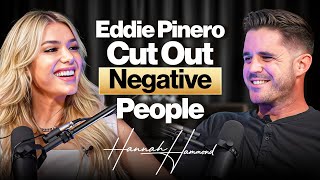
Eddie Pinero built his motivational brand "Your World Within" over seven years before it took off. He captures notes in Evernote, lets licensed music set the pace, and repurposes YouTube videos into a podcast with millions of downloads. His core advice: cut out negativity and people who drain you, prioritize momentum over perfection.
Chapters
If you're doing something every day that's not aligned with where you're going, remove it. You know, we have the ability to shape our world and so often we just refuse to do that.
Has there been a pivotal moment in your life?
The problems have always felt so big and the solutions always ended up being so small. Something as simple as, like migraines, you know, it's just suffering and just getting CAT scans and seeing doctors and all this stuff. And it's like, you think the cure has to be as intense as the problem. I mean, there are days where I'd wake up, couldn't open my eyes, you know, and it's a good metaphor for so many of our issues, you know, and in terms of, you know, when things aren't right and we know, instead of conceding and saying, no, this is life, I have to live this way. Someone's not making you happier, Clarity, cut them off. If they're not adding to your life, remove them. If you're doing something every day that's not aligned with where you're going, remove it. You know, we have the ability to shape our world and so often we just refuse to do that. So, yeah, in terms of relationships, in terms of, you know, moving, like packing up and moving a year ago was a big thing. You know, certain changes to content creation, what I'm putting out there, lots of different things, but the solution is usually easy, simple, and in the room with you is what I continue to find.
Today I'm sitting with my friend Eddie Fenero. I think our lives have just. Our paths have crossed multiple times. And he's in Genius network with me and I started following him on social media because I think the whole world follows him on social media. Before I met him, he owns. He's the founder of your world within which he founded 10 years ago today. Congratulations.
Thank you.
And he is just one of the most profound motivational speakers and leaders globally. And he's an international speaker and with his YouTube channel, his short form content and with speaking worldwide, he just really wants to inspire and manages to actually inspire people to live out their best lives, which is something that's super close to home for me. So I'm really excited to have you here today and I can't wait to chat with you.
Thanks, Hannah. Grateful. And yeah, I think the world of you and, and it's crazy how many times our paths have crossed. You know, I haven't been here that long. I've been in Scottsdale for a little less than a year and, and yeah, I've seen you all over the place, so it's cool.
Well, thank you. Likewise. I know. I was so excited. I saw you in Genius. I was like, oh, I messaged you on Instagram.
That's right.
That's right. Yeah. Well, cool. So you've had 200 million streams on your content online. How do you do that?
How does that happen?
How does that happen? Yeah. How'd you get started? What's your story?
And, yeah, slowly and methodically. You know, it's a funny thing because, you know, you tend to think of. And it makes sense rationally to think of goal and then execution. And so. But for me, it was a long process of, like, really kind of figuring myself out, you know, and being in the corporate world and realizing, like, hey, this is great for some people, but, like, as a creative, it just wasn't my jam and, you know, left that space and doing singer songwriter stuff around Boston, playing acoustic shows, producing friends, taking the camera out, making little movies, doing creative writing, and just kind of like, little by little, eliminating the things that I didn't like and gravitating towards the stuff that I did. And so, you know, the thing about a job is, you know, the upside tends to not be that high, but it's safe, obviously. And so that was the first time in my life when I left that I didn't have that safety net. And your world within came to be when, you know, I was starting to feel that pressure. And, you know, the entrepreneur or creator thing went from, you know, being cool to some guy in his mid-20s and his boxer starting to sweat. You know, sitting at the table writing, you know, it's like, oh, God, this is not cool anymore. And I just wrote this speech called Ode to Excellence that was literally just a promise to myself. It was, hey, you've never had the courage to really put your back against the wall. And I think if you did that, you'd figure it out and know, will you? That's the question. And was sort of like an ode to myself, a promise to myself. And it combined a lot of what I loved, you know, music, editing, writing a speech, telling a story, getting a motive with the message, loved making it. And I released it and just started getting all this great feedback. Hey, I've been there. Hey, this is beautiful. This helped me, or I'm stuck or I'm lost or, you know, this really gave me perspective. And it's that intersection of, like, I love it and it helps the world we're in, right? That there's something there. That's where we're going. It was like a light bulb moment, you know. But it's funny because you don't like. I didn't set out to do this when I was 12 or 13, you know, there. I didn't even know. Like, there were times where I was making videos or doing things and it's like you don't even know why or what it's going to become. It just feels right. So there's a lot of like gut instinct attached to it.
Yeah. And is that still. Do you do that speech live when you go.
When you speak, I talk about it. I don't do it like verbatim, but it's actually kind of a funny, funny story. So there was. I went through this, this chapter where I wanted to like really go off the deep end and be creative. And I started doing the spoken word stuff and it's almost like rap, like the way the words come together. And this, this company hired me to speak. Just great people, you know, but caught me off guard. You know, I'm thinking, you know, I got my, my keynote presentations. I'm like, okay, which one's more relatable? How do we. And the CEO is like, we listen to this video every day or every week before our team meeting. Will you perform this? And it was like this spoken word, like almost like a hip hop. I'll show you sometime. It's pretty funny. Almost like a hip. And so I found myself at this like team meeting with a mic. Just like it felt like emceeing. It was so funny. But yeah, it's taken me all over the place. Just different, different styles, different ways to get the message across and it's been fun.
That's so awesome. And I love. I, I've motivational speaking like yourself and motivational content has been my lifeline. I actually have a highlight on my motivational things. Every time I see something I like, I post it on there because it's, it's always been there for me. And there's been so many times throughout my life where I wanted to quit and I wanted to give up and times I wanted to die. And that was, you know, I didn't have necessarily the community or the connection or the relationships or friendships or employees or anything like I do now. And I was really alone. And that was my lifeline. Exactly what you do and I guess like, what is your creative process to even come up with this absolutely beautiful art that you come up with? Is this just a gift to you or do you have this creative process that helps it come out of you.
I've honed it for a lot of years, but. But to your point, because I think you touched on something beautiful. Like when you're building something, like being alone, feeling alone is the most challenging part. You know, it's like you can feel even more alone than you are. Like, you know, your brain starts playing the little small violin. The sob story is one of the reasons I moved here is because I was, you know, I was living in Florida. I have some great friends in Florida. It was, you know, but coming here once a quarter and just the people in the community and it's when you're around that you just. You just feel better. You feel more inspired. And. Yeah, that was one. It was so. It was like year. I love telling the story because it was such a pivotal time for me. So, you know, you mentioned 10 years I've been doing this. It was year seven where I hit that exponential growth, that sort of hockey stick growth with views and finances and all these things that allow me to blow up the company and hire a team and do all these things. That's a long time. And it's a lot of days of waking up and looking around and feeling insufficient and not enough and like, no one cares. And you're on this pursuit by yourself, even though, you know, I had family and friends. But it's like you're. It's. It's like this irrational bubble you put yourself in. You feel like a loser. And, you know, I like telling people that that's when you feel like that and you're doing something important, it doesn't negate what you're doing. It's not a referendum on you. A lot of times it's just the cost, as I'm sure you know. Right. You have to sort of hit your head against that wall endlessly until it clicks. And when it clicks, it really clicks. So I thought that was a good, good sort of segue to remind people to sort of hang in there, you know, when they're. They're sort of on that mission. But my creative process, to answer your question, is sort of documenting those highs and lows. You know, a lot of. Like my friend Evan told me, your purpose comes from your pain. And I truly believe that. And along the way, there were a lot of really low lows. And instead of dwelling in it, it's like, no, dude, capture it, understand it, and then go tell that story and give that to people. Because it doesn't matter if you're a creative or an entrepreneur or a Single mother or an athlete or a student. Doesn't matter. The context. Everyone deals with it. And if you can paint that picture, say, hey, look, I'm feeling downer, I got my ass kicked, or this didn't work, but here's the value. I think that's what the world needs because it goes back to that loneliness thing. You know, you're alone, but you're not. We're all alone together. You know, like, it's like we got this and. Yeah. And doing so in a way that's emotively captivating and moving. We're not practical creatures. We don't want a list of what to do for us to move. We gotta feel it. We gotta feel that it's right. And that's. I've always just wanted to sort of paint that picture. People.
Yeah. And with, with your creative process, are you writing first? And you, you just sit down and you start to write your thoughts and your experiences and things like that, and then you put it into the speech, or do you have a team behind you that really helps you with content, ideas and things like that? Or is it more of like a natural flow? What does that kind of look like?
Eventually, I hired some video editors, but the rest I like to. To do. Still, I let the music drive the speech. So what I do is like, I have Evernote, and as I'm just living my life, I'll capture things and write things down in different stories, different metaphors that I want to write about. And, you know, based on the topic, is this kind of a sit down, you know, story time conversation, or is this like a in your face, upbeat, intense conversation? Right. And so I'll know the theme, I'll get the music, which now I don't write myself anymore. I license. And. And so I'll get the music that matches the style. I'll loop the music, and while the music's in my headphones, be writing the speech. And that allows the words to match the feel, which I think is arguably the most important piece.
Yeah.
You know, and then once I have that audio file now, I give it to my editor, hater, who's awesome.
And then you have the visuals, which is a big component of what you do as well. Right. In your videos.
Yeah, yeah. Got a camera in front of my face. And then inject a lot of B roll and working to make it a little more. It's. It's fun, like, because there's all these, like, little creative twists and turns you can do, you know, and so I'm looking to get the camera in front of my. My face when I'm driving or working out or hanging out with friends and doing some of this stuff. So instead of using stock footage, I can start putting this stuff in. But I'm a private person. Like, I. I don't know if you deal with that. Like, there's. You're so incentivized. We're so rewarded, even by being transparent in putting more of ourselves out. And so part of me is like, if you want to win, you got to suck it up and do it. Like, that's just the cost of admission. But the introvert in me, you know, I'm like, I don't want a camera around everywhere I go. So I'm trying to balance that, you know, and have this sort of library of media, of personal media, and do it in a way that allows me to sort of live my life, you know?
Yeah, I noticed that when I first had lunch with you. I could tell that you're definitely an introvert more type, you know, And I'm like, hey, everyone, how's it going?
I'm Hannah, the social butterfly. Yeah, exactly.
But so it, like, is that difficult for you to be vulnerable and raw on what you put out, or have you learned to express yourself? And how do you. I guess, how do you process the feedback that you get? Do you even get negative feedback on your stuff?
Sometimes, yeah. Sometimes, yeah. Well, I was actually talking yesterday about, like, the negativity bias, right? You can get 100 people saying, like, the kindest thing, and you love one guy being like, he sucks. And, like, that's what your eyes go right to, that you're like. But, you know, I do think that through repetition, I've gotten a little bit stronger with being vulnerable. And, I mean, that's what people want. You know, that if you're guarded, I think people feel that. And so when you open that door and you let the authenticity through and you're real in what you experience, people appreciate it. And it's hard, to your point, you know, it's. It's. It's taken years to sort of get a little bit better and a little bit better. And I still have a long way to go, by the way. Way. But night and day to 10 years ago. And then the. The. I think it's a. A skill is to, no matter what you do, be able to release it to the world, feel confident in it, have conviction in it, and then detach from the outcome. You're not looking at it constantly. You're not worried about what people are saying you're not looking at the views, at least not immediately. If you want to do it, like, you know, every X number of days or weeks for data or feedback, but fine, but. But you're detaching from the result. The fact that it meant something to you when you needed to get it out to the world is enough. And I think when you get to that place, there's a calm that occurs.
And so you talk about how one decision can change your life forever. And has there been a pivotal moment in your life where you made a decision that changed the trajectory of your life?
There has been, yeah. And. And it's. It's funny because the. The problems have always felt so big, and the solutions always ended up being so small. You know, I was talking about in a speech the other day, like, something as simple as, like, migraines, which I know is not what you're getting at, but, like, you know, it's just suffering and just getting CAT scans and seeing doctors and all this stuff. And it's like, you think the cure has to be as intense as the problem. I mean, there are days where I'd wake up, couldn't open my eyes, you know, and I'm a runner, and I'd be running eight miles in Miami in the afternoon. And it's just. It's an electrolyte deficiency. So I started taking electrolyte tablets twice a day. And like. Like magic, just gone, you know, and it's a good metaphor for so many of our issues, you know, and in terms of, you know, when things aren't right and we know, instead of conceding and saying, no, this is life. I have to live this way. Someone's not making you happier, cut them off. If they're adding to your life, remove them. If you're doing something every day that's not aligned with where you're going, remove it. You know, we have the ability to shape our world, and so often we just refuse to do that. Not. Not even intentionally. It's like we just. We don't even think about it. We just think life as is is how it has to be. So, yeah, in terms of relationships, in terms of, you know, moving, like, packing up and moving a year ago was a. A big thing. You know, certain changes to content creation, what I'm putting out there, lots of different things, but the solution is usually easy, simple, and in the room with you is what I continue to find.
Yeah, and what, like, how do you stay motivated? Like, do you use your own stuff to motivate you? Ultimately Or.
Oh, God, no. No way.
Like, yeah, right. How do you motivate the motivator? It's. How do you coach the coach?
Yeah, well, it's. It's an important question, and it's why I think more than anything, I. I place so much emphasis on feeling aligned and inspired. Like, if I am not excited to jump out of bed in the morning, how am I going to grab a mic and try and help other people make me life? Right. So it's like, when something's not right, like I was just saying, it's like you got to fix it immediately. But I think that's what it is. It's gravitating towards things and people that light me up and never staying stagnant. And when you feel stagnant, go on an adventure, Go do something. Go create momentum somehow, you know, and it's like, that's just been a. A big thing. Like, sometimes it's the lessons that I learned. Sometimes it's through music, sometimes through movies, sometimes it's through an experience. So there's a lot of different ways, but at the end of the day, it's understanding that, you know, we create momentum in our own lives. And the second you're, like, stagnant, feel like life is a little mundane, that's on you. Right. Figure it out. Breathe some life into things, because we're capable of that.
Yeah. And what have been the top three things that have helped you stay relentless and keep going? I mean, seven years. So it took seven years before you really started to see traction and a real good income from your business, it sounds like. And how did you stay motivated through that process? Because that's a long time. I mean, I don't think I could do seven years if I didn't make a serious.
Yeah.
Growth from it.
I was always. You know, it's one of the funniest things. I was at Evan Carmichael's Mastermind, and I might have told you this. I was doing, like, an overview on YouTube and talking about just YouTube stuff, boring stuff, watch time, thumbnails, stuff like that. And I have this chart where it's like, you know, growing, but nothing substantial till you're seven. Then you get that spike, and I open it up for questions, and I'm thinking, everyone's going to want to hear about the ins and outs of the details and that people are just like, how did you not quit year one through seven? And I think. I mean, it was a few things, right. It was almost paying my dues. It was perfecting a craft speechwriting. Storytelling, captivating. I think I needed to go through it. It's not like it was a complete failure. Like, I was growing. I think I had like a hundred thousand subs or something like that. Like, I could. I could live. And you know, every time finances would get scary, luckily someone would be like, hey, I need a series of videos. Like, at the time, like, that was something I did to like, make ends meet, you know, but at the end of the day, it was, hey, the door shut. I'm either going to do very well with this or be broke doing this, but I'm doing this. And I think that is the singular most important thing, because if there were off ramps, I would have taken them. I can't tell you how many mornings, you know, the day after I wrote this speech or made this video that I thought was going to be transformative and I put it out there and Crickets, Right. And you're just devastated. At the time, if there was a. An enticing shiny object always there, I would have taken it. But it's like, no, that door shut. Okay? Yesterday, things didn't go the way you wanted to pick yourself up onto the next.
Yeah.
So it's a good mentality.
And so it sounds like you are more purpose driven from the beginning versus money driven. Or am I incorrect on that?
100. Correct. Yeah. And I find that in my world, money has been a lagging indicator. Meaning, like, anytime I follow my creativity and stay true to myself and do stuff that I feel like I would need, the results are better, the impact is better, the money that comes with it is better. More speaking, engagement, all that stuff. Right. Whereas you know how the Internet is. It's like you can get rich with this and sell this course and use this webinar and every once in a while you fold and you go, should I do that? Maybe I should do. And I always have to reel myself back. It's always the wrong move. So, yeah, 100. Mission based. And I think when you do that one, you're creating longevity, you're creating a foundation that you can stand on forever. You can't stand on a webinar forever. Yeah, right. But also when you stay true to yourself, people feel it, they share it, and they want to be a part of it.
Yeah. Shiny object syndrome. Women in the red dress.
Exactly. Yeah. Yeah. Oh, yeah.
Always hard for me. I'm a visionary through and through, a creator through and through. And definitely it's hard for me to just get clarity on my mission and my focus and what I'm doing. And I truly honor you for being able to stay so focused. And you're. You're so niche down to something that you've just absolutely mastered. And I think it's absolutely incredible.
I appreciate that. It's funny. It's like one of these lessons, you, You. You don't learn it once. Like, you learn it over and over and over again, as I'm sure you know. You know, the. The farther you've come and the bigger your platform is, the more opportunities you get. And so it's still shiny object syndrome. It just looks different, you know, might be a successful entrepreneur asking you to join something or something, and you go, yeah, well, yeah, I want to be a part of whatever you're doing. Right? And then you go, oh, this is no line. This is alignment with who I am, you know, so, yeah, I think. I think having that awareness is. Is huge.
Did you have a rock bottom moment in your life ever that turned you on to the motivational speaking and creativity?
It, you know, it wasn't like, for example, when I listened to your podcast the other day with Clayton and you talked about the box of pictures, like, something that was just like, boom. It was more like being aware and philosophizing about the highs and lows. I think. I think I learned in College through crew, of all things. I was a D1 rower. Is when I learned to suffer. Like, I learned the value of suffering. And also I learned that you can suffer and still not win, which was a mind. It was just a crazy thing at the time. And so I took that in, you know, into the real world. And they're suffering in art, and they're suffering in storytelling, and they're suffering in creativity. And when you step back and observe it, there's beauty that comes from that. And so I just liked documenting the story, and then the documentation became the story. It was just like. I don't know. It was just. I wanted to capture the roller coaster that is building something significant, you know?
Yeah, I know. I. I heard someone say that they were always upset about the challenges and the suffering and the losses that came in life. And they'd always be like, when can I just get on with my life? And then you realize that is your life. That's what life is. It's. It's. It's like a heartbeat. It's peaks and its valleys, and if you flatline, you're dead. And just. Yeah, learning to embrace the peaks and the valleys and understanding, like, not trying to race through them and get on with it or get get past it and just really like that. Here's where we're at, and we're here and we're going through it and trying to either win or learn and move forward, so.
Amen. Yeah. There was a. There was a moment, you know, speaking of like, low points, this is, in a way, was a turning point. There's just such an irony to it, you know, it made me feel human and it made me understand sort of the authenticity, the value of authenticity. But I was. It was 2017, I just moved from Boston to Florida. And I remember, right. So this is so funny. I went with some friends to the desert to shoot this big thing, this big production and, you know, spent a couple thousand bucks, which for me was like, at the time was just insane.
Yeah.
And released it and thought it was game changing and it just wasn't. And you know, I'm watching my buddies from college just do well in. In all their pursuits and. Or that's how it feels anyway. And you're just looking around you and I'm like, I'm not. Not 21 anymore. You know, can I afford to be doing this? And I'm like, I just need a break. And I went out with some buddies and just got hammered in Miami. And I remember coming back to my apartment, going to sleep, being so hungover. The. And I get this email from this guy and he's like, love your videos. You know, they've helped me a lot. And I have a camera crew and I'd love to spend three days with you so I can show the world what it's like to be disciplined and, you know, reach your full potential. And I'm sitting there, like, throwing up. There's like beer cans on the floor. I'm like, this is, you know, God. But it just goes to like, the. The sort of real element of, you know, ups and downs.
You know, judge the message by the messenger.
Yeah, yeah, I'm delivering this, sir. This is not me. But you can't be perfect, you know, you can't and you shouldn't be. You know, that's not.
That's not like I'm picturing you and their head in a bucket right now. And.
Yeah, this is like a Seinfeld skit. Like, you gotta be kidding me. You know.
So did you do it?
No. No, I was not. Was not in a place to do. Was a pretty, pretty low point. There's actually had a happy ending, though. I. I reconnected with one of my old friends at the time, and this guy is my best friend now. Like we talk all the time and we've shot videos together and stuff. But he would call me and.
He.
Would be like, you're changing the world. He'd call me on a Tuesday and be like, what are you doing? Like just writing or thinking. And he'd be like, just reminding you that what you're doing is changing lives and you're going to be huge someday. It just said for no reason. And yeah, like things like that really mattered, you know, and got me through some of those low points. And also they make you, you know, the law of reciprocity. They make you want to be that for other people. But yeah, so when I think of the, you know, the, the hangover, that hangover morning closely associated with, with my, my buddy sort of reconnecting and helping me out of that situation for sure.
That's funny.
Yeah.
Does he live here now or still.
Lives in North Carolina.
Okay.
So, yeah, when I was in Florida, it's a lot easier for us to jump around and shoot at different locations, but every once in a while.
Yeah. And so I know for me personally, I, I struggled a lot with self worth and insecurity and still do, but I'm coming a long way, working on that a lot, finally starting to love myself truly and having that compassion for myself, but still with that and I think just part of who I am, I've been always a people pleaser. Like I found my self worth and my identity and what I produce for other people or what I, I guess the validation from other people. And I still, to this day, I love serving people. I could never screw somebody over because my validation comes in making people happy. Do you have like a strong desire? It sounds like what you do. I mean with motivational speaking, like, do you get that, that dopamine rush from the service of other people and knowing that you are helping people and helping save lives and change the world more so than some other things that some people may get, I think.
So I think the impact is, is, you know, it's, it's been a driver, the entirety of the, the journey. You know, one of the things about online is, and this is not, you know, necessarily a bad thing if you can find a way to parse it out. But the numbers and clicks and views and watch time, you know, those are people like they're human beings. And as, as, as an entrepreneur, there are times where you have to look at it as numbers. I mean, it's just, let's be pragmatic if, if you are not or the data is declining or you're not paying. Like, you can't win. And being able to serve as many people, help as many people as possible is winning. So there is that sort of competitive, like, hey, we need to get this out to the world. But then, you know, when you get an email from somebody that's, ed was at the lowest point of my life and listen to one of your videos, when you get a dm, that's like, you know, I'm going through a divorce or whatever it is. Makes it real, you know, and that's. Yeah, to me, that's what it's all about.
I guess that's perfect for, you know, how in a world that's so flooded with content, how do you produce content that is truly impactful and not just more noise, you know, because there's so much noise out there. And. And you think the key to that is just the authenticity and pulling your personal life and personal stories into that, or.
I think, yeah, I think the truth lives in a gray area, you know, like, the beauty of the information age is like, there's a blueprint for everything. I mean, you can look up, you know, who's winning and what and why. And I'd never advocate ignorance. You know, Alex Shamozi's crushing it. It makes sense as an online creator to maybe understand why. But I think where you lose is if you go, okay, I'm gonna emulate Alex Hermosi. It's like, no, take, take, you know, his. A pillar or two that you resonate with, but you have to inject yourself into it. If you don't, one, you'll quit because you won't be excited about it. It won't be you. And to. The audience will know 100%. You know, they'll see right through that. You're just another, you know, I don't know, whatever you want to say, B level, Alex or Mosey, you know, so, yeah, I think there's a sort of a. A combination that exists so with.
I mean, you've almost a million subscribers on YouTube, which is insane. That's amazing. And how. And obviously there's so much content creation out there. It's like everybody has a podcast now. Everybody's filming videos, everybody's doing everything. Everybody's writing books and everybody's trying to speak and those types of things. But what have been, like, some of your biggest attributes or maybe more tactical things to actually growing a YouTube audience for you?
I think one is going to sound pretentious, but I think you'll get. It is like, get good at what you do. So I'm not saying I'm God's gift to humanity. I'm saying I spent seven years writing five to ten minute speeches. I doubt there's many people out there that can do that in this space at the same level, at the same clip that I can. And so when I look at that time, you know, it's precious because I honed a craft and so what I advocate is getting good at what you do. Podcasts are a vehicle, you know, YouTube is a vehicle. Social media is a vehicle. If you think that's the end in and of itself, that's like an empty Amazon truck. What are you delivering? Right. You crush it in the real estate space. This podcast is a platform for you to talk about that and also give people, you know, a view into you and the person you are. That's the model, you know, as opposed to like thinking you can just flip on a mic and that's that. It's like, what are you delivering really? Think about what your audience needs and how you're providing that. And I think, you know, that's, that's what a lot of people miss. So tactically. Yeah, like picking a niche or understanding where you want to go, being good at that and then depending on what that is, you know, repetition, understanding which platforms are best conducive to your skill set. There's some people that are amazing on Twitter because they're just, they're quick witted. Everyone's dunking on each other and it's like, you know, that's their field. If you put them in a long form podcast setting, it's like a fish out of water. And that's fine. You don't need to be a good podcaster. Crush it on Twitter or X. If you like being in front of the camera and you're good that way, do that. Don't feel the need to be everywhere. So I think it's just really understanding what you're good at, what you want to deliver, and really understanding yourself and the best way to bring that to life.
Yeah. And then what about, you mentioned the metrics and the clicks. How do those play into like, I have a friend who has a few million followers on YouTube and he's told me that the algorithm, you know, it's all about the algorithm and the title and the first 30 seconds and the changing the frame and, and all of these things. Do you, are those super important in how you structure your videos as well paired with a good product and craft, or do you just kind of put Together, a good product.
Yeah. I mean, it's a great question. A really good lesson I learned. So when the channel blew up, same guy, Evan was my coach at the time, and I was very stubborn.
Carmichael.
Yeah.
Oh, I gotta get into. Is he accepting new people in his mastermind?
I'm sure he is. Yeah.
Oh, my gosh.
Give him a sh. Out.
Yeah, I just saw him two days ago.
Oh, that's right. He was at the G. I will never forgive myself for missing Saturday.
Stupid.
Oh, God, it hurts my soul. Yeah, that was an amazing lineup.
It was really good.
But, yeah, that's what. That's what changed the trajectory of what I was doing because I was very stubborn. Three minutes. It's going to emulate a song. My titles were like, Dance before the music plays. There's these artsy things that YouTube has no idea what the hell it is because it can't index it. Right, people. No one searches for that. And so Evan's like, look. And I'm paraphrasing, but he's like, you can have the best content in the world if it sits, you know, at the bottom of YouTube somewhere. You're not going to help anyone. You're going to have to make some concessions. And so change the titles. Very specific. Listen to this. When or morning. Motivation, things like that. That YouTube goes, Ah, okay, this is a motivational video. I'm going to take it, and I'm going to bucket it with other motivational videos and start recommending it right? Watch time. It's like three minutes. Eddie. YouTube values longer videos, so you're hurting yourself. So there's a couple of things like adjusted and pivoted a little bit to tell a story in eight minutes. And then, you know, I have thousands of speeches now after that stack four old ones behind it. 85% of people that watch every video have no idea who I am and have never seen me before. It's not like people are going to get angry. But as a creator, you're in your head. You're like, my audience is going to get mad. Maybe they've seen this video. But you know how that goes, right? So I extended the video length. I started using thumbnails that were less artsy, whimsical, cryptic, an emotive face. Right. Very basic things, and then straight up. So I do think, like, you have to play smart. But it's like what I was saying before, that gray space. But you have to do it in a way that allows you to stay integral to your message and your style and that type of thing.
Yeah, yeah. Keep it authentic to you. Still understand the rules and the things that are going to help you and play. Because at the end of the day there are algorithms and yeah. Nobody's, nobody's searching for Dancing in the Rain, but they're searching for how do I not jump off a bridge today? You know?
Exactly. So very, very direct.
It's not as elegant but.
Yeah. When you put it that way, you know, it's like I'm swimming upstream here. Why? Yeah, yeah.
So we just had an election and I know there's been a lot of there, there, there's a lot of negativity in the world in general and the media creates a lot of, let's just say doesn't only does. Only talks about the negativity. Doesn't exactly shine on the good things that are happening in the world. And then with all the political charge of Trump and Kamala and Republican or Democrat or just all of these things going on. I know I've personally come ran into a lot of people who are very beaten down right now and they're very exhausted and they're very triggered. What are some mindset shifts that people can make to stay positive and united in an environment like this that is so triggering and politically charged?
What a cool question. I, I think like at a basic level understanding why in, in that we are incentive based creatures. So like the media for example, is 100% incentivized to have you worked up, up and angry and fearful, you know, thinking the other side is the enemy. I mean that's how you tune in, right. Politicians, when they create their coalitions, 100 incentivized to say, hey, this group over here and this group over here are against you. I'm not, I'm for you. So they're the bad guys, we're the good. Right. And so like you start understanding that so much of this stuff is just manufacturing fractured besides the fact that some of these narratives are just straight up bs. But I think, you know, we have so much in common with each other that I just think it's overshadowed by, you know, some of this. I. Let me put it this way. I'm, I'm, I'm right of center. I have a lot of left leaning friends and I'm one of these people like does. I don't take it personally. I don't care. I know they're well intentioned. I know they want the best for themselves and their family and the country. We just see things differently.
Yeah.
And that's, you know, that's a level of maturity that I think is required. And it'd be. It'd be wrong to say we were always like that. But I think, obviously it's gotten worse. So I think the first thing you can do is just understand that, like, there's no reason to create this fake. You versus me, Red Sox versus Yankee stuff.
Yeah, yeah, I agree. I think the emotional intelligence. I was having this conversation at a conference in Vegas yesterday, and he was. He was a. A Democrat, far left. And anyway, we had opposing views on that, on politics. I. I'm the same as you, you know, a little bit more on the conservative side. But I. It was interesting to see because I took his charge from, like, up here to totally fine in a matter of about five minutes, and he was like, how did you do that? Like, you need to be a politician. No, I would never be a politician. But it's. It's just the understanding of, like, we're all in this together, and the more uncertainty that we have and the more conflicts that we have and the less unity that we have, the more war we have and we don't have peace. And, like, what is the purpose of anything in life other than peace and happiness and fulfillment and freedom? And so I think it's just really important, like you said, for people to just have that level of maturity and emotional intelligence. And, I don't know, do you advise people stay away from the news and the media and just kind of focus more on their lives, or do you think just be mature enough and emotionally intelligent enough to be able to know what's going on but not let it negatively affect your decision making?
Yeah, it's funny. I mean, I've struggled with this because it's a distraction, right? So, like, 100%. I studied politics in college and very much enjoy it and love it, right? So, like, I'm on X a lot, and I do think my day is better and more productive when I just say, hey, we're not even looking at that, right? Like, today with all the appointments, I'm, like, checking it. It's like, you know. But one thing that I do that I think is pretty cool is you can cultivate a list of people on X you can follow. And, you know, I'm human. A lot of it's people that think like me, but I include in that list people that I totally disagree with, the very least understand what they're saying. And I think that's that, like, the danger is the echo chamber, right? The danger is, like, people completely unaware of reality, charged up Listening to this figurehead thinking, for example, like, women's rights are gone.
Yeah.
It's like, that's just not. It's just not conducive to reality or what's happening. So I think you can do yourself a favor and at least even if you have to grit your teeth and listen to someone you don't like for 10 minutes, understand where they're coming from, understand a different point of view, because again, these. A lot of these people talking are incentivized to piss you off and hate the other side. You know what I mean?
Yeah. I think that's really good advice. I noticed. I actually noticed myself get a little triggered in charge. I was at a tech conference, and there was a, you know, someone, like, bashing the conservative side of stuff like that. And I started to feel like that anxiety kind of build up inside my gut. And now I'm such more of a present person. I realized that, and I'm like, oh, that's interesting. Why am I getting charged right now?
Yeah.
And where is that coming from? And is this a valid feeling or is this just bias? Things like that. But it's. Shoot, what was I gonna say?
It's that self awareness, though.
Yeah. That self awareness. And that's what Gabor Mate says is the responsibility is. He said, in. In between a stimulus and a response, there's a gap, and in that gap lies our freedom. And that's powerful. Yeah.
Really cool.
Yeah. And so many people, they get a trigger and they respond. And so he says that that's no responsibility, and that's slavery. Ultimately, you're a slave to your own mind. And so being able to slow down. Yeah. To your own emotions and being able to slow down realize when you get a stimulus or a trigger or someone says something, someone does something, somebody takes something or steals something or hurts you or whatever is being able to recognize that gap before you respond and fully have control over your response. And those are, like the. I guess, the most free people.
Yeah. It takes a lot of discipline. You know, it's not even like when someone's saying, you know, like, you know, like, philosophizing about or discussing a different point of view. It's when a different point of view is said with conviction, like, it's 100% the truth. And to not think that is crazy. And there's this tonality that's sort of condescending. That's when I'm like. But yeah, to your point, it's like, you know, let it go. Breathe.
Yeah. You know, because at the End of the day, it just hurts you more than anybody.
Yeah. You look like a fool reacting. It's like, it's like on the football field, it's never the person that's, you know, shoved first that gets the flag. It's the one who hits back. You know what I mean? It's the retaliator or on the basketball court, wherever. Yeah.
So how, how have you. And how do you recommend that people stay motivated when they're feeling super overwhelmed or burnt out?
Well, the, the stoics talk about, you know, understanding and the Serenity prayer touches on this as well. I mean, understanding. There are things you can control and there are things you can't. And there's a hell of a lot out there to be worked up about and be mad about. And the reality is a lot of that's just outside of your purview. You know, you can't do. Can't do anything about it. Right. You can't personally unmake Matt Gates, Attorney General. Right. But you can focus today on growing your business and calling, you know, people you care about and checking in on them. You can focus on your health. You can focus on these things that keep you grounded. And when you do that, talked about a foundation, like, it's a lot easier to build on top of when you have that rock. And, you know, these are things I've advocated before walking. And the reason I advocate walking is because there's. You can think and you can ask yourself very basic personal questions that life moves so quickly. You never would have asked what matters to me, where do I want to go? What am I doing now of the things I'm doing now, what's bringing me there? What am I doing for no reason. When you feel like you are making progress and have momentum towards something meaningful, a lot of that other stuff seems less important.
Yeah.
You know what I mean?
Yeah. Because it's purpose driven and then the money doesn't really that. I guess the outcome is just living out with purpose. It's not tied to a specific result.
Yeah.
Yeah. Or what. What is next for you? What are, like, what are your goals? Are you. I. I'm a very money motivated person. As you could probably tell from getting to know me a bit. You seem to be more grounded in purpose and passion for what you do. Are you, do you have like, are you a goal setter, like a long term goal setter or what does your goal setting look like, short term versus long term?
Yeah, I definitely have. I mean, don't get me wrong, money's a, a beautiful thing and a necessary thing. And, and you know, it's, it's a tool that without it you can't have impact and you can't scale. So that's something that I'm actually working with three coaches right now to better integrate. Right now my entire team is funded from AdSense and sponsorships and speaking engagements. When you have 2 million followers or community of 2 million and you're not selling them anything, that's not a virtuous thing, that's a stupid thing. Right. So, you know, it's, it's something that I'm working on. I'm just, I want to be very careful that. One, I feel like it's needed and two, it's done the right way because people want more, obviously, you know, that they want a next step. And yeah, it's fun though. Like, I love solving for this stuff and really, you know, bringing it to life does.
I don't have. I've. I just launched my YouTube channel. I'm like, I'm getting it up this week pretty much. But do. I've heard mixed signals about, oh, you can make a ton of money from ads, like ads running on your YouTube content. And then some people have said, I've heard way big ranges. Someone said some person made 600 million from YouTube ads. And someone said, it's going to be a nice supplemental income, but it's not going to like make you rich. What have you seen or, or do you have the knowledge? I mean, because you're in those MasterMinds and big YouTube communities and you have a large community, is it a really good consistent income or is it, it. Should it be more supplemental to something that you're selling?
I think it should be supplemental. I mean, so you can, so, you know, for context, the channel is made as high as almost 70k in a month.
Wow.
And as low as, you know, 25. It's the up and down makes you feel like as a creator, there's just not sustainable. Like if you're, if you're banking entirely on that, there's a level of certainty that I don't think is. Is responsible, but it's definitely a valuable thing. The beauty of YouTube is that it's a window to the world. I mean, all my speaking engagements come from that. Opportunities come from that. You know, you, a lot of people mention networking and I'm in some awesome networking groups here and. But you know, when you have that level of exposure, the networking appears in your inbox. Right. The world wants to be a part of that. So like there's just so many really valuable things that come from it. I do still think the AdSense is. Yeah, it's a, it's a beautiful plus.
Yeah, yeah, yeah. I mean once you have the following and as long as you maintain it, that's pretty reliable. Within range.
Yeah.
Income. Yeah, yeah. That's super cool. And then now do you have sponsorships with other companies and stuff on YouTube and things like do you have a sponsorship or partnership with the. Good quote.
Yeah. Working with them and basically the, this was a big, a little pivot that paid big dividends. Is like taking the audio from the YouTube channel and making a podcast with it. Millions of downloads.
You weren't doing that before, huh?
No. Yeah. Which again is not like rocket science, right? It's like, dude, come on. But it was just YouTube, right? I'm, I get like tunnel vision. I'm like, I'm going to be very good at YouTube. And then you step back, it's like, oh, okay, well there's other things and yeah, so sponsorships there and ads and a download on a podcast is, is, is much more lucrative than a view on YouTube.
Oh really?
Yeah.
Why is that?
Um, because you can sort of stumble upon a view on YouTube. Whereas podcasts tend to be more direct. You have to be very specific. You gotta be looking for it, click it, sit that. You know what I mean? It's just there's no algorithm feeding you.
Next video recommended. Yeah, exactly. I have heard people who have large podcast followings said that people who are watching your podcast, like that's like a cult like following. They're the ones that go to your events, they're the ones that join your masterminds.
They're the ones. Yeah, yeah.
So what do you think as you start to develop a product for something that's been free, motivational, you know, other than your speeches, but I mean online content, what do you think is that going to be similar to like, like I just think of Jay Shetty who does life coaching and things like that. Are you thinking about forming a community or what type of product are you thinking would be aligned with you or have you gotten that far yet?
I think the community thing would be fun. It's funny, I get asked a life coach quite, quite a bit. I just don't see myself as that like, or, or it doesn't light me up in the way that sort of the artistic side does. But I, I think a community would be fun like minded folks, you know, going from zero to one in whatever, you know. Their pursuit is creating those lifelines calls. I. You should see my. I got a whiteboard my. My place just with. With thoughts all over. So it's like almost. Almost in the building phase, you know.
Yeah.
But I think that's the way to go. And I did a retreat, like a one off retreat with a friend and we brought 23 guys up to Sedona and we got this beautiful like ranch and did hiking and cold plunging. And that was a life changing experience putting that on. And so I've shelved it, but I haven't necessarily forgotten about it, you know, so maybe integrating that into. To the community, I think could be a cool thing.
I love that. I think that's a great idea. I want to go. Hopefully they're not men's only, but that was.
I don't think this will be. Yeah, I'd be in trouble. A lot of my audience is women, you know.
Yeah.
Got to keep it open.
I know a lot of, A lot of women, I mean, need a lot of motivation and I mean, I think we all do. But women in particular seek help and encouragement and motivation and strength, especially entrepreneur women who have to play more into their masculine roles and take that leadership role and don't necessarily have the traditional backing of a man to support them.
So for sure, just. Just hearing, you know, you talk about that, like some of the obstacles you face just being female, like some things that just, you know, I've never have to deal with, you know. So, yeah, the lifelines and the support, for sure.
Yeah, that'd be really cool.
Yeah.
Awesome. So what is, I guess to. To finish it off here? We have a few more minutes, but what is the. If you could go back in time and give advice to your younger self, what would that be?
I think I would emphasize the importance of moving, of just doing something, because the perfection myth held me down for a long time in a lot of different ways. It's like this video is not perfect or there was a period where I was writing speeches for CEOs and it'd be like, you know, spend three weeks on this revising to the point where it's like the guy's not going to know the difference or care. Put it. There's so much more value in releasing something, removing yourself from it and focusing on the next one. Because what you find if you do that is time obviously goes by and you look over your shoulder and you've created distance, you know, and so that to me, momentum is everything. Go. Repetition. Charlie Munger had a beautiful quotes as you are your own experiment. Go out into the world and do things. Give life a chance to provide feedback. It's just too rigid for too long, thinking there had to be a right way. And am I doing this right? And, you know, no, do what you think is right. Put it out in the world. Move, move, move, move. That mindset is, is really valuable.
Yeah, I love that. I, I, I try to do that, too. I, I used to be extremely camera shy. I would, like, cry if someone tried to take a picture of me or a video of me. And there's a whole period of my life where there's no pictures of me. I, I'm actually building out my. I'm rebranding my personal website and doing a storyline in my life of a picture of me.
More from Hannah



Never Waiver On Your Values—No Matter How Lonely, Uncomfortable, Or Difficult The Journey Gets

Watch the full video about Ray Dalio’s prediction on the upcoming debt crisis… 👀

Stop Asking “How?”—The One Question That Will Help You Scale Faster Than You Ever Thought Possible

4 Life Lessons That Took Me 30 Years To Learn—But You Can Learn Them All In Just 14 Minutes


This Is Unfortunately How You Can Tell Your Real Friends From Your Fake Friends


