From Losing It All to a $100M Real Estate Empire | The Price Zachary Kepes Paid for Success
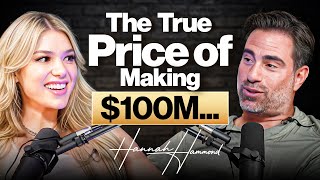
A long-form interview (Hannah Hammond with Zachary Kepes) tracing Zachary’s 22+ year real-estate journey: introduced to real estate via family and joint ventures in 2002, he and partners made money flipping until the 2007 market collapse in which he lost most gains. After hunkering down (selling personal assets, living with family) he raised distressed capital (~$25M fund initially, then switched to one-off private investors) and restarted buying/rehabbing bank REOs in Arizona (heavy buying 2009 onward). He used a 50/50 profit model with private investors, typical flips held ~45–75 days with per-deal returns of ~20–30% (early-era annualized returns he cites as 80–100% cash-on-cash when re-rotated). He built a portfolio of nearly 300 single-family rentals in Arizona (host claims valuation >$100M), cross-collateralized initial free-and-clear homes to obtain bank leverage, and now banks with First Fidelity and JP Morgan. Underwriting: invests only locally, looks for deals with ~15–20% post-stabilization equity, 8–10% cash-on-cash after stabilization, buys below replacement cost, and treats candidate properties as potential long-term “legacy” holdings. Much of the interview also covers his fundraising tactics (one-on-one meetings, converting note buyer relationships into equity partners), relationship-driven sourcing, operational habits (boots-on-ground when feasible), and candid personal reflections about work-centered life, relationship tradeoffs, and motivations (an admitted “addiction to deals”).
Questions this video answers
2002
2007
2009 (started building portfolio heavily from 2009 onward)
~300 single-family rentals (host states valuation > $100M)
A $25 million distressed asset fund (early fundraising effort)
Chapters
Midday call. He's like, hey, do you have a minute? And I said, yes, but hurry up because I'm paying my guys. He was. I just want to let you know I got diagnosed with cancer. I just realized I'm such a piece of like one thing that I regret was I remember my dad passed away two months ago. He my best friend, my, you know, confidant, you name it. Smartest guy I've ever met. And the first time he got diagnosed with cancer. I always remember that, you know, so passionate about deals and a vulnerable moment. I was so sitting in front of a house on the west side and here's my dad calling me. Who knows how long he has? And I tell him to hurry up to tell me something like what an. So you know, I have two phones at the time because I didn't want to miss deals. God forbid. Was clogged up. Like I was so anal and I drove to one of my vacant houses, sat down and had like a reality check. Just cried by myself. Then another buddy, Richard from the title company came over. He's like, what's wrong? I explained I'm just a piece of son and whatever. He goes, no, he just. You're selfish in that moment and whatever. So it's so important if people know me and they know that like I'm a FaceTime guy because now I care so much about connection for people that I truly care about that energetic exchange and being fully present versus like rushing a conversation. And so I would say to people, like when you're out there, like just be fully present, especially to your family, like stop worrying about the deals in these moments and be respectful of the time and the energy and you know, get it your all. Because we only have one family, one opportunity, one life, some that that stays with me forever. I literally was sitting in this house crying my eyes out because I realized I'm a selfish.
So today I'm here with my good friend and one of my favorite people ever. Honestly. Zach keeps and he has built a massive real estate portfolio over the past 22 years. He's one of the largest. If not, are you the largest single family? Sure.
There's big.
Well, the largest single family real estate investor holder in the state of Arizona. He has almost 300 single family rentals and the valuation on those is. I was trying to do the math. It's like over 100 million, isn't it?
I don't know. I don't.
It's over 100 million. I've done the math. Anyway, he's amazing. And he's just built some. Something that is. Something that's super amazing about Zach that I definitely need to learn. Learn from, is that you have just stayed in your lane. You've continued to do what works for you, and just one house at a time, one relationship at a time. He's built a real estate empire. So thanks so much for being here today.
Thanks for. I think you just summed up the whole thing. Am I good to go? Now I'm late to go buy a house. That was a really warm introduction. The feeling is mutual. We met through. As a growth house or mutual friends or what was it? How did we meet originally?
Lori Roberts, Originally at that.
Oh, that's right. In a mastermind. In our mastermind that we run then. And then. Yeah, then we connected. And then you're one of the most vulnerable, transparent people ever, which I love. So many people are all about, you know, the BS and they keep, you know, deflecting stuff. But you're all about just full transparency, embracing vulnerability and connection. So the feeling is mutual. When you called me, said, hey, you want to be on there? I said, I would do anything for you because you're a great, great person. So thanks for having me.
Thanks for being here.
Yeah, thanks for sending me the wrong address. By the way, Cardone Ventures, you know, a little that we're shooting with Grant today and you. But you better just with you. So we're good.
That'll be the next one. I'll make sure he's here on the next one.
I'm happy. Just you and I. So let's get into this nice, great setup.
So I've got so much I want to ask you to talk to you about, but first is kind of tell us like, a little bit about your origin story. How did you even get into real estate? And what even led you down that path, like, from, I guess from childhood until what point you started real estate 22 years ago.
Great question. So, grew up in an entrepreneurial family. My dad had a law firm. My grandparents had scrap businesses and different businesses. And I just. That's all I knew. That's all I knew growing up is you got to work for yourself. And I didn't know what avenue I was going to pursue, but I think through serendipity and luck, I was introduced to real estate through my grandfather, who did some real estate development and some other stuff. And then I had some cousins in St. Louis that were doing real estate and had the opportunity to joint venture with them in 2002 when I worked on Wall Street. I looked at a lot of different avenues. Maybe doing financial advising, potential insurance, and a lot of B2B E commerce startup companies in the early 2000s. Obviously, I'm dating myself here, but when you look at all those different things, the only thing we could really control, obviously institutions move equities, right? Not us as individuals. And you look at all the other businesses out there, there's so many different moving parts and things that we can't control. I'm a control freak. To the benefit and to the, you know, detriment. Detriment of. Of the business. And so that's why I fell in love with real estate is the control aspect, the ability to manipulate it favorably with leverage and with banks and relationships and tenants. There's so many things that we can control. And that's what I think I fell in love with. So 2002, I got asked to joint venture with some cousins out here in Arizona, be the human capital. They provided the money. I went out to source the deals and the relationships and. And that's how it all kind of started in, in 2002. And we were just advertising and flipping houses and things were going really good until everything imploded in 2007.
So tell us about that. What happened? What. Where Were you in 2007? How many assets did you have? And then what did you lose?
Sure. Great. I like you just get right into it. Just pulls out the gun and shoots. 2007, the benefit was we weren't holding a lot of stuff and we didn't have bank leverage. And so we were good in the sense that when the market came down, we would just sell into the market. So we didn't have huge exposure, which is a good learning lesson. I own my personal house and maybe one or two rentals at that time. So I didn't really even start building my portfolio heavy until 2009. About 13, 14 years ago. Yeah, 15 years ago. So it's interesting how fast you can build when you move at a rapid pace. So at that point, market implodes. I invested all the money. We'd made millions of dollars and reinvested all that money with the cousins in some other seller finance and some other opportunities in the Midwest. And you said today, hey, can we ask any questions or get down to some really difficult stuff? And I said, you can ask me anything. Like you. I, you know, I'm an open book. And that's when I realized I stopped getting the dividend checks from that. And I said, something's really wrong here because these guys Have a huge net worth. I gave them seven figures for reinvestments and I stopped getting, you know, my 10% yield. So I flew out there. I'm a face to face guy when, when the fire is built, you know, I'm not the guy that runs away from, I'm the guy that douses it and, you know, takes care of business. Looking the, hey, what's going on? They were over lever. They were building spec homes in Florida and they had huge net worth and it imploded. And that's when I realized I lost every penny that I had made from 2002 to 2007, 2008, literally pretty much everything down to zero. So what do you do in that situation? Right, that's a difficult situation. You know, you're like, shit, you just put your head down and be depressed and, you know, forget about life. Or do you just take everything that you've learned and turn a negative into a positive? I always say when one door closes, two or three doors open. And karma and positivity and optimism are very favorable things. We also need the people around you to ensure that you're moving in the right direction. That's why, you know, I know you go deep into your stuff and praying and meditation and alternative medicines and all that stuff. I'm blessed that I have a very small, good circle of good friends. And I remember the time I get friend Isaac and Ron, they said, dude, you're amazing at what you do. The market sucks, but you can rebuild faster than anybody. You move like lightning speed to those times. You think, what am I going to do? You know, sell some drugs? I mean, how am I going to recoup all this money so quickly? Of course I wasn't going to sell drugs. But you question in times of turbulence and volatility and hardship, you question life. You question, what's, what are you going to do? And so thankfully, to have good friends and good people behind me, you make the decision to jump right back into what you do and do it well. And at that point, instead of utilizing their money, because this money I went out and raised distressed funds from, I raised out capital to buy distressed assets from other people and talked about the vulnerability of how I lost the money and how I'd protect their money, which is a very favorable thing to do when you can be open and honest and say, I was on your side before with seven figures and now I'm going to utilize this money. Here's the protectionary measures I'm putting in place so that we can grow and Prosper and have a good time together. And what happened to me would make never happen to you based on these, you know, mitigations of risk.
I love that. And just being able to relate to the investors that way because you knew what it was like to lose everything. And you, they knew and trusted that you were going to protect what they had because it was something that meant a lot to you and that you're passionate about and that you understood.
And that's your reputation. Like, money comes and goes, but your reputation, it always flows.
Yeah. And so when, like, what was the first step you took when you lost everything in 2007?
I. I hunkered down. I wasn't too proud. I remember I. I sold, you know, I bought a Mercedes as a kid thing. Oh, I'm the man. Yeah. That's why I talk about people in the. I know you like the fancy stuff. And I think you realize now you're like, it doesn't really bring happiness. Probably your horse gives you a lot more happiness than your G wagon or, you know, Ferraris. I sold literally whatever I could sell to salvage some capital. Sold the Mercedes. I rented my house that I built in D.C. ranch to a hockey player. I literally moved into my parents second home in their. In their third bedroom and just hunker down and was like, I don't have to like, expose that, you know, that I have all this money or, you know, I never really cared about that anyway. So I immediately hunker down to pivot and adapt to my market conditions, to our market conditions. Because I don't really care what people. I mean, I care what people think, but I don't really care. You perceive me, whatever. I was honest. I go on dates and be like, hop in the Prius. We're going to my parents second house. And they're like, what? I'm like, hey, you don't like it? Yeah, I can open the door. You know, Have a nice day. Let's go to PETA jungle. So it's about the relationships. It's about connectivity. Like, I don't have to improve present even today. I don't care. I really don't. So hunker down and then just start in the build period, right. If you can only. You can only go so far. If you're at the bottom, I ain't gonna go any worse. So at this point I'm like, how am I gonna build again? How am I gonna build the first story and the second story and the third story? And it's just about getting out there, being you know, consistent movement, positivity in one relationship at a time. And through, you know, patience and delayed gratification, you rebuild. It does happen.
Yeah. And were you, like, from the business perspective, what steps did you take to do that? Did you start flipping houses? Did you start knocking on doors? Did you start reaching out to real estate agents and saying you wanted to buy deals? Like what, what did that process look like?
I was never out of motion. I think I've always been in perpetual motion. There's when I say, like, oh, the market plummeted, the market plummeted, and you're not really buying in a market that goes from 400, 000 to 50,000. Right. But what you recognize, I still maintain relationships. I was in perpetual motion, waiting to pounce when I felt like no one could really time the bottom. But when prices were 50,000, 60,000, 40, 30, and 20, I was buying a lot then and then, utilizing the same crews, the same relationships that I built before and said, hey, I'm still here. I'm not going anywhere. I'm going to be here for the long term, and so are you. Sell me these deals. It's the same thing, but the prices were just much cheaper. So continue to engage people. And then at the same time, I was proactive in raising capital to be prepared to, you know, pounce on the market, to start buying. When people, Warren Buffett says, when people are fearful, be greedy. When people are greedy, be fearful. And everyone was fearful. But I was sitting there with people that believed in me and I believed in them. And together, collectively, we were going to take one house at a time and flip it. And then as the market started to rebound and the hedge funds came in, we were sitting on pretty significant inventory when they called me the hedge funds and banks said, hey, are you ready for leverage? Hey, are you ready to sell part of this portfolio that we, you know, were acquiring? And I said, name the price. You know, let's evaluate. And then as I sold off these mini portfolios that I had built to these hedge funds, that enabled the investors to make a lot of money, I made a lot of money. And through that, I could start building my individual portfolio through that profitability.
Okay, and what was your strategy for raising capital?
Originally? I, I did a distress asset fund, a $25 million fund, and I went around and flew to Canada, New York, Detroit, Chicago. Any high net worth person I met or referred, I sat down and one on one, consultatively spoke to them about, here's my history of success. This is what I built. This is what happened to me. This is how your money's going to be protected. And then I said, you want to get in the fund? Minimum, I think, was like 100,000 accredited investors. But then what I realized by doing that is nobody wanted to have, you know, a 1 25th or a, you know, 250th or whatever the numbers were in terms of their incremental investments of a fund. People want to have a full piece of something they don't want. Oh, I own 1% of something. So if we were to sell $100,000 home and they had 1% of it and they made $1,000 or whatever was. That's not exciting. So I. I blew the fund out and I just did one off investors, which was very successful because then they can say their money's not commingled into a fund. The K1s. And the accounting was a nightmare. So I realized to build a couple strong, I say a couple 5 to 10 or 15 solid independent relationships with people that know and trust. You want to be part of your team. For. For the single family business was far better than a fund. And it works much better because it's faster. Right. Hey, Han, I got this deal you mentioned you're interested. You have 200,000. Here's the deal. Here's the projections. What are your funds to title? We've got our own private llc. You're protected, I'm protected. And this is the game plan versus. Hey, let's call the board of advisors. Let's go it all through the monotony and the red flags and the paperwork. It was a headache. It's much easier to make one phone call, have the paperwork ready, and just dive in and go. Speed is so important in this business, as we know.
Yeah. And that's the difference between syndicating versus having a fund. And they definitely both have their pros and cons. And I'm, you know, start. I decided to go with the fund right now, but I could still syndicate individual notes on also. It just kind of depends. You need investors with more capital to do that approach because they need to take the whole pie. But if they build that relationship, they love to do those types of deals. So that's. That's really awesome that you do that. And how much money did you end up raising over? What was your raise period? Or I guess you. You transitioned out of the fund and you just started syndicating from then on?
I pretty much had commitments to fill the whole 20 plus million dollars. But what I realized was these homes were only 60 and 100. When you start thinking like I raised actually verbal commitments and people had earnest money checks ready to go, way more than I needed. I was so. Oh yeah, because think about it, how much would it take? These $100,000 homes, they have $20 million. You're not buying 200 homes at once, right? There was no like packages of distressed deals on the buy side. These were all bank reos and short sales. So they were coming incrementally. I couldn't even deploy that much money at once. That's why transitioning to the one off capital proved to be so much better. So, so someone didn't need, oh, I'm putting in $3 million or 5 million. Shit, at that time, if you had 500,000, it was a good amount of money to continue to work and sell, aggregate remodel, sell and turn those same dollars multiple times. So those early adopters, if you will, that invested in me got paid multiple times with their money compounding in multiple projects. So those people that invested did very, very well.
Okay, and what was your. So let's say I'm an investor. You have a distressed asset, it's $300,000. How long approximately would you hold the money and what would their return be? Or how was that syndication structured?
It wasn't a syndication, was just a one off, you know, but the, the agreement, the equity play for me was I made it simple, was a 50, 50 model. So I didn't take any upfront funds, I didn't get any realtor fees, no management. I was fully vested in the deal on the upside as well as the potential downside. I've never lost anybody one penny. I can say that very proudly and transparently, which is great. So I've only made money for everybody. So I would feel horrible if I lost money and probably just give them the money, especially at this stage. But early on when I didn't have money, you know, you're taking on the risk. And I want to let them know if we did lose money, which anything could happen on a deal because nothing's perfect, I'm in for 50%. So they knew that by me not taking commissions, management fees, nothing until the asset was stabilized, sold, and they were paid back is when I got paid my 50%. Okay. So based on that, people were making, you know, if you talk about annualized returns, we were in and out of deals because the market was getting hot and you know, 30 to 60 days, typically 60, because by the time you stabilize and then we sold, and that was a hedge Fund and they're paying cash. These were 10 day closes and pretty fast stuff. So some of it was 45, but on average is about 60, 75 days. And they're making 20, 30% all day long. And if you factor that multiple times per year, the returns annualized projected were, you know, 80 to 100% cash on cash returns.
And. And then were they 1031?
And just keep rolling 1031. We're active traders stabilized. So we just took that money, said, would you like to reinvest? And they said, yes.
Okay.
And then one of the greatest things that I've done was, and this is an important story and lesson for people watching is always ask the question, who do you know that wants to invest in real estate? Or at the time I was doing some seller finance notes that I had and you can't really pledge notes to bank, right. They're going to give you, if they would take them, probably a small return. I mean a small ltv. So I was doing a cross sell for a buddy. I was using my license as well as ancillary income. And I asked the agent, who, do you know any high net worth investors? I figured she did because she lived in Silver Leaf. So she's connected to good people. Said, I'm looking to sell some notes. Who do you know? She goes, I'm not sure really what you're talking about. That's my area. It's not my area of expertise. But I have this gentleman that probably would be interested and I'll connect. I said, oh, thank you so much. Literally doing a cross sell standing in the kitchen at the safari. And I said, who do you know? And she's like, yeah. Makes a call. Turns out the gentleman's from Michigan. He calls me the next day. He says, talking about these notes, they're performing. What's the yield? I tell them all about it. He goes, all right, I'll fly out and see you. And I'm like, okay, but they're just notes. You don't have to fly out. Like, I could just send you the portfolio. He goes, I want to meet you. Okay. You know, think too much about it. So he says, I'm booked for, you know, 48 hours from now. Oh, that's pretty fast. Okay. So I go to the airport. I'm in my Ford Explorer Sport probably that I've owned for 15 years. If anyone knows me then I got water bottles on the floor. I wear the same stuff. I don't wear ties and suits. Even when I was doing those meetings, I didn't dress up. I was always authentically myself, right? I'm not trying to pitch somebody or be this Wall street guy. This is who I am. Like it or not, you know, this is what you're going to get in return. Like just full transparency, authenticity, pick the guy up. I'm like, hey, sorry for the mess. I've been busy managing cruise. Doing what? I goes, no, don't worry about it. We drive around for two hours. I show him the operation. He's a really nice guy, don't know much about the guy. Tried to google him, zero footprint. So he says, hey, listen, I will buy all these notes. It was north of $1 million on one condition. I said, sure. What's. He goes, as long as I have an opportunity to invest in your company. So what kind of investment? He goes, well, we can get there, but let me do some more research on you. I said, okay, give me your attorney's number of my attorney, get in touch with your attorney. And then $25,000 later of, you know, joint venture operating agreements. The guy was getting my DNA, sperm samples, you know, you name it. Not really sperm samples or DNA. But the guy delved deep to make sure that he's investing in somebody that doesn't have some skeletons in the closet and he's fully protected. So we finally came to terms, exactly in the terms we spoke about 5050. Little did I know the guy's very, very wealthy. And he said, the reason why I invested in you is because you're also from Detroit. You're transparent. You drive a beat up car, not some fancy car. You didn't clean and pretend like you're some, you know, professional investor. And all this stuff. I saw the way you treated your crews, the way you run the operation that your hands on, that your skin's in the game. And that's what I liked about you. So I knew this would be successful. So then he says, okay, so how much you want to invest? Because let's start with 250. So the 250 goes in 30 days and we make like 100 grand. And then he goes, I go to 500, then a million, then 2 million, then 5 million. And we literally, you know, made millions of dollars together through an investment through a third party agent that referred, you know, this note buyer. So the point is you never know who you're talking to. Always ask in any opportunity, explain what you're doing. And through karma and serendipity and optimism, good things are going to happen.
That's so awesome. How long did he invest with you? Is he still investing with you?
He passed away, unfortunately. But his family still. I give them opportunities. I have the highest respect for them. They own some big, big businesses in the Midwest. Just a beautiful family. So grateful for them always. You know, it's never. People always just assume you're the point person. It's all you. It's never all you. It's my crews, it's my designers, it's my bookkeepers, it's, you know, the capital investors. It's all a team effort. Even though I'm a solopreneur, we create these opportunities collectively. And without the capital, without the, you know, the crews and everybody else involved, this wouldn't be possible. I couldn't, I can't do construction. I'm terrible at it. Right. I'm good with people, I'm good with relationships and management and capital investing. Stick to your strong suit. So that's what I do.
So you've talked a lot about buying and flipping houses and paying the investors out 50% of the profit. But when did you start and how did you start actually keeping these properties to build your rental portfolio?
Great question. So every time we sold these houses and we were doing very, very well, as you heard, making significant returns, I would take my 50% and then buy my own independent single family homes to start building my portfolio. And I wasn't selling those, I was keeping them, renting them out. And that was my game plan. So through those, I started to have a bunch of unencumbered single family homes. You know, prices were pretty expensive. 25, 30, 40, 50,000. You're throwing 20,000 into them, running them for a thousand, 12 hundred. At the time, the cash and cash returns were like 20 caps, right? It was crazy. But then the market started. Continue to appreciate and then finally you could get bank leverage. I owned all those free and clear. Wasn't like I had millions of dollars. If you took, you know, 10 homes at 60,000 was $600,000 of single family homes. Those homes today, by just sitting there and delayed gratification, are worth 3,5400,000. But before they've appreciated all that way, what I had was able to do is get leverage on them, cross collateralize my first mini portfolio with the Biltmore bank. And they gave me a line of credit and I took that line of credit, continue to buy more and more. And every time I would sell an investor deal after tax money, I would continue just to go all in. It was the domino effect of utilizing those funds and the profitability on those deals to then dollar cost average into the market and buy my own assets. And through that all the time, I believe stagnant money doesn't make money. So I'm in perpetual motion working the capital to build the portfolio.
Okay, and what has been your primary way to get deals throughout the years?
Belly to belly relationships. Showing up to the az rias, to the masterminds, to walking in title companies, to being funny and being memorable, to being what I call top of mind mentality. Like leave a lasting mark. Like this business. People take everything so serious in life and like you don't take everything. So you always have a good time, you laugh, you have great stories and these different masterminds, very memorable. And by the way, someone's saying, I was talking to Shandra, my designer today and I, I think she was, you were trying to get her to join your brokerage or something. She saw I was meeting, maybe you remember her or not. She just got her license and I think you were recruiting her and she goes, oh, you're doing this podcast with Hannah. I know her, she was recruiting. I said, let me tell you something about Hannah. She goes, what? I said, that girl shows up at every event. Am I not wrong? You're everywhere, like every week and you like even to like book a dinner with you. You're like, I'm three weeks out, I'll be in L. A and then I'm going to fly here and then I'm in the Bahamas and I'm in Greece and I'm here and you're masterminding and you're at this, you know, speaking engagements, you're everywhere. And so that's my same mentality, you, money is not made sitting behind a desk. Money is made being around like minded people to create mutually beneficial opportunities. And once I realized that early on I was never in the field, I was in my Prius, showing up outdoors, looking at assets, meeting contractors, meeting other investors, meeting wholesalers, telling them, I will be your best buyer. Give me one opportunity, let me prove it. One home, one relationship at a time. And that's how I've built this business, you know, so that's the mentality today. No complacency. It's not like if you get all your spring water from one place and it goes out, you don't have any water. My philosophy is all these newcomers, guys and girls, and I think this is a great opportunity for a lot of women in this business, by the way, that they do this business better, they're better listeners, they're more Understanding they're about to delayed gratification, most of them, some not. You're about fast gratification or were maybe changed. But continuing to expand and build those relationships is critical 24, 7. You never know who you're going to talk to. You never know where that opportunity comes, but also really taking care of the people that are in your control. Like my tenant base or other agents I've done business with. There's a great opportunity to give them that five star service I talk about. My sister works for Yelp. You're always striving to do that five star engagement, right? It's not just about the products, about the service, communication, the way you make them feel, listening to them, the respect. So many different factors that come into play in terms of these relationships that I work on on the daily so that I'm top of mind. My tenant says to their friend, oh, you need a place? You have to call my landlord. He's like family. That's what I strive for. And that builds the business naturally and organically. But it takes work, right? It's slowing it down. It's not just treating them like an annuity, it's truly treating everybody like family. Taking care of them any which way possible and being there for it for them emotionally, you know, physically, monetarily, whatever that looks like.
And what do you look for in distressed assets? Like how do you underwrite a deal and, and how quick is that process? And I know you make quick decisions right away. Like you see a deal and you know right away. So what do you look for?
So contrary to a lot of investors out there, I only invest locally, which enables me to be an expert in a specific area. So if I was buying nationwide, it would be very difficult to make the speedy decisions that I make. Like literally a guy called me this morning, says I got this deal on this street and I know the street and I have assets around the corner. So what are you asking? He wanted 240. And I said, based on the market, right Now I'm at 2:32 and a half. And he goes, can I get back to you? I said, absolutely. Like I don't. That's the beauty, right? Do whatever you want, here's my number. But don't like take a week. Like my offer is good for a day, but if you can get more, I respect that because I want them to do as well as possible. But here's where I'm at and I justified why. So for me, early on, of course, you're learning the market. You have to Understand what is the retail value, how much is going to cost to stabilize that asset. What I really look for is equity in a deal. So I won't buy a deal unless there's equity in it, which is common sense. So a general rule of thumb is if you say you're going to acquire something, what transpires to your net worth? As soon as you acquire that deal, does your net worth go up, does it break even or do you potentially lose money? Obviously, if you break even or lose money, why would you buy it? Unless maybe you're getting, you know, amazing financing at 0% and some, you know, sub to deal or something, which would make sense. There's delayed gratification there, it's going to take a while, but you're paying down principal immediately and that's you're building equity. But right now, in today's market, after stabilization, if I can get 15 to 20% equity, I can get an 8 to 10% cash and cash return by stabilizing it. I can buy it less than replacement costs. And it's a legacy property. Meaning, like these are my four pillars, by the way, meaning that I'm happy to own this long term. So if I don't flip it, I can put it in there, my dogs can own it in 20 years, God willing, they're still alive, or my nieces and nephews or five future kids or whatever that looks like. Do I want to own this asset for the long term? So that's really number one, is it something I want to own and retain? Can I stabilize it and have 15, 20% equity so I could essentially pledge it to the bank to recycle those original dollars, do I get the cash and cash return and can I build this cheaper? If I can build it cheaper, why would I buy it? So obviously if I'm buying it cheaper than it would cost to build, there is that intrinsic value in that deal. So that's what I look at. If it hits those four pillars, there's no emotion to it, you know, that's it. Now I will say there's the intangible is driving that neighborhood to say, is this the legacy property? Am I feeling comfortable to be in here? I'm not going to take an asset that I can make 15% on, but I'm going to go out there and potentially get shot in some hood, you know, and say at this point in my career, I don't need to take on that risk, nor do I feel there's going to be great appreciation right now because of what's going on in the neighborhood. So it has to conform to a safety standard. But other than that, and pretty much most of Arizona does do that for me. I mean, other people probably wouldn't buy where I buy, but I feel comfortable.
And are you, do you go get your eyes on every property? Do you get your contractors out there or do you just see the address and you know and you make a decision?
I see the address at this point and no make decision. Especially from a lot of the people I vetted that have sold me deals because of reputation. Now I tell everybody it's very important to have boots on the ground. Right. We're making quarter million, half million, million dollar decisions. Of course I want to walk it when it's feasible. If I can't walk and they have good enough pictures and videos and tell me if there's an issue or something that's overlooked, they're going to take care of it. These are the relationships that I have. Then I will buy from specific individuals without physically walking it. Because I know just like I would stand behind something, they would stand behind. If I get in and there's something that wasn't disclosed or they missed from quick pictures, they're going to give a concession and take care of it monetarily, as long as it's fixable. But ideally, yes, I'm all, I'm not a lazy guy. I'm far from it. So I'm the guy that literally drives it. Even from an exterior looking at the neighbor, making sure that there's nothing weird or there's some stuff soil issue in the neighborhood or some houses are. Because there's certain areas that are notorious for, you know, so weak soils and expansions, a Chandler and some Iwatuki stuff and whatever. But I like is as often as possible getting in the asset seeing, feeling touching these properties. A lot of money is on the table no matter what. Why wouldn't I go take a look for 10 minutes? And I don't need to bring my contractors because I plan for the worst case scenario. So if you plan for the worst and hope for the best, you're gonna do good. Yeah. So no matter if I don't get in the attic, I just assume there's probably mold and busted pipes, line item 10,000, you know, and so if I don't have to do it, that's icing on the cake. You know, if you're always that contingency person and you're thinking about the worst case scenario, I'm the guy that says on a rainy day to the beach. Let's go bring an umbrella. Let's bring, you know, extra water. Let's, you know, when you're going hiking, sunny day. Oh, sorry. On a sunny day to the beach. I'm the guy that brings the umbrella. Also, on a rainy day, I think it's important to bring the umbrella too. Yeah, I'm just making sure you're listening.
I'm listening. And so are you still doing individual deals with individual investors and then using those profits to keep buying real estate?
No. You know, at this stage, I'm blessed that I have a really good bank that I bank with First Fidelity and. And JP Morgan that enables me to get just my independent leverage. But I do have that original Michigan investor and their family. And let me think. That's pretty much it. I think at this point that I still give opportunities to. Because, again, you know, there's an abundance of opportunities. You never know when some huge opportunity comes. So I always plug them in where I can just to keep them engaged. And I'm grateful for the opportunities. So I don't need to do that. I want to do that. It's still mutually beneficial. And again, greed kills. So I'm not a greedy person. I'm happy to, you know, celebrate and. And continue these mutually beneficial relationships.
And how did you stay so focused? Because I know I severely struggle with shiny, you know, woman in the red dress syndrome.
You do?
Yeah, yeah, yeah. I know you.
But you're changing.
I'm changing, but it's still difficult because, one, I genuinely love the game, I love business, and I'm a visionary at heart. So, like, I'm not a CEO operator type person. I'm not an implementer, integrator. I'm just, like, creating new ideas all the time. And so it's really hard for me to stay focused. And especially as you become more successful, as you build better relationships, more opportunities come. So I know you've had a billion opportunities to get it. How about multifamily? How about private equity or venture capitalist or how about private debt or whatever? Right. So how have you just stayed in your lane and just continued to build your empire, never getting distracted?
This qu. This is like a daily question, Zach. Check out this multif family. Zach. Let's do some hard money funds, Zach. Let's get in this cannabis business. Let's do this, let's do that. And so for me, every time I've invested outside of my own organization, it's been terrible, I got to tell you. So it wasn't like that. I haven't done. I've done it. I've dabbled in that. You know, I still have an equity portfolio. The performance is. I always say this. How often does your. Your wealth advisor call you to check in? Right. Tell me, I'm sure.
Money.
Not even. I haven't heard from my guy at Merrill lynch for, who knows, two years, like, and I have pretty significant money there. They don't care about you. Nobody cares more about your money and you being the captain of your domain than you. So I've invested in cannabis. Now, fairness, I could have sold it when the market went by. You know, company invested and went public. I was greedy. I didn't sell when the thing went up, you know, multiple, you know, times. And so I'm thinking, oh, it's gonna go up more. You know, you're never gonna go broke taking a profit. And shame on me. And I own not selling. But even to this day now, it's still long term, and I've lost compared to that. So every time I've invested some private equity stuff, I've lost. So I learned if I don't understand it, I'm not a controlling majority investor in it. I'm just gonna stick to what works. It's worked for me for two decades. It will continue to work for me. So I don't need to have this high level of diversification because what I'm doing works. I believe in it 1,000%.
Yeah. And what it like? Well, my first. I have a couple. My first question is, what advice do you have for investors who are looking to either get started in doing something like you're doing, doing flips or some sort of real estate business to earn money, to start building their rental portfolio or even, you know, commercial real estate or anything like that. Yeah. What advice would you give to them? Getting started and growing.
So, to getting started and growing. I would find somebody in your space that you look up to or that you've seen that's open to, you know, showing you what they do. There's a lot of people like, for me, my legacy is not how much money. No one cares how much money you made. Doesn't matter. But what they care is what you taught them or how you can change the trajectory of their lives and their family's life. So people reach out to me all the time, and they ask me advice, and I tell them, hey, this is what I do. This is what you should do. There's an abundance of opportunities. It's not going to cannibalize my business. It's not going to cannibalize your business. Show them what you've done. People who are open and willing to put in the work. Go put in the work. Here's the roadmap. I've given my roadmap million. There's no like secret sauce to this business, but it's just opening up your books to show them. This is what's possible, this is what you should do. I would tell people to focus on the low income stuff first, right? And as you're getting started, don't take on some crazy rehab project or some new build construction that's outside your, your competence level. Start small, get a feel for it, get a flow going. Invest where you can afford to invest. Don't get over levered one home, one relationship at a time. But first maybe simulate the process with somebody like myself or yourself or someone in that business to learn. It's like I tell people, when you go to the casino and you go to the whole high rollers room, you don't just sit down at the table and you start betting $100 a hand. You don't understand the game of blackjack. You, you've heard about blackjack, you're intrigued. Stand behind the table, watch, maybe ask them, hey, can I ask you why you did this strategy? Why did you split, you know, tens versus a six? And they're going to say because they're stupid. You should never split tens versus six. But the, the thing is this, be a nice person, ask politely and you'll find a mentor, somebody that will open their books and show you to simulate the process of it as if it was your own money. And understand each micro decision of why are you changing out windows? What are you doing with the floors? Why did you make decision? What are you flipping it for? What did you buy it for? And really just delve in and start asking a lot of questions. Be a sponge. I'm learning every day as well. I don't claim to know everything, right? Nobody knows everything. I learned from everybody. Somebody that's going to ask me questions is probably better on social media. They can help me with editing a video or everyone can bring unique value. So figure out what your value is, whatever that may look like, what you can bring to a potential mentor or somebody that can show you the robes, lead with value and try and reciprocate, you know, tit for tat if you can. Nothing's really, it's not like if you're just a leech, no one wants to be around that leech mentality, right? Like how are you giving oxygen to somebody else as well in Lifeblood.
Yeah, that's really good advice.
So.
And then what have been. Yeah, I guess I want to like hear about your struggles in life. I know you have a lot of wins and you're, you've mastered the financial game for sure. But like, what do you. Do you have personal struggles? Do you have mental struggles? Do you suffer from any sort of, I don't know, relationship issues or self. Relationship selfish.
This is really should just be the start of this podcast because no one else cares about the other stuff. I think we're all up right at the end of the day, if you want to be candid. Of course. I think that my selfish behavior in terms of I've been through multiple relationships and mid to long term, you know, girlfriends that live with me and they want to get married and I'm just, I've been a selfish person solely focusing. I'm. I'm building my financial wealth and that's not really what life's about. It's. I am the happiest person because of that. No, I recognize that I'm selfish probably, you know, could I give it up 50 or 100 homes or 200, whatever. It doesn't matter. To have a healthy relationship. If I found the right person, I would say, yeah, I would probably have done that, you know, so vulnerably. Yeah, I probably up by, you know, not being present in a lot of situations because I'm hyper focused on missing a real estate dealer financial opportunity to make an extra 20 or 30 or $50,000 one. In the scheme of things, it doesn't matter. I think, you know, if I could go back in time, I would delegate more time to the relationships and be a more giving person into those relationships to see where that probably would have went if I, I was, you know, hyper focused and not having ADD with, you know, potential deal fomo. Right. Fear of missing out on opportunities in business. So yeah, I mean that's, that's always been a thing. I think I've been a selfish person. That respect and I was doing a lot of Ironman training and all this stuff is really just kind of that solo mentality, that singles mentality where I'm not, you know, playing well with others. Not really been my thing. And I recognize that's probably a big shortfall.
Do you think that your drive to keep going because I always, you know me pretty well, I'm going through this whole identity thing right now. But do you think that drive to keep going and just keep getting more Successful and chasing the next deal and chasing, you know, the next million or whatever. Is that coming from? Like, where is that coming from? Where do you think that's coming from inside of you?
It is coming from some sort of DNA that I can't explain. Like, it is a drug. Like, I say to myself sometimes, like, I'm walking my dogs. I'm like, why do I keep doing this to myself? Like, it's not like it gets better because you buy more deals. In essence, it almost kind of gets worse because there's more responsibility and more headaches. And right now, like, I have probably 25 vacant homes at this given second, right? So then I say, why do I keep needing to add to this vacancy or these problems and all stuff? One thing is this. I do love my crews and care for them immensely. So I always want to make sure there's work for them and there's plenty of. Plenty of work for them. But I. I do struggle and ask myself, like, why do I keep building? But there's something about the art of the deal that I love. Like, it's hard to say. Like, if you're addicted to cocaine or whatever it is, and there's cocaine on the table and you just had a hit, you know, last night, are you not gonna sniff it again? Right now it's like, it's my cocaine. Like, there's a deal. There's the equity spread, there's the legacy property, there's the, you know, everything that meets my four pillars. I get my cash and cash return. I have to buy the deal. It fits these numbers. But what about, like, you know, the energy spent or the tossing and turning? I don't toss and turn over deals, and I will over relationships, but I've never really lost sleep over financial stuff. Not really. You know, maybe at the downtime, you know, when I. When everything imploded. Of course, I probably lost some sleep. But during this journey, once I make a definitive decision on a deal, I never, like, second guess anything financially. Like, when I make a decision, I should. I bought it. Should I not? Like, no, I'm already moving on to the next deal. But there's something in the DNA that, like, when you wake up. I just love the art of stabilizing a deal. I like watching the flow and the evolution of the remodel process, of the selling. I like the engaging in negotiations with agents and. And buyers. I just love all of it. I don't know how or why. I just do. I'm addicted to deals.
Yeah. Do you. Is it just the Deal. It has nothing to do with the success, or does that play a factor in it now?
I would say early on, the success was the capital. No longer, it's. I don't say meaningless, but it doesn't have an impact. It's not like that's one downside of being a solopreneur and not having partners. It's like, okay, you could have an amazing day. You make six figures or whatever. It is very possible in this business. The money's in the bank. It's not like, oh, I'm at Ocean Club by myself, drinking a martini, like, cheering myself. Nothing happens. That's kind of like we anticipate, like, oh, my God, this deal sold. Like, let's go party. Let's go party with you. Nobody cares. So, in essence, it's kind of sad. You're like, what the. Now, that's the beauty. If you did have. When we spoke about in the beginning, like, these equity partners, that's really fun for me. So that part of it is why I continue to do that a little bit, where it's like, okay, hey, we just sold this deal. Hannah, come by. I wired your funds. Now let's go celebrate the success together. There's something about that relationship that's really motivating, like you're doing something really good for somebody else. It's not like, unilaterally you did it because collectively you did. You put up your capital. I put up my sweat equity. We culminated this deal. Now let's celebrate it together. There's something, like, very special and unique about that, but as a solopreneur, all it is is another zero in your bank account. So, like, those people that are just chasing dollars. I promise you, I've been there. Nothing changes. Like, enough's enough. Like, maybe focus on other things that, you know, can give you that same gratification. Yeah, I know. I feel great when I work out. And simple things. Actually, I think we spoke about this other day the most simple things in the world. Remember when we. We talked about, you know, describing who you are without your business? I'm a very simple guy. Like, I don't yearn for yachts or planes or fancy watches. None of that. I don't care. I like the freedom of making my own decisions. No one tell me what to do. Having a good workout, eating a healthy meal. You know, I'm a very simple guy. Yeah. So nothing really changes.
Yeah, I, I, I'm a simple person, too. I do like nice things, but I think a lot of that stems from. Because I Couldn't have them growing up. And so it's just nice. And I get, I get that dopamine hit from driving in a nice fast car.
Okay, you get that hit, but how long does that last for once you have it?
Oh, I mean, every time I get in my G bag.
Every time, Every time you get in there. Oh, good.
Oh, it always brightens my mood. That's good.
And that's really.
Every time I look at my watch, I get that hit.
Let me see that watch, by the way. Rose gold Rolex.
It's yellow gold. Yeah, Presidential.
Beautiful.
Thank you.
My brother in law want to get something for my sister. I was like, don't get that for my sister. She doesn't need that.
She should get a job.
I'm that guy. Don't do that. He's like, you're an. I said, okay.
Yeah. But you know what? It's this thing of like, money doesn't buy happiness. Money does not buy your internal happiness because happiness has to come from within. And that's what I've learned as I've always chased happiness and, and wanted it more than anything. Happiness and peace, ultimately. And you do get that hit. Like I do get that hit from the next deal or the next money or the next ego hit or the next watch or car or trip or whatever, right? But ultimately, if you're unfulfilled inside and you're disconnected from yourself and you have these holes inside of you, those external things aren't ever going to fill them. They can help with those hits of dopamine and they can help make things easier and better. Because I sure as hell have always been a lot happier with money than I ever was or could have been without money. Because if you're in survival mode all day trying to survive, you can't be happy. It's impossible. So I think money is a big part to the journey of happiness, but it is not the answer to happiness. And that's why I'm so passionate about helping other people make money. And just to have the freedom to really be able to do the things that do fulfill them, like going on a walk on the beach or having a really good relationship or spending time at the gym. Because if you're working 150 hours a week at McDonald's, trying to pay your bills, you don't have time to go do those types of things.
Ride your horse or ride my horse.
Or have a horse.
There you go.
You know, so those. Money is a big factor in that, but it definitely isn't everything but it can lead to a lot of emptiness and loneliness, especially if you become, which, I'm speaking for myself, become so obsessed with it that it is your whole identity and you don't have connect, like true connections with anybody that aren't trying to get something from you. Right. Or, or you're not trying to get something from.
For sure.
Right. And so it's just trying to, to find that balance in, you know, you know, I don't know, being fulfilled, being happy, being successful, but not letting it consume you at the same time. Because when is enough enough? Right?
For sure. Yeah. It's a question we ask all the time. Yeah.
Do you, this is personal, but do you have, like, did you have any bad relationships with women in your childhood or in your past? Like, do you think that there's some. Because I've been figuring this out in myself. I struggle with relationships with men and it's like every relationship I get in is the same relationship. It just repeats over and over because.
You'Re going out for the wrong guys or it's something internal in you.
Well, I'm the common denominator, obviously. Yeah. So I, I always am pointing the finger at myself. I'm never to point the finger. I like to, like, analyze the events that are happening in my life and then figure, like, what am I doing to create this outcome? And so I definitely don't blame anybody other than myself. It's not even blame. It's just learning and growing and, and experiencing life. But it's. Yeah, I, I go after the same type of person, you know, all, all the time. Like very double alpha type men who, who really ultimately don't treat me well. They manipulate me, they control me, they try to clip my wings. They try, they give me a. I, I don't know, it's like they give me a problem to try, try to solve or something to try to fix or. I don't really know. But I had a really difficult relationship with my dad, who was poor, who didn't show me love or attention, who pretty much abandoned his family, and who still has never made an effort to be really in anybody's life or contribute anything or even make a dollar above the pawn shop, which is why I am very passionate about freedom and entrepreneurship. And I kind of had to, I kind of had to become the man in that situation. And I think. And then being, you know, kind of not treated good by my brother, that created a, I think maybe like a subconscious resentment towards men, even though I love them so much. And everyone in my life is male. Like I don't build strong female relationships.
So you have your friends, you travel with your two girls.
My two girls.
Yeah, I know, but those are important. Like. Yeah, but it's not like you don't have relationships with women because I know that you do. Yeah, right.
Yeah.
But your circle's tight.
Yeah. And those are new, newer relationships. Both of those. Yeah, both of those relationships have developed since I've been doing the work on myself over the past year.
Interesting.
Before that I had no long term.
That's so interesting. So I'm going to. So I have a question for you and then I will answer your question 100%. Do you talk to your dad today or no? I was going to say how cool would it be to have you bring your dad on this podcast and asking these questions?
Oh, I would. I mean, I have his number.
Yeah.
Yeah, I could bring him in when that.
More from Hannah



Never Waiver On Your Values—No Matter How Lonely, Uncomfortable, Or Difficult The Journey Gets

Watch the full video about Ray Dalio’s prediction on the upcoming debt crisis… 👀

Stop Asking “How?”—The One Question That Will Help You Scale Faster Than You Ever Thought Possible

4 Life Lessons That Took Me 30 Years To Learn—But You Can Learn Them All In Just 14 Minutes


This Is Unfortunately How You Can Tell Your Real Friends From Your Fake Friends


