Grow Your Brand Faster Using This 3-Part System Most Businesses Ignore | Scott Clary
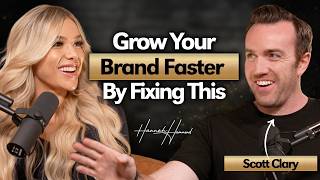
Scott Clary built his podcast to 50 million downloads over 6.5 years by committing to a decade-long vision and obsessive focus. He books high-profile guests by targeting people with clear intent like book tours, grows through organic discovery and paid ads, and maintains a 320k-subscriber newsletter with 40-50% open rates.
Questions this video answers
Six and a half years.
Over 50 million downloads.
About 1.5 million followers.
Over 320,000 subscribers.
About 40–50% open rate.
Chapters
One idea that's really served me well, call it like a 10 year rule. If you're going to start anything, commit 10 years of your life to that thing. Because if you commit 10 years of your life to that particular endeavor, you're going to set the right expectations. You're not looking for overnight success and you adopt that sort of long term view. The chances of you succeeding are almost inevitable because if you stay in the game long enough, there is zero chance that you won't eventually figure it out. Most people just quit too soon.
Did you see immediate or rapid growth when you first launched the podcast?
Podcast is one of the hardest things I've ever grown. So there was no rapid growth. There was no like, overnight success. There was no, like, one episode that went viral.
Did you have a mentor or did you just kind of trial and error?
I didn't have one mentor. I study a lot of people. Like, I study people that are growing the fastest, not just have the largest audiences, but are growing the fastest on one particular platform. And I learn whatever I can from that particular creator on that platform. These are not people that I know. But that's the beauty of the Internet. You don't need to have direct access where you're sitting down for coffee with these people. You can study the work that you're doing like they're doing, reverse engineer it and then incorporate those ideas into your own content.
Welcome back to the Hannah Hammond Show. I am here today with my friend Scott Clary, who I actually met almost a year, over a year and a half ago now. And you were, I was asking you advice when I was about to launch my show. And I mean, Scott has one of the top business podcasts in the world. He's interviewed billionaire founders. You've had almost 30 million or over 30 million downloads. You've got millions of followers and subscribers, and you've just interviewed like the most iconic people out there and the most iconic.
It's a lot of fun. It's a good job to have you.
Yeah, yeah. And it's so, it's so cool to see what you've built. And you're based in Miami and I mean, you're an author, you're a speaker, you're an investor, you're a podcast host and an entrepreneur. So I'm just excited to know you and excited to hear your story today and what kind of got you into the podcasting world. And personally, selfishly, I want to ask your advice on how you did it.
You could do like a podcast masterclass if you want. You Ask me whatever questions you want about podcasting, but I appreciate you for having me on. What got me into the podcasting world was an idea that I think has really helped me in my whole career. It's future proofing myself. So if I don't know what the next five years of my life is going to look like. Because of course, everybody has their objectives and their goals, and the North Star they're sort of aiming for in their business. But if there's something that's an uncertain, like a new technology or a new idea, I just dive into it, I learn it. And the podcast built a media, a piece of media. It built an audience that I could use for whatever I wanted to use it for in the future. So when I started the podcast, I didn't know exactly what I was going to use it for, but I was a student of the Gary Vees of the world that built the audience first and then found a way to use that audience to help them with their business later on. When I started the podcast, I was building a business that was about to be acquired at the end of COVID So I knew that on the other side of that acquisition, I didn't have anything else going for me. I had to figure out what I was going to do next. The podcast was the smartest move, to build an audience, build a brand, so that whatever I did in the Future, you have 500,000, a million people who already know who you are. So it's kind of like a give value and build it before you need it. And then when you do need it, then you can launch a business against it. You can. I mean, you can do whatever you want. You can do coaching, consulting. If you want to start an actual company, you have a whole bunch of. You have a whole bunch of people that you can test ideas out with, you can talk to them, see what products they buy from you, or you can just turn the podcast into a business itself, which is what I've actually done, where you have advertisers you monetize, and you build a whole personal brand around the podcast. So it was really just future proofing myself. And I've done that, like repeatedly every time I'm unsure where my career is going to go. I'll try and just look at the thing that I know is going to impact my career in the best possible way and research it, understand it, figure out how it's eventually going to impact me. So at the time, I wanted to build an audience. I wanted to understand how media could impact my career. Like Positively. Now I learn how AI is going to impact my career and I just dive into that, learn everything I can about it. But yeah, it's always just like sort of looking three steps ahead.
Right. What business were you in back and.
When was this software? Back at the end of COVID Back.
At the end of COVID Okay. You built that big of an audience just in what, five, Less than five years?
No, six and a half.
Six and a half.
Six and a half years.
Okay.
Yeah.
Damn, that's crazy. Yeah. I mean, I was just looking at. You have like almost 2 million followers on Instagram. You have.
Yeah, but that's about 40 to 50 pieces of content per day. And I didn't learn how to market when I started, so I've been a marketer my whole career. Right. I know how to market. I know how to code a website. I know how to do audio video editing. I know how to write great copy subject lines that gets emails open. Like, I know how to do all graphic design. There's not really a thing that I don't know how to do. So how you market a product, how you find a piece of content that resonates with an audience, how you a B test, you do that for a company, you're doing the exact same thing for a podcast. And when you do that at scale and you have a little bit of experience, you can grow things a lot quicker. Also, the beautiful thing about a podcast is you can tap into other people's audiences, too. So when you sit down with some of the most famous people on earth and you tap into their audience, I mean, that also gives you a huge leg up because it exposes you to a million people who have never known who you are. So it's about consistency, it's about learning, like getting into the weeds, learning the details of the craft. It's about leveraging other people's communities as well. All of it combined over six, seven years. If you look for the signs that your content is working, yes, a million and a half is a lot of followers. We have over 50 million downloads across the show. But there's people that look at school of hard knocks. So in like two years, they have an audience of over 11 million and they have billions of views.
Yeah. So me a couple of months ago.
Yeah, he's really. He's a really nice guy.
Nice.
He's from Dallas too, if I'm not mistaken. He's from Texas, but so, yeah, a million and a half is good. Objectively, I look at, like, what another person is doing an Even shorter period of time. And the first thing I think about is, okay, how do I adapt my strategy? Because obviously I'm doing something effective, but not as effective as it could be. I mean, that's just so. I mean, doing well, doing good. It's all very subjective, right?
Well, and it depends on your goal, too, right? Like, for me, my podcast is business development. And so my main goal with the podcast isn't to monetize the podcast itself. It's to drive revenue to the business, build relationships with potential new clients, and then continue to educate existing clients and things like that.
So that's, like, that's a trap that people fall into. So when you're. When you're. When you're building a media asset for a business, you don't need a big audience, right? Like, you need an audience that converts. But everybody gets caught up in vanity metrics, and everybody gets caught up in followings and, oh, Scott, you have a million followers. I'm like, okay, but I'm not selling a product. Like, if I. If I was selling a product or service and I had 10,000 people where 30% of them converted into customers, that's much more useful than a million people that just know me for being some cool guy on the Internet, but nobody wants to buy from me, right? So, I mean, like, vanity metrics are overrated. I think that once you're in this game long enough, you realize that very quickly that follower count does not equal revenue unless you do it smartly, unless you find a way to convert that audience into people that actually pay for your product or service. But if you are looking to be a content creator, don't look at growing the biggest following. Look at creating content that is the most relevant to the audience that you're trying to solve a pain point for. I think that's how most people should think about content. Like, you don't need to just be the biggest influencer out there. It doesn't benefit a lot of people. For example, School of Hard Knocks, they make a lot less, and so do I as a. As a content creator, they make a lot less than a lot of small businesses. So would it make more sense for me to have a small business that has a really, really niche audience, that I can target that audience, they turn into customers, and that generates 10, 15, $20 million of revenue? Or do I just want to have a million followers just for a million followers, Right? It depends on what you need. It depends on what you're doing and what your objectives are, to your point. But I think that too many people get caught up in follower count.
Yeah.
And not enough get caught up in, like, social media is a tool. It's a marketing asset. How does it actually help my business? And if you just focus on follower count, you're not creating the same kind of content as content that will actually convert the audience into a paying customer. There's different kinds of content that is highly shareable, it's motivational, whatever. That's great content, but it doesn't always turn somebody into somebody who's going to actually open up their wallet, give you their credit card, and sign up for whatever it is you're selling.
Yeah. And when you started the podcast, you were future thinking because you were going to sell your company, but were you? Did you. At what point did you decide you were going to monetize the podcast? Because how are you monetizing the podcast right now?
Ads. It's an ad play. Yeah. So, I mean, there's advertisers that I've worked with for the past almost five years now, like HubSpot, indeed. Netsuite. I've worked with a whole bunch of different advertisers, but it's mostly ads. And that's because it's very easy to talk about not succumbing to shiny object syndrome, but it's harder to not succumb to shiny object syndrome. So what I mean by that is, while I was building the podcast, I'm an entrepreneur. I love ideas. I love trying and testing new things. I was building the podcast over here, and then I'd try and build other businesses that didn't really sync up with the podcast over here. So I've tried to build a variety of different things. I've tried to raise for a private equity fund. I've tried to build a supplement company. I've tried to put together a mastermind group. I've tried to do a couple different things that ultimately didn't work out. So I was just diversifying and, like, my attention was not all focused on the main thing. So the podcast was always a media asset that I was growing. The main goal of it when I first started, it was to be leverage for something else. It was meant to be this tool that I could use to market something else. But I wasn't honoring sort of what I set out to create. I wasn't honoring the fact that I wanted to build this podcast that had this incredible reach and then tie a product to that podcast audience. I didn't do it because I kept chasing other things. So after a while, when the Other businesses that I was building and trying to build, they didn't work. And everybody who's built anything knows there's, you know, it doesn't matter how successful you are at one thing. There's a million things that you've tried that have never worked out. I realized that I'm fragmenting my attention. I should do what I originally set out to do and focus all my energy and time and money and effort on the one thing that is actually working and then figure out what kind of product I want to attach onto the back end of a podcast. And that's. That's actually where I'm at right now. I think that also when you think about the things that you can attach onto a podcast, like a personal brand, a lot of people do coaching, consulting courses, that kind of thing. I feel like there's too much garbage in the world, and I didn't want to just contribute more garbage by putting out a garbage course because there's already so much bullshit online that people are selling. And that's a little bit of, like, me getting in my own head about it. But that's what really pushed me to sort of not release something right away. There was another coach or coursing product coaching or course product. Excuse me. So, yeah, so fast forward to today. The main focus is the podcast. The main focus is, like, building the personal brand. And that's why I'm, you know, I sort of invested in the studio, spent more like energy, actually, and, you know, putting money, putting money and time and effort into the interviews. And now I'm at the point where I'm no longer going to be building the podcast and, like, building a product on the side. Everything's going to be, like, aligned, right? Yeah.
And did you see immediate or rapid growth when you first launched the podcast, or what was that trajectory for you? And did you have a mentor or did you just kind of trial and error or what did that look like?
There was. Podcast is one of the hardest things I've ever grown. So there was no rapid growth. There was no, like, overnight success. There was no, like, one episode that went viral. In terms of mentor, I didn't have one mentor. I study a lot of people, so I study one thing that has really worked out well for my content. Like, I study people that are growing the fastest, not just have the largest audiences, but are growing the fastest on one particular platform. And I learn whatever I can from that particular creator on that platform. So I have somebody that I study on Twitter, on YouTube, for podcasts, for TikTok, for basically every single platform. The creator that is currently growing the fastest, because that means that that creator isn't just big because they've been in the game for 15 years, they're growing very quickly. School of Hard Knocks is one of them. Alex Hermosi, Sahil Bloom, Justin Welsh. Like, these are all creators that grow. They're growing very quickly now. These are not people that I know, but that's the beauty of the Internet. You don't need to have direct access where you're sitting down for coffee with these people. You can study the work that you're like, they're doing and reverse engineer it and then incorporate those ideas into your own content. But, no, there was no quick growth. It was just. It was mastering the fundamentals. Like any business, you got to figure out, how do you actually create that asset? How do you put it out into the world? How can you tell if it resonates with the audience that you're creating it for? Same as if you were launching a product for a business and you just rinse and repeat, and every show, you get a little bit better every month. You make sure that numbers are moving in the right direction. You keep studying the people that have done it before you and have done it at a bigger scale and see what's worked for them. And you do that over five, six, seven, eight, nine, ten years, and you'll find that eventually you'll have some decent success. Mostly because the majority of your competition quits. The majority of your competition, like, if you look at the stats, it's something like, if you release more than 10 episodes on a podcast, you're in, like, the top 1% of all podcasters. It's because nobody stays in the game long enough to actually figure it out. So there's no secret, there's no hack to it. But I don't think there's a hack in it. And many businesses, like, when we see somebody, like, I just keep referencing School of Hard Knocks because they nailed it. They, like, hit it out of the park when it comes to figuring out content, like, the style, the format for every creator that grows as quickly and say as quickly as they did. There's a thousand creators that just put in the reps over an extended period of time. That's how. That's how most audiences are built. That's how most businesses are built. Very few businesses have, like, one huge overnight success. It's like, you start your business, you're excited about it. It's difficult. You're like, whatever. This is what I've set out to do. You figure out what works, you figure out what doesn't. You optimize, you improve, you hire, you delegate, and then fast forward over 10 years. It looks like you had some sort of overnight success when really you've just been putting in the reps and figuring it out and just being obsessed with this thing for 10 years. So no, there was no quick wins, it was just repetition. It was just putting in the reps. That's the main advice that I can give any creator.
Did you ever think about quitting the show?
No, no, no, I, I have because I understood what could, what the benefit of it would be on the other side of it being successful. So an audience never leaves you like people who know who you are. Yeah, Some of them might find other creators to follow, but ultimately if you build a good reputation, if you build a strong audience, that's sort of the reason why I started. You can use it for whatever you want in the future. And I just. One idea that's really served me well is this idea. I call it like a 10 year rule. Different people have different words for it. But if you're gonna start anything, commit 10 years of your life to that thing, just, just say like, listen, I'm gonna start a podcast, I want to start writing a newsletter, I want to start a business, whatever it is. Like psychologically commit 10 years of your life to that thing. Because if you commit 10 years of your life to that particular endeavor, you're going to set the right expectations. You're not looking for overnight success, but at the same time you're setting up the rest of your life so that you can maintain it for the long term. Meaning if you are planning on starting a business or being a podcaster or whatever, say, I assume it's going to take me 10 years to be successful, even if it doesn't. But I'm going to make that assumption. That means that I'm not quitting my job with only six months of savings in the bank because I know it's going to take me an extended amount of time to actually make it work. And I think that when you adopt that sort of long term view, the chances of you succeeding are almost inevitable. Because if you stay in the game long enough, if you find a way to continue figuring it out for 10 plus years, there is zero chance that you won't eventually figure it out. Most people just quit too soon.
Right?
So you know, you, you said like, did I ever want to quit? No, I had no interest in quitting. I just from the get go, I just figured I'll just stay in this until it works. Until I figure. And it doesn't mean that the thing you're doing year five in your business, in your content, it doesn't mean it's going to be the same as what you do when you first start. Right. Maybe your content style changes. Maybe the things you speak about change. Maybe the, the format changes. Maybe. I don't love podcasting, so I'm going to scale back the podcasting and I notice that I'm killing it on my sub stack or I'm killing it on Tik Tok with short term videos. You can still, you can still like evolve and iterate. Doesn't mean that you're like, you're so like set in your ways. But the point is you're still playing that game for an extended period of time.
Yeah. You're committed to mastery.
You are. And mastery takes. Well, I mean if you, if you follow Malcolm Gladwell 10,000 hours or there's a million other ways to define mastery, but it's not like something that you ever attain overnight. So. No, there was no.
What, what did your. Who was your first. Do you remember your first interview?
Yes, I do. His name was, his name was Mark. He was a marketer. And it was just when I first started my podcast, it was so interesting. I think that how I started it is how a lot of content creators start. They just speak about things that are going on in their life. And when I first started it, I was running sales and marketing at a startup. That's the company that was eventually acquired. So I was in charge of all the sales and marketing. So I just reached out to a whole bunch of marketers to have conversations about things that I was dealing with in my day to day. And that was my first episode and it was brutal and I had no idea what I was doing and I actually filmed it. I was sitting on my laptop at like a makeup table in like a spare room in a condo in Toronto and that's where I filmed my first episode. But it's so interesting because this sort of like goes back to my point about how as a creator, like you have to evolve over time. So when I first started my show, I'm speaking to Mark and that's like episode number one. I think it's him. There's like two or three, I just can't remember which one. I think it's Mark though. But if you go back on YouTube, you'll find it unfortunately. But as a creator, like as you Change as your interests change, I think it's really important that your content evolves as well. So when I first started I was speaking about mostly software sales and marketing, cause that's what I cared about. And then I realized that, well, the best type of content you create, especially educational content, is basically for you, like five years ago or 10 years ago, you created for your younger self so that, you know, if they were, say, say I was creating content for my 20 year old self, what would that person care about? What topics could I cover that would benefit that version of Scott? And as I grew up I realized that, well, that version of Scott is highly ambitious and that version of Scott, you know, wants to take on the world. And yes, for sure he wants to have business success, but to be a well rounded person, there's a lot of other things in his life that he should care about. And this is how the podcast evolved and this is how my content evolves. So then I started speaking about not just like business success and entrepreneur success and financial success, but I would start speaking about like physical and mental health. And if you're a high performer and you're working 80 hours a week, how do you maintain a good relationship with your spouse? And you know, how do you date, how do you marry, how do you spend time with your kids when all you're focused on is work? Is there spirituality in your life after you've reached a certain point of affluence? Right. These are all things that anybody who's a high performer, who's made a lot of money, some of them care about it earlier on, but all of them care about it later on in life. And I see on the other side of exits, people that have sold companies for nine plus figures. I see people that have like true fulfillment, like true balance, they've made money, they're in good shape physically, mentally, they have a relationship with God. Whatever version of God they, they choose to subscribe to, they have great relationships with their, with their wife, their husband, their kids. I see these people and they are the happiest. I also see people on the other side of an exit that are like everything around them is broken except for their ability to make money. And I realized that I don't think that that is anybody's version of true success because these people are not happy. They've sort of won the money game. But like two ex wives, kids don't talk to them, they're incredibly overweight, just out of shape, like their life is falling apart except for their ability to make money. So how my content evolved is I want to make sure that whoever's listening to my show understands how to level up across all aspects of their life, not just in business. So then this is how my content evolved from just sales and marketing conversations to conversations who. Conversations with people who were very successful but figured out how to uplevel and upskill themselves across every single part of their life. And then I brought on people that were like, you know, big into health and wellness. Big people that spoke about spirituality, relationships, all through the lens of like high performing individuals.
Yeah, I love that you said that because I'm the same way. You know, it's about. My show is about reaching your highest potential in all areas of your life. You know, the finance and business is one piece of that. But health, relationships, wellness, like if you.
Just achieve like financial success, you're not successful. Like, you really are not successful if you burn everything else down in your life just to make money. Because listen, I'm, I live in Miami. I see a lot of guys that, they make a lot of money that are, you know, when you get into a room with them, one on one, they are depressed or they're not fulfilled, or they divorce their wife because they came into this huge amount of money, this huge sum of money, and now they have trouble connecting with anybody because they're worried that any girl they date is going to be a gold digger. Like they have a lot of issues if you don't sort of take care of all the other parts of your life on the way to making money.
Yeah. And a lot of people that are very driven. I don't know if you've read the book Driven, but a friend of mine wrote it and he talks about that, that gene that we have, that driven gene that, you know, we all find similarities amongst the, the driven and obsessed people. But most of the people that are very, very driven, relentlessly driven, absolutely obsessed, which we'll get into obsession and how that plays a role in success in all areas of life. But they often come from, you know, some pretty challenging times in their life. Whether it was childhood trauma or just difficult background created some sort of chip on their shoulder, which is what actually.
Led them to be successful.
Exactly.
But at the same time, if they don't heal that shit, then that, that is sometimes why the rest of their life is not so great.
Right. And that's what I realized when I hit the amount of success that I thought would cure my pain, that I thought would make me happy, and I didn't. And then it was like, okay, Let me shift this dynamic. I've learned enough about how to make money and how to build wealth. Now let me balance out the other areas of my life. And I do believe that obsession does play a very key role in those who are ultra successful in any area of their life, whether it be business, athletics, relationships, whatever. But at some point, I do believe we can have it all and we can have balance. We can't have it all at once. I think there's gonna be an out of balance period in our life because there's chapters and there's parts of our journeys. Like right now, for instance, I have a newer, young infant company and I gotta be a little obsessed. Like, I gotta, I gotta focus on that baby and grow that baby. But, you know, later on I can shift that a little bit and start to be more balanced. So, like, what is your experience been? What is obsession? What role has obsession played in your pursuit of your highest potential?
Well, I think that you actually, I think that you described sort of my definition of obsession as. Well, it's like there will be periods of your life that are totally unbalanced. I mean, that's, that's how you build anything great. You cannot build anything great with complete balance working, you know, 37 and a half hours a week. It's not going to build an empire. But understand that there are seasons to your life. And I think that it's also important that. Yeah, I'm just thinking about my definition of obsession right now. I am in a season of being obsessed with my work, and I'm doing that so that when I have kids, I can be obsessed with my family. I think that too many people look for balance and they never achieve what they actually want to achieve. And then they're kind of like, well, I wish now at a later age. Which is why I think that as a, you know, if you're younger, you have such huge opportunity to just commit yourself to just being so entrepreneurial and trying things and breaking things because you have nobody depending on you. But when you're older, it's harder to make that commitment to being obsessed to something. If you don't want the rest of your life to fall apart. Now, it's not to say that you can't do it, but I do believe that, like I said, if you want to build anything incredible, you need obsession over that thing. You need to live and breathe it. There's not a single entrepreneur that I know that accidentally created something great basically for a period of their life, for a season of their life. That's all they did, but they knew that there was a time to shut off, too. Like, they knew there was a time that they had to focus on marriage, relationship, kids, family, other things outside of their obsession. I also think that. I also think that to define obsession, this is why it's so important. This is why it's so important to like, to work on things that you enjoy. Because when you're truly obsessed with what you're working on, you don't shut off, but it also doesn't take away from the rest of your life. What I mean by that is, like, sometimes when I'm sitting down for dinner with my girlfriend and we're just talking about life, like, we'll have a deep conversation about something. That can lead to a conversation I have on a podcast with somebody, or it can lead to a topic that I want to write about. Like, you incorporate the things that you do into your work, and you incorporate your work into your life, and there's this beautiful, like, harmony between them. I also think that that's why if you are, you know, like, entrepreneurial, the person you spend your life with, like, whoever you're dating or you're married to, that's the most important choice you're gonna make. Because the. The right person, if you are, like, a very ambitious person, will understand obsession, and they'll support it, and they'll feed into it, and you'll feed into their obsession with whatever it is they're doing. And they'll understand when some weeks you have to work 100 hours. And I think that by being around that right person, I think that can, like, take your, you know, if you do want to build something great, it can really just help it and take it to the next level. But having that supportive person at home is one of the most important things that I think anybody can can find.
Yeah, I think the spouse you choose or the partner, life partner, you choose the most, just like you said, the most important decision that you could possibly make.
Well, because if not, say, say you are. And I want to be careful when I say this, because it's not like you're going to be obsessed and just building your whole life, but for a period of your life, you will be. And I don't think for the period of your life where you are obsessed and you are building, you should not date or you should not be with anybody. I also don't think that's correct. I think you should if you find somebody who you want to share your life with. But what I see hurt people the most is when the expectations are not aligned. So when you're dating somebody and you want to build something, you want to be entrepreneurial, you're in that season of your life, and that partner is just not on board for that journey, and it's just going to do you more harm than good. But if, again, if you find the right person that's supportive and they are also ambitious or are also entrepreneurial and sort of support everything that you're doing, that is the biggest hack to being successful. Because think about all the times when you're building a company and you're stressed the fuck out. Like, that person can help bring you back. Like, when you're really, really just spiraling. Right? Like, these are the reasons why having that supportive person at home is so important. So, yes, obsession, unbalanced seasons of life. Life. But at the same time, who you surround yourself with is going to make a huge difference and make that season of unbalance and obsession that much easier.
Have you struggled in your relationships throughout your entrepreneurial journey?
Yeah, for sure.
Me too.
A thousand percent.
So bad.
A thousand percent. Yeah. I mean, like, before Gina, the girl I'm with right now, my ex dumped me because I was working too much. I mean. Yeah. So that's not a successful relationship.
Yeah, no, it's. It's hard. It's been a challenge for me as well, just. Just because, like you said, and I'm struggling with that dynamic right now of I've always instinctively connected with people that were most like me, I guess, also very driven, also very entrepreneurial and all these things. But I'm. Now I'm, like, wondering, maybe I need somebody that's more of a grounded, supportive type of partner that isn't so obsessive compulsive, just like I am. I don't know. I don't know.
What are your thoughts on that? I disagree with that. Gina is super driven. She has her own business. She's very entrepreneurial. So, I mean, she just gets it. Like, she just gets it. Like, if I have to travel for work again, if I have to put in, like, ridiculous weeks, if I have to, you know, for example, huge podcast opportunity, I have to, like, go like. Like that. She's like, yeah, for sure.
Yeah.
Because.
Oh, I was just gonna say, how do you do you struggle to turn off the business hat and turn on the relationship hat? Well.
So I struggle to turn off the business hat. But, like, we have, like, shared goals and objectives in life. So, like, when we go, like, go on a date night, for example, like, you got to still make time, to, like, spend time with the person that you're with. But when we go on a date night, like, we still enjoy talking about the shit that we're working on. Like, it's not like it ruins the night. It's like, these are the things that actually bring us closer together because we're like, I'm dealing with whatever. I'm, like, frustrated because my content's not hitting. She just tried. She, like, missed out on closing a big deal, whatever it is. These are things that we actually have, like, knowledge in that we can, like, support each other with. So it actually brings us closer together. Now you have to have, like, a life outside of business as well. But I think that. I don't think it's smart to completely separate your business and your personal life. I have the most fun with. Well, obviously with her, but also with friends who also deal with the same stuff as me. Like, I don't want to be. I don't want to not be my. Myself with the people that I. That I'm hanging out with. Like, if I had to, like, tone down my business and I had to tone down the things that are sort of, like, going through my head. You're kind of getting, like, 50 of me. So I rather. I rather be with, you know, a wife, friends, a girlfriend who, like, kind of just vibes with 100% of who I am than somebody who is completely different.
Right.
That's just the way it's worked for me. And, like, even the friends that I hang out with that I really enjoy chatting with, and, like, there are people that are also super entrepreneurial, and they're people that enjoy building, and they're people. They're people that enjoy just, you know, figuring out. It's. It's just those kinds of people give me energy.
Yeah, me too. I know. And that's what I was talking to someone about that is, like, people are, oh, how many hours a week do you work? I'm like, it all blends together, just like you said, Mike.
It's always. It's always. Yeah, I'll go, like, hang out with friends. We'll, like, get drinks or food and. Yeah. Talk about business, talk about life, talk about how their family's doing. Like, it all blends. It all blends. So, I mean, like, you know, it's very cliche, but, you know, you're the average of the five people you surround yourself with. How many times do people drop that quote? Right? But it's very, very true. And I think that that's why like, who you bring into your circle and who you spend the most time with is so important because when you can have people who have, you know, fulfilled lives, married, kids, whatever their version of fulfilled is, plus they're very ambitious. They have great businesses. It's like they're a great role model across the board. Right. I think I'd rather spend more time with somebody, like, say, if. If my goal is to get married and have kids. Not everybody's goal, but if it's my goal to get married and have kids, I rather spend more time with somebody who has a great business, who is an entrepreneur, who. Who is married, who has kids. Like, there's so many things I can learn from them as well. So I think that if you get a. If you. If you sort of connect with your spouse or your friends on the thing that you care about the most, I think that's a great way to sort of build that rapport. And then all the other stuff comes much easier versus if you just, like, if you had friends that, you know, always complain that you work too much, all they do is drink, or, you know, if they're just, like, so huge into sports that every time you hang out, all they talk about is sports. Cool. I have no issue with that. But at this stage in my life, I don't really give a shit about sports as much as I used to. I used to play a lot of hockey. I'm Canadian. I never really got into, like, basketball or football. Like, some Americans are super into basketball and football. Yeah, it's fun to, like, watch a game every, like, couple months. But I don't give a shit about staying in on a Sunday and watching football for, like, four hours. That's not that fun for me. So I think that, like, I don't think you should ever have to dim yourself or change yourself for the people that you surround yourself with.
Yeah, I agree. Just being around people that make you feel expansive and not contracting and there.
And like, it doesn't matter how weird you are, there's, like, enough people out there in this world that will be just as fucking weird as you and will have the same exact hobbies as you. So I think that that's. I think that's very, very wise. And I think also very importantly for, like, the person you're with, at least what I found is if they're more similar to me in, like, their ambition and what they do for a living, I just find the dating goes much easier.
Yeah, Yeah, I find the same. Same thing. Because then you have things to Talk about. You have things in common. You understand, you have a level of understanding. But I do think it is still important to. You know, where I've gotten into trouble is becoming business partners with the person I was dating. And I. I no longer do that. We'll do business together, like send each other business or help each other grow business. But I have a rule now, like, no more business partnerships with anybody that I'm in a relationship with. Although some people do it and they are successful at it. But it is hard. Look at Alex and Lila.
It's true. There's a lot of good examples, right? Sarah Blakely. Yeah. Like, there's a lot of. Well, actually, no, they weren't in business together, but they're both very cool. Like her and Jesse Itzler. Right. I think, yeah, like, very, very. He built his own company separately. I'm trying to think of other people that were like in business together.
But it's hard. I mean, it's hard to make a. Relate a marriage work in general, and then it's hard to make a business work in general. And then when you put them both.
Yeah, but you can make the same. You can make the same argument for family too. It is like, listen, we, Gina and myself, we could have gone into business together, but we actually chose not to for that reason in particular. Like, we help each other. We'll like, walk through problems that we're dealing with, but we both build our own shit.
Yeah. It's nice to have. What are some of the. I mean, I'm fascinated to hear about these people that you've interviewed because you've interviewed, you know, billionaires and very successful people.
A lot of people.
Yeah, a lot. What are some of the key traits, I would say, or consistencies among the. The most successful people that you've interviewed that have contributed to their growth and their success? I know we talked about obsession.
Obsession is one of them. Everybody who has built anything great has been obsessed with that thing while they're building it. I think that's like table stakes. It's just like entrepreneurship is just so fucking hard. Like, if you are not obsessed, you will not see the results fast enough for you to continue it unless you are obsessed with that thing. That's why I hate motivation, because you can get motivated as hell about something, but I can guarantee you like year three, no revenue. The motivation is gone. So it's like, what's keeping you going? It's obsession, honestly. It's like building systems around you. So taking action is easier than not taking action. It's making sure that, yeah, maybe it's taking a little bit longer than you thought, but you're still moving in the right direction. These are all things that will help you continue after the motivation is long gone. But that's why I hate motivation, because it is not a, a leading indicator of success. And people that just build businesses based on motivation or even passion, very unlikely for them to succeed because you need more than that. You need more than passion motivation. You need more than just loving something for it to actually turn into a viable business. Again, like six and a half years of podcasting, almost, almost seven years. It's doing well, but there's other things that I could do that would have done better in seven years. But I love it. And I also, you know, I mentioned this at the beginning. You're building media leverage that can be used for any business that you want to launch in the future. So it's a very valuable asset to have. But ultimately it's not the easiest thing to build. And if I was just, you know, psyched about podcasts seven years ago, I would have burnt out and I would have been another statistic. Now, the things that make people successful outside of just obsession, I would say that there's two other very common traits across people that have sold companies for 80, 90, 100 million, 500 million, several billionaires. The two traits are a slight amount of delusion and agency. So delusion, because being an entrepreneur in and of itself doesn't make any sense. Like nobody wakes up and says, I'm just going to subject myself to the most amount of physical and mental pain ever in hopes of building something that could make me more money. But ultimately if successful, makes me more money than I actually need, like there's some drive in there that doesn't quite make sense. But that's what makes entrepreneurs so different. They're not normal. Entrepreneurs, by definition are not normal. They are not the norm. In fact, I think if you actually look at stats, some of the most successful entrepreneurs, like a majority of them to some degree are neurodivergent. Like there's something that is driving them that is beyond what the normal person would ever put up with. The amount of risk, the amount of pain, the amount of rejection that it takes to build anything meaningful. So a little bit of delusion. And agency. Agency just means that you believe you can do it. You have an absurd amount of self belief. Agency is one of the most important things and there's other words for it too. So there's a concept called locus of control. Have you heard this before? So agency. What it could also mean is that you have an internal locus of control. Internal locus of control means that you happen to the world, the world doesn't happen to you if you have an external locus locus of control. You believe that? Well, you know, if something bad happens to me, it wasn't my fault. Like I had, I had no control over it. Like, it's just shit luck. That's really what external locus of control means. Internal locus of control. How they would look at that situation, something bad happens, it'd be like it happened. But I have complete control over the outcome. And ultimately everything good and bad that's happened to me in my life is from in some way my fault. And that if I want anything good to happen, I need to take action, I need to do it myself. No one else is going to do it for me. And that's a very powerful perspective shift, because a lot of people feel like they are victims of the world. Entrepreneurs all believe that they have control over their own life, their own destiny, absolute agency. And again, they can control the world. They can manipulate the world to their wishes if they put enough energy and time and effort towards it. You know the venture capital firm Andreessen Horowitz? So Mark Andreessen, he has a very famous quote, I'm going to paraphrase, but the quote basically goes like this. If you put enough energy and time and effort towards anything, you will start to find that the world is very malleable and it bends to your will. So this is a common. This is a common idea amongst entrepreneurs. Like, yes, building a business is hard. Yes, creating something from nothing is hard. But if you put enough time and energy and effort towards it over an extended period of 5, 10, 15, 20 years, you will find that the world will start to bend to whatever it is that you want it to do. And I've seen this time and time again. Again, like the most successful entrepreneurs, they're not always the ones, and rarely the ones with the best ideas or the ones that are the most hyped about the product that they're launching. They're literally the ones that just stay in the game long enough. And when you stay in the game long enough, like, everything eventually starts to work out, not by chance, but because you take enough shots that things start to work and that you're not a stupid person so you can see what's working and what's not, and you do more of the stuff that's working and you just do that repeatedly and it compounds over A period of time to the point where you've actually ended up building a good business.
Yeah, I'm rereading Jim Collins, Great by choice right now. His whole series, Good to Great, Great by Choice. And I forget the third one is. But anyway, he says that same thing is. Is. I can't.
Powerful idea.
Very powerful. Yeah. And he talks about the three points of the triangle or that are the three attributes to 10x companies, 10xed all of their competition within a certain era of time. And so he said the same thing, like they all had the same economic circumstances, like everything was the same as far as that goes. But these are the things that were different. And I think, you know, obsession was that concept was one of them.
These are not new concepts that I just discovered. These are just things that if you study enough people, you'll find they all have the same traits. But what's it. What's beautiful about these ideas is that the reason why I think I love entrepreneurship is because I don't think that the environment that our parents and grandparents were raised in, it's not the same as what we are raised in right now. Like the 9 to 5 job does not afford us the same cost, the same quality of life as what it afforded my parents and my grandparents. So I think that people have to. And entrepreneurship, by the way, as a concept, was not as popular like 50 years ago or 100 years ago, maybe a thousand years ago, actually entrepreneurship was very popular. But like in the last hundred years, entrepreneurship is really getting popular now. The reason why is because so many people feel left behind by the system, by the government, by whatever playbook that their parents had in place that allowed them to afford a detached home, support an entire family on one income with like, not even a college education. It doesn't exist for a lot of people. So they're like, how else do I make money? How else do I escape the matrix? How else do I sort of live a life that doesn't feel like I'm living paycheck to paycheck and drowning all the time? And that's where entrepreneurship is the answer. But I think that also a lot of people, because entrepreneurship is relatively new as a concept for the majority of people. I don't think there's ever been as many entrepreneurs and people that have like leveraged Internet and social media and now AI to sort of build something from scratch. Like, that wasn't super easy to do even like 15 years ago. So now it's easy to be an entrepreneur, but they still find it scary. And they still find it like venturing into the unknown. But from what we were just speaking about, about like staying in the game long enough and figuring out what works and compound effect of just taking action over a period of time, what that all really means is that building a business, being an entrepreneur, it's not complicated. It's hard work, but it's not complicated. Like everything we've just said is a very complex way of saying just do it for a long enough period of time and you'll figure it out. It's not about do it for a long enough period of time and then hopefully you figure it out. It's like I have a lot of confidence that if you stick with something again for a long period of time, you will figure it out. So it sort of shifts it from hopefully this will be successful one day to, well, if I find a way to play the game long enough, it will be successful. It goes from an unknown to a certainty. And I think that that's how more people should look at entrepreneurship. It's not easy, it's more work than you'll ever do. But the outcome isn't an unknown if you can stay in the game long enough. That is my absolute belief because that is what I've seen with most people I've brought on my show. Most of my friends that are entrepreneurs, again, they just stay in the game long enough, not doing things that don't work, but progressively moving towards things that work better and better and better and getting rid of the things that don't. And that's how you end up being an entrepreneur.
Yeah, it's a beautiful journey that we're on. It is painful, but it is the most rewarding thing and I would never have it any other way. What is. So going back to some of the tactics I know we have, we don't have much time here left. But going back to some of the tactical stuff, how do you, especially when you were getting started and you didn't have a big name yet, Obviously when you have a big name, like it's so easy to connect with anybody. But when you were getting started, didn't have a big name, how were you getting top people onto your show?
One of the most important skills that any entrepreneur can learn is sales. And I come from a background in sales and marketing. So when I started my show, I was scraping lists of like top business influencers. I was finding their email and actually no back up. Before I even did that, when I first started, I realized that to bring people on my show, it was a Sales pitch. And in any sales pitch, you have to solve like a pain point. That's how you sell anything to anyone. Right? So the pain point that a podcast solves is exposure. It's access to an audience, even if it's not a big one, it's a small audience. There's another thing in sales, and keep in mind, I was sort of classically trained in enterprise sales, but there's another thing in sales called intent. And intent in sales means that you are reaching out to somebody that already has intent to buy your product or service, versus if you're reaching out to somebody who, for example. Well, I don't really need to, you know, invest in a new accounting software right now. Ours is good compared to somebody who is. We're actively shopping for new accounting software. Oh, what are you selling? It's much better to hit somebody up when they have intent to buy. How does that translate into podcasts? So you have to find people that are actively looking for media coverage. So when I started, I went on Amazon because a lot of. A lot of authors try and get on podcasts. I went on Amazon, I filtered books by up and coming new release bestseller business category and just looked at the top authors that were writing books that were gonna be released in the next six months because they were all going on podcast tours already. So all I had to do was say, hey, I know you're already doing 50 podcasts for your book that you're gonna be putting out, you know, December of this year. I'm a podcast. It's not a lot of work to come on my show. We do it virtual. So we'll just do 30 minutes virtual. I'll clip up a whole bunch of little clips. I'll send it to your team, you can post it on social media. We have 5,000 listeners a month, but it's really only gonna take 30 minutes of your time. So, Ben, by the way, if you send that to a hundred people, two or three will say yes. And you take those two or three and then you include them in the subject line that you send to the next hundred people. And now, because there's social proof, then even more people will say yes. So in the first week. Week first, like say, like. Cause I was running campaigns for the first week, two weeks. I got Guy Kawasaki because he was launching a podcast. I got Grant Cardone, I got Anthony Scaramucci trying to think who else. Those were like the biggest names early on. And I got Patrick Bet David very early on as well. There was. It was just a little Bit of right positioning. What pain am I solving by, you know, what, what are you launching? Because, like, Guy Kawasaki was launching a podcast at the time. I think Grant was launching a book. Like, it was just like the right time. And you send a really, really concise email to these people. And like I said, if you hit up 100 or 200 of these people, a few of them will say yes, and then you just rinse and repeat.
How has that shifted since now you're not doing virtual podcasts for the most part, you're in person. Are you reaching out to people and are you traveling to them or are you requesting that they travel to you? Or you're doing a combination of both. Obviously you're here in Arizona right now.
But no, but. So I'm not recording my stuff here. I'm going other people's shows.
Right.
So I.
So now on your show, you bring them to you?
On my show, I bring them to me. Okay. Once in a while. Once in a while I'll travel to like, record at wherever they are. But I mean, like, that's also why I moved to Miami. So I was, you know, Miami, Louisiana, New York, everybody comes through at some point. And, and that was, that was strategic. Like, I moved to a city strategically. Like, I like Miami, but it's like not the only place in the world that I would live. So yeah, I asked people to come, come to Miami. And also because the in person stuff does so much better than the virtual stuff, unless the person is like very famous, I rather do an in person show and just wait until they can come through. My, like, I don't care if I have to wait a year.
Right.
It really makes no difference to me because I know that waiting a year and having them step into my studio and recording and getting some like a much better conversation and getting short clips from that person that's going to outperform anything I do on like Zoom or Riverside or any kind of virtual platform. So, yeah, at this point, I DM them. A lot of them DM me as well. But if I ever, you know, if I'm ever bored once in a while, I'll go on Amazon and I'll see you as writing a new book. And if there's someone interesting that I haven't spoken to that I want to bring on, it's going to be the same pitch. Yeah, it still works. I just don't have to do it as much because you build a name and people come to you, but it will always work.
And then your newsletter, because you Have a newsletter as well. You have over 320,000 subscribers. You send out a weekly newsletter. How did you build your newsletter out? And like, how do you. I actually, I need to subscribe to your newsletter because I want to start reading it and it's. You interview all the people that I'm interested in. But I actually, because I'm not subscribed to it right now, I don't know what, what your structure is, but like, how did you get your newsletter going and how do you, how did you get so many subscribers to it? Do you are putting links in the podcast? Like, what platform? Because I have a. I started a newsletter recently and I'm, you know, trying to like learn, go high level and figure out like all these things and.
Okay, so yeah.
So what's the newsletter secrets?
So the reason why an email list is so important is because you own that list. This is, this is marketing 101, right? Like you can publish and post it on social all day. But first of all, when you post something on social, say you have a million followers, maybe 5 to 10% of those followers actually. See, when you post, right, it's not 100%. And now actually with algorithm changes, it's even less than that because people platforms are now showing people content based on their interests versus who they follow. So social is great, but keep in mind, it's not your platform if you ever get banned or suspended or anything like that, you do not get those. You know, you don't get those people. You don't have access to your followers. So you always want to build a list. You want to like bring people off of social. You want to bring people onto an email list. Because when you send an email blast, 100% of the audience gets that email.
Well, unless it goes to spam.
Unless it goes to spam. But it's still better than, it's still better than social. It's still better than social regardless. Like, yes. So I get about a 40 to 50% open rate.
Wow.
On my email, which is great. But it's not 100%. You're right. So. But still, it's better than Instagram anywhere else. Right. How do you, how do you build that? A few ways. There's a few ways to build any asset and market any asset, by the way. Like there's. You can run paid, you can collaborate with other creators, and you can basically tap into organic reach. Those are sort of like the three main ways you can grow anything. So paid collaboration and organic is how I've grown. The podcast is How I've grown social channels, how I've grown the newsletter. What does this mean? So organic reach for newsletters in particular.
Wait, sorry, I blanked out for a second. You said paid is how you've grown, Joel. Running paid ads.
Paid. Yeah, paid ads. Collaboration with other big creators because you tap into their audience.
And organic all three.
And organic all three for every single asset I've ever grown. Okay, okay. So, I mean, I can explain how this works for podcasts, too, if you want, but for newsletters, let's talk about how to tap into other audiences for newsletters. Okay. If you're going to tap into another creator's audience for newsletters, you can do a couple different things. You can either just publish an ad on someone else's newsletter and send it out to their audience with a call to action to subscribe to yours, or. And you can do, like, a swap where. And I do a lot of swaps. So somebody will say, hey, Scott, this is my list. This is what I write about. This is your list. This is what you write about. I'm going to put an ad for your newsletter in my newsletter, and you're going to put an ad in your newsletter for my newsletter. We're going to do. We're going to do a swap, and that's a great way to grow and tap into another person's audience base. Also, it doesn't really cost you anything because you're both. You're sort of. You're just doing a swap. I've done that with podcasts, too. So for podcasts, there's something called a feed drop where I take a full episode of my podcast and I take a full episode of your podcast, and I will upload your podcast into my feed for one episode, and I'll introduce it. I'll say, hey, this is one of my favorite shows. You can download it everywhere. You get your podcast. Go to Hannah's YouTube channel at whatever, and then I'll play and I'll say, this is a full episode. If you like it, this is where.
You go subscribe, and you'll post that on your YouTube.
I'll post that on my YouTube. I'll post that for my RSS feed, like, with my actual. Like my actual podcast, and you'll do the same. So my audience will get to listen to a full episode of your podcast. Your audience will get to listen to a full episode of my podcast, and then if they like it, they go subscribe. Now, you do this enough, you collect someone else's audience, right? Do the same Thing with a newsletter. Now, one thing that is very important if you're trying to grow a media asset like an Instagram account or a podcast or a newsletter, if you do these kinds of swaps, you can do it on Instagram too. You can say, hey, like, do a story with a call to action to follow me. I'll do a story with a call to action to follow you. Like, these are very easy swaps. They don't cost you anything. You're just tapping into each other's audiences. So it's like a win, win. But when you do these kinds of collaborations, you want to stick with the same medium. What does that mean if you are advertising a newsletter? I personally would not pay to advertise on someone else's podcast, or I would not do a swap between a newsletter and a podcast. Why? Because if somebody is a newsletter reader and that's what they read, you know, every Monday, they open a newsletter. They love reading newsletters. I do not want to have to convince them that they should be also into podcasts and then be into my podcast. All I want to convince them is that, hey, you like newsletters? I have a newsletter. Just subscribe to mine. Same with podcasts. I'm not going to advertise my newsletter in someone else's podcast. If I'm trying to advertise, sorry, let me re say that I'm not going to advertise my podcast in someone else's newsletter. I'm going to advertise my podcast on someone else's podcast because all I want the listener to hear is, okay, Scott has a podcast. I know you're a podcast listener because you're listening to Hannah's podcast. All I want you to do is listen to mine. Now does that make sense?
Yeah. Are you putting your podcast on your newsletters? Like the links to each episode? But yeah, but you're not.
That is different than collaboration.
Right?
So making sure that all of my audience ecosystem knows everything that I'm working on. So, yes, on my YouTube and on my podcast, there's a call to action to subscribe to my newsletter. So I collect the audience from everywhere. But that's different than tapping into someone else's community. Okay, the second thing, so there's paid, there's collaboration, and then there's organic reach. So the reason why YouTube is so important for podcasts is because people can discover your podcast organically. If you just did audio, nobody can discover you. So when you upload audio to like Spotify, Apple, a little bit of organic, but not really much organic reach at all. YouTube is the second largest search engine in the world after Google even though they're owned by the same company. But that's where people can actually discover your show, right? For newsletter. Most people don't realize this, but Substack has really good organic reach.
What is that?
Substack is a newsletter hosting platform where you can write. You write? Oh yeah. It's like there's a. There's a lot of them. There's, there's Kit, there's Beehive, there's Medium, there's Substack, there's probably others. There's mailchimp, there's a million different places. There's go high level. Yeah, I've used all of them. The reason why. And I've listen, I've gone substack, Beehive, Substack, Kit. I also know Nathan, I have no issue with Kit, but I've gone back to Substack because Substack has the most organic reach. Meaning when I publish a newsletter, it doesn't just go to my audience. My newsletter goes to the millions of people, potentially go to the millions of people that all read newsletters on Substack. So there's a suggestion engine built into Substack. So if I write about entrepreneurship and say I have 100,000 people that read about entrepreneurship, great, my list gets it. But also Substack is going to recommend my newsletter to 5 million people that have never heard of me before.
Nice.
So that's what I mean by organic reach. That is a huge secret to growing something. Because outside of collaboration and organic Reach, the only other way people can discover you is by running paid ads. So unless you want to spend a shit ton of money, then you have to figure out how to tap into other creators, audiences or you get people to discover you. And that's why you do all three. You grow successfully and you grow a little bit quicker. But organic reach is huge, collaboration is huge. And then of course you can run paid ads for everything. You can run paid ads on Sparkloop. On YouTube you can run paid ads. They have a built in tool to run paid ads as well via Google Ads. But that's kind of like the lazy way to promote something and the expensive way and the expensive way. And the one thing that's really great about tapping into like a platform's organic reach is you'll be able to tell if your content's good. Like if for example, people are subscribing to my YouTube channel or subscribing to my newsletter and they're just discovering it without me running any ads, that means my content is great. If, if, if I'm putting out a whole bunch of content on YouTube or on Substack and nobody's subscribing, well, the content's not hitting. So if I run paid ads, like I'm going to be burning through a lot of money because I'm going to be sort of promoting something that isn't that great already. So if my organic discovery, if my organic reach is already good, if people are already subscribing to my newsletter, already subscribing to my YouTube, then putting paid into it is like throwing fuel on the fire. But at least I know the product is good. It's also like one last example. If you're ever running ads for your business on Facebook, Google, whatever, you don't just run ads on just random ass creative. You take your best performing organic posts and you turn that into your ad creative because you already know it works. Like, people are always trying to figure out, like, how do I make sure my ads are going to hit? I'm going to have like a, a lower customer acquisition cost. Like I want to reduce my, I want to reduce my expense as much as possible. And then they create like 10 different pieces of ad creative that have never been tested before. Like if you're a business owner, go to your Instagram, see what real or what image worked the best on your Instagram, what got the most likes, shares, saves, whatever comments. That's your ad creative, right? It already works. You know it works, yet you're posting like fire organic content over here. And then over here you're like doing this dumb shit in Canva that's never been tested and you're using that as your ad creative on Facebook ads. And you wonder why your ads are so expensive and they suck and no one's converting. Cause the content sucks. So organic is a great way to attract people, obviously to build an audience, but also just to test if what you're putting out is good. So yeah, organic collaboration and paid, that's how you grow anything.
Okay, thank you. And then we're going to wrap up here. But for final question, why does most people's content suck? And what's the number one piece of advice you would give them to make it not suck?
Their ego. Their ego. They think their content is better than it is and they aren't willing to, they aren't willing to learn something new or to test new things. If you, if you get rid of the ego. If you're like Listen, I don't know what I'm doing. I'm just gonna look at somebody who's growing faster than me, and I'm gonna figure out why their content's hitting. And I'm gonna try and as, like, especially, like, a first step, just emulate what that person's doing. You're gonna do. You're gonna do fine. It's like your own ego gets in the way and people have. People will spend years putting out garbage content because they think it's good. They're like, I know what I'm talking about. Why, like, people should love my content. It's so professionally produced. Like, I put so much energy and effort and time and money into it. Like, your ego's getting in the way. You don't understand. Like, your content isn't for you. It doesn't matter how good you think your content is. If it's not hitting, there's something wrong with it. So it's not because you're a bad creator. It's because you don't test enough. So go to somebody that's doing what you're doing that is growing faster than you're growing, that's growing faster now. Not, like, has grown faster 15 years ago and be like, okay, what are they doing that I'm not? And also, you have to keep in mind that that creator that you're looking at and modeling after and researching, like, this is why it's so important to look at people that are growing fast now. Because there's creators that I know that were killing it, like, five or 10 years ago, and they'll have, like, a huge audience and they'll still get great reach. But if they did what they're doing now, starting from scratch, they would never grow because there's so much competition. So it's important to look at, like, who is growing the fastest now from zero, that they just seem to have come out of nowhere. That's the person you look at. That's the content you model. And this is why there's some new creators that have in the past. I'm going to reference School of Hard Knocks again, because he's just killed it. But in, like, two or three years, built audiences bigger than people that have been doing it for 15 years because they figured out what works now. Now they will also have to figure out if that will work for the next five years, but for now, they're killing it. That's a model. There's lots of models of people that are currently growing faster than anyone else. So if your contest not hitting. Kill the ego and figure out why theirs is working and yours isn't. And just test more and test what someone else is doing and just see if it works. And funny enough, like, if somebody is. If somebody's content is doing very well and you sort of model your own content after that it does, yours starts to do quite well, too.
Great advice. Well, thank you so much for coming on the show.
My pleasure.
I could keep talking to you for 16 more hours, but we'll continue the conversation offline.
Thank you. No, my pleasure.
Thank you.
More from Hannah



Never Waiver On Your Values—No Matter How Lonely, Uncomfortable, Or Difficult The Journey Gets

Watch the full video about Ray Dalio’s prediction on the upcoming debt crisis… 👀

Stop Asking “How?”—The One Question That Will Help You Scale Faster Than You Ever Thought Possible

4 Life Lessons That Took Me 30 Years To Learn—But You Can Learn Them All In Just 14 Minutes


This Is Unfortunately How You Can Tell Your Real Friends From Your Fake Friends


