How to Build & Scale a 7-Figure Business (The Masterclass Every Entrepreneur Needs)
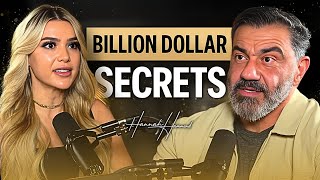
Bedros, founder of Fit Body Boot Camp, walks through building a seven-figure business: hire A-players slowly, fire fast, focus on one thing until it works, then systematize everything. He shares how he scaled his gym franchise, launched product lines, and navigated COVID by cutting costs ruthlessly and doubling down on what made money.
Chapters
Say I'll sound like a hypocrite because I tell people, go singularity of focus right now on the one thing. And when people go, well, I don't know what my one thing is. Do I get the position of the CEO? Absolutely. Do I want it? I actually came to the conclusion, no, I don't. I don't. It actually stresses me out. I don't want to walk into these L10 meetings every week and then say, no, guys, I'm sorry, but since I'm Bedros, you can't fire me. You can't chastise me. I can just ask for an extension on my deadline, right? Which then creates a bottleneck for everybody else. And as the business gets more complex, let's create a new process. 300 locations. We added a few more processes in place, 500 locations, added more processes, and then had to get rid of some people because they weren't able to run the complex processes. I could stay awake till 2 in the morning, watch TV, goof off, eat bagels, do whatever I want because I was stress eat. I'm an emotional and stress. I was an emotional and stress eater. I wasn't a good leader. I wouldn't show up to meetings on time. And when I would show up, I was unprepared. And because of that, I would start feeling anxiety. And all that led to a massive panic attack. Chest gets tight, tunnel vision, hearts racing, sweaty palms. Both arms are, like, tingling. And I remember reading somewhere, like in some high school, like, health class, that, like, if an arm tingles, you're having a heart attack. So I'm like, both arms are tingling. This is the big one. This is how I go. So as I stumble down the staircase, I don't know if it was the fresh air, I don't know if it was the movement. All of a sudden, this. All these feelings went away, and I'm left in a sweaty puddle. I was like, holy. I think I just dodged a heart attack. Billion dollar company comes with billion dollar headaches. But I'd rather have billion dollar headaches than third world problems, which are. I can't even keep my lights on.
All right, So I am so excited to have Bedroulian sitting in front of me. And you are just literally the epitome of the American dream. I mean, you went through severe trauma as a child that most normal people would never be able to overcome. Your family escaped communism, and you're an immigrant to the United States, and you just. We were just talking offline, and your father came with $200 in his pocket.
Yeah.
With his whole family. And then you went through, obviously, a childhood of struggled with addiction and food addiction, which we share in common. That's always been my biggest culprit. And then you went on to build multiple multi hundred million dollar companies. You have the largest fitness franchise globally, with 500, approximately 500 franchise locations called Fit Body Boot Camp. You are a speaker. You're a bestselling author on the New York Times bestseller list for your book Man Up. And you're also one of the most renowned business coaches out there. And I know I look up to you so much. And my value friend Maisie's here right now and she's just been following you for the longest time.
Thank you, by the way.
I appreciate that. But, man, you just, like, you've done it all, Bedros, and I respect you so much because you not only, like, demand your highest potential, you actually go claim it. And not only do you do it for yourself, but you do it for other people, too, and you push other people to do it. And it's like, we have this one life and so many people play it so safe and they play it so small and. And you inspire people to live their best life and create an empire and not sacrifice their family, not sacrifice their health, not sacrifice their sanity, like their mental health, their relationships, and still dream big, Push big. Take accountability, take responsibility, stop drinking the liquor, stop smoking the weed, stop watching the porn, stop doing all this shit that controls you and, like, create a beautiful life. And that's everything that I want to do. So I'm really inspired by you and I'm just really honored to have you.
How old are you?
28.
28. Just know that I'm 50. I know I shared that with you before the mic started to roll, but your audience needs to know I'm 50. So between 28 and 50, you will experience stress fractures. Stress fractures are good. You look at stress fractures in a bone or you look at scar tissue on the human body, it's always the strongest part of that bone or the body. And so to get to where I am and where others like me are at, you don't get there unscathed. Just so you know. Right. Everything you mentioned, I can check off, check off, check off, check off, check off. But that doesn't mean someone young like you learning that you want to encounter your own variations and versions of it, because you're about to start demanding even more of yourself limits. Like, you don't even know how much risk tolerance it's going to take how much shit you're going to have to eat, how many decisions you're going to have to make without having even 50% of the information you need to make the right decision. Decisions that you'll make that will cost you hundreds of thousands when you're small, that will cost you millions when you're at my level. I make them often and those decisions happen. But that's part of the game. And if you can accept that that's what it takes to get on the field from the bleachers. It's a beautiful game. But you're going to walk off the field sometimes dazed and confused, sometimes limping. And that's okay. That's, that's the game of life. Most people are spectators in the bleachers and I invite people to get on the field, but I'm also brutally honest and letting them know, like you can watch me and others and talk about addictions and abuse and fucked up relationships and this, that and the other, and then you'll go and create your own variations of it. Because to get to this level there's a lot of sacrifice, risk decisions that have to be made that some might even call ruthless.
So for somebody like me, I have a dream of building a billion dollar empire and I want to be a billionaire and I want to serve as many thousands of people as I possibly can. And I know my purpose on this earth and I know that God gave me a gift to create. And I'm a creator, I'm a textbook visionary. And so, you know, for somebody that has it together, that has the vision, that has the discipline, that has the responsibility and I see it all. I just like, I see everything, I see how it needs to happen, how it has to work, who needs to be in place to make it happen. But yet I am so far from that. It's like the tunnel is so long and I could see it happening in so many different ways. Like there's so many opportunities, I could be successful in so many businesses and so many decisions and I almost get like I'm in this analysis paralysis right now of I don't know what to focus on because I have my real estate brokerage and I just launched a debt fund and a lending company and I see that scaling nationally and having a big exit. But I also see like being a one stop shop for real estate investors and really having an edge where we help investors find the deal and fund the deal and sell the deal. And if they don't want to do it active, they can passively invest in the Deal. I love your advice on scaling. Do you think that as a textbook entrepreneur and you're somebody that's involved in multiple businesses, should someone really just dial in and focus on one thing and master that first before they do other things? Or do you think somebody can be successful building and scaling multiple companies at once?
So I'm going to sound like a hypocrite when I say someone can be very successful building and scaling multiple companies at once. However, once you've built your first big empire, and the reason is when you build your first big business. For me, it was Fit Body Boot Camp, right? I started Fit Body Boot Camp. I went singularity of focus on it like nothing else mattered. I wanted to start a supplement company and an apparel company a decade and a half ago, but I was like, until I have at least 400 fit body boot Camp locations, singularity of focus. Because I knew that if I could do that, it would give me so much freedom money that I can then buy leaders from my other companies. And so today there's a gentleman named Bryce Henson, one of my mentees from many, many years ago. He's the current CEO of Fit Body Bootcamp. He has a full commitment of Fit Body Bootcamp. I meet with him once a month and him and his leadership team of Fit Body Boot Camp. And then they do the daily execution. Same with my supplement company, Jeff Rosenquist, he's the VP of it. I meet with him once a week because my supplement company is only four years old, so still needs a little more daddy time. So I meet with them once a week instead of once a month. But they go and execute Fuel Hunt Apparel, now an eight figure company. When I got on board, they were making approximately $1500 a day in sales. That was two years ago. Today, 25 $30,000 a day in sales of apparel, rash guards for Jiu Jitsu, combat shorts, and then just made in America cool T shirts and stuff. But I share that with you because I had dreams of all of those things, but I had gone singularity of focus. And I say I'll sound like a hypocrite because I tell people go singularity of focus right now on the one thing. And when people go, well, I don't know what my one thing is because I'm a visionary. I'm an eagle, right? Cool might sound harsh, but I always say, well, if I were to put a gun to your head and make you pick one, what would you pick? Everyone knows the answer when there's a metaphorical gun to your head. You know the answer, you start with that one, but that doesn't mean we're killing the rest. We're just putting it on pause. You make this one so profitable and so systematized, you put a leader in. And then with the rest now, new companies that I either acquire or start, I start them with leaders in place. I don't figure out what do I need to do to launch. Like, let's say I was going to create a software company. I wouldn't go, what do I need to do to create a software company? I say, who do I need to get to help me bring this vision of a software company to life? If I want to start an automotive company, who not what do I need to do? Right? But I'm at a place where I could deploy my money, hire people and teams and create processes and then they can execute. So go singularity of focus. When that's given you enough freedom money, you can start hiring teams and people. And now literally do what I do. I can take equity in as many companies as I want. And even yesterday I was on a phone call with this dude and he's like, man, I just want to give you equity in my company. We have three partners, but we'll divide it up four ways. You'll have 25%. You don't have to buy in. Da, da, da, da. I'm like, actually, I like your industry, but I don't want to be in it. It's in the jiu jitsu, competitive, like combat fighting things. But like, I don't want to be in it. Because you'll get to a place as you build your personal brand off this one thing, as you build freedom, money as you are known as, you write a book on it, you're the expert about it. Now you have so many people who want to work with you and for you, you can bring all your other visions to life a lot quicker. Does that make sense?
Oh, yeah, because I love that. Who not how. Right? You've read that book, right? It's such a great book. And it helped me as I grew my business. But to get to where I got so far, it was just a grind. It was. I was in the weeds of everything but wearing all the hats and then hiring an assistant, teaching the assistant, hiring an ea, teaching the ea. But I've never been able to have the. At this point, I haven't had the capital or the capacity or the wherewithal to hire from the top down. And so, like, for instance, for this new lending company, if I had a gun in My head, it's the lending company because I see the scalability, I see the EBITDA multiple I could get, I see the freedom that it brings in, the work from anywhere and the virtual model and all these things and the need for asset based loans like that's never going away. And I hate working with traditional banks myself. So it was filling my own need. But what's got me here is not the lending company. That's a new thing. What got me here was the real estate brokerage. And so it's almost like almost letting go of what got me here. To get me there.
Yeah.
And take the leap of faith into a vision that I haven't actually executed on. How do you find that? Who. How do you find a players?
That's a really good question. So you're not going to find a players by putting out ads on. Indeed. And other platforms. Right. Because I always say if someone in an economy like this doesn't have a job, they're not an A level. They're probably B minus, C level players. And so you have to remember I said there's ruthlessness involved at this level. You have to recruit. So if I know, for example, let's say the lending company, you're like, if I had a gun to my head, it's the lending company. But I've got this real estate brokerage that has done well for me, but I know I could still scale it. All right, well, I'm going to go find a second in command for someone else's thriving real estate company and poach them. Offer them an opportunity. An opportunity where they can get mentorship, access to people, maybe equity where they won't be able to get equity there. Maybe a future partnership, whatever it might be. But I'm going to recruit. Poaching sounds a little aggressive. You can say recruit. And I've done that for my, for my Fit Body Boot Camp brand. We needed a compliance officer, but we didn't want to groom one from the ground up because it takes some time. Federal Trade Commission oversees franchises. So as a franchisor, I have to constantly communicate with the Federal Trade Commission. That's a pain in the ass. Federal Trade Commission makes franchises have a compliance officer so that we comply with whatever the Federal Trade Commission wants. So rather than trying to groom one and build one from the ground up, I went to some successful franchise brands that I felt were similar to what we do as Fit Body bootcamp and through LinkedIn reached out to a whole bunch of people and several of them showed interest. One of them was a good fit and we welcomed her on board. And so if you're able to recruit, you can find the who's a lot faster. If you try and build and develop or hire by putting out ads on indeed or you know, monster jobs or whatever, it's going to take a long time because the people that don't have a job right now are the bottom of the barrel. That's just the reality. So I'm going to get a C level player who's probably burnt out. Their heydays are decades behind them and they're going to talk about what they used to do instead of what they're able to do. I want to recruit from a company that's growing, thriving and just bring that person here and say run the play. Does that make sense?
Oh, yeah. In the real estate brokerage industry, recruiters don't recruit like recruiting companies that I haven't been able to find ones that recruit them because they're mostly commission based. But that would be, you know, somebody like that in any traditional brokerage structure is 100% commission. So recruiter recruiting companies don't.
But right. You would be the one recruiting.
Yeah.
So you wouldn't hire a recruiting company. You'd be the one going, all right, who within the 100 miles from here?
Yep.
Right.
And I just reach out directly. How do you feel about recruiting companies for other roles to find C suite executives or to find partners?
I've got a few coaching clients that they've worked for. One of my coaching clients, Ashley Lucas, she has a $22 million weight loss business and we're in the process of two more years and she'll be exiting. She's been with me three years now, so she'll have spent five years with me. She'll be exiting just like me. She's like, look, I'm unemployable. I can't sell this company and then go work for the private equity that buys it. Which is why I bought brought Bryson as my CEO. Right. When I go to sell Fit Body Bootcamp, I'm not going to all of a sudden have a job working as the CEO for Fit Body. So I brought Bryson so he could go with the company. And so we're in the process of looking for a second in command for Ashley for PhD weight loss. And we've kissed a lot of toads, but we found a prince and we think he's the guy. So recruiting companies do work, but you're going to have to kiss a lot of toads. Right. Because you're relying on them to go find someone from their pool and their pool, there might be people that they've talked to before they plugged into here. They, they quit or didn't pan out there. So now they're going to try and plug them into your company. So whenever possible, I'd rather you go out and do that work. Friscilla has a really good, good saying. He says, success is found in inefficiencies. And when I heard him say that at, at a. We were sitting in a green room at Dan Fleischman's event many years ago and I was like, dude, say that again. He said, success is found in inefficiencies. I said, you're absolutely right. There's some things that are inefficient. Like I should probably delegate my assistant to do or second in command. But I need to do it and it's inefficient. But only I could do it to the level that I need and find that right person for that right role. If we're looking for a marketing person or head of sales, my team members can go find it. But if I'm looking for a second in command, I'm going to go find this person. It's very inefficient to do that for me. I don't have a lot of time, nor do I have a lot of patience, but I'm going to go do it because I'm likely going to find the right person. So recruiting companies do work, but nine out of ten times you're going to find the best people for yourself.
You mentioned one time that you realized you had a bad team at some point in your and I'm sure that's not one time.
Yeah, I'm the king of many times.
Yeah. So I mean, we talked about the part of finding those A players, but how do you know if someone really is right for the role and people are in the right seats and are the right players for the team and like, how do you decipher that and determine that and adjust for that and try to put people in the right seats?
Yeah, that's a really good question. So I could almost look at my entrepreneurship career now. I'm 26 years in now as an entrepreneur and I could look at my entrepreneurship career pre2013 and then post 2013. And it was in 2013 that I learned about EOS. Right. Traction. Gino Wickman. And then that same year, so someone, Craig Ballantyne, sent me Dan Kennedy's book Ruthless Management of People and Profits.
I Haven't read that one.
Great book. You obviously know who Dan Kennedy is. You have clearly studied direct response. You know this. But Dan Kennedy's ruthless management of people and profits and Wickman's book Traction opened my eyes. And once you do the people analyzer, you quickly know whether you got the right seat on the bus or not. If there's a third book I would recommend in terms of finding the right people, it would be good to. Great.
By Jim Collins.
Jim Collins.
I'm reading it right now.
Exactly. Great book. Between those three books, you learn one very specific thing. First, the GWC filter. Does this individual that I have in this seat, do they get the position? Do they want the position and do they have the capacity to perform the position? Gwc, right now, no more emotions. Now you're not thinking like, well, you know, B and I hang out, we get lunch together, we work out together, we're homies, we're friends. And I think he gets it, he wants it, he has a capacity. I just haven't done a good job training him up. Nope, forget all that. No emotional connection. Because when you're doing eos, you elevate to a board member, an advisor, instead of the actual role that you have in your company. And you go, what's best for the company? Does Bryce. I got EOS'd out of my own company, Fit Body Bootcamp. Not out as in like you're gone. But I was the CEO, Bryce was my VP. And one day we're sitting in an L10 meeting, level 10 meeting. For your audience who doesn't know, just read the book Traction by Gino Wickman. Follow that up by Rocket Fuel. Same guy, Gino Wickman, and. And then install eos. In fact, I won't even take equity in a company unless part of that deal is that they will start using EOs and they'll start using Brian Underhill, my EOS implementer, and all the companies that I've taken the equity in because he's like this savant where EOS implementation is concerned. So anyways, one day we're sitting at a level 10 meeting, which is probably part of EOS, and Bryce is going through. He's my. I'm the visionary and he's my integrator using the EOS terms. And he says, going over the rocks and hey, B, did you get this rock done? No, not done yet. B, did you get that rock? Rock done? No, not done yet. And they turned to Brittany and his second in command and she kind of gave him a nod and they had already pre planned this out. Like if this happened again because this was now like the third week of me saying, sorry, guys, I need more time to get my rocks done right. My deadlines in. So he's like, hey, B, we want to use a people analyzer on you and see if you're a good fit for the visionary position. I was like, fair enough. I can be open minded. And when they GWC filtered me, do I get the position of the CEO? Absolutely. Do I want it? I actually came to the conclusion, no, I don't, I don't. It actually stresses me out. I don't want to walk into these L10 meetings every week and then say, no, guys, I'm sorry, but since I'm Bedros, you can't fire me. You can't chastise me. I can just ask for an extension on my deadline, right? Which then creates a bottleneck for everybody else. So I had the capacity, I had the C, I had the G, but I didn't have the W. I didn't, not anymore. Right? Because I got too many things going on. And so Bryce said, I think I have a solution because you no longer qualify for the visionary seat. I go, what's your solution? He goes, I'll step into visionary position. I was like, all right, wise guy. I could see that. You've been with me for eight years now. Who's going to be our integrator? And he looks at Brittany. That already worked it out and what a beautiful transition it was. And I now sit in what's known as the owner's box. Right. And so I just meet with them once a month instead of once a week. I don't have any rocks. To move forward. I might have to send a text message to someone high up somewhere. But that's about the extent of my involvement in Fit Body Bootcamp. But I say this because with traction, you're going to learn the people analyzer and the GWC filter with good to great. You're going to learn if you have the right person on the bus, but maybe they're in the wrong seat, then you can put them in the right seat on the bus or pull the damn bus over and kick them out. And then with ruthless management of people and profits, you're going to learn to fire fast, higher, slow. And you're going to understand that every single team member, from the lowest level to the highest level team member has a walking P L above their head. Like, imagine if I looked at you and right over you was this holographic profit and Loss report. And I could see if Hannah is making me money or losing me money. If you're an asset or a liability, and I look at this P and L report in two halves. Money. Are you making me money or losing me money? And then are you irritating me or bringing in good culture into my organization? Right, because you might have people who are profitable. They're making you money. They're not a financial liability, but they are a human liability in terms of they're banging half the sales team, or they're showing up late, or the culture is completely toxic, but because of this person, they're just as bad as someone who's not making you money. And then you have to fire fast and replace them slowly.
So. Good.
Yeah.
And I'm just now starting eos. I start with my trainer, my EOS implementer. The end of the month, actually.
If you're not happy with him or her, just reach out to Joan.
Okay.
And ask for an introduction to Brian Underhill. And I don't make a penny from him.
Like, thank you.
Any of that. It's just he's a. He's one of those, like, slightly autistic. God, Brian, I hope you. You're not listening to this. Slightly autistic, goofy. And then he's mega tall, lanky, gangly, looks like giraffe arms and legs. And one day, after about three EOS meetings, I'm like, hey, come here. He's like, what's going on? I go, now that we're on a break and my team's not in here, how much cocaine do you use? He goes, no, no, I have Tourette's. And he sticks his tongue out. He goes, look, I chew on my tongue and I snort. I'm like, all right. So other than that, like, he's a brilliant human being, and that just makes him cute. Anyway, lovable. So, anyway, if you need a good EOS implementer, he's your man.
Okay. Awesome. Thank you. That's a funny story.
Yeah. I swore that he was coked up, and I was gonna, like, kick him out of my company. Like, it turns out the guy's got, like, Tourette's.
Yeah.
Yeah.
So part of what I'm also doing is building a personal brand. And right now, a lot of time, energy, money, and attention is going into that. And I love. Like, this. I would do this a hundred hours a week. I love this. And people are like, well, how are you monetizing? I'm like, I'm not doing it to monetize it right now, but it is Part of the bigger vision of building a brand and having influence and being able to impact people's lives and being able to make money and build an empire. So did you build your companies first and become super successful first before you started building your personal brand, or did you build it alongside it? And what role has that played in the building of your companies? And what would you advise? Like, what time someone like me allocates to doing stuff like this? Building the brand, producing the content versus focusing and grinding and like being in the business and building businesses.
If I were to go back to 28 years old, I would spend even more time building my brand, creating content and building my network, and less time in the weeds. But I didn't know that, right? Years earlier, I should have hired a second in command. But I was like, no one, this is my baby. No one can treat my baby like I can. No one knows the ins and outs. Guess what? All businesses are simple. It breaks down to three Ps, the product, whatever the product is, the people as everything from you on down, and then the processes. So if I've got a great product, I just need to hire good people who aren't retarded, who can run great processes. And as the business gets more complex, let's create a new process, right? When we had 100 locations at FitBody Boot Camp, we had some simple processes, 300 locations, we added a few more processes in place, 500 locations, added more processes, and then had to get rid of some people because they weren't able to run the complex processes. So brought in better people to run the more complex processes. And things are going great, right? So it's product, people, processes. And as long as you can figure that out, then you go, all right, I can step out and become the visionary full time. It was in 2013 when I did a Spike TV reality show with Randy Couture, MMA UFC fighter. And do you remember the TV show Bar Rescue?
I don't watch TV.
Well, you ruined that one.
Sorry.
No worries. Someone in your audience remembers a TV show, I think it's still out there, called Bar Risk. This guy, John Taffer, they take this shitty dive bar that's like, struggling, barely paying its bills. There's all this drama. And John Taffer, who knows how to make bars successful, goes in. There's like, all right, the stool's got to be this high and the bar needs to look like this and lighting needs to be there and the windows need to be open and whatever. And he turns his bar around, right? So Spike TV started that and the show's been running very successfully for many years. So then they were like, you know what? What other business like that can we turn around pretty quickly? Aha. Jim's. So they hire me and Randy Couture to do Gym Rescue. And so we did the pilot. Pilot blew up, took off. Wonderful. So we start filming episodes. By episode number three, Randy Couture gets a phone call from Sylvester Stallone. Like, hey, man, we want you an Expendables. He looks at me, he's like, buddy, like, if I leave, the show's gone. I go, exactly. Should I just turn down Sylvester Stallone? I was like, that's a very bad idea. Go do Expendables. So he let the cast and crew now, and off he went. And I certainly didn't have the star power like he does to carry it. I'm the expert and he's like the host, right. And so because he's got the star power, that was the end of Gym Rescue. However, in those four episodes that aired in 2013, I saw how quickly people were like, oh, my God. Stopping me at places like, you're the guy Fit Body Boot Camp. And you were like going into all these different gyms with Randy Couture and turning them around and it's like, holy. Now, obviously, in 2013, YouTube or Facebook or whatever, they were around, but they weren't thriving. Even before that, I had a blog and I was blogging every day and I was. The comments on those blogs were blowing up and I was giving away free report, direct response stuff to get email addresses. And I would always, like, build relationships with those people on my email list and time collapse the know like and trust factor, and then make them several offers, get them on the phone, put them in a mastermind, start a licensing program, whatever it was. And so when social media came around and I saw at the same time from that Spike TV show what being on television could do for you, all of a sudden people are like, whatever it costs to pay you to help me turn my gym around, I'm down. No objections. No. I need to get to know you, like you and trust you. Can I talk to some people that you've helped? Just, I saw you on TV and I want to pay you. Okay? So I learned very quickly that personal, brand and network matter. And if you can do that, it's friends making money with friends, this relationship right here. Who knows, three years from now, we might be putting up a massive development somewhere together, right? I might be someone helping fund massive development. I might make a Connection for you. Because I'm like, you know what? Hannah does this, and this friend wants to do that. Hey, here's the connection. It's always about friends making money with friends. And if you're in the weeds running your business, you're not looking up and out, you're looking down and in. If you're looking down and in, you're going to miss all the opportunities that are up and out, like connections, network, content, brand, audience. And so, yeah, your instincts are right. Build your personal brand of the right people with the right message. Make as many connections as you can. Add as much value to the lives of those connections, those people that you're connected to, and then build so much money in the Goodwill bank account so that when you have to make a withdrawal, like, I'm like, yes, Hannah, I'll gladly help you because you've connected me to 10 people that have bought this many Fit Body Boot Camp locations, became coaching clients, or helped me get this other thing off the ground. How can I help you? Right? Like, that's all I've done ever since 2010, because that's when I got into Joe Polish's mastermind. And that's when Joe was like, I realized how connected he was. And all he was doing was doing things for others, expecting nothing back. I was like, this motherfucker is onto something. And I was like, hey, what? What is this that you do? He's like, well, the more I can build in the Goodwill bank account, the more withdrawals I can have in the future. And those withdrawals can show up in many ways. I. I can ask people to speak on my stage. I can ask people to co author a book with me. I can ask people to let me borrow money to launch a new project or business or whatever. And I was like, holy smokes, he's onto something. And that's what I need to start doing. And so the more you do that, the more you build your personal brand, the faster your empire is built. And when a disaster like the COVID comes, right, you can reach out to friends again, friends making money with friends, and be like, hey, look, my industry right now, Fit Body Bootcamp is crumbling. That was 218 locations in not even one year in 10 months, right from March 16, when I told all Fit Body Boot Camp owners to shut their doors for two weeks because we're going to flatten the curve. But because I'm a former communist, I come from a communist country, I don't trust the government. I turned to Bryce and I said to start Making workouts that we can do beyond those two weeks via Zoom for all the clients across all the Fit Body Boot Camp locations. Because if the clients leave the locations, the locations stop paying us franchise fees and we are out of business. Right. Because I knew that that was going to happen. I had a gut feeling it was going to go beyond the two weeks. Clearly it did. We only lost 210 locations. Unlike Orange Theory or F45, we did not sell off a single percentage of equity. And the vultures were circling, offering us pennies on the dollar. And we're like, hey, we're good. Because we were already preemptively training clients via Zoom in private Facebook groups and doing everything that a Fit Body Boot Camp did right there in their homes. And because of that, and when I did need some help from friends who were connected to government, I was able to reach out to my friends that I had made goodwill deposits in, and those friends made the right connections for me. In all the different states that we have Fit Body Boot Camp locations in, because states like California, Pennsylvania, Michigan, New York, they were charging, like, finding us, like, $5,000 a day if you're open. Right. And so my franchisees are like, dude, I've got like, 4, 15, $20,000 of fines racked up just this week. What do I do? I was like, don't worry. I know a guy who knows the mayor of your city. I'm going to like, that's how you can leverage relationships. And it was such a good thing to be able to do that and help my franchisees, who are, at the end of the day, small business owners. They're not sitting at corporate office like I am. They're small business owners. And so it was really good to be able to help them with the connections that I've developed.
I love it.
Yeah.
So when you started the franchise, I mean, you mentioned you were on this TV show and people knew you. What was your process before you got to that level? Like, where did you, I guess, make your first million? Or where was that break for you to really start to scale? Because it's so hard in the beginning when you're just getting started to when you have more limited resources and you can't go hire all these C suite executives and people that are way better than you and you're still scrappy. What did that process look like for you? And then what was that big break that you could actually start scaling?
Good point. I think it's a big gift you're giving your audience right now by asking that question. Because I can imagine your audience is sitting here going, all right, tough guy. Well, you've got all this money, you've got all these connections. You could find leaders and money and start new businesses, and a leader quits, you can replace them with someone else. What do I do? So here's what I did. Way before Fit Body Bootcamp, I had started a gym brand called Premier Results. It was a personal training studio, probably three times the size of this room. And for your audience, this room is pretty small. It's just a tiny little studio that we're filming in. So it was probably like 20, 1200 square feet. My personal training studio called Premier Results. One on one, personal training. My personal training client, who I was, I was training him. I was a personal trainer at LA Fitness. His name is Jim Franco. So I was in my early 20s, he's in the 60s at the time. And Jim Franco's like, why don't you have your own personal training studio? I'm like, dude, I don't know anything about opening up a business like that. Like, where do I even begin? Do I. Do I buy the building? He goes, no, you lease it out, you rent it out. I go, do I buy the equipment? No, you lease that out. I don't know the market. I don't know any of that stuff. Right. I just wanted to be a personal trainer and take a lot of steroids and. And train my clients. That was it. And. And at the time, I was powerlifting, so all I really cared about was lifting heavy weights anyway. But Jim inspired me to open up a personal training studio. So I did that. One location became two, two became three, three became four, then five. One advice that Jim Franco gave me was, I don't know how much you or your audience know about personal training, especially back in the day, but personal training was sold by blocks of sessions. So you might buy 5, 10, or 15 sessions. And then once Hannah is done with her 10 sessions with me, then I have to put my sales hat back on. Like, hey, Hannah, this is your ninth session. Tomorrow's your tenth. Do you want to buy another ten? Now we're kind of friends and trainers, so you're like, ah, I could do it on my own, right? I'm like, fuck, now I got to go replace Hannah with someone else, because I don't. I don't have that money anymore. And so Jim Franco's like, look, dude, you keep selling me 10 sessions at a time. Why don't you just put me on a extended program? I'm like, do you know how many hundreds of dollars you'd have to pay per month? He goes, I could afford it. And all your personal training clients could afford it because they make a lot of money. So it never dawned on me that my personal training clients make a lot of money and they could afford six to $800 a month to work with me. So when I started putting people on monthly recurring revenue, I was able to build up EFT electronic fund transfer. When I was able to build that up, I did the same thing in my five Gyms Premier results because I had clients on recurring revenue that was scheduled to come in every month. A very big brand of gyms that we're all familiar with. But because I signed an NDA I can't share came through and bought my five personal training gyms in San Diego, California. They didn't buy it because I had all these personal training clients. They bought it because of the receivables that I had. I had all the clients on a 12 month contract. Average client was paying $630 a month and we had over 400 clients. So they bought the receivables from me, right? And had I only been selling five and 10 sessions at a time. So I share this with you because I just started off with one gym and that one personal training studio and hired a personal trainer. Then I had three or four or five trainers per gym. Before you know it, I sold my five gyms and then I started coaching other gym owners, teaching them how to do the same. So the question was, how can someone else start if they don't have the means and the access right now? Be really good at the thing that you're going to do. Be so good that others who do what you do come to you and go, how do you do it? How do you raise capital? How do you, how do you find real estate deals to fund because you're going to be so good at it and then you go, let me coach you. And then you could start a coaching business doing that. And through that coaching business, once I had enough coaching clients, I was like, would any of you want to just start using all my systems and we can call this thing called Fit Body Boot Camp. So I turned my coaching clients that all had different gyms and different brands. My first 45 fit body boot Camp locations were all former coaching clients who just converted their brand to a Fit Body Boot Camp and that's how the whole thing took off.
That's so cool. And is that, that's similar to Alex Hormozy's process Or did he do something similar with the gyms?
Gym launch? Yeah.
Gym launch, yeah. Was it also from. Did he do coaching and things like that?
Exactly, yeah. Yeah. His whole thing was, hey, I'm going to coach gyms on how to do this thing. It was all about gym owners. Like many small business owners don't. They think if I, if I'm a great coach or trainer and I build the gym, people will come and then they're a great coach and a trainer, they have abs. But then they built the gym and no one comes and then they look for marketing, sales and processes and that's where they find someone like back in the day, like me or Alex Hermosi or all these other people who do that kind of stuff. And those people exist in every industry because the lazy who don't want to create the processes will end up giving money to the not lazy who will create the processes and then charge you to deploy them.
Yeah, and that's something that I want to do too, is I want to build a community. And do you know Pace Morby? I don't know if you. So I. He was on the show last week and he's just an incredible, another incredible person I look up to. And he's built something so incred, amazing, you know, serial entrepreneur, 40, I mean, thousands of, of students in the community, massive companies, super down to earth, great relationships, all that type of stuff. And I want to build a community too. And he actually advised me, like, why? He's like, people are coming in the store, Hannah, and you're not selling anything. Like, I'm not even collecting emails, you know, and he's like, what do you, you know, what do you, what people want to buy but you're not selling? Like, I'm just selling. I'm not through social media. I just have my businesses and most of what I've done has been word to mouth and referrals and direct relationship and like I'm a networker. So I'm just now getting into like the marketing, paid marketing and advertising and collecting emails and all that stuff.
That's how we scale, by the way.
Yeah, yeah, I'm learning that. And so especially being in 100k with, you know, like the really, really big players out there, I'm like, oh my God, they're spending $2 million a month on ads.
Right?
Like, okay, I got to start doing this.
Someone once, someone once asked me, they go, yeah, but I put up content some. A lot of it goes viral. I figured out the formula go viral. I'm like, dude, you wait for algorithm to help you go viral. I spend hundreds of thousands of dollars every week across all my companies and I make sure that all my ads convert. I'm fishing with dynamite. You're fishing with the fishing pole. They're like, oh my God, I got it. Like when you throw money at paid ads that convert, it becomes infinitely scalable. Unless you're like in some micro industry, like whatever, some odd industry, but in the industry that you're in, it's literally endless. And if you can figure out the formula, the market, message media, the right ad to the right market of people with the right source of content, like, this thing is going to be over. It's like fishing with dynamite. And if you're able to do that, then you start having first world problems, scale associated problems, which, remember we went, we talked about earlier that people like, oh, I can't wait till I have a billion dollar company. Cool. Billion dollar company comes with billion dollar headaches. But I'd rather have billion dollar headaches than third world problems which are, I can't even keep my lights on.
Right. Well, I'll go back to the community thing and then want to go back to marketing.
Sure.
So another thing I want to do alongside the podcast and the personal brand and the obviously brokerage and the lending and all the things is I want to build a community and I want to help other people do it because people reach out to me all the time and that's where I get my joy. That's what fills my cup is helping other people and then learning from other people. But then it's another thing is like, do I build this empire first and like really get the lending company going and scaled and dialed in before I get distracted by this other thing? Or is that also a compliment to go alongside?
It's easy to see a lot of things as compliments and like, oh, that will help that and this will help this and just build this one lending company, I'm telling you, build this one. If you were a coaching client of mine that was paying me 100 grand for my domination year coaching program, I would tell you to what Stephen King, who's a great author, wrote one book on how to write books. So the man that's got like more New York Times best selling books than anyone else wrote a book on how to write books. And the big takeaway from that book is be willing to kill your darling is what he said. And he went on to say, kill the words, sentences, paragraphs and pages that don't add value. To the reader's life. If you're going to have a 200 page book, it's going to be that much more difficult for them to read. If you have a hundred page book because you killed the darlings on the fun little side, stories that you might want to put your life story in because we're egotistical humans, however, it's not going to add value to the reader's life. They're more likely to read the 100 page book, which means they're more likely to do do business with you because they're not going to get through the 200 page book. And so the same thing applies here. Like, be willing to kill your darlings. The reason Fuel Hunt, the apparel company, blew up by like 50x in a year and a half. They had almost 50 different logos. They call them badges, right? So think about a badge that says whatever, you know, kill your distractions and a badge that says pain is power. And so each one of those small, medium, large, extra large, then at least two colors, black and white or black and gray. And so the inventory is ridiculous. I'm like, guys, what are the top 10 best sellers? They're like, oh, these ones. I'm like, cool, kill the rest. What? Yeah, yeah, kill the rest. I go, all your top sellers say sold out. There's only like mediums left on the website because all the, you know, larges and extra larges are sold out. And y' all don't have the money, but you have all the stock of all this other. So sell all the rest for dirt cheap and then just make more, more of the top 10. For a whole six months, all I had them do is just recycle the money and make more of the top 10. And then I was like, now I can create an 11th shirt and a 12th and a 13th. And now we obviously have a big thing, etc, but it was about killing all the darlings to focus on the things that matter. And if you're able to kill the darlings and the distractions and the opportunities, because once in a lifetime, opportunities come at least twice a year. And so when people are like, man, you know, there's an opportunity, I got to take it. Because Pace offered this or, you know, Ballantine offered that, more opportunities will come. It's singularity of focus and impulse control are the number one and the number two factors to scale a business faster than ever. The third one being your team members, like, who's in the company with you running it. And so if you could have singularity of focus Then you scale that thing, make freedom money and then you start introducing new businesses, new companies, new leaders, new processes and it just blows up.
Okay, and then back to the marketing. Because the one time four years ago I hired a marketing agency, signed a twelve month, hundred thousand dollar contract and I didn't get one closing. So I was like, marketing, that's the.
Price we pay, right? Yeah. Remember I said, how much are you willing to eat? That's a beautiful sandwich for a whole year.
Yeah, yeah, it's a sandwich. And, and I don't know, I didn't know marketing. You know, I'd read one or two books, but I'm, you know, busy and crazy. I'm like you, I'm hiring you.
You're an agency. Yeah, Y.
So now I'm starting marketing, but I'm so afraid of. I've, I've interviewed so many agencies and so, so many people and like the ones that work for all the big names that I know and then that are crazy amounts of money and then the ones that are, you know, smaller, just trying to get their feet off the ground, that are more dedicated and then I don't know who to pick. And, and then also like do I hire in house and then how do I interview if I do hire in house? So what would you recommend if you're just starting to run ads and who.
Do you partner with if you're just starting out? I would probably hire an agency that comes from someone trusted. So you know all these people that you've networked with, they've probably referred agencies. What I would say is, let's say one of them is Joe Polish. We're just going to use Joe Polish. Hey, Joe Polish referred you and I trust Joe Polish. And so I'm sure you guys will do a great job. However, I'm not looking to sign a contract beyond 90 days. I'll sign a 90 day contract with nothing beyond that. However, I'm sure you guys will do.
More from Hannah



Never Waiver On Your Values—No Matter How Lonely, Uncomfortable, Or Difficult The Journey Gets

Watch the full video about Ray Dalio’s prediction on the upcoming debt crisis… 👀

Stop Asking “How?”—The One Question That Will Help You Scale Faster Than You Ever Thought Possible

4 Life Lessons That Took Me 30 Years To Learn—But You Can Learn Them All In Just 14 Minutes


This Is Unfortunately How You Can Tell Your Real Friends From Your Fake Friends


