How To HEAL From Trauma & Addiction | Joe Polish
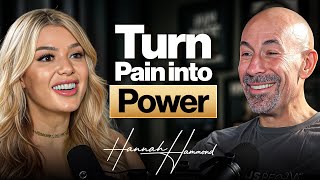
Transcript of a February 2025 interview between Hannah Hammond and Joe Polish in which Polish recounts childhood trauma (mother died when he was 4; sexual abuse), adolescent substance use and severe addiction (daily cannabis and stimulants from ~16, escalated to prolonged cocaine freebasing), his near-rock-bottom physical decline (one week at ~105 lb), and the long recovery journey including 12-step meetings, therapy modalities, and founding Genius Network and Genius Recovery. The piece emphasizes addiction as a connection disorder and links trauma to later sexual addiction and substance use, while also noting Polish’s entrepreneurial success and ongoing recovery work.
Questions this video answers
When he was 4 years old.
$30,000 per month (late 1980s, as stated).
About 105 pounds during one week.
About a three-and-a-half month period.
Tom Young's Fitness.
Chapters
I was raped and molested as a kid. I was paid money not to say anything about it, which wired in my head that sex is shameful and dirty unless you pay for it. That later led to sexual addiction.
Can you share a little bit about your story and how you came from, you know, some of the traumatic things that happened in your childhood and early adult years to now being such an amazingly connected person?
My mother died when I was 4 years old. My father was really traumatized by that. And then our whole childhood, every year or two, we would move to a different town. Childhood, we're moving a lot. I was real shy. I was really introverted. Used to get picked on as a skinny kid. And then I had a period where I was getting molested. And when I, you know, was 18 years old, it was the worst state of drug addiction. When I was about 16 years old, I started smoking pot daily and I started taking speed. You know, there was this rush to it, and I was super shy and introverted, and it just pulled me out of my shel. Problem was I didn't have good boundaries. And so all of a sudden, I just wanted to be high all the time. So I was just taking a lot of drugs. I weighed 105 pounds one week, just because I had gone almost the entire week with hardly eating anything. I was just like looking in the mirror and I looked like I was looking at a skeleton. I was looking at a skeleton with skin. And I was just. I was such a fucking wreck. And. And I was like, I, you know, I need to do something now. That didn't happen right away. I mean, it still went a few more months.
So today I'm sitting here with Joe Polish, who is one of my dearest friends and has absolutely changed my life since I've just gotten to know him over the past year. And Joe has a story that is truly one of resilience and transformation. And not only did he come from a really traumatic and very, very challenging background that a lot of people probably wouldn't have survived and, and became built. Been able to build the empire that he's built today. He is now someone that they call the most connected man in the world. And I truly believe that he connected me with one of my childhood heroes who I'm now good friends with. And he's the founder and CEO of Genius Network, which is one of the most sought after entrepreneur organizations in the world. And he also has Genius Recovery, which is reshaping how the US Shapes how the US thinks about addiction and recovery, and also is The. The author of multiple books, one of which is his newest book, what's In It For Them? Which is an incredible book that I'm almost finished reading myself. And oh, my gosh, the list goes on and on. And you're an expert in marketing. That's how you started. You started a carpet cleaning company and became an expert in marketing in order to sell carpet cleaning services. And you were so good at that. You were featured on ABC's 2020 and then went on to found Genius Network, which now has over 350 members. I am one of them, and I will be a member for the rest of my life. So thank you so much.
First off, Hannah, it's great to be here. Yeah, we've had a. It's been one hell of a year, right?
Oh, yeah, yeah.
So much stuff. And so I. I love seeing everything you're doing, too, and just the growth and all this. So. And by the way, if we. We'll probably knock over these books like dominoes at some point during this, so just. We'll let the viewer know. We won't even edit that if that. If that happens, because I may do it. I may hit the table. But no, it's great to be here. And yeah, I'm just a person who was really driven and entrepreneurial, and I'm involved in all kinds of stuff. Genius Network is all about connection. Genius Recovery is about connection. Everything that I do is really about connection. Because growing up, I was extremely disconnected. So I was shy, I was introverted. If there was any thing that I've done that is about connecting other people, it simply was a byproduct of me so. So badly wanting and seeking that myself. And so I think that's what a lot of people often do, is they have their biggest life issues and personal business and they figure out how to try to build a business around it. Or at least that's assuming you are a solution focused human. And many people are not.
Yeah, yeah. And studies show that nine out of ten entrepreneurs have lived or witnessed some sort of trauma in their childhood particularly, or in their lives. And you're different. Definitely someone who has witnessed that. So can you share a little bit about your story and how you came from, you know, some of the traumatic things that happened in your childhood and early adult years to now being such an amazingly connected person who has some of the most amazing relationships in the world and has really figured it out in all areas of life, you know, from wellness to health to relationships to finances and business.
No, thank you. So let me Say this. I'll preface it by saying that I'm still figuring things out every day. I'm friends with a singer named Alice Cooper, and Alice lives actually here in Arizona. So Alice, me and him have the same birthdays, except he's 20 years older than me. So he's in his mid-70s now. And he had a song I used to listen to when I was around 18 years old. And it was called, you know, I'm 18 in the lyrics are, I'm 18. I get confused every day. I'm 18. I just don't know what to say. I'm 18. I want to get away. And now I also used to be a drug addict when I listened to that song, which is kind of ironic because I have an interview with Alice at one of the Genius Network annual events where he's been sober for many years from alcohol, and I've been sober for many years from drugs and variety of other behaviors and whatnot. But it all stems from childhood and the experience. And I'm happy to share my story. And I also want to say to the listeners, there's a lot of people that share really difficult stories, and they use it to manipulate other people. And so I try to be very careful not to have anyone, like, you know, feel sorry for me or whatever, because we've all had shit. And there are. Every day I talk to people that have had experiences. I'm like, oh, my God, how did you even survive this? Let alone, you're a really amazing human being? So I. I come across that all the time because some people that are really hurt, really damaged their life becomes damaging other people, and other people somehow learn to transmute it. And. And I. It does require a lot of work. But so, you know, quick version is I was. That is relevant because I could spend an hour just talking about, you know, crazy stories. But my mother died when I was four years old, so. My mother was a former nun. She left the convent because the story I heard, she'd gotten ill. She met my father in church. They ended up getting married. I have one brother who's a little over four years older than me. And she died of ovarian cancer when I was 4. My father was really traumatized by that. And then our whole childhood, every year or two, we would move to a different town. He was a locksmith. He didn't make a tremendous amount of money, worked really hard. He was, you know, poor guy was just very traumatized. As I've gotten older, I have a lot of empathy, and you're able to witness parents, including ones that have done sometimes bad things, weren't very good. And I can only speak from my own experience because there are some people not suggesting anyone should accept abuse from anyone as if it was okay, because it's not okay. And at the same time, I've learned enough that, like my friend Dr. Don Wood, who's a trauma therapist, he says if you understood the atmospheric conditions of somebody's life, it would make sense why they are the way that they are. So the atmospheric conditions of my life were, you know, my father, my mother dying. And so he never remarried. And we would. He would go and try to establish a business, which he did to a certain degree. And right when it started to work, he would uproot and go move to another town and have to start all over again. It was some weird form of self sabotage and just chasing something that he unfortunately could never find. And so throughout my childhood, we were moving a lot. I was real shy. I was really introverted. Used to get picked on as a skinny kid. And then I. I had a period where I was getting molested, you know, so I was raped and molested as a kid. I was paid money not to say anything about it. Which wired in my head that sex is shameful and dirty unless you pay for it. That later led to sexual addiction later in life. Didn't understand that in the very beginning, what that even was, because you even hear the term sex addiction that conjures up like, oh, pervert, someone that just wants to have sex all the time, or today, like a lot of porn or whatever. But it could be sexual anorexia where you're not able to be sexual with somebody. Very similar to anorexia. There's binging and purging. Almost all forms of addiction are, you know, deprivation and excess. And so throughout my life, it was. There was no real balance, you know, in my childhood at all. It was very unstable. And when I, you know, was 18 years old, it was the, the worst state of drug addiction. So my first core addiction, I thought was drugs, but it was real. It was really sexual addiction. The drugs just happened to be the way that I escaped the reality that was never okay. I never felt okay. And it was weird because when I was about 16 years old, I started smoking pot in high school daily. Back then I went to a high school in Mesa, Arizona. I. I would hide a bong in my locker. It's hard to get away with that now. They have metal detectors at this high school now. But back then you're just, you know, doing whatever. And I started taking speed, and there was this rush to it, and I was super shy and introverted, and it just pulled me out of my shell. It was the most bizarre thing. I became very social and actually became quite popular in high school. I wasn't a jock. I wasn't academically skilled. I was just a partier. But I was able to be very social. And so this fear that I lived with, I was able to numb it. Now, that was good because I saw, huh. You know, I mean, you. You can actually interact with people in ways to where before I was afraid to talk to people. It was the most bizarre thing. And all of a sudden I became very social because these inhibitions lifted. The problem was I didn't have really good or any good boundaries around moderation. There. There was no such thing as moderation. And so all of a sudden, I just wanted to be high all the time. And what I've learned now from, like, my friend Dr. Anna Lemke, who wrote me Nation, she's this great addiction doctor at Stanford, the biochemical aspects of it, like, for instance, when they do studies on rats, if you take. If you eat chocolate, give them chocolate, it's 55 increase in dopamine. Sex is 150% increase in dopamine. Cold plunges are 200% increase in dopamine. Cocaine is a 225. That's why I liked cocaine, because it would just like, you know, the neurotransmitter dopamine, the anticipation neurotransmitter, just. It would. In the moment, it's. It's intense pleasure, but it leaves you feeling depleted. And then methamphetamines is 1000% increase in dopamine. So I was just taking a lot of drugs. And so at my worst state, you know, and I left out a lot of stuff in the childhood. I'm not going to go all into it, but I weighed 105 pounds one week, just because I had gone almost the entire week with hardly eating anything. And. And I remember this. This. I lived in this crappy house with, you know, several roommates. I mean, like, everyone did drugs all day because when you're a drug addict, you hang around other drug addicts. I mean, your lifestyle tends to be around other people that are living that sort of lifestyle. And so I was, you know, selling drugs in order to support my drug addiction. And I was kind of functional in some areas. But as I started to deteriorate and get skinnier and skinnier, all of my friends and like, People were scared even when they would see me. You know, friends that weren't partying all the time, they were like, man, you need help. You need help. And my attitude back then is, screw you. Well, like, it didn't even occur to me. And there was a time where I actually thought that everyone did drugs. It's like, how do you go throughout the day and not like, why wouldn't you get high? I mean, it was. It wasn't like, delusional, but it was just like. I thought a hell of a lot more people did drugs. Well, it was probably delusional. What am I thinking? Of course it was. I wasn't living in a state of, like, fantasy completely, but I was living in a state of hoping. And most addiction does live in fantasy. So it wasn't there all the time, but it was there a lot of the time. And so, yeah, I ended up. The quick version is. If there is a quick version of this is. I. I was one week. On average, I weighed about 120 pounds. There's one week where I just. Was just free basing cocaine every single day. There was a three and a half month period where I would. Free basing means smoking cocaine. And I was literally three. Not a single day I missed in three and a half months. And I was just a rail. I mean, I was, you know, I'd wake up to get high. I'd get high to go to bed by taking downers, drinking at night, you know, waking up and getting whatever speed and drugs that I could. And I remember finding some change literally in. I had this piece of crap pickup truck that I was getting change from. I had found some change in the. In between the seats. And I went to McDonald's, which. I don't recommend anyone eat at McDonald's, but. And I bought Chicken McNuggets. And I was like, oh, I'm gonna go home and eat them. And I get home and I was gonna. It was gonna be like kind of a ritual because I was so broke at that. That particular period of time. I didn't have any money, and I put them on the kitchen counter. And then like, a friend shows up with drugs. And all of a sudden, I didn't care about the food anymore. We spent six hours just getting high. And then finally, you know, and you can't eat when you're on amphetamines. You have no appetite. And so I went to the, you know, the kitchen, and these things were like. Rigor mortis had set in it whether. But I ate them and I was Just, like, looking in the mirror, and I looked like I was looking at a skeleton. I was looking at a skeleton with skin. And I was just. I was such a wreck, and. And I was like, I, you know, I need to do something now. Didn't happen right away. I mean, it still went a few more months, but there was one period of time where I was in the. In the living room, and there was this crazy roommate we had that busted in with a can of lighter fluid. And back then, I had long hair. You know, it was almost. You should see all pictures of me. I have a handful. They're quite. They're quite funny. Dyed blonde hair. I mean, my hair was more blonde than your hair was. And it was spiked at the top and long in the back. It looked like some crazy mole. I sort of kind of look like a blonde version of Theo Von with, like, longer hair in the back and more spiked. I used to use eggs, egg whites, and Knox gelatin to spike the hair because the mousse back then wasn't as good. I'd have a blow dryer, and I'd hang upside down in order to get. So I look like a complete freak. But this guy shows up and. And just screaming, I'm gonna burn this freaking. You know, I'll try to not use too much profanity, but he was shaking, like, squirting lighter fluid all over the freaking living room. And it got all over my hair. And this guy's losing his mind, and he holds up a lighter and lights it. He's. I'm gonna torch this place. And I'm, like, talking him down, like, put it down. Put it down. And I had another friend that was there kind of in the corner freaking out, like, you know, just didn't even know what. I wasn't screaming, but, like, oh, my God, like, what is going. It was a scene out of a movie. And I talked him in the. Turn the lighter, you know, calm the hell down. And at that point, I was like, if I don't get out of here, I'm going to die, like. And so I packed up all my shit. I moved to New Mexico and ended up living in a trailer with my father for a couple of years. And the first six months were absolutely grueling because that's when I ended up getting sober. But I didn't go to a rehab center because I didn't have the money. And so I was taking Tylenol and Advil and aspirin every day just because the headaches were, like, insane. So I had to get, you know, I had to withdraw with really not any real structure or support. But what ended up happening was I got a job working at a health club, eventually selling gym memberships, which is funny because I was like this skinny guy, so I'd always wear long sleeve shirts and everything. And it's funny that the woman that hired me, I'm still friends with her to this day. Yeah, I became. It was called Tom Young's Fitness in Las Cruces, New Mexico, and I was selling $30,000 a month worth of gym memberships, which back then, you know, we're talking, this is the late 80s, was pretty damn good.
It's still pretty damn good.
Yeah, yeah, yeah. Today I'm trying to think of, like, how much, you know, gym memberships were. But that's where I first had my exposure to really sales in person, even though as a kid I was selling newspaper subscriptions door to door. And I learned that, you know, you got to sell something. And so then I ended up getting offered a job. After working at this place for about a year, one of the members ran a mental hospital, and he offered me a job as a mental health tech. I'm like, what's a mental health tech? Well, you know, you come to the hospital, you'll, you know, you just observe certain people. You just do paperwork and things like that. And so one of the things they had me do was I would drive the patients that were alcoholics or drug addicts to AA meetings, Alcoholics Anonymous, NA meetings, Narcotics Anonymous and CA meetings, Cocaine Anonymous. I would sit in those meetings. I drive the van with the people that were in the hospital for drug treatment. And I would drive and sit in these 12 step meetings that were oftentimes at churches or places that would just contribute their space for 12 step meetings. And I sat through those meetings never realizing how valuable later in my life that would become, not just for my own recovery, which was not. I wasn't really doing recovery. I didn't really even understand it because, you know, I just had a part of me that didn't want to accept the fact that I was like an addict. And so I had become sober from doing drugs. But that's only stage one sobriety. Stage two, sobriety is dealing. You know, stage one. Ernie Larson wrote a book called, you know, Stage two Recovery years ago. And stage one is you quit doing the behavior or the drugs. Stage two is dealing with the underlying, underlying issues which cause you to use, you know, drugs and addiction as an addictive way of coping with life or dealing with life. In the first place. And that always has to do with human relationships. So addiction is a connection disorder. I got sober, but I was still very disconnected. But my life was starting to work and so I, except I had not yet dealt with the core addiction, which was the sexual addiction, which all goes back to trauma from my childhood. It was so hard to. Most of my childhood I can't even remember. So I've, you know, obviously many moments I do remember, but huge, probably 95% of my entire childhood I have no memory of. So, you know, so what ended up happening is over the years, look, I'm in my mid-50s now and I've done a ton of work. I've done thousands of in person meetings, from 12 steps to men's groups to yoga retreats, to plant medicine journeys to EMDR to all kinds of somatic therapy, to diet, to exercise, you name it. I'm. Now fortunately, I have an addiction recovery foundation. And it's not because I'm somebody angel, philanthropist or anything like that. It just helps my own recovery. And the way that you. I always tell people, if you think your life sucks, spend time with someone whose life sucks as bad or worse than yours and be helpful, be of service to that person. And it's amazing how that does wonders to make you feel better. So when someone's sitting in a 12 step group as an example, it's the much of the bond is that you're there with other individuals that have gone through similar mutual suffering. And when you, whatever you think is most private, like I'm the only one that feels this way. I'm the only one that has the shame or this guilt or this regret or has done this stuff that I can't imagine if anyone found out, you know, that I did this, you know, I would be exposed. You know, there's so much of that. What you learn through a lot of recovery work is that that which is most private or seems most private is most public. So many humans are going through this stuff. So many people have been sexually abused. Yeah, I mean, and so that I could say more, but I should probably shut up.
And I think your story is amazing. And I, you know, have a different story, but very similar and connect with you on so many levels. And I know when I met you I was like, oh, this is like my person, you know, my people, my family. So would you say that that was the biggest rock bottom moment in your life when you realized like, I'm going to die if I don't get out of here and really made that was one of them.
It. You know, there's. Life has a series of defining moments. I wish I. You would just have one dark night of the soul, or maybe none at all. But I've had quite a few. I mean, I raised a child for a year that I found out while pursuing soul custody I was not the biological father. And that was after doing, you know, intensive recovery and doing well and going to, you know, meetings for sexual addiction, Sex Addicts Anonymous. You know, there's. There's several different. You know, let me say that too, because about. About sex stuff, because I always want to preface this, because if there's any addiction that has a lot of shame attached to it, and tons of people, especially young people, so many young people watch porn continuously are addicted to porn, addicted to dating apps, you know, love addiction, sex addiction, very much misunderstood. Certainly it's carnal, it's. It's pleasure, it feels good. I mean, all forms of getting high and, you know, addiction could be. You know, I have a friend, Chris Doyle, who I. I've interviewed, and he's not a famous guy. He's just a amazing interventionist. And so when a family's dealing with some really hard, you know, usually drunk.
More from Hannah



Never Waiver On Your Values—No Matter How Lonely, Uncomfortable, Or Difficult The Journey Gets

Watch the full video about Ray Dalio’s prediction on the upcoming debt crisis… 👀

Stop Asking “How?”—The One Question That Will Help You Scale Faster Than You Ever Thought Possible

4 Life Lessons That Took Me 30 Years To Learn—But You Can Learn Them All In Just 14 Minutes


This Is Unfortunately How You Can Tell Your Real Friends From Your Fake Friends


