How to Make MILLIONS with Paid Ads | Jason Wojo
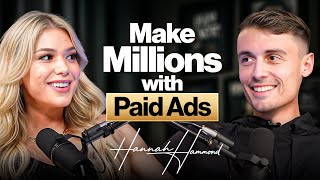
Jason Wojo explains how paid ads reveal what organic traffic masks: broken offers, bad funnels, weak messaging. Start on Facebook and Instagram to prove your offer works before scaling to YouTube and TikTok. Track everything, make your branding match your ads, and watch out for seasonality swings from elections and holidays.
Questions this video answers
About 1.5 million followers.
Almost $35 million.
Almost $150 million.
A $4 million warehouse and $800,000 in unsold inventory.
Around 2.5 to 2.7.
Chapters
If you don't run ads, you will never expose the problems that your business has.
What would the best approach be as far as a marketing plan and building a personal brand and building the brand of your company?
I had a client once, Shopify store had a bunch of viral TikTok videos and they had Taylor Swift make a video for them. She was killing it. For two straight years. We had this ad with the Taylor Swift necklace and it crushed until it didn't crush anymore. Taylor Swift's, I guess, manager emails them a cease and desist and says, you can't use the video anymore. Our agreement's over. We tried using different videos. Shit tanked. The product wasn't as sexy anymore. And now she's in debt up to her ass because she's got a $4 million warehouse and 800k in inventory that she couldn't sell. All that was organic. And then she was like, okay, I can't do that organically anymore. I have to go do paid ads. And it was completely different ball game. If she had a couple hundred grand to use to build out paid ads, she would have had better success and wouldn't have been so stressed out when she lost. When you're running stuff organically, you don't know what your problems are because most of your business has been referrals. It's been, you know, just through your website, it's been through Google listings, Google calls, just stuff that's organic or a friend told someone about it. If you don't run ads, you will never expose the problems that your business has. And you're not going to have like that predictability to not just, like, get more customers, but never have to wake up again and be like, where are my customers?
Welcome back to Relentless. I'm super happy to be here today with my friend, and I'm actually one of his clients, Jason Wojo with Wojo Media. He's got about 1.5 million followers across his platforms. He's an absolute beast in the digital advertising industry. He spent almost $35 million online and he's generated almost $150 million in revenue for his clients. And some of the big names that he represents and works for are Andy Elliott, Ryan Pineda, Kris Krohn. Who else? Pace Morby, Justin Waller, too. Yeah, Justin Waller. Yeah.
It's been a good network. Yeah.
Yeah. So it's great. And I'm just getting started on social media, so we just kind of started working together. But, you know, hopefully I'll be at 1.5 million in the next 30 days.
Yeah.
Yeah. So thank you for being here.
Yeah, of course. I appreciate it.
I'm super excited. You're. You're always a good time to talk to. So let's start with OnlyFans. No, I'm just kidding. Cool. So we'll hold off on that for like a few minutes at least. But I do want to talk about social media advertising because I think in today's day and age, like, if you're not online, who. Who even are you? Right. Like, it's really hard to build a business, build a brand or do anything if you don't have a social media presence. And if you have a big social media presence, like Alex Hermosi or Grant Cardone or some of these big names, Kim Kardashian, like, they can pretty much sell anything at that point. And so it's so important. And I think it's really special too, because there's so many businesses out there, but people really want to do business with someone. Like a person, someone that they resonate with, someone that they can connect to and someone that they ultimately like and trust. And I think that you've done a really good job with that and especially on the authenticity piece. Sure. Yeah. Because you're pretty bold.
Because I'm in a hard space. Like, people don't really like marketing firms. It's like a big thing. Like, when people hear the word ad agency, they're like, ah, I'm good.
Yeah.
And it's like, that's why we just decided to call ourselves like a marketing partner. We got out of like the ad agency word. But like, yeah, I mean, what you're saying about organic is it's like there's only so many people who can build an audience like her Mose. So it's like if you get a couple of good posts or you get a couple of good reels, whatever it looks like long form YouTube, all these different platforms that you're on the presently post posting on, you have to put paid ads on it to put gas on the fire. You know, so many people can only keep that up for so long. Just organically. Viral, viral, viral. Like, it. It's a lot tougher than it used to be. Four or five years ago, ad costs were lower, but it was also easier to stack your post with a bunch of hashtags and get like organic engagement. And like now it's just a lot tougher. And also, like, there's these new tricks now about putting all your people on close friends listen and like all these little softwares that people use and all these new nuances and it's like we have to do all these things to boost our organic. But like paid ads, you could just accelerate it way further. I mean, right now it's a little tough, I'm not gonna lie, because the election's here. So like ad costs, it went up and once the election over on the sixth or seventh, or it'll go back to normal. But it was like that way because now we have election and holiday shopping. So all these things are consuming the feed. It's like, organic's great. It's just. I just want to put gas on the fire.
Yeah. And so what do you like, what's your advice to people who are looking to build a brand? Knowing that there's so much competition out there and everybody's posting stuff and it is really hard to get engagement. But like, yeah, what is your advice? Is that does it really matter what time you post? Does it really matter what hashtags you do? You know, I guess. How much is it strategy and how much is it just like random and what you're doing?
Yeah. I think the two biggest things are like implementation and tracking. It's like, what do I mean by that? Well, when you implement, you post, you test hooks, you see what videos do really well, you know what topics to talk about. Like, whenever I go on pods, like you asked me, like, what things you want to talk about. What do you know goes the most viral? Like having the tracking piece of. Okay, like I know what topics will get more views. That's just done by implementing and just consistently posting, you just know what works. I think a lot of people post for the consistency aspect because Gary Vee was down our throats for years and he was like, just post 25 times a day. And I'm like, dude, it's not that easy anymore. It used to be that way. And I don't know, it's like, if I'm not tracking what's working, I don't know what platforms get the most views. Like right now. I mean, yeah, getting a bunch of views is great. We've just seen that long form YouTube is like doing really, really well. Like getting, getting 500 views of people who are your ideal avatar versus like 10,000 people who are just broad, vague people. The YouTube has just like outperformed and we track all the clicks in hiros and whatnot. And like, we just see that the people that go to a calendly or they book a call from a YouTube long form, like they just spend more money on the phone. Yeah, because they're willing to sit there for 40 minutes just like a podcast like this. If they're willing to watch this for an hour, they're gonna, you know, be more willing to spend more money on something. Maybe they're looking to buy from you. They're looking to buy from you. Whatever it is, they're going to be willing to do so because they got more of it than just a 15 second reel. That's why it's good to have short form and long form and then ads on top of it to give people context on what your offer is.
Yeah. And so do you think, do you like the strategy of just pulling short form content from your long form or do you think it's good to make long form and then just make your own, like little 30 second short form stuff too?
Yeah, I mean, the long form, like taking short form for long form, that's fine. Because when you just like, I feel like when you force short form, you force yourself to say things to make it look gloated on camera, when it should just be taken out of a long form like a podcast or you go on stage and speak. Let's say you do a keynote that 45 to an hour, you're gonna find a good like 10 to 15, 20 clips that are like really gonna hit. And you weren't trying the whole time. You just had a good value piece or someone from the audience asked a good question, or you had a good conversation starter and someone replied back something funny. Like you're doing it nonchalantly.
Yeah.
So it just looks better to the audience. And that's the transparency piece. Like when people try in front of the camera now, I just see like a drop in conversion rate. For sure.
Yeah.
But when they're having nonchalant conversations and something good comes out of it and it's like real life, it's just a better piece of content. For sure.
Yeah. And that's what I struggle with too, as I'm starting to build my personal brand and my social media presence. It's like, what, trying to figure out what should we do? Right. Should it be whiteboard talking? Should it be our own little short clip? Should it be long form, you know, speaking like in front of a group and stuff like that? And how do you feel about that? Like, is there one strategy or is it more of just like what you feel best at and most natural at that you're going to end up being consistent with and sticking with.
Yeah, I mean, I think it comes down to the person too, because some People like, getting in front of the camera and having a script in front of them and being like, okay, like these 15, 20 reels I'll just knock out. But some people are in the bit, like, because we're both really busy business people. So we're out there, we're doing our thing, we're doing a keynote, we have a podcast, we have calls with clients, we have this thing to go look at, we have this office to go to. Like, we have all these things that we have going on. So it's easier for us to be like, okay, if I do a keynote, I'll just take the closer to keynote. But for you to sit down sometimes is like really, really bottlenecking and just force yourself to like record reels. Yeah. So it depends on the person's schedule. Depends on, like what, you know, their avatar is and how they learn too. Because, you know, some niches, like, you know, real estate investing, like, sometimes they need more longer form content to understand, like what that kind of deal would look like. Not a 30 second re talking about the deal. What were the, you know, contingencies of the deal, yada, yada, yada. Some people in ads just want to see results. So they just like short form. They just want to see, hey, how much did you spend? How much did you make? Sick. I'm in. But they don't really want to know that, like the complexities of it, because that's what they would, they'd be paying for. So it's like, it really just depends on the avatar and like, you as a person. Because some people are not really that great on camera. Yeah, like, they're not. They're better in podcast form. Like if I go straight at the camera, like, yeah, I'll do well. But it's more nonchalant for me to be on a podcast. Plus it's actually better to be on a podcast because of the authority angle. Like, you're getting interviewed or I'm interviewing you and it's like you're already in the place of authority. You don't have to try that hard.
Yeah. And that's what I love. I love people and connection and podcasts. And when you just put me like talking head, I don't like it. I freeze up, I clam up and I'm freaking weird. Like, I just doesn't feel natural to me. But it's hard too, because you can only guide, I don't know, podcasts in so much of a direction. So if you're doing like direct, I'm selling a coaching program. Like, obviously, that might be a little bit harder for. From a podcast format all the time versus talking head about the coaching program. Right.
It's a lot tougher. And then also, like, with, like, the long form to shorts from what we've seen is that, like, all of the things that are just, like, not, like, triggering, but, like, you play a fine line on both sides have just done a lot better. Like, we were talking before about, like, dating questions and then, like, politics, those things will always get views because people are going to give their opinion on something that they want to have confrontation about. When you make a post about, here's the three things to watch out for in a real estate deal. Here's the three things to watch out for if you're wholesaling. Okay. But like, that's things that are out there that no one's going to confront you about. But then if someone made a video that's like, oh, here's why Airbnb is better than wholesaling now, you might piss some people off who are wholesalers. You're going to piss people off for Airbnb hosts. Or if I made a video saying, hey, here's why it's better to not cold plunge when you go to the gym, or here's why it's better to do the sauna first instead of the cold plunge first or whatever the hell I would come up with. But, like, those things have two conflicting sides or opinions.
Yeah.
That will always get more views because people always want to know that their voice is heard. So whenever I come up with, like, content or I'm in the middle of speaking, too, when you start making content longer and longer when you're speaking, you're going to turn people's questions into a clip. So, like, I'll get a question from an audience and I'm like, all right, I can say something really funny right now. Like, I know what I can say. And it'll get a lot of views. Like, you just get a knack for it. It becomes like, an actual, like, muscle or behavior. And then. Yeah. I mean, like, like anything that has two sides, like, that just crushes.
Yeah.
Even though it sometimes it makes someone look like. Well, people will say it's like neediness for attention, but, like, it's just the way that the world is. Yeah. Like, I don't know. I mean, there's a lot of things to say online that are crazy. At the end of the day, it's like, it gets views.
Yeah.
So forget it.
And it. And that's true. Right Because I think that's. It's like any president, half the people want him dead and half the people will die for him. Yeah. Or her, whoever. Right. And so it's just. I think it's the same thing online. Like, I'm somebody that really believes in authenticity. I don't know how else to be. Like, I just say whatever I say and that's it. And I don't really care, like, if you don't like me, great. That, that's. I'm not trying to get everybody to like me. I'm just trying to be my authentic self, you know, do what I enjoy, stand up for what I believe in, and then also just provide value as much as I possibly can to the people that are my audience that. That are going to resonate with me. And if they don't resonate, resonate with me, then great. But I know a lot of people are really afraid to talk about politics or sex or money or power, all of which are things that I talk about openly and freely. If you're like, oh, shit, like, sex, money and power, like, what the heck? You know, like, what is wrong with you? I'm like, those are my three favorite topics.
But.
But, you know, I think, what is your opinion on talking about things that are obviously going to be controversial and obviously are going to be big triggers, like, especially politics or rich versus poor or whatever these types of things are. Do you think it's bet? I mean, I guess you've kind of already answered it, but do you think it is worth the backlash that you get ultimately in the long run?
Yeah. It also has to be congruent to brand. Like, Andy Elliott has the brand of just yelling at guys and getting them really fit, making them masculine. But if it's the brand, because everything else he posts is like the same thing, and all the programs have names that would be, like, more masculine. Like, everything's like, congruent in the ecosystem. With me, I'm a psychological person because I'm in marketing. So when I talk about things, I know the psychology behind it. So I'll talk about it, but the brand doesn't match. Sometimes, like, I'll say stuff and I'm like, all right. Like, I know this will get views, but it doesn't match all the other content because it's like, all right, why the gym is trash? Here's how to make your ads better. It's just like, it's just off sometimes.
Yeah.
And to me, it's just whenever I started getting more views on more viral content, like, it did attract the wrong people, though. Like, it did attract a bunch of people who either, because they hated it, they would. Like, we had a time where for a straight month, like, we could not run ads because we had so many views coming through all the gym video crap. And we couldn't book any calls because everybody would book a call on the calendar and be fake. It would ruin my calendar.
Oh, really?
So that was backlash. Like, that was pretty bad. And then, like, you know, people would spam report my TikTok. I got two pages taken down, so I had to pay to get them back. And, like, it's actually an expensive habit to say things that are bold. So, like, if you post a crazy video and Instagram takes you down, like, people will, you know, there's people that I know that will get it back, but, like, it's expensive. So it's like, all right, you're going to do that. And then you're like, all right, five figures here to get my Instagram back. So sick. All right. And you say another video goes something on Tik Tok that goes down. Okay, there's a couple grand there. Okay, cool. And it's just like, is it really worth it? Yeah. Long term. Yeah. Because if someone's not knowing who you are or at least hearing your voice or knows you by face, like, I just don't think it's. I don't think it's that, like, impactful. Like, I want people to know who I am for good and bad reasons because I feel like. I feel like life isn't always about having this, like, rainbow of always good and saying the right thing just to make people happy.
Yeah.
If you have a really crazy belief about something, like, just say it. And if people have anything to say about it, then it's their fault.
Yeah. Like, I'll talk. And I think it's just as long as you're true to yourself. Like, I think it's stupid to just be saying stuff to try to go viral, because it's just, what's the point in that? You're just not true to yourself and you're just asking for attention. And how is that even converting? Because you're not, like, being, like, on with your brand and on your brand. But, but. But I think it's good to be bold on things that are aligned with you and things that you believe in and things that are truly your experiences and how you feel about stuff, because someone will resonate with you, and hopefully that is your target audience that you'll ultimately be able to convert. Into leads, which is the ultimate goal with advertising. I mean, you have a history of what, a four time, 4x4x ROAS lifetime. And what, what is roas for the.
Audience return on ad spend.
Okay, and what is like normal or good?
Normal. The average is around like a 2.5 to 2.7 ish.
Wow, that's awesome.
Above average.
That's awesome. Cool. Yeah, I know it's, it's hard working with any media company. I've spent multiple six figures on bad ad agencies, you know, before I found you too. And yeah, I'm like, I don't ever want to hire an ad agency again. That's why I do organic stuff. I'm like, I don't even want to pay for any advertising. But at some level to grow to a certain point, like you said, you can't, you can't just stick to organic forever. I mean, you can, but if you're really trying to scale or really trying to get your message out, you have to start spending. So where do you see the best or is there a best, like platform to spend money on ads? Like is it YouTube vs Instagram vs Facebook.
At first, Any offer, I'll prove it on Facebook and Instagram first. Okay, so I'll sit there, I'll, you know, launch a Facebook ad campaign and Instagram and I'll let that run for like a week or two, see if that's like the ideal audience. Do you like the leads? What's the quality? Feedback. There's always feedback loops when working with people. Like, hey, like, what do you not like about this? Or the verbiage of the messaging, like, what's not hitting the right audience, etc. If you have a proven offer on Facebook, you can go to YouTube or TikTok next either or. Because Facebook and Instagram are technically the same thing. Yeah. So it's like, then I would go to YouTube, but YouTube's good for VSLs. YouTube's good for webinars. YouTube is not always good for like application book funnel. It's tough. It's just gonna cost more per lead. Yes, they're more qualified, but like at scale with the lack of trust that people have now in the info product education business world, like it's a lot tougher to close people on the phone than what it used to be. That's why we transitioned a lot of our stuff to events. Like we run book call funnel, but close rates are down because people are losing trust. So okay, let's do events. And then I got the office here and like the, the events is what bridges the gap for us right now. Like the events are great and it's a good way to build trust. Because people really don't like my niche. It actually sucks because seven years ago I thought marketing was fun. I was like oh my God, I'm a little kid frickin doing this marketing thing. Like I'm about to move out of my parents house. Like this is so cool. And then now going deeper into the industry, like people really don't enjoy paying a retainer going to an agency. And I was like why though? And then you had people getting thrown to like these three dollar an hour VAs. And I saw all these people trying to cut costs and I was like this industry is actually insane. So that's when I was like okay, well we gotta have events, you know, webinars. We gotta have better salespeople. Like we'd have all these other, other things that costed me more money to train and bring in a KPI. So it made things pretty tough. And I felt like from seven years ago to now like coming in this industry like it was. It's a really hard niche to like actually scale. A lot of people start an agency because they just want to make 10k a month. That's everyone's dream goal. Let me just make ten grand a month. And I'm like bro, little do you realize that's not enough. But whatever you, you make ten grand a month and then you're like oh, I still can't get a Mercedes. So people were just so lost about it. And yeah, like just scaling age was the hardest ever did. Yeah, so freaking hard. It still is hard.
Oh let's say what's been the hardest thing about it?
The people, the employees like, like you're great to work with, but some people are nuts. Some people are insane. Like I can't even just. Yeah. Going down that, that rabbit hole of just like I. And it comes down to like, you know, like my age group and people even younger. Is this like expectations world? It's so bad, it's terrible. Like people will pay someone money. They're like okay, I own this person. And it's like no you don't. You paid for a service. You communicate, you collaborate. Maybe there's some ups and downs, technical difficulty. Okay, fine, we're people, we. We make mistakes. That's just human error. But then some people go over the top with the expectations. Yeah, like we had a client recently, brought them on for video editing. They're like we didn't get a million views this week. I'm like, you have 8, 000 followers. You expect a million views in a week. We just started. He's like, yeah, but this other guy promised me a million views a week. I'm like, that guy's full of. There's no way that's real. So I was like, okay, interesting. But like some people will just do that to themselves and it's the self sabotage. And it's like, I don't know, I'm seeing a lot of it now. Now that people's emotions are more hyped because of the election and they're uneasy about where the world's going. Like all these wars and stuff going on, everyone's head's all over the place. Like, regardless of how calm and collected. Because I, I truly feel like the people who make money are calm and collected. Like I don't focus on all that stuff. Like, okay, yeah, if we get hit by a nuke, it was meant to happen. I wasn't gonna avoid it. Like, what do you think? I'm just gonna like run into a bunker and avoid the shit. I was gonna be dead anyway. So I'm focused on things that I can control. And, and the people who are less off are always the ones who are the most controlling. And the freakiest is crazy.
Yeah, that's, that's what I've noticed too is like especially being in real estate and lending and high ticket sales space, right? I've noticed that people are, that are doing their first investment or buying their first home or doing their first loan or whatever, their first fix and flip. They're the biggest pain and pains in the ass to work with. And because they're scared, they're scared they don't have money to lose. I was.
More from Hannah



Never Waiver On Your Values—No Matter How Lonely, Uncomfortable, Or Difficult The Journey Gets

Watch the full video about Ray Dalio’s prediction on the upcoming debt crisis… 👀

Stop Asking “How?”—The One Question That Will Help You Scale Faster Than You Ever Thought Possible

4 Life Lessons That Took Me 30 Years To Learn—But You Can Learn Them All In Just 14 Minutes


This Is Unfortunately How You Can Tell Your Real Friends From Your Fake Friends


