Save Yourself Decades of Wasted Time With Advice From Garnet Morris
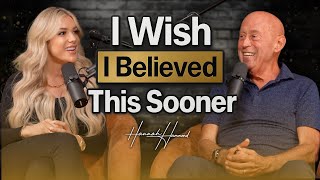
Garnet Morris built Canada's largest life insurance company after bankruptcy, then overhauled his life at 50: quit smoking, lost 35 pounds, ran mountain relays. He credits daily practices like visualization, values-driven decisions, and mentorship for decades of sustained growth.
Chapters
Everything in life when we want to make a change is just a decision.
Just show up and do it.
Don't give up, get the specialist, be humble and be coachable. Just keep going because business is that way. We're going to make mistakes, but just get up, try not to make them again. You don't worry about your growth. You worry about how big a problem it is that you can solve for people.
Welcome back to the Hannah Hammond Show. I am so excited to be sitting here today with Garnett Morris, who is actually one of my mentors. And he. When I first saw him speak in Genius Network when Joe Polish was interviewing him, I was just like that is it like Garnett has everything that I could ever dream of having and not just in amazing entrepreneur success in the companies that he's built, in the massive financial success that he's had on that journey, but in his life. Like the relationships that you have, the health that you have and the resilience that you've carried your entire life because you've gone through absolute insanity and very, you know, traumatic childhood, you're overweight, you're a chronic smoker, you built a business in real estate and then you lost it all and went bankrupt and then you rebuilt and then you went on to build the largest life insurance company in the entire country of Canada, which is absolutely insane, and then had an exit and now you're building more companies and investing in others. So I'm just really, really, really, really, truly so honored to know you and to have you on your show, on my show today. And you're about to release here in about a week, your new book called 17 runs about unlocking your highest potential in life, which is my whole mission for my life and, and others. So I'm just grateful to have you here and I'm super excited to dig into your journey and share some of your wisdom with the world.
Thank you. I mean, I don't think it's wisdom. I think it's just persistent trying.
Yeah, yeah. And we talk about that like failing is such a key attribute or requirement to success ultimately. Right. So, so let's go back. I mean, what I want to go back to the beginning because I know you have an amazing story and filled with a lot of pain and a lot of triumph. And so what do we need to understand about your earliest years to understand how you were able to build the largest life insurance company in Canada, lose tons of weight, end up running 100 mile relay race and, and just completely transform your life? You know, in the middle of your life when you already had these. These habits. So I'd love to hear that story.
Well, I think to me, the way I look at it, right from the time I was young, lots of people have trauma when they're young, but it turned out to be good for me were other people that defeats them. And it's because all along the way, I kept meeting people and I kept listening to what they would say. So when I was young and I was sick a lot, I was in the hospital. They had nurses and, you know, I'd read books and they were kind. And so I saw that part when the other part of my life wasn't so good. And, you know, all the way through, when I went through, you know, business bankruptcy, well, I found mentors after that that kind of helped me understand where I'd gone wrong. So rather than just looking at it and saying, woe is me, I just looked at it and said, well, I got to do better the next time. And I still do that. So, I mean, we, you know, I've got great partners, great. Lots of great businesses we're involved in, but we're always learning. Today I learned about the television show. The television shows that do sales all day long, like the company we're looking at investing in is going to do that. So I had to kind of jazz up my learning. So you're just learning, learning, and you make mistakes and you get up and don't make them again and keep on going.
What was your childhood like?
So the best thing I can say is that I don't remember most of was a little bit challenging. So I think that when I look at, like my mother maybe had me too young and wasn't quite ready, and then I was pretty sick as a baby, so I don't think she was ready for that either. And so it was sick a lot. She wasn't the kindest, most gentlest person. So it knocked around a little. Just, you know, like things that other people experience. But, you know, when you look back, it was not a reason to fail, it was a reason to succeed. And my siblings didn't have the same luck. So I had a brother and a sister commit suicide six weeks apart. I have another sister that's really struggles with life. And then I have one more sister that's my sister, like, so I'm her big brother, and I have a big brother role in her life. And she's quite a neat person.
Yeah. And what age were you when your. Your siblings took their lives?
In my late 30s. Yeah. Okay, so six weeks apart.
Oh, my God.
Yeah.
And what was that like for you.
To go through the first? When my brother committed suicide, I kind of expected it because he'd been living life, like, real hard, not paying his child support, abandoned his wife, abandoned his kids, just partying. And, you know, the world was closing in, and my sister was the opposite of that. So she was very straight, very. Worked for the government, just good person. And then she just couldn't handle my brother having taken his life. So that was a shocker. And that was like a gut punch, like, just to get that phone call and find out, because it was just not something. You just never expected that of her. So she was the next one in line to me.
I'm so sorry that you had to.
Go through those things, but people do, and that's. I think that what made me a little bit different is that all of those things are things that drive me a little bit as opposed to make me feel bad for myself.
Yeah. It's like, what can you do different? What can you do better? How can you grow from it?
Well. And how can you help other people? So that's part of the whole kind of my makeup is I've always been, you know, there to help other people because people help me along the ways. Like, I could name mentor after mentor after mentor. So, I mean, even in our own family, we're getting mentors for all, each family member, so that they all have the same opportunities that I had.
Yeah. And, you know, mentorship is something I believe that you share throughout your book and about your chosen family, the people in your life that influence your life, that are as important as blood, but they're not blood. Right. And I didn't experience really having true mentors until later in life because I was. I had my own issues, and I was very isolated and depressed and had struggled with eating disorders and anxiety and all these things. And I feel like I was able to get out of my deepest, darkest days once I found mentors that I could really grab onto to give me hope and to, like, let me know that there is an other side. Because when you're in that deepest, dark, darkest days, it's hard to understand that there is any way out or any light on the other side. And that's one of my biggest passions, too, to share with the world is to help them get out of those days. So I want to dive into your. Your book, 17 runs, and you discuss how you had a wake up call, midlife, wake up call in an airport, and you decided to overhaul your life and turn everything around and end up running a hundred mile training and running 100 mile relay race. So can you share, like, what that wake up call was for you and how that was a catalyst for you to change your life?
So I was walking the length of Pearson Airport with a big briefcase and a suitcase, and I was late, so I was trying to hustle and I was sweating. Gross. And I just, I just can't, just can't live with this. And so when I got back into Saskatchewan after that trip, I went to a doctor and I met the right doctor. By pure chance, it was a female doctor that was a temporary doctor in Saskatchewan. And she says, well, I can tell you what to do, but don't expect me to be your mother. And so I was like, like, it's kind of a wake up call. And then she sent me to a sports psychologist. And then from there I started off, went into strategic coach. I got found an amazing mentor from Quebec whose whole thing was around values. So the values, my, my values have been a core part of my life and getting to be a bigger and bigger part of my life. And so those are what drive the mentorships. That's what drives how we work as a family and what we're ascribing to as a family, like what we really want to have happen so that all the businesses we have, the whole family shares the same values when it comes to being part of them or taking part of them.
Yeah. And what was the journey like for you? Because obviously quitting smoking and food addiction or, you know, overeating, compulsive eating is, is not easy. And I know firsthand because I've had those issues personally my whole life. So, like, how did you get through that and, and transform to being an ultra serious athlete?
So the first thing that you do is you just have to realize that everything in life, when we want to make a change, is just a decision, simple as that. So you don't focus on before, you focus on now and tomorrow. So when I chose to quit smoking, I quit smoking wasn't easy. I had cravings. I used Nicorettes, I used all the little aids. And I wanted cigarettes a lot. But I had decided that I was going to quit and that it was making me really unhealthy. So I just quit. And with food and the other thing I did with cigarettes, I changed the order of my routines because when you smoke, you usually do them at the same time. So you get up in the morning, you have a cigarette. So I Got up in the morning, I would do something different. So. So I mean, and my kids helped with that because I went outside to have a cigarette first thing in the morning. They locked me out of the house. So my kid was like, they're helping too. And then with food, we hired a dietitian and she basically came to our house and took everything out of our cupboards that we shouldn't eat and then showed us what we should eat. So again, we took out one bad habit and put in one good habit. So rather than having, you know, something fried, we had something grilled. Rather than having prepared food, we ate things really clean. So then you just got those new habits and it just was just simple, one step, then another step, then another step.
And when did you decide to train for a hundred mile race?
So at 40 is when I made my transformation. So that's a long time ago to some people, but so I started changing my eating and then I started, I got a personal trainer after that and started exercising. And so I think for three or four years I just went to the gym. Not much happened. I think I got from £320 down to 285. And then I found a book called Fitter Fat and I read that and then I asked the trainer maybe I should learn to run. So she said, okay. So then I could run from, from one lamppost to another. And then I had to walk for three. So I just gradually did a little bit more and a little bit more and a little bit more. And so then, you know, the Canon Askus relay was kind of a big one because you're running in the mountains, so it's challenging. So I didn't, I mean, it was a relay. I didn't run 100 miles. I ran, I think 16 miles. So but it was done. I did a few other running and then just through running I met my wife. And so there we have the same. So because you're in that it's going. When you look at chosen family, because everything kind of fits together. You're with someone who does what you do, interested in health, has good habits, knows how to do things and so it just naturally kind of comes along.
Yeah. And so let's talk about the book 17 runs and how to unlock your highest potential in life. So can you kind of walk us through the. Maybe some of the key lessons that you and Olivia teach in that book and some of these key takeaways that you learned while you were training for this 100 mile relay race.
So I mean, it, it's to me, it's. It kind of all blends together. So we just did something on our book website. We did visualization. So I visualized a project I'm going to work on. And when I'm doing that, I recognize that everything is in that book feeds back into one thing. So values. So values are the biggest thing for me. So when I say I'm going to do something, I absolutely try to do it. When I talk to you, I always want to tell the truth and be honest and be open and operate with high integrity. And, you know, when you. When you look at family, how you want to work as a family. So those values are the core of my life. And then from there, when you go to do something, so when I say to you I will be your mentor, then that means you should just count on that. It shouldn't even be a thing that you would even think about. And if I tell you that, I'll tell you, if I'm too busy one day, then you know that it's just because I'm too busy and nothing else. You don't have to read anything into it. So then when you start to do all those things like that in your life, and your life becomes simple. The other thing, and I did the visualization for the website, is that the visualizations I have or how I look at doing things are always starting off what I can do for somebody else. And so wherever opportunity happens for me is a byproduct. It's not something that's really preordained.
Yeah. And I mean, let's dive a little bit deeper into the book. So what. I mean, I know that I haven't read the book yet and I'm excited to read it, but what are some other key lessons throughout the book?
So chosen family. So the way to think of that is that you are who you hang out with is a function of who you are and no other way to put it. So when I look at who my friends are and how we've evolved and who we hang out with, I mean, they're always people who are bringing you up because they're all people that are moving ahead. They're not caught up in a party lifestyle. They're all learning. And they can be 80, they can be 50, but they're still just learning, learning, learning, trying experience. So chosen family is. That's one aspect. But then internally, like, what we did is we evolved our family to say anybody that would take a bullet for us will be in our family. So we have three people in our Family that are not our natural children, but they. I mean, we'll give you an example. So one of them was my ea and is my EA again, because she really wanted to Lisa. And so I'd ask her at a Harley Davis, and I said, can you fire up the bike and drive it out of the parkade so they could pick it up and service it? So she couldn't get it to start, so she's about your size. So she pushed it up two flights of parkade. That's insane, because she said she would in a dress and heels all by herself. So I don't know how she did it, but she just did it because she said she would. And so when you think about having someone like that in your family, that you just depend on that, that you like, when they say they're there, they're there. So it just makes your life so simple and so easy.
Yeah. Yeah. That's amazing. And that's really hard to find those ride or die people that'll truly take a bullet for you and do whatever it takes.
But then we have to live our life the same way, which goes back to always being there when we say we're going to be there. And so we've had frank conversations, both Shirley and I, with her, what would happen if. And so she knows that. So, I mean, that was like the values, the chosen family, gratitude. So I think I'm just born grateful, and I'm born always willing to help. And so when I look at gratitude and generosity, they're reciprocal. So I've always looked at finding a way to be kind to other people or to find a way to say something to them that's meaningful that maybe they haven't heard today. And I tell one story in the book. I think it's in the book, but I used to go to Vancouver. I was going to Vancouver every other week to work, and so I was going to the same Starbucks every morning, and there was a girl working in there, and she learned my name. And I'd step in the door in this great big voice and, hi, Garnet, you know, how are you? Quad espresso. And so one day I said to, you know, if you ever occurred to you might have attention deficit disorder, because she's always saying she wished she could do this job or that job, but she's never been able to do it. So next time I went in, she yells out, garnet, you were right. Okay? And she said, I went to the doctor and I have attention. Death threat, just like you said. And I have Missed. And now I feel fat. And I got a great job. And so she was just so, you know, I put myself out a little tiny bit. But it made a big impact in her life because she was noticed and someone cared enough about her to actually take a chance to say something in a kind way. And there's little things like that throughout life.
Little hinges swing, big doors.
Yeah, basically. And so my life was amazingly simple. I try to be kind wherever I go. I try not to be miserable and, you know, care about people and just do what I say I'll do. And I'm extremely grateful for every gift that I've ever got because, you know, lots of people haven't had the same good fortune as me.
Were you always that way, like, as a young child, too, or did you evolve into that?
So in some ways, I was like that from the time I was young. I was always fairly compassionate so that, you know, I can think back to maybe wasn't very well organized. But, you know, I always wanted to take something for the teacher right back to grade one. And I remember if I forgot to take an apple for the teacher, I'd go home crying and have. I could not go to school until I did that. And I was always kind of the teacher's pet most of the time. And so from that perspective, yes. But when it comes to values, values are something that your family imparts, a certain set of values. They may be good values, they may be not so good values. And so you can continually improve and improve your values and make your values a stronger and stronger part of your core. So then when you do that, then, first of all, you make far less mistakes in life because you're driving straight down the middle of the road. But then people like you start to meet people just out of the blue. It just gets to be crazy. And I'm really, inadvertently. I'm a very, very shy person. And I'm meeting people at a clip that I cannot even imagine, like, from all over, and just by pure luck and pure chance, and they just fit in with some project that I'm trying to help someone with or because they'd like to help someone with a project. And, you know, you just have a meeting of the. Of the minds.
Yeah, yeah. And, you know, something I've experienced, too, in my life is we have to step into who is deserving of the kind of people that we want to attract. Right. We have to become that person in order for us to attract them. I know for me, personally, when I wasn't a healthy, strong Compassionate, loving, kind, abundant person. I attracted negativity and scarcity type people, toxic relationships or people that weren't, weren't really ideal for me. And so I think it really shines light on when we can be the best version of ourselves and show up as a connected individual and living this abundant life with gratitude and compassion and service and giving. Then we start to become a magnet and the universe will bring to us the exact kind of people that need us and that we need them and have a really healthy relationship and an amazing bond. And I don't think anything can be done alone. You know, everybody that says they're self made, which I've said, you know, on paper, your self made because you didn't come for money. But none of us are self made. We're all in this together. And it takes an army to really reach your highest potential and to like build something beautiful in life and in business.
So no, I 100% agree and it's not so easy. So I think you have to be prepared to work at it all the time.
Yeah.
Because some days you just wake up and you're just not in that frame of mind and you feel bad for yourself and you just have to look in the mirror and say, well, that part's over and I'm going to be back to being the me that I want to be. You never have a perfect life like because you get fixated on things, but you have to say, well, my core principles are this and I promised people I would do it this and so I'm just going to get it done.
Yeah, it's just like the victim versus the victor. Right? Is there, there's that story of the two brothers and one of them is amazingly successful and has an incredible life and the other one's an alcoholic and has a miserable life. And both of them are asked what led them to those outcomes and they both say my father, you know, because my father was an alcoholic or whatever. And so we get to choose our destiny. We get to choose what we want to create in our life and if we choose to be the victor and we take every single, like I didn't realize how victim and victim I was being. I thought I was like the victor. And everything happens for me and all these things. But until I was able to forgive my, my father and my mother, my brothers and like the people that had hurt me as a young, as a child, which we all have those people, we all carry on to these resentment and there's things that happen in our lives that hurt and are Hard to get through. But when I was able to truly forgive is when I realized that I was being a victim, you know, deep down, like, oh, you know, my. My dad was cheap and my parents didn't have a healthy marriage, or my brother was really mean to me and all these things. So I think that attitude that you have towards it is. Is everything. Because you. You've personally seen what happens if you have the opposite attitude.
Well, I had exactly the story you just told. So my brother and I had the same parents. I succeeded. He took his own life. My sister and I had the same parents. So it really is something that clicks inside you or some money, someone that you meet along the way. So I could actually go through and say, these are the people who influenced my life from this time to this time to this time to this time. So from my English teacher in high school to, you know, early mentors, to, you know, different programs I joined, I can. I can tell you the turning points. But the difference between me and a lot of people is when there was a turning point, I turned. And I didn't make an excuse. I just said, this looks better than what I'm doing. And I think we just have to be open and not so locked in to a doctrine that we get when we're young.
Yeah. Yeah. And it's so true. And I realize that, too, is everything that happens in our life is not only the only way it can be, it is the best way it could be. And every single lesson that every. Every past experience, every current event that's happening, I always try to think like I'm the common denominator here. And everything that's happening is exactly what I'm creating in my life, and it's exactly the best way it could possibly be. And if it feels challenging or it feels hard or it feels hopeless or it feels dark, what are the lessons that I can learn from this? And how can I come out stronger, better, and reach my higher purpose and my higher potential from these lessons? And that. That mindset shift is so challenging sometimes because things can be so difficult, but it's everything. And I think if you have that mindset, you can truly cut like, you're a perfect example. You can come out of it absolutely anything and create whatever you want.
Well, I think. And I completely agree in the way. I think the easiest way to do it is to have simple goals so that you. You have a point of focus. So if you have a goal that's pulling you forward, you have a point of focus. So then you can't feel bad for yourself for very long because your mind saying, well, come on, like we have this goal and we all agreed to it, so like, what's the big deal? Let's get up off the floor and get at it. And so I have series of goals in all kinds of areas around how I want things to work, so how much my net worth should be. We have a goal around our family, so we want to have our family working so they work as one so that, you know, when they start taking over the different businesses that they, they can work as a team. School of fish. And so, you know, what do we have to do to be able to make that happen? Well, that's a lot of work. But what is the first step, what is the second step and so forth.
Yeah. What is your strategy for goal setting? Because I'm. You started a life insurance company. You, you worked in commercial real estate for a little bit. You were in commercial finance. Then you started, you were in the hospitality business and owned hotels. And we'll get into that story on how you built a hotel business and portfolio and then lost it. And then you, you went on to build the largest life insurance company in Canada that was doing $10 billion a year. And then you put in a succession plan and you sold the company to your executive team and then you went and founded more companies. So when I think of for me, you work with me. So you know where I'm at. I'm starting HP Capital, just founded the company, just got it off the ground and I want to build a multibillion dollar organization. The gap from where I'm at now and where I want to go seems so great. And I'm just like, gosh, just to get, you know, 15 team members. Rowing the boat in the same direction seems like such a difficult feat. I can't imagine having 125 like you had, or I believe that's how many you had, right?
25. Yeah.
Yeah. So how do you if for entrepreneurs and real estate investors who are, who are listening here today, how they know where they want to go? It's a maybe simple goal on paper, like, okay, this is what I want to build, this is the revenue I want to generate, or this is the dollar I want to sell for, whatever, and then they're somewhere so far. How do you keep your eye on the long term goal, but put those incremental goals in place and be able to implement them and execute them them without feeling overwhelmed by the long term goal?
So I make movies in my head and I Make a movie of where I'm going to end up. And I picture everything, everything. What I look like, how I feel. I make that movie. So then that movie is always there. So then all I'm doing after that is starting to write the script from where I am. And then it just becomes easy because then you're just flowing along and all the pieces start to miraculously appear. So, I mean, you're doing that. I mean, you meet a joint venture partner, you meet this, you meet that, and it's because you can picture, you know, here I am sitting with $20 billion of assets under management, and this is how I look like, and this is what my office looks like, and. And this is how I feel about myself. And these are the people I'm attracting. And then you just make that movie.
And you shared. I love that the mind movies. And part of that is. Have you read the book Law of Attraction?
Yep.
Yeah, she talks a lot about that in the mind movies and sitting silently with yourself and creating these images. And when you go about your day, you make note of the things that you're drawn to. Like, oh, I really like the way that that couple has a relationship. I really like the way this. This leader runs his business. I really like the way this mother treats her child. And like, you pick these pieces and then you visualize those in your mind, like you said. And you shared with me, or at Genius Network, I think it was, you said you start every single day by meditating for an hour. For an hour, you meditate to get your brain to nothing. Can you share about that process?
And I have a process. So we get up an hour before we have to do anything and we each have coffee together, but we don't spend the time talking. We just sit there and get to spend the time with ourselves together. And that kind of starts your day because you clear out the stuff that maybe bothered you. In the night, you can get ready for your day. You're relaxed and you do it. So to me, it's a form of meditation. So I might really try to calm myself, but because I've got maybe zoom calls all day and I think through how. So it's going to sound a little weird, but I actually rehearse every call I'm going to make before I go on it. So I actually visualize how the call will go. So I have a very, very strong picture in my mind how this call is going to go.
Yeah.
And it's a feeling, kind of weird sound, but. But it. But then they usually go that Way. So I'm spending the first part of.
My day because you're very intentional about every single thing that you do well.
Because when you're busy and to be successful you have to be intent. You don't have a lot of time to just not be. So you've got to stay focused. And then, you know, we don't generally work on the weekends, so we take, you know, we'll go and sit and just. We have one place on the water. We just look at the ocean and watch the birds and you know, just visit or read a book or you know, something just to let the brain recharge.
Do you find difficulty in letting your brain calm down when you're running such massive organizations and go, go, go all the time?
Well, I mean my, my self perception is that I handle it pretty well. I'm sure this perception is probably not so well. So I mean I think that that's always going to be a challenge to be calming. But I also understand the nature of my brain. So the worst thing my brain does to me is sometimes it keeps me all night to solve a problem. So it'll keep me awake all night until I solve a problem.
Okay.
Doesn't happen often, but the odd time it does.
Yeah, yeah. Because I really struggle with that. To calm down, calm the mind. Like to sit and sit in silence is sometimes like the worst punishment for, for myself. But that's where a lot of the clarity and the answers come from.
Why? When I used to take meditation classes, the meditation told me I was the wiggliest person she'd ever seen. So like I can't do that. But I can sit and have a coffee and just no social media, no phone, just slowly work through and relax the things that I need to relax. And I find if I do that at the end of the day it helps too. So not being looking at the news before go to bed or not doing the emails one more time, blah, blah, blah, makes a big difference.
And when did you realize that you were going to be an entrepreneur? Was that something that was instilled in you early on that you were born with or.
Nobody in our family ever did that. But I've been an entrepreneur every year I've my adult life except for five.
And what did you go to college? How were you? Were you now?
I got all the way through grade 12. First. First and only one in my family.
Wow. And then you, what did you do after that?
Went to work for the bank of Commerce. Because at 1972 every there was jobs for everybody. It was insane because this is the kind of the early part of the baby boom. So everybody was growing, so went to work for the bank, and I did well. And then I bought a bar at 20.
Wow.
And then I sold it and made some money. And then I went into real estate and then back into banking. And then I decided to buy another bar, and that one went okay. And then I decided to buy some more, and interest rates went up and my management skills were completely not there. So I hired people based on their stories, not based on their skills. And so I thought I could solve every problem that a hotel losing money by adding another one. So I got really good at buying them and terrible at running them because I learned how when I was selling them, selling hotels, figured how to do second mortgages, how to do vendor take backs. So I was just using every little tool I had to buy these things, and just a disaster.
Yeah. And so how many. What was that course of time when you started buying hotels and how many did you acquire? And then what was the story of you losing them?
So I think I lost them almost as fast as I bought them. So I basically exchanged, traded property, I bought a big motel, traded my hotel to the vendor of the motel, and the motel was in trouble. So we made a deal with the bank to try to resolve it, and then he defaulted. So then I ended up with both of them. I had to take the other one back, and so I had two. So then I turned the motel back over to the bank and prearranged. That was.
More from Hannah



Never Waiver On Your Values—No Matter How Lonely, Uncomfortable, Or Difficult The Journey Gets

Watch the full video about Ray Dalio’s prediction on the upcoming debt crisis… 👀

Stop Asking “How?”—The One Question That Will Help You Scale Faster Than You Ever Thought Possible

4 Life Lessons That Took Me 30 Years To Learn—But You Can Learn Them All In Just 14 Minutes


This Is Unfortunately How You Can Tell Your Real Friends From Your Fake Friends


