She Told Her Husband to Become a Billionaire | Elena Cardone on $4.8B Empire
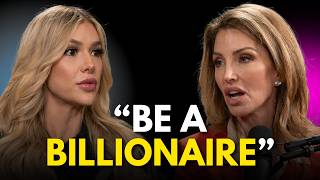
In this interview, host Hannah Hammond talks with Elena Cardone about how she leverages the 10X brand to create opportunities for women, the challenges of raising children in a high‑profile, ultra‑wealthy family, and the parenting philosophy she adopted from Scientology’s “exchange” principle. Elena explains how she built a real‑estate empire—over 500 properties with a goal of 1,000—by becoming an accredited investor in Cardone Capital, using cash‑flow‑first investing, refinancing, and tax‑advantaged depreciation. She shares her personal wealth journey from a modest New Orleans upbringing to a multi‑million‑dollar net‑worth, offering concrete advice for women who want to earn, store, and invest money. The conversation also touches on her use of Dianetics for mental‑health transformation, rapid‑fire personal insights (the importance of being your own best friend, a text to her younger self, gratitude, and a book recommendation), and her broader mission to expand the 10X community, empower families, and leave a lasting legacy.
Chapters
I was a girl who thought she had to be this independent, powerful woman, never depend on a man for anything. That severely held me back.
But then you get to a point where you're like, wow, this is a very lonely and empty life, and I feel very afraid, and I feel very alone, and I feel very lost, and what is it all for?
I realize now that that was a very painful existence. I was like adamant, I will never get married, I will never have kids.
Why does it have to be one or the other? Why can't we be healthy, be happy, have amazing relationships, make a huge impact, build and create big things.
I could only get so high on my own until you realize that in order to build an empire, you're going to have to include others. So that's why at the moment when I said, I'm going all in, I want to get rid of my reactive mind, that's when everything changed. People see me now and think it was easy and it was perfect. It wasn't. You just didn't have internet and social media back then to see what frickin' hole I climbed out of. And the fact that I used to think I couldn't have children 'cause I would ruin them, seriously, I have to stop myself from like almost crying because my children are such a testimony to what you can do with your life when you get rid of the bad stuff that's holding you back in life. My kids are freaking amazing. Freaking extraordinary.
Welcome back to the Hannah Hammond Show. I'm so excited today to be sitting here with the one and only Elena Cardone. Welcome to my show. Welcome to Arizona. And I can't wait to dive into your story and just how you truly do it all. And I love that you say about building an empire and how you want it all in family and relationships and wealth and health and everything. And I literally have something on my phone. A recording of me saying, I want it all, you know, in life. I want it all and I won't settle for anything less than that. And I want that for every single person in the world. And so, so excited. Thanks for coming on the show.
Wow. That was such a cool, uh, I'm, I'm just really glad and honored that you had me on the show cuz I'm excited about this conversation.
Thank you. Yeah, it's, it's so amazing to meet powerful women and we need more of them and you know, it takes, uh, strong, women like you and, and me and other leaders out there to really help empower women to rise to their potential. And of course men as well. But there's a lot of, uh, confusion I think in society on, you know, what is the identity role and how do we be strong and yet feminine and raise a family yet build an empire and all of these things. And you are the perfect example of exactly how you've done that all. And I personally have a lot to learn from you because I have my own roadblocks and fears about having a family or being in a relationship and some of these things. So, Um, I wanna dive in first. So before Car— I mean, you, you and Grant Cardone have built a multi-billion dollar private real estate empire, one of the biggest of the entire world, definitely in the United States. And, and you have an amazing family and you speak on stage and you support, you know, your husband who is Grant Cardone, like, you know, his personality speaks for himself, but you've just managed to do it all. You didn't really just pick one role versus the other, like the mother and the wife versus the, the leader and the empire builder. You're, you're everything. But before all of that, before you had the, the Cardone name and built this empire with Grant and had your children, who were you?
Oh my gosh, what a question. I was, um, a girl from New Orleans, Louisiana. Actually, I was born in Spain, but I only lived there for a year. So I really remember New Orleans and, you know, grew up kind of, you know, Nice little childhood. Had an incident occur that was a trauma in my life where unfortunately I witnessed my best friend burn in a fire. That was hard to take at such a young age. That then took me down a path of, um, you know, excessive drug and alcohol self-medication, kind of decades worth of wasting a whole lot of time. I had a lot of insecurities, um, to get out of that situation because the house was across the street from me. So every time I would go in and out of the house, there was just this constant a reminder of that incident. So at 17 years old, I went to Los Angeles by myself. I knew no one. I never really thought of myself as particularly smart. I only passed school with flying colors because I had an ability to memorize, so I could just regurgitate stuff I had no clue what it was even— what I was even talking about. So I go to Los Angeles at 17 to become an actress, model, That was really the only thing I thought I could do. And, you know, had the years of the ups and downs. But all of that was a girl who thought she had to be this independent, powerful woman, never depend on a man for anything. And, you know, that severely held me back. Ironically, I could only get so high on my own until you realize that in order to build an empire, you're gonna have to include others, whether it's your partner, right? Or others like your platonic business partners or friends or allies. You need a group in order to expand, and you can't do that just being an only one. And so before Grant, I was an only one. I could only think about me, my career. I, I was, I was like adamant, I will never get married, I will never have kids. I was really dysfunctional in my thinking to how I think now, because I thought that was survival. And I realize now that that was a very painful existence to just be only thinking about yourself. And you can only make it so much on yourself before you realize if you pick smart and you can actually consider the possibility, which I had to do, that there could be one person on the planet that could actually lift you up, not hold you down or hold you back, and be monogamous. And I just had to be open to that possibility because I thought all men would just ruin me and I couldn't make it if I was with a man. And that was Grant Cardone. And, you know, ironically, and the last person I would've wanted to become stronger as a woman and as a businesswoman and as a philanthropic, you know, leader, I, I would never have wanted a man to be the catalyst that made me look and confront and challenge myself to push myself to expand. But yet he was. And so the two of us together were able to figure out how to work together toward the greater good of heightened levels of success for all, for the family, for the community, for mankind. And that's what we're building. And I think that's one of the biggest successes of my family now is that we are working on a bigger picture, a bigger game than just us. 'Cause once you have the family, now you gotta expand into the group. You know, how do you survive well with your employees, your staff, your friends, your tennis friends, your girlfriends, your— how do y'all all survive? How do you, how does each group build upon each other? First there's you, then you can expand to the family, then the family could expand to the group. All your group activities, and then that should ultimately lead you to the expansion of mankind. Yeah. And so that's where we are now. We're trying to stretch into how do we make global impact and make a difference for the better. It's a big game. It's a challenging game. You see it in everything that we're doing. That's our target and our mission. And yet it's enabled us to be fortified again, as, as, as a self, as a, as a family, and as a group, because we work together to fight enemies and not each other, right?
So were you always extremely ambitious and driven growing up, or did that switch for you at some point in your life? I mean, you went on to become an actor— actress and a model, and that takes a lot of work and commitment. And, you know, just, I mean, just to be a great woman regardless of anything else is a lot of work and intentionality. So where did that stem for you? And also, oh yeah, we'll start there and then I have a follow-up.
Okay, well, where that extended for me is, originally, I went out to Los Angeles to escape something. And I thought, okay, maybe my attributes could land me an acting role, a modeling role, maybe I could do something. But I never was really fully committed. I had things in my life, these— which is why I want to talk about this book today, because this was the catalyst, this book, Dianetics by L. Ron Hubbard, which I love. The bottom here, it says, the modern science of mental health. So this is a book, when I read it and discovered it, I was able to figure out how to live up to my full potential and be myself. I didn't— I wanted to be ambitious. I wanted to be successful. But I had things that were subconscious or unaware to me that I was doing that I couldn't control that led me to not be able to experience my potential. And so, the thing that changed for me was when I read this book. It is a modern science because nothing like this has ever been discovered before. And you can't really reach your full potential unless you understand yourself. Right. And I couldn't understand myself no matter how many times I asked the question. Horrible question, by the way. I do not suggest anyone asking themselves this question. But when I would always ask myself, what's wrong with me? Why can't I? What's— terrible question. Then I found this book, Dianetics, and it talks about the analytical mind and the reactive mind. And the reactive mind is the part of the mind where all of the trauma, the loss, the pains, the injuries, the accidents, the operations, all of that is stored in an unconscious level. Yet, it is the source of all of the unwanted irrational behaviors, emotions, and thoughts. And my God, I had so many thoughts in my head that were so destructive that I could never move forward without sliding 10 steps back.
Mm-hmm.
So, that was the reactive mind that I got to understand and learn and do the techniques in this book that actually led to, instead of trying to manage those behaviors and those thoughts, because when those— that reactive mind gets reactivated, you can have two things occur. When this happens, you can have a repression or a compulsion happen because this reactive mind creates repressions. What's a repression? A repression is you can't do something. Don't do it. Must "not," "can't have," "can't have a family," "can't have business," "can't have kids," "can't have." So, no matter how much you might go, "Wait, maybe I want." "No, can't have." So, you will do. And I did. You know, I did a lot to destroy and damage that area until I got rid of this reactive mind. But that's what comes out of that. The compulsion is the complete opposite of the repression. When the reactive mind gets reactivated, it pushes the button of the compulsion, which dictates to you, "You must do." You must do, even though you know your better judgment says, "Don't do that." And I had both of them always going off because in the reactive mind, there's a lot of losses and traumas that you may have buried because a lot of it is unconscious. Right. So, the compulsions that say, "Don't say that right now. You're in the middle of an argument. Don't say it. Don't do it." You know it, but, "Brrr," it leaks out your mouth, and then you're down the hole of, you know, you just destroyed that. Or, "Don't drink the third or the fourth or the fifth whiskey," but guess what? You're chugging it. Or, "Don't do—" I never had a problem with these, but I'm listing them. I did with the alcohol and the drugs. But the compulsions could be gambling or excessive— TV binging when you know you should be putting that time into yourself, or pornography, or drugs, or name it. It's a compulsion. You know better not to, but you can't stop it. And that's what's controlling people from this time of an incident that occurred. And then when that gets reactivated in present time, you can't then operate analytically, analytical mind, which is you being of sound mind, being able to solve life's problems clearly. Yeah. So that's why at the moment when I said, I'm going all in, I want to get rid of my reactive mind, that's when everything changed. And I could finally, you know, it was, it was some simple techniques that you do in this book that can totally eradicate that. And what it ends up leaving you with is your analytical mind, which is calm, which can have the ability to think clearly and not lead to self-destructive thoughts, irrationalities, behaviors, so that you can actually achieve the success that you want personally, professionally, and financially. And for me, it is the sole contributor of why I'm able to, as you said, have it all and be able to operate at a very high standard and a very high level in all areas of life.
I, I love it so much. And I know this is all an inside game, you know, and I had that similar— we have very similar stories, different of course, but, uh, Same thing, felt, had the, the trauma. I think we all have trauma. People think trauma is just being beaten or something like that, but it's not. It's just feeling unworthy, feeling not good enough, um, not being seen, maybe feeling invisible. And we carry that with us into our adulthood and we drive that energy. We use that fire and we try to fill that deficit through something else. And some of us channel it through something that society accepts, like work or business or giving back. But some people, most people don't. Most people end up having toxic relationships or drug addiction or all the ailments and issues that you just mentioned. But we have to learn how to master our mind because it's all an inner game. It's not about the SEO or the sales funnel or the dating app or this or that. It's all about us inside and learning how to master that. And I lived in that state of misery, in that state of pain, and realized that I was continuing to recreate the story that I had bought into in my head and had to wake up and decide like, this is not the life that I'm going to live and this is not the way that I'm going to feel. I refuse to live like I'm either gonna jump off a bridge or I'm gonna figure this, this out because I do want it all. And I do want to, uh, shape and form and carve out the woman that I want to be. Mm-hmm. And take ownership over that because I came from no money. I had severe daddy issues. Every man in my life abused me and mistreated me. And I was like, never wanted a relationship, never wanted children. Like the severe trauma from marriage and kids and all of that and super self-reliant, build the moat, self-protect. I don't need anybody, I don't need anything. Like, I'm gonna do this on my own. Yeah, exactly like you. But then you get to a point where you're like, wow, this is a very lonely and empty life, and I feel very afraid, and I feel very alone, and I feel very lost. And what is it all for if we can't have love and connection and abundance and growth and like actually enjoy the day-to-day and enjoy the journey? And why do we have to just suffer forever. Like, why can't we be healthy, be happy, have amazing relationships, make a huge impact, build and create big things? Why does it have to be one or the other? And, uh, and, and for me it was a lot of energy work and healing work and, and learning about values and living in integrity with my values. And I love to hear that you had a, a journey of that too. Uh, and that this book was a catalyst for you. And what are some of the techniques in this book that you were able to implement to help you start to transform. And even before that, when was that catalyst where you realized, this isn't what I want, like, this isn't what— how I want to show up, this isn't how I want to live, and I want to actually make— take an effort to change? Because most people don't. Most people just live the same day over and over, numb out at the end of the day, and then do it again the next day. And they don't think it's possible for them to be— you know, there's always an excuse like, well, I'm not Elena, I can't be that, I'm not this, right? But But we can. And so, what were some of those techniques that you still implement today to help you continue to grow and have it all?
Well, the techniques are in this book. I don't wanna verbally say 'em. It's too much to get into, but— It's a pretty thick book. It's a pretty thick book, you know? It's an amazing book though. When you can confront this book, make sure if you read this book, look up the words that you don't understand. That was one of the things that I learned. Through L. Ron Hubbard is the study technology. And that, like, no one ever taught me this. We're kind of going down a sidebar, and then I'll get back to your question, because this is so important for parents with children or any human being. Like, um, I always thought, like I said, that I was kind of not smart and I couldn't comprehend. I was always fidgety, daydreaming. Well, that's all learning phenomena of of going past a word that you don't understand. So there's no dictionaries, kid dictionaries in the classrooms where if a kid doesn't understand a word, oh, they're not taught to go look up the word so that then the rest of the material makes sense. 'Cause if you go past a word you don't understand, the rest of the content goes blank. You go into non-comprehension. How could you? You went past and misunderstood word. Of course it's gonna go blank. No one told me that. So, um, so I really started to apply this technology to my life and self-enhance. You started asking me what I started to do. I really started to delve into self-enhancement and communication course and, and, um, learning how to learn and, and how to overcome ups and downs in life and personal values and integrity. And each little course that I did, I was able to apply to my life. And every little thing would just make me get a little bit better and a little bit better and a little bit better, and I just kept doing more and more and more of this type of, of, um, of work and the techniques so that I could really clear out the whole space so that I can really operate on that level.
Yeah, I think putting yourself first and doing that personal development is everything, and just constantly working on yourself. And that was it for me too, just starting to feel better about myself. Exercise, get sunlight, listen to good music, be around positive people, cut negative "people out of my life." And as you keep the promises you make to yourself, that's what starts to build your confidence.
Totally. I really strongly adopted discipline. I hated that word, like, vehemently. But the word "discipline" is what I use in my life, 'cause I'm not one of these people that wake up inspired, and just like, "I'm gonna go be a go-getter, no matter what people," see me now as. Really? I would have never— like, it doesn't just happen for me, especially going to the gym and working out. Like, I hate all that stuff, but I apply discipline because it's— that's how I really was able to give myself confidence for the first time. Because I really, up until 2000, I was consistently, regularly drugging and alcohol usage. Not on a permanent basis, not as an addict, but recreationally. And so, in 2000, I stopped all of that. So, from all the years of all of that type of behavior, you really do get self— you know, you lose self-confidence.
Right, 'cause you're like, "I'm not gonna do that next weekend. I'm never gonna drink again." And then you do.
And then, you know, all of those voices go off in your head, and, "I'm a loser, and I'm a failure." And then, you know, the consistency of discipline and just— I would give myself very small things to do, like, Drink a gallon of water a day, take your vitamins, make your bed. Simple little tasks where I could do them consistently over time just to start giving myself wins. And eventually you could increase it to bigger things. But eventually I feel like the universe pass— started passing me over. Whereas things started— were happening to me. You asked me what I was like back then. Things would happen to me all the time. The boot on the car, the ticket. Right when I started saving my money for this, this would happen. And then I'd have to spend the money over here. Like, I was a victim to so many circumstances. And then, eventually, what happened was, as I started being consistent, I felt like the universe was like, "Forget her. She always does what she says she's gonna do. I'm not messing with her anymore." And that's really how I started to develop the self-confidence in self, is like, "Wow, I can depend on myself to do what I say I'm gonna do." So, then, I started to say, "Okay, I'm gonna be self-confident." successful. I'm going to be a millionaire. That's what it started off as. I'm going to do this. And then little by little, it was like, yeah, universe didn't even laugh at me anymore when I would say these outrageous things like, I'm going to be a millionaire. It was like, oh shoot, if she said it, she's going to do it. And everyone just kind of got in line.
Yeah, that, that's amazing. And, and, uh, it's really cool to see the, the parallels in our stories. And I want to, uh, go back to— because you had mentioned that you never wanted to have kids or get married when you were younger. Where do you think— younger?
That lasted all the way up until I got married at 30. 30.
Up until 30. Okay. So I just turned 30, April 10th. When's your birthday?
June 27th. So you're Gemini? I'm Cancer.
Oh, Cancer. Okay. Um, so yeah, so I just turned 30 and, uh, happy birthday. Thank you. I appreciate it. Yeah. I, um, I, up until this year, pretty much I'd never wanted to be married or have kids or anything like that. But I understand a lot of that comes from my own trauma, and I've done a lot of work on myself, and I don't want to just say I don't ever want that, right? I want to have an open heart to experience all the things in life. And I— now I can see the beauty in amazing households. There's households that have so much pain and trauma that I would never want to be a part of. But we get to create the relationship and the environment that we choose, but we're only going to attract the level of person that we are at, you know, and, and, and usually a mirror of ourselves. And so I'm assuming, did you, did you have some heartbreaks or challenging relationships in your life that kept reiterating the story of, I'm not gonna find it because this is kind of where I am, right? It's like every time I meet someone that I kind of feel like, oh, this could be a great person, then they, they let me down in some way or form. And yeah, what was that experience like for you and how'd you get to, to someone like Grant and have such a great partnership now?
Well, I, of course, I had bad relationships. I didn't want relationships. I wanted to be an independent, powerful woman and never depend on a man for anything. So, you know, the relationships, the first one is my teenage kind of years. He was kind of physically abusive. So, I decided, "I'm not playing that game anymore. I don't want that." And of course, he was a cheater. And then, so then, I go to the next guy, and then, I fell in love, love, love with this guy. But he was a crystal meth addict, so that was a problem. And he ended up going to jail for 3 years, again proving me right that, you know, all men pull me down because I was trying to do this career and then something would happen and then I was late to my job because I had to go deal with this. And I've been crying all night because he'd stay out all night. Anyway, it was a lot of drama, right? Mm-hmm. And then I went to the next guy and yada, yada, yada. The story's the same, right? And so I realized as I'm doing all this self-enhancement work and all this, these courses that I'm taking and, and auditing and stuff that I'm doing in Scientology, which is different than Dianetics. This is not Scientology, but I started to do practice Scientology. Now I'm in this thing called an auditing session, and an auditor means one who listens. So I'm in this session and they're asking me certain questions. It's making me look into my mind for— oh, and I had this discovery, this cognition, this realization one day. I went, oh my God, I I thought all of this stuff was just happening to me because that is— everyone knows that is the way guys are because, look, I have the proof and the testimony to prove it. I didn't realize I was actually the casting director, casting and hiring these guys to play in the role of my movie to make myself right, that this is how they are. And so, it was able, in that moment, I went, "Oh, my God." I can actually be cause and change the way that I view this situation. Like, wait a minute, why am I not saying there could be men out there that want to partner with a woman to help them reach a heightened level of success, to have a beautiful family, to create amazing children, to like go have an impact in the world? By the way, when I had this realization in this auditing session, This was the most unreal, craziest, like, thing I could ever think of. But I thought if that was even remotely possible, then I could agree to having a husband and children because that would be amazing. And that was on my first step where I went, maybe, just maybe, life doesn't just have to happen to me. Maybe I can actually be the creator and the life force of my life and create my relationship. Create it. Like, you have to help create each other. It's a created thing. So I was mocking up destruction out of creation because it was rooted out of, you guessed it, the reactive mind. So of course I was creating destruction and irrationalities and drama. Because that's what makes up this. Mm-hmm. And so, when I had that epiphany, I went, no longer do I have to continue this cycle, this unconscious, subconscious thing that I'm doing that I wasn't even aware I was doing. Now, I can actually change the trajectory of my life and go find and create this relationship with this man who we now call Grant Cardone, and we can actually build and grow and reach heightened levels of success. And I mean, I'm sorry, what you see is what you get. And my children, maybe, hey, maybe they could turn bad at some point and I'll have a different story to say at that point. But right now, I have a 14-year-old and an about— 14 and 16, about to turn 17. I have two— I mean, these are teenagers. These are supposed to be the worst and the hardest years for a mother and perhaps for the teen. And I don't know if you follow my children. They do. And I am not just being a biased mom here, maybe a little, I admit. But if you really step outside and look at my children, those— I have so much pride. Those are my products. Do you realize I came from a life— people see me now and think it was easy and it was perfect. It wasn't. You just didn't have internet and social media back then to see what frickin' hole I climbed out of. And the fact that I used to think I couldn't have children 'cause I would ruin them, seriously, I have to stop myself from like almost crying because my children are such a testimony to what you can do with your life when you get rid of the bad stuff that's holding you back in life. My kids are frickin' extraordinary. And I have an incredible relationship with them. And they're just phenomenal human beings. And to think that I have been blessed. Grant says this the best, like, people say, "God has blessed you." And Grant says, "You're right. God has blessed me. But I have proven him right in that blessing. And he's blessed you too. Now go prove it to him." So that's how I kind of feel about everything with what I've created in my life. It was This was a creation. This did not just happen to me. My prior life just happened to me, not this one.
Yeah. Oh my gosh, it gives me goosebumps just listening to you. And that's what people see. They see on the outside, and they— we were talking about that earlier. They make excuses of why they can't have that, right? But you— usually the people with the greatest success and the greatest lives dug themselves out of the deepest holes. And you have to be so intentional and you can create whatever you want. And it's beautiful that that's why sometimes I'm like, well, maybe I am meant to have children because everything that I face the greatest resistance with is usually the greatest thing in my life once I push through that resistance and that fear and, um, and that repression.
Yes. That's that, that those repressions. Yeah. When, when, when, when you can unstick those, however you do it and whatever works for you. That's the key. If you can eliminate the repressions that hold you back, that say, "You can't have, must not have, this is destructive, you're gonna ruin it, you're a failure, you don't wanna repeat the cycle," all those voices that go off in your head, when you can eliminate that, and the compulsions to, I don't know, be promiscuous, not saying you are, but being promiscuous, or doing all the other compulsive things to get you to not have this, when you can figure out how to make those things permanently disappear, you have an open canvas to life, right?
And when you had this, uh, epiphany or this awakening of, oh, I really can create my life, I can attract the things I want, or maybe there's a possibility of it, you know, you're not proven, but it's the possibility—
that's all I went for. I was like, baby steps, but go ahead.
And then your heart is open, right? That's a, that's an energetic opening of the heart. And when your heart is closed, you attract all the things you're resisting, right? And so, so your heart opens up. What was your path from that point when you met Grant? Like, did you know— how did you meet Grant? Did you— was it like a right away thing that you wanted to be with him? Or like, what did that look like? And where were you guys— where was he at financially and in his business when you two connected to? And what'd that growth look like?
Or— well, I met Grant Cardone in LA. And I was an actress at the time in Los Angeles, and all I had hung out with prior to discovering this whole world were actors, musicians, um, and that type of person. So Grant came across to me as this kind of arrogant business guy, not my type at all. He was shorter than me. I had had this experience you know, where some guys that are shorter than me don't want me to wear heels or try to make me shorter. And I don't want to feel like, oh, like, I want to feel like a dainty little woman around a man. So I always thought I didn't want a short man. He did not even register on the radar. But for some reason, I don't know what the guy saw in me, because I was not fully evolved. This was the very beginning of this journey that I'm telling you about. But he— the day he saw me, he was like, that's going to be my wife. Wow. He proceeded to call me. They were answering machines back then. He I don't know if you don't remember those, but— No. It's amazing. Oh my gosh. But he used to call and leave a message every month, twice a month for 13 months with zero returned phone call. Wow. He was persistent. He always says it's not stalking if it worked. Right. But eventually, after I started doing a year of self-enhancement, I realized that he was not like any man I had ever met. He was calm. He was— all the little tricks that I used to do to make guys get annoyed or whatever and blow, like, just finally leave and get rid of the picture, you know, the— yeah, the things that I would do to destroy that because I didn't— I couldn't have that. Don't have that. All of those tricks never worked on him. And I was like, oh my God, he's playing this game of love chess better than me. Like, he almost seemed amused by it. But the more scared I was— so scared. I had so many walls, like, don't get in a relationship like this, will kill you, it'll be the death of you. And the more that I was like— he was just— became like a rock for me. And finally, all of my— I could just land, and he was stable, and I fell in love with him. So he's really been solid for me in the beginning when I had to kind of just sort out so many things. I, I ended up marrying him at 30 and still operated for the first 4 years as this independent woman. I was battling him, vying for power roles and positions. And then I kind of evolved more spiritually on my spiritual journey, and I really had this another realization where I looked at, well, where does that even come from? I can't support a man because I'm afraid all the women around the world, especially the ones in Los Angeles, are going to accuse me of being some subservient woman, like I couldn't have that. Like, I can't— I cannot go support a man. But then I realized, wait, I'm married to a man but I can't support him? Like, that doesn't make sense to me. So again, I went, this is not me. My viewpoint is, is I can go all in on us. Yes. So I traded in the acting career in order to trade up, but I had this whole vision of what our world would look like. It was this huge— it's everything that it is now, ironically. And so I said to him, I was like, okay, I'm ready to do this together. This is the goal. This is the mission. I'm gonna help you do this. And this is all the areas that I'm gonna go get to be the boss of. Blah blah blah blah blah blah blah blah blah blah— you don't bypass me in these roles. I get to run it. You're going to run all of these roles now. It is more traditional in the sense man-woman because I was an artist, an actress. I didn't know anything about business, money, finance. You asked where Grant was when I first met him. He was like in the $5 million, maybe 10 million at the most dollar range, which to me This girl from New Orleans that never even went to college, that to me was like wealthy. I mean, I thought that's all you needed to live on for life, you know? Anyway, that's where he was. And so I said, look, I'm gonna go do this. You get to be the boss of these roles. We're gonna work together. That's the goal. And really what that did is allowed us to stop fighting each other, 'cause now we had to have each other's back and get out of, um, what do you want to call the word, out of not being known. No one knew who we were. It was so painful to not have any recognition or anyone know you. So we really figured out how to become known. Grant says, "Best known beats best," even though we happen to be the best and the best. Best known and we're the best. But we really acted as a team, and I handled my areas, he handled his areas. So, we weren't fighting 'cause we weren't bullying for the position. Like, he had the position. "You're gonna run the business. You're in charge of the finances, the this, the that. I'm in charge of all of this, the PR, the behind the scenes, the, you know, all the things that I did, the family, the decisions, all the family, the kids, the this, the that. And so, you don't come into my lane, I don't come into your lane, and we can go fight the enemy." So, as much as I hate haters, Haters, I actually have to thank them because they're a sign that you're out of, not oblivion, you're out of, what's the word I'm thinking of? Like, you've made yourself known enough. Yeah, right. You're somebody. You're making it. It's a sign of success. If you have a hater, it means, "Wow, I'm worth, like, hating? Like, they actually know me?" That is so much better. As much as I hate haters, that is— but Grant loves 'em. He uses 'em as fuel, man. They are like, "Woo!" Make those posts go viral. Make those posts go viral. As much as I hate them, they're like, I have to love them because I wouldn't trade them for going out of nonexistence. That's the word, like just complete non, you don't exist to anybody. I mean, what a miserable place to be if you wanna go and make an impact in the world.
Yeah. So how did you navigate, and I'm asking a lot of this for my own personal advice 'cause I guess I need it, but how did you navigate when you, especially in today's day and age, you know, there's so much toxicity around divorce and then you know, you know, girls marrying just for money. And, uh, men have a negative connotation because beautiful women just want money in their eyes. And then, uh, beautiful women just see like all these different challenges. And, and then you like, you hear the stories of you get divorced and then half the money is split, or the woman got screwed over and everything was protected and they didn't know it. Or all of these different dynamics. And if you're a $5, $10 million net worth I think that's a pretty decent net worth for, for pretty much anybody in the world. Yes. And so how did you guys navigate that? Because you were going into this full, I guess that's my fear is like if you're going into this full supportive role of somebody and you're a strong, like you're not a passive, you know, quiet woman, you're a strong personality. Like you're a bold, strong alpha type woman. Totally. Woman. But you decided to support this vision together knowing that that Grant was going to be kind of the, the face of that on the front end. How did you guys navigate— like, first off, how did you develop the trust with him to know that he wasn't going to ruin you and, and end up you back at square one like you had been from previous relationships? And then navigate those conversations as you get married, as you, you know, progress your relationship and your business, to like— did you just go all in together and we're splitting everything, or did you feel like he was kind of very protective on the things? Like, I I guess I don't understand how to navigate that stuff when you, you know, 'cause you know what I mean.
I do know. And it is really tricky. Now, I'm somebody who's evolved into an extremely high level of responsibility, high level of responsibility. So, I'm willing to take responsibility for the fact that if something really tragic were to happen in the relationship, like an infidelity or whatever, Not saying that I deserved it or could be, you know, but I'm not a victim. What did I do? 'Cause I take a high level of responsibility that contributed to that motion. You know, I'm not a victim. So, no one's gonna just cheat on me with— because I didn't have some involvement. What did I do? Was I not there? Was I acting like an independent, powerful woman who didn't need a man? And so, then he needed to go be important or feel loved or liked or asked, "How do you feel?" from another woman. Like, what was it? Like, anyone who can take any responsibility can find one little iota of, "I can take some responsibility for that." So, that was one reason I always knew I'm not a victim. If I were to create that sort of situation, and if I'm gonna destroy my marriage in that sort of way, even though, let's say, he's at fault, totally, I know who I am. I know what my abilities are. I'm always going to land on my feet, and I'm always going to be able to recreate because I have me. I have me. I don't need a whole lot more than me because I am the creation and the cause of everything. I am responsible for everything that happens to me, about me, in with my surroundings, with my family, myself, my group, my mankind. I'm taking responsibility. So that's the mindset I've had. Now, it doesn't hurt that Grant also is an advocate and read Dianetics, and he is also cleared of his reactive mind. And there's a lot of sanity and rationality in our household. And he is also a practicing Scientologist. So we have a lot of reality points with each other. So what— and he, I— he was also raised Catholic, so there's another area of reality. When you share enough reality points with someone, it helps you to be in better communication. And when you're in better communication and have reality, you have more affinity for that person. So, we were able to trust each other based on the values that we shared, the reality points that we shared, and ultimately, the fact that he shares a similar responsibility level that I do, which is that we're creating this. So, we're not gonna go create— and I'm not saying it's always been easy. We've been married for 22 years, you know? There's not been moments where it's just like, "We're madly in love and since the moment we met and we've never had a fight." I've never had a challenge. Like, I don't live in a frickin' fairy tale. Yeah. You know what I'm saying? Mm-hmm. But the sanity and the two rational minds can come together and not reactivate each other and be able to analytically solve the problem so that we can stay together and battle all the enemies that would love nothing more than to see Grant Cardone and Elena Cardone in a divorce and lose all their money. Like, do you know how much harder I fight in my marriage 'cause I have enemies? To my enemies. Like, I will never surrender so they can have a big win. I am gonna fight for my marriage. I'm gonna fight for my kids. I'm gonna fight to be an example for all the other people out there that are trying so hard to be a good human being, that wanna believe in families and wanna be good role models for their families. I'm not going down. I can't go down. Like, I can't do that to my —group that depend on me to succeed and to win and to hold myself accountable. So I fight every single day for my potential. Yeah, a lot of people—
like, I know my parents, they stayed together because of religion. We were Christian, raised Christian, and, uh, they were not happy though. They were very miserable in their marriage. And looking back, I'm like, I really wish you guys would have not been together. It probably would have been easier for everybody. And because But I do believe that the purpose of life is to be happy and spread happiness and help elevate humanity and make the world a better place. I don't believe that we are here to suffer and just, you know, suffer to have some impact. I think we should enjoy that journey and process. Not to say that we don't have massive storms and challenges, of course, that's all part of it, but why not really enjoy the journey? And so that's something like, I guess, being in a type of relationship or marriage that maybe Uh, your values are holding you together. Well, that's actually what one of my mentors taught me. The success or failure of any relationship comes down to an alignment or a misalignment of your values. Mm-hmm. And so it sounds like you and Grant have very aligned values in many ways, and that's why you've been able to continue to grow and flourish and get through the hard times because you are aligned on your values. But if you weren't aligned on your values, that's where the relationship would start to disintegrate because you want different things and you're on different paths and you're rowing the boat in different directions. And so, You can't go anywhere. And how did you really uncover, like, it, how long did it take for you both to earn that trust in each other? Did you get married right away and, and start building? Or how did he prove that to you and you prove that to him that, you know, cuz a lot of people put on, uh, when you meet them, they show their representative and you don't really get to know them for quite a while. Um, and who you thought they were in the beginning might shift and change quite significantly. And then it's kind of too late cuz you're already living with them or or whatever these things be. So, what was that timeline for you where you two really understood that you really had built that trust within each other? And how did that process kind of look?
Well, I trusted him when we got married, which was, again, a year and a half after we started dating. But there was that prior 13 months too, where he was pursuing with nothing. Mm-hmm. But then again, like, it took me the first 4 years of our marriage because I was still, getting rid of all of the, the reactive mind and all that stuff I was telling you about earlier. So, um, so it took the first 4 years, and then when Lehman collapsed in 2004, I realized Grant got really scared. I had never seen him like that before. I was pregnant with our first child. I thought we were going to lose everything financially. And that's really when I said, okay, what do we have to do to get on the same page? I don't care about what "this— what women are gonna think about me all across the world." Like, "I have to save my family, and I have to align with my husband now." Like, "I don't get to have the luxury of just being like an only one thinking about myself when I'm married and I have a kid on the way. Like, I have to grow and expand now." And so, it really looked like— I had a piece of paper. I drew two lines down the piece of paper, so there were three columns. You understand? Like, one column. And I wrote what is my goals, what is his goals, and what are our goals. And I had to sit down because it was very interesting. Like, do you actually know all of your partner's goals, and does he know yours? I never really thought about that before. I'd only ever thought about my survival. I moved to LA at 17. I took care of myself. I never thought about somebody else's But I thought about it then. I was like, "Okay, we have your goals. What are our goals? Like, what are we going to achieve together?" And I wrote down— and it was a little laughable at the time, 'cause I wrote, "I wanna be a power couple." That's like one of the things. I wanna be an example for others to look to, to be able to say, "If they can do it, we can do it." Which does hold you at another level of accountability I was like, I don't want to be the fighting couple. Who else do we want to be? I want to be big philanthropic contributors to philanthropic groups, to my church, to— I'm doing Big Dog Ranch Rescue to the animals. That's another story. I love my dogs. I love dogs so much. But that's a personal goal. That's not like a shared our goal. Like Grant, of course, but he's not going to go stop what he's doing to go save the dogs where I will stop what I'm doing to go rescue Big Pharma testing on beagle dogs, I'm making that happen. But anyway, so anyway, that really helped us. The long answer to all of that is doing that little demonstration— my goals, your goals, our goals— it got me to thinking about us and how do we achieve those goals together. And then I realized my goals should all be making me stronger and tough enough to be able to facilitate communicate our goals. So, then, I was looking at, "Okay, well, my goals, like, how do I be strong enough to support Grant?" First of all, what does support mean? You know, you asked me, "How did you do that? He's the face." I was the actress. I was the frickin' face. How do you then go to letting him be the star? That was like an adjustment. And, you know, you're gonna support a man. I had to look up what the word "support" was. This is what I learned in my— Yeah. Look, never go past a word you don't understand. Why am I protesting this word? What does it mean? What am I exactly am I protesting? Well, the definition of support means to show active interest in the success of. I'm not gonna apologize for showing that for my husband. Other definition is to bear the weight of. And the example was like a structural beam. Mm-hmm. So if I'm the support and I'm bearing the weight of Grant Cardone and all the world that comes along with that, wouldn't I have to be stronger than the thing I was bearing the weight of? So, I have to apologize for being stronger than a Grant Cardone? Hell no. I never apologized for the support role ever again. I was like, I'm owning it. I am powerful. I am the backbone to this family to— I take credit. I give him all the credit in the world for reaching the Grant Cardone 100%. He would have done that with or without me because that man is an able-bodied man. But everything above that, the heightened levels of success, that was mine. My heightened levels of success, that's his. We couldn't have done it without each other, because you can only do your 100% before you cap off. And that's why in building an empire, you need the other people to build you up even further. That's the whole point of a relationship, to reach heightened levels of success together. Together. If you aren't doing that for me and I'm not doing that for you, it ain't happening. I don't need to just like have great sex. Yeah, like I didn't even know what marriage was before I discovered this man, Grant Cardone, and found myself married to him for 4 years before I had these discoveries. Yeah, I'm like, love, what is love? Well, for us it's helping each other achieve our goals and our dreams. That piece of paper, you help me do and reach my levels of heightened levels of success, I will never turn my back on you. You will have me for life. I will love you more than any other creation because you helped me achieve my goals. Like, I can't think of anything better of how to show somebody that you love them. So that's what we do for one another.
Yeah, it's, it's so true. And I think about that too, of like all the people that I've loved the most, not even romantically but just in general, it's people believe in me more than I do and help elevate me to my potential and realize my potential. And so many of us are just so focused on ourselves and protecting ourselves that when you can really open up and share that and support someone— I love that you said the support role is stronger than what, you know, what you're supporting. That support beam is stronger than what you're supporting, but you have that for each other and you help elevate each other. That's, that's real love. That's love.
And when I realized that, I realized you don't have to prove love, even though it's really nice, and I do love this. So, this isn't like an excuse, so if Grant ever hears this, he can be like, "Oh, I don't have to do that anymore." But for me, I like— I see a lot of people, women in particular, wanting their spouses or boyfriends to prove how much they love them by, "Oh, you know, let's watch a movie together, and let's not—" you know, interrupt the— the— don't be on your phone or whatever, this or that. I, I never— I never did that because I knew we were— I never wanted it proved that way. I was like, no way, I want you to help me achieve my dreams. Yeah. But I was always like, if I want you and expect you— because I did, I made this demand on him. I don't know if you know this, but I told him he needed to become a billionaire.
I heard. That was my next question.
That didn't go over very well at first. What happened? Oh, he got furious. When was this? Oh my God, this was at least— let me think about this. This was probably around— I might have the years wrong, but somewhere around maybe 2012, '13, '14, in that area is what I'm remembering.
Yeah, so we're just coming off of a market collapse.
Exactly. Bottoming out. We're terrified. Yes. And I'm like, you need to become a billionaire. Well, that's what happens. I, like, I'm a visionary, right? So I get— I, I play these scenarios. Like, I'm very good visualizing the future. Like, I could— I can see things when people get me excited. I'm like, I can, I can see— like, I get, I get inspired. Like, I can see visions of, like, what I— the potential for them.
Yeah, me too. I can see it all.
I can see it. And so that's what happened. I got all excited. I could see this thing in Grant. I'm like, in my head, I was I was like, he has to be a billionaire. And then he'll stop attacking me because his energy's not gonna be focused on me. It's gonna be focused on the world. And he needs to go, you know, he wants to help all the 8 billion people on planet Earth. And he's got the finance and the skills and he's got the education. And you know, why should these other billionaires be at the top? They don't help people. But Grant, he helps a lot of people. And why can't he go to the top? And then we rise all the other people that are just like us. You know, we've always been taught we were the little people. Why can't all of us, the little people who aren't little, but we're made to think that we're little, why can't we all? Anyway, all that is going on in my head, and I'm super excited, and it blurts out, and I'm like, "You need to become a billionaire." Like, I was so excited, but it came off wrong. And he was just explosive. He was like, "Ah, you get to have all the visions, and when's enough enough for you? And you don't have to hammer," and, you know, just went on this, like, tirade. And I was like, "Oh, my God. That— I failed at that attempt." I was like, "I have to rework the positioning on this." "and then I was able to explain what I really thought and how much I believed in him and explain that for him not achieving his full potential is actually a transgression against God because that's who God wants him to be." And so, then we aligned and got on the same page on that.
Yeah, because it's coming from a place— he probably reacted as he wasn't good enough, right? He probably felt like, "You're attacking me. I'm not good enough." Exactly. "Why can't I be enough for you?" But you were seeing it from a place of abundance. Abundance of your duty, our duty as humans is to share our gift with the world. Exactly. And not play small. And so what we hold ourselves back and we need that person that in our life, the people in our life that are closest to us and everyone, but really especially your spouse or your business partner is either an anchor or a sail. And they're either holding you back. That's good, yeah. Or they're bringing you forward and you were being a sail. You weren't being an anchor in that moment and in your whole relationship. You've been a sail to carry him forward and thinking with this abundance visionary mindset of you believing in him more than he even believed in himself. And you helped him get over that fear of, well, it's more pressure, it's more work, it's more grind, it's more this, it's more that. And really how can we create? Because this is our duty to create and this is our capacity to create and this is what God wants done. Like Robert Kiyosaki talks about that of what does God want done and what is your spirit's mission? And when you follow that spirit's mission and you follow your values and live in integrity with those values, you can go off and create whatever it is that, that you want in the world. And so then when he shifted and saw that that's where you were coming from, that's where he was like, oh my God, she actually believes in me.
Exactly. Yeah. And he has actually gone on the record, and I love that he shares that and gives me so much credit and acknowledgement because he said, if it wasn't for Elena, I wouldn't be thinking is big. She's a big thinker and she got me to really expand my thinking. And so that's what I was gonna say is that when you put those demands on someone, you've gotta become a billionaire. I then couldn't afford the luxury to say, you need to get so well known around the world. Okay, now you need to turn off your phone and not do business or do, he was doing, I mean, Meerkat, what was the other ones? Um, Clubhouse, all of those Facebook Lives, everything like 24/7 to try to get known and get attention. And thousands and thousands of YouTube videos in the very beginning. And, you know, you can't tell somebody to stop if you're supposed to, you know, become a billionaire, because you can't become a billionaire without people knowing you, buying your products and your services. Like, you have to go— like, I— that's how I looked at it. Like, Coca-Cola and all these people on the Forbes list, they've got products, they're known by the world. So we had to get known. Now I'm kind of like, okay, well, we achieved that and that and that. So now I feel like I have the luxury to say, uh-uh, right now, turn off the phone. And he was always honorable. He wasn't on the phone doing like, you know, I'm liking half-naked girls. Yeah, he always had integrity. You know what I'm saying? He's always had integrity. But anyway, now I feel like I can finally say, "No, no, no, no, no. The phone goes up for 20 minutes and we're gonna have talk time." I mean, he rolls his eyes, but I get so excited. I'm like, "Talk time!" And he's like, "Oh, no!" But I love to torment him like that.
It's just so fun, you know? Oh, I can imagine. What does a Sunday look like in your house?
Well, it all depends. Right now, we're kind of scattered. We're in different locations and places. But if we're not busy doing a real estate summit, all the things, the events that we do, then it's pretty freaking chill. Like, we'll do— I do, I like to, like, we'll cook something. That's not so often because I don't cook as much as they'd like me to. But we'll watch a movie or a show or like go outside in our yard. I mean, we're on the beach. It's so beautiful. It's like, wow, can you believe we created this? It's like unimaginable. I love your guys' house so much.
It's so beautiful. Yeah, it's a total dream. It is. Did you— and so this is, you know, we talk Grant, Grant, Grant, Grant, Grant, but you are a bestselling author. You're a speaker. You've, you, you've, you're a huge leader. You run your mastermind. You have a huge huge real estate. What do you have, like hundreds of agents in your downline? And like you, you've built your empire alongside Grant, but your own empire. You haven't just been a supportive role in Cardone Ventures and Cardone Capital and all of these ventures. You've built your own also alongside that. Did that stem from you or was that, was that— Everything was always—
remember I told you my goals always were to how do I How do I flow what I have in my first self-goals into feeding the relationship? Because then, ultimately, the relationship is ultimately gonna feed into our groups. You know, the 10X group, the 10X community. So, so, so, so I did 10X Ladies and all the masterminds and the couples retreats and all of those. They're symbiotic with Grant. I wanted to bring in the lady entrepreneurs The ladies that could invest in Cardone Capital, there's a certain amount of ladies that are gonna get Grant because they're just gonna get him. Mm-hmm. But if you were like me and have a different disposition that is kind of the opposite or the antithesis of how Grant can appear to come off to some people, you, you as a woman are not gonna find Grant. And then therefore you're not gonna understand what he's trying to tell you about sales, marketing, business, how to invest your money. And I didn't feel like that was right, that women should be left out of this picture. You know, Cardone Ventures, how to scale your businesses and companies. You're gonna be left out of hearing about 10X Health and all that we have to offer there. So I did all of that to feed and funnel all of the women to find me into the 10X community. And so that's why I did it. It wasn't, it was quote unquote my own thing, but my own thing was always under the umbrella of Cardone Enterprises, which is, which is another business that we have, which is all the training and the growth conferences. And I had a little leg in that umbrella called the 10X Ladies, and those were all of my stuff. But it all fed up to that and then into how do we find the home to keep these women? I wanted to see more women into the 10X world. Right. Now Grant's so huge, he probably doesn't even He doesn't need as much of my help like he did when he was coming out of non-existence with the world. So, it's— and then my real estate, I have over 500 now. I'm on a mission to get 1,000. So, you'll be seeing more on that. If you're interested, if you're a realtor, I'm gonna give myself a self-plug for 2 seconds, can I? Oh, yeah. If you are a realtor anywhere in the United States, We're also a brokerage in 26 other countries. If you wanna be on a bad, like literally a badass team that can support you with infrastructure and influence, building your own influence, go to partnerwithalaynacardone.com and watch my little evergreen webinar there. And if you like what you see, get in touch with me and let me see if, if I'm able to assist you, cuz I want 1,000 agents I want to help these women and men build their financial legacy. And the, the brokerage that I work for allows and has created that. So I got into that again, not as my own thing, but because Grant was approached by the CEO of eXp. They wanted to put all of his training materials inside of this brokerage, again, eXp. But he didn't know how it was going to be possible because Grant wasn't a realtor. So their supportive wife, again, I didn't even understand understand what it had to offer. But I was like, I'll get the real estate license. Oh my God, I'll do that so you could facilitate this deal. Well, I get the license in 21 days. I passed the freaking test. I had my study tech in. Oh yeah, I passed the test. And then I found out about the brokerage. Then, um, like COVID had kind of— well, I got the license after COVID, but when COVID happened and everything seemed to be falling apart. I was like, "How do I create something? I'm tried and true as being the woman behind the man. Can I prove myself as the woman behind—" I mean, I say the women. I like to help men too. But my passion is empower women, protect the children, and restore the family unit on the planet. So, how can I help these women to— how can I be the woman behind the women And that's why when I found this brokerage, it gave me the most amazing, perfect opportunity to do that. So anyway, you say my own thing. Everything that's my own thing has been to make the family even bigger, to help the community even bigger, to have a bigger impact on the planet, the mankind.
Yeah, it's all aligned with one mission. Yeah. Yeah. And how did— And how has, you know, right, I mean, being famous has its own issues with it, right? It makes things more diff— I don't know. I'm, I'm not famous and I'm not a billionaire, but I always wonder, especially, um, with your children and with your family and just with your day-to-day life, how has that impacted, like, or what are the dark sides of the fame and the money that you guys have experienced?
Well, the dark side. And the first thing that came to mind, I could elaborate further, but the first thing that came to mind was, you know, when the kids were a little younger, I had to have 24/7 security for them because we've never taught our kids to be careful. I don't believe in that. I want them to not be careful. I want them to talk to strangers. Strangers have everything you need. However, it's my job from when they were little kids to make the environment safe so that they could go up to anyone. One, because I have them protected. I didn't want them in fear, so they had to have security everywhere they went. And they didn't like that. They were like, this is not fair, I can't go to the pizza place by myself and my friends get to go. And, and that hurt me because I wanted them to be able to have those luxuries. But the dark side is, is I had to sit them down and say, look, I want you to understand something. You're— there's certain sacrifices in life to be able to have the things that we have. So we have a plane. You went in 2019 to 19 countries. You toured a chocolate factory. Like, I mean, that's just what you tell kids at that age, right? Yeah. But so many other experiences we go on. Anyway, the list goes on and on to all of the plus sides to our and I said, those are remarkable life experiences that we get to have as a family that your friends, even though they don't have to have security, they don't also get to experience this part of life. So it's a trade-off. And until I say you don't need the security anymore, this is just one of the prices that you have to pay, unfortunately. So they were able to rationalize and think with that. They didn't like it, but it, it just, it just had to be what it had to be until I could ensure that they can ensure their own safety.
Yeah. And you know, there's always the fear out there of, well, like, I have a friend that's a billionaire and they're— they— he just got engaged and she's worried about raising entitled children. And they're building a really, you know, really, really, really big house and all these things. When your kids are amazing, they're so grateful, they have such big hearts, they're up there speaking on stages and doing podcasts and the sweetest things Or like, how did you instill that in them? Because they don't know what it's like to, to lack. Yeah. And me, I'm like, all I knew was lack. And so now when I have, uh, abundance or have some wealth or these things, I have so much gratitude for it because I'm like, oh my God, I thank you God. I, I know what it's like to, to eat, you know, ramen. And, uh, me too.
I, I used to love it.
But anyway, go on. But guilty pleasure. Yeah. So, so you didn't come from money and no. But your kids did, right? Right. And you— but yet they're so, so grateful. So how did you guys navigate that and instill that in them to appreciate all the things that you have built and that they have?
Well, again, we apply Scientology. So I learned and did a course like how to raise and rear productive children. And I've, I've— so one of the things is I learned on that by L. Ron Hubbard was, um, there's something called exchange. Like exchange, like, you know, you— I give you this and you give me that. There's different types of exchanges, right? So a criminal would want something and give nothing. That's criminal exchange. There's no exchange, right? That's how— if a parent— the only way I feel like you can spoil a child is if you expect to give them everything and not make them exchange back to you. You're making them a criminal. Criminal. And those are the entitled kids that end up feeling rebellious later on because you made them a criminal. You understand? That's your responsibility. So my children have always learned about exchange from very young age. You have to understand children, which I learned about in these books and courses that L. Ron Hubbard's developed, which is that at a very young age, when a kid smiles at you, that's a form of exchange. Maybe he's laying there. That's the only thing he knows how to do is smile. Thank you for that smile. I used to talk to the children like that from very young. I appreciate that. What a beautiful smile. I felt that. You know what I'm saying? I acknowledge them. When they get a little older, they see you all the time on the computer. Da-da-da-da-da-da-da. Okay. The child will come up to my computer and start banging on my computer. Oh my God, thank you. You're helping mommy so much. Inside, I might have been going, what are you doing? What are you doing? You just put all these things. And most parents without having this sort of data and understanding could say, stop that. I told you not to do that. You're cutting the kid's natural reach to want to be in exchange with you. They feel that you protect them. You give them shelter, the food. The natural inclination of any being is let me offer something. So in their little tiny minds, they're like, let me help you I wanna play with you with your computer. They can't verbalize it, but they, in their spastic little ways, are pounding on your computer. They're not trying to get your attention. They're trying to exchange with you. Acknowledge it and give them their own little toy and tell them, oh my God, you can help me so much if you play the little, whatever that thing is called. And you deal with the noise that's bothering you, but you let them contribute. So my kids have always been, all of their help that they've wanted to give and all of the exchange has been acknowledged and rewarded grated and thanked. So they're not entitled kids, even though they've flown private their whole entire life. As a matter of fact, when they were like— fun fact— like, I don't know, when they were 6 and 8, or 4 and 6, um, we were going to get a new plane. And I said, ladies, we're going to get a new plane. Do you want to ride on the plane? Yes. Okay, well, that's fantastic. How do you want to— do you want to contribute to the plane so So you can ride on the plane? How about, how much money do you have in your piggy bank? And they count all their money. Now, it gets them to count it all up. "We have $8.60." "Okay, are you willing to give that over here so you can invest in the plane, so you can have ownership in the plane and ride on it whenever you want?" "Yes!" So they get— the point is, is they think, and they did, but they think they actually They have ownership in the plane because they contributed their earned money for it. You know, if the kids ever came to me and said, "I want a new computer, I want the phone, da, da, da," it was never, "No, you can't have." Of course, I'm gonna teach them they can have anything they want. What are you gonna do for it? Yes, you can have that. What would you like to do for that? Would you like to get on the phones with the sales guys, depending age appropriate, age-appropriate, they had to empty all the trash cans in the office, you know, 200 trash cans. Or as the older they get, okay, well then you're going to hit the phones with the sales guys, you're going to sell like, you know, 5 Diamond 10x Ladies tickets. You sell those, we'll get you— that'll be your like your commission. Nice. I would just give them little programs, but they could have anything. What are you willing, you know, this is what you got to do to get it.
Yeah. That's genius. And you're instilling investing in them at such a young age and teaching them how to recreate what you have built, right? Because you, they need to carry on that legacy. Because a lot of wealth is lost in a couple, what is it, 3 generations they say usually all wealth is lost. And some, and I know you, you, they call them, you know, trust fund kids and things that didn't develop and evolve into amazing humans and amazing souls that want to give back and that have a lot of empathy and connection. And understand investing and understand what it means to make money and invest money and lose money and fail. And, and you and Grant have done such an incredible job at that. Um, and then what you're teaching with, with women, you know, and we didn't dive too far into the financial side of things that I, we're already almost outta time here. Um, there was so much, uh, so much I wanna talk about on that front, but what, just switching gears right now to the investing piece. Piece, uh, what are— you know, you guys support investing in real estate and, and other ventures in health and all these things, but I guess if you were going to share, you know, your best investing advice for women out there, maybe that— maybe they are in a job right now, or maybe they're starting their business, or maybe they, um, you know, they're trying— they have dreams like you do to have financial freedom and wealth, but they're not quite sure how to do it or, or how to get there. Like, what advice do you have for the women out to learn how to invest in themselves and assets.
I'm terrible with numbers, and I asked Grant one time, what do I need to know to come off articulate? And he was like, you don't need to complicate money. You need to know 3 things: how to earn it, how to store it, and how to invest it. How to make your money make money. So most people know how to earn it or perhaps store it. Most people fail on being able to have an investment in cash flow. You gotta find a way to make your money make money when you're sick or can't work or anything. That money still pays you. So the only thing that I really know, and as a testament, because I, I am a multi-millionaire that now I can tell you in my own right because I have listened to Grant Cardone on this fact. So anyone that is where I was perhaps at financially, I wanted to have my own investments in Cardone Capital. Grant was like, that's ridiculous, you're my wife, you have Hannah I was like, no, you don't understand. Like, I need to have this for myself. This is a goal of mine. It's always been a goal. Like, I can't just— I need to do this. So I became— I was accredited myself, which just means that you either have a million in assets or you earned $200,000 for the last 2 years, which at that time I did. So I took my first $200,000— this was years and I put it into apartments, our apartments, Cardone Capital. All my ladies out there, I can stand by Cardone Capital. We have never lost any money for our investors. We have a very long history. You can walk any of our products. We have Class A institutional-grade assets, meaning that an institution like a JPMorgan or a MetLife are gonna come in and buy these assets. It's not gonna be the chiropractor down the street on the street that has a little bit of money, or even a billionaire. They don't get awarded the assets that we're into. And so, you have the opportunity through us, and no one else offers this on the planet, to have a piece of that. And our assets deliver dividends every single month. So, I'd— educate yourself about money, 'cause this is the most important piece. This creates financial legacy and freedom. Your kids an income, cash flow, even when you die and they, the work stops paying your bills, they will have this forever. As long as we keep going. So you, the dividends pay you every single month. And I started with the $200,000. Here's the thing though, I got all the dividends. Then after 3 to 5 years, we're not committed to this. And I don't work on behalf of Cardone Capital. So what I say is just my opinion as an investor. Okay. But over 3 to 5 years, they would refinance the asset. So what does that do? Let's say my $200,000, they refinance, they got new debt on it because the property increased in rents and became more valuable. So let's say this building was $100 million, which now I'm an investor in. $100 million. Now we refinance it. We get it. They think it's worth $120 million, $140 million. $2 million, what does that do? The redistributions come back to me. So the $200,000 that now got sent back to me, there wasn't a sale, it's a non-taxable event. So my $200,000, I never had to pay taxes on that. The value of that is incredible. Now, I'm not gonna go into that other thing, but I want you to just track with me. So now was able to take my $200,000, now I'm still continuing to receive my dividends, I still have my dividends. They're not as high as they were before 'cause I had my cash distribution and now the mortgage went up, which the tenants are still paying for. But the drip is a little less for the next year or two. Mm-hmm. But I've been paid all my money back. How much money do I have in the building? Zero. I got paid plus all my distributions. I continue to have distributions. Now I can take this non-taxable event, my $200 grand. Again, I still have my full ownership in this. This and go plop it into another asset. And I've repeated that process over and over to the point now where I myself did exactly what Grant tells everybody else to do. I am a woman that does not— I never went to school for this. I'm not supposed to understand this. I'm not, I'm not the expert and I never consider myself super highly intelligent. I just did what Grant tells people to do. And now I have, of my own money, just in Cardone Capital, I have $5 million. So that pays me about 30, I don't know, 30, 40 grand a month. Wow. Do you know what I'm saying? Oh yeah. That's a big deal from somebody who came from New Orleans and, and didn't go to college and came from the background that I came from. Now the thing is, is my mother was one of the first investors when we we opened it to family before we even opened it to friends. And so I didn't have a lot of money growing up as a kid. My mom is a multi-millionaire now because she's been a long-term investor of Cardone Capital. So this is the real deal. It's changing lives. I can't speak about stocks or anything else because I don't do that. I do Cardone Capital. It's been a winning formula. We don't lose. Check him out. And if you can start storing your money, number 2, and then putting it into an income-producing asset that pays cash flow from day 1— Cardone Capital— you can earn your way to rich. You cannot earn your way to wealth. You have to, you have to figure out number 3, the cash flow game, in order to to create wealth.
And that's why real estate's so amazing, because on top of that, you get the— on top of infinite returns, right, that you just mentioned, you get the tax strategy and the tax advantage. And so if you're able to depreciate, use depreciation to not pay taxes and kick that can down the road and reinvest— that's what I didn't even tell you.
I didn't even tell you about the depreciation. You also get the depreciation that I didn't mention. I just said you get the— you don't get taxed on the sale, but you're right, you— we pass forward the depreciation to you so it lowers your tax bill. And then one step further, if you're a real estate professional, as a realtor such as myself, I get even more benefits and write-offs for it, more tax breaks for it because it gets to reduce income from your earned income from your real estate commission and sales.
And so that's why I love being a real estate professional too.
You're a real estate prof—
you're a realtor. Yes. I, well, I mean, I have multiple real estate companies. I have, I have HB Capital, so I do debt and equity originations. I finance commercial real estate. Would love to finance your guys' portfolio. Oh my God. And yeah, so we, we finance properties nationally and then we help structure equity on projects like joint venture and co-GP type equity. And then I have a real estate brokerage, so we do commercial and residential real estate sales. That's been my, my whole game for a long time. And that's what helped me achieve financial freedom and become a millionaire was from taking my commissions as a real estate broker agent and investing that into real estate and then eventually built a portfolio. And then now I get to invest as a limited partner into funds like Grant Cardone's fund and be able to focus on my businesses. So I'm not managing properties and operating over here because, you know, we can only focus on so many things and be the best at it. It. And then I focus on my businesses, and I still have a real estate professional status. And so I invest passively into sponsors that I believe in and that, that we work with as clients primarily. And then I get to make those returns and get the depreciation and everybody and support my clients and all of that. So I'm huge believer of real estate and, uh, have only lost money in stocks. I have a few that I own, but I hate them. I know there's no tax strategy there. There's leverage in a safe way like real estate. And so mine is all build a business to make money, earned income, and then take that money and invest it in real estate and hard, hard assets.
So, well, you have thoroughly spoken my love language, and I am so impressed. And wow, wow, I, I can't wait to see your future. Thank you. It's incredible all that you're doing at your age is just really impressive. Thank you. That is really well done.
I appreciate it. Yeah. It's so fun. I love it. And this is like my fun thing, right? The podcast and all of that. But I just love, I've learned that I love learning every single day. It's one of my highest core values. And I love teaching and educating and rising people up. And so this really fulfills that for me. I get to meet with amazing people and hear their stories and all of their greatest lessons in life and then get to share that with the world. And with, you know, no amount of money or deal or any of that ever makes me feel more fulfilled than having these types of connections and conversations. And then people reaching out and saying, you changed my life. Mm-hmm. You inspired me to do something that I was afraid to do. You opened up a, uh, turned on a light bulb that I, that absolutely transformed the way I view the world. And putting all of that together, you know, the money follows and the success follows, but you have to become an investor and you have to build wealth, in my opinion, to be able to realize your potential and live the best life. Because how can you go have amazing connections and have a great impact and learn and grow and connect and play if you are living paycheck to paycheck, grinding 100 hours a week in a job that you absolutely hate. Like, it's just, so it's your duty to become wealthy. And because you can share that with the world and you can help other people become wealthy, and that infinite return allows you to continue to give in, you know, instead of you having to take all that time to work, and that compounds over time, and you're able to make a bigger impact in the world and actually change the world. The world. It's so true.
Wow, really incredible. Thank you.
Well, thank you so much. I always like to end with like a couple rapid-fire questions. Oh dear. Okay. Um, oh gosh. Okay. All right, so how old were you when you became a millionaire?
A millionaire in my own right? Um, probably mid to late 30s. What is late bloomer?
I think you did okay. I did okay. Yeah. Uh, what is the number one piece of advice you've ever heard or received?
Um, become a true friend to yourself first.
Mm. What do you mean by that?
A true friend. Like, I had the epiphany that I'm a really good friend to other people. Um, I will hold you accountable, but I'll be your best cheerleader supporter. But there was a time when I didn't do that to myself, and it caused great detriment. Hannah Hammond. So when I learned to become the best friend to myself, it's like the airbag. You can— you, you got to be the best friend to yourself. Hold yourself accountable. Have the courage to right your wrongs. Pick yourself up by the bootstraps. Keep on fighting. Keep on going forward. And in doing that, you can then better take care of others.
Did anyone ever doubt you?
Yeah, I think so. Yeah. Yeah, yeah.
Do they still? No. If you could send one text to your younger self, what would it say?
Oh man, I would say get your shit together, stop all this BS, freaking do Dianetics ASAP, cut out the drinking, cut out the alcohol, cut out the stupidity. Like, it's game on, the world's in trouble, and you're freaking powerful, and you're You're effing off, and it's BS. Like, seriously, go make an impact. Go be great. Go rise and help others to live to their full potential, and especially for yourself. That's what I would text. It'd be a long text, but hopefully I would be in the right frame of mind where I could receive that and get to work, because I wasted a decade or more. And if you could, what are you most grateful I'm most grateful for life, for my spirituality, for my family, for my children, for my group, for mankind. I'm most grateful to have a huge awareness, responsibility, ethics. I'm grateful for I'm grateful for the power that I have created and the evolution, and I'm grateful for all of the individuals on this planet that are determined to fight to make it better. And I think we're there if we reunite and fortify and have the courage to continue to do what we do to make it better here.
And what's one book you think everyone should read?
Oh my God, you set me up perfectly. This book, Dianetics by L. Ron Hubbard, it's the modern science of mental health. It's a modern science. It's not anything you've ever been indoctrinated with before. It's revolutionary. It's new. It's cutting edge. It's very different from what we've been taught. And this book helps you become yourself, helps you reach your full potential. And, um, and if you apply the techniques, I think you're going to thank me for it because I think you'll experience a tremendous amount of relief and gratitude and potential.
Yeah. And if you could leave one message with the younger generation or the next generation, what would you say?
I would say be great. As Grant says, be great, nothing else pays. But be great and share your greatness with others. Don't be stingy. Um, share yourself, make a difference, and think about helping. I think, I think everybody has it in them to be able to help somebody else. So help yourself, but also think about how you can help somebody else. And you have to sometimes get out of your own head to do that. But I would say to the younger generation, you're worthy, you're incredible, you've got gifts, and share them so that somebody like me can benefit from what you have to offer. I love it.
Well, thank you so much, Elena. Is there anything that I didn't ask you that I should have, that you want to share?
Anything you didn't ask me? Um, no, I don't think so. Um, I, I have no idea. I think, I think you pretty much asked me everything.
Well, we could do a million more podcasts. I could ask you a million more questions, but so grateful Usually I say how people can find you. You're famous, so you just look up Elena Cardone anywhere. And, but yeah, thank you so much for coming on the show and look forward to getting to know you more.
You are absolutely amazing and I really hope I get to know you better too, 'cause you are incredible. Thank you. And you are definitely making a difference. Okay, I'll take it. I love that. Thank you. Thanks, Elena. Yeah.
More from Hannah



Never Waiver On Your Values—No Matter How Lonely, Uncomfortable, Or Difficult The Journey Gets

Watch the full video about Ray Dalio’s prediction on the upcoming debt crisis… 👀

Stop Asking “How?”—The One Question That Will Help You Scale Faster Than You Ever Thought Possible

4 Life Lessons That Took Me 30 Years To Learn—But You Can Learn Them All In Just 14 Minutes


This Is Unfortunately How You Can Tell Your Real Friends From Your Fake Friends


