The Anti-Victim Method: Stop Sabotaging Yourself and Scale Faster
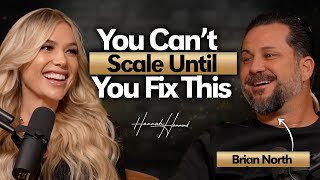
Brian North built and sold a real estate brokerage to Compass, then developed the Anti-Victim method to stop self-sabotage. The approach starts with witnessing your victim mindset, auditing your thoughts and relationships, then rewiring through skill-building and gratitude practices. North used cultural programs like the Golden Ruler Award to shift his team's energy and is now launching broader coaching around this framework.
Questions this video answers
December 9, 2025.
North & Company; sold to Compass.
The Golden Ruler Award (People's Choice monthly recognition with rewards such as travel vouchers, gold coin, or coaching sessions).
"Start where you stand."
2015.
Chapters
What is the best advice you have ever heard or received in your life?
I just asked a friend, I said, what do you think's wrong with the world? And he said, we don't believe in God anymore. We're believing in ego.
We're just in here like, let's make money and let's try to look pretty or hot or get a good girl or get a good guy and have money in the bank account and show my friends I'm cool and feel safe and secure. But it's so much greater than that.
The absolute epitome of what victimhood creates is it limits opportunity.
What tools can they use to rewire that self sabotaging victim mentality and use that energy to shift it into something that's more abundant?
Taking the time to enhance your skill set and get better at something that'll eliminate victimhood quickly reward the behavior you expect in your organization. And so our main thing was we needed people to pour back into the organization. I only had so much time. I had to go out and do three times what everybody in the company was doing on a sales production standpoint. But I also had to be the CEO of the company. Right, Right. So we created this thing called the Golden Ruler Award. Super basic, but it's.
Welcome back to the Hani Hammond Show. I'm here with my friend Brian north, who is just an amazing. Not only entrepreneur and we'll get into some business, but the things that come out of Brian's mouth and your viewpoints and your perspectives and the inner work and the personal development and the challenges and the vulnerability and the authenticity, all of these things that I am so closely knit to. And I've known you for years now. You know, we've been in and out of each other's lives and have mutual connections and I've sought saw you throughout your journey of building and then selling, recently selling one of the largest residential real estate brokerages in the southeast, which you just exited. Congratulations on selling to Compass and you, you built an amazing culture around your company. You know, it's something that I would love to dive into today. But then throughout that you've been on your own journey, as we all are forever, and you've been very open about that. So thank you for coming on the show. Thanks for being a friend of mine.
I'm stoked because I know you'll, you'll, you'll get in there like I like to get in there. So I don't know, I'm excited to see what happens.
Oh, yeah, I'm so Excited. I'm like, brian, yes. He'll actually open up. You know, so. So many people walk around with so many walls up.
Sure.
And are afraid to be vulnerable, and sometimes they just don't even know because they don't actually peel back the layers of their onions. And you are somebody that does, and so am I. So.
Yeah, I mean, I learned, you know, a few years ago when I. When I started to. I mean, there was. There was a decisive moment, and it was actually around social media where I decided to really open up. And I realized that sharing insecurities, contrary to popular belief, are actually a show of strength. And I think that there's a lot of people that think that showing insecurities is a sign of weakness. Like, you don't show your weak. You don't show your insecurities. And if you're. If you're willing to show your insecurities, but you're also willing to take accountability and responsibility for them and then also troubleshoot them so you can get better. To me, it's a show of strength. And when I started.
Showing up that way, I got a unique response from friends, family, community, people on social media and inspired me to get louder.
Yeah, what was that inflection point on social media where you decided to switch?
It was paralysis by analysis with social media. I understood the value of it from a marketing perspective. I really was like, man, this is it. This is the new marketing. Right? Commercials had died. I'm from a generation where we were so stoked when we could mute commercials or when we could fast forward commercials. That was a new thing in my life at a point. And then when it was like, commercials are dead and now we can be in charge of our own media, I really understood the value of it. But I was scared to say what I really wanted to say. And finally one day I just kind of, like, had an awakening or an epiphany, and I was like, wait. The only reason that I wouldn't say what I'm saying is because I would be saying something to the people who would be naysayers, which makes no sense. I'm afraid of the people who would be naysayers to begin with. So I'm just going to go say and put myself out there. And the people who want to tune into my TV show, whether they want to chirp from the back row or they want to sit in the front row and they want to learn, are the people that I want my audience, and I'm going to go for it. And I went for it.
And did you quickly see that that created more positive reinforcement or did you have a period where people were, you know, judgmental or did the fears that you thought would happen come true?
Yeah, I'm fortunate that in my business life at the time, real estate brokerage owner and I had, I already had a pretty captive audience, right? A small but captive audience of 300 live bodies that worked with me, right? Relative to 20,000 or a million followers on social, 300 is not much. But what was important about that was that as I started to lay myself out there, I had people that I knew saying great job and liking and you know, fire emojis and all this stuff. So I had kind of, kind of a built in support system if you will.
But then it was like, you know, maybe three or six months in that I started getting curious questions from people I didn't expect, specifically men my age that were like, hey dude, saw you posted that thing. And I don't know, that was something that really resonated with me and I had a conversation with my wife about it or a mom that messaged me and say hey, I just wanted you to know I shared your video with my 16 year old or things like that. And I was like, damn, like holy, like I'm on to something, like meaning just it, what I'm up to matters and that just catches fire and you keep going.
Yeah, yeah. And when someone shares with you like wow, you changed my life or you saved my life or you inspired me or whatever, like that's what really fills my cup more than anything.
And I, there was, there was a moment where it went from like attaboys to like people reaching out to me saying hey, it's 2:30 in the morning, I don't know if you're awake, I want to be alive anymore. And I just wanted to reach out to you and just say I have one question like xyz, what do you think? You know what I mean? And in that moment I don't know who they really are. You know. The name wasn't Brian north, it was AB x2 y underscore 3. I know it was a real person because I asked, you know, I would start conversing with them and then just say, you know, just let them know ultimately where I almost always landed with and I've had three or four of those scenarios by the way, I'm in touch with three of the four and this, it's been years now that I'm in touch with them was to end a place of I love you, you know, you're not alone. That was it. And at the end of the day, I've realized that kind of no matter what, that's really all that we're seeking. No matter how we're showing ourselves to the world, we're seeking approval. And. But that's when. When I realized that there was this thing of like, oh, you know, I've got some. Something to say and I'm up to some good things in my life and I like to share and I'm a teacher by trade and some of those things. And realizing that, like, holy cow, there's not only an impact here, but there's like, you know, people are, you know, so attached to their screens and have such a lack of physical connection in the world that they're reaching out to this influence that they see on the screen and saying, hey, I don't know where I can turn. You might be my last hope. Can you help out? And that's where you realize there's a gravity to it, too. You can't save everybody. That's the other part. But at the same time, it really became ultra meaningful to me at that point where I was like, all right, now we're going to pour gas on this thing and started doing some produced videos and things like that. And next thing you knew, it's like, life kind of takes on a life of its own, at least with regard to that. And it got me a lot more comfortable with opening up. What can I get away with? And. But I still had some shelter because I owned a brokerage. And I still am a believer that if you are an owner or a leader in an organization or a company, that you need to be mindful of what you say when you're on camera. And now that I don't have that organization anymore, you know, we're really gonna pour some gasoline on the fire.
Yeah, no, I'm excited for that and going back into entrepreneurship and. And you can kind of you building and selling what your company was called, north and Company, which now is Compass. What specific incident drove you to become an entrepreneur?
Drove me to become an entrepreneur was fear being broke.
Was it? I was afraid to be broke. Anytime I asked my mom if I could have anything as a little kid, she would say, I can't right now, Brian. I'm broke. So I knew that that word meant that we didn't have any money, and not having any money meant that I couldn't go get a candy bar or I couldn't get a piece of pizza. All the things that give you joy when you're a kid, Sugar, you know, fast food. You know what I mean?
Yeah. For me, it was. My dad wouldn't buy me an ice cream cone when I was seven.
It's that simple, right? I mean, that was it. And. And I watched my mom cry. I mean, single mom, you know what I mean? And we got. We were. We were probably homeless three times, you know, in my childhood. Homeless meaning we didn't have a place to go that day. You know what I mean? We ended up somewhere. We didn't sleep in a tent. We didn't sleep in the car. I never slept in a car. So not like truly. Truly like what we think of homeless, but like, we didn't have a home to be in that day, but my mom found a home for us to be in that day, and we couch surfed our way through the world until we found permanent, you know, housing again by way of friends and family and that sort of thing. But, you know, as I was the oldest, my sister and I. And I was male, and the only males that came into my mom's life sucked. And so for me, it was like I learned how to be a provider protector unnecessarily at a very early age. I mean, I grew too fast, and, you know, I owned it as a child, right? So, like, internally in my body, it was like, add those pieces up. Broke doesn't get you anywhere in life and keeps you from having the things you want. It creates tears. It makes it so you don't have safety and security and. And, you know, and. And then you get to be a teenager, and you start to move through your business life, and you go, wait. So, you know, that guy's number one, and that's what he has in his life. His life looks like it sucks. And then, you know, you move to the next place, you're like, he's the boss. Like, I could smoke this guy. And then I go. And you just keep doing that, where you're like, all right, like, I'm gonna go create my own thing. I don't know what it's going to be yet, but. And mine was sales. I was in sales from a very early age, and it was probably sometime around, like, maybe my mid-20s, that I realized that a percentage of something off of a higher asset class made you more, right? So If I made 1% on $100,000 car that I was selling, which I worked in the car business, Mercedes Benz, I made a thousand bucks. It was like, cool. If I got 3% of a $500,000 house, I made 15,000 bucks. It was like, I'm gonna go do that. And so it was just more of like, I can say early on in my life, and I don't know for anyone that was. Had so much foresight to say it wasn't a means to an end. Good for you. Feels a little shallow to say it now, but I was in survival mode. I was trying not to be broke. I was trying not to be homeless. So show me the way and I'm going to go, you know, if it's, eat what you kill, I'm a good hunter.
When did you realize, like, okay, I'm going to actually build my own brokerage instead of being a broker?
Yeah, that was a natural progression of growth of just like, next, next, next, next, next. You know what I mean?
Individual. And I got to a place where I was doing so much business, I was exhausted. So I hired someone.
Right.
You know, and then I buried that person, meaning I got them too busy and so I needed to hire them some help. And then I got to where I was working in a specific asset class in residential. And so I needed someone to handle the deals that, you know, weren't the highest and best use of my time. So I brought on a team member, and next thing you know, I've got a team of eight or nine people. And I was at a boutique brokerage at the time, and. And the owner of that brokerage came to me and said, I just don't. My heart's not in brokerage. It's not what I'm built to do. He was a serial entrepreneur, wanted to get into the home building business and made me a deal I couldn't refuse on acquiring a failing brokerage. I mean, he should have gave it to me for free if I'm being real. I mean, it was way upside down, but I figured out some levers in that business. Basically, he was upside down, about annualized about 400 grand a year. He was about 100 negative in the first quarter. And when I looked at the P and l of that 400, he was going to lose. He was like 300 in staff and brick and mortar. So I was like, we got to sublease the building, go find a significantly less expensive space. As much as he hired great people, he hired too many people because he didn't want to do. He didn't have a love for the business. So we're going to eliminate most of the staff, unfortunately. I'm going to run the company, bootstrap it with my partner, Stephanie, who you've met, she's amazing. And our broker, Michelle, at the time, those are the only people that we kept. And then so we eliminated the majority of the expenses, shrunk that expense structure from about 400 grand that year of loss to $35,000 that year of loss. And then in the following year, which is 2015, we were profitable and we were on our way. So it was, it was really a natural progression. It was like, all right, if I can be a great single producer, I'm going to grow a team. If I can be a great team and look around the industry. And my mentality was the same, everybody sucks. I can dominate this thing. This is, they're missing the point. And for me, what they were really missing was that they were focused on widget sales. It was like, we have a better office, we have better leads, we have better technology, that sort of thing. And for me, it was like, if you give people leads, technology and office space, but you don't teach them how to fish, then they still aren't going to produce. I give you a thousand leads and you don't have to make a phone call, you're not going to make any money. Right now you go, oh, well, if you could do it for a year, you would learn. But what if I sat next to you and made 10 calls? How fast could I accelerate your learning? And so for us, it was very much about education. Teach a man to fish. We got very misrepresented in the marketplace that we were an education company, we were a sales education company, and we taught people world class sales techniques. And then the other part of that was the personal development side. We quickly realized, I quickly realized that I was built a little bit different. I have a very high pain threshold for problems, for challenges, but most didn't. And I could look around the landscape of our business and go, man, people are really going through it and they need an outlet. And as a solopreneur in residential real estate, where the majority of our agents work from home, they were in an okay at best relationship. They were carrying the majority of the load as an entrepreneur and potentially, you know, either a single parent or a parent kid carrying 50% of the load. They didn't have an outlet. They had no one to talk to. Their okay relationship wasn't a good place to go and, you know, release their kids weren't a place to release. And then you're dealing with a bunch of other type A entrepreneurs. Those people don't want to hear your problems. So where are you going to have an Outlet. And then the other thing I realized in the residential landscape was that the majority of the leadership, they were suffering like the agents, and they weren't doing what was necessary to be able to deploy real life tactics and strategies into their agents. Say, hey, if you need to get better, why don't you, you know what I mean, Try these things. It was like, I'm fighting the fight alongside you and, you know, you don't want to ride on a boat where the captain's sinking the ship. You know what I mean? So for us, we really built a business around high level sales and personal development. I said, we're a personal development company disguised as a real estate brokerage. The real estate part will take care of itself. There's enough real estate bullshit out there that you can go sit in CE classes and listen to social media and go create moms groups and dogs groups and male meathead groups with your friends and talk about real estate as much as you want. But if we don't have a group of people focused on getting better behind the scenes, then we're just going to be like every other brokerage.
How did you roll that out? Like, what did that structure look like at your company? And how did you get people involved? Especially since not everyone goes to the office and works in an office every day.
Yeah. First thing that I anchor to such a simplistic thing was, you know, one of my mentors used to talk about reward the behavior you expect in your organization. Right. And so our main thing was we needed people to pour back into the organization. We knew we were going to grow fast and that I only had so much capacity, which, keep in mind, I. The only way we sustained was I had to sell real estate full time in startup mode. So I only had so much time. I had to go out and do three times what everybody in the company was doing on a sales production standpoint. But I also had to be the CEO of the company. Right. And so for me, if I had a finite amount of time, I had to figure out a way to leverage all of the best practices in the organization. So we created this thing called the Golden Ruler Award. Super basic, but it's due unto others as you expect to be done to yourself. And the idea was that we were going to do a People's Choice award every single month where all of the agents voted who the person was that gave the most back to the brokerage. And this might be in the form of personal development, real estate, education, energy. It could be anything, right? And then the reward for that Were the things that we thought agents should reward themselves with, which were either you could choose one of the following. It was a southwest airlines gift voucher. You should go have some leisure. You should travel. A 10th ounce gold coin. Legit gold coin. So it was investing in long term wealth, A one hour coaching session with our mental coach, Al Fuentes, or a one hour coaching session with our business coach, Zanzibar vermiglio. So you should invest in education, long term wealth or travel and leisure. Right? Getting some time away, some rest. So we had the agent body started to strive for this thing because they got this. Not only did they get recognition, which we realized, by the way, for entrepreneur leaders out there, especially in corporate, I dramatically underestimated how powerful recognition is. My whole time as an owner, I'm like, I don't give a shit. No one needs to recognize me. I don't need any pats on the back. I get rewarded with money, right? I'm in business for money. I don't need trophies. I don't need pictures on the wall, employee of the month. I don't. A lot of people do. They strive for recognition. So it was the recognition component and then it was the ability to obtain something that otherwise they didn't think they could get. Which was like a one hour with the B.O. right. An hour with Zanzibar, which was expensive. I think zanzibar was probably $500 hour. An hour with Al, 10 ounce gold coin. Right? So these things were meaningful to them. And what it ended up inspiring was just this very robust culture of people that were constantly pouring into each other. Then what we got as leadership is we got testimonials. Hey, Brian, I met with Hannah the other day. You always told us call anybody. And I called Hannah and she took 30 minutes and like totally change the trajectory of my business. What am I going to do with that now? Next team meeting or next brokerage meeting, I'm going to stand up and go, hey, guys, I just want to say, like, I got to give a shout out to Hannah. Lori reached out to Hannah. We told you guys, put everyone to the test. They're all here to give Hannah. In fact, Lori, why don't you share what Hannah did? And Lori stands up and she's like, she did this. I've deployed it. Everyone's like, lori doesn't do any business. And Lori's like, I have three deals in escrow because of what Hannah shared. This thing just continued to fuel itself, right? It fed itself. And then rumor got out on the street that we had this Thing that was different than anything else and you know, it took off like wildfire. Next thing you know, we're a culture company and north and Company became what it became.
That's so cool. I love it because I'm, you know, we're scaling HP capital and we have people all over the country and so I'm grappling with that. How do I really build and hold a very strong culture when we don't actually have a meeting place to get together every day other than virtually any.
Fun things that you're doing?
No, not really yet. I'm so sure. I mean we are going to be doing an annual awards event where the top producers will get flown out first class on a trip and like we'll all have fun together and do an awards thing like that. But as far as just day to day, like for everybody, I don't have anything, any protocols set in stone right now to help inspire culture. And you're the real expert at culture. So I figured I'd ask.
Actually, I'll share this with you quickly. I had a conversation. An IG young entrepreneur in London, he's starting a, like a, basically like a marketing company, but that's in an ad space for other entrepreneurs. So it's the DMs you and I get that are like, hey, I can get you to 200 followers, whatever. But this kid, I appreciated his style. It was different than everybody else and so I just was like, hey, let's. He's like, if you could ever help me, you know, I get. You get a lot of these from hard knocks, right? And so I spent some time with him and he shared with me. It was tough because his salespeople, most of his salespeople were international and I think he was 21. So like you're not flying to meet him all the time, you know, this sort of thing. And I suggested little things that he could do. Like when you're online, everybody has to wear like a colored hat and the hat means something. So like when everyone's on the screen and you're in a team meeting, everybody has to show up with their. And we. He was wearing a red hat that day and I was like, everyone has to wear a red hat. And wearing a red hat means you bring your emotion to the party, right? And I was like, now it's this thing where everyone shows up on screen all over the world and they have a red hat on. It means they're game ready to bring their emotion to the party. Do with that what you want. But it Was an example of like little things that you can do to create unity. Right. But even though you're on screen, right, it's like you look on the screen and you see 14 people and they all have red hats on. You're like, this is a thing. We're all part of something. But it's by way of visible because you can't be in physical connection with one another. Just fun little things like that, that I was, this was a recent thing I said I liked it. I was like, oh, that was a good idea that I made up.
Yeah, I like that.
Hopefully that maybe inspires a little creative thought.
Yeah, I love it. Thank you. And what, what were some of the biggest failures you had in your. Your life? I know a lot of us, we become entrepreneurs because we don't feel worthy and we feel afraid and we feel scarce and we want to be loved and we want to love ourselves. We think we want it from others, but really we need it from ourselves first. And so we create a prison in the pursuit of our own freedom. And then either a, we never realize it and we just live in this prison we built for the rest of our life and then die with a bunch of regrets. And as a miserable person or at some point, usually middle age, we sell the company or you know, have all the money and have all the things and then we still feel unfulfilled. And then that's where we have this awakening and some of us start to go down this path. So what did that look like for you? And what mistakes did you make while chasing freedom and love and safety through entrepreneurship and that ultimately led you to a rock bottom in your life? And how did you come out of that?
First, I'm really excited for you to get to mid age. It's middle age at some point because you're not there yet and you're so wise. Everything you said is very much spot on. I just turned 48, so I'm officially at middle age.
Biggest failures, definitely the pursuit of, would you say create own prison and the pursuit of freedom. I mean, without a doubt my, my prison was mental. You know, that broke that that fear of being broke carries with you. It's not a backpack you can just take off and you're like, I'm just gonna leave that right there. And I don't feel that anymore. Right. I remember one of the biggest arguments I got in with my ex wife, which, you know, so many of my life lessons are around that relationship. She's a really great person and she's a great Mother, and you know it. We would have been together if it was meant to be together. But you know, so many. So we're not, we're not there. But so many of my lessons are from that relationship. And I would say one of the largest arguments I got in with her was I hassled her about a grocery bill. It was like 800 bucks, which now, you know, you're like, I wish it was. Yeah, right. I mean, in a way, I mean, 800 bucks is still a lot of money, but. And we had over, we had a little over $300,000 in our checking account, which all of that's wrong, right? I mean, for the amount of money we didn't. $300,000 is a lot of money. Was probably our total net worth, you know what I mean? In my checking account. Like none of this, none of this is correct, right? But it's a telling story of where I was at the time, right? It wasn't sprinkled around and diversified because I was afraid of being broke, right. Our total life expenses were $5,000 a month, which means if we do the math, 60 had five years of reserves, right? I was past tax, so I had like five years of liquid. Everything goes to hell in a handbasket reserves. And I was hassling her about a $800 grocery bill. That's prison, you know what I mean? Like, that is, it's completely unnecessary and I'm sorry that I put her through it. You know, on the other hand, she's been gracious enough in this year because I've self deprecated so much to her about, you know, things I could have done different that I've learned over time that like she's like, you know, I, I could have realized how valuable you were and treated you different too, and realized that so many of those things that you were doing were coming from protector provider and really setting us up because, you know, we're both in a good place now. You know, after divorce, easily, you know, divorce, the way I ended it got to divorce was easily one of the biggest failures ever. I knew the marriage was over and, and I self sabotaged and cheated. And so, you know, that was easily one of the biggest fails. I look back and I'm, pardon my language for the women watching, but it was just about the biggest pussy move on the planet. You know what I mean? It was just, there's just the secure, true, divine, masculine way to do that, is to sit down and have a hard conversation. You know, here's where we are, you know, whether it's I'm out of love or the mechanics of the relationship don't work. We've been trying to make this thing work for seven years, by the way. We were together almost 20. So you. We'd been trying hard to make it work and it was over. And then you find a way to get out of that. Unfortunately.
That just left so much unnecessary pain and collateral damage for so many people. It made me a fraud to my agents who knew and found out. Made me a fraud to my business partners who believed in everything that I stood on stage and so profoundly stood for. You know, I have two boys, what a great example for two boys, you know what I mean, to cheat on their mom. So, you know, I had to deal. I had to deal with that. And easily one of the, if not the biggest failure. On the other hand, you know, if you're not a victim, then failure is for learning. And you know, I have a thing that I say, you know, that the deeper the pain, the, the more robust the learning experience. And so there's this thing for me where, you know, I created some pretty hefty pain and pretty hefty collateral damage. But what I was willing to learn and investigate and practice on the backside of that, you know, will set me and my children up with legacy for the rest of their lives. And hopefully if I do things right, you know, in, in the influence space, you know, I'll change lives with that mistake. So, you know, at the end of the day, I look back and say, I know I did it wrong, I'm sorry. And I promise that I'll make it worth, you know, a billion times what, you know, the pain that it created.
Yeah. And so let's dive into to victim hood.
Yeah.
You know, most successful people in life and we're not just talking wealth, but just successful humans in relationships and spirituality and friendships and family and health and wealth and all the areas they have an internal locus of control. And most people that settle for mediocrity and don't really create the lives that they're really excited to wake up to every day have an external locus of control, which is the victim mentality. So what is being of what are the dangers of being a victim to you? Like what have you, what is this project that you're working on, this anti victim project? And how have you seen that show up in your life?
Yeah, well, let's just go back to my childhood, right, What I've shared with you guys so far about my childhood. I have a lot of excuses of why I shouldn't be here, right? Single mom. I mean, my mom went on to be a social worker. She went on to be a grocery store clerk, and now she lives off Social Security in a trailer. That's no disrespect to my mom. My mom's my hero. That's the life she chose. And so there. That's. But I, at least to paint a picture for the audience, like, I have a lot of excuses, right? Single mom. You know, I had a father figure who's a loving, amazing father. I called dad my whole life, but geographically he was distant and he wasn't, you know, I mean, he would send my mom money when he could, you know, and she was okay with that. That was their arrangement. But, like, I didn't call my dad and ask him for help when I, you know, got myself into college. You know, no disrespect to him. He would have if he could have. He just couldn't. You know what I mean? So all of these. I was the first college graduate in my family. Like, I can go on and on and on. I have unlimited excuses. So the absolute.
Epitome of what victimhood creates is it limits opportunity, right? I mean, it shrinks. If we're born into the world with limitless opportunity, and we rely on social conditioning to shape us as we get to a place where we know the difference between right and wrong. If we point to our social conditioning to be the reason for why, where we stand, where we stand, then we significantly reduce the amount of possibilities that we have. The slogan for anti victim is start where you stand, right? So it's like, this is it. Everything starts right here. You can't go back and change anything. And so, you know, that. That for me is. And for me, I think there's this innate thing in me. It really. I believe it's innate. I just can't remember a day in my life where I ever said something was responsible for where I am today, no matter what. And I've had this conversation with my little sister who's attempting. She's. She's not attempting. She's entered entrepreneurship for the first time. And she was stuck last night in a phone conversation. She was stuck on. They did me wrong, right? And I want to go get them. And I was like, but what's it going to do for your endeavor to go get them? Is it going to. Is it going to change the rules and regulations of your industry? No. Is it going to get you money? No. Is it going to get you time? No. Is it going to help your Cause no, but they did me wrong. Like so what? It doesn't matter. And it sounds callous when you're talking to somebody who doesn't fully get it. And I was like, you sound like a victim.
Right?
They did you wrong by the way. We had a conversation about this person she was going to enter into business with and at the point of no return where she was either in or she was out, we said we believe he's a bad person. Okay, but we don't have any other options right now. I say we because I was mentoring her. Meaning, do you have another lane you can go in? No. Great. So let's enter into an agreement with him. But the agreement has to be under the guise or the terms that we believe he's a bad person or could be bad. Right? If he surprises us and he's not, we win. But if he's bad and we find out he's the person we thought he was, but we, it accelerates us both by way of learning. We might get some new relationships, new network. He's not going to do anything so bad that you can't perform into the future. Then you can't be mad when that person does you wrong, right? Otherwise you're back to victimhood. You got to look at the whole total sum of the experience and say I predicted it was going to go this way. What were the fruits of the risk? Right? And she gets to look at the fruits of her risk and go, here's all the things I learned. And now take those and deploy your way forward. And I told her, flip the rear view mirror up, stop looking in it, look through the windshield and push down on the gas. Right? We can't go back and fix those people. And this applies to our personal life, our professional life, our work life, our co workers, our politics, our religion, our social current events, whatever it might be, none of it's responsible for where you're at in your life right now. Quit fucking whining, suck it up. Identify what you can do to make a difference and go and do it. And as soon as you opt into being an anti victim, the other thing that happens is you start recognizing the victims in your life and how absolutely blood sucking they are on your energy. And if you can have get the gumption to believe in yourself. You talked briefly about self love, the gumption to tell those people it's time to either we talked about this before we got on set was either forgive them, right? Forgiveness doesn't mean you have to bring them with you. It really is freeing for you, people think I can't forgive them because of what they did to me. It's like, hold on, I don't know what your thoughts are on this, but I'm not forgiving you for you, I'm forgiving you for me. Right. I have to let go of that so that I'm free of it. Right. So I'm forgiving you for me. Next thing is, is there's two categories. One, you're blood sucking victim, get out of my life. The other one is you're in get on the train because you're coming with me whether you like it or not. That's the simplification of those categories of people. As you step into anti victim mentality really changes things and it frees you really, it expands the periphery is what it does.
Yeah. For someone who's. Because for you and me, we're not very victim people, we're very anti victim people. And one could say that we are innately anti victim people. That's how we've always been. And you know, that shows up in our nature of people pleasing and low self worth. As for me speaking low self worth as a child, having to earn my, you know, approval from others and, and trying to love myself and all that. Now some people are born just in the victim mentality. That's very much a social norm. So for those who are feeling stuck in that and maybe the first step is awareness that they are being a victim. And then, okay, I have awareness that I am a victim often in my life. How do they, what tools can they use to start to shift and rewire that self sabotaging victim mentality and use that energy to shift it into something that's more abundant and serving for their life.
Before the self awareness, there's almost this shock and awe thing that happens and I call it witness the victim. And the first thing that I would recommend somebody do is write down a journal entry of all of the things that have been done to you, as many of them as you can. And all the reasons that you can't do what you want because of the trauma, by the way. Trauma. I, I've been saying recently it's an overused word. I don't think it is an overused word. I think it's, I think it's a, I think it's a misused word. Right. It's like every single person on the planet experiences trauma. Right. So it's okay to talk about it. It's just, are we using it to, in. To justify our lack of dot dot dot IN the world, right? But if we go onto a piece of paper and we write it all down, that's a good start. But the next thing I would recommend, highly suggest anybody do is turn on a camera, point it at yourself and read it, and then watch it back, okay? And listen to yourself, like really listen to the tonality. Listen to yourself say out loud to the world, probably things that you say over and over. Because the other thing that that victim loves is more victims, right? Because you get supported in your victimhood. So you surround yourself with people that are like, yeah, me too, you know? Yeah, me too. My mom did that to me and my dad did that to me and my birth order me up and my. When everything was good until we moved to that town, or my older brother and sister, they got this. And then the parents got divorced when it was me. And that's when everything. You know what I mean? I want to create a safe environment for people to come and be able to share those things. Like, hey, it's real, it happened. But really, like really, that's. Are your parents here in the room right now? No. Is your birth order in the room right now? No. Is your socioeconomic experience that you had from ages 7 to 14 in the room right now? No. Okay, cool. Well, now you got to tell me. Based upon your self awareness, which you brought up, comes after being able to actually hear yourself, which usually, what do you think is the first feeling that comes up when someone watches that video back?
Negative.
Ew. You know what I mean?
Yeah.
Really? Ah. And it's like, okay, now you can't unsee it. That's what you sound like in the world, right? So then there's self awareness. With self awareness, I say the first two things are thoughts and words, right? Thoughts and words are probably one of the, if not the most important thing because we just can get caught saying the same thing over and over again, which creates external belief. People believe you. They only believe what you tell them. So if you say, you know, a classic one is just like, I'm sick, I'm sick, I'm sick. If you keep saying that enough, you're going to get sick. And that sickness will perpetuate, right? Either because people believe, believe it. The world starts to shape, shift around you. You start to make decisions based on being sick, that sort of thing. So then it's self audit after self awareness, it's self audit. You have to self audit your words. You got to self audit the people you're spending time with. Self audit the things you're doing. Pardon me, in your spare time, simple, basic things like health. What are you doing with your exercise, your diet? Do you have any kind of quiet time, screen time? I would go into breath work and meditation, but that seems woo woo for people. If I were really just to simplify it, turn off all your screens and get quiet. What meditation and breath work do is they attach you to self, right? You get to hear the madness that's going on in your mind that we drown out with screens. So, you know, there's your health component connection. What are you doing in your relationships? Right? How are you showing up in your relationships? My wife said to me it was a profound shift in our, in our relationship. She very much values my, my work ethic and what I do in the business, but. And she knows I'm on the phone a lot because it's a part of business. And she said to me, hey, I don't know how to say this any different and I don't need it often, but if I ask you for your undivided attention, can I share with you what that means? I was like, yeah. She's like, it just means, can you put your phone down? Can you make eye contact with me? Can I get your undivided attention for only the time that I need it? And then when we're done and I'm satisfied with what I needed to get handled, which, by the way, is always something very important. She's not going to say, I need your undivided attention if it's not. And at that point, you can go back to doing whatever you're doing. I'm going to believe you're working, but I know you're fucking around and introduced Instagram. So, you know, and I give her that undivided attention. So what are you doing in your relationships? Right? Critically important, what are you doing in skill, in skill mode? Like, are you taking the time to enhance your skill set and get better at something that will make you. That'll eliminate victimhood quickly? Like, go get better at something. What are you educating yourself on? Are you reading a book? Are you listening to a podcast? Do you have a coach? Do you go get educated on something and then with this new information, practice. Go practice something new. And when you practice that, guess what? You're going to get rewards. If it's in your health space, you're going to feel better, you're going to look better. Somebody's going to be like, damn it, what have you been up to? You look great. You're going to start getting rewards for it. And when you start to get rewards for things, then it perpetuates the practice. You practice harder. When you practice harder, what happens? You get more rewards. When you get more rewards, all of a sudden you wake up one day, you're no longer a fucking victim, you're happy. The challenge with happiness is it's fleeting. It's a brief moment for a lot of hard work. Right. And so there's this moment of how do you rejoice and what do you do with the moments of happiness? You show gratitude and there's a lot of different ways to do that. You can reach back out to the people who gave you the nudges along the way. You can reach out to the coaches that helped you along the way. You can reach out to family members and tell them thanks for support. Usually what I say about gratitude is gratitude is the fastest way to show God that you're grateful for all of the things that you've been given in your life. Which usually is just something like life or the opportunity. Right?
Yeah.
There would be some things that I would deploy in the anti victim space.
Yeah, I love that. I actually did a talk last week on energy and, and how the biggest catalyst for my transformation in my life from suicidal, depressed, anxious, toxic relationships, mess. Right when you met me, complete mess. Two. Now I'm actually, actually happy every day. That's not to say there's not storms and stress and, and problems, but I feel happy to wake up and happy to go to bed every day. And I feel grounded and at peace in my body and what I'm doing and the people I'm around and the mission that I'm on and all these things and have healthy relationships, healthy body and everything. And the catalyst was learning how to control my energy, which victim is a low frequency, very low frequency, low vibrational, negative energy. And when you, what I found in my life, when I am in a negative energy, I attract more negative energy things and that just snowballs everything in your life. And as soon as I started to cut out the negative energy things in my life and keep myself in a peak energy, then I attracted more of that into my life and that started compounding very quickly. And so it sounds like a lot of what you're saying is this victimhood, like if you, if you're living in the state of victim, you cannot be vibrating at a high frequency, you cannot be in the green zone at a high energy. And when you're not in a high energy, you don't have the same results. Studies show when you're in flow, you are five times more productive than when you're out of flow. And so I think it's so important, no matter what anybody is trying to achieve, whether it be financial goals, relationship goals, health goals, the victimhood mentality, or the importance of keeping yourself in a peak state of mind. And just like we were talking about is you're not forgiving for them, you're forgiving for you. And if I know that the outcomes of my life can only be as great as the energetic state in which I initiate the action to try to get them, then I protect my energy above all else in my entire life, which means I cannot be a victim totally, because that brings my energy down. And so it's like everything that I do, whether people screw me over or not, you know, I've. We all have it. Tons of money stolen and touched. Employees screw you over and people sue you or this and that, whatever, right? But if it brings my energy down and I can't control that, they stole from me, but I can control how, how I react to that. And since some people, people can't understand, but you know, just like you said, they, they deserve revenge, but that ruins you totally, right? And so it's, it's so important and people just kind of miss it and they're like, well, what about the new marketing technique to make more money? It's like, no, this is the real technique. That sounds so easy, but it's really the hardest thing to master.
It's the most frustrating thing for me about real estate brokerage is I knew, I knew I was up to physically changing lives. Like I was, I had a roadmap for doing it. We called it 360 agent. It was like the 360 degree agent. Most brokerages teach 20 degrees of the agent, right? How to make sales calls, how to do marketing, how to work technology, right? And then there's these other 340 degrees of the agent. And we lit. I mean, we were doing things like every agent in the company took a love languages test. And the way that any C C suite executive would address an agent, we studied every, every single person's love language. So if we knew that somebody had done something inside of the organization that was valuable from the perspective of the organization, if quality time was their thing, then I would go spend 20 seconds of quality time with them. They'd be walking by, go, Hannah, come here real quick. Close the door. Sit down. How are you? And they're like, why am I in here? And you're like, I just wanted to spend, you know, a few minutes with you and just see how you're doing. How's your family? How's your dog? Next person would come by and it might be gifts. And we knew it was gifts. I would go into Monica's office frequently and go, hey, what'? What's Annie's love language? Right. It would be acts of service. It would be like I'd go clean up her office a little bit, you know, and leave a note. Hey, just let you know I cleaned your office because it looks like whatever in here. I know you're busy and you're killing it. Da, da, da, da da. You know what I mean? That's how you get to the 360 of a person, the whole of a person, we called it. Right? And where you can make a big shift in the world, but it starts here. I have to have that energy and frequency internally to go, how can I go and connect with these people externally to really make a difference and that's how we can start, you know, really making movement in the world.
And how'd you get participation when you know everybody or the majority are independent contractors, they're kind of entrepreneurs running their own businesses within your organization. Like, how did you get that participation momentum?
Right. I mean, you don't come to north and Company. We used to say you can't hide at north and Company. Right. It was like you knew what you were getting. Most people that came to be a part of the company where at first like, hey, you guys have a great brand and you guys have great producing agents. But like, I've heard what's behind the scenes. What is it? Most of our recruiting appointments, I mean, you've sat in those business meetings with us weren't about metrics and numbers unless there was a consideration of like, could we partner? Is there a joint venture opportunity? You brought a unique opportunity to us in that past life situation was that you did commercial real estate and we didn't have a commercial real estate arm. So we talked about more kind of business minded business acumen type topics. But for the majority of the agents that came to work with us, they were looking for that thing. And then when they got in the vortex, that was north and Company. Like, you're like, I guess you fill out a love languages test.
Yeah.
There wasn't a lot of denial because everyone had already done it. So it was kind of a follow the leader approach.
Yeah, yeah. And what when you exited? Because I know so many entrepreneurs, they exit and they have this identity crisis after they Exit. Did you want, did you have that and. And two before your exit? Okay, actually let, let's start there. So did you have a plan after your exit on what you were going to do or was the plan just to get through the sale and then rest and figure out what your next move was?
It was kind of like that. I mean, you know, you heard Mike Tyson say everyone has a plan, so you get punched in the face. You know, I mean, so yeah, I mean I had a plan. Plan was, you know, exit the company, rest for a little bit, rely on real estate sales if I want to keep momentum, keep making money, fall back on and start working on the ANTI victim project. Right, like that was the plan.
So you already knew about anti.
Okay, yeah, for sure. And really what that plan was like, you know, if we really back up, it was.
I couldn't do in the real estate brokering industry what I really wanted to do, which was everything an agent needs and not everything an agent wants. Okay. And the reason is, is because the model says, I'm going to give you a portion of my commission to help me make more money. Right? The agreement isn't, I'm going to give you a portion of my commission to help me be the best human I can be. That's not the agreement, that's not the arrangement. Right. So my thing was that's what I'm in this business for. And the brokerage industry is broken for that model. It doesn't want that. Agents want to know what is the fastest path to the atm and what I'm going to teach you is the fastest path to a fulfilled life. And it takes a lot of fucking time, right? It doesn't work. Right. It was the wrong vehicle for that. And so for me it was like, okay, the agents are suited in a better place that will give them the 20 degrees that they're looking for. Right. And I'm going to take back what it is that I can do and I'm going to utilize a much larger audience, brand agnostic, larger audience called School Kajabi, you know, whatever it might be, and go create an online community where agents can come and get their personal development. Okay. That was kind of the initial thing and then when it was over when the, when I, the exit happened, I went through this thing of like, do I want it to be new agents? I think there's a real need for new, like really good new agent training. Right. Create a low ticket item for new agents. There's a huge audience there. And I was like, all of that's wrong because it's all about commerce. It's like there's a huge audience and if I just get this many people at this price per month I can make a bunch of money. But I would die a slow death because I would be teaching new agent training. You know what I mean? Then I flip flopped and was like I'm going to do high ticket whatever. And that was just about commerce. So I had to actually unwind this thing that I still needed to make money. How about that? I just exited a company. I'm good. Like life is good. I'm okay. Right? I don't back to five years of reserve and I'm still trying to figure out how am I going to be okay. So I did have this thing that was like weird but I just got to sit in it and deploy a lot of the personal development, a lot of the healing work that I had done over the last five or seven years and just sit in it and sit quiet and reach out to the people closest to me. And I'm in that process was planning a wedding. I got married in January of this year, which is amazing. That distracted me. That was a good distraction. And it really was after the wedding that was like, okay, now what? Right? And I'm delayed on anti victim. Honestly like my entrepreneurial executor is like I'm delayed, I'm late and But I've also in the process of that was like, no, remain patient. You don't have to do anything. I was at war with myself. My old muscle memoried wounded that version of me that had to go. Just go, go. Do, execute. Do do do. And the new upgraded version of just bbb. It will come when it's right. Really was in conflict with each other. And it's literally been in the last week where I'm like the like I'm like now it's time and here we go. So and. And the thing that said it's time is everything that I was doing in anti victim or in the coaching in the development of my coaching space was way too soft when I went through divorce. The thing that created divorce was a fighter. I'm a warrior like I am if anybody leaves in astrology, my chart is ruled with fight. I'm in Aries Rising. I'm ruled by Mars, which is the planet of war. I'm meant to be at war. And.
Immature warfare, really bad. Mature warfare is really good for the people close to you. Right? Just stay with me, help provide for me in whatever unique way that that might be and Let me go do what exactly what you have designed and what I'm designed to do. And I promise I'm going to take care of you better than you could have ever imagined you could be taken care of. And I'm going to take care of myself better. And so what I've realized, really in the last week or two is I've just been too soft. I've been authenticity and vulnerability and, you know, mindfulness and all of that will absolutely be laced in what I do. But it's time for me to bring the. Bring. Bring the war. And I'm excited for that.
And what. What's an example of bringing the war? Like, not being. So you got this. And just being like, get your together and stop acting like a little baby. Or what? What do you feel?
Say it like I mean it. Yeah, just say it.
Stop being worried about a run.
Two days ago, I loved a trail run. That's my thinking time. I joke some, you know, people like their showers, their thinking time. You know, like, for me, it's my trail run, and I was on the way down from the hill and I was like, I've actually been battling some health stuff the last couple months. Simple. I don't know what it is, but overwhelming fatigue. Like, fatigue. I've no. And I'm a high energy guy, right? I've had, like, I've been battling fatigue really badly. And I was like, what if I. What if I was gonna die? So on my trail run two days ago, I'm like, what if I'm gonna die?
Would I speak differently about what I believe and the things that I want to say? Yeah, I would. Because I wouldn't care. You know what I mean? I wouldn't care what anyone thinks. I wouldn't care who I offended. I mean, I mean it, but, like, I'm afraid of offending someone because I love people and I don't want to offend anyone. But offending someone is not my responsibility. What I say is my responsibility. And whether you're offended or not is your responsibility. Right? And it was this, like, epiphany, really. And I've started calling my people who've been supporting me in this endeavor, and I'm like, it's on, dude. I've got it. Like, it's time for me to start. Just. I'm unhinged now. I don't have the broker. I don't have to worry about what people think or say. My wife is my biggest champion in the world. She's gonna be like, say that. Say that so, like, you know, I don't have to protect the way that I did. And so it would really just be. Say it like you mean it. And it's gonna be. It'll be with a unique and different energy than, I think, what people are used to seeing me with.
Yeah, I love it. And I think it's definitely a good time for that, you know, especially with Charlie Kirk getting murdered and his. The threat on free speech. And, you know, the message in that was, don't talk. It's not safe.
That's right.
And follow the rules of whatever you're told to do. Right. And I love that everybody's coming together to even speak louder and speak their truth higher and greater. But regardless of that mission or not, it's just the free speech thing and, like, just showing up who you really are and not being afraid to whatever the world's gonna tell you or come after you for.
So you bring up a great. Charlie Kirk was also an inspiration for me in an interesting way. I'd never heard of Charlie Kirk before September 10th.
Really?
Never? One time. And I say it's because I don't follow political warfare. I don't know anybody on the left either. That's a. That's outspoken. Right. I don't get it in my feed. I don't get it in my world because I don't prescribe to it. In fact, I think. I believe. And this is part of my voice right now, the where the inspiration came from. By the way, his assassination was on my birthday. So it was a. It was a very unique day for me, emotionally, like, taking it all in. I was also. I have a sociology degree that was. And I did it because I loved it. Right. Which is the study of the way that people work, especially in groups. So for me, when it happened, I just got. I pulled way back, got really quiet, and just watched people scatter. I watched people get really insecure and feel like they need to belong. People I know that didn't either know who Charlie Kirk was or had maybe heard of him once or twice. All of a sudden, they were like. It was like they were a family member of his, and they're posting all over the place. And I realized that the quietest group was the moderate majority. The moderate majority, not the people who are pointing the finger victims, by the way. I think if you're an outspoken right pointing the finger at the left, you're a victim. And if you're an outspoken left pointing a finger at the right, you're a victim. Right. If you want to fix it. Why don't you go to your party that you believe so much in and sit down at the table and fix it? Or look in the mirror and say, here's my part in the chaos and fix it. It. Right. And for me, it's this thing of like, let's all sit down and have a conversation about the quiet majority. The quiet majority is like, you guys are crazy. And you guys are crazy with this. All this outspoken, uneducated. Let's all get in a room together and let's decide what we all want together. What do people really want together? You know, what they want together. I don't care what side of the fence you're on. Do you want a good military to protect us from evil? Sure. Do we want insurance for most people? Sure we do. Do we want good education for our kids? Absolutely. Do we want good roads and bridges? 100%. Do we want a good robust economy so that we can thrive and build for our family? Absolutely. Is there anybody denying that those are the things we don't want? So then why are we so divisive, people? That's why we're divisive. We're divisive. We're divided because we are following people's ideology of these things that we all want. Right. Do we all want the right to be able to defend ourselves, AKA the right to bear arms? Yeah. Should there be some reform? Absolutely. It's not 1776. We should change things a little bit. You know what I mean? So again, it's this thing of, where's the moderate majority? They don't want to get caught up in the. In the. In the. All the shit. So they just stay quietly and they talk amongst themselves. If I had a moment on your platform, I would call the voice of the. Of the moderate majority to come to the microphone and be like, you enough. You enough here. We need to come together as a majority. You know what the Million Man March would look like if it was the moderate majority? It would be the majority of our country. Unfortunately, the loudest ones are the ones that get the most attention.
Yeah. That's a fact. What? I know we gotta wrap up here, but what is the best advice you have ever heard or received in your life?
I just asked a friend this weekend and it was just fresh in my mind. I said, what do you think's wrong with the world? And he said, we don't believe in God anymore.
And he didn't mean that in a specific religion. This friend of mine.
Lived a celebrity past life.
Lived in an Ashram in India, did a walkabout in Australia after they left their celebrity dom they ran from the world.
Has read, I mean, would probably be an amazing preacher on the Bible, you know, probably classifies Christian, has read every religious text that you can imagine. And at the end of the day, we're believing in ego right now. And for me, there's been a path to God for a long time. It's just been a confused path to God because most of the people that I was looking to for that path weren't living a godly life. But telling me I needed to go to this place to believe in God didn't work for me. And it wasn't until I really started doing my own research and homework and abiding by my own path to God that I started finding, you know, a belief ultimately leading to a faith. And I think there's really something to faith. I think we need it more now than ever. And faith isn't necessarily adhered to a religion. But right now that would be the most important advice that just, it came to the top of my head. I mean, I've had a very fortunate, I've had a lot of amazing advice, but I'm in a very macro thinking space right now. Right. My advice isn't like, you know, invest 10% of everything you earn or something like that. It's really, it's really in a macro space, it's out, it's really outside of self, outside of America, outside of the world. It's like, really what, what is the meaning of life? That's where I'm playing right now. And, and I think a belief in God and faith is really important.
Yeah, that's so good. And I think, I think that too. And I same thing, had a very challenged relationship with God and religion and all those things. And through meditation and healing and personal development work, kind of found that connection to source, God, the universe, Mother Nature, whatever that looks like for you in that form. And it is so true because it's like you look at this beautiful, confusing, crazy, wild, raw, brutal, incredible miracle of life and remember that we're floating on a space rock in the middle of expanding nothingness. And we think we have it all figured out, right? It's like I, I got it. It's like we don't have anything figured out. We, we never will. And so if we don't have that connection to something so much far beyond ourselves or our own issues or even our species, it's, it's not a very whole or complete life. Like how could it be, you know, we're just in here like, let's make money and let's try to look pretty or hot or get a good girl or get a good guy and have money in the bank account and show my friends I'm cool and, you know, feel safe and secure, but it's so much greater than that. And so I love these conversations because they're so difficult to talk about because it's, it's, it's not, you know.
It'S abstract. Yeah, right. But it's so real. And I think there's such a warfare in the world between good and evil. And it's very clear that that exists in the world. But it's like, how do we elevate as a species? How do we make the world a better place than we found it even, you know, one life at a time. How do we just make somebody, somebody's life better? Because we existed and we were able to help them. And so that's the way I see things now. Like, obviously my platform is entrepreneurship and business and these things, but there's so much more to life than that. And that is just one piece of the very big pie.
You got it. Fear and faith. Have you read Outwitting the Devil?
I have not read that book yet.
So I'm listening to it for the third time. That's why I'm listening to it this morning on my run. And they talk about like there's two, two selves. One self is driven by fear, which is the devil. That's how the devil controls us. And the other is by faith. And the counterbalance to fear is faith. I mean, because at the end of the day, I also heard Sadhguru was with Mike Tyson. Have you seen Mike Tyson with Sadhguru? Do you know Sadhguru is big, gray bearded Indian social media, right? And Mike Tyson's like, I don't know what it is. Like, I'm just always afraid, afraid. Like I'm afraid of all these things. And he's like, being afraid is being afraid of something. And he's like, we have these two parts of our lives. One is that the thing that makes us different than any creature in the world is that we have a great memory. So we can remember things that happen. Other creatures don't. And we have an imagination. We can imagine things in the future, but it's those two things that keep us in fear of. We can't change what we did in the past. So we're hanging on to it. And we're afraid of an Imaginative thing that's not even here in the future. And so we're stuck in fear. And if we combine that, in my opinion, with outwitting the devil, which is to opt into faith or a belief in God. Right. Then there's this thing that says, well, how do I know I'm going to be okay? Right. Well, the first thing is just be. Stop thinking about the past because it's not here anymore. And stop worrying about the future because it's not here either. And just be and have faith in. And this is the anti victim component, which is, you know, I believe the meaning of life is striving for something worthy. Right. Identify what your thing is. And by the way, it might be to make the best burger in the world. If that's your worthy thing, then give it everything you have right and worth and have faith in that you're going to do it. And when you do that, if you're in the beingness, the current moment of making the greatest burger and having faith that you're going to do that, then you're going to live a fulfilled life. That's really it. Right? There you go. Do we have time for a speed round? I always like speed rounds at the end of these. Yeah, like question one. Answer. Crazy shit.
Yeah.
You know. Yeah, we probably didn't get to some of the crazy topics we thought we were gonna get to.
Okay.
You can ask anything you want too. Like really anything. Anything you want.
What should I ask you?
Oh, no, I.
Do you have any ideas?
No, no. I mean like we've had conversations about psychedelics. We've had conversations about, you know, relationship. We've had conversations about money and, you know, there's a lot of taboo in all of them. Sex, drugs, rock and roll. I don't. Oh my gosh, let it rip.
I'm so bad at thinking of things off the spot.
Okay, well, I guess we'll start with somebody just talking about books. What's one book that you've read that's changed your life?
Breaking the habit of being yourself. That's Joe Dispenza. Quantum physics. Quantum science. And the root of that book is if we can detach from people, things and time. So he says, someone, something and no time. Then all things become limitless in the quantum realm.
Or no one, no thing, no time.
No one, no thing, no time. There you go. You got it. So for me, that book was profound. It came right after the Power of now, right at the right time. And I'll always look back until the next one outwitting the Devil actually is really right now. It is, it is the most, it's the most exciting book that I've read in a very, very long time because it reveals the thing that keeps us from doing anything. Yeah, he interviews that. He does a podcast with the Devil. That's the book.
Really.
It's amazing. Yeah. So I'll leave it there. There's a good book. What else? Come on.
If you had to invest in one thing.
Yeah.
What would it be?
I love it. My health. That is the answer. I asked you to ask me that one because I'm 48 years old and I've been indestructible my whole life. I try to be a pro snowboarder. I've surfed big waves. I've skateboarded well into my thir. I've done super gnarly shit. I've traveled all over the world. I've ridden in rickety airplanes, helicopters and dumping snow. I mean, I've been in avalanche conditions. I've done it all. And I've been indestructible. And for the first time in my life, I can tell that my health is changing. Right. My, my running times just aren't the same and they hurt a lot more. The first steps in the morning, they hurt and ache a little bit differently. My diet affects me. I have. My joke is it takes so much less time to gain weight than it takes to lose it. You know what I mean? Like my body just, you know, a hangover is 10 times worse. I mean, it takes me a week to recover from like a good night out. It's just, it's different. And if I look back, especially in my 30s, especially in my 30s, because that to me is like the peak. I was doing everything wrong. I wasn't sleeping, I wasn't hydrating. I was way over self medicating. And specifically drinking. Drinking, I mean, I was never really did drugs. He didn't do party drugs. I've dabbled, you know what I mean? But like I was never that guy. I was kind of a late bloomer in that space if I'm being real. And. But drinking, it was like I was a. I, I loved the knowledge of like good spirit. I could tell you anything about the tequilas, I could say anything about scotches, anything about bourbons. Any wanted to tell you anything about wine. That's a wide, wide array. But you know, I loved that wine in and dining, being out, social food, drink kind of thing. And I drank a lot. I drank a lot. Socially, I wasn't like I didn't wake up in the morning and say, I need a drink. But I couldn't wait to go out and like treat friends and family and agents and people I worked with to drinks. And I was generally overweight, under rested, not healthy, not exercising. And invest in your health. Because here's what I'm realizing now, because I didn't invest sooner, it's going to cost me a lot more starting now. Like, I'm going to start working out a lot of money for supplements and coaches and teachers and therapies and all kinds of shit. So, man, invest in your health.
Sounds like you need some stem cells and biohacking up in your future.
I do. All of it. All of it.
If you could send one text to your 25 year old self, what would it say?
I love you, dude. You're doing it. You're gonna be okay.
I remember that kid. Kid fucking so scared. But he also believed he could take over the world.
I just wish I could tell him I was going to be okay because I thought I was going to die every day. I literally, it was life or death every day. I was in fight or flight every day.
I was winning, I was spirited, I loved life. I was doing everything I wanted to do, but deep down I just was like, I'm going to fucking die. I know I'm going to die.
Yeah, just tell him. Just, I swear to God, I've been there. You're gonna be okay. It's gonna be a great run. You're gonna change a lot of lives.
Yeah, it's gonna be okay. That's it. I didn't think it was gonna be okay. I still don't think it's gonna be okay. So, yeah, just tell him it's gonna be all right and hope he believes it.
Why don't you think it's gonna be okay now?
It's just, it's muscle memory. That's it. It'll just be a work in progress. You know what I mean? Muscle memory says the boogeyman's right around the corner. And it is. That's the interesting part of being a human. The boogeyman is around the corner. You said something interesting. I heard you said all the work that you'd done to get to happiness and then you talked about happiness and then you used the word peace. So it's interesting that you didn't say happiness and happiness and happiness. You said happiness and then you said peace. And what I've learned is happiness is fleeting and it goes away. So if you said to me like Are you happy? I would say right now I'm happy, but I know that something's going to show up in life that's going to challenge my happiness. But the real mission is, can I be at peace when I'm not happy? And I think that's the big win. And I'm getting closer to that. I'm getting much closer to that. But, you know, I'm still. You know, I think if I was alone, because the protective provider is so ingrained in me, I saw so much danger in my life as a youngster that, like, if I was alone, I'd be totally fine. But I'm, like, protecting my wife and my kids and the people who believe in me. Like, I actually. There's a part of me, it's like I wish they knew. And I'm like, I don't ever want them to know how.
Intensely I think about their safety.
How much I'm consumed with protecting those people close to me. When I say us.
It'S intense. It's not for the faint heart, for sure. Stephanie Gonzalez, my old business partner, used to say, it must be exhausting being you. And, like, it's not because I built it up, but, like, you know, you. You cracked me open. You know, where I'm, like, it's. It's a lot. You know, when I'm smiling and talking to you like this, I'm thinking about the next danger around the corner.
I can feel it.
Yeah.
Yeah, I can. I can feel that.
You'Re always ready.
Yeah.
To battle.
Yeah.
Yeah. But, well, thank you.
We got it.
Thank you for sharing that. Thank you on the show for watching, listening. Thanks, Brad. Boring.
Without us, it'd just be another conversation between Hannah and I. Yeah. Yeah. That's awesome. Awesome.
Thank you. I appreciate. You know, it.
More from Hannah



Never Waiver On Your Values—No Matter How Lonely, Uncomfortable, Or Difficult The Journey Gets

Watch the full video about Ray Dalio’s prediction on the upcoming debt crisis… 👀

Stop Asking “How?”—The One Question That Will Help You Scale Faster Than You Ever Thought Possible

4 Life Lessons That Took Me 30 Years To Learn—But You Can Learn Them All In Just 14 Minutes


This Is Unfortunately How You Can Tell Your Real Friends From Your Fake Friends


