The One Role That Drives Exponential Growth | Aaron Bare
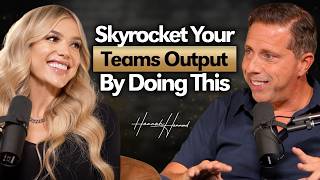
Interview of Aaron Bare by Hannah Hammond about entrepreneurship, exponential growth, and flourishing. Aaron recounts influences (father's entrepreneurship, Semester at Sea), career arc (stockbroker, cultural-assessment company, founding Buzzmouth, multiple exits), and key ideas from his books Exponential Theory and Magnetic Zero: think long-term, create 'future memories', practice self-love/energetic coherence, empower teams by defining workstreams, and use AI (Barions) as a flourishing partner. He gives practical tips on selling to big clients, building networks, and leadership habits (make few CEO decisions; make roles feel indispensable).
Chapters
Human beings, we don't love people that are perfect. We love flawed people. We don't want people to walk around and tell us how successful they are. We want to learn from their failures.
How old were you became a millionaire?
26.
Damn, that's amazing. I used to think that once I became a millionaire, I would just be miraculously happy and all my problems go away and like life is sunshine and rainbows, right? But it wasn't. Wherever you go, you go with you. And I was a miserable person that was just a miserable millionaire at that point. The inner work, the personal development and that work had the highest ROI and the highest impact of my business exponentially growing.
And what you just said is just beautifully said, but it really comes down to self love. Because if you love yourself, then all of your actions become easy. Like you do the right thing when no one's looking. When you love yourself, did you ever.
Have anyone who doubted you 100?
Yeah, I know at one time I felt like everyone doubted me. Now I think it was strength. Whenever someone doubts me, it literally motivates me more.
What has been the biggest driving factor of your success throughout your career? Welcome back to the Hannah Hammond Show. I'm here today with Aaron Baer, who is a future strategist, an expert on exponential growth, a best selling author, a speaker coach to entrepreneurs all around the world, from startups to Fortune 100 conglomerates, and he is now the chief strategy officer for Barion's AI. And you guys are creating the flourishing partner for leaders and entrepreneurs through the use of conversational AI. So super excited to have you on the show. You've had 12 exits serial entrepreneur, and you're just super inspiring and in so many ways. And you dive into human psychology, quantum physics and entrepreneurship and AI to continue to scale, have good cultures and all that. So thank you for being on the show.
Yeah, I'm excited to be here. Very, very, very excited. I love watching your show and all the guests that have been on it.
So thank you. I'm really honored to have you here and I can't wait to dive into all of the things that you're doing and some of the books that you've wrote and the lessons that you've learned and the lessons that you teach to entrepreneurs around the world. But I'm really fascinated to understand what specific event inspired you to become an entrepreneur and then going on to have 12 successful exits and then continuing to get involved in new businesses along the way.
Yeah, it's when I was 12 years old. The big event is My dad worked for a company and he had a little bit of a pension build up, and he decided that he was tired to work working for the man, and he bought a Subway sandwich franchise. And so I was a sandwich artist at 12, but watching my dad literally create his future and he became an entrepreneur, which then that day I knew I wanted to become an entrepreneur and have had jobs for different companies and different things, but have always found my way back to creating and building something new. Because at the dinner time, we just. At the dinner table every night, we sat around and talked about business. And, you know, it was just building in my blood. And my favorite movie growing up was Wall street. And I was like, I became a stockbroker fresh out of college and. But the inspiration really is my. My father, who became an entrepreneur and kind of risked everything we had to do that and was successful. And, you know, I just enjoyed watching it. And I was like, I'm gonna do that. I'm not gonna go to work for nine to five every day. Because he was able to come to my soccer games and do have that freedom. And it's like, I wanted that in the future. So that's the first. That's the thing that just inspired me the most, is that he took a big risk for us and then reset rewired my whole mind towards that.
Yeah, that's so cool to have a someone in your family inspire you to get into that space. Mine was the opposite. You know, we were not entrepreneurs. We're not well off any of that. And so I wanted something different. And that's kind of what inspired me to research outside of what my own home was doing, because I wanted a different environment or to create a different life. But yeah, you had mentioned that you did a summit at sea in your senior year of college, I believe, and that changed your thought process on exponential growth and what's possible in the marketplace. What was that experience like for you and what was kind of that shift?
Yeah, I went on the Semester at Sea program and basically circumnavigated the world. So I was. Took out a bunch of student loans and just said, I'm going to do this at all cost. And in that trip circumnavigating the world, I went from Bahamas to. To Venezuela, Brazil, South Africa, Kenya, Tanzania, India, Sri Lanka, Singapore, Vietnam, China, Japan, and then back to Seattle. So on that trip, what I realized, I saw a lot of different places, a lot of different cultures, and I realized the world is much smaller than we think and that we universally all want the Same things. We want to be happy, we want our families, we want to build safe and those different things. So in that I came back really energized to learn and grow. And I just dove into like, how can I one figure out this world? Like, how can I learn as much as I can to put myself in a position where I wasn't just buying a franchise, but I was building something that changed culture, that impacted the world. And that's been my journey is to like, do these learn, you know, lessons that kind of were stepping stones so that I could just find the next thing that I was going to learn and grow from. And then now I'm in the most exponential. I wrote this book, Exponential Theory, the Power of thinking big in 2020. It did really well and it's helped me kind of exponentialize my relationships. And, you know, Now I'm coaching CEOs of $10 billion companies of how to think bigger. I'm in the boardroom all over the world. I've worked with Daimler and Coca Cola and Belfius bank out of Belgium and MNC Saatchi out of Australia. So I've been to 103 countries in all 50 states facilitating experiences. And that really became my. Was my side hustle that became kind of took over a lot of the business activity that I did because it was just the most interesting work I could do and learn. And I'm just a sponge to learn. And it really started when I went on this semester because I was going in and out of all these different cultures, seeing things from a new other people's perspectives. And then I was able to easily see kind of the opportunities and businesses because I was literally thinking on a different level. Because I wasn't thinking on the level just taking everything for granted or not really thinking critically or being creative or using my imagination. I was fully tapped into that and that helped me create a lot of success and a lot of failure. I've had more failure than success. That's. I mean, in businesses in general. And I think everybody that's been a business owner needs to admit that, you know, so everyone out there that's not a business owner doesn't think that you should be successful right away. It is a series of failures that you really learn who you are is when you have nothing and you can build back from that. And that's been my experience. You know, I've sold 12 companies, but people are like, wow, you know, you sold 12 companies? They think that I sold one and I put all that money away. No I took all that money and put it in the next one. So along those 12s, I went broke a few times and had to build all back up. And that's the thing, is it gets a belief system, is once you have that belief system, you can do it. No one can take that from you. And it's. You have that. I know that you have. We've had. We've had that conversation.
So, yeah, I had Tony Giorgiano on my show, and he said that something his grandfather taught him when he lost everything in the 2008 crash was you need to have liquid assets and liquid knowledge. And that's the nice thing is, as you. You know, I've always been a student of life, a student every single day. I'm learning all day, every day. That's why I started the show. I'm like, I want to learn and I want to teach other people and help other people rise. But it's. Nobody can take your liquid knowledge from you, and you can always be a valuable person in the marketplace through consulting or through services or whatever problems that you're able to solve through that knowledge that you're acquiring. And so I think it's so important for people to continue to learn and grow every single day and be relentlessly a relentless student and relentlessly hungry to continue to expand, because the world is evolving every single day. And if you. If you're not growing, you're dying.
Yep.
But, so what was the journey initially, when you got out of college, you said you went and became a stockbroker. How did that ultimately lead into starting your first company? And what was your first company, and was it successful or not?
My first company is kind of a good story. It was much later. I mean, I was a stockbroker, actually went back to graduate school again. I had a whole series of. And it goes to education, as I'm not enough. And, you know, I had this experience, and I write about it in my book Exponential Theory, but I had a teacher that flunked me in my senior year, and I had to go to summer school to kind of graduate. And I graduated in the bottom half of my class. I wasn't very promising a student or scholar, but I was really good at soccer, so I got a soccer scholarship. The. The place that I ended up landing to kind of get into my career, it was a stockbroker. And I ended up getting the lowest score, which at the firm, they're like, whoever gets the lowest score is always the highest producer. And so, like, I had someone that literally gave me A little bit of a belief system. So then I became the highest producer, right? It was like, and, and that's what people don't realize is like when you're searching for I'm not enough meaning like people have put you in a place that, you know, have you against the wall. I then saw that many times throughout my career. I was like, I'm not enough, I need to do more. And I, I sold companies for nearly nothing, you know, to kind of reinvent myself and different things along the way. And I finally got, and honestly it took me 20 some years to kind of figure out this enough. I mean, maybe I'm a slow learner and along the way I had successes, but I probably caused myself a lot of friction because I was always like, I need more, I need to do more. So I ultimately found a company, these two ladies that had a cultural assessment company. It was 2000 and 2000, 2001, we're right before, you know, 9, 11 happened. And there was a world, there was a shift there in corporate culture. Enron, WorldCom, Tyco, Yahoo, all these different companies. I ended up landing all those companies as clients because I created a cultural assessment with these, these ladies. And my, my deal was, this is the kind of the deal I came in. I said, hey, no, no risk. I don't want you guys to take any risk on me. I like what you have. I believe I can sell it. Right? At the time they were doing about $250,000 a year in their cultural assessment. And I said if, if I can create, give me 25% commission on everything I sell and give me 10% equity for every $500,000 I sell. And that was my deal. And that was a no brainer to them because they're like, that'll triple our revenues. We can give them 10%. We're going to be living the high Life. Well, in six months I created two and a half million dollars in sales. So I own 50% of the company. So my first experience and then, then literally we kind of figured a happy way. So I didn't take over the whole company the way that was structured, but that was my first entrepreneurial experience. It was all about selling, which is the lifeblood of any company. Anyone can tell you anything different, but if you can sell something imaginary or real or whatever. There's been many companies I've created off of PowerPoints that people thought it was software and then I had to go back and actually build it. So these little belief systems start to add up to create a mindset like, oh, I can do it. I am enough. Yet that driving force kept me. I went back and got an MBA later thinking, I'm not enough. I didn't need an mba. I was literally starting companies build a great network. And it did help me. I went to Thunderbird Global School of Management. I ended up becoming entrepreneur in residence there while I was a student, and then stayed on for 12 years and was a professor at Thunderbird and ASU teaching entrepreneurship and innovation. So it led to some good things and a lot of different partnerships along the way. And it ultimately led to me starting a digital strategy firm that grew quite a bit. And I sold that in 2014, 15 that, you know, we had clients like Google, Harley Davidson, Coca Cola. And I exited that and ultimately became this innovation facilitator where I would talk to boards and senior leadership teams around the world. And that kind of created my career, all while I was still back home building businesses. So I'd be on the road for a couple weeks back home building a company. So it kept myself busy.
So did you see an opportunity specifically in culture and seek out people that had something in that space, or did you meet these, these lad randomly and just liked their product and the way they worked and then decided to, to run with that?
Yeah, no, I. I think culture has been my career. All my different startups have had something to do with people like assessments or, you know, even Baryon's right now is a flourishing partner for human beings. Like, and it's the AI of humanness. And we can, we can get into that. But along the way it was just like, you know, how can I have, you know, how can I make a dent using technology? And people were adapting to technology and humans were the problem in adapting technology. And we still are. Technology is now moving faster than humans. So how do we help people embrace technology in a way that it benefits them? And I think I've always had that mindset. I was a coder. After I did go back to graduate school, I got a job at Accenture and I was a coder for a while. So I know how to code. So I would just code something up and I would literally launch businesses. And that's where failure was like an option. Because, like, I'm just talking about my weekend time and energy, and I would roll a business up, I would go to market, kind of sell it. Even with the PowerPoint, like I said, I one time sold a company called purposely. My first client was. I literally went in with a PowerPoint that I had made and it Looked like a website. And I clicked through it like it was a website that ran. And I had their stuff in and everything. And see, yeah, we have your profile in here every already, and this is what we do. And they wrote a check for $250,000. They were my first client. And then I'm like, okay. And then I gave myself six months to build that, and it was pretty easy to do. And we were up and running, and that company actually went to be worth 20 or 30 million dollars. And I exited out of that. So that was a big win in the middle of all those travel and everything that I was doing. So it's just been to me, the. The idea of creating something. And I would just say, we have a world right now that is full of consumers. And I think the biggest thing I can say any of your listeners or anything, just go create. Just like you. You're creating your world. I mean, I've heard, you know, we've talked before and I've heard your different podcasts. It's like, go create. You know, we're in a world of creation, and we've never had an equal playing ground where everyone can create things very, very quickly and very good things very, very quickly with the technologies we have. And that's an exciting part of today is like, most people see AI as shrinking. You know, the job market. It definitely is going to shrink the job market, but it's going to be an explosion of opportunities for creators.
Right? Yeah. And just before we go forward, because this popped up as you were talking, what was your strategy to approach these massive clients like Coca Cola? You know, how did you. And especially if you were someone that was young, you didn't have a big track record, I don't know if you had any sort of relationships or plugs into those companies, but how did you go after those companies to sell your product?
Like, again, if you get these little things that you start to believe in yourself. And I have this belief that everyone I meet and I still believe this. And I. And I say it because people me and I was like, they introduced me to their most important people. And whether that's me coming in and whatever I say or whatever I do, that belief system works. And it's on a quantum level. It works. It's fun for me. It's a game. And then it's a game like I've had. Coca Cola, for example, was through a business partner that I started a foundation through, and we were able to get in there and kind of do all kinds of different things. And then I was able to create a workshop on disruption and on AI and technology back in 2018, and got to know their hundred top executives. And then I did things in the boardroom and such. And then what happens is all those executives then eventually leave that company, go to others, and bring me in to facilitate. And that's where my career just kind of took off, where I've been in and out of 500 different companies. But my, you know, way to get in is just really a belief system. You know, one time I had a sales conference I ran. I'm jumping all over here because I've done so many different things. But to make the point, I. I ran the national association of Sales Professionals, and we had a conference, and we had about 150 people at this conference. It wasn't a big one. I was emceeing it and leading it, and. And I said, you know, we're only a couple phone calls away from anyone. And I put this challenge out to the audience or whatever. And then it's like, who do we want to contact? And at the time, Bill Gates was the richest person in the world and probably the hardest person to get in touch of. And so I said, okay, before this conference is over, we're going to get Bill Gates on the line. And all of a sudden I had a notch in my throat and I'm like, what did I just commit to? What am I doing here on stage in front of these people? But then I said, let's swarm this. Let's figure out how we can solve this problem together. Because this would prove to all of us right. This would be a good proof point, a good belief point that there's no one in this world that would be impossible to get a hold of. And this fun little experiment led to all kinds of different people finding connections. And ultimately, one of the people in the crowd had a neighbor that had a cousin that was friends with the lady that was one of Bill Gates secretaries. And this happened within 15 minutes. So then you start to learn. It's like, oh, wow, we are all that six degrees of Kevin Bacon is like, every one of us in the world are really six degrees from someone, and some of us closer than others. And I've always prided myself on building this network. And anyways, we were able to get Bill Gates on the line. Wow. And from those connections. And these people are now believers that they can connect with anyone in the world if they really have a reason. And our reason was, is we wanted a proof point that we could connect with Anyone and literally she talked them into just calling us and you know, we, we put him on the phone in front of everybody and he's like, well I hope you have a good conference. And he's. It was just a brief one moment like 20 some years ago or whatever. I don't. 15, 20 years ago. And but it from then it led to, to answer your question is like there's no door I am not able to knock down. And now I've built a network that there's no door that I cannot have someone introduce me into. And that's makes starting companies very easy. It also makes advising companies easy. It's why I'm on the board and advisor a lot of different companies because I'm just helping people weave the web that they need to weave. Yeah, because it's just like understanding the business model and understanding who are the people that you can leverage and how can you help them. And it's always going in and asking for help. Like if people call very busy people and you know this ask for help, some will turn you down, but the majority of people will give you that help. I mean it's in their nature of successful people to help other successful people and you know, their success becomes theirs and all tides rise, you know. So it's to me it's just been a fun ride of weaving and I've helped. A lot of those companies were started in my digital strategy firm and it was like people that didn't have the resilience to build the company up to where that I then I believed in it so much and I took it over and helped them kind of build it up and sell it.
So and what does digital strategy mean to you? Is that like tech using technology as strategy or what exactly is your digital strategy firm about?
Well, it was called Buzzmouth and we, we did largely content strategies and then we built software apps. We ultimately become developers of a lot of different technologies. But then it was like technology first, how do we build an engineering first company versus a sales led company is how do we sell to people Using the viral loop and viral coefficient. I talk a lot about it in exponential theory is companies are very exponential are thinking about like how do I serve a billion people? Not how do I serve a little niche but they may use those as stepping stones to get there. And that's where I'm at in all of the current companies I'm working with is like helping them think through is what's the next, you know, literally horizon that I have to cross to get there. And, and then we just help people kind of understand that no horizon's impossible like these conversations, but it takes execution and it's a matter of picking up the phone, connecting the right people, connecting the right technologies, having the right money or spend. You know, I've raised over $150 million for different companies I've been involved with throughout my career. And you know, I've, I've had fun doing it. And it's like, it's just part of a process that you know, for me is weaving that web. And it comes from a book, Tipping Point. I know you like books. Malcolm Gladwell's Tipping Point, which is, was a popular book for a long time, but there was a, something in there that I read that, you know, you can be successful if you're a maven, a salesperson or a connector. And I decided I'm going to be all three.
Yeah.
And it's been, been fun ever since, you know, and it literally is a belief system. It's not even. There's a lot of times I don't have the answer that I'm just pushing forward to figure out the answer while I'm doing it. And I think that's the entrepreneurial nature, the entrepreneurial spirit of people to be successful.
Yeah. And that's a good segue into your book Exponential Growth, which was a Wall Street Journal bestseller, I believe. USA Today bestseller also. So. Yeah. What are some of those key principles in the book going deeper into the belief system? And I believe that book is where you talk about the hermetic laws as well. So can we dive into that a little bit and the importance of our belief systems to achieve exponential growth in all areas of our life and business.
Yeah. So the book's Exponential Theory, the power of Thinking Big and what, what I really wrote that and it took me 14 years to write that. So part of me out speaking to doing innovation is I got in the room with Jeff Bezos and Elon Musk and I saw how they thought differently. And you know, I think one of the keys to being really exponential is having a long term mindset. So many people are, you know, in all reality, all successes is if you only think about tomorrow, which is a lot of people just think about the weekend or maybe tomorrow. You're unlikely to make have any success in your life. I'm very unlikely. I mean even if you won the lottery, it's going to be gone. The longer term horizon that you see yourself one, the healthier you are, the, you know, every aspect of your life improves because you start making decisions out of discipline and out of the fact that you want something that's bigger than yourself. And that's where I've been successful in creating companies is okay, how do I create this? So it supports people, but it supports, it solves a problem. There's a real problem in the world that we can really help people kind of grow in, grow into themselves or they see themselves. And is that instant gratification is important and along the way and being an entrepreneur, but the delayed gratification of building something that's incredible or insatiable, where people feel it's irreplaceable, which is a lot of technology is not because people don't have a long term vision. You know, if you're thinking in Exit, you're already probably failing. To me, it's having the mindset that these people and I write a chapter, it's about the long game, is that when you think long term, you rewire your brain to not worry about the events of the day. And I, and I also say this is like exponential theory of thinking big is you no longer sweat small stuff when you're thinking long term or you're thinking big and then you raise more money, you're around more influential people, you're helping everything becomes bigger and you create conversations. And that really goes to Magnetic zero, which is my next book that I've written. And it really is the proof point of how Exponential theory. Exponential theory was a theory that if you think big, you start to become, your consciousness grows and you start to realize how to make a bigger impact. And if you really think about billionaires and all these people in the world, they've created something of such value that people exchange money for it. So that value creation creates wealth. So we have to sit back and just admire people that create value. We cannot sit back and admire people that consume or criticize. It's all about creation. And that's really, you probably see some political views in there, but it's really like, how do we think bigger about ourselves as human beings so that we can actually make an impact on the world, whether it's on our family. I always say being an entrepreneur, the one thing about being an entrepreneur is it takes one person out of the job market and gives a job to someone else because you can be an entrepreneur and then once you hire someone now, you start to make a big impact. And that's what we don't think about as entrepreneurs is it's the lifeblood of, it's the fabric of business. I Mean, we can say, you know, big companies hire a lot of people. We all are now seeing that in the future it's going to be all about entrepreneurs and it's going to be about people having this mindset and the bigger mindset you have, the faster you'll get there. Because if you're dead set on being a trillion dollar company, that visualization, if you can get other people to believe in that, and that's where I'm at in my current company, is having that conversation. Once that's locked in, then opportunities just come in all different directions to everybody in that company.
Yeah. There's a quote that says when you commit yourself fully to something, the universe aspires to assist you.
Yeah.
And it's so true. And it's so, it's been so fun for me because in the masterminds I'm in and the, you know, whatever room I'm in, I try to be the lowest on the totem pole. Like I always trying to be around people that think bigger than me. And one of my mentors, who's one of the wealthiest people I, I know personally, but he, it's so fascinating because I have conversations with him and we meet once a month for an hour coaching session and he just has these ideas like, well, you just buy that company and then you just raise the capital here and then you just buy that bank and then you just scale over here. They're just like, oh my God, I can do that, can I do that? Like, is that real? You know, and so then, and then your brain starts to be like, oh, what if I can do that? Like if that person could do that, I could do that. Right. And so it's just continuing to level up your thinking because you're not usually going to create something bigger than the confines of your own thought or dreams or desires. Right. And so if we can continue to expand that and then, you know, for me, where I'm at right now is I have no problem thinking big. Although I continue to think bigger because I'm always around people who think bigger. But then it's a matter of, okay, but we're here like it's a startup, so the, how do we execute on that vision and what are the right moves to make alongside that? So in your opinion, for people who are maybe in a startup phase of their company, you know, have some success, made some money, have some good team members in place, but really have the vision of building a billion dollar or trillion dollar company, or 100 million, whatever the goal is, that's a big goal. What should they be thinking about today in order to actually execute to get towards that goal?
Yeah, I think the biggest thing is to find a problem that's big enough to, to be that. And, and literally also that is, you know, also focused enough that you can execute on one thing. And what's important is to focus on the one thing first that you're going to do and getting a product to market that actually makes sense. Once you get the proof points yourself, you know, like the PowerPoint or the different things that I've done that kind of share that earlier. It's then once you start hiring people and you start realizing like I got to grow this or I got to raise capital. When you hire people is to make sure that they understand that they're the most important role in the company. And I think that only works as long as they understand also that every other person is the most important role in the company. And that's where you take ego out of it. And then this is part of bearing ons. And what we're doing is helping people flourish is about personal, professional and organizational. It's like we're all human first and we're all personal first. Like when it comes down to it, business is personal. You can have professional relationships, but professional development is just dressed up. It is personal development dressed up for professional. Organizational development is literally just how do I help these people thrive or flourish in an organization so that I can actually create the most value out of that. So the first thing that I always help entrepreneurs, if I were to create like a four step process, is how do you get everyone in the company believing they have the most important role? Part of that is leadership too. It's like giving them the most important role. And if you're CEO, you should be only making three to five decisions a year. You should be relying on your senior leadership team, depending how big it is of course. But as you grow that when everyone does know they have the most important role, then it's like do they understand how they can create the most value for the company in that role? And so these are conversations that I generally have over a few month period that I work with companies and then the next really conversation that I have is, is like how can you develop one work stream that you're incredibly the most valuable person and that it is essential for the company's success and that's when you become irreplaceable and indispensable. But that work stream also then is like if someone's in marketing, it's like, okay, I need from top to bottom to create content all the way through to getting leads, to getting, you know, building a partnership and affiliate program to get people to kind of share it. And it creates a viral loop. If you define that work stream really, really well and you understand how all each of those pieces work and you build a team around that, that's when you start to realize that companies can become exponential because it's about becoming repeatable, then predictable, then scalable, then sustainable. And then I like to put in thriveable because once you become sustainable, it's about giving back. It's about some of the other programs that you build in the exponential companies that I'm building and I'm part of it's seeing that you have to make an impact on your people to flourish. But once your people flourish, then externally everybody's going to flourish. And that's what led me to my current company, Barions. And then the last thing is really developing the leadership mentality that you only make three to five decisions a year and that you enable your team in their work streams that are closest to make the decisions, that they're going to literally make those and have fun and creating a culture that's flourishing and fun. And I say fun is flourishing. My only rule is to have fun. And I use that as a parenting rule. It's a great for any parents out there, it's a great little rule to use with your kids because it's, is that fun to be, you know, to bully your brother or is that fun to, you know, act out? And then you realize is like you're, you're literally focusing people on what people want. At the end of the day, we're here to have fun and flourish. And I'm, I have a podcast called the New F Word. I'd love to have you on it. And the new F word is flourishing. And part of that is talking about like, how do we help human beings find their best potential? And that's what these questions are. This four step process in creating an exponential leadership group is. That's when you start when people understand their work stream, their value and their, they're the most important thing. And they have a leadership that just removes obstacles and then navigates the fact that each of them have the most important role and they collaborate on the right things at the right levels because they have respect, because they have curiosity, because they have confidence and because their future really has clarity, because they start to like define further and further out visions. And that goes to these leaders that have very long term visions. When you can think out and say, this is where I want to be in five years, which nowadays is long term or 10 years. And my question, I always start when I'm doing executive leadership is like, and I think I asked this to you the first time, where are you going to be in 10 years? And you had an answer on the dime. You were just like. And I was like, oh, wow, okay, this is real. She knows her stuff. But most people do not know where they are going to be personally, professionally, organizationally. So it's helping people kind of figure out how do I attract that future. And I even say it's not visualization, it's centralization. It's like 10 years from now, what does it feel like, what does it taste like, what do you hear? And once you can create that vivid picture of who you want to be and all the things that are happening around you, one, you're pulling that to you. And that's magnetic. Zero, that's you're attracting that to you. And in that, when I do that, in all of my executive clients that I've had, we speed up that process, we double that process, they'll be there in five years. And even now I'm seeing two years. So that vision, once you have that absolute clarity and confidence and then you're still curious about how to happen. Because once people, the problem is a lot of people. And this is what I'd say is that what I've learned is like, I don't really know anything. And once you think you know something, you literally have now stopped. You said this earlier, you start dying, you don't grow anymore because things are changing so fast. You have to have a childlike wanderer just to have fun and play with everything you're doing. And when you have a mindset of people that have the most important role, they understand the value they create and we just play. Then mistakes become fun. Then we laugh at things. We work not to have them, of course, but you share them because it's psychologically safe to share them. And that's when you start in a very small group. And our company right now has six leaders that have C level titles. We are a living experiment of this and we are finding flaws in the human condition amongst us six and exposing them. And now think about this. And then we're consciously, literally growing together and flourishing together by literally just being human, by the fact that none of us on this planet are perfect. So it's just like, why not just enjoy the process and have Fun.
Yeah.
And let it unfold.
That's exactly right. And it's. That's something I'm so passionate about. And that's. What I'm writing about in my book is all about energetic intelligence and the importance of, above all else, maintaining a peak energetic state, which is fun. It's play, it's creation, it's visionary, it's operating in your zone of genius, where time goes fast. Like, conversations like this. Like, I love this. I could do this all day, every day. And which is why I do a lot of it, right?
But.
And creating and strategizing on my business and all these different things. It's like, how can I stay in that state 90% of the time? Because one of my very early coaches in life, he said the outcome, and I say this all the time. The outcome can only be as great as the energetic state in which you initiate the action. And so therefore, my number one priority, to have good, amazing results and have. Create whatever life I want to create is to maintain a peak energetic state at least 90 of the time. And I. I leave 10 of my life for, like, okay, I'm gonna let myself grieve or be angry or whatever, because there's sickness and death and loss and all these things. But it makes it so much easier because if you're in that energetic state, all the things you want start to flow to you. The right people who are aligned with you. Like, when you know your core values, when you know who you are, when you know your worth, when you know your impact, your passion, your vision, all these things, then the universe literally conspires to assist you. But if you're living in this victim mentality, low energetic state, boredom, frustration, fear, anxiety, anger, depression, all these things that most people live in, right? I think in Outwitting the Devil, the book by Napoleon Hill, one of my favorite authors, he says 98. 98 out of every 100 people live in that state of fear and lack and scarcity versus the abundant thinkers who are those grand visionaries and who just have fun with these problems. And so it's so much nicer because I learned. I used to think that once I became a millionaire, I would just be miraculously happy and all my problems would go away. And, like, life is sunshine and rainbows, right? But it wasn't I. Wherever you go, you go with you. And I was a miserable person that was just a miserable millionaire at that point. And so it became the. The inner work, the personal development, and that work had the highest ROI and the highest impact of My business exponentially growing, and now it's just fun. It's not tied to the outcome. I don't need to have this to feel better. I enjoy every single moment. And even when there's pain or challenges or massive losses financially or in relationships or whatever, it's just. I don't resist them anymore. I just welcome them and say, okay, what's the lesson in this? And I think that's one of the hermetic laws is every greatest success, the seed began in your greatest failure. Right. It's like the law of polarity. Polarity, yeah. And it's just that thing is like, okay, what can I learn from this challenge? What can I learn from the storm? And I'm already. I'm in the storm regardless, so I might as well enjoy the process as much as I possibly can and not resist it and let it drag me down, because that's going to create negative outcomes in everything else in my life, which can go back to. I don't know if that is that Murphy's Law or something, but, yeah, it's so important, and it has a bigger impact. I believe, in my personal experience, it's had a bigger impact on my life and my relationships and my health and my money, my. My wealth financially than any business coach or, like, sales meeting or, you know, marketing process ever could have or ever did have for me in the past.
Yeah, well, change is personal. And that's where, like, nothing that happens is good or bad. You define it, and that's. I don't know if you've ever heard the Chinese farmer parable. There's a Chinese farmer, and he has a horse and it runs away. And so his neighbor comes by and says, really sorry. The horse ran away. And he said, maybe. And then the next day the horse comes back, or the next week, the horse comes back with 10 other horses. And he's like, oh, wow, the horse came back with 10 other horses. He's like, it's really good for you. Good fortune. And he's like, maybe. And then the next day, his son's out there trying to train one of these horses, and he gets bucked off and breaks his arm. And the villagers come by and say, oh, man, this is such bad luck for you. Your son broke his arm. And he said, maybe. And then the next day or the next week or whatever the story goes, the army comes by to recruit his son and says, well, we're not going to take your son because he has a broken arm. And then so all the villagers come by and he's like maybe you get. The story goes on and on and on. It doesn't matter what happens to you. So it's a matter of how you react and respond. And that's another hermetic law that I speak about. And I think these ancient truths that have been around for literally 3,000 years are so relevant to today. I mean, it goes. Includes the. The Stoics, kind of studied them and, you know, I included in my magnetic zero. And what magnetic zero has kind of created for me is this place where I can be. You know, you talk about the 90% and, and it's if nothing there's good or bad and you know, you literally, however you see the world, like things are going to happen to all of us. Not good things. The world's real. There is a reality. But then you have your reality and it's all painted internal. And that's where the personal nature of rebuilding that from the ground up is what I did, you know, and that's where over 20 years. You know, I think the. I have a. The book Magnetic Zero is kind of written with a comedy partner of mine that we do a lot of comedy and, you know, has this idea. There's a lot of people like, I'm so frustrated. I'm doing everything right and just not paying off. But where is their energy? Right? So it's, you know, where your energy goes, energy flows. You talked about flow. The state of magnetic zero is the flow state. And it's also, you know, it's where coherence is. It's where things kind of are easy. And I always. Everybody's like, well, are you busy? I'm like, why would I say I'm busy? Like I have time for whatever is important, you know, so it's a mindset shift to kind of create this new future. But what I built around is this idea of the zero principle. I'm sure you heard of first principle by Elon Musk that says find the root cause of the problem and you can engineer it from there. But I believe I've created something called the zero principle. And the zero principle is start from nothing. Because with AI and right now, we can recreate anything from zero and we have zero constraints. And Elon Musk, actually, I would challenge that. He is starting to think it's zero thinking. Because he's like, I'm going to colonize Mars by 2040. Such a big goal that now SpaceX is worth hundreds of billions of dollars and Tesla's worth trillions of dollars. And what do you need to do to colonize Mars, you need electric vehicles, you need solar energy, solar city, you need boring companies because you're going to have to terraform underground, you're going to need neuralink to communicate, you're going to need a communication platforms like Twitter. So you start to think this guy is literally just playing a game and he's like, if I'm going to colonize, I'm going to need how to solve these problems. But now he's zero principal thinking because he's creating from something that's never been done before. And that thinking is what I've studied, I've studied a lot of that. And in magnetic zero what I realize is that people have a relationship with their past and until they have peace with their past, they can never be in the present. In the present they have to have love because love is what that is, what radiates out to everything. And I call that zero is magnetic zero. And it's impossible to have pure love in a sense, but you can aspire to have that. And, and then the future is really having like curiosity towards the future, is having gratitude for your future. And this is where I've heard you speak about this is if you want to create something, talk about it as if you already have it. But I call it a future memory is your mind doesn't know the difference between reality and what's internal. And that's where when you can paint a new picture internally, stuff starts to show up. And this is what you were saying before is like life gets easier. As you're in coherence and you're in flow, what happens? That stuff was always there, you just weren't aware of it or open to it. And now all of a sudden you're like, wow, there's things right in front of me that I'm seeing, that I'm experiencing. You know, whether it's a relationship or a business opportunity or whatever it is, that stuff just starts to appear. And then because you're open to it and you're not focused on what you don't have, you're focused on creating, not consuming you. Then all of a sudden like life unfolds in front of you. And that's where I always say, let go of the past, let what has happened be now. Like zero resistance in the present. And resistance is if you're going to fight reality, you're always going to lose. So if you're in an argument, you can stop right immediately arguing and just say, what do I need to learn from this? And you won't believe what better relationships I have from just taking that one little piece of advice. And then the future is just literally having zero limitations. Like why the things like yes, I believe now that we're on this, you're going to have a bank and you're going to have all these. And I know how big you think and I think that's just a matter of time to let it unfold. And you only have to see this far. You don't have to think through everything. It's just once you have those proof points then it gets easier and easier as you climb that ladder. And that's what's been fun for me because I've climbed the ladder, slid like shoots and ladders, slid back down, but loving the fact that I get to build myself up again. And the reality is that's human beings. We don't love people that are perfect. We love flawed people. We don't want people to walk around and tell us how successful they are. We want to learn from their failures. And that's why I always like lead with like failure. I've failed definitely at more companies than I've succeeded. But I was able to put myself in a position with the skills I have to just bounce back. And that's the resilience, that's the anti fragility, that's kind of part of magnetic zero. So once you have, you know, literally if you think about your past and you have zero attachments so you can let go of everything in the past and you just let things be and you have zero resistance to the current moment now one, you do have peace and love in your life and then your future becomes gratitude because like everything that happens, you use the Chinese farmer parable that I just gave and you realize like nothing is really good or bad. You know, a breakup is not good or bad. It's what you make it in all reality. All I know is unless it ends there, because you decide to end it there, it's going to be good because you're going to go on and you're going to learn from that and grow from that. Whatever happened was meant to happen for you to learn something. And that's where people are like, it just keeps happening to me. Like I'm in this loop and so I'm coaching people that have this problem like, well, what are you learning from it? And then like there's nothing to learn from this. It's like what I don't want. I'm like, well, why do you keep attracting this song, this thing that you don't want, whether it's a relationship or business partners or whatever. And it's like, then you realize it's like, well, if you just let it go and you let it be and you let it unfold. And let it unfold is the real key is not having an outcome so specific. Like everyone says, have a smart goal and just work towards whatever. He's like, no, just have the crystal clear idea of what you want and then have the awareness to know that it's right in front of you and it's unfolding in front of you. Then life gets easy. Then you just realize, like, you coming to my life and me being on the show is going to lead to something and this and that and the other. And then it's just like, just have fun with it. It doesn't really matter what happens. You just are here and you're here for a short glimpse in time and the universal history. And that's where magnetic zero is. Just living in this place where you want to magnetize yourself. Electromagnetic field. Get rid of all of your attachment resistance or limitations. And then you're just sitting there and you just realize you're aware of all the opportunities around you. Just like when we cross paths at the Genius network.
Yeah, I know. It's so beautiful. And just losing that attachment. And I love what you said about love. Like it all is love. Everything is love. And if we don't have love for ourselves first, and that's the biggest one, I think not a lot of people love themselves. Yeah, right. They try to put on a front to make up for their dissatisfaction of themselves or the shame or the guilt that they carry. But that was the biggest thing for me is until I learned to love myself and not to just talk myself into it, but like truly profoundly love myself and have compassion for me and who I am or the, the, you know, the little kid that I hated or whatever, right then I was able to actually start loving others and I could actually love those who had hurt me that I was resisting and instead of just shoving it down, like. Because part of letting go of the past is facing the being honest about the past and having those honest conversations with yourself and with others that have hurt you, that you are, that are living within you. Like a soul tumor. That's what one of my therapists told me, is we just, we developed this tumor as a child and then we don't ever process it or look at it or grow from it. And the tumor just continues to grow and grow and grow and grow. And most People don't even realize it until it's stage four melanoma and it's too late. Right. And so the sooner we can acknowledge I can love somebody and I. They could have caused me harm, including myself. Like, I could have harmed myself. I could have made very bad decisions. I could have things that I regret doing or decisions that I should wouldn't have made again or. But I can accept all of that and still have compassion and love for who I am and understand that I've been given this blessing and this miracle of life and all creation stems from love. And I am love. Like, and I exude love. And until I can really learn that I can't live in this state of flow and I can't truly love other people and have empathy and compassion for other people if I don't even have it for myself.
Yeah. And that's where in magnetic zero, the first step is letting go of your past and having peace with it. And it's, it's letting it go. And it's. It's this idea of zero attachments is the attachments to the stories that don't serve you well. And you can rewrite any story. And that's the beautiful thing about the mind and the neuroplasticity is like, whatever thing that happened to any one of us. And you know, I've had 10,000 people go through this academy that I had that really taught these principles. And many of them are always like, they're stuck on some story. And they're like, but. And they literally. It's part of their identity. And I think the thing that we're creating with this new AI company, Baryons, and we're shifting to is helping people literally think about their future self. So what's the future memory of themselves? And we have AI, which is the greatest reflective mirror where AI now, if you use one of the large language models like GPT or whatever, it can be very validating and actually put you in dysmorphia and literally go off the rails where you hallucinate and all these different things and put people in not so good a position. What we've done is create a contextual layer over those models around the idea of flourishing. And this is where AI, I think, is unbelievable viable. And if people have attachments, it's like having a conversation is, well, why do you have that attachment? And what does that do for you? And how does that serve you? And like, one example is one of our teammates is like, I'm a superhero. Like, I work harder than Everyone else. And you would think that's a good thing to have, right? But you realize everything. Nothing's good or bad. Yet Baryons, which is our ar. Flourishing partner, just said, hey, did you ever think that that doesn't serve you well? Did you ever think that by you telling all your co workers that you're just distancing yourself from them? Did you ever think that when you're out seeking validation from them, you're just rubbing in the face that you're doing things? Did you ever. You know, so it's like getting people to think bigger about themselves. And I think one of the things that AI is dangerous about doing, and we've done this with. If you think about the industrial evolution it led to, literally, we all now have gym memberships, right? We all go to the gym. Fifty years ago, nobody had to go to the gym because they were just physical in life. And, you know, I always use. Like, Richard Simmons came about and he started saying, let's move our bodies. And you may not. You probably don't even know who Richard Simmons is.
Okay, I've heard the name, but.
Okay, well, he's a guy with big hair and he wears spandex. And he. He started creating this movement towards exercising. And then 80s 90s came around, and then all of a sudden, everybody's working out. And the reason is because we stopped using our muscles. We stopped having to be physical. We are now in a place that we are dangerous. We don't really understand this. And this is where I keep on this idea of you're using your mind because you're creating most people. 90, you're 98% that Napoleon Hill said that 130 years ago, or whatever it was, and said 98% of people are over here and they're consumers. Well, they're losing their ability to think for themselves. They're in an echo chamber in social media, an echo chamber in AI and now they're not necessarily creating anything. They're just sitting back and they're literally like. If you've ever seen the show Wall E, they're literally slurping the Slurpees and taking all their calories and drinks and hovering along or whatever into their future. And you start to see this funny, funny thing play out that those people have to start creating. And that's where AI is really detrimental to brain, really, cognitive atrophy that we're starting to see studies come out because people are no longer even thinking. They're just tied to a TV set. Social media, or AI is validating what they're saying. And that is a dangerous mix. And that's where Baryons becomes this must have solution to help you think critically about yourself, but help you flourish, to help you understand what do you need to create in your life, what's next in your life to create? And then what does your future self want to be? And then hold you accountable to that future self. Like all these things we talked about, we basically build into Baryon, which has no correlation to my name, Aaron Baer. It was actually named before I joined the company. But it has nothing to do with me in the sense. But it is every great mentor in the world built into it. So if you wanted to talk to you in any different way, it's going to be able to do that. But what it really does is it holds you accountable contextually to really have clarity about your past. Like solve those unresolved issues that you're talking about. And the present moment is okay, stop fighting reality is like understand what is that meant for you to learn? And you have a reflective, flourishing partner to talk to. And then the future is like if you have a future image of yourself, then how can I help you get there quick by actually changing the habits. And one example I do right now is I have it because I'm at Baryon's and we have these role like these roles we're talking about. And I'm flourishing partner for everybody. I'm like, how could I be chief strategy officer of OpenAI or a company like OpenAI that would make an impact like that? And I'm really talking about Baryon's making an impact like that. And so every day it coaches me. Here's the things you need to learn, here's the things you need to do. So I'm building my agentic workforce that's helping me do strategy at a higher level. I'm building my network plan to help me meet the people that I need to do through AI. So all of a sudden my world is unfolding in front of me. And this is where you have to have the thoughts. You got to put them in words. You got to literally take the actions to get the results. But in those actions is now I have a superpowered computer tapped into all of mankind's knowledge, telling me exactly how to be who I need to be and what I need to do every day and how I need to spend my time and energy. Like how do I need to work in breaks, how I work best in my work style. I can throw in any kind of assessment. I'VE ever taken about myself. And it knows all the ways to help me through that. My human design or, you know, whatever you believe in, it's like it's going to help me get there. So now it's like this experiment. With infinite knowledge at our fingertips, who can we become? We can become anyone we want to be. And that's literally like I see that for you, I see that for your listeners, you know, people that really engage in this conversation. It's available to us right now, Whether it's through my company or any other way. There's hundreds of other ways to do it. It's just a mindset to engage in your own self love. And I think what you're saying is once you have zero attachments and you can be in your present. The reality is, and I always say this to people, is this is the most important moment of your life, this moment right now. Because nothing else matters in the past and nothing else in the future matters. What you think about right now creates everything. So be very careful with your thoughts. And in that, then you realize you have ultimate power to change whatever things in the past you didn't like. You don't ever have to look back. You can put those in your rearview mirror and just literally look out the windshield and drive towards the goals you want to create. Because like then with these other ideas, when you have those zero attachments and you let things go and you're always letting things go. And that's the whole point of my book, Magnetic Zero. It's about the art of subtraction. Every other self help book says you need help, that you need to do all these things. What I've really found out through my experience in Magnetic Zero is I need to let go of all these things, these stories, these identities, these things that other people told me, including how I started off, where I told you my teacher in high school flunked me and you know, said I was. And I don't know if I actually said this back at the start of the interview, but said I was not going to be enough. And then in that I, for a while I wore that like a badge. I'm not enough. I got to do more. And I ended up spending $600,000 on education and all these things that kind of proved to myself that I was enough. Only to find out I'm never going to find it out there in the external world. I had to work in here. And once I had self love, then I just became aware of like, oh my God, I am surrounded by people that can help me. People that are thriving and are flourishing. And I literally just had to tune in to being aware of it. And that coherence, that tune, that frequency, the high vibration you're talking about, then it's like all of a sudden like, well, it's pretty easy to live life then because you just like understand that everything's an opportunity.
Yep.
Yeah.
It doesn't. There is no destination. So you have to enjoy every day this present moment right here, right now.
That's all there is right now.
The goalpost is always moving.
Yeah.
And I mean you. And there's always new levels of the game. You know, people are like, I have a long way to go. I'm like, we all do. We always will. Like, it's, it's the evolution of life. And so we're growing or we're dying and that's. We want to keep growing in, in and flourishing. And I think we can have it all. And that's not to say it's easy. It's not easy, it's very hard. But if you don't resist it and you are true to who you are and you stay true to your core values no matter what, and you always operate with the highest integrity and care about serving other people and being the best version of yourself, then you're going to be able to create whatever you want in the world and the universe will conspire to assist you.
Well, in what you just said is just beautifully said, but it really comes down to self love. Because if you love yourself, then all of your actions become easy. Like you do the right thing when no one's looking. When you love yourself like it just becomes easy. Like there's no. And then the world unfolds because you realize it's not just karma, but it's like it's in your own belief system that things will unfold in your favor is then like all of a sudden you believe they'll unfold in your flavor. And that's where if nothing's good or bad and you get rid of your attachments and you're not resisting and you're not getting in arguments and you're not wasting that energy. And this is your high vibrational state, the 9010. Once you recognize that you're doing this, it's easy to flip a switch and say, I just want to choose happiness. I want to choose growth, I want to choose learning. Because if something happens again and again in your life, it's happening for a reason.
Right. You're the common denominator you are.
It's happening to you. And that's where like victim mentality comes. It happens to me. And I used to always say is you want to go from. To me to. For me. But I actually go further to say it happens through me.
Right.
And that's where when you realize that when you rewrite this story of who your soul is and who you are, because that soul, you're always. And you said it best, is like it's always going to be with you when no one else is there. It's. There is you treat yourself with kindness and you treat other people with kindness that will like, create a world like that is just full of peace, love and gratitude. And that's where I look at peace of the past, love in the moment, gratitude for the future, which isn't a typical way to look at it. But then it's just like the life's unfolding. And I'm here in front of you in this podcast, going to talk to, you know, you that have a very similar mindset. And like you, I could talk about this forever. And that's why my podcast is all about flourishing. So I'd love to have you on that.
I would love to be on it. Well, thank you so much. Oh, no, we're gonna have to do another one because we're. We have a lot to talk.
We just scratched the surface.
Yeah, I know, but. Yeah, and I love what you just said because I heard someone tell me this once from not, you know, from it happens to you to. It happens for you to. I create what happens. Yeah, right. And that's. It happens through you, is you create everything in your world, whether you think you are or you think you aren't, you are. And when I had a series over and over and over again of ending up in the same situation, like the same. The same chaos, the same outcome, the same partner, the same business failure, whatever, right? I'm like, okay, I'm the common denominator. The answers are inside of me. I gotta fix something in here. Because I otherwise insanity is just continuing the same thing and expecting different results. And after 10 years of having the same results and doing the same thing, I had to go inside and start to just be quiet with myself. And that's where that it all starts with awareness and silence. And that's when I actually was able to, for the first time, connect with God or the universe. The higher power was when I actually got quiet and looked inside of me. Instead of looking for external validation, external answers to. To try to fix me, it Was like, no, only I can fix the pain that I have inside or the conflicts that I have or the resistance that I have. And in that still, that stillness, we have to have that white space and we have to have that stillness to be able to create. We can't create when we're in the noise.
Nope. And you said something, you said fix. And I just, I always say it's going to start magnetic zero at this is we are perfectly imperfect and every decision you've made has brought you right here and me right here. And in that what we don't. And I always like to reframe it because instead of fix it's saying something's broken is we just really have to let go of the stuff, you know, and that's the fix. Heal the heal of the stuff. Let go of the stuff that is in the way that then doesn't allow us to see the future beyond something. It's masking something. It's a costume. And that's where it really comes down to self. Love and authenticity is like you feel authenticity and when someone you know is exuding love, you feel love, you feel gratitude. And that's where the world starts to move in your favor because you, you can walk in a room and I always taught my daughter this and she's getting ready to go off to college, but she still plays this game as we would go into different businesses and I was like, let's change the energy in this room and see how many people can put a smile on their face and how much energy we can grow. And we would play. It was like me here have my daughter playing out this game and you don't know how much free stuff we've gotten in our life from just being. We got upgraded to the three suite, you know, thing in Park City on, you know, it was like this $4,000 a night because my daughter just exuded this energy in this lodge. And so it's just like you realize is energy is everything. And then you know, I know I have a daughter that's going to do incredible things with the mindset that she has because she just like she just managing her high vibration energy.
Yeah.
So simple.
I love it.
It's hard, but so simple.
It is. Yeah, it is. It is so simple. But once you learn the skills, and I'm writing about all those in my books, is how to actually learn the skills to be able to handle, manage your energy and be able to notice when you get triggered right. When I'm still around certain people in my life, I Notice now when my body starts to boil up or tense up, or my shoulders creep up on my ears, or my heart starts pounding or I start breathing, you know, stop breathing as much, but now I can trigger it right away at the awareness of my physiologic physiological reaction. And now I can just smile and breathe and be quiet and be still. Still and. And control. Like, nobody controls how I feel but me. Regardless of what's happening around me, regardless of what you tell me, regardless of what you threaten me or whatever, it's all love. And I come back to love, and I just picture myself loving them. And when I just go back to love and picture I, I love you, then it immediately goes away. And so I can always maintain that state. Even when I, you know, want to angry text the person that owes me $700,000 or something like that, I'm like, I love you. I see you. I'm here. I'm gonna work through this. And you cannot control how I feel. I can control how I feel. And I know that if I succumb to the level of your energy, all that's going to do is create chaos in my world. And I'm not looking for chaos in my world. And so, anyway.
Well, you have peace then.
Exactly. Yeah. Peace. All right, so we're gonna wrap up with School of Hard Knock Style Rapid fire questions.
All right.
All right. How old were you when became a millionaire?
26.
Damn, that's amazing. I was 25.
So.
Yeah, but. But inflation, it was cooler back in your day because we haven't done.
Yeah, well, I lost it many times since then, so I won't say that I stayed a millionaire. It wasn't a millionaire. Always a millionaire. It was an up and down. It's an up and down sport for me. So I like. I like to play the hard game, the school of hard knocks to be that way.
Yep. Love it. What line of business are you in?
Transformation.
Did you ever think growing up that you've created what you've created would be possible?
100%. Always believed in myself. Maybe too much confidence. I don't know. Love it.
What has been the biggest driving factor of your success throughout your career?
Discipline and determination. Like not taking no for an answer. Believing in myself and just letting it unfold. Like understanding that I could get anyone I wanted on the phone or do anything I wanted to do.
Did you ever have anyone who doubted you 100%?
Yeah. No. @ one time, I felt like everyone doubted me. It was more of my mindset than theirs. That's Just a view, an internal view on whatever. In fact, now I think it was strength. Whenever someone doubts me, it literally motivates me more. It's fueled to the fire and it wasn't always right. So it's rewriting the.
Story. Who is your.
Hero? My.
Son. You know.
Why? He fights a rare genetic disorder and he just grounds me in. A lot of the things we talked about is around peace, love and gratitude is this kid has a disorder that is terminal disease and you know, he, you know, he's in my new book, My Gone Egg Zero. I kind of lead off with a story of him almost, you know, in the hospital and, but just the simple of like looking up at clouds and like just enjoying it and he has such joy and simple because the little dude never is anywhere but the current moment. There's nothing in the past that bothers him, nothing in the future that he's worried about. And it's like, so when I spend time with him, I'm at peace, love and gratitude. So he's, I've said on other podcasts, he's my, he's my mentor because everyone's like looking for this magic mentor and yeah, you know, sometimes it's 11 year old boy.
Yeah, that's beautiful. What's the greatest advice you've ever heard or.
Received? The Beatles. Love is all there is to match your.
Point. Yes, love it. And the number one book everybody should read. Other than the ones you've.
Written? Other than the ones I've written. There's, there's a lot I've number.
One book or one of the best books everyone should.
Read. I mean, I mentioned Tipping Point earlier. That's, it's, you know, there's just, I've read so many books. There's so many. I think Napoleon Hill, Think and Grow Rich is, is one that stands the test of time. You know, there's, you know, I think it really is about the book grit. I could go there's, there's a lot of different books. I could start the book drive. You know, there's a lot of different books that have kind of been impacted my life along the way. But yeah, there's too many to name. But I'm named a few there.
So. And if you and I were to die tomorrow and you had to give one last final message to the younger generation, what would it.
Be? Create. Stop.
Consuming. Love it. Well, thank you so much for coming on the show. What's the best way for people to get a hold of.
You? My website, Aaron Bear a r O-N-B-A-R-E.com Baryons b a r y o dash.com Download a free flourishing part. It's free. Get three calls a month. Worth a test. Worth, you know, to. To see if you. If you want to flourish. It's worth a good conversation. And. Yeah, no, just excited to be here, and thank you for taking the time to have me on your.
Show. Thanks for coming on. And I also want you to be on my board of.
Advisors. Okay. Sign me.
Up. No, you're awesome. You're so awesome. Thank you, Aaron. Appreciate.
You. Thank you.
More from Hannah



Never Waiver On Your Values—No Matter How Lonely, Uncomfortable, Or Difficult The Journey Gets

Watch the full video about Ray Dalio’s prediction on the upcoming debt crisis… 👀

Stop Asking “How?”—The One Question That Will Help You Scale Faster Than You Ever Thought Possible

4 Life Lessons That Took Me 30 Years To Learn—But You Can Learn Them All In Just 14 Minutes


This Is Unfortunately How You Can Tell Your Real Friends From Your Fake Friends


