The Silent Addiction Destroying Your Motivation
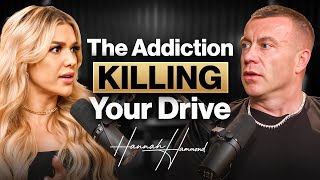
This is a YouTube video titled "The Silent Addiction Killing Motivation - Eric Spofford" containing an English conversational interview recorded in July 2025. The discussion features Hannah Hammond interviewing Eric Spofford about his personal journey from addiction to sobriety, his entrepreneurial success including a nine-figure business exit, and deeper reflections on addiction, connection, and purpose. The conversation explores themes of overcoming addiction, the impact of environment and childhood trauma, and the challenges of maintaining fulfillment beyond material success.
You have a passion for what you do.
I'm obsessed.
Yeah.
I'm absolutely obsessed with it. I love it. I wake up every day just in awe of the process, the grind, the build. It's a game. I love the game, and I love the game and the sport for what it is. And in this game, money's the scoreboard.
It's not like I need to do this. And it's so fun. It's so fun to create, and it's so fun to serve, and it's so fun to impact life.
I thought I would feel this way when I had those things, but now I have those things, and I don't feel feel that way. What do I do now?
Welcome back to the Hannah Hammond Show. I'm sitting here today with Eric Spofford in Miami. Welcome to the show.
Absolutely. Thanks for having me.
And he was just telling me a story about seeing 50 Cent at the gym right before he came here.
Yeah, Miami is just the craziest place. I was at the gym, my friend's gym, Elevation in Midtown. And yeah, 50 Cent walks in with a bunch of security guards. Ended up on a virtual, like, video call visit with my friend who's in jail. Either him or a security guard saw that I was on a call with my friend that was in jail. And so he literally came over and grabbed the phone for me and started talking to my friend who's locked up right now. Just another day in Miami. Yeah, no big deal.
No big deal.
Yeah. Yeah.
That's awesome.
Crazy.
I know. And we were trying to go see him last night, but we can't stay up till 3am We're. We're too old for that. Me and my friend Macy. We're still in our 20s, but I'm almost at the end of that.
Old souls.
Yeah, old souls for sure.
Miami's a late city. Like, dinner's at. If you're gonna do the Miami thing, which I don't do, but dinner's like 10, 11pm Clubs at 1, 2.
Yeah.
Home by 5. And that's if you don't go to the next club. And it's like, you know, I don't.
Know how people do it.
I don't either. You know, it's. It's funny. Miami will make or break you. Like, you come here and there's access to absolutely everything. And if, like, you don't have good discipline and you don't have, like, the ability to say no and stay focused and know who you are and what your lane is, then I've seen A lot of really good people get lost in the sauce here. But at the same time, like, if you want to be around successful people and, you know, leave the house and bump into celebs and influencers and entrepreneurs and all that, there's no better place on planet Earth in the city.
How long have you lived here?
Four years. Okay. I feel. It feels like 20. I feel like a seasoned vet.
Really?
Yeah. It's been a big four years from Miami because after Covid, everyone started coming and so what did I come here in 2021?
After your exit?
Before. So kind of in the process of. I had stepped down as active CEO of that business to executive chairman in March at the same time that I made the decision. Decision to bring it through the. To hire an investment banker and start the process of exiting the company, which, you know, a lot of people don't understand what. That. That's a long process. It doesn't happen overnight. And so I. I had promoted my COO to CEO as a succession plan, and I had all this extra time, and so that's when I transitioned down here.
Okay.
Yeah.
So for those of you who don't know, Eric's just a complete badass. And I'm really inspired to hear your story. I know we're friends with Cody Sperber and a bunch of other mutual connections, and everybody's just like, oh, you're gon Eric. He's absolutely amazing. And he built one of the largest drug addiction treatment facilities in New England. And you used to be an addict yourself, which is what inspired the company. And you ended up having a nine figure exit in 2021. Time frame?
December 21st of 2021. So four days before Christmas, right at the end of the year.
Amazing. Like, how did you do that? And what. Yeah, well, first, before we dive into business, I, you know, I. My brother struggles with addiction. I've struggled with addiction, and it's just something that cripples a lot of people. And I think a lot of entrepreneurs are very. A lot of them are addicted to work also. And a lot of us just are addicts, even if it's more of a healthy channel or not. Right. And so I would love to. You know, it's just. It really hits home for me and it's something I still struggle with, and I always have to check myself of my addictive behaviors and the kind of. Yeah. So, like, what was your story? What did your story look like? And how did you fall into addiction? And then what was that pivotal moment for you where you turned your Life around and then ended up building a massive nine figure, you know, massive company that ended, ended up leading you to a nine figure exit.
Yeah, I mean, I, I, I honestly grew up in, outside of Boston and my environment had a lot to do with it. I never in a million years wanted to be a drug addict. I never in a million years wanted to be a successful entrepreneur. Like, I grew up like watching like gangster movies and like those are my idols. And like people that were like that in my neighborhood were like the guys that I looked up to. And so I started selling drugs before I started doing them. And I actually talk about an entrepreneurial move. I got caught, I think I still to this day in the youngest person charged with a drug sales crime in my home state. And so I was in fifth grade, I was either 10 or 11 years old and I got caught selling weed. Yeah, that's crazy. Yeah, I got caught, caught with like a quarter pound in my house and a kid named Garrett Pelletier. Probably should have, probably shouldn't say his full name, but this kid that ratted me out for selling him a dime bag and cops went to my house, it was crazy. But yeah, that escalated into. I was just always really brazen too. Like I was a troublemaker. I was intense. I was, you know, in fifth grade, sixth grade, I'm selling weed, packing a CO2pb gun like a pistol, like listening to gangster rap music. Like just a, like, looking back, I'm like, it seemed totally normal at the time, but like, this was very clearly not going to end well for me, you know? You know, and if it's, you know, perfect storm, OxyContin is blowing up in the late 90s. 1999, I'm 14 years old, I try an OxyContin and instantaneously fall in love with opiates. And so OCS, you know, a year later, when I was 15 years old, turned into heroin. It, you know, stone cold junkie very quickly. And then from 15 till almost 22 years old, I was addicted to heroin, coke, and every other thing that you could think of. But mainly the, like, the foundation of my addiction was heroin. And by the time I was 17, I, I tried to get help. I went to rehab for the first time and, and tried to change my life. And that didn't work. And from 17 till December 21st, I'm sorry, December 7th of 2006, I tried to get sober and failed to fall flat on my face probably more than 100 times. Went to jail countless times, got arrested countless times, went to Rehab, went to detoxes, went to AA meetings, went to, I mean therapy. I did like everything you can possibly think of to get better. And one thing that I know about that, that I've come to know about that is that if someone doesn't want to get sober and they don't want to change their life, whatever that is, there's absolutely nothing that they can do or you can do to produce that result. Alternatively, if someone wants to change their life, my case wants to get sober. There's nothing, no circumstances at all that can stop them from doing such. And so on December 7, 2006, I had hit complete rock bottom. Like I was like 135 pounds, track marks up and down my arms. Like, didn't have a single person. I used to press star 67 and have to trick people into answering the phone. I'd be like, it's Eric, don't hang up the phone. Like, because I literally didn't have anyone that wanted to talk to me because I my life up so bad and, and I had gotten a lot of trouble and I thought I was going to prison for a long time. My friends were going to prison and people were dying and people were getting killed and it was, it was crazy. And so the morning of December 7, 2006, I went on the run for some trouble that I got into legally and made a decision that, that was the day I was just done. I don't know why I couldn't tell you. I couldn't recreate it. Been working in addiction treatment for the last 17 years or something. 16 years and you know, wish I had the formula to re. To create that moment of surrender for people. I don't. They have to come to it on their own. I just had enough pain. They just beat me into a state of willingness and, you know, reasonableness to do whatever it is that I had to do to get better. And so I essentially crawled into alcoholics Anonymous almost 22 years old with my life completely up in full blown withdrawals from heroin and plenty of other, and sat in an AA meeting with a bunch of old grumpy men that yelled at me and told me the truth. They used to give me a cup of coffee. They would only fill the coffee cup up halfway because I was shaking so bad I'd spill the, all over myself and the floor from withdrawals when I was new. And that's where I started all this from. You know, had no license, no friends, I had two pairs of clothes. I had, I was habitual offender, you know, like when you do too many things wrong with your license, they take it for, like, ever. So I didn't get it back for a while. I think I was like a year sober when I was done that time and I got my license back, lived in a 500 at first. I had no apartment then, and so I was staying on a couch. And then I got an apartment with no furniture. 550amonth in the middle of the hood. They were like, selling crack and like hookers out front of me building. And I'm like, walking to AA meetings. Yeah, yeah, it was crazy.
I'm sure that was helpful.
Again, like, if I wasn't in the place where I was going to get sober and I was going to do this no matter what, I would have found every excuse underneath the sun. You could have put me in Hollywood or in the nicest neighborhoods in the world, and I would have found a reason to get high. And at the time, I was just. I wasn't going to get high and I wasn't going to use drugs and alcohol ever again no matter what. And so it didn't matter. Like, I'd walk out of my building, they'd be selling drugs, doing drugs, getting high in the hallway, getting high in the neighborhood. I'd push past them, you know, walk to my AA meeting, walk to the gym, come back, do my recovery work, eat my food, go to bed, wake up, go to work doing construction, go to my meetings, do my prayer, do my meditation, go to the gym. And just like, there's nothing that was going to take me off of that. And that's, you know, been my commitment and my day to day discipline, which has worked really well for me. You know, I like to say that sobriety is a superpower for me, and it's just been foundational to all of my success. So. This past December, I celebrated 18 years of sobriety.
Congratulations.
Thank you. You know, I've done a lot of cool and, you know, made a lot of money and. And, you know, have plenty of stories to tell. But, like, I think, like, maintaining sobriety through the good times and the bad times is probably like the most notable accomplishment that I'm proud of anyway. Like, selling a business for a bunch of money, like, that's cool. Not a lot of people do that. You know what I mean? But like, staying sober in the midst of, like, an addiction crisis and watching everyone die of fentanyl overdoses and like, all that crazy stuff, it's been a wild ride.
God, that's such a crazy story.
Yeah.
I'm so proud of you.
Thanks.
I mean you're, it's, you know, and it's so, it's just unbelievable because when you're in the depths of addiction or hopelessness or you just feel trapped, like, at least for me, when I felt, I mean, my biggest thing has been food issues. More so than drugs or alcohol though. I've done definitely my fair share. But it's like when you. For me, it was, I wanted, I wanted to not have that control over me so, so bad. But I felt powerless being able to decide like if, you know, even I pass a bowl of chocolates and I'm like grabbing the chocolate, I put the chocolate in my mouth. It's so hard for me to even not grab a chocolate. So I can't even imagine, you know, heroin or some of these other hardcore drugs when they're, you're powerless over them.
So I think food's tough though. Like a lot of people struggle with food. And the difference between like the, the different variations of food addiction is that like, you have to like go over and take that tiger out of the cage three times a day and then put it back.
You can't be abstinent.
Exactly. You can't be abstinent. And so I think that is probably even more challenging. It doesn't get the respect that it deserves of how difficult it is to manage a food addiction. And so kudos to you on that.
Oh, thank you.
Yeah, it's challenging, right?
It is.
And they, you know, they have crazy like versions of abstinence in like Overeaters Anonymous. And I've worked with tens and tens and tens of thousands of people professionally with addictions. And so I've seen everything. And so, you know, it's like no flour, no sugar, weighted measured meals, pre planned for the week, three times a day. Like that's like their version of abstinence. My father was the same really for a long time. Yeah.
I was going to ask you how. And it's crazy with that type of thing, like that type of structure. My brain obsesses it so much more if I put so much structure on, you know, three meals a day, no flour, no sugar. It's like I'll be dreaming about ice cream. It's. It's crazy. So I'm, I'm still working to find that balance. But what was your. We won't go too deep into this because I do want to get into some other topics, but what was your childhood like? Because I know, you know, I, I'm in the 100k group. With Joe Polish. And he was an addict as well, and now he's a super awesome guy.
I know of Joe. I don't know well, though.
No way.
I respect him. Yeah.
But that's a lot of what he teaches is about addiction. And he says a lot of entrepreneurs suffer from addiction, a lot of people in general. And that. He says addiction is a connection disorder. And a lot of addicts, he has genius recovery foundation. And a lot of addicts, they're just disconnected and they're numbing something, you know, numbing the pain that they have maybe they haven't dealt with or that they're living with. And a lot of that stems from childhood. And, and I know for me, I had a very difficult childhood. And, you know, my. There's some traumatic things, like so many of us do. Yeah, right. And it could be so many different levels from just your parents ignoring you and you not feeling loved by your parents, or not feeling protected by your parents, to being beaten and starved and molested. Like, there's a whole range of things, but that whole array of possibilities causes you to disconnect as a child and then seeking things to numb that, that pain and disconnection. So I'm just curious for you, like, were you, what was your relationship like with your parents? How was your childhood? Like, where do you think that, that.
Even, I mean, as, as one might expect, like, my childhood was kind of crazy. My parents are, you know, divorced when I was in fifth grade, and it was a, you know, loud, chaotic, violent household prior to that, and the neighborhood was up. And, you know, it's interesting because I, I, I geek out on that a lot. It's actually for anyone interested, Joe, I don't, I'm not familiar with Joe's work, but a guy that, that predates him quite a bit is a guy named Bruce Alexander, who's a social scientist out of Vancouver, Canada. He actually wrote a forward, the forward to a book I published in 2019. And his, his claim to fame is this, is that when clinical people, medical people, study addiction for a long time, for decades in textbooks, they have, like, a study that really helped create the framework of how we look at addiction. And the study is this. They take a rat and they put it in a cage and they have drinking water and two drinking waters. One is just regular drink water, and one is drugged. It's laced with either morphine, heroin, or cocaine. And in the experiment, it's really interesting because the rat will try both, and then the rat will go back to the drugged water and the Rat will continue to use the drugged water. The rat will start to refuse food and prefer drugs over everything. And it will remain intoxicated. It will become physically addicted to the drugs. And there is a high rate of overdose for the rats. They, like, they drug themselves to death in that cage. And so the interesting philosophy that was derived from that experiment is that this concept that drugs are bad, drugs are the problem. Heroin, for example, we use heroin or cocaine has chemical hooks. Heroin makes heroin addicts. So, you know, if you use heroin, you're going to become a heroin addict just like that rat did. That rat was a perfectly normal rat. We put that rat in there, exposed it to heroin, it became addicted to heroin. But. But Bruce Alexander came along and he wrote a book called the Globalization of Addiction, A Study in the Poverty of Spirit. It's a textbook you read, but fantastic, if you're interested in this stuff. And he said, well, wait a minute. The one thing that we're not considering here for. For this rat's addiction problem, as well as the human addiction crisis that is rampant, and despite a war on drugs that has gone on decades, that we've spent more than a trillion dollars on, that addiction has gotten worse, arguably, day over day for decades. Right? We've never even slowed it down. It's gotten worse and worse and worse. It says the one thing that that's not being considered here is environment. And so he took a. Made a big old rat cage. It was enormous. It's like 10ft by 8ft. And it had everything that a rat would want. It had tin cans and wood chips and balls and little wheels, and it had nutritious rat food. And then he introduced a whole bunch of rats, male rats, female rats. They're playing, they're building tunnels, they're procreating, they're having rat sex. They're having little rat babies. They're doing what rats should be doing. And in that environment, he introduces the. Both the regular drinking water and the drug drinking water. Now, if it's about the substance, this. What should happen in the study is pretty simple. Those rats should try both. And every rat in here that uses the cocaine or uses the heroin should become addicted to heroin and cocaine. Right? Not a single rat gets addicted. And he. He called that experiment. And that rat thing, he called it rat park. And no rats become addicted. And what's more interesting is that he takes a rat, puts it in an isolated box, the isolated rat that becomes addicted to heroin, and he puts that rat into rat park with the other rats with access to heroin. Now you would think that the junky addicted rat is now in the rat community and it's going to cause havoc and be addicted to drugs. And you know, it's going to be an outlier to rat park. The rat goes in there, it's aware that the drugs that it needs to feel better and not go into withdrawal, that's very painful. Are available. But it sees the rat community and it chooses to withdraw off of the drugs and join the rat part community. And so, you know, we could make the entire podcast about this. I don't know, you want to talk about other things. But the takeaway is that, that yes, childhood trauma is, is an interesting focal point of addiction. And I think that it gets its due respect. But I think the larger scale is that we as human beings are operating in an environment in western civilization that is all of us are underneath an immense amount of stress. And what Bruce Alexander talked about in this whole thing and called this is called the dislocation theory of a date addiction. That even though like we now like you're saying, I like what you said about a connection disorder and so saying the same thing, but the plausible reasons are a little different. That because of environment. Right. And then tie that to economic and the environment as a result to do it is that, you know, you look at my grandfather, Arthur Spofford, he bought a home for $5,000 in 1953. He raised my father and his two brothers with a stay at home life. And he was a steel worker and a man mill. The American dream. Two acres of land, single family home. He went to the mill every day, worked, came home, had a wife, had a family. You can't do that today. And so as you grow up, as you come up in this environment, like the future is pretty up for people. It's the haves and the have nots, it's the high performers where, you know, we rise to the top or what, you're going to go out and get a job. Can you even get a job for 60 grand and afford an apartment in a car and to live a decent life? And what's the average American income? You see what I'm saying?
Yeah.
And so like this stress response and there's a lot of different things that you can chase down on this, I think has really caused a lot of this addiction crisis.
Yeah.
Because childhood trauma, like here's the thing, like if it was just about childhood trauma, I know a lot of people that are really fucked up childhoods that are perfectly normal people. And I think that trauma is Like I. In the eye of the beholder, right? Little T, big T. And if you follow all that stuff.
But I do, yeah. Really interesting, you know, and I think, you know, it might be having that disconnection from such an early age from yourself, where we. The argument is that we lose our authenticity in order to survive in the environment that we're in. Whether it's in our own household or in our school community or these things that happen to us. We start to lose the identity of who we really are because we get rewarded for these things that we should be doing. Like, oh, you get rewarded for getting good grades, or you get rewarded for closing your mouth, or you get rewarded for obeying the rules. And then we become so disconnected with ourselves, we don't even really know who we are. And we end up growing up into this person that is some ego and identity that isn't even who we really are deep down, but we don't even know who we are because we've been acting that out since we were two years old. And so it's just an interesting concept, but for me, and I was anxious, depressed, addicted, ocd, I mean, on antidepressants, anorexic binge eating, like, all the things for so long and, you know, suicidal at 20 years old. And it wasn't until I realized, like, I. It was funny because I actually did a psilocybin ceremony, like, you know, mushroom plant medicine guided ceremony after I had joined Genius Network, not that he recommended, that I just happened to. And I kept hearing Joe say in my head for six hours, the opposite of addiction is connection. The opposite of addiction is connection. And it made me realize that statement.
Actually started with the guy that I'm talking about, Bruce Alexander.
Really?
Yeah. Most of this stuff stemmed off of his work. I'll have to Johan Hari's book. And I forget what it's called, but yeah, all that stuff came from Bruce.
Yeah, really cool. But it was so cool to see that. And it really gave me that awareness of, am I, you know, now I'm. I'm functioning right, but am I still addicted? And it made me feel that I am just addicted to work and I'm addicted to accomplishment and I'm addicted to producing, and I'm addicted to relationships or, you know, food or. I still have all these addictions, although I'm very high performing, and they're what society rewards. But am I really coming from a place of connection or am I still addicted to these things and disconnected? And so that's what started my transformation journey. To do the work and to start to have this understanding of addiction versus connection and transform into. Really coming from a place of passion and creation and abundance and love versus disconnection, scarcity, fear, anxiety, and totally. So it's definitely interesting, and it's. Especially in the entrepreneur space. You know, we meet all these incredible people, but you see some of them are pretty really miserable deep down. And that's sad to me. And so I love to see people who are pushing themselves to their highest potential in all areas of their life. Health, relationships, spirituality, business, all those things, and bringing other people up with them, but truly coming from a place of connection and not just, you know, I meet people that are. They're. They're. They're high all the time. They're on some sort of dopamine hit all the time, whether it's closing the next deal, whether it's smoking weed, whether it's having sex, whether it's eating food, whether it's doing drugs, whether it's drinking alcohol. And I see that a lot in this entrepreneur space.
Totally.
Yeah. So good for you for not doing that. Do you think that work and accomplishment became, like, your healthy channel of addiction?
One million percent? Yeah, but I don't. You know, I'm not. I don't. I'm not objectionable about it. Like, I love it. It, and I wouldn't change it.
Yeah. And. But you're. You have a passion for what you do.
I'm obsessed.
Yeah.
I'm absolutely obsessed with it. I love it. I wake up every day just in awe of the process, the grind, the build. You know what I mean? And it's really not about. I think this gets lost on a lot of people where, like, I have a lot of fancy. Right. It's really not. I don't care about it that much, really what it is. And in this game, money's the scoreboard.
Yeah. I love it. I'm obsessed, too.
Yeah. 100.
But it's coming from a different place now. Like, I love the game. It's not like I need to do this. And, you know, it's just a whole different. And it's so fun. It's so fun to create, and it's so fun to serve, and it's so fun to impact lives, and it's so fun to pace. Moreby said this when he was on my podcast. He's like, every. Imagine we all have a light switch on our back, and. And every morning you wake up, somebody's got to flip it on for you because you can't reach it yourself. And when you lay down at night, the light switch turns off because you lay down in bed. And so he said, my goal is every single day to flip as many people's light switches on as I possibly can and create. And I'm born a creator, and that's what I was put here to do, and that's what I'm going to do, and that's my purpose, and that's in a calling, you know? And so I just love. It really stuck with me because I feel that same way. And I love the nice shit too, don't get me wrong. But it represents things that I'm proud of in. In myself or what I've done or people I've served or. But it's not like I'll be happy when I get this next thing, because it. Once you have it, it. It. You know, it's.
It's a fleeting moment.
Yeah.
People don't understand that it doesn't last. Right. You get the Lambo, you get the whatever the thing is for you. Right. And it's a cool moment. And then, like, you move on. You don't really care about it.
Yeah. You know, and it feels good every time you drive in them, though, too.
100%. But it's not. It's not like the. The. The fixation of. On the materialism of it at all. It's. It's a representation of all the hard work, the blood, sweat, and tears it took to get it, you know?
Yep.
So I think that's the difference. It gets lost on a lot of people because a lot of people. A lot of people have this hyper focus kind of going back to almost that addiction, you know, conversation as well, where they have, like a hollow, shallow, empty core because they haven't done the work yet. And they think that they're going to find the solution in the money, the success, the accolades, the material shit, and all of that. And I always try to point people in the direction of like, I want you to have all of this, but you also have to do the internal work because otherwise you're going to get all those things, and it's going to be a very dangerous place for you to be because the effect you think having all of these things is going to produce is not going to happen. And you're going to be left very disappointed, my friend. And when you're sitting there and you're like, fuck, I achieved all the things that I thought were going to be it for me. I thought I would feel this way when I had those things. But now I have those things, and I don't feel that way. What do I do now? It's like pointing people back into that internal process at whatever level, whether you're just starting out, are you worth millions of dollars, or you're worth hundreds of millions of dollars? Like, it's all the same for everybody, really is. At every level.
Yeah. And it never changes. And that's what I realized. Always being the youngest entrepreneur in the room and being in rooms with people that were worth hundreds of millions of dollars.
I miss being able to say that I used to be one of the youngest entrepreneurs in the room. Well, that's a long time ago now.
Two days ago, I interviewed Dre Medici, who is the youngest. Young. The first person I interviewed younger than me is 24 years old out here in Miami and just killing it. And I'm like, oh, my God, I'm going to be 30 in one year. I'm. I'm not going to be the youngest. But it. Fortunately for me, because I was always the kid hanging out with the parents, asking them what they did, trying to figure out how to build wealth, trying to figure out how to build freedom. And so I was just a sponge learning from a young age. And I. I saw very quickly. And then now, you know, now I paid to be in masterminds and all these things, but I saw a very common theme of people having exits and then being miserably depressed, miserably empty. Like, no purpose, no passion. Like, what is my life? What have I come to? What did I just do for the past 40 years? And because they were just in it, in the business building, building, building, building, and really disconnected from who. There's a quote that says, if you don't know who you are, you'll become what you do. And I. That's why now, like, I still. I want to be a billionaire. I have massive goals, but it's not coming from a place of. I'll be happy when I get there. Because I knew. And that's why I stopped to do the work and zoom out and, like, really figure out who am I. I'm not what I do. Like, I want to come from this place of connection. Who am I without my business and my work? Am I truly fulfilled and happy? What is my real purpose in this world so then I can create from a. From that place and not be in that position where. Which it's easier said than done, because I'm sure if I sold my business, I'd be like, I'd just be building another one. Right away, because I love it. But it's. It's sad to see people just continue to. And I want to ask you what you felt like when you sold your business, because I know for me, I don't know if you've read the book Relentless by Tim Grover.
Yeah, yeah, yeah, I know. Tim's a friend.
Yeah, He's.
I love him to death. He's one of the real ones.
Yeah. But he says, like those real, you know, athletes or professionals or entrepreneurs or the real relentless people, a lot of times, as soon as they feel that feeling of victory, it's very quickly followed by, oh, what's next? Like, now I have to raise the bar higher. Now I have to set a bigger goal. Now I have to train at a new level. And almost like this feeling of anxiety and fear. So when you sold your company, what was that feeling like for you in that emotional process?
There was so much focus on getting over the finish line because a lot of deals blow up. Like, there are probably more deals in selling a business that don't close than do. And so much was at stake. It was a huge deal. And so I never spent five minutes thinking about the day after closing day. Like, all of my focus and my attention was on getting the deal done, surviving due diligence, not getting retraded, not getting a price adjustment, continuing to make sure the business performs. You have to run a marathon with these people, right? Like, these are private equity guys, they're Harvard MBAs, some of the most sophisticated business minds on planet Earth. And they're gonna. You have to run a process, but you also have to maintain running your company the entire time because you start to flatline on your. On your projections, on your revenue. Like they're going to come back and go, well, there's a problem with the business. It's like, no face. I'm just distracted doing this. The business is fine and they know that. And they played this big game. And so it was really high pressure, High stakes poker for 10 months. And yeah, it was, you know, March to December. And. And because of that, I never thought about life after. I was like, well, I'll be rich and I'll have more money than I've ever imagined I'd have. And I don't know what I'm going to do. And so on the morning that I closed December 21, 2021, I showed up in my office and not. Not of that business. I had started another office, family office around the corner from my business, had a couple team members there and started to you know, prepare to be separated at a conference room. Walked in the conference room with Lori, who's my chief operating officer, my right hand at my family office. Anyone that follows me sees me torture her in my Instagram stories. She's the only person that's like social media famous, that never wanted to be, you know, like people see her all the time. Like you're the girl from Eric and. And we got on speakerphone and there's lawyers, investment bankers, other people from my leadership team that had like a little bits of equity, they're getting paid the buyer, you know, a whole bunch of people. And so they go around and honestly, it was anti climatic. I imagined, like I thought we'd all be in person. We weren't. We were on a phone call. I thought it would take a long time. It didn't. It was like nine minutes. And everyone just went around and they're like, you know, are you ready to close? Like, yep, yep. Good to close. Yep. Good to close. Yep. At the end of the call, I, of course, me, I'm like, hey, when do I get my money? They're like, I was sending the wires right now. I was like, cool. And they hung up the call. And a couple things happened right then. I breathed a giant sigh of relief and literally it felt like I toppled over the finish line of a marathon. And I was like, I was like exhausted. Like I hadn't done yet all day. It was like 10 in the morning and I was like, oh God. And then I remember I looked at Lori and one of the first things that I said was, I said, I wonder how long it's going to take for people to start suing me and the bullshit to start. It means I intuitively knew that I just changed my life for the better. But I also kind of my life up because I put a giant target on my back. I publicly just sold in my hometown a business for $115 million dollars. Like, what's next? Who's coming? Right? And the bull. It didn't take long. And within months I had more problems than I knew what to do with. So much so that I hired a full time litigation attorney and went everywhere with them. I was like, you guys want to smoke or smoke it out? And I went to war. And I had a couple options. I could like retreat and become a recluse and become one of these rich people with high walls and like, blah, blah, blah, and not be me and not say the things I want to say and I'm out of my mind. I'll Say whatever I want, whenever I want. Like, and I was like, I'm not willing to, like, compromise my freedom in my authenticity for it. And so I just doubled down and gone to litigation, gone to spats, and was like, you want it, but we're gonna take this couple years right now and draw, you know, the proverbial line in the sand that, like, I'm gonna. It is what it is. Like, I'm not gonna be a fucking target. It's not happening. And and so all of that happened, but eight minutes after I hung up the phone. You know, you as an entrepreneur today, and I'm sure you're the same way. And for most of my professional career, my phone is like non stop. It's text, calls, emails. Like when I pick my phone up after this podcast, there'll be more than 100 emails. There will be, I don't know, 10, 20, 30 text messages, and I'll have missed probably fucking half a dozen calls at least at a minimum, right? In an hour. And so it's just nonstop, bing, bing, bing. Like you're in the mix, right? You're busy. And after eight minutes after I picked up my phone and my company email that I had had for more than 10 years, that I owned that business, asked me to enter my own password because they had locked me out. And I was like, how the fuck do they do that that fast? It took them eight months. They had pre planned it with my leadership team that was staying. They must have talked to them in the IT company. And in that entire day and the next day, my phone was just silent. And it was the weirdest thing on planet Earth. And I was like, I think I up. Oh my God, I think I up. Yeah. I get a little emotional thinking about it. And it's like I had at the time, 325 employees, all sorts of going on, and my life just became. I had money, a giant number in a bank account, and silence. And I had nothing going on. I was like stagnant water just sitting there. And I was like, I don't know what I'm gonna do. And I was down here. And there's this period of time, it was probably in hindsight, the most dangerous time of my 18 years, you know, of sobriety that I had because I was bored. I had way too much money. And so I was like going out in Miami, drinking red bulls till 5, 6 in the morning, staying sober, but like hanging out with people. And I remember looking around so many nights, and it's like 2, 3, 4, 5 in the morning, and I'm at the nightclub or wherever I'm at, and I'm like, what the am I doing here? This is not me. This is not my. I hate these people. I don't even like the people that I'm with. I'm looking around, I'm like, I hate you. Yeah, you're a loser. It's Tuesday night, five in the morning, and we're doing what, like. And I made it, like six months or less. And I was like, I. I just couldn't tolerate it for another second. And mind you, like, I got sober at 21 years old. I was almost 22, but, like, I never went to nightclubs. I never, like, went clubbing. That wasn't interesting to me. In my 20s, I was sober, building a business, like, you know, and I was a millionaire. I. I went from homeless, absolute rock bottom. Could not get any lower from at 22 years old to millionaire at 26. Like, I wasn't going out. And so it was the first time kind of doing that stuff. And I. I called Lori. I remember the day I called her, and I said, we have to do it again. And she's like, what are you talking about? It's like we're starting another business. And so that was the middle of 22. And by January 1st of 23, I had hired a team, purchased real estate, got a healthcare facility, licensed, accredited, and then you have to figure it out. And then I like what you said about knowing who you are, and you have to really figure out who the you are and what you're about and what you want to do and what's important to you and what fills your cup. It's a whole new experience, you know? And so I learned. I think that period of time is when I really, really learned a lot about myself and a lot about what makes me tick. And it changed how I operate and how I think about operating from when I get this. When I get to this level, when I cash this check, when I get this net worth. When I. I obsessed over owning a jet for five years, I was like, I want a jet so bad. And I just thought it was cool. I just thought the freedom of, like, calling the pilot and be like, hey, we're leaving.
Yeah, it's awesome.
Yeah, it's the best. The best. And. And, you know, like, all that stuff, it was like, when I. When I. When I. And now it's like, worth. When I. I obsessed over owning a jet for five years, I was like, I want a jet so bad. And I just thought it was cool. I just thought the freedom of like calling the pilot and be like hey, we're leaving.
Yeah, it's awesome.
Yeah, it's the best, the best. And, and I just enjoying the ride. Like there's no rush, you know what I mean? There's no like I'm not trying, I'm, I'm working my face off. I mean I arguably outwork everyone. I know you're not gonna outwork me. Like you may keep up but I promise you you're not going to get an upper hand on me. And so it's not like about you know, like all that stuff. It was like when I, when I, when I. And now it's like doing less. It's about how I approach every day in having like urgency in the day to day, like 16 hour days as fast as I can, doing as much as I can, working my face off but at the same time having long term macro patience. Like I'm doing it for the love of the game. I'm doing for just enjoying the ride. Like there's no rush. You know what I mean? There's no like I'm not trying, I'm, I'm working my face off. I mean arguably outwork everyone. I know you're not gonna outwork me. Like you may keep up but I'd sport I'm not doing it because I also aspire to be a billionaire, which I do and I'm going to do that. But I also intuitively know and I'm in touch with the truth that at a billion dollars it's not going to feel any different than a hundred million did. It's the same. It's just more money with more problems.
Yep.
And but you promise you you're not going to get an upper hand on me. And so it's not like about have to have your own reason to do it. And like mine is unique where like I really take it seriously that like and it's kind of an honor of mine to be a representation of every in America that never stood a chance, you know. Like I see people happened five times today already just out in public and they're like yo respect. And everyone wants to tell me they're doing less. It's about how I approach every day in having like urgency in the day to day, like 16 hour days as fast as I can, doing as much as I can, working my face off but at the same time having live story because they see mine online and like yo, you inspired me to do this, you inspired me to do that. I got sober, you know, I get a hundred messages a week of people telling me they got sober watching my. Or whatever it is and it's like that's cool. And so if I hit a billion, coming From I'm a 15 year old high school dropout, long term macro patience. Like I'm doing it for the love of the game. I'm doing for. I still don't have a GED and I got a fucking criminal record and I don't have a GED. And if I hit $1 billion like what the fuck is your excuse? You know what I mean? And so that's kind of my obsession about it is like setting the bar that you can be what I am, come from nothing, absolutely hopeless and do absolutely anything that you want a sport. I'm not doing it because I also aspire to be a billionaire, which I do and I'm going to do that. But I also intuitively know and I'm in touch with the truth. Do you really can. So that's the drive today. It's not about do I want a bigger plane? Yeah, I want a bigger plane. Do I want a bigger boat? Yeah, I wanna that at a billion dollars it's not going to feel any fucking different than 100 million did. A bigger boat on a bigger house. You know what I mean? I want all the shit but like it doesn't mean as much to me. It's not, it's not what it was on the way to get the stuff like, you know what I mean?
Intention.
It's the same shit. It's just more money with more problems.
Yep. And.
But you.
It's different totally.
I'm on my second airplane, my third yacht, my fucking fifth mansion, you know what I mean? Like I've had more cars than I can remember. It's just like it just doesn't matter anymore. It's about all this other stuff.
Oh it's so good, so good. Everything that you've been through. And, and I, I think it's hard for people to like conceptual have to.
Have your own reason to do it. And like mine is unique where like I really take it seriously that like. And it's kind of an honor of mine to be a representation of and.
Understand when they're in it because it's so many people are thinking of every.
In America that never stood a chance, you know.
Like I see people, you know, when can this. When can I just be there? Like they're always.
That's what I mean.
Right. And so when you can finally be I want to be right here. Like every day I wake up and I want to be doing that.
That's a great way. It's kind of. That brings about a thoughtful. Happened five times today already, just out in public and they're like, yo, respect. And everyone wants to tell me they're like me, which is like, I spent so much time while I was building that business doing work that I loved with people that I loved and a team that I loved. Fixated on the destination of getting the result and getting there that when I got there and I had to sell everything that I love to get it life story because they see mine online and like, yo, you inspired me to do this, you inspired me to do that. I got sober. You know, I get 100 messages a week and people tell me they got sober watching my. That I had all this money and I was like, oh wow. I got to where I wanted to be. And what I didn't realize is the best years I've ever had were back then. I love that way more than I love this. And that was kind of the very emotional bottom that I hit in that six months, you know. And I thought, you know, the good news, whatever it is, and it's like, that's cool. And so if I hit a billion coming From I'm a 15 year old high school dropout, I thought that I would never recreate that magic like that business that I started that business. I was 23 years old. Brick by brick, piece of real estate, facility by facility, bed by bed, hire by hire. I remember my first employee. Do you remember your first employee? That poor prick. And like my first sale. I remember my first client, this guy, I don't remember his name but he drove a pickup truck is at the sober house. He's from Connecticut and he had this business where like he had to donate a clo. A closed donation business, which was a really strange business that I was interested in learning about from him. And he was the first. I still don't have a GED and I got a criminal record and I don't have a ged. And if I hit a billion dollars, like what the is your excuse? You know what I mean? And so that's kind of my obsession about it is like setting the bar that you can be what I am, come from nothing, absolutely hopeless and do absolutely anything that you want. First client at my sober house. I remember getting my furniture for that first sober living house to that first property that I bought donated from guys from AA meetings and like picking shit up at everyone's houses with a pickup truck and moving it in, like, to the next house, to the next house. To learning this, to starting that, to the treatment center, to this, to that, to this, to that. I remember the first year I made a million dollars. I remember calling my dad and I didn't even realize it. I just kept throwing money behind me and looking forward, looking forward, looking forward. And, like, I met my accountant, who's just like a small local accountant that we outgrew eventually pretty quickly, actually. And he's like, really should fucking do. You really can. So that's the drive today. It's not about, do I want a bigger plane? Fuck yeah, I want a bigger plane. Do I want a bigger boat? Fuck yeah, I want a bigger boat. I want a bigger house. You know what I mean? I want all the. But, like, it doesn't mean as much to me. It's not a million dollars. This year I looked up, I made a million dollars. He's like, yeah. I was like, no. I remember calling my dad back. Dad, you don't believe this. He's like, what? Like, I made a million dollars.
So cool.
You know what I mean? Like, all of that stuff. And so it was like the. The reconciling all of those memories and all of that process. It's not what it was. On the way to get the stuff, like.
Yeah.
Know what I mean? Yes. In being like, God damn, that was so magical. And that was so much fun. And now it's over, and I don't know what the I'm gonna do. And that was the mo. That was like that moment where I'm like, I think I up. Can I have it back? You know, like, can I have it back?
Do you regret it now?
No. Then I did. Which nobody wants.
It's different.
Totally. I'm on my second airplane, my third yacht, my. A fifth mansion, you know what I mean? Like, I've had more cars than I can remember. It's just like. It's just to hear you complain. You sell a business for that much money, no one really cares to hear your gripes, you know what I mean? There's no one to really listen to that. But at the time, I. I was unsure of what the future would look like. And now I feel like, God, like, doesn't matter anymore. It's about all this other stuff.
Oh, it's so good.
So brought me to different things, you know what I mean? Like, I never. I never did social media prior to, like, oh, good.
Everything that you've been through and. And I. I think it's hard for people to like, conceptual.
I did that around A lot of people do social media to make money. I did it backwards. Like, I went and made a bunch of money and had no social media presence. Sold the business for 115 million, then started making content. And so like, life's just so different now. And I think the impact and the influence that I have on and understand.
When they're in it, because it's so many people are thinking, you know, when can this just. When can I just be there? Like, they're always.
That's what I mean. Right on people is so much more widespread. I was doing a lot then, but it's even more now with social media. The facilities all around the country, like, is. I just know that, like, I'm exactly where I'm supposed to be right now, doing what I'm supposed to be doing, doing with the people that I'm supposed to be doing it with on focus.
And so when you can finally be. I want to be right here. Like every day I wake up and I want to be doing.
That's a great way. It's kind of. That brings about a. Thoughts, no regrets dialed in. But it wasn't always like that. There was a period of uncertainty for sure.
How did you scale from. You know, you just got sober and you decided you want to start a rehab treatment facility. And what were the key? I mean, what would you say is.
The secret to your me, which is like, I spent so much time while I was building that business success and.
Scaling from a startup. You didn't buy a company. You were bootstrapping everything. You didn't have a bunch of money. Like, what did that process look like for you? For someone like myself who is at that part where I have a small team, a lot of courage, a lot of belief. But what is that game plan of if you want to scale something that you know can be a. How much revenue were you guys doing.
The last few years? We did just north of 50 million and we had EBITDA of like between a million to a million, 2 million, 3amonth.
Okay. So, yeah, so someone maybe that has a sub 10 million revenue company, a newer entrepreneur versus and then wants to scale that company to 50 or 100 million. What would you say is the recipe?
I think there's a lot of different ingredients to the recipe on how to scale a business from 1 million, 5 million, 10 million to, you know, 50 million or doing work that I love with people that I loved and a team that I loved. Fixated on the destination of getting the result and getting there. That when I got there and I had to sell everything that I love to get it that I had all this money and I was like oh wow. I got to where I wanted to be. And what I didn't realize is fucking the best years I've ever had fucking were back then. I love that wherever we got that worked for me. One is work ethic, right? Like I worked seven days a week, holidays included, 12, 14, 16 hour days. I was relentless and I did it for a long that way more than I love this. And that was kind of the very emotional bottom the night time. I think that is another thing that a lot of people don't hit in that six months, you know. And I thought, you know the good news is calibrate on is they see me now and I'm like you didn't see the 13 years of work that went into that. Like think about what year is it? 2025. Like where were you in 2012? Like 13 years is a long time. Like 13 years from now is 2038. So I thought that I would never recreate that magic. Like think about how far away that seems, right? Or how much life is like that business that I started that business. I was 23 years old. Brick by changed since 2012. That's how long I took building that business. And so people don't realize that it really is just about work ethic. Day to day brick piece of real estate. Facility by facility, bed by bed, higher by speed. But long term patience in putting your head down, realizing that everything is going to take so much longer than you think it's going to long to take. I, I remember my first employee. Do you remember your first employee? That poor prick. Another one is risk. I constantly and still am. That's the interesting part. Would like get my chips, my money from the business and I would turn it around and I'd put it right back into the middle of the table, you know. And like my first sale, I remember my first client and then I double down and I grow a little bit more and that situation would work out and they would give me my chips back and I'd always constantly hit these guy. I don't remember his name but he drove a pickup truck. Is at the sober house. He's from Connecticut and he had this business where like he had to donate a cloak. These, these certain breaking points in the business where I had the option to either stay safe where I was at and it's a sure bet or Push it all back into the middle of the table and almost like this has to go well. This is either going to make those donation business, which is a really strange business that I was interested in learning about from him. And he was the for me level up to the next level, or I'm going to lose everything. And I did that over and over and over and over and over again. And I put 100% certainty in the bet on me. I hate the stock market. I don't gamble, I don't play the slots, I don't play cards. I don't do any of that. But like, the amount of gambling that I've done, putting my entire net worth on the line over and over and over and over again is first client at my sober house. I remember getting my furniture for that first sober living house to that first property that I bought donated from guys from AA meetings and like picking up at everyone's houses with a pickup truck and moving it in and like to the next house to the next insane. And so with that comes grit and fortitude. Because when you, when you push all. When you're working as hard as we work and you have your betting your entire life, like, if this goes bad, I'm gonna lose everything. It's gonna be really embarrassing to learning this, to starting that, to the treatment center, to this, to that, to this, to that. And I'm gonna fail. And I'm gonna fail really publicly in front of everyone, and it's gonna be really painful. And you still have to sleep seven, eight hours a night. And you still have to hold a steady hand every day. And you still have to look, I remember the first year I made a million dollars. I remember calling my dad and I didn't even really look at, you know, the people in your life, your family, your employees, your friends, and just be a hundred percent certain and confident that like, you're gonna make this happen. You know, you can't like, let it. Like putting everything in the middle of the table and taking all that risk is good, but you also at the same time have to do it with. With having enough personal development to like stay calm and stay steady. I just kept throwing money behind me and looking forward, looking forward, looking forward. And like I met my accountant who's just like a small local accountant that we and enjoy your life and. And tolerate that amount of risk outgrew eventually pretty quickly actually. And. And he's like, really? She's got think a lot of it, I guess is a great way of saying it is risk tolerance and so you know when you put all those things together and the other one is obsessive self education. I think a lot of entrepreneur made a million dollars this year. I looked at. I made a million dollars. He's like, yeah, of course I see stunt their growth. And I think, you know how I know someone's a loser and I don't want to be their friend is because I watch them and they walk into rooms or situations or life or whatever it is and they are concerned with controlling and altering the opinions of that others. Like no. I remember calling my dad back, dad, you don't believe this. He's like, what?
Like, I mean, a million dollars so cool.
You know what I mean? Like all of that stuff. And so people have of them and it prevents them from learning. And so they're the people that show up to the dinner party or the networking event or the mastermind and they're telling you and telling stories and giving advice and. And it was like the. The reconciling all of those memories and all of that process boasting and like trying. You could just tell like it's really important to them that you know that they're successful and you know that they know whatever that thing is. And that's like just so much ego driven stuff that I think really holds people back. What I've practiced to the best of my ability, probably imperfectly is this in being like God damn, that was so magical. And that was so much fun to be an obsessive student of the game. Like we'll get together and I don't care if I. And now it's over and I don't know what the I'm gonna do. And that was the mo that was like that I'm worth incrementally more than you or you're worth incrementally more than me. It's irrelevant moment where I'm like, I think I up. Can I have it back? You know, like, can I have it back?
Do you regret it now?
No. Then I did. Which nobody wants. I have questions. Like I'm gonna sit there and drill you in the relentless unapologetically try it with as much taste in class as I possibly can. But like I really don't care. You're gonna. If you want to know things that I know, you're gonna have to ask me questions because I'm not here to impress you. I'm here to suck value from you. Here you complain, you sell a business for that much money. No one really cares to hear your fucking cry. And Be a sponge. And so that quality right there, I mean, how do you gain a skill set and a knowledge base to grow a business? The 325 employees, 55 million in revenue, make a million dollars in free cash. You know what I mean? There's no one to really listen to that. But at the time I was unsure of what the future would look like. And now I feel like, God, like a month for years and then sell it for $115 million. You have to. It brought me to different things, you know what I mean? Like, I never, I never did social media prior to. Like you have to have the ability to be a, an obsessed student of the game, a sponge, and just self educate yourself in every single way that you can. And when you put all of those things together and then wrap them with mental toughness, like, this game's not easy. You're going to get your face kicked in, dude. I did that around. A lot of people do social media to make money. I did it backwards, like straight up. Like if you're weak, if you're sensitive, if like you just can't take, take a fucking complete ass whooping and then wake up the next day smiling like me some like, I went and made a bunch of money and had no social media presence, sold the business for what do you got? You know, then like this isn't for you, but it's like you go for 115 million, then started making content. And so like life put those things together. I think those are like the core character attributes that made me me and, and gave me a path to accomplish. It's just so different now. And I think the impact and the influence that I have on and everything that I have and getting the results.
That I've gotten, being relentless. I talk about that with Robert Kiyosaki all the time and it's never on.
People is so much more widespread. I was doing a lot then being.
A never ending student. Like I want to die and have on my graveyard that I was the best student that ever lived. You know, just. I do the same thing is suck information for everybody. Join every single high level group that I can ask. I mean, that's why I love this. I would do nothing but just ask people who inspire me questions.
The podcast is a great idea. Yeah, yeah, Let me go find a bunch of smart people and sit them down for an hour. It's even more now with social media. The facilities all around the country, like is. I just know that like I'm exactly where I'm supposed to be. Right now. Ask them everything I want to know.
Yeah, I just grill them. And I. And I love it. I love to learn. But I think people. Jeremy Minor, I had him on last week and he said there's four types of people in life. There's dab or there's wannabes who are the victims. I'm not cut out for it. I'm not smart enough.
Keep them away from me doing what I'm supposed to be doing with the people that I'm supposed to be doing it with. On focus, right? Yeah.
Then there's the dabblers who like read a book on sales or no regrets dialed in.
But it wasn't always like that.
Read a book on entrepreneurship one time and then like, okay, you know, I'm an entrepreneur or something. And then there's the, the know it alls. Who are those cocky people that they're like, I already figured it out. I'm the best there is. I know everything there is to know. They stop learning, they stop growing. They, they.
It was a period of uncertainty for sure.
How did you scale? I think that they're God's gift. And then there's those committed to mastery and they are obsessed with continuing to learn.
That's probably the one like one who are obsessed, you know, like I can't think about anything.
Well from, you know, you just got sober and you decided you want to start a different. They know.
You know what I mean? And so like it's really painful for.
Me to be around rehab treatment facility. And what were the key. I mean what would you say is the secret to your success and scaling from a startup? You didn't buy a company, you were bootstrapped.
Any other type of people. When I'm around Cody or people like you and like our other friends that are in this space, like we're working out and all we're talking about is business and this and that and like paying mental sparring and that's it.
But if you come in wrapping everything, you didn't have a bunch of money. Like what did that process look like for you? For someone like myself who there.
And you try to talk to me about football or drama or what other people are talking about other people and what they're doing in there. Like I don't give a single about any of that. Like I will leave so fast. Like you'll lose my attention like this and I gotta go, you know, is.
At that part where I have a. A small team, a lot of courage, a lot. So I know Cody and I were. I Ran into him at my gym in Scottsdale and he was helping me with a script for a VSL for my lending company. And 100. Yeah, yeah, it's awesome. I don't know what else to talk about.
Out same.
Yeah, but so how did you make those decisions? Out of belief. But what is that game plan of if you want to scale something that you know can be. Because when you're, when you're in earlier stages of entrepreneur, he a I don't know how much revenue were you guys.
Doing the last few years but it's.
Like everything takes twice as long as you think it is or way more and cost twice as much as you think it will or way more and more. So what if you're struggling?
We did just north of 50 million and we had even with is this.
The right decision to make at this time? That's going to move the needle in the direction of where I want to go because that's something I struggle with is a little bit of analysis process is like who is that right hire to make right now? Is there the right mastermind or mentor or coach? You know, do I pull in a leadership team partner? Do I give up equity or do.
Like between a million to a million, 2 million, 3amonth?
I keep it all like there's so many decisions and there's so many ways to skin a cat. But how do you know what those right decisions are to make at each moment in your business and feel confident to actually put all your chips on the table and not have a shaky hand?
Two things.
Okay, so yeah, so someone maybe that has a sub 10 million revenue company, a newer entrepreneur vers and then wants to scale that company to 51.
You make the decision that you think is the right one. I don't know that I've ever made a decision and been 100% for sure certain. I think every decision I've ever made has also come with doubt.
You're 100 million. What would you say is the recipe?
Oh, and you just, you know, make the absolute best decision that you can in that moment with the information that you have available. And then that goes in part with the willingness to be wrong and get a little cake on your face. I think there's a lot of different ingredients to the recipe on how to scale a business from 1 million, 5 million, 10 million to you know, 50 million or wherever we got that worked for me. One is work ethic. Right. And so like you talked about, is that the right hire? Well, you're going to think about that and you're going to, you know, narrow it down and go through your process and your interviews and you're going to do everything that is appropriate to get to a place where you're going to make as well of an educate as well as of an educated decision as you possibly can. Like, I worked seven days a week, holidays included, but every single time, you're not going to be right. You're going to make the wrong decision. And when you just don't really give a, you're like, well, if I hire the wrong person, I'll figure it out and I'll fix it. I'll fire them. I'll, I'll. And I will look stupid in front of this entire company and everyone will know that I made a bad hire and 12, 14, 16 hour days. I was relentless and I did it for a long time. I think that is another thing that a lot of people don't calibrate on is they see me now and I'm like, you didn't see the 13 years of work that went into that. Like, think about, they work here for a month, two months, six months, whatever it is, until I figure out that they're the wrong person. And I know that the risk that I'm taking is that, you know, the business will get pregnant with them, I'll have to terminate them, and then I'll probably have to undo a lot of bullshit that they've done and move things in a direction that it shouldn't have moved and all that's okay. And I think it's, it's again, it's, it's being fearless because you're willing to, you're willing to take the punch. You're just willing to get your, a little cake on your face. And like, it just is what it is, is, you know, did you have, it's, it's more years at 2025. Like, where were you in 2012? Like, 13 years is a long time. Like 13 years from now is 2038 about execution than it is anything, right? It's 95% about execution. And so you do all your stuff, but at a certain point, like, you just have to go, you have to make the decision and it's going to be the wrong one. Like, I think entrepreneurship is the game that you fail 100 times more than, like, think about how far away that seems, right? Or how much life is when you win. You can fail 100 times. You only have to win once. You know, changed since 2012. That's how long I took building that business.
Did you Have a mentor or leadership team from the beginning.
So many different mentors. So many different mentors. Like that's that that self education and the relentless pursuit of of you know knowledge and skill set and education and so yeah I've had so people don't realize that it really is just about work ethic day to day speed but long term patience in putting your head down. Realizing that amazing mentors along the way and most of which weren't through paid mentorship groups. I've only actually hired two actual like paid coaches, mentors, executive coach, whatever in my career. But organic everything is going to take so much longer than you think it's going to take. Another one is risk. I constantly of met a lot of people along the way that I've been able to learn from.
Did you find someone specific in your industry to help mentor you as you grew the business?
Hundreds of them. Because my industry like you look at healthcare it's very. You have medical, clinical operations, business development, marketing, billing, revenue cycle, accounting, finance, banking. Like there's just so many like there's not one person that could teach me all of this. And so I mean for every different vertical of everything that happened in my business I've had countless amount of people that I've sought out and found like and still am. That's the interesting part. Would like get my chips, my money from the business and I would turn it around and I put it right back into the middle of the table. The medical billing. Like go find the best people I could possibly find in medical bill and then I double down and I grow a little bit more and that situation would work out and they would give me my chips back and I'd always constantly hit these and just be a sponge and just extract that information from them.
Yeah.
To the point where like I'm dangerous at medical billing and addiction and mental health treatment. I know it inside and out. Same thing with clinical and medical. I don't even have a ged. I argue with doctors and therapists all day long. You know I'm not a doctor.
Yeah.
But I understand enough about all of it because I've studied it to be able to have clinical and medical conversations to the extent that it's appropriate.
Yeah. I think it's so important these, these.
Certain breaking points in the business where.
I had the option to really you have to understand every single piece and inner working of your business.
Shouldn't either stay safe where I was at.
And it's before you go higher for hope, you know a hundred percent.
God, that's True. Yeah. Fully agree.
I was talking about that with Jonathan the. He exited Kujabi the online. Oh yeah, yeah, yeah.
And we've used them.
Yeah, yeah. And he had a very.
It must have been a great conversation.
Oh yeah. And he said the same thing. He's like, don't hire for hope. You have to know everything about your business. And because I'm at this position of because it's a. My lending company is a new company and I plan to scale it nationally and have a, you know, if there's $1 billion potential in that company and it's do I bootstrap and just hire.
From the sure bet or push it all back into the middle of the table and almost like this has to go well, this is either going to make me level up to the next level or I'm going to lose everything.
And I ground up like I always have. Like I'm working 16 hour days, seven days a week now. I'm hiring a processor to process my deals and then I'm, you know, just the next role versus coming in from the beginning and hiring a leadership that.
Over and over and over and over again.
And I put a hundred position or a COO and that decision there is like, do I hire from the bottom up or from the top down? And he's like, you need to understand your business. And if you just hire for uncertainty.
In the bet on me. I hate the stock market. I don't gamble.
I don't hope that the CEO is going to come in and build this thing for you. Like you're wrong.
But I've tried to do that more times than I'd care to admit and very rarely has it ever worked. Well.
Yeah. And he said giving equity to very rarely causes them to perform much greater than. Yep. So. Okay, well, I could talk to you for 16 years straight. I'm sure he's making us wrap up here, but there's another one coming in. But I always like to ask if you could give one piece of advice to your younger self, what would it be?
Slots. I don't play cards. I don't do any of that. But like the amount of gambling that I've done, putting my entire net worth on the line over and over and over and over again. It's a really good question. You know, I think one of the biggest struggles. Insane. And so with that comes grit and fortitude. Because when you, when you push all when your work that I've had through this journey is around people and relationships. And so I think that whatever that Advice would be. Would be about, like, insight into how to navigate dealing with other human beings. You know, I think that's been probably the source of some of the best parts of this journey and some of the worst, you know.
So they don't teach you that in school?
No, they do not. You know, and so I'd probably tell younger Eric a little wisdom about the human condition and what to expect of people for the next 20 years. As you're about to go through everything, you're about working as hard as we work, and you have. You're betting your entire life, like, if this goes bad, I'm going to lose everything. It's going to be really embarrassing, and I'm going to fail, and I'm going to fail really publicly in front of everyone to go through.
Yeah, good advice.
Yeah.
We didn't even get to get into relationships. But I definitely want to hear your experience with that because I know mine have suffered. I haven't figured out the code.
Just give up.
Fuck them.
Exactly.
Yeah.
And it's gonna be really painful. And you still have to sleep. Seven.
Yeah. Well, you're awesome.
Yeah. No, thank you. You too. Thanks for having me.
I appreciate you.
Absolutely. Eight hours a night, and you still have to hold a steady hand every day, and you still have to look at, you know, the people in your life, your family, your employees, your friends, and just be a hundred percent certain and confident that, like, you're going to fucking make this happen. You know, you can't, like, let it. Like, putting everything in the middle of the table and taking all that risk is good, but you also, at the same time, have to do it with. With having enough personal development to, like, stay calm and stay steady and enjoy your life and. And tolerate that amount of risk. I think a lot of it, I guess, is a great way of saying this, risk tolerance. And so, you know, when you put all those things together and the other one is obsessive self education, I think a lot of entrepreneurs I see stunt their growth. And I think, you know how I know someone's a loser and I don't want to be their friend is because I watch them and they walk into rooms or situations or life or whatever it is, and they are concerned with controlling and altering the opinions of that other people have of them, and it prevents them from learning. And so they're the people that show up to the dinner party or the networking event or the mastermind, and they're telling you and telling stories and giving advice and boasting and, like, try. You could Just tell, like it's really important to them that you know that they're successful and you know that they know whatever that thing is. And that's like just so much ego driven stuff that I think really holds people back. What I've practiced to the best of my ability, probably imperfectly, is to be an obsessive student of the game. Like we'll get together and I don't care if I'm worth incrementally more than you or you're worth incrementally more than me. It's irrelevant. I have questions like I'm going to sit there and drill you. And relentless, unapologetically try with as much taste in class as I possibly can. But like, I really don't care. You're going to. If you want to know things that I know, you're going to have to ask me questions. I'm not here to impress you. I'm here to suck value from you and be a sponge. And so that quality right there, I mean, how do you gain a skill set and a knowledge base to grow a business? The 325 employees, 55 million in revenue, make $1 million in four free cash a month for years and then sell it for $115 million. You have to learn, you have to have the ability to be a, an obsessed student of the game, a sponge, and just self educate yourself in every single way that you can. And when you put all of those things together and then wrap them with mental toughness, like this game's not easy, you're going to get your face kicked in, dude, like straight up, like if you're weak, if you're sensitive, if like you just can't take, take a fucking complete ass whooping and then wake up the next day smiling like, give me some more, motherfucker. What do you got? You know, then like, this isn't for you, but it's like you can put those things together. I think those are like the core character attributes that made me me and, and gave me a path to accomplishing everything that I have and getting the results that I've gotten.
Being relentless.
More from Hannah



Never Waiver On Your Values—No Matter How Lonely, Uncomfortable, Or Difficult The Journey Gets

Watch the full video about Ray Dalio’s prediction on the upcoming debt crisis… 👀

Stop Asking “How?”—The One Question That Will Help You Scale Faster Than You Ever Thought Possible

4 Life Lessons That Took Me 30 Years To Learn—But You Can Learn Them All In Just 14 Minutes


This Is Unfortunately How You Can Tell Your Real Friends From Your Fake Friends


