The Tax Loophole Billionaire Developers Use - Scott Yauck
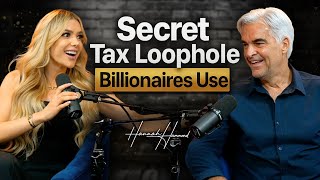
Scott Yauck, a Wisconsin real estate developer, explains tax incremental financing (TIF), the strategy billionaire developers use to fund massive projects. He walks through how TIF works, his path from engineering and law into development, and the financing tactics behind deals worth hundreds of millions.
For those who are maybe looking to get in development or scale their development company and get into large deals like this that are hundreds of millions of dollars, what advice would you give to them?
I think I did. I probably went too big, but it turned out to be okay. But development is always what I wanted to do. I don't really know why. I just had an attraction to that. Efficiency is important in everything we do, right? So real estate development is about efficiency, it's about numbers, it's about, you know, creating positive outcomes.
The more levels you open, the more you realize there's more levels. Welcome back to the Hannah Hammond Show. I am here with my friend Scott Y from Milwaukee, Wisconsin. Are you. You live in Milwaukee? Born and raised. And you also are on Lake Minocqua.
And we are. Yeah, Northern Wisconsin. Great place.
Not Point Stevens, but.
Not Point Stevens. Stevens.
Point Stevens Point and God. I just got the pleasure of meeting you last night and um, you have an absolutely incredible story and I was like, you know what? I'm interviewing Mark Shapiro today. I need to interview you and you need to share your story with the world.
So thanks for being on and I should interview you.
But no, no, no, no. You're like everything that I aspire to be and you know, that's what the show is all about is just always pushing ourselves to our highest potential and helping other people get there as well. And that's something that you've done. And I just, I learned a little bit about you last night and you're not one of these big social media guys that's putting everything out on small social media guy. Do you even have social media?
I really don't know. But that might all change after today.
But Chat GPT knew who you were and knew a lot about you, so not sure what it knows, but yeah, all good things.
But artificial intelligence, you know.
Yeah.
It's not real.
I think it's real.
Okay.
But I mean just for the audience, Scott Y is one of the biggest, if not the biggest commercial developer in Wisconsin. He's developed entire city blocks. We share a similar background of engineering. And then he went to law school and you know, had came from very, very humble beginnings and he's done and in the process of still doing projects and he's self funded pretty much everything. And you've used a very creative strategy called a tax.
Incremental financing.
Yep. Tiff, tiff, tiff. Yeah. And so it's just really cool. It's fascinating. I had never heard of it and I mean these projects that you're Doing are hundreds of millions of dollars.
Yeah. And public private partnerships and kind of, you know, have a vision for redeveloping a portion of the city.
Yeah. So take us through that journey. Like where. I know we don't have a lot of time today, but where, where did you come from? What got you into real estate? And for those who are maybe looking to get in development or scale their development company and get into large deals like this that are hundreds of millions of dollars, what advice would you give to them?
Yeah, you know, I probably didn't know better. Right. So naive. And I jumped in some things that, you know, to the comments from Mark Shapiro earlier today. Go bigger. I think I did. I probably went too big. But it turned out to be okay. But development is always what I want to do. I don't really know why. I just had an attraction to that. I ended up going to engineering school again, my first one in my family college. I'm the first of four, oldest of four siblings, so first of four siblings to go to, to go to college. First my family to go to college. And so I didn't know a lot about, I didn't have a lot of guidance from my parents. They were great people. They did everything they could to raise us. Just didn't have that, that experience and that background. So I ended up going to engineering school. Not unlike you at all, in fact, industrial engineering. So we're all about efficiency and, and I think that served us well, particularly within, you know, the business environment. Right. That engineering background is a, is a great skill and efficiency is important in everything we do. Right. So real estate development is about efficiency, it's about numbers, it's about, you know, creating positive outcomes. So I think there's a, there's a correlation there. I worked in engineering for a while and realized I wanted to do something outside of that. Ended up going to law school, practice real estate law and some corporate law. I left that to buy a manufacturing company because I couldn't get into development. It really takes, you know, some capital as you know. Right. It's a, it's a tough road to get started, particularly in development because the payoff isn't immediate necessarily, especially on a bigger project. So I ended up buying a manufacturing company, grew that from about 30 employees to about 300. Sold that in five years and that created some working capital. And then that was in 25, which I took those proceeds and jumped into buying about a 60 acre assemblage of various parcels. And then 2008 came and I'm like, well, that was a bad idea because the banks were financing. No, no, no, no. You asked me that last night too. No, we didn't lose it.
What'd you do?
Well, I mean, we got stuck. We got stuck and the project extended. And we had a contract with one seller that I extended 13 times over the course of about four years. He was patient. He had an operating company, so he was. He wasn't trying to go anywhere. And part of his family really didn't want them to sell it. It was an RV dealership. This was along an interstate. Again, about 60 acres. Was a challenging project. It had contamination, you know, environmental issues. It had wetlands to be mitigated. We had, like I said, industrial buildings that had to be demolished and new infrastructure. So it was a big project as a first undertaking. Yeah, one that most people would wonder, you know, how and why we did it. It was really myself and. And an assistant and. And so a big national developer came into town and, you know, met with the village and was interested in the project. And the village really preferred to have them. And I didn't understand why. I do today. Right. They're a billion dollar company and based out of Minneapolis that, you know, does a lot of projects like this. So they. They came along and proposed, you know, a deal that certainly made sense to the village, but not to us. And I said no, and the village didn't like that. So the village tried to squeeze us out for a little bit and prolonged negotiations, but I, you know, kind of hung in there. We came back. Ultimately, the great plan. Costco came along and want to be there. So they love that. And Costco kicked off, really, the balance of the retail and made the development a success. So it's a great. I mean, in the end, it was a very successful development with a lot of challenges, but it also kind of put us on the map. So other community started to call us. And that's where. How it grew. It isn't easy how we did it. The tax financing piece that we talked about is really became the equity. So I didn't raise other equity. I had some equity. You know, I had a few million dollars to put into this, but it's a big deal. And. But the village put in almost $40 million. You know, it was metered as. As the project progressed, but we knew we had. We had that kind of component in the project. So it was just keep things rolling, keep all the pieces together, you know, deal with 20 different owners, relocate them and so forth. But. But we got there.
So what gave you the idea to assemble what Was it like 60 parcels or 60 acres? Of 60 acres as your very first development project?
Well, so the manufacturing company I talked about was, Was based here. So this was right. Kind of in the center of that development. So I had, you know, probably 10 acre site of that 60. But what really kicked it off was another parcel adjacent came available. And the broker for that, representing that, you know, that listing, approached me and I said, well, this makes some sense. Again, I wanted to do real estate. I had the real estate background. This was after law school. Um, so I was looking to do it. It just wasn't easy to do. So I assembled, you know, bought that piece and then started working with the village on a master plan, Started approaching other landowners in the area and kind of went from there. Wow.
And then how did you learn about the tax incremental financing, financing?
Go with tiff. We're gonna call it tiff. Tiff. Tif. Well, through law practice, really. You know, I mean, there. It's a, it's a. It's an ordinance again, it's in most states. It may not be in all. It may be in Arizona, but I hope it is. But it's a great tool. It's really one of the only tools municipalities have to really finance projects. And it's really, it's. It's using the incremental tax, property taxes created through the development to. To. To put into the project. Right. So in a way, it's a tax abatement situation, tax refund. So if we create, we take a development that has an existing parcel of land that has a value, real simple terms, right. Has a million dollar valuation, and we, we through the development, raise it to $20 million. We created 20 million of increment. The taxes in that incremental. 20 million are used over a term. Typically it's up to 27 years, at least in Wisconsin. So that 27 years of that additional tax amount can fund the project so it can be monetized and financed, you know, through either bonding that the, that the municipality issue or through a private bond that we might issue.
And you were able to do that on your very first project?
We did. Yeah, we did. I'm not sure how. Right. When you think back, some of the stuff I didn't know better, right. I mean, I knew enough. I knew enough to kind of be dangerous, right. So we could be in there and I could. I had some of the credibility having been a lawyer at the second largest firm in the city. So that, that helped. But, you know, I didn't really have the experience. And I learned as I went and I wouldn't change it, I went to it differently.
So if you're somebody like, you didn't have development experience, you had real estate and law background. Of course. But if you're. For instance, me, I've always wanted to be in development. I love development. I know tons of fund managers that do development and tons of clients that do development. But I'm not a developer. I'm not construct. I mean, I own three construction companies, but we didn't do ground up. We did value add and renovations and things like that. Nor is it my expertise. So how have you identified and partnered with the right operators to bring in on these deals? You mentioned the city wanted this big developer in the deal or whatnot. Like, I guess. What's your advice? If you have a vision and you're a visionary and you're looking for your integrator operator who has that development experience, how do you vet people out and how do you structure projects with them to make it a win win and not, you know, get upside down on the dealer?
You've got great questions. If I know the answer to all, you know, it's not easy, right? I mean, finding that right blend of personality, right? And trust and just the ability to sort of engage and click, right, Is important. And I've been fortunate to have that in the manufacturing company I had that I met the person who became really the integrator in the term of, you know, in terms of kind of the context of the book traction, right? Visionary integrator. And you know, I met him over the course of a couple hours and we made a deal and went through into this manufacturing business. And we never, over five years, we had a partnership agreement, never pulled it out, never looked at it. And I did my part, he did his part. It was a great success. And that, you know, was just luck that that happened to be the case. Right. I didn't vet him. He happened to be working for the company that, that I acquired. So he was there. He's like a brother to me today. I have three sisters, I have no brothers. And he's, he's like my brother. I had the same situation in the real estate development firm. And it was a guy who called me, he was looking for a job. He was, he's a cpa. I mean, it was one of the big accounting firms then worked in development with a, with a company that ended up going to receivership, bankruptcy. Nothing that he did. It was just kind of what happened in 2008 and he was looking. He called me, and I didn't call him back. He called me again. I'm like, well, he's persistent. So I called him. I didn't have any other employees at the time, and I had an assistant, but nobody else, you know, at a. At a more executive level. So I hired him on a consulting basis for 60 days. I said, let's see how things go. And it was great. He's with us today and, you know, really first employee, and I've just promoted him to president of. Of all of our commercial real estate platforms. So, you know, it just happened. I'm not sure. We. We recently. We hired somebody who started two days ago in a chief administrative role. That one I worked through headhunter to find. And she's been great, but, you know, it's just been luck, I think, that it's worked out that way. But I think if you get out there, you and I have talked about this, right? If you get out there, you network. I mean, you're gonna. You're gonna help cause those things to happen. I mean, if you sit back and. And don't get out there and engage and communicate and, you know, network with other people, it's less likely to happen. And it's obvious. I think that's an obvious statement, but I think that's how it works.
Yeah. Being a magnet to talent and then just being a good person, be a good person.
Right. Treat them right. I mean, we. We treat everybody fairly. There's. I mean, I think we've got a great reputation. Nobody's left. We fired one person. Nobody's ever left our company. And. And we treat them well. We, you know, we take trips every year. We do a lot of things together. And so I think building that environment, being a good person, having a good reputation in our business, particularly when we deal with municipalities, you know, there can be challenges. And if things don't go well, whether it's something that we did or not, you know, their perception often is that, you know, it's our issue. Right? So things, you know, they get in the press because the municipalities, there's a little more. There's a little bit more scrutiny when these are tax dollars being used. Right. So we'll have situations where one of the communities that residents filed a lawsuit against the village saying they shouldn't be doing, you know, a tiff deal with anybody. They just think tax dollars shouldn't, you know, flow back into these projects. And there's policy discussions you can have and philosophical discussions about that, but they filed a Lawsuit. Right. So our name kind of gets associated with it. Right. It wasn't, they weren't suing us, they were suing the municipality. But it's a lawsuit that got filed. So, you know, you got to watch those things reputationally. So that doesn't affect us in other communities.
Yeah. And you. So your company's called Cobalt Capital Partners. Cobalt Partners.
Cobalt Companies. Now we've got Cobalt cre and then we've got kind of cobalt specialty businesses which are kind of ancillary, I call them all part of the built environment. So we're into hospitality with some hotels. We've got out of home advertising in the form of billboards. We've got a property technology company that's kind of a launching right now. But Cobalt Companies is kind of the overarching company.
Okay. And you're, you've been mostly self funded all these years, if that's correct. If you're just starting a fund now.
Yeah, we haven't syndicated. I mean, we, you know, it's, it's a different environment when you do that. We've avoided being sort of a fee based, kind of waterfall type structure developer. Right. Only because early on I didn't understand those structures, you know, so I didn't understand it. I didn't know how they worked. And again, the way I started, there weren't others involved. So I always figured I got to have the, you know, equity to do the deal. Right. I'm like, how do these people do this equity? So I mean, I just learned as I went. Right. So we, I was fortunate to, you know, through the manufacturing company, I had some money to put in. But you can't do that forever. Right. I mean, we're doing these deals that are, you know, 50, 100 million, $150 million. You need the equity. But the municipalities became our partners. I mean, the TIF structure can really have that serve as a big chunk of the equity. So that helped quite a bit.
Yeah. I mean, if they're putting in 30 million and you're putting in three or whatever, like that's pretty insane.
Yeah. And that's probably overly simplified. They do less of that these days. But we've had, we've had, you know, These, the first two projects, 110 million, maybe 150 million was the first project they talked about was kind of the development value, what the ultimate development cost was. The second one that really followed from that was about 250 million. But I mean, our total equity investment of those was less than 7 million doll in those two products. So 300 million with less than 7 million. Yeah, but it's tougher to do that today than it was then.
Yeah. So what it, what's the most amount of money you've made on a development project.
On an indiv. Well, on a project, on an overall development. So this thing about a mixed use project like this, right, it's multi years and it's multiple buildings. So we bring together 40, 50 acres and, and we might build 10 or 15 different. We've had multifamily, we've got medical, we've got retail, we've got restaurants. We're opening up this week a Starbucks, a Chipotle, not this week, but in the next few months and a Cooper's Hawk restaurant. I think we talked about that. All of those together, right? Those are all individual parcels. They'll individually be deals. We've got no debt on the land. We put in the land as the equity, we build the building and then we'll sell those assets. We used to, you know, I used to think we should hold everything. We've been fortunate in kind of some of the timing in our exits. But I didn't answer your question. I mean a project like that might make $50 million over the duration of 10 years. Right. On an individual project, I mean we've had some in excess of $20 million. So. And with little equity. Right. So. Yeah, but I'm not telling that. He's going to tell. It happens all the time. It's a lot, it's a lot harder right now than it was. But it's, it's possible.
But you're still able to make it happen right now?
Yeah. Just more difficult. Yeah, I mean you bridge the gap in theory with tiff, you know, you, you're bridging the gap to. So the municipalities are willing to accept a level of internal rate of return. Right. So on a five year, seven year hold, we'll look at what the IRR is. So, you know, we'll shoot for 15 to 20%. Right. They'll. We'll tend to try to get around 17% IRR and we've got fees in there and everything else. That, that's part of the deal. So they'll look at our pro forma, we gotta be open book, we show them the numbers, but they're willing to accept that level of return. So if, if our project is only producing 7 or 8%, they'll fund the gap that gets us up to say that 15 to 17% return. I had a call today exactly on that topic. In in one of the municipalities working on a project with them, there's a, they're rebuilding a transit center. It's about a $25 million rebuild of kind of their bus station. They went out to RFP. We were selected on the project. We're building 250 units on top of that, 12 stories above it. And so the numbers are tough to make work right now. So we showed them to get to where we need to be, we need 5 million upfront as part of this TIF and then an ongoing stream of payments over about 25 years, which is all from the tax revenue generated by this. They're not digging to their pockets. They're foregoing receipt of those tax returns. But if we don't, if we don't develop this, there aren't there, there is no taxable income. Right. To be received. Theory is this, but for concept, right. But for the tif, this development would happen.
Right.
So meaning, you know, they don't, there's, there's not a pot of 15 million they're giving to us. There is no money. Right. There's just the existing taxes which is tax exempt today. So it generates no income. It's just a bus terminal. So when we're done we'll have a 60 million dollar building. It'll, it'll pay, you know, whatever a million three in taxes. That million three is, is the bulk of, it's flowing back to us to give us the returns we need until such time as we've gotten to those level returns, then it reverts back to the tax rolls.
Yeah, yeah. I'm still hung up on the $50 million on one deal.
Well, don't, it's not, that's a $250 million deal. And I guess people done better and.
But, but you what?
I said there's. People have done better for sure.
Oh my God.
There are. There are.
Yeah, yeah. I mean again, there's always new levels to the game and the, the more levels you open, the more you realize there's more levels. And it never ends.
Absolutely never ends. And we've typically had a single partner on a project. So again we don't syndicate. But that particular project we had a, we had a general contracting firm that was really, they're kind of a earth moving grading contract. We had a ton of that work to do. I went to college with, with the, one of the members of that family and so they want to be involved in the work. They also like to invest in deals. So they came to us. So they put in 4 million. I put in a million. So we had 5 million. So my million was 50% of the deal, which then became, you know, the returns. We talked about another deal we're doing right now. We've got a partner as a high net worth individual who's great guys, a mentor, a friend, you know, great partner. And he's been the bulk of the equity kind of 75, 25. So we've, we've done that, but we don't syndicate and not that we won't. And we're going to start to look at that. We have to and go out and, you know, raise a fund. You and I talked about a fund, working on a fund specifically within the tax incremental financing space and tiff space because municipalities don't want to go out and borrow the money to make available for these projects, but they'll turn the revenue over each year as it's received. That's a problem for developers because sometimes they need the money up front. So we, there's, there, there's only one or two other funds we're aware of that do this. So we're forming our own fund to do it and really understand that space well. So if you've got a project like this, right, where you're going to create 20 million of, of new development, it's going to generate, you know, whatever 500,000 a year of tax revenue and the municipalities will only give you 400 that back every year for 20 years. That may help you. But if you can monetize that and get 7 million today, that may make a bigger difference. Reduces your equity requirement, drives your irr up.
Yeah.
So you come to us, we provide, you know, that financing. So it's a debt fund is what it is.
That's amazing. I know. I definitely want to dive into TIPS and look into it.
We're going to talk more about that. It probably won't be today because you're going to get cut off pretty soon.
I know. So I want to talk about. We'll keep going as long as we can, but I want to talk about how you, you know, these are long projects. Five years, 10 years. What's. I don't know. What's your longest project?
Yeah, well, the one I just talked about, that was the, the, the second of our large project started in 2015 and we're just finishing the last few buildings, but the bulk by within. Gosh, that was crazy. We bought, we bought 43 parcels comprising 48 acres, 35 houses, people living in all of them. And this is, I Mean people like, how are you going to do this? Right. This was. We went from the first project they talked about to the second one. And the mayor approached me through. I was on a, on a board of a non profit organization with him. He said, hey, would you look at this? They had a school that was surplus school that they were no longer operating it for the city school district. And he said, would you be interested? I said we would, but we want to buy this entire neighborhood. He said, I'd love that idea. Right. It was an area that was really sort of not heist and best use. The housing stock was aged and it was decent housing but you know, the average price and this was in 2014 was, you know, $250,000. So it kind of, you know, just a, you know, decent house but nothing that was, you know, it, that the stock was aging and it wasn't real well maintained. So we bought 35 houses. But that was a, that was an interesting undertaking.
So you just made cash offers?
We made cash offers. We said, we'll pay all the closing costs, there's no brokerage fees. And the way we did it, we offered a premium. So we said, you know, we'll give you 140% of your fair market value on the tax rolls. Right. So that was attractive. In the scheme of things, that premium totaled, you know, maybe a million and a half dollars. So in the scheme of a $200 million project, it's not real significant.
Yeah.
But we also created this incentive so that if everybody came together by date certain and agreed, they get a 10% premium. So that created peer pressure within, you know, the neighborhood. Not in a bad way. Right. But we didn't have to worry that somebody tried to be a holdout.
More from Hannah



Never Waiver On Your Values—No Matter How Lonely, Uncomfortable, Or Difficult The Journey Gets

Watch the full video about Ray Dalio’s prediction on the upcoming debt crisis… 👀

Stop Asking “How?”—The One Question That Will Help You Scale Faster Than You Ever Thought Possible

4 Life Lessons That Took Me 30 Years To Learn—But You Can Learn Them All In Just 14 Minutes


This Is Unfortunately How You Can Tell Your Real Friends From Your Fake Friends


