What Every Entrepreneur Needs to Hear Before Launching a Business - Dre Medici
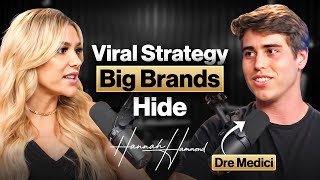
Dre Medici went from selling goods as a kid in Uruguay to building a social media marketing agency and restaurant. He made $100k profit on an early fitness meal-plan business, then scaled by selling high-ticket services and running aggressive ad campaigns. He shares how he uses AI in advertising and outsources content creation to grow fast.
Questions this video answers
24 years old.
Approximately 740,000 followers.
Uruguay.
At 2 years old.
About $100,000 (reported as essentially $100,000 in profit).
Chapters
What is the thing that they could do today to develop your irresistible offer?
You're set up for success. That's all you need. At the end of the day, if you message thousands of people every day, but don't have a credible social presence, you're not going to get the same conversion rate that someone that does. How to succeed, if there's someone who wants to start a business right now, is once you start getting those clients, make sure that you have testimonials that you get from them. So you want to make sure you just have the best social presence possible. And then you start implementing a lot of ways to reach out to as many people. The more people you reach, the more money you're going to make. It's just a numbers game.
Today I'm here with Dre Medici in Miami, Florida, and I'm super excited because I am no longer the young one getting interviewed who's done a bunch in entrepreneurship and life and, and health and all the things. And so, Dre, you were born in Uruguay.
Uruguay.
Yeah, Uruguay. I knew I was gonna pronounce that wrong, but you're 24 years old. You're a found the founder and owner of an amazing social media or marketing agency. So you help people grow their personal brands. You've created an amazing brand yourself. And selfishly, I want to learn how you did that because I'm on that mission right now as well. I mean, you have how many followers do you have?
Like 740K.
That's freaking insane. That's wild. And you're co founder of a restaurant in Miami with your father and you're also co founder and investor in Link Me.
Correct.
Yeah. Which is social media connection.
Exactly. App.
Right. So congratulations.
Thank you so much.
It's so awesome. And you also, not only are you amazing in business and have accomplished so much, but you're so young and you're also healthy and take care of yourself. Good looking and just a super awesome person. So thank you for coming on the show.
Thank you for having me, Hannah. Of course.
So, yeah. So what was your story? I mean, I don't know much about Uruguay, but what was kind of your childhood like and how did you end up going down the path of entrepreneurship? Were you kind of born an entrepreneur? Did you go through some tough challenges? What did that look like for you?
Yeah, so possibly I could say that I was born as an entrepreneur because I did start like selling things and I'll get more into that from as young as like 7 to 8 years old. I was already starting to sell anything I could. I even have, like, posts on Facebook of, like, actual proof of, like, me selling things on Facebook at that age. But, yeah, I was born in Uruguay and I moved to Miami, actually. So I'm actually one of the OG people in Miami at 2 years old. So I've been here now for a very long time. But, yeah, in Uruguay. When I was living in Uruguay, obviously didn't come from money. Both of my parents were, you know, struggling, you know, raising two kids. I have another brother, and then we moved to Miami. My parents got divorced, so at 2 years old, so I never really got to experience them together. And then obviously with divorce comes, like, extra expenses for my dad, you know, child support, all that stuff. So we lived in. Me and my brother lived in pretty poor conditions with my dad up until, I'd say, like, 10 years old. Things were pretty rough. Like, we experienced living with, you know, sharing an apartment with, like, a guy who was, like, a crackhead because, like, my dad just, like, loved, you know, having cheap rent. Very cheap rent. So we lived in tough conditions. My mom got, you know, married at, like, when I was around, like, 8 years old. So things were a little bit better, maybe, I'd say on my mom's side, but my dad's side. Yeah. Kind of always rough. And so that was like, my motivator. Like, seeing my dad struggle financially, it was always like, I'm making money because I want to one day support my dad and help him as much as I possibly can. And that's what I ended up doing. Now, you know, at 19 years old, I helped my dad open a restaurant, and I've put, you know, well over multiple six figures into that. And I also help with all the marketing to guarantee revenue for that. So, yeah, that's. That's kind of a little bit of my. My childhood growing up.
I love it. I have a similar background where I was just talking to Brandon Carter before you came on about his background, too, and how much pain is such a driver originally for excellence. Right. And it really pushes you, and I think it's. Can be the greatest blessing ever. You could either choose to be a victim from these things, or you could choose to let it be your big why. And also, it enables you to just have so much more gratitude, like, when you're able to create a life that you never could have thought of. And I don't. It's just beautiful. It's beautiful that you've done that and now you're actually giving back to your dad.
Yeah.
And helping him accomplish his dreams and have something so much deeper than what I'm sure you imagined as a kid.
100. Yeah. The feeling of knowing that I did what I said I was gonna do, and I'm actually setting out on that mission and helping him financially. And just everyone around me in my family, you know, I always support and give money to so many people, even hired many family members as well. So, yeah, it feels really cool to set out on. On my mission and actually accomplish everything I said I was gonna do.
And you said you were on Facebook when you were eight years old.
Eight years old, selling stuff. Yeah. Like, listing things like, here, you know, buy this for $50. You know, toys, skateboards, literally everything. So, yeah, in school, I would sell stuff at, like, as young as 8 years old. And then from, like, I would say Starting at, like, 11 years old, I started getting into, like, a lot more selling of sneakers and stuff. Like, I was running, like, tables at these sneaker conventions with, like, literally 10 shoes that I would own and, like, resell. It got really big. And then I stopped doing that at 14. But I did that, like, at a large scale. Like, I had shoes in my closet that cost, like, $2,000 that I had bought for, like, reselling purposes and all that. But it got to a point, like, buying really expensive shoes, too. And so, yeah, I did that up until 14. And I was always a soccer player. So, like, on the way to soccer games in different places, I would, like, meet up with people in, like, random parts of Florida that were buying shoes. So, like, my dad and my family, like, witnessed me doing that because they would help me, like, drive me to certain places to sell them. But I always made it convenient, right? Like, on the way to games and things like that. So, yeah, I was really, you know, always an active soccer player. And then at, like, 15, 14, I heard about Ultra, and I started reselling Ultra tickets every time that became a thing. So I sold, like, every season of Ultra, probably like, 150 tickets, like, every single year. And then I started doing that for Rolling Loud, started doing my own events in high school, pregame buses, all that different stuff. And then at 17, I came across my first Instagram business, and that's when my life really changed forever.
Wow. So what was your first Instagram business?
So my first Instagram business, as I was saying, I was always in a soccer player. Top soccer player. You know, I was, you know, one of the top players in Miami, and I always put on the number one soccer team in Florida. I traveled to Spain, so I was really disciplined, always, you know, having to do homework and play soccer. And that allowed me also to be in really good shape. So at 17, you know, you know, about, like, freshman 15, everyone starts talking about that. So I was like, wow. You know, a lot of people before have asked me how, you know, how I've gotten in such good shape, how can I help them in the gym and all that. So I was like, wow, this can be, like a light bulb, you know, spark. And I was like, this could be the first business that I actually make money from every single day. Because some of the businesses I was doing were, like, seasonal, right? For shoes, it was, like, certain events, or for the tickets, it was like when that season of. Of those events actually came around. But now this was something that I could do every day, which was helping people transform their body. So I launched an Instagram account where I was providing workout meal plans for every single person. Customize. At first, you know, I was just getting started online business, so I didn't have, like, as many systems. I was doing everything myself, but I had no cost for the business. I was just making the workout meal plans directly on Google Docs, So I had zero cost. And I started selling these for $120, these customized plans. And I literally, at one point, like, everywhere I would go in Miami, people would, like, scream the name of the company, which was want, because everyone knew about the company. Because what I did was I got. I didn't know about ads and stuff at this point. So I literally got every single person that was, like, in high school Miami, not every person, but, like, 500 to 1,000 people that were posting it on their story. And then every single time they would get a lead, they would post, like, testimonials on their story, being like, if you're interested in transforming your body, contact Dre. And then every time they would get me a lead that I would close, they would get paid $20. So it was, like, a cool incentive for, like, high schoolers to make some money. And then at the end of the day, I was getting a lot of calls for free, essentially, because I was only paying them when I close a deal. And so I grew that business to 100,000 in sales, which was essentially 100,000 in profit because there was no expenses. And so then that was, like, I reached that point, like, probably a month, two months into college. So I got accepted to the University of Florida, which is a top school my parents wanted me to go. I never wanted to go there. So I just, like, you know, was there for like a month, two months. And I realized it really wasn't for me. It was just taking time away from the business. So I remember going to the admissions office and, you know, just dropping out. And they were like, you know, if you do this, you might not be able to get accepted again. But there was no doubt in my mind. I knew. I knew I was never going to come back to the school, so I dropped out. And then I moved to New York City, where I opened up an office in New York City. And when I moved there, I moved there, opened an office, kind of doing things at a larger scale, spending money. Because now, at this point, what I realized was I wanted to help every single person, you know, grow businesses from scratch. How I did, because now I had, you know, right when I started reaching that 100,000 profit point, I also invested into opening a restaurant for my dad. And I was doing all the marketing. So now I didn't only, you know, get marketing results for a business from scratch like mine, but I also did it for an established brick and mortar business, you know, a restaurant. So I was like, if I can build my personal brand, which I was doing at that point, you know, come up with a workout meal plan business online and generate 100,000 in profit in sales in like literally 12 months. And then I can also get leads every single day for a restaurant. Why can't I do this for as many businesses as possible around the world? And at that point, when I put all those things together, I knew it was going to be a multimillion dollar business, like right away. Like, literally before I even made the website. Like, I knew it. And so, yeah, I just had that vision. I saw it. And then now it's been probably six years since I had that, you know, breakthrough moment. And the reason why it was such a big breakthrough was because now, instead of just charging $120, I was able to sell services at a high ticket price. My minimum was 1500. So now every call that I used to do, just closing one of those deals before, it would take me 15, 10 calls to make that same revenue. So I built a big team. I also added monthly subscriptions to every single one of our high ticket offers, which was a huge gem that we can talk a little bit more about. And then, yeah, thousand. A thousand people paying you $1,000. The million dollars. So I've did those numbers, and now we've serviced, like over 7,500 clients since then.
Wow.
Yeah.
That's insane.
Yeah. Yeah.
And how did you learn about entrepreneurship like, what gave you the first initial thought to buy something and sell it for more?
I think, like I said, possibly born with it. You know, that's where I go back to that. Right. Because it wasn't like I learned it from anyone. Neither of my parents were entrepreneurs. So at the time, you know, it wasn't. Again, it was. It was just out of instinct, you know, I wanted to make money. I knew that when I would ask for things like other kids in school, you know, I wouldn't get it because my parents were just super cheap because they didn't have it. You know, not that they were cheap in a bad way. Right. But yeah, I knew that if I wanted things, I was going to have to make the money. So by me making my own money, I could always get whatever I wanted. And that was the same situation in high school. Like, you know, kids would get certain money from their parents, but if I wanted to go to the club or do certain things or take a girl out or anything like that, it was going to be for my own money that I was making. So that was the driver from. Yeah, like seven, eight years old. And up until, you know, I didn't. Now, you know, money, money, I have it. So, yeah, we've reached that point.
It changes things. Yeah, yeah, it's great. I mean, they say money doesn't buy happiness, which it doesn't. That's what we were talking about last time. But it does solve a lot of problems and it buys you freedom.
100.
And you could also build a prison around it. Depending on how you create your business and structure everything, it gives you the freedom to choose and freedom to make an impact and freedom to higher, you know, talent and scale. So I. I'm 10 years into my entrepreneurship. I was saying 7 years old, kind of creating things, figuring out what I could sell. I wanted to have a horse, so I started charging people to train their horses so I could ride them and make money. So things like the babysitting and all those types of entrepreneur mindsets, but really at 18 is when I got my license, started making real money and, and started investing in real estate. But for the past 10 years, you know, I didn't get on the social media train until this year. And now it's super, super saturated and it's a whole different journey. But how did you realize that social media was where it was at so early on? And how did you learn the, like, the funnels and the ads and, like, how did you know about this?
Yeah, so I would say, I think I do have an advantage being kind of young when Instagram and all that stuff was coming out. It's like it was put on to these, like, schools. I would say, you know, everyone at school is kind of using it. Like sometimes when there's people like older, maybe 40, 50, you know, and they're like, wow, like you've made all this money by this age. But I had social media at a way younger age than they could have, you know, hopped on that train, right. So I think that sometimes it's not just your age, but, you know, you're lucky that you were there at the right time. Because now sometimes, for example, I'll see kids that are like 14, 16 on social media sometimes, and I'm like, wow, I wish I would have went all in on at that age, you know, but social media just wasn't as available or as, you know, as a monetizing platform as it is today. Right. So sometimes your age really helps make it easier with social media. So in my case, yeah, I was just already on social media because I was a high school kid, you know, wanting to have a nice Instagram just for social purposes. And as I was on social media, I started seeing other people that were entrepreneurs dropping out, running ads, all of that. And I think that was my, my big moment because, you know, when you see other people do things, it always makes it much easier for you to do it, right? If I was never on social media, maybe if I never had a phone, maybe I'd still be, you know, working a 9 to 5 or living a regular job, but actually visualizing other people do it made me think, you know, why can't that be me? And so that's when I really went, you know, all in on, on the workout meal plan business and scaling it up, trying to, you know, reach, reach those record numbers all the time. Even dropping out of school, you know, part of that was because I had been watching people drop out of school for six months already before making that decision. So it was like already a norm to me. And then how do I get into, you know, learning funnels, ads, all that again, money, right? Because money buys freedom. Money buys being able to hire other people. And so because I made all that money from scratch, without ads, without any expenses or employees, with my workout meal plan business, then I was able to invest in myself, you know, other mentors, go to different events, read high level books, you know, dotcom secrets for, for funnels and stuff, right? There's, there's a lot of great, you know, knowledge and resources out there. Available. So it was just about self educating as much as I possibly could. And obviously the biggest part about it all was actually applying what I was educating myself with and teaching it on a consistent basis. And they say when you teach things it's much easier to actually retain and learn that information. So yeah, it was just learning, applying and, and selling and. And here we are today. Now I'm thankful that I know a lot and have a lot of knowledge in the marketing space.
It's funny because I'm rereading that book right now. I was listening to it while I was getting ready for the podcast and. By Russell Bronson.
Exactly.
Branson. I always say his name wrong but yeah, that the whole space is so new to me because I joined Genius Network, which is a mastermind in Arizona and Joe Polish is the owner and he's a marketing expert. And so that's what really opened my eyes because I don't, I've just always been a grinder, just figured out do it. I'm a read like read books and everything. Rich dad, Poor dad was the book I read. And that's what ended up getting me on the real estate path. But it's interesting because now I'm actually literally for two weeks I've been working 16 hours a day learning go high level in and out. Just like I got to start running at like to build a billion dollar company which I'm going to do and I, you know, I want to do and I'm going to do. You have to advertise referrals. Can, cannot really scale your company. You could make good money for yourself but it's not a scalable thing. You can't really build an enterprise value because it's all just around you and your, your personal little sphere. And so you really have to master advertising. And it's been so hard because the only time I had worked with an ad agency in the past was when I first launched my real estate brokerage and I didn't know anything about ads. I hadn't read any books. I just hired the first random ad agency that popped up and I ended up signing a 12 month hundred thousand dollar contract and I didn't get one closing out of it. And yeah, so then I was like screw ads and this and that.
Yeah.
And real, real estate brokerage is a little bit different because it is very much a relationship business.
But no, but still you should have got results for sure.
Yeah. And then you're like oh, I work with this agent and we just got her these closings.
I Was like with like a few thousand dollars. So. Yeah, yeah, for sure.
But as, I mean I think it's so difficult to master and it's so expensive and the money can be wasted so fast.
Oh yeah.
You know, and even I'm working with another ad agency right now and I look at the graphics they sent me, I was like, like this is going to be another, another waste of money.
Yeah, we'll have to talk.
Yeah. Luckily I only signed a three month contract, but yeah, so it's just something I really want to learn because if you don't have leads coming in, you can't fulfill the product. So it's like you could argue one of the most important aspects, if not the most important aspect to your whole business is being able to generate consistent leads. Leads. Because otherwise you're going to be succumbed to market cycles and you know, all the different things. But when you can really know your roas, like what's your return on ad spend? What's your cost per customer, what's your lifetime value of customer? And just starting to learn all these things. But yeah, it's a whole different world. I want to rip my hair out trying to learn funnels and email forms and you know, I never even created a newsletter. I finally created my first newsletter this week.
That's good. Yeah. The best thing to do, I mean, especially for you, you're doing so many things with real estate and like that's where you know, majority of your income is coming from and stuff. So I'd say you're in a position where you can delegate a lot of those things and sometimes you want to learn the in and outs. And it's good to know obviously because that's how you're going to judge if someone that you're hiring is doing a good job as well. Right. If you learn the basics but also just hiring people that are better than you at making the designs and the forums and all that stuff always helps. And that's definitely one of the ways that I grew my business really, really fast. I just started reading out a book called Blitz Scaling and I didn't really apply this knowledge before because like I said, I just started reading it, but I have applied it without the knowledge. Right. We're just moving fast, being efficient and not just trying to do everything perfect myself, but just, you know, really delegating and building big teams. Like I'm at a point now where I have like 300 team members. So yeah, we really have a lot of people that are like probably 10 people that are good at each different area. Right. So 10 people for websites, funnels, you know, 10 people for just lead generation, you know, all that stuff. So yeah, I'm really big on, on hiring, delegating and not needing to be the expert yourself. But yeah, going back to ads and Legion, that's definitely is the biggest part in any business to actually grow. We started spending like 50k a month in like 2019 and have continuously spent around that every single month on just acquiring new business. And obviously that's the number one way to, to reach bigger revenue numbers. Because if you're just relying on, you know, referrals or people that you're getting just from organic, if you know you don't have videos going viral that month, then your revenue is going to go down. But if you have, you know, the ads, you know exactly how much you're making and then anything extra, referral, referrals, you know, videos going viral, that's all additional income that you're making.
So yeah, yeah, it's a whole new world. And I completely agree with doing what you do best and hiring out the rest of the. So for sure I will always be hiring either, you know, in house employees once I'm big enough on ad spend, or agencies that are proven, but knowing just enough to be dangerous, like you have to know how to write the, ask the right questions when you're interviewing any sort of outsourced company like an ad agency, because otherwise you're just shark bait and you just don't know, you know, are they even a good fit for your business? What's the quality of their funnels? What is their cost of conversion that they're gonna try to get for you or return on ad spend and those types of things. And yeah, so it's, it's pretty interesting. Russell Bronson and, and Dan Kennedy. Yeah, click funnels. And they are so much amazing now. And that's why I have the podcast, because as you kind of mentioned, you were raised in a generation where social media was a thing. Yeah, I, it was just becoming a thing when I was like later in high school. So I didn't have, the only resources I had was books. And then the generation before us was even worse. Like they didn't even have Internet. They had to really try to figure stuff out for themselves. But now there's so much access to information is cheap and now with AI, information is worthless. Right. It's all about execution. Because now an engineer or a coder or those types of things that used to be the most valuable thing are going to be replaced by artificial intelligence. What do you think is how AI is going to affect advertising moving forward and are you implementing it in your businesses at all?
Yeah, so we've actually worked with a few like AI ad companies in the past that we've tested out to possibly roll out. Yeah, there's even now, like, instead of media buyers, you can even just plug in AI to actually run the ads, optimize them, change them. So there's a lot of cool things that we're definitely looking at with AI. We use it for a lot of social media clients as far as, you know, helping us structure ideas. We don't use it word for word. We use our own knowledge and, and overall best practices, but it definitely helps excel and exceed, you know, those operations too. And even I think it was Mark Cuban who actually said this like two days ago or something, but he mentioned like, any business or anyone that's not using AI is going to be left behind. And he's saying that the most important thing you should be doing with your free time instead of music or anything is just listening and learning to things about AI all the time. And evolution has always been like the skill to be able to adapt and evolve and always stay up to date with the market has always been one of the most important factors in business. You know, people have talked about this for years and years and now with AI, things just move way faster, 10 times faster. So if that was important back then, it's only more important now. And that's why, yeah, we're definitely implementing it. I'm learning about AI every single day and I recommend every business owner to do so because it's just going to allow their company to move faster and not with a lot of money. Right. Because you don't have those, those large expenses like you would, because AI is almost free. So, yeah.
Do you think AI is a threat to ad agencies or a big benefit to them?
So definitely, I mean, it could be a threat. You know, if those AI AD companies get really, really good and these AIs just keep enhancing, it definitely can. But just like it's a threat to many industries, it also opens up, you know, still other avenues where you can still sell a client to use your AI, you know, for ads. Right. Before you would sell them on, maybe you doing it manually. Now you can still sell them on the AI doing it. So I don't think it really takes out like possible income opportunities away from the market as like, you know, things that may get replaced, but definitely it can affect it. And people that don't know how to adapt and structure their offer properly or, or also people that don't know how to continuously offer other things that maybe I can't actually replace. Right. Like being a consultant, you know, you're that specific consultant, maybe that, you know, that's something that you add as extra value that I can't be, you know, that perfect consultant that maybe you can to clients on top of the ad. So I think it's just getting creative with different things to offer. And that's something that I've done with my agency. Like we offer like over 50 different services. So, you know, there's. If certain things are getting tapped because of AI, you know, or like video editing or something like that, then we offer things that I currently can't do. So that's what I'd recommend.
Adapt or die, sink or swim 100%. Everything's always changing and now at a more rapid pace than ever, you know, at an exponential pace. For somebody who's looking to grow a large social media following, like in the hundreds of thousands or millions in competition with all the other brands and content, there's a content overloads like so many people have a podcast now. So many people are running ads. So many people, people are posting organically. What is your advice to truly set yourself apart and build and grow at a, at a large pace like you have, like for instance, myself, you know, I have, I don't know, maybe 80,000 followers across the board and I started posting six or eight months ago, which is great. But when you want to be in the millions and when you want to make a really big impact and attract the right, like your dream customer type people, what advice would you give to someone who's looking to build a brand like that?
Yeah, there's a few different ways. Number one, just talk about what we're currently doing. I think having a podcast and collaborations is great because, you know, cross networking platforms and audiences always helps build that up. So that's definitely one of them. The other one is sure, setting yourself apart is important to be different and be authentic. You should always include that in your content. But something that people are scared to do that everyone that is going viral is doing and I think everyone should do is recreating other people's content that has already gone viral. So a lot of people that are growing and getting really big numbers is because they're seeing a trend on their for you page or their Explore feed that has already gone viral and they're recreating it. And Instagram has a way of knowing that the algorithm has already picked up on content like that. Users like it, so they know they're going to have more retention on the app. Therefore, if they feel like that matches up using their AI machine learning, you, you know, similar trending audio, the similar things that they're saying, then they push it out and it goes viral. So one of the biggest ways to go viral right now is literally having a social media manager or an agency like myself, we do this. Or just doing it on your own. If you don't want to spend any money and just taking like 30 minutes a day, press on the Reels tab and just scroll through reels and you'll find videos that you can easily replicate. Maybe it's just like a text. Like the other day I closed a client for a realtor because I told her to make this reel that was basically showing like, if your rent is $2,500 right now, you can afford a home that costs 500k or something like that, right? Because the mortgage is similar. The down payment, sometimes you can get very low down payments. So she used that and then someone was like, wow, I'm paying that in rent. I want to be a homeowner, you know, and she got a client and that was something that I pulled from another video that already had, you know, a million views. So a lot of times that's currently the best way to go viral and get a lot of, you know, views and, and a bigger push. And yeah, also posting in masses is one of the biggest ones. So I'm close friends with Luke Belmore for, for a good amount of time now. We've known each other for like five years. So I watched him from like just having 40,000 followers to now, you know, literally his view, his videos have like over 2 billion views across all platforms. And it's because he used another social media tactic, which is mass posting. So having a lot of clippers. Because if you have more people posting your content every day versus just you, there's obviously more probability of you going viral. So. So he was having like, you know, 80,000 posts a year being made. So that's definitely another one of the ways because now your face is more recognized. So when someone sees a post maybe on your main page, since they've seen you across, you know, social media on many different pages, they're going to actually watch it for longer because they recognize you, because, you know, your face is just everywhere. So, yeah, all that helps into overall conversion rates of people actually pressing the follow button because they've Seen you around. So those are like, three major key things that I would say to do to really start exploding your social media and your personal brand.
That's really, really good. And I have heard that, you know, look at what's already working and going viral and you put your own. It's you. Right? It's your own voice, but the algorithm knows about it. And then also, are there any tools to be able to see, like, on your topics, on what is going viral, or is it really just start to scroll?
No, you can scroll and even, like, Instagram came out with this new feature called, like, meta AI and you can, like, ask it to, like, recommend reels and stuff like that, just like directly on Instagram. So that's one of the ways. And yeah, there's a lot of AI platforms. I'm not associated with any right now, but there's definitely a lot of companies. If you just look up, like, I help me find viral posts. There's a lot of different companies out there. I think there's one called Viral Finder as well, where you can just put in, like, your favorite creator and then it'll tell you, like, their top videos that have gone viral. So instead of scrolling through their content, for example, you can put her mosey and it'll tell you his top videos. So instead of trying to replicate some of his videos that maybe don't have the many views, you just see the ones that all have like, 5 mil, and then those are probably more likely to go viral if you replicate them in your own way.
That's awesome.
Yeah, there's a lot of tools out there for sure.
I love it. I'm excited. I need to be more intentional about that because, you know, it's like right now I have the podcast and the editors just chop it up and post it and whatever, but there's no real strategy behind it. And it's great content because I have great conversations, but I should be doing more of, like, me being strategic about my content. That's actually going to bring in business.
Yeah. Because, yeah, like, I would say every day or just like even every morning and every night, just try to upload, like, two pieces of content that have already gone viral. You know, things that someone in your industry or mortgage people have already done, and you've seen them get, like, millions of views. Because sometimes it's really just grabbing a piece of content, like you in front of a house, then you just add some text on it. And really people, like, spend so much time thinking about doing it and that act of doing that only takes 30 seconds, you know, to upload something, and then, boom, it's done. And then you never know, it goes viral. And then you get a lot of free. Free leads from that.
Yeah.
So, yeah, just about continuing, staying consistent.
Do you have a strategy for. Or is there a right number of posts to do per day? Because I hear some people are like, well, if you only post one story, it gets a lot more views. And then some people, you should post 15 stories a day. And some people, you know, too. Like, it varies a lot. So what's your take?
I'd say there's a lot of myths in the industry. You know, sometimes people say, like, too many stories is not good, as you were mentioning, or just one. The reason why is because sometimes Instagram, like, if you don't have a lot of stories, when you finally do post, like, they actually share it a little bit more because it's just not as saturated. So if you don't post for like 24 hours, then you post the next day, just like one singular post. That may get better engagement. And then obviously, when you're posting a lot, sometimes Instagram may not be so, you know, active on pushing that, because there's a lot of posts out there, but sometimes you can post a lot, and then all of them go viral too. And it's like, hey, I thought that, you know, that myth was. Myth was real. So there's a lot of, like, myths that aren't real, you know, that people say, or like, over posting or just posting once a day. It all depends. I would say, for example, on your main page, you can use whatever strategy you want. Meaning for my main page, I see it more as like a resume. I only want to post when I think that post is, like my best post that I can make this month or this week. You know, I really want them choose quality over quantity. And the reason why I have that strategy in my mind is because I know that when someone lands on my page for the first time, sadly, they only see the first 9 to 12 posts if I'm lucky. Meaning all those other posts that I spent money on. Editors spend money on videographers. People aren't really seeing them. So if I'm just blasting a lot of posts, I may not get, you know, some of my top quality stuff seen by new people coming onto my page. But that is, you know, only a good strategy if on the side you are mass posting. So I have like a lot of TikTok pages that are posting like three times a day. So I think if you have like other pages post as many times as you can. Three times a day is good. Or even something that I might start doing. I haven't, you know, completely started, but it is something that you can do which is in replacement. If you want to have the feed looking really good, you can post a lot of reels and just not have them show on your feed them. Right. So you can hide them. That's one of the good strategies there too. But yeah, I would say mass posting on many different pages is really, really good that you can never go wrong with because it's, you know, not really uses like your resume and your business card as the way Instagram is. So that's my personal take on it. But people that post a lot on their. On their personal page and they're not really concerned about other posts. It's also a great strategy as well, you know, so it's really just something that, that you should decide personally. But definitely, if you are limiting your posts like I am, make sure you're mass posting it on other pages. For sure.
Yeah. And do you. Because, you know, different channels do better with different types of content. Like right now, my guy, he posts everything to everywhere, which is great. But for instance, LinkedIn, it's different than what Instagram likes. And so do you have a different strategy for each page or are you just putting the same content everywhere?
Yeah, I would say it's obviously easier to just put it out everywhere, you know, and not structure for each one. But if you have the additional time to do so in your business where you can say, you know, for LinkedIn, let's make it this format and the other format, I think definitely taking the time to set it up to apply to those platforms specifically will obviously help increase the chance of going viral. But if you feel like you've put time into, you know, making it specific for LinkedIn and for TikTok and it's not really making that much of a difference, then I just go back to being more efficient and, you know, choosing again, like that blitzscaling strategy of just moving fast and not so perfect. So again, that's kind of what I would say for that.
Okay. And you mentioned partnering with people Paint. You started basically affiliates.
Yeah.
In high school.
Yeah.
And I think that's absolutely genius because you see anybody with a big brand and they make billions of dollars or hundreds of millions of dollars, like the Rock and his tequila line or Kylie Jenner and her Kylie cosmetics and all these different things. So it's really cool to be that you saw that right away on the power of people. And I want to create some sort of.
More from Hannah



Never Waiver On Your Values—No Matter How Lonely, Uncomfortable, Or Difficult The Journey Gets

Watch the full video about Ray Dalio’s prediction on the upcoming debt crisis… 👀

Stop Asking “How?”—The One Question That Will Help You Scale Faster Than You Ever Thought Possible

4 Life Lessons That Took Me 30 Years To Learn—But You Can Learn Them All In Just 14 Minutes


This Is Unfortunately How You Can Tell Your Real Friends From Your Fake Friends


