Why 95% of Americans Will NEVER Be Rich (And How to Join the 5%) - Garrett Gunderson
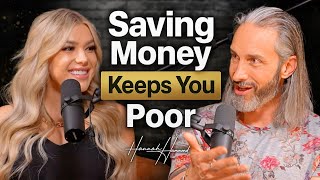
YouTube interview (Hannah Hammond with Garrett Gunderson) about why most Americans don’t reach financial independence and practical ways to join the top ~5%. Gunderson emphasizes mindset (poverty vs. abundance), building "mental capital" and relationship capital, and choosing active investments now (real estate, businesses, intellectual property) to produce cash flow later. He gives a three-part tax framework (team, deductions, income classification) and details tactics including section 199A pass-through deduction, the Augusta Rule (renting your home up to 14 days), section 1202 (tax-free gain for qualifying business sales up to ~$10M per partner), entity selection (avoid Schedule C; use S‑Corp to split salary/dividends to reduce self‑employment tax), domestic asset protection trusts, and art-donation tax arbitrage. He also discusses investor DNA, delegating to an A-team, crypto custody (seed phrases, hardware wallets like Trezor), and personal anecdotes about family, entrepreneurship, and work–life balance.
Questions this video answers
95% (cited as a U.S. Department of Labor statistic).
Section 199A (qualified business income/pass-through deduction).
Section 1202 — he states it can allow up to about $10 million tax-free gain per partner for qualified small business stock held long enough.
About 750 hours and having real estate as the primary function.
He claims savings could be as high as ~15.3% (self‑employment tax) or at least ~3.2% by shifting income from active to passive.
Chapters
What do you think is the best way to build wealth quickly?
Save tax is probably one of the fastest ways. So I think they need to pick from one of the big three, real estate, which. There's a thousand ways to slice that. Businesses, a lot of different ways to look at that. Well, intellectual property is the hidden gem, but if you're willing to be more active now, you'll be able to be more passive later. Everybody else is passive now, and they end up being in a really bad situation in the future. So it comes down to responsibility and. And we give up the bullshit saying we don't have time.
Welcome back to the Hannah Hammond Show. I'm sitting here today with Garrett Gunderson, who's a New York Times bestselling author. He just released his new book called Money Unmasked. And two of your bestselling authors were killing sacred cows. Yeah, yeah. Killing the sacred cows. And what would the Rockefellers do?
Yeah.
And basically, Garrett is. I love that you put a comedic twist on money and. Because a lot of people hate talking about money and they clam up. And so it's really cool that you do that. And you have a comedy show on Amazon.
Amazon Prime. As my kids said, why not Netflix? I'm like, I'm a rookie. Like, give me a break.
You know, I think it's pretty badass. Yeah.
I was. It happened on my birthday, and it was like. It was the best birthday. My kids took me to, like, a rap concert, keeping me young. And my special got on. Amazon prime was really cool.
What's your special called?
The American Ream.
The American Ream. Got it. Love it.
A lot of money in it. But I was like, I'm never going to be the funniest comedian, but I could be the funniest money comedian.
I like it. It's a good. That's your edge. Yeah, well. And what Garrett talks about and teaches on and what he's passionate about is financial independence and helping people break their myths that we're all taught and a lot of us believe about money. And you say that 95% of people are not financially independent by the time they're 65, which is an astonishing number.
That's the U.S. department of labor statistic. 95% of Americans.
That's crazy.
It's just a bad, faulty model they're following.
So what? This is my favorite subject because I came from a household of very little money, you know, but not uncommon to where a lot of people come from.
My dad was a coal miner.
There you go. Living paycheck to paycheck. You know, my dad would always be saving for tomorrow and not living today. And so there was a lot of sacrifice there. And I know you talk a lot about that is like, how do you build wealth while still building freedom and a joyful life and a purpose driven life and a life that you're actually excited about living. And it's really hard to live if you're just saying, well, we can't afford it or we can't buy it or we can't do it right, or people.
Say that all the time. And I've seen people's finances that could afford a lot, but they have a poverty mindset. So they won't invest in themselves because they're trying to build these balance sheets. And so when I think of a balance sheet like just assets versus liabilities, there's the property value aspect of that. Right. It could be like stocks, bonds, real estate. You have your assets, you have your liabilities. Might be loans, taxes, whatever it might be. But what really creates that is our human life value, our insight skills. I call it mental capital. Knowledge, wisdom, insight strategies, tools like it's our mental capital and our relationship capital that creates our financial capital. So what happens if you develop skill sets and become a better investor? And by building your knowledge base, you can actually grow your asset base. But it starts with that flow of money to yourself first, then to your assets. Where too many people are kind of like trying to shrink their way to wealth. They think that budgeting will get them. Their budgeting is good if you're a train wreck, but it's actually harmful because it creates a scarcity mindset and it slows everything down.
Yeah, the poverty mindset, I mean, and it's difficult because it gets passed down generation to generation to generation.
To me, how did it impact you?
Oh my gosh, it's great. I mean, I took my dad to dinner the other night for the first time in like seven years. And I shared because I've been doing a lot of inner work and healing and stuff like this. And I shared with him, I understand why you did the things you did because you were raised that way as well. But the poverty mindset and the insane sacrifice and, you know, not buying your daughter an ice cream cone that was 69 cents makes somebody feel like they're not loved and they're not worthy and all these things. But regardless of that, it never enabled him to build wealth because all his focus and energy was on how can I save all everything that I'm earning? Which already Isn't a lot, so I can have a nest egg for retirement. But if he would have put that energy into how can I create? How can I attract more money? How can I create value? Then it would have been night and day.
And yeah, I have a. I have a really good friend that I just saw two days ago in Washington, D.C. and he gave me out of the books out yet. It's called let's retire Retirement. He was a. He's a financial guy, too, and he has this whole concept where he's like, most people struggle so much so they could retire by age 65, which the concept was invented 100 years ago, where people didn't even live that long. And he said, what if you just shifted and said, instead of trying to retire at 65, you try to retire at 75. And then you just spent more money and time along the way, like 30 hours a week or 40 hours a week rather than 50 or 60. He says, because he's like, I would pay $50,000 right now to get to a time machine and go cuddle my kids when they were little again. He goes, I would do it in a heartbeat. He says, so I'm tired of trading $5,000 work for $50,000 moments. And, like, that's like, how cool for his kids that he's chosen to be home more, even though he's very successful and not sacrifice this. And what it created was he only worked with clients that he really wanted to, and he actually made more money by doing that, by saying, I'm not going to work more than this number of hours. And so, yeah, I think that other generations just didn't know. My great grandfather came from Italy because he couldn't put food on the table. I know entrepreneurs lie and say, I'm doing this to put food on the table. It's not that hard to put food on the table for most entrepreneurs. Right. But the reality is that's just a lie we say to justify trying to fill this void of, if we have enough money, we'll feel valuable. And it's an external factor where my great grandfather actually couldn't do it, Gets on a boat, comes to America, goes to Price Utah, East Carbon, Utah, to become a coal miner. And there's a mine disaster. So he doesn't get to be a coal miner. He becomes a goat herd, lives in a tent. His wife was pregnant when he left, so it took him seven years to get enough money to get a home and to get them to come over. He meets his daughter for the first time at 7 years old, that creates a folklore of scarcity that just permeated my family. Hold on to what you got. My great aunt, she applied for welfare, and they found $550,000 in their savings account because she had every dollar that she'd ever earned. Live in a crappy little house. It stunk. She. She stunk, as a matter of fact, like. Yeah, you know, it's just like. It's just that poverty thinking. It's like a disease of the mind.
Yeah, it is. And I even catch myself, because that's the way I was raised, you know, turning up the AC in the summer where it was really hot in the house or turning off.
I was. I was that guy too, back in the day. Yeah.
So, like, literally this winter in Arizona, I caught myself really cold for a few days in a row. And I'm like, why am I so cold? I'm like, I'm not turning the heat on because my mentality was ingrained from.
My saving those nickels. You know what I'm saying?
And. But. And then that's where the awareness and the meditation and the work and all these things, because you. Once you have the awareness of the behavior, then you can at least catch the thought or the whatever.
Don't have the awareness.
I know.
They're just trapped in that thought pattern.
Yeah.
They think scarcity is reality.
What do you think is the biggest money myth that is common belief in the world or the United States, at least the finite.
It's just that it's finite that they believe that. It's a zero sum game. One person wins at the expense of another. So it's the scarcity belief of, you got to hold on to what you get, you got to take what you can, and you've got to compete instead of collaborate. So there's never enough. When people are in scarcity, it's the greatest destroyer of wealth. No luck, no saving, no discipline, no rate of return will save someone in that mindset. So even if they have a lot of money, like I just read some article that said only 32% of millionaires feel wealthy now. First off, a million dollars isn't that much anymore. You know, like a million dollars. In 1980, that was a substantial sum of money, but a million dollars in today's dollars by the time of inflation. And when you think about the cost of everything. So I understand why they don't feel wealthy, but part of why they don't feel wealthy is they're disconnected from their money. It's set aside in a plan that they're not going to touch till 59 and a half or later. So it's almost like it doesn't exist. And so they continue to live in a poverty mindset, operating and trading time for dollars, waiting for the one day someday where they finally think it's going to be the dream. You don't just flip a switch. You don't go, like, I'm going to pinch pennies my whole life, but when I'm retired, I'm finally going to spend money. They still have that behavior, no matter, you know, the millionaire next door, that book, it's all about how to be a broke, miserable millionaire, accumulate money, but you would never know it, blow it when it gets to them because they're never prepared for it.
Yeah, so what is something that people can do? Because, I mean, everybody wants to have money, right? So if you're somebody, either maybe you've been saving a big nest egg or you have a big Stock portfolio or 401k or something, or maybe you don't and you're just starting out. Like, what would you say are actual steps for them to take to start building wealth and actual financial independence, as you call it, where they're not having to be a slave for the rest of their lives to try to earn a paycheck?
So I'll look at this in two phases. The first phase is the mindset. And so the mindset is we all have a money story, and most people's money story is kind of a lie, but they don't think it's a lie. It's just the words they use to preserve and protect. I can't afford it. I don't have the time. That's not for me. Like, there's like this whole language around justifying them not investing money in themselves or spending it on things that they enjoy. So I have this client, really wealthy client, and he just never spent money. And so one day my business partner's like, hey, I think I found $120,000 of savings for him every single month. I'm like, don't tell him about it, let me tell him about it. And so I met with him, I said, I'm going to tell you about a strategy that's going to put six figures a month into your pocket. But I'll only tell you if you'll promise me one thing, you'll take 10% of it and spend it on yourself. And he's like, well, what would I spend it on? I'm a smart ass. So I was like, yeah, well, I saw you on TV the other day, you need new wardrobe. I'm like, I called Tyler. He works at Nordstrom, right here, close to you go see him. He's gonna buy clothes. You're gonna just go, this first month, you're spend $12,000 on clothes. He goes, he's like, there's wrinkly shirts. He's getting all these. He's getting excited. He starts feeling better. Then I'm like, look, I'm gonna meet with you in like a month, in like maybe three months. I want to hear other ways that you're gonna spend this money. So I came back. He put a nest system in his house, he put a sound system in his house. He bought some guns that he'd always. He felt like a different person off of a fraction. And so what I call it is a living wealthy account. You set up a separate account and then you put money in it that you have guilt free spending. You're like, but here's what I do is I say put a certain percentage into a wealth capture account, just a separate piece of mine fund so that every time money comes in, a percentage goes to that account. You build up some liquidity. But if you're doing that, take another percentage that is just for you to enjoy. Do you like clothes? Buy clothes? Do you like wine? By wine. Just don't worry about what your parents think about it or anyone else. It's just, does it make you feel good? Because you're having these healthy habits and you're enjoying it along the way. So this helps with kind of the money story. What are you telling people that's not true? To protect yourself from your, your scarcity, your false beliefs. But here's the real magic. What are the things you tell yourself? You never speak out loud about money. And if you could find a place where you feel safe and secure and you share those, they'll lose their grasp. You'll actually be free and you'll get to this third layer of your money story, which is things you can't share that are holding you back because they're blind spots and blocks that are hard to see, but you can only see them once you share the things that you're telling yourself, which usually the things people are sharing with themselves is guilt, shame, you know, all these kind of negative emotions, but they hold it in and if they can just speak it, they'll actually start to release it. So that's the first thing. The second thing is it's just being financially fit, independent and free. And the three things of that is financially fit is you get your financial house in order. You create financial strength. You make sure that you have insurance to transfer risk. You make sure you have liquidity to protect. You know, if there's a health challenge or cash flow crunch, you make sure you're saving on your taxes. And you set up your corporate structure. You just do the basics and then you get financial independence by figuring out your investor DNA. Where can someone invest? Where they have knowledge. And if they don't have knowledge, get a mentor in that arena. Learn about it so you become a better investor. See, risk isn't in the investment, it's in the investor. Are they good or bad investor? Well, if they're uninformed, they're a bad investor. And they're not investing, they're speculating. So you actually start to develop that skill set and create cash flow with your assets versus accumulate. If you can create cash flow with assets, you can create financial independence. And it means every active dollar can build more assets. The 10 times advantage, because most people are just trying to save 10% of their income. I'm like, great, create cash flow. Then you can save 100% of your income because your cash flow comes from assets. Then financial freedom is that place where money is not a primary reason or excuse you do or don't do something. It's a consideration, but not the consideration. So it's like put value first, think about the economic second, and focus on the price third. So an example of that would be, I know people that won't pay $1,000 to a tax attorney, but that tax attorney might save them $50,000. So the cost is actually positive. The price is a thousand bucks, but they end up with more money in their pocket and they'll feel they'll have more value. So it's just a different framework.
Yeah, I know. I, I did a video on a podcast. Because they will save you more money than almost anything else is going to save you in your entire life. And there, I mean, my cpa, he's actually not even a cpa. He's a tax attorney that consults me. And he was an IRS tax auditor. So if anybody knows the legal loopholes and the advantages and disadvantages of all these different ways to save on taxes, it's somebody that had that position. And it's, I mean, I could even. I'd have to look at what the returns are. But whatever his bill is, I could care less because I know I'm at least 10xing that on my taxes. And it's pretty Cool. I mean, I've never actually. Some of the things that he's taught me are pretty brilliant that no other CPA has ever told me about. But for people who, I mean. Okay, let's talk a little bit about taxes.
Okay.
What are. Because taxes. I always say a dollar, a dollar Saved is basically $2 earned, so.
Because if you earn, then you pay tax.
Exactly.
Or overhead or whatever. It might not even be a dollar, right?
Yep.
You might earn two and end up with less than a dollar.
Yeah. So there's the earning component. You have to go make money. You can't save your make money is to being rich. But then when you earn it, you have to be efficient with it and save it because that's an easy way to keep more of it. So what are some tax strategies that you implement or you. You teach to help people save on the money that they're earning?
How about I'll give the tax framework and then I'll give a bunch of strategy and if you want, I'll just contribute my tax navigator to everybody. Awesome. They literally just DM me and they could put Hannah in my DMs. Garrett begins. But Hannah. And we'll just hook you up with the tax navigator. It's a checklist that'll have over 100 tax advantages. They could just go through and say this applies or it doesn't. And the framework says there's three buckets that are important. First is your team. Second is the deductions you take. And the third is how you classify your income. So the team is just. You need solid data that's timely. So whether you're small and you just have a part time bookkeeper or you outsource it. The. There's even really cool AI like puzzle IO is really good with bookkeeping.
Really?
Yeah. We just started implementing in some of our companies because it's super efficient. So especially like it integrates with stripe. It integrates with, with Mercury, which where we're banking with that particular company. And it saved us from having to go hire another bookkeeper because our bookkeeper's totally topped out.
So it does all the bookkeeping. That's insane.
Yeah, it's awesome. I'm gonna like, I'm so excited about these things because it just makes things so much more efficient.
Yeah.
So the team. The second person on the team is a strategist. A lot of accountants are historians. Hey, Hannah, you made this money. Here's what you owe. That's a historian. A strategist proactively navigates with you during the tax year, not after most people talk to their accountant in the wrong year. Like in 2025, you should be meeting with your accountant throughout the year. And then in 2026, it's already done. Most people start meeting with them between January and April where they're overly taxed, overly busy. And it's all about deferral instead of savings. Deferral means you don't have to pay now, but you still have to pay later. Savings is. It's a permanent deduction. It's actually full savings. So that's your strategist. Then you. And that might be a cpa, it might be an enrolled agent. I mean, there's a different. The third one is an attorney. Now, if you're not making a million dollars of revenue, just get a corporate attorney. If you're making more than a million, it's a tax attorney, right? If it's $650,000 of net taxable income, a tax attorney every time. Below that, it just depends. But it's probably a corporate attorney. They're responsible for the classification of income. I'll say what that is here in a minute. And if you own commercial real estate, then you might want an engineer so you can do a cost segregation study, which can accelerate your depreciation. Second, bucket deductions. Every time you spend money, just ask the question, does this apply to my business? If it certainly does, then you just document it. If you're not sure, but think it could you bring that up in a tax meeting every quarter? Mine are like 20 minutes. They're not long meetings. I just let them know where we're at for that. Like the quarter where we're rejecting for the year. And if we need to make adjustments. And I ask them, I'm like, hey, I'm going to Italy. I want to write off the trip. They laugh. I go, no. I'm like, I'll have a client day while I'm out there. We're going to go take drone footage where my great grandfather was from and do all my annual meetings, because you have to have that for corporate compliance. And by the end of that conversation, I'm writing off 45% of the trip. Right? But I have to have that context for that. So here's some deductions that are super easy. A lot of people miss 132J. So if. Do you have a pool or a cold plunge or do you have a hot tub or anything like that? Do you have a gym? Your house? Okay, so if you make that available to employees. Now, look, I Have a company that's just, I employ my kids and my wife. So I make those things available to them. I can now write off all the maintenance of all that. That's all tax deductible. Right. Another one, 280G. It's called the Augusta Rule. Have you heard of this? So you just rent out your home for up to 14 days a year to your business. That's tax deductible to the business. But you don't have to claim that as personal income. So if there's like a big event going on in Arizona, that's the time to do it.
Yeah, right.
Because if you go look at Airbnbs, boom. Yeah. Like you go the golf tournaments here, you, you, you do it during that time, host some clients, films, whatever it is, you actually use it. But then you get that major write off section 199A. That is a qualified business deduction. So if you have W2 employees, you can get a pass through deduction that would lower your taxable income on your portion of your income. So I went from 37 and a half to 29% using that deduction.
Wait, say that one more time. I was, I was thinking about the Augusta Rule and I missed that whole thing you just said.
It's called section 199A.
Okay.
So this was when the, you know, talks Tax Jobs act, you know, came like that cut came out during Trump's first term and they, they were talking about they're going to make corporate tax 15% instead of normal, but they ended up making it section 199A. And so what happens is if you have W2 employees, you get credits for that. That go against your income. It lowers your taxable rate. So section one. Okay, yeah, those are a couple of deductions. Way more on the tax navigator guide. The third category is the big category. It's the classification or reclassification of income. First thing everyone should know is if you are a business owner or investor and you don't incorporate and use a schedule C, you have a 400% higher chance of being audited. So it doesn't make sense. The other things, you have unlimited liability.
Yeah.
So instead of using schedule C, set up a corporation, llc, S Corp. C Corp. Depending on what you're dealing with. Now, if you're an S Corp because you're the only owner of the business, that's about the only time I purchase personally. And I'm not an attorney, so this is just education. Go get legal advice. But I would use an S Corp if I'm the only owner. I have a corp, I have a consulting company, I'm the only owner. It's an S corp. I pay myself a salary plus I take dividends. And so those dividends don't get hit with self employment tax. So I could save anywhere from as high as 15.3% or at least 3.2% by just simply splitting my income because I've moved it from active to passive. That happens with real estate too. You know, real estate incomes coming in passive instead of active. That's better than getting hit with all the self employment tax.
Yeah.
The second thing is ordinary income to capital gains. So if someone has a lot of business internationally, they can bring it through an international sales corporation. That's all capital gains instead of ordinary income. If obviously real estate businesses, those things are capital gains, there can be a big advantage to that. The third one is tax free. So if someone has a business that's going to be around for at least five years before they sell and it meets certain categories, they can do a section 1202 which allows them to sell that business for up to $10 million tax free per partner. So it's a tax free opportunity that a lot of people miss because they don't set up the right entity or a charitable trust. Someone selling their real estate can use the charitable trust, avoid all tax on the sell, get a small tax deduction and then they're going to have 20, 30% more cash flow on that asset.
And you just sell it into the trust.
Yep. And you can donate it to the trust. First charity of your choice has to be a legitimate 501C3. But it's a major tax advantage. It's a great exit strategy. And then the fourth one I call tax arbitrage. I spend a dollar, I get more than a dollar back. So in Europe, if they're buying art for museums, they just buy it. In the United States it's all donated. So they have major tax advantages on art. So I bought art collections since 2006. You have to hold it for three years, but then you can donate it for the appraised value versus the book value void it bought it for. So I average about $2 in tax credit for every dollar I spent on art. I display the art most of the time and then just donate it to the museums that the art dealer chooses.
That's fascinating. I know so many people are in art and I haven't gotten down that rabbit hole yet, but that makes a lot of sense.
People think I know a lot about Art, because I always have it, but I don't know that much. It's a really good tax strategy. I like to display it.
Yeah.
Yeah.
So you buy a piece for $100,000 collection?
Usually.
Yeah.
Like maybe 75,000 to $300,000. And then when I donate it, it's worth about six to one, typically on the deduction, which turns out to be about a $2 credit.
How do you know that it's going to appraise for more?
I have an investor that has been doing this forever.
Okay. So he tells you, how do you find art to buy? Like, how do you know what's.
He's the one that does it.
Oh, he does. Okay. And then he just gets his cut and he hold it for three years.
I have clients that have been really good at art, that they've been able to do it without an art dealer and art investor because they're just good at art. But you'd have to make sure that you're buying art at a deep discount or that's appreciated. Or you'd have to, like, what they did is they sold part of their collection and then that set a price point, then they donated the rest. So.
Okay.
Yeah.
That's interesting. And are you getting more of a deduction than you paid for it, though, three months ago? Okay. I would hope otherwise.
If I'm buying a collection, I'm signing with the artist that I'm not going to sell it. And so they're giving me a deep discount because they're moving the collection at once instead of, like, trying to sell it individually. And then it's going to be displayed at a museum, which is good for them and their brand.
Yeah.
And that's kind of how the US Market works.
Yeah. How do you go about finding trusted art dealers to do those?
I only know one, and he won't take new clients, unfortunately, because I've been trying to send them to him. So I've asked for referrals, and he doesn't have any right now.
I'll define that.
I don't really have a good solution to that for now. He'll let me buy art because I'm an existing client, but he's just got aging parents that he's caring for, so he doesn't feel like he could dedicate the time to. To properly buy more art.
Yeah. What do you think is the best way to build wealth quickly?
Save tax is probably one of the fastest ways, especially if you're. If you're not paying tax because you know there's Real estate professional that if some, if you're spending at least 750 hours in real estate and your primary function, you can then do a lot that you couldn't do otherwise.
I know. I don't know how people do. I mean, I'm in real estate and that's. I read Rich. I know. I saw you had Robert Kiyosaki on your show too.
Yeah, I was on his a few times. Three or four times. Yeah.
Yeah. And he's, that's, he's the, you know, godfather of financial education.
Right. Rich dad, poor dad's the og, right?
Like he's still traveling the world teaching the cash flow game. And it's amazing. I mean, that was the first time.
I bought it for my kids for Christmas year.
Do they play?
They haven't played it yet. It's still in the box. But I hope that I could get them to play.
You got to play with them and tell them you'll give them money to play.
Yeah.
Then they'll play. But yeah, I mean, assets versus liabilities. Rich people acquire assets that put money in their pocket. Poor people acquire liabilities that they think are assets. And then he goes into that whole.
Controversy about the house cash flow. Yeah.
Yeah. So what are, what is your perspective on if you are single family, like primary residence home is an asset versus a liability because Robert Kiyosaki calls it a liability because it always takes money out of your pocket and it's a lifestyle choice.
Yeah, it's, it's, it's not really an asset because it's not creating cash flow unless you Airbnb it. Which my wife would never let us Airbnb our house.
Well, yeah, if you live there full time too.
I know people that. I had a coach that worked for me and the way that she became financially independent was she got a divorce and she's like, I'm just going to rent out my other home, my other rooms. Then she took that cash flow to get another property that Airbnb and then just kept doing that, but she actually rented the rooms in her house. I wouldn't do it.
Yeah.
But it was cool that she did.
I did that when I was in college.
Yeah.
Yeah.
When I was 19, I bought my first piece of real estate. I got a Champ loan which paid for the down payment my mom co signed and I rented out to other.
Roommates with a Champ loan.
So because I was a first time home buyer, it paid the down payment. So I had no money out of pocket.
Wow.
Yeah. It was like. It was. I don't know if that program still around. It was just around when I was 19.
Yeah. Yeah, that's great. I mean there's so many resources out there. There's so much knowledge out there. And now especially with AI, it's like my best thought partner is Chat GPT.
It's pretty amazing, right?
It's amazing.
So much better.
It's so good.
Someone sent me what they. Yeah, go ahead.
Oh, go ahead.
Well, they. One of my clients said, how would you describe Garrett Gunderson? And it was hilarious. What ChatGPT came up with.
I was just gonna say better than I could have written yesterday. I asked it to describe me because it came out with that new feature of like we remember all your old chats now because you used to have to repeat things and it was, it was pretty cool.
Yeah, I thought so too.
Yeah, that's so funny. That was cool that they did it from their phone too. But so I mean, that's why I got into real estate investing because I read rich dad, poor dad and I was. He talked about all the tax advantages and the cash flow and acquiring assets and that's really what attributed to me becoming a millionaire pretty early on in my life was because I had been buying real estate and that real estate was appreciating and the real estate was cash flowing and it was paying for my liabilities and I definitely did higher.
Chance of being audited. So it doesn't make sense. The other things you have unlimited liability. Yeah. So instead of using schedule C, set up a corporation, llc, S Corp, C Corp. Depending on what you're dealing with. Now if you're an S corp because you're the only owner of the business, that's about the only time I personally, and I'm not an attorney, so this is just education, go get legal advice. But I would use an S corp if I'm the only owner. I have a corp, I have a consulting company.
Have that very poverty scarcity mentality for a long time until much more recently. It wasn't until I had a, you know, million dollars liquid in my bank account that I finally started to buy myself a dinner or go out to E or do these other things. And that's when I started reinvesting in myself or investing in myself and my own personal development. Physical health, financial intelligence networks like joining groups like Genius Network and these other types of groups. And that was the point where everything started to take off exponentially. Like as soon as I let go of that scarcity mentality and started investing in people investing in Myself investing in my health. Like everything took off and now I'm the only owner.
It's an S corp. I pay myself a salary plus I take dividends.
And so those saving is not really a concern of mine at all other than taxes like being strategic and having dividends.
Don't get hit with self employment tax. So I could save anywhere from as high as 15.3% or at least 3.2%.
Right. Partners. But now it's invest in the best people on your team that you possibly can. Like the, you know, by just simply.
Splitting my income because I've moved it from active to passive. That happens with real estate too. You know, real estate incomes coming in passive instead of active. That's better than getting hit with all the self employment tax.
Yeah. The second thing, $50,000 employee versus the $500,000 employee. Really look at what they they can bring to you and obviously that's probably not going to be the range but still if it's this employee is cheaper and you're just thinking oh it's cheaper, you have no idea what you're missing out on as far as what it's going to bring into your company.
I feel like you're so insightful there because one, you talked about investing in yourself and I feel like that's phase one and you never stop that. But phase two is you invest in a team and that's the game changer because if you can grow your team, you can really grow. If you only invest in yourself and try to do it all yourself, you'll burn out. So IBM did a study long and is ordinary income to capital gains. So if someone has a lot of business internationally they can bring it through an international go. And they said what's the difference between an A teamer and a B teamer in productivity? And they said it's 52 sales corporation. That's all capital gains instead of ordinary income. If obviously real estate businesses, those things are capital gains, there could be a big advantage to that. The third one is tax free. So if someone has a business that's going to be around for at least five years before they sell and it meets certain categories, they can do a section 1202 which allows them to 100% less productivity with a B teamer. But the difference between hiring a B teamer and a teamer might only be 10, 20% additional funds coming out of your pocket. Where could you put in 10% or 20% and get 5200% production Bitcoin. I mean it's like that's so hard to do, yet people miss out on that because of a miserly mindset. And then I watched this dial that business for up to $10 million tax free per partner. So it's a tax free opportunity that a lot of people miss because they don't set up the right entity or a charitable trust. Someone selling their real estate can use the charitable trust, avoid all tax on the sell, get a small tax deduction and then they're going to have 20, 30% more cash flow on that asset.
And you just sell it into the trust.
Yep. And you can donate it to the trust. First charity of your choice has to be a legit documentary. Years ago, right when Steve Jobs died, they came out with this thing called the Lost tapes. And it was like someone had a VHS of Steve Jobs interview where they only took a three minute clip for this Titans program and then they ended up playing the whole interview. And the thing that was most memorable in that interview is he said if I took the very best stereo system against the second best, the untrained ear couldn't hear the difference. Yet it's exponentially more expensive for the 501C3. But it's a major tax advantage. It's a great exit strategy. And then the fourth one I call tax arbitrage. I spend a dollar, I get more than a dollar back. So in Europe, if they're buying art for museums, they just buy it. In the United States it's all donated. So they have major tax advantages on art. So I bought art collections since very best. He said, when I look at when we built Macintosh, people thought we had hundreds of people building. He says we had. We could feed him with a pizza. It was like a handful of people, but they were so good. It's the most strategic advantage I've ever had in investing is having the right people. And so it's just insightful what you said. I wanted kind of like 2006. You have to hold it for three years, but then you can donate it for the appraised value versus the book value of what it bought it for. Give these two examples because I think they're really, you know, useful.
Yeah. And it's hard when you're bootstrapping and you're starting out and you don't necessarily have $500,000 to give somebody. Right. And so it's. There definitely is that balance and that curve of Right. You do what you can. But I am a big believer in do what you do best and hire out the rest. And if you focus more and more on do what you do best and hire out the rest. Then you'll generate more income and more cash, more resources to buy back your time. Invest in top.
So I average about $2 in tax credit for every dollar I spent on art. I display the art most of the time and then just donate it to the museums that the art dealer chooses.
That's fascinating. I know so many people are in art and I haven't gotten down that rabbit hole yet. But that makes a lot of people.
Think I know a lot about art because I always have it, but I don't know that much. Really good tax strategy. I like to display it.
Yeah.
Yeah.
So you buy a piece for a hundred thousand dollars.
I buy a collection, usually talent.
And continue doing what you do best. And do you know Garrett or not Carrot? That's you. Do you know Garnett from Canada? Yeah, yeah, yeah.
He's a stud.
I love Garnett.
He's a stud. Yeah.
So Garnett helps like mentor me and stuff.
And that's great.
He's brilliant for the audience. He's absolutely incredible. Has built an insanely massive career.
He's the guy in Canada when it comes to that.
Yeah.
Yeah. Like the biggest wealthiest people go to him.
Yep. And not only is he amazing in business, he's just. He's overcome.
Doesn't focus on their health. He does all this great stuff.
Yeah. Like really self actualized in every way. Which is my mission and my mission to bring up everybody else around me and help them reach their highest potential.
Yeah.
Like realize their highest potential in all areas. So anyway, he told me that what part of the arrow. Yeah.
Spend like maybe 75,000 to $300,000. And then when I donate it, it's worth about 6 to 1, typically on the deduction which turns out to be about a $2 credit.
How do you know that it's going to appraise for more.
I have an art investor that has been doing this forever.
Okay. So he tells you how do you find art to buy? Like how do you know what's.
He's the one that does it.
Oh, he does. Okay. And then he just kills the animal.
The tip.
The tip. Yeah, that's it. And so any.
I'm a bow hunter, so I know.
Oh, perfect. You and my brother would get along well. Anything that you are doing that is not the tip of your arrow, you got to be delegating it as quickly as possible. Basically.
Yeah.
And so gets his cut and you hold it for three years.
I have clients that have been really good at art, that they've been able to do it without an art dealer and art investor because they're just good at art. But you'd have to make sure that you're buying art at a deep discount or that's appreciated, or you'd have to, like, they. What they did is they sold part of their collection and then that set a price point, then they donated the rest.
So, okay, yeah, that's interesting. And are you getting more of a deduction than you paid for it? I'm always thinking about that when I look at my to do list. Is, is this the tip of my arrow? Is this the absolute point that I should be focused on, or is there somebody else where this is their point and they can be doing this better than me and that way I can scale my company faster because it's. It's challenging to. You know, when you're trying to wear all the hats in the beginning, you have to. I think too many entrepreneurs, too many real estate investors, they think that they have to do it all and that they're the best at all the things and they wait too long to delegate, and that's what really inhibits their growth.
That's why they get burned out. Yeah, yeah.
How did you get into, like, what specific incident led you into this business of teaching financial intelligence?
So when I was a 15 year old, I started this car detailing business. My dad being a coal miner, he's like, hey, the bosses are coming to town. I'm going to clean these vehicles. You want to help me? I was like, sure. So I'm cleaning the surface vehicles with them. So you're not bad at this. And I was like, huh? I wonder if my mom worked at a credit union. So I went, I knew the president of that credit union. I'm like, hey, when you guys repossess vehicles, I'll clean them. And he's like, cool. So I started cleaning those and I went and did this business competition called Students in Free Enterprise. And I won $500. And my business had only done $700 of net income. So I was like, I think I became a speaker that day. But the next year I won the first place. And then I won the young entrepreneur of the year for the state of Utah. And it came with $5,000. And I was like, ooh, I want to invest this money. I didn't know how to invest, but I thought, this will get me out of this little town into the big city. That's kind of what my rudimentary thinking was. But My mom wouldn't sign off as a custodian because you have to have a custodian before you're 18. And then when I was finally 18, I made a small investment with it, and it was bad. And I was like, I gotta figure this out. And in that process of trying to figure it out, got offered an internship when I was 19. And so I just was fascinated by money. I could understand it very quickly. And because I was young, I could meet with so many really wealthy people because they love to pay it forward. So I just flew somewhere every month for 26 straight months in these meetings, in closed door meetings, meeting with family offices, meeting with people that were, you know, advising people worth, you know, tens of millions of dollars, which I didn't even know those kind of people at that age and just enjoyed it.
That's so cool.
Yeah.
And you didn't, you mentioned you didn't really come from any sort of money at all in your multiple generations of your family.
I mean, um, I didn't like, grow up in poverty or anything, but at the same time, my family was like a, let's save all the money that we can. And that's all they kind of knew. They didn't know a whole lot beyond that.
Yeah.
And so I like, man, I'd like to figure this out. And it was, it was fun to figure out. And I had a professor at the university I went to that used to manage $5 billion in municipal bond funds. And he was the number one in every category. At age 53, he decided to stop managing money and become a teacher because he's like, I made enough money to last a lifetime, so I'm just gonna go teach. And so I became friends with him and I worked out with him and I learned from him.
What's the best thing you learned from him?
Well, the first thing I learned from him is there was a lot I didn't understand. And he showed me how to reduce risk rather than take risk. I learned how to read financial statements. I learned when to make an investment, why he would buy a bond, why he wouldn't. He gave our class 250 grand. And then you broke up into five groups. And then we had to invest the actual money. And then our grade was based upon how we did against our benchmarks.
Are you serious?
And so like, yeah, he's, he's awesome. And then he became a client.
And you invested in the stock market?
We invest in the stock market. And I learned quickly, like, I don't care for the stock market. I Don't invest in the stock market. I don't promote the stock market. It's just not been part of who I am.
So you keep no money in the stock market?
I have zero dollars in it.
Me, too.
It feels really good right now not to have it in there. I don't like to see other people in the fear they're in. But I want to be invested in a place where it's aligned with my investor DNA, where, like, I can grow a skill set. Because if you grow your money, but you don't grow your skill set, that gap is risk. And there's a lot of people that have money, they don't know what to, like, how to create cash flow with it. They don't know how to protect it. They're just relying on things and they don't understand it. So when it goes down, their mindset follows it. There's people right now just in panic.
I know. Yeah. I am not a fan of the stock market at all. What about.
What's your take on crypto, Bitcoin or nothing?
Bitcoin's the only real.
I have a theorem and it's done nothing for me. And I probably. I'm like, really telling myself, why am I staying in it? So I'm probably going to get out of it. But I understand why bitcoin is valuable and why it will continue to be valuable to the point where I've talked to my kids about it and they take 50% of their income and put it in bitcoin. Right now.
Yeah, I put. I put a decent amount in Bitcoin. I'm a believer in bitcoin for sure.
Me too.
Yeah. Yeah.
I get why other people won't do it, and it's fine. Because if they don't understand it, they shouldn't do it. I had so many people that would be, like, jealous of people that were in bitcoin early and I would say, hey, you're jealous. Thinking they were lucky. These were geeks. They understood this early on. They understood decentralized, deflationary. They understood how, like, there would be technology built to make it more efficient to transact. They knew that. They were studying it. They spent hundreds of hours. And you think it was luck. I turned it down at $200 and $300 because it's like. That doesn't make sense to me.
It's like a speculative.
Yeah, I was going to put 25 grand in at 200 and they. The person I was going to buy it from wanted me to meet him in a McDonald's parking lot. And I was like, I'm out. I just like, what? I'm going to get a drive. How do I like. It just didn't make sense to me.
Someone told me about it when I was 18. I was just graduating high school and it was a nightmare. I was trying to learn how to get into the freaking exchanges and traded and it was so hard. And I bought some. I don't know, it was a couple hundred bucks. Yeah. I think 11 years ago. But it was what I sold it all and you know, I reinvested later.
Right. That's the thing is when we don't understand it, we're going to sell it. When we think, oh, this is a gain. I had a client, I do consulting, do these one day consulting gigs and this client brought his COO, his CEO, had 80,000 Bitcoin and sold it early before it hit a dollar.
Yeah.
Because he mined it all.
I know you hear those stories when.
You think about 80,000, I was like, that's a, that's a game changing life.
I heard someone had like hundreds and hundreds of millions of bitcoin in a security box that burned down in California.
They didn't keep their seed phrases. That's wild.
I get, I don't know, I don't know how.
Like I have, I have seed phrases in one safe and I have my hard wallets in another safe at different locations.
That's smart. See, I'm not at the level of having hard wallets.
Right. And if my.
And if something happens, what is a seed phrase?
So a seed phrase, you can have like 16 words or even more that if you lose your wallet, you can use those phrases to pull it back up.
Oh, interesting.
Right? So what's cool about that is if I memorize those, I can take it anywhere I want. Back in the day, people would hold gold, but if something was chaotic and they had to leave, they didn't get to take their gold with them because it would be stolen. Like Bitcoin. As long as you have, you know, power and Internet, you're good.
How are you? Because I just, I still just trade on Coinbase.
You know, I just pull it off on Coinbase once a month. I just put money in every week and once a month I put it on my wallet.
Same with my kids.
I use a Trezor. So you just Trezor, trezor.IO will give you a wallet. Or I also have. What's the other brand I have? Because I have a couple of wallets. I have another one. I Can't remember, but I like the treasure. And then I got one for my kids.
And then a virtual wallet.
You just literally plug it into your computer, then you download the app and then you send to your trezor from Coinbase and then it'll, it'll give you, you know, when you say receive on, you click it. It gives you your, you know, code. You put that in to Coinbase and then you send it and it moves to your wallet. Now it's off the exchange because I know people, I know of people didn't know them. Oh, I know one person that lost so much with ftx. Like, like tens of millions went down. Yeah, right. So I don't leave anything on an exchange. I think exchanges could be hacked. I think that, you know, I have another, a really good friend that I speak at his events all the time. He lost eight bitcoin on an exchange and they, they won't give, they won't do anything about it.
Well, that's what I say with the wallet. Like, what if it doesn't show up? And who do you call?
You know, we have your seed phrases. You literally just go plug those seed.
Phrases in online and it's easy to set up.
Super easy.
Okay, Treasure, I have a video on.
It I can share with you.
Yeah, yeah, yeah, I'm gonna, I'm gonna do that.
I've taught my 19 year old and 17 year old how to do it. I haven't shown my wife how to do it. She just knows where the phrases are.
Okay.
If something happens to me.
Yeah, that's another thing, just staying organized with all this stuff, like with the will, I mean, so I just pretty recently got like, you know, multiple trust set up and I'm learning that whole trust thing. So talk. I'm assuming you're a proponent of trust.
Yeah, I believe in the thing that rock. I wrote what the Rockefellers do and that book, when I was researching it, they had this belief, own nothing, control everything. So a trust removes the ownership. But since 2013 in the United States, you could do a domestic asset protection trust and you get to select your distribution trustee, which means you can still access the money through your distribution trustee. And if they don't give it to you, you can fire them and hire someone new. So it still gives you access to your money and control of it, but you don't own it. So if you're sued, depending on the state that it's in, it's between six months and three years that it becomes untouchable. There's like A time where your creditors have a chance to come and, you know, make a claim before it seasons.
Yeah. Yeah. It's pretty amazing what you can do with trust and asset protection.
Yeah, you can avoid, you can avoid taxes upon death. You can, you know, there's a lot of good factors with it.
Do you know any tax strategies for using trust for when you exit a company?
I mean, look, there's things like there's a thing called a CAPS trust that can allow you to like, take distributions over time versus at once. It's not my favorite strategy. I'm, I'm more of like, if you're going to sell a business, you need to know your tax strategy before you have a letter of intent or talk to a broker, because that's where most of the strategy can come in.
Yeah.
If you've already got that, you lose most of your tax strategy. It becomes more about delay and what I would call like income smoothing. So it doesn't happen at once. So there's a lot of trust strategies that I don't believe in. Like there's a thing called a charitable llc. I think it's a problem. It's a way that people avoid tax. But there's a thing in there called self dealing, meaning it's just a way for you to get your money out tax free. But you're the one that set it up and received the money. So I've seen those not hold up. There's like a big case study that held up with Mark Zuckerberg, but I'm like, cool, if you've got billions of dollars, go ahead and fight the government. If you don't, I'd be really careful. There's spendthrift trust, there's all these trusts, complex trusts. I don't get into any of that. I'm a down the fairway tax guy. I'm not a. Let's get in the gray areas.
Yeah. What do you think are the most. I mean, if you're, you don't, you don't invest in the stock market. So is your. Teach the audience what your approach is. If they have money and they want to invest, but they're probably not investing, maybe it's in a money market account or something like that. Like, and especially in today's economy, how do you recommend that they invest? In what and how?
Look, the first place to invest is in efficiency. We did a study and what would Rockfellers do? Where we said, what if someone could double the return of their retirement plan? So we took the average amount in a retirement Plan doubled the return. And then we compared that to tax savings and interest savings and we found that people had 400% more money keeping their money safe and stable by saving interest in taxes than they could doubling the return. Because how do you really double your return in your retirement plan? The only way I know how would be like maybe going to private capital versus like public markets. But that's really risky because a lot of private capital can go to zero where the public market's probably not going to go to zero. So that's tricky. So I think they need to pick from one of the big three, real estate, which there's a thousand ways to slice that businesses, a lot of different ways to look at that. Or intellectual properties, the hidden gem. Like, to me, intellectual property is my favorite asset class because it's what I do best. I like writing books. I've written 10 of them. I treat them like a piece of real estate. Like, what would the Rockefellers do? Came out in 2016. I rewrote it in 2023. Because if you have real estate, you're gonna change the carpet, you're gonna paint the walls, Interest rates have changed. I'm a better writer. You're killing sacred cows. My first book that hit New York Times came out in 2008. I rewrote it in 2023. I just got up every morning for hours and wrote those books for that year, you know, and now I have rereleased them. They're doing very well. And intellectual property is kind of the game I like to play because I can live wherever I want. I only pay tax upon the sell where real estate have to pay the property taxes I have. Like I. I used to do a lot of real estate. I'm glad other people do it. I found I just talked to bankers, attorneys, property managers, maintenance people, and every now and again a tenant. And it was always on their timeframe, not mine. Like I can. I took a summer and went to Italy in 2017. I didn't have all the real estate, so it was easy if I would have been like the old days. I had to have full time employees to manage my real estate portfolio. I'm glad you're good at it. I wasn't good at it. It's just not me. You know, I'm even thinking, I have one property I'm even thinking about selling. It's such a beautiful gem of a property, but the renter's leaving and now I'm like, do I really want to do what it takes to manage this?
Yeah. And that's where we have to focus. And I was talking to Ben Hardy about, this is like, what's below your floor. You know, if you set an impossible goal and give it a short timeline, it forces you to think differently about what activities you're going to have to do to get that goal.
What are you going to not be doing?
And so I would think of that too, because I've been. I've actually been selling some of my real estate. And I'm thinking about. Because now it's who, not how. For me, before it was, let me buy this one house and manage this house, let me save on property, Right. Like all this stuff. And then all of a sudden you have five houses and you're like, okay, now this is starting to become a job. And they're starting to become issues here. And. And then there's alternative investments now where you can invest in fund managers who are doing big developments and who are doing. Buying all the things, doing all the property management, have all the relationships, have access to all the deals and you can make a really good return. Like.
Yeah, I just make sure that I have clients ask me about those deals all the time. I'm like, how many cycles have they gone through and how much cash do they have on hand? You know, because the big people make it through and the small people don't.
Yeah, yeah. It's all about the right sponsor.
Right.
But I love alternatives. I think the alternative investment space is amazing if you're an accredited investor.
And I've just simplified my life heavily because I redefined wealth. I used to think of wealth as, like, how much I could accumulate, and now I think of wealth as like, how present can I be? And so if I'm gonna make an allocation of money, what's the time that goes with that? And can be a steward over that, or will it sabotage other things that I would rather be doing? So if I'm gonna write a lot, I don't wanna have a lot of things that would distract me from that. Yeah.
Cause that's your unique ability.
That's what I. Yeah, that's what I'm.
Tip of your arrow.
More gifted out.
Yeah, yeah.
Rather be on a podcast than talking to an attorney.
So you said intellectual property is your best investment. You're saying people can invest in intellectual.
Property or mainly creators of intellectual property.
Yeah, I was gonna say, but.
So it's not for everybody, just like real estate's not for everybody, just like business isn't for everybody. But those are the big three cash flow generators that are out there.
What is your opinion on the state of the market right now? And. And just investing in savings and income. Like what. What do you think the impact is gonna be from the tariffs? And do you see opportunity or fear? What's your take?
The original plan for tariffs I thought was really intelligent and wouldn't have been as disruptive. I don't really know what's. Because it's like we're in this game where I don't know what's going to happen. Are they going to lower them? They get it like there's too many unknown variables moving forward. But the original plan was start incrementally adding 2% tariffs and then see the response add 2% more, which wouldn't have shaken the market up quite as much. But maybe it wouldn't have been as effective long term because maybe it didn't get people's attention, I don't know. Because we've seen them paused, we've seen them suspended, we've seen them like that just has major ramifications. But at the same time, I'm going, why are we paying tariffs and other people aren't? So I'm not against it. I'm also not smart enough to know all the variables and know what the full game is like. I'm looking at a piece of the picture with limited information, not hearing the conversations and making a judgment based upon that. So I don't know. But my feeling has been the same for a long time about the stock market. And it's not the most popular opinion, but it's how I feel. I think it was a valuable resource when they invented the stock market because someone could have a big idea that they need funds to make that idea happen. So here's the problem. If a small company right now decides to go public, they're in so much danger because of short selling. So they could have a predator out there saying, we're gonna short this company to death. Meaning we're gonna keep buy. We're gonna short this so much that it pushes the pressure down so that we get the reward because we have more money. That's the sharks. And I've seen it with too many small companies. We don't need the stock market anymore. It's all funded through private capital. For big corporations. It used to be that you couldn't get private capital like that, but now it's readily available. Sure, the rich get richer through that process, but we also get the middle class and the upper middle class get bamboozled by the stock market all the time because there's dark pool investing where there's major hedge funds buying at different prices than the public. There's flash trading where there's supercomputers that when someone goes to buy, they're skimming it all the time. There's expense ratios and 12b1 fees that are, you know, draining a lot of this. And there's also a lot of false reporting. If I buy an S&P 500 fund and one of those S&P 500 companies go out of business, which I think we're going to see that happen more because of AI and the advancement of technology. They replace that with a new company and say that new company's return is what the overall return is. But the reality is my return is not that, because I lost 1, 500 completely and permanently. And so when we go and put money in the stock market not knowing, like, these companies are just taking money off the table. Like, if, you know, Uber was fully funded, you know, we look at all these companies and they get media buzz and hype to prop that up. And we look at these companies, when they do go public, it's so that the owners and the original investors can pull money off the table. It's not because they needed the capital. So it's an antiquated system that we continue to invest in because we've been indoctrinated that investing equals stocks. The average investor hears the word stock, just like when I say the word Kleenex to represent tissue. Kleenex is the brand, but tissues the actual thing. People now, unfortunately, think stocks equal investing, but it actually equals speculation for the majority of the population. Why do we still go with it? Because people feel they don't have the time or expertise to do anything else. And they've been taught to be so passive with their investing that they watch money pass them by. You're not going to get rich putting money in the stock market. The way that all the gurus are going to tell you to get rich is save more money, invest more, start early, dollar cost, average. All this kind of stuff that's been BS because 95% of the time they're not financially independent. Because what kind of cash flow do they create from the stock market? Almost none. Now when they get to a place that they have to create cash flow, they actually have to redeem shares or take away from the appreciation of the stock. Well, what happens if when you retire, the market goes down? It's a thing called disinvesting. You start to pull more money out, exaggerating the losses. So if I have a million dollars and I'm like, well, look, the market's averaged 8%, so I'm just going to take 6%. But your first year, you lose 10%. Now you're down to 900,000. And you take out your 60,000. Now you're down to $840,000. Now if the market comes rearing back, it gets 10%. It's only 10% of $840,000. And now you're going to take another 60 out. So that's why there's this thing called the 4% rule that says if you take more than 4% out of a variable account, you run the risk of depleting that account in, in its entirety before you die. And it used to be that people retired for days or years or months, not for decades. People are living a lot longer and they think they're going to retire for 30 years off an amount that is so minuscule. The average 401k has $174,000 in it. The 70 million people opted into this program only got put in a 401k because companies destroyed pensions. I don't know how much you want the history of this, but like, basically, pensions were popularized in 1947 because GE was like, hey, we want to recruit the very best talent so we could become number one or number two in every category. The only way we get there is by recruiting other executives at other firms to come work for us. And we'll promise them if they work for us, we'll give them a pension. These guys were dying at 62. So what they would do is they'd buy life insurance on them. They'd use the cash value when they retired to supplement the pension, and they would replenish what they paid with the death benefit. Wall street came and said, why would you go with these anemic life insurance policies when the stock market's earning more? Imagine if you get 10% instead of 4%. What's going to happen is if you pay out 6%, you get to keep the other 4%. That's going to be millions of dollars in the company pocket. But when the market went down, they depleted the pensions, the pensions went bankrupt. And they said, we don't want to take this risk anymore. We'll transfer that. Instead of a defined benefit, we'll have a defined contribution. And that defined contribution has let the retirees of America down. That 95% of them are ill prepared, but they feel warm and fuzzy on the way up. They just don't get where they want to get in retirement so they sacrifice their whole life working and doing all this work, not getting the 69 cent ice cream cone. And when they finally get to retirement, it's not enough money. So the entire thing is a ream. The entire thing is broken.
So what do you do?
Different cash flow plug your financial leaks, save on. You know, there's four ways that people leak money. They tip the government unnecessarily, they overpay on interest. There's ways to reduce that. They have hidden fees and commissions inside of investments they can eliminate so they can get more money. And they redesign their insurances to be more efficient. And that's 10% of their income that will now come into their pocket versus institutions. Second, you learn which what your investor DNA is and you start to become a cash flow investor. Yes, it takes some time, but if you're willing to be more active now, you'll be able to be more passive later. Everybody else is passive now and they end up being in a really bad situation in the future. So it comes down to responsibility and we give up the bullshit saying we don't have time, we have time. We're watching Netflix, we're on social media, scrolling like the average person is on their phone for eight and a half hours a day and only sleeps for six and a half hours. We're just up.
Yeah, I, it's, it's not hard if you just do the things that are smart and don't blow money. Invest in the right things. Acquire assets, not liabilities. Don't have crazy credit card debt.
Yeah.
And I just, I mean it is hard out there though. Like things are so expensive. And I go out there and see, you know, if restaurants are starting to get quieter and p, I mean some places you go, it's $30 for a drink. I'm like, I don't know how non entrepreneurs or executives with ownership in companies which you could still call an intrapreneur are making it in the world. And I mean, I just don't, I don't really see how anybody does it.
Because it comes down to one thing. We have to increase our skills. And AI has given us an unprecedented opportunity to increase our skills. We can be so much more effective and efficient if we learn how to use AI to be more valuable. Not to replace us, but to remove the minutia so that we can be more effective per hour, per minute, per year, per whatever. And it means that we have to be active in the pursuit of value creation. We can't be passive.
Yeah, it's all about value creation. And that's why I think, you know, before our engineers and people that had knowledge were well paid. But yeah, now knowledge is free for the most part. 20 bucks a month on chat GPT.
Right.
And so now it's people who can create y are going to be paid that 0 to 1.
It's good news for artists. It's good news for entrepreneurs. It's bad news for people who want the past to be the future.
Yeah. Yeah. It's interesting. Well, I know we have to to wrap up here soon, but I'll end with a few questions.
Okay.
So let me pull up my list here because I was going to ask you something special specific.
Okay.
I would like to know. This is a fun question. What keeps you up at night?
My.
You know, whether it's personal or business or with your clients, like, what's your. The biggest thing on your mind that keeps you up at night?
The. When I just like relationships lost, like mistakes that I've made. Like, if I wake up, that's that'll be the thing on my mind. Or I'm thinking, like, am I doing enough for my kids? But like, I sold the business and didn't like how that went. I unwound a partnership. I didn't like how that went and that that would occupy my mind a lot. I feel bad about it.
What I guess in losing relationships, what part of that keeps you up? Like you should have done it differently or you.
It's just like there's a lot of pain in that because I'm a relationship person. And so even if those relationships had a season, it doesn't mean it was easy.
Yeah. Particularly in business or personal business. Yeah.
I haven't really lost any personal relationships. So they were business ones, but they were. There's still a personal element to that I don't really believe in. It's not personal, it's business. Like, everything's personal.
Right.
Like when someone says it's not personal, it's business, they're about to you over.
Yeah.
Or they just did. Right.
Yeah. It's not you, it's me. It's not personal, it's business. Yeah. Okay. What. Has it been difficult for you to. Because I know I've struggled in relationships as an entrepreneur because I'm obsessed with my business and I. Yeah. If you're going to have anything be really good, you have to put a lot of energy into it. And I've never put a lot of energy into like a relationship with somebody that is not a business relationship. Right. My business relationships are personal, but I don't really have.
Yeah.
Energy. Contribution to personal relationships that don't involve business generally. And so those relationships suffer. So did. Did you experience that as well, like, with your.
Oh. When I was first married, I was, like, Just worked all the time. Yeah, it was hard. I was trying to, like, make it. I was trying to prove myself. I was trying to. You know, I said yes to every opportunity. And so my wife was patient, and we did a lot of work, but, like, we've had such an amazing relationship for the last really, like, 15 years. But early on, I was definitely. She was second.
Yeah, I know that feeling.
Yeah.
I mean, I've been putting people second. Yeah. And what about being a dad?
I felt like I course corrected that pretty quickly because my son was born in, you know, basically 2005, and my other son was born in 2008, and I. I really got on track by 2010. Like, I really, you know, so he.
Was pretty young before.
Yeah. Because when he was my. My son was born, and by the time he was one, my two business partners died, and I just was, like, trying to keep everything together. We had three offices, 42 employees. I like. But after four months of doing nothing but working, he was asleep when I left. He was asleep by the time I got home. My wife just called me out. She's like, you know, you might be pretty extraordinary at business, but you're just an ordinary husband and father. And I was like, I couldn't really argue it.
Yeah, that's a knife in you. Like, oh, God.
But it took, like, she told me that, and it still took, like, you know, it was easy with the kids, but it took me some time to regain her Trust. By 2012, I just told my, you know, my, like, everybody running my company. I was like, yeah, I'm gonna take this year, and I'm really gonna focus on my family. Like, cool, we got you. We're gonna improve some margins. We don't have to have as much revenue. My wife, by the end of the year, she's like, not even then. She's like, are we gonna be okay? I'm like, what do you mean? She's like, you're home all the time.
Yeah.
You're like, is the business okay? I'm like, yeah, we. I. I wanted to show you, like, how important this is. And it was an amazing year, you.
Know, that's so cool. And did you find that you grew more once you healed that relationship with your family and with yourself? And actually, it's like, that 10 rule of spending money on yourself. Right. You were spending time on yourself.
Look, our. When I wasn't right. With my wife, no amount of business success mattered because it's like, she's the first person I want to call when I want to celebrate something. And, like, we just weren't in a good spot.
Yeah.
You know, it wasn't like we were in the worst spot, but it was like, a mediocre spot. It wasn't like, you know, not where I wanted to be.
Oh, gosh. I. You just reminded me of something, and I forgot what I was going to say. Darn it. I wanted to ask you that. So we got negative. One minute, one second. Okay, I'll finish with. What's the best advice you've ever seen or heard?
I think it's probably my dad. Like, we're. We're driving. I was, like, early on in my career, and I was like. I was given that old. Like, I think Dave Ramsey says it, which is ironic because I'm not really big fan of his financial advice. I admire his business success, but it was like, hey, dad, I'm gonna work harder than anyone else is gonna work so I can live a better life than anyone else in the future. And he was just like, I understand that sentiment, and I appreciate the work ethic, but, like, you can't buy back the memories you never have. That always stuck with me. It's, like, really impacted me.
Yeah. It's important. It's everything I struggle with that is getting lost in you get. So, actually, I was at. Took dinner. I took Robert Kiyosaki to dinner the other night for his birthday, and I was telling him about impossible goals and, you know, Ben Hardy's book and scaling. And I get so obsessive and focused on this stuff. And Robert told me, he goes, it's not the goal that matters. Like, he said, see the goal as a rock, and if you drop the rock in a lake, the ripple from the rock is what's important. And he shared a story about he was traveling around the world and was on this really tiny island, and they all ran up to him and had the cash flow game. And we're like, robert and knew who he was, everything. He's like, that's what matters. Like, that ripple effect. And that feeling matters so much more than selling 40 million books. Right. And so it was. That one really hit home for me.
Yeah. Like, it's just good to be liked by the people that you love more than the people you don't know. Yeah.
Well, thank you for coming on the show today.
Thanks for having me.
Of course.
More from Hannah



Never Waiver On Your Values—No Matter How Lonely, Uncomfortable, Or Difficult The Journey Gets

Watch the full video about Ray Dalio’s prediction on the upcoming debt crisis… 👀

Stop Asking “How?”—The One Question That Will Help You Scale Faster Than You Ever Thought Possible

4 Life Lessons That Took Me 30 Years To Learn—But You Can Learn Them All In Just 14 Minutes


This Is Unfortunately How You Can Tell Your Real Friends From Your Fake Friends


