Why 99% of Salespeople Stay Broke: Jeremy Miner EXPOSES the Truth
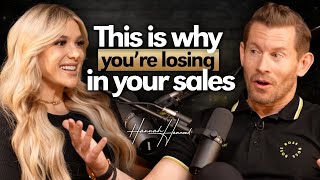
YouTube interview (Hannah Hammond with Jeremy Miner) exploring why many salespeople fail and how mastery of sales — especially tonality, emotional connection, questioning, and framing — separates top performers. Miner presents a four-type taxonomy of sales identities (wingers, dabblers, know-it-alls, committed-to-mastery), demos reframing and verbal-pacing techniques (watch and real-estate examples), explains his NEPQ methodology, describes training programs at 7th Level, and offers views on AI in sales.
Questions this video answers
June 18, 2025.
Over $33 million (over an 18-year W2 sales career).
Approximately 18 years.
He said he was ranked about 44th or 45th in the world (direct selling association ranking—speaker: "don't quote me").
He asked to be followed at the verified account: Jeremy Lee Miner (spelled out verbally: J E R E M Y L E E M I N E R).
Chapters
What's the number one thing somebody could do today to start selling better?
Commit to mastering it. I know I'm going to come back to that all the time. And as you commit to mastering it, you just don't take the action steps to actually master it. The most successful people in life, I say this for anything. They don't learn from their mistakes. They learn from other people's mistakes. They don't make the same mistakes themselves. And that's your top 1% of salespeople. Why would you want to wait to succeed? Like, I'd rather succeed, like, now.
So I'm super excited to have Jeremy Minor on the show today. He is. I mean, you're the best salesperson I've ever met in my life. And I know you're renowned globally around the world as the best sales trainer out there.
At least my grandma tells me that. I don't know.
You're amazing. I mean, your tonality, your. I mean, I love watching your videos because I'm like, it really makes me question my sales abilities because I've always just been a natural. Like, I'm in high ticket sales. I own a real estate brokerage and a lending company.
Okay.
But I've never had sales training. And so.
So you've been at what we would call a dabbler. You've been dabbling in the craft.
Yep.
You want to commit to mastery.
I want to commit to mastery, as.
Tony Robbins would say.
Yeah.
So you got four. I always say there's four types of salespeople. You want me to share that? I could bore everybody. So. And I think there's really four types of people in life. I. I don't think this is just for sales. I think it could be entrepreneurs, mom and dad, psychologist. Doesn't matter. So there's four types of salespeople. You got those who wing things. We call those the wingers. So they say different things to every single prospect. They kind of sell on their personality. One week they're up, one week they're down. They don't really have a process that they follow. Right. And when they don't make a lot of sales, who do they typically blame?
Other people.
The leads. The prospect. My prospects are broke. My leads are bad. Where do most of those salespeople go? They get fired. Right. Those are the wingers. Then you have the dabblers. That's where most salespeople are. They. They buy a couple sales books per year. They go to a couple free events. Maybe they follow me or somebody else on IG or YouTube. To get like basic content because stuff on YouTube is more basic. And they think that if they just stay in long enough, eventually, if they get enough reps, eventually they'll figure it out. Like if they just do it long enough. Right. And that approach takes years, if not decades. Right. That's where most salespeople are if they ever get good and is because they work 12, 14 hours a day, they play the numbers game and they eventually burn out. Right? That's where most salespeople are. And then you have those who I call the third group are the know it allers. So they initially invested in sales training long time ago, right? Trained really hard, got good. Maybe they're making multiple six figures a year higher. But then they get what a big ego. And their ego stops them from learning. So they stop investing their skill level. They stop training. Imagine if one LeBron James stopped training, shooting hoops before games, right? How good's he going to be? And eventually their income gets capped. Right. And I'm not saying anybody, you know, watching this is one of those three categories. And then you have what's called those who are committed to mastery. Those are the salespeople who are always investing in their skill level. Because what's the number one thing that determines how much a salesperson is going to earn? Or if you're a business owner, how well your business does. What's the number one thing that's going to term that? Your sales ability, Your communications is how you frame your offer, your solution. So they're always investing in the skill level. Their learning curve is 100x faster. And they don't want to learn from their mistakes. They want to learn from other people's mistakes. They don't make the same mistakes themselves. And that's your top 1% of salespeople. And I would say in life, your favorite athlete, which one would they be? A winger dabbler, know it all, or committed to mastery? Committed to master? You're. Who's your favorite, like thought leader or business leader?
Um, I don't know.
Well, like, I don't know. Who? Elon Musk, you know, Robert Kiyosaki. I think you said you know Robert Kiyosaki. Let's say Robert.
Let's say Robert.
Yeah. Okay. Would he be a winger dabbler, know it all, or committed to mastery?
Committed to mastery?
Okay, so there's something to this. So whatever you do in life, if you commit to mastery and you have a plan to follow it, and you're being trained by someone who's already mastered the thing you're wanting to master, then life is going to be good for you. If you dabble, what type of results can you expect?
No point in playing the game.
No point playing the game. You'll be on the bench. Yeah. Anyways, that's my. That's my opening statement here.
No, I love it. It's so important. So you're the founder of 7th Level, which is a huge sales training organization and you train all different types of industries.
We train every industry. Yeah, we're. Forbes said there's 100. Forbes magazine, 163 verticals or industries and then there's subcategories of each one of those. So like home improvement, for one. That's an industry, a vertical. But in home improvement, there might be doors, might be windows, cabinets, carpeting, you know, siding, awnings, like H vac. Right. So you've got all these different subcategories and we're in all those. There's only like. There's like one vertical we're not in. I think it's like coal mining or something. I don't know. Yeah, we might have clients that we just don't know.
And you guys do a lot in the real estate space for real estate.
Real estate is our second biggest industry retrain. And that would include like residential agents, commercial agents, and then those like you that call distressed properties to buy those and everything.
Yeah, yeah, I love. I want to really dive into that. And also I saw that one of your top viewed videos on YouTube is one where you say where you're. Sell, like, sell me this watch.
Oh, really?
Yeah. Okay, so I want you to sell me this watch.
Well, I'm not quite sure you would even need the watch. What type of watch is this?
It's a Rolex. Presidential.
It's a Rolex. Oh, okay. High level status here. What type of watch do you typically wear now?
A Rolex.
The Rolex. Okay. So what type of Rolexes do you have?
Presidential. Datejust colors. Silver, gold.
Okay, so you. I mean, it sounds like you've got a lot of really nice watches. I mean, what would cause you to feel like you might want another watch?
I mean, it's always been something I wanted, as once I hit a certain level, I wanted to get a gold.
What? What level?
I don't know. Just once I hit a certain level.
Like, if you really thought about, like, what level were you like, I gotta hit this level and then I'm gonna get the presidential watch.
If I had what? Well, now I'm making things up, but for Me, it was when I had a million dollars cash liquid in the bank.
Okay, so you hit that level. So out of all the watches you're looking at, what would cause you to feel like, hey, maybe I should look at this one a little bit more?
I've been on my dream board my whole life.
Has it. See, I could keep going down that path, but what am I getting you to do?
Come to my own. Persuade myself that I need to buy the watch.
Yeah. Now, there's other things I would have done before that, but due to time, I didn't do that. I kind of jumped right into, like, the problem there and the way I framed the question. Because if I. If I asked you, like, you know, what are some. What are some things you don't like about your watches? You might be like, no, my watches are great. Right. So that's a predictable question. And you know where that question leads. Right. You've. You re. Your brain recognizes that pattern. So if I reframe that question. I get you to defend yourself on why you want the watch. And so now I'm not selling you. You're selling yourself, which is more persuasive.
That's so good.
Yeah. Now, there's other things you have to do before that, leading that up. But it's a little example, like, so you've already got the watch. I mean, what's caused you to feel like, you might want to look at this one now? What type of tone did I use there? Like, I don't know.
No, I love. It's like a. It's like a takeaway.
Yeah. The tonality is kind of like, I'm confused. I'm not understanding. So the confused tone there causes your subconscious real quick to say, oh, he didn't understand what I meant by wanting this watch. I need to explain that better. And so you start to open up more, and I find out more, but you don't know what I'm doing there. And some people be like, oh, he's manipulating her with this watch. But my. The. The process, like, you have to view. Like, what do you view selling as? Is selling something that you do to people or selling something you do for people. It's for people. Right. Because if you can't learn how to communicate, your prospects don't feel the need to change, which triggers objections, which causes them not to buy. And then when they don't buy, you didn't offer them any value. Like, their problems stay the same. Nothing ever changes for them. So that's my job as the sales professional. You Know I was at a Tony Robbins event probably three or four months ago and he talked about emotional connection. And I like to take it a step further. And I like to say like, in order to influence at the highest level, you have to master how to emotionally connect with that prospect. Where they feel like you understand them, where you go there first. Where they feel like you understand their needs or desires or wants, their fears without buying into their story. Now what are prospect stories like in your industry? When a prospect gives you an object, give me an objection that your industry, I mean, I know interest rates are too high. Yeah, that's their story. So if I buy into that story, like, oh, we'll just wait and we'll get back to you. I offer them no value. What's another objection?
You get prices are too high.
Prices are too high. That's just their story. If I buy into that story like oh okay, the prices are too high, like maybe we can I call you back next month, next week. So you're just buying into their story and you offer them no value because you can't help them solve problems and get where they want to be. So you can't buy into their story.
How would you handle an objection if you were a high ticket sales broker, you know, trying to sell a multimillion dollar building and someone said the price is too high or the cap rates are too low on this building.
So let's say the price is too high. So most of the time I would pre frame that at the beginning of the conversation and put them in different identity frames that would prevent that objection from really happening. But, but let's say I didn't know how to do that yet because I haven't mastered the craft. I'm going to re language it where I take them from price or cost based thinking because that's where they're at. If they give that objection to results based thinking, what's the results of them buying that unit?
Tax strategy, tax savings, long term appreciation, hedge against inflation.
Okay, so let's say tax strategy. Give me an example of one of your last prospects and how much money it would have saved them in taxes.
30% of the purchase price.
And so what's a dollar amount?
$400,000.
Okay, so watch how I do this. So is the cheapest price the most important thing to you? We're actually saving the 435 grand in taxes this year. So what did I just do?
Reframe.
I'm reframe. I'm deframing you. Right. So is now notice how I did this. Okay, because have you ever wondered why salespeople selling the same thing to the same prospects, same price points, same product using the same script, get completely different results? Why?
Well, their tonality and how they ask questions.
How you ask the questions. It's your body language, it's your tone, it's your cadence that separates everybody here. So watch what I do here, the nuance here. So is the cheapest price the most important thing to you? Why would I say cheapest price? Right. Not.
So you say the price because it, you're. It's almost like you're questioning them. Like is.
Well, it makes it sound like it's cheap. It's bad. Like the cheapest price, like, cheap is bad. Does anybody like just cheapest?
Yeah, you know, if you like cheap, you know, cheap.
See how I make it sound bad? Okay, but if I'm like, is the price the most important thing to you? I can still do that. It's not as effective. Now watch my verbal pacing. What if I said this? So is the cheapest price the most important thing to you, or are you making that 400 grand back with taxes? You would still probably say, like, well, that's important, but because I say it too fast. The number one reason why salespeople ask. They might ask good questions, but the reason why their prospects go surface level and give them vague, generalized surface level answers is because they ask their questions so fast, they give the prospect no time to internalize and think deeper about what they just asked. So your answers from them are going to be just them reacting, like, quickly. They're not even thinking about it. But if I slow it down. Watch the pacing. It's called verbal pacing. So is the cheapest price the most important thing to you or actually like making the $437,000 back in taxes this year?
That's so good.
See the difference there? Now their brain starts to. I'm reframing them. That's the process, right? I'm reframing them into a new belief system. We call those frames, right? If you studied nlp, you know, where does NLP get these terms like reframing, framing? It's not like they invented that in the 70s. They got that from like Sigmund Freud, you know, was talking about reframing and deframing patients that were wanting to commit suicide. How do I get them out of that belief system and deframe them out of that and reframe them in a new belief system? Or Milton Erickson, you know, famous, you know, family therapist, you know, 100 years ago. So these terms have been around a long time in psychology. And what I did is I took them from my background in behavioral science in university when I got into sales and. And I was. I was just like this traditional selling numbers game. Like, why? Like, I don't want to do the numbers game. Like, that doesn't make any sense. I want to. Instead of talking to 1 out of 10 people to make a sale, like, why can't I talk to 8 out of 10 and make 8 sales? Like, what's, what's the difference? Like, what causes somebody to say no or yes? And the psychology part of that and really wrapping that in, where I take them out of these belief systems that they have about salespeople and reframe them into results based thinking can make a huge difference for your sales ability for sure. And your results at the end of the day.
Yeah, I definitely talk really fast. Blow through it all logical.
Could be trouble.
Yeah, yeah.
Because like, do human beings buy on logic or emotion?
Emotion, yeah.
So I feel like a drink of water because I'm thirsty. I feel like, I feel like being on this podcast because I really want to talk about sales. Every decision that you make as a human being starts with your emotional side of your brain. Nothing starts to their logical side. People are like, oh, my prospects are all logical. Okay. The better question would be, Jeremy, I haven't learned yet how to disarm my prospects to get them to let their guard down, where they feel comfortable enough to open up to me and tell me what's really going on and their desires, their fears, whatever their problems. Can you teach me how? Because it's not like if I'm selling at the enterprise level to companies like Fortune 500 companies. Are the people I'm talking to human? Yeah, they're human too. You know, they're. They're just human as a consumer. Right. So they have feelings. You just haven't learned how to.
Unless they've transitioned to AI.
Yeah, exactly. Unless they're a robot. They have feelings.
Like, wait.
Because, like, if you get injured in, like, let's say the military, a bomb goes off by you, you're in the Middle east, bomb goes off, your emotional side of your brain gets hurt. Like damaged. You're a vegetable. You can't decide you want to go to the bathroom, you can't decide you want to eat food. Your every decision you make starts with the emotional side of brain.
Yeah, yeah. So you sold. You earned over $33 million in commissions.
When I was like a W2 salesperson or like working for companies.
That's insane.
And that was, it was over like an 18 year career though. But.
Yeah, yeah, so, so 18 year career, you were ranked in the top of the whole country.
Yeah, I was. What was that? It was direct selling association or something. So I was ranked 40, don't quote me, 44 or 45th in the entire world selling anything out of any industry. So you're talking every industry combined anything with what I was making each year in commissions. Yeah.
And were you in high ticket sales mostly or.
No. So the first sales job I had was in college. I sold door to door home security.
Okay.
I didn't, I didn't make $3 million a year doing that. I was, I got up to about 100 grand a month doing, doing that. I was still in school. And then after five years, because I stayed in there after school about three more years. And then after that I got into B2B enterprise sales, like debt relief services. And that's when I started making like a million a year. 1.52 because I just developed more skill, if that makes sense. I just kept getting better. Remember, I'm committed to mastery, right. So I'm always investing in my skill level. Still to this day I'm still trying to master this thing called influence and persuasion all the time. And after what, five, six years in B2B, I got into network marketing. For the next five years I made a lot of, helped a lot of people in that. Instead of downline of about close to 500,000 people and learned how to 500,000 people. I recruited like 500 leaders and then taught them how to recruit. Because the network marketing, the one rub I don't like about network marketing, the reason why I left that industry, a lot of people ask me, why did you leave? You're making all this money? Because I didn't like how I felt the industry was like not being honest with the people that came. There's no selling involved. Like just, you know, Pat, like back in the day, like this is 10, 12 years ago. Like you know, pass out these audios, you know, bring him to get them on the phone to drop line. Like you don't have to do any selling. And I'm like, that's why they all fail. Because you're selling every day. Like you don't even have to have a sales job and you're still selling, right? You're who, you know, watching here, like who, who's out there trying to persuade, influence and move others to your way of thinking every day all of us, Everybody. Like, if you're a teacher, you're trying to persuade, influence and convince your kids to do their homework. If you're a mom or a dad, you're trying to persuade, influence, convince your kids to clean their room. If you're a entrepreneur, you're trying to persuade, influence and convince your employees to buy into your vision with your company. See, I don't view selling as something I'm doing to them. I view it as something I'm doing for them to solve their problems and get them where they want to be. So it's how you view what selling really means. Because in society, if I. If I asked you, like, how does society view salespeople in large? Would you say, yeah, it's not. They don't view them as high status. They view them as low status. Well, why, though? Why do they view salespeople as lower status?
Because they have a bad rep. Because they're. There's people that are known to be pushy salespeople, Fraudulent. Yeah, yeah.
The way they. Yeah, that's. That's a lot of it. But the problem with, you know, how that's how that's viewed is like, you know, if. If. If there were no salespeople, nothing would be sold. And if nothing's sold, there's no such thing as what we call an economy. If there's no such thing as an economy, that means there's no such thing as society. Tell me, if. If there's never been an economy in the history of the world, how do you have a society? You're like, caveman days. Okay, so salespeople should be viewed at a higher status. Cause without them, the world doesn't go round. But they're viewed as lower status because of that reason. Because, like, why is a doctor viewed at high status? Like, if you go into a doctor's appointment, they do a quick exam, they're like, okay, we're gonna have to do further tests. Go ahead and take off your clothes, put on this gown, and I'm gonna meet you over here in about three minutes. Do you say, I don't know. I need to think this over. Doctor, can I get your number and I'll call you back if I'm interested in. Or, you know, I need to talk to my spouse. I'm not quite sure about the exam. It sounds good. Or. Yeah, I'm not sure. I need to keep looking around, get more quotes. Do you ever say that? Or you're like. You just do it because you view them, what, high status? Because society has taught your mind to view that the doctor perishing is high status. Society has taught you that. So your brain believes that. That's your belief system.
Yeah. I mean, sales is everything. Yeah. Nothing starts without the sale happening.
Yeah. It's how you frame everything. Like I always say, like. Like Elon Musk, for example. It's unlikely he's the only person in the world around his time that had this concept of the electrical car. But what separate him from everybody else, why you don't know anybody else, is how he communicated that vision. It's how he framed that vision. That is why he's there now. Jeffrey Bezos, was he the only person that had the concept of Amazon when he started it? Unlikely. He was just much better at communicating that message. He was better at framing that message and that's why he is where he is. It's all about your communication skills.
So what are you talk about, the four words to never say in sales?
There's a lot more than that.
Okay, well, what are.
There's several hundreds. Yeah.
What are the top words to not say in sales?
Be careful. I hear a lot of salespeople in every industry, they're like, well, just to be honest with you, George. Or honestly, what I would do is the problem with saying that is subconsciously you just told them that you're not always honest. Think about it. Well, just to be honest with you implies that you're not being honest all the time. So you're seeding in their brain that you're not an honest person. And does that build trust or lower trust? Lower. See, so that's a. So I'd really. Angel. Like, hey, just so you're aware or just so you know see, it doesn't do anything. It's neutral. So that's a bad word to use. Okay, don't use honestly. Like, don't say the word honestly. Other bads. Other bad words. I mean, there's a lot. Like if somebody doesn't buy, maybe you're calling back a couple months later. Hey, John, it's Jeremy. I'm just following up with you. Just checking in, just circling back. Have you. Do you ever get emails from vendors that you might not have bought? And what's usually the first sentence say, just circling back.
My team does that. I do that.
Just checking in. So your. Your brain recognizes patterns and what would be a pattern you might recognize from other salespeople that have ever tried to sell you anything?
That's what they say, those words. Yeah.
So instantly your brain goes into fight or flight mode. You're trying to protect yourself. It's defensive mechanisms in your survival part of your brain. A lot of scientists call that reptilian part of the brain. Okay, so when you recognize patterns, you instantly go here. And when you email like a three or four paragraph thing and it starts with follow up, circling back or checking in. How much of that email do you usually finish?
None.
Because your, your brain was triggered by patterns. So I have to interrupt your pattern. I have to use pattern interrupts where your brain doesn't know, they don't recognize that pattern. That triggers curiosity. If you ever seen. I'll give you. I was talking to some about this other day. You ever seen that movie with Tony Robbins? I'm not your guru. That documentary. Oh, you should watch that. Have you ever seen the. Maybe seen on YouTube. You know, he does these interventions where people stand up in the crowd and they're like, ah. You know, he's like, if you feel like you, you might commit suicide, I want to talk to you. And there'll be like 10 people in the crowd stand up. You ever seen that? Oh, it's crazy. I bet a lot of people have. And there's this one in, in his documentary. I'm not your guru. And this guy stands up and he's all nervous and he's like, you know, he's like shaking when Tony comes up to him and, and he's like. And Tony's like, hey, what's going on? He's like, I, I just, I. I can't remember what he said, but like, I don't. I just, I want to end it. Like, I'm not sure, like why I'm here. Like, I don't know what's going on. And he's like, his, his nervous system is like going like this, okay? So Tony knows that unless he interrupts that pattern, it's going to be hard for him to deframe him out of that belief system of wanting to kill himself and reframe him into a new belief system on why that would be crazy for him to ever want to do that. So he has to patternrupt him. So instantly when the guy's shaking and telling him like why he wants to kill himself. And Tony, in a playful tone, he's like, well, is it because you're fucking red shoes? Because he had red, like bright red shoes on. Well, is it because you're fucking red shoes? And he played like a playful tone and the guy's like, huh? And he looks down and he like the crowd starts laughing and he starts Laughing. And then instantly his whole nervous system calmed down. All Tony did was a pattern up. He didn't plan that. He was just looking for a way to interrupt his pattern. And that changed his nervous system where now he's calm. Because if he didn't do that, it would have been hard for him to take him out of that frame. That's just an example of a pattern rub.
That's awesome.
You should watch a show. You watch that, you'll be like, oh, my gosh. And I love going to his events now because I'm like, oh, man, that's a really good D frame. I'm sitting there back there taking notes and stuff. Everybody else is probably not know what he's doing, but I. I love that stuff because I literally know he's not doing it to them. He's generally doing it for them. Because if he can't interrupt their pattern and if he can't deframe them out of their belief systems that have held them back in their lives, there's no way he can reframe them into new belief systems to get what they want. So he's doing it for them. And that's. It's. I love psychology because of that.
That's.
So you get to help a lot of people.
You know, were you. I mean, I'm assuming you were just. You were naturally good, and then you're like, I want to master this. And you really honed it.
How do you mean by naturally good?
Well, when you first started like me, I was just. I'm. I don't have any sales training. I just naturally am good at sales. I'm not a master at sales. I just.
I'm a relationship people born with, like, mastering. Because, like, I have to ask you this question. Were you born with advanced questioning skills?
No.
Were you born with advanced objection handling skills? Were you born with advanced tonality?
No.
See, nobody's born with those skills. Those are skills we have to acquire. Now, you might have a personality that is not afraid to talk to people, which is good. But to get to 10 levels above, you have to, like, master the nuances, right. To get everything different.
And you trained with the tonality coach of Leonardo?
Yeah, a long time ago. I paid a lot of money for that. God, I forgot about that.
Yeah, well, and, you know, people tell.
Me, like, I was the only salesperson there. They're like, why are you here? Like, because they're all, you know, actors and actresses that wanted to get big, you know, And I'm like, just here to learn the tonality in the body language. That's amazing because I read a lot of books my first year or two in sales that talked about 93% of communication is your nonverbal, your body language and tonality. But then I'm like, well, can you train me on tonality? Like, I never. There was like, no training on tonality. What does that mean? How do I. How do I use my body language? Like, what does that actually mean? It sounds nice, but. And that study's pretty skewed. It's probably about 70% is your nonverbal. 30% is the words you say. Your words are important too. But, you know, most of the sales. 70% is your body language and tonality because your. Your tonality is how the prospect interprets your intention behind everything you say and ask. So let's say, let's say that somebody has a teenager son, right? And he's 16. He gets the new car, the new. Let's see, you know, my son got a truck when he was 16. He's like driving around, you know, like the cool guy or whatever, like you do in high school. And let's say that it's Saturday and you're like, hey, son, curfew's midnight, right? And you're up waiting on the couch. You fall asleep waiting for your kid to come home. And then at like 3:45 in the morning, you get a call from the. The county sheriff, and he's like, hey, you know, we had to rest your son, blah, blah, blah, blah, come down here to bail him out. You know, he's going 95 in a 45 mile per hour zone. Like, he's in a lot of trouble. And so you go down there and as you see your son come out, you say something like this. I'm so disappointed in you. Why would you do that? What type of reaction is that? Other person gonna probably have a defensive reaction. Well, but dad. Okay, but what if I changed it? What if I changed the tone? I can say the same words if I came in and I said something like this, son, why would you do something like that? So disappointed in you. Now my tone is concerned. A tone that shows empathy. Where does his guard go?
Down.
Goes down. I said the same words, but he interprets my intention completely different by how I shifted the tone. Makes sense.
It's amazing.
There you go.
So how do you. What's the best way to learn that and train that throughout your organization?
Well, we. I mean, that's why salespeople and companies come to us, is for all that training. Because we specialize. I mean, we specialize in a lot of things, but one of the biggest is your tonality, because that's going to get you the results you want or not, depending on mastering it. Because I, I teach, there's five core tonalities that you have to master and there's subcategories of those tonalities. So one of those tonalities is a curious tone. So when I'm helping you find out what your real situation is, and I'm finding out what your real situation is, most of those questions I'm going to ask in more of a curious tone. Like, I'm genuinely curious. Like, walk me through, let's say if I sold. Well, let's say the real estate thing wholesale or whatever. Like, okay, so walk me through. Is, is the house. Do you live in the house? Do you have like a tenant that lives in it? Like, what's going on in the house? What's going on in the house that caused you to feel like you might want to look at, you know, selling the property? That's a curious tone. Okay, so it's just more factual questions. I'm curious. Okay, if I ask you like this, so tell me about the house, is it a one level or a two level house? Like, I sound like a telemarketer. Monotone. What am I triggering in their brain? The patterns. Because they recognize the patterns in the vocal cords from salespeople. That's why when a telemarketing calls, telemarketer calls and like, hey, this is Jeff YG by fyz. Do you have two minutes of your time? I'd like to talk to you about that. You're instantly you. You probably don't even hear what they say and you're like, oh, not interested. Oh, I'm good. Oh, I don't have time. Can you call me back later? All your brain did was just. It went into fight or flight. It's just a reaction you didn't even hear. They could have said like, you just won $5 billion. All you have to do is come down to the courthouse and you would have said you're not interested. Because you heard their tone first. The words you interpret later. That makes sense. So anyway, so that's the first tone. There's the second type of tone is a confused tone, but not confused. Like, you know, your 100 years old and he got dementia. But you could. You're not understanding exactly what they said or what they meant. So a good way to use that, let's say if a prospect gives you like an emotional word. So what would be an emotional word? A prospect might tell you about their situation.
They're losing their house.
They're like, oh, I'm so stressed that we might. This might go into foreclosure. Stressed is the. The emotion. Right. Or I'm just frustrated that we just couldn't sell it with our last real estate, you know, with our last agent. Frustrated. So I might say stressed. So see the tone shift. Stressed. I can just repeat back the one word, stressed, and watch what they do. They'll be like, oh, gosh. Because what that implies so subconsciously, instantly. Oh, he didn't understand what I meant by stressed. I need to expand on that. I explain that better. They're not consciously saying that. They're subconsciously saying that. That's why they. Well, what I mean by. And that's when they go there. Or I could say, oh, oh, how. How do you mean by stress? Like, I'm confused. I don't understand. And that draws out more expansion on that, which leads to drawing out more emotion. That's the start of the emotional connection. You with me? Yeah, There's a lot more to that.
What's the next one?
Well, okay, yeah. Then we've got the challenging tone. So I can't use a challenging tone at the beginning of a conversation because how much trust and credibility do I have with him?
Not much.
Unlikely. Not much. Right. But as I get further into the conversation, I've built a gap from where they are to now, where they want to be. I've helped them relive their pain of their past history and their current situation, then have a fear of future pain. Then I can challenge them more because they're emotionally involved now. Their emotions are attached to the need of solving this problem and. Or maybe solving an emotional need that they might have. Maybe they want to get rid of the house because they just went through a divorce. They lived there 25 years, raised their kids there, and now they're sad and it's affecting their whole life. And that's why they would have asked. It's an emotional need I'm solving, not really a problem. Does that make sense for your industry?
Yeah.
So that's a chat. So I might be like, well, what happens if you don't get rid of this property? It goes into foreclosure. Like, what's going to happen to your credit at that point? So I'm challenging them, just a challenging tone. And then I'm going to have a concern tone, a tone that shows empathy. Like if example Might be like, if they're not moving forward, you can't help them overcome their concerns because you haven't mastered how to do that. I might lean and say, can I, you know, before I leave, can I. Can I ask you something? Sure, sure, go ahead. What's. What's really holding you back from moving forward? See how that tone shifts into that.
Yeah.
Concern tone. It's hard for them to be like, oh, not tell me. But if I'm like, what's really holding you back, man? Now they're going to get defensive. See, the tone, it said the same words. The tone means something completely different. See, I always say, listen to what the prospect means, not just what they say. So let's say if you're, you know, you're closing a deal and you're like, hey, do you feel like this could be the answer for you to kind of move on from the property and, you know, move to Florida where your grandkids are? If that's why they said they wanted to get rid of it. I'm just. Just saying the end result, they want. And they're like, yeah, I. I think it could be. Most salespeople do what? Great. Let me show you the next steps. But what I just heard was uncertainty. That they're not quite sure. That's what their tone just told me the word said. Yeah, sure. I think it is. Their tone implied that they're not sure they have uncertainty. Right. And what's the number one. Cause. What's the number one reason why prospects give you objections? Lack of certainty. Okay, so I might lean and say, you. You seemed a bit hesitant when I asked you that question. What's. What's really going on? You can tell me. Well, Jeremy, see the difference? So you gotta listen to what they mean, not just what they say. Well, you know, which we try to be, you know, halfway good. That's. That's why.
Yeah.
That's why companies and salespeople come to us. That would be bad if we were bad.
They're so good. I'm like, too kind. Thank you. But do you. Do you think anybody can really learn to be a really good salesman, or.
Do you think, can anybody learn how to do what you do?
Oh, I've met some people that I don't think.
Could they really learn if they put in the commitment?
They could. Yeah.
Does that answer your question?
Yeah.
Yeah. Can people learn questioning skills? Can they rehearse their tonality and verbal pacing?
Yep.
Can they learn how to overcome objections? It just depends on if they're committed to mastering it or if they're dabbling in it. Same thing with your industry. Everybody can do what you do, but the masses don't because they're what, they're not committed to mastery. They're dabblers. They're wingers, or they're know it allers and that's why they never get to the highest level.
Yeah.
Yeah.
So what is the best way to train a sales team for long term success? You know, as you grow and scale a company, how do you, how do you train your sales team for long term success on a larger level?
Well, it's, it's the right training. You know, I don't know who said it. Maybe it was Jordan. Somebody told me the other day that Alex Hormozi said this. I'm like, well, dude, I don't know. It's like, perfect practice made perfect. Who? I don't know who said that. Whoever I quoted. Thank you for the quote. I don't know who it was, but it's like, you know, Michael Jordan said it best. He's like, you can take a thousand jump shots a day, but if you were taught the wrong technique, you're still going to suck at basketball. So you can train sales all day. But if you're taught the wrong techniques that maybe work against human behavior, not gonna be that great at sales. So it's getting in the right training, you know, it's getting in the right training and being able to help your salespeople start to realize that maybe they have problems they didn't realize they had. Cause a lot of salespeople, like, literally, like, sit there like, oh my gosh, I don't know why I can't sell. I don't know what to do. And it's like they don't look at their skill level or lack of skill level as the result of them not set. Like, they don't look at their own selves. Like, I don't have the skill level. That's why I'm not doing well. They're like, I wasn't born a salesperson or, you know, I'm not like all these other people. Like, maybe this isn't for me. All it is is they just, they, they don't know what they don't know. They don't know that they determine their results based off how much they invest in their skill level. I mean, the craziest thing is, and I'll come back to this topic, so let me forget the reason why salespeople have the highest attrition of any profession. In the world is because the average, like, most salespeople believe, like, oh, well, you know, I'll learn how to sell after I get the job. What other job allows you to do that? Can you be a neurosurgeon and learn how to do brain surgery after you get hired? Unlikely. Can you. Can you be like, a CPA accountant and somehow magically learn how to be a CPA after you get hired? Can you be a, you know, an engineer who works on bridges and like, well, I'll get the job. I'll just learn on the job. Like, can you go in the military? Like, they just drop you off in the middle of Afghanistan with zero training? Like, just duck, you know, like, you're dead. So it's like salespeople. Like, the fact that they're like, oh, I'll just get the job after. Like, well, it just depends on how you want your boss to view you. You know, like, do you want your boss to view you? Is like, because if you don't have the skill level and you just start calling a bunch of leads and because you. You don't have the skill level to sell, you can't hardly close anybody. What. What is your boss going to do to you after a month or two?
Fire.
You're gonna get fired. Or what? If you learned how to sell at least the foundational parts of it Two, three, four months before you got that job and you actually started making sales, how would your boss start to view you? Wow, this new person's really good. Like, maybe they get promoted. Maybe they get better leads, right? So you probably want to work on your skill level at least some. Like, get something. I don't care what course you get. Like, something's going to be better than nothing before you get the sales job. So it's about getting your salespeople to buy in that. You know, we teach a lot of companies to. To put salespeople in those four identity frames. Like, are you a winger, a dabbler, a know it all are committed to mastery. And I, we have them explain what each of those means. Nobody wants to be like, oh, I'm just going to be a winger, right? They're all like, I'm committed to mastery. So it's. It's putting them in those identities that they want to be in and move away from the identities they don't want to. So we teach, you know, sales management and, you know, maybe a VP of sales how to kind of do that with their. Their sales team to kind of get them in the right mindset. To know that even if you're the best in the company, there's always levels to this ball game. Recall sales. You can go up higher.
And what does that training look like? Is it online training? Is it weekly meetings?
Yeah, I mean we have like 37 different like training programs. You know, we have virtual training programs. Like our, our academy course is like 51 hours. Right. But then it comes with like training calls. So like if they're in our midterm, if you're. Well, if it's an individual, it's a little bit different than a company that might have a thousand salespeople on our platform compared to a company has two, compared to like an individual salesperson that maybe sells what you do. Right. Just one. One. One guy or gal. So if they're an individual, they might get into our academy program, the 51 hour course. They get like one training call week. With me, it's a big group training call where I teach them kind of how to tie it into what they sell. All the industries, the frameworks. If they're in our mid level program and APQ Pro, they get like the virtual training portal, the 51 hour course. Plus they get like 17 training calls a week with my sales trainers on everything from tonality. I know they're not going to attend all 17 training classes. Yeah, they're not even selling. But they might pick the top three they want to be on that they need the most help in. Yeah. So we might have three on objection prevention that week. And they're like, I need to get better preventing objections. You know, we have two on tonality. Like I need to get better tonality. So they're going to, they're going to hang out in the ones that they need the most help in. And then our highest level program is advanced Inner Circle Mastery. That's with me. We only let like I think 60 people a month join that. So it's cap. Sometimes there's a couple month waiting list and that's where I train them over a six or 12 month period, like in smaller groups how to tie in any PQ to what they sell. And I do call reviews where I actually break down their calls. Or if it's virtual, they're virtual zoom. Or if it's in person, they record it. And I basically show them where they lost the sale and why and I role play with them and I help them fix it. Yeah.
So for the audience, if they don't know what is nepq?
Okay. So NEPQ is the methodology I developed from my background in university in behavioral science. I was studying to become a psychologist. And nepq, the N stands for neuro, which is your nervous system, right? So your nervous system, like if you know, a salesperson, like triggers you. That's your nervous system being triggered. Like where you feel pressure, your nervous system. So it's Neuro stands for nervous system system. So how do I, how do I calm the prospect down? First sounds out of my mouth. How do I get them to let their guard down instantly within 10, 15 seconds? Most of that's with your tone. Okay, then E stands for emotional. So emotional connection. Remember I talked about the influence you have to emotionally connect. P stands for persuasion. And then Q stands for questioning. So it's a methodology I developed, which is not just questioning. It's the tonality, it's the body language, it's the verbal pacing of how I answer the questions, right? The verbal pausing, the verbal cues bridging from question to question where it sounds natural, like I'm in a natural conversation. So that's what NBQ means. A bunch of boring science stuff.
You know, I don't think it's boring, I think it's fascinating. I just wonder like, how do I actually, you know, how do I actually train my organization to be. Because there's one thing of like reading a book or taking a class or whatever.
Do reading books. Do reading books on anything. Cause you to master that thing?
No, you have to do it.
Why is that?
Cuz information without action is useless.
That's part of it. Your brain can't retain a book though. What's your favorite song? So if I said what's your favorite song? And you could just sing it out loud, like you know the words, you sing it all the time, like what would that song be? Could be anything.
I mean, the one that I know the words to is seven years old.
Okay, so seven years old by who?
I don't know. Darius.
Okay, whatever. Yeah, so. So the average song has about 330 words in it. So what's your favorite book?
Atlas Shrugged.
Okay. Alice Shrugged. What page of that book do you, can you recite word for word?
None.
Why though? Because the average page has about 330 words. The average song has about 330 words. So why can you recite the song word for word but you can't recite one page of the book? Because the, the, the words, there's no tonality or melody. The, the music, the melody and the tonality cause your brain to retain it way higher than if you read a book within Reading a book with, I think within two days, you're going to retain about 19 of that. Within a week, about 9%. Within a year, within about a month, less than 3%. So you never master anything from a book? Never. And books usually are overviews. Right. Like rich dad, poor dad. Right. Hard to master it from that. You probably want, like, more. If you want to go through trial and error, you can try it. Maybe you pick it up later. Right. From mistakes. But I'd rather hire a guy like him to teach me what not to do so I don't mess up and make mistakes. Because if I eliminate mistakes, I'm far more likely to succeed. Right. What's the reason why somebody fails is because they have a lack of knowledge. And they don't. They don't do anything, they don't take action. You can take all the action in the world, but if you don't have the knowledge you can in your industry, you still lose your, your shorts. So you can use a lot of money. Right. But the more knowledge I acquire, I'd rather hire somebody that's done the thing I want to do. Like, I want to hire rich dad, poor dad to teach me how to do that. The, the likelihood of me failing is, like, really, really low if I'm taught by somebody who's already mastered the thing I want to master, you know?
Right.
Just simple, simple, you know, just pretty simple. You know, I just, sometimes I don't understand, like, wait, you're going to try to wing that on your own and hope and pray it works out? Or why don't you just, like, find the funding, hire the person that's already mastered it? Because as long as you show up and learn from them, what would prevent you from mastering it as well? Like, they're going to teach everything they know, so you're going to show up or not? Like, I don't understand. I was never that way. I was just like, if I, if I wanted to learn something, am I going to the best? And I would figure out a way when I was really young to find the funding for it. And that, that helped me make a lot of money in sales, for sure.
That's smart. I was just talking about that on the last podcast. Is my. One of my biggest regrets is not investing more money into better people and mentors sooner.
Yeah.
And trying to just figure it out. Read books.
How much does it figure it out cost you?
Millions.
Yeah. See the cost, It's. It's the cost, you know, so it's like, oh, this costs too much. Does it cost that much? Because I'm sure your intention is not just to, you know, keep that money in your bank account and hope and pray it lasts forever. I'm sure your real intention is never have to worry about money again. Right?
Yeah.
So what's going to put you in the best position to never have to worry about money? Like trying to figure this out on your own or being trained by XYZ that's already mastered it. That's just a reframe. That's just what I did. So that was an intention frame. See what I did? Well, I'm sure your real intention see what I did. I'm sure your real intention is not to keep the $10,000 in your bank account and hope and pray it lasts forever. I'm sure your real intention is never have to worry about money again. Right. So see how I took you out of like holding on to the money in the bank account, price based thinking to your real intentions. Never have to worry about money again.
Yeah. See sitting over here like I should, I should sign up for seventh level.
It depends on like it depends on your industry. Like you're not going to say that for if you sold life insurance, it wouldn't make any sense. But if you're like selling like a coaching program or something that has to do with helping the, the company or person like increase revenue or something like could be leads. It could be a lot of different things like an ROI type of sale. That intention frame is really good. If I sold something that didn't have to do with like increasing revenue or money or whatever, the intention frames to work. So I just have to tweak it based on the industry.
Yeah.
Yeah.
It's so good.
I, I just this. Yeah, I, I, I, look, I know how to do one thing in life. Everything else I'm just like average at. Yeah. I don't know. I don't know.
Okay.
So you know, just like not that big of a deal.
I doubt that.
You got to be got to commit to mastering the one thing. So many people are like they're like little squirrels. They have attention spans of squirrels. Like the new shiny thing, object thing comes, they go over here and they become like average at everything and a master of none or whatever the term is. Like I just wanted to like master the one thing.
Yeah.
And if you just put your horse blinders on, it typically will pay off. If you don't have your horse blinders on in the beginning when you're trying to master something, there's just too many distractions you just, you never get to where you could be.
I know. I remember last time we were talking and you were telling me the, the books you read, it's like sales, sales, sales, sales, sales. Like you're still always mastering your craft and that's same with me. Mine's all business and real estate and scaling and 100.
What I do is I'll listen to like the audiobook and buy the book and I'll just go mark the book up. But I typically get their training courses because I know a book is just an overview. So I just, I get the overview to see if it is going to be good because the, the overview will tell me if the training is going to be good. And I just buy the courses because the course is where you're going to learn how to master it. Not a book.
Right.
How do you master tonality from a book? How do you master body language from a book? Like looking at a diagram to make sense, you have to see it on video or in person, you know.
Yeah, yeah. What? Nevermind. I'm not gonna, I was just gonna ask a question that didn't make any sense.
So could be trouble. So.
How do you motivate your team? Like somebody that's on your team or multiple people that are on your team that maybe aren't performing at the level that our standard in your organization without making them feel like discouraged or firing them or like what's the.
I tell them like, hey, this, you know, mastering persuasion, sales influence is not a thing you master in six months. It's progress, progressively getting better every single day. So it's just putting in the time. You know, we, we say the same thing to our salesforce. We got about, I don't know, 60 guys or whatever and we just like, hey, are you a winger, a dabbler, a know it all or committed to mastery? It's the same thing. We, we'd use the same thing on a company, salespeople and on our own. And they all know like they don't want to be in that identity of a winger dabbler or an odor. They want to be committed to mastery. So what are they doing every day? You know, when they're ironing the shirt for five minutes, they're listening to one of my trainings. When they're eating their cereal in the morning for 10 minutes, they're listening to some of my trainings, when they're driving to work, listening to some of my trainings, driving back from work, listening to some of my trainings, going to the gym Listening. And so just in time, where you listen to music that is unlikely to make you any money, they're probably put in an hour and a half to two hours of sales training every single day, seven days a week, 30 days a month, you know, whatever it is, 365 days a year. And that's why they get really good. Now, the ones who don't put in the time, just like anything, are not going to be as good. And so we just try to continually get them into like, hey, do you, do you want to help these people get where they want to be? Then what are you going to have to do? To do that, you're going to have to what? You're going to have to commit to mastery. Because if you don't commit to mastering these skills and you can't communicate the message the right way to this potential customer, you're just hurting them. You offer them no value. And whose fault is that? That's yours. So it's not just about you making money, it's about the other person you're talking to. That's what selling is.
Yeah, that's good. I feel like all I can say, you're so good.
I'm not that good. You know, learning every day.
What do you think the difference, like, what's the impact going to be in, of AI in sales moving forward?
What's the context behind the question?
Like, I guess, how do you think it's going to affect the sales industries at large? Do you think it's.
I think it's just going to create more salespeople because I believe AI is going to create hundreds of more industries. I don't think, you know, a lot of people like the Internet, when the Internet came out 20 years ago, like, it's going to eliminate sales jobs, it's going to eliminate all this stuff. All it is, create more industries that didn't exist. So I believe AI will actually create more industries that do not exist now, which will require salespeople. Here's the thing most people don't think about. AI is going to be better than salespeople. Well, the problem is you have this thing called the FTC. And so as soon as grandma buys something from AI over the phone for high amount, 10, 15, 20 grand, you know, their, their son or daughter, find out, call the Attorney General. Grandma was taken advantage of by this robot. There's going to be regulations and I guarantee you within a couple of years the FTC will regulate it. Where when the prospect answers the phone, it'll say, would this is you Know, AI, digital version of blah, blah, blah, blah. Would you like to talk to me or would you like to talk to a live representative? And what do you think most people.
Are going to pick live representative.
Yes. Because they feel like AI is going to manipulate them. Most people are not thinking about that. There will always be regulations on this. I guarantee you it'll be regulated. Now will it take like, will it. Will it replace like low ticket sales people? Like somebody that sells like a $5 magazine subscription. Yeah. But it's not really selling. It's not. It's not going to replace life insurance salespeople or real estate. It's not replacing that because of the regulations. 100% people are going to want to talk to live sales people. Yeah. Rather than AI because they'll feel like they'll be manipulated.
And also I feel like is as technology continues to progress and AI progresses, it's like the demand and the desire for community and connection to real people will continue to grow. Like live events. And being on the phone with live.
People, I think it'll create more live events.
Yeah.
Like I said, I will create more industries that we don't even exist yet, which will require more salespeople. It'll just create more jobs than less jobs.
Have you started to integrate it throughout your per. Like your organization at all?
We have, we have. We have a new SAS AI version of Jeremy coming out this year.
Really?
Tell anybody, like I'm not supposed to tell anybody that it's signing NDA over here. What's going on? I'm just joking. Yeah, there is. So, like your clone? Well, it's. It's like chat ggp, but ask Jeremy where. Jeremy will actually pull up and video. I have one of those answering it, not just text. So they might say, what would Jeremy say? Like, I sell commercial insurance to trucking companies. What would he say in the first 30 seconds of a cold call that would trigger the prospect to let their guard down and become curious. And what type of tonality would he use? And can you give me examples? And then Jeremy will pop up and show them the tonality, will actually show them the right questions. And what could happen? What could go wrong? Yeah.
Is that at the level? Because I have that through a company through Genius Network called Delphi AI.
It depends on how good the company is. There are companies that it's at that level. There's some that are not. I was going to say we're. We are. We are training AI right now how to read the prospect's tonality. Not just. And the salesperson's tonality in real time. So a prospect could be like you could be on a call, let's say in your industry or like on zoom and off to the side. It'll actually read their tonality from my training and show them like is it. If the prospect is certain or uncertain, it'll show them if they can see them, the body language, everything. Wow. Yeah.
That's crazy.
I think it's going to change the game. Yeah, I know it's going to change the game.
What do you think emotional intelligence plays in closing deals, like for salespeople? How big of a role do you think emotional intelligence is?
Which walk me through like your definition of emotional intelligence because I've heard people say different things. I want to make sure I answer it the right way for you.
I guess just their ability to, I mean if somebody's emotionally intelligent, they're able to handle their emotions well.
Yeah. They control their nervous system.
Right.
Calm and they're relaxed. It's the same thing. It's neuro nervous system.
And yes, it's important.
Is really important.
Yeah, yeah, yeah, it's really important.
It's make or break. Right. Because your nervous system controls, you know, you letting your guard down and becoming open to what somebody is communicating to you. Or on the flip side triggers you to go into fight or flight mode where you try to get rid of them.
Yeah, yeah.
It's a big deal.
I know. And I, I mean so many people don't have any emotional intelligence and they're not going to be very good at.
Sales if they can't understand they have emotional intelligence. They just don't know how to use it. Nobody's ever trained them. You don't know what. You don't know what. I always say the biggest problem in sales is the problem that you don't know you have. Because if you don't know you have a problem, how are you ever going to do anything to fix it? You can. That's the biggest problem in sales. You just don't know you have a problem.
It's what you don't know that'll get you.
That's right. Every time.
What's the difference in strategy when selling high ticket items versus low ticket items? Like what do you think people holds people back from closing big deals or like.
Well, it depends on the industry. So like high ticket to me would be like a million dollars plus.
Yeah.
But for like a coaching industry that might be ten grand. So it depends on the industry. Right. So if I'm in B2B, let's say if I'm B2B selling mid market or enterprise level, I've got a longer sales cycle. I'm not closing on the first call or the first conversation. Right. So I have to get really good at learning how to navigate through that organization and really find, finding out who the real decision makers are. And not only that, because the average company, just the average sized company in the United States has 6.7 decision makers. So if I'm only talking to one or two of them, I'm hoping that those one or two are going to go sell the others unlikely to be that successful in B2B sales. So I have to learn how to get those other people on board as well. I also have to find out who influences those decision makers. So let's say if I'm selling some type of like software or it or something and you know, I'm talking to, you know, let's say the CEO of the company, but the, the CTO is kind of over that. But he can't make the decision. He, he or she probably can influence the decision though. And you know, why would they want to influence? Maybe they feel their job's threatened if I found problems or holes in what they built and maybe they're getting replaced so they might get pushback and say, well, we don't need to do that, we can do it here. But so I have to know how to influence the influencers who influence the decision makers and get them on board as well. So in B2B there's other little nuances that we train to make sure that you know how to do that.
Okay. Yeah, I, I think I, my, I have, my brain is just turning with so many things from sales. I'm like, I just need to join seventh level and get my whole team on board and learn all the things. Things.
There you go. Your industry is a big space for us and like the back of my hand, for sure. We just. One of our new clients is that really famous. What, what was the show? Flip. Flip or Flop or something? Teric or Teral?
Musa.
Yeah, yeah, we, we train. We took over their training for his, all of his guys, a couple.
Did you really?
Oh, they're crushing it now. They're getting a lot better. So I, I love that space. We got a lot of.
I know we have to wrap up here, but I guess like what's the number one thing somebody could do today to start selling better?
Commit to mastering it. I know I'm going to come back to that all the time. Unless you Commit to mastering it. You just don't take the action steps to actually master it. A lot of salespeople, like, I'm just going to go through the reps. I'll. I'll figure it out on my own. You can. And that's going to take years, if not decades if you ever figure it out on your own. The most successful people in life, I say this for anything. They don't learn from their mistakes. They learn from other people's mistakes. So they don't make the same mistakes themselves. Speed to success is 100x faster. So if you don't want to go through all the rejection for years and struggle in sales because, you know, you probably got people depending on you learning these skills. Right. Your family or your future family, your prospects especially, then you might want to commit to mastery early on and just master it and get the training so you can actually succeed like now. Why would you want to wait to succeed? Like, I'd rather succeed like now.
Yeah.
You know, that's.
How long did it take you to start seeing a difference in your closings and your results when you committed to mastery?
I mean, to me, it was. I. I committed to mastery at, at the. Right. When I got my first sales job when I was going into my senior year in college, because I had to, I was like, I had people depending on me. Like, I had to learn, I had to make money. Know, at that point in my Life was like 21, almost 22. And so I'm just like, I got to figure this out. Right. If other people. Yeah. So I was, I was, I'm divorced now, but I had my first wife. We. We had a. Our daughter Cami on the way. So I'm like, I gotta, I gotta learn how to make money. Yeah. I didn't have a choice. And I just randomly got a job selling home security systems door to door, straight commission in the summers while I was going to school the rest of the year. So just randomly kind of happened, you know, had no plan of getting into sales. I was going to become a psychologist, but the psychology background probably gave me a, A really advantage over anybody else.
Yeah.
Because I looked at sales and communication much differently than anybody else did because they'd be like, you gotta knock on 100 doors to get one sale. And I'm like, why, why would I have to knock on 100 doors to get one sale? Like, why can't I. Why can't I talk to like 10 people and make eight sales? So I was always question everything, you know, and when you Question the status quo, you tend to, like, disrupt the status quo and you get a different result. Right? Because if I'm like, if I want to provide a great last for my family, I can't. I. I know I can't sell like everybody else is doing, because I see the results from that. So I got to learn it a more advanced way to communicate. I. I always talk about, you know, it's how you frame your solutions, how you frame your offer, that depends on how successful you are. Because to a pros, in a prospect's mind, your solution, your offer, in their mind, between you and your competitors, it all kind of looks the same to them, right? I mean, they don't know all the competitive advantages you have or whatever. You're just saying that you have that. But all the other salespeople selling your. Your competition saying the same thing too. So in their mind, these products and services, they all kind of look the same. So what's going to separate you from, you know, winning that sale compared to somebody else is how you frame that solution. You know, I was talking to my buddy Dan Henry, what was it, a month ago there in Vegas at that ClickFunnels event, we were talking about framing, and he brought up a really interesting analogy. Oh, I like that. And he said, it's like, it's like having a family photo. So go back to your. Your family photos, you know, the mom, dad, brothers, sisters, whatever. You got this perfect family photo. You got two photos exactly the same, you know, just setting here. And you got to go buy frames for those photos, right? So the first frame you go by, it's like immaculate. It's like gold, you know, around it, it just looks shiny and bright and like, beautiful frame that goes around that family portrait. And then the second frame you buy, you go to, like an antique store, like a flea market. And it's like, it looks cheap, it's dungy, it's dirty. It's got, like, you know, holes in it. And you put that frame around the other family picture. Same family picture. Which frame are you going to pick? Which one are you going to pick?
The better one.
You're going to pick the better one because it was framed better, same picture, but you chose the one that had the better frame around the picture. So it's how you frame your offer, it's how you frame the solution. That depends on if they're going to buy or not. That's it. Yeah.
Commit to mastery, people.
Commit to mastery. Yeah. Thanks for having me on.
Thank you so much for coming on. You're you're just an absolute beast. You're absolutely incredible.
So try to help people.
Yeah.
And if they have any, they can always follow me on Instagram if they want to learn more about what we do.
What's your handle?
Follow my verified account, Jeremy Lee Minor M I N E R and then if they have questions they can text us. So we have a phone number that you can text us with questions. And me and several of our sales trainers lock ourselves in our conference room every day for about an hour and we actually answer questions. So unless I get 10 million questions here, I'll give them the number. It's 480-637-2944. And they can just text us if they have a question and we'll, we'll get back to them for sure.
All right, I'm texting you right after the show.
Text us. Thanks for having me on. It's awesome.
Thanks, Jeremy.
Thank you.
More from Hannah



Never Waiver On Your Values—No Matter How Lonely, Uncomfortable, Or Difficult The Journey Gets

Watch the full video about Ray Dalio’s prediction on the upcoming debt crisis… 👀

Stop Asking “How?”—The One Question That Will Help You Scale Faster Than You Ever Thought Possible

4 Life Lessons That Took Me 30 Years To Learn—But You Can Learn Them All In Just 14 Minutes


This Is Unfortunately How You Can Tell Your Real Friends From Your Fake Friends


