Why "Working Harder" Is Keeping You Stuck (And What Successful People Do Instead)
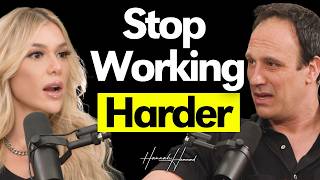
Michael Bernoff argues that working harder keeps high-performers stuck in burnout. Real breakthroughs come from shifting inward: building emotional intelligence, changing your personal vibration, and understanding how your mind works instead of following societal scripts.
Questions this video answers
27
Personal development and speaking
"Success is something you attract by the person you become." – Jim Rohn
Learn how your mind works, focus on self‑knowledge, and spend little time chasing what the world tells you to learn.
Chapters
If I came to you and said, hey, I'm making million dollars a year, and I want to make 10 million or 100 million a year, what does that conversation look like?
First thing I'd say is, you're delusional. And they'd have to say, well, what do you mean, delusional? I said, well, how good are you at being delusional? We're gonna have to get good at lying to ourselves. Most people don't realize that if in order to be somebody that makes 10, 20, $30 million a year, you said, oh, I make $30 million a year, you'd be lying. An affirmation would be a lie. In order to get into that delusion, I would suggest down, and I would really help you build what's called stability of your next step. What I mean by that is massive action typically leads to massive burnout. You go to an event, you get fired up, and they say, oh, take massive action. You go out there, I'm gonna go make a bunch of calls. I'm gonna push myself. You're gonna burn out. What I want you to do is I want you to get to that next step, whatever that is, and I want to build stability from there. So I would work with that person.
Welcome back to the Hannah Hammond Show. I'm here today with my friend Michael Bernoff, who is the founder and president of Human Communications Institute, and. And he has dedicated his past. Pretty much your whole life, but definitely over the past 20 years, to helping people break through the chains of mediocrity and getting through being average, because average sucks. And you're the author of a book, Average Sucks, and you have a podcast called Average Sucks, right? Yeah. So I love this because I hate mediocrity. I hate average, and I'm always striving to reach our highest potential and helping other people do the same. Like, that's the mission that I'm on. So excited for our conversation today, and thanks for coming on the show.
Thrilled to be here. Thrilled to be. Super excited about it. When you asked me to be on, I'm like, you're my people. I cannot wait, cannot wait to share with everybody.
Yeah, it's. And it's been cool to see you speak. We met each other through Genius Network, run by Joe Polish, one of the masterminds that were in 100k group. And, you know, I've seen you speak, and you just always have such an energy about you, you know, like, you can't not pay attention to you when you're speaking. And most speakers, you Just you have to convince yourself to pay attention and try to keep yourself in. But you just, you, you just own the room. And so I'm excited to hear kind of some of your strategies on persuasion and influence and showing up confident and creating the world that you want to create. And I know I would love to, to hear your background, but it sounds like you didn't, you weren't born with any like, special abilities, like growing up that you, you weren't like this amazing athlete or this amazing genius or like any of these things. And so, like, what, what do we have to understand about your early years to, to know why being average became such an important thing to you? Rather, not being average, not being average.
So being average was never, never an important thing. It was part of my life. So I really wish I had a good story. I mean, most guests come on, they tell you this like, tragic story of like what happened when they were a kid and they got through this thing. Or my dad was like, my dad was Steve Wynn, or my dad was, you know, Bill Gates or something like that. My dad was, you know, Steve Jobs. I had what I believe a really big challenge that most people don't even realize they have. I grew up in the, born in the 70s, grew up in the 80s, and I grew up very, very middle class in New Jersey. And I never understood what those people did to get the things they had. Cause every single person around me was about the same. They had about the same amount of money they made. They had. Parents had one and a half cars, two cars. They lived in a nice house, they had a white picket fence. And I would literally say to my parents, how do those people even get a Lexus? Cause we had a Buick Lesaber. Do you even know what that is? It's a boat car. I mean, I can picture it. It's very middle class car. And I would say, mom, where do these people get these cars from? My parents would say they work hard, they're business owners, and they're good people. And that is literally the only advice I got. And I struggled most of my life because I could not figure out how to get the things other people had. And it drove me nuts until, you know, one day I figured out they were doing something different.
Yeah, what, were you just seeing those things on TV or were you seeing it in school? There was like the wealthy part, you know, the wealthy people. And then there was the people on the other side of the tracks.
Or did you grow up out here?
Yeah.
Okay, so you got like rich people in Scottsdale?
Yeah, I was in the middle of. I saw like the other side of the tracks, you know, the South Phoenix people and then the Paradise Valley people. So extremes.
So I'm from New Jersey, so I lived in Rockaway, New Jersey. It's like, like what I mean by middle class. I'm talking like literally something out of a movie. Like if you watched Goonies or any of these movies, like little teeny middle class community. And we would drive to the Short Hills Mall where the rich people lived. And I remember I was a valet there once. The Sultan of Brunei came in, closed down. They had closed down the mall for hours. He parked all his cars up front, went in there, but all of his people, or whatever you call them in, they went and bought a bunch of stuff. And I remember saying to my parents, like, how do they do this? There's always like that one or two rich kids. Like in our school, their dad was probably do what you did, was in the real estate world, the investing world, or maybe a dad worked for pharmaceutical company. My dad was an engineer, my mom was a teacher. And I'd see them and I'd go, man, how do they do that? And I just was told they're business owners, they work hard, they just do things different. But I never figured it out. So there's a few of them around, but I never thought I could do it. I just thought that was them. This is me, this is my life. This is their life.
Yeah. And so did you at that point decide that you wanted to be a business owner or what were you like growing up?
Yeah, so I was very shy. I know you talk about how confident I am when I walk in a room, but I was painfully shy. I don't know where that came from, but I was very shy when I was a kid. And I remember literally deciding like for my life, I would see people, like someone would date the girl that I would like to date and I'd be like, oh, okay, well that's for them. And someone would make the team and I just would opt out like of I'll be on the second line of the team. I played ice hockey my whole life. I never thought I could be really great. I just let them be great. And I was pretty shy as a kid and it wasn't until I got out of the environment I was in, I had this lady really screwed up. I had ADD as a kid and I couldn't really pay attention much. My parents hired this guidance counselor and they said we've got the perfect school to send Your kid to. And my parents said, where is it? They said they got all this extra programs. It's gonna be absolutely amazing. And they sent me away insecure, but I don't fake ID business. That's a whole nother story I'll talk about later. But insecure, away to Arizona to college, and they actually sent me to the wrong school. I was supposed to go to University of Arizona and. And I didn't realize to my second or third year, they sent me to Arizona State, the number one party school in the world. So here's an insecure kid now. I got around wealthy, successful, or parents that were successful people. And that is the first time I really saw people that did huge things. That's when I wanted to go into business.
Okay, cool. And that was when you were at ASU in college?
Yeah, they didn't let me in the business school because they told me I wasn't smart enough.
What did you study? Communications?
No, they would. I wish I could have. I wasn't smart enough to get into the school. They. My grades were horrible, so I got in. I talked to Robert Kiyosaki about this. Our combined GPA might have been a 4.0 between us. I went down to the business school and literally they laughed at me. And I've been back to the school. I've spoken there three times. They paid me to speak there to the 4.0 GPA freshmen, but they wouldn't let me into the business school. So I did the next best thing. I got a degree in interdisciplinary studies, which was a minor in communication and a minor in tourism and Just to get a degree and get out.
Yeah. So when did you realize that you had a gift for influencing people? And like, you know, how did that stem into what you do? I mean, you've. You've coached UFC fighters before they get on stage to fight. You've coached entrepreneurs and founders that are trying to make billion dollar decisions, like all these massive people. So how did you get help, Jake.
Paul with mindset prior to him getting into boxing? So like a guy through Joe I met hired me to going up to Calabasas, worked with him. He was just working on some personal stuff. I can't get into too much of that, but he was working on some stuff and literally worked on mindset, and then boom, boom, months later he's boxing. So we've done it all. I have no therapy degree. I failed psych 113 times. This is where the change came in. I was in my fraternity house in college and this guy came into the fraternity house guy's name. I think it was Ryan Wood. And he came in and he was good friends with a guy named Jake Plummer and Pat Tillman, and they played ASU football back in the day. And he goes, do you want to get into our direct sales company? And it was selling phone cards back in the day.
And.
And I struggled to be good at this. But I found when I was there, personal development. I had never seen personal development before, so I found how to win friends and influence people, think and grow rich. So I was introduced to, wow, I've been thinking this stuff my whole life, but I never could find, like, how to actually get it to work. So these guys got me into. I failed miserably at the business, but I found personal development and that was how I really got started in business.
And what, what, how is your approach different than traditional personal development? Like, what exactly is it that you do and the methodologies that you teach to help people break through mediocrity and create what they want in their life?
So here's what I believe. I look at people, there's like two groups of people. I believe there's a group of people that are extremely, extremely, absolutely 100% they're way too talented to be getting the results that they're currently getting, and they're not happy with that. And those people I work with, the ones that are absolutely happy with where they're at, I don't work with those crowd. And what I've learned is these people are willing to work hard, they're driven, they're doing what they need to do. They don't need to work any harder. They don't need to be any more driven. What they need to do is do two very simple things differently. They don't need to change their mindset. They need to change how they think about what they think about. And number two is the way they use their words. Because what I found is the guy that got the girl in high school, he used words on himself and with others different. The person that closes the deal, they use words different and they think about life very, very different. So when I asked you earlier about the guest you had on and there you mentioned people, $500 million, exits, billion dol brands, all that stuff, Every one of these people think different and they communicate different. So I focus on words because I think it's the fastest thing for anybody to change is when your words change, your life changes. Yeah, it's like a script.
And what can you share us, like give us real world Example, you've actually mentioned trigger words.
Yes.
Right. How you can say a word that literally changes somebody's state within minutes. So what's an example of a trigger word that can change someone's state super quickly?
Or. So let's say we're dealing with someone that's got a difficult situation going on. You got a friend that's going through a divorce. Someone's got a. They've got a hard deal going on. This is a difficult. This thing that's happening. It's amazing how many of us will respond to people in a way that we don't realize. We're just. We're not serving them correctly. So I'll tell you a quick story. I had a lady. I was in. I was in Utah getting ready for a speaking engagement. I had a couple thousand people at the convention center was speaking at. A few years ago. And I went to dinner the night before. I always like to disappear the night before and do my own thing. And I'm out to dinner and this lady in Utah falls out of a bar. Almost like stumbling drunk, about 60 years old. And I'm thinking, well, what's wrong? And her friend goes, oh no, don't worry about her. She's okay. She's going through a divorce. And she literally looks at me, she goes, my divorce is so hard. And instantly I stared at her. I said, actually, your divorce is not hard. And she paused, almost sobered up. I said, it's harder than you'd like it to be. See, most people fail in life because they say things like sales is hard versus it's harder than I'd like it to be. See, the way the unconscious mind works is. Or the mind works is when something's hard, we avoid it. When it's harder than I'd like it to be, it presupposes it can and will get better. So this works for sales, it works for business and everything. So we want to have a language that is solution based, not problem based. And most people say investing is hard. And I would look at them and say it's not. It's actually harder than you'd like it to be because it's new to you. And most people don't realize one script is impossible and the other script is possibility.
Yeah, yeah. Your mindset is everything. You know, it's just like if you. What the language you tell yourself impacts everything in your life so dramatically because it becomes your reality. And it's like the book Think and Grow Rich, right? Is if you, you know, people who think that they can create whatever they want to create. At least have the capacity to actually do that. But if you think you can't, you can't. And I was on the school of hard knocks. He interviewed me and he's like, what's you know, one piece of advice that you would give to the younger generation or the best piece of advice you ever heard? And I said, whether you think you can or you think you can't, you're right. 100 and it's like, I don't have anything special that other people have. Like I wasn't born with this crazy gift or these wealthy parents are in this environment with a ton of opportunity. But I just always thought that I could do it and I would just find a way. And I'm just, I just think bigger and bigger, bigger. And then as you start to elevate your accomplishments, whether it's health, finances, relationships, whatever that is in that area, you start to surround and you start to elevate yourself and surround yourself with people who have accomplished more to you, more than you. Like for instance, masterminds, right? Then you start to understand, oh, I'm still thinking kind of small. And like these people are thinking bigger. And it just continues to make you think bigger and bigger, bigger. But if you keep yourself in a environment of limited thinking and limiting beliefs, and that's where a lot of this self love and compassion and things has been so important to me is because if you think I'm not good enough, I'm unworthy, I can't do it, I don't have the money, I don't have like whatever that becomes, part of that becomes your reality.
Yeah, I think the big, the biggest, there's really the biggest limited beliefs I've seen. People stopping them from getting what they want are like two very simple things. One is people say, I know what I'm doing and I know how to do it. As soon as someone says I know how to do it, I don't believe them. Because if they knew how to do it, they'd already be doing it. They might know what it looks like. They don't know how to get themselves to actually do it. And the second thing is if somebody just says, you know, very, very simply that if I just keep on working, one day I'll get there. This is one of the saddest things I've seen is that most people don't realize they're operating from what was a good idea three to five to 10 years ago. So most people's lives are a really good idea. 10 years ago. It's just you forgot to upgrade yourself. That's the challenge people run into.
How do you audit yourself to upgrade yourself? And especially in a world like right now where you know the revolution and everything's changing rapidly. So how do you audit yourself to upgrade and make sure that you're really operating in the direction of your true north for where you want to go and you're doing the right things and you're not just scaling the right mount Mountain, scaling the wrong mountain. Because I remember one of my mentors, he told me, hannah, if you're going to climb the ladder, make sure it's up the right wall 100%.
And I think a lot of people, they're, they are plan of what they're doing in their life had a lot to do with what a problem they had in the past. They were looking to get over some insecurity or some problem in the past. They just wanted to earn money. They just said, hey, I'm going to go into what do I want to do? I make a lot of money. And they didn't think any of it through and they built an entire plan that gives them no lifestyle, no life, anything. They just have money or maybe they don't or they had a certain amount of money that they wanted. So I guess the real question is like, who's making the decisions in your life? I was on a show a few years back, I don't know, do you know Brad Costanzo? Do you know Brad? I was on a show and he basically asked me this question. He said, he asked me something, I said, brad, let me ask a question. You're 40 years old. What can a 40 year old man with a, with a beautiful wife and guys traveled the world does real well, what can that guy do? And he goes, I don't talk to that guy much. And I realized most of us made a decision five or 10 years ago and we've never actually checked in with the person we are today. Like, what have I actually accomplished? Where am I now? Based on where I'm at right now, what do I want next? When we audit ourselves, one of the first questions you got to ask yourself is where am I actually at now? And then make your decisions from where you currently are. Because most people's investment plans are based on. Got it. Here's the amount of money I want to but based on having millions in the bank or hundreds of thousands in the bank, what can you now do? Not what you could do when you were broke, what could you do now with what you have. And we would make different decisions. So there's nothing wrong with not starting over, adding to your current plan.
Yeah, yeah. I think that recalibration is so important and you know, I've. If you don't, I mean, how important is goal setting? Do you. Do you write down your goals or.
That's a good question.
Like one year, three or five year, ten year type goals or do you kind of just like what drives you and how are you. What are you auditing against? Because for me, I have a true north playbook. I have 50 pages I've written out for exactly everything that I want to create in my life.
That's impressive. You should do that. That works for you, correct?
Yeah, yeah. No, I love it. And I read it. You know, I read it probably not enough, but I read it once or twice a year and I adjust it and change it and add to it and I have my values in it. I have my metrics, I have how I feel, the experiences I want to create, the type of people I want to be around, the type of team I want to work with, the type of clients I want to serve. Like, it's very, very, very detailed. And then I have my, my one year, my three year and my five year goals in each of my different areas too. So I'm like very much intentional about that. And then I usually do a daily recalibration, like a daily win review on what's working, what isn't working and what needs.
You're a process person.
Yeah, that's where I'm an industrial engineer.
Yeah, yeah, I was going to say. And one of the mistakes people will make because I get people with, they'll listen to a show like this and afterwards they need therapy for me. They're like, okay, I tried what Hannah did and it didn't work. And when you have the engine. My dad's an aerospace engineer. My dad would do all of that. I. In life, you either become like your parents or go the opposite way. I'm more of a quick start, like a spontaneous, like just go type person. So I do set goals. I have targets of things that I'm aiming at. I base a lot off of four very simple things like Einstein's EMC squared or whatever it is. I base everything off emotional. Yeah. But I changed it and I made it emcc, which is emotional Mental confidence Communication. So I look at my life and go, where am I at emotionally? Where am I at mentally? Where's my confidence? How am I communicating with the people in my Life. Because I've realized that if I'm not getting the things that I want, there is a way that I'm communicating with either the world, myself or other people that is making it respond to me in the way that it is. So if people are not buying from me right now, there's a way that I'm communicating a message I'm sending. If I'm not getting myself to train correctly or exercise, I will literally audit a word and I'll say, I hate working out. But I like training. I like training because workout to me is something I can't stand doing I don't want to do. But training works. So I will audit my language, I'll audit my communication. So daily, almost by the minute, I'm literally auditing how what I'm saying is impacting my life and the lives of people around me. So that's how I audit my day to day when it comes to the goal stuff. I have targets of things. I have business goals and I also have investment goals. Because years ago I had a lady about 20 years ago sat me down. She goes, you need to build a money machine investment portfolio that, that is bigger than anything your business can do. And thank God I met Sally came into my life and helped me with that because she got me to set that up. And that thing allows me to then take the risks in my business.
Yeah.
And do the things I need. So I have this thing that is so perfect over here. Always adding to that. But my business is. I've got different metrics all the time. So I don't know if that's the ADD answer. I don't do what you do. But I have my own version of auditing me. And I do it in real time.
Yeah. No, I like that. And I'm not perfectly structured like yours.
Sounds amazing. There's a group of people that would like, like that is perfect for.
Yeah. And I'm. I'm a weird brain and. Right. Brain. Like I'm an engineer. But I'm also a quick start visionary.
Perfect combination.
Yeah. So it's nice. But I sometimes depending on life and what's going on and what hat I put on, I kind of am more one or more the other. Right. So I'm not perfectly systemized and structured. I'm actually not. Like my closet is messy. Right. You know really. But you know, everything is closet is. Yeah.
See, I'm messy.
I mean, no, I don't.
But I know everything is like my wife would walk in and go, how do you operate in this like you don't understand. Underneath that third envelope with that, with this Sharpie on it is the tax form that we're going to need in three months. I know if anyone. If anyone claimed my desk, I am so. My memory is autographic. I memorize everything I hear and then I know where everything is. And if one little thing is out of place, I know. So I'm very organized. I'm just not interested in structure. Yeah, because like I can't even stand in the line. Like, I go to Disney with a family, I gotta buy the $8,000 tour. I cannot stand in a line.
I can't either. Oh, it's horrible. Yeah, I've ADD adhd. I was diagnosed with all that very young.
Good for you. I call it a dynamic disorder.
Yeah, exactly. I mean there's. Everybody has issues and they just want to sell prescriptions, in my opinion.
But go in that conversation if you want to. But yes, I agree.
Yeah, it screwed me.
I was on all the meds. They put me on everything.
Oh, me too.
They put me out, they put me on. They put me on a Ritalin and then I couldn't sleep, so they put me on antidepressants. I'm eighth grade.
They did the same thing to me.
And then, then my mouth is dry, so they gave me something to drool. So now I'm drooling. I'm trying to talk to girls. I'm drooling. I think I'm depressed and I'm on speed. I'm on methylphenolate, which is a Class 2 controlled substance.
Yeah. How did that affect you?
It messed me up. I really thought something was wrong with me and it was crazy. So I went to college and there was this like therapist you had to go to go get your drugs. I had to go get my Adderall from them. Did you take Adderall? I took the like the XRS or whatever it was. I haven't taken 25 years.
I was less than £100 and for years, like from the drugs and I.
Crystal meth, basically.
Yeah. It was always horrible. I had. I was extremely introverted, wouldn't socialize like anxiety through the roof. Depression on the medical system is so messed up.
Wouldn't you try words prior like most people they use. I study these guys and they use words like depression and anxiety versus saying you have not learned how to control your emotional state yet. So I deal with people with. I've gotten thousand people off meds. I've gotten thousands of people off everything from cocaine to adderall. To Ritalin, to drinking, to you name it. And one of the things I say to them is that like this. Well, this therapist guy said to me. He goes. He sat me down as the first person introduced me to hypnosis. And he sat me down and he goes, what made you believe you have add? And I said, well, my doctor told me. He goes, is your doctor right about everything? There's a therapist saying this. And I said, well, I don't know. He goes, do you think he's ever made a mistake or been late to anything? What if he made a mistake about this? What if it's that you were not interested in what they were covering with you and maybe you're able to focus on other things? So he literally, on that day, I never took the medicine ever again. One quick conversation. He challenged my belief in that moment. Between that and the personal development that me got realized that I'm gonna go help some people because most people are taking the advice of the world instead of actually listening to themselves. Most parents do not want to put their kids on it. Or they're so deep into the system they don't. Not your audience, but they're so deep into the system that they're just gonna do it in anyone tells them to do.
Yeah, I know, it's. I could go on a tangent about all.
Yeah, we can go to tangent. Probably take it off the air for it.
Yeah.
But it's BS if you're a parent out there, do every option first. I don't care if it's calcium magnesium at night. These saffron gummies that you can take that are fantastic. They're new out there. A lot of it. I mean, your kid. There's little homeopathic thing you could take called coffee crudo. And it's homeopathic for nine bucks at Sprouts actually gives almost the same thing that you'd get from a Ritalin because the kids don't lack focus. They're not interested in what you're sharing. That same kid could play video games for hours.
Right.
I could sit and listen to things and do things for hours, but I just had no interest in calculus. To structured.
Yeah. And I think it's just everything can be all of your. To suppress a child or any person's gifts. Like I think in all of your weaknesses is your greatest strength. Right. And to suppress that and make you a zombie is robbing that child. And then especially in your. I was a zombie too. And in your earliest.
I never talked about this before. This is great.
Oh, really?
Yeah.
Well, you know, I feel like all great entrepreneurs and high achievers, most of them that I interview and I'm friends with and collaborate with have very, very deep rooted unworthiness and insecurity beneath all of it. And that's what initially stems.
That's what starts the entrepreneur.
Yeah. Yeah. So that's why I'm like, your whole theme is average sucks. So you felt very average.
Yeah, I was very average. And I. But I also wasn't inside. So this is the difference. Inside my heart, I knew I didn't. I. Something wasn't right. Like, I knew I could do more. I couldn't figure it out. And I. When I started writing the book, I was. I play ice hockey still, like four or five days a week to this, this day, and I never was a goal scorer. And then I talk about this in my book. I said, I one day was on the ice, and I'm like, wait, what is that guy doing that I'm not like, that guy scores goals. I can shoot hard, I can do what he does. What is he doing? And then I realized that guy puts the puck where the goalie's not. And the next shift, I just went out and go, I'm just gonna do what he did. I was so set on being the character I was for so long in so many areas of my life, and it's almost like I was given the wrong script. Instead of, like, being Liam Neeson and taken as, like, I get a unique set of skills. Kill you. I was like, extra man with, like, hold Poland corner. Stand there. Do you know what I'm saying? And I was. I wrote a script for myself for so many years where, stay in your corner, do what you're gonna do. And that's what I just wanted to get out of. That's why I got obsessed with breaking it, breaking past that, helping other people break past that.
Yeah. Yeah. Because we. We have to, you know, growing up, we have to fit in to survive. And we lose. We disconnect from our authentic selves because we feel like we're not good enough and. And. Or we can't show up how we really are and be accepted and loved. And so that happens when we're very young children. And then at some point during adulthood, we realize, like, we just built this whole identity, this whole Persona, this whole life that may not be even aligned with anything that we actually wanted or anything that actually gives us joy because we were just trying to be accepted and trying to prove our worth or trying to survive, take care of ourselves or just do the things that our parents told us to do or our environment told us to do, or the, you know, affected by the drugs that we're getting put on and we're being labeled. Like, you have add, you have anxiety, you have depression. I'm like, if you look back at my medical history, my medical records, I've been diagnosed with, like, every issue in the book, and I have no issues. I'm like, I'm. I'm a per. Like, I had a disconnection disorder, and then you were putting me on a bunch of drugs that was making me worse and crazy. And all I really needed was to understand myself and understand authenticity and understand love and be able to lean into my gifts and the things that fueled me and not just be told, you have add, get on meth, you have. Now you. You can't sleep, get on Xanax. Or you have anxiety, get on Xanax. You can't sleep, get on Ambien. I'm like, I'm 14, 15 years old. Like, how do you expect me to.
They're getting positioned correctly if they're getting sold by the medical company.
Yeah.
A therapy session should look like this. Most time, it comes in and go, what's wrong? And if you ever want residual income, talk about what's wrong. Because you talk about what's wrong, it never goes away. Tell me about your mom. And then you go on for hours, bitch, and complain. When you sit down with me, one of the weirdest things that I'd say to people is, listen, are you okay with this getting fixed very quickly? And let's talk about something. Do you know how to be happy? Has anyone ever taught you how to be a happy person? Like, a therapist has never said that before. They want to dig up the problem. So when we sit down with people, we do it by. We work with people, by the way, result, not by the time. So it's. What is it you want? So, okay, do you want to stop being depressed, or do you want to be happy? So Guy comes to me and he says, michael, I got chronic anxiety. And I looked him in the eyes. I said, you're. You're screwed. I actually said, your f. You. I told him I can't help him. He goes, but, Michael, you're the possibility guy. Why would you tell me that? I said, well, there's nothing I can help you with. If you've chronic anxiety. If quite possibly, you've not learned how to communicate with yourself emotionally yet, I could help you with that. But if you have Chronic anxiety, that label I can't help you with. I don't. I don't deal with that. You're screwed for the rest of your life. And he goes, is it possible that I haven't learned how to communicate and emotionally communicate with myself yet? I said, well, when is the last time you actually learned what makes you happy, what makes you tick, and the triggers that bring that stuff on? He goes, I have no experience. Nobody does. And what they do is they quickly tell someone there's something wrong with them versus maybe there's something you don't understand. People are not broke. They do not know how to make money. And if they knew how money worked and how money worked, they could be in a different spot. But most people are getting really bad advice from people that are not bad people. They're just saying the same thing they heard from someone else.
Yeah. And so what's the next step that you do when you're trying to have a breakthrough with somebody? Like, okay, let's say somebody wants to. Maybe somebody's making $100,000 a year and they want to make $10 million a year. If I came to you and said, hey, I'm making $100,000 a year or maybe $1 million a year, I'm making $1 million a year, and I want to make 10 million or 100 million a year, what does that conversation look like?
First thing I'd say is, you're delusional. And they'd have to say, well, what do you mean, delusional? I said, well, how good are you at being delusional? Because we are going to have to become delusional because we're going to have to get good at lying to ourselves. Because a lot of people hear the word lie. If you want to act like someone that makes a million dollars and you make 100 grand a year, that's a lie. Currently like that. That's not something you're currently doing, is it? I know we have trouble with that word, delusional. Well, delusional, lie. This is the thing most people don't realize that if in order to be somebody that makes 10, 20, $30 million a year, you said, oh, I make $30 million a year, you'd be lying. An affirmation would be a lie. So in order to get into that delusion, I would sit down with. You have a bunch of different ways to do this. I would sit down and I would really help you build what's called stability of your next step. And what I mean by that is massive Action typically leads to massive burnout. You go to an event, you get fired up, and they say, oh, take massive action. You go out there, and I'm going to go. I'm going to go make a bunch of calls. I'm going to push myself. You're going to burn out. What I want you to do is I want you to get to that next step, whatever that is, and I want to build stability from there. So I would work with that person and said, listen, we're going to get you to 10 million. We get 20. That's not a problem. Most importantly, I want to get you from a million to 1.5. And how fast do you want to do that? And if they're not interested in getting there, we then figured out where the problem exists for most people. Because most people want the home run because it feels good, because it gives you a dopamine rush. They want to talk about this. This big, ridiculous number, but they've never actually experienced it before. I want them to actually feel accomplished working their way up the ladder. So people go, michael, why would you get a guy from 1.5 that says he wants to make 10? Because from 1.5, I'm gonna go to 3, and 3, I'm go to 9, and 9, I'm gonna go to 10, whatever it is. So my next step is I need to get you stable and comfortable, whatever your next number is. And that's how I work with people, whatever it is, I'm knocking a minute off your. Your 5k if I'm knocking. If I want to knock weight off, we are gonna then get really good at what and decide from there. Because most people have been in their problem so long, they just want to get out of it. I just want to get rid of a million and get to get to 10.
Yeah.
And they don't want to go, I want to get the three. And from three, we're going to figure out how to get to 15.
So do you think it's good to just scratch the big goal?
No, you have to have it.
You have to have it. But it's just setting the rocks, like, the milestones in between to actually get there.
So, like, okay, you hike Camelback Mountain.
Yeah.
You've been up Camelback?
Yeah.
There's a point you get to. When you go, I can get to the top, you get through that rail. You know, the rail. Once you're past the rail, there's one other spot. When you get there, go. I'll be okay.
Yeah.
But if you make your decision from the bottom, it's very different. I want you to make the decision from halfway. It's a very, very different calibration for people. And then it builds the serotonin levels in their body. The neuropathways start to kick in because they believe they can do it. My biggest desire is I want people to fall in love and believe in the process, not just that goal, because most people are getting off on their goals. They get excited about their goals. Their goals turn them on. They get them excited. They talk about them all day because it's exciting and I could tell you all about what I'm going to do, and then I don't actually have to do it because you get just as heavy of a stimuli from talking about it than you do actually achieving it. It's actually more exciting to talk about it because remember the first time you made a huge deal, got a big check title, company cuts you a check, big deal comes in. Remember that?
Oh, yeah, Huge.
Right? And you were high for about three days.
Yep.
The idea, what made you high for 10 years, from 20 to 26, whatever it is, you get excited. You get, oh, my God, I can't wait for that day. The dream, the I'm gonna make the Super Bowl. So exciting. And then you finally get what you want. You're high for two days. Your unconscious mind knows that when you finally get what you want, it will not be as exciting as talking about it.
Right. That's what Tim talks about. That relentless. Yeah, yeah. He says that when you achieve something great, it's a. It's a high that you experience for a very short period of time, usually in silence. Like. Like, because you don't really have. Especially as you accomplish more, you have less and less people to really that understand the level of commitment it took and then sacrifice and just celebrating it. But then it's usually followed by depression and anxiety of like, now what do I do? Now I'm back to square one. I got the high. We're off. And studies show that too is like planning the vacation. Thinking about the goal gives you a more dopamine and serotonin release than actually accomplishing it. And once you accomplish it, then you're. You're just crushed by this, like, anxiety and like, what's next? And that's why we always end up setting bigger goals. And then we have this issue of being accomplished to success because you're just always kind of chasing the next thing. And it's that balance of. I actually would like to get your opinion on this. I. I find this fascinating. I was an eo, Another mastermind.
I'm in, I spoke for one Atlanta a couple weeks ago. Great group.
Okay, cool. Yeah, they're, they're. I'm actually paused on it this year. I'm pausing on a few. But anyway, he said that the problem with pursuit and excellence is people think that the journey of. I'm sorry, the problem with fulfillment in excellence is people think that in order to achieve fulfillment, they have to achieve excellence, right. And so they think that it, that they feed each other, right? Like if I become excellent at this, if I become a multimillionaire, then I'll be fulfilled, right? And then you get you, you achieve this thing of excellence and then you get it and then you're still not fulfilled. And so then you keep striving for excellence. But it's actually inverse. Like usually people that are very fulfilled, they don't have as big of a desire for excellence. Like they're like, I feel really good. I don't need to go work a million hours a week and go take on all this pressure and go do all of these things because I feel fulfilled. And so they don't actually fuel each other. And so he said that we need to have two separate pursuits. Like the pursuit of excellence is separate from the pursuit of fulfillment and they're not intertwined. What are your thoughts on that? So he talks about if you have a three year old that takes their first steps, right? Like that's fulfilling, but it's not excellent. Like nobody cares. Nobody on social media cares. It's not making you money in your business or whatever.
It's cool for the two, the parents, right?
Yeah, it's cool. But it's fulfilling to have a child or to watch your child speak for the first time or say mom or dad or those types of things. But then you have your pursuit of excellence, of my business milestones or my impact or my whatever other things that are excellent to you. And you have to not abandon either one of those things because if you only shoot for fulfillment, you're not going to be able to survive because you're, you're not achieving that excellence. But if you only shoot for excellence, you're not ever going to have fulfillment. And they don't feed each other necessarily.
It's interesting question because I, I taught this on a leadership call this morning. I said to our group people, I said, if you need applause for what you're doing, you're gonna miss some of this because a lot of people do things for applause. They do it because they want to look good, they want to do what they need to do. Where the most successful people I know, they just close a deal and they didn't really care. They went about their day, they were going to do. The wealthier you are, the more you just don't care anymore. So our driving force are insecure. Our young, immature driving factor is usually, I want to prove something I need to do perfect. They need a great job. So I don't think you need to get everything from that one. Pursu, meaning if you get no happiness from business, you don't get anger, you just. You just do it and you're really good at it. But you get a blast from playing golf. And you can do perfectionism and all your stuff on golf, or you can do it on some other venture. There's nothing wrong with it. I think one of the biggest reasons people fail is they in attempting it is they want to get it all from one place. They hear these stupid statements like, find your passion and go make money. You know what I'm saying? And my opinion is like, go be passionate. And if it makes you money, that's great. But also just be a passionate person in what it is that you do. So I would feel like I love what I do. I could talk all day long. I love about speaking. I love doing what I do. I would do it for free. It is so enjoyable. I just so happen to get paid very well for it. But there's other things that I work on perfection on as well. So the answer to your question, very simply, the fulfillment of the achievement, you may or may not get that from your actual pursuit in your entrepreneurial endeavor, but you need to get it as a person. You need to find out where fulfillment comes from in your life. And if you're not getting it from your business, you may never get it from your business, but you can get it from other areas. You get it from raising kids, you can get it from bike riding, you can get it from bowling, get it from washing rocks, I have no idea. But I think that's a misnomer. People think you need to get it all in one place. It's just like getting everything you want from your significant other. That would be ridiculous. I'm going to get love, happiness, satisfaction, fulfillment, and they're going to be my biggest cheerleader. Your biggest cheerleader might be your friend John. Does that make sense? It may not be. It doesn't have to be your significant other. And we put that pressure on businesses and ourselves or people, and we miss it. So I don't know if that answers your question exactly, but that's my take on it. And I think a lot of people go wrong because they say things like I said to when I was writing my book, I said to my wife, I said, I said, I don't enjoy this. And she goes, nobody said you had to. You just need to get it done. I hate writing. I didn't identify as an author. I brought back all kinds of. It was seven year process. I had spoken all around the world. I've spoken to hundreds of thousands of people at that point, maybe millions of people. And I could not get a book done about everything that I talked about. It brought back everything from high school, everything that's going on. No one ever said how to be enjoyable. I had to just get it done because the world needed it. That was just one of those get it done things. It did not need to be enjoyable. And I think a lot of people want to make everything enjoyable these days. And I wish them the best, but they're probably not going to get very far.
Yeah, yeah.
Sad.
I know. And that's a message that I try to get to people is because I talk a lot about the green zone and living in flow state. And when you are in a state of flow, it works so well. Right. You have five times better results. And that's studied. Like studies literally show that. But that doesn't mean that everything's just dandy all the time. And you don't have pressure, you don't have stress, or you don't go through storms. Like in fact you. The better you become. And the further, I always say the further you sail out to sea, the bigger the storms become. But it's about learning how to master the navigation and being able to control your emotional state and making sure that the things that you're doing are in the direction of your true north. And I'm writing a book right now too, and it makes me want to blow my brains out. Yeah.
So. So how I, how I got through that was. So do you have any more of a question? Because I was gonna give you.
No, go. Go ahead.
Yeah, I. I sat here. I mean it was bad. I went through like three publishers. I went through my friend Tucker. Max helped me get the book done. Do you know Tucker?
I feel like I do.
He wrote the book do they serve Beer in Hell, White assholes?
Oh yeah, yeah, yeah.
He's a friend of mine. I did it at his house. He did Goggins book and I sat on his couch at his House. He goes, I thought, I'm gonna kill you. I am not gonna let you be my friend if we do not get this thing done. I was fighting this thing because a seven year old boy was trying to write the book. And you might be having a six year old little girl that's trying to write the book that's got ADD and everything. And then one day I realized what it was. I wasn't asking for help correctly. And I said to my wife, will you help me with this? I was like 97% there. And then she goes, I've been waiting for you to ask. And then I got the book done. We've sold like 70, 80,000 copies of it. Why am I telling you this? I'm telling you this because you don't identify as an author yet because of that. We don't identify as a millionaire. We don't identify as a wealthy or happy person. That is the biggest thing we're up against. Our archetype is there's so many more years of you struggling and so school or whatever it is you were dealing with in writing or English or whatever it is, then years of you being an author, which is officially none currently. So that is our biggest thing we need to get through. And then also your second book will be easier than your first book. You just need to get it done. It doesn't have to be perfect.
Yeah.
And mine came out really good and it made a difference and it impacted people. So are you writing it or speaking it?
I'm writing it. I'm. Well, I haven't been working on it because I just, you know, I have a million other things to do.
I was literally the business and literally sit down and always record. And I would say, hey, this is a good thing for chapter one. And I record it. And I would literally talk the book because I have a feeling that your brain processes. I would guess that you're more auditory than you are and if you run into your kinesthetic, it's not too much feeling and you want to change it and you want to move every paragraph around every time you're touching the keyboard. So I would literally just speak that book and tell the story of it and then I believe that you'd get done a lot quicker.
Yeah, that's what I'm going to end up doing. I'm just, I'm kind of putting a pause on it right now because I'm trying. I just, I'm working 100.
I have suggestions offline that I'll.
Yeah, yeah. But anyway, so you Talk about your average. So what is your average and why does it suck?
This is funny. So when I wrote the book average sucks, I wear the shirt average sucks. My license plate is average sucks. People stop me all the time. Like, I'm here in Scottsdale, guy with Lamborghini stops me, yo, bro, what's up, man? I love your license plate. I'm like, do you know what it means? He goes, yeah, man, screw everybody. Be better than them. I said, no, you're average. And when I say to the guy in the $500,000 car, he's average, he gets confused. He goes, well, what do you mean? And I say to him, I said, listen, your average is what holds you back. All of us are controlled by our current average, what we do. So if you looked at people, this is why we judge. We're doing loans with people, like why we judge. The credit course. Credit score will probably tell you how you've lived. It tells you how much you've spent, where you've gone, what you've done. When the bank needs info, especially when you're doing a loan or even a hard money loan when they need one, what happens is they want to see what you spent, where you went. And you'll find how many times they went to this restaurant, how often they go to this website, what they do. So we all do about the same every year until we make a drastic change. So most people live inside of an average, and it's their average that is controlling their reality. So Elon Musk has an average, I have an average. You have an average. The guy in the camera's got an average, everybody's got one. And that's what sucks, because your average will never get you what you want. Your average will only get you a guaranteed version of what you have, give or take 5 or 10%, period. So your average is you. And then we need to make the average we want. And most of our averages are based on who we used to be, not on who we want to be.
Yeah, and how do you push through to who you want to be and move your average up?
First we got to accept that we're doing it. Most people don't realize, and it's funny how we, we invent these things for ourselves is like we literally, one day we'll just get pissed off and we'll go, like, I want to change things. I'm never going to do that again. And we say that, and then we say this new thing we want, but we don't upgrade our identity. And it's Our identity of how we see ourselves. We have conditioned every person in our lives to treat us a certain way. And it's the way that we communicate makes people respond to us a certain way. So the first thing we need to do to get to what I call the other side of the wall, which is you do averages. We're gonna have to change the way we communicate with ourselves and others about what we want, about how they can help us and how we see ourselves. It's almost like an actor that's choosing not to be B actor anymore. And you want to be an A actor, you need to get your lines different and you need to communicate different. So it sounds scripty when I say it, but at the end of the day is we need to accept that we're gonna have to change because every person in our lives currently is put there in a role to help us stay where we're at. And we're gonna have to change some of those relationships because they're not working correctly. I know that sounds very psychobabble, but we can go a little deeper if you'd like.
Yeah. So cutting people out of your life, that's drastic.
I mean, that's something that we. You may or may not want to do. I mean, that's the initial thing. You get into business, you're like, screw everybody. I'm getting rid of everybody. You shouldn't have. Jim Rohn, my mentor, always had limited association. Change what they mean to you before you get rid of them. You know what? They're a good person. I'm actually not interested in their lifestyle. They can be in my life, but they're not going to be someone that I go to for counsel. And most people will just get rid of people out of spite. So you can get rid of them and blame them for your own bs, Right? So that's one thing, number two is really identifying. I mean, most of us identify as somebody that wants something, and they identify as a hard worker. Identify as a certain thing. Most people have never really identified as somebody. That business works easy for them. And they're really good at, like, I'm extraordinary communicator, extraordinary at influencer. I had to get to that point. Most people don't even see themselves the ability to even get there. So I guess the scenario would be, let's come up with a fake person. Let's. Let's imagine somebody. So let's. Who would we want to help? Let's make an imaginary person, and let's do a role play real quick.
Sam.
Sam. Okay. What Does Sam do.
He's a entrepreneur.
Okay. Someone on this line right now is gonna be like, who? Sam. You called me out. We had a lawsuit. Sam's an entrepreneur. What does Sam want?
Sam wants to do $10 million a year in revenue this year. His company is four years old, and he feels like he works way too much, and he isn't really fulfilled inside and wants to make a lot more than that, but doesn't really know if he could get there.
So the first thing Sam's gonna want to do is he's gonna work harder and get more to do, and that's. That's the worst thing Sam should do. So first thing I'm going to say is, look, you're way too talented to be getting the results you're currently getting. And Sam would go, you're right. You're already working hard. And it's not that you're underperforming. Number two is you are doing better than you first got to applaud these people, and you got to look at them and go, look, you are doing way better than that group of people. And most of us, that's where high performers get screwed up. We're doing better than them, but we're not doing what they do, this group up here. So our job is to actually figure out what these people are doing. So then I would want to figure out is, okay, got it. So we want to do about 10 million. What step are we needing to take? Who are we targeting? Who are we going after? Let's just say Joe. Joe's doing 20 million in real estate or whatever it is, or 20 million in investment properties. And I'd say, okay, so what does Joe do that you don't do? And we would need to figure this out. So do you see yourself that way? Does the world see you that way? Because if they don't, that's where the change comes in. So we'd have to reinvent how he sees himself and how he presents himself to the world. Because if the guy he wants deals come to him and he's better networker and better with people, well, we know what we need to work on. We need to figure that out. And if the world doesn't see you that way, that's why I'm not bringing you the deals. So we would need to reinvent how Sam sees Sam and how the world sees Sam so they'll respond differently to Sam to a get him in the flow state. That's a big piece of the puzzle. It's a bigger plan than that. I have programs and processes I walk people through. But it's really changing your unconscious mind's behavior and readjusting your identity.
Yeah. And are you even going as far as like actually changing your appearance and changing how you dress and change all those or more of this you need to. The mindset and how you talk to yourself and the communication and the language that you use.
It's all the language because when somebody, if you take a look at that guy, that, that guy doesn't communicate in a way his script is written to make a million, his script is not written to make 10. The guy that is 10 talks radically different.
Right.
Just a different communicator.
Yeah.
Tone, language, everything is different. And most people don't want to start though. They want to work hard. Like my parents told me, hard work is part of it, it's necessary. You just don't have to work any harder if you're maxed out. Talking wise, we need to change how we think and how we think about it is you need to realize what they are doing is different. And we got to figure out what the different is.
And is this part of neuro linguistic programming or.
I've done that for years. I invented something called human interaction technology which is our version of how human high performance works and how people create a change. But that's a big piece of the puzzle and we need to use language in a way that, that serves us. Like I'll give you a prime example. Inside of most companies, when somebody does a good job, what do we usually say to them? Somebody closes the deal. What do we say?
Congratulations, great work, great job, awesome.
Thank you. And they're all happy.
Yeah.
What I've trained people how to do is when someone tells me they closed a big deal, I said, of course you did. That's why you're on the team. Now. What's interesting about that is I need to condition people to believe that's what they're supposed to do. Not for my approval. So if you think about it, the person that performs at the highest level doesn't need anybody to tell them good job. If they always need someone to tell them good job, they're always going to be motivated. Michael Jordan did not need motivation. He was the motivation. He did it. He loved the crowd and it felt good. So what I do with people is when somebody performs well, I will tell them, of course you did great. That's why you're on the team. You're that kind of person. Of course you did that. That's what you do. Because remember, I'm conditioning them to believe that's what they do. Not because they're doing it for me. If they always have to do it for me. What happens if I don't show up?
Yeah.
What happens if I don't say it the right way today? So I take the emotion out of it and I give them the power back.
But how do you. Because, you know, people are so driven by acknowledgment, like in status, right?
Some.
So most people are. If you like look at studies and things like that, I mean, people. I don't know. I'm in another mastermind. I've mentioned like four masterminds, but called the boardroom. And all these entrepreneurs, they're really successful guys. You know, they want their coins, you know, 10 and 100 million dollar revenue guys. Maybe some lower, maybe some higher. But yeah, they want the sticker. Like I think I, you know, I really want the sticker. I accomplished my three to do's that I said I want to do is like I deserve that sticker. You know, and they'll battle for it.
We're not saying don't do it.
Yeah.
We're saying we need to get to the point where we don't need that anymore. And that will be the differentiator.
Right.
Because Elon Musk is not doing it for the sticker anymore. There's another level we want to get to. And the level that's going to make us grow is not needing it, doing it just because it's who we are.
Well, we as a leader and entrepreneur. But what about for your team? Team?
You're gonna give them both and we're gonna train them slowly and we're gonna work with them.
Because that's what I was wondering. It's like, are you saying that you eventually remove them?
On my team, they know how we operate. It's part of our culture, of how we work. So one of the things we do is we tell them, great job, Fantastic, great job. Of course you did that. That's who you are. Do you even realize how great that is, what you did? You should be proud of yourself. And the reason we do that is it triggers a different part of their brain. Tom Brady loves Tom Brady. I need people to love themselves to such a degree that it's one level below what you'd call almost a narcissist. You know what I'm saying? That's the level we want people to love themselves because they already love themselves at that level. They love themselves like I am wonderful. Well, then If I took care of me and I was selfish and I made me great, well, then I want to make you great also. So we want people to actually love themselves to such a level. That's one of the ways that people will then go do the thing they want to do if they're really going to do it.
Yep. I agree. Love yourself like your life depends on it. Like your life depends on Kamal Ravikant's book.
And some people go, oh, my God, they're a bad person. They're egomaniac. No, they love themselves. I love me. And everyone should love themselves. And I want people to love themselves. Don't do it for me, dude. Look how good you are that you did that. This is incredible. You should be proud. The show's amazing. That's how you want to go and talk with people because it changes the conditioning of. Of the behavior. I've had parents do this for years with kids. They build a more confident child. Because if you tell your kid, good job, that's nice. But if you say, listen, all that hard work you put in, you should be proud of yourself, that's the real win.
Yeah. Yeah. Because if it's all. If you're just seeking approval from other people, then you are never full or connected or whole inside, and you're just seeking validation. And you're never gonna be able to show up your best because you're not even living in integrity with your true self.
So to answer your question, it looks like the people in boardroom. I've known ken for almost 20 years, and you take a look at the people in that group. Yes, they want the sticker, but. But. But they also love themselves.
Yeah.
Like, Brandon's a good friend of mine. So Brandon loves himself and he wants.
Yeah, yeah.
Great idea working with him for about two years on a speaking. He's amazing. He's an incredible, incredible human being. And what happens is he loves Brandon, but he loves the sticker. And it's the combo fulfillment from the love of the group. But I love myself.
Yeah.
And it's. We need to get them both going.
Right.
And that's where people climb the mountain really fast.
Yeah. And. Yeah, you always. And that. I don't know if you ever read the book Atlas Shrugged, but she talks about the importance of the movie.
It was horrible.
I didn't see that. Yeah, it looks bad just on the COVID But it's so good because it talks about, you know, I swear by my life and my love of it that I will never live for the sake of another man, nor ask another man to live for me. And I think it's, what the message is, is if, if we don't love ourself and we don't put ourselves first, like being selfish is the most selfless thing you can do because then you can show up and share your gift with the world and with others and actually create a positive impact on everyone else. Because if you're, if you show up miserable, you can't possibly share your gift with the world. You can't possibly help in the way that you, you could. So you have to take care of yourself first. And I was just talking to Jeremiah about that yesterday was, you know, the, the standards we have for people in our world, like our friends or business queens, there's like, who we surround ourselves with. Because if you're, if you're like massively overweight, you have horrible relationships, you are addicted to alcohol or drugs or sex or whatever these other things are, like, you clearly don't love yourself.
No.
So how are you ever going to love your partner, your children, your employees, your team? Like, your team, your clients? Like you're not going to be able to love them if you can't love your first. And so self. Love is the root. I believe in all love. And if we abandon ourself, we can't love other people.
That's impossible. And I tell people time. The most selfish thing in the world you can do is help everyone with their problems and not deal with your own.
Yeah.
And the second most selfish thing you can do is hold on to a problem you shouldn't have. So if people are bitching, complaining about something and they've got issues, most people are problem based. So back to what you were saying a minute ago. Most people think what they have is a problem and they go, how come I can't get from 1 million to 10 million? That's not a problem. There's a solution. How do I get from 1 million to 10 million is a different part of your brain versus why. The second you ask why, you go into the therapy model and you go into the negative model. Why is this happening to me? I mean, I'm Simon Sinek. I love to start with why, but we gotta get off it real quickly because why is not gonna get you anywhere. Why may motivate you. But most people like, why am I not doing this? Why don't people like me? Why can't I get deals? And then I'd say the biggest thing people run into is they watch someone perform. They'll watch you do an Incredible podcast. You are so successful at what you do, and it's amazing. And they'll watch you and go, man, what is she doing? I don't really care what you're doing. I want to figure out how I can do what you're doing. So when I look at you or anyone successful, I don't want to say, man, how do they do that? I want to say, how can I do that? So I want to trigger my brain to watch Michael Jordan or Wayne Gretzky for me, back in the day and go, not, how does he do that? How can I do that? What the most delusional people do is they look at things and go, how can I do that? Elon Musk does not say, how does he do that? He says, how can I do that? And that little shift in language takes it from the first person to second person to what's called the observer role. And it looks, how can I do what they're doing? Just learning how to talk that way to yourself isn't positive thinking. It's intelligent prompting. So in ChatGPT, you would get a very, very different response. Go, how does Michael Jordan be successful? How did Kobe Bryant do it? Versus how can I get to the level of Kobe Bryant? You are going to get a very different response. One is going to be the whole story of how he did it. Number two is, okay, Michael, well, it looks like you grew up middle class and you probably got a good start, but the problem you had was your life was too easy. Would have been better if you would have grew up poor. So you didn't. So let's go struggle a little bit.
Yeah. And it takes. I mean, we have to have extreme ownership and extreme accountability. If we are just pointing the finger and looking for excuses as to why we can't do something, or just like the language Robert Kiyosaki talks about this is instead of, I can't afford it. It's like, how can I afford it? Either you don't want it and say you don't want it. I mean, people just. The people aren't honest, you know, like, I'll tell people now, they're like, oh, hey, are you available? You know, Sunday afternoon? Or whatever? And I'm like, no, I. I'm. That's my day off. And I'm prioritizing time for myself that day. Whereas most people are just used to someone making up an excuse like, oh, I have another obligation, or da, da, da. I'm just like, no, I'm honest about if I want something, if I Don't want something, what I'm doing, where I'm at. And if I like an excuse instead of saying, oh, I can't afford it this year, it's like, no, no, I'm taking time this year because this is my priority and my focus, and I'm going to put a pause on it this year, and then next year I'll reevaluate. And if it's. If it's a line again, and then I'll do that. Right. But. But if it is something I want to not make up the excuse of, oh, no, I can't afford it, it's. This isn't my top priority. Or if it's. If I truly can't afford it, it's how can I afford it? And what can I go create? And what can I change So I can afford it and create the things that you want in your life.
Yes.
And people just assume that they can't do something because they're putting that label on themselves. But why can't you? You're not different than anybody else.
It's a lie that they say they can.
Yeah.
It's also a lie they say they can. It's all a lie. So if you're lying about anything, you might as well make a lie that works for you. And that's. That's one of the beliefs that one of my mentors taught me a long time ago. If everything's a lie, pick your lie. So here's the deal. Can I make a million dollars? I have no idea. Can I make 100 million? I have no idea. But I'm gonna have to pick a lie. Is it impossible for me? I have no idea. So the sooner we realize it's all make believe and we need to pick what our truth is. And my truth is this, when I do apply myself to it. So most people walk by a piano or they watch people dance, and they go, I can't play. Actually, I could. I just never applied myself to do it. I've learned how to change my vocabulary. People say, do you want to be on a podcast? No, I'm not good at that. Is it, I'm not good at it, or I've never actually done it before, and if I did, I'm certain I'd be good at it if I applied myself. One is the language of possibility, and one is a language of impossibility. Most people will watch people do something and they'll go, I can never do that. And that's a lie.
I know. And then that just keeps you stuck in that identity. Yeah. That's like me with speaking. I mean, a year and a half ago, my biggest fear of my whole life was being on camera. And now it's being on stage. So now I'm trying like a genius network. I pushed myself into the 10 minute talk. People in the community pushed me to do it. I was like my biggest fear ever.
Was it. Now here's the thing. Was it your biggest fear or was something you didn't have a neuropathway for?
Well, it. It historically had been my biggest fear.
Okay. But really.
But I just. Yeah, I just.
You labeled it that.
Yeah.
So was it really your biggest fear or something you had no experience in the past?
I just had no experience in the past.
How much easier would it have been if you would have never said the word fear? We are trained to say like, that's my fear.
Yeah.
Because we're told speaking is the number one fear. It isn't the number one fear. What is attached to is speaking. Looks like looking bad. Looking bad brings back the embarrassment. Embarrassment brings back not getting the lunch table seat you wanted. So I had nothing to do with speaking being rejected. So imagine you would reprogram your mind to speak this way. And it sounds ridiculous, but smart people are going to get this. And you're smart. Is something very simple. You would say, speaking is something I do not have a lot of experience in. I'm in the process. Process of getting better at would be radically different versus oh my God, it's my fear. Because the word fear allows you to get out of doing it.
Yeah. And it puts your body in a state of tension and nervousness and then you're not in flow and. Yeah. All the things. So that's why even now is. Oh yeah, I would love to do that. I would love to speak. I would love to.
How about. It's something I'm working on getting better at. Something that's important to me being an author. Something super important and working on getting better at. See if you would have sat down the first day of like someone mentioned Bob Proctor. Mentioned his name earlier. One of my favorite things Bob says is, wouldn't it been amazing the first day of kindergarten they would have said, what kind of life do you want to have think about that. They didn't ask us that. They told us who we were and we bought into it.
Yeah, I know. It's super sad. And so you've said that you have to. We have to repair the world by repairing ourselves.
Yep.
And I think that's.
You found that Online, Me saying that. Good.
Yeah. And it's so beautiful and it's so true. Because we can't. It all comes from within. Like, if we don't fix what. Since I just did a short form today, before you came on this exact thing is no destination, no accomplishment, no amount of money, no house, no car, no girlfriend or husband or whatever is going to make you feel the way you think that that thing is going to make you feel like you have to fix what's going on.
Maybe for an hour.
Right? For an hour.
When you got your G wagon, it was fun for. It's fun for, like, it was fun for, like a couple days. You love it, right?
Yeah.
And then you got.
And I still do love it, but.
Either bought a cash or you got 39 more payments. Do you know what I'm saying? But the point is, like, you love it, but that first night.
Yeah.
The first time you get it, the first couple rolls around the block. I love my vehicles, but it's like. I get it.
But yeah. It's not like if you have. Have pain inside, real pain and suffering, nothing external is going to be able to fix it, and it has to come from inside. So since, I mean, that's what you talk about. I just lost where I was.
Yeah. Fixing the world. So, like, that's old school. That's from the time that's. That's old school. That is we fix the world by fixing part of ourselves. So I always look internal and I always think, like, okay, I'm creating this. I sometimes get pissed off. I think, oh, my God, blah, blah, blah, blah, in the middle of a hockey game and go, okay, this is me doing this, because I truly believe I can only change me. But my energy, I could change the way things are. Like, I will walk up to a blackjack table. I've been removed from a lot of casinos because, A, I can count cards, and B, I can make the dice do what I want them to do. Yeah. Yeah. But the point is. And I brought my. My daughter here. She's seen this before, too. And I'll literally get them not liking me, and they try everything. Because I will go up to a table and I will literally go, you guys want to win tonight? And the guy says, I don't care. I'm losing. Let's win. And I'll get the dealer, and you want to win. Let's have some fun. And I actually get that guy on my side, and he starts sending me signals and we start working together. Plus, I can count cards, but the Point is, I get that guy working with me. Meaning, like, nobody's nice to the dealer. They just give him our time. Maybe they tip them. But I'm going to say, listen, we're going to win some money. We're going to have fun, we're going to have a blast. Everybody's going to win. And I bring up the vibration of the energy, and then the cards are better. Then I start calling the cards I want. Give me an ace, I'll take a 10. And if give it to me next time. And I start having fun and I change what goes on. Because we, with our energy and our enthusiasm and how we live, have the ability to alter our worlds around us. We make things occur. So most people are trying to change the external world, but all of it starts with the internal world. This is one thing that has been known since the beginning of time. You go back to all the old school personal development. Whether it's the Strangest Secret in the World by Earl Nightingale. Have you heard that before? It is absolutely amazing. Or as a man thinketh, the Bible, the Torah, the Zohar, all of it basically says we have a power inside of us. If we're willing to use it, that's what changes the world, and that is our connection with what goes on. So I think most people are trying to figure out pixels, and I'm working on figuring out people starting with me.
Yeah.
And if I can get me operating correctly, I'll see and hear everything. Right. So that's my, my take on how all this works. So I believe that we don't need to leave a better world for our children. We need to leave better children for our world.
Yeah, I agree. And what do you like on the personal development? What do you think the biggest thing is to get to the next level? Like if someone's doing 400 million a year and they want to get to a billion dollars a year. And also where that intention comes from. Right. What is the reason you actually want it? Yeah. What's driving it? But let's say they're super grounded, super connected, love creating an impact, gifted for service and creation and big visionaries, and just want to master the game, play the game and love life and see what's possible. What does that conversation look like to unlock them to the next level? To go from 400 million to a billion dollars?
I would sit down and say the same thing. I've never done it before, so I don't know. I've never personally earned that myself. So speak from my watching of other people I would say something that my mentor would have said, Jim Rohn would have said is that how can we offer more value to these people? Because I know Elon Musk is, in his mind, is he's thinking value all the time. That's what our friend Joe, it's, how much value can I offer people? So how could we offer more value to get from 400 million to a billion? Let's talk about what value would bring. Because the world rewards those that are bringing value to other people at some level. And even if value is excitement, the value could be a negative value, too. It could be bringing somebody something they should not be doing right. But how could we bring more value to the people around us? That's where I'd start that conversation. How could I bring more value to our customers? I had a client that I was helping him with rental properties. He owned a bunch of them and go, how could we bring more value? You want to raise your rents? How could we bring more value to these people? It doesn't cost us more. What could we do? What kind of conversations we can have? Just like I brought in earlier, immediately I said, we should have a soundtrack when you first walk in. How could you offer more value to the people? And if you offer more value, it could be compensated accordingly. Yeah, he or she who brings most value will create the most economics.
Yeah. It's funny. I was talking to storage Jeremiah about his storage deals yesterday, and he was like, oh, well, you know, this is our market share, and this is how many times our ads get clicked. And, you know, storage facility rents are going down in this area, and there's only so much capacity, whatever. And I was like, well, how do you bring more value to the clients? Why don't you run ads that say, we'll come pick up your stuff and put. And store it for you for free. And when you want it, you just let us know, give us a call, and we'll bring it back to you. Right. So now you're just creating more value. And I think Alex Mosey talks about that, too, is you can either drop your prices and then it's a race to the bottom, or you can just keep creating more value. And that's why his book sale, he sold, I can't remember, gazillion.
I think it's 50 million.
No. Yeah, I think it was 100 million in revenue in 24 hours. It was like 27 million books. Yeah, something like that. But it's because he provided so much value in the offer. Like, if you buy this and then you get this, and then you do this, and then you do that. Yeah. So it's just always trying to think in terms of how do I create more value.
The hidden value is people want to be heard and seen. So there's the economic value, which works when we're talking about a greed component. But the secret is, if I was Jeremiah, I would offer something like this. I would say, what's going on with these people? They're in a lot of pain. The last thing anybody wants is a storage unit. I would talk the truth, because that's the truth. Nobody wants one.
Right.
But we have to get them from time to time. So the last thing you want is a storage unit. And the second last thing you want to do is pack up your stuff and put it in there. So if we can make any of that easier for you, we will. We've got a package if you're interested. Where we'll have the boxes dropped off at your house. We can drop you the tape. We'll even bring you the extra duty tape. And we'll figure that I'll also pick it up for you. So now I'm speaking your language. So now I'm actually not offering you any more value in price. I'm offering you that you want to be seen and heard. And most people remember back the insecurity. They want to be seen and heard. So when I teach influence, how can I enter into these people's insecurities and help them feel better? So if I was Jeremiah, I would like. You can message him right after this, tell him to do that. But the point is, that's what I would say to him. Because I think myself, like, when I'm sitting down with somebody, that's like, when I teach financial companies how to do stuff, the last thing anybody wants is a mortgage. None of this is fun. You're gonna have to get your paperwork. You have to do all this stuff. None of that is fun. And my job is to work with you, make it as easy as possible. So I did make a little cheat sheet. And we could do this a little bit at a time. And I'm going to bother you, but I'm going to be part mortgage person and part coach. I'm part mom and dad. I'm going to have to bother you from time to time. I might say this is a real estate agent. I might say to somebody who has to get me documents. But if you can meet people at I see you and I hear you, a lot of times, they'll pay three times More just to be seen and heard.
Yeah. Because that's the primary trauma in all of us, is not feeling seen, heard or protected when we're a child. And that carries with us our entire lives. And that's all we really want ever is we want to be seen, heard and protected.
Feel safe and we'll do a lot of dumb things to get it.
Yeah.
And there's also a way that we positively can offer that to people and let them feel that they're getting it. But imagine getting that from your storage company. I get you the last thing anybody ever wants to do. I talked to a roofing company and their sales went through the roof because they stopped saying, hey, here's how to get your great roof. Last thing anybody wants to get is a roof. But if you're going to have to get one, let's make it as simple and easy as possible. And on top of that, I want to protect the value of your home because everything you spend with us, we want you to get that back times 10 when you sell this place.
That's good.
That is radically different than we have the best price roofs in town. So that's influence.
Yeah. How would you influence bringing it back to my world of commercial let's make some money? Debt and equity. Yeah. So I guess I'm trying to think, what are our biggest objections? Well, I guess when we're going after large developers that already have deep relationships.
Huge.
Yeah, huge. You know, many millions of square feet under management and development.
And what do you want to offer them?
Well, we would like to finance their projects, their development.
You want to give them money?
Yeah, we want to get the money.
You have no relationship with them and you want to bring them.
Pretty much, yeah.
Which they want money and they want.
It from different places, but they, they're large, they're massive developers, and they already have deep relationships. They're already work. You know, they've worked with this person for 20 years. Like, why would they move? Why. Why would they give a shot? So I guess me, though. I mean, the reason, the, the way in my head I could get them to move is by being able to help them with equity, because that's the pain point. But if we're not doing equity and we're just straight financing.
Yep. And your rates are similar.
Yeah, yeah. I mean, we have leverage because we have. I mean, we're a brokerage, so we have a really cool technology that I don't think any of the big firms use, according to my research, but we have a ton of lenders and it's AI driven. So I'm very tech forward. And so the I can shop rates very quickly and know what's the most competitive on the market versus the old school model. Just like sending it to the handful of lenders that they have a relationship, relationship with. Right. So we can really compete and secure really good rates. Usually if we see a term sheet that our client has, we can run it through our system and through our database and generally secure better terms because we have such an efficient process and we have such a big reach.
So where are you at in this process? Because people ask me a question like this, and there's the prospecting phase, There is the. There is the we're sitting down to dinner phase, there's somebody introduced me phase. We're almost at the bargaining table phase. Where are we at? And the reason I say that is most people, when they answer questions to people, they globally don't even understand the questions. So what I'm getting at is where are you at in this process? Because there's prospecting, like cold calling them, and then there's like, we already kind of know them.
A little warm.
Okay.
Yeah. They're either coming in through in person.
They'Re willing that they're willing to meet with you.
Yeah.
You got a phone call. We're willing to meet. 10, 15 minutes of coffee. We're there.
Right.
What are you currently saying?
Well, I mean, I have a whole team, so I, I don't. We don't have a structure on what everybody says, but I usually give them the whole.
We're pausing on that for a minute with a screen change.
I have 80 D. Oh, yeah, good. Good call on that.
I remember, I remember exactly where we were. I even got my hands still loaded here. This is a good question. Yeah. And we're good on time. Okay, cool. Okay, cool. Are you ready?
Yeah.
Okay, so why don't you start a little bit again on that question. So also, I'll preface real quick so you can count this in. What's that? Am I good on sound? Okay, good. So I'll preface. I'll preface the question and ask it like this. Is it prospecting? Is it you're meeting with them face to face. Where are we at in the process with these people?
So usually I'm either meeting them at a mastermind, a conference, or through social media, and they're already watching my stuff and have that relationship. So it's usually a warm introduction. We're not cold calling. And then from that point they either meet with myself. If it's a very large client. It'll be me and some brokers from my team. Or if it's a smaller, newer lead, they'll just meet with one of my team members.
So who is the person you're meeting with and the reason I'm asking that the prospective client. So the client is the possible person that will take the money or is it someone on their team's team's team's team?
Oh, well, it depends. It depends on the side.
Well, because it's a different scenario for each person.
Usually it's the sponsor. Let's just say it's the borrower.
Okay, so if it was the actual borrower's different. If I am dealing with like the, the, the wall, the, the gatekeeper, we got to talk differently to the gatekeeper. Most people don't realize when you're dealing with the gatekeeper, we just would want to make them feel like. Cause the job of a gatekeeper actually just give you a little heads up on this. The jobs of a gatekeeper is to not miss anything. So we want to give them something that they actually missed. So I would say to them, so are they familiar with the new. The new process or the new financial process that's actually available here in Arizona? Whatever we're doing right now, and you want to give them something like they miss something and then they'll have to get you on the phone with that person. So the new. Are you familiar with the new financial initiatives that are out there in Arizona right now? Has John been mentioning that to you? Why? I don't know about that. Well, I definitely want to make sure he does not miss out on this. And you and I both want to make sure he doesn't miss out on it. So that is how we actually get across from the gatekeeper to feel like they miss something so they'll actually get you through to them. But if you're talking to John and you're sitting down with them and you're at coffee or you're meeting with them at a mastermind, what does that sound like currently? Like, what are you doing to like get in there going like, listen, I have almost the same rate as them, but I have a few things they don't have. What are you saying in the first few months?
Yeah, I mean, I've always just been a relationship person. So I just try to serve people and build relationships. Relationships and not sell them on anything and get to know them and spend time with them. And that's been my approach, like the logger approach. I'm not just a, hi, nice to meet you. Can we have your business? But I also will share about my business, what we're doing. So, like, what deals we're closing or, you know, we just closed a $26 million singleton industrial loan and this was a, you know, the prior burger shopped it for a year and they weren't able to get done. So I'm super happy we were able to get that done and just share some of those experiences and just our leverage and reach and our tech forward yet relationship approach. So I plant those seeds in there and then sometimes it sparks their curiosity of like, oh, well, we're actually looking for something like that. Or wait, what. What lender did you work with to do that? You know, or, or how did you. How did you get five term sheets in three weeks? And so it's just more organic. I'm like, yeah, we'd love to chat with you if you're. If you are interested and we can.
And then you drop and then you set up a time, right?
Yeah.
Okay. So how I would, how I would position that real quickly is first off, you got to admire these people. They're making that kind of money. There's a large ego involved. So, you know, I love watching you win.
Well, I'm good at that part.
Yeah, I would love watching you. I was a red. But I love watching you win. And that's a very important word. And the reason I love watching you. And one of the biggest things we do is we want you to win even more because we need more companies making it, because we don't work unless there's proof of concept out there in the world. See what I'm saying? Then I would say to them, I said, listen, one of the biggest ways we help people win is you've got lenders you work with. I can't say you don't because of course you do. I want them on their game. So we are on our game. And sometimes we come in and we do part of deals, we do other deals and it keeps them on their game, keeps them excited because they know that they've got to be even better. And number two is sometimes it's. We've been doing things, we find a lot of people, they've been doing things for a long time. They forgot to look and figure out what else is out there. So. Last thing I want you to do is to miss something. Our company is very, very new. I don't know the word is new age. Because I'm coming up with this on the fly. I would say we are very, very innovative. And our big thing is innovative because we've only been formed in the last five or six years where a lot of the companies have been around 20, 30 years. You got your brick and mortar bank of Americas, and we could just do things that other people can't do. So we are just admire what you do. If you're open to looking, we would do that. So I'd commend them on their winning, but also let them know you want them to win more in the industry, to win more. But you want to point out two possible things to offer a little bit of doubt. And part of the doubt I'd want to offer is that, like, quite possibly you're going with a dinosaur. And you'd want to say we're very innovative, what we do. And we have found that a lot of the companies come to us and they go, oh, our guys do they do this? So even if our job is just to keep your guys on their toes, I'd love you to see what we've got going on and then bring it to your guy. If they can't do it, maybe do a little bit with us and we can go from there. And that's how I would position that kind of thing. Because my outcome is not to influence them to buy. I want to influence their thinking. Because no different than their average, they go to John down at this bank. They go to Bill for their hard money. They go to Bill. We need to interrupt their pattern and possibly invoke a little bit of, hey, listen, my guy's never told me he wanted me to win. My guy just gives me the money. And a lot of times we do things so long that we miss it. So I wanted to just bring up those two things we really do, because you can get hard money or you can get money from anywhere. You can get it from anywhere. There's a million places you can get it. Get it from a mob guy in the corner, too. Okay? But that's not what we do. We really want our clients to win, and we want to make sure they're winning with the people they're with. And we are not asking you to go full board with us. We just want to keep your people great.
Yeah, I love that. That's exactly how I. I got a storage deal. Because the same thing I was like, hey, we're happy to just take a look at your term sheet and make sure that he's on his toes. And a little. We're not afraid of little competition. And we want to ultimately it's about you. And if he can get you the best, awesome. That's what we want for you. But if he's not, then you should know that. And it doesn't cost you anything for us to be able to give you our honest opinion on if you actually are getting the best rate terms out there or if there may be a new way of doing things or a new lender relationship that we have that he's not bringing to the table. Turns out he wasn't bringing to the table. And now we get all the business. Yeah.
We want to point out without being rude about it because it's not going to help you talking.
Right.
Being negative. We have found a lot of banks and a lot of lenders are getting lazy these days because they're just been with people forever. Sometimes we just come in and we never even do business business together. And you put your hands up like this. We never do business together. But what's cool about it is, is it forces them to not be lazy. And you'll be amazed. They start sending you gifts, doing stuff. So let's at least start a conversation and let them know you're kind of looking because guess what? They need you more than you need them.
Yep.
And it gives them the power. Now you've just empowered a person. Because we don't sell people. In my word line of work, we empower people. And if you empower a person to believe that they are great and they can do anything and they're incredible, they'll do anything to keep that power. So your job is not to sell somebody, it's to empower them. I just want you to be as powerful as possible. I want you. Listen, your guy, I'm not saying he's lazy, but I don't want him to ever get lazy on you.
Right. That's good.
I don't know how we got there, but that's a great conversation.
No, it was really good. I love it. I'm gonna, I'll show you with my team.
Yep. Use it. Have them hear that. The, the nuance of that is, is this the standoff? It's like, listen, the last thing in the world I want to stake business from anyone. But the second, the first thing I don't want is anybody to not be winning. So if you're not fully full blown winning, we want you to win at the highest capacity.
Right.
That's a big word for competitive people that people do not throw out there. They say dumb things like win, win, that's in one ear. And out the other. My biggest desire is for you to win, and I need you to win because my business doesn't work if you don't win. Even if we don't do business together, I can point to your deal and I can you show. Show it to my clients and I could say, I want that for you. So I need you to keep winning. You winning is important to me. Yeah, Give it a shot. You'll be great.
Thank you. I appreciate that. That was a good little. Little lesson nugget. Yeah. And you know something? I'm. I love relationships. I love serving people. And so if you know some of our bigger clients, I'll bring them on the podcast and highlight them and push people to organically reach out to them and invest in their funds. And like, we want to be your capital capital partner. We want to be the best capital resource for you. We're not just a transactional based brokerage that just wants to go place, do a loan, and then move on. Right.
Because most of them are.
Yeah, exactly. We really, really want to serve you in every single way that we possibly can. And I know that nobody else is bringing you on the podcast and getting 3, 3, 4 million views a month to highlight your story and your. Your mission and your.
We won't call those people lazy. I just want to make sure they don't become lazy. So that's the language. We're not going to call them lazy.
Right.
We just want to make sure they never get lazy.
Exactly.
And then you, you employed a little doubt. Remember when I told you a little bit ago on the show when I said the guy had a doubt about the therapist and it got me off the drugs in one day. He had a doubt. He got me to create doubt. Doubt is a wonderful thing. It stops us from doing things. So remember, somebody in motion with doubt will slow down their motion. So one of the skills we need to learn is how do we employ ethical doubt? And doubt is the ability to. To have people to doubt like somebody's. I'm not good at being on podcasts. Is that completely true all the time? I don't know. I mean, have you ever been on one? No, I haven't. Okay, great. So it's not that you haven't been one. It just makes you a little nervous. And then ethical doubt has never talked about it before, but it's a very powerful thing. Ethical doubt, ethical doubt, it's like creating doubt. You don't want someone to doubt themselves. But I want people to doubt their direction because someone goes, I'm Making a million dollars a year. It's the best I can do. Okay, so is the best you can do or is what you've done up till now?
Yeah. Oh, it's so important. You have to reframe your thinking in your. Your mind. And that's why I love one of my mentors. He's just. Every time I talk to him, he challenges me so much.
You doubt your old self?
Yes. He makes me doubt everything. Everything. And I'm just like, what? Like, am I thinking about this wrong? First you want to punch him, right?
First you want to punch him. Yeah, because your natural tendency.
And then I want to cry, damn it.
And then you cry, and then you're like, it's right. And my wife does that to me too. Like, she called me out on something, and then I go, okay, she's right.
Yeah, yeah, it's crazy. And then. And then the next day, I'm like, oh, my gosh.
I have the greatest idea. Oh, it's gonna be great. It's funny because all high performance people, we have, like, there's, like, five things we all do, and there's 50 things that don't work. And you see them all over the Internet. Like, what we just described is what all of us go through. I could guarantee, whether it's Joe or Jeremiah, people we know, or Tommy or any of us. Peter. Do you know what I'm saying? All of us go through the same thing. Literally that same face.
Yeah, I know. And then it's just difficult to channel it.
Is it difficult or something you're working on?
No, it's something I'm working on. It's something I'm working.
Feel the difference?
Yeah.
One, it sends a different. If you watch your smile on the show, Something I'm working on sends the serotonin. Like, I'm a badass. Difficult. Sends the fear Mind.
Yeah, you're right. Something I'm working. I know. That's one of my. My first coaches I ever hired. The energetic intelligence coach. William Poet.
Cool name. Yeah, I know it is, but it's got so many coaches out there.
I know.
I've been doing this so long. I had a fax machine when I first got started, and that's how long I've been doing. I've been coaching people. People had, like, a whistle in their mouth when they were coaches back when I started. Now everyone's a coach.
Yeah, I know everyone's a coach, but I love coaches. I. I have a coach in everything in my life because it's constantly challenging my Belief system, it's constantly pushing me forward. And I like to have different coaches because they have different perspectives and I, I stay true to what I really want. And so I don't just take everything they say. Right. Like, and go absorb it. Right. I just, I take these, these nuggets and I figure out what really aligns with me and my true north and what I want to build. And what can I take from this and what can I take from that and what can I take from here? And all these different. That's why I'm in all these different masterminds and I'm, I have different coaches and you know, one on one or one to many and these different things because it continues to push my consciousness and my belief system so I don't just get stuck in the old way of doing things all the time and have one perspective from one person.
Yes.
And so I like that. But some people struggle with taking every word they hear for gold. And some, you know, advice has to come from where you're at with your life, what your goals are, what's important to you, what your values are. Timeline. You know, some people could say, oh, I went long on this stock. Well, is that a ten year plan? Is that a ten day plan? Is that a ten minute plan? Like what, what's the plan with that? And so if you just take it for, oh, I should go long in the stock, but you didn't know the full story behind it or the plan or how it aligns with your plan, then that could be really bad advice. That you could have a really bad outcome when you take that advice.
It's all circumstantial.
Exactly. Yeah.
Interesting. Yeah. That's pretty fascinating how, how the mind, the mind looks at things and it's just. It. I love this stuff. It's so cool. You have a coach in every area.
Yeah, I love it. But I, you know, I, I always have to be intentional of what's the weight of each coach and what they're telling me because they're all different. They all have that, you know, one will tell you this and one will.
Tell you you gotta be careful. I had my little one's a figure skater and I was talking to Buddy on the bench and he coaches female play hockey with him. He coaches female athletes. And I'm like, oh yeah, I got this person doing this. Like you got too many people too many. Like you don't need another voice in her head. Do you know what I'm saying? Like, I'm not gonna help her because you gotta be very careful how many voices you allow yourself to listen to. You got to pick the ones that matter in the certain areas. So we've got to allow ourselves to pick the voices we need for the right things.
Right. All right, well, I'm going to do rapid. I always like to do school hard knocks.
At the end, I actually started doing this. Let's go. Let's go.
All right. So how old were you when you became a millionaire?
27.
What line of business are you in?
What I do right now. Personal development. Speaking.
Did anyone ever doubt you.
About a thousand people?
That's it.
Yeah, maybe a hundred thousand. My parents finally asked me what I do right now. They finally. They get it. Like, they almost get what I do. They almost get it. I take them. We take the whole family to Turks and Caicos, rent out. This the greatest facility you could ever have there. And it's like, oh, okay. It's cool. Like, okay, you know. You sure you got your Roth IRA set up? I'm like, like, mom, we fill the roth on day one, January 1st. You know what I'm saying? This is not.
Come on.
Yeah, they'll come by my office. They don't realize that the. My TV screen is the. The house. Does that make sense?
Yeah.
So. For most people, but. Yeah, so I've had a lot of people doubt me, and I'm okay with that. But I've had a lot of people doubt my. Still to this day I have to deal with that online. I mean, I, I, we become masters of voodoo. On the comments online. I get people doubt me all the time.
Did you ever think you'd be able to achieve what you have?
I always knew I would, but I doubt myself from time to time, like we all do. But I knew I was here to do something special. And that's what drives me and also frustrates me because I'm working on it.
What's the best piece of advice you ever heard or received?
I don't know if it's the best piece of advice, but it was from Jim. It was. Success is something you attract by the person you become. And that's one of the best things I remember hearing that. And it was one of the greatest, greatest things ever heard. Because success is something you attract by who you become.
That's so true. It's all about who you become. It's not about the destinations, who you become on the journey, who you become.
Yeah.
Who's your hero?
This is a tricky one. I don't have one. And this got knocked out of me when I was a kid. I admire people, but I. I learned a long time ago. I was sitting down when I was younger, and this guy gave me the whole speech about the no false idols thing. I look up to people, but I talked about this. I really don't have a hero. I admire people. And I say this, and I really wish I had one, because it bothers me, but I looked up, like, when I was a kid, I loved Mark Messier when I played hockey because he was like, the Tom Brady of hockey. I admired him, but I never really had a hero. And it's a weird, weird thing, but I've talked about it with a couple people before, and they've said they don't really have one either. Do you have a hero? Like, I don't have one.
No. I guess. I know. I always say. I know I can say Robert Kiyosaki, because that book really inspired me so much. But he made me almost.
He almost made me quit college. Robert. I almost dropped out of school my junior year. I called my parents. I go, robert said the dropout. And they're like, who's Robert? Robert Kiyosaki? Like, who's that?
Yeah. Yeah, Robert. Robert was my hero forever. And God, I would say, yeah, God works. And sometimes myself.
Yeah, well, that's how I look at it. I really. I really like me, and I. I know I'm capable. And I also know, like, every time I meet my heroes, I built up a story about them. I would have called them my heroes back in the day. And Kent Clothier would say this all the time. You finally meet your heroes and you go, God, they're screwed up.
Does that make sense?
Has Kent ever said that? Has Kent ever said that? And we're not gonna mention who he met over the years? I've known him so long, but he would say that. So I. That's a weird question. It's not weird. It's a good question. The honest answer is no ego involved. I don't really have one currently, and I don't know how many I've had, but I've looked up to people. But I'm. I'm my hero.
Yeah, I love it.
Yeah.
And what was I just gonna ask you if you. Okay, so if you had to leave one message to the younger generation, what would it be?
Wow. What aspect of life? What aspect of life? I could say a lot of things.
No, just one message. It was your final message of the younger generation.
I would say, if I were to talk to the younger generation of People. And I'd sit down with a bunch of kids. I'd say, learn how your mind works. Learn everything you can about what makes you work and what make you do what you do. And spend your life figuring out what makes you tick and how to actually get yourself to do what you want to do. Spend very little time learning what the world wants you to know. And spend more time figuring out how you operate and what. What makes you feel good, what makes you not feel good, what makes you happy, what makes you sad, what makes you drive. Because I never took a class in school on how Michael operates. I took how the world worked and calculus and everything. Didn't really take out the world work. I took things they wanted me to know. So I would say, learn what makes you work. And learn how to get you to work the way you want to work.
That's such good advice. And then you can do what you do best and hire out the rest.
And you can do anything you want and feel thrilled. I like that. Do what you do best and hire out the rest. That's fantastic.
Last one. If you could send one text message to your 25 year old self, what would it say?
You're gonna get there anyways, so keep going. And I want to let you know I'm here. I'm here. You're gonna get there anyways. Go through the motions, do the thing. But worrying is a waste of your time. It's a useless emotion. Have fun.
Have fun. Don't forget to play. Don't abandon the inner child.
Play. Inner child is so important.
Well, thank you so much, Mike.
Absolutely. It's an absolute pleasure. I love this. Absolute blast.
You're awesome.
Thank you for having me on. You too.
Thank you.
We'll discuss more later.
All right, thank you.
More from Hannah



Never Waiver On Your Values—No Matter How Lonely, Uncomfortable, Or Difficult The Journey Gets

Watch the full video about Ray Dalio’s prediction on the upcoming debt crisis… 👀

Stop Asking “How?”—The One Question That Will Help You Scale Faster Than You Ever Thought Possible

4 Life Lessons That Took Me 30 Years To Learn—But You Can Learn Them All In Just 14 Minutes


This Is Unfortunately How You Can Tell Your Real Friends From Your Fake Friends


