You’ll Never Look At Discipline the Same After This | King Keto
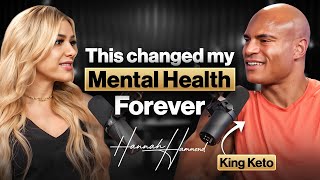
Hannah Hammond talks with Brandon Carter about building his fitness brand while managing depression and anxiety. Carter discusses how discipline isn't about willpower but about self-love, and how meditation and plant medicine helped him process trauma and find meaning beyond external success.
What was the best lesson that you learned from your father?
Emotion creates emotion. You have to get enough sleep, you have to drink enough water, get enough protein, hit your macros, lift weights. And once you start doing these things every day, building these positive habits, keeping the promises that you make to yourself, start to like yourself more that you can become passionate about anything. Right. It's not like I don't think it's finding your passion. I think it's creating it.
Welcome back to the Hannah Hammond Show. I'm super excited to be here today with Brandon Carter or King Keto.
King Keto. Depends on who you ask.
Yeah. Your name's not even on your Instagram, so I was like, it's not.
I didn't even thought about that.
It's King Keto. So I was like, I gotta figure out your name before I meet you.
Yeah, that makes sense. That. That's a good. I know you're relatively new to podcasting, but you definitely want to know the person's real name.
Yeah, yeah, yeah. Brandon Carter. I love it. So I would love to. I mean, you are. You. You coach. You help fitness brands either start their company or scale their companies online.
Yeah, it's mostly people who want to become online trainers. Or maybe. Maybe they are online trainer or in person trainer. Maybe they're in person training when they want to start growing their online business. Or maybe they have a. They do some online training and they want to scale it. Or some people, you know, they just love fitness. They love working out. Maybe they weren't trainers, didn't have any experience, but they'd like to make a career out of it or make a living doing it. And that's what. That's what I help people do.
Awesome. And we'll get into that. And then you also, I mean, have built an incredible personal brand. You have over a million followers on YouTube, which is insane. You have over a million followers on Instagram.
Yeah.
Crazy engagement.
A million on 1.5 million on Facebook. I'm just counting. Who's counting? Yeah, no one's.
That's insane. I'm like, all right, I want to dig into that selfishly, because I. I'm in the process of building a brand and really want to get your advice and opinion on how you've done that and what that journey looked like for you. And then also what you think, how you think that's changing with different technologies or platforms and. And strategies. With such an overload of content in today's world, like, how do you really make yourself stand out and grow and your audience is so engaged, and, you know, you've obviously built an incredible company. So, yes. First, I want to dive into your story and, like, where did you come from? What got you into entrepreneurship and then focusing in the fitness and health space as well?
Yeah, I. I'm from Chicago, the South side of Chicago. And, you know, I grew up, you know, super poor. You know, that. That. That the reputation of Chicago, it precedes itself. And I grew up, like, in the middle of that environment. And, you know, I. This is gonna make sense. My dad was. He lived with us, and my parents were married and everything, but I didn't see him, like, he was working so hard. He was. He was the entrepreneur. He was trying to build his business and just struggling. Struggling for my. My whole. Most of my childhood. And I got sent away to military school when I was, like, 13 just because I got in some trouble, you know, and I had to live there. And I got into fitness because I would get into a lot of fights. Just getting into a lot of fights. Not bullied, but I would get into fights. Like, maybe they tried to bully and it wouldn't work. So I wanted to get better at fighting, at violence, and that's when I got into fitness. But to bring it back around the same time I started getting Into Fitness, around 16, my dad's business started to take off. He started making. This is after, I GUESS it was 17, 18 years of him struggling, like, almost two decades of struggling. He started. It started to take off, and by the time I graduated high school, he was making $3 million per year. Right. And. And that was in 2000. Right. So in adjusting for inflation, that'd be $8 million a year in today's money. Right? Then he lost it all. He lost it all when I went to college. So I didn't experience any of the wealth. I wasn't there. I knew it happened. I wasn't there. Right? And when I got out of college, he had lost all the money and killed himself.
Oh, my God.
Yeah, he blew his brains out. And I saw that he did it, though, right? So. And he taught me a lot along the way. You know, he thought he was good. Good. Really good. It's really good at sales. Probably one of the best sales people I ever met. Right? And he. He taught me sales. He taught me a lot about entrepreneurship, leadership. And by the time he killed himself, I thought, oh, now I have to take care of the family. Right? I'm 24 at the time, and I got to take care of my mom, my sister, her, her kid, my grandma. And I was in a position where I needed to, to figure out how to make some real money because I got into fitness in high school and I was a personal trainer all through college, and I was training people. But personal trainers don't make real money. You can make a living, especially if you love it, right? But the kind of money I needed to make, I was like, this ain't gonna work. And, and I also remembered, I remembered that brief period of time when my family was rich before we was poor again. I remembered it and I remember he did it. So I was like, man, how do I get us back there? You know, how I turn this tragedy into triumph? And I started working, man, I started working like 12, 14 hours a day during that period. Because you got to remember this was 2008. Like, I'm a lot older than you. I'm 42. So this was 2008 when he killed himself. And it was during the recession, so nobody was hiring. Even though I had a college degree, couldn't get a job. There was record unemployment. It was the worst recession since the Depression, right? You were probably like a little girl when that happened. I was an adult with the weight. It felt like the weight of the world on my shoulders. And I was like, okay, I'm just gonna outwork it. I'm not gonna be a punk. I'm gonna figure this out, you know? And the only thing I could do was labor at the time, right? So I started, I would wake up at 4am, train people in the morning. I was living in New York. I would train people in the morning, and then I would shower at the gym. And then I worked security at this, at the Prada store in Soho for like 8 hours, right? And then after that I worked for a moving company, right? So this is like five days a week. And on the weekends I would still train people in the morning. Then I managed a restaurant in Queens. I was the weekend manager after that. And these are 12, 14 hour days, seven days a week for two years, you know, and. But I just felt like I had to do what I had to do to really dig my family out of this hole and try to get us back to where we were, you know, at one point, you know, and, and it worked like both those years, I, I made over a hundred thousand dollars, you know, just from like working like grinding, grinding, grinding, grinding, grinding. And. But it was grueling and it was awful, right? You know, that kind of work, you know, I didn't. Was no, there was no balance. There was no fun, nothing like that. And I, and I, I still thought, man, there's got to be a better way, right? And then, you know, I had always read a lot, and one day I was reading a book called the Four Hour Work Week. And it was like during one of the moves, so we had just put everybody's stuff in a, in a moving truck and we were moving them to Jersey and we were about to unload it and I was reading and I remember the moment, I thought, man, what if I could train people online, right? And that was a very novel idea back in like 2009. So nobody was, There was no trainings on how to do it, there was no courses, there was no books on how to do it. So all of us who started online training in 2009, like, we all had to figure it out, we all had to invent it. We were like the pioneers back then. And I just started figuring out. And YouTube was a big part of it. Like social media was a big part of it, you know, because I had also read a book called Crush it from Gary Vee. I had, I had this conversation with, I told this about Gary Vee and Tim Ferriss, like the authors of those books. But I, I, Tim, Tim was talking about using Google Ads and I, I didn't want to learn that. And I, and I didn't know if I had enough money for it. But Gary V. Was talking about social media, you know, and remember it's 2009, 2010, around that time, and I was like, all right, maybe I'll, I'll use that for my advertising. Which all sounds normal now, right? But back then, you know, yeah, 15 years ago, that was, it was, it was very novel ideas. And then I just had to figure it out, man. I had to just figure it out. And it was very difficult back in those days. There was no like click funnels or landing page software, Shopify or all the stuff that we have now. I had to like learn HTML, I had to learn how to, I had to actually code to make landing pages. I had to, I had to learn how to edit videos because YouTube, Instagram didn't exist back then, right? So YouTube was going to be my main acquisition source for customers and I had to learn how to edit videos. I bought like a, a $50 camera off of eBay because the iPhone didn't have HD camera back then, right. So this is so crazy. Yeah, it sounds like, like prehistoric. I feel like a dinosaur. But I had to figure all this shit out and you know, years and years of trial and error. I was, I was able to figure out. I had some mentors along the way and I was able to figure out and I built like a multi seven figure business.
Wow.
Online training. And now I teach other people how to do it. So.
Going back to losing your dad.
Yeah.
What were you. Was you. Were you very close with him growing up?
Yeah, he was my best friend. Yeah, we were super close. Like when I came home from military school for like weekends or kicked it with him instead of like people my age. Because people my age, like, they were, you know, I'm from Chicago, right. So the kids my age, they were like, by that time they were in gangs, they were doing like crimes and you know, shooting each other, like quite literally. So I just kicked it with my dad most of the time when I came home because. And a lot of times he would be working, so I'd be at the office with him. Like we were super close.
Do you think that's where a lot of your drive and your why came from? From him?
100, you know, both. You know, the only people like to attribute people. People's success to luck sometimes. But the only thing that was, I was really lucky. I had good parents, you know, like, even when I was. It was him and my mom too. Like, I didn't see my, my dad a lot when I was really little because he was always traveling, working on the business and stuff. And my mom would, she was working, so she would wake me up at like 5 and walk me to preschool in Chicago. Snow. Right. And then get on the bus and go to work all day, you know, And I think like, her work ethic as well, like, they were both hard workers. And I think a lot of that was imprinted on me.
Okay.
On the subconscious level. Yeah.
And what was that like, to lose him? Like, how did you get through that, man?
You know, I didn't take a whole lot of. I mean, it was obviously painful. You lose your best friend who's also your father. Right. You know, and. And then, you know, he was a my like first mentor. Right. So when somebody like that kills themselves, it kind of with your, your belief system, especially when, when your beliefs are based off the things he told you. Right. You know, but what I, what I realized, how I got through that was I realized a lot of stuff he was telling me was based off the mistakes he made. Right. So one thing he told me is like, yo, man, save half of your money. Save half of your money. And I was like, is that what you do? He said, no, I'M telling you. And so now I save half my, I save and I invest half, half of all my income. Right. Because that's how you get rich. Right. You got to make more money than you spend and invest the difference. And over a long enough period of time, you'll get like, really rich, you know, and it's little, little stuff like that. But how I dealt with the pain is I just worked through it. I just kept myself busy. You know, I didn't have time to sit around crying or being sad because, you know, family's depending on me now. So I just, I just worked.
Yeah, yeah, yeah. That was. Workaholism was always how I kind of dealt with my pain.
Yeah.
And I, you know, at a certain point in my adult life, I realized, okay, now I have money. It solved a lot of problems, but I still have these holes inside of me. And then I really had to work through more with therapy.
You went to therapy and stuff?
Yeah.
You found it helpful?
Yeah, I did. The most helpful thing has been plant medicine because it's opened my eyes to perspectives and things that I like.
Ashwagandha.
I'm not ashwagandha.
I'm sorry.
That's ayahuasca.
Ayahuasca.
That's what I meant to say. But I, I am going to. But psilocybin terms like guided.
I've heard a lot of people saying that, that, that, that, that's been helpful for them. You know, I, I didn't, I never found therapy helpful. I went to therapy, but I never found it super helpful for me. And I'm not speaking against it. I, I tried it, I wanted it to work, you know, but I, I, I didn't find it helpful for me. And I guess everybody's different. I will say, man, I know some people who took, I know two people who took ayahuasca. It went legit crazy.
Like in the bad way.
Yeah. Like in the mental hospital way. Yeah. I know two of them. But then again, you hear all these stories about how great it is. So I kind of stay away from the mind altering stuff personally just because I think I got scared by seeing, you know, this one dude in particular, he started doing ayahuasca. He did it once. Next, you know, he went crazy, faked his own death on the Internet.
Oh, my God.
Yeah, he had a million YouTube subscribers. And so there was a point in my career where I was managing. I had a marketing agency. So I, I was, I had a million dollar fitness brand. But what I would do is I would find Other influencers who maybe they knew how to build a following, but they didn't know a lot about business, you know, and especially because a lot of the younger guys or girls, they get into it because they kind of want to be influencers, right. More than they want to make a bunch of money. And they never really learned that aspect of it. So what we do is we would partner with them and we would run their business, help them build a business around it. And you know, so I, I'd run their, their. Me and my team would build all their funnels, landing pages, help them put together all their products, run the ads, you know, spend the money to run the ads and really just help them make a lot more money.
Yeah, right.
And we split, split the, the profits. And one of the guys, yeah, man, he was just making so much money, man, and he was doing great and he said he wanted to do ayahuasca for whatever reason. And he went, I'm not trying to dissuade you. I'm just saying he went legit crazy. He. He went live on YouTube and faked his death. Then the, the cops found him like in a coffee shot. Next thing you know, he was in a, A psychiatric ward.
Yeah. Never mind.
Then he got out. He got out the psychiatric ward. He started going like putting out this war wild wacky content. It's like super wild kind of stuff. I, I couldn't even say on here, like wacky content. And once he gave he on, on his story, he gave away his, his password so all his bank and stuff.
What?
And it was real. Like he really did. People went in there and took the money. You know what I'm saying?
Scratch that. Hell no. I'm. I'm a hard pass.
This, this really is a true story.
Yeah, that sounds horrible.
Yeah, but you know, just other people say like it changed their life in a great way.
I don't know if that risk is worth it.
Everybody's die if they eat a peanut.
Yeah, that's true.
So you don't, you don't, you don't know how it's going to affect you. I'm sure you'll be fine.
Yeah, I think I'm good now. I'm. I'm gonna second guess so. But no, I mean with the psilocybin it was just pretty crazy with that experience. I don't know anybody that's go crazy on that.
But mushrooms, right?
Yeah, mushrooms. It was more of just it like released so much, I. For the first time I was able to see everybody that had hurt Me in my life, I was able to see their pain, and I just released anything that I even unknowingly, subconsciously was holding on to.
And you found that helpful?
Yeah, I just felt so free and light afterwards. It's like I no longer had any resentment. And I didn't even know that I had resentment because I'm always. You know, most of us were so detached from our feelings or from things in the past or from our childhood or things that have hurt us that we think that we don't hold anger or resentment or things. But that showed me that I did, and it also released it. And just one.
Just doing much. I did mushrooms recreationally. Well, that's different in high school. And I don't know if it had a profound effect, except for the music. Sounded real good.
Yeah.
At the concert.
Yeah. No, this is different. You do it, like, with the shaman, and there's a ceremony around it, and there's specific music, and it's. Who knows?
I took LSD once, right. And it was the best experience I ever had in my life. It wasn't, like, therapeutic. It was just super fun.
Yeah.
And it was so fun I didn't do it again. But I was still high the next day, and. And the next day I had to take my SATs.
Oh, my God.
And I killed that man.
Really?
Yeah, man. Like, over, like, 1300, which is pretty good, you know, like, the scores were different back, you know, 25 years ago. The scores were different, right? So. So 1300 was, like, in the, like, top 2 percentile. Like, it was way over. It was way over. I don't remember the exact number. And I tried to mimic those results sober. I was like, man, wait, I around get a 1600 if I do it sober. No, I got. I, I, it was worse every time I took it. So there's something to it, you know?
Yeah, No, I, I, yeah, I, I don't do drugs or anything.
Yeah, me neither. No, I don't do it. This was like I was a kid. I'll do any recreational drugs. I haven't drank or anything in, like, 10 years.
Really?
Yeah.
Wow, that's impressive.
It's cool. I just have a, Like, I'm. As I got older, I just feel like I just could tell it was slowing me down.
Yeah. It's like we don't have time to afford to be hungover and feel like. And especially in the fitness industry, too.
Yeah. You know, and it's harder to stay in shape. Right. So I have to stay in decent shape because my clientele Are trainers. Right. So I, I can't be all fat. You know, we're out of shape. Being old is not excuse. Right. So I, it was just more difficult as I got older. And then one day I was like, I was in my 30s. I was like, this is not helping me accomplish my goal. Yeah.
You know, that's how I feel every time I drink. I still will once in a while.
But yeah, it's fine. I don't make any judgment on anyone else. Like, you got to do what's best for, for you. Right. Like, again, everybody's different. I know some people are in great shape and drink all the time, smoke weed and go to the gym, and they're in phenomenal shape. I couldn't do that. And, and I think that self awareness is important, you know?
Yeah. If I smoke weed, I'll eat like everything pounds. Yeah.
I will eat everything. All a diet. What your diet is talking about. I'm gonna eat everything.
Yeah.
You know, and I'd rather, I'd rather not. I'd rather stay on point. I want to ask you. So you said you lost the resentment, right. When you did that? This is gonna sound crazy because I. But I kind of feel like that resentment can be good fuel. Sometimes people, they ask me how to get motor motive, how to get motivated. How do you get motivated? I'm like, man, what I tell them to do is make a list of everyone who hurt you. Everyone who talks, Everyone said you couldn't do it. Look at that list every day, you know, because if you don't work hard, that means the haters win. Right. Or, or worse, if you don't, if you don't accomplish the goals that they said you couldn't accomplish, they weren't hating. Right. Maybe they were just correct. Maybe it was just a fair assessment of your capabilities, you know, and sometimes, sometimes that extra hate can push you to another, another level. It's not the only fuel you want to run off. You don't want to run off hate. But if you need an extra jolt, it's something powerful.
You know, I have something to say about this.
Oh, go for it.
Yeah. So this is like the pursuit of excellence versus the pursuit of fulfillment. Fulfillment. Usually the lack of fulfillment, some pain.
Yeah.
Drives the pursuit of excellence. And so that's why most big success stories, they have some deep rooted pain inside of them that has driven that once you finally achieve. This is the thing, though. We, we think that, oh, when we achieve excellence, we'll be fulfilled and then we'll be happy. That'll drive more excellence, yada, yada. But it doesn't.
No.
When. Usually when you achieve excellence, you're like, oh, I'm. I'm still not fulfilled. So what do we do? We push more. That pursuit of fulfillment continues to drive the excellence. But when we. And that's what happened to me is like, once I. Every time I was like, once I have this much money, I'm going to be happy. Once I do this, I'm going to be happy. And it was always this goal post that continued to move forward, and I was never. I was never getting that fulfillment. And that's when I slowed down, zoomed out and said, okay, what? I want to feel peace. I want to feel happy. I want to feel fulfilled. And continuing to pursue excellence to my deathbed and not ever being fulfilled is not a life that I want to live. And so that's what caused me to start doing the work and exploring some of these things. And that's what really caused me to realize how much. How much pain there was inside that I hadn't dealt with and that no amount of money or accomplishment or success was ever going to make me wake up and feel good in the morning.
Yeah.
Regardless of the people that told me I couldn't do it or whatever. Like, I wanted to feel good and whole. And. And then I also realized once I did feel that fulfillment, because it's true, sometimes fulfillment, it doesn't drive excellence because you're like, this feels really good. Like, I feel great. Why would I take on more? I want to stay right here in this comfort zone.
Yeah.
And so I think the journey of fulfillment and excellence are two separate pursuits.
Yeah.
And so I think if we continue to pursue excellence and the things that we pursue that are fulfilling might not be the same thing. Right. It might be going out with your friends. It might be seeing your child take their first steps. It might be like something different that the world doesn't see as excellent.
Yeah.
But knowing that those are two separate pursuits and having to pursue them separately. And then also when had a coach tell me, you know, you're. You're so successful and you do all these things, but, like, what's your intention?
Yeah.
Behind it all. And I was like, well, I guess ultimately, through a series of questions, it came to the realization that my intention was to try to love myself.
Oh.
To try to prove that I was worthy, to try to prove to my dad or my brother or this person or whatever that I was capable or I could do it or that I didn't need someone to take care of me or whatever I was trying to prove to. But ultimately the intention wasn't coming from a place of love, it was to try to find love. And he told me that that intention is all backwards. And only at the time, at the point where your intention comes from love, are you ever going to truly be living life in the green zone, living life and flow, living life in creation, abundance, love, expansion. And, and he goes, for instance, why are you going to the gym? I'm like, well, because I want to look in the mirror and look better. He goes, wrong, you're going to the gym because you already love yourself. You already love your body and you cherish your body and you want to honor that, cherish that, you know, honor, cherishing your body and, and honor yourself and the love you have for yourself and provide the best life that you can for yourself. And so that mindset shift really changed it all for me because everything I was seeking, was seeking to fill a void inside of me. It wasn't coming from a place of abundance and love.
I get, I, I totally get what you're saying, right? So it, you know, Sigmund Freud, he came up with something called the, the pleasure pain principle. Basically said every, every decision people are make making, they're either moving towards perceived pleasure or away from perceived pain. And pain is more powerful, right? Daniel Kahneman, Nobel winning, Nobel prize winner, Daniel Common, he has tons of experiments where people do way more to avoid loss than they will to seek pleasure. Right? And sometimes it can breed complacency when things are, are good. Like you said before, right? To your point, right. And, and I think most people live, live in that world where things aren't, they're not necessarily happy where they are, they don't really like where they are, but it's not bad enough for them to do anything about it or bad enough for them to do enough about it to make significant change, right? And, and that can get monotonous. Galileo said nothing is harder to bear than the secession of fair days, right? When everything's just fine. You know what I'm saying? Like, it gets difficult because it gets monotonous and boring. And so that, that anger, that hate, that's one fuel, right? But I also tell them, also make a list of great, this is somebody. So imagine you're a version of yourself that already accomplished all the things you want to accomplish. Like what kind of person, how does that person behave? What time does he wake up? What time he or she, what time? What, what do they eat? Are they cheating on their diet? Are they spending all their time playing video games or messing around? Or are they focused on their goals? Like, and make an extensive list? And I tell people, look at that list every day. Because once you start, what happens is once you start acting in congruence with yourself, then you actually start to like yourself more. You start to love yourself more when you start doing the things that you start keeping the promises you make to yourself, right? Because you can say love yourself, right? We, we can say, man, you should just love yourself. You just love yourself. And it sounds great, but you can't bullshit yourself, right? Imagine somebody who, who you, who you cared about, right? And they were telling you every day, I'm gonna do this thing for you. I'm gonna do this stuff for you. And they never do it, right? How, how, how would you feel about them? How much would you like them? How much would you trust them? Would you have any confidence in them, right? That person is you. You know what I'm saying? So I agree what you're saying. Like, you should definitely love yourself and come from love, but you can't, right? If you're doing whack to yourself all the time and you can, you can put on a false bravado as if, you know, you're super confident, but when you look in the mirror, you're going to know it's right. So you got to give yourself a reason to love yourself. Like even. Because love is not unconditional like that. We don't love our parents just because they're our parents, right? If, if your mom would have dumped you in the dumpster, you wouldn't have no love when you were born. You wouldn't have a lover. She did a whole lot for you. I don't know, I'm assuming growing up, right? They were there for you. You know, our parents did stuff that we Love is earned, even self love, you know? And you, it's not something you can just make up, you know? So when, when I hear people say just love yourself, like, yeah, true, but you got to give yourself a reason. And one more thing. You said, be happy. Money won't success, money definitely won't make you happy, right? But it's not money's job to make you happy, right? Money's jobs to be exchanged for goods and services. Your emotions are your responsibility. You know what I'm saying? I meet poor people who are super happy. I meet rich people who are, who kill themselves, right? And, and vice versa, right? Like they're, they're two different subjects, right? So You, I, I tell people, like, don't, don't get money to be happy. Like, be happy and get money. Right? You know, like, just, you can, you can do it. You can still, like, chase high pursuits and, and you can enjoy the process if you learn to enjoy pushing yourself. Right? That's where that list of great comes from. Because what happens is once you start acting congruent, what's on that list, you'll start to, like, it'll rewire your associations with pain and pleasure, right? You'll start to feel better about it. It'll become a feedback loop. Like, man, I'm doing all this stuff. You start stacking up wins. And then for me, the pursuit of excellence is not necessarily for the things or the money. I mean, I love money for sure. I'm, you know, I'm a big fan of currency. But for me, man, I want to see, like, how far I can push myself, you know what I'm saying? Like, how, how, what amount of my potential can I bring to the surface? You know, the average person has so much potential. Even like when I see like just regular people, they may look like losers. Like, I know that this person has potential. If he would, if he could, he could just find a way to push himself. You know what I'm saying? And I just want to see how much can I bring to the surface and the money and the success, it becomes a byproduct, right? So I'm chasing something else, not the things that make sense. There's a lot of words.
That's my whole mission in my life, okay.
Yeah.
Is to always push myself to my highest potential and everybody I possibly can with me.
Yeah.
To their highest potential in all areas. Right. So many people we see are in balance. Like, they may be amazing in business, but they're depressed and miserable or have horrible relationships or their health is bad, or maybe people are great at the gym and their fitness is great, but they are, you know, their finances are horrible. And so I think it's always just pushing ourselves to a higher standard and being around people that raise us to our highest potential.
Yeah.
Whether that's friendships, business, partnerships, relationships. And I'm on the same mission. I'm on the pursuit of my highest potential. This show is about self actualization and reaching your highest potential. And it was interesting though, because I was suicidal at 20 years old and I was super depressed, super anxious. And I always heard, like, why don't you just relax? Why are you stressed out? Why don't you just love yourself? Why don't you Whatever. Right. And so of course it's not as easy as just be okay. It's a process and it's a journey and it's. I was holding on to a lot of, of resentment and anger that I didn't even know. I thought it was all just for myself. And so that was a long journey of change. But it's, it's so exciting now because I know when I first started my, I grew up without money also and my dad wouldn't buy me an ice cream cone when I was six and I told him I was going to be a millionaire so I could buy myself a McFlurry and buy you ice cream cone. Yeah.
That says yo, that's, that's a different kind of poverty. Yeah, yeah, yeah, yeah.
And, and I mean by no, we had a roof of. We were fine, but we, that was the answer always was, we can't have that because we don't have money.
What kind of effect that. I didn't mean to cut you off, but did that affect you growing up, like as you became an adult, like hearing that over and over again?
Oh, yeah, yeah, yeah. It was very scarcity mindset. It was, I'm unworthy, I'm unloved, I'm not wanted, nobody's coming for me, nobody's going to take care of me. This life is a miserable place. Relationships are miserable, family is miserable. So my story was all driven from fear, anger, scarcity. And I was so. I had such a big chip on my shoulder.
Yeah.
To, you know, be like you dad or, or my brother, you know, he was very similar. Said I would never amount to anything really. Was arrested for threatening to kill me when I was 10. And so like, but, but I count these as my greatest blessings in life because it created that pain that drove me to create something different and not have that pain.
This is something that, something Pain is so powerful like if you can harness it, if you can harness it to reach a percent. And I'm not saying you want to live off that, but, but look where it got you. Right? Like, like you say, it's your biggest blessing. And if you, if you find a way, if you find a way that you can transmute that into accomplish your goals, it makes you invincible. Right. Because they're not going to be the last people to hurt you. Right. They're not going to last people to do you wrong. Right. No, it's not going, it's going to be the last tragedy you're going to have. Right. Everyone's life is going to be A series of tragedies. Everybody they know, everybody you know is going to die. Right? There's going to be a lot of natural disasters. All types of bad is going to happen, right? And if you use that as fuel to power your ghost, then it makes you invincible. You get what I'm saying? If you always take that attitude, I'm sorry, I didn't mean to cut you off. But it's.
No, it's so true and it's so powerful and, but the thing, the shift for me was is it served its purpose.
Yeah.
And I'm grateful for it. But I no longer want to live in that pain. I no longer want to wake up with a knot in my stomach and a deep fear and this, like, another day, like, why do I have to be here another day? That, that's what I used to think every single morning was, why, God, like, do I have to be here one more day?
Did you ever attempt a suicide?
No.
Yeah.
I mean, yeah, No, I would try to drown myself, but it never worked out. Yeah.
You weren't serious.
Yeah.
That's not a good way. That's not an effective way to kill yourself. Like, it was, it was. I get that, man. You know, I, I have, I was diagnosed with bipolar too. You know, is probably something hereditary. And I remember not necessarily wanting to take action, but to commit suicide, but I remember thinking, man, I, it'd be dope to not be alive, right? And I remember I would have those, those thoughts. I was like, it's probably not normal to have these thoughts, you know, growing up, you know, and I resonate that because I understand, you know, I'm assuming my dad was dealing with something similar, you know, obviously.
Do you. Was that just for a period of your life?
No, I, I, it, it was, it was strong in high school because I really hated that school. Fit and fitness really helped me get out of it. I've seen fitness get people out of depression multiple times. Like it is. It can really change. It changes people's personality. That's why I felt in love with being a trainer, because I saw, like, working out changes their personality in a good way. Because to get in shape, you have to make these promises yourself and start keeping them. Right? You have to get enough sleep, you have to drink enough water, get, get enough protein, hit your macros, lift weights. And once you start doing these things every day and building these positive habits and keeping the promises that you make to yourself, you start to like yourself more. And it brings you out of this. It brings you. I've seen it bring people, including myself, out of depression, you know, and I. It's still a struggle, you know, I have, you know, with bipolar, you go through depressive phases or, or manic phases. The manic is kind of fun until it's not. But the, the depressive stages, I learned to deal with it. You know, it's not a suicidal anymore, but it's like I. I know when, when I, when I get in one, like, ah, I know what this is, and I. I know how to cope with it. You know, over the years, you know, what's helped me a lot is meditation. I meditate twice a day for 20 minutes, and I've been doing it for like 15 years.
TM.
Yeah. Nah, just. Just regular focusing on breath. Not transcendental meditation. But yeah, I, I found that helpful just because it helps you control your thoughts. Right? A lot of, you know, emotions. Emotions aren't real, right. They're literally all in your head. They feel real, and they have a huge effect on your behavior and your, and your. In the way you feel in your experience. The way you experience life is filtered through your emotions. Right? But when you start to. I had to study a lot of this, right. You know, when I. When I found out I had that bipolar. So I studied a lot of neuroscience, and the emotions are really just combinations of different neurochemicals. Dopamine, oxytocin, neuropinephrine, you know, among others. And you can learn to control your own emotions and. But it takes, like, concentration sometimes. You know, there's different ways to control your hormones, and I found ways to get out of it. But what's even better is I found ways to. As I approach the goal, instead of saying, I'll be happy when I get. The goal is to be happy in the pursuit, right? But you got to really learn how to control your emotions. And because success won't make you happy, money won't make you happy, things won't make you. Watches won't make you happy. They give you some brief moments, right? But it fades. It's. You have to learn how to be happy during the pursuit.
Yeah.
So you know what I'm saying? And. And I don't want it to come because I look at the, the success as, you know, people ask me when it's gonna be enough, when it's gonna be, when's enough, man? You ever feel like chilling, like, nah, man, I'm not playing the game. You're playing like you're. You're playing a game like Mario where you. You beat. You beat the game, then it's over. Right? I'm not playing again. I'm playing a game that's like Minecraft, where the goal is to keep playing and to get better and to improve. Right. You get what I'm saying?
Yeah, yeah, yeah. That's. I mean, people ask me the same thing because I want to be a billionaire, and I want to help make a lot of people help a lot of people reach their highest potential and have the greatest impact I can in the world. And that's the thing, though, is it's not that I'll be happy, win. It has nothing to do. It's like, I love the game. I love every single day. And my friend Pace Morby told me a story. I had him on my show a few weeks ago, and he said, imagine you're in your deathbed, and the doctor says, if I give you this blue vial, you get one more day to live. What is that vial worth to you? Some would say everything, some would say nothing. Yeah, and. But he said, but here's the thing with the blue vial is you don't just get another day. You don't. You don't get to create your day. You get to relive any day from your past. Like, what is that vial worth to you and me? I was thinking, well, up until about a year ago, I wouldn't have paid anything for it because most my days were horrible. I didn't feel good. I wasn't expansive, I wasn't creative, I wasn't in flow. I wasn't coming from a place of love. I was anxious, depressed, sad, stressed out, overwhelmed, bored. Like something. Right? And so my mission is to have as many days of my days as possible, 90 of my days be a day that I would pay anything for. One more day.
What does that look like?
Well, now I live those days. Yeah, I. I love it. I wake up, I go to the gym, I have my four hours of me time. I call my morning integrity setup, where I get myself in a state of flow. Working out was the biggest attribute to getting out of depression, bro.
I'm telling you, man, I've seen it.
Hundreds of times, so I do not waver on that. And my morning personal time, before I look at all the fires, you know, as a CEO, there's just. That's. Your job, is to put out fires. But I get myself in such a peak state of mind and feel good and already winning for the day. And I listen to my book, I get ready, I do the gym, all the things, and then I'm Ready to go and I'm ready to. To roll. And then I love the work that I do and just doing time. Audits of the tasks and the activities that are really in line with who I am and who I want to become and what I'm really good at. Like, I think Dan Martell talks about what you love and you're good at.
Dan's the homie.
Yeah. And that's a nice thing, is once you hit a certain level, start hiring a team that is good at and loves things that you are not good at and you don't love. And so once you start, I have a mentor who's almost a billionaire, and he says, what part of the arrow kills the animal? The point. Right. And so as an entrepreneur, as a person, your job is to start doing things that are closer and closer and closer to only the point of your arrow, and you start delegating all of the other things, and then that allows you to thrive. Because naturally, when you're grinding and everything, you're. You're wearing so many roles, so many hats, and you naturally aren't going to be really good because they're different personalities. Like, sales and ops are two different things. And finance, like, all these different personalities. And so as you start to do the things in your life that really you enjoy and you're in a state of flow where time goes fast and when you feel expansive and happy. And it's not about not having stress, because I love solving problems. Like, that's part of what I enjoy, but just leaning more into that. And then. Yeah, I love this. This is something that I love. And being around people who inspire me and growing businesses, helping teach others to grow business or help in personal development, having my alone time, doing hiking. Like, you just start to learn these things that make you feel.
Yes.
Good.
Yeah.
And you lean more into those things and life becomes in the green zone. And then that blue vial is. Is priceless.
That's a fact. Working. So you say working out was the main. Was the main thing that got you.
Yeah, yeah. Working out. Because the. I. The first coach I ever hired because I had scarcity mindset, and I finally hired a coach.
Yeah.
He had me do an energy audit where every hour I set an alarm on my phone and I would check in how I felt, and I would write down where I was, who I was with what I was doing, and I started to notice the things that made me feel good.
Patterns. Right. Yeah.
And I felt good when I was outside on a walk or if I hiked camelback or if I rode my. I didn't have a horse at the time, but if I rode horses or things like that. And I realized I always felt good when I was doing something active. And for the first time, I decided to invest in a trainer because I was afraid to go to the gym. I was like, I don't know what to do here. I'm really insecure. I wasn't good, didn't feel good about my body. And it was just a negative spiral because me not going to the gym caused me to stress, eat more, which caused me to get fatter and more insecure about going to the gym.
And like yourself less because you know you should be doing it.
Yep.
When you know you're supposed to do something, you don't do it. You like yourself less, and that's dangerous.
It's dangerous. And hiring a trainer, hiring a coach, hiring somebody in every area of your life, that is where you want to be in that area is so important. And I was like, okay, well, this gives me the confidence to go in. They're going to tell me what to do. It's going to hold me accountable. I know I'm not going to waste money, so I'm gonna go. And the mental transformation I had from watching my body get stronger and progress and feel confident in the gym was priceless. It changed my entire life.
Yeah. You know what's funny you say I never heard that. An energy audit. What I. What I started doing, this is. It was a way of coping with, like, the depression or trying to figure out a way around it. It was before. It might have been before the iPhone was invented. So I used to keep a small little notebook in my pocket, and I would chart it out on 1, 1. One axis from 1 to 10. And then. And then I put the hours of the day on. On the. The horizontal axis, and I would just chart. I set up, like, alarm, and I would just start every two hours. What. What was my. What was my mental state, you know, from 1 to 10? Like, 10 being like your favorite, your team wins this, the super bowl. And. Or one being like, hey, man, I don't know if I want to do this anymore. Like, life, you know, like, that's one. And I would just mark where I was at, and I would. And. And then draw a little graph. And then whenever there was a high point, I would, like, mark it right in order. There's a low point, I'll mark it. And then you start getting data, you know, and then what I was doing. What. I would also take the Average of the day, right? So I was really trying to get it like mathematical and over time I said, okay, let's, let's. The first thing I did was try to get less lows. Let's. And that automatically raised my, my average. Right? Because some of the. The peaks, you can't like do it all the time. Right. But you know, I can have less lows. I know the thing where there were there would lower my energy. And over time, you know, the average starts to rise. And it was one of the most powerful things I do. I still do it today. Now there's an app on a phone that you can set. It's called IMU Journal. And it's like one of the only. It's like I'll show you. It's like one of the. The only notifications goes on my phone and it's basically. It's like $2 out. I wish I owned the company or they. But it's like $2 and you just mark where you at. It's basically 1 to 10. And then it gives you average, you know, and you can mark what. What it was. So like I. I broke up with girls because of it. Like. Yeah. Oh, no. Hey, man, this is relationship fiance. Yeah. Amen. If that's what it is. That's what it is. You know?
Yeah. Who makes you feel expansive, who makes you feel contracted. And life is energy.
Yeah. Stop dealing with certain family members. Hey, man, that's what it is. That's what it is. Like, I gotta, I gotta, I gotta control my energy because it's up. It can really be hazardous because I'm assuming you do sales in your business, right? The decisions people make, salespeople notice, are based off the, the emotions they feel at the time they make the decision. Right. We've all been in a bad mood or experiencing a bad emotion and maybe done things we regret or done things we wouldn't have done if we were in a better mood. Like you said you were stressed, so you would, it would change your eating habits. You would stress eat or, you know, I know, I know people. One of my friends, he killed two people. He was in a bad mood. He's doing life in prison now. Double homicide. And you know, if he was in a better mood, he wouldn't have did that, right? And so your, your decisions are filtered through your emotions. Or even like if you're in a bad mood, you might not go to the gym. Or if you go, let's say you do go, right? You discipline. That gym session is not going to be as good as a gym session where you're feeling great, you're super enthusiastic, right? So your emotions affect your decision, but also the quality of your actions. Right? Like, let's say I want to spend my. I. I want to be a better dad, right? So let's say. Let's say that's my goal. I want to be a better dad. And one of the things, okay, I'm Spend more time with my son, but if I'm in a bad mood when I'm with him, I might be doing more harm than good. You get what I'm saying?
Yeah. That's what my coach taught me. Said the outcome can only be as great as the energetic action. Yeah, as the energy. Sorry. The outcome can only be as great as the energetic state in which you initiate the action.
That's a fact. And, and, and something I teach my sales people is like, listen, man, you gotta. You gotta be in charge of controlling their state. And. But that means you have to learn how to control your state because they'll mirror it, you know, saying they'll mirror it. And so what? One thing I try to do is I make a habit out of raising. Doing the best I can to raise everyone's state around me everywhere I go. I'm talking about like the janitors in my building, the security guards showing love, Uber drivers, everyone. Because states are contagious. You know what I'm saying? So emotions are contagious. Like if a. If a happy child runs in this room, everybody will light up. Right? Or a puppy or something. But if somebody comes in the room or angry and, you know, with some. You've seen that before. We've all seen that. It's probably some of y' all going in rooms up the energy, right? You know, but my. My job is. I think I consider. I say I'm the head of state, so everywhere I go, I'm in charge. I'm setting the tone of the energy. Not necessarily because I'm a nice guy, but because I don't know what kind of energy this other person's gonna bring, and I don't want it to influence mine in a negative way. So I got to take control of the energy everywhere I go. And that's some. My dad didn't say it in those words because he. He, like, he was an orphan. He didn't graduate from high school, none of that. Right. But he. He knew some of this stuff instinctually. And I just saw how he controlled states when he did sales or meetings. Like, he was a master of it, you know? They call those people charismatic, but it's really just controlling other people's state, making them feel different. Yeah. And you can learn to do that. But your first, very first step is you have to learn to control your state at all times. And it goes back to like, you can't wait to be happy. To go. To be happy. You got to be happy now because it's going to help you accomplish the goal because you'll be able to the actions you need to take to get rich or to become successful if you do those in an energy. And like you said, they're going to be more effective.
Right.
You know what I'm saying?
Yeah. There's no point in taking action on anything when you're not in the peak energetic state because you're not going to have a good outcome.
Yeah.
And that's the. Then you hear the people that are the victims.
And yeah, I tried this, I did.
All that, poor me. And that's why, you know, these little habits were so useful because he taught you to be aware of your state at all times and actually have. Because people aren't even self aware.
Yeah.
And they don't even know how miserable they are, how they're acting or the, the like we were all vibrations with a frequency. And I was reading the book Transcend and he said somebody at the top of the pyramid at self actualization like makes up for, I don't remember the number, but hundreds of people that are vibrating on a low frequency. And so the more we can vibrate at that level and we raise the frequency and we raise the energetic state of all the people around us, which helps reach our highest potential and create a better civilization. And, and anyway, so he. When, when you do these energy audits, you pay attention to the things that give you, make you back in your green zone, put you back in your green zone. And he said some, some of those things like, may be really quick, like maybe eating some food or maybe going, getting some sunshine or maybe listening to a certain song or maybe calling a certain person. They may be really quick. Some things might be a little bit longer, like going on a retreat for yourself or these different things. But when you start to realize what puts you back in the green zone and you're aware of when you get knocked out, then you have these little habits that can get you back in there quickly and you prioritize getting back to green before you take any further actions. Because it's like if you, for instance, if you have a meeting with a big huge client and you just found out that your mother died or your dog died or some. Or you lost a massive deal, whatever, breakup, anything. Yeah. He's like, if you can't get yourself back in the green zone before that meeting, turn it on, reschedule it.
Yeah.
Because you're not going to have that outcome.
Yeah. This is ways, you know, I've learned ways to, To. I taught this a lot of people. Like, you can find your own individual ways and that, that's per. That's important that you have a list of things you. That can change your state at a moment's notice. You know what I'm saying?
Yeah.
So, like, you gotta have. You got to be able to do that, especially because you never know, right. Life's not going to conform to all your preferences. Right. So there's going to be. That's going to bother you. And you got to be able to change your state at any moment. And there's three main ways that, that people will use to change their state. The first one is. The first one is your environment, right. Like, if you go to, you know, like, clean your house, right. You feel better, right? So it's your physical environment. Or if you go to a, like a. The beach or. You know, one thing I do in the morning is I walk on the water. I live like across the street from the ocean, so I walk on the water. And that puts me in a good, like, vibrate. But it's also your environment is also the people you surround yourself. So, like, I really curate my environment. If anybody's bringing down my state too much, then I just exclude myself from that. You know, it doesn't matter who, like, it can literally be anyone.
Yeah.
Because it's that important to me. And. Except for my son, but he doesn't do that. Right. So he, he brings it up. But so his environment, then it's your physiology. And I learned this from Tony Robbins. But like, motion creates emotion, right. And there's. There are studies where people, they, they held like, different powers. It changes on a neurological level. Right. They tested their testosterone in their cortisol. Cortisol is a hormone. The cortisol went down and testosterone went up. Right. And they feel better about themselves just by changing their physiology. Right. So one thing I do, either with myself or other people, is I finally change the state. I'm gonna change their physiology somehow. Like high high fives. I had all. When I used to have office in New York. If I didn't like the energy or the vibes in the office, I would make everyone stop. And we go on the balcony. And it was a tread. I mean, a trampoline. Everybody get on trampoline. Because you can't. You can't. You can't be in a bad mood on trampoline. I never seen it, right? And it just changed the state for a second, you know, little stuff. And I still got a trampoline on my. On. On one of my balconies now. Yeah, yeah. Because emotion creates emotion, man, I'm telling you. And the way you. The way you hold your body, the way you present yourself, it can. It changes things. And then. But most important to what you. Whatever you think about, like, whatever you think about is most powerful. Whatever you think about, you're going to feel even if it's not real, right? Even if it's not real. Like, if somebody. Imagine a pet. If you imagine your pet coming in your room and dying. Like, some you can get sad. Just think about it. It's not even real. He might be happy and healthy. Or you can imagine some that happened, or you can think about that happened in the past, and you can get sad. It's not even happening now. It's not even affecting you now in. In reality, but in your mind it is, right? So you got to be able to really change your focus and focus on. What helps me is focusing on where I want to go. No matter how bad things is, focus on where I want to go. You know? And so it's. It's even like language like, I don't let. I'll never say something like, I'm thirsty. I say, I gotta get something to drink. Or I never say, obviously, I never say, I. I don't have enough money to say, I got. I gotta learn how to get. I gotta. I gotta get some more money.
Like, even when I was broke.
Yeah, how can I get some more? But that's Robert Kiyosaki. I read that when I was like 19 in his book. And. But everything is. You know, I don't let people say try around me, like my students, man, I'm trying to build my social media. I'm like, nah, I see you. What? And then you just use the T word. We not try babies, right? You can say, hey, I'm working on it, or I need to figure it out. That's fine. That's because both are true. But trying implies that.
That you're not going to win.
It's not for real. Who are you going to bet on, y' all. I got to figure out how to build my social media. Or, man, I'm trying to Build my social media. Like, who you gonna bet on?
Yeah, right.
It's a different energy, and the focus is different. Like, I'm trying to do it that, you know, it's like, yo, I'm. I'm working on figuring this out. You get what I'm saying? Like, just. Language is so. Is so important too, because language, language. Language is thoughts verbalized. Right. So you control your thoughts and what you focus on, but language is a way to alter it. Does that make sense? It might have been rambling.
No, it's so true. And, I mean, meditation was a huge part of my transformation as well. And when I first realized, from reading and learning meditation and reading books like Transcend and different ones like that. But when I first realized I am not my thoughts.
Yeah.
And it's not I think, therefore I am. It's I am, therefore I think. You know, our consciousness is existence. It exists, and it's not our thoughts. It's not tied to that. And so when you're able to. Because most of us think we are our thoughts because that's the ego and the identity that we create. And we think these things, and we're like, oh, God, I'm crazy. Or those thoughts are crazy. Or I'm. I. I identify as this. I identify as anxious or identify as depressed or identify as bad things happen to me or all these things. But when you can start to just learn the practice of meditation and allow yourself to be able to have the awareness to sit above your thoughts and to actually observe them and not judge them. And you can watch these crazy things pass in and out of your brain. But instead of identifying it, identifying with it, you can just observe it, not let it turn into an emotional reaction, which will then turn into an action. And the nice thing about the brain is you can redirect the brain at any point you want. Like, if I say think of it an elephant.
Yeah.
Everybody will think of an elephant for a split second. And then the brain might go off on its other thing. But if you have. As long as you have the awareness, then you can always redirect. Always redirect. And so if you don't have the awareness, then you won't have the capacity to redirect because you're just lost in it. And then those manifest as emotions, and those emotions will manifest into stories and dogmas and actions.
Yeah, yeah. You know.
Yeah. Behaviors.
Emotions are just a thought, a byproduct of your thoughts.
Yeah.
You know, like, for real. You know, like, this is why poor people can be happy. Right. Because they're focusing on other shit. You know what I'm saying? You know, like, yeah, that's why you can be fudgeing broke, you could be a fat loser, and you could still be happy if your fucking team is winning or some shit because you're focused on something else.
Yeah, right.
It's. A lot of times it's escapism. Right. But I'm just saying, as an example, you know, you don't want to get addicted to. Some people get addicted to escapism, Right. So they. They change their focus. Right. But if you can learn to control.
It yourself, then this is powerful and it's. Oh, what was I just going to say? Oh, something like, for me, I've had a lot of body dysmorphia, you know, issues. Eating disorders. My brother made fun of me, called me typical. I would grab my fat rolls, make fun of me with all his friends, like when I was really little.
And that kind of stays with you, man, when you little.
Yeah.
Siblings are overrated.
Yeah. But I grew up with the thoughts always in my brain of, you're fat, you're ugly, you're not good enough, you're stupid, you're whatever. Right? And. And it ultimately, because I believe those so strongly, I starved myself, I had eating disorders, and I had binge eating disorders and all these things. But now and then I hired a coach who specializes in those types of things, and she's like, okay, have that be the trigger to redirect your thoughts. So every time you look in the mirror, now that you have the awareness, when you start to say, you hear your brain go, you're fat.
Yeah.
Now that's a trigger to be like, I love you. Thank you. Please forgive me. I'm sorry. And I give myself a hug and I smile in the mirror and it makes me feel good.
Okay.
Because I. I do have that love and gratitude for myself and like all the things that I've put my body through, and it's always continued to work and it's always gotten me here. And. And so now it's. Instead of getting attached to the thought and I have tons of negative thoughts all the time, like we all do.
Everybody does. You just got to be able to. Yeah.
70,000 a day or something.
Yeah. You just got to be able to. That's why it's so important to redirect it, have way and have different ways to change your state. You're the only other person I heard say like that. They, they did. They, they track their emotions. Like I've been telling People that all the time, you know, for fucking decades. And even people I tell. I only know like one or two people who ever did it, you know, but it's so enlightening.
Yeah.
You know?
Oh. And then you become so in tune with yourself and with other people and you can notice right away, like this person. And it's. Your energy should be protected more than anything else in your entire world because it is your world. Like, the world is not as it is. The world is how you.
Your perception.
Right.
Yeah.
And if anything in your life is sucking that energy from you and putting you in not a peak state, it needs to be cut out of your life immediately. There should only be 10 that's left for, like, tragedies and the hardships and loss.
The real.
Right.
You know, the real. Like when natural disasters or people you close, you die. You get your arm chopped off. Like real. Not like that. That's. Those are times. Okay. It's okay to be like super sad or in a negative energy, but, like be tripping out, tripping over traffic if you ever want to see or because it rained. I'm like, yo, you. You understand we live. Maybe not where you're from, but like, I was in New York, people would be like, all pissed because it's raining. I'm like, yo, you know, we live in the mid Atlantic region and it's gonna. It's gonna do this floating on a.
Space rock in the middle of expanding nothingness. Yeah. It's. It's crazy. And then. And that just shows why they will never reach their highest potential.
It's going. Yes. It's a. It's. It's one of the things that's really going to block them from accomplishing.
Yeah. And being happy. And that's what. To me, that's what it comes down to is being happy, not comfortable. I get uncomfortable when I'm comfortable because it means. It means I'm not growing. And I think we're either growing or we're dying. But I want to enjoy the journey because I know that the end is never coming. There's all. It's always just a journey. Like, today is another day of the journey. And I want to enjoy today. Every single day.
Yeah, for sure, man. I'm right there with you. 100%.
Yeah. I actually. I got off antidepressants about, I don't know, eight months ago.
Oh, man. Congratulations.
Thanks.
You know, my therapist told me I didn't need anything to treat the bipolar because he said I handled it well. And. And I think the main Things that helped me, that was track tracking, my mood and meditation, those main things that. So I never needed that stuff, you know? Oh yeah. So do you want to be even more careful with, with the ayahuasca? No, just because like, if you have a history of that kind of stuff, you know, Like, I do know. I knew this one girl, man. She was always sad and brave. She was like really super pretty girl. And she had. And I dated her for a while. Right. And. But she always had like this cloud over it seemed like she was just always sad. And you know, I could, I stopped dating her not because she did anything wrong, it's just. It was, it became draining to have to raise someone's state all the time. You know, saying it's like, it's like, ah, man, I can't keep doing this. Right. And then she did ayahuasca and she, she said that it helped her with that like she talked to me like I kept in touch with her because we were still cool. And she said it helped her a lot with getting through that. And then for a brief period of time she saw. She seemed legit happier. But then like she gradually went back to again. Yeah, she gradually went back into the, the same place she was at, you know.
Yeah, yeah, yeah. I mean, I'm in the best place I've ever been in my life and it's been very consistent. So I don't have any need to.
Yeah, man, listen, listen. Because the, the people I know who went crazy, we all suspected they had some undiagnosed like going on.
Yeah.
And especially, you know, with me, it's like I, like, I got to stay away from like mind altering stuff. Yeah, yeah. For sure.
Well, I know we didn't get into much business, but I think this is way better.
Yeah. I mean, this is a part of real stuff because you can't do all the other stuff without this. Like, or even if you did do the, the tactics, if you don't have the effectiveness of the tactics, you know, if, if you're in a bad state emotionally, it's not gonna be as effective.
Right. And your outcomes are never going to be great. And if you can keep yourself in a peak state of mind, not only are you gonna accomplish everything that you could possibly accomplish, help other people do the same, truly make an impact, be happy, be fulfilled and continue to drive towards more excellence.
Yeah.
But still have fulfillment and joy and creation, abundance.
Yeah. You know, one thing I would say about it, if you can listen, like, learn how to enjoy pushing yourself, then every day is going to be. As for me, I can be at my computer all day with some business stuff, expresses boring stuff, right? And I'm just as fulfilled as somebody who's like, on vacation, right? Like, I, I don't, I don't like, look forward for the occasion or weekends. I mean, all this stuff is.
I'm on vacation right now.
You're working and I'll do it, yeah, And I'll do that stuff, you know. But a lot of times it's obligatory, you know, like, you know, okay, it's cool, I'll do it, you know, with the family, you know, it's fine and it's cool. But I'm. I'm not more happy than when I'm just working on my business by myself in my office all day. Because a lot of times people say enjoy life, they're just talking about, oh, you gotta enjoy life, you gotta enjoy life. They're really just talking about escapism or hedonism, right? They're talking about, you know, parties, vacations, maybe drugs, maybe casual sex, right? And those aren't the only. If those are the only ways to enjoy life, then they're sad because you can only do those things, you know, sparingly, right?
Because after the dopamine hit wears off, you're back feeling empty and you need more.
And you can't do that stuff every day. You can't go on vacation every day, right? So now it becomes this, man, I can't wait for this vacation. That's all you think about. And, and, but if you can learn to enjoy pushing yourself, right? If you can learn to enjoy seeing what you're made of, then every day can be just as fulfilling as that other shit. I think that's what you found too. And the only way I know how to do that is to change your association with pain and pleasure, right? And the only way I know that do that is with the list of hate and the list of great. That's the only way I know. There might be other ways, but once you do that, you start changing your associations. And now like, like slacking off, eating bad food, not skipping the gym, things you, you might have associated pleasure with before, right? You start to associate pain with, right? And that pain to drive you to do those things, right? Because, you know, and, and then when you start doing those things, those things on your list are great. Then if you start to feel good about yourself and you start associating pleasure with those things and you rewire your brain, right? And you rewire what your associations with Pain and pleasure instead of fighting it. It can't just be all discipline, you know, like, because that's. That's. It can fail you. Right? One of my mentors, he told me, man, this dude, he's. He's really bald, right? When he said. He said, disciplines for amateurs, right? You got to have. Like, you should. It's important to have it, and it definitely. To get things started sometimes. But if the drive can come from somewhere else where you don't even need discipline. You know what I'm saying?
Passion.
Yeah. Yeah. When we. When you can turn it into passion, then you don't even need it because it can fail. Discipline can fail. It fails everybody sometimes, you know, Everybody. I don't care if you're David Goggins or whatever. Right? So you. You want to save it for when you need it. Right. Because you only have so much discipline per day, so much willpower. So much willpower for a day. So I don't want to have to rely on it to power through my day. Right. I want to save it for when it's like, oh, man, I really don't feel like doing this, you know, saying, all right, now I can. You. I got a whole reserve. But if I needed discipline just to get up, then it's. You know, it makes things more difficult.
Long road.
Yeah.
And then. Yeah. I think Steve Jobs is the one that says it has. Who says passion is what will get you to all of your dreams? Because anybody in their right mind, like, if you. If you don't have the passion behind it, you can never sustain what you have to go through.
Yeah.
To accomplish great things in your life, I'm saying. And so it has to be fueled by that passion.
It's got to be. And. And you can create that. You can become passionate about anything. Right. It's not like. I don't think it's finding your passion. I think it's creating it. You know, it's. I don't. I don't think that's. How do I find my passion or how do people say it's, how do I find my purpose? And I get that. Like, I mean, you don't find it. You create it. Or you can be compassionate about anything, you know? You ever play any instruments? Okay, so here's the thing. When. When you learn to play instrument, like, if you learn a song, you'll start to love, you'll want to play that song all the time. It starts to become fun. When you play a song you're not good at, it kind of sucks, right? So anything you get good at, you'll become passionate, right? You just gotta, you just gotta get good at it. You know what I'm saying? You need enough discipline to get good at it or enough discipline to make something a habit, right? And then you'll start to, you start to enjoy it, you know, but you don't, you don't find that you create it. It's like you don't find dinner, you cook it, you know, you make it. You know what I'm saying? You don't find, oh, how do I find my son? No, no, no, you, you have to make a son, right? You have to make a kid, right? Like you. And same thing with passion.
Yeah. I think, you know, for those who are trying to figure out how to find their passion, it's leaning into the things that make you feel good and energized and expansive in those things. And then as you start to, when you're good at things, you feel good and then you could be performing in a state of flow or peak performance and then you're going to have the results that you're looking for. Then you're going to have the self love, you're going to have the current, the confidence in yourself again because anything that you're really bad at, you're not going to be passionate about, right? And so just leaning into the things that you're really good at and then honing those skills and continuing to be able to lean into that or.
And you can get good at anything too, right? Honestly, you can get. Like I said, when I started my YouTube, I wasn't good at editing and I didn't have a passion for it, but I was like, this is what I got to do, right. And I, and I worked through it, but I started getting better. So to get better, then I started to enjoy it, you know, and it was sad when like one of my first hires was a video editor, you know, because it took so much time, but it was kind, it was, it was bittersweet because yeah, I can put out more content, but I started to enjoy the art of editing because I got good at it because I edited like a thousand videos else, you know, before I hired my first editor. And, you know, is you can get good at anything with enough work, you know.
What was the best lesson that you learned from your father?
It was a lot. The best lesson I learned is, I don't think he meant to teach it. It's, you know, once he finally got successful, right. He was, he became a millionaire. Right. But it was after like, 20 years of grinding, like, almost like two decades of struggling, and that's that. I mean, that's a testament to persistence, you know, Persistence is undefeated, you know, and so that's part of it, right? Just the persistence and the work ethic. But then once he got successful, he kind of took his foot off the gas, right? Like, he started indulging in his. The fruits of his labors a lot, you know, and. And he started. He stopped doing the things that got him there, you know, and that led to. It led to the downfall, and then indulging in certain vices, right, As a result, and it led to his. To his downfall. So I said, okay, once. Once. Once I. Once I get there, I'm gonna keep doing this. I'm gonna keep doing what got me there, because, you know, there's no. There's no amount of money you can't fuck up. You know what I'm saying? There's no amount of money. I think, like, Mike Tyson lost like, $300 million or some like that and went bankrupt, you know, like, there's no amount of money that can't be up if you take care. If you don't manage it. And managing money, making money, that's different skill sets, right? And I think I learned that from him. I don't think he meant to teach me any of that. I. I think it was just observing, you know, it's like, okay, stay on point. You know, stay on point. Keep doing the things that got you there. And if you fall in love with that, those things, then it's, you know, it's got to be not about the goal. Because sometimes when people. They want to get a goal, and if they hit it, then they quit. Then this is how people go on, like, yo yo diets, or like, I just want to hit the goal, and then they fall off the diet. You see it in the fitness industry a lot, but it's like that with money, too. I've seen people, especially in the last, you know, five or six years, people get. Make a lot of money. Next thing you know, they're selling. They're selling the Lambo, man. Downsizing. Yeah. Because they start indulging it, and it's me. It's just like, okay, it's got to be about more than the things in the. In the acquisition of. Of capital. It's got to be more about the kind of person I'm becoming, you know, how can I keep making myself better? And all that stuff would just be a byproduct of it, you know, love it. Yeah.
Well, thank you so much for coming on the show. I'll have to have you on again, and next time we could get into YouTube and. Oh, yeah, no coaching and all the things. But I appreciate you sharing your story and good stuff.
That's my pleasure. Thank you so much.
Thanks, Brandon.
All right.
More from Hannah



Never Waiver On Your Values—No Matter How Lonely, Uncomfortable, Or Difficult The Journey Gets

Watch the full video about Ray Dalio’s prediction on the upcoming debt crisis… 👀

Stop Asking “How?”—The One Question That Will Help You Scale Faster Than You Ever Thought Possible

4 Life Lessons That Took Me 30 Years To Learn—But You Can Learn Them All In Just 14 Minutes


This Is Unfortunately How You Can Tell Your Real Friends From Your Fake Friends


