Building DEI and Belonging into a Brand's Values– Just Breathe: Parenting Your LGBTQ Teen Episode 66
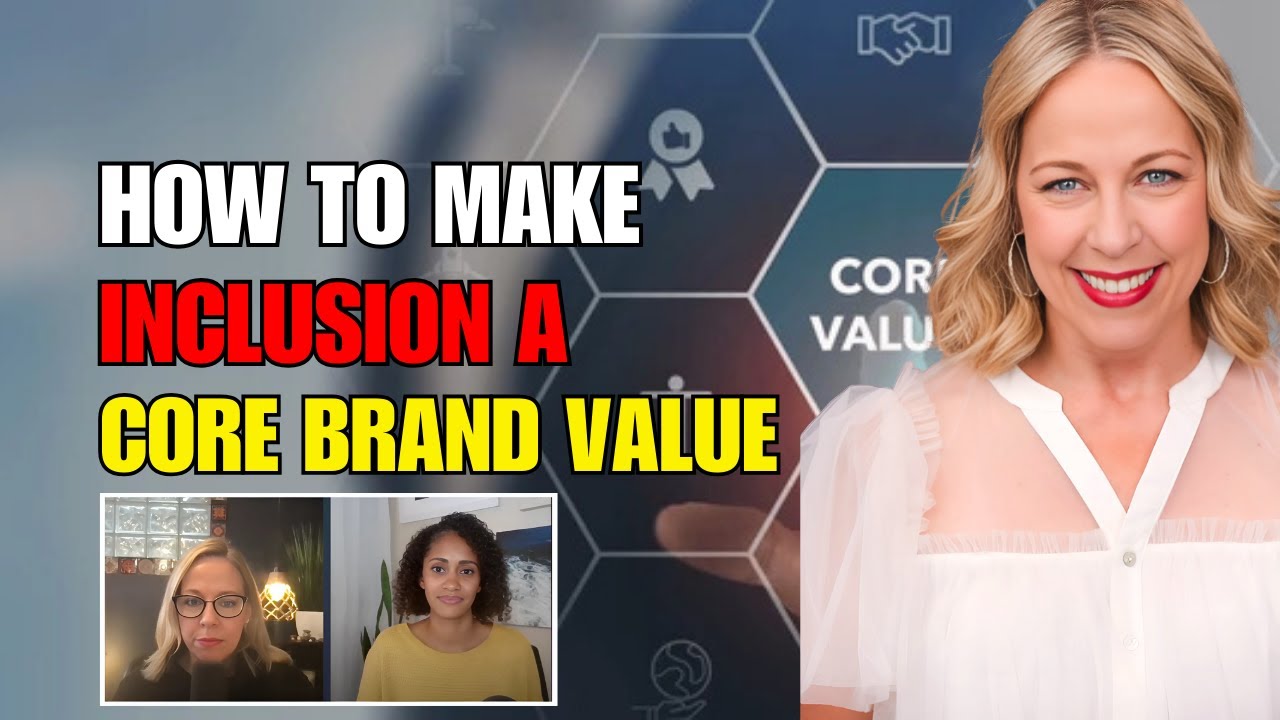
This content was created by Heather Hester. This content was uploaded by Heather Hester. This is a YouTube episode titled "Building DEI and Belonging into a Brand's Values– Just Breathe: Parenting Your LGBTQ Teen Episode 66" (posted 2022-07-18T20:17:14+00:00). It is an interview-style conversation between host Heather Hester and guest Crystal Whitaker, a leadership development and DEIB (diversity, equity, inclusion, belonging) consultant. The discussion covers Crystal's background and work (inclusive coaching, core-values-driven brand messaging), creating "brave spaces" and trauma-informed practices, practical guidance for parents and youth around coming out, and resources (a free core-values guide).
Chapters
Welcome to Just Breathe. I am so glad you are here with me today. I am really, really excited to share today's guest with you. Crystal Whitaker is a leadership development and DEIB consultant, which for anyone who is not aware, uh, DEIB is diversity, equity, inclusion, and belonging. So she specializes in inclusive coaching and consulting for brands and leaders that care deeply about diversity, equity, inclusion, and belonging. She is a self-described corporate-trained creative hippie who puts a strong focus on core values to help people elevate their community connections to communicate and lead with clarity and confidence. Krystal is an advocate for leaders and organizations that provide resources and support for healing, particularly in relation to trauma and sexual assault survivors, and also previously served on the board of Survivor Lit. Here is just one example of the many thoughtful and beautiful testimonials about Krystal. Crystal is amazing. She asks the hard questions and helps you work through the hard answers. Crystal understands that inclusion is a necessity for every human to have a voice at the table. She lives her work at the very core of her being and is one of the most genuine people I know. I was able to dive deeper and keep clarifying what is most important to me And that translated to my messaging becoming more clear. Krystal has made me a better human and business owner. So I really am looking forward to jumping into this conversation with Krystal today. So without further ado, Krystal, thank you so much for being here.
Thank you, Heather Hester. Such a warm introduction.
Well, there's so many beautiful things to say about you. Oh my goodness. So it was hard to just pick one. I could have read all of them. Wow. I mean, but I felt like this one like speaks a lot to things that we wanted to talk about today. And so I thought, well, this is really, really good and it's a good little teaser.
So I think you made a good choice. Thank you.
Thank you. So why don't we just get started with— I mean, I kind of gave like the thousand-foot, you know, overview of who you are and what you do. But, um, can you share a little bit more about, about that?
Yeah, yeah. I mean, you, you really did give a wonderful, wonderful, all-encompassing introduction. But, um, my name is Crystal Whitaker. My pronouns are she/her, and my business is Crystal Lily Creative. And just like you shared, Heather Hester, I, I work with leaders and brands that do care about diversity, equity, and inclusion. And a lot of my work is centered around helping people to really get rooted in their core values so that they can create a clear, streamlined message and experience within their business, not just for people that they're serving, but also people that they're working with, whether they're contractors or employees, really making sure that everything that people do can be related back to their core values and that they're being honored with an inclusiv lens.
I really love that, and I think that's something different. I know when we first met, I was like, gosh, this is something that— I mean, you, you meet a lot of people who do the, you know, DEI training, and I think adding the, the B to that is really cool. And as well as honing in on the core values, which that really isn't talked about a lot, but that really is where everything comes from, right?
Yeah, it, it makes my work work a lot easier to connect with people and help them translate the things that are important to them, both about their business and the, the things that they believe, um, are important regarding humanity and social issues. And so when we're able to pull everything through the lens of their core values, it becomes much more natural for them to speak about and create experiences around and make decisions in their business, as long as everything they're doing can be tied back to those values. And my work is, I think my work is so unique because I have such a unique background. I've done many things. I've worked in nonprofit years, years ago. I've worked in nonprofit. I've worked in private for-profit education. And the most, well, the last corporate role that I held was as an executive recruiter. And I did that for a few years. And it was really a lot like getting paid to get an MBA, having conversations with, you know, hiring managers and, you know, executives from director level and above the C-suite and really learning a lot about different businesses and industries and how do you distill them down into job descriptions. So a lot of that knowledge is what I bring into the work that I do with my brand clients now. And the inclusive piece actually came in— I mean, there's my own lived experience being a biracial queer woman, and I grew up in in an all-white family, predominantly white, heteronormative community. So there's that personal lived experience that I'm able to bring in. Um, but when I left corporate, a lot of people that meet me now, they don't realize I originally started a photography business and I was like, I wanna be creative. I just wanna have fun. I'm tired of pushing paper. And I dove headfirst into the wedding industry and I built my photography portfolio using, um, friends and friends of friends. Friends who had gotten married or engaged just to like build up that portfolio. And me having such a diverse group of friends and network connections, I just naturally built a diverse portfolio so that I was booking diverse couples. And what happened was the wedding industry, a lot of vendors started to notice, and I was also kind of running my mouth about how whitewashed and heteronormative the wedding industry was in general. Um, and people started to ask me, hey, how can I make sure that all couples feel welcome, you know, regardless of what their, their background is or who they love, you know, what their, what their lifestyles are. And so I started training and mentoring people in the wedding industry and it just became a ripple effect of working with creatives and then other coaches. And now I, I work across industries doing a lot of brand messaging work with that deep DEIB lens. That is so cool. One of those things, like, all of your skills are transferable.
I mean, you are like living proof of that. Don't ever think that a job that you have is, is worthless because you're doing that for a reason.
Yeah. Yeah.
I mean, you have really combined everything that you— and I think there's a piece of— you are clearly very aware, and so having that awareness to be like, ooh, well, these pieces, you know, this was really good over here and this was really great here and these work well together. And this is something that, you know, my community, the, our country, the world need.
Mm-hmm.
Right.
Yeah. You're absolutely right. And awareness is the key piece. I mean, that's a lot of work that I do with clients in general, you know, uh, especially when we, because there is a, a level of identifying and disrupting bias that is required if we're gonna work together. And so much of that is awareness. What are you aware of in terms of the beliefs that you hold and the narratives that you've absorbed? Are— how aware are you of whether or not they're actually yours or if you just picked them up from somebody else? And then how aware are you of your role or roles that you have in various parts of your life?
All so important. I mean, all 3 of those, as you're saying those, I'm thinking that is such a piece. Do you find that you come across more people who are very unaware and you have to really do some work there, or are you finding that people are becoming a little bit more aware? And, and does that kind of cross like age groups?
Oh, that's an interesting question. So people that come to me to do this work, they do have at least some level of awareness. And through our work together, we will unearth things that surprise them, you know, they'll surprise themselves. But luckily, they don't shy away from it. You know, they do tend to engage and they're like, oh, I had no idea. Okay, let's dig into this. And I would I would say it happens more with people who skew older versus younger. And I think that that is just more of a generational thing because of the society that people grew up in. Sure. And it doesn't, it doesn't make anybody wrong. It just means that they grew up in a different space, a different generation. But what is beautiful is that they are, they have just enough awareness to say, hey, I wanna have these conversations and that they're open to making shifts and reexamining the things that they thought were okay and maybe now they're not, you know, because here's the other reality about this work too, is things are always evolving. There, there are things that even I learn fairly regularly where I'm like, okay, I do this for a living and there are things that still come up to me and I'm like, okay, that's, that's new information. How can I integrate it to continue sharing it with other people?
Right, right. I find that as well. That's such an interesting thing because people kind of assume because you're in this business, you know everything. Well, it's impossible to know everything because it is always evolving. And so it's part of the, you know, there's a piece of being, um, enjoying the process of learning, right?
Yes, absolutely.
So being curious, I guess, is the best way to To say that, right? Yes.
Curious is a good word for this work. You've gotta come in curious.
Yes, I definitely, I mean, you absolutely do. I think that is probably the number one, you know, or maybe the only requirement. You just need to be curious.
Mm-hmm. Yeah. Be curious and come in without any judgment for yourself or others. You know, I, I think that a lot of people, it's very easy coming in where if something is flagged for them that they determine needs to be shifted, there can be a lot of internalized judgment. And it's like, let's, let's just set that aside and examine this with, with just curiosity and allow it to be what it is. This is a, this is a brave space. So I'm not judging you. I'm here to work with you and help you embody the leadership style and the practices that you actually want to share with the world.
I like that, that, um, that terminology and that thought. Um, it's, it's something that's—
I can—
it's easy to picture, and I think that's something that we, you know, I try to cultivate as well. But can you talk about that a little bit more as far as creating a brave space and what that, like, what that means and what that looks like and how that can translate across not only what you do, but, you know, what I do and what, you know, what people are trying to create in their homes?
Yeah, yeah, I love this question. Um, well, first I need to give a shout out to Katie Kurtz, who runs this beautiful trauma-informed, uh, training program for coaches and space holders. And I went through this program last fall, and I, I have a pretty deep awareness of trauma, unfortunately, because of my own lived experience. But I still wanted to go through some sort of formal training because of the work that I do.
Sure.
And I did still learn a lot. And this is one of the things that I learned from Katie, and I know that she probably picked it up somewhere else, but she talked a lot about, you know, people who are coaches, people who do the type of work that we do, regardless of, you know, we have different audiences, but we're still holding space for people, right? Right. I would say this a lot as well, like, I want this to be a safe space. And what I learned is that we can't assume what is safe for other people. What is safe for you might not necessarily feel safe for me and vice versa. So instead of saying, hey, this is a safe space, or I create a safe space for people, the better terminology would be to say, this is a brave space. Space. And this space is brave. I am holding it so that you can show up as you are and hopefully feel brave enough to be all that you are and all of your humanity without feeling like you have to segment off any parts of yourself. And if it is a— if it's a space where there's other people involved, that bravery can be passed around. You know, the first person is brave enough to be honest about their identity or their lived experience and their reality, and then that might make other people feel brave enough to also be honest. So then when that space, when all that bravery is taking place, then people can create their own sense of safety within themselves.
I love that. I really think that is so important and that you've hit on something and, and Katie has hit on something that is really, really key because we do talk a lot about, you know, creating that safe space, whether it is in our work or whether it is in our homes, and, um, and kind of switching the languaging around that and how we're thinking about it and approaching it in some ways makes it so much easier to embrace because, yeah, I mean, like you said, what's safe to you may not be safe to me, but Brave allows for a total, you know, something totally different.
And yeah, that allows for choice.
Yes.
Yes. Yeah. When you're, when you create that sense of bravery, it allows people to choose how they want to be and how they want to show up. And then the beautiful thing when people have choice is that you're also incorporating consent, which is super important to have in brave spaces as well.
Oh my goodness.
Yes. Yes.
And so important to have, have conversations around. And so many of these things are things that I know I never talked about when I was young, you know, whether it was growing up or even, you know, in my 20s, this was not— these things were not conversation pieces, right? And things that we were not even aware of. And so I love that this is something that is being talked about, that there is awareness around, and that every person, regardless of age, has access to.
Yeah. Yeah. I, I'm so There, there are ups and downs to the internet and social media, but I think that one of the biggest benefits is that having access to information where people can begin to delve into conversations like this is such a huge benefit. I think, I think back to when I was younger, oh my goodness, I would've loved to have had access to the knowledge and the resources that youth do now, because it would have saved me a lot of confusion. Right?
Oh my goodness. I am sure. I mean, I know for me as well, I think, oh my goodness, you know, because we probably both, you know, in very different ways, but grew up with a, like, there's just a narrow, this is how things this is what's right, right? And everything else is bad or wrong. Yes, whatever adjective you want to put on it.
I spent a lot of time trying to put myself in boxes and jars and molds that were created by and for other people, and it took me a long time to realize, like, oh, I get to do my own thing, right?
I get to be me, right? And that, that is such a huge thing. And so I love I love talking, talking about it because I feel like the more we talk about it is it just brings— you never know what's going to resonate with somebody. So yeah, right, which is so much fun and so good. And I think also, you know, being 50, I feel like, hey, like this isn't just for people who are in their 20s or 30s. You know, people who are more, you know, quote-unquote aware, like we all can do this, we all can shift, we all can, you know, this is available to anyone. So, um, one of my pieces as well, especially working with parents.
I agree.
You know, that's, that's an important thing for everyone to feel like it— you can, and it's, it's okay, and there's, you know, it's, it's—
yeah, I imagine that's got to be a unique space to be in as well. I don't have children, and it's something that I've chosen to opt out of for myself. But I think about people who do have kids, and I do have clients who they have kids, and sometimes they'll ask me questions, and I really— I feel like it's a very fine line, especially as a person who doesn't have children. But just in general, when you get into the territory of having conversations with people about their children or their parenting, how sensitive that might be, even if they are coming to you for help. I feel like it's such a sensitive thing because in general, ideally, parents always want to know that they are doing the best for their kids. And the idea of being told, hey, maybe you could like shift this, could be very jarring for people.
Absolutely. Absolutely. And kind of like similar to you, um, there has to be that, that a certain degree of, I want to do this. There are things that I want to learn. And I'm, I think I'm also hyper-aware of that. And so I frame everything very, very carefully in that, you know, I talk a lot about choices and it's a lot about, you know, being authentically yourself. And so it's not like, don't do this, don't do this, don't do this, like this is bad, this is wrong. Because again, you know, to your earlier point, what's wrong for one person's, you know, may not be for another. It depends on the space, right? And, and what they're trying to create with their child and, and the environment that, that they're wanting to cultivate in their home. Um, So you're right, there are a lot of nuances there and I do have to be careful, but I typically speak from— this has been my experience, this is what I've learned and I'm sharing it. And so take whatever you want from it and incorporate it, don't incorporate it. Um, so that tends to— because you're absolutely right, it is sensitive.
Yeah, yeah, yeah. Okay, I would imagine so. It's kind of that— I, I had a business coach once who, she had shared with me the phrase, eat the fish, spit out the bones. Have you heard that?
Oh yeah.
So you just take what feels good for you, leave the rest.
Yeah, I love that. That's so, yes, that is a good way to use that for sure. Oh my goodness. Well, I'm wondering if we could talk a little bit more about, I mean, this kind of actually lends itself to it, is talking about messaging and how, you know, how we can do that in a— I don't want to say better, but in a more thoughtful or more aware way, regardless of what the messaging is. And what your thoughts are, what your advice is in doing that.
Yeah. Are we talking about messaging just in general or messaging for business owners?
Well, let's talk. I mean, I think parents, yeah, might be more easier to pick a specific topic. So let's pick, because I think they do translate a little bit, um, with, you know, how you would work with one of your clients.
Yeah, sure.
So kind of creating the, because the topics obviously overlap.
So yeah, yeah. So My approach to messaging is, it feels over-engineered in my mind, but when it comes out, it's actually kind of simplified because I hinge everything off of core values. So when I'm working with people, first we really want to identify, you know, what is their awareness around inclusion? How committed are they to it? Because if people are going to work with me, they need to have some commitment to inclusion. Um, that's, that's like a requirement. Uh, and so I start by really helping people get clear on what their role is. And it's, it doesn't matter if they are business owners or if they're PTA parents. I really think about like, what is, what is your role or roles that you are focusing on? And what do you do in those roles? How do you want to show up? How do you want to lead? Because I think that one thing people don't give themselves enough credit for is that everybody is a leader in some way, shape, or form. And getting people to actually embrace that and own it, even if, again, you're a PTA parent, like that's being a parent in general is a hard job. There's a reason I've opted out. I'm not even gonna lie.
My daughter Grace, she's already decided that at 16, she's like, mm-hmm.
Yeah. But like thinking about your role, because you, we're all leaders in the roles that we have in some way, shape, or form. And getting really clear on the values that you hold in relation to the roles that you have. What do you value? What do you, what do you want to share with the world? How do you wanna show up in relation to those values. And once people are rooted in their values and they can speak to them, there's a few things that I do once people are clear on their values is, okay, we, we know what these values are. They've been identified. Now let's, let's define what they mean to you. What do, what does each value mean to you beyond the general dictionary definitions? Like how would you define something for yourself? And then take it a step further. And this is where people tend to stop. You know, we see, we see people or companies, organizations, they'll have values and they're just listed and they sit on the shelf. But the way in which I get people to actually embody them so that it starts to connect in their messaging is to also be able to share how them having certain values are also a benefit to anyone that they connect and engage with. Because when you can share not just why a value is important to you, but also how that value is a benefit to other people, you are actually creating more of a human connection because it's no longer just about you. And then I take it a step further and I will ask people, okay, this is great. Now how can you speak to inclusion through those values? How can you speak to your commitment to inclusion through that? And that's when we start to get into the messaging piece. I'll ask people, you know, what commitments do you want to make as a part of your role, as a leader in the role that you hold, and knowing what your values are and how they benefit other people, what commitments are you planning to make to ensure that you're in alignment and honoring those values on a continual basis? And that's when we start to create messaging so that anything that comes out is always filtered through values. And it's a lot easier to make decisions. It's a lot easier to speak on certain topics that you care about because you can tie it back to your values. And I, by the time people are done, once we go through our entire process, they have all of the tools and all of the framework in, in the meat of their messaging because we're, we're building it subconsciously as we go through that work. Right. And then they just have everything that they need. I've, I actually got an email, uh, fairly recently from a client that I had worked with about a year ago, just popping in to let me know that they've noticed how much more automatic things feel for them because anything they do, they just refer back to their values.
I mean, the amount of clarity that you, you know, one would get from that alone. And when I think about, you know, how when you're in that place of clarity and you're so connected to yourself, to your message, to your, you know, whatever it is that you're doing, oh my goodness, it saves energy, it saves time, and it allows you to be so much more effective. And, um, and I also just from, you know, listening and just connecting things, think it would also help you really with listening and hearing what others are saying to you. So, you know, kind of to your whole point about communication and really being able to have that truly authentic communication. As you were saying that, I was thinking, gosh, this totally could translate to— I'm thinking how this could translate to a very specific situation of parents with a child who's coming out and how— and if they themselves are struggling with that information to any degree, how something like this just kind of going through this, this process themselves, it would help them so much. And, and again, this— not, you know, wherever you are, you are. There's no judgment about where you are. And, and I, I always want to make that very, very clear because anybody who has been listening to this since the beginning knows that I was in a very different place was when Connor came out and be, you know, 10 years before that than I am now. So it is, um, but I love kind of putting this into the thinking about it and putting these pieces into place.
Mm-hmm.
Would really bring so much clarity and, um, and then just with human connection. Yeah.
Yeah. And that's really at the end of the day. People need that. People need to feel connected. I mean, I can even think in my darkest moments, I felt more despair in moments where I felt disconnected than I did when I was, you know, feeling that connection, having some sense of support, community. We're humans, you know. I know society and capitalism will tell you, oh, be independent, do your own thing. We are actually pack animals, right? We need connection.
We do. It's vital.
I mean, it is.
If COVID has taught us nothing else, people need that. People need the connection to survive. Yeah.
And I want to also clarify there, positive, nourishing, nurturing connection, healing connection, because there are other points of connection that are not so great, but Good connection can be so healing for people.
Yes, I think nourishing is a very good word. Yes, I like that very much. Thank you for making that clarification. Yeah, that is important. Oh my goodness. Yes, because I think we've all seen the, what can happen with negative connection. Mm-hmm.
Yeah.
So, so I am wondering because I'm looking at our time and this has been so fast, but I have, I have more questions. So I'm going to try to I'm going to try to ask them quickly, but I'm wondering kind of things that are very specific to kids coming out. And so kind of a two-part question. What would your advice be to the parent of a child who is coming out? And then what would your advice be to that child? Ooh.
Oh, thinking about my younger self.
Sorry if I'm triggering anything, and if you do not want to answer, I totally understand. I just thought, you know what?
I never had like an actual coming out, and that's a story for another day. But to answer your question, for parents, first and foremost, listen, just have— approach it with compassion. I have heard stories of people that when they came out, they did not— they didn't want to hear what they were saying. There was no compassion. And at the end of the day, your, your kids, they are still the human that you have seen and interacted with up until the point that they came out. So just listen and have love and compassion for them, just like you would any other day. It doesn't change who they are. It doesn't change how they show up in the world. It doesn't change their heart. If anything, it can— being approached with love and compassion can expand them, open them up, because when they are met with negativity and made to feel shameful about who they are and how they identify, that can cause so much more damage than being welcomed and supported. I just, I think about all of the youth. I'm sure you're probably familiar with the Trevor Project and their amazing mission.
Love them. Yes.
Yeah. I mean, it's brash to say, but the amount of support that parents give to kids can literally be the difference between life or death in certain situations.
Well, it's, you know, it may be brash, but it's the truth.
It is.
And I think that's an important thing for, you know, yeah, to be stated and to be said, because I think sometimes that's forgotten, the, the effect that the parents can have.
Yeah.
And when really what it all boils down to is all they want is love.
Yeah, that's all we all really want. Right. Absolutely.
So, um, but yes, The Trevor Project is one of my favorites. I do talk about it a lot. It's wonderful.
It's, it's a great organization. And then to answer the second part of your question, for, for Youth, I feel like this is kind of risky to say because I don't know the situation that youth tuning in to are in. You know, I can't assume the situations of everyone's household, but my best advice would be to trust yourself and be brave.
I love that.
You know, I think at the end of the day, people, even if they're 14 years old, hopefully they know what's best for themselves in that moment. Even if, even if it's scary.
Right. Even if it's scary. Absolutely. And I think that's a very important message in and of itself is learning to trust, trust yourself, trust that voice, and just doing what you know in your heart is the right thing to do.
Yeah.
So thank you. Thanks for answering that. Um, so I'm wondering if there's— I feel like we really— this is kind of a primer, a primer episode, everybody. Um, because it's just like scratching the surface on so many really beautiful topics and, um, timely topics. And we will You'll have to come on again so we can kind of pick one thing and really dive deep.
Oh yeah, maybe we can take a poll, a community poll. What do people want to know?
I would love that. Actually, I think that's a great idea. So let's do that. So as you are listening to this episode, just either shoot me an email or message me on Facebook and let me know what you would like to hear, what you would like to learn, what you would just want to know more about. And we will, and we'll have Crystal back and we can talk more about that.
Yeah, I would love that. I love a good cameo, right? Exactly.
Full teaser. So, so is there anything you would like to, you know, end with, say, before we, we sign off for today?
Um, actually, I, I think you have these links if you want to share them in your show notes, but for the core value stuff, If anybody is curious and kind of starting to dig into that work, I do have a free guide available for download on my website. So you can start doing some of that core values work to hone in a little bit if that was intriguing to you.
Love that. Yes, I absolutely, I absolutely will be putting all of these links in the show notes. So, and I will also have some of these linked on my website as well. So they'll kind of live in two different places for people to— this is really, really awesome work. Thank you so much for doing this.
Of course. Thank you for the invitation just to have this conversation. I've really enjoyed it.
Good. Thank you. Yes, me too.
More from Heather








Up at 2AM Researching Everything: What Ally Burnout Looks Like for Parents of LGBTQ+ Kids


PFLAG National Creating Pride in Families: New Resource Helps Parents Build Support Networks at Work
