Letting Kids Lead: A Trans Parent on Trusting the Journey | More Human More Kind
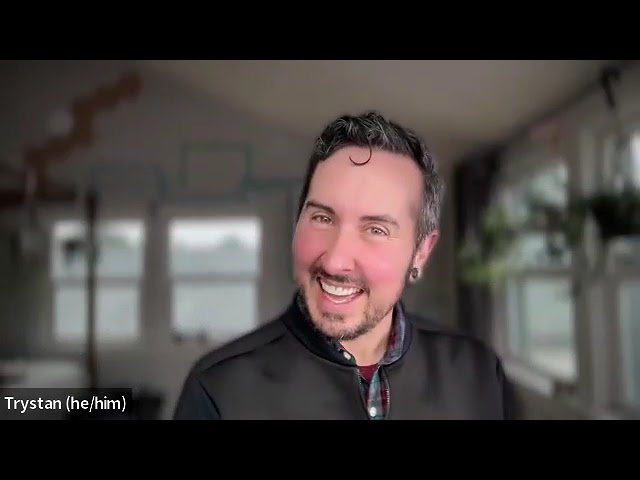
Trystan Reese talks about parenting transgender and gender-fluid kids, and why parents need to hold space without overreacting when identities shift. He covers how to navigate family pushback and what allies and caregivers actually need to do.
Chapters
Hello. Hello. How are you?
Good. Sorry, this is my first meeting of the day. It looks like my lighting's a little off.
That's okay. Don't worry. I was just fixing mine as well. So yeah.
Well, then you know.
I do. Yes. Everything got moved around since I was in here last, and I was like, okay, why is— why am I getting glare? So it's been a while. How are you?
Yeah, doing okay. You know, just trying to make it through the holiday season relatively unscathed. How about you and yours?
Yes, that, that does sound about right. Yes, this is, well, tomorrow's my last day that I'm working. So when you popped in my calendar, I was like, oh, that's such a fun way to like end my, end my year.
Yeah, that's exciting. What is your job job?
Um, well, this is part of my job job, um, and I, uh, the other part is speaking. So I've started doing a lot of speaking just for, you know, parents and advocating and all the things. And I wrote a book since we last spoke. I know, I know. So yeah, good things, good things.
Super fun. And also it's not unlike having a baby because then it goes into the world and you're like I don't know. I hope people are nice.
That is exactly— I will tell you, you'll appreciate this because it hasn't gone out yet. It publishes in June of next year. And so I just finished the whole editing process and had a sensitivity editor. Yeah. And I thought, I'm writing a book that's for parents and allies. And I mean, this is kind of what I do, is be sensitive. And the things that this person would like drilled me on, I was like, holy cow. I mean, like really fine details of like stuff that I don't know that anybody would pick up. I was like, okay, that's why we have you.
Yeah, well, and I mean, and you get to decide, right? You know, you get to decide, is this a fight I want to pick or no?
Wow.
And in some cases, you're like, you know, this turn of phrase or analogy or whatever, really, like, it has an impact that the alternatives don't. And if that means that 0.01% of people who read this book might be turned off by it, like, I'm willing to make that compromise. You know what I mean? As long as you're making it the choice intentionally, like, I— I wanted to not capitalize the word white when describing white people, but capitalize the word Black when describing Black people in my book. And like, there was some pushback around that. And I was like, nope, this is the choice I'm making. And there are— there's like— there's like grammatical reasons. And then there's like political reasons for doing that, you know? But like, it was a choice that I made. And the editor was like, are you sure? And I was like, yeah. Yes, I have thought about this. This is intentional. It is a choice that I am making. I'm not doing it. It wasn't a typo. You know what I mean?
Yeah, right. I love that because that is definitely, I think, my biggest lesson coming out of this whole thing was learning what to fight for and then what I was willing to let go of. Like, what I was just like, no, this has to be in this book. And here are my 10 reasons, or even 1 reason. It doesn't matter. I'm the author. There are times where I'm like, I am writing the book. You are the editor. Yeah, stop rewriting my stuff. And, um, yes, but that, I think, you know, to your point, and just kind of like, you know, there's a little bit of growing up in all of that and being like, okay, and, and this is why it's important.
So I have one friend who's very famous in the literary world, like fancy snooty literary world, and that's what he always said is That was his only advice to me, which was just really know your power as the author and figure out what are the things that you are not willing to bend on, whether it's the COVID image or the title or certain aspects of the story that you really want to be in there. Fight for those things. That was helpful.
So helpful. Well, it's great advice to get before you're in the middle of the process, right? And you're kind of figuring it out and it gets very, um, it can get a little messy. I know I did a lot of like, okay, I've gotta get up and go for a walk and then I'll be back. Right. Yeah. So, mm-hmm.
We'll have to chat with you today.
I know. So tell me, I remember I, my, I have to apologize because I remembered you emailing me and then when you popped in, I was like, okay, I'm not remembering. I have a sister who is in hospice and I just lost my dog a couple weeks ago. So I am literally like a little bit off my A-game. I'm just going to tell you that upfront.
That's fine.
But I—
so my idea for this interview was like, what do you do when it really is just a phase? And we spend so much time thinking about supporting our queer and trans youth with this, like, it's not just a phase thing, but like, what if it is? Like, what if a trans or non-binary identity is a transitory thing in a kid's life? And they actually do outgrow it. And how can we, um, kind of lean into that? Like, yes, it might be just a phase and that's okay. Um, and not get so stuck in telling all the other adults in a kid's life, because it— because this is what happened with my middle kid. Like, my middle kid came out as trans at, I think, 10 or 11. Um, and then non-binary, and then like 3 weeks ago was like, yeah, I'm not. And so how do you kind of hold lightly to that as a parent and not make your whole identity around being the parent of a trans kid and not have your kid's story be used as a weapon against trans kids?
Right. Well, I think that is— I knew there was a reason. I was like, okay, this is exactly it. How do we talk about this? Because people are very— and it's the way humans are. We want things to be one way or another. We like the boxes. We like to check the boxes, right? So how do we— I love this, talking about this in the sense of how do we do this without it being like, aha, I got you. You were wrong, right?
Exactly.
All of you advocates and allies and parents and actual human beings are wrong. Right. So good. Okay. I love this. I am going to literally just, like, tee this up for you. I mean, I will have pop-in questions here and there. The way I kind of do things now are a little bit different because I do intro and outro after in post-production. So we're going to jump right into chatting and just welcoming you back and all the things and And then we'll just go from there. And I am trying somewhat successfully to keep my interviews to between 30 and 40 minutes because that seems to be a good, like, attention span time. So if all of a sudden I'm wrapping up, you're like, oh, but just tell me, like, there's one more thing. Like, if I don't— if we don't get all the things out, like, you tell me, okay? I'm just so excited you're here. So thank you so much for reaching back out to me.
Happy to be here. And just in case I forget later, feel free to send me your manuscript if you need a blurb or something like that. I'm happy to look at it. And then if I feel so moved, then I would love to write a little something for you. I try to make it auth— you know, I try to make it really authentic. So I can't always promise that I have something unique to say about it that someone else might not.
Right.
But I can at least extend the invitation if it ends up being useful. Maybe you have a lot of snooty literary friends that are way fancier than you.
I do not. I do not have any snooty literary friends. I have all fun— some are literary and some are just not.
Yeah.
I have a lot of just humans. I'd like to meet some snooty literary people and have them put me in my place. That would be fun. I think I could learn, learn a thing or two. Okay, so we are actually already recording, which I realized I did that and I probably shouldn't have, but this is why we have editors. And so we're just going to go ahead and jump in and we will go from there. All right, Tristan, thank you so much for coming back on the show. I'm so excited to have you here. It has been a couple of years, I think, since you were last on talking about your book, which I love and I still do recommend to people. I actually just recommended it. I didn't tell you this when we were talking a few minutes ago. I just recommended it earlier this week. I was in a meeting with somebody and they were asking questions and I was like, I have the perfect book for you to understand this. So love, you know, just, I'm so, so thrilled. And what you have come to talk about today and to discuss is a topic that I think will— well, I know will make everybody kind of sit up and listen. But everyone, I want you to sit up and listen and really hear what Tristan has to say and listen to this discussion because this is something really important for all of us, especially parents, allies, and anyone who is actually kind of walking through this right now. So with that, Tristan, thank you so much. I'm so glad you're here.
Yeah, what a delight to be back and for once to not be talking about trans fertility, which I love. I'm obsessed with it. I think about it day and night. And hopefully this will be like, see, I have— I am not a one-trick pony.
That's right.
But yeah, you know, I— we've been a little bit private about this. I mean, we've been private about everything. Some folks, if you've been following the podcast for a long time, then you heard me, you know, as Heather Hester mentioned a couple of years ago coming on, I'm a transgender man. I gave birth to a baby 6 years ago. He's in first grade now. And a few years before that, my partner and I had adopted my partner's niece and nephew. And so parenting is a big part of our lives. And, you know, now I'm a transgender parent. So I'm, you know, sort of wearing, always wearing both hats, a member of the community and raising the next generation of human beings. And a few years ago, our middlest child is how I often refer to Sully, sat us down and said, you know, I really feel like even though I have been treated as a girl and was assigned female at birth, like, I really do feel like a boy. And I'd like to cut my hair and I'd like to go by a different name. And, you know, we went through that experience and I have since left social media. I mentioned it a little bit online, but was very— I wanted to be really thoughtful about it. And, you know, for me as a transgender person, there is a real trap when you're a transgender parent, which is people look at you and look at your kids and think, are, are you going to mess them up somehow?
Mm-hmm.
You know, and I feel like we spend a lot of time either consciously or unconsciously trying to convince people, don't worry, our kids will be quote unquote normal. Don't worry, whatever is wrong with me, I'm not going to pass that on to my kids. And for me, this was like really crystallized in a gross way when our older kids were little and they saw their great grandma for the first time since they'd come to live with us, me and my partner. And she said to us, oh, thank God, I see that you've gendered them appropriately. And the little girl child was in a dress and the little boy child was in jeans. And it was super clear that she was under the impression that we were going to, quote unquote, mess them up. Do you know what I mean?
Right, right.
Because that's there either, like, consciously or unconsciously. It's an additional burden. That trans parents have to carry with us. So then it's like if our kid does come out as trans or somehow gender nonconforming, it's like, oh no, we've somehow failed.
Right.
You know, that can kind of be what the world teaches us, which is really gross. It somehow is, right?
Yeah, it's very gross. And I wonder, I do often think about this and I, you know, and a number of couples that I know who are same-sex couples who are raising children. And I think, okay, and transgender, I mean, I think you might be the— I mean, I just love that I know you, but I don't know that I know any other. Actually, I should take that back because I do. But anyway, it doesn't matter. I wonder, I've wondered that, like, how much is that part of your psyche every single day? And what messages are you receiving from other people, both verbally and nonverbally? And how do we counteract that? What do we do about that?
Right. What do we do about that? You know, and so it is something that I have thought a lot about. And so when Sully came to us and said, you know, I feel like I'm a boy, I want to cut my hair, I want to change my name. You know, I was ironically really skeptical internally. You know, which of course it is, again, very ironic because I am a transgender man myself. So how dare I be like, are you really though? You know? And Sully had exhibited zero signs of gender incongruity up until that moment. No real desire to dress like in a more masculine or androgynous way, the ways that we sort of code that in our society. No interest in sort of more traditionally like boy toys or clothes. But like, I wasn't that way either, you know, like, I didn't know I was trans when I was a kid, you know. And so it was— I did have to check myself, you know, I really did.
Sure. Well, and I think, do you— did you also wonder, like, because it is part of your conversation, part of just what you are teaching, you're teaching your children just to be so much more open and so much more aware and that this is something that they were probably like, well, this seems like it fits.
And yeah, and that's the thing is I was like, well, I, but, but the reason I didn't know sooner in my life was because I didn't have the language. I didn't have any, I had nothing.
Right. Right.
But of course, all that was internal and behind closed door conversations. And of course, with our kid, we were just sort of like, sure, whatever you want. Like you can cut your hair, you can wear whatever clothes you want. You can go by whatever name you want, whatever. We don't care. You know, knowing, of course, that if we said, "Are you sure?" then that's not fair, you know, to put on our kid. But also really forcing the issue also wouldn't be fair either. You know, just like, "This is amazing. Let's throw a coming out party." And, you know, that's too much too for a, you know, for a tween, a preteen. Ugh. They don't want that either, you know? So we held really lightly to it. And went through some stages of, you know, super short hair, really masculine clothes, coming out to friends and family, all the things, and having to deal with, you know, I did have someone in my life, a close blood relative who said, you know, you did this to your kid, that they, that this, that your kid feels like there's no way that they could be loved if they weren't trans. Because that's who you are. And I have since cut that person out of my life completely.
Yeah.
That's a brutally short-sighted, transphobic, and judgmental thing to say. That is not at all rooted in reality.
Right.
So I had to go through a hard learning there. Not everyone, you know, you, you know, you have to be this cool to ride the ride. You know, you have to be this sane to ride the ride in terms of having a relationship with me and having access to a relationship with my kids. You have to, you know, you have to be there. There is a litmus test and that is it.
Yeah.
And so, yeah, go ahead. No, no, no.
I was just going to say, I think that's very reasonable, a very reasonable litmus test. I mean, that was beyond cruel as far as— I mean, that's me being— sharing my opinion, but not acceptable.
Yeah, no, I agree with you. It's not acceptable. And all 3 of our kids know that they have our unflinching unconditional love for now and for always. Right. And that absolutely supersedes their gender or gender identity, gender expression, sexual orientation, anything, anything, political affiliation, religious, you know, beliefs. Like, our love for them is, you know, stretches throughout all time and all place. Right. And for someone to Yeah, it was extremely hurtful. I'll say that. Yeah. But, you know, the reason that I was interested in coming on is to talk about that first piece around, like, what kinds of double standards do we put on trans people, you know? And then the second thing I wanted to talk about is that our middle child outgrew it, which is, like, so counterintuitive again, because we're constantly saying it's not a phase, they won't outgrow it. But, like, what if they do? And how do we hold that as, like, absolutely? When relatives say, well, it's just a phase, they'll outgrow it, instead of being like, no, they won't, you know, how can we be like, yeah, maybe, maybe.
Yeah.
And how do we support them through that, too? And Sully, it was slow, you know, so it was like, okay, well, You know, I go by both pronouns or all pronouns, you know. And then like, I noticed that like, oh, you're growing your hair out and not asking for a haircut again. And then when we go shopping, you're like back to the like girl section instead of the boy section. And you know what I mean? It was like a slow thing. And I really tried to not— again, like, you don't want to impose at this point. You're like at like 11, then 12, then 13. They don't want to talk to you. You, you know?
And that continues. Yeah, that continues.
I know, I know. It continues. But I started noticing, like, Sully would be telling other people, like, oh, I go by both pronouns, or I go by she and they. And then— and then you'll appreciate this as a parent, Heather Hester Hester. Of course, even though I'm consistently— maybe once every 3 to 6 months, Oh, hey, by the way, like, what pronouns are you using? Like, how— what's— what's like— are— is they/them still feeling good for you? Just like a little bit of a pulse check, right?
Exactly.
Always treated as if that was the most, like, ridiculous, stupid, inappropriate thing for me to ever ask. Thank you so much, my lovely teenager. And then come to find out she doesn't identify as non-binary anymore in the most obnoxious way possible.
Oh, stop.
Yes. Well, my mom sends me a text. Hey, there's this trans non-binary youth event in Canada. It's a week-long free summer camp where they can go, and there's like singing and dancing and karaoke and board games, um, and like adventure hikes, whatever. And it's close to my mom's house. In BC, and it's free, right? So I send the flyer to my child, whom I love. Hey, this is happening near Grammy's house. I, I would love to— I'm happy to drive you up to Canada, which is like an 8-hour fucking drive. Um, I'll stay at Grammy's while you're there, and then I'll pick you up and we'll come home, right? I think as a parent I'm doing this, um, making this lovely offer of a gesture to my child. And she responds, pass.
Oh, yeah.
Mm-hmm. Okay.
But nothing else. Just pass.
Nothing else. Pass. And I was like, okay, comma, why? Question mark. You know, I'm just trying to understand, like, where did I miss the mark here?
Right, exactly. Do you not like Canada? Is it you don't like board games?
Like, yes, exactly. Narrow this down a a little bit.
Exactly.
And then she writes back, no reason, just no thanks, I'm good. And I was like, okay. And then she writes back a screenshot of the flyer with the trans, non-binary, gender, like gender creative part circled, you know, like edited. And then also, I'm none of these things. Oh. And I'm like—
like an aside, like as a P.S.
Yes. Number one, this doesn't sound fun, and how dare you suggest it? Number two, by the way, I'm not trans.
BTW, just let you know.
As if I am a total moron.
Well, clearly you are.
And how dare you?
I mean, how did you not know that? I just— the long list of things that we don't know that we're supposed to just like know.
Yes, it was as if I had asked her, what does rizz mean?
I actually asked that question. Because I couldn't like figure out where all the other letters were, which ones they were supposed to be. But then when it was explained to me, I mean, duh, obviously it's charisma. Charisma. It's in the middle of the stupid word. I mean, come on. Yeah. Anyway, sorry.
Well, number one, I just want like anyone who's listening to, to think, to understand that like even if you were queer or trans, if you're not, your kid is still gonna talk to you like you are an idiot.
Yes.
Wonderful. You are no closer to them in terms of them confiding in you or like actually bringing you into their thought process. They're still going to treat you as if you didn't know anything and were supposed to be psychic. Um, so just so folks know, like that's, that comes with the territory no matter what.
Yeah.
And I don't know, I just wanted to make sure that people feel like it's okay if it is a face.
Right.
And Sully's gender identity would not have met the criteria for transition.
Right.
Like, that's the other thing. I really want to make sure that people are armed with those tools. Well, I hear about these kids where they think it one day and they don't the next. That's right. Totally. So instead of doubling down on the like, that's not real or that doesn't happen. If you think about in those hard conversations, loosening up and leaning in, that's right. Some kids do identify as trans or non-binary for a very short period of time. Those kids do not meet the criteria for puberty blockers or transition. Their gender identity is not insistent, consistent, persistent. And so those, those, the like, like guidelines are in place to make sure that those kids are allowed to explore their gender and are protected from doing anything that might have a negative permanent impact on their development or growth. If 6 months later they're like, JK, I'm not any of those things with that level of attitude that my kid has.
Circle X. I mean, kind of Bravo, I have to say. I'm liking the sass only because I have 4 of those. And I do like that. So a couple of things that I think are so fabulous that you are bringing up, talking about, and oh, this is so good. So first of all, in this, I love that you are talking about this in, uh, the sense of fluidity, which I think is a really hard thing for just humans to get their heads around, right? That, that, and especially when you think about it at these ages. Our kids are changing and growing, and they're some, you know, one day they like a sport and the next day they don't, right? And they're, they're experimenting. And when they live in a home— and I'm thinking this is what— now tell me, correct me if I'm completely off base here, but this is what I'm kind of hearing and thinking— when they live in a home that is so loving and they know they are loved unconditionally, they know that they can show up exactly as who they are that day. And it gives them the space to be able to say, this kind of feels like maybe who I am, and try it on. And then 6 months down the road, they've developed more, they've changed more, they've experienced more life. They may still be in that place. Awesome. They may not be also awesome. Yeah. And I think that's really, really hard for us to do because I think that as especially like, you know, older, 35 plus, maybe, I don't even know, let's not put an age on it. People who are a tad bit older, um, like to put things in boxes. Like, we really like to be like, okay, boy or girl, right? Gay or straight. Like, there's like, you know, black or white. Like, literally, like, there are just for everything. And I think that this is one of the most beautiful things that we can do is just wipe all of those boxes away and not panic when there isn't one.
And just let them figure it out and get out of their way, you know, not try to get to— and then we get to model for grandparents, right? Or we can model for whomever else that like, yeah, you're totally right. It could be a phase. And for now, it doesn't hurt us or our kid to call them whatever name, whatever pronoun. They want us to call them. That's it.
Right. And it doesn't take away from the fact that, you know, those who it's not a phase 4, it doesn't say, well, they weren't created that way. Right. Because I think that's— I'm just thinking in my head, like, all of, like, the counterarguments here that we hear. And I think that's one where, you know, there's a lot of ahas, like, gotchas on— and in this conversation, and I'd like to debunk as many as we can. Um, I want to circle back to kind of beginning where you were talking about raising your kids and the things that do tend to come at, you know, that came at you while you were raising when they were younger, and questions that people just ask. And, um, and that's something that I, I really think is so important to debunk as well that, um, you know, the identity and orientation of the parent— what, what, what matters most? I mean, what I heard you say, and what I— and I happen to agree with you 1,000%, is are these kids unconditionally loved? Yeah. And I'd love to hear more of your thought on that.
I mean, I'll say that Leo, who's our 6-year-old, like, he has so much more freedom to explore his interests and gender expression than our older kids did. Because by the time we get to the third kid and not being in the middle of a guardianship, sure, you know, and not having to worry that like, oh, a picture on Facebook of a kid not appropriately gendered, quote unquote, could be used in court to show that we aren't good parents and that we are gonna somehow indoctrinate them into our way of thinking that anyone can express their gender however they want, God forbid.
Right.
You know, I'm sure our older kids look at Leo and they're like, "What the hell? You let him wear whatever he wants!" You know? And we're like, yeah, we do, you know? The circumstances are very different. And Leo will tell you he's 6, and so he has a very strong gender identity as boy. He also has a very strong gender expression, which is feminine. He's like very much— he will say like, "I'm a boy who likes girl things." Like, he loves foofy dresses, he wants to wear them to school. And we let him because, A, we're tired, A, we're 10 years older than we were when our kids were starting to want to express themselves differently.
Yeah.
And B, the stakes are just way, way, way, way lower. You know, we're not in the middle of having our, like, parenthood challenged legally. We don't have to— we don't have to prove ourselves to anyone with him. And it is— it's very it's very weird because you want— I sometimes find myself like in public spaces and he's got short hair now because he wants to have short hair and he's wearing a dress. And I, you know, there's that part of me that wants to say, but don't worry, like, I didn't make him this way. Like, we've just gotten out of his way.
Right.
But the truth is, we did make him this way, only in that we gave him the freedom to explore and express himself. And what we know is that no grown-up human ever goes to their parents and says, how dare you have let me figure out my own path? You know, like, grown-ups don't go to their parents and say, I wish you hadn't given me the freedom to figure out who I was at a young age. Like, it just doesn't happen. You know? He'll never come to us and say, well, why did you put me in a dress? Because we'll say, you put yourself in those.
Right, exactly, exactly.
The opposite is usually what happens. I really wish that you had let me express myself more when I was young. And we will not have that regret. We go to the store, he has his budget of $24, he can pick out whatever outfit he wants in Target. If it's a dress, fine. And if it's a fireman's costume, fine. You know, like, whatever, whatever. And we want him to be free from the pressures that we feel ourselves are under in terms of having to prove ourselves and demonstrate heteronormativity through our children.
And what a beautiful, beautiful thing that you're doing because you are— I really admire and respect how you both are kind of coming up against, you know, you're recognizing these things within you that are uncomfortable or that you're seeing out in the world that are uncomfortable and you're saying, okay, I see you and I'm still, I'm leaning in. We're doing this and I'm gonna just, that is what great modeling. I mean, not only for your kids, but for every single person listening, every single person who comes into contact with you.
And we have extraordinary privilege because our family is legally protected, right? Our older kids, there's an adoption. Adoption's forever. Leo is genetically both of our children. No one can come for him.
Right.
We live in Oregon where it's not against the law to let our kids cut their hair or grow their hair out or wear dresses, where the kids can go to school and they're not going to be sent home. Because they're not quote unquote appropriately gendered. That's a lot of privilege. And we've got the grandparents whose love and support of our family is not conditional upon our kids being, again, like, quote unquote, appropriately gendered. There's a lot of privilege built into that, and we really understand that as well.
Yeah. Wow.
Not everyone has those options.
No, they don't. And But it's so good. I mean, I think the more that, you know, you people, you and people like you speak up and speak out and share, that's how these things change, right? And, and that privilege does extend to people in more and more places. I mean, that's, that's the hope. That's the fight. And again, like, that's why I was circling back to These are human beings. Like, we're not talking about— like, this— these are human beings.
Yeah. I mean, I heard a great interview recently with Marlon Wayans, who I guess has a trans kid, which I just found out about 2 weeks ago. Um, and you know, he said, of course, like, when you have kids, you like want them to be successful. Um, you want them to have a life of meaning. You want them to be happy. But for him as the parent of a trans youth, what he found is actually a greater wish for his children is that he wishes them to be free.
Mm. Oh, I love that. Ah, yeah.
Right? And I think that's really what I'm thinking about is whether it's Leo being able to wear a dress if he wants, or Sully being able to change her name and change her pronouns and then change it back. Like, to me, that's liberation. That's what I want for my kids, is that they can be free to figure that out without me putting my rigid ideas and expectations and internalized transphobia and external pressures onto them, that they get to figure that out for themselves. Yeah. So I thought that was really powerful, and it hit me.
Oh my goodness. I mean, truly so beautiful. Wow. Um, yes, and it's possible. I mean, there are— there's a lot that needs to be, um, that we all need to unlearn.
A lot. And he talks about privilege as well, you know. He's basically said, I'm rich enough Right. Like, I don't care what the right has to say. I don't care what, you know, anti-trans people have to say. I'm rich enough. Cancel me. Go ahead. Try.
Right, exactly. Well, and that's it. And again, I think recognizing the privilege is so important in that equation because it's saying, yeah, I get why I'm able to do this, and I'm going to keep doing it so that people who perhaps aren't in, you know, my position of privilege are then able to have what I have, right? Um, so that's, you know, and it, and that happens in all kinds of, oh, in all ways, right? Um, so I do appreciate that so much. And I, and I think too, I'd love to just talk a little bit more because I'm just, this was the, when you reached out to me, um, This is what kind of struck me was this discussion of fluidity. Because this is something that comes up a lot when I work with parents and in conversations of just not understanding it. And I've kind of run out of ways to explain it. So I'm wondering if you could really give, like, your thoughts and your take on it and, and how we can best embrace it.
Yeah, I mean, I don't think there's any magical way of explaining it. Sometimes what comes up for me is if you— I feel like if we had tried to discourage Sully from changing her name and cutting her hair and going by different pronouns, I feel like that would have made things worse. I feel like the second you tell a kid, "No, you cannot be that," that becomes their obsession.
Mm-hmm.
And then would Sully have been doing things in secret? Would she have become so convinced that she actually was trans just because there was no place to put that desire to explore things? You know, there's no place to put it and let it out and let it kind of run its course that would it have curdled, you know?
Right.
So sometimes I'm just like, look, lesser of two evils. Just let them do it and figure it out.
Right.
Because if you don't, who knows what's going to happen? Well, you know, I mean, I— it's so funny. It's the worst analogy and it's imperfect at best. But when I was a kid, I was really interested in theater. And performing. And, and my mom used to say that to me. I was like, okay, I'm gonna let you do acting. Hopefully you get it out of your system, right? Maybe you're just letting your kid get it out of their system, you know? And maybe for the short term, that's how you can think of it. But we know the second we tell a kid, no, you can't learn how to skateboard, that becomes the thing that they're obsessed with, right? Just, just let them learn how to skateboard. They're gonna get hurt, realize it's not actually all that fun, right? And then stop doing it. Or maybe they become a pro skateboarder. Great. You know what I mean? Like, just let them figure it out. And to me, the stakes, they feel high. They're actually not that high. You're, you know, there's just nothing to suggest that your kid is gonna be permanently injured by letting them cut their hair. Or grow their hair out or wear a bow to school, or like, just like, at worst, the kids are going to make fun of them and they will learn about adapting, about code-switching. And I do that with Leo. He's only 6. And I say, sweetheart, I'm so excited for you to wear a dress to school today. Remember that not everyone thinks that boys should wear dresses and you get to choose. If you wear a dress, some kids might say, well, are you a boy or a girl? And you'll have to answer that question. Some kids might say boys aren't supposed to do that, and you'll have to figure that out. Like, how do you want to have that conversation? Or you can choose not to wear a dress and you don't have to have any of those conversations at all. You choose, right? And he can totally handle that. He's like, I don't care what they say. Okay. Or he'll say, I don't feel like having those conversations today. I'll just wear the pants. All right.
Right.
Like, what harm has befallen him? None. He's fine.
Exactly. Well, and I mean, not only no harm, he's learned really valuable life skills, right? I mean, I think learning that we have choices, that it alone is a huge thing because I think a lot of young people don't realize that they have choices. A lot of adults don't realize that they have choices. Right? And so I think that's such a gift to say, here are your choice— you have choices and you have the freedom to make these choices, and here are some of the outcomes you may encounter when you make each of these choices.
Yeah, and you get to choose. And sometimes you're gonna say, I want to take off. Like, my— I have a friend who lives in a much more conservative area than we do, and, um, her— our kids are friends, that's part of how we know each other. And her son loves to wear nail polish like his mom on the weekends, and then on Sunday night he takes it off before he goes to school on Monday because he doesn't want the kids teasing him. Okay, that's his choice, but she lets him choose. It's not, well, don't let them tell you what to do. No, you know, and it's not, you have to take it off so you don't get teased. No, you give them the information, you empower them to make a decision, and they live with the decision that they made.
Exactly.
And then they can make a different decision tomorrow.
Correct, correct. But holy cow, is that such a powerful, um, again, modeling of choices and decision-making and, um, critical thinking skills. I mean, all of these things that we want our kids to have, um, all while, you know, also demonstrating that We love you for who you are.
Like, you're always you.
You're always you.
What's most important is you show up authentically as yourself, and that can have lots of different settings.
Correct. Correct. So I just want to say for everyone out there, because I— and I know that I can actually include myself in this as well— for those who have felt like they needed to hang on to the, my child has come out as fill in the blank and I can't let that go. That's where, that's what I'm holding onto. That's what I'm learning about. That's what I'm defending. That's, that's where I am. I get that. And I think this is such a powerful, powerful conversation to help support us, um, and support so many through You know, that's just learning. This is just another level of education, of empowerment, right? Um, so thank you.
I—
that is incredibly valuable, as well as how to take this out into the world, right? Like, what— how to handle— because I think one of the bigger fears, and I speak, you know, for myself, but I know a lot of other people feel this way or have felt this way, is the what do you do when people come at you, right? Like, how do you— what do you say?
Yeah.
So thank you. I mean, this is so incredibly, incredibly just helpful and enlightening and I really appreciate it. I really appreciate you sharing and giving everyone permission, right? All of us, you know, everyone permission to say, okay, this is— yes, this is okay. We don't have to be so uptight about this. We don't have to be so afraid of what if, what if this is all wrong, right?
Yeah, absolutely. The— when someone comes at you, the more you can agree with them the sort of less rigid they become. You know, if someone's like, well, what if it's a phase? Yeah, it might be.
Right.
Well, what if he gets bullied at school? Yeah, he might get bullied at school for sure. That is something I'm really worried about too.
Mm-hmm.
You know, as, as much as you can position yourself not as, you know, we are, you know, pro and anti, but more we both really love and care for this kid and want the best for them. Let's talk about how we can do that. I think it's gonna turn out a little better. Yeah. Thanks for having me on.
Of course. I am so, so glad that you were here today and that you reached out. This is just fantastic. And I just wish you and your family a beautiful holiday.
Thank you. You as well.
Bye.
More from Heather








Up at 2AM Researching Everything: What Ally Burnout Looks Like for Parents of LGBTQ+ Kids


PFLAG National Creating Pride in Families: New Resource Helps Parents Build Support Networks at Work
