Redefining Identity: Queer Leadership & Radical Inclusion with Victoria Pelletier
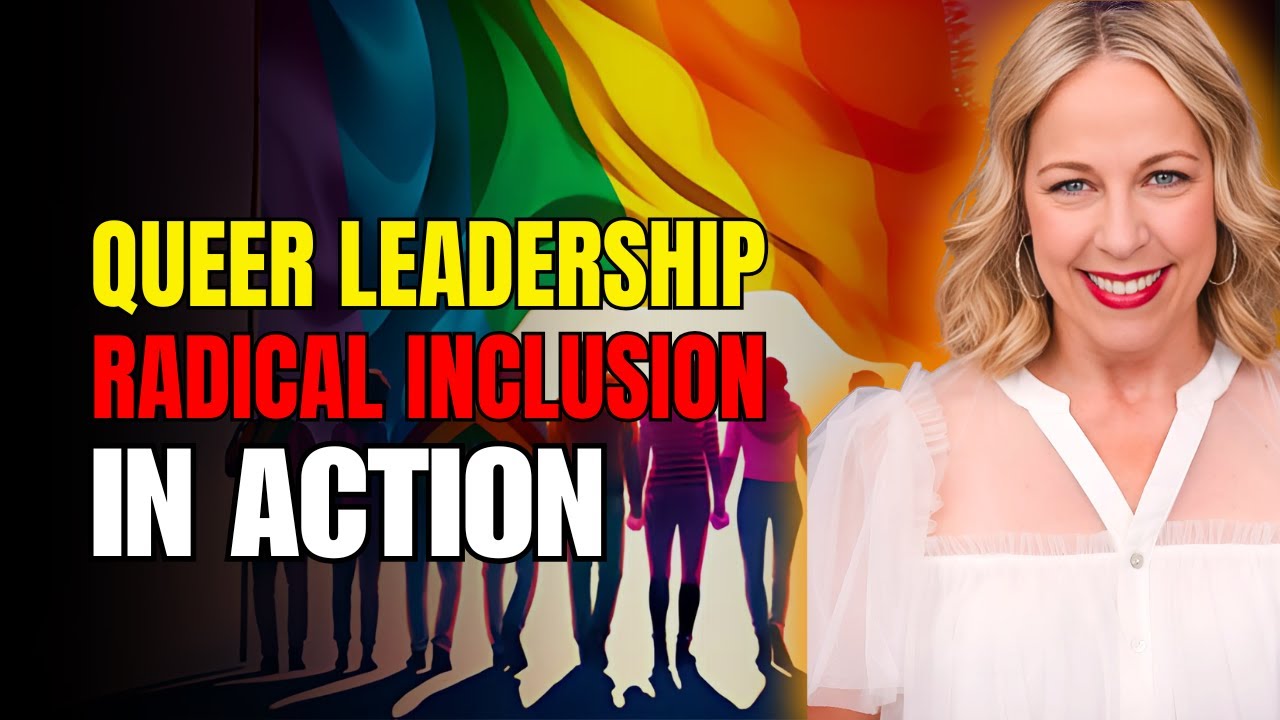
This content was created by Heather Hester. This content was uploaded by Heather Hester. This is a YouTube interview titled "Redefining Identity: Queer Leadership & Radical Inclusion with Victoria Pelletier" (recorded/posted 2023-03-24). It is a conversational interview between host Heather Hester and guest Victoria Pelletier. The discussion covers Victoria's personal coming-out story and family, labels and definitions of bisexuality/pansexuality/queer, experiences of marginalization within the LGBTQ+ community, her DEI (diversity, equity, inclusion) leadership work in corporate settings, practical strategies for building inclusive workplaces (metrics, hiring, policy, leadership), concerns about the political climate (including Roe v. Wade), and cautious hope for the community's future. The tone is personal, advocacy-focused, and practical.
Chapters
Okay, great. We are recording. So Victoria, I'm so glad that you are here with me today and here to share your story and your just incredible life experience. Um, you have been both personally, professionally just really extraordinary, and I think the one thing when I was really, you know, learning about you and reading about you, one thing that stood out to me was how you've really lived on purpose. Like, you have always been like, this is who I am. I'm going to, you know, for lack of a better phrase, live out loud, right? Like, this is who I am and I'm going to step into who I am and be that. And I I think that is something we can all learn from. That is something that many want to do, but it is difficult to do. So thank you for being such a great role model in that way. And I'm just excited to learn from you today. And so just let's just start kind of at the beginning. Let's start with your story and then we'll go from there.
Sounds good. Well, thanks, Heather, for having me here. I'm a incredible, maniacally focused leader around diversity and inclusion. And a lot of that comes from my own lived experience. And so therefore I do share quite openly to help others with their own journey. So my story, I'm— so I actually come from very, very difficult beginnings and it did actually inform how living out loud I was and/or what I told on a public forum versus in smaller setting. So I'm born to a drug-addicted teenage mother who many years later I found out came out as lesbian while she was in jail. And I— that initially probably caused me to sort of reel a little bit in terms of how comfortable I was with my own sexuality look like. At age 14, however, when I was in high school, in a Catholic high school in a relatively small town, I came out as bisexual. Although I dated mostly guys at that point, and some of that was just access to other people in the queer community in the town I was in. Then when I got relocated to a much larger city and met one of my first friends was a gay man who took me to the gay community. I met women that I started dating and then later met and married a woman who I was with for 11 years and vacillated at times between, am I bisexual? I'm a lesbian until I think as I matured and grew and got a little bit more comfortable in my skin, got comfortable with my queerness. I don't love labels. I, you know, I guess I would say bisexual, although my daughter tells me because I would be open to sleeping with trans people, I should say that I'm pan. I just prefer the word queer. I did separate from my wife, who unfortunately passed away a couple of years after that from, from her second bout of cancer, and I'm now married to a man, and I'm in this amazing family where You know, I'm open, have been open to dating those people that I'm attracted to and I think are great humans. To a man who often gets mistaken as a gay man because he's very fit, he likes to dance, he used to teach massage therapy. I have this huge, hulking, incredibly straight son, both looking and certainly dating girls. And then I have a daughter who's queer, who came out at age 11 or 12 as initially bisexual to lesbian, who now in the last, you know, 6 or 8 weeks is gender questioning. So that's my story.
Well, that is an excellent— everybody needs to take a breath and just like process all of that. That was a lot of information. That was a lot of, a lot of stuff. And, um, I think one of the things, you know, again, that just jumps out at me is how you were just kind of like I'm gonna just see— like, you've never been stuck to, like you said, a label, like, this is what I am, this is how I'm defining myself, and that's it, right? I love that, um, you've been very much like, I, I need to— I'm not quite, you know, I haven't felt all the way through, right? There's, there's layers here and I need to figure out those layers. And, um, it's such a great example of You know, I'm just gonna put the whole label thing to the side because I, I too feel the same way about labels. But I think, you know, as we were talking a little bit earlier, people like labels, right? People want to use labels. And I think sometimes, especially when you're new to understanding, it helps to have that just so you can get that understanding, right? And as we both know, bisexuality is, is very misunderstood. And, um, and I think if you asked 10 different people, you would get 10 different answers, right? Kind of the same with pansexual. Um, it's, it's very kind of— every person has their own unique definition of what that means. Um, so I'm just wondering if we could talk a little bit about your thoughts on bisexuality and how you would define it, so to speak.
Yeah. So bisexual, I mean, we think binary, one or the other. And so bisexuality for me when I came out was around the fact that I was interested in both men and women. And now I think that's evolved as my daughter, as I said earlier, said I should be much more broad. And so I prefer to say queer, just means I'm I'm not straight is really what for me, but what I've heard about, you know, the label of bisexuality is a multitude of things from, you know, many people who just don't understand what that means. Or I remember the first serious girlfriend I had, a lesbian, and she and I had a big argument because I remember her telling me then that it just meant, you know, those who declared themselves bi hadn't fully come out of the closet. They were dipping their toe into it. Now, funny, she and I are still friends to this day, and I was— I'm 46. We were 20— I was 20 when dating her, and she's now evolved. She's like, I'm sorry, I was wrong back then. Um, and so she's acknowledged that as she's grown and, you know, in the LGBT community and in her own queerness and comfort in self. And so I've heard really, really mixed things about it. And then also felt very different in the LGBT community around this status or class in terms of where you sit on the spectrum, quite frankly.
Right, right, which is so interesting to me. I mean, I guess shouldn't be surprising, right? And I've heard different things from different people who sit at different places on the spectrum. But I think that is so fascinating. And I guess, I mean, We could both speculate as to why that is, but why, why do you think that is?
I, I think it's just a lack of understanding, quite frankly, uh, and/or the experience of others, their lived experience and exposure to it. And so for many people, you know, bisexuality, I think they just believe that you haven't been declarative or made a choice. And the reality is, I, I don't think we have to make a choice, or it changes over time, just like our, our hobbies and our interests change and pivot over time. So too can at times there's a greater interest in one thing versus another. So for, for me, I think that's the misunderstanding. And I think that's why I've felt this sort of marginalization when I speak openly about dating men and women, because gay men or lesbians are just saying, well, we're all in on one thing. And it doesn't mean I'm not. For me, it's truly about the, the human that I've chosen to date or be partnered with. And I look for qualities in that that has less to do with body parts and more to do with intelligence and kindness of the individual themselves.
Right. Well, and I'm wondering too, you know, as you say this, because my daughter Similarly, we were having a conversation a few weeks ago, and I think our daughters are about the same age, said, you know, the same thing. She was kind of wondering that about herself and, um, being pansexual. And, uh, so I think that's such an interesting— and that's something that I don't know, and please correct me if I'm wrong, but pansexuality really was not it may have been, you know, 40 years ago, but certainly people weren't recognizing it or understanding it. And I feel like now it does make so much more sense, right? Because it is that, like you just said, that attraction to the human, the, the, you know, the soul. That's— I always say, I'm like, it's a soul connection, you know? Um, and then instead of like a physical only attraction. So, you know, part of me wonders if that's kind of a piece of the equation, um, a piece of— I'm just kind of wondering out loud, not necessarily a question in there. But, um, as, as we ponder these things, I just find it— I do find it interesting, and I do find, you know, it interesting as well that, you know, B is— it's LGB, like it doesn't mean that you're not all in. It's, it's another orientation. And, um, so I do just kind of always think, hmm, that's so interesting that one would question the other, right? Um, because I just— everybody needs to be working together. We all need to be working together.
Yeah. And one of the things about it, it's all about you know, include acceptance and inclusion. And so the fact that being bisexual has made me feel more marginalized is completely contra to what it is that the community as a whole has been advocating and demanding for all of these years around being treated equally, having equal rights, and being accepted and feeling they can show up and be their whole selves.
Right.
I've seen improvements. I've seen improvements over the years. But there's still some differences, which is sad.
There are, there are. And I think, you know, that a lot of that goes back to just understanding. And, and like anything, you know, it's the— that's kind of, kind of continual education, right? As we learn more, as more information comes out, as our kids come out younger, right? And it gives us this like extra time to like figure things out and learn all these new things, right? I mean, I just feel like there's so much more information available now to everyone in the community and, you know, allies and others, right? Where it's, it's there for people to learn. It's there for people to be like, oh, okay, this is how I can be more inclusive. This is how I can either change my languaging or, you know, have that light bulb moment of, oh, okay, that's what that means. Like, I finally get it, you know. So yes, I could not agree more that it, you know, everybody needs to come together to really to make this, make this work. I mean, as a total aside, but you'll, you'll get where I'm going in a minute. I When Roe was overturned in June, my daughter and I were watching, um, because, you know, why not add insult to injury, the documentary Reversing Roe. Have you seen it?
I haven't seen it.
Okay, I highly recommend it, but buckle your seatbelt, it's tough. Um, but as I was watching it, what I found so interesting is that This was an organized— like, the organization to get to what happened in June has been decades in the making. I mean, on that side, on the people who were, you know, and I can't even say pro-life because they're not pro-life, but those people, right? And the— oh my goodness, between just— I can't even— there's like not even words, but I was watching it thinking, That's why this has been successful, because they all, like, they found this message that they could get so many people to buy into, even though it was not accurate in any way, shape, or form. But they, they were able to sell this message and sell it over 40 years to be able to overturn this. And that is where I feel, you know, and now I'm talking just very specifically in the LGBTQ community, but as And I say we as an ally and as an advocate, so please don't anybody take offense to that. But as we fight for things, right, and are out there, like we all need to come together. Everybody needs to come together and organize and get on the same page and a message that is accurate and true because that is where, you know, I just believe so much in, in that. So I know that's probably idealistic in some ways. It's just that's been sitting with me for all these months, and I'm like, I am just stunned. I mean, still.
Yeah, I know. I, I feel exactly the same. I belong to a women's executive network, and there's a whole community that's been built within it where talking about what does that look like, reproductive rights and health rights, etc., and we're all just completely incensed.
Oh yeah, I mean, well, thank goodness, you know, there, there are people like you out there who are doing these things and fighting, you know, because I— especially in the corporate world, I am sure you are constantly running up against, um, some other challenges perhaps. Um, so I'm just guessing, I don't, I don't know.
There's a multitude of forces external that are coming in to deal with, and the corporate and DE&I is only one element of, of that.
Yes. So tell me, I would love to know a little bit more about your, um, DEI work and what, um, what you were doing kind of specifically, and then kind of what you envision going forward.
Yeah, I've, uh, been such an advocate for diversity, equity, and inclusion because of my own experience initially. So I became the COO of a privately held outsourcing company at age 24, new mother, only woman in the room, queer. So I was the only on a multitude of fronts. And so that became my journey of recognizing that, you know, our voice is our power. And what could I do with that given that I sat in an executive role and there were no formalized organized either— they call them either employee or business resource groups, ERG, BRGs, within companies. At that point, they weren't formalized. That came about more like in the last 10 to 15 years. And so I used my, my voice and my power to advocate for others that were marginalized and not like— it had similar experience to myself, although I recognize I still have a significant amount of privilege being born as a white woman in North America to others. And, you know, shifted that into trying to create much more diverse workplaces and more inclusive workplaces. I've also realized it's incredibly good for business, not just the right thing to do. You know, so in managing the businesses I've been in, a lot of the times when you look at, you know, outsourcing of services, think contact center or back office activities, that's not always a destination for employees. As new immigrants to the country, for example, or as a stopgap, they go there. But I want to create a great environment so they stay there as long as possible or find a career path for them. So it's shifted into being part of, and in many cases leading, LGBT and leading women resource groups, amongst others, but those are the two I personally identify with within the organizations, to maybe 8 years or so, you know, my role as a C-suite executive, I moved into a business that was focused on supporting other companies their HR strat— and workforce strategies, their outsourcing and technology. So what was a personal passion for me around building the right kind of diverse, inclusive cultures became part of my day job. And so now I spend a lot of times with C-suite executives and their direct reports or even boards of companies trying to figure out how to build more diverse, equitable, inclusive workplaces with the right kind of leadership policies, procedures that ultimately drive the right kind of culture we all want to work in.
That is amazing. That is so needed and so necessary. And I love how that is something— I mean, you were kind of way ahead of the, way ahead of the curve on that, weren't you? Um, and getting that going and moving. So thank you, because that is something that I really feel like in the past maybe 18 months to 2 years, we have seen a huge push, which is phenomenal. And, and I almost feel like in some cases it's okay, we want to do this, but how do we do it, right? How do we, you know, either support internally or educate internally, right? And, you know, what does that look like? And so it is I find it very fascinating. So I'm so glad that you're, you're doing it and you're leading the charge. It's awesome. Thank you. Um, so kind of looking forward, both in your position professionally but also personally, what do you feel are a few things that need to be done to move forward, to continue moving? Because we're kind of— there's— it's difficult right now, right? So people are always asking, you know, what can we do? Um, what can we— you know, who can we talk to? Or what— those types of questions. Do you have kind of in your mind, like, these are the steps that— the next steps that need to be taken?
Or this is what, you know, people on the ground can be What I'd say, Heather, there's no, there's no silver bullet or one particular thing. So when I look at, you know, building these kind of workplaces and communities, quite frankly, there's— I have a phrase I talk about being strategic intentionality. And so that means, you know, we need to, you know, create and report on metrics to help identify how we're moving the needle. And so building policies and procedures and hiring leaders that have the right kind of values, actions, behavior, and language to create inclusive culture. So it starts at the entry point in terms of, are we hiring or inviting in— I'll, I'll focus on workplace, but I mean communities at, at large as well. In workplaces, are we hiring a diverse workforce? And I will not accept from anyone saying, well, I didn't get like a broad slate of candidates. Well, then you didn't look hard enough. You weren't going to the right places to find the right kind of diverse talent. But are you bringing them in as quickly as they might be exiting? So the next thing is, are you creating this equitable environment where there's equal opportunity of pay and of opportunity for advancement within the organization? And then the, the inclusivity or sense of belonging is, in my opinion, that's the outcome of having the right leaders in place with policies and procedures to hire people, train them, give them opportunity, and allow them to feel like they can show up and be their whole selves in the workplace. That's what creates inclusion and belonging will build retention within the employee population. So there's, like I said, no one thing that, you know, here it's a multitude of all of these pieces that need to come together. And sadly, I'm seeing incentive now to do the right thing, which disappoints me because I'm not a pessimist and I want to believe that people all want to do the right thing in creating diverse, equitable, inclusive cultures. But incentive drives behavior. So we're starting to see executives and boards being held accountable for having diverse talent within the workplace. And countries like— Europe in particular is further ahead when you look at some of the regulatory requirements that they have in terms of who gets— and actually the NASDAQ and S&P here started to do that in terms of who can get listed on their exchange. Do they have at least so many women or people of LGBT on the boards and in executive positions? So that's starting to drive it forward. But even when you look at women in in the workplace. In the U.S., it's going to take another 40-plus years to even get to parity, sadly.
Wow, wow, that's amazing. I had no idea it was that long still.
And hundreds of years when we look at other countries. So again, that's where I say, I, you know, we all have privilege, you know, being in North America because we're further advanced on that front than others when you look at particularly at least gender equity. So that's the one, gender equity, you know, because it's You know, in, in all of our HR systems, we know our employees' gender. Not all countries can collect the same level of data as it relates to the other elements of diversity, whether that be race, religion, sexuality, neurodiversity, physical disability, and other physical disabilities, veteran status, all those things. But that's the intersectionality we also need to be looking at. But from a gender perspective alone, we're still very, very long way to go.
Wow. Oh my goodness. So this can also translate to building community, right? And, um, creating positive movement forward within community and So I like that this is very translatable. Thinking about— as you were talking too, I was thinking, okay, well, this can translate to who's in place, who are the leaders in a community, right? Whether it's a town or a local organization or a school, right? And what are they— what's their messaging? What are they driving forward? And so I think that that is how this translates. Right down to just a very small community level for everyone who is really thinking, how do I make a difference? Right? And sometimes I know it's very difficult when you look at the huge picture of what's going on. Even, I mean, even if it's just you're in your state, right? Not even the United States or goodness, you know, the globally, because that can just be so overwhelming that you just shut down and don't do anything, right? So I think when, um, it's so inspiring because you are— not only have you been incredibly successful, but you have such clarity on what needs to be done. And so thank you for sharing that because that is very translatable for anyone. Um, to take and, and use. So thank you. Thank you so much. Of course. Um, one, one last question. Um, again, kind of looking forward, do you feel— and this is very, this is specific to LGBT— um, do you feel hopeful about where perhaps the community will be 10 years from now?
I am hopeful, although I'm, I'm scared. We— you talked about Roe versus Wade, and of course where much of the LGBT community, at least those that I'm talking to about, about this, is what does that mean for for LGBT rights. Is that going to be repealed, the ability to, you know, get married and have them on benefits, etc.? So I'm extremely hopeful because there's these kinds of conversations and dialogue and allies being built consistently, yet I have this snagging concern over what's going to happen from a political perspective, at least in the US. Might hear a bit of an accent. I'm actually originally from Canada, and so you hear out when I say out and about, the only word that gives me away. Yes, that's right. And that is one of the things I'm staunchly proud of from a Canadian perspective is the inclusivity and how far they move forward around human rights generally. And so it's scary with me as a resident here in the US to, with Roe versus Wade, to see how I think we might be stepping back. So I'm I'm cautiously optimistic, but I certainly think that business leaders, world leaders are trying to move things forward to create a much better community and workplaces for all.
Absolutely. I think many of us who are paying attention, who are really looking, can definitely see that and see the markers, which is very encouraging. Is also why, um, I was sitting on a panel a few weeks ago and this was one of the questions, and I thought it was such an interesting question to ask if one has hope, because, you know, my answer initially was, well, if you don't have hope, like, what's the point, right? I mean, what are we doing if we don't have hope? So of course I have hope, but, um, there's also a ton of work that has to be done, and we all need to be paying attention and, and figuring out what our role is, where where do we fit into this and, and what are our gifts and our strengths that we can use to help move things forward in a positive way. I think that in the, the very near future, I think it's right now, it's very scary. But I think that I do have hope that we'll be able to get through the next few years without too much damage and be able to then, you know, move forward in a better, in a better way. Um, but again, that, it's, that requires so many people. Just, you know, we need more and more people with the positive message and with positive understanding. So on all fronts. So anyway, um, is there anything else that you would like to add that we haven't talked about that you wanted to talk about or clarify, anything like that?
Not specifically, other than building off what you were just saying, Heather, on this notion of having hope and around my phrase of being strategically intentional. I think that we, we all have very much a place in this world to move things forward. And not everyone needs to be the great extrovert like I am standing on public stages. There's a significant amount of ways that everyone can contribute, whether that's as an ally, you know, being more inclusive. You know, we both on this call have our pronouns listed there. That's a simple way to do it, to not making assumptions when you meet someone new. So I don't immediately say, is your husband or wife? Does your other half, does your partner, like, there's a lot of things we can do. And so that's what I would leave your audience with is we can all move the needle, even if it's just in tiny, tiny increments along the way, you know, and from a place that everyone feels comfortable with, without expecting that it means standing on these public forums to do it.
Right, exactly. Thank you. I'm so glad you said that because that is, that's kind of Yes, I mean, it's absolutely true. There's, there is a place for everyone, and when we need everyone. So if you, you know, whatever you feel moved to, to do or say, it does make a huge, more of a difference than you realize, I think. So thank you so, so much for being with me today. This was really fun. Um, I learned a lot, and I'm sure everybody listening will say the same thing. So thank you for your time and taking time out of your day to be here.
Thanks for having me.
More from Heather








Up at 2AM Researching Everything: What Ally Burnout Looks Like for Parents of LGBTQ+ Kids


PFLAG National Creating Pride in Families: New Resource Helps Parents Build Support Networks at Work
