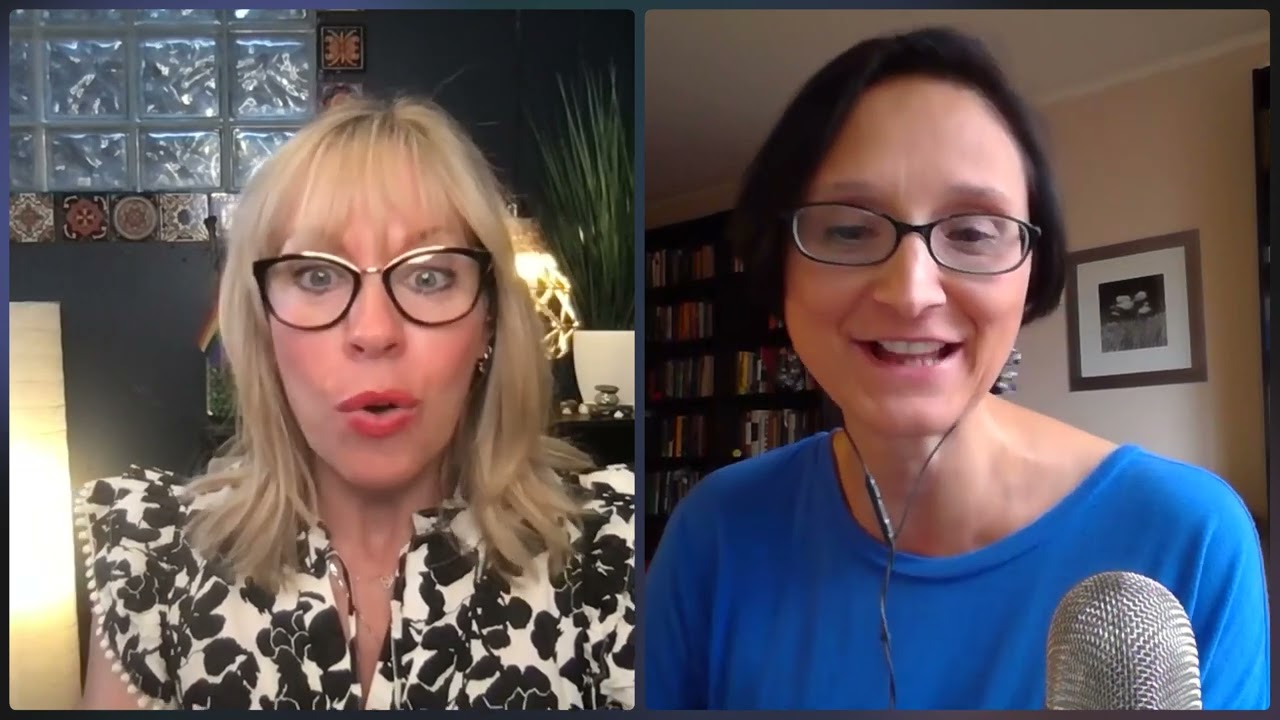
Heather Hester interviews Sylvia Dukhovich, founder of the Critical Therapy Institute, about mental health after COVID, critical therapy that centers race and class in treatment, parenting, LGBTQ+ identities, and consent.
Chapters
Welcome to Just Breathe. I am so happy that you all are here today. I am really, really excited to introduce today's guest to you. I am really excited about the conversation that we're going to have and for you all to just join in and enjoy. I have with me today Sylvia Dukhovich, who is the president and founder of the Critical Therapy Institute. She is a trained psychotherapist, and she created Critical Therapy on perceiving a need for the theory and practice of psychology to reflect how race, class, gender, and religion intersect with psychological conflicts. She is the founding board member of Black Women's Blueprint and a member of the Physicians for Human Rights Asylum Network, where she conducts psychological evaluations documenting evidence of torture and persecution for survivors fleeing danger in their home countries. Oof, that's amazing. She trained at the Bellevue NYU Survivors of Torture program, the Parent-Child Center of the New York Psychoanalytic Society, and the New York Freudian Society. She has a master's degree in social work from NYU and a master's degree in psychology from the New School, as well as a bachelor's degree in religious studies and political science from Fordham University. She has lectured and presented throughout the country on critical therapy, including at Fordham and NYU, and has been featured in The Washington Post, The Wall Street Journal, Psychology Today, The Guardian, International Business Times, and Women's Health. So, wow, that is quite the Quite the bio, quite the introduction, and I'm just really thrilled to have you here so we can talk about critical therapy and all of these other things that you do because wow, just wow.
Well, thank you. Thank you so much for having me. That's, you know, you read the bio and I hope I can deliver, but I am really happy to be here and to talk about, you know, important issues, especially in today's world after having survived COVID-19. So many people are struggling with mental health issues, parenting, identities, you know, a lot of things came out during the pandemic for people, a lot of their own unconscious desires, grappling with their identities, figuring out what they want to be in the world and how they want to show up in the world.
Absolutely. Absolutely. And I, I think that that's actually an interesting— that makes me— reminds me of a conversation I had a couple of weeks ago with somebody about that time during when we were all really locked down. And as we all know now, a lot came from that. And a lot of people were either dealing with some really dark things depending on your age. It was really hard on kids to be away from their friends, to be not able to communicate and connect in the way they're used to communicating and connecting. And, you know, to your point of really having that time to really think about some of these deeper things about ourselves that we don't usually take the time to do, right?
Right.
So, so what have you found kind of as we're coming out of this now? And have you found a lot of evidence with people that you're working with of of kind of like the beginning of that work?
Yeah, I mean, I think a lot of people have struggled. We— anxiety is, you know, the number one struggle because we have been told for, you know, a couple of years that, you know, if you get COVID, you may die, and that's scary. Also, we've been stuck in places with people that hopefully we like, which is our families, but some of us don't like our family. Some of us are in environments that are not safe. So, you know, I often say people fall apart when it feels safe. So when you're in crisis, you just have to survive. You just keep going and you make sure that you make it through. I think now, as things are a little bit better, as the world is opening up, there'll be more and more people falling apart, rightfully so, and dealing with all the anxiety, all the fears, all the stuff that came out during the lockdown. You know, we've been through a lockdown. And also, I don't think we have language around what we've experienced. Everyone is so eager to move on that we actually don't want to take the time to mourn what we've lost, to mourn the time, the feelings that came, people, a lot of people lost people. So I think it's important for all of us to allow each other and the space to talk about what it has been like and to acknowledge that we've all survived something That was very painful and that was very difficult. Now, I also have to say, and this is, you know, parents have struggled through the pandemic, you know, especially if you had younger children at home because they had to work and also care for their children. And we also have to acknowledge that those struggles were very different based on your economic situation, right? For some of it, for some of us, the pandemic was a stressor if we had enough privileged to have money to hire someone to work through, or, you know, go somewhere remote and feel safe. But for others, for low-income folks who didn't have the means, it was more than a stressor. It was really a traumatic event. And this is a good example of how the personal is political, of how mental health issues are always impacted by our place within society, by our lack of resources or access to resources and so forth.
That is such a great point. And I, I'm really glad you said that because I think it's something that as we're coming out, there are, you know, people that really want to like look at that and understand that and know how we can do better, not just as human beings, but as a society.
Right.
Because this, this did show a lot of cracks. And I mean, and made some cracks even bigger, you know, things that we knew already existed but really made things, um, so you can't ignore it anymore. And so I'm wondering if you have kind of in your, in your work, because this is what you're doing every single day, come across some things that, you know, people who, who aren't in this work but who are like, I really want to do something, I really— and who have the, um, either the privilege or the, you know, geographic privilege, but lots of different privileges, right, to be able to help, to do something.
Well, I think, you know, what's interesting also about this pandemic, you are very correct that it offered us an opportunity to look at what doesn't work and to maybe reimagine things differently. Yet, because it was a traumatic event, a lot of us just wanted to go back to normal. A good example of that is I know people who have complained about our educational system and the need for reform. And yet, as soon as school shut down, everybody just wanted to go back to what we used to know instead of perhaps this is an opportunity to rethink things, to do something that we've always wanted to do, that we may not know what that looks like. We will make mistakes, but in order to come up with different modes of, you know, being in the world, um, we need to like experiment. Um, I also think some people have come up with very interesting ways of supporting each other. You know, you had people that formed communities and pods and even learning pods and so forth. So there was innovation. There was also a push to return to normal. Um, I do think for some folks it was a moment of reckoning with their place in the world and how they can help others. And I hope that, you know, the activism that came around supporting nurses, for example, and so forth, will not die out, right? We tend to have short memories sometimes. So I hope that change happens every day, not just during a stressful time.
Absolutely. That is such a great point that we do have short memories. We tend to be really, really great on the front end. You know, those first couple weeks and then just, and I wonder just from kind of a therapeutic, a psychotherapeutic point of view, you know, what, what that is, you know, is that a, is that how we protect ourselves? Is that because it's so uncomfortable?
Well, I think it's, it's many reasons depending on, you know, your history and, you know, what activates you to want to help in the first place. It's also burnout. I think we have to, you know, to be very realistic that we spend so much time working, right? That we have very little time to do those things that we are passionate about. I mean, fortunately for some people, I'm one of those people that actually loves what I do and I don't feel I'm going to work, but I also know that's a very small percentage of people, right? So when you spend so much time working, you don't have enough energy to devote to things that you care about, including helping others, including parenting, including your family, which I think is fascinating to me that as a society, we continue to talk about how much we care about families or how much we care, you know, pro-choice versus pro-life and that, That pro-life movement is, is fascinating because we are so much discussing about fetuses. And yet once we have children, our system doesn't really give us the tools that we need in order to care for them. We don't have, you know, parental leave that is necessary to care for children. We don't have any economic means if you're not well off to, you know, hire people or we don't have a great educational system. So it's fascinating. We pretend that we care about families, and yet we don't really support them to be, uh, successful.
Yes, you've, you've hit that, that nail right on the head. Uh, that is a conversation that, um, I have quite often, both, you know, with my daughters, with my friends, with, um— it is, it is really fascinating to me, um, I mean, on that topic specifically, when you really think about all of the nuances involved, right? Yeah.
And we know because of that, the pandemic affected women and women's career negatively because they also had to parent. I mean, we'd like to live in a world where, especially within heterosexual couples, people co-parent, but I'm not sure how much of actually happens or the stories we tell about what we do. Ideally, people should co-parent, especially within heterosexual couples. However, that doesn't happen. And because of that, mothers actually suffered. And I think it's also a good indication of where we are as a country, where we say we support women and women's empowerment and so forth.
Right. Well, women are definitely expected to— what the expectation is and what the reality is are very far apart. And saying, yes, you can absolutely have it all, is a lovely tagline.
But the reality is, yeah, it's not a real tagline.
No, right. It's not, it's not, it's not true or real or achievable because you can't.
Yeah. And I think the question I've always asked around that is, do we, should we have it all? And what I mean by that is that there should be a work-life balance. One of the things that I think has happened within, you know, the feminist movement is got, it got co-opted into a discourse of, women can work just as hard as men, we can be just as tough as men, rather than how can we change society so that we have a better place for our children and for ourselves, that we have work-life balance, that we get time to relax and enjoy and, and bring joy into our lives.
Right, right. And those are things that we definitely want to pass down to our children, right, as we experience these things. And especially, I know just I, speaking from personal experience, um, I'm constantly thinking of what, I mean, all of my kids, but specifically my daughters, how do I want their life to be different than mine? And how do I model that now so they can see, oh wow, you know, this is possible, or let's talk about this, right? I mean, I think that is one of the biggest things is the, the fear of talking about difficult topics and being afraid to either disagree or being afraid to, you know, have a different viewpoint than, you know, somebody you love, right?
Yeah. And I think as a parent, it gets— I don't know if we know how to parent in a way that we share power with our children. If you think about our models of parenting, they're always about power over. Even when you hear parents talk, especially if they have young children, about, "Oh, my child is doing this. I'm not going to let him or her do this to me," as if somehow we're like equals, but we're not. And it's not a power struggle. And we do have power over our children in the sense that we have a responsibility to them, but we don't offer great models of how do we share power, how do we allow them to have agency, critical thinking, to learn how to advocate for themselves. It's amazing to me that we keep telling children, you know, just follow the rules, do what I tell you to do. And then when they get older, we ask them to speak up and have an opinion and be revolutionaries, but they've never practiced that with anyone. And of course they should practice with us, their parents, because we should be a safe space to really sort of bounce off ideas, have debates, learn how to critically look at the world.
Absolutely. Absolutely. Um, I think that has been one of the most fun slash— I don't want to say frustrating, but like maybe like eye-opening things that has happened in the many shifts that have occurred in, in my house, um, over the past 5, 6, 7 years. Um, but I mean, there are times, you know, we, my husband and I just decided, you know, like, let's let's just let these guys go and see. And a lot of this happened, of course, when we were home during the pandemic, right? So we had to get creative. And, um, but just allowing them, I mean, we would be at the dinner table and having these conversations and they would just like really, and you could see them like really thinking, kind of leaning into, well, this is how I feel, but I'm not sure if mom and dad are gonna be okay with this, but this is what I'm thinking about this, but I'm not sure, you know, and then they would get like really fired up and go and, and there would be times where my husband's like kicking me under the dinner table and I'm like, just let it go. Just let it go. Because this is practice, right? This isn't, you know, and that's where, and it's such a, it's such a cool thing to watch. And, you know, one of the great benefits of that is that we can learn so much from our kids. Yes. Because they see things in a very different way than we do.
And they have, and they also live in a very different world. Society changes, our values change, who we are in the world changes, and it offers us an opportunity to find out more about the world, but also to rethink some of the things we thought we knew or we thought we understood. And I think especially, you know, a lot of the stuff you talk about, about parenting an LGBTQ child, you know, that might be different than you, right? How do you deal with that? How do you, how do you even open up the space that your children explore their sexual identities, right? And it could be more than one. It could shift over time. Nothing is set in stone. But I think we are so, as parents, we're so married to the ideas of who we want our children to be rather than offering them the opportunity to become who they want to be. Yes.
Yes. That is, I could not say that better. That's absolutely correct. And that's, that's very scary.
Yes. Right.
That's a very scary thing to come to terms with and then to be able to let go of. And, and one of the things that I, I like to talk about and get people talking about is mourning that, right? Being able to let go of that. Yes. We all have done it, right? You have these little kids and you're like, okay, this one seems to like this. So they're going to be a doctor, right? Or they're Right. And you decide when they're 5, like, this is how it's going to work.
Right.
And of course, we, you know, we live in a heteronormative society. So you just automatically— people, that's where the thinking still is. Right. So there's all these little shifts and pieces where now you think, okay, well, this is really, you know, this is my work I have to do.
Right. Exactly.
As a parent, this is not on my child. Right. That's a very important distinction.
Yeah.
And, and then like taking that breath and being like, oh, this is so scary, but I'm just gonna, I'm gonna let them, they need to explore this. They, you know, this is so important and it's going to be messy and it's going to be all over the place.
Yeah. And I think it's, and I understand that it's difficult depending on where you are as a parent on the spectrum. How do you understand sexuality? How do you understand gender identity? That could look very different. And I'm also, I'm very interested in those parents who might be more conservative and who really sort of have a set norm that if you're going to be this, it's going to destroy your life, or this is not the path for you. And I wish that learning to be a parent is learning how to be with an other that's very different than you, right? Your children are not mini-me and you probably wouldn't want a mini-me. You would want someone that sort of contributes to the world. And, you know, and I know that sometimes we have certain morals or certain religious tenets that we aspire to, but I think sometimes we have to wonder, what type of world do I want to live in? Do I want to live in a world where I am actually shaming my daughter or my son? Do I want to live in a world where I'm making them regret their identities or their sexual preferences? Do I want to be that parent? Because if we think about values, sometimes they— we don't think of values, how do we live them day to day? Right? How do we embody kindness? Right? We say, oh, we should be kind, and yet we're not kind to our kids. Why? Because we have power over them, so we could squash them if we don't like what they say. So I really urge everyone, especially if you have a child who's very different than you, to actually be open to a dialogue and to be open to sort of being more kind and more charitable and more understandable rather than judging people. Right? One of the things I, I am so glad I'm a therapist because I feel like my job is always to understand, not to judge people.
Right, right. You, you embody my, my favorite quote, or one of my very favorite quotes. Um, it's a Walt Whitman quote, be curious, not judgmental. And I think that is such a, um, being able to keep that in mind It is a simple quote to remember, and the difference between being curious and immediately going to judgment is a huge difference. Yes. And so, and I think too, kind of circling back a little bit, there is just knowing, knowing kind of what my back life story is and knowing, you know, a lot of people that I work with, there is that, you know, what we kind of unravel all those pieces right? And you realize it's fear, right? That's at the base of all of that. And that blinds you to be able to see.
Well, you know, yeah, I mean, I think it's fear. I also think it's because we, we do live in a very heteronormative world. We also live, depending on where we live, in very conservative worlds. And I don't think it's necessarily just fear. I think there's a lot of values or you know, as I say, ideology that we are fed without even realizing. So intellectually, you might think you believe certain things, but viscerally, in your body, you experience that very differently. So you could be, oh, I'm very open-minded, I don't mind, I love LGBT people, I love gay people, and so forth. And then when it comes to your son, daughter, and so forth coming out, viscerally, there is a different reaction. And that's because we have so much indoctrination of how we should be. And it's so insidious, it's so present that we're not even aware of it. In the TV shows that we watch, in the books that we read, everything around us is always teaching us the right quote-unquote way. What I often tell people is, if you ever find yourself on the side of the powerful, if you ever find yourself in power, you should always take a step back and question that. It's easy to be on the side of the powerful. It is really difficult and yet so important to sit with and be on the side of the oppressed and the marginalized.
That is— you're absolutely right. And that's such a great way of looking at that, of thinking and really recognizing—
Because we always defer— sorry, but we always defer to power. Right? So if we are in an argument or if we— we always want to be winners because we've been taught winning is important. You gotta win. Right. Rather than, well, we should understand, we should see out of this conversation what comes out. Maybe there is no right, but there are nuances. But it's hard because we say that, but everything in our society, the structure, work, school is based on winning, getting a good grade, being the best. It's not about how do we collaborate? How do we work together? How do we understand each other? You don't get a prize because you understood your friend at school. Like, wow, you know, Susie did a great job understanding a friend today. Here you go. Go home and tell your parents, you know.
Right, right. No, that's, that's so true. And we absolutely should. And I think there's a piece of this too that takes, that requires the ability to kind of step back and, you know, when you're in those moments, right, because we are so hardwired, programmed for all of these, these things, to be aware, to practice that awareness of, oh, this is what's going on. I'm, I'm going to try to sit over here or come from this angle and, and, and speak, you know, a little bit of my truth. Let's try it. Let's start with just a little bit of my truth, right? Or You know, I'm really feeling this in my gut and I'm just going to, I'm just going to say it, right? And that takes, excuse me, that takes some, well, a lot of awareness, but it also takes a lot of courage.
Did I lose you?
Oh, but there you are.
Oh yeah, we're back.
We're back. Yeah, sorry about that.
Yeah.
So no, so I was just saying that takes not only a lot of awareness but a lot of courage to be able to do that.
Yeah, and I think speaking about courage, and I think especially in today's world, there's a lot of debate. There was a New York Times article around transgender identity. So if we're going to talk about parenting, if we're going to talk about LGBTQ issues, we have to talk about this, right? And I think it's important that, especially for parents who don't understand their kids coming out and saying, I don't feel like I'm in the right body, or I am gender nonconforming, I don't have advice, right? That's, that's one thing that I don't like to do because I think advice is always like a cookie cutter. You should do this, you should do that. And I think it's different for every parent. It's different for every child. My only sort of mega advice or sort of narrative that we should have in our minds is be open to listen, be open to ask questions, and you don't have to resolve anything in a moment. It's, you know, your child is going through something, trying to understand who they are, trying to understand their gender, and allow them and allow yourself the time and space to figure it out. It doesn't have to be done tomorrow. It doesn't have to be done right away. There's always some urgency. I think whenever we are presented with something we don't know, we gotta solve it right away, as opposed to having the ability to sit with things. Now, one of the things I say to people who come to therapy, I think the hardest part of therapy is the ability to sit with your feelings. And of course, you know, in the beginning they're like, yeah, yeah, whatevs, um, that can't be hard, right? And then, you know, as we do this work together, you know, a couple months in they have to sit with their feelings and they want advice, right? I often say if you end up going to a therapist that gives you advice, it's probably not the best therapist. Um, our job is not to give advice. Our job is to ask questions that will sort of evoke answers that will help you. You have the answers, you're just probably unaware or afraid to ask those questions. Um, and, and since we're on the topic of therapy, you know, I do want to mention, I I think one of the, one of the differences between critical therapy and other therapists out there are the fact that we have a very deep analysis of power, because as we've talked about, that's important. And also we invite the political into the room. And what we mean by that is not who you voted for, if you're a Democrat or Republican. What we mean is how do issues such as workers' rights, gay rights impact and affect your mental health? Because we don't live in a bubble. We often say that the personal is political and we should account for those identities and intersectionalities, but therapists account for it in naming them, but not actually analyzing how they impact how you show up, how you show up in therapy, how you show up as a parent, how you show up at work and so forth.
Right, right. I'm glad you made that distinction because I was, I was very curious. And I also, I'm sure, you know, everyone listening is very curious, you know, what, what is the difference? And, and I really like that a lot. I think that, again, as a society, we tend to be afraid to, you know, I'm going to talk about my feelings, I'm going to talk about my mental health, I'm going to talk, right? Politics is its very own thing. Religion is very own thing, right? Instead of understanding how all of these things intertwine and, and make us, you know, who we are, right? And really understanding that, because I think a lot of that is not understood. Right.
So, you know, I know this, I've trained as a psychotherapist, and I think as psychotherapists, we learn how to be good therapists. To really sort of invite some questions around politics, but we don't learn how to practice a social justice model because we believe that therapy is apolitical, but nothing is apolitical because we're dealing with people's lives. So, you know, I often say, if you go to a therapist, you should consider how does that therapist embody and live out their values? How do you practice in a way that takes into account a social justice model. So if someone comes to you that is suffering, and if someone comes to you that is struggling, how do you talk about those issues? But also, how do you talk about issues when someone is not struggling? We are very good at talking about, for example, gender when we are talking about otherness. So if you go to a therapist that's a male and you're male and presenting as male and so forth, you're probably not going to talk about male privilege because it's invisible. It's two guys just doing therapy. Right. But if you're a man and a woman, then you talk about it because there is a difference. And I believe that in order for therapy to be effective, in order for us to be better human beings and lead more authentic lives, we have to talk about those issues regardless, because it's impacting all of us. It's not impacting all of us the same way. But discrimination impacts all of us on some level. Toxic masculinity impacts all of us and how we show up in relationships, how we show up as parents, how do we co-parent and so forth.
Absolutely. Oh my goodness. And I think that is, I'm glad you brought that up as well. So two questions from that. First, toxic masculinity is definitely a buzz phrase right now.
Yeah.
I know that my, my kids use it a lot. And I'm wondering if you could give a definition, because I think that a lot of people, a lot of parents are like, what does this mean? Because it's not super intuitive. I mean, I think there needs to be a little explaining. So you know how to not only recognize it, but then how to talk about it.
Yeah, it's, it's, it's this posing that masculinity means that you have to be tough, that you have to always be right, that you have to he put others down. And it does— it's, it's what's really complicated is because we have so many years of doing this, how do we separate masculinity, like healthy versus unhealthy? How do we define what a man quote unquote is? And all those questions should be open for discussion rather than thinking that we know the answers. And I think that toxic masculinity has taken over all our discourses is, again, we go back to this discourse of power, of winning, of, I mean, we had presidents that embodied that and some of us, you know, thought that they were great. We had, you know, we had, it's interesting, one of, I think my patients are the smartest people and much smarter than I am, to tell you the truth. I remember when Hillary Clinton was running for president and Donald Trump, Trump, right? And then she came, she was a survivor of sexual assault, and she came to me and she said, so Sylvia, who do I vote for? Is it the woman who protected someone who assaulted, you know, his— or abused his power with his intern? Or is it the man who sexually assaults women? So the choices were— I mean, there were better choices, but they weren't great. And the fact that we didn't have a choice of someone who didn't sexually assault women or didn't abuse their power, someone who supported that type of masculinity tells you how it's present in every— everything we do. Wow.
It really is. And I don't think many of us, most of us have probably ever really thought about it in that way because, you know, to your point, it is just ingrained in everything, right? So, so how do we start becoming more aware and start having these conversations where, um, not only, you know, obviously your, your therapist is a wonderful place to start, but, you know, if it's not happening there, how do we have that, you know, with our partners, with our kids, with, you know, our friends, family members?
Um, yeah, I mean, the first thing I say is We need to learn how to have more nuanced conversations. We're so addicted to soundbites and we're so addicted to right or wrong from all sides. Oh, this is the right way. This is the wrong way. Sure, some things are more right than others, but in order to change the world, we need to first have a dialogue. We need to ask people, how did you come to this belief? And also, how does this belief impact other people in your life? I think I would like to believe that most of us want to be decent human beings. I think if we knew how our values sometimes hurts other people in very real and tangible ways, then I like to believe that most of us, maybe not all of us, will change. I think it's important, especially with our children, that we teach them critical thinking skills. We no longer do that in schools very well. We're so— we're practicing this banking model of education, which means literally like we go and we deposit information, and then they give it back to us, and, you know, they get great grades and everyone's happy. But we don't actually teach them how to think, how to think of new possibilities, how to discover things, how to explore. The more we focus on achievement— we've done studies on this— the more we tell kids to achieve, the less they're willing to explore and take risks. Because the reward is not about, "Oh, I've taken a risk. I've come up with something different. I thought of something I wouldn't have thought otherwise." The rewards are like, "You did your best and you won, and here's your little gold star." So, the revolution starts at home. As much as I would like for our schools to change, and maybe they will with time, as much as our society might change with time, it will always change with us. I think it's very important for us to reckon with our values and to think about how those things impact other people and to question, do we want to be this person in this world? Do I like myself if I met myself? So it is always about being more compassionate, being more understanding, being willing to have conversations that are uncomfortable that I think change happens.
Absolutely, they do. Um, and it's interesting. I was thinking too, as you were saying that about just thinking about my kids who have been through high school and, um, they're half, half of them are through. And I, one of the things that I noticed was exactly this when they were in the higher level classes. That is where they really learned these critical thinking skills, right? Like, that's where they were kind of let go to be like, okay, we're going to explore this now. Well, why can't that be in every level? I mean, that, that should be at every level, right? Every kid is capable of it, and it can be, um, introduced in different ways. So I think that, you know, obviously this is something that over time will shift and will hopefully shift, would be lovely, um, because that is such an important, an important skill. And just seeing, you know, now as they're going through college and into, into the real world, having that ability to be able to really stop and say Okay, how do I really think of this? How does this really make me feel? Because I know I did not go through school like that. I mean, it took me until well into my 30s to be able to do that, right? I don't want that for my kids. I don't want that for any kid, any person. So, um, that is something that is really, really important.
Yeah, and I think we have to demand more from our schools, demand more from therapy. I mean, one of the reasons why I've created Critical Therapy, and one of the reasons that I wrote this book that's coming out September 7th, um, is because I do want to challenge therapists to think about how do they show up in therapy. What, how, what are you promoting? What are you practicing? How does your politics show up? Because they always do, even when you think they don't, they're always present. Um, and to also encourage people who are seeking therapy or going to therapy to demand more from their therapist, to not be afraid to bring out their many identities and their complicated, uh, places within the world and their uncomfortable discussions. Because therapy should be that place where you get to explore. Um, I often say that the therapeutic relationship is a blueprint for all other relationships, meaning if you and I in therapy can work out our differences, if we could look and discuss difficult topics, it will give you the tools that you can do this with other people. And you have to practice some more. We go back to, you know, parenting. And I wish that parents will do that too, to keep in mind that I am preparing my child for a world where they can advocate for themselves. They could speak up, they could learn to say no. We, you know, especially around the MeToo movement, and, you know, we talked about How do we teach girls how to say no? How do we teach boys how to sort of take a step back and listen? Well, we don't teach them that at the playground. It's a little too late when they get to high school or college because it's something you practice. You know, consent is not just about sex. Consent is about the many things you want or don't want to do in your life. And yet we don't allow our children to practice consent. We just say, shut up and do what I tell you to do and move on. And yet all of a sudden they're in adolescence. Oh, now, now you got to learn how to say no. And you have to learn how to say no without your clothes on, although you've never done it in real life with your clothes on, you know, good luck, you know.
Right. Oh my goodness. Yes. Oh, that is so, uh, and, and how do we do that? I mean, how that is such a shift to be able to because I think it's something that I, that I run into is, you know, they're too young when they're, when they're that age, they're too young to be teaching this thing, you know, these things. And, you know, in my case, it's talking to, you know, young children about sexual orientation or gender identity, right? You know, in this case, it's consent and just, you know, critical thinking. Well, that can be taught from tiny, right? And very various ways. So again—
Yeah, and I'm gonna interrupt you for a second because I do have to say this. This idea of like around gender identity, around sexuality, and especially around gender, they— we already teach children about gender before they're even born. We just don't want to acknowledge it. Think about, oh, is it going to be pink or blue? Is it gender neutral? I mean, now we've sort of incorporated more terms that allow for some diversity, but our society is very much ingrained into teaching boys and girls how to be, and it could only be those two. And if you don't believe me, go to a playground with a— where there's toddlers, and you will hear parents say, "Oh, is that a boy or a girl? Oh, this, you should do this because you're a boy, you should do—" And it's amazing to me that in this day and age, we still do that.
We do. I think it is one of those, parents don't even hear what they're saying. It is not even a thought, right? That's not a conscious thought pattern. It is just, that's how, you know, that's how we're wired. And that's what needs to change. And it's the same.
I think it's the same around sexual. It's not just around identity and gender identity, but sexual preferences. Again, I was actually talking to one of my patients and her struggles with, you know, her daughter's very young and how much she's getting sexualized by other parents without even realizing in comments like, "Oh, is that her boyfriend?" Because she's holding hands with a little boy in kindergarten. And we do that and we think it's cute. It's actually not cute because we are actually telling them about our values. We're sexualizing them because all of a sudden holding hands with this boy means that you want to you know, be their girlfriend. And kids don't necessarily think that way, but we teach them. And then when they don't want that, all of a sudden they feel bad. And I think we shame them in a weird way, right? Because we think saying, "Oh, is that your boyfriend?" It's a cute comment. But if you actually look at kids, there is a sense of shame because they don't know what you're talking about. They don't know if, is this a funny joke or are you saying I'm doing something wrong? And that's how sexuality and shame and, heteronormativity, and it sort of gets linked together in ways that is very insidious, but we don't even realize we're doing it.
Right, right. That is exactly right. And it all kind of circles back to that whole idea of we all need to learn to be much more aware of how we talk, especially how we talk to our kids. And Yes. And just really rethinking how we were programmed or how we were wired and thinking, gosh, this could be construed this way. And I, I didn't even realize that. Right. Right. I mean, to this, and you think like as you follow that thread, right. And you think, okay, here it starts at some seemingly benign statement. Right. But then it it kind of circles into this where you realize, oh my goodness, that there's their shame, then there's guilt, right? Then there's confusion because they're like, I don't understand this, right? So I mean, you're already building these layers. Mm-hmm.
And expectations, because now you're like, oh, so I guess you want me to like this boy. Okay. And, and it— right. It's already there. And I think one of the things that you've said that I would like for parents to think about is to be very intentional. You have a responsibility as a parent. So when you speak, and of course we're not perfect parents, we're going to say stuff that is not intentional and may come out the wrong way. I don't think that's as important as how do you repair. So we are going to be bad parents, quote unquote, at some point. We're going to be frustrated. We're going to say something inappropriate, and that's not not as important as how do you come back and repair that. You know, there is no such thing as a perfect parent. And if you had a perfect parent, you know, Winnicott used to say about the good enough mother, and now I say the good enough parent, because if you had a perfect parent, you'll probably raise a psychotic child because that child can never come— could never live up to your expectations because you're perfect. So most of us are human, we're imperfect, we make mistakes, just like in all our relationships. What counts is not not what we did, but how do we repair it? How do we not do it again? Because you also don't want to be the parent that keeps saying inappropriate things and you come back and, oh, that was wrong, that was wrong. After the third or fourth time, you got to take a break and look at what's happening for you. But I think to be intentional, to allow for mistakes to happen, but to always come back and be open about them, right? And you also model a different way of being in the world to your child, where your child could say, well, I've made a mistake. I've changed my mind. Right. The other thing about our society lately is like we don't allow people to change their minds, which I think is such a missed opportunity for change. And we all, I hope we all change our minds as we grow and understand more.
Oh my goodness. Yes. But you're absolutely right. That is, there is definitely, that's a no-no, which is absolutely, I mean, crazy when you think about it because you're not gonna have the same thoughts and opinions about things at, you know, 40 as you did when you were 20, right? Or I hope— well, I hope not. Exactly. So that is another thing, you know, another thing, just that's— this is okay. Like giving yourself permission to, to do this. This is actually a good thing. And this is This means that I'm, I'm growing and I'm learning. And sometimes I have found, and I know so many, this is not exclusive to me by any means, but you know, when you are able to be like, oh, this is, this is not the societal norm, but I'm like learning new stuff and this feels really cool. This is like interesting. And I, and you, you can, you feel that, like you feel that connected openness to whatever it is in a way that you never have before, right? And you're like, oh, this is kind of— this is really interesting. This is a really— and, and just go— being able to go with that and be like, this is what I'm supposed to be doing. This is the human experience.
Yeah. And, and societal norms— we haven't done such a great job taking care of our children. We have more and more children suffering from mental health issues, struggling with you know, eating disorders, depression, anxiety, and so forth. So it's not like, wow, everything's working out for these kids, let's keep doing what we're doing, because it's not.
It is not. It is not. That is for sure. Oh my gosh. Oh, well, I am looking at our time and I want to be respectful, so I'm trying to— I'm looking quickly at my questions because I haven't looked at them once. This has been so lovely.
Thanks. I love to talk to people and I I love to have, I like to practice what I preach, which is, is through conversation and dialogue that we understand and come to different ideas. So that's why I don't like the scripted stuff, you know?
No. Well, I agree. And I always, you know, it's funny because I typically will, I will go, always go into an interview prepared with questions. I would say 9 out of 10 times, I, this is what I, what happens, right? This was really fun. This is such a great conversation and we kind of wove all of this in here anyway. But I think one of the things I'm really fascinated by, critical therapy, and, you know, as one who has, you know, been in therapy for a number of years, and feel that that is a very important part of my self-care. And, and that's what I tell everyone. It's just, I just believe it's, you know, and I recognize how fortunate I am to be able to have that. But adding in this kind of extra— this is like another level, right? This isn't just therapy. This is, you know, critical therapy. I am, I'm really fascinated by how— because I think my therapist is brilliant— and, and how, you know, a therapist who already is wonderful Right, can kind of tie this into their work. And as a, um, you know, a candidate or, you know, person in therapy, how does that person kind of bring this into the work that they're doing?
Um, thanks for that question. So a couple of things. You are correct. I think one of the differences between critical therapy and other forms of therapy is our analysis of power, of bringing the political, of looking at the therapeutic relationship as a blueprint for all other relationships, and practicing a politics of, um, equity. And we'll talk about that in a second. Um, I think the biggest thing is that we believe in transformation. We, you know, therapy could be a place where you are supported, you feel heard, and you feel validated, and that's great. For me, that was not my interest as a therapist. I was always interested in transforming people's lives. I'm interested in, in people reckoning with who they are and how they want to be in the world and having more authentic lives. Um, one of the things that when we talk about our politics of, you know, equity is that, um, we wanted— and you touched upon this, of the fact that you can afford to go to therapy. A lot of people can't. Um, and usually we don't have very good services for people who can't afford therapy. So one of the things that we did because of our commitment to social justice is we've created a sliding scale. A lot of therapists have a sliding scale, but usually the sliding scale works that you have your fee and for people who can't afford, they just pay less. Well, our sliding scale is based on income and resources, and we don't have a cap for low or high, meaning your session could cost $50 or $1,000. Um, so basically everybody who comes to us pays the same percentage of their income and resources for their psychotherapy So this way we actually put in practice again our values where we could see people from all walks of lives. And it's very important that those people actually meet in our sort of waiting rooms. And it's also a very important process in therapy to reckon with money. Money hides a lot of things. And usually it's people who don't have money that have to always deal with talks around fees and money and so forth. But affluent people also struggle with money. And it's a missed conversation of how does your privilege, how does having money make you feel? How does that influence how you show up in the world? So I think it's very important to have those conversations with your patients. So as far as how people can find out about us, Please visit us at criticaltherapy.org. We are thinking of doing more workshops for clinicians. Right now we have a 4-year program that trains psychotherapists who have graduated and are practicing into this model. But we are also aware that that model, we only train 4 or 5 people every year. And that's very strategic because it is hard. And it's, it's the difficulty in this model is as a therapist, you first have to reckon with your own identity. And you have to reckon with your own place in society and your own values. But I do think it's something that's important for us to learn how to talk to other therapists that might be interested in learning how to incorporate some of these very important issues into their own practice. So we are thinking about maybe doing a 1-day workshop just to start the conversation. Sure. And to sort of think about it How can I do this differently? How can I help my patients differently?
That's great. And then you've written this book as well that's coming out in September, and that is written both for therapists and for people going to therapy, right?
And we actually, in the book, I give a case presentation of how therapy looks like in critical therapy. And I wish that people would read that and actually sort of go to their own therapist and be like, how come we don't do this? 'Or can we do more of that?' Because I think that's important. I also have a chapter about love in psychotherapy. It's so interesting how therapists are so nervous to talk about love, and that's because our society often equates love with romance and relationships rather than genuine love for someone that you see sometimes once a week, sometimes twice a week, and you spend an amount of time and talk about deep intimate issues. Love is always present.
That's wonderful. Oh, I'm, I'm really excited to, to read that when it comes out. And, and I will link all of this into the show notes as well. So it'll be easy for people to just kind of click through and, and, and find out more. Thanks. And be able to get on, get on the waiting list for this book. So just Just thank you so much. I really enjoyed this conversation and I really learned a lot myself. So I always love having conversations like this that are just so rich and interesting.
So thank you. Yeah. Thanks so much for the questions, for the conversation, for sort of being transparent. I think that we've modeled ourselves some ways that people can have conversations with each other, with their partners. With their children and so forth. Wonderful.
Yay, we did a good job.
Thank you.
More from Heather








Up at 2AM Researching Everything: What Ally Burnout Looks Like for Parents of LGBTQ+ Kids


PFLAG National Creating Pride in Families: New Resource Helps Parents Build Support Networks at Work
