She Got a C — For Her Body with Jennifer Joy Jimenez
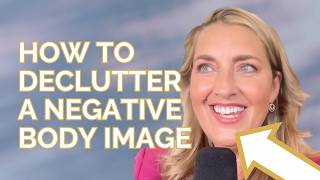
Jennifer Joy Jimenez explains how dance rewires your brain and heals trauma. A 21-year study found regular dancing boosts mental acuity by 76% and cuts Alzheimer's risk. Even three minutes of movement floods your body with dopamine, oxytocin, serotonin, and endorphins.
Chapters
The New England Journal of Medicine did a 21-year study where they studied people suffering from Alzheimer's and dementia, and they also studied all forms of movement and exercise. And dancing increased mental acuity by 76% and decreased Alzheimer's and dementia. I mean, there's no other therapy on the face of the planet that, that can claim those kinds of results. This is 21 years worth of data. I mean, it's, Powerful. The other studies show that, um, dance alone, just even a few minutes, my friend— so this woman I know danced for 2 hours, let's just talk about 3 minutes, one song. The average song is 3, 3 and a half, some songs run longer, but just 3 minutes of dancing activates your happy hormones: dopamine, oxytocin, serotonin, and endorphins in the most powerful way. There's just We're wired for this. Now, some of you might be thinking, well, I don't dance, I can't dance, I have two left feet, I feel super awkward in my body. Here's what's beautiful: that's clutter, that's a programming, that's something that you picked up along the way that isn't your true nature. Have you ever seen a 3-year-old at a park concert say, Mom, I have two left feet, Mom, I don't like to dance, oh no, no, to their little girlfriend that's coming and wanting to swirl and spin and roll around on the grass. You don't see children talking that way. It's because that's— we're wired to move rhythmically to the sound of music. It's— and later in life we learn, oh, there's a right or a wrong way. That's technique. That's not what we're talking about. We're talking about letting yourself— like, if you want to and you need to, first close the blinds. No one needs to see. Be in your space. Close the door. Throw on a song. Let yourself feel awkward and silly and quirky at first. And what, what you will find will happen is the true you gets unlocked and unleashed. There's this freedom of self that is so powerful, and you connect with your true essence and your soul. And it's just the most liberating thing. The thing that so many people tell me when they come to a Transcend Dance class, especially the ones that feel the most awkward in their body, is within you know, maybe 10 or 15 minutes, right? They, you know, takes a minute to move all the way from the left brain to the more right creative brain where we're not in our logical, critical mind. But once that journey happens and they're in this space, they feel free, they feel liberated, they have fun, they giggle and laugh and play, and the body knows what to do. The other thing this does is, I believe, that our issues live in our tissues and that in order to heal it, you must feel it. And the body is our greatest teacher, our greatest healer. I believe we all have an inner physician within, but what we're often doing is telling the body very robotically, walk here, walk there, sit for 5 hours, stand now, go to the gym and do more. It's very linear. Movement. Our everyday life is very typically linear unless we work some odd job where we're, where we're moving rhythmically or circularly, but the average human isn't. And dance, when you let the body begin to move, it will mimic circles, spirals, flowing-type movement that looks like— so if you were to look at, um, cells under a microscope, they're spinning. If you look at the strands of the DNA, there's this spiral energy. So if you take the average person and turn on music and then blindfold them, they're not dancing two steps forward, two steps back, right, left, right, left. They get into this, like, almost like they're underwater, this three-dimensional fluid flowing movement, because that's the way our body's energy patterns— I believe we're energy beings, which by the way is scientifically proven. It's not a belief anymore, it's It's science. It's real science. We are quantum energy and we are dancing filaments of light, even if we can't physically see it with our eyes. So the body starts to mimic those movements. And I believe, because I've seen this over and over and over again with clients of mine that come in with a locked shoulder or pain in their hip or a headache or massive fatigue. And what I teach is that's the time to connect with the earth, to open up to guided breath, to move, even if it's just super gentle movement. It's not, you know, dancing doesn't have to look like Taylor Swift on stage, you know, like it's whatever the body is seeking and wanting to do. And these clients, within just a few minutes, the headache's gone. Sports Illustrated back in the '90s was very much not what you see today. There's different curvy, different-sized women now, it, you know, in different— all kinds of, you know, beauty, uh, diversity now that just didn't exist when I was a young woman and when I was being shaped by commercials, by magazines, by the radio, and just by what people said. You know, there were lots of comments. I'll never forget being in dance school. So I moved to New York City to pursue professional dance, and I'm walking down the hallway in my black leotard, in my pink tights, and my little ballet slippers, in my ballet class, and I get handed an envelope, and I walk in, and all the girls are sitting in there, and they're opening— we're all opening our envelopes, and it's our grades for that semester. And one of the grades that we are graded on is our body. I had no idea I was going to be graded on my body size, shape, form, and I got a C. Now, I, I know it sounds silly, but at the time, this young woman who is trying to measure up, trying to fit in, where I, you know, we're taught through school that our grade determines our future, determines our success in life. So if we get A's and B's, we'll do well. If we get anything lower than a B, that we'll probably end up being a failure. So for me to, to feel healthy in my body and relatively really good at that time, and then to see other girls sitting next to me that were no more talented, no more, you know, brave, no more hardworking than I was, get A's for their quote unquote bodies. And for me to be given a C, that was one of the things. Those experiences shape the inner clutter, that inner picture that we're trying so hard to work towards. Absolutely.
You know, I, my goodness, that must have felt like a kick to the gut when you saw that. I mean, just, I bet you can you've healed, you've moved beyond that, but I bet you can still feel that sensation when you saw that.
Absolutely. Yeah. Yeah. For many years, it, it, I wasn't conscious of it. I didn't even remember the memory until I started to do some of the deeper healing work, some of the somatic healing, which is a, a, an embodied form of healing. Cause those memories don't just live in our mind. They live in our soma. They live in our whole body system as a, vibration. You're not enough. You don't measure up. That then can drive really harmful behavior for many, many years. And so when I started to do this deeper healing work and I got some transformational coaching and I found conscious dance and energy medicine and mind-body-spirit healing and started to pull the weeds, memories started to rise to the surface. Not to go back and relive them, but to embrace that, you know, probably what she was, 18-year-old young woman. And I literally rewrote that story, Heather. So one of, one of the practices that I also do in my coaching is that if there is a memory that keeps surfacing or that just simply surfaces and it is, it does, it does still provide us a visceral sensation in the body, you can rewrite that memory. Maybe you didn't know that. Maybe some of you do know that, but I literally wrote out the disempowering story the way I lived it and what it felt like and how it felt like a kick in the gut and how it literally stayed with me for, you know, basically until I left that school and that, you know, that class. Like it just never felt really great energetically being in that space. And it actually drove me to lose 10 pounds and all kinds of, you know, behaviors, right? So then I burned it. I went outside, put it in a little fire burning chimney thing, you know what I mean? And just sent it out into the universe. And I just forgave the teacher. If the teacher had known better, the teacher would've done better. You know, if the, if the university had known better, they would've done better. They were doing the very best they knew how at the time. I would imagine they don't do that anymore. I hope to God, you know, that they probably don't. That was 30 years ago. It was a long time ago. And, Today, now, so I wrote the story the way I would have loved to have lived it, where I'm walking down the hall and I get handed a piece of paper and I open up a piece of paper and I get, you know, E for exceptional. You're an exceptional human. You have exceptional energy. You're hardworking, you're determined, you're growing, you're improving. You are enough. You are beautiful just as you are and strong and healthy. And strength and health is the most important thing to be. Be successful in this career, not fitting a certain size or shape or being a certain number on the scale. And I read that over and over again until it was really ingrained in my soma, in my nervous system, in my memory bank. It's like planting a new seed in place of the old weed and then just nurturing it with love, with light, with water. And now I can, I can think about that story and tell it without it impacting my body anymore.
More from Heather




Micro-Dosing Psilocybin, Clutter & Coming Home to Yourself with Karen Bush | Heather Aardema


How Scent, Safety & Decluttering Actually Reset Your Nervous System with Jodi Cohen|Heather Aardema


Bone Health Lies & What You Can Do Now to Age Stronger with Debi Robinson | Heather Aardema


How She Decluttered 40 Pounds without Dieting with Nagina Abdullah | Heather Aardema
