In this monologue, Henk van der Wath explores the often‑overlooked, darker aspects of the childhoods that give rise to polymaths. He begins by describing a pivotal moment when highly curious children realize that adults do not possess all the answers, prompting a lifelong quest for self‑directed knowledge. Deprived of mentors, these children become self‑teachers, improvising with books, machines, and programming to satisfy their curiosity. This early independence clashes with formal education, where their relentless questioning is misread as stubbornness or disrespect, leading to punishment and a growing impatience with rigid curricula. As they mature, they develop a keen sensitivity to adult hypocrisy—detecting contradictions between words and actions—which drives them into interdisciplinary studies of psychology, philosophy, economics, and biology. Knowledge becomes a coping mechanism, offering a stable, rational refuge from chaotic or emotionally volatile environments; learning serves as emotional regulation. However, this reliance on intellect can produce an emotional blind spot, leaving them ill‑equipped to feel or express their own emotions. To navigate social worlds, they adopt multiple masks—silent observer at home, serious academic at school, comedian among friends—studying these personas and gaining extraordinary perspective‑shifting abilities, yet risking loss of a core identity. Boredom is experienced as a severe deprivation, compelling them to seek dense, meaningful stimulation, often mischaracterized as attention‑deficit behavior. Isolation, while initially painful, transforms into a private laboratory where solitary experimentation builds a custom curriculum and a resilient intellectual foundation. Ultimately, the narrative argues that this challenging upbringing, though fraught with emotional costs, endows polymaths with a unique superpower: the capacity to synthesize disparate domains, adapt to rapid societal changes, and reinvent themselves, making them well‑suited for an uncertain future.
Chapters
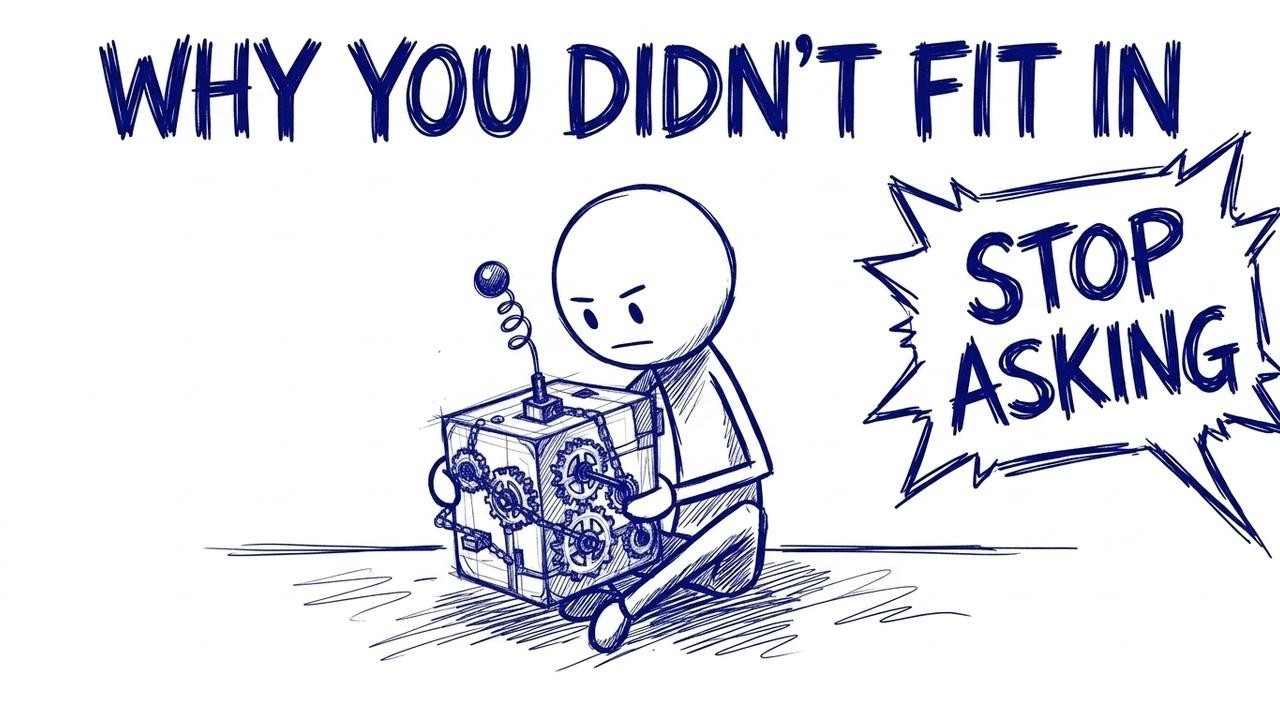
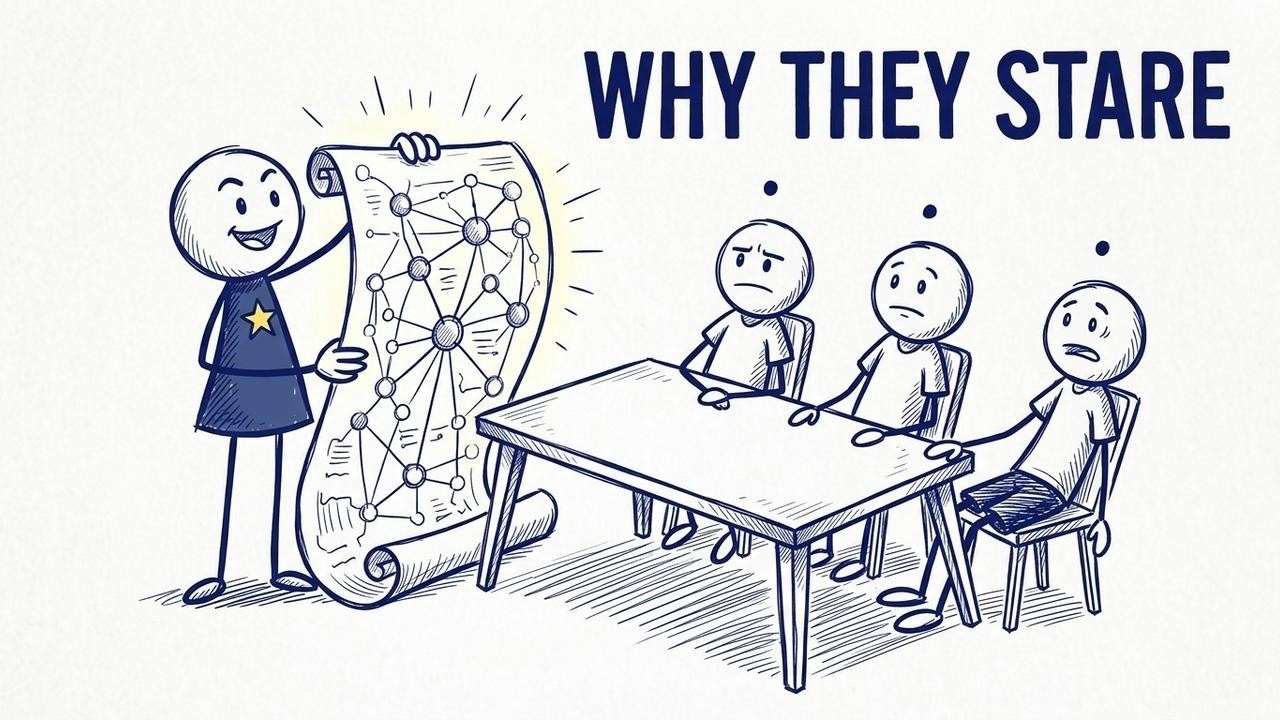
Have you ever wondered what goes on inside the head of a child who simply refuses to view the world like everybody else? People love to use the word gifted, but being a polymath is rarely that simple. Behind the endless curiosity and the ability to link completely unrelated concepts, there is a hidden childhood marked by intense isolation, deep frustration, and a profound sense of not fitting in. Today, we are looking at the darker hidden realities that shape the mind of a polymath. Make sure you stick around for the final point because it reveals why this unique way of thinking is both a massive burden and an incredible superpower. Let us dive in. They realized early on that nobody was coming to explain life to them. For many highly curious children, a powerful shift happens the moment they realize adults do not hold all the answers. Picture a young child looking up and asking, why do people have to work this way? The parent casually responds, because that is how life is. The child presses further, but who decided that? And the final, conversation-ending reply is, Stop asking so many questions. For an average kid, that's the end of it. For a future polymath, it is the start of a lifelong investigation. They begin to see that what society calls facts are often just unexamined habits, traditions, or opinions. They watch confident adults be completely wrong. They realize a teacher can be a master of one subject, but totally blank on anything outside it. This breeds a unique kind of intellectual independence. The child starts testing reality on their own. They dissect machines. They observe. They compare conflicting explanations. A fascination with how a machine works turns into a study of electricity. That interest flows into physics. Physics opens the door to mathematics. Mathematics reveals the hidden patterns in nature. Suddenly, this chain of thought builds a map of the universe. But the dark side is that they stop waiting for permission to learn. They trust their own investigation over authority, which adults often mislabel as stubbornness. In reality, the child just learned an uncomfortable truth: no one is coming with the ultimate explanation, so they must find it themselves. They had to become their own teacher. Guiding someone is entirely different from leaving them to figure it out alone. These children learn this distinction rapidly. They might ask a question at home and get a hollow answer. They might struggle at school and quickly realize their teacher has 30 other students to manage and cannot slow down. If they develop a niche interest, nobody around them knows enough to help. So, they improvise. They dig up an old book. They observe someone. They try, fail, and try again. Imagine a kid who falls in love with computers. The parents know zero about programming. The school only covers basic typing and software. Rather than dropping the interest, the child hunts for the mechanics on their own. They realize learning does not require a formal instructor. It becomes a personal mission to see what happens when the rules are altered. However, this early independence has a cost. A self-taught child grows fiercely impatient with rigid academic structures. They look distracted in a classroom where curiosity is strictly scheduled. Imagine being forced to stare at a single chapter when your brain is already trying to link that chapter to the rest of the universe. They look unfocused, but they are actually processing in multiple directions. They learn that you can take guidance without becoming utterly dependent on the guide. They were penalized for asking the wrong questions. It is a bizarre moment when a curious kid realizes their questions make grown-ups squirm. It is not that the question is foolish; it is that it threatens the adult's comfort zone. A child might challenge a teacher by asking, why do we have to memorize this if we do not understand why it is true? The teacher immediately takes it as disrespect. Or they might ask, Why is this rule fair? And get hit with, because I said so. The child absorbs a lesson, just not the one the adult wanted. They realize society has approved questions and forbidden ones. For a relentless mind, this is maddening. Their brain does not just halt at the first barrier. If asking people brings punishment, they adapt. They start interrogating the environment instead. Books substitute for mentors. Machines become elaborate puzzles. History transforms into a massive crime scene. Everyday life becomes a psychological experiment. The child who is shut down at home quietly retreats to the library. The child told they overthink starts filling journals. They stop accepting authority blindly and demand, show me how you know. It is deeply ironic. The kid who was scolded for asking too many questions grows into the rare adult who has the courage to ask the questions everyone else abandoned. They spotted the hypocrisy adults tried to hide. Most children take adult statements at face value. A developing polymath spots the contradictions almost instantly. They become captivated by the massive gap between what people preach and how they actually live. A parent might sternly say, always tell the truth, but then tell a blatant lie on the phone. A teacher demands fairness but plays favorites. An adult might declare, do not judge people, and then spend 10 minutes ruthlessly tearing down a stranger they barely know. While most kids notice this and move on, the future polymath obsesses over it. They ask uncomfortable questions because they do not yet know the social rules of pretending. Why did you lie after telling me not to? Why does that person get to ignore the rule? Adults get incredibly defensive because the child lacks the standard excuses. The child does not care about protecting reputations or navigating social expectations; they just want the mechanics of the contradiction explained. This sparks a deep dive into human behavior. They scrutinize facial expressions, tone, status, money, and fear. They realize people are driven by complex forces, often claiming to value freedom but snapping when someone makes an independent choice. Asking what really controls behavior pushes them into psychology, philosophy, economics, sociology, and biology. They realize these are not isolated subjects but different lenses on the exact same mystery. And they learn the ultimate lesson: People are rarely honest with themselves, so you must study what they do, not what they say. Their intellect became a sanctuary from emotional chaos. Sometimes fleeing a toxic or chaotic environment is not a physical act; it is a mental retreat. When a home is volatile, when adults bicker constantly, or when a child simply feels alien, they crave a solid foundation. Knowledge becomes that immovable rock. Books do not throw unpredictable tantrums. Machines offer total honesty. If a machine fails, there is a rational reason. Picture a kid enduring a terrible day at home. Instead of drowning in the emotional tension, they quietly disassemble an old radio. Read obsessively about the planets, or study computer architecture. Outsiders praise their incredible focus. In reality, they are desperate for a universe that makes sense. Every time they decode a complex concept, they secure a tiny psychological victory. The chaotic world shrinks slightly. A baffling problem gets a solution. This is how learning morphs from mere education into emotional regulation. They keep learning into adulthood because the underlying instinct remains: if I can understand the variables, I can survive them. The trap here is that a mind so tuned to analyzing emotions can easily forget how to feel them. They might study the mechanics of a relationship rather than actually being present in one. Curiosity functioned as an emotional survival mechanism. For these individuals, absorbing information was never a casual hobby; it was a primary coping strategy. Think about a kid who escapes a rough day by vanishing into a book for 3 hours. People think they just love reading, but that book provides a structured reality. Stories have definite beginnings and clear endings. Science offers rational explanations. Humans, on the other hand, are wildly inconsistent. Someone can act loving one day and inflict deep pain the next. A teacher might reward curiosity on Tuesday and punish it on Wednesday. Facts do not betray you like that. A question acts as an escape hatch. Finding the answer breeds a new question, spiraling into entirely new disciplines. It creates forward momentum when their actual life feels paralyzed. But there is a massive hazard hidden in this survival tactic. If curiosity is the only way they process discomfort, they risk becoming an adult who can decode the universe but is totally illiterate when it comes to their own feelings. They can diagnose complex behavioral trends but freeze during a basic, vulnerable conversation. They dissect existence to avoid the pain of experiencing it. They lived with a persistent feeling of not belonging anywhere. These children face a very early, very painful realization. They can easily join a group, but they can never fully conform to that group's narrow expectations. They might be fiercely devoted to science, but also spend hours drawing portraits. They might be math prodigies who are equally fascinated by music. They can passionately debate philosophy one moment and get lost in abstract creativity the next. This confuses their peers. The analytical kids think they are too chaotic. The creative kids think they are too rigid. When everyone else is just trying to pass the class, this child is asking structural questions that annoy both sides. They are left wondering where they actually fit. Since most children construct their identity through group inclusion, having scattered interests feels like a flaw. They try to force themselves into a convenient box. They try playing just the smart one, or just the creative one, but the box always suffocates them. The silver lining of this alienation is that they are forced to forge an internal identity. They learn to translate between isolated worlds. They see how psychology dictates business, how engineering fuels art, how history frames politics. The exact trait that made them feel broken becomes the bridge that connects completely separate domains. Still, the childhood isolation leaves genuine scars. They secretly hoarded different identities. Very quickly, these kids learned that presenting their true self everywhere is dangerous. So, they adapt. At home, they are silent observers. At school, they act like the ultimate serious academic. With a specific friend group, they are the comedian. Around adults, they carefully filter every syllable. Initially, this is basic camouflage. The child realizes which version of themselves is safe in which room. But because they are inherently analytical, they start studying their own masks. They ask themselves, why do I use a different vocabulary with this person? Why does this specific crowd obsess over status while the other values creativity. They realize that personality is fluid. They see the most arrogant adult crumble around their own idol, or the strictest teacher joking behind closed doors. Human interaction becomes a fascinating puzzle, and the child is both a piece on the board and the player moving the pieces. This breeds an extreme capacity for perspective-shifting. A mature polymath can look at a crisis through the eyes of a biologist, pivot to a philosopher's view, and then analyze the economic fallout. The danger is that after years of wearing masks, they can entirely lose track of their core self. They become masters of understanding strangers, but they cannot articulate their own identity. Boredom was experienced as absolute psychological suffocation. For the hypercurious, boredom is not just annoying; it feels like being locked in a sensory deprivation tank. Picture that child trapped at a desk while the teacher spends agonizing time explaining a concept the child grasped 20 minutes ago. The rest of the class sits patiently. The polymath's brain, however, is practically clawing at the walls. Their mind races to find alternatives, How can I flip this concept? How does this rule apply to a totally different subject? To the teacher, this looks like a severe attention deficit. To the parents, the kid just cannot sit still. But the reality is that the child's brain goes into a panic when denied new data. Hand that exact same kid a broken motor, an unsolvable puzzle, or a bizarre philosophical question, and they will lock in with terrifying focus for hours. They do not need less stimulation. They require dense, meaningful stimulation. Being forced into rote repetition, like memorizing 10 facts without context, feels like torture. This is what drives their manic leap from astronomy to music, then to mechanics, human behavior, and philosophy. To the outside world, it looks like a graveyard of abandoned hobbies, But the child is actually chasing a hidden web of complexity. The downside is that adulthood requires repetition. Mastery demands grinding through the boring parts. If they never learn to sit with boredom, they collect a thousand entryways but never step fully into the room. They converted their loneliness into a private university. Isolation hits these kids hard at first. Sitting alone at lunch or having nobody who understands your strange fascinations is painful. But eventually, the vast empty space transforms into an endless thinking ground. Without peers to distract them, they converse with authors. Without friends to judge them, they sketch, disassemble, and build. There are no grades. There are no teachers cutting off a thought process because the bell rang. Imagine that kid spending a full Saturday entirely alone, hunched over a broken electronic device. They are not following a manual. They are tearing it apart, failing, researching, and trying again until it sparks to life. That solitary victory teaches them the most vital lesson of all: they can manifest knowledge entirely on their own. Solitude stops being a punishment and becomes a laboratory. One textbook leads to another. A failed experiment forces them to learn advanced math. A historical biography sparks an obsession with behavioral psychology. They build completely custom curriculum. Now, isolation is not a magic pill. It can severely stunt emotional growth, but for the resilient ones, that empty bedroom or quiet library morphs into a massive intellectual advantage. Ultimately, the grand prize of this difficult childhood is not predicting the future; it is knowing you have the mental machinery to survive whatever the future throws at you. Industries vanish. Lifelong careers evaporate overnight. While specialists panic, the polymath adapts. They do not rely on a single skill or a single identity. They spot the patterns in the chaos. They synthesize new information instantly. They can reconstruct their entire professional value because they have been doing it since they were kids. It does not make them bulletproof, They will still face terror and failure, but they know that losing one skill does not erase their existence. So when the next massive shift happens in the world, do not panic over what is being destroyed. Ask yourself what you need to learn next, because the future belongs to those who know how to reinvent themselves. If you found value in this deep dive, make sure to hit that subscribe button, drop a like, and leave your thoughts in the comments below. See you in the next one.